


Abstract
With the rise of generative artificial intelligence, the application of AI in learning environments has received widespread attention. Although empirical studies have explored the effect of AI on self-efficacy, the results have not been consistent. This study conducted a meta-analysis on the results from 23 empirical studies on the impact of AI use on self-efficacy. These studies were published between January 2005 and February 2025 and indexed in one or more of the three major educational research databases: Web of Science, Scopus, and ERIC. The results indicated that AI had a significant positive impact on self-efficacy in learning contexts (effect size of 0.758). Specifically, discipline (Q = 10.348, p < 0.05) and the specific role played by AI (Q = 3.991, p < 0.05) significantly moderated the effect of AI on self-efficacy. In our discussion, suggestions are provided for enhancing learner self-efficacy and improving the effectiveness of AI in the learning contexts.
1. Background
Artificial intelligence (AI) is an influential technology that is impacting students and educators in all fields at every level (Morales-García et al., 2024). With its potential to improve learning, teaching, and management, AI is sparking widespread attention among scholars interested in its application to education (Ng et al., 2023). When compared to traditional learning contexts, AI-enabled learning environments provide the opportunity to bring richer learning experiences to students (Ren et al., 2025), such as personalized learning support and intelligent learning assistance, which are believed to help improve students’ criticality and creativity (Volante et al., 2023).
Meanwhile, AI has become an increasingly favorable tool for analyzing complicated data (Talaei Khoei et al., 2023) to comprehensively explore students’ learning behavioral patterns (Raihan et al., 2024). In a study conducted by Cerezo et al. (2020), an AI system was used to observe students’ self-regulated learning (SRL) process and collect the research data. AI has been shown to significantly improve students’ self-efficacy through its unique features, such as providing an adaptable learning environment and personalized learning experience (Massaty et al., 2024). In this way, AI has the potential to have an impact on psychological factors that affect students’ learning (J. Wang et al., 2025; Salah et al., 2024).
Self-efficacy refers to an individual’s beliefs about their ability to perform a specific task and plays an important role in influencing human performance (Bandura, 1997; Jeong & Jeong, 2024). Research has shown self-efficacy to be a positive predictor of academic achievement (Shen et al., 2013). Students who hold high self-efficacy exert greater effort and display more persistence than students who doubt their abilities and have low self-efficacy (Schunk, 1990).
In addition, self-efficacy is affected by many elements, such as feedback and rewards, communication and interactions, and motivation and attitude (Peechapol et al., 2018). Numerous AI technologies have the potential to enhance self-efficacy through one or more of these elements. Generative AI (capable of creating new content such as text, images, or code), such as ChatGPT and DeepSeek, can interact with individuals by voice or text in a human manner, enhancing students’ one-on-one communication, engagement, and learning experiences (Labadze et al., 2023). AI-mediated language learning platforms support personalized lessons, which can give real-time feedback to students (Wei, 2023). Studies have already shown the ability of AI to develop self-efficacy. For example, AI adoption in organizations shown to boost creative self-efficacy (Jeong & Jeong, 2024), whilst generative AI has been shown to enhance the self-efficacy and higher-order thinking of preservice teachers (Lu et al., 2024).
A comprehensive understanding of the impact of AI on learners’ self-efficacy in educational contexts is crucial for enhancing students’ learning effectiveness in AI-enabled learning contexts, but there are few reviews that comprehensively explore this area. Although the systematic review of Massaty et al. (2024) explored the impact of AI on self-efficacy, it mainly focused on the aspect of computational thinking. To fill this gap, this study conducts a meta-analysis of the impact of AI on learners’ self-efficacy in educational contexts, aiming to address the following questions:
- (1)
- How effective is AI in promoting learners’ self-efficacy in learning contexts?
- (2)
- How do characteristics such as learner levels, disciplines, the type of AI utilized, research settings, the role of AI, and the duration of the study moderate the influencing effect?
2. Methods
2.1. Data Sources and Search Strategy
This study employed a meta-analytic methodology to address the inconsistent conclusions regarding the effects of AI on self-efficacy. Specifically, this study adopted a search strategy using three databases, well-known in the field of education (Web of Science, Scopus, and ERIC), to retrieve and download relevant studies from academic journals and conference papers. The inclusion criteria for this study are shown in Table 1.
Table 1.
Inclusion and exclusion criteria.
2.2. Literature Search and Screening
In this study, we used Boolean operators (AND, OR and NOT) in these three databases, and the specific search string was (“AI” OR “Artificial intelligence” OR “Machine intelligence” OR “Machine learning” OR “Neural network” OR “Intelligence virtual reality” OR “Intelligent agent” OR “Natural language processing” OR “Recommendation system” OR “Intelligent tutoring system” OR “Expert system” OR “Chatbot”) AND (“self-efficacy”) AND (“education” OR “learning” OR “educational” OR “pedagogical”). All articles were imported into the application Rayyan (Ouzzani et al., 2016) for screening. To ensure strict adherence to the inclusion criteria, the first coder reviewed the screening of all the collected articles, with a second coder screening 25% of all articles. The screening inter-coder consistency was 94.23%, and consensus was reached to resolve any discrepancies.
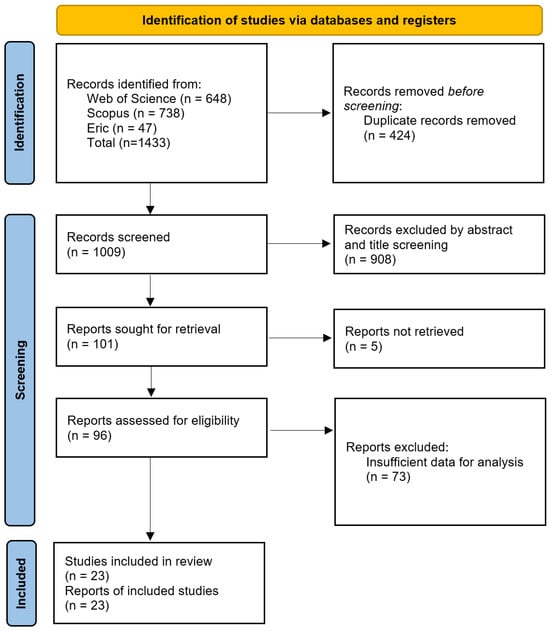
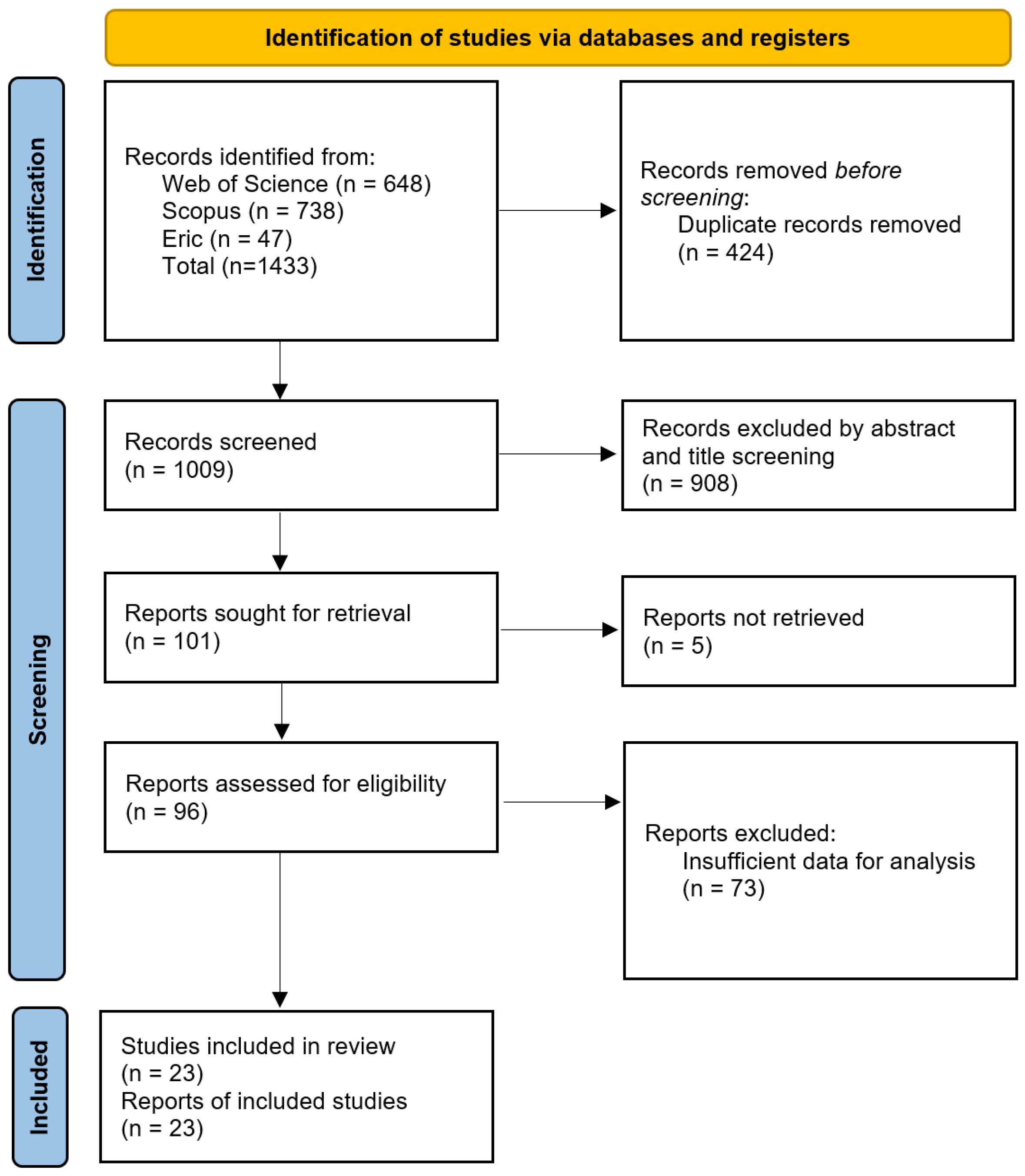
We used a 2021 PRISMA diagram format to describe the search strategy (see Figure 1). We screened for year and study type and downloaded 1433 articles. Duplicates were removed, and then the titles and abstracts were reviewed, which reduced the number of articles down to 101. The articles were reviewed to ensure they met all the established inclusion criteria, and the remaining 96 studies underwent full-text screening. Finally, 23 eligible articles were identified for the meta-analysis.
Figure 1.
PRISMA flow diagram for the study investigating the impact of AI on learners’ self-efficacy. Note: this figure illustrates how the studies were selected for this meta-analysis. Adapted from the 2021 PRISMA diagram format by Page et al. (2021).
2.3. Coding
In this study, we referred to existing coding strategies (Y. Wang et al., 2024; L. Zheng et al., 2023) to create current coding for the moderating variables; these are, specifically, (1) learner levels: K-12, university, and others; (2) research settings: classroom, online learning, mixed, and others; (3) disciplines: natural sciences, social sciences, engineering, medical, and humanities; (4) type of AI utilized: learning prediction, intelligent tutoring system, student behavior detection, intelligent learning environment, educational robot, and others; (5) the role of AI: intelligent tutor, intelligent learning tool, mixed, and others; and (6) durations of the experiment: <1 month, 1–3 months, >3 months, or not clearly defined. Two coders independently analyzed all 23 articles, and 20 documents had the same coding results. Using the average mutual agreement and reliability formulas, the K value was calculated to be 86.96%, while the reliability coefficient was determined to be 0.93, which indicated that the coding framework demonstrated high reliability (Gaur & Kumar, 2018). Finally, the discrepancies were solved by face-to-face discussion.
2.4. Research Quality Assessment
Criteria to assess research quality were derived from previous methodologies (Kmet et al., 2004; Y. Wang et al., 2024). The specific quality assessment criteria for this study are as follows: (1) The question is sufficiently described. (2) Sample characteristics are clearly described. (3) The study design is evident and appropriate. (4) Measurement tools are clearly described. (5) Analytic methods are described and appropriate. Each criterion was ranked according to whether it was deemed clear, relatively clear, and not clear, and was assigned 3 points, 2 points, and 1 point, respectively. Two coders evaluated the articles with a consistency of 91.30%. Each article scored between 11 and 15 points, representing the quality of the literature included in current meta-analysis, which met the requirements.
2.5. Statistical Analyses
2.5.1. Effect Size Calculations
Most of our studies had small sample sizes, and for this reason we used Hedges’ g to estimate effect sizes (Hedges & Olkin, 2014). Hedges’ g is a primary measure for the standardized mean difference for studies with small sample sizes (Borenstein et al., 2021). To describe the effect size of this study, we utilized Cohen’s (2013) definitions represented as small (≤0.20), medium (0.20~0.80), and large (≥0.80).
2.5.2. Analyses of Heterogeneity
This study utilized a comprehensive meta-analysis 3.0 (CMA 3.0) approach (J. Chen et al., 2022). We used the Q-test with the I2-test to calculate heterogeneity, and the results showed that Q = 213.115, p < 0.05, I2 = 89.677 (see first table in Section 3), and the I2 values were greater than 75%, indicating strong heterogeneity between studies (Higgins et al., 2003). Therefore, the random-effects model was used for the meta-analysis of this study. This indicates that there may be potential moderating variables for the effect of AI on self-efficacy; thus, we conducted a moderating variable analysis.
2.5.3. Publication Bias and Sensitive Analysis
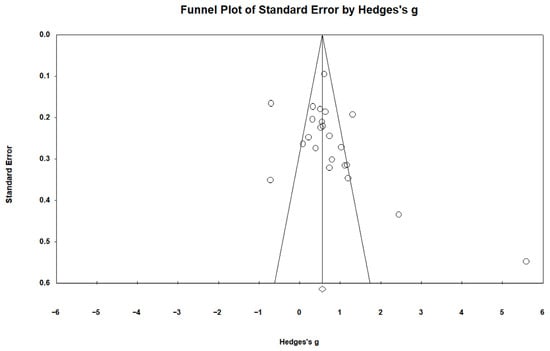
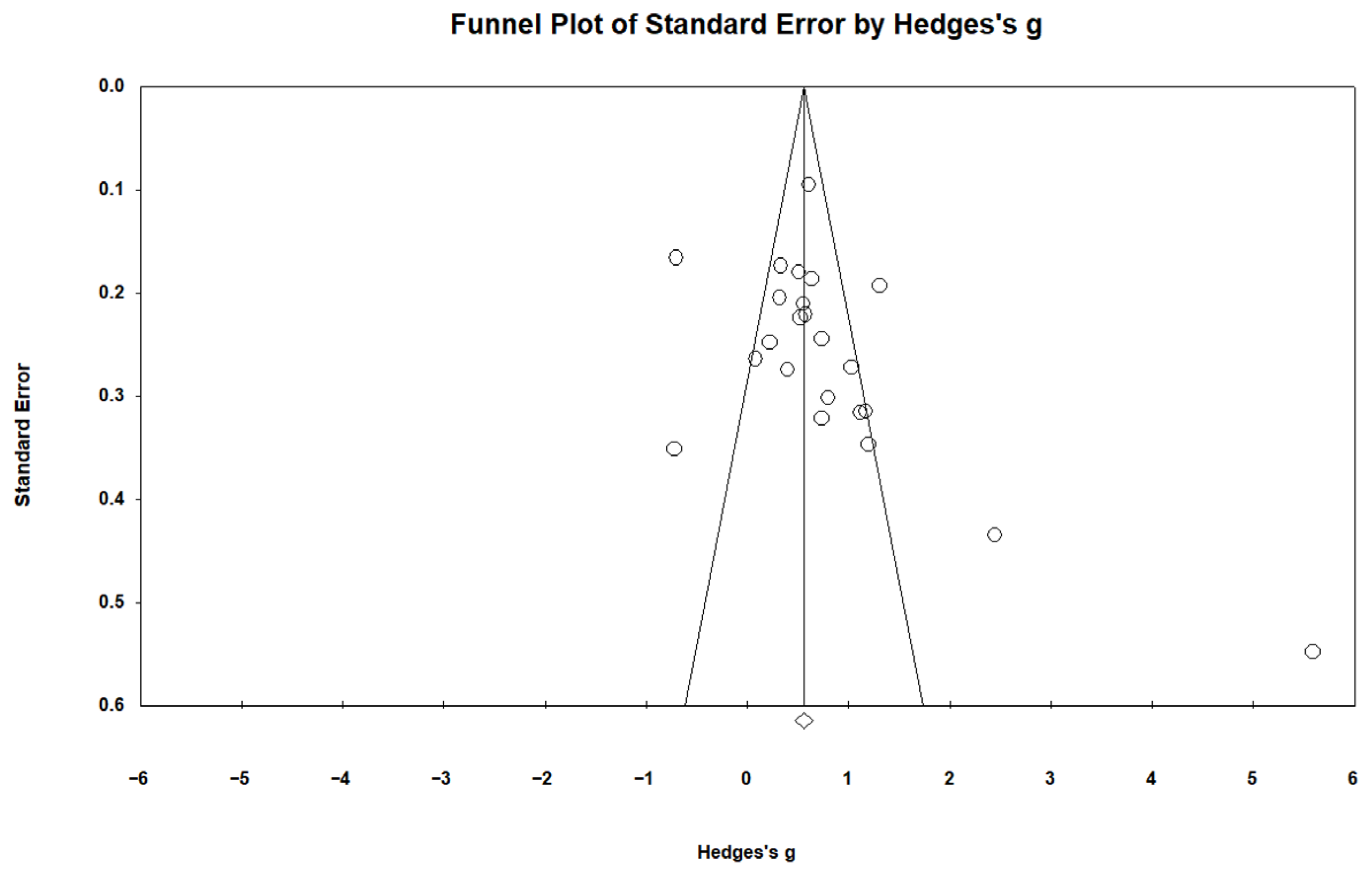
This study adopted a funnel plot, classic fail-safe N and Egger’s test to assess the publication bias. The effect sizes shown in the funnel plot are evenly distributed on either side of the summed effect size, which provides a preliminary indication that there is no serious publication bias in the selected studies (J. Chen et al., 2022); see Figure 2. The results of the classic fail-safe N provided a Z-value = 13.606, p < 0.001, which indicated we needed to include over 1086 unpublished articles to decease the overall effect. The number of articles (i.e., 1086) was over 125, based on the test standard 5k + 10, where k represents the 23 studies included in this meta-analysis (Rosenthal, 1995). This indicates the results of the meta-analysis of this study are robust and are not affected by a substantial publication bias. The result of an Egger’s test did not attain statistical significance (p = 0.073 > 0.05) (Egger et al., 1997), also suggesting the absence of substantial publication bias (F. Wang et al., 2024). The above multiple validation results indicated that there is no substantial publication bias in this paper, and the validity of the sample included in the meta-analysis was high.
Figure 2.
The funnel plot by Hedge’s g (random effects).
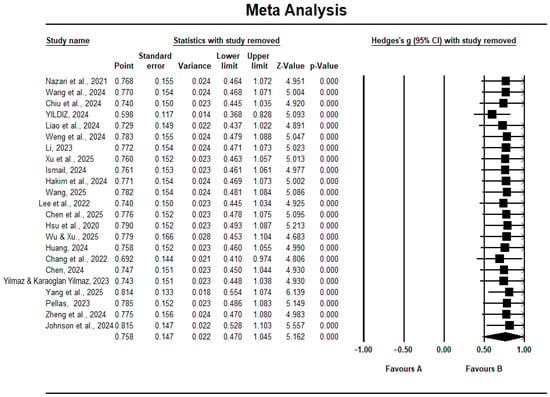
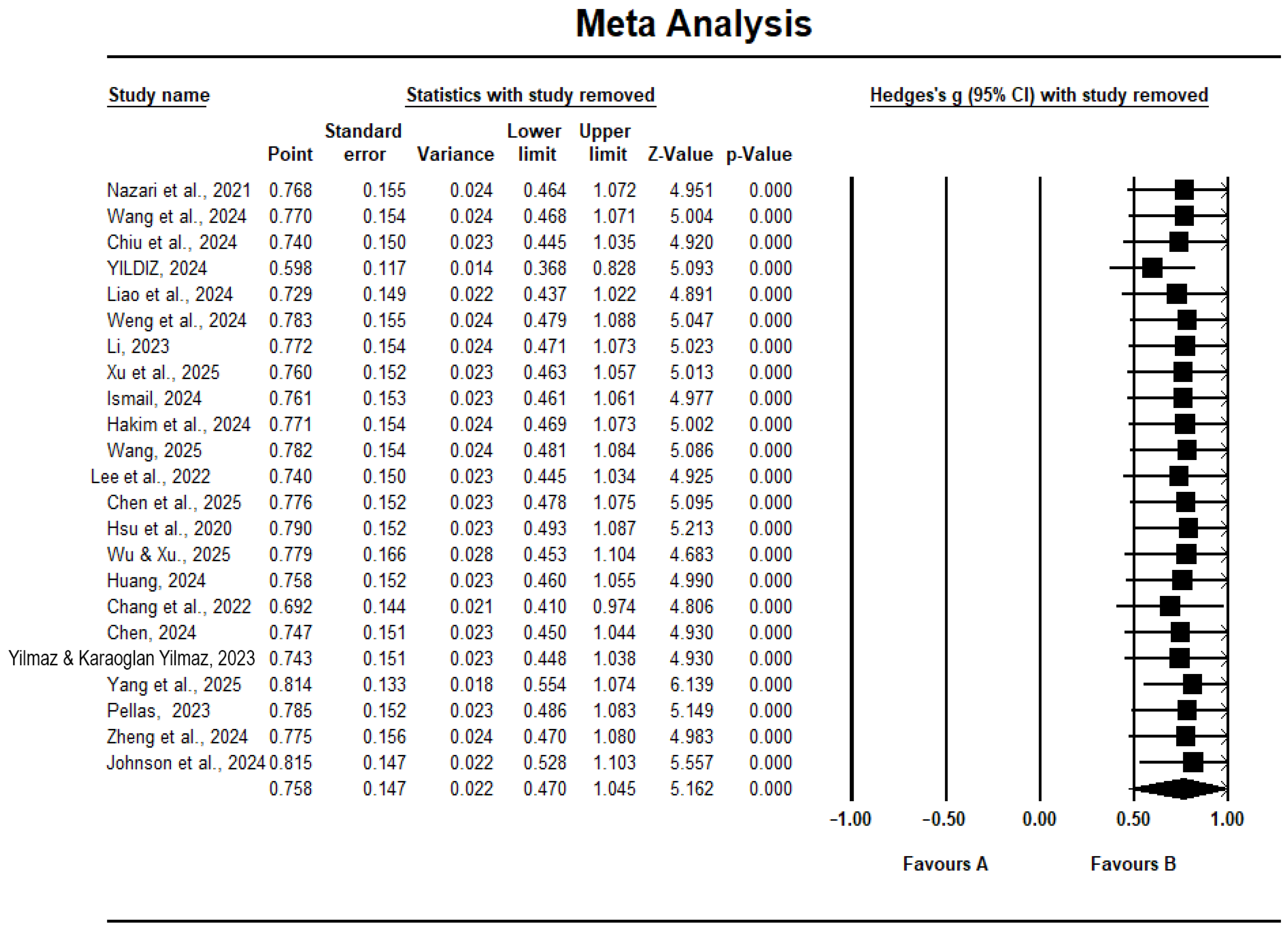
We also used the one-study-removed method (J. Chen et al., 2022) to perform sensitivity analysis to test anomalous data and robustness. The result showed that effect sizes were relatively stable regardless of which study was deleted. Specifically, a random effects model was used, with effects values biased in the range [0.598, 0.815], indicating that the result is reliable (see Figure 3).
Figure 3.
The results of the sensitivity analysis. Note: The data sources are from (Chang et al., 2022; M. A. Chen, 2024; Chiu et al., 2024; A. Chen et al., 2025; Hakim et al., 2024; Hsu et al., 2020; Huang, 2024; Ismail, 2024; Johnson et al., 2024; Lee et al., 2022; Li, 2023; Liao et al., 2024; Nazari et al., 2021; Pellas, 2023; D. Wang et al., 2024; S. Wang, 2025; Weng et al., 2024; Wu & Xu, 2025; Xu et al., 2025; Yang et al., 2025; Yilmaz & Karaoglan Yilmaz, 2023; Yıldız, 2024; R. Zheng et al., 2024).
3. Results
3.1. Overall Effect Size of AI on Self-Efficacy
Table 2 shows the meta-analysis results for the overall effect size of AI on self-efficacy; specifically, the total effect size is 0.758, and the 95% confidence intervals range from 0.470 to 1.045, revealing a medium effect size according to Cohen’s (2013) suggestion (i.e., medium effect range from 0.20 to 0.80).
Table 2.
Overall effect size and homogeneity test results.
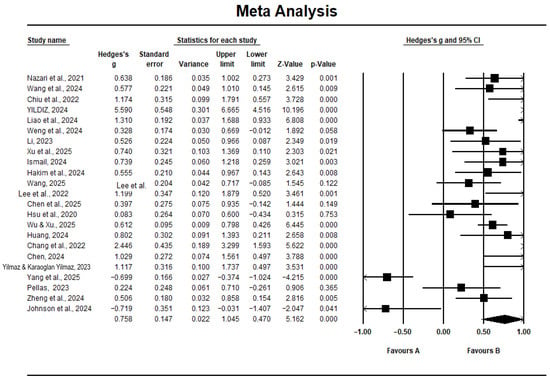
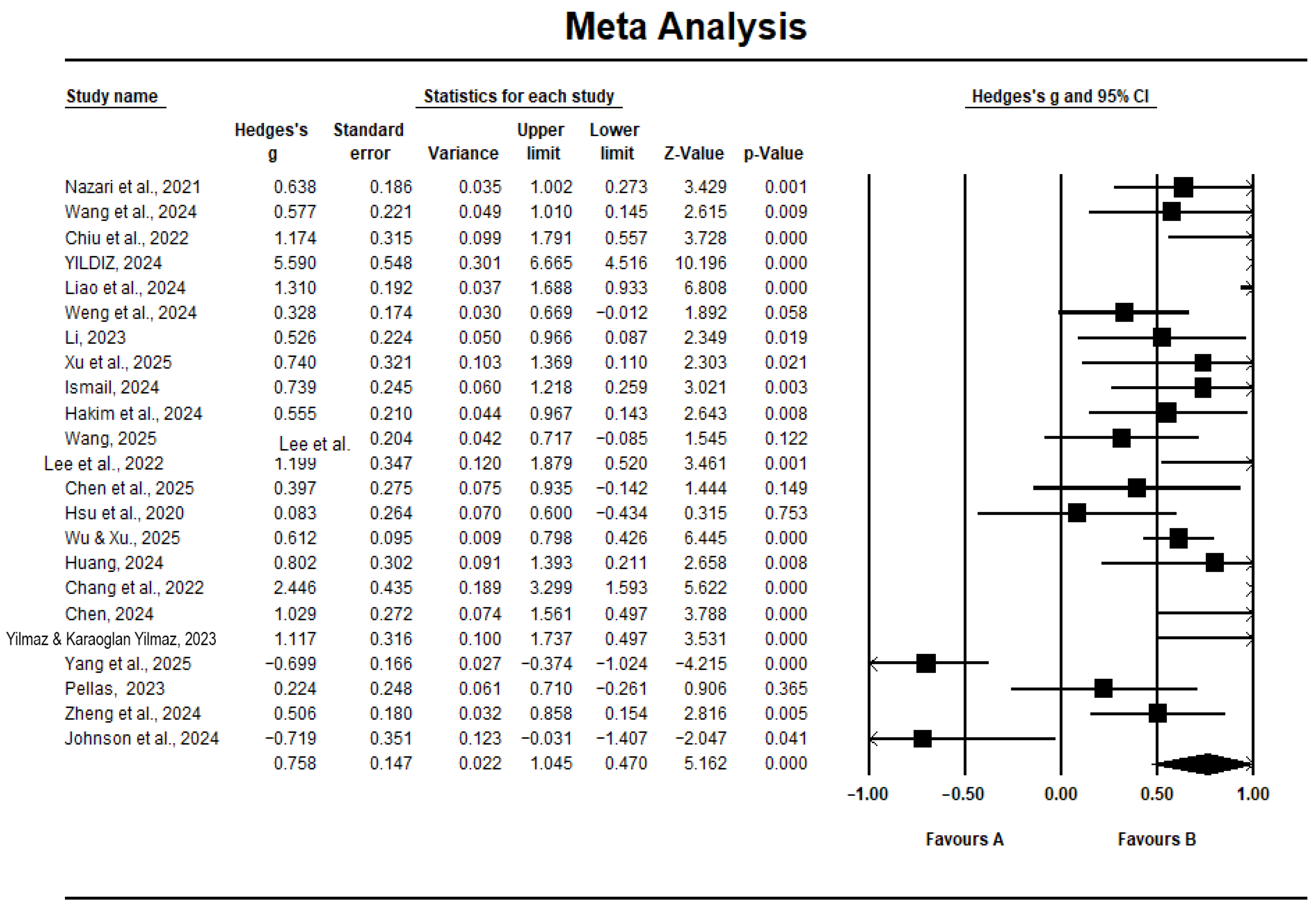
In Figure 4, the forest plot shows the effect sizes versus weights for each study separately. Among the selected studies, 16 effect values have positive and significant effects, 2 items have negative and significant effects, and the other 5 effect values were not significant.
Figure 4.
Forest plot. Note: see reference in Figure 3 or reference list for author details.
3.2. Moderator Analysis
3.2.1. Learner Levels
As shown in Table 3, the overall composite effect size for learner levels was 0.745, p < 0.05. The effect size for university students was 0.813, p < 0.05, while the effects for K-12 and other learners were not significant. Overall, there was no significant difference in the effect of AI on the self-efficacy of learners at different levels of study by the results measured of the group effect (Q = 2.740, p = 0.254).
Table 3.
Effects of learner level on effect size.
3.2.2. Research Settings
As shown in Table 4, the overall composite effect size for different research settings was 0.715, p < 0.05. However, there was no significant difference in the effect of AI on learners’ self-efficacy in different research settings, as shown by the results of the test of group effect (Q = 0.289, p = 0.591).
Table 4.
Effects of research settings on effect size.
3.2.3. Disciplines
There was a significant difference in the effect of AI on self-efficacy across disciplines (Q = 10.348, p = 0.035) (see Table 5). Specifically, AI had a high effect value on learner self-efficacy in natural science subjects (1.310, p < 0.05) as well as medicine subjects (1.013, p < 0.05), while it was not significant for learner self-efficacy in engineering subjects (p = 0.894).
Table 5.
Influence of disciplines on effect size.
3.2.4. Type of AI Utilized
The overall composite effect size for type of AI utilized reached 0.574 (p < 0.05), and the effect sizes for each type within the group were significant. However, as can be seen in Table 6, there was no significant difference between AI on learners’ self-efficacy in terms of type of AI utilized (Q = 5.392, p = 0.067).
Table 6.
Effects of type of AI utilized on effect size.
3.2.5. The Role of AI
As shown in Table 7, the overall composite effect size for the role of AI was 0.544, p < 0.05, while different AI application roles were found to have significant differences on learners’ self-efficacy (Q = 3.991, p < 0.05). The role of AI as an intelligent learning tool had the highest effect value on learner self-efficacy (0.883, p < 0.05), while as a mixed tool (i.e., both for intelligent learning tools and intelligent tutors) it had a relatively low effect value on learner self-efficacy (0.450, p < 0.05).
Table 7.
Effects of the role of AI on effect size.
3.2.6. Duration of Studies
The overall composite effect size for the duration of the studies reached 0.667 (p < 0.05), with medium and significant effect sizes for the time taken for the studies. However, as can be seen in Table 8, there was no significant difference in the effect of AI on learners’ self-efficacy across different durations of the studies (Q = 1.872, p > 0.05).
Table 8.
Influence of the length of study on the effect size.
4. Discussion
4.1. AI Can Effectively Promote Learners’ Self-Efficacy in Learning Contexts
In this study, we conducted a meta-analysis of 23 studies to analyze the effects of AI on learners’ self-efficacy in learning contexts; overall, we found that AI had a medium and significant positive effect on learners’ self-efficacy (0.758, p < 0.05). This finding is similar to a systematic literature review by Massaty et al. (2024), who found that AI can enhance students’ self-efficacy through multiple elements (e.g., interactive activities). Self-efficacy refers to the explicit beliefs or self-confidence that individuals hold about their abilities, namely, the expectations and judgments they make about their abilities during the learning process (Bandura, 1986). Prior learning experiences and curricular or instructional strategies are recognized as important factors influencing individual self-efficacy (Van Dinther et al., 2011). AI has been shown to have multiple roles in education, such as providing a personalized learning environment and timely feedback (Crompton & Burke, 2023). And these might further enhance students’ learning confidence whilst promoting their self-efficacy.
According to this result, the integration of AI into classroom can enhance students’ self-efficacy, which would contribute to their success in learning. Therefore, the role of AI to enhance a learner’s self-efficacy in learning contexts should not be underestimated. AI-related learning activities could help improve students’ self-efficacy and promote learning effectiveness. It is recommended that educators enhance the integration of AI in classrooms and design additional activities that promote student–AI interaction. Furthermore, due to the low numbers of experimental studies on the effects of AI on self-efficacy in learning contexts, the need for more experimental research in this domain is highlighted.
4.2. Moderating Effects of AI on Learners’ Self-Efficacy in Learning Contexts
4.2.1. Learner Levels
In this study, analysis results revealed the impact of AI on the self-efficacy of learners at different levels (as shown in Table 2). AI had a significant positive impact regarding the self-efficacy of university students. Although AI also showed a positive impact on K-12, as well as other level learners, it was not significant. Meanwhile, statistical analysis (Q = 2.740, p > 0.05) did not show a significant difference in AI impact on self-efficacy at different learners’ levels, suggesting that the effect of AI on self-efficacy remains relatively consistent across different learners’ levels. Similarly to previous systematic review studies, AI was found to be mostly used in university education (Ng et al., 2023; Zhai et al., 2021). This suggests that although AI is effective at improving learner self-efficacy in university education, it might not be extensively utilized in K-12 education. This may be related to the numerous implementation issues of using AI at the K-12 level, such as age-appropriate educational content and infrastructure (Felix & Webb, 2024). More research needs to be undertaken to identify if and how educational material can be designed and used at the K-12 level to further facilitate students’ interactive learning with AI to enhance self-efficacy.
4.2.2. Research Settings
The results showed that AI had a positive and significant effect on the self-efficacy of learners in the online context, as well as in the classroom context (as shown in Table 3). However, statistical analysis (Q = 0.289, p > 0.05) showed that there was no significant difference in the effect of AI on learners’ self-efficacy between the different research settings. This result suggests that the effect of AI on college students’ self-efficacy is relatively consistent across research settings. Our study also found that, among the articles included in this meta-analysis, most of the research contexts were based in a classroom, with only one research context set in an online context. This may be related to students’ trust and preference for people as teachers rather than AI agents in online courses (Spence et al., 2024); few courses have developed strategies to enable robust AI-integrated teaching and learning, few lecturers are willing to share their courses whilst still trialing, developing, and refining AI-focused coursework, and few lecturers are open to sharing course work that is unable to be formally assessed as true student work. With all these possibilities there is still much research to be undertaken in this area.
4.2.3. Disciplines
The results of this study showed that the application of AI in four different disciplines—social sciences, medicine, humanities, and natural sciences—significantly increased learners’ self-efficacy (as shown in Table 4). But the effect value for learners of the engineering discipline was small and non-significant. Additionally, the statistical analysis (Q = 10.348, p < 0.05) showed that the effect of AI application on self-efficacy in different disciplines was significant, which indicated that it had the highest effect on self-efficacy for students of natural sciences and medical disciplines, and it had less of an effect on self-efficacy for humanities students. The results from the engineering disciplines was inconsistent with previous research findings. The study by Yilmaz and Karaoglan Yilmaz (2023) showed that ChatGPT significantly increased computer science students’ programming self-efficacy. This inconsistency may be due to the numerous interpretations of the term engineering or the plausibility that engineering disciplines may require students to utilize their personal understanding and practical experience, and, as AI gives direct answers, this may hinder the internalization process and thus deprive students of a source of self-efficacy (Yang et al., 2025).
We also found that of the 23 studies included in this meta-analysis, most of the articles conducted experimental research in the social disciplines, and the effect of AI on learners in these fields was large and significant. This may be due to the abundant learning resources and personalized learning aids available for AI integration (Ansari et al., 2024). This suggests AI may also enhance students’ self-confidence in accomplishing social discipline tasks, such as writing and speaking (A. Chen et al., 2025), whilst strengthening their self-efficacy. A previous study which investigated the use of AI in English language education found that student self-efficacy and speaking was significantly improved (Yıldız, 2024). This study found that the effect of AI on learners’ self-efficacy in different disciplines is differentiated, and it is suggested that educators need to consider the differences between disciplines when developing AI-integrated material.
4.2.4. Type of AI Utilized
For the type of AI utilized in this study, the results have identified a significant positive impact on learners’ self-efficacy when the AI types utilized were intelligent learning environments and learning robots (as shown in Table 5). However, there was no significant effect on learners’ self-efficacy when the AI type utilized was an intelligent tutoring system. Statistical analysis showed (Q = 5.392, p > 0.05) that the difference between different AI application types on learners’ self-efficacy was not significant, which means that the effect of different AI application types on learners’ self-efficacy is relatively consistent. In this study, we summarized three types of applications of AI, namely, intelligent learning environments, educational robots, and intelligent tutoring systems from the included studies. Since AI is in its early stages and the full extent of AI types has not yet been developed and utilized to support education, educators need to consider the fit between AI types and teaching design. This is yet another research area for researchers.
4.2.5. The Role of AI
The analysis of this study revealed a significant difference in the effect of the roles of different AI applications on learners’ self-efficacy (Q = 3.991, p < 0.05) (as shown in Table 6). Specifically, the highest effect value was found when the role of AI was as an intelligent learning tool, while the lowest effect value was found when the role of AI was multi-purpose and used as a mixed tool (i.e., both as an intelligent learning tool and an intelligent tutor). AI as an intelligent learning tool is mainly used by students, possibly to support their self-learning. The self-regulated learning of students is based on their thoughts, feelings, and behaviors that students then develop to achieve their personal goals (Alonso-Mencía et al., 2020; Zimmerman, 2000). Therefore, students can use AI to personalize their learning according to their own learning progress, which may enhance their self-confidence and self-efficacy in the process of task solving. Educators could give more consideration to students’ use of AI tools to promote greater self-confidence in the actual educational process.
4.2.6. Length of Experimental Research Design
Initially, the study results revealed that all different time spans of the experiments have significant and positive effects as concerns AI, with regard to improving students’ self-efficacy (as shown in Table 7). This encourages educators to try to use AI and integrate AI into their learning classrooms, which may be able to help students increase their self-efficacy and self-confidence in learning. However, through further statistical analysis (Q = 1.872, p > 0.05), it was found that the difference in AI improving students’ self-efficacy across a range of time spans was not significant, indicating the effects were relatively consistent. Longer periods of technology learning can reduce the novelty effect and students’ interests (Sun & Zhou, 2024), while shorter periods of AI use may limit the time available to evaluate and identify change in student effectiveness or the time to develop skills and confidence with the new technology and delivery methods (Sun & Zhou, 2024).
4.3. Limitation and Future Studies
Although the present study provides valuable insights, and recommended future research was reported throughout the Discussion section, it has several limitations that should be acknowledged. Due to the inclusion criteria, only 23 papers were included in this study; these papers in the meta-analysis had relatively small sample sizes. And some relevant but not fully compliant papers may have been excluded. In addition, some subgroups in this study included fewer than five observations (N < 5), which may limit the precision of estimates in these categories. Although this study proposed relevant moderating variables based on existing studies, other potential moderating variables may have been overlooked. It is recommended that future studies incorporate more potential moderator variables to achieve more comprehensive and in-depth analyses. Meanwhile, the heterogeneity of this study is very high; the potential for unmeasured factors might account for a great deal of variation between included studies. Furthermore, although several approaches were used to evaluate publication bias in the present study, it remains essential for future research to implement more comprehensive methods to enhance the rigor of the assessment.
5. Conclusions
This study employed meta-analysis to answer two questions about the effects of AI on learners’ self-efficacy in educational contexts. In doing so, we found that (1) AI had a significant positive, medium-sized impact on learners’ self-efficacy, and (2) increases in learner self-efficacy were moderated by the context and purpose of AI use. Overall, this study revealed the effects of AI on self-efficacy in educational contexts. It analyzed the reasons that may influence the changes in the effects of AI on self-efficacy from the perspective of multiple moderating variables. This provides insights into the relationship between AI and self-efficacy and suggests ways to enhance the use of AI in education from the perspective of self-efficacy.
Author Contributions
Conceptualization, L.R., J.M.S. and K.L.; methodology, L.R., J.M.S. and K.L.; validation, L.R., J.M.S. and K.L.; formal analysis, L.R.; data curation, L.R.; writing—original draft preparation, L.R.; writing—review and editing, J.M.S. and K.L.; visualization, J.M.S. and K.L.; supervision, J.M.S. and K.L. All authors have read and agreed to the published version of the manuscript.
Funding
This research received no external funding.
Institutional Review Board Statement
Not applicable.
Informed Consent Statement
Not applicable.
Data Availability Statement
The original contributions presented in this study are included in the article. Further inquiries can be directed to the corresponding author.
Conflicts of Interest
The authors declare no conflicts of interest.
References
- Alonso-Mencía, M. E., Alario-Hoyos, C., Maldonado-Mahauad, J., Estévez-Ayres, I., Pérez-San Agustín, M., & Delgado Kloos, C. (2020). Self-regulated learning in MOOCs: Lessons learned from a literature review. Educational Review, 72(3), 319–345. [Google Scholar] [CrossRef] [Scilit]
- Ansari, A. N., Ahmad, S., & Bhutta, S. M. (2024). Mapping the global evidence around the use of ChatGPT in higher education: A systematic scoping review. Education and Information Technologies, 29(9), 11281–11321. [Google Scholar] [CrossRef] [Scilit]
- Bandura, A. (1986). Social foundations of thought and action: A social cognitive theory. Prentice-Hall. [Google Scholar]
- Bandura, A. (1997). Self-efficacy: The exercise of control. Macmillan. [Google Scholar]
- Borenstein, M., Hedges, L. V., Higgins, J. P., & Rothstein, H. R. (2021). Introduction to meta-analysis. John Wiley & Sons. [Google Scholar] [CrossRef] [Scilit]
- Cerezo, R., Esteban, M., Vallejo, G., Sanchez-Santillan, M., & Nuñez, J. (2020). Differential efficacy of an intelligent tutoring system for university students: A case study with learning disabilities. Sustainability, 12(21), 9184. [Google Scholar] [CrossRef] [Scilit]
- Chang, C., Hwang, G., & Gau, M. (2022). Promoting students’ learning achievement and self-efficacy: A mobile chatbot approach for nursing training. British Journal of Educational Technology, 53(1), 171–188. [Google Scholar] [CrossRef] [Scilit]
- Chen, A., Jia, J., Li, Y., & Fu, L. (2025). Investigating the effect of role-play activity with GenAI agent on EFL students’ speaking performance. Journal of Educational Computing Research, 63(1), 99–125. [Google Scholar] [CrossRef] [Scilit]
- Chen, J., Dai, J., Zhu, K., & Xu, L. (2022). Effects of extended reality on language learning: A meta-analysis. Frontiers in Psychology, 13, 1016519. [Google Scholar] [CrossRef] [Scilit]
- Chen, M. A. (2024). The AI chatbot interaction for semantic learning: A collaborative note-taking approach with EFL students. Language Learning & Technology, 28(1), 1–25. [Google Scholar] [CrossRef] [Scilit]
- Chiu, M.-C., Hwang, G.-J., Hsia, L.-H., & Shyu, F.-M. (2024). Artificial intelligence-supported art education: A deep learning-based system for promoting university students’ artwork appreciation and painting outcomes. Interactive Learning Environments, 32(3), 824–842. [Google Scholar] [CrossRef] [Scilit]
- Cohen, J. (2013). Statistical power analysis for the behavioral sciences. Routledge. [Google Scholar]
- Crompton, H., & Burke, D. (2023). Artificial intelligence in higher education: The state of the field. International Journal of Educational Technology in Higher Education, 20(1), 22. [Google Scholar] [CrossRef] [Scilit]
- Egger, M., Smith, G. D., Schneider, M., & Minder, C. (1997). Bias in meta-analysis detected by a simple, graphical test. BMJ, 315(7109), 629–634. [Google Scholar] [CrossRef] [Scilit]
- Felix, J., & Webb, L. (2024). Use of artificial intelligence in education delivery and assessment. Parliamentary Office of Science and Technology. [Google Scholar] [CrossRef] [Scilit]
- Gaur, A., & Kumar, M. (2018). A systematic approach to conducting review studies: An assessment of content analysis in 25 years of IB research. Journal of World Business, 53(2), 280–289. [Google Scholar] [CrossRef] [Scilit]
- Hakim, V. G. A., Paiman, N. A., & Rahman, M. H. S. (2024). Genie-on-demand: A custom AI chatbot for enhancing learning performance, self-efficacy, and technology acceptance in occupational health and safety for engineering education. Computer Applications in Engineering Education, 32(6), e22800. [Google Scholar] [CrossRef] [Scilit]
- Hedges, L. V., & Olkin, I. (2014). Statistical methods for meta-analysis. Academic Press. [Google Scholar]
- Higgins, J. P., Thompson, S. G., Deeks, J. J., & Altman, D. G. (2003). Measuring inconsistency in meta-analyses. BMJ, 327(7414), 557–560. [Google Scholar] [CrossRef] [Scilit] [PubMed]
- Hsu, T.-Y., Chen, J.-M., & Liang, H.-Y. (2020, November 23–27). Investigating the effect of using the social semantic tagging-based learning guidance on science learning. International Conference on Computers in Education (pp. 382–387), Virtual. [Google Scholar]
- Huang, H. (2024). Promoting students’ creative and design thinking with generative AI-supported co-regulated learning. Educational Technology & Society, 27(4), 487–502. [Google Scholar]
- Ismail, S. M. (2024). EFL learners’ positive emotions in the era of technology: Unpacking the effects of artificial intelligence on learning enjoyment, self- efficacy, and resilience. Computer-Assisted Language Learning Electronic Journal, 25(4), 526–551. [Google Scholar]
- Jeong, J., & Jeong, I. (2024). Driving creativity in the AI-enhanced workplace: Roles of self-efficacy and transformational leadership. Current Psychology, 44, 8001–8014. [Google Scholar] [CrossRef] [Scilit]
- Johnson, D. M., Doss, W., & Estepp, C. M. (2024). Using ChatGPT with novice Arduino programmers: Effects on performance, interest, self-efficacy, and programming ability. Journal of Research in Technical Careers, 8(1), 1. [Google Scholar] [CrossRef] [Scilit]
- Kmet, L. M., Lee, R. C., & Cook, L. S. (2004). Standard quality assessment criteria for evaluating primary research papers from a variety of fields. Alberta Heritage Foundation for Medical Research. [Google Scholar] [CrossRef]
- Labadze, L., Grigolia, M., & Machaidze, L. (2023). Role of AI chatbots in education: Systematic literature review. International Journal of Educational Technology in Higher Education, 20(1), 56. [Google Scholar] [CrossRef] [Scilit]
- Lee, Y.-F., Hwang, G.-J., & Chen, P.-Y. (2022). Impacts of an AI-based chatbot on college students’ after-class review, academic performance, self-efficacy, learning attitude, and motivation. Educational Technology Research and Development, 70(5), 1843–1865. [Google Scholar] [CrossRef] [Scilit]
- Li, H. (2023). Effects of a ChatGPT-based flipped learning guiding approach on learners’ courseware project performances and perceptions. Australasian Journal of Educational Technology, 39(5), 40–58. [Google Scholar] [CrossRef] [Scilit]
- Liao, X., Zhang, X., Wang, Z., & Luo, H. (2024). Design and implementation of an AI-enabled visual report tool as formative assessment to promote learning achievement and self-regulated learning: An experimental study. British Journal of Educational Technology, 55(3), 1253–1276. [Google Scholar] [CrossRef] [Scilit]
- Lu, J., Zheng, R., Gong, Z., & Xu, H. (2024). Supporting teachers’ professional development with generative AI: The effects on higher order thinking and self-efficacy. IEEE Transactions on Learning Technologies, 17, 1267–1277. [Google Scholar] [CrossRef] [Scilit]
- Massaty, M. H., Fahrurozi, S. K., & Budiyanto, C. W. (2024). The role of AI in fostering computational thinking and self-efficacy in educational settings: A systematic review. Indonesian Journal of Informatics Education, 8(1), 49. [Google Scholar] [CrossRef] [Scilit]
- Morales-García, W. C., Sairitupa-Sanchez, L. Z., Morales-García, S. B., & Morales-García, M. (2024). Adaptation and psychometric properties of a brief version of the general self-efficacy scale for use with artificial intelligence (GSE-6AI) among university students. Frontiers in Education, 9, 1293437. [Google Scholar] [CrossRef] [Scilit]
- Nazari, N., Shabbir, M. S., & Setiawan, R. (2021). Application of artificial intelligence powered digital writing assistant in higher education: Randomized controlled trial. Heliyon, 7(5), e07014. [Google Scholar] [CrossRef] [Scilit]
- Ng, D. T. K., Lee, M., Tan, R. J. Y., Hu, X., Downie, J. S., & Chu, S. K. W. (2023). A review of AI teaching and learning from 2000 to 2020. Education and Information Technologies, 28(7), 8445–8501. [Google Scholar] [CrossRef] [Scilit]
- Ouzzani, M., Hammady, H., Fedorowicz, Z., & Elmagarmid, A. (2016). Rayyan—A web and mobile app for systematic reviews. Systematic Reviews, 5, 210. [Google Scholar] [CrossRef] [Scilit]
- Page, M. J., McKenzie, J. E., Bossuyt, P. M., Boutron, I., Hoffmann, T. C., Mulrow, C. D., Shamseer, L., Tetzlaff, J. M., Akl, E. A., Brennan, S. E., Chou, R., Glanville, J., Grimshaw, J. M., Hróbjartsson, A., Lalu, M. M., Li, T., Loder, E. W., Mayo-Wilson, E., McDonald, S., … Moher, D. (2021). The PRISMA 2020 statement: An updated guideline for reporting systematic reviews. BMJ, 372, n71. [Google Scholar] [CrossRef] [Scilit]
- Peechapol, C., Na-Songkhla, J., Sujiva, S., & Luangsodsai, A. (2018). An exploration of factors influencing self-efficacy in online learning: A systematic review. International Journal of Emerging Technologies in Learning, 13(09), 64. [Google Scholar] [CrossRef] [Scilit]
- Pellas, N. (2023). The effects of generative AI platforms on undergraduates’ narrative intelligence and writing self-efficacy. Education Sciences, 13(11), 1155. [Google Scholar] [CrossRef] [Scilit]
- Raihan, M., Debnath, A., Adhikary, P. C., Masud, M., Meshref, H., & Bairagi, A. K. (2024). Bridging technology and psychology: AI-driven analysis of student’s class lecture activity for improved learning outcomes. IEEE Access, 12, 147320–147349. [Google Scholar] [CrossRef] [Scilit]
- Ren, L., Lee, K., & May, L. (2025). A systematic review exploring AI’s role in self-regulated learning within education contexts. IEEE Access, 13, 109771–109782. [Google Scholar] [CrossRef] [Scilit]
- Rosenthal, R. (1995). Writing meta-analytic reviews. Psychological Bulletin, 118(2), 183. [Google Scholar] [CrossRef]
- Salah, M., Abdelfattah, F., & Al Halbusi, H. (2024). The good, the bad, and the GPT: Reviewing the impact of generative artificial intelligence on psychology. Current Opinion in Psychology, 59, 101872. [Google Scholar] [CrossRef] [Scilit] [PubMed]
- Schunk, D. H. (1990). Goal setting and self-efficacy during self-regulated learning. Educational Psychologist, 25(1), 71–86. [Google Scholar] [CrossRef] [Scilit]
- Shen, D., Cho, M.-H., Tsai, C.-L., & Marra, R. (2013). Unpacking online learning experiences: Online learning self-efficacy and learning satisfaction. The Internet and Higher Education, 19, 10–17. [Google Scholar] [CrossRef] [Scilit]
- Spence, P. R., Kaufmann, R., Lachlan, K. A., Lin, X., & Spates, S. A. (2024). Examining perceptions and outcomes of AI versus human course assistant discussions in the online classroom. Communication Education, 73(2), 121–142. [Google Scholar] [CrossRef] [Scilit]
- Sun, L., & Zhou, L. (2024). Does generative artificial intelligence improve the academic achievement of college students? A meta-analysis. Journal of Educational Computing Research, 62(7), 1896–1933. [Google Scholar] [CrossRef] [Scilit]
- Talaei Khoei, T., Ould Slimane, H., & Kaabouch, N. (2023). Deep learning: Systematic review, models, challenges, and research directions. Neural Computing and Applications, 35(31), 23103–23124. [Google Scholar] [CrossRef] [Scilit]
- Van Dinther, M., Dochy, F., & Segers, M. (2011). Factors affecting students’ self-efficacy in higher education. Educational Research Review, 6(2), 95–108. [Google Scholar] [CrossRef] [Scilit]
- Volante, L., DeLuca, C., & Klinger, D. A. (2023). Leveraging AI to enhance learning. Phi Delta Kappan, 105(1), 40–45. [Google Scholar] [CrossRef] [Scilit]
- Wang, D., Huai, B., Ma, X., Jin, B., Wang, Y., Chen, M., Sang, J., & Liu, R. (2024). Application of artificial intelligence-assisted image diagnosis software based on volume data reconstruction technique in medical imaging practice teaching. BMC Medical Education, 24(1), 405. [Google Scholar] [CrossRef] [Scilit] [PubMed]
- Wang, F., Ni, X., Zhang, M., & Zhang, J. (2024). Educational digital inequality: A meta-analysis of the relationship between digital device use and academic performance in adolescents. Computers & Education, 213, 105003. [Google Scholar] [CrossRef] [Scilit]
- Wang, J., Hussain, Y., & Mao, C. (2025). Artificial intelligence-driven personalized learning: Psychological implications and educational outcomes. International Journal of Education, Humanities and Social Sciences, 2, 24–39. [Google Scholar] [CrossRef]
- Wang, S. (2025). Hybrid models of piano instruction: How combining traditional teaching methods with personalized AI feedback affects learners’ skill acquisition, self-efficacy, and academic locus of control. Education and Information Technologies, 30, 12967–12989. [Google Scholar] [CrossRef] [Scilit]
- Wang, Y., Liu, W., Yu, X., Li, B., & Wang, Q. (2024). The impact of virtual technology on students’ creativity: A meta-analysis. Computers & Education, 215, 105044. [Google Scholar] [CrossRef] [Scilit]
- Wei, L. (2023). Artificial intelligence in language instruction: Impact on English learning achievement, L2 motivation, and self-regulated learning. Frontiers in Psychology, 14, 1261955. [Google Scholar] [CrossRef] [Scilit]
- Weng, C., Kassaw, K., Tsai, P.-S., & Lee, T.-J. (2024). Does scratch animation for sustainable development goals (SDGs) with AI-comics impact on student empathy, self-efficacy, scriptwriting, and animation skills? Education and Information Technologies, 29(14), 18097–18120. [Google Scholar] [CrossRef] [Scilit]
- Wu, Q., & Xu, A. (2025). Poe or Gemini for fostering writing skills in Japanese upper-intermediate learners: Uncovering the consequences on positive emotions, boredom to write, academic self-efficacy and writing development. British Educational Research Journal, berj.4119. [Google Scholar] [CrossRef] [Scilit]
- Xu, L.-J., Wu, J., Zhu, J.-D., & Chen, L. (2025). Effects of AI-assisted dance skills teaching, evaluation and visual feedback on dance students’ learning performance, motivation and self-efficacy. International Journal of Human-Computer Studies, 195, 103410. [Google Scholar] [CrossRef] [Scilit]
- Yang, T.-C., Hsu, Y.-C., & Wu, J.-Y. (2025). The effectiveness of ChatGPT in assisting high school students in programming learning: Evidence from a quasi-experimental research. Interactive Learning Environments, 33, 3726–3743. [Google Scholar] [CrossRef] [Scilit]
- Yilmaz, R., & Karaoglan Yilmaz, F. G. (2023). The effect of generative artificial intelligence (AI)-based tool use on students’ computational thinking skills, programming self-efficacy and motivation. Computers and Education: Artificial Intelligence, 4, 100147. [Google Scholar] [CrossRef] [Scilit]
- Yıldız, C. (2024). ChatGPT integration in EFL education: A path to enhanced speaking self-efficacy. Novitas-Royal, 18, 167–182. [Google Scholar] [CrossRef]
- Zhai, X., Chu, X., Chai, C. S., Jong, M. S. Y., Istenic, A., Spector, M., Liu, J.-B., Yuan, J., & Li, Y. (2021). A review of artificial intelligence (AI) in education from 2010 to 2020. Complexity, 2021(1), 8812542. [Google Scholar] [CrossRef] [Scilit]
- Zheng, L., Niu, J., Zhong, L., & Gyasi, J. F. (2023). The effectiveness of artificial intelligence on learning achievement and learning perception: A meta-analysis. Interactive Learning Environments, 31(9), 5650–5664. [Google Scholar] [CrossRef] [Scilit]
- Zheng, R., Xu, H., Wang, M., & Lu, J. (2024). The impact of artificial general intelligence-assisted project-based learning on students’ higher order thinking and self-efficacy. IEEE Transactions on Learning Technologies, 17, 2153–2160. [Google Scholar] [CrossRef] [Scilit]
- Zimmerman, B. (2000). Attaining self-regulation. In M. Boekaerts, P. R. Pintrich, & M. Zeidner (Eds.), Handbook of self-regulation (pp. 13–39). Academic Press. [Google Scholar] [CrossRef] [Scilit]

Disclaimer/Publisher’s Note: The statements, opinions and data contained in all publications are solely those of the individual author(s) and contributor(s) and not of MDPI and/or the editor(s). MDPI and/or the editor(s) disclaim responsibility for any injury to people or property resulting from any ideas, methods, instructions or products referred to in the content. |
© 2026 by the authors. Licensee MDPI, Basel, Switzerland. This article is an open access article distributed under the terms and conditions of the Creative Commons Attribution (CC BY) license.