1. Introduction
The ‘tip of the tongue’ (TOT) phenomenon is a common cognitive experience involving an individual’s temporary inability to recall a familiar word or name (
Abrams & Davis, 2016;
Brown, 2012;
Ouyang et al., 2020). It often leads to frustration as people are aware of the information but cannot access it at that moment (
Barry et al., 2025). Research suggests that people experiencing TOT utilize these moments to infer the characteristics of the elusive information, effectively treating them as cognitive heuristics to guide their retrieval efforts (
Kim & Choi, 2021). Common theories surrounding TOT posit that such states arise from the attributions individuals make based on the partial information they can access. For example, when someone retrieves some attributes of a word but not the whole word, they often overestimate their knowledge of it, believing that retrieval is imminent (
Rousseau & Kashur, 2021).
In addition, the “feeling of knowing” (FOK) is a cognitive phenomenon that relates to the subjective belief that one is unable to retrieve a piece of information yet possesses sufficient associative connections to recognize that information when it is presented (
Hart, 1965;
Koriat, 2000;
Pournaghdali et al., 2025). FOK is closely related to metacognition, as it reflects an individual’s awareness of their own cognitive state. This phenomenon is considered an integral part of memory processes, serving as a subjective indicator of potentially successful retrieval. When an individual experiences a FOK, they may have a strong sense that the elusive information is temporarily inaccessible, often leading to strategies aimed at triggering retrieval, such as the activation of related concepts or cues (
Schwartz, 2010). In contrast, the TOT phenomenon is characterized by the frustrating experience of knowing that a specific word or name is known yet being unable to access it at that moment (
Cleary et al., 2021;
Ryals et al., 2021).
The distinction between a total omission (TOT) and a false omission (FOK) is noteworthy, particularly with regard to their emotional and cognitive implications (
Schwartz & Cleary, 2016;
Schwartz, 2010). TOTs not only embody the frustration of failing to retrieve a known word, but also the accompanying sensations of urgency and expectation of imminent retrieval (
Koriat, 2000). In contrast, FOK experiences do not generally involve the same immediate frustration; rather, they encourage a reflective approach to the associations that lead to successful retrieval. These differences emphasize that, although both phenomena result from retrieval attempts, they activate different cognitive processes. Neuroimaging studies reveal that different brain regions are engaged during each state (
Koriat, 2000;
Schwartz, 2010;
Schwartz & Cleary, 2016). The cognitive underpinnings of these two experiences suggest that TOTs highlight precise shortcomings in lexical retrieval, whereas FOKs indicate broader metacognitive evaluations of potential future retrieval success.
From an aging perspective, TOTs are recognized as being more prevalent in older adults and are tied to various psycholinguistic factors, such as age of acquisition and vocabulary size, which influence retrieval efficiency (
Rahman et al., 2023;
Shafto et al., 2007). The increased frequency of TOTs among older individuals may also reflect declines in functional brain processes related to retrieval monitoring and cognitive control (
Rahman et al., 2023). Conversely, FOKs can manifest in different contexts, demonstrating varying strategies depending on an individual’s overall cognitive health. In summary, although TOTs and FOKs are both types of retrieval failure, their distinct characteristics warrant further exploration and clarification. TOTs emphasize immediate retrieval challenges with strong emotional influences (imminent feeling of producing the word + frustration), whereas FOKs offer insights into expected recognition potential and cognitive strategies for future retrieval attempts (metacognition + reflection).
Empirical research into both phenomena would suggest that psycholinguistic factors such as age of acquisition (AoA;
Wang et al., 2024), vocabulary size (
Rojas et al., 2023a), and verbal fluency (
Frankenberg et al., 2021) might play critical roles in determining whether an individual might experience a TOT or an FOK. Specifically, the research implies that an earlier AoA is positively correlated with enhanced fluency and retrieval effectiveness, which might indicate that individuals with a richer early vocabulary experience fewer retrieval failures (
Rojas et al., 2023b). This relationship could highlight the significance of both TOT and FOK within the broader context of cognitive aging, suggesting that older adults may be more likely to experience an increased frequency of these phenomena. However, the precise roles of AoA, vocabulary size, and verbal fluency in influencing lexical retrieval in older age would require more thorough exploration.
1.1. TOTs, FOKs and Age-Related Changes in Cognitive Functions
Various cognitive theories have been proposed to explain the mechanisms underlying TOT and FOK experiences in the context of aging. A prominent explanation suggests that these states may arise from partial activation of the target word, where TOT states develop from the activation of phonological features related to the target word while complete retrieval remains out of reach (
Medeiros, 2024). This partial activation can evoke feelings of familiarity and intensify sensations of being on the verge of recollection, despite the inability to access the full target. Another aspect to consider involves the retrieval of fragments of the target word, such as initial letters or syllables, which serve as mnemonic cues, potentially heightening the feeling of impending recollection (
Claxton, 2023;
Cleary & Claxton, 2015;
Huebert et al., 2023). Such fragments underscore the complexity of lexical retrieval processes and illustrate the challenges associated with word recovery.
Moreover, challenges related to phonological processing may be implicated in the occurrence of TOT and FOK states, particularly among older individuals (
Abrams & Davis, 2016;
Kim & Choi, 2021). These difficulties may indicate that weakened connections between phonological representations and their lexical counterparts contribute to increased retrieval challenges as one ages (
Rojas et al., 2023a,
2023b). This phonological decline highlights the complex interplay between lexical meaning and sound, underscoring the importance of phonetic accessibility in language processes. Additionally, TOT states may involve metacognitive components, where individuals experience heightened awareness of their cognitive state, leading to a sense of familiarity and a belief that retrieval is imminent (
Schwartz, 2010).
As the global population continues to age, understanding how age-related effects manifest in cognitive functions becomes increasingly vital. Studies indicate that aging may disrupt essential brain regions involved in language processing, such as the left inferior frontal gyrus and posterior temporal areas critical for lexical retrieval and phonological access (
Burke & Graham, 2012). Age-related declines in fluid intelligence—such as verbal fluency—processing speed, and executive function may exacerbate the challenges associated with language retrieval (
Martin et al., 2021;
Tucker-Drob et al., 2022). Therefore, it is crucial for researchers to investigate not only the frequency of TOT episodes but also the specific contexts and cognitive strategies that may influence how these experiences manifest (
Salthouse, 2013).
Another pertinent consideration in the study of TOTs is the phenomenon of repeated occurrences for specific words. Some studies suggest an error-learning component, where individuals may unintentionally develop cognitive strategies—heuristics that reinforce retrieval failures for specific lexical items, particularly those that are rarely used or contextually unusual (
Catling et al., 2021;
Wang et al., 2024). This reinforcement may result in maladaptive retrieval strategies, where cognitive effort devoted to accessing a familiar word leads to increased frustration and decreased performance (
Abrams & Davis, 2016;
Kim & Choi, 2021).
Furthermore, the relationship between TOT and FOK experiences, age, and cognitive decline underscores the need for further investigation into how specific characteristics of lexical items—including age of acquisition (AoA), frequency of use, and semantic associations—interact with cognitive aging. Evidence suggests that words learned earlier in life might be more accessible and may exhibit greater resilience to age-related retrieval challenges (
Catling et al., 2021;
Wang et al., 2024). However, there remains insufficient evidence regarding how these dynamics play out in the later stages of old age.
1.2. Interactions Between AoA, Vocabulary and Verbal Fluency
The concept of AoA can be seen as a significant factor in understanding vocabulary dynamics and its influence on cognitive processing, particularly regarding the frequency of TOT or FOK experiences. Research might indicate that words learned early in life are generally associated with faster and more accurate lexical retrieval compared to those acquired later (
Brysbaert et al., 2000;
Elsherif et al., 2023;
Johnston & Barry, 2006). These findings point to the protective role of early vocabulary acquisition, which might assist in building a more resilient cognitive foundation that potentially mitigates age-related cognitive decline (
Elsherif et al., 2023). The complexities inherent in cognitive networks enable the early acquisition of words to be more effectively integrated, thereby enhancing retrieval efficiency and allowing older individuals to access their linguistic resources more competently (
Verhagen & Van Stiphout, 2022).
The dynamics of vocabulary may also reveal that some lexical items are more likely to elicit TOT experiences than others. Specifically, it seems that proper names and low-frequency words might be particularly prone to these states, primarily due to their less frequent use in linguistic contexts (
Gollan et al., 2011;
Rojas et al., 2023b).
Moreover, the interaction between AoA and vocabulary size might illustrate how linguistic proficiency could moderate retrieval challenges. As individuals presumably expand their vocabularies, the negative implications of AoA on retrieval probabilities might diminish. This suggests that those with larger vocabularies may not depend as heavily on AoA to retrieve words, indicating a potential degree of cognitive flexibility in lexical processing (
Johnston & Barry, 2006;
Navarrete et al., 2015). The connection between acquiring a substantial vocabulary early on and improved retrieval efficiency further emphasizes the importance of developing a robust lexicon at a young age, which may have implications for enhancing cognitive resilience as individuals age (
Catling & Johnston, 2009;
Johnston & Barry, 2006;
Navarrete et al., 2015).
Fluency appears to play an important role in the relationship between AoA and word retrieval performance. Enhanced fluency is often linked to improved lexical retrieval capabilities, suggesting that individuals with higher verbal fluency may handle TOT episodes more effectively than those with lower fluency levels (
Cleary et al., 2021;
Huebert et al., 2023). This potential connection suggests that, together with vocabulary size and AoA, fluency is a significant factor in alleviating the cognitive difficulties that often arise during word retrieval tasks (
Frankenberg et al., 2021). Furthermore, a well-developed vocabulary may positively impact fluency, potentially providing a protective mechanism against age-related cognitive decline (
Francis et al., 2021).
The interplay between fluid intelligence and verbal fluency might be crucial for understanding language retrieval (
Frankenberg et al., 2021), especially in relation to the occurrence of TOT experiences. Fluid intelligence, which refers to the cognitive ability to solve novel problems and adapt to new situations, is recognized as important for various cognitive tasks, including language processing (
Engle & Kane, 2004;
Mitchell et al., 2023). Verbal fluency relates to an individual’s capacity to quickly generate words based on specific criteria, influenced not only by vocabulary availability but also by cognitive processes such as working memory and executive functioning (
Roca et al., 2014). Research has suggested that those with higher fluid intelligence may exhibit better verbal fluency, enabling them to manage TOT states more efficiently than those with lower fluid intelligence (
Mitchell et al., 2023;
Salas et al., 2021).
This particular relationship is particularly relevant when considering the cognitive demands experienced during TOT moments. Individuals in a TOT state might find themselves struggling to retrieve a specific word, despite being confident they know it, indicating a disruption in retrieval mechanisms that may require the mobilization of cognitive resources to resolve the impasse (
Frankenberg et al., 2021;
Engle & Kane, 2004;
Mitchell et al., 2023). Those with higher fluid intelligence are likely to utilize adaptive strategies more effectively (
Martin et al., 2021;
Tucker-Drob et al., 2022), possibly increasing their success in retrieving elusive words and alleviating frustration associated with TOT episodes. Additionally, research has indicated that fluid intelligence plays a vital role in allowing efficient transitions between cognitive tasks, which is essential during word retrieval as it aids in strengthening connections between phonological and semantic networks, thus enhancing overall retrieval performance. However, existing studies also confirm that as cognitive capabilities decline with age, individuals often experience reductions in both fluid intelligence and verbal fluency, which may increase the frequency of TOT experiences (
Mitchell et al., 2023;
Salas et al., 2021). The interaction between fluid intelligence and verbal fluency highlights the importance of understanding how fluid intelligence contributes to successful language recovery, particularly regarding the influence of verbal fluency on TOTs in older adults.
Beyond this relationship, the idea of crystallized intelligence adds another layer of understanding by connecting accumulated knowledge and vocabulary to improved outcomes in verbal retrieval (
Hills, 2025). Crystallized intelligence, which tends to stabilize or increase with age, supports verbal fluency and seems to correlate with better performance on language production tasks. Individuals with higher levels of Gc are typically associated with a broader vocabulary and exhibit greater fluency in their expressions, which serve as a cognitive buffer during instances of TOT (
Zaval et al., 2015). Consequently, those with elevated levels of Gc might experience fewer TOT episodes, reflecting the interactions between lexical knowledge, cognitive processing, and the complexities of retrieval tasks.
The evidence presented by
Rojas et al. (
2023a,
2023b) could support the notion that vocabulary (or crystallized intelligence) serves as a protective factor for cognitive health in older adults. Their findings suggest that lexical knowledge might remain relatively stable among the very old (80 years and older), potentially compensating for other aspects of cognitive aging (
Riffo et al., 2020). Furthermore, an early acquisition of vocabulary seems to correlate with greater fluency, which might improve memory retrieval mechanisms, suggesting that it could have a modulatory effect on the frequency of TOT and FOK experiences.
1.3. The Present Study
In summary, the intricate connections between age of acquisition (AoA), verbal fluency and vocabulary size offer valuable insights into the cognitive mechanisms underlying word retrieval. However, a key research question remains: how do the interactions between AoA, verbal fluency and vocabulary affect the frequency of TOT and FOK episodes in very old age? This is important because previous studies have suggested that having a large vocabulary acquired early in life may improve cognitive performance in old age (
Stern, 2009). In this sense, this research is justified by several key points. Firstly, older adults often report more frequent TOT experiences, which are commonly attributed to age-related decline in effective word retrieval (
Brown, 2012). Therefore, it is essential to examine the role of AoA and vocabulary in these cognitive processes. Furthermore, this study aims to elucidate how improving language skills through increased vocabulary and fluency could positively impact the cognitive abilities of older populations. To explore these interactions, the study will conduct a TOT and FOK experiment incorporating methodological elements previously proposed by
Gollan and Brown (
2006). This experiment will control for the AoA of the stimuli while assessing participants’ vocabulary and verbal fluency.
It is hypothesized that older adults with an earlier AoA will experience fewer TOT and FOK episodes than those with a later AoA. Furthermore, individuals with a larger vocabulary and greater verbal fluency are anticipated to demonstrate a notable reduction in retrieval failures, emphasizing the significance of early vocabulary development in fostering optimal cognitive performance during ageing.
3. Results
Table 2 illustrates the results from a logistic regression analysis investigating the probability of experiencing episodes of TOT and the FOK phenomenon. Using the
vif() function from the
car R package (version 4.4.1) we determined that the model presented no collinearity, as all vif values were below 5 (see
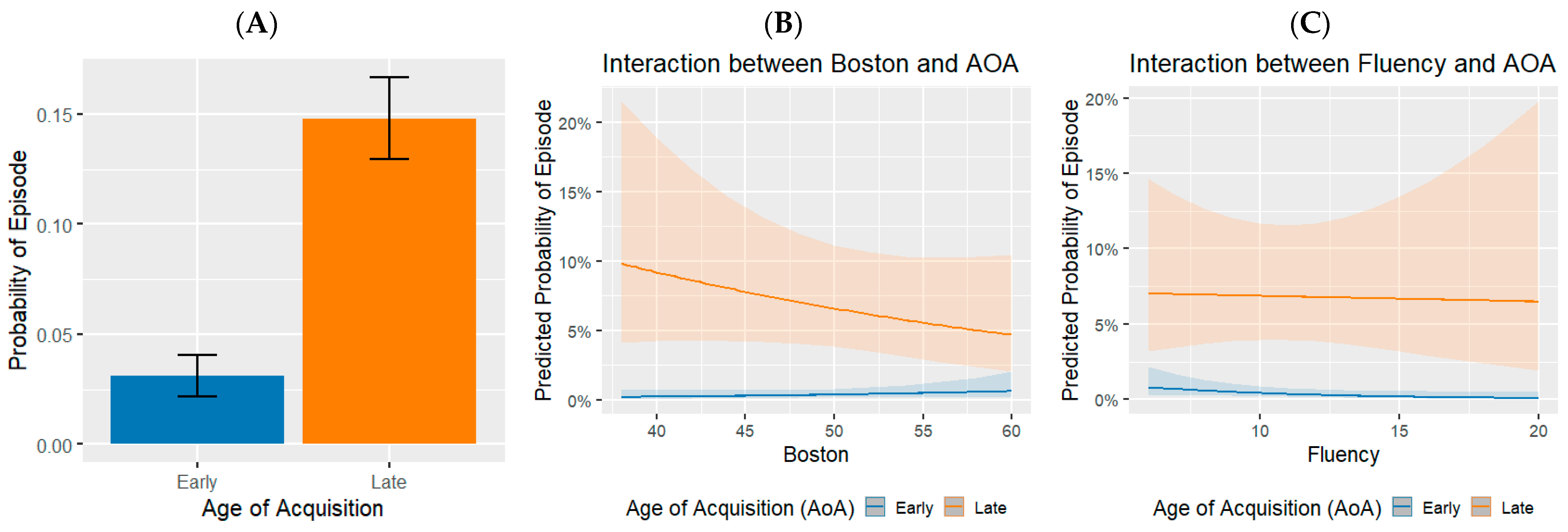
Hair et al., 2010). The model’s intercept is estimated at a probability of approx. 1.7% (logarithmic probability ratio = −4.06) and significantly different from 0. This intercept reflects the probability of experiencing TOT or FOK episodes when all predictors are set to zero (or to the mean in the case of centered continuous predictors), indicating a quantifiable probability of these occurrences within the studied population.
Among the fixed effects examined, age of acquisition (AoA) emerges as a significant predictor. This finding emphasizes the critical role of AoA in cognitive performance, particularly in relation to language recovery. It suggests that words learned later in life lead to more TOTs and FOKs in this context, reflecting the cognitive advantages associated with early language learning.
Conversely, the standardized age variable demonstrates no statistical significance, indicating that variations in age do not independently predict the probability of experiencing TOT or FOK within this sample. Similarly, the sex variable, from an exploratory perspective, failed to reach significance, suggesting that gender does not impact the likelihood of these cognitive phenomena in this context.
The analysis also reveals significant interaction effects among predictors. Notably, the interaction between AoA and vocabulary size indicates that the relationship between AoA and the probability of TOT or FOK episodes diminishes as vocabulary strength increases (see
Figure 3). This finding implies that individuals with a more extensive vocabulary may rely less on AoA during word retrieval, supporting the hypothesis that richer lexical knowledge facilitates cognitive retrieval.
Additionally, the interaction between AoA and verbal fluency is significant, demonstrating that those with higher fluency experience less impact from the age of word acquisition on retrieval likelihood (see
Figure 3). This highlights fluency as a protective factor enhancing cognitive resilience, as individuals who demonstrate greater fluency can navigate TOT episodes more effectively.
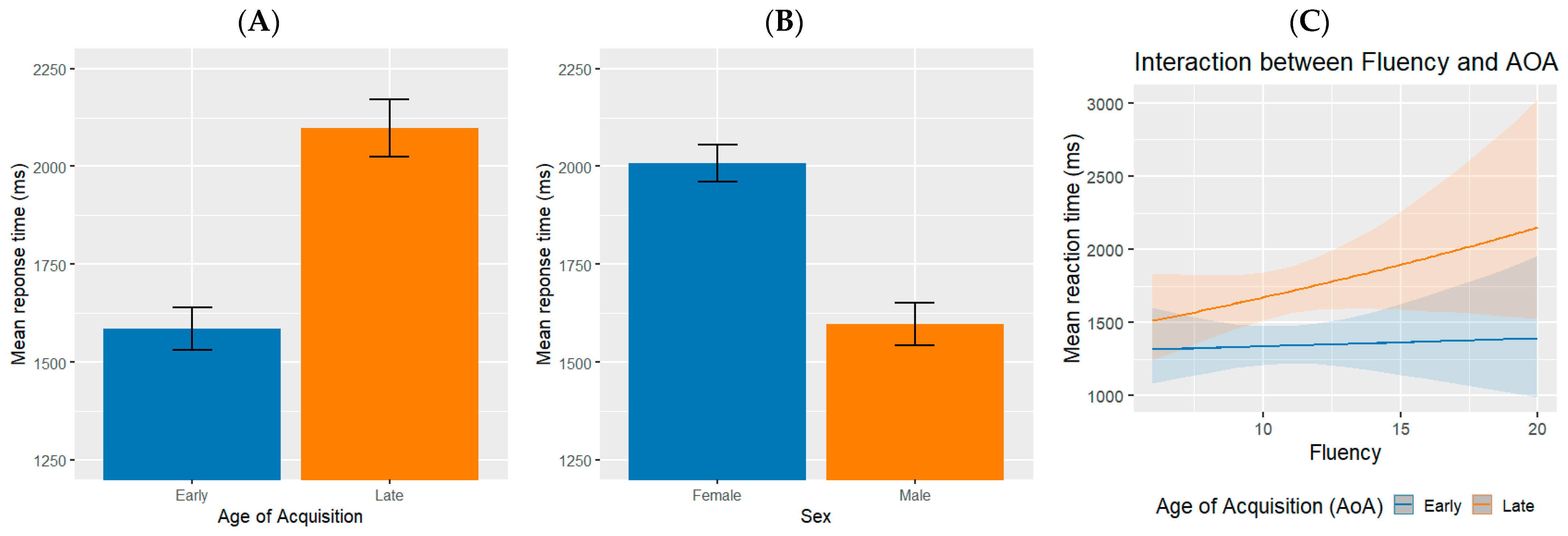
Table 3 presents the results of a fixed effects analysis examining how predictors influence RT during lexical retrieval. Among the predictors analyzed, AoA stands out, yielding a significant effect. This result affirms the substantial impact of AoA, suggesting that earlier vocabulary acquisition is associated with quicker RT—demonstrating the cognitive advantages of early learning. Again, for this model, we observed no collinearity.
The analysis of age reveals no significant impact on RT. Additionally, verbal fluency and vocabulary size did not appear as significant on response latencies, indicating that these factors alone may not be critical determinants in this context. Conversely, at an exploratory level, the sex variable shows a significant effect on RT. This implies that females tend to have longer RT relative to males. Finally, the notable interaction between AoA and fluency indicates that individuals who show greater fluency benefit more from earlier-acquired vocabulary, leading to faster retrieval times. This result suggests that fluency may enhance the retention of cognitive retrieval pathways developed during early learning (see
Figure 4).
4. Discussion
The research aimed to investigate the TOT and FOK phenomena in older adults, which are characterized by difficulties in retrieving words that one believes they know, often accompanied by frustration (
Barry et al., 2025;
Kim & Choi, 2021). The findings reveal significant insights into the interconnections between age of acquisition (AoA), vocabulary size, and verbal fluency with regard to TOT and FOK experiences. Older adults who acquired vocabulary earlier experienced fewer instances of TOT and FOK, suggesting that early language exposure promotes better lexical access in later life (
Brysbaert & Ghyselinck, 2006;
Elsherif et al., 2023;
Johnston & Barry, 2006). The analysis corroborates the idea that vocabulary size and verbal fluency play critical mediating roles in the decline of cognitive processing with age: those with broader vocabularies and higher fluency demonstrated improved efficiency in navigating lexical retrieval tasks (
Catling & Johnston, 2009;
Johnston & Barry, 2006;
Navarrete et al., 2015). Furthermore, statistical analyses revealed differences in RT between male and female participants, though the implications of these discrepancies require further investigation in light of the conflicting literature (
Goral et al., 2007). Phonological factors also emerged as important, with older individuals experiencing an increased number of TOT occurrences due to reduced phonological accessibility. This suggests that retrieval failures may reflect weakened associations between word meanings and sound structures developed earlier in life (
Navarrete et al., 2015;
Salthouse & Mandell, 2013).
A significant body of the literature has explored the construct of AoA in relation to TOT and FOK experiences. Earlier vocabulary acquisition correlates positively with retrieval efficiency, implying that individuals who learn words earlier tend to have better access to these words later in life (
Rojas et al., 2023a). This relationship underscores the protective effects of early language exposure against cognitive decline associated with aging. Research indicates that AoA significantly enhances lexical retrieval and reduces the likelihood of experiencing TOT and FOK phenomena, reinforcing the idea that a rich early vocabulary lays a foundation for better cognitive outcomes during advanced aging (
Mitchell et al., 2023;
Salas et al., 2021).
Moreover, vocabulary size and verbal fluency play essential roles in the dynamics of TOT and FOK experiences. Studies reveal that individuals with extensive vocabularies and high verbal fluency skills exhibit greater resilience against age-related declines in cognitive processing, positively influencing their retrieval abilities (
Frankenberg et al., 2021;
Engle & Kane, 2004;
Mitchell et al., 2023). Specifically, older adults with strong vocabulary resources navigate through TOT states more efficiently, with a smaller effect of AoA as a determinant of retrieval success, suggesting a nuanced interplay between these variables.
In this sense, fluid intelligence introduces an additional layer of complexity, as it influences cognitive performance across various tasks, including language processing and verbal fluency. Fluid intelligence plays a key role in determining how individuals access their lexical resources, especially as they age (
Mitchell et al., 2023). In contrast, crystallized intelligence, which encompasses accumulated knowledge and skills, including vocabulary, plays a pivotal role in maintaining verbal fluency in older adults. While fluid intelligence typically declines with age, crystallized intelligence remains relatively stable, enabling older adults to utilize their extensive vocabulary effectively during verbal tasks (
Rojas et al., 2023a;
Mitchell et al., 2023). This stability is particularly relevant as it can mitigate the decline in access to lexical items, as evidenced by the increased occurrence of TOTs in ageing populations (
Gertel et al., 2020;
Gollan & Brown, 2006). Understanding how these two forms of intelligence interact provides insight into the modulation of lexical access, where both fluid/crystalized intelligence contribute to language processing efficiency. In older adults, robust crystallized intelligence supports retrieval during TOT states, thereby enhancing vocabulary usage and overall communication efficacy (
Mitchell et al., 2023). Consequently, the interplay of fluid and crystallized intelligence is essential for modulating how older adults access their lexicon, influencing the frequency and severity of TOTs and FOKs experienced.
In examining the nuances of RT across genders, the analysis reveals significant distinctions between males and females in the context of the TOT and FOK phenomena. The results indicate that, under certain conditions, males may demonstrate faster reaction times than their female counterparts, particularly in the realm of lexical processing. The statistically significant difference reported implies that males may process and retrieve lexical items more efficiently than females. Prior research has chiefly illustrated a tendency for males to maintain quicker reaction times in diverse experimental settings (
Lindenberger & Reischies, 1999). However, it is essential to examine the subtleties associated with specific cognitive tasks, as some studies present evidence that females may excel in certain retrieval tasks, potentially due to their cognitive processing strengths (
Goral et al., 2007).
It is essential to consider phonological factors in the manifestation of TOT states. Research indicates that the phonological accessibility of words deteriorates with age, leading to a greater incidence of TOT experiences in older adults (
Abrams & Davis, 2016;
Brown, 2012;
Ouyang et al., 2020). This phonological decline highlights the intricate connection between word meanings and their sound structures, suggesting that retrieval failures may arise due to weakened associations between these components, challenging cognitive pathways developed earlier (
James & Burke, 2000). Evidence further supports that phonological characteristics significantly contribute to the likelihood of experiencing TOT during retrieval attempts, particularly when individuals have formed robust phonological representations in their early language development (
Gollan et al., 2011).
The interplay of vocabulary size and fluency with AoA emerged as critical themes in the results. Individuals demonstrating higher vocabulary levels and fluency experienced fewer TOT episodes, underscoring a compensatory mechanism that arises from robust lexical knowledge. The observed interactions suggest that the contribution of AoA diminishes as vocabulary strength increases, reiterating the importance of vocabulary development across the lifespan for positively impacting cognitive retrieval processes.
By focusing on the cognitive dynamics at the intersection of AoA, vocabulary proficiency, and age-related cognitive changes, researchers gain significant insights into language processing. The findings suggest that interventions aimed at preserving and enhancing vocabulary size and verbal fluency reduce retrieval failures in older adults and improve their overall quality of life (
Kavé & Sapir-Yogev, 2020). These insights have implications for healthcare strategies and educational programs that support early language acquisition, consistent with cognitive development and emotional well-being as individuals confront aging challenges.
As we look ahead, the implications of this study extend to both cognitive science and practical applications in gerontology. Understanding cognitive mechanisms underlying language retrieval in older adults is critical for developing interventions that promote effective communication and cognitive health (
Abrams & Davis, 2016;
Schwartz, 2010;
Schwartz & Cleary, 2016). Therefore, fostering rich linguistic environments during early childhood is crucial for enhancing lifelong cognitive resilience. Additionally, the interactions between vocabulary fluency, AoA, and TOTs experiences indicate that cognitive decline may not uniformly affect all individuals. Those with robust vocabulary and higher fluency may experience these phenomena less frequently, suggesting a framework for targeted cognitive interventions that leverage these protective factors.
In evaluating the current research within the broader context of TOT and related cognitive phenomena, the findings pave the way for exploring how various lexical and cognitive attributes interact in older adults facing increased retrieval difficulties. Evidence from prior studies supports the need for further understanding of the cognitive processes underpinning TOT experiences, linking them to neuropsychological frameworks and practical applications within gerontology. Continued research in this area may yield significant insights into strategies for mitigating cognitive decline, fostering resilience, and ultimately enhancing the well-being of older adults as they navigate language retrieval challenges.
Limitations and Future Perspectives
Despite its strengths, the study contains limitations, notably the small sample size, which may limit findings’ generalizability and robustness. The lack of assessments for other cognitive variables, such as processing speed and working memory, may also limit the understanding of the dynamics between TOT occurrences and cognitive decline. Incorporating larger and more diverse samples, as well as additional cognitive evaluations, could enhance future research outcomes.
First, understandinging cognitive phenomena such as TOT and FOK requires consideration of the overlap between lexical frequency and age of acquisition (AoA). Words learned earlier in life are more likely to be used frequently in everyday conversation and have been engaged with for a longer period in a speaker’s memory (
Brysbaert & Ghyselinck, 2006). Consequently, this prolonged exposure enhances the accessibility of such words, making them more likely to be identified as ‘known’ during retrieval tasks. While our findings suggest that an earlier AoA is linked to more successful lexical retrieval, it is important to distinguish these effects from those of lexical frequency (
Catling & Johnston, 2009;
Elsherif et al., 2023). Future research should aim to control for word frequency to ascertain whether words acquired at similar frequency levels still yield different retrieval outcomes based on AoA. This would provide a clearer understanding of the cognitive processes underlying TOT and FOK experiences, and further elucidate the relationship between early vocabulary exposure and cognitive processes in ageing populations.
Furthermore, we need to report on the potential ceiling and floor effects related to verbal fluency and vocabulary size in our study. In this regard, it is important to recognize that words acquired at an early stage tend to be used more frequently in everyday conversation, which can result in upper limits of performance in TOT and FOK responses. This can obscure the nuanced effects of vocabulary size and fluency on retrieval performance. Conversely, words acquired later in life tend to demonstrate a wider range of performance levels. This enables individuals with a more extensive vocabulary and greater verbal fluency to demonstrate their abilities more effectively when retrieving these less familiar words. This distinction highlights the importance of carefully considering both AoA and lexical frequency when analyzing cognitive retrieval processes. A greater understanding of how these elements interact will facilitate more comprehensive findings on their respective impacts on TOT and FOK experiences.
The methodology used to select words acquired early versus late raises important considerations about the reliability of categorization processes. Although the study used a normative sample of ten normal older adults, the limitations of such a small sample size deserve attention. Relying solely on subjective assessments, rather than conducting reliability tests, may have introduced biases in classifying words according to their age of acquisition. Furthermore, it is important to recognize that individuals acquire words at different stages of language development, adding complexity to the interpretation of the results. Future research could benefit from using a larger normative sample or objective measures alongside subjective assessments to ground word classifications more robustly and account for variability in individual acquisition experiences.
Another limitation is the observed age difference between male and female participants in this study. This difference is mainly due to the recruitment method, which included the Chilean government’s Más Adultos Mayores Autovalentes (More Self-Sufficient Older Adults) programme. This programme predominantly attracts younger older women, aged 60–70, while older men and women are underrepresented. Consequently, it was difficult to match participants of both sexes by age due to this demographic bias. To mitigate the potential effects of this age disparity on study outcomes relating to the TOT and FOK phenomena, robust statistical controls were employed. Specifically, our regression models incorporated participant age as a continuous variable and gender as a discrete variable, enabling a nuanced examination of their individual and interactive effects on cognitive outcomes. This rigorous analytical approach ensures the reliability of our results despite the variability introduced by the age differences.
Future research iterations have opportunities for enhancement by increasing sample sizes to improve data robustness and generalizability. A longitudinal design could provide insights into the evolution of TOT and FOK experiences over time. Expanding vocabulary evaluations to include subjective word frequency and familiarity measures would yield a better understanding of how individual differences affect retrieval challenges. Additionally, assessing participants’ confidence regarding their retrieval capabilities could capture metacognitive aspects of TOT experiences, enriching perspectives on cognitive states during language processing.
The findings carry significant implications for cognitive science and gerontology, especially as the population ages. Understanding the cognitive mechanisms of language retrieval in older adults is vital for developing effective interventions. Results indicate that early vocabulary acquisition serves as a protective factor against aging-related cognitive challenges, highlighting the importance of fostering rich linguistic environments in childhood to enhance lifelong cognitive resilience. The study underscores that cognitive decline does not uniformly affect individuals; those with robust vocabularies and higher fluency tend to experience fewer TOT occurrences. Thus, targeted cognitive interventions focusing on vocabulary enrichment and verbal fluency training in later life may significantly mitigate age-related cognitive decline, thereby improving the quality of life for older adults facing communication challenges. Overall, the study emphasizes the crucial interplay of AoA, vocabulary size, and verbal fluency in cognitive processes associated with TOT phenomena among older adults, offering insights essential for fostering cognitive health within aging populations.




 ,
,