Article

Cognitive and Neural Differences in Exact and Approximate Arithmetic Using the Production Paradigm: An fNIRS Study


by
Tianqi Yue
1,†,
Buxuan Guan
1,2,† and
Yan Wu
1,*
1
School of Psychology, Northeast Normal University, Changchun 130024, China
2
Dalian No.13 Senior High School, Dalian 116021, China
*
Author to whom correspondence should be addressed.
These authors contributed equally to this work.
Behav. Sci. 2025, 15(1), 33; https://doi.org/10.3390/bs15010033
Submission received: 6 September 2024 / Revised: 25 December 2024 / Accepted: 30 December 2024 / Published: 1 January 2025
(This article belongs to the Section Cognition)

Abstract

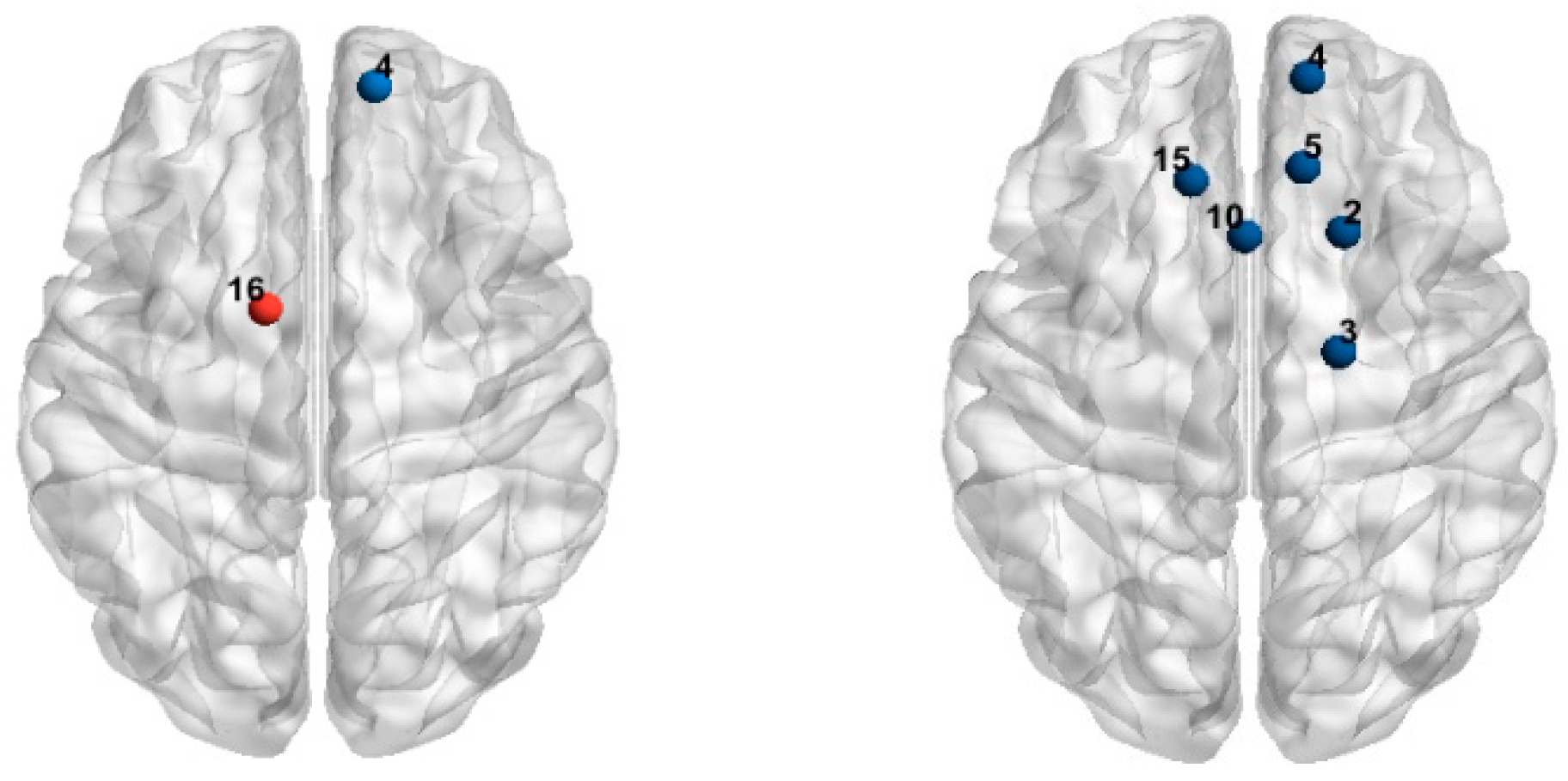
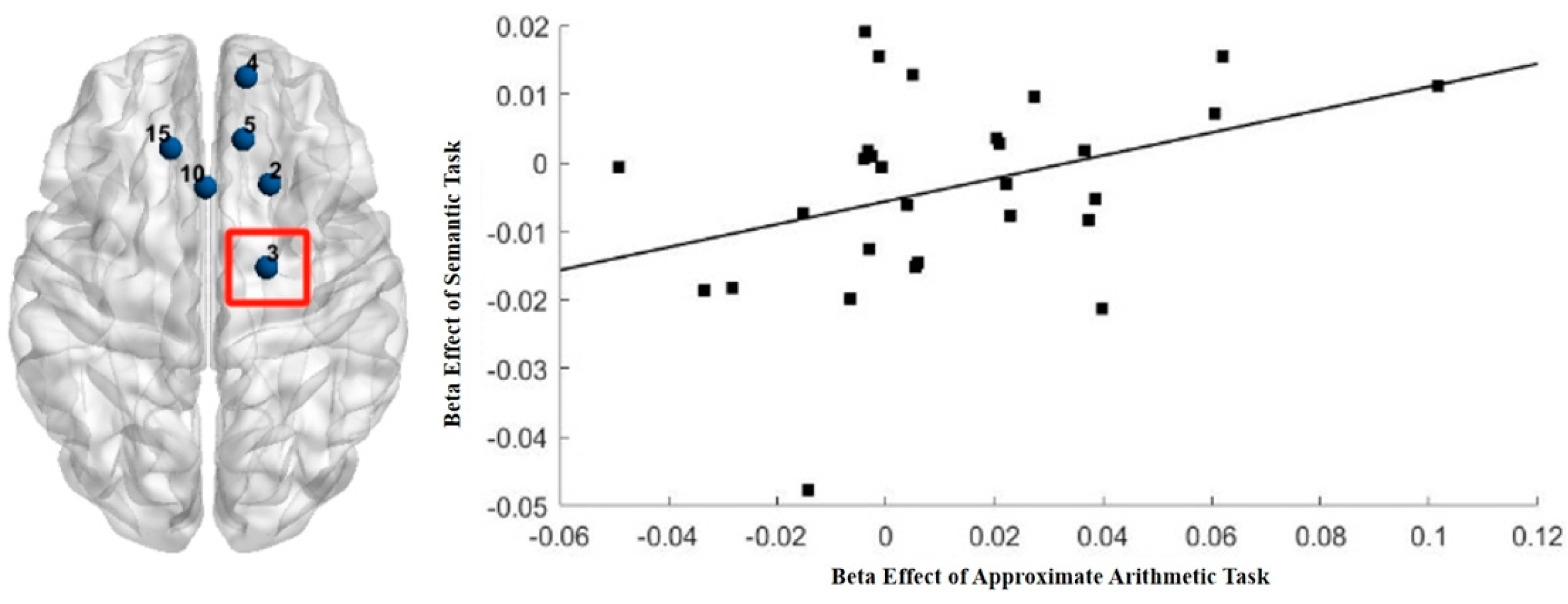
This study investigated the cognitive and neural mechanisms of exact and approximate arithmetic using fNIRS technology during natural calculation processes (i.e., the production paradigm). Behavioral results showed (1) a significantly longer reaction time for exact arithmetic compared to approximate arithmetic, and (2) both exact and approximate arithmetic exhibited a problem size effect, with larger operands requiring more time. The fNIRS results further revealed differences in the neural bases underlying these two arithmetic processes, with exact arithmetic showing greater activation in the L-SFG (left superior frontal gyrus, CH16), while approximate arithmetic exhibited problem size effect in the right hemisphere. Additionally, larger operands registered more brain activities in the R-DLPFC (right dorsolateral prefrontal cortex, CH4), R-SFG (right superior frontal gyrus, CH2), and PMC and SMA (pre- and supplementary motor cortexes, CH3) compared to smaller operands in approximate arithmetic. Moreover, correlation analysis found a significant correlation between approximate arithmetic and semantic processing in the R-PMC and R-SMA (right pre- and supplementary motor cortexes). These findings suggest a neural dissociation between exact and approximate arithmetic, with exact arithmetic processing showing a dominant role in the left hemisphere, while approximate arithmetic processing was more sensitive in the right hemisphere.
Keywords: production paradigm; exact arithmetic; approximate arithmetic; fNIRS production paradigm; exact arithmetic; approximate arithmetic; fNIRS