Article

Evaluating Two Brief Motivational Interventions for Excessive-Drinking University Students

1
North Wales Clinical Psychology Programme, Bangor University, Bangor LL57 2DG, UK
2
Substance Misuse Services, Betsi Cadwaladr University Health Board, Rhyl LL18 3EY, UK
3
School of Psychology and Sport Sciences, Bangor University, Bangor LL57 2DG, UK
*
Author to whom correspondence should be addressed.
Behav. Sci. 2024, 14(5), 381; https://doi.org/10.3390/bs14050381
Submission received: 3 March 2024 / Revised: 29 April 2024 / Accepted: 30 April 2024 / Published: 1 May 2024
(This article belongs to the Special Issue Promoting Behavioral Change to Improve Health Outcomes)

Abstract

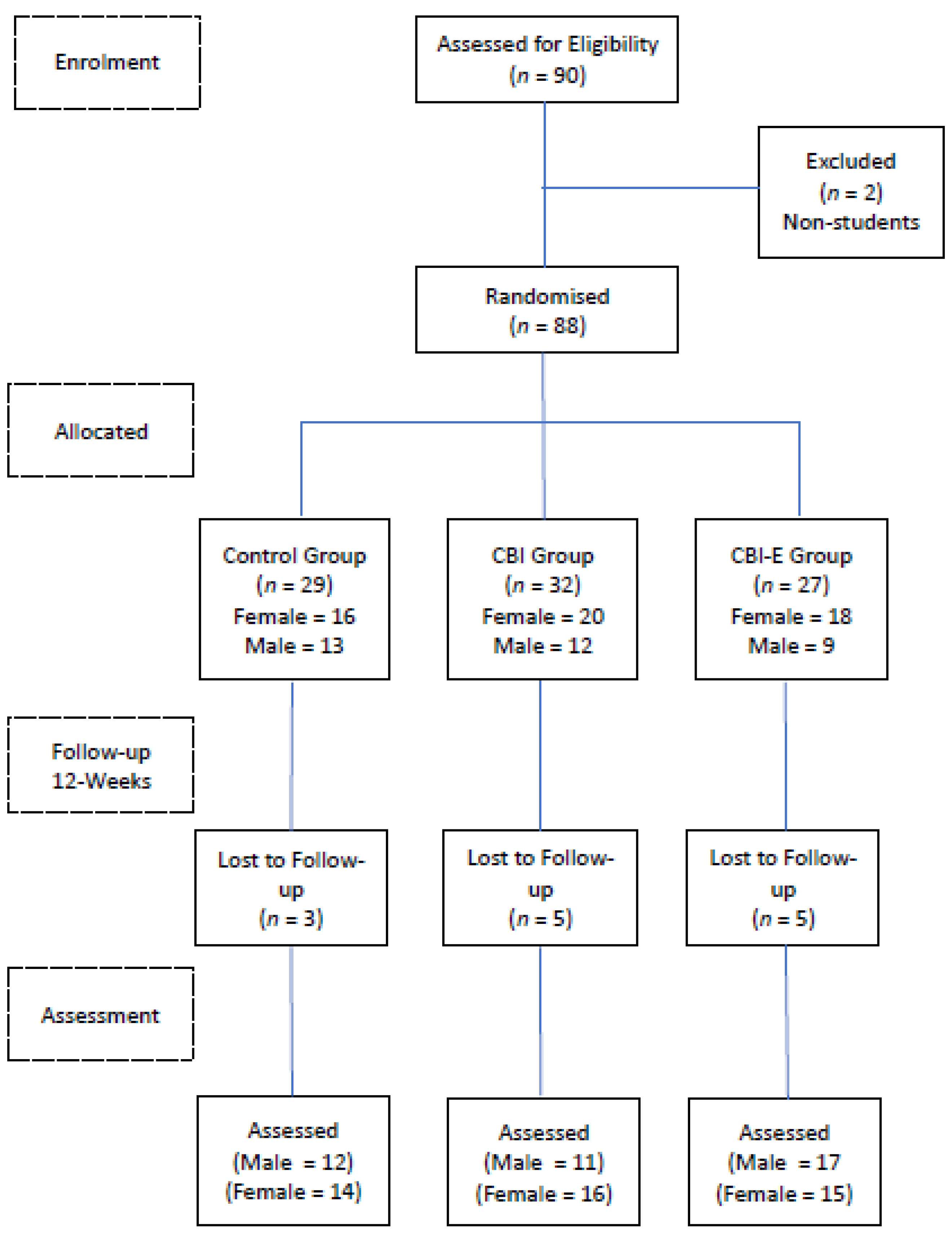
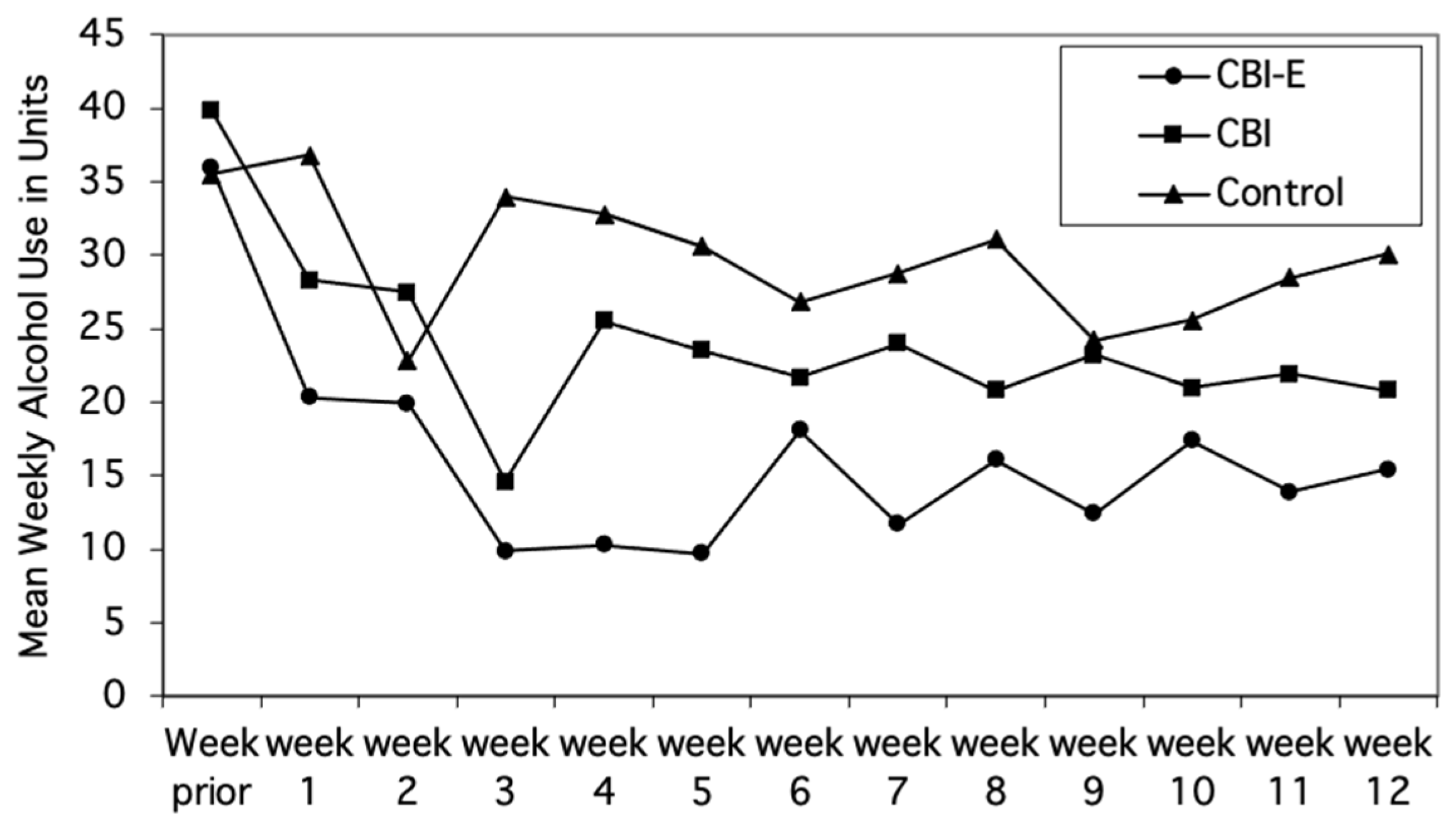
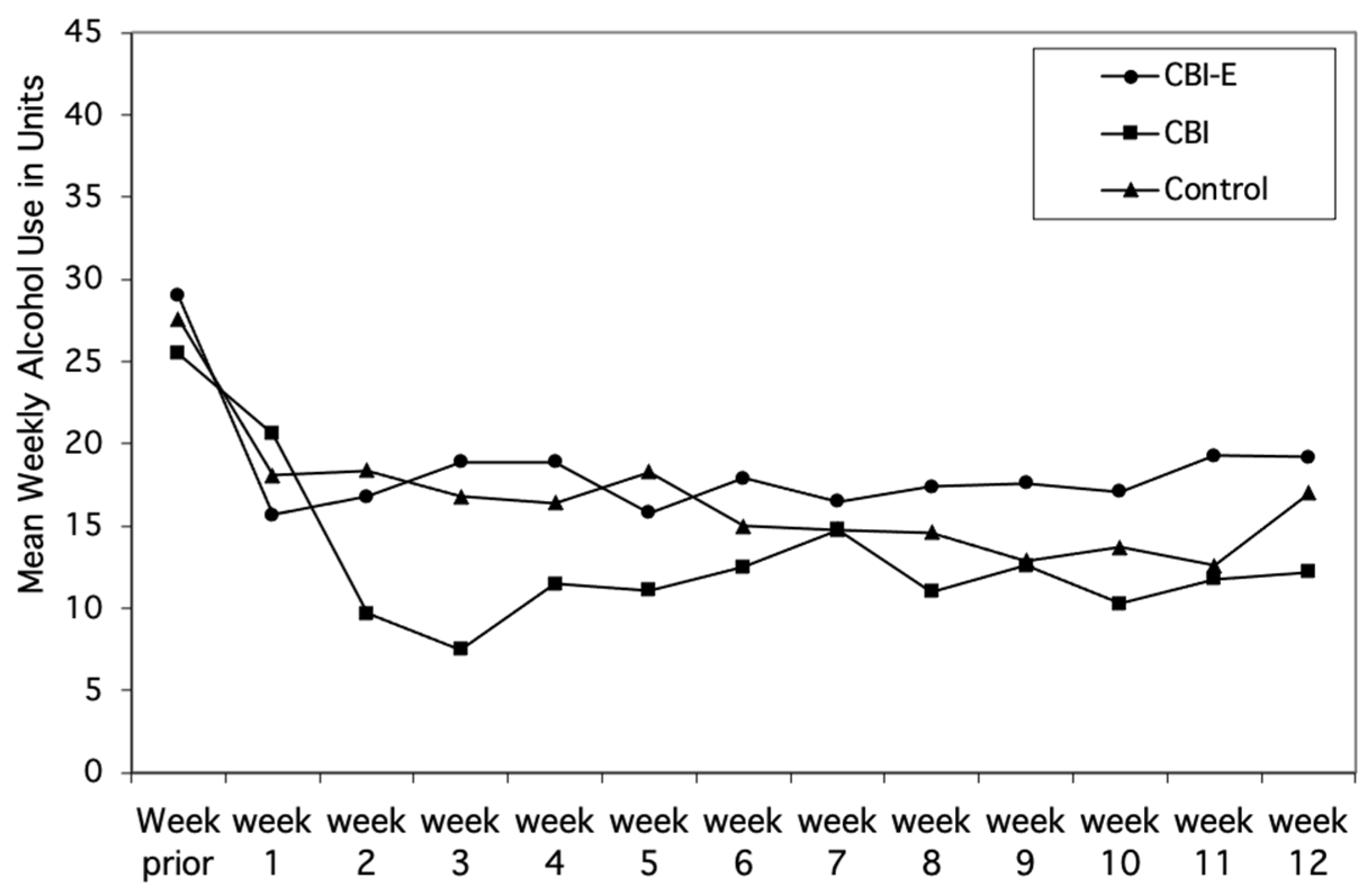
Objective: Two brief computerized motivational interventions for excessive-drinking university students were evaluated. Method: Participants (N = 88, females = 61.5%, mean age = 21.05 years) were randomly assigned to a control group or one of two experimental groups: Computerized Brief Intervention (CBI) or Computerized Brief Intervention-Enhanced (CBI-E). CBI followed the principles of Motivational Interviewing to motivate participants to change their drinking behavior. CBI-E additionally used the principles of Systematic Motivational Counseling to identify and discuss with participants their dysfunctional motivational patterns that were interfering with their attainment of emotional satisfaction. At baseline and a three-month follow-up, the participants completed a battery of measures of alcohol consumption and related problems. Results: At baseline, the participants were confirmed to be heavy drinkers with many drink-related negative consequences. Males and females responded differently to the interventions. During follow-up, males’ alcohol use was ordered: CBI-E < CBI < Controls. The females in all three groups reduced their alcohol use, but there were no significant group differences. Conclusions: Males responded to the interventions as expected. For females, the assessment itself seemed to serve as an effective intervention, and there were no post-intervention differences among the three groups. Suggestions for future research using CBI and CBI-E are discussed.
Keywords: alcohol consumption; computerized brief intervention; gender difference; motivation; university students alcohol consumption; computerized brief intervention; gender difference; motivation; university students