

Nationwide Implementation of a Digital Health Module for Chronic Kidney Disease Screening: A RE-AIM Evaluation in Peru’s Social Health System
 ,
,  ,
,  and
and
Abstract
1. Introduction
2. Materials and Methods
2.1. Study Design
- Quantitative Component: An observational, retrospective, registry-based cohort design was used to analyze secondary clinical and administrative data. This component quantified indicators for Reach (eligible vs. screened patients), Effectiveness (CKD staging and risk stratification via KFRE), and Implementation (fidelity to screening protocols across networks).
- Qualitative Component: A descriptive qualitative design using reflexive thematic analysis was employed to evaluate institutional technical reports, operational directives, and implementation meeting minutes. This component captured contextual dimensions of Adoption (barriers and facilitators for active system integration at the facility level) and Maintenance (sustainability factors and long-term policy integration).
2.2. Context and Intervention
2.3. Study Population and Variables
- Reach: Defined as the proportion of adults with CKD risk factors (diabetes, hypertension, or age > 55 years) registered in MOSARE relative to the total at-risk population within EsSalud [7]. Analyses were conducted by geographic macro-regions (Lima-East, South, North, and Center) and stratified by age and sex.
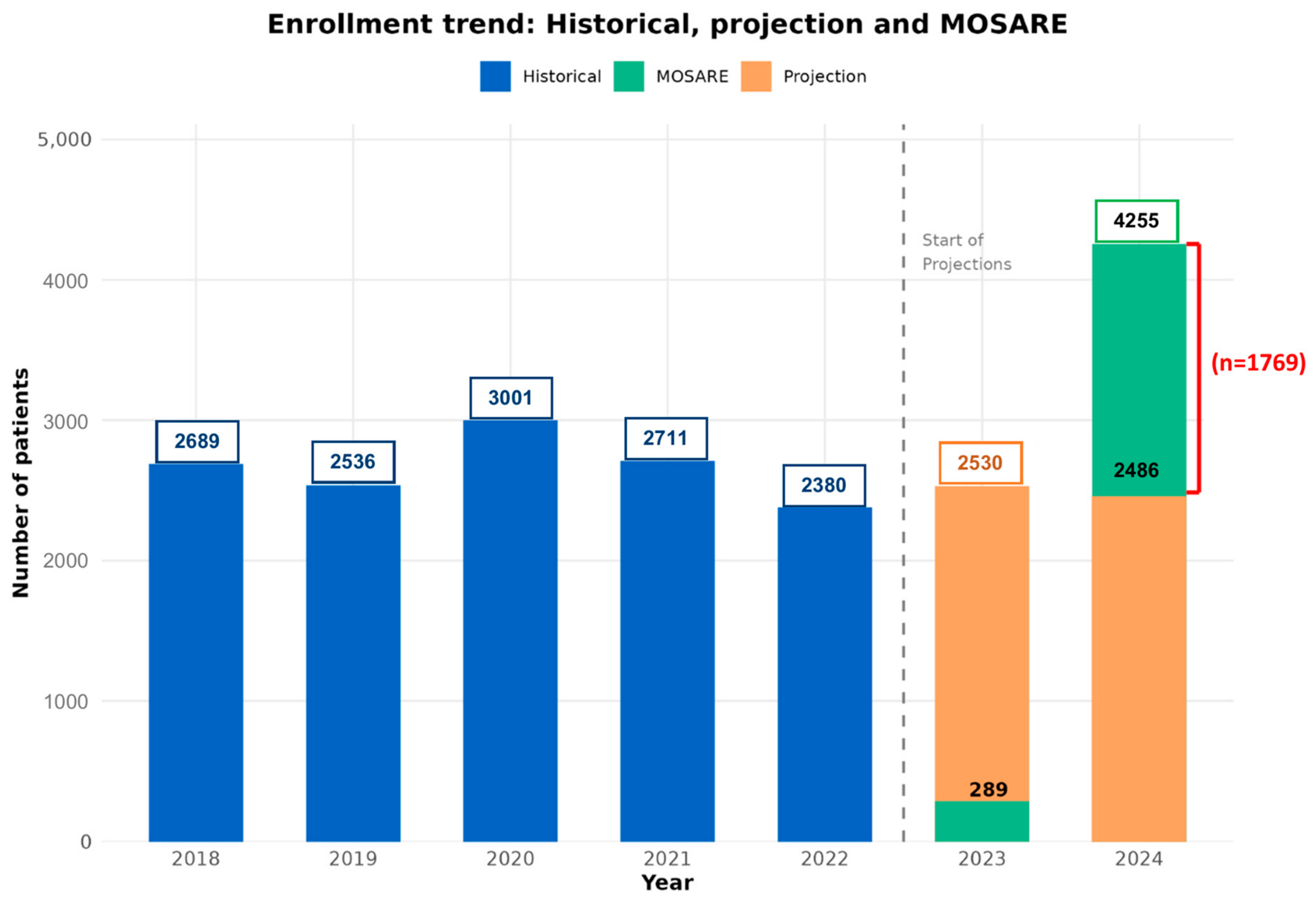
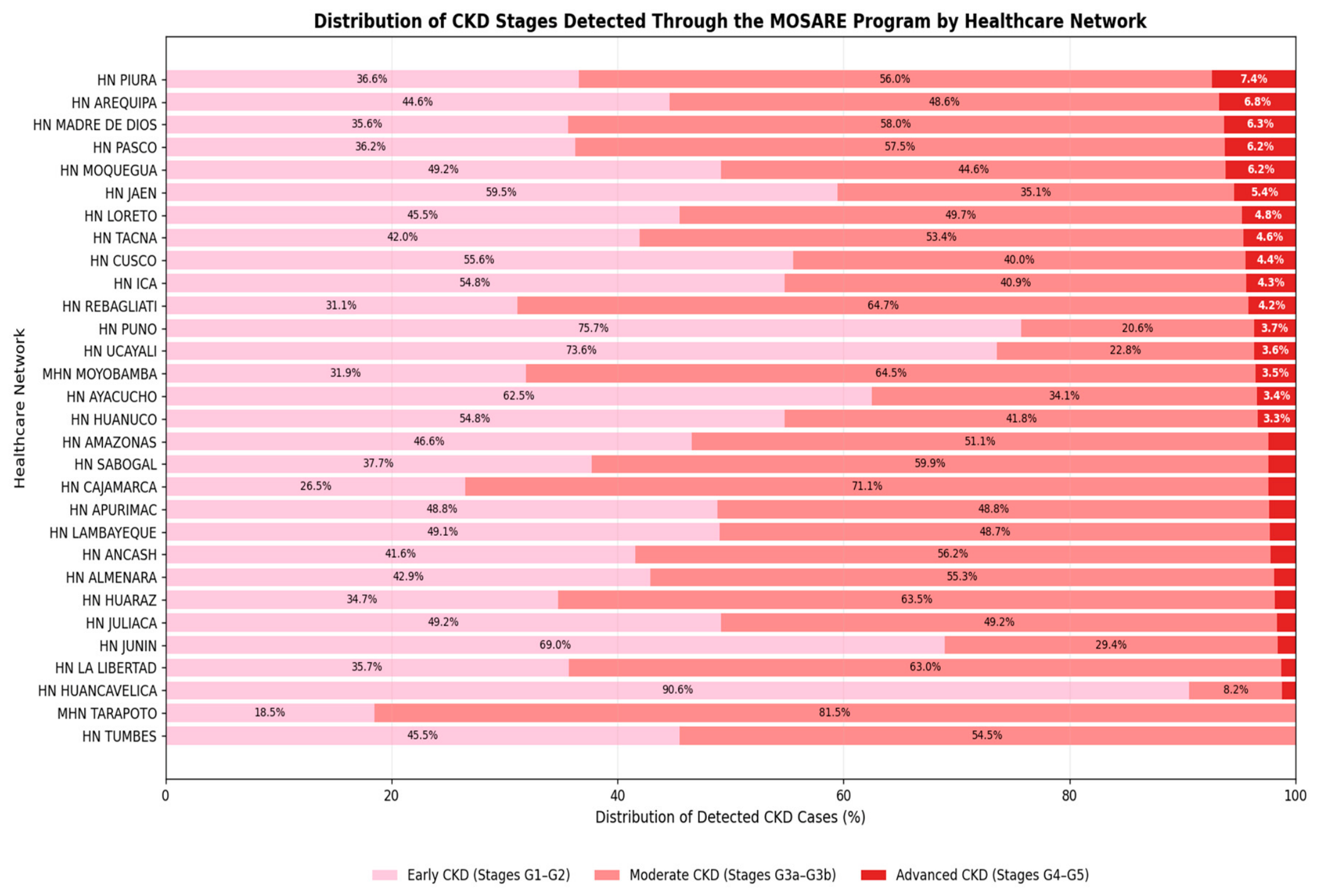
- Effectiveness: Assessed the impact of MOSARE on screening and timely CKD stage identification. Indicators included newly identified cases and distribution by disease stage, compared with historical data. Additionally, MOSARE enabled estimation of CKD progression risk using KFRE [16].
- Adoption: Defined as the proportion of healthcare facilities (IPRESS) implementing MOSARE. To evaluate the Adoption and Maintenance dimensions of the RE-AIM framework, a structured documentary review was conducted using institutional implementation reports, technical monitoring documents, and implementation meeting minutes generated during the nationwide deployment of MOSARE. Documents were systematically reviewed to identify evidence related to acceptance of the intervention, barriers and facilitators to implementation, integration into healthcare processes, and sustainability over time. Extracted information was organized into predefined thematic categories corresponding to the Adoption and Maintenance domains of the RE-AIM framework, providing complementary contextual information to support interpretation of the quantitative findings.
- Implementation: Evaluated fidelity to screening, diagnosis, and initial management protocols, including early-stage detection rates and identification of high-risk patients using KFRE. Time from implementation to first CKD diagnosis was also analyzed.
- Maintenance: Assessed sustainability based on continued system use, technical support activities, ongoing training, and operational monitoring, as well as organizational and technical factors influencing long-term integration.
2.4. Statistical Analysis
2.5. Methodological Biases
3. Results
3.1. Population Characteristics
3.2. Reach
3.3. Effectiveness
3.4. Adoption
3.5. Implementation
3.6. Sustainability
4. Discussion
5. Conclusions
Author Contributions
Funding
Institutional Review Board Statement
Informed Consent Statement
Data Availability Statement
Acknowledgments
Conflicts of Interest
References
- World Health Organization. Global Health Estimates: Life Expectancy and Leading Causes of Death and Disability. Available online: https://www.who.int/data/gho/data/themes/theme-details/GHO/mortality-and-global-health-estimates (accessed on 16 June 2026).
- Unger, T.; Borghi, C.; Charchar, F.; Khan, N.A.; Poulter, N.R.; Prabhakaran, D.; Ramirez, A.; Schlaich, M.; Stergiou, G.S.; Tomaszewski, M.; et al. 2020 International Society of Hypertension Global Hypertension Practice Guidelines. Hypertension 2020, 75, 1334–1357. [Google Scholar] [CrossRef] [PubMed]
- Van der Zee, S.; Baber, U.; Elmariah, S.; Winston, J.; Fuster, V. Cardiovascular risk factors in patients with chronic kidney disease. Nat. Rev. Cardiol. 2009, 6, 580–589. [Google Scholar] [CrossRef] [PubMed]
- Khanam, M.; Kitsos, A.; Stankovich, J.; Jose, M.D.; Castelino, R.L.; Radford, J.; Wimmer, B.C. Chronic kidney disease monitoring in Australian general practice. Aust. J. Gen. Pract. 2019, 48, 132–137. [Google Scholar] [CrossRef] [PubMed]
- Bikbov, B.; Purcell, C.A.; Levey, A.S.; Smith, M.; Abdoli, A.; Abebe, M.; Adebayo, O.M.; Afarideh, M.; Agarwal, S.K.; Agudelo-Botero, M.; et al. Global, regional, and national burden of chronic kidney disease, 1990–2017: A systematic analysis for the Global Burden of Disease Study 2017. Lancet 2020, 395, 709–733. [Google Scholar] [CrossRef] [PubMed]
- Saldarriaga, E.M.; Bravo-Zúñiga, J.; Hurtado-Roca, Y.; Alva, A. Cost-effectiveness analysis of a strategy to delay progression to dialysis and death among chronic kidney disease patients in Lima, Peru. Cost Eff. Resour. Alloc. 2021, 19, 70. [Google Scholar] [CrossRef] [PubMed]
- EsSalud. Guía de Práctica Clínica del Manejo de la Enfermedad Renal Estadio 1 al 5; Instituto de Evaluación de Tecnologías en Salud e Investigación: Lima, Peru, 2025. Available online: https://ietsi.essalud.gob.pe/gpc-guias-de-practica-clinica/ (accessed on 16 June 2026).
- Diforti, J.F.; Cunningham, T.; Piccinini, E.; Lawler, A.J.; Al-Shawi, S.; Al-Sulaivany, B.; Al-Bayati, M.M.H.; McVeigh, K.; Halder, A.; Sharma, S.; et al. Noninvasive and multiplex self-test of kidney disease biomarkers with graphene-based lab-on-a-chip (G-LOC): Toward digital diagnostics in the hands of patients. Anal. Chem. 2024, 96, 3450–3459. [Google Scholar] [CrossRef] [PubMed]
- Xipell Font, M.; Bañón, E.; Falco, J.; Martínez, M.; de la Flor, J.C.; Poch, E.; Herrera, M.; Torres, M.; Vera, M.; Quintana, L.F. CKDSens, a novel healthcare platform for chronic kidney disease. Nephrol. Dial. Transplant. 2020, 35, gfaa142.P0664. [Google Scholar] [CrossRef]
- Shelton, R.C.; Chambers, D.A.; Glasgow, R.E. An extension of RE-AIM to enhance sustainability: Addressing dynamic context and promoting health equity over time. Front. Public Health 2020, 8, 134. [Google Scholar] [CrossRef] [PubMed]
- Glasgow, R.E.; Harden, S.M.; Gaglio, B.; Rabin, B.; Smith, M.L.; Porter, G.C.; Ory, M.G.; Estabrooks, P.A. RE-AIM planning and evaluation framework: Adapting to new science and practice with a 20-year review. Front. Public Health 2019, 7, 64. [Google Scholar] [CrossRef] [PubMed]
- Glasgow, R.E.; Vogt, T.M.; Boles, S.M. Evaluating the public health impact of health promotion interventions: The RE-AIM framework. Am. J. Public Health 1999, 89, 1322–1327. [Google Scholar] [CrossRef] [PubMed]
- Mattocks, K.M.; Kroll-Desrosiers, A.; Crowley, S.; Tuozzo, K.; Rifkin, I.; Moore, D.; Walker, L.; Bonegio, R. Using RE-AIM to examine implementation of a tele-nephrology program for veterans living in rural areas. Front. Health Serv. 2023, 3, 1205951. [Google Scholar] [CrossRef] [PubMed]
- Mauricio, D.; Llanos-Colchado, P.C.; Cutipa-Salazar, L.S.; Curioso, W.H. Electronic health record interoperability system in Peru using blockchain. Int. J. Online Biomed. Eng. 2024, 20, 136–153. [Google Scholar] [CrossRef]
- Curioso, W.H.; Coronel-Chucos, L.G.; Henríquez-Suarez, M. Integrating telehealth for strengthening health systems in the context of the COVID-19 pandemic: A perspective from Peru. Int. J. Environ. Res. Public Health 2023, 20, 5980. [Google Scholar] [CrossRef] [PubMed]
- Gallego-Valcarce, E.; Shabaka, A.; Tato-Ribera, A.M.; Landaluce-Triska, E.; León-Poo, M.; Roldan, D.; Gruss, E. External validation of the KFRE and Grams prediction models for kidney failure and death in a Spanish cohort of patients with advanced chronic kidney disease. J. Nephrol. 2024, 37, 429–437. [Google Scholar] [CrossRef] [PubMed]
- Gøransson, L.G.; Bergrem, H. Consequences of late referral of patients with end-stage renal disease. J. Intern. Med. 2001, 250, 154–159. [Google Scholar] [CrossRef] [PubMed]
- Bravo-Zúñiga, J.; Garcia-Gomero, D.; Dolores-Maldonado, G.; Castillo-Vilca, L.; Villandieri-Soto, M.; Hurtado-Roca, Y. Clinical practice guideline for the management of chronic kidney disease stages 3b, 4, and 5 in the Peruvian Social Health Insurance system. Rev. Cuerpo Med. HNAAA 2023, 16, e1709. [Google Scholar] [CrossRef]
- Kidney Disease: Improving Global Outcomes (KDIGO). KDIGO 2012 clinical practice guideline for the evaluation and management of chronic kidney disease. Kidney Int. Suppl. 2013, 3, 1–150. [CrossRef]
- Rosas-Valdez, F.U.; Aguirre-Vázquez, A.F.; Agudelo-Botero, M. Cuantificación de la carga de la enfermedad renal crónica en América Latina: Una epidemia invisibilizada. Rev. Panam. Salud Publica 2024, 48, e58. Available online: https://iris.paho.org/handle/10665.2/59504 (accessed on 23 June 2026). [CrossRef]
- Pan American Health Organization (PAHO). Improving Chronic Illness Care Through Integrated Health Service Delivery Networks; PAHO: Washington, DC, USA, 2012. [Google Scholar]
- Curioso, W.H. Building capacity and training for digital health: Challenges and opportunities in Latin America. J. Med. Internet Res. 2019, 21, e16513. [Google Scholar] [CrossRef] [PubMed]
- Larrarte, C.; Vesga, J.; Ardila, F.; Restrepo, C.A.; Chavarro, D.A.; Rondón, M.; Benavides, C.A. Validation of the kidney failure risk equation in the Colombian population. Int. J. Nephrol. 2024, 2024, 1282664. [Google Scholar] [CrossRef] [PubMed]
- Bravo-Zúñiga, J.; Chávez-Gómez, R.; Soto-Becerra, P. Multicentre external validation of the kidney failure risk equation in patients with CKD stages 3 and 4 in Peru. BMJ Open 2024, 14, e076217. [Google Scholar] [CrossRef] [PubMed]
- Kinchen, K.S.; Sadler, J.; Fink, N.; Brookmeyer, R.; Coresh, J.; Levey, A.S.; Powe, N.R. The timing of specialist evaluation in chronic kidney disease and mortality. Ann. Intern. Med. 2002, 137, 479–486. [Google Scholar] [CrossRef] [PubMed]
- Cheng, L.; Hu, N.; Song, D.; Zhao, Y. Early versus late nephrology referral and patient outcomes in chronic kidney disease: An updated systematic review and meta-analysis. BMC Nephrol. 2025, 26, 25. [Google Scholar] [CrossRef] [PubMed]
- Neha, F.; Bhati, D.; Shukla, D.K. Generative AI Models (2018–2024): Advancements and Applications in Kidney Care. BioMedInformatics 2025, 5, 18. [Google Scholar] [CrossRef]
- Hacker, K.; Thomas, C.W.; Zhao, G.; Greenlund, K.J. Social determinants of health and health-related social needs among adults with chronic diseases in the United States. Prev. Chronic Dis. 2024, 21, E94. [Google Scholar] [CrossRef] [PubMed]
- Jhamb, M.; Weltman, M.R.; Devaraj, S.M.; Thievon, A.; Weck, K.E.; Yabes, J.G.; Rollman, B.L.; Fischer, G.S.; Unruh, M.L.; Carson, K.A.; et al. Electronic health record population health management for chronic kidney disease care: A cluster randomized clinical trial. JAMA Intern. Med. 2024, 184, 737–747. [Google Scholar] [CrossRef] [PubMed]



| Characteristic | Category | N | % |
|---|---|---|---|
| Sex | Male | 746,196 | 44.7% |
| Sex | Female | 921,660 | 55.3% |
| Age group | Children (0–11) | 562 | 0.0% |
| Age group | Adolescents (12–17) | 1291 | 0.1% |
| Age group | Young adults (18–29) | 3608 | 0.2% |
| Age group | Adults (30–55) | 190,360 | 11.4% |
| Age group | Older adults (>55) | 1,472,033 | 88.3% |
| Diabetes | No | 1,323,603 | 79.4% |
| Diabetes | Yes | 344,253 | 20.6% |
| Hypertension | No | 1,068,668 | 64.1% |
| Hypertension | Yes | 599,188 | 35.9% |
| Diabetes + Hypertension | No | 1,498,024 | 89.8% |
| Diabetes + Hypertension | Yes | 169,832 | 10.2% |
| Overall/Department | With CKD | % | Without CKD | % | Total Screened Patients | % | Scope of Population at Risk | % |
|---|---|---|---|---|---|---|---|---|
| n = 31,990 | n = 61,283 | |||||||
| Peru | 31,990 | 34.30% | 61,283 | 65.70% | 93,273 | 100.00% | 1,667,856 | 5.59% |
| Amazonas | 378 | 55.34% | 305 | 44.66% | 683 | 0.73% | 9399 | 7.27% |
| Ancash | 1307 | 25.62% | 3795 | 74.38% | 5102 | 5.47% | 57,567 | 8.86% |
| Apurímac | 172 | 21.29% | 636 | 78.71% | 808 | 0.87% | 13,726 | 5.89% |
| Arequipa | 929 | 39.48% | 1424 | 60.52% | 2353 | 2.52% | 122,235 | 1.92% |
| Ayacucho | 443 | 34.75% | 832 | 65.25% | 1275 | 1.37% | 17,652 | 7.22% |
| Cajamarca | 248 | 40.39% | 366 | 59.61% | 614 | 0.66% | 31,360 | 1.96% |
| Callao | 3621 | 34.55% | 6860 | 65.45% | 10,481 | 11.24% | 40,754 | 25.72% |
| Cusco | 180 | 19.65% | 736 | 80.35% | 916 | 0.98% | 50,424 | 1.82% |
| Huancavelica | 85 | 75.89% | 27 | 24.11% | 112 | 0.12% | 7910 | 1.42% |
| Huánuco | 717 | 27.80% | 1862 | 72.20% | 2579 | 2.77% | 23,219 | 11.11% |
| Ica | 115 | 22.59% | 394 | 77.41% | 509 | 0.55% | 68,884 | 0.74% |
| Junin | 812 | 28.16% | 2072 | 71.84% | 2884 | 3.09% | 52,155 | 5.53% |
| La Libertad | 860 | 46.51% | 989 | 53.49% | 1849 | 1.98% | 108,530 | 1.70% |
| Lambayeque | 2755 | 30.48% | 6284 | 69.52% | 9039 | 9.69% | 87,584 | 10.32% |
| Lima | 11,439 | 37.72% | 18,888 | 62.28% | 30,327 | 32.51% | 697,448 | 4.35% |
| Loreto | 1301 | 34.35% | 2487 | 65.65% | 3788 | 4.06% | 34,345 | 11.03% |
| Madre de Dios | 174 | 46.03% | 204 | 53.97% | 378 | 0.41% | 5068 | 7.46% |
| Moquegua | 614 | 32.75% | 1261 | 67.25% | 1875 | 2.01% | 18,877 | 9.93% |
| Pasco | 80 | 20.30% | 314 | 79.70% | 394 | 0.42% | 11,222 | 3.51% |
| Piura | 705 | 27.99% | 1814 | 72.01% | 2519 | 2.70% | 84,928 | 2.97% |
| Puno | 1466 | 38.90% | 2303 | 61.10% | 3769 | 4.04% | 36,523 | 10.32% |
| San Martín | 450 | 43.95% | 574 | 56.05% | 1024 | 1.10% | 30,017 | 3.41% |
| Tacna | 2166 | 30.32% | 4978 | 69.68% | 7144 | 7.66% | 24,142 | 29.59% |
| Tumbes | 11 | 24.44% | 34 | 75.56% | 45 | 0.05% | 12,881 | 0.35% |
| Ucayali | 962 | 34.28% | 1844 | 65.72% | 2806 | 3.01% | 21,006 | 13.36% |
| RE-AIM Domain | Excerpt from Meeting Minutes or Official Documents |
|---|---|
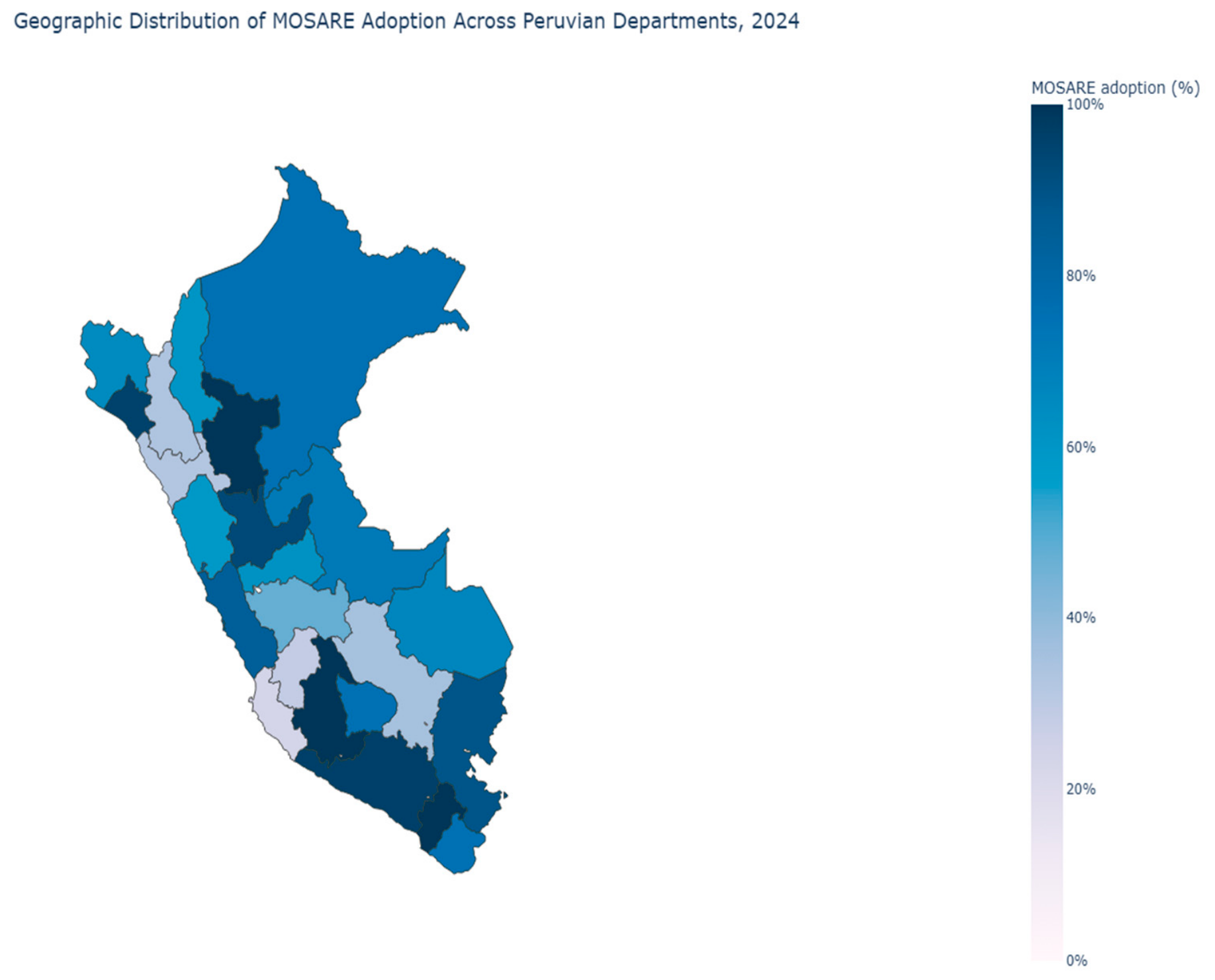
| Adoption: acceptance by IPRESS | “97% (381) of level I and II IPRESS report in MOSARE, highlighting growth in the Southern (60%), Northern (52%), and Central (33%) macro-regions” (I-000006). |
| Adoption: barriers identified for the use of MOSARE in healthcare facilities | “Lack of knowledge of current renal regulations among interdisciplinary teams in level I and II IPRESS was identified” (I-POI1T24). “Technical failures persist in the integration of the MOSARE registry into electronic health records, which affects system continuity” (I-R1573). |
| Adoption: facilitators for the acceptance of MOSARE as a digital screening tool for chronic kidney disease | “Virtual and in-person training sessions achieved an 85% acceptance rate of the module in trained IPRESS” (I-R1573). “Ongoing technical support provided to key healthcare networks, such as Rebagliati and Almenara, facilitated integration of the module into workflow processes” (I-POI1T24). |
| Maintenance: continued system use and integration of MOSARE into policy | “65% of reporting IPRESS maintained active use of the MOSARE module during the first half of 2024” (I-R1573). “Reporting IPRESS with advanced-stage cases improved their monitoring capacity through the use of the module, facilitating follow-up of critical cases” (I-R264). |
Disclaimer/Publisher’s Note: The statements, opinions and data contained in all publications are solely those of the individual author(s) and contributor(s) and not of MDPI and/or the editor(s). MDPI and/or the editor(s) disclaim responsibility for any injury to people or property resulting from any ideas, methods, instructions or products referred to in the content. |
© 2026 by the authors. Licensee MDPI, Basel, Switzerland. This article is an open access article distributed under the terms and conditions of the Creative Commons Attribution (CC BY) license.
Share and Cite
Vidal Orbegozo, P.A.; Arce Gallo, L.C.; Alamo Palomino, I.J.; Roca, M.H.; Galarza, J.E.O.; Ticona-Tiña, D.; Arroyo, L.R.L.; Murillo Carrasco, A.G.; Apolaya-Segura, M.; Diaz-Obregón, D.Z. Nationwide Implementation of a Digital Health Module for Chronic Kidney Disease Screening: A RE-AIM Evaluation in Peru’s Social Health System. Med. Sci. 2026, 14, 373. https://doi.org/10.3390/medsci14030373
Vidal Orbegozo PA, Arce Gallo LC, Alamo Palomino IJ, Roca MH, Galarza JEO, Ticona-Tiña D, Arroyo LRL, Murillo Carrasco AG, Apolaya-Segura M, Diaz-Obregón DZ. Nationwide Implementation of a Digital Health Module for Chronic Kidney Disease Screening: A RE-AIM Evaluation in Peru’s Social Health System. Medical Sciences. 2026; 14(3):373. https://doi.org/10.3390/medsci14030373
Chicago/Turabian StyleVidal Orbegozo, Percy Allan, Lizbeth Carmen Arce Gallo, Isabel Julia Alamo Palomino, Madelaine Huanca Roca, Juana Eliza Ormeño Galarza, Dayana Ticona-Tiña, Luis Randy Loayza Arroyo, Alexis German Murillo Carrasco, Moisés Apolaya-Segura, and Daysi Zulema Diaz-Obregón. 2026. "Nationwide Implementation of a Digital Health Module for Chronic Kidney Disease Screening: A RE-AIM Evaluation in Peru’s Social Health System" Medical Sciences 14, no. 3: 373. https://doi.org/10.3390/medsci14030373
APA StyleVidal Orbegozo, P. A., Arce Gallo, L. C., Alamo Palomino, I. J., Roca, M. H., Galarza, J. E. O., Ticona-Tiña, D., Arroyo, L. R. L., Murillo Carrasco, A. G., Apolaya-Segura, M., & Diaz-Obregón, D. Z. (2026). Nationwide Implementation of a Digital Health Module for Chronic Kidney Disease Screening: A RE-AIM Evaluation in Peru’s Social Health System. Medical Sciences, 14(3), 373. https://doi.org/10.3390/medsci14030373