

Muscle Tone Regulation and Bruxism in Chronic Stress: Pathophysiological Links to Tooth Fractures and Dental Hard Tissue Pathology
 , , , , , and
Abstract
1. Introduction
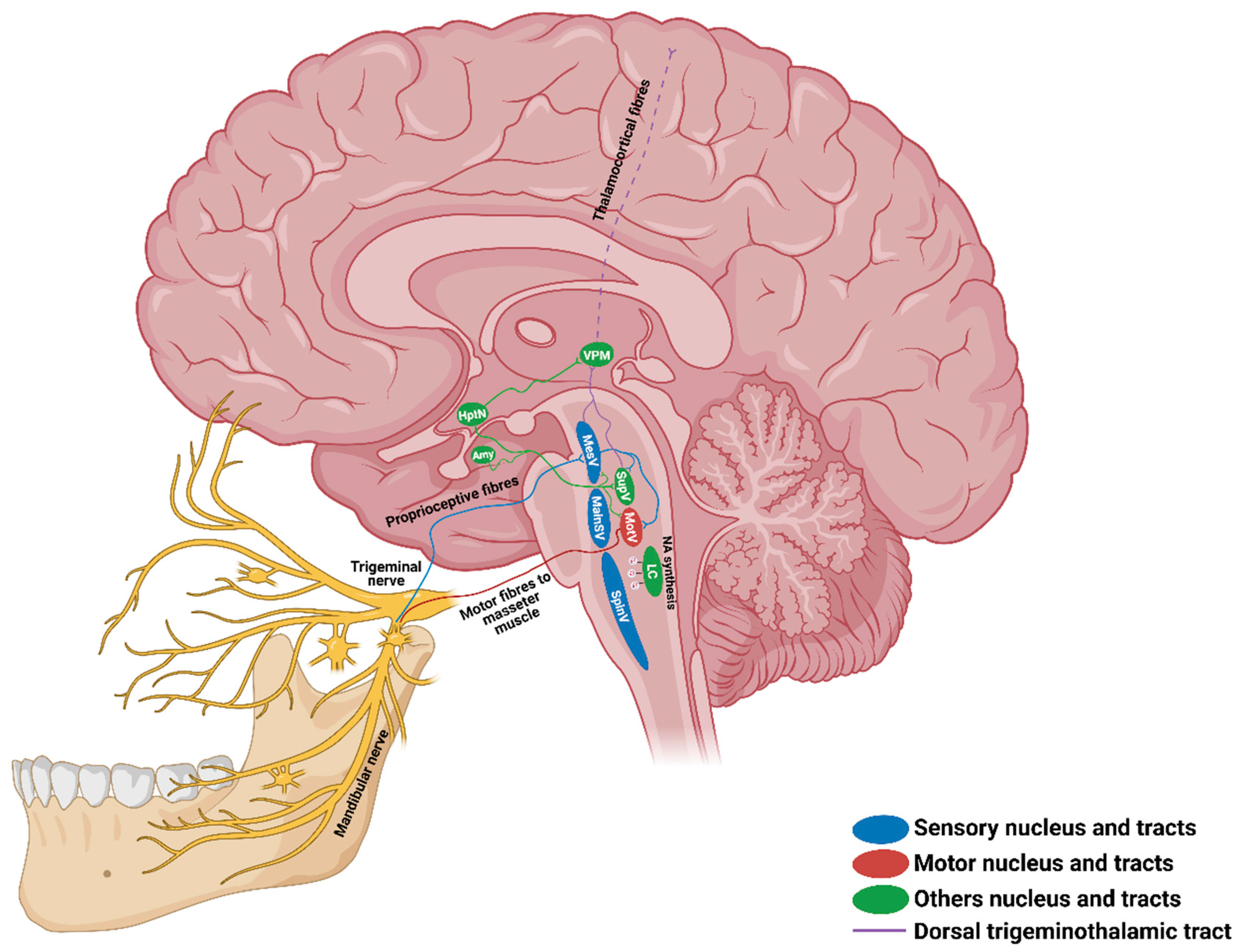
2. Physiological and Anatomical Basis for Maintaining Normal Muscle Tone in the Masseter Muscles
3. The Effect of the Autonomic Nervous System on Muscle Tone and the Development of Its Pathology
4. The Influence of the Sympathetic Division
5. The Influence of the Parasympathetic Division
6. The Relationship Between Psychoemotional State and Masticatory Muscle Function: Pathophysiological Aspects
7. The Relationship Between Bruxism and Chronic Stress
8. The Relationship Between Bruxism and Tooth Fractures
9. Clinical Manifestations: Tooth Wear, Cracks, and Fractures
10. Preventive Measures
11. Discussion and Conclusions
12. Future Research Necessities
Author Contributions
Funding
Institutional Review Board Statement
Informed Consent Statement
Data Availability Statement
Conflicts of Interest
References
- World Health Organization. Anxiety Disorders [Fact Sheet]. 2025. Available online: https://www.who.int/ru/news-room/fact-sheets/detail/anxiety-disorders (accessed on 9 April 2026).
- Nilsen, K.B.; Sand, T.; Stovner, L.J.; Leistad, R.B.; Westgaard, R.H. Autonomic and muscular responses and recovery to one-hour laboratory mental stress in healthy subjects. BMC Musculoskelet. Disord. 2007, 8, 81. [Google Scholar] [CrossRef] [PubMed]
- Zhao, H.; Zhou, M.; Liu, Y.; Jiang, J.; Wang, Y. Recent advances in anxiety disorders: Focus on animal models and pathological mechanisms. Anim. Models Exp. Med. 2023, 6, 559–572. [Google Scholar] [CrossRef]
- Vlăduțu, D.; Popescu, S.M.; Mercuț, R.; Ionescu, M.; Scrieciu, M.; Glodeanu, A.D.; Stănuși, A.; Rîcă, A.M.; Mercuț, V. Associations between bruxism, stress, and manifestations of temporomandibular disorder in young students. Int. J. Environ. Res. Public Health 2022, 19, 5415. [Google Scholar] [CrossRef]
- Dupare, A.S.; Motwani, M.; Panchbhai, A.; Sukhadeve, V.; Tayade, C.; Bhalerao, S.V. Bruxism, sleep quality, anxiety disorders, and tension-type headache in temporomandibular joint disorders: A systematic review. J. Pharm. Bioallied Sci. 2025, 17, S3474–S3476. [Google Scholar] [CrossRef] [PubMed]
- Ganguly, J.; Kulshreshtha, D.; Almotiri, M.; Jog, M. Muscle tone physiology and abnormalities. Toxins 2021, 13, 282. [Google Scholar] [CrossRef] [PubMed]
- Masi, A.T.; Hannon, J.C. Human resting muscle tone (HRMT): Narrative introduction and modern concepts. J. Bodyw. Mov. Ther. 2008, 12, 320–332. [Google Scholar] [CrossRef]
- Ferrario, V.F.; Sforza, C.; Miani, A.; D’Addona, A.; Barbini, E. Electromyographic activity of human masticatory muscles in normal young people. Statistical evaluation of reference values for clinical applications. J. Oral Rehabil. 1993, 20, 271–280. [Google Scholar] [CrossRef]
- Kröger, S.; Watkins, B. Muscle spindle function in healthy and diseased muscle. Skelet. Muscle 2021, 11, 3. [Google Scholar] [CrossRef]
- Watkins, B.; Schultheiß, J.; Rafuna, A.; Hintze, S.; Meinke, P.; Schoser, B.; Kröger, S. Degeneration of muscle spindles in a murine model of Pompe disease. Sci. Rep. 2023, 13, 6555. [Google Scholar] [CrossRef]
- Eriksson, P.O.; Butler-Browne, G.S.; Thornell, L.E. Immunohistochemical characterization of human masseter muscle spindles. Muscle Nerve 1994, 17, 31–41. [Google Scholar] [CrossRef]
- Shi, X.; Zhang, J.; Shi, G.; Zhu, J. Mesencephalic trigeminal nucleus neurons with collaterals to both eyelid and masseter muscles shown by fluorescent double-labeling, revealing a potential mechanism for Marcus Gunn Syndrome. PLoS ONE 2023, 18, e0293372. [Google Scholar] [CrossRef]
- Yoshida, A.; Moritani, M.; Nagase, Y.; Bae, Y.C. Projection and synaptic connectivity of trigeminal mesencephalic nucleus neurons controlling jaw reflexes. J. Oral Sci. 2017, 59, 177–182. [Google Scholar] [CrossRef]
- Wang, N.; May, P.J. The ultrastructure of macaque mesencephalic trigeminal nucleus neurons. Exp. Brain Res. 2024, 242, 295–307. [Google Scholar] [CrossRef] [PubMed]
- Sato, K. Why is the mesencephalic nucleus of the trigeminal nerve situated inside the brain? Med. Hypotheses 2021, 153, 110626. [Google Scholar] [CrossRef] [PubMed]
- Luo, P.F.; Wang, B.R.; Peng, Z.Z.; Li, J.S. Morphological characteristics and terminating patterns of masseteric neurons of the mesencephalic trigeminal nucleus in the rat: An intracellular horseradish peroxidase labeling study. J. Comp. Neurol. 1991, 301, 286–299. [Google Scholar] [CrossRef]
- Fujita, S.; Kaneko, M.; Nakamura, H.; Kobayashi, M. Spatiotemporal profiles of proprioception processed by the masseter muscle spindles in rat cerebral cortex: An optical imaging study. Front. Neural Circuits 2017, 11, 4. [Google Scholar] [CrossRef] [PubMed]
- Cuccurazzu, B.; Deriu, F.; Tolu, E.; Yates, B.J.; Billig, I. A monosynaptic pathway links the vestibular nuclei and masseter muscle motoneurons in rats. Exp. Brain Res. 2007, 176, 665–671. [Google Scholar] [CrossRef]
- Yoshida, A.; Fujio, T.; Sato, F.; Ali, M.S.S.; Haque, T.; Ohara, H.; Moritani, M.; Kato, T.; Dostrovsky, J.; Tachibana, Y. Orofacial proprioceptive thalamus of the rat. Brain Struct. Funct. 2017, 222, 2655–2669. [Google Scholar] [CrossRef]
- Stanek, E.; Rodriguez, E.; Zhao, S.; Han, B.X.; Wang, F. Supratrigeminal bilaterally projecting neurons maintain basal tone and enable bilateral phasic activation of jaw-closing muscles. J. Neurosci. 2016, 36, 7663–7675. [Google Scholar] [CrossRef]
- Yoshida, A.; Inoue, M.; Sato, F.; Morita, Y.; Tsutsumi, Y.; Furuta, T.; Uchino, K.; Akhter, F.; Bae, Y.C.; Tachibana, Y.; et al. Efferent and afferent connections of supratrigeminal neurons conveying orofacial muscle proprioception in rats. Brain Struct. Funct. 2022, 227, 111–129. [Google Scholar] [CrossRef]
- Sato, F.; Kado, S.; Tsutsumi, Y.; Tachibana, Y.; Ikenoue, E.; Furuta, T.; Uchino, K.; Bae, Y.C.; Uzawa, N.; Yoshida, A. Ascending projection of jaw-closing muscle-proprioception to the intralaminar thalamic nuclei in rats. Brain Res. 2020, 1739, 146830. [Google Scholar] [CrossRef] [PubMed]
- Tsutsumi, Y.; Sato, F.; Furuta, T.; Uchino, K.; Moritani, M.; Bae, Y.C.; Kato, T.; Tachibana, Y.; Yoshida, A. The cerebellar cortex receives orofacial proprioceptive signals from the supratrigeminal nucleus via the mossy fiber pathway in rats. Cerebellum 2023, 22, 663–679. [Google Scholar] [CrossRef] [PubMed]
- Tsutsumi, Y.; Tachibana, Y.; Sato, F.; Furuta, T.; Ohara, H.; Tomita, A.; Fujita, M.; Moritani, M.; Yoshida, A. Cortical and subcortical projections from granular insular cortex receiving orofacial proprioception. Neuroscience 2018, 388, 317–329. [Google Scholar] [CrossRef]
- Türker, K.S.; Sowman, P.F.; Tuncer, M.; Tucker, K.J.; Brinkworth, R.S. The role of periodontal mechanoreceptors in mastication. Arch. Oral Biol. 2007, 52, 361–364. [Google Scholar] [CrossRef] [PubMed]
- Millar, B.J.; Halata, Z.; Linden, R.W. The structure of physiologically located periodontal ligament mechanoreceptors of the cat canine tooth. J. Anat. 1989, 167, 117–127. [Google Scholar]
- Byers, M.R. Sensory innervation of rat molar root pulp and dentin, apex, foramen, cellular cementum, vasculature and periodontium. Arch. Oral Biol. 2025, 174, 106238. [Google Scholar] [CrossRef]
- Bonte, B.; Linden, R.W.; Scott, B.J.; van Steenberghe, D. Role of periodontal mechanoreceptors in evoking reflexes in the jaw-closing muscles of the cat. J. Physiol. 1993, 465, 581–594. [Google Scholar] [CrossRef]
- Suganuma, T.; Ono, Y.; Shinya, A.; Furuya, R. The effect of bruxism on periodontal sensation in the molar region: A pilot study. J. Prosthet. Dent. 2007, 98, 30–35. [Google Scholar] [CrossRef]
- Wen, X.; Pei, F.; Jin, Y.; Zhao, Z. Exploring the mechanical and biological interplay in the periodontal ligament. Int. J. Oral Sci. 2025, 17, 23. [Google Scholar] [CrossRef]
- Gonçalves, L.M.N.; Siéssere, S.; Cecilio, F.A.; Hallak, J.E.C.; de Vasconcelos, P.B.; Júnior, W.M.; Regalo, I.H.; Palinkas, M.; Regalo, S.C.H. Amyotrophic lateral sclerosis: An analysis of the electromyographic fatigue of the masticatory muscles. Prague Med. Rep. 2022, 123, 258–265. [Google Scholar] [CrossRef]
- Donizetti Verri, E.; da Silva, G.P.; Marianetti Fioco, E.; Soares da Silva, N.; Valin Fabrin, S.C.; Augusto Bueno Zanella, C.; Roberta Garrefa, C.; Faria Júnior, M.; Siéssere, S.; Hallak, J.E.C.; et al. Effects of Parkinson’s disease on molar bite force, electromyographic activity and muscle thickness of the masseter, temporal and sternocleidomastoid muscles: A case-control study. J. Oral Rehabil. 2019, 46, 912–919. [Google Scholar] [CrossRef]
- Ferreira, B.; Palinkas, M.; Gonçalves, L.; da Silva, G.; Arnoni, V.; Regalo, I.; Vasconcelos, P.; Júnior, W.M.; Hallak, J.; Regalo, S.; et al. Spinocerebellar ataxia: Functional analysis of the stomatognathic system. Med. Oral Patol. Oral Cir. Bucal 2019, 24, e165–e171. [Google Scholar] [CrossRef]
- Ishii, H.; Niioka, T.; Sudo, E.; Izumi, H. Evidence for parasympathetic vasodilator fibres in the rat masseter muscle. J. Physiol. 2005, 569, 617–629. [Google Scholar] [CrossRef]
- McGregor, R.; Damián, A.; Fabbiani, G.; Torterolo, P.; Pose, I.; Chase, M.; Morales, F.R. Direct hypothalamic innervation of the trigeminal motor nucleus: A retrograde tracer study. Neuroscience 2005, 136, 1073–1081. [Google Scholar] [CrossRef]
- Yasui, Y. Control pathways from the subcortical limbic structures to the trigeminal motor system in the lower brainstem: A hodological review. Neurosci. Med. 2015, 6, 24–34. [Google Scholar] [CrossRef]
- Kagan, R.; Kainz, V.; Burstein, R.; Noseda, R. Hypothalamic and basal ganglia projections to the posterior thalamus: Possible role in modulation of migraine headache and photophobia. Neuroscience 2013, 248, 359–368. [Google Scholar] [CrossRef] [PubMed]
- Mavanji, V.; Teske, J.A.; Kotz, C.M.; Pellizzer, G. Changes in sensorimotor cortex oscillatory activity by orexin-A in the ventrolateral preoptic area of the hypothalamus reflect increased muscle tone. J. Neurosci. Res. 2023, 101, 1305–1323. [Google Scholar] [CrossRef]
- Xiao, F.; Hu, A.; Meng, B.; Zhang, Y.; Han, W.; Su, J. PVH-Peri5 pathway for stress-coping oromotor and anxious behaviors in mice. J. Dent. Res. 2023, 102, 227–237. [Google Scholar] [CrossRef] [PubMed]
- Condés-Lara, M.; Martínez-Lorenzana, G.; Espinosa de los Monteros-Zúñiga, A.; López-Córdoba, G.; Córdova-Quiroga, A.; Flores-Bojórquez, S.A.; González-Hernández, A. Hypothalamic paraventricular stimulation inhibits nociceptive wide dynamic range trigeminocervical complex cells via oxytocinergic transmission. J. Neurosci. 2024, 44, e1501232024. [Google Scholar] [CrossRef]
- Scott-Solomon, E.; Boehm, E.; Kuruvilla, R. The sympathetic nervous system in development and disease. Nat. Rev. Neurosci. 2021, 22, 685–702. [Google Scholar] [CrossRef]
- Hasebe, Y.; Yokota, S.; Fukushi, F.; Takeda, K.; Yoshizawa, M.; Onimaru, H.; Kono, Y.; Sugama, S.; Uchiyama, M.; Koizumi, K.; et al. Persistence of post-stress blood pressure elevation requires activation of astrocytes. Sci. Rep. 2024, 14, 22984. [Google Scholar] [CrossRef]
- Braun, J.; Patel, M.; Woods, W.; Keatch, C.; Kameneva, T.; Lambert, E. Frontal and temporo-parietal changes in delta and alpha power accompany stress-induced vasoconstriction and blood pressure response. J. Neurophysiol. 2025, 133, 1815–1827. [Google Scholar] [CrossRef]
- Sun, R.; Zhang, S.; Si, J.; Zhang, L.; Yang, H.; Ye, Z.; Xiong, X. Association between oral behaviors and painful temporomandibular disorders: A cross-sectional study in the general population. J. Pain Res. 2024, 17, 431–439. [Google Scholar] [CrossRef] [PubMed]
- Kuhn, M.; Türp, J.C. Risk factors for bruxism. Swiss Dent. J. 2018, 128, 118–124. [Google Scholar] [CrossRef] [PubMed]
- Belenda González, I.; Montero, J.; Gómez Polo, C.; Pardal Peláez, B. Evaluation of the relationship between bruxism and/or temporomandibular disorders and stress, anxiety, depression in adults: A systematic review and qualitative analysis. J. Dent. 2025, 156, 105707. [Google Scholar] [CrossRef]
- Zhao, Y.J.; Liu, Y.; Wang, J.; Li, Q.; Zhang, Z.M.; Tu, T.; Lei, R.; Zhang, M.; Chen, Y.J. Activation of the mesencephalic trigeminal nucleus contributes to masseter hyperactivity induced by chronic restraint stress. Front. Cell. Neurosci. 2022, 16, 841133. [Google Scholar] [CrossRef] [PubMed]
- Zhao, Y.J.; Chen, J.; Liu, Y.; Pan, L.L.; Guo, Y.X.; Zhang, Z.M.; Li, Q.; Chen, Y.J. Regulation of CeA-Vme projection in masseter hyperactivity caused by restraint stress. Front. Cell. Neurosci. 2024, 18, 1509020. [Google Scholar] [CrossRef]
- Nikolenko, V.N.; Osadchiy, A.S.; Lobanova, A.K.; Isakova, T.A.; Zharov, N.A.; Zharova, N.V. Functional anatomy of the limbic system structures involved in the development of post-traumatic stress disorder: Analysis of anatomical and clinical studies. Neurol. Neuropsychiatry Psychosom. 2024, 16, 69–75. [Google Scholar] [CrossRef]
- Schwarz, P.B.; Yee, N.; Mir, S.; Peever, J.H. Noradrenaline triggers muscle tone by amplifying glutamate-driven excitation of somatic motoneurones in anaesthetized rats. J. Physiol. 2008, 586, 5787–5802. [Google Scholar] [CrossRef]
- Ichikawa-Kato, T.; Hara, T.; Yamada-Kubota, C.; Kuwahara, M.; Murakami, A.; Minagi, S. Effects of intracerebral noradrenaline on cognitive decline associated with the loss of occlusal support. J. Prosthodont. Res. 2025, 69, 243–248. [Google Scholar] [CrossRef]
- Nikolenko, V.N.; Borminskaya, I.D.; Nikitina, A.T.; Golyshkina, M.S.; Rizaeva, N.A.; Oganesyan, M.V. Locus coeruleus-norepinephrine system: Spheres of influence and contribution to the development of neurodegenerative diseases. Front. Biosci. (Landmark Ed.) 2024, 29, 118. [Google Scholar] [CrossRef]
- Toyoda, H.; Won, J.; Kim, W.; Kim, H.; Davy, O.; Saito, M.; Kim, D.; Tanaka, T.; Kang, Y.; Oh, S.B. The nature of noradrenergic volume transmission from locus coeruleus to brainstem mesencephalic trigeminal sensory neurons. Front. Cell. Neurosci. 2022, 16, 841239. [Google Scholar] [CrossRef]
- Seminck, N.; Khatoun, A.; Kerstens, S.; Nuttin, B.; Mc Laughlin, M. External stimulation of the trigeminal nerve causes pupil dilation in healthy volunteers, suggesting locus coeruleus modulation. Brain Stimul. 2024, 17, 678–680. [Google Scholar] [CrossRef]
- Liu, Y.; Chen, J.; Li, Q.; Guo, Y.X.; Chen, Y.J.; Zhao, Y.J. Locus coeruleus activation contributes to masseter muscle overactivity induced by chronic restraint stress in mice. Neuroreport 2024, 35, 763–770. [Google Scholar] [CrossRef]
- De Cicco, V.; Tramonti Fantozzi, M.P.; Ligori, S.; Cataldo, E.; De Cicco, D.; Bongioanni, P.; Dolciotti, C.; Bruschini, L.; Faraguna, U.; Manzoni, D. Trigeminal influences and locus coeruleus: Tips for countermeasures, therapies and precocious diagnosis in dementia. Brain Res. Bull. 2025, 230, 111528. [Google Scholar] [CrossRef] [PubMed]
- Kang, Y.; Toyoda, H.; Saito, M. Search for unknown neural link between the masticatory and cognitive brain systems to clarify the involvement of its impairment in the pathogenesis of Alzheimer’s disease. Front. Cell. Neurosci. 2024, 18, 1425645. [Google Scholar] [CrossRef] [PubMed]
- Pisani, F.; Pisani, V.; Arcangeli, F.; Harding, A.; Singhrao, S.K. Locus coeruleus dysfunction and trigeminal mesencephalic nucleus degeneration: A cue for periodontal infection mediated damage in Alzheimer’s disease? Int. J. Environ. Res. Public Health 2023, 20, 1007. [Google Scholar] [CrossRef]
- Ishii, H.; Niioka, T.; Watanabe, H.; Izumi, H. Inhibitory effects of excess sympathetic activity on parasympathetic vasodilation in the rat masseter muscle. Am. J. Physiol. Regul. Integr. Comp. Physiol. 2007, 293, R729–R736. [Google Scholar] [CrossRef] [PubMed]
- Mito, K.; Sato, T.; Ishikawa, R.; Ramadhani, R.; Okada, Y.; Hirohata, Y.; Saito, T.; Ishii, H. Age-related decrease of cholinergic parasympathetic reflex vasodilation in the rat masseter muscle. Microvasc. Res. 2021, 138, 104214. [Google Scholar] [CrossRef]
- Robert, C.; Bourgeais, L.; Arreto, C.D.; Condes-Lara, M.; Noseda, R.; Jay, T.; Villanueva, L. Paraventricular hypothalamic regulation of trigeminovascular mechanisms involved in headaches. J. Neurosci. 2013, 33, 8827–8840. [Google Scholar] [CrossRef]
- Pavlou, I.A.; Spandidos, D.A.; Zoumpourlis, V.; Papakosta, V.K. Neurobiology of bruxism: The impact of stress (Review). Biomed. Rep. 2024, 20, 59. [Google Scholar] [CrossRef]
- Ruf, S.; Cecere, F.; Kupfer, J.; Pancherz, H. Stress-induced changes in the functional electromyographic activity of the masticatory muscles. Acta Odontol. Scand. 1997, 55, 44–48. [Google Scholar] [CrossRef]
- Yoshida, K.; Iida, T.; Ishii, Y.; Komiyama, O. Analysis of definite awake bruxism using a portable electromyography device. J. Oral Sci. 2024, 66, 66–69. [Google Scholar] [CrossRef]
- Mikami, S.; Yamaguchi, T.; Takahashi, M.; Kudo, A.; Saito, M.; Nakajima, T.; Maeda, M.; Saito, T.; Sakuma, T.; Takahashi, S.; et al. Examination of the relationship between masseter muscle activity during sleep and wakefulness measured by using a wearable electromyographic device. J. Prosthodont. Res. 2024, 68, 92–99. [Google Scholar] [CrossRef]
- Angkulmahasuk, S.; Nishiyama, A.; Ishiyama, H.; Fueki, K. Stress-, anxiety-, and gender-related modulation of masseter muscle activity during wakefulness. J. Oral Rehabil. 2026, 53, 202–210. [Google Scholar] [CrossRef] [PubMed]
- Villada, C.; Hidalgo, V.; Almela, M.; Salvador, A. Individual differences in the psychobiological response to psychosocial stress: The relevance of trait anxiety and coping styles. Stress Health 2016, 32, 90–99. [Google Scholar] [CrossRef]
- Schmitter, M.; Kares-Vrincianu, A.; Kares, H.; Malsch, C.; Schindler, H.J. Chronic stress and temporalis muscle activity in TMD patients and controls during sleep: A pilot study in females. Clin. Oral Investig. 2019, 23, 667–672. [Google Scholar] [CrossRef] [PubMed]
- Verhoeff, M.C.; Lobbezoo, F.; Ahlberg, J.; Bender, S.; Bracci, A.; Colonna, A.; Dal Fabbro, C.; Durham, J.; Glaros, A.G.; Häggman-Henrikson, B.; et al. Updating the bruxism definitions: Report of an international consensus meeting. J. Oral Rehabil. 2025, 52, 1335–1342. [Google Scholar] [CrossRef] [PubMed]
- Li, D.; Aarab, G.; Lobbezoo, F.; Arcache, P.; Lavigne, G.J.; Huynh, N. Accuracy of sleep bruxism scoring based on electromyography traces of different jaw muscles in individuals with obstructive sleep apnea. J. Clin. Sleep Med. 2022, 18, 1609–1615. [Google Scholar] [CrossRef]
- Chemelo, V.D.S.; Né, Y.G.S.; Frazão, D.R.; de Souza-Rodrigues, R.D.; Fagundes, N.C.F.; Magno, M.B.; da Silva, C.M.T.; Maia, L.C.; Lima, R.R. Is there association between stress and bruxism? A systematic review and meta-analysis. Front. Neurol. 2020, 11, 590779. [Google Scholar] [CrossRef]
- González González, A.; Martín Casado, A.M.; Gómez Polo, C. Association between possible bruxism, sleep quality, depression, anxiety and stress by gender. A cross-sectional study in a Spanish sample. J. Dent. 2025, 156, 105677. [Google Scholar] [CrossRef]
- Emodi-Perlman, A.; Zur, M.; Czygrinow, A.Y.; Ventura, N.; Eli, I. Impact of long-term stress on awake bruxism: An observational longitudinal within-subject study of stress-related changes. Dent. Med. Probl. 2025, 62, 1059–1067. [Google Scholar] [CrossRef]
- Al-Talib, T.; Goodman, X.; Ziada, H.; Abubakr, N.H. Bruxism and direct and indirect restorations failure: A scoping review. J. Dent. 2025, 157, 105738. [Google Scholar] [CrossRef] [PubMed]
- Chrcanovic, B.R.; Bergengren, T.; Stanisic, N.; Sohrabi, S.; Larsson, C.; Svensson, P.; Häggman-Henrikson, B. Relationship between bite force, bruxism, and fractures of teeth and dental restorations. Sci. Rep. 2025, 15, 22752. [Google Scholar] [CrossRef] [PubMed]
- Kruzic, J.J.; Hoffman, M.; Arsecularatne, J.A. Fatigue and wear of human tooth enamel: A review. J. Mech. Behav. Biomed. Mater. 2023, 138, 105574. [Google Scholar] [CrossRef] [PubMed]
- Machado, A.C.; Soares, P.V.; Soares, C.A.; Reis, B.R.; Zeola, L.F.; Raposo, L.H.A. Influence of occlusal loading type and cyclic fatigue on the mechanical behavior of sound maxillary premolars: A laboratory and 3D finite element analysis. Braz. Dent. J. 2025, 36, e246150. [Google Scholar] [CrossRef]
- Pahlevan, A.; Mirzaee, M.; Yassine, E.; Ranjbar Omrany, L.; Hasani Tabatabaee, M.; Kermanshah, H.; Arami, S.; Abbasi, M. Enamel thickness after preparation of tooth for porcelain laminate. J. Dent. 2014, 11, 428–432. [Google Scholar]
- Dhammayannarangsi, P.; Na Lampang, S.; Traithipsirikul, P.; Supamongkol, A.; Kittipongphat, P.; Trachoo, V.; Osathanon, T.; Aimmanee, S.; Everts, V.; Samaranayake, L.; et al. Lesion morphology modification is unnecessary for non-carious cervical lesion restorations: A comparison of stiff and flowable composites. Int. Dent. J. 2026, 76, 109284. [Google Scholar] [CrossRef]
- Popescu, A.M.; Ionescu, M.; Popescu, S.M.; Ionescu, A.G.; Vlăduțu, D.E.; Iacov-Crăițoiu, M.M.; Ștefârță, A.; Lascu, L.C.; Mercuț, V. Oral clinical and radiological signs of excessive occlusal forces in bruxism. Diagnostics 2025, 15, 702. [Google Scholar] [CrossRef]
- Bronkhorst, H.; Kalaykova, S.; Huysmans, M.C.; Loomans, B.; Pereira-Cenci, T. Tooth wear and bruxism: A scoping review. J. Dent. 2024, 145, 104983. [Google Scholar] [CrossRef]
- Laksamikeeratikul, I.; Jariyasakulroj, S.; Chattrattrai, T.; Pongrojpaw, S. Digital measurement of tooth wear in sleep bruxism patients wearing occlusal splints. BMC Oral Health 2025, 25, 1349. [Google Scholar] [CrossRef]
- Wetselaar, P.; Manfredini, D.; Ahlberg, J.; Johansson, A.; Aarab, G.; Papagianni, C.E.; Reyes Sevilla, M.; Koutris, M.; Lobbezoo, F. Associations between tooth wear and dental sleep disorders: A narrative overview. J. Oral Rehabil. 2019, 46, 765–775. [Google Scholar] [CrossRef]
- Sadasiva, K.; Ramalingam, S.; Rajaram, K.; Meiyappan, A. Cracked tooth syndrome: A report of three cases. J. Pharm. Bioallied Sci. 2015, 7, S700–S703. [Google Scholar] [CrossRef]
- Mylonas, P.; Gitonga, I.; Ioannidis, K. Bruxism and endodontics: How to manage cracked teeth. Dent. Update 2025, 52, 373–380. [Google Scholar] [CrossRef]
- Zhang, A.; Sang, Z.; Zhang, X.; Yang, Y.; Yang, Z.; Wang, W. Symptomatic cracked teeth: Associations with patient-level and tooth-level factors—A case-control study. J. Dent. 2025, 161, 105921. [Google Scholar] [CrossRef]
- Li, F.; Diao, Y.; Wang, J.; Hou, X.; Qiao, S.; Kong, J.; Sun, Y.; Lee, E.S.; Jiang, H.B. Review of cracked tooth syndrome: Etiology, diagnosis, management, and prevention. Pain Res. Manag. 2021, 2021, 3788660. [Google Scholar] [CrossRef]
- Tunçekin, İ.; Toprak, M. Duloxetine-induced sleep bruxism and tooth fracture in fibromyalgia. Düzce Tıp Fakültesi Derg. 2024, 26, 269–271. [Google Scholar] [CrossRef]
- Marchini, L.; Desai, J.; Qian, F. Tooth Grinding in Older Adults: A Retrospective Cross-Sectional Study. Spec. Care Dent. 2025, 45, e70092. [Google Scholar] [CrossRef]
- Boscato, N.; Nascimento, G.G.; Leite, F.R.M.; Horta, B.L.; Svensson, P.; Demarco, F.F. Role of occlusal factors on probable bruxism and orofacial pain: Data from the 1982 Pelotas birth cohort study. J. Dent. 2021, 113, 103788. [Google Scholar] [CrossRef]
- Khayat, N.; Winocur, E.; Emodi Perelman, A.; Friedman-Rubin, P.; Gafni, Y.; Shpack, N. The prevalence of posterior crossbite, deep bite, and sleep or awake bruxism in temporomandibular disorder (TMD) patients compared to a non-TMD population: A retrospective study. Cranio 2021, 39, 398–404. [Google Scholar] [CrossRef]
- Lile, I.E.; Hajaj, T.; Constantin, G.D.; Niculescu, S.T.; Marian, D.; Stana, O.; Zaharia, C.; Veja, I. Association Between Occlusal Interferences, Temporomandibular Joint Dysfunction, and Bruxism in Romanian Adults. J. Clin. Med. 2025, 14, 5612. [Google Scholar] [CrossRef]
- Vaida, L.; Dima, R.; Cuc, E.; Negrutiu, B.; Moca, A.; Lile, I.E.; Daragiu, D.; Alexandru, Z.; Albert, E.; Todor, B. Comparative Study on the Efficiency of Intermaxillary Elastic Polymers Used in the Treatment of Skeletal Class II Malocclusions in Growing Patients. Mater. Plast. 2019, 56, 341–345. [Google Scholar] [CrossRef]
- Negruţiu, B.M.; Vaida, L.L.; Todor, B.I.; Judea, A.S.; Lile, I.E.; Moca, A.E.; Judea-Pusta, C.T. An important morphological feature of the face: Upper lip length. Rom. J. Morphol. Embryol. 2019, 60, 537–541. [Google Scholar]
- Macedo, C.R.; Macedo, E.C.; Torloni, M.R.; Silva, A.B.; Prado, G.F. Pharmacotherapy for sleep bruxism. Cochrane Database Syst. Rev. 2014, 10, CD005578. [Google Scholar] [CrossRef]
- Senff, J.; Bonotto, D.V.; Hilgenberg-Sydney, P.B.; Sebastiani, A.; Scariot, R.; Oda, L.Y. Childhood and adolescents sleep bruxism treatment: A systematic review. Sleep Sci. 2023, 16, e344–e353. [Google Scholar] [CrossRef]
- Hilgenberg-Sydney, P.B.; Lorenzon, A.L.; Pimentel, G.; Petterle, R.R.; Bonotto, D. Probable awake bruxism—Prevalence and associated factors: A cross-sectional study. Dent. Press J. Orthod. 2022, 27, e2220298. [Google Scholar] [CrossRef]
- Bussadori, S.K.; Motta, L.J.; Horliana, A.C.R.T.; Santos, E.M.; Martimbianco, A.L.C. The current trend in management of bruxism and chronic pain: An overview of systematic reviews. J. Pain Res. 2020, 13, 2413–2421. [Google Scholar] [CrossRef]
- Assiri, H.A.; Almuawi, L.F.; Asiri, B.A.; Abumelha, S.T.; Alahmari, R.M.; Hameed, M.S.; Egido-Moreno, S.; López-López, J. Bruxism treatment outcomes: A systematic review and meta-analysis. Medicine 2025, 104, e46247. [Google Scholar] [CrossRef]
- Matusz, K.; Maciejewska-Szaniec, Z.; Gredes, T.; Pobudek-Radzikowska, M.; Glapiński, M.; Górna, N.; Przystańska, A. Common therapeutic approaches in sleep and awake bruxism—An overview. Neurol. Neurochir. Pol. 2022, 56, 455–463. [Google Scholar] [CrossRef]
- Scarpini, S.; Lira, A.O.; Gimenez, T.; Raggio, D.P.; Chambrone, L.; Souza, R.C.; Floriano, I.; Morimoto, S.; Tedesco, T.K. Associated factors and treatment options for sleep bruxism in children: An umbrella review. Braz. Oral Res. 2023, 37, e006. [Google Scholar] [CrossRef]
- Fernández-Núñez, T.; Amghar-Maach, S.; Gay-Escoda, C. Efficacy of botulinum toxin in the treatment of bruxism: Systematic review. Med. Oral Patol. Oral Cir. Bucal 2019, 24, e416–e424. [Google Scholar] [CrossRef]
- Malcangi, G.; Patano, A.; Pezzolla, C.; Riccaldo, L.; Mancini, A.; Di Pede, C.; Inchingolo, A.D.; Inchingolo, F.; Bordea, I.R.; Dipalma, G.; et al. Bruxism and botulinum injection: Challenges and insights. J. Clin. Med. 2023, 12, 4586. [Google Scholar] [CrossRef]
- Chisini, L.A.; Pires, A.L.C.; Poletto-Neto, V.; Damian, M.F.; Luz, M.S.; Loomans, B.; Pereira-Cenci, T. Occlusal splint or botulinum toxin-A for jaw muscle pain treatment in probable sleep bruxism: A randomized controlled trial. J. Dent. 2024, 151, 105439. [Google Scholar] [CrossRef]
- Coelho, M.S.; Oliveira, J.M.D.; Polmann, H.; Pauletto, P.; Stefani, C.M.; Maciel, L.C.L.; Canto, G.L. Botulinum toxin for bruxism: An overview. Toxins 2025, 17, 249. [Google Scholar] [CrossRef]
- Ainoosah, S.; Farghal, A.E.; Alzemei, M.S.; Saini, R.S.; Gurumurthy, V.; Quadri, S.A.; Okshah, A.; Mosaddad, S.A.; Heboyan, A. Comparative analysis of different types of occlusal splints for the management of sleep bruxism: A systematic review. BMC Oral Health 2024, 24, 29. [Google Scholar] [CrossRef]
- Albagieh, H.; Alomran, I.; Binakresh, A.; Alhatarisha, N.; Almeteb, M.; Khalaf, Y.; Alqublan, A.; Alqahatany, M. Occlusal splints—Types and effectiveness in temporomandibular disorder management. Saudi Dent. J. 2023, 35, 70–79. [Google Scholar] [CrossRef]
- Lukic, N.; Saxer, T.; Hou, M.Y.; Zumbrunn Wojczyńska, A.; Gallo, L.M.; Colombo, V. Short-term effects of NTI-tss and Michigan splint on nocturnal jaw muscle activity: A pilot study. Clin. Exp. Dent. Res. 2021, 7, 323–330. [Google Scholar] [CrossRef]
- Riley, P.; Glenny, A.M.; Worthington, H.V.; Jacobsen, E.; Robertson, C.; Durham, J.; Davies, S.; Petersen, H.; Boyers, D. Oral splints for temporomandibular disorder or bruxism: A systematic review. Br. Dent. J. 2020, 228, 191–197. [Google Scholar] [CrossRef]
- Trindade, M.; Orestes-Cardoso, S.; de Siqueira, T.C. Interdisciplinary treatment of bruxism with an occlusal splint and cognitive behavioral therapy. Gen. Dent. 2015, 63, e1–e4. [Google Scholar]
- Graham, D.A.; Lövgren, A.; Häggman-Henrikson, B.; Peck, C.C.; Manfredini, D.; Saracutu, O.I. Management of awake bruxism: A systematic review. BMC Oral Health 2026, 26, 559. [Google Scholar] [CrossRef]
- Tuncer, A.; Kastal, E.; Tuncer, A.H.; Yazıcıoğlu, İ. The effect of sleep hygiene and physiotherapy on bruxism, sleep, and oral habits in children with sleep bruxism during the COVID-19 pandemic. J. Back Musculoskelet. Rehabil. 2023, 36, 1047–1059. [Google Scholar] [CrossRef]
- Merino, J.J.; Parmigiani-Izquierdo, J.M.; Gasca, A.T.; Cabaña-Muñoz, M.E. Neurofeedback Technology Reduces Cortisol Levels in Bruxismitle Patients: Assessment of Cerebral Activity and Anxiolytic Effects of Origanum majorana Essential Oil. Biomimetics 2024, 9, 715. [Google Scholar] [CrossRef]
- Prado-E-Silva, L.; de Oliveira Melchior, M.; Mélo, A.M.; Stuginski-Barbosa, J.; Mazzi-Chaves, J.F.; Díaz-Serrano, K.V.; da Silva Gherardi-Donato, E.C.; Leite-Panissi, C.R.A.; Magri, L.V. Higher Levels of Dispositional Mindfulness Are Associated With More Effective Ecological Momentary Intervention Outcomes in Reducing the Frequency of Awake Bruxism Behaviours. J. Oral Rehabil. 2025, 52, 859–870. [Google Scholar] [CrossRef]
- Restrepo-Serna, C.; Caicedo-Giraldo, M.; Velasquez-Baena, L.; Bonfanti, G.; Santamaría-Villegas, A. Effect of Screen Time and Sugar Consumption Reduction on Sleep Bruxism in Children: A Randomised Clinical Trial. J. Oral Rehabil. 2025, 52, 506–520. [Google Scholar] [CrossRef]



| Authors | Research Design | Sample Size | Country of Study | Description of Results | |
|---|---|---|---|---|---|
| Bruxism and direct and indirect restorations failure: A scoping review [74] | Tanya Al-Talib, Xan Goodman, Hassan Ziada, Neamat Hassan Abubakr | Scoping review | 46 included studies | USA | Most included studies demonstrated that bruxism was associated with an increased risk of the failure of direct and indirect restorations, whereas the most favorable survival outcomes were observed for monolithic zirconia and lithium disilicate (LiDi) restorations. |
| Relationship between bite force, bruxism, and fractures of teeth and dental restorations [75] | Bruno Ramos Chrcanovic, Tom Bergengren, Nikola Stanisic, Sahar Sohrabi, Christel Larsson, Peter Svensson, Birgitta Häggman-Henrikson | Retrospective cohort follow-up study | 51 implant-treated patients: 30 probable bruxers and 21 matched controls | Sweden | The results demonstrated that individuals with bruxism exhibited a statistically significantly greater mean jaw-clenching force compared with the control group. |
| Fatigue and wear of human tooth enamel: A review [76] | Jamie J Kruzic, Mark Hoffman, Joseph A Arsecularante | Review | N/A | Australia | Cyclic loading associated with bruxism contributes to the development of fatigue cracks, attritional wear, and enamel degradation, while the processes of enamel fatigue and wear are closely interconnected. |
| Influence of occlusal loading type and cyclic fatigue on the mechanical behavior of sound maxillary premolars: a laboratory and 3D finite element analysis [77] | Alexandre Coelho Machado, Paulo Vinícius Soares, Christian de, Almeida Soares, Bruno Rodrigues Reis, Lívia Fávaro Zeola, Luís Henrique Araújo Raposo | In vitro laboratory study with 3D finite element analysis | 30 sound human maxillary premolars | Brazil | Non-axial cyclic occlusal loading significantly increased stress concentration, deformation, and fatigue damage to cervical enamel and dentin, confirming the role of occlusal stress in the development of non-carious cervical lesions. |
| Enamel thickness after preparation of tooth for porcelain laminate [78] | Ayoub Pahlevan, Mansoreh Mirzaee, Esmaeil Yassine, Ladan Ranjbar Omrany, Masumeh Hasani Tabatabaee, Sakineh Arami, Mehdy Abbasi | Part I: 20 extracted maxillary incisors Part II: 30 maxillary central incisors | Iran | The authors investigated enamel thickness in different regions of the labial surface of maxillary incisors and evaluated the effect of chamfer and knife-edge preparations for porcelain laminate veneers on the risk of dentin exposure. The minimum enamel thickness was found in the cervical third of the tooth, while chamfer preparation was associated with a significantly higher risk of dentin exposure compared with knife-edge preparation. | |
| Lesion morphology modification is unnecessary for non-carious cervical lesion restorations: a comparison of stiff and flowable composites [79] | Phetcharat Dhammayannarangsi, Sorapon Na Lampang, Pimpichaya Traithipsirikul, Aoraya Supamongkol, Pat Kittipongphat, Vorapat Trachoo, Thanaphum Osathanon, Sontipee Aimmanee, Vincent Everts, Lakshman Samaranayake, Nuttapol Limjeerajarus, Chalida Nakalekha Limjeerajarus | 15 sound maxillary first premolars group, 15 sound maxillary first premolars, horizontal–oval–round of non-carious cervical lesion group, 15 sound maxillary first premolars, horizontal–oval–wedge of non-carious cervical lesion group | |||
| Oral clinical and radiological signs of excessive occlusal forces in bruxism [80] | Adrian Marcel Popescu, Mihaela Ionescu, Sanda Mihaela Popescu, Alin Gabriel Ionescu, Diana Elena Vlăduțu, Monica Mihaela Iacov-Crăițoiu, Alexandru Ștefârță, Luana Corina Lascu, Veronica Mercuț | Cross-sectional clinical study | 181 patients | Romania | According to the study results, patients with bruxism demonstrated a statistically significantly higher prevalence of masseter muscle hypertrophy, increased tooth wear, abfraction, dental fractures, and bone apposition at the mandibular angles, indicating the impact of excessive chronic occlusal loading on the hard dental tissues. |
| Tooth wear and bruxism: A scoping review [81] | Hilde Bronkhorst, Stanimira Kalaykova, Marie-Charlotte Huysmans, Bas Loomans, Tatiana Pereira-Cenci | Scoping review | 30 included studies | Netherlands | Most studies demonstrated absent or weak associations between tooth wear and bruxism, with the exception of studies evaluating cervical tooth wear. Associations were reported more frequently when bruxism was assessed by self-report, whereas studies employing multivariate analyses generally failed to identify a significant relationship, except in investigations of cervical wear. |
| Digital measurement of tooth wear in sleep bruxism patients wearing occlusal splints [82] | Irene Laksamikeeratikul, Supawadee Jariyasakulroj, Thiprawee Chattrattrai, Sunee Pongrojpaw | Prospective cohort study | 16 patients | Thailand | In patients with sleep bruxism, progression of the wear of the occlusal surfaces and incisal edges continued despite the use of nighttime occlusal splints, indicating persistent chronic mechanical loading on the hard dental tissues. |
| Associations between tooth wear and dental sleep disorders: A narrative overview [83] | Peter Wetselaar, Daniele Manfredini, Jari Ahlberg, Anders Johansson, Ghizlane Aarab, Chryssa E Papagianni, Marisol Reyes Sevilla, Michail Koutris, Frank Lobbezoo | Narrative overview | 101 included studies | International | The authors reported an association between sleep bruxism and mechanical tooth wear, while emphasizing the multifactorial nature of tooth wear development. |
| Cracked tooth syndrome: A report of three cases [84] | Kadandale Sadasiva, Sathishmuthukumar Ramalingam, Krishnaraj Rajaram, Alagappan Meiyappan | Case series | 3 patients | India | Cracked tooth syndrome was more common in patients aged 30–50 years and was associated with large restorations, loss of hard tooth tissue, and other predisposing factors; the prognosis depended on the depth and extent of the crack. |
| Bruxism and endodontics: how to manage cracked teeth [85] | Petros Mylonas, Ivy Gitonga, Kostas Ioannidis | Narrative review with case reports | Several clinical cases presented | UK | The authors noted that the prognosis of cracked teeth depends on the depth and extent of the crack, and controlling bruxism and occlusal overloading is important for tooth preservation. |
| Symptomatic cracked teeth: Associations with patient-level and tooth-level factors-A case–control study [86] | Aidi Zhang, Zhuping Sang, Xige Zhang, Yu Yang, Zhe Yang, Wei Wang | Case–control study | 100 patients | China | The authors found that cracked teeth were more common in patients aged 30–39 years and were associated with hard food consumption, unilateral chewing, deep overbite, dental caries, and occlusal tooth wear. Additionally, certain molar cusp inclinations were associated with an increased risk of cracked teeth. |
| Review of Cracked Tooth Syndrome: Etiology, Diagnosis, Management, and Prevention [87] | Fei Li, Yaoyao Diao, Jiayin Wang, Xingyu Hou, Shuzhan Qiao, Jiawen Kong, Yunhan Sun, Eui-Seok Lee, Heng Bo Jiang | Narrative review | N/A | China, Republic of Korea | The authors emphasized the role of bruxism and occlusal overloading in the development of tooth cracks, as well as the importance of early diagnosis and timely treatment to tooth preservation. |
| Duloxetine-Induced Sleep Bruxism and Tooth Fracture in Fibromyalgia [88] | İsmail Tunçekin, Murat Toprak | Case report | 1 patient | Turkey | In the presented clinical case, the development of sleep bruxism during duloxetine therapy was accompanied by tooth fracture, which may indicate the negative impact of chronic parafunctional loading on the hard dental tissues. |
Disclaimer/Publisher’s Note: The statements, opinions and data contained in all publications are solely those of the individual author(s) and contributor(s) and not of MDPI and/or the editor(s). MDPI and/or the editor(s) disclaim responsibility for any injury to people or property resulting from any ideas, methods, instructions or products referred to in the content. |
© 2026 by the authors. Licensee MDPI, Basel, Switzerland. This article is an open access article distributed under the terms and conditions of the Creative Commons Attribution (CC BY) license.
Share and Cite
Ashyrov, V.; Blagodatskikh, M.; Panferova, O.; Vineyard, I.; Pires, L.A.S.; Zharikova, T.; Pontes-Silva, A.; Zharikov, Y. Muscle Tone Regulation and Bruxism in Chronic Stress: Pathophysiological Links to Tooth Fractures and Dental Hard Tissue Pathology. Med. Sci. 2026, 14, 320. https://doi.org/10.3390/medsci14020320
Ashyrov V, Blagodatskikh M, Panferova O, Vineyard I, Pires LAS, Zharikova T, Pontes-Silva A, Zharikov Y. Muscle Tone Regulation and Bruxism in Chronic Stress: Pathophysiological Links to Tooth Fractures and Dental Hard Tissue Pathology. Medical Sciences. 2026; 14(2):320. https://doi.org/10.3390/medsci14020320
Chicago/Turabian StyleAshyrov, Valekh, Maria Blagodatskikh, Olga Panferova, Irina Vineyard, Lucas Alves Sarmento Pires, Tatiana Zharikova, André Pontes-Silva, and Yury Zharikov. 2026. "Muscle Tone Regulation and Bruxism in Chronic Stress: Pathophysiological Links to Tooth Fractures and Dental Hard Tissue Pathology" Medical Sciences 14, no. 2: 320. https://doi.org/10.3390/medsci14020320
APA StyleAshyrov, V., Blagodatskikh, M., Panferova, O., Vineyard, I., Pires, L. A. S., Zharikova, T., Pontes-Silva, A., & Zharikov, Y. (2026). Muscle Tone Regulation and Bruxism in Chronic Stress: Pathophysiological Links to Tooth Fractures and Dental Hard Tissue Pathology. Medical Sciences, 14(2), 320. https://doi.org/10.3390/medsci14020320