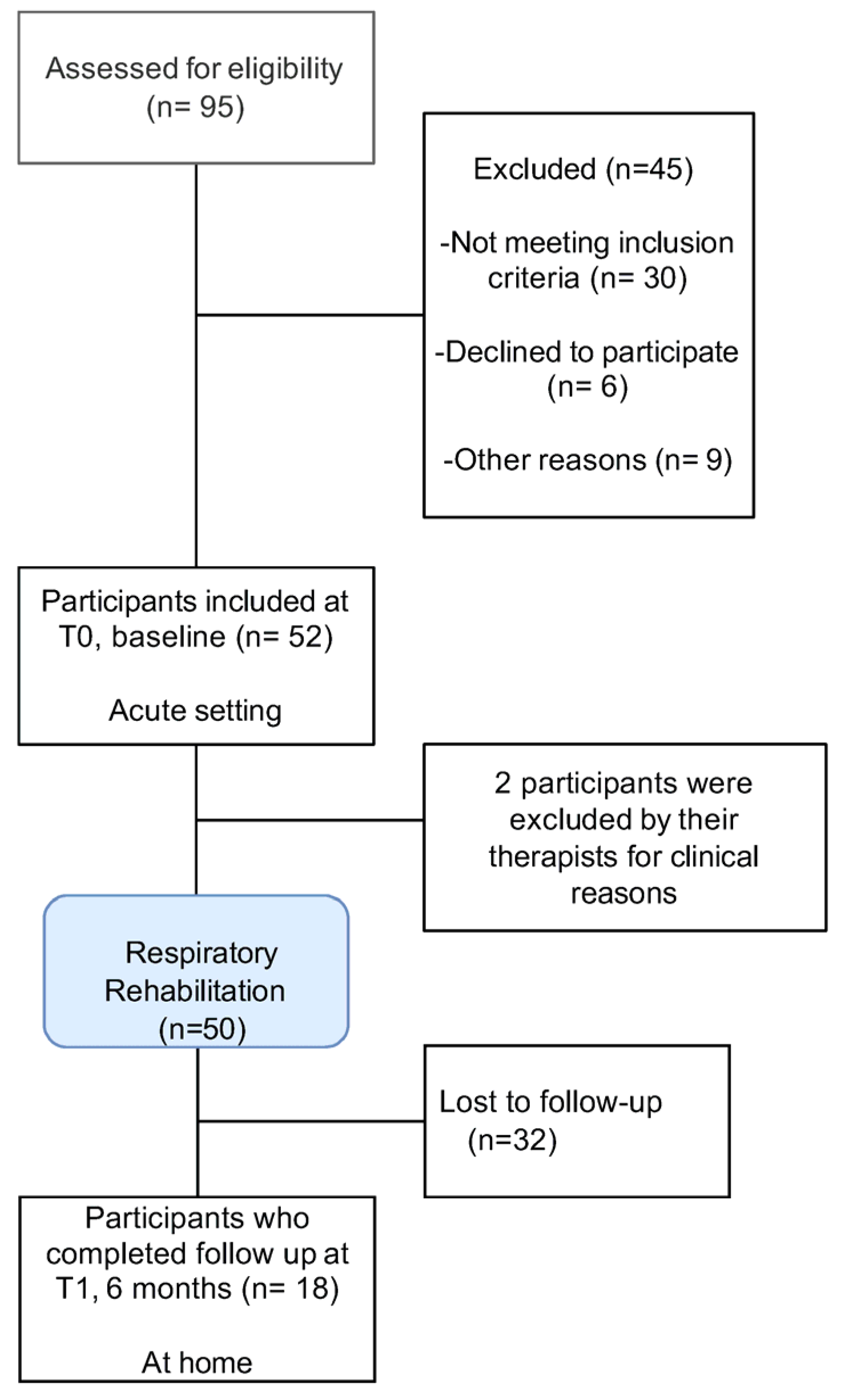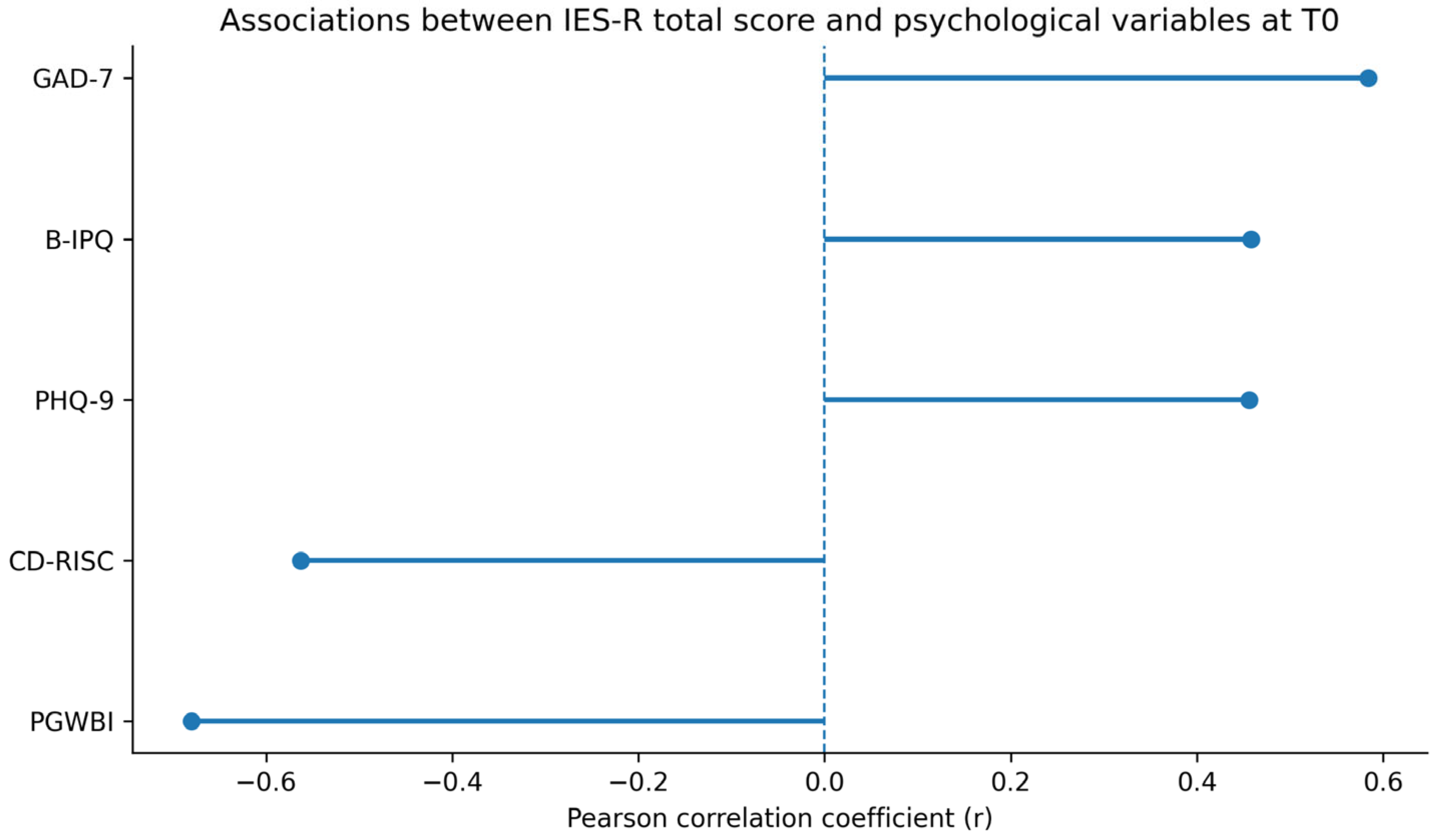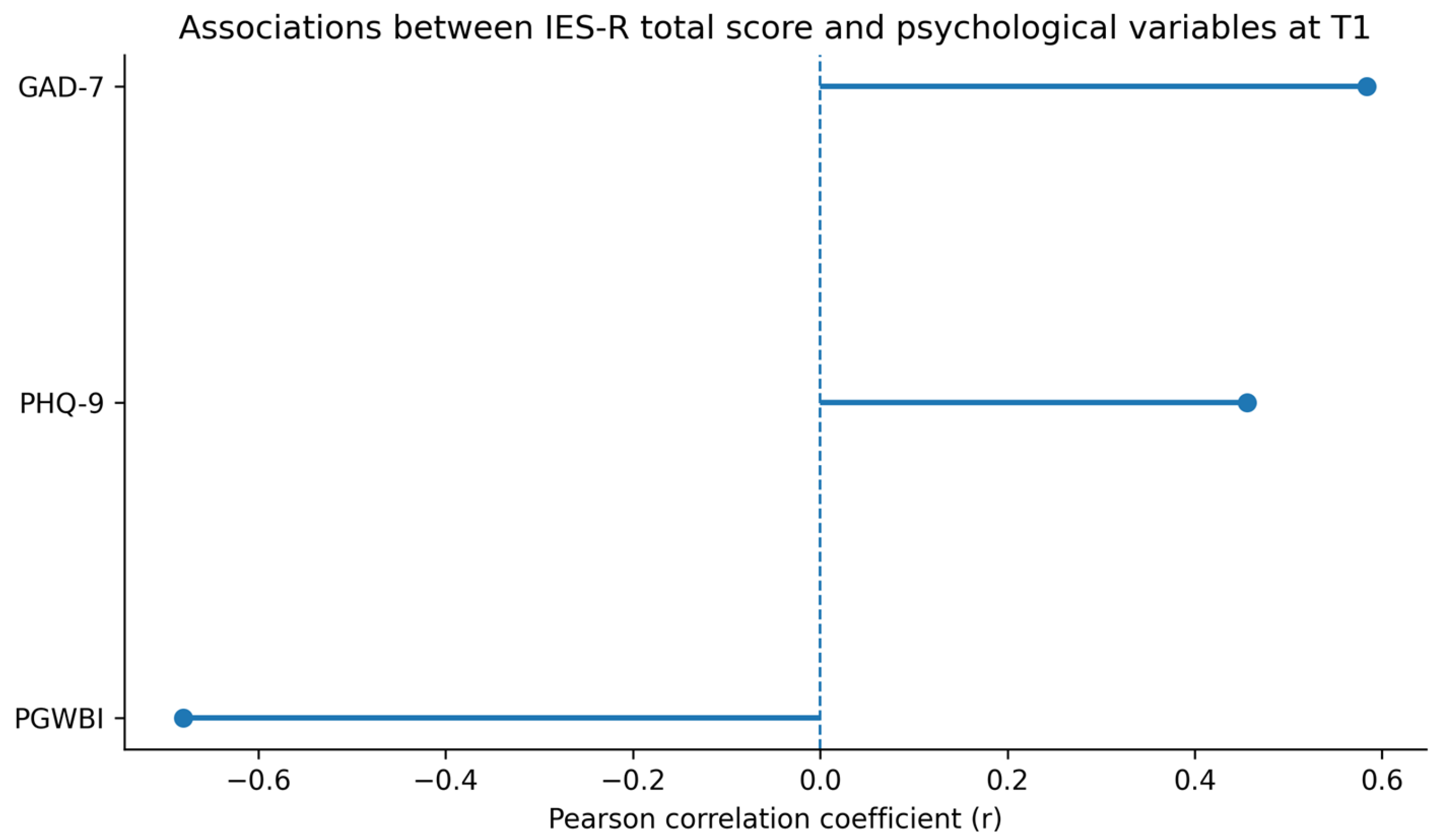

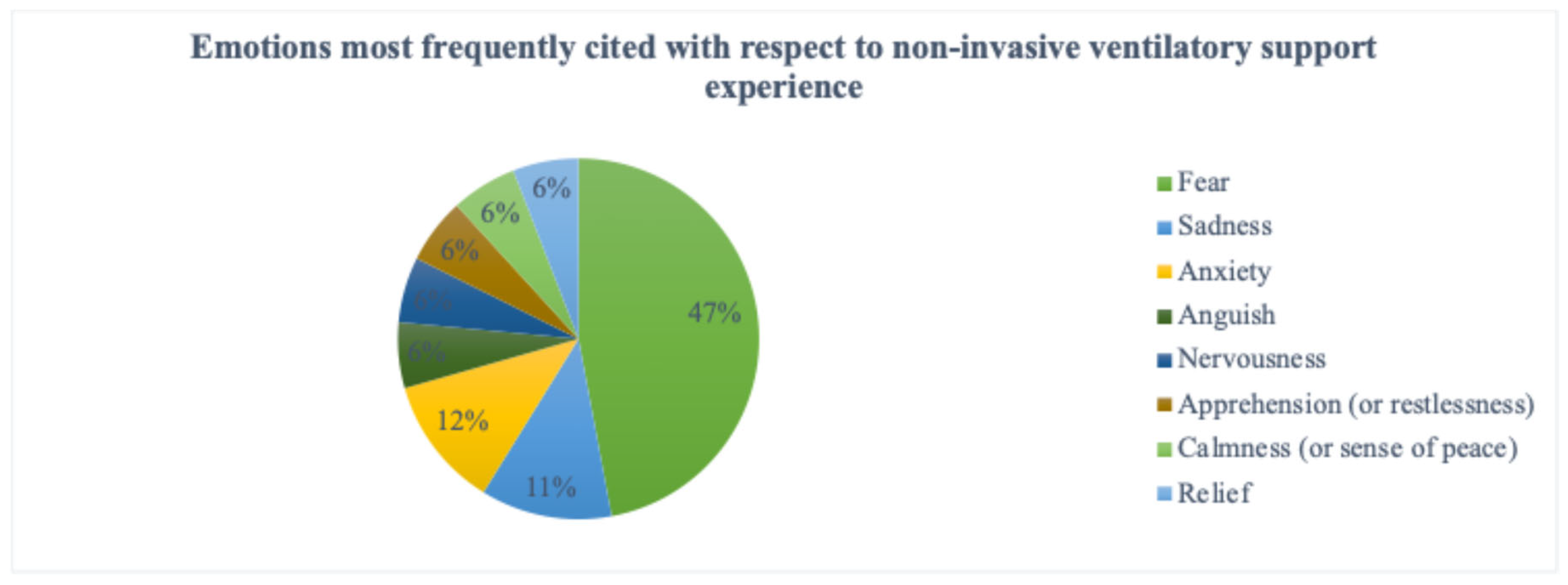
Breathing Under Pressure: Psychological Burden and Recovery Trajectories in Patients Receiving Non-Invasive Respiratory Support from Acute COVID-19 to Respiratory Rehabilitation
 , , and
Abstract
1. Introduction
2. Objectives
3. Methods
3.1. Ethical Approval
3.2. Design and Treatment Setting
- Respiratory Intensive Care Unit (RICU), Bari Policlinico University Hospital, University of Bari “Aldo Moro”, Bari, Italy;
- Heart–Respiratory Rehabilitation Unit, IRCCS Fondazione Don Carlo Gnocchi, Milan, Italy.
3.3. Participants
- Worsening respiratory symptoms due to severe COVID-19 for ≤ 1 week.
- Bilateral opacities on chest X-ray consistent with Acute Respiratory Distress Syndrome (ARDS) [28].
- PaO2/FiO2 ≤ 300 mmHg.
- In this study, the term “non-invasive respiratory support “ refers to HFNO, CPAP, and NIV, as commonly used in the management of acute hypoxemic respiratory failure. In particular, we considered: initial treatment for ≥ 12 consecutive hours with High-Flow Nasal Oxygen (HFNO; gas flow ≥ 40 L/min) or Continuous Positive Airway Pressure (CPAP) or Non-Invasive Ventilation (NIV) with Positive End-Expiratory Pressure (PEEP) ≥ 5 cm H2O.
- Required Invasive Mechanical Ventilation (IMV) from the onset of respiratory failure;
- Had incomplete clinical or psychological data for the variables of interest;
- Had a documented “do not intubate” (DNI) or “do not resuscitate” (DNR) order.
3.4. Measurements
3.4.1. Sociodemographic and Lifestyle Variables
3.4.2. Clinical Variables
3.4.3. Psychological Measures
3.4.4. Statistical Analysis
4. Results
4.1. Study Sample
4.2. Descriptive Data
4.3. The Experience with Non-Invasive Ventilatory Support During COVID-19
4.4. The Relationship Between Variables Before and After Admission for Acute Severe COVID-19
5. Discussion
5.1. Strengths and Limitations
5.2. Clinical Implications
5.3. Research Implications
6. Conclusions
Supplementary Materials
Author Contributions
Funding
Institutional Review Board Statement
Informed Consent Statement
Data Availability Statement
Acknowledgments
Conflicts of Interest
References
- Ciotti, M.; Ciccozzi, M.; Terrinoni, A.; Jiang, W.-C.; Wang, C.-B.; Bernardini, S. The COVID-19 pandemic. Crit. Rev. Clin. Lab. Sci. 2020, 57, 365–388. [Google Scholar] [CrossRef]
- Polatoğlu, I.; Oncu-Oner, T.; Dalman, I.; Ozdogan, S. COVID-19 in early 2023: Structure, replication mechanism, variants of SARS-CoV-2, diagnostic tests, and vaccine & drug development studies. MedComm 2023, 4, e228. [Google Scholar] [CrossRef]
- Di Federico, S.; Filippini, T.; Marchesi, C.; Vinceti, M. Availability of open data related to COVID-19 epidemic in Italy. Ann. Ig. 2023, 35, 344–358. [Google Scholar] [PubMed]
- Mendes, A.; Serratrice, C.; Herrmann, F.R.; Genton, L.; Périvier, S.; Scheffler, M.; Fassier, T.; Huber, P.; Jacques, M.-C.; Prendki, V.; et al. Predictors of In-Hospital Mortality in Older Patients With COVID-19: The COVIDAge Study. J. Am. Med. Dir. Assoc. 2020, 21, 1546–1554.e3. [Google Scholar] [CrossRef]
- Alimohamadi, Y.; Sepandi, M.; Taghdir, M.; Hosamirudsari, H. Determine the most common clinical symptoms in COVID-19 patients: A systematic review and meta-analysis. J. Prev. Med. Hyg. 2020, 61, E304–E312. [Google Scholar] [PubMed]
- Yong, S.J. Long COVID or post-COVID-19 syndrome: Putative pathophysiology, risk factors, and treatments. Infect. Dis. 2021, 53, 737–754. [Google Scholar] [CrossRef]
- Del Sole, F.; Farcomeni, A.; Loffredo, L.; Carnevale, R.; Menichelli, D.; Vicario, T.; Pignatelli, P.; Pastori, D. Features of severe COVID-19: A systematic review and meta-analysis. Eur. J. Clin. Investig. 2020, 50, e13378. [Google Scholar] [CrossRef]
- Dessie, Z.G.; Zewotir, T. Mortality-related risk factors of COVID-19: A systematic review and meta-analysis of 42 studies and 423,117 patients. BMC Infect. Dis. 2021, 21, 855. [Google Scholar] [CrossRef] [PubMed]
- Armour, C.; McGlinchey, E.; Butter, S.; McAloney-Kocaman, K.; McPherson, K.E. The COVID-19 Psychological Wellbeing Study: Understanding the Longitudinal Psychosocial Impact of the COVID-19 Pandemic in the UK; a Methodological Overview Paper. J. Psychopathol. Behav. Assess. 2021, 43, 174–190. [Google Scholar] [CrossRef]
- Necho, M.; Tsehay, M.; Birkie, M.; Biset, G.; Tadesse, E. Prevalence of anxiety, depression, and psychological distress among the general population during the COVID-19 pandemic: A systematic review and meta-analysis. Int. J. Soc. Psychiatry 2021, 67, 892–906. [Google Scholar] [CrossRef]
- Saltzman, L.Y.; Hansel, T.C.; Bordnick, P.S. Loneliness, isolation, and social support factors in post-COVID-19 mental health. Psychol. Trauma. 2020, 12, S55–S57. [Google Scholar] [CrossRef]
- Besnier, F.; Bérubé, B.; Malo, J.; Gagnon, C.; Grégoire, C.-A.; Juneau, M.; Simard, F.; L’allier, P.; Nigam, A.; Iglésies-Grau, J.; et al. Cardiopulmonary Rehabilitation in Long-COVID-19 Patients with Persistent Breathlessness and Fatigue: The COVID-Rehab Study. Int. J. Env. Res. Public Health 2022, 19, 4133. [Google Scholar] [CrossRef] [PubMed]
- Poudel, A.N.; Zhu, S.; Cooper, N.; Roderick, P.; Alwan, N.; Tarrant, C.; Ziauddeen, N.; Yao, G.L. Impact of Covid-19 on health-related quality of life of patients: A structured review. PLoS ONE 2021, 16, e0259164. [Google Scholar] [CrossRef] [PubMed]
- Stasi, C.; Fallani, S.; Voller, F.; Silvestri, C. Treatment for COVID-19: An overview. Eur. J. Pharmacol. 2020, 889, 173644. [Google Scholar] [CrossRef]
- Crimi, C.; Pierucci, P.; Renda, T.; Pisani, L.; Carlucci, A. High-Flow Nasal Cannula and COVID-19: A Clinical Review. Respir. Care 2022, 67, 227–240. [Google Scholar] [CrossRef] [PubMed]
- De Michele, L.; Pierucci, P.; Giovannetti, G.; De Ceglie, M.; Dimitri, M.; Mirabile, A.; Quaranta, V.; Scardapane, A.; D’Agostino, C.; Carpagnano, G.E. Post severe COVID-19 infection lung damages study. The experience of early three months multidisciplinary follow-up. Monaldi Arch. Chest Dis. 2022, 92, 2142. [Google Scholar] [CrossRef]
- Pierucci, P.; Ambrosino, N.; Di Lecce, V.; Dimitri, M.; Battaglia, S.; Boniello, E.; Portacci, A.; Resta, O.; Carpagnano, G.E. Prolonged Active Prone Positioning in Spontaneously Breathing Non-intubated Patients With COVID-19-Associated Hypoxemic Acute Respiratory Failure With PaO2/FiO2 >150. Front. Med. 2021, 8, 626321. [Google Scholar] [CrossRef]
- Wang, Z.; Wang, Y.; Yang, Z.; Wu, H.; Liang, J.; Liang, H.; Lin, H.; Chen, R.; Ou, Y.; Wang, F.; et al. The use of non-invasive ventilation in COVID-19: A systematic review. Int. J. Infect. Dis. 2021, 106, 254–261. [Google Scholar] [CrossRef]
- Mehta, S.; Hill, N.S. Noninvasive Ventilation. Am. J. Respir. Crit. Care Med. 2001, 163, 540–577. [Google Scholar] [CrossRef]
- Ram, F.S.; Picot, J.; Lightowler, J.; Wedzicha, J.A. Non-invasive positive pressure ventilation for treatment of respiratory failure due to exacerbations of chronic obstructive pulmonary disease. In Cochrane Database of Systematic Reviews; Lasserson, T.J., Ed.; John Wiley & Sons, Ltd.: Chichester, UK, 2004. [Google Scholar] [CrossRef]
- Pierucci, P.; Crimi, C.; Carlucci, A.; Palma, L.; Noto, A.; Carpagnano, G.E.; Scala, R. Long-term home noninvasive ventilation (LTHNIV) in restrictive thoracic diseases: The Italian snapshot. Monaldi Arch. Chest Dis. 2022, 93, 2459. [Google Scholar] [CrossRef]
- Pierucci, P.; Crimi, C.; Carlucci, A.; Carpagnano, G.E.; Janssens, J.-P.; Lujan, M.; Noto, A.; Wijkstra, P.J.; Windisch, W.; Scala, R. REINVENT: ERS International survey on REstrictive thoracic diseases IN long term home noninvasive VENTilation. ERJ Open Res. 2021, 7, 00911–02020. [Google Scholar] [CrossRef]
- Beckert, L.; Wiseman, R.; Pitama, S.; Landers, A. What can we learn from patients to improve their non-invasive ventilation experience? ‘It was unpleasant; if I was offered it again, I would do what I was told‘. BMJ Support. Palliat. Care 2020, 10, e7. [Google Scholar] [CrossRef]
- Smith, T.A.; Davidson, P.M.; Jenkins, C.R.; Ingham, J.M. Life behind the mask: The patient experience of NIV. Lancet Respir. Med. 2015, 3, 8–10. [Google Scholar] [CrossRef]
- Pierucci, P.; Portacci, A.; Carpagnano, G.E.; Banfi, P.; Crimi, C.; Misseri, G.; Gregoretti, C. The right interface for the right patient in noninvasive ventilation: A systematic review. Expert. Rev. Respir. Med. 2022, 16, 931–944. [Google Scholar] [CrossRef]
- Shaw, R.J.; Harvey, J.E.; Bernard, R.; Gunary, R.; Tiley, M.; Steiner, H. Comparison of Short-Term Psychological Outcomes of Respiratory Failure Treated by Either Invasive or Non-Invasive Ventilation. Psychosomatics 2009, 50, 586–591. [Google Scholar] [CrossRef]
- Chacko, B.; Thomas, L.; Sharma, R.; Yadav, B.; Jeyaseelan, L.; Arul, A.O.; Victor, P.; Chandiraseharan, V.K.; Lenin, A.; Carey, R.A.; et al. Noninvasive Ventilation in the Management of Respiratory Failure Due to COVID-19 Infection: Experience From a Resource-Limited Setting. Mayo Clin. Proc. 2022, 97, 31–45. [Google Scholar] [CrossRef]
- Ferguson, N.D.; Fan, E.; Camporota, L.; Antonelli, M.; Anzueto, A.; Beale, R.; Brochard, L.; Brower, R.; Esteban, A.; Gattinoni, L.; et al. The Berlin definition of ARDS: An expanded rationale, justification, and supplementary material. Intensive Care Med. 2012, 38, 1573–1582. [Google Scholar] [CrossRef]
- Horowitz, M.; Wilner, N.; Alvarez, W. Impact of Event Scale: A Measure of Subjective Stress. Psychosom. Med. 1979, 41, 209–218. [Google Scholar] [CrossRef] [PubMed]
- Weiss, D.S. The Impact of Event Scale: Revised. In Cross-Cultural Assessment of Psychological Trauma and PTSD; Springer: Boston, MA, USA; pp. 219–238. [CrossRef]
- Spitzer, R.L.; Kroenke, K.; Williams, J.B.W.; Löwe, B. A Brief Measure for Assessing Generalized Anxiety Disorder. Arch. Intern. Med. 2006, 166, 1092. [Google Scholar] [CrossRef] [PubMed]
- Kroenke, K.; Spitzer, R.L. The PHQ-9: A New Depression Diagnostic and Severity Measure. Psychiatr. Ann. 2002, 32, 509–515. [Google Scholar] [CrossRef]
- Kroenke, K.; Spitzer, R.L.; Williams, J.B.W. The PHQ-9. J. Gen. Intern. Med. 2001, 16, 606–613. [Google Scholar] [CrossRef]
- Cohen, S.; Kamarck, T.; Mermelstein, R. A global measure of perceived stress. J. Health Soc. Behav. 1983, 24, 385–396. [Google Scholar] [CrossRef]
- Grossi, E.; Groth, N.; Mosconi, P.; Cerutti, R.; Pace, F.; Compare, A.; Apolone, G. Development and validation of the short version of the Psychological General Well-Being Index (PGWB-S). Health Qual. Life Outcomes 2006, 4, 88. [Google Scholar] [CrossRef]
- Cavalera, C.M.; Pepe, A.; Zurloni, D.; Diana, B.; Realdon, O. A short version of the state shame and guilt scale (SSGS-8). TPM-Test. Psychom. Methodol. Appl. Psychol. 2017, 24, 99–106. [Google Scholar]
- Beck, J.G.; McNiff, J.; Clapp, J.D.; Olsen, S.A.; Avery, M.L.; Hagewood, J.H. Exploring Negative Emotion in Women Experiencing Intimate Partner Violence: Shame, Guilt, and PTSD. Behav. Ther. 2011, 42, 740–750. [Google Scholar] [CrossRef]
- Connor, K.M.; Davidson, J.R.T. Development of a new resilience scale: The Connor-Davidson Resilience Scale (CD-RISC). Depress. Anxiety 2003, 18, 76–82. [Google Scholar] [CrossRef] [PubMed]
- Broadbent, E.; Petrie, K.J.; Main, J.; Weinman, J. The Brief Illness Perception Questionnaire. J. Psychosom. Res. 2006, 60, 631–637. [Google Scholar] [CrossRef] [PubMed]
- The Jamovi Project. Jamovi, version 2.6. Computer Software. Jamovi: Sydney, Australia, 2025.
- Cook, D.A.; Wittich, C.M.; Daniels, W.L.; West, C.P.; Harris, A.M.; Beebe, T.J. Incentive and reminder strategies to improve response rate for internet-based physician surveys: A randomized experiment. J. Med. Internet Res. 2016, 18, e244. [Google Scholar] [CrossRef]
- Cook, C.; Heath, F.; Thompson, R.L. A meta-analysis of response rates in web-or internet-based surveys. Educ. Psychol. Meas. 2000, 60, 821–836. [Google Scholar] [CrossRef]
- Addition of Group Members Supplement. JAMA Intern. Med. 2021, 181, 1021. [CrossRef]
- Grasselli, G.; Greco, M.; Zanella, A.; Albano, G.; Antonelli, M.; Bellani, G.; Bonanomi, E.; Cabrini, L.; Carlesso, E.; Castelli, G.; et al. Risk Factors Associated With Mortality Among Patients With COVID-19 in Intensive Care Units in Lombardy, Italy. JAMA Intern. Med. 2020, 180, 1345. [Google Scholar] [CrossRef] [PubMed]
- Ferioli, M.; Cisternino, C.; Leo, V.; Pisani, L.; Palange, P.; Nava, S. Protecting healthcare workers from SARS-CoV-2 infection: Practical indications. Eur. Respir. Rev. 2020, 29, 200068. [Google Scholar] [CrossRef]
- Rodriguez, A.M.E.; Scala, R.; Soroksky, A.; BaHammam, A.; de Klerk, A.; Valipour, A.; Chiumello, D.; Martin, C.; E Holland, A. Clinical review: Humidifiers during non-invasive ventilation—Key topics and practical implications. Crit. Care 2011, 16, 203. [Google Scholar] [CrossRef]
- Jeschke, K.N.; Bonnesen, B.; Hansen, E.F.; Jensen, J.-U.S.; Lapperre, T.S.; Weinreich, U.M.; Hilberg, O. Guideline for the management of COVID-19 patients during hospital admission in a non-intensive care setting. Eur. Clin. Respir. J. 2020, 7, 1761677. [Google Scholar] [CrossRef]
- Schifino, G.; Vega, M.L.; Pisani, L.; Prediletto, I.; Catalanotti, V.; Comellini, V.; Bassi, I.; Zompatori, M.; Ranieri, M.V.; Nava, S. Effects of non-invasive respiratory supports on inspiratory effort in moderate-severe COVID-19 patients. A randomized physiological study. Eur. J. Intern. Med. 2022, 100, 110–118. [Google Scholar] [CrossRef]
- Winck, J.C.; Ambrosino, N. COVID-19 pandemic and non invasive respiratory management: Every Goliath needs a David. An evidence based evaluation of problems. Pulmonology 2020, 26, 213–220. [Google Scholar] [CrossRef]
- Hill, N.S. Complications of noninvasive ventilation. Respir. Care 2000, 45, 480–481. [Google Scholar] [CrossRef]
- Tonelli, R.; Pisani, L.; Tabbì, L.; Comellini, V.; Prediletto, I.; Fantini, R.; Marchioni, A.; Andrisani, D.; Gozzi, F.; Bruzzi, G.; et al. Early awake proning in critical and severe COVID-19 patients undergoing noninvasive respiratory support: A retrospective multicenter cohort study. Pulmonology 2022, 28, 181–192. [Google Scholar] [CrossRef] [PubMed]
- Resta, E.; Noviello, C.; Peter, P.; Graziano, G.; Dalena, V.; Caputi, A.; Castellana, G.; Riformato, G.; Tafuri, S.; Pierucci, P. Respiratory post COVID sequelae: The role of pulmonary function impairment, fatigue and obesity in dyspnea and the impact of SPA rehabilitation. Expert. Rev. Respir. Med. 2025, 19, 1017–1026. [Google Scholar] [CrossRef]
- Spruit, M.A.; Holland, A.E.; Singh, S.J.; Tonia, T.; Wilson, K.C.; Troosters, T. COVID-19: Interim guidance on rehabilitation in the hospital and post-hospital phase from a European Respiratory Society- and American Thoracic Society-coordinated international task force. Eur. Respir. J. 2020, 56, 2002197. [Google Scholar] [CrossRef] [PubMed]




| SOCIO-DEMOGRAPHIC DATA | Tot | Male | Female |
|---|---|---|---|
| Frequency | 50 | 28 (56%) | 22 (44%) |
| Age, M (SD) | 66.9 (9.17) | 69.3 (2.5) | 67.8 (3.4) |
| MARITAL STATUS | |||
| Married | 38 (76%) | 22 | 16 |
| Single | 6 (12%) | 2 | 4 |
| Separated | 1 (2%) | 1 | 0 |
| Divorced | 2 (4%) | 1 | 1 |
| Widower | 3 (6%) | 2 | 1 |
| EDUCATION LEVEL | |||
| No school | 3 (6%) | 3 | 0 |
| Primary school | 12 (24%) | 4 | 8 |
| Middle school | 15 (30%) | 10 | 5 |
| College | 13 (26%) | 6 | 7 |
| Bachelor’s degree | 0 | 0 | 0 |
| Master’s degree | 6 (12%) | 4 | 2 |
| Post-lauream | 1 (2%) | 1 | 0 |
| OCCUPATION | |||
| Employee | 9 (18%) | 8 | 1 |
| Freelancer | 3 (6%) | 3 | 1 |
| Healthcare professional | 2 (4%) | 1 | 1 |
| Retiree | 14 (28%) | 10 | 4 |
| Unemployed | 10 (20%) | 0 | 10 |
| Other | 2 (4%) | 0 | 2 |
| No answer | 6 (12%) | ||
| LIVING CONDITION | |||
| Living with spouse | 22 (44%) | 13 | 9 |
| Living with children | 7 (14%) | 4 | 3 |
| Living with spouse and children | 9 (18%) | 4 | 5 |
| Living alone | 6 (12%) | 4 | 2 |
| Living with other relatives | 3 (6%) | 1 | 2 |
| Living in nursing home | 2 (4%) | 1 | 1 |
| Living with others (friends) | 1 (2%) | 1 | 0 |
| Tot | Male | Female | |
|---|---|---|---|
| HEALTH PRACTICES | |||
| SMOKING HABIT | |||
| Smoker | 4 (8%) | 2 | 2 |
| Non-smoker | 26 (52%) | 10 | 16 |
| Ex-smoker | 20 (40%) | 16 | 4 |
| ALCOHOL CONSUMPTION | |||
| No alcohol consumption | 24 (48%) | 6 | 18 |
| Infrequent alcohol consumption | 12 (12%) | 9 | 3 |
| Alcohol consumption only at meals | 10 (20%) | 9 | 1 |
| Alcohol consumption on occasion | 2 (4%) | 2 | 0 |
| Frequent alcohol consumption | 1 (2%) | 1 | 0 |
| Very frequent alcohol consumption | 1 (2%) | 1 | 0 |
| PHYSICAL ACTIVITY | |||
| No physical activity | 19 (38%) | 6 | 13 |
| Infrequent physical activity | 9 (18%) | 6 | 3 |
| Quite frequent physical activity | 8 (16%) | 7 | 1 |
| Frequent physical activity | 9 (18%) | 7 | 2 |
| Very frequent physical activity | 4 (8%) | 1 | 3 |
| Daily physical activity | 1 (2%) | 1 | 0 |
| OTHER CLINICAL INFORMATION | |||
| Body Mass Index (BMI), M (SD), range per gender | 30.1 (8.2) | ~29–31 | ~28–30 |
| Height, M (SD) | 169 (8.6) | 174 (6.5) | 163 (6.6) |
| Weight, M (SD) | 81.8 (21.9) | 83.3 (18.2) | 79.2 (24.1) |
| Average days of hospitalization, M (SD) | 27.1 (19) | 34.7 (55.5) | 18.2 (20) |
| Average days between symptoms and diagnosis, M (SD) | 5.20 (5.3) | 5.7 (5.5) | 4.5 (5) |
| Number of hospitalizations during the last year, M (SD) | 0.78 (0.3) | 0.76 (0.6) | 0.81 (0.7) |
| 95% Confidence Interval | 95% Confidence Interval | |||||||||||||
|---|---|---|---|---|---|---|---|---|---|---|---|---|---|---|
| N (T0) | N (T1) | Statistic | df | p | Mean Difference | SE Difference | Lower | Upper | Effect Size | Lower | Upper | |||
| IES-R_tot | 49 | 17 | Student’s t | −2.4385 | 14 | 0.029 | −1.9073 | 0.782 | −3.585 | −0.2297 | Cohen’s d | −0.6296 | −1.1767 | −0.0641 |
| Wilcoxon W | 22 | 0.03 | −2.21725 | 0.782 | −3.659 | −0.145 | Rank biserial correlation | −0.6333 | ||||||
| I_Intrusivity | 47 | 17 | Student’s t | −0.5502 | 13 | 0.592 | −0.26 | 0.473 | −1.281 | 0.7609 | Cohen’s d | −0.147 | −0.6711 | 0.3825 |
| Wilcoxon W | 48 | 0.808 | −0.265 | 0.473 | −1.5 | 0.87 | Rank biserial correlation | −0.0857 | ||||||
| A_Avoid | 48 | 17 | Student’s t | −0.0568 | 13 | 0.956 | −0.0176 | 0.311 | −0.689 | 0.6533 | Cohen’s d | −0.0152 | −0.5387 | 0.509 |
| Wilcoxon W | 46a | 1 | 0.00147 | 0.311 | −0.765 | 0.815 | Rank biserial correlation | 0.011 | ||||||
| H_Hyperarousal | 48 | 17 | Student’s t | −0.7049 | 13 | 0.493 | −0.5498 | 0.78 | −2.235 | 1.1352 | Cohen’s d | −0.1884 | −0.7136 | 0.3438 |
| Wilcoxon W | 47 | 0.761 | −0.105 | 0.78 | −1.425 | 1.065 | Rank biserial correlation | −0.1048 | ||||||
| PSS | 43 | 19 | Student’s t | 1.7487 | 13 | 0.104 | 5.2857 | 3.023 | −1.244 | 11.8158 | Cohen’s d | 0.4674 | −0.0938 | 1.0126 |
| Wilcoxon W | 77.5 | 0.124 | 5.00005 | 3.023 | −1.5 | 12 | Rank biserial correlation | 0.4762 | ||||||
| B-IPQ | 49 | 18 | Student’s t | 0.3122 | 14 | 0.759 | 1.3333 | 4.27 | −7.825 | 10.4921 | Cohen’s d | 0.0806 | −0.4277 | 0.5861 |
| Wilcoxon W | 65.5 | 0.776 | 2.23841 | 4.27 | −8 | 12.5 | Rank biserial correlation | 0.0917 | ||||||
| PGWBIs | 49 | 18 | Student’s t | 0.7316 | 14 | 0.477 | 1.7333 | 2.369 | −3.348 | 6.8152 | Cohen’s d | 0.1889 | −0.3252 | 0.6964 |
| Wilcoxon W | 65 a | 0.45 | 2.00002 | 2.369 | −4 | 8 | Rank biserial correlation | 0.2381 | ||||||
| CD-RISC_tot | 49 | 18 | Student’s t | −6.4 | 14 | <0 .001 | −42.2 | 6.594 | −56.342 | −28.0577 | Cohen’s d | −1.6525 | −2.4298 | −0.851 |
| Wilcoxon W | 3 | 0.008 | −45.25 | 6.594 | −54.5 | −30.5 | Rank biserial correlation | −0.95 | ||||||
| CD1_Personal competence, high standards, and tenacity | 50 | 18 | Student’s t | −3.4648 | 15 | 0.003 | −10.4375 | 3.012 | −16.858 | −4.0167 | Cohen’s d | −0.8662 | −1.4342 | −0.2775 |
| Wilcoxon W | 16.5 | 0.006 | −11.88037 | 3.012 | −17.5 | −4 | Rank biserial correlation | −0.7574 | ||||||
| CD2_Trust in one’s instincts, tolerance of negative affect | 52 | 18 | Student’s t | −4.0486 | 14 | 0.001 | −9.2 | 2.272 | −14.074 | −4.3262 | Cohen’s d | −1.0453 | −1.6685 | −0.3986 |
| Wilcoxon W | 8 a | 0.001 | −10.99999 | 2.272 | −15 | −4.5 | Rank biserial correlation | −0.8476 | ||||||
| CD3_Positive acceptance of change, and secure relationship | 49 | 18 | Student’s t | −4.5774 | 14 | <0.001 | −8.2667 | 1.806 | −12.14 | −4.3932 | Cohen’s d | −1.1819 | −1.8361 | −0.5034 |
| Wilcoxon W | 3.5 | 0.05 | −8.49992 | 1.806 | −12.5 | −4 | Rank biserial correlation | −0.9417 | ||||||
| CD4_Control | 49 | 18 | Student’s t | −2.2012 | 14 | 0.045 | −2.9333 | 1.333 | −5.792 | −0.0752 | Cohen’s d | −0.5683 | −1.1071 | −0.0124 |
| Wilcoxon W | 17 b | 0.003 | −3.99996 | 1.333 | −6.5 | 0.5 | Rank biserial correlation | −0.6264 | ||||||
| CD5_Spiritual influences | 50 | 18 | Student’s t | −4.279 | 15 | < 0.001 | −3.0625 | 0.716 | −4.588 | −1.537 | Cohen’s d | −1.0697 | −1.6783 | −0.439 |
| Wilcoxon W | 7.5 a | 0.414 | −3.49998 | 0.716 | −5 | −1.5 | Rank biserial correlation | −0.875 | ||||||
| PHQ-9 | 42 | 17 | Student’s t | −1.0964 | 10 | 0.299 | −2.1818 | 1.99 | −6.616 | 2.2523 | Cohen’s d | −0.3306 | −0.9309 | 0.2851 |
| Wilcoxon W | 19 a | 0.893 | −1.49997 | 1.99 | −8 | 3 | Rank biserial correlation | −0.3091 | ||||||
| GAD-7 | 42 | 17 | Student’s t | 0.114 | 10 | 0.911 | 0.1818 | 1.594 | −3.371 | 3.7344 | Cohen’s d | 0.0344 | −0.5576 | 0.6247 |
| Wilcoxon W | 35 | < 0.001 | 0.15417 | 1.594 | −3.371 | 4 | Rank biserial correlation | 0.0606 | 1.594 | |||||
Disclaimer/Publisher’s Note: The statements, opinions and data contained in all publications are solely those of the individual author(s) and contributor(s) and not of MDPI and/or the editor(s). MDPI and/or the editor(s) disclaim responsibility for any injury to people or property resulting from any ideas, methods, instructions or products referred to in the content. |
© 2026 by the authors. Licensee MDPI, Basel, Switzerland. This article is an open access article distributed under the terms and conditions of the Creative Commons Attribution (CC BY) license.
Share and Cite
Volpato, E.; Poletti, V.; de Candia, M.L.; Palma, L.; Pilon, A.; Carpagnano, G.E.; Banfi, P.; Pierucci, P. Breathing Under Pressure: Psychological Burden and Recovery Trajectories in Patients Receiving Non-Invasive Respiratory Support from Acute COVID-19 to Respiratory Rehabilitation. Med. Sci. 2026, 14, 270. https://doi.org/10.3390/medsci14020270
Volpato E, Poletti V, de Candia ML, Palma L, Pilon A, Carpagnano GE, Banfi P, Pierucci P. Breathing Under Pressure: Psychological Burden and Recovery Trajectories in Patients Receiving Non-Invasive Respiratory Support from Acute COVID-19 to Respiratory Rehabilitation. Medical Sciences. 2026; 14(2):270. https://doi.org/10.3390/medsci14020270
Chicago/Turabian StyleVolpato, Eleonora, Valentina Poletti, Maria Luisa de Candia, Lavinia Palma, Alessandro Pilon, Giovanna Elisiana Carpagnano, Paolo Banfi, and Paola Pierucci. 2026. "Breathing Under Pressure: Psychological Burden and Recovery Trajectories in Patients Receiving Non-Invasive Respiratory Support from Acute COVID-19 to Respiratory Rehabilitation" Medical Sciences 14, no. 2: 270. https://doi.org/10.3390/medsci14020270
APA StyleVolpato, E., Poletti, V., de Candia, M. L., Palma, L., Pilon, A., Carpagnano, G. E., Banfi, P., & Pierucci, P. (2026). Breathing Under Pressure: Psychological Burden and Recovery Trajectories in Patients Receiving Non-Invasive Respiratory Support from Acute COVID-19 to Respiratory Rehabilitation. Medical Sciences, 14(2), 270. https://doi.org/10.3390/medsci14020270