
Review

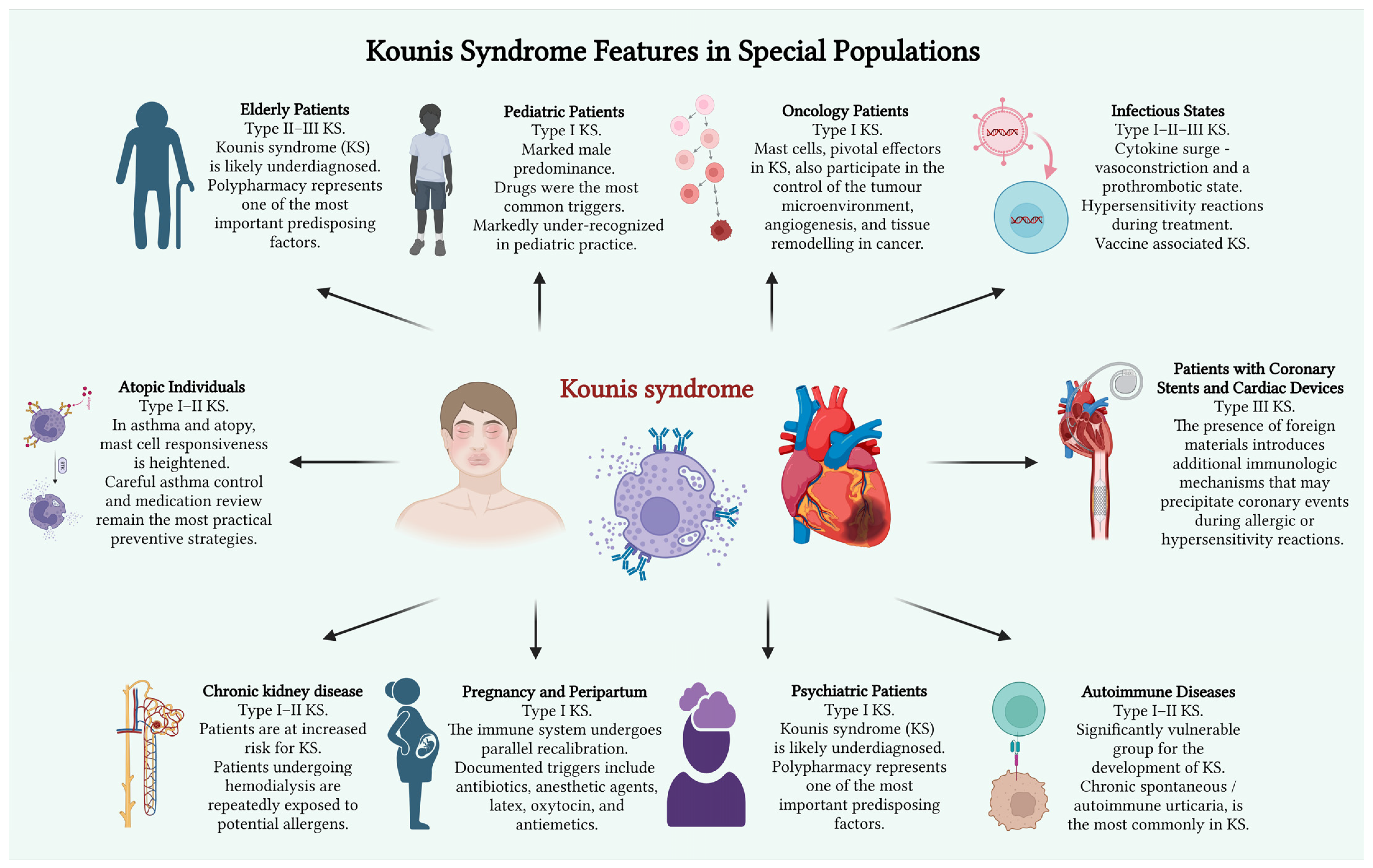
Kounis Syndrome Features in Special Populations

1
Grigore T. Popa University of Medicine and Pharmacy, 700115 Iasi, Romania
2
Department of Cardiology, University of Patras Medical School, 26221 Patras, Greece
3
Internal Medicine Department, Division of Cardiology, Hawassa University, Hawassa 1560, Ethiopia
4
Department of Internal Medicine, Cantonal Hospital Zenica, 72000 Zenica, Bosnia and Herzegovina
5
Department of Pathophysiology, University of Zenica, 72000 Zenica, Bosnia and Herzegovina
6
Cardiology and Diagnostics Department, State Institution “V.P. Komisarenko Institute of Endocrinology and Metabolism of the National Academy of Medical Sciences of Ukraine”, 01001 Kyiv, Ukraine
7
Department of Internal Medicine, Faculty of Medicine, School of Health Sciences, University of Ioannina, 45221 Ioannina, Greece
8
Department for Invasive and Interventional Cardiology, City General Hospital “8th of September”, 1000 Skopje, North Macedonia
9
Department of Respiratory Medicine and Allergology, State University of Medicine and Pharmacy “Nicolae Testemitanu”, 2004 Chisinau, Moldova
10
Department of Clinical Medicine, Faculty of Health and Medical Sciences, University of Copenhagen, DK-2200 Copenhagen, Denmark
11
Copenhagen Respiratory Research, Department of Medicine, Copenhagen University Hospital—Herlev and Gentofte, DK-2900 Copenhagen, Denmark
12
Department of Nursing, Ryazan State Medical University, Ryazan 390026, Russia
*
Authors to whom correspondence should be addressed.
Med. Sci. 2026, 14(2), 218; https://doi.org/10.3390/medsci14020218

Submission received: 24 March 2026 / Revised: 20 April 2026 / Accepted: 21 April 2026 / Published: 28 April 2026
(This article belongs to the Section Cardiovascular Disease)

Abstract

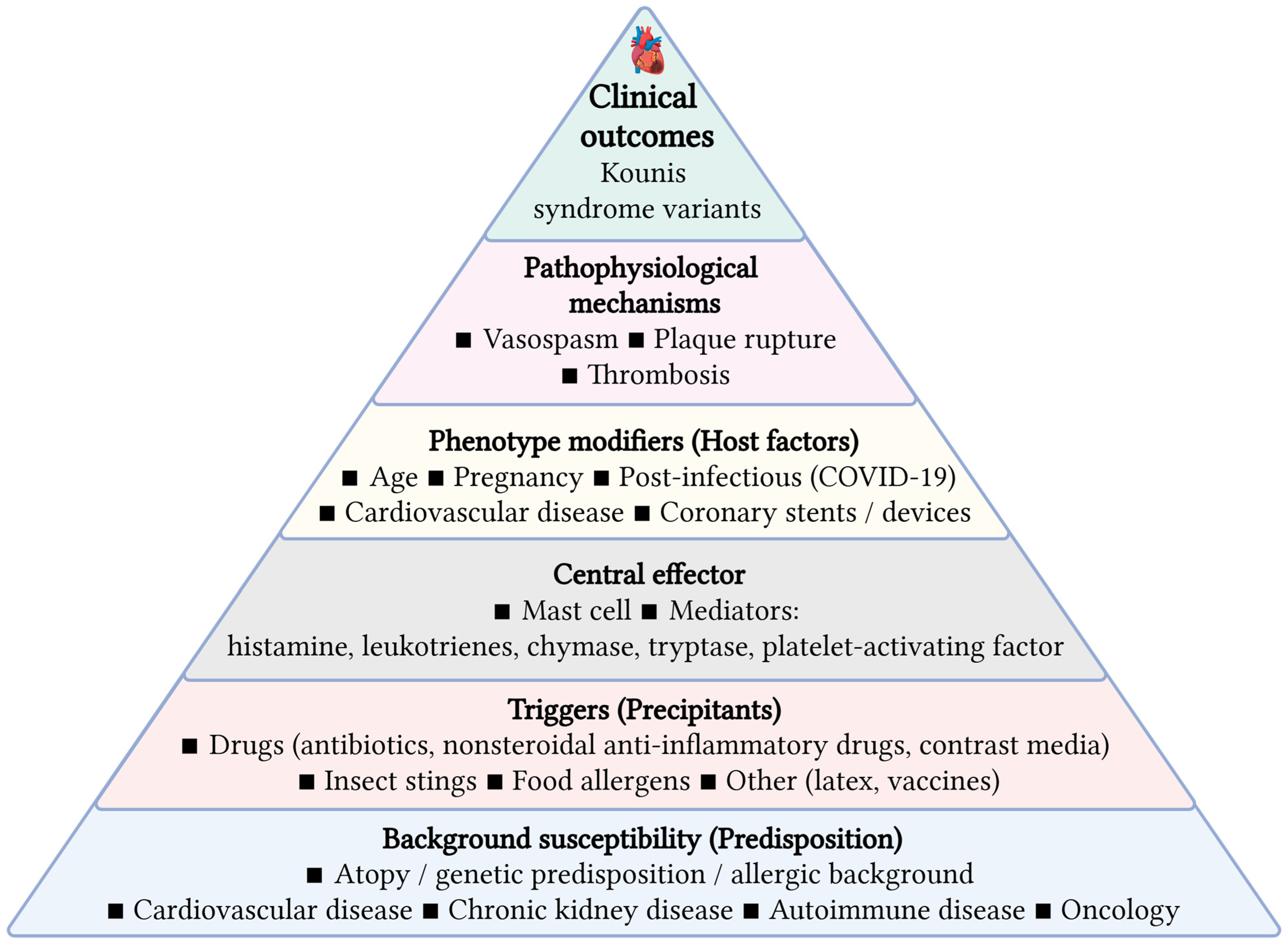
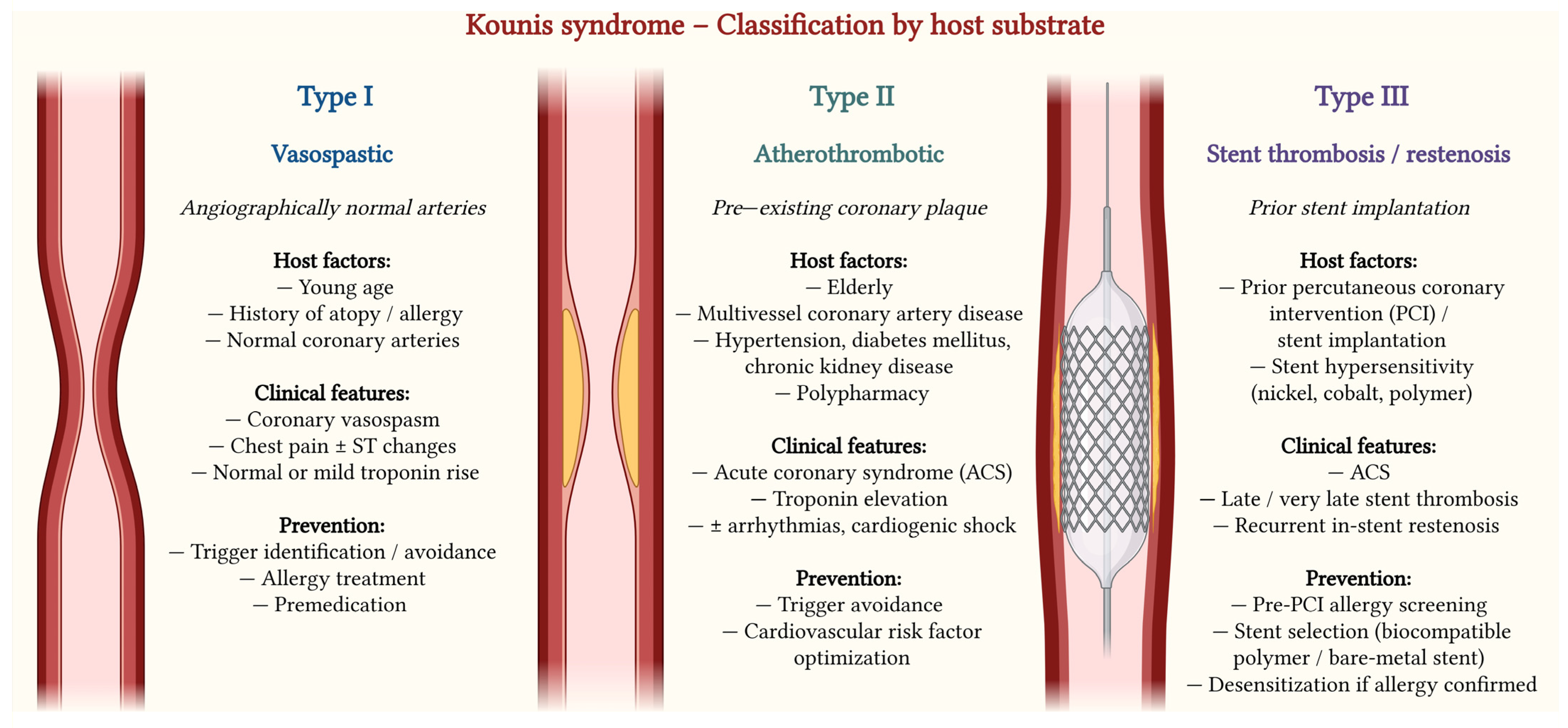
Kounis syndrome (KS) describes the occurrence of acute coronary syndromes precipitated by allergic, hypersensitivity, or anaphylactic reactions and represents a unique intersection between immunologic activation and cardiovascular disease. The epidemiology of KS is likely underestimated due to diagnostic overlap with other cardiac and allergic conditions and limited awareness across medical specialties. This narrative review focuses on the distinctive features of KS in special populations, emphasizing how patients’ age, comorbidities, immune status, and vascular substrate modify presentation, diagnosis, and outcomes. In elderly patients, polypharmacy, increased plaque vulnerability, and endothelial dysfunction favor Type II and III KS. Pediatric cases, although rare, are predominantly Type I and strongly associated with food allergies, insect stings, vaccines, and antibiotics, with under-recognition driven by diagnostic bias and ethical concerns surrounding invasive testing. Patients with coronary stents, cardiac devices, chronic kidney disease, and those receiving dialysis exhibit heightened susceptibility due to chronic inflammation, foreign-body hypersensitivity, and prothrombotic states. Pregnancy and the peripartum period represent a unique immuno-hemodynamic milieu in which Th2 immune shift, increased coronary vasoreactivity, and obstetric triggers can compromise both maternal and fetal perfusion. Additional risk modulation is observed in atopic individuals, asthmatics, patients with autoimmune, inflammatory, oncologic, psychiatric, and neurodevelopmental conditions, as well as in COVID-19 and post-infectious states. We propose a host-modified framework for KS that complements traditional classification by integrating immune phenotype and vascular substrate, enabling improved risk stratification and personalized preventive strategies.
Keywords: Kounis syndrome; allergy; hypersensitivity; anaphylactic reactions; special populations Kounis syndrome; allergy; hypersensitivity; anaphylactic reactions; special populations