

Explainable Artificial Intelligence Unravels the Possible Distinct Roles of VKORC1 and CYP2C9 in Predicting Warfarin Anticoagulation Control



Abstract
1. Introduction
2. Methods
2.1. Study Design and Ethics
2.2. Study Procedure
2.3. ML and XAI Analyses
3. Results
3.1. Exploratory Data Analysis
3.2. Random Forest, XGBoost and Logistic Regression Analyses
3.3. XAI Analysis
4. Discussion
4.1. Statement of Key Findings
4.2. Comparison with Existing Literature
4.3. Strengths, Limitations and Way Forward
5. Conclusions
Author Contributions
Funding
Institutional Review Board Statement
Informed Consent Statement
Data Availability Statement
Acknowledgments
Conflicts of Interest
References
- Alalwan, A.A.; Voils, S.A.; Hartzema, A.G. Trends in utilization of warfarin and direct oral anticoagulants in older adult patients with atrial fibrillation. Am. J. Health-Syst. Pharm. 2017, 74, 1237–1244. [Google Scholar] [CrossRef] [PubMed]
- Sunil, L.; Sravani, K. Problems with Warfarin Anticoagulation Control: An InDepth Analysis and a Holistic Strategy. Int. J. Pharmacetical Sci. Lett. 2022, 12, 6–15. [Google Scholar]
- Kjerpeseth, L.J.; Ellekjaer, H.; Selmer, R.; Ariansen, I.; Furu, K.; Skovlund, E. Trends in use of warfarin and direct oral anticoagulants in atrial fibrillation in Norway, 2010 to 2015. Eur. J. Clin. Pharmacol. 2017, 73, 1417–1425. [Google Scholar] [CrossRef] [PubMed]
- Neidecker, M.; Patel, A.A.; Nelson, W.W.; Reardon, G. Use of warfarin in long-term care: A systematic review. BMC Geriatr. 2012, 12, 14. [Google Scholar] [CrossRef] [PubMed]
- Dean, L. Warfarin Therapy and VKORC1 and CYP Genotype. In Medical Genetics Summaries [Internet]; Pratt, V.M., Scott, S.A., Pirmohamed, M., Esquivel, B., Kattman, B.L., Malheiro, A.J., Eds.; National Center for Biotechnology Information (US): Bethesda, MD, USA, 2012. Available online: https://www.ncbi.nlm.nih.gov/books/NBK84174/ (accessed on 11 February 2026).
- Asiimwe, I.G.; Blockman, M.; Cavallari, L.H.; Cohen, K.; Cupido, C.; Dandara, C.; Davis, B.H.; Jacobson, B.; Johnson, J.A.; Lamorde, M.; et al. Meta-analysis of genome-wide association studies of stable warfarin dose in patients of African ancestry. Blood Adv. 2024, 8, 5248–5261. [Google Scholar] [CrossRef] [PubMed]
- Johnson, J.A.; Caudle, K.E.; Gong, L.; Whirl-Carrillo, M.; Stein, C.M.; Scott, S.A.; Lee, M.T.; Gage, B.F.; Kimmel, S.E.; Perera, M.A.; et al. Clinical Pharmacogenetics Implementation Consortium (CPIC) guideline for pharmacogenetics-guided warfarin dosing: 2017 update. Clin. Pharmacol. Ther. 2017, 102, 397–404. [Google Scholar] [CrossRef] [PubMed]
- Sridharan, K.; Ramanathan, M.; Al Banna, R. Evaluation of supervised machine learning algorithms in predicting the poor anticoagulation control and stable weekly doses of warfarin. Int. J. Clin. Pharm. 2023, 45, 79–87. [Google Scholar] [CrossRef] [PubMed]
- Sridharan, K.; Kumar D, T.; Manikandan, S.; Guruswamy, L.; Al Banna, R.; Doss, C.G.P. Computational Structural Validation of CYP2C9 Mutations and Evaluation of Machine Learning Algorithms in Predicting the Therapeutic Outcomes of Warfarin. Curr. Drug Metab. 2023, 24, 466–476. [Google Scholar] [CrossRef] [PubMed]
- Arrieta, A.B.; Díaz-Rodríguez, N.; Del Ser, J.; Bennetot, A.; Tabik, S.; Barbado, A.; García, S.; Gil-López, S.; Molina, D.; Benjamins, R.; et al. Explainable Artificial Intelligence (XAI): Concepts, taxonomies, opportunities and challenges toward responsible AI. Inf. Fusion 2020, 58, 82–115. [Google Scholar] [CrossRef]
- Sridharan, K.; Al Banna, R.; Malalla, Z.; Husain, A.; Sater, M.; Jassim, G.; Otoom, S. Influence of CYP2C9, VKORC1, and CYP4F2 polymorphisms on the pharmacodynamic parameters of warfarin: A cross-sectional study. Pharmacol. Rep. 2021, 73, 1405–1417. [Google Scholar] [CrossRef] [PubMed]
- van Miert, J.H.; Bos, S.; Veeger, N.J.; Meijer, K. Clinical usefulness of the SAMe-TT2R2 score: A systematic review and simulation meta-analysis. PLoS ONE 2018, 13, e0194208. [Google Scholar] [CrossRef] [PubMed]
- Kamthornthanakarn, I.; Krittayaphong, R. Optimal INR level for warfarin therapy after mechanical mitral valve replacement. BMC Cardiovasc. Disord. 2019, 19, 97. [Google Scholar] [CrossRef] [PubMed]
- Caldeira, D.; Cruz, I.; Morgado, G.; Stuart, B.; Gomes, A.C.; Martins, C.; João, I.; Pereira, H. Is the time in therapeutic range using the ratio of tests equivalent to the Rosendaal method? Blood Coagul. Fibrinolysis 2015, 26, 972–976. [Google Scholar] [CrossRef] [PubMed]
- Bonde, A.N.; Staerk, L.; Lee, C.J.; Vinding, N.E.; Bang, C.N.; Torp-Pedersen, C.; Gislason, G.; Lip, G.Y.; Olesen, J.B. Outcomes among patients with atrial fibrillation and appropriate anticoagulation control. J. Am. Coll. Cardiol. 2018, 72, 1357–1365. [Google Scholar] [CrossRef] [PubMed]
- Tuama, M.H. A comparative evaluation of random forest and XGBoost models for disease detection using medical indicators. Int. J. Prof. Stud. 2025, 19, 11–18. [Google Scholar] [CrossRef]
- Maddison, J.; Somogyi, A.A.; Jensen, B.P.; James, H.M.; Gentgall, M.; Rolan, P.E. The pharmacokinetics and pharmacodynamics of single dose (R)-and (S)-warfarin administered separately and together: Relationship to VKORC1 genotype. Br. J. Clin. Pharmacol. 2013, 75, 208–216. [Google Scholar] [CrossRef] [PubMed]
- Zhu, X.; Xiao, X.; Wang, S.; Chen, X.; Lu, G.; Li, X. Rosendaal linear interpolation method appraising of time in therapeutic range in patients with 12-week follow-up interval after mechanical heart valve replacement. Front. Cardiovasc. Med. 2022, 9, 925571. [Google Scholar] [CrossRef] [PubMed]
- Kanbar, L.J.; Wissel, B.; Ni, Y.; Pajor, N.; Glauser, T.; Pestian, J.; Dexheimer, J.W. Implementation of machine learning pipelines for clinical practice: Development and validation study. JMIR Med. Inform. 2022, 10, e37833. [Google Scholar] [CrossRef] [PubMed]
- Rosenbacke, R.; Melhus, Å.; McKee, M.; Stuckler, D. How explainable artificial intelligence can increase or decrease clinicians’ trust in AI applications in health care: Systematic review. JMIR AI 2024, 3, e53207. [Google Scholar] [CrossRef] [PubMed]





| Variable | Subgroup | Training (n = 163) | Testing (n = 69) | p Value |
|---|---|---|---|---|
| Age | Mean (SD) | 65.4 (13.5) | 67.5 (13.0) | 0.347 |
| CYP2C9 | *1/*1 | 111 (68.1%) | 49 (71.0%) | 0.657 |
| *1/*2 | 31 (19.0%) | 11 (15.9%) | ||
| *1/*3 | 17 (10.4%) | 6 (8.7%) | ||
| *2/*2 | 3 (1.8%) | 1 (1.4%) | ||
| *2/*3 | 1 (0.6%) | 1 (1.4%) | ||
| *3/*3 | 0 (0.0%) | 1 (1.4%) | ||
| CYP4F2 | C/C | 61 (37.4%) | 30 (43.5%) | 0.625 |
| C/T | 77 (47.2%) | 28 (40.6%) | ||
| T/T | 25 (15.3%) | 11 (15.9%) | ||
| VKORC1 | C/C | 71 (43.6%) | 29 (42.0%) | 0.519 |
| C/T | 65 (39.9%) | 32 (46.4%) | ||
| T/T | 27 (16.6%) | 8 (11.6%) | ||
| CYP2C9 metabolizer status | Intermediate | 48 (29.4%) | 17 (24.6%) | 0.593 |
| Normal | 111 (68.1%) | 49 (71.0%) | ||
| Poor | 4 (2.5%) | 3 (4.3%) | ||
| Gender | Female | 75 (46.0%) | 33 (47.8%) | 0.913 |
| Anticoagulation status | Adequate | 64 (39.3%) | 27 (39.1%) | 1 |
| Poor | 99 (60.7%) | 42 (60.9%) | ||
| SAMeTT2R2 score | 0 | 9 (5.5%) | 3 (4.3%) | 0.868 |
| 1 | 88 (54.0%) | 40 (58.0%) | ||
| 2 | 61 (37.4%) | 23 (33.3%) | ||
| 3 | 5 (3.1%) | 3 (4.3%) | ||
| Presence of interacting drugs | 98 (60.1%) | 40 (58.0%) | 0.874 | |
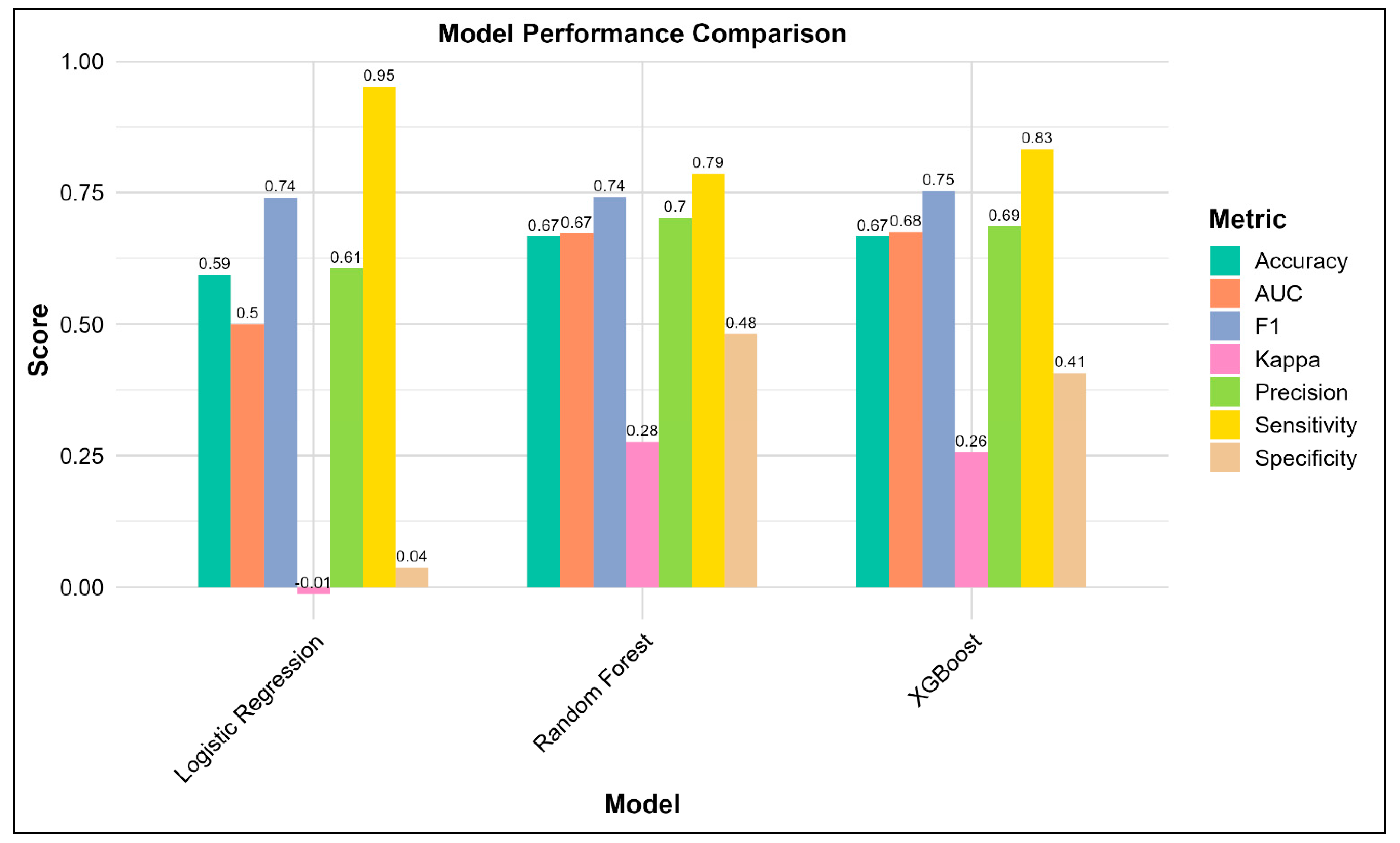
| Model | Random Forest | XGBoost | Logistic Regression |
|---|---|---|---|
| Accuracy | 0.67 | 0.67 | 0.59 |
| Sensitivity | 0.79 | 0.83 | 0.95 |
| Specificity | 0.48 | 0.41 | 0.04 |
| Precision | 0.70 | 0.69 | 0.61 |
| Recall | 0.79 | 0.83 | 0.95 |
| F1 Score | 0.74 | 0.75 | 0.74 |
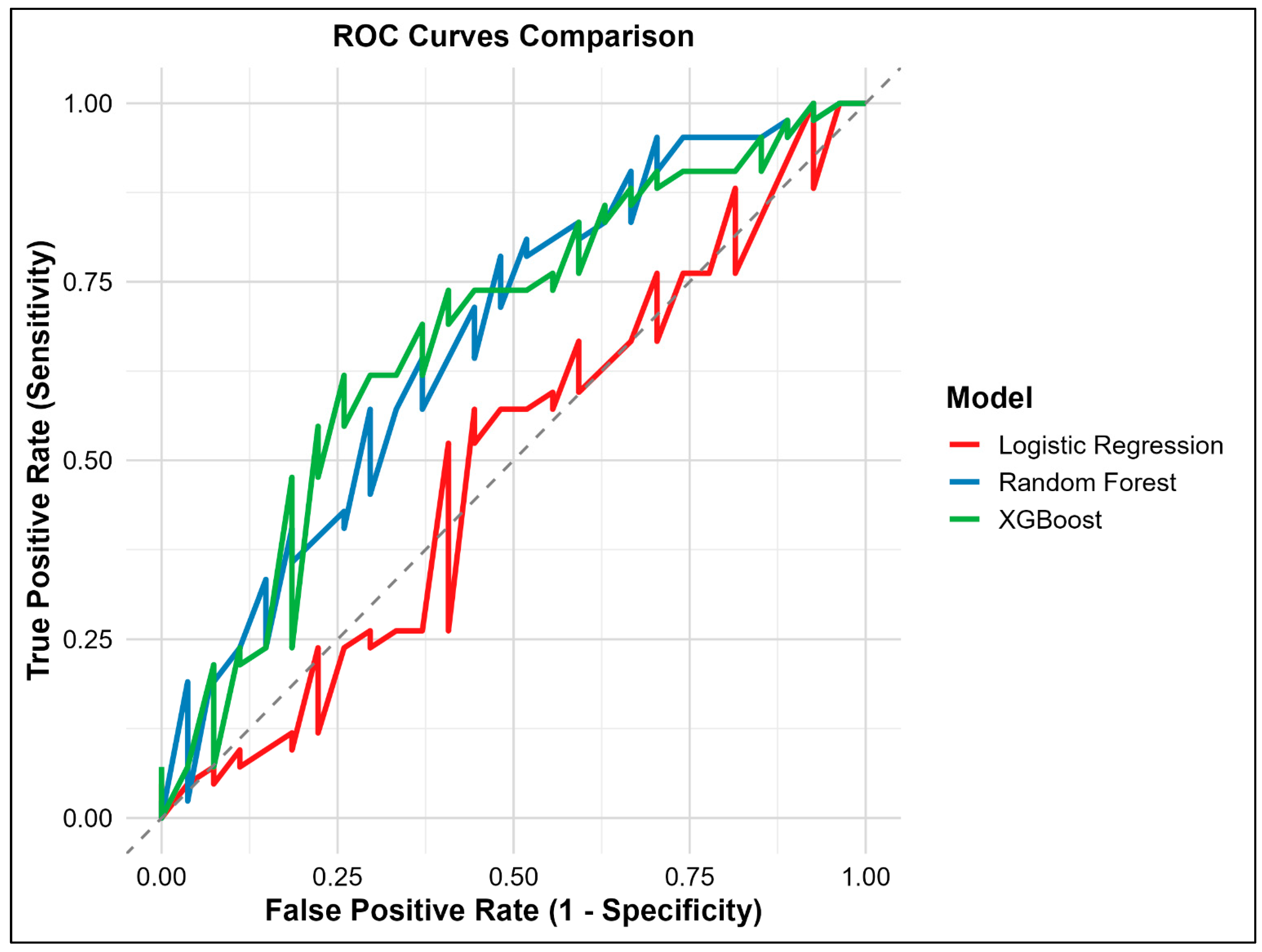
| AUC [95% CI] | 0.67 [0.53, 0.77] | 0.68 [0.52, 0.78] | 0.50 [0.2, 0.74] |
| Youden J | 0.27 | 0.24 | −0.01 |
| PPV | 0.79 | 0.83 | 0.95 |
| NPV | 0.48 | 0.41 | 0.04 |
| PLR | 1.52 | 1.41 | 0.99 |
| NLR | 0.45 | 0.41 | 1.29 |
| MAE | 0.44 | 0.40 | 0.48 |
| RMSE | 0.47 | 0.48 | 0.50 |
| MSE | 0.22 | 0.23 | 0.25 |
| Brier score | 0.22 | 0.23 | 0.25 |
| Log loss | 0.62 | 0.67 | 0.70 |
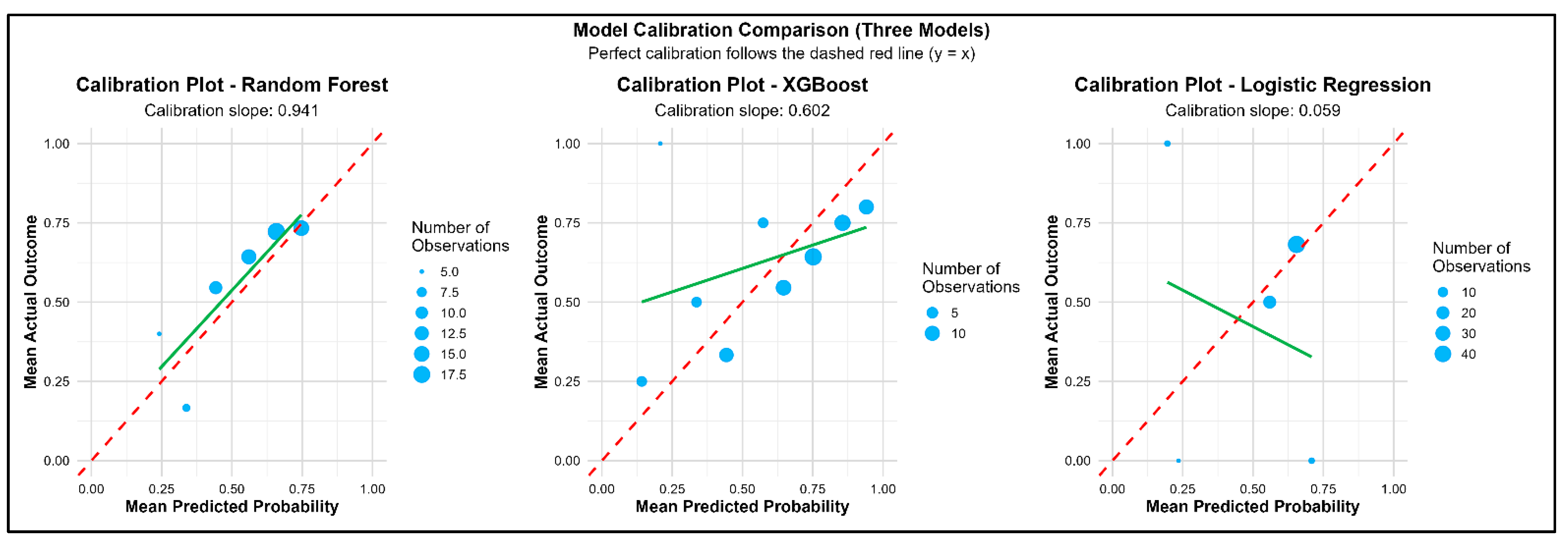
| Calibration slope | 0.94 | 0.60 | 0.059 |
| TP | 33 | 35 | 40 |
| TN | 13 | 11 | 1 |
| FP | 9 | 7 | 2 |
| FN | 14 | 16 | 26 |
| OR [95% CI] | 3.41 [1.2, 9.8] | 3.4 [1.1, 10.5] | 0.77 [0.07, 8.9] |
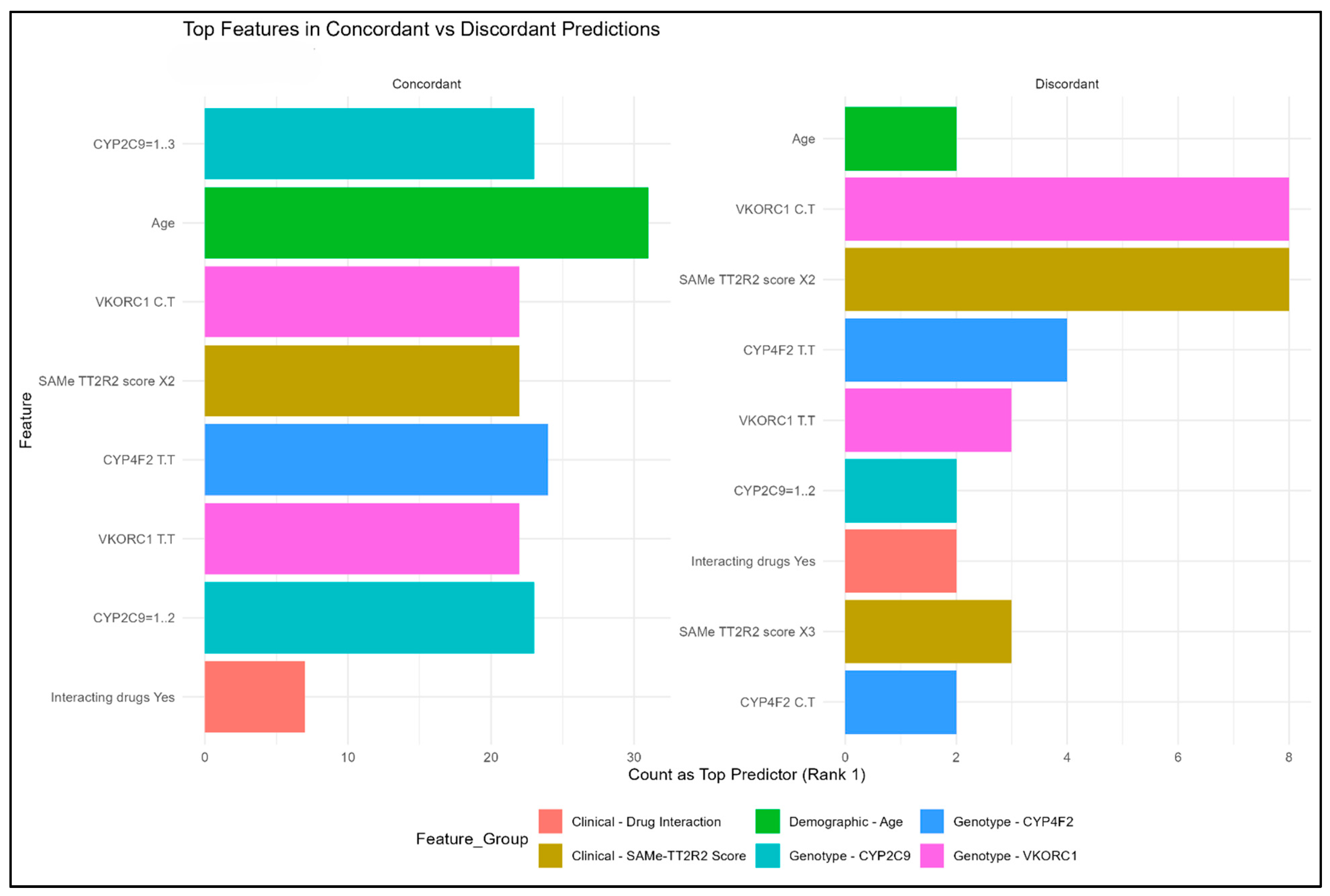
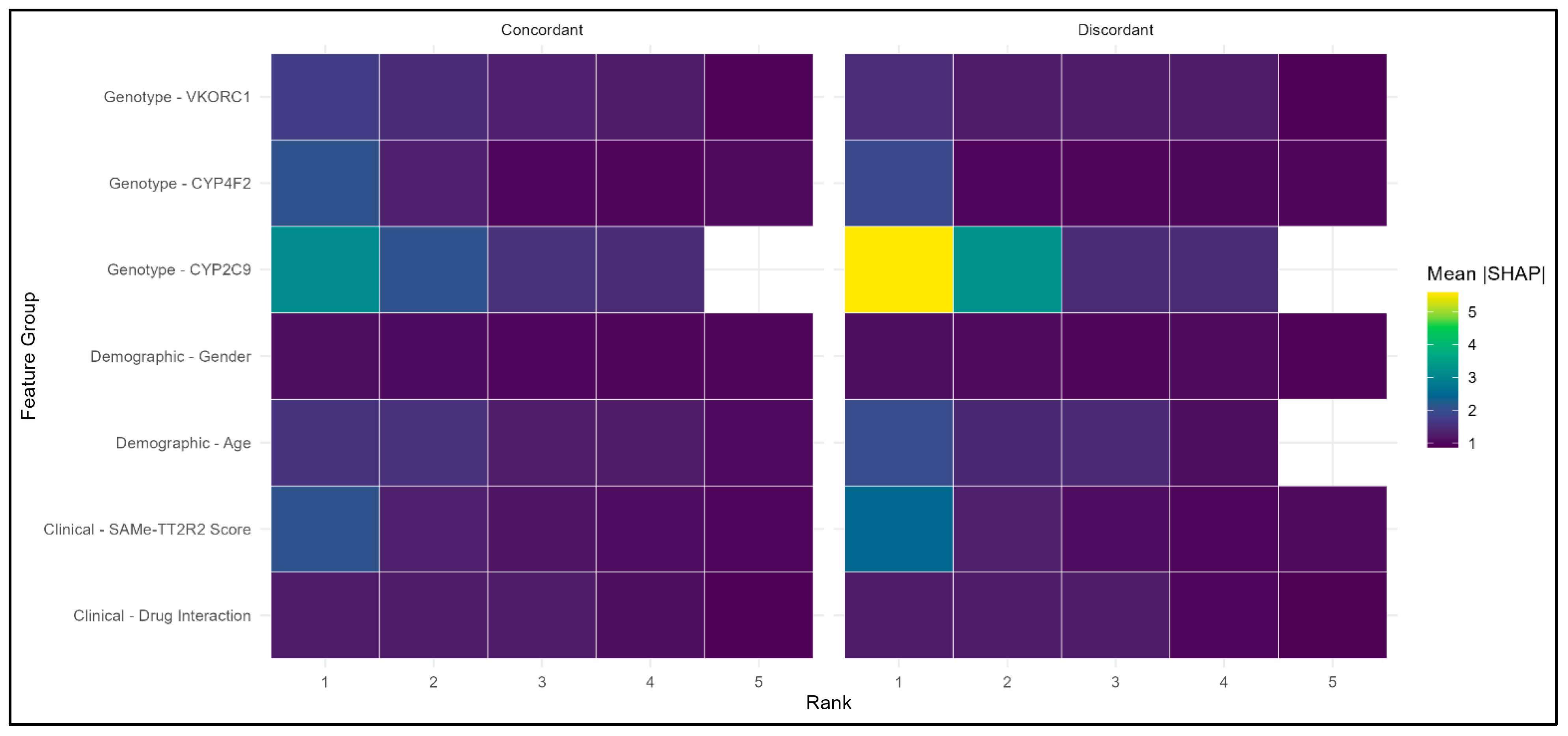
| Concordance | Group-Feature | Count | Mean SHAP | SD SHAP | Mean Absolute SHAP | SD Absolute SHAP | Positive Count | Negative Count | Percentage of Positive Counts |
|---|---|---|---|---|---|---|---|---|---|
| Concordant | Genotype-CYP2C9 | 141 | 0.91 | 2.67 | 2.31 | 1.61 | 73 | 68 | 51.77 |
| Genotype-VKORC1 | 125 | 1.26 | 0.86 | 1.44 | 0.49 | 111 | 14 | 88.80 | |
| Demographic-Age | 73 | 0.09 | 1.49 | 1.42 | 0.43 | 44 | 29 | 60.27 | |
| Genotype-CYP4F2 | 166 | 0.53 | 1.26 | 1.26 | 0.53 | 102 | 64 | 61.45 | |
| Clinical-SAMe-TT2R2 Score | 200 | 0.59 | 1.29 | 1.21 | 0.72 | 142 | 58 | 71.00 | |
| Clinical-Drug Interaction | 115 | −0.50 | 0.98 | 1.08 | 0.20 | 41 | 74 | 35.65 | |
| Demographic-Gender | 155 | 0.05 | 1.00 | 1.00 | 0.08 | 75 | 80 | 48.39 | |
| Discordant | Genotype-CYP2C9 | 9 | 2.15 | 4.75 | 3.44 | 3.79 | 5 | 4 | 55.56 |
| Demographic-Age | 11 | −0.32 | 1.52 | 1.44 | 0.39 | 5 | 6 | 45.45 | |
| Clinical-SAMe-TT2R2 Score | 45 | 0.73 | 1.67 | 1.40 | 1.15 | 31 | 14 | 68.89 | |
| Genotype-VKORC1 | 25 | 0.94 | 0.95 | 1.26 | 0.40 | 20 | 5 | 80.00 | |
| Genotype-CYP4F2 | 30 | 0.23 | 1.26 | 1.17 | 0.47 | 15 | 15 | 50.00 | |
| Clinical-Drug Interaction | 27 | −0.47 | 1.00 | 1.07 | 0.20 | 10 | 17 | 37.04 | |
| Demographic-Gender | 33 | 0.11 | 1.02 | 1.00 | 0.08 | 17 | 16 | 51.52 |
Disclaimer/Publisher’s Note: The statements, opinions and data contained in all publications are solely those of the individual author(s) and contributor(s) and not of MDPI and/or the editor(s). MDPI and/or the editor(s) disclaim responsibility for any injury to people or property resulting from any ideas, methods, instructions or products referred to in the content. |
© 2026 by the authors. Licensee MDPI, Basel, Switzerland. This article is an open access article distributed under the terms and conditions of the Creative Commons Attribution (CC BY) license.
Share and Cite
Sridharan, K.; Sivaramakrishnan, G. Explainable Artificial Intelligence Unravels the Possible Distinct Roles of VKORC1 and CYP2C9 in Predicting Warfarin Anticoagulation Control. Med. Sci. 2026, 14, 156. https://doi.org/10.3390/medsci14010156
Sridharan K, Sivaramakrishnan G. Explainable Artificial Intelligence Unravels the Possible Distinct Roles of VKORC1 and CYP2C9 in Predicting Warfarin Anticoagulation Control. Medical Sciences. 2026; 14(1):156. https://doi.org/10.3390/medsci14010156
Chicago/Turabian StyleSridharan, Kannan, and Gowri Sivaramakrishnan. 2026. "Explainable Artificial Intelligence Unravels the Possible Distinct Roles of VKORC1 and CYP2C9 in Predicting Warfarin Anticoagulation Control" Medical Sciences 14, no. 1: 156. https://doi.org/10.3390/medsci14010156
APA StyleSridharan, K., & Sivaramakrishnan, G. (2026). Explainable Artificial Intelligence Unravels the Possible Distinct Roles of VKORC1 and CYP2C9 in Predicting Warfarin Anticoagulation Control. Medical Sciences, 14(1), 156. https://doi.org/10.3390/medsci14010156