
Redox-Immune Axis and Ozone Pollution: From Oxidative Stress to Thymic Involution and Neurodegeneration


Abstract
1. Introduction
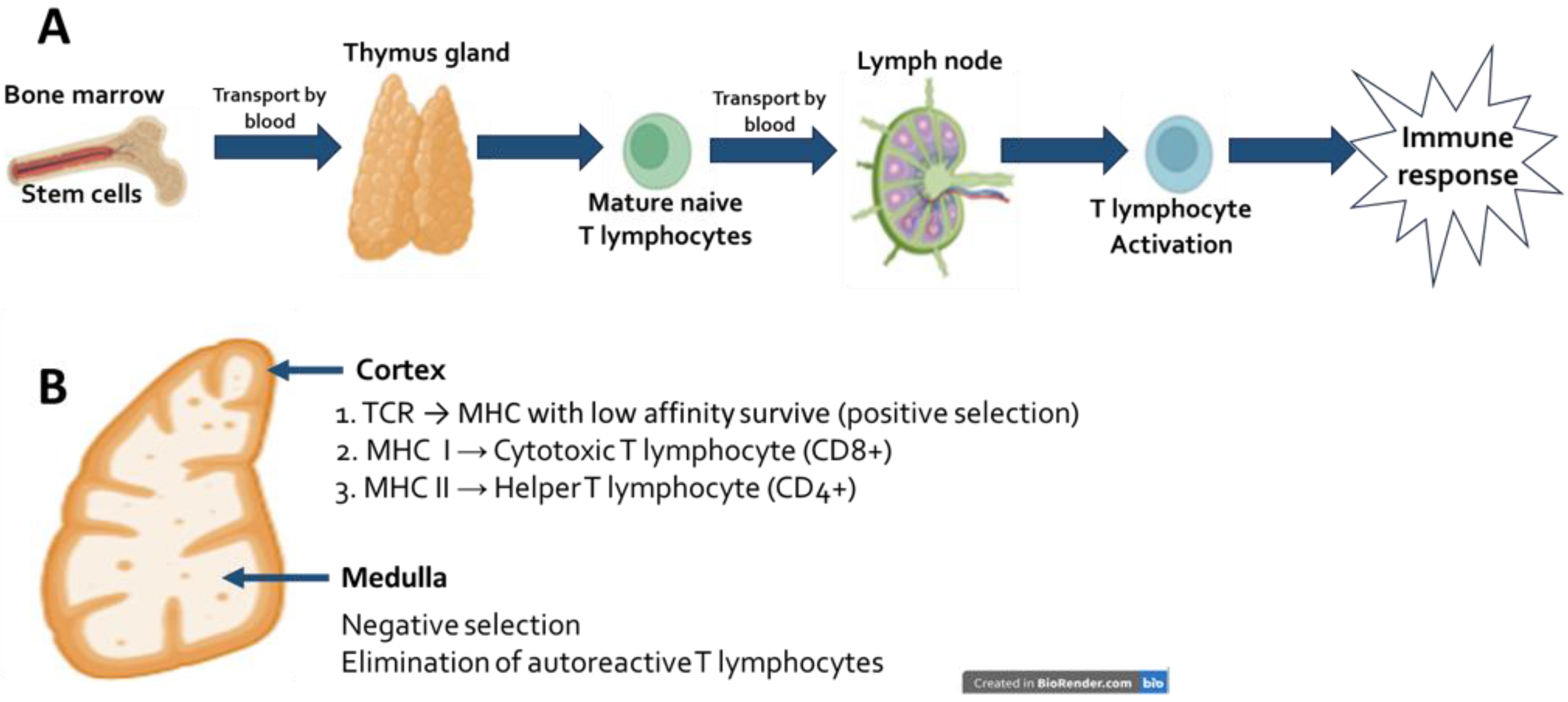
2. Thymus Physiology
3. The Role of the Thymus in Immune Function, Redox Activity, and Immune Tolerance
3.1. T Lymphocytes Selection in the Thymus
3.2. Oxidative Stress and Antioxidant Enzymes in Thymus Function
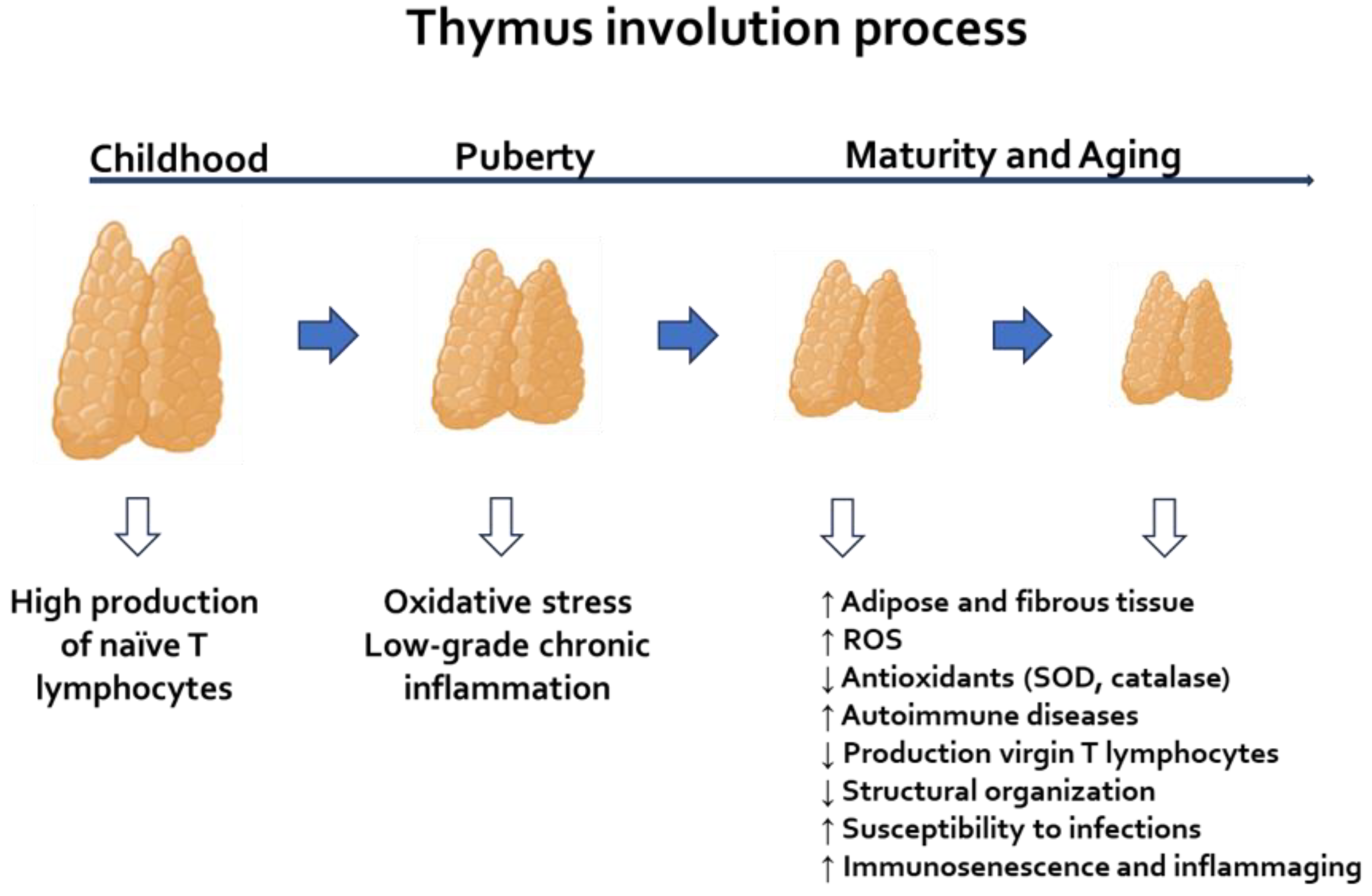
4. Thymic Involution Caused by Oxidative Stress
5. The Role of Oxidative Stress in the Thymus and Its Relationship with Neurodegenerative Diseases
6. Multiple Sclerosis and Neurodegenerative Autoimmunity
7. Alzheimer’s Disease and Immunity
8. Parkinson’s Disease and Oxidative Stress
9. Other Neurodegenerative Diseases
10. Oxidative Stress and Gene Expression
11. Conclusions
Author Contributions
Funding
Institutional Review Board Statement
Informed Consent Statement
Data Availability Statement
Conflicts of Interest
Abbreviations
| 8-oxo-dG | 8-Oxo-2′-deoxyguanosine |
| AD | Alzheimer’s disease |
| AIRE | Autoimmune regulator |
| AKT | Protein kinase B |
| BECN1 | Beclin-1 |
| CAT | Catalase |
| CCL | Chemokine (C–C motif) ligand |
| CD4 | Helper T cells |
| CD8 | Cytotoxic T-lymphocyte |
| CDKN1A | Cyclin-Dependent Kinase Inhibitor 1A |
| cGAS–STING | Cyclic GMP-AMP synthase- stimulator of interferon genes |
| CNS2 | Conserved Noncoding Sequence 2 |
| CRP | C-reactive Protein |
| CXCL12 | Chemokine (C-X-C motif) ligand 12 |
| DAMPs | Damage-Associated Molecular Patterns |
| DNA | Deoxyribonucleic acid |
| DR2 | Human Leukocyte Antigen-DR2 |
| ECs | Endothelial cells |
| FAO | Fatty acid oxidation |
| FOXN1 | Forkhead box N1 |
| FOXO | Forkhead box proteins |
| GADD45 | Growth Arrest and DNA Damage-inducible protein 45 |
| GM-CSF | Granulocyte-Macrophage Colony-Stimulating Factor |
| GPx | Glutathione peroxidase |
| GRB2 | Growth-factor-receptor-bound protein 2 |
| GSH | Glutathione |
| GSSG | Glutathione disulfide |
| HO-1 | Heme oxygenase-1 |
| IDO | Indoleamine 2,3-dioxygenase |
| IFN | Interferon |
| IGF-1 | Insulin-like Growth Factor 1 |
| IL | Interleukin |
| JAK/STAT | Janus Kinase/signal transducer and activator of transcription |
| LC3 | Microtubule-associated proteins 1A/1B light chain 3B |
| MAP14 | Mitogen-activated protein kinase 14 |
| MHC | Major histocompatibility complex |
| MS | Multiple sclerosis |
| mTOR | Mechanistic Target of Rapamycin |
| NF-κB | Nuclear Factor kappa-light-chain-enhancer of activated B cells |
| NLRP3 | NLR family pyrin domain containing 3 |
| NQO1 | NAD(P)H quinone dehydrogenase 1 |
| Nrf2 | Nuclear factor erythroid-derived 2 |
| OS | Oxidative stress |
| OXPHOS | Oxidative phosphorylation |
| p38 MAPK | p38 mitogen-activated protein kinase |
| PD | Parkinson’s disease |
| Prx | Peroxiredoxins |
| pTregs | Peripheral Tregs |
| RANKL | Receptor activator of nuclear factor kappa B ligand |
| RNS | Reactive nitrogen species |
| ROS | Reactive Oxygen Species |
| RRMS | Relapsing-remitting variant |
| SASP | Senescence-associated secretory phenotype |
| SIRT | Sirtuins |
| SkQ1 | Plastoquinonyl decyl triphenylphosphonium |
| SOD | Superoxide dismutase |
| TECs | Thymic epithelial cells |
| Teff | Effector T cell |
| TEMRA | Terminally differentiated effector memory CD45RA-positive T cells |
| TGFBR2 | Transforming Growth Factor Beta Receptor 2 |
| TGF-β | Transforming Growth Factor beta |
| Th | T helper cells |
| TLRs | Toll-like Receptor |
| TNF-α | Tumor Necrosis Factor alpha |
| TRAs | Tissue-restricted antigens |
| Tregs | Regulatory T cells |
| tTregs | Thymic Tregs |
References
- Huangfu, P.; Atkinson, R. Long-term exposure to NO(2) and O(3) and all-cause and respiratory mortality: A systematic review and meta-analysis. Environ. Int. 2020, 144, 105998. [Google Scholar] [CrossRef]
- Jenkin, M.E.; Clemitshaw, K.C. Ozone and other secondary photochemical pollutants: Chemical processes governing their formation in the planetary boundary layer. Atmos. Environ. 2000, 34, 2499–2527. [Google Scholar] [CrossRef]
- Rivas-Arancibia, S.; Guevara-Guzmán, R.; López-Vidal, Y.; Rodríguez-Martínez, E.; Zanardo-Gomes, M.; Angoa-Pérez, M.; Raisman-Vozari, R. Oxidative stress caused by ozone exposure induces loss of brain repair in the hippocampus of adult rats. Toxicol. Sci. 2010, 113, 187–197. [Google Scholar] [CrossRef]
- Solleiro-Villavicencio, H.; Rivas-Arancibia, S. Systemic Th17/IL-17A response appears prior to hippocampal neurodegeneration in rats exposed to low doses of ozone. Neurologia 2019, 34, 503–509. [Google Scholar] [CrossRef] [PubMed]
- World Health Organization. WHO Global Air Quality Guidelines: Particulate Matter (PM2. 5 and PM10), Ozone, Nitrogen Dioxide, Sulfur Dioxide and Carbon Monoxide: Executive Summary; WHO: Geneva, Switzerland, 2021. [Google Scholar]
- Goswami, T.K.; Singh, M.; Dhawan, M.; Mitra, S.; Bin Emran, T.; Rabaan, A.A.; Al Mutair, A.; Al Alawi, Z.; Alhumaid, S.; Dhama, K. Regulatory T cells (Tregs) and their therapeutic potential against autoimmune disorders—Advances and challenges. Hum. Vaccin. Immunother. 2022, 18, 2035117. [Google Scholar] [CrossRef] [PubMed]
- Bello-Medina, P.; Rodríguez-Martínez, E.; Prado-Alcalá, R.A.; Rivas-Arancibia, S. Ozone pollution, oxidative stress, synaptic plasticity, and neurodegeneration. Neurologia 2022, 37, 277–286. [Google Scholar] [CrossRef] [PubMed]
- Barbouti, A.; Vasileiou, P.V.S.; Evangelou, K.; Vlasis, K.G.; Papoudou-Bai, A.; Gorgoulis, V.G.; Kanavaros, P. Implications of Oxidative Stress and Cellular Senescence in Age-Related Thymus Involution. Oxid. Med. Cell Longev. 2020, 2020, 7986071. [Google Scholar] [CrossRef]
- Dong, X.; Liang, Z.; Zhang, J.; Zhang, Q.; Xu, Y.; Zhang, Z.; Zhang, L.; Zhang, B.; Zhao, Y. Trappc1 deficiency impairs thymic epithelial cell development by breaking endoplasmic reticulum homeostasis. Eur. J. Immunol. 2022, 52, 1789–1804. [Google Scholar] [CrossRef]
- Pavlovic, S.; Jovic, Z.; Karan, R.; Krtinic, D.; Rankovic, G.; Golubovic, M.; Lilic, J.; Pavlovic, V. Modulatory effect of curcumin on ketamine-induced toxicity in rat thymocytes: Involvement of reactive oxygen species (ROS) and the phosphoinositide 3-kinase (PI3K)/protein kinase B (Akt) pathway. Bosn. J. Basic. Med. Sci. 2018, 18, 320–327. [Google Scholar] [CrossRef]
- Scharping, N.E.; Rivadeneira, D.B.; Menk, A.V.; Vignali, P.D.A.; Ford, B.R.; Rittenhouse, N.L.; Peralta, R.; Wang, Y.; Wang, Y.; DePeaux, K.; et al. Mitochondrial stress induced by continuous stimulation under hypoxia rapidly drives T cell exhaustion. Nat. Immunol. 2021, 22, 205–215. [Google Scholar] [CrossRef]
- Venables, T.; Griffith, A.V.; DeAraujo, A.; Petrie, H.T. Dynamic changes in epithelial cell morphology control thymic organ size during atrophy and regeneration. Nat. Commun. 2019, 10, 4402. [Google Scholar] [CrossRef]
- Hester, A.K.; Semwal, M.K.; Cepeda, S.; Xiao, Y.; Rueda, M.; Wimberly, K.; Venables, T.; Dileepan, T.; Kraig, E.; Griffith, A.V. Redox regulation of age-associated defects in generation and maintenance of T cell self-tolerance and immunity to foreign antigens. Cell Rep. 2022, 38, 110363. [Google Scholar] [CrossRef] [PubMed]
- Nacka-Aleksić, M.; Pilipović, I.; Kotur-Stevuljević, J.; Petrović, R.; Sopta, J.; Leposavić, G. Sexual dimorphism in rat thymic involution: A correlation with thymic oxidative status and inflammation. Biogerontology 2019, 20, 545–569. [Google Scholar] [CrossRef]
- Li, Y.; Li, H.; Peng, C.; Meng, G.; Lu, Y.; Liu, H.; Cui, L.; Zhou, H.; Xu, Z.; Sun, L.; et al. Unraveling the spatial organization and development of human thymocytes through integration of spatial transcriptomics and single-cell multi-omics profiling. Nat. Commun. 2024, 15, 7784. [Google Scholar] [CrossRef]
- Ueno, T.; Hara, K.; Willis, M.S.; Malin, M.A.; Höpken, U.E.; Gray, D.H.; Matsushima, K.; Lipp, M.; Springer, T.A.; Boyd, R.L.; et al. Role for CCR7 ligands in the emigration of newly generated T lymphocytes from the neonatal thymus. Immunity 2002, 16, 205–218. [Google Scholar] [CrossRef]
- Liang, Z.; Dong, X.; Zhang, Z.; Zhang, Q.; Zhao, Y. Age-related thymic involution: Mechanisms and functional impact. Aging Cell 2022, 21, e13671. [Google Scholar] [CrossRef]
- Shichkin, V.P.; Antica, M. Key Factors for Thymic Function and Development. Front. Immunol. 2022, 13, 926516. [Google Scholar] [CrossRef] [PubMed]
- Appay, V.; Sauce, D.; Prelog, M. The role of the thymus in immunosenescence: Lessons from the study of thymectomized individuals. Aging 2010, 2, 78–81. [Google Scholar] [CrossRef] [PubMed][Green Version]
- Kooshesh, K.A.; Foy, B.H.; Sykes, D.B.; Gustafsson, K.; Scadden, D.T. Health Consequences of Thymus Removal in Adults. Reply. N. Engl. J. Med. 2023, 389, 1726–1727. [Google Scholar] [CrossRef]
- Pérez, M.R.; Vandenabeele, P.; Tougaard, P. The thymus road to a T cell: Migration, selection, and atrophy. Front. Immunol. 2024, 15, 1443910. [Google Scholar] [CrossRef]
- Takaba, H.; Takayanagi, H. The Mechanisms of T Cell Selection in the Thymus. Trends Immunol. 2017, 38, 805–816. [Google Scholar] [CrossRef] [PubMed]
- Li, X.; Li, C.; Zhang, W.; Wang, Y.; Qian, P.; Huang, H. Inflammation and aging: Signaling pathways and intervention therapies. Signal Transduct. Target. Ther. 2023, 8, 239. [Google Scholar] [CrossRef] [PubMed]
- Oh, J.; Wang, W.; Thomas, R.; Su, D.M. Thymic rejuvenation via FOXN1-reprogrammed embryonic fibroblasts (FREFs) to counteract age-related inflammation. JCI Insight 2020, 5, e140313. [Google Scholar] [CrossRef] [PubMed]
- Shevyrev, D.; Tereshchenko, V. Treg Heterogeneity, Function, and Homeostasis. Front. Immunol. 2019, 10, 3100. [Google Scholar] [CrossRef]
- Fu, Y.; Wang, B.; Alu, A.; Hong, W.; Lei, H.; He, X.; Shi, H.; Cheng, P.; Yang, X. Immunosenescence: Signaling pathways, diseases and therapeutic targets. Signal Transduct. Target. Ther. 2025, 10, 250. [Google Scholar] [CrossRef]
- Thomas, R.; Wang, W.; Su, D.-M. Contributions of Age-Related Thymic Involution to Immunosenescence and Inflammaging. Immun. Ageing 2020, 17, 2. [Google Scholar] [CrossRef]
- Coder, B.; Wang, W.; Wang, L.; Wu, Z.; Zhuge, Q.; Su, D.-M. Friend or foe: The dichotomous impact of T cells on neuro-de/re-generation during aging. Oncotarget 2017, 8, 7116–7137. [Google Scholar] [CrossRef]
- Kologrivova, I.V.; Naryzhnaya, N.V.; Suslova, T.E. Thymus in Cardiometabolic Impairments and Atherosclerosis: Not a Silent Player? Biomedicines 2024, 12, 1408. [Google Scholar] [CrossRef]
- Gavia-García, G.; González-Martínez, H.; Miliar-García, Á.; Bonilla-González, E.; Rosas-Trejo, M.d.L.Á.; Königsberg, M.; Nájera-Medina, O.; Luna-López, A.; González-Torres, M.C. Oxidative damage and antioxidant defense in thymus of malnourished lactating rats. Nutrition 2015, 31, 1408–1415. [Google Scholar] [CrossRef]
- Steele, E.J.; Lindley, R.A. Regulatory T cells and co-evolution of allele-specific MHC recognition by the TCR. Scand. J. Immunol. 2020, 91, e12853. [Google Scholar] [CrossRef]
- Miller, C.N.; Waterfield, M.R.; Gardner, J.M.; Anderson, M.S. Aire in Autoimmunity. Annu. Rev. Immunol. 2024, 42, 427–453. [Google Scholar] [CrossRef]
- Semwal, M.K.; Hester, A.K.; Xiao, Y.; Udeaja, C.; Cepeda, S.; Verschelde, J.S., 2nd; Jones, N.; Wedemeyer, S.A.; Emtage, S.; Wimberly, K.; et al. Redox status regulates autophagy in thymic stromal cells and promotes T cell tolerance. Proc. Natl. Acad. Sci. USA 2022, 119, e2204296119. [Google Scholar] [CrossRef]
- Griffith, A.V.; Venables, T.; Shi, J.; Farr, A.; van Remmen, H.; Szweda, L.; Fallahi, M.; Rabinovitch, P.; Petrie, H.T. Metabolic Damage and Premature Thymus Aging Caused by Stromal Catalase Deficiency. Cell Rep. 2015, 12, 1071–1079. [Google Scholar] [CrossRef]
- Nakashima, I.; Suzuki, H.; Kato, M.; Akhand, A.A. Redox control of T-cell death. Antioxid. Redox Signal 2002, 4, 353–356. [Google Scholar] [CrossRef]
- Kraaij, M.D.; Savage, N.D.; van der Kooij, S.W.; Koekkoek, K.; Wang, J.; van den Berg, J.M.; Ottenhoff, T.H.; Kuijpers, T.W.; Holmdahl, R.; van Kooten, C.; et al. Induction of regulatory T cells by macrophages is dependent on production of reactive oxygen species. Proc. Natl. Acad. Sci. USA 2010, 107, 17686–17691. [Google Scholar] [CrossRef]
- Morris, G.; Gevezova, M.; Sarafian, V.; Maes, M. Redox regulation of the immune response. Cell Mol. Immunol. 2022, 19, 1079–1101. [Google Scholar] [CrossRef] [PubMed]
- Brelińska, R. Thymic epithelial cells in age-dependent involution. Microsc. Res. Tech. 2003, 62, 488–500. [Google Scholar] [CrossRef] [PubMed]
- Aw, D.; Silva, A.B.; Palmer, D.B. Immunosenescence: Emerging challenges for an ageing population. Immunology 2007, 120, 435–446. [Google Scholar] [CrossRef] [PubMed]
- Li, H.; Lin, S.; Wang, Y.; Shi, Y.; Fang, X.; Wang, J.; Cui, H.; Bian, Y.; Qi, X. Immunosenescence: A new direction in anti-aging research. Int. Immunopharmacol. 2024, 141, 112900. [Google Scholar] [CrossRef]
- Matsushita, M.; Freigang, S.; Schneider, C.; Conrad, M.; Bornkamm, G.W.; Kopf, M. T cell lipid peroxidation induces ferroptosis and prevents immunity to infection. J. Exp. Med. 2015, 212, 555–568. [Google Scholar] [CrossRef]
- Moon, E.Y.; Han, Y.H.; Lee, D.S.; Han, Y.M.; Yu, D.Y. Reactive oxygen species induced by the deletion of peroxiredoxin II (PrxII) increases the number of thymocytes resulting in the enlargement of PrxII-null thymus. Eur. J. Immunol. 2004, 34, 2119–2128. [Google Scholar] [CrossRef]
- Muri, J.; Kopf, M. The thioredoxin system: Balancing redox responses in immune cells and tumors. Eur. J. Immunol. 2023, 53, e2249948. [Google Scholar] [CrossRef]
- Cassidy, P.B.; Edes, K.; Nelson, C.C.; Parsawar, K.; Fitzpatrick, F.A.; Moos, P.J. Thioredoxin reductase is required for the inactivation of tumor suppressor p53 and for apoptosis induced by endogenous electrophiles. Carcinogenesis 2006, 27, 2538–2549. [Google Scholar] [CrossRef] [PubMed]
- Carilho Torrao, R.B.; Dias, I.H.; Bennett, S.J.; Dunston, C.R.; Griffiths, H.R. Healthy ageing and depletion of intracellular glutathione influences T cell membrane thioredoxin-1 levels and cytokine secretion. Chem. Cent. J. 2013, 7, 150. [Google Scholar] [CrossRef][Green Version]
- Carr, A.C.; Maggini, S. Vitamin C and Immune Function. Nutrients 2017, 9, 1211. [Google Scholar] [CrossRef] [PubMed]
- Moriguchi, S. The role of vitamin E in T-cell differentiation and the decrease of cellular immunity with aging. Biofactors 1998, 7, 77–86. [Google Scholar] [CrossRef]
- Bono, M.R.; Tejon, G.; Flores-Santibañez, F.; Fernandez, D.; Rosemblatt, M.; Sauma, D. Retinoic Acid as a Modulator of T Cell Immunity. Nutrients 2016, 8, 349. [Google Scholar] [CrossRef] [PubMed]
- Hu, D.E.; Moore, A.M.; Thomsen, L.L.; Brindle, K.M. Uric acid promotes tumor immune rejection. Cancer Res. 2004, 64, 5059–5062. [Google Scholar] [CrossRef]
- Bauerova, K.; Drafi, F.; Kuncirova, V.; Ponist, S.; Mihalova, D.; Babal, P.; Sykora, T. Hyperbilirubinemia decreases physiological markers in adjuvant-induced arthritis. Physiol. Res. 2015, 64 (Suppl. S4), S459–S466. [Google Scholar] [CrossRef]
- Gulvady, A.A.; Ciolino, H.P.; Cabrera, R.M.; Jolly, C.A. Resveratrol inhibits the deleterious effects of diet-induced obesity on thymic function. J. Nutr. Biochem. 2013, 24, 1625–1633. [Google Scholar] [CrossRef]
- Li, J.H.; Wei, T.T.; Guo, L.; Cao, J.H.; Feng, Y.K.; Guo, S.N.; Liu, G.H.; Ding, Y.; Chai, Y.R. Curcumin protects thymus against D-galactose-induced senescence in mice. Naunyn Schmiedebergs Arch. Pharmacol. 2021, 394, 411–420. [Google Scholar] [CrossRef]
- Dooley, J.; Liston, A. Molecular control over thymic involution: From cytokines and microRNA to aging and adipose tissue. Eur. J. Immunol. 2012, 42, 1073–1079. [Google Scholar] [CrossRef]
- Sidler, C.; Wóycicki, R.; Ilnytskyy, Y.; Metz, G.; Kovalchuk, I.; Kovalchuk, O. Immunosenescence is associated with altered gene expression and epigenetic regulation in primary and secondary immune organs. Front. Genet. 2013, 4, 211. [Google Scholar] [CrossRef] [PubMed]
- Barbouti, A.; Evangelou, K.; Pateras, I.S.; Papoudou-Bai, A.; Patereli, A.; Stefanaki, K.; Rontogianni, D.; Muñoz-Espín, D.; Kanavaros, P.; Gorgoulis, V.G. In situ evidence of cellular senescence in Thymic Epithelial Cells (TECs) during human thymic involution. Mech. Ageing Dev. 2019, 177, 88–90. [Google Scholar] [CrossRef] [PubMed]
- Li, J.; Liu, C.H.; Wang, F.S. Thymosin alpha 1: Biological activities, applications and genetic engineering production. Peptides 2010, 31, 2151–2158. [Google Scholar] [CrossRef] [PubMed]
- Savino, W.; Lepletier, A. Thymus-derived hormonal and cellular control of cancer. Front. Endocrinol. 2023, 14, 1168186. [Google Scholar] [CrossRef]
- Geltink, R.I.K.; Kyle, R.L.; Pearce, E.L. Unraveling the Complex Interplay Between T Cell Metabolism and Function. Annu. Rev. Immunol. 2018, 36, 461–488. [Google Scholar] [CrossRef]
- Li, A.F.; Richters, A. Ambient level ozone effects on subpopulations of thymocytes and spleen T lymphocytes. Arch. Environ. Health 1991, 46, 57–63. [Google Scholar] [CrossRef]
- Dziedzic, D.; White, H.J. Thymus and pulmonary lymph node response to acute and subchronic ozone inhalation in the mouse. Environ. Res. 1986, 41, 598–609. [Google Scholar] [CrossRef]
- Pinto, M.; Pickrell, A.M.; Wang, X.; Bacman, S.R.; Yu, A.; Hida, A.; Dillon, L.M.; Morton, P.D.; Malek, T.R.; Williams, S.L.; et al. Transient mitochondrial DNA double strand breaks in mice cause accelerated aging phenotypes in a ROS-dependent but p53/p21-independent manner. Cell Death Differ. 2017, 24, 288–299. [Google Scholar] [CrossRef]
- Li, Y.N.; Guo, Y.; Xi, M.M.; Yang, P.; Zhou, X.Y.; Yin, S.; Hai, C.X.; Li, J.G.; Qin, X.J. Saponins from Aralia taibaiensis attenuate D-galactose-induced aging in rats by activating FOXO3a and Nrf2 pathways. Oxid. Med. Cell Longev. 2014, 2014, 320513. [Google Scholar] [CrossRef]
- Obukhova, L.A.; Skulachev, V.P.; Kolosova, N.G. Mitochondria-targeted antioxidant SkQ1 inhibits age-dependent involution of the thymus in normal and senescence-prone rats. Aging 2009, 1, 389–401. [Google Scholar] [CrossRef]
- Uchio, R.; Hirose, Y.; Murosaki, S.; Yamamoto, Y.; Ishigami, A. High dietary intake of vitamin C suppresses age-related thymic atrophy and contributes to the maintenance of immune cells in vitamin C-deficient senescence marker protein-30 knockout mice. Br. J. Nutr. 2015, 113, 603–609. [Google Scholar] [CrossRef]
- Schriner, S.E.; Linford, N.J.; Martin, G.M.; Treuting, P.; Ogburn, C.E.; Emond, M.; Coskun, P.E.; Ladiges, W.; Wolf, N.; Van Remmen, H.; et al. Extension of murine life span by overexpression of catalase targeted to mitochondria. Science 2005, 308, 1909–1911. [Google Scholar] [CrossRef]
- Qian, Y.; Chen, X. Senescence regulation by the p53 protein family. Methods Mol. Biol. 2013, 965, 37–61. [Google Scholar] [CrossRef]
- Passos, J.F.; Nelson, G.; Wang, C.; Richter, T.; Simillion, C.; Proctor, C.J.; Miwa, S.; Olijslagers, S.; Hallinan, J.; Wipat, A.; et al. Feedback between p21 and reactive oxygen production is necessary for cell senescence. Mol. Syst. Biol. 2010, 6, 347. [Google Scholar] [CrossRef] [PubMed]
- Iwasa, H.; Han, J.; Ishikawa, F. Mitogen-activated protein kinase p38 defines the common senescence-signalling pathway. Genes. Cells 2003, 8, 131–144. [Google Scholar] [CrossRef]
- Ron-Harel, N.; Schwartz, M. Immune senescence and brain aging: Can rejuvenation of immunity reverse memory loss? Trends Neurosci. 2009, 32, 367–375. [Google Scholar] [CrossRef]
- Ajoolabady, A.; Pratico, D.; Tang, D.; Zhou, S.; Franceschi, C.; Ren, J. Immunosenescence and inflammaging: Mechanisms and role in diseases. Ageing Res. Rev. 2024, 101, 102540. [Google Scholar] [CrossRef] [PubMed]
- Machhi, J.; Yeapuri, P.; Lu, Y.; Foster, E.; Chikhale, R.; Herskovitz, J.; Namminga, K.L.; Olson, K.E.; Abdelmoaty, M.M.; Gao, J.; et al. CD4+ effector T cells accelerate Alzheimer’s disease in mice. J. Neuroinflammation 2021, 18, 272. [Google Scholar] [CrossRef] [PubMed]
- Coder, B.D.; Wang, H.; Ruan, L.; Su, D.M. Thymic involution perturbs negative selection leading to autoreactive T cells that induce chronic inflammation. J. Immunol. 2015, 194, 5825–5837. [Google Scholar] [CrossRef]
- Hayama, M.; Ishii, H.; Miyauchi, M.; Yoshida, M.; Hagiwara, N.; Muramtatu, W.; Namiki, K.; Endo, R.; Miyao, T.; Akiyama, N.; et al. Direct and indirect RANK and CD40 signaling regulate the maintenance of thymic epithelial cell frequency and properties in the adult thymus. Front. Immunol. 2024, 15, 1500908. [Google Scholar] [CrossRef]
- Chen, Y.; Xu, Z.; Sun, H.; Ouyang, X.; Han, Y.; Yu, H.; Wu, N.; Xie, Y.; Su, B. Regulation of CD8(+) T memory and exhaustion by the mTOR signals. Cell Mol. Immunol. 2023, 20, 1023–1039. [Google Scholar] [CrossRef]
- Wen, L.; Zhang, Q.S.; Heng, Y.; Chen, Y.; Wang, S.; Yuan, Y.H.; Chen, N.H. NLRP3 inflammasome activation in the thymus of MPTP-induced Parkinsonian mouse model. Toxicol. Lett. 2018, 288, 1–8. [Google Scholar] [CrossRef] [PubMed]
- Narimatsu, M.; Maeda, H.; Itoh, S.; Atsumi, T.; Ohtani, T.; Nishida, K.; Itoh, M.; Kamimura, D.; Park, S.J.; Mizuno, K.; et al. Tissue-specific autoregulation of the stat3 gene and its role in interleukin-6-induced survival signals in T cells. Mol. Cell Biol. 2001, 21, 6615–6625. [Google Scholar] [CrossRef] [PubMed]
- Fraenkel, P.G. Anemia of Inflammation: A Review. Med. Clin. North. Am. 2017, 101, 285–296. [Google Scholar] [CrossRef]
- Hong, Z.; Mei, J.; Guo, H.; Zhu, J.; Wang, C. Intervention of cGAS–STING signaling in sterile inflammatory diseases. J. Mol. Cell Biol. 2022, 14, mjac005. [Google Scholar] [CrossRef]
- Anderson, G.; Cosway, E.J.; James, K.D.; Ohigashi, I.; Takahama, Y. Generation and repair of thymic epithelial cells. J. Exp. Med. 2024, 221, e20230894. [Google Scholar] [CrossRef]
- Dhamne, C.; Chung, Y.; Alousi, A.M.; Cooper, L.J.; Tran, D.Q. Peripheral and thymic foxp3(+) regulatory T cells in search of origin, distinction, and function. Front. Immunol. 2013, 4, 253. [Google Scholar] [CrossRef] [PubMed]
- Alvarez, F.; Liu, Z.; Bay, A.; Piccirillo, C.A. Deciphering the developmental trajectory of tissue-resident Foxp3(+) regulatory T cells. Front. Immunol. 2024, 15, 1331846. [Google Scholar] [CrossRef]
- Li, X.; Zheng, Y. Regulatory T cell identity: Formation and maintenance. Trends Immunol. 2015, 36, 344–353. [Google Scholar] [CrossRef]
- Xiao, S.; Jin, H.; Korn, T.; Liu, S.M.; Oukka, M.; Lim, B.; Kuchroo, V.K. Retinoic acid increases Foxp3+ regulatory T cells and inhibits development of Th17 cells by enhancing TGF-beta-driven Smad3 signaling and inhibiting IL-6 and IL-23 receptor expression. J. Immunol. 2008, 181, 2277–2284. [Google Scholar] [CrossRef]
- Rabinovich, G.A.; van Kooyk, Y.; Cobb, B.A. Glycobiology of immune responses. Ann. N. Y Acad. Sci. 2012, 1253, 1–15. [Google Scholar] [CrossRef]
- Bunting, M.D.; Comerford, I.; McColl, S.R. Finding their niche: Chemokines directing cell migration in the thymus. Immunol. Cell Biol. 2011, 89, 185–196. [Google Scholar] [CrossRef]
- Lepperdinger, G. Inflammation and mesenchymal stem cell aging. Curr. Opin. Immunol. 2011, 23, 518–524. [Google Scholar] [CrossRef]
- Chen, Y.; Colello, J.; Jarjour, W.; Zheng, S.G. Cellular Metabolic Regulation in the Differentiation and Function of Regulatory T Cells. Cells 2019, 8, 188. [Google Scholar] [CrossRef] [PubMed]
- Duszczyszyn, D.A.; Williams, J.L.; Mason, H.; Lapierre, Y.; Antel, J.; Haegert, D.G. Thymic involution and proliferative T-cell responses in multiple sclerosis. J. Neuroimmunol. 2010, 221, 73–80. [Google Scholar] [CrossRef] [PubMed]
- Rasouli, J.; Ciric, B.; Imitola, J.; Gonnella, P.; Hwang, D.; Mahajan, K.; Mari, E.R.; Safavi, F.; Leist, T.P.; Zhang, G.X.; et al. Expression of GM-CSF in T Cells Is Increased in Multiple Sclerosis and Suppressed by IFN-β Therapy. J. Immunol. 2015, 194, 5085–5093. [Google Scholar] [CrossRef]
- Wang, J.; Jelcic, I.; Mühlenbruch, L.; Haunerdinger, V.; Toussaint, N.C.; Zhao, Y.; Cruciani, C.; Faigle, W.; Naghavian, R.; Foege, M.; et al. HLA-DR15 Molecules Jointly Shape an Autoreactive T Cell Repertoire in Multiple Sclerosis. Cell 2020, 183, 1264–1281.e1220. [Google Scholar] [CrossRef] [PubMed]
- Vlaming, M.; Bilemjian, V.; Freile, J.; Lourens, H.J.; van Rooij, N.; Huls, G.; van Meerten, T.; de Bruyn, M.; Bremer, E. CD20 positive CD8 T cells are a unique and transcriptionally-distinct subset of T cells with distinct transmigration properties. Sci. Rep. 2021, 11, 20499. [Google Scholar] [CrossRef]
- Radomir, L.; Kramer, M.P.; Perpinial, M.; Schottlender, N.; Rabani, S.; David, K.; Wiener, A.; Lewinsky, H.; Becker-Herman, S.; Aharoni, R.; et al. The survival and function of IL-10-producing regulatory B cells are negatively controlled by SLAMF5. Nat. Commun. 2021, 12, 1893. [Google Scholar] [CrossRef]
- Gonsette, R.E. Self-tolerance in multiple sclerosis. Acta Neurol. Belg. 2012, 112, 133–140. [Google Scholar] [CrossRef] [PubMed]
- Dai, L.; Shen, Y. Insights into T-cell dysfunction in Alzheimer’s disease. Aging Cell 2021, 20, e13511. [Google Scholar] [CrossRef] [PubMed]
- Rivas-Arancibia, S.; Rodríguez-Martínez, E.; Valdés-Fuentes, M.; Miranda-Martínez, A.; Hernández-Orozco, E.; Reséndiz-Ramos, C. Changes in SOD and NF-κB Levels in Substantia Nigra and the Intestine through Oxidative Stress Effects in a Wistar Rat Model of Ozone Pollution. Antioxidants 2024, 13, 536. [Google Scholar] [CrossRef]
- Zimmermann, J.; Nitsch, L.; Krauthausen, M.; Müller, M. IL-17A Facilitates Entry of Autoreactive T-Cells and Granulocytes into the CNS During EAE. Neuromolecular Med. 2023, 25, 350–359. [Google Scholar] [CrossRef]
- Naegele, M.; Martin, R. The good and the bad of neuroinflammation in multiple sclerosis. Handb. Clin. Neurol. 2014, 122, 59–87. [Google Scholar] [CrossRef]
- Ferretti, M.T.; Merlini, M.; Späni, C.; Gericke, C.; Schweizer, N.; Enzmann, G.; Engelhardt, B.; Kulic, L.; Suter, T.; Nitsch, R.M. T-cell brain infiltration and immature antigen-presenting cells in transgenic models of Alzheimer’s disease-like cerebral amyloidosis. Brain Behav. Immun. 2016, 54, 211–225. [Google Scholar] [CrossRef]
- Zhao, J.; Wang, X.; He, Y.; Xu, P.; Lai, L.; Chung, Y.; Pan, X. The Role of T Cells in Alzheimer’s Disease Pathogenesis. Crit. Rev. Immunol. 2023, 43, 15–23. [Google Scholar] [CrossRef]
- Chen, X.; Firulyova, M.; Manis, M.; Herz, J.; Smirnov, I.; Aladyeva, E.; Wang, C.; Bao, X.; Finn, M.B.; Hu, H.; et al. Microglia-mediated T cell infiltration drives neurodegeneration in tauopathy. Nature 2023, 615, 668–677. [Google Scholar] [CrossRef] [PubMed]
- Lindestam Arlehamn, C.S.; Dhanwani, R.; Pham, J.; Kuan, R.; Frazier, A.; Rezende Dutra, J.; Phillips, E.; Mallal, S.; Roederer, M.; Marder, K.S.; et al. α-Synuclein-specific T cell reactivity is associated with preclinical and early Parkinson’s disease. Nat. Commun. 2020, 11, 1875. [Google Scholar] [CrossRef]
- Hobson, B.D.; Sulzer, D. Neuronal Presentation of Antigen and Its Possible Role in Parkinson’s Disease. J. Parkinsons Dis. 2022, 12, S137–S147. [Google Scholar] [CrossRef]
- Kouli, A.; Jensen, M.; Papastavrou, V.; Scott, K.M.; Kolenda, C.; Parker, C.; Solim, I.H.; Camacho, M.; Martin-Ruiz, C.; Williams-Gray, C.H. T lymphocyte senescence is attenuated in Parkinson’s disease. J. Neuroinflammation 2021, 18, 228. [Google Scholar] [CrossRef] [PubMed]
- Saresella, M.; Calabrese, E.; Marventano, I.; Piancone, F.; Gatti, A.; Alberoni, M.; Nemni, R.; Clerici, M. Increased activity of Th-17 and Th-9 lymphocytes and a skewing of the post-thymic differentiation pathway are seen in Alzheimer’s disease. Brain Behav. Immun. 2011, 25, 539–547. [Google Scholar] [CrossRef] [PubMed]
- Oberstein, T.J.; Taha, L.; Spitzer, P.; Hellstern, J.; Herrmann, M.; Kornhuber, J.; Maler, J.M. Imbalance of Circulating T(h)17 and Regulatory T Cells in Alzheimer’s Disease: A Case Control Study. Front. Immunol. 2018, 9, 1213. [Google Scholar] [CrossRef] [PubMed]
- Rashid Chehreh Bargh, S.; Tafakhori, A.; Masoumi, F.; Rahmani, F.; Ahmadi, M.; Namdar, A.; Azimi, M.; Tavasolian, P.; Habibi, S.; Zamani, B.; et al. Evaluation of regulatory T lymphocytes and IL2Ra and FOXP3 gene expression in peripheral mononuclear cells from patients with amyotrophic lateral sclerosis. Ir. J. Med. Sci. 2018, 187, 1065–1071. [Google Scholar] [CrossRef]
- Garofalo, S.; Cocozza, G.; Bernardini, G.; Savage, J.; Raspa, M.; Aronica, E.; Tremblay, M.E.; Ransohoff, R.M.; Santoni, A.; Limatola, C. Blocking immune cell infiltration of the central nervous system to tame Neuroinflammation in Amyotrophic lateral sclerosis. Brain Behav. Immun. 2022, 105, 1–14. [Google Scholar] [CrossRef]
- Hennessy, E.; Griffin, É.W.; Cunningham, C. Astrocytes Are Primed by Chronic Neurodegeneration to Produce Exaggerated Chemokine and Cell Infiltration Responses to Acute Stimulation with the Cytokines IL-1β and TNF-α. J. Neurosci. 2015, 35, 8411–8422. [Google Scholar] [CrossRef]
- Marcovecchio, G.E.; Ferrua, F.; Fontana, E.; Beretta, S.; Genua, M.; Bortolomai, I.; Conti, A.; Montin, D.; Cascarano, M.T.; Bergante, S.; et al. Premature Senescence and Increased Oxidative Stress in the Thymus of Down Syndrome Patients. Front. Immunol. 2021, 12, 669893. [Google Scholar] [CrossRef]
- Suzuki, N.; Hatta, T.; Ito, M.; Kusakabe, K.I. Anti-amyloid-β Antibodies and Anti-tau Therapies for Alzheimer’s Disease: Recent Advances and Perspectives. Chem Pharm Bull (Tokyo) 2024, 72, 602–609. [Google Scholar] [CrossRef]
- Yeapuri, P.; Machhi, J.; Lu, Y.; Abdelmoaty, M.M.; Kadry, R.; Patel, M.; Bhattarai, S.; Lu, E.; Namminga, K.L.; Olson, K.E.; et al. Amyloid-β specific regulatory T cells attenuate Alzheimer’s disease pathobiology in APP/PS1 mice. Mol. Neurodegener. 2023, 18, 97. [Google Scholar] [CrossRef]
- Duan, X.; Gao, S.; Li, J.; Wu, L.; Zhang, Y.; Li, W.; Zhao, L.; Chen, J.; Yang, S.; Sun, G.; et al. Acute arsenic exposure induces inflammatory responses and CD4(+) T cell subpopulations differentiation in spleen and thymus with the involvement of MAPK, NF-kB, and Nrf2. Mol. Immunol. 2017, 81, 160–172. [Google Scholar] [CrossRef] [PubMed]
- Khoso, P.A.; Pan, T.; Wan, N.; Yang, Z.; Liu, C.; Li, S. Selenium Deficiency Induces Autophagy in Immune Organs of Chickens. Biol. Trace Elem. Res. 2017, 177, 159–168. [Google Scholar] [CrossRef] [PubMed]
- Arsov, I.; Li, X.; Matthews, G.; Coradin, J.; Hartmann, B.; Simon, A.K.; Sealfon, S.C.; Yue, Z. BAC-mediated transgenic expression of fluorescent autophagic protein Beclin 1 reveals a role for Beclin 1 in lymphocyte development. Cell Death Differ. 2008, 15, 1385–1395. [Google Scholar] [CrossRef]
- Li, L.; Tan, J.; Miao, Y.; Lei, P.; Zhang, Q. ROS and Autophagy: Interactions and Molecular Regulatory Mechanisms. Cell Mol. Neurobiol. 2015, 35, 615–621. [Google Scholar] [CrossRef] [PubMed]
- Gardner, J.M.; Fletcher, A.L.; Anderson, M.S.; Turley, S.J. AIRE in the thymus and beyond. Curr. Opin. Immunol. 2009, 21, 582–589. [Google Scholar] [CrossRef]
- Artusa, P.; Nguyen Yamamoto, L.; Barbier, C.; Valbon, S.F.; Aghazadeh Habashi, Y.; Djambazian, H.; Ismailova, A.; Lebel, M.; Salehi-Tabar, R.; Sarmadi, F.; et al. Skewed epithelial cell differentiation and premature aging of the thymus in the absence of vitamin D signaling. Sci. Adv. 2024, 10, eadm9582. [Google Scholar] [CrossRef]
- White, A.J.; Withers, D.R.; Parnell, S.M.; Scott, H.S.; Finke, D.; Lane, P.J.; Jenkinson, E.J.; Anderson, G. Sequential phases in the development of Aire-expressing medullary thymic epithelial cells involve distinct cellular input. Eur. J. Immunol. 2008, 38, 942–947. [Google Scholar] [CrossRef]
- Walsh, M.C.; Choi, Y. Regulation of T cell-associated tissues and T cell activation by RANKL-RANK-OPG. J. Bone Miner. Metab. 2021, 39, 54–63. [Google Scholar] [CrossRef]
- Petri, S.; Körner, S.; Kiaei, M. Nrf2/ARE Signaling Pathway: Key Mediator in Oxidative Stress and Potential Therapeutic Target in ALS. Neurol. Res. Int. 2012, 2012, 878030. [Google Scholar] [CrossRef]



| Key Process | Redox State | Consequence | References |
|---|---|---|---|
| Positive Selection Self- | Redox Balance | MHC Recognition | [31] |
| Negative Selection (AIRE) | Redox Balance | Elimination of Autoreactive Cells | [32] |
| Thymus in the stage of youth homeostasis | Redox Balance Moderate ROS | Signaling and Functional Autophagy | [8] |
| Chronic Oxidative Stress | Elevated ROS | DNA Damage, Loss of Immune Tolerance | [37] |
| Atrophy and Dysfunction | Loss of Redox Balance Decreased Catalase | Structural Disorganization | [38,39] |
| Endocrine Involution | Chronic Oxidative Stress State Persistent ROS | Immunosenescence and Autoimmunity Inflammation | [27,35,36] |
| Enzyme | Main Location in the Thymus | Key Function | Elevance in Aging | References |
|---|---|---|---|---|
| Superoxide dismutases (SOD1, SOD2, SOD3) | SOD1 (cytoplasm), SOD2 (mitochondria), SOD3 (extracellular space) | Convert O2− → H2O2 | ↓ Activity with age, more mitochondrial damage | [30] |
| Catalase (CAT) | Peroxisomes, TECs, and thymocytes | Degrades H2O2 → H2O + O2 | Declines with age, promotes SASP and TEC senescence | [40] |
| Glutathione peroxidases (GPx1-4) | Cytoplasm and mitochondria | Scavenge H2O2 and lipid peroxides using GSH | With thymic involution, ↓ GSH and GPx activity | [41] |
| Peroxiredoxins (Prx I–VI) | Cytoplasm, nucleus, and mitochondria | Reduction of H2O2 to physiological levels, buffering redox signals | Redox alteration leads to chronic stress | [42] |
| Thioredoxin reductase (TrxR) | Cytoplasm/mitochondria | Maintains proteins in a reduced state, supports Prx | Its alteration induces thymic apoptosis. | [43,44] |
| Molecule | Function | Changes with Age | References |
|---|---|---|---|
| Glutathione (GSH) | Main intracellular redox buffer, maintains reduced protein status. | Decreases with age, promotes Treg dysfunction | [45] |
| Antioxidant vitamins (C, E, A) | Neutralize ROS and protect cell membranes | Decreased bioavailability with aging. | [46,47,48] |
| Uric acid, bilirubin | Secondary endogenous antioxidants | May be altered in chronic inflammatory states | [49,50] |
| Dietary polyphenols (experimental) | Enhance NRF2 and antioxidant enzymes. | Supplementation in animal models improves thymic function | [51,52] |
| Pathway | Stimulants/Activators | Effects on the Thymus | Systemic Consequences | References |
|---|---|---|---|---|
| NF-κB | TNF-α, IL-1β, Toll-like Receptor (TLRs), ROS | ↑ Proinflammatory cytokine expression, TEC senescence, SASP | Chronic inflammation, perpetuation of thymic involution | [73] |
| mTOR | Nutrients, IL-7, Insulin-like Growth Factor 1 (IGF-1), ROS | Inhibits autophagy, promotes thymic lipogenesis/adipogenesis, ↑ proinflammatory effector T cells | Decreases thymic regeneration, accelerated aging, reduced T cell repertoire. | [74] |
| NLRP3 Inflammasome | ROS, Damage-Associated Molecular Patterns (DAMPs), mitochondrial damage | Processes IL-1β, IL-18, and TECs and thymic macrophages | Amplifies systemic inflammation, contributes to osteoarthritis, neurodegeneration | [75] |
| JAK/STAT (IL-6/STAT3) | IL-6, IL-10, interferons | Persistent proinflammatory signaling in thymocytes and stroma | Insulin resistance, metabolic dysfunction, vascular inflammation | [76] |
| IL-6/C-reactive Protein (CRP)/Hepcidin axis | Inflammaging-induced hepatic IL-6. | ↓ Iron homeostasis, ↑ anemia of inflammation | Chronic immune and metabolic impairment | [77] |
| Cyclic GMP-AMP synthase-stimulator of interferon genes (cGAS–STING) (emerging) | Cytosolic DNA due to nuclear/mitochondrial damage | Induction of interferon (IFN) type I, chronic antiviral/inflammatory state | Sterile immune activation, increased cellular senescence | [78] |
| Axis | Key Mechanisms | Signaling Pathways | Consequences | Impact on Tregs | References |
|---|---|---|---|---|---|
| Oxidative stress (OS) | ↑ ROS/RNS, mitochondrial and DNA damage, antioxidant depletion | NF-κB, p38/JNK, cGAS-STING, NLRP3, ↓ NRF2/FOXO, ↓ mitophagy | SASP, stromal senescence, chronic inflammation | ROS/HIF-1α destabilizes Foxp3, ↑ glycolysis, ↓ FAO/OXPHOS, loss of suppressor function | [86] |
| Thymus and inflammaging | Thymic involution (↓ TECs, ↑ adipogenesis, ↓ AIRE), loss of T diversity | NF-κB, mTORC1, JAK/STAT (IL-6), NLRP3 | Reduced T repertoire, skewed clonality, microautoimmunity | ↓ tTregs (by fewer niches), pTregs compensate but are less effective under IL-6/TNF-α | |
| Chronic inflammation | Persistent cytokines: IL-6, IL-1β, TNF-α, CRP | JAK/STAT3, NF-κB, inflammasome NLRP3 | Inflammatory amplification, microglia activation, sarcopenia, atherosclerosis | Inflammatory environment erodes epigenetic stability of Foxp3, favoring Treg leads to Th17 transition | |
| Treg metabolism | Prefer FAO/OXPHOS and low glycolysis | AMPK, SIRT1/3, mTORC1 (dose-dependent), STAT5 | Functional stability and metabolism-dependent suppressor | ↑ ROS and hyperactive mTOR leads to Treg’s loss of identity ; Antioxidants and FAO leads to Foxp3 preservation | [87] |
| Biomarkers | GSH/GSSG, 8-oxo-dG, protein carbonyls | — | Indicators of OS and aging | Foxp3, pSTAT5, CNS2 methylation, mitochondrial ROS | |
| Potential interventions (research) | Thymic rejuvenation, NRF2 activators, mTOR control, AMPK activators, NLRP3 inhibitors | — | Slow inflammation and improve immune homeostasis | Low-dose IL-2, FAO/OXPHOS support, maintain demethylated Foxp3 locus |
Disclaimer/Publisher’s Note: The statements, opinions and data contained in all publications are solely those of the individual author(s) and contributor(s) and not of MDPI and/or the editor(s). MDPI and/or the editor(s) disclaim responsibility for any injury to people or property resulting from any ideas, methods, instructions or products referred to in the content. |
© 2025 by the authors. Licensee MDPI, Basel, Switzerland. This article is an open access article distributed under the terms and conditions of the Creative Commons Attribution (CC BY) license (https://creativecommons.org/licenses/by/4.0/).
Share and Cite
Valdés-Fuentes, M.; Rodríguez-Martínez, E.; Rivas-Arancibia, S. Redox-Immune Axis and Ozone Pollution: From Oxidative Stress to Thymic Involution and Neurodegeneration. Med. Sci. 2025, 13, 293. https://doi.org/10.3390/medsci13040293
Valdés-Fuentes M, Rodríguez-Martínez E, Rivas-Arancibia S. Redox-Immune Axis and Ozone Pollution: From Oxidative Stress to Thymic Involution and Neurodegeneration. Medical Sciences. 2025; 13(4):293. https://doi.org/10.3390/medsci13040293
Chicago/Turabian StyleValdés-Fuentes, Marlen, Erika Rodríguez-Martínez, and Selva Rivas-Arancibia. 2025. "Redox-Immune Axis and Ozone Pollution: From Oxidative Stress to Thymic Involution and Neurodegeneration" Medical Sciences 13, no. 4: 293. https://doi.org/10.3390/medsci13040293
APA StyleValdés-Fuentes, M., Rodríguez-Martínez, E., & Rivas-Arancibia, S. (2025). Redox-Immune Axis and Ozone Pollution: From Oxidative Stress to Thymic Involution and Neurodegeneration. Medical Sciences, 13(4), 293. https://doi.org/10.3390/medsci13040293