Article

Simulations of Fine-Meshed Biaxial Tests with Barodesy


by
Gertraud Medicus
* and
Barbara Schneider-Muntau
Unit of Geotechnical and Tunnel Engineering, University of Innsbruck, Technikerstr. 13, 6020 Innsbruck, Austria
*
Author to whom correspondence should be addressed.
Geosciences 2019, 9(1), 20; https://doi.org/10.3390/geosciences9010020

Submission received: 28 November 2018 / Revised: 19 December 2018 / Accepted: 25 December 2018 / Published: 29 December 2018
(This article belongs to the Special Issue Advances in Computational Geomechanics)

Abstract

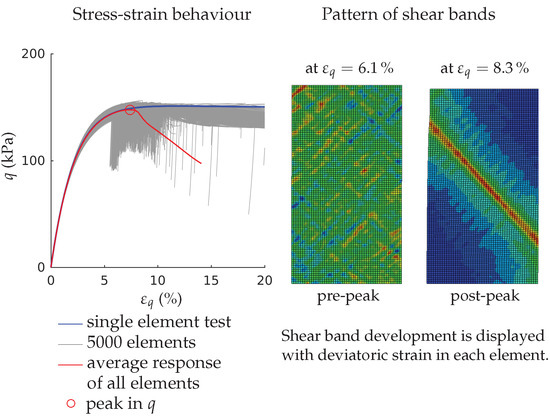
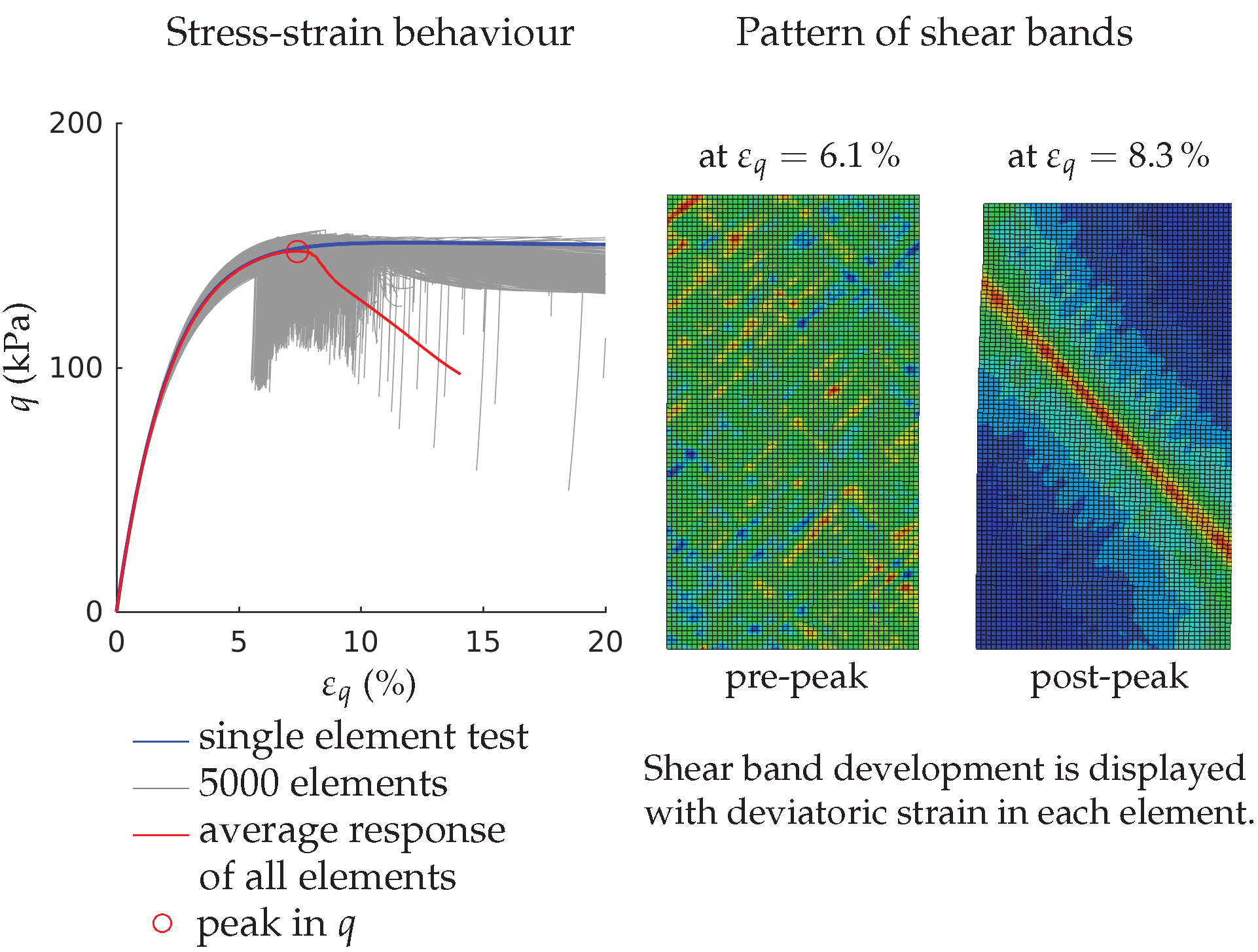
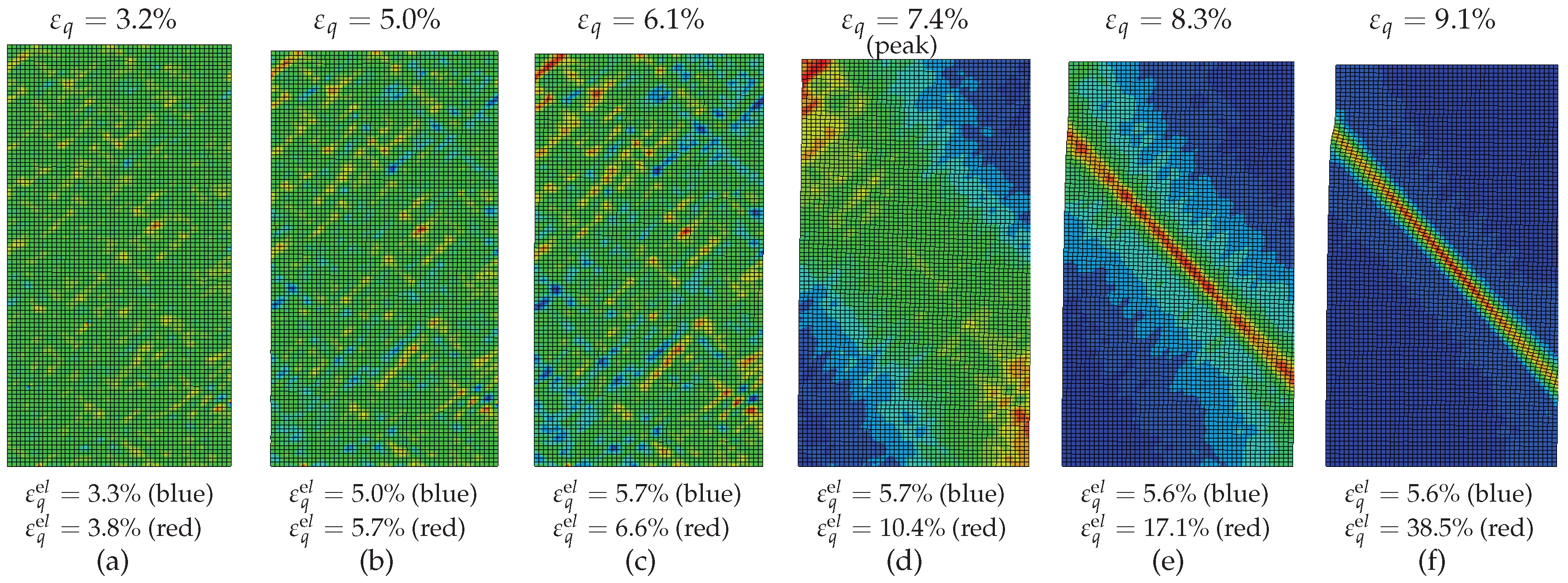
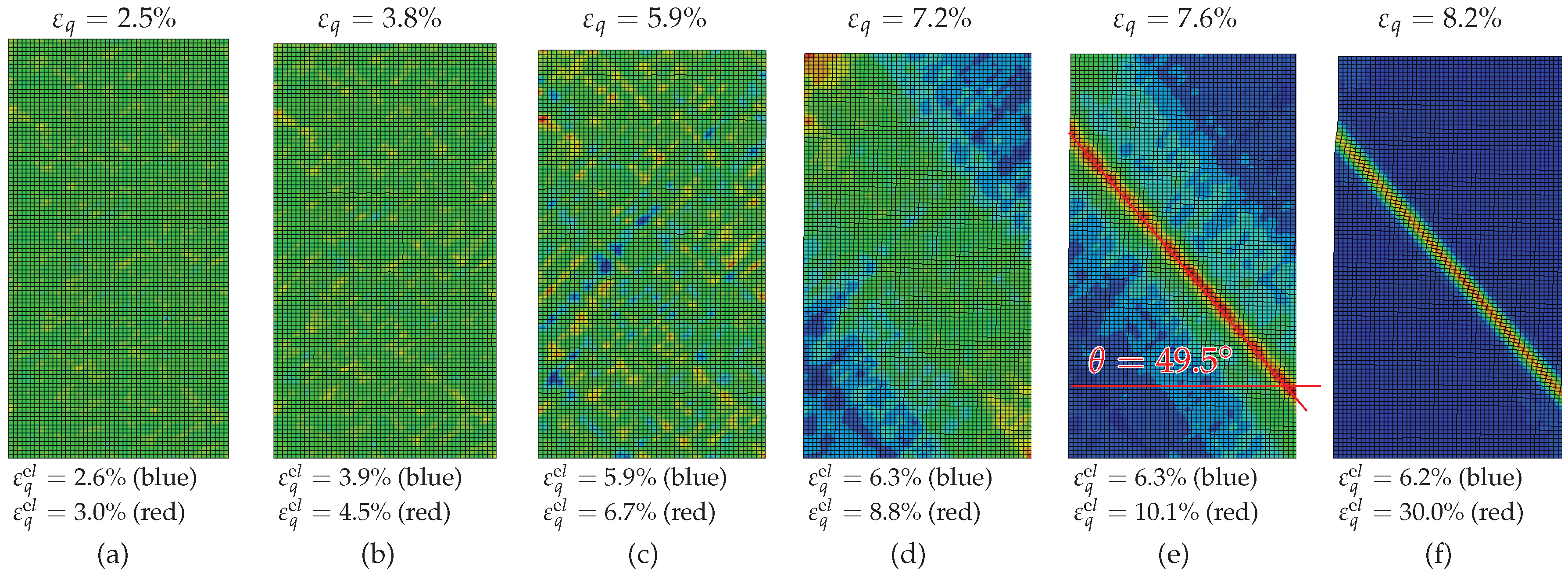
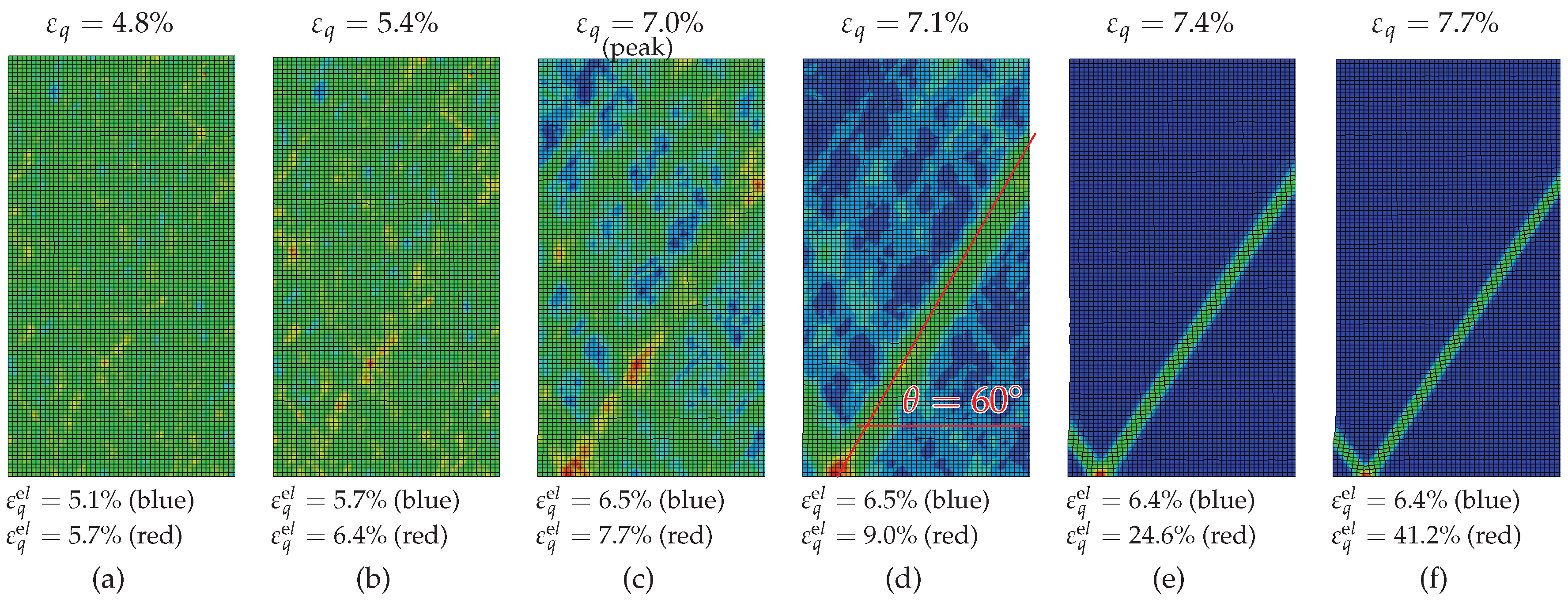
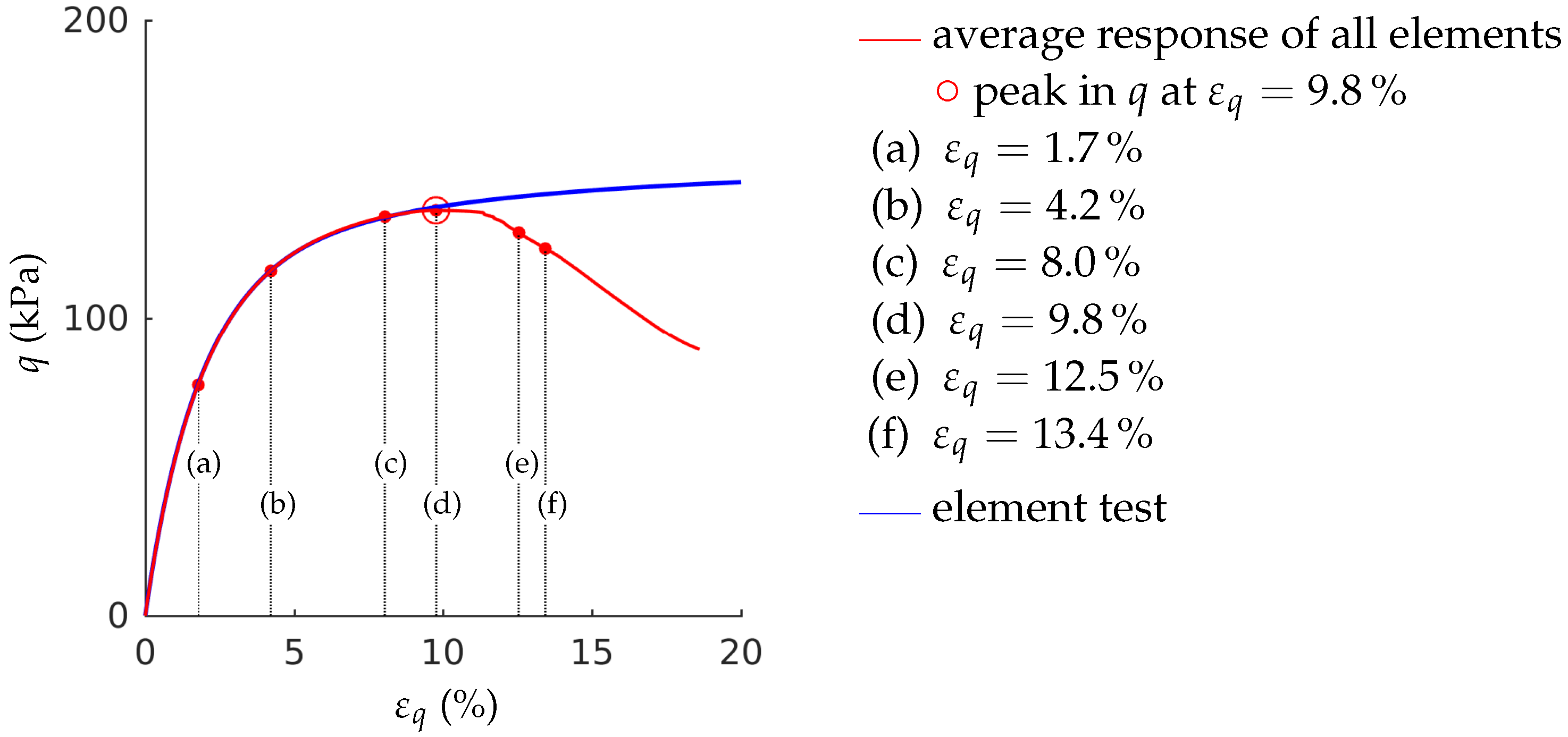
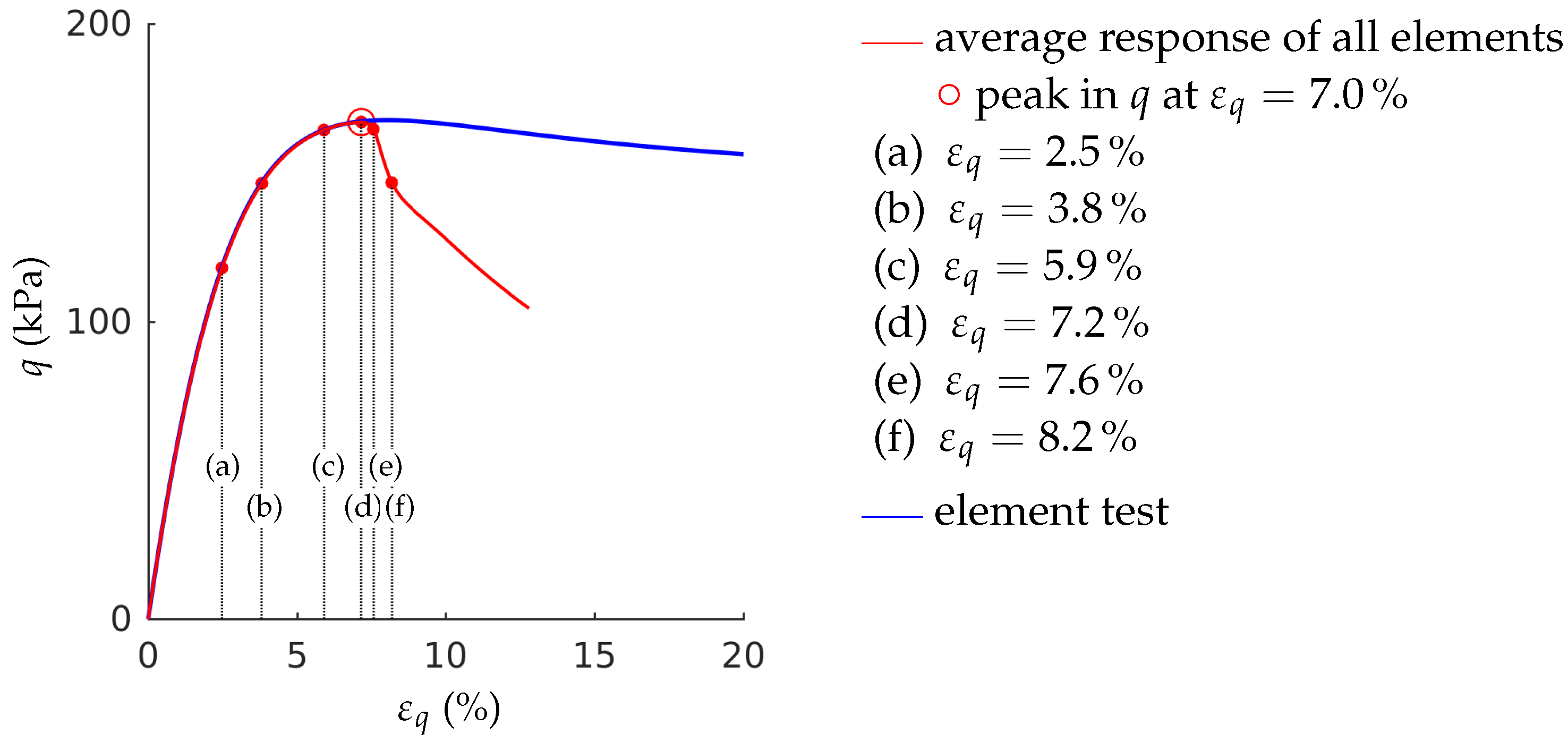
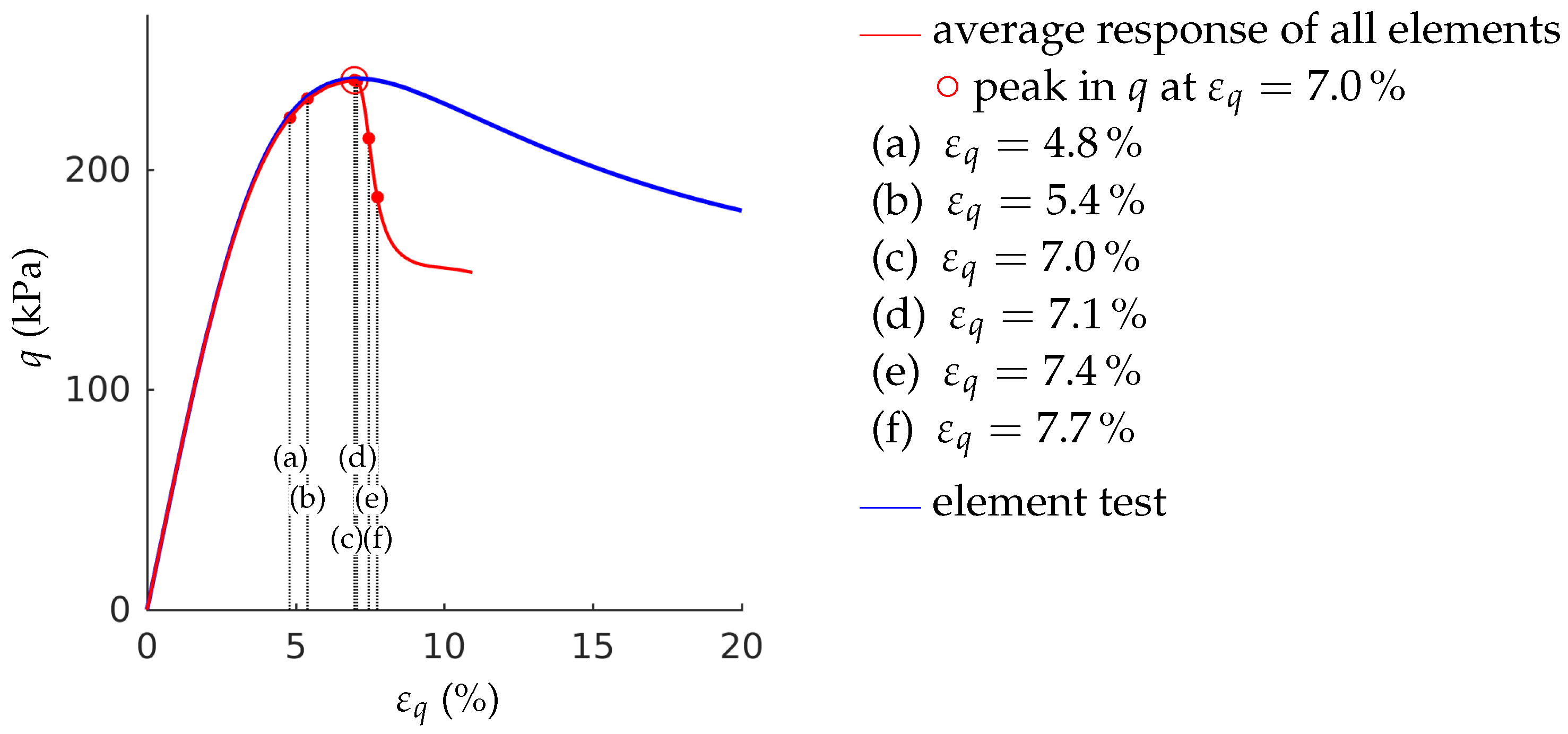
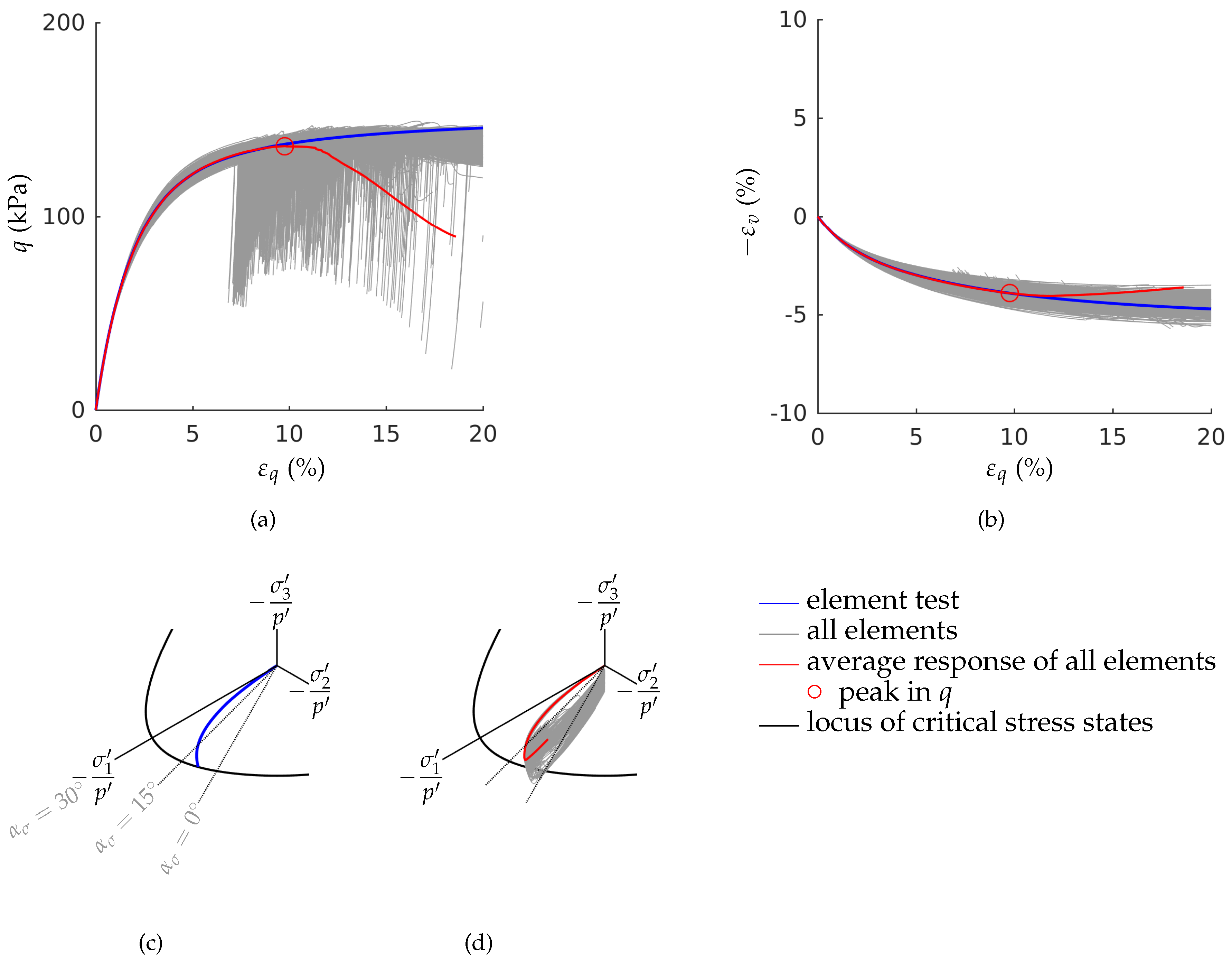
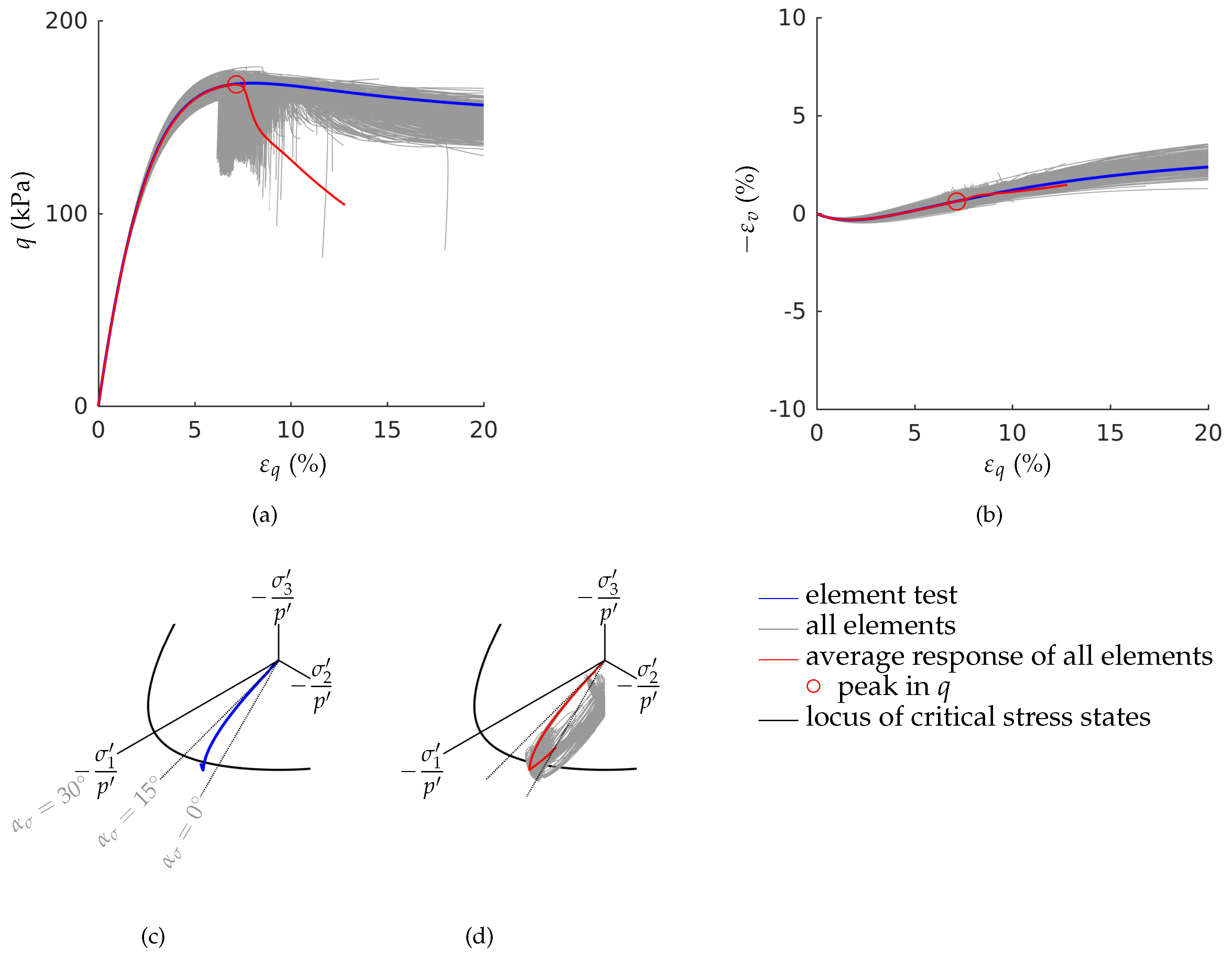
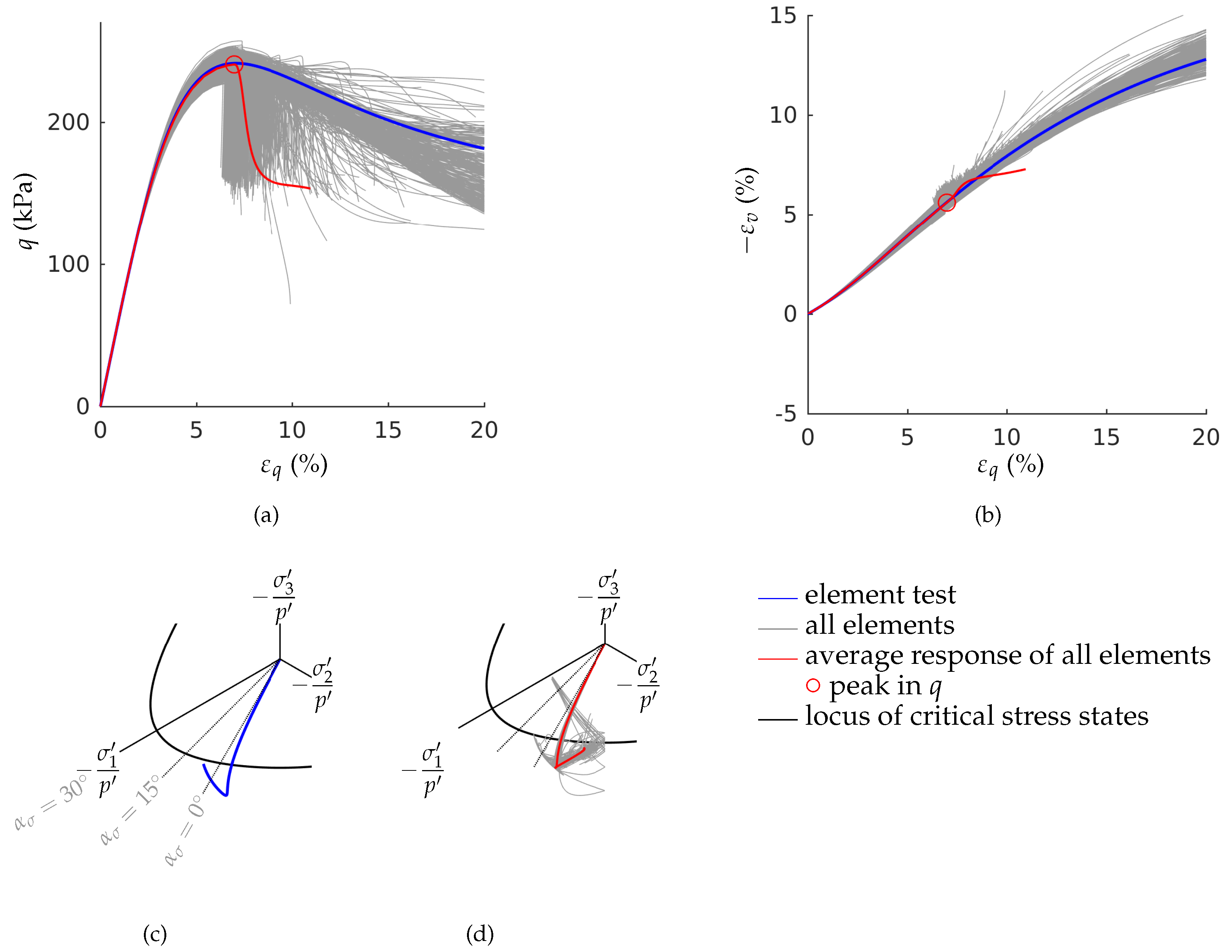
Recent experimental studies showed that shear band development starts at the beginning of triaxial tests. In experimental testing, it is impossible to obtain a soil sample with a homogeneous void ratio. Therefore, a homogeneous deformation, i.e., an element test, is questionable well before the peak. In this article we carry out finite element simulations of fine-meshed biaxial tests with the constitutive model barodesy, where the stress rate is formulated as a function of stress, stretching and void ratio. The initial void ratio in the simulations is normally distributed over all elements in a narrow range. In this article, we evaluate the pre-peak shear band development. We further compare stress paths and stress-strain curves of the biaxial test of relevant elements (e.g., in- and outside the shear band) with the results of the average response of all elements. We show how the response in an element test differs from the average response of the fine-meshed test. We present the resulting potential for understanding (early) shear band development and stress-strain behaviour in a biaxial test: The inhomogeneous void ratio distribution in a sample favours early shear band development. This effect is modelled with barodesy. The obtained stress paths and stress-strain curves show that the maximum deviatoric stress is higher in the element test than it is in the average response of the fine-meshed test.
Keywords: barodesy; constitutive modelling; numerical modelling; shear bands; biaxial test; soil mechanics barodesy; constitutive modelling; numerical modelling; shear bands; biaxial test; soil mechanics
Graphical Abstract