Article

Geochemical Features of Fallow Land in Ancient Plots in the Chora of Chersonesos


by
Fedor Lisetskii
1,*,
Eugenia Zelenskaya
1 and
Maria Rodionova
2
1
Federal–Regional Center of Aerospace and Surface Monitoring of the Objects and Natural Resources, Belgorod National Research University, 308015 Belgorod, Russia
2
Institute of Earth Sciences, Belgorod National Research University, 308015 Belgorod, Russia
*
Author to whom correspondence should be addressed.
Geosciences 2018, 8(11), 410; https://doi.org/10.3390/geosciences8110410

Submission received: 15 October 2018 / Revised: 26 October 2018 / Accepted: 6 November 2018 / Published: 9 November 2018

Abstract

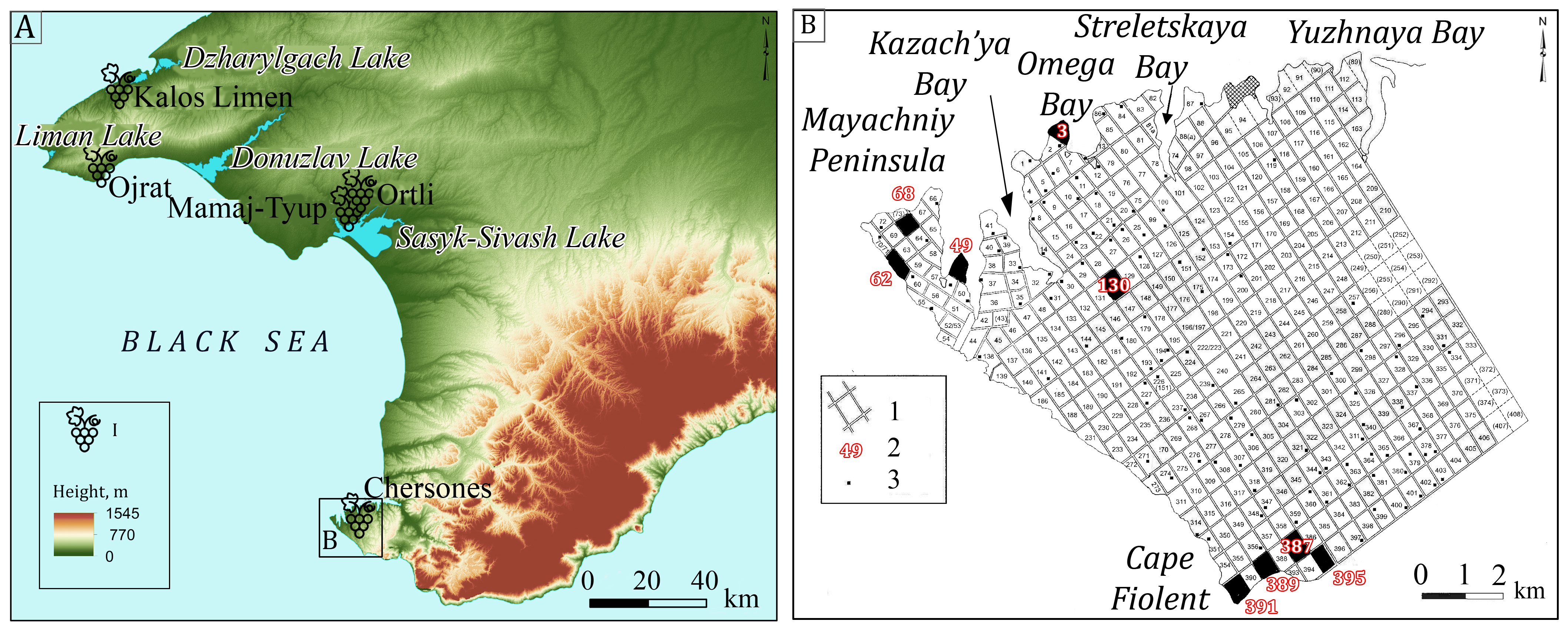
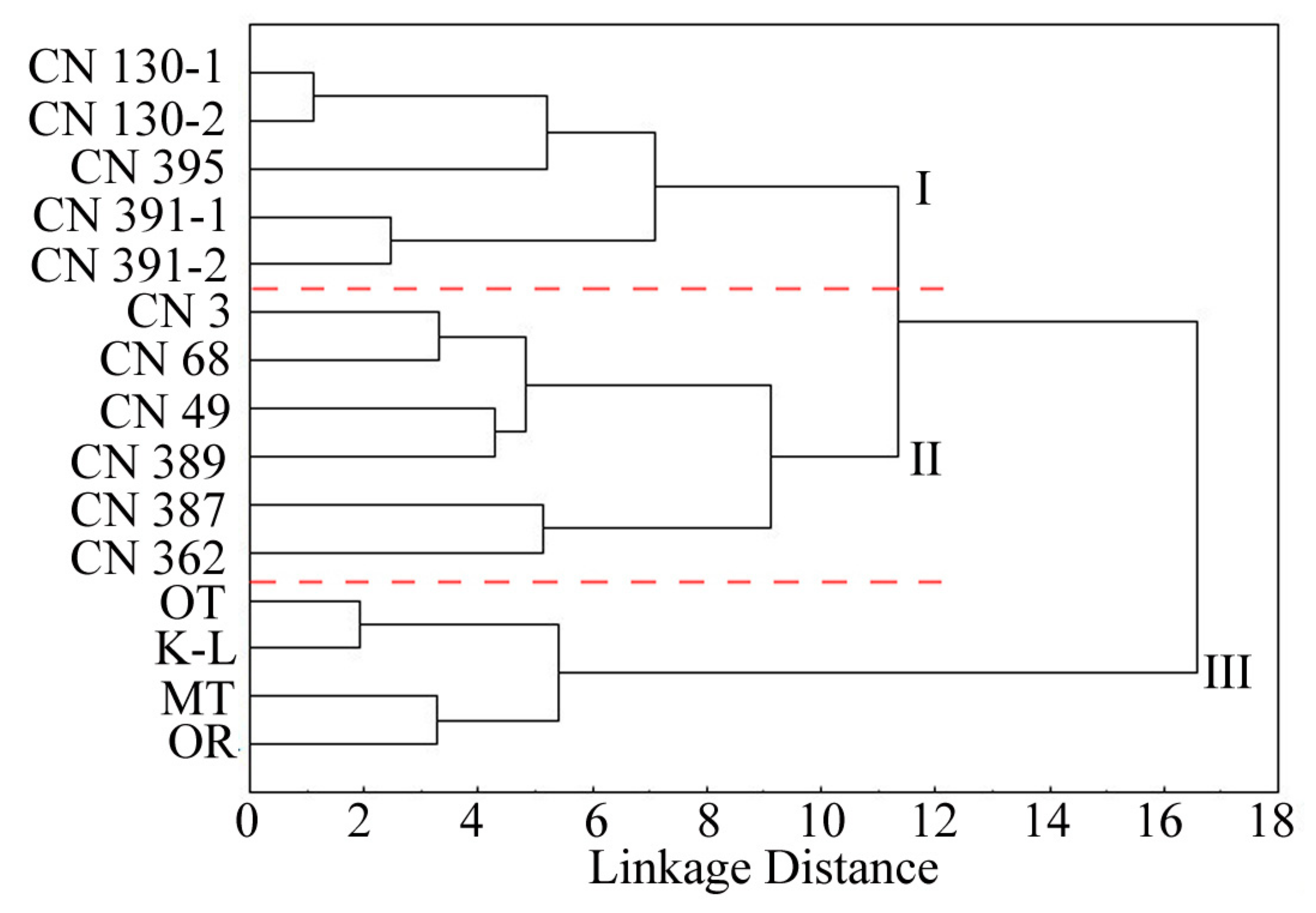
The ancient city of Chersonesos created an agricultural zone in the 4th and 3rd centuries BC (under the conditions of climate aridization); this zone was initially used for viticulture and the export of wine, and grain farming later developed at the distant chora (in North-Western (NW) Crimea). The purpose of our work was to verify whether the ampeloecological conditions, especially the geochemical features of the soil and rock, limited viticulture in NW Crimea. Fallow lands in 13 plots in the near and distant chora of Chersonesos were studied using ampelopedology; specifically, we compared agrochemical properties and the concentrations of macro- and trace elements in the renaturation soil horizon and in the parent rock. The main differences between the soils of the two regions were determined by the accumulation of cinnamonic soils of Chersonesos Si, K, Fe, Al, P2O5; in the distant chora, there are specific elements, including V, Pb, Rb, Cr. The climate and the biogeochemical diversity of soils and rock could be significant factors causing the differences in wine quality in the two regions of western Crimea; these factors are still reflected in modern viticultural practices when using the concept of “terroir”. These findings are consistent with the different roles of ancient viticulture in SW (South-Western) and NW (North-Western) Crimea (i.e., export and local consumption, respectively), which have been highlighted by historians.
Keywords: biogeochemistry; geochemistry soils; parent rock; trace elements; antique vineyards; post-antique fallow land biogeochemistry; geochemistry soils; parent rock; trace elements; antique vineyards; post-antique fallow land