

Review of Hydraulic Fracture Diagnostics: Technologies, Interpretation Challenges, and Emerging Advances


Abstract
1. Introduction
2. Literature Review of Diagnostic Technologies
2.1. Direct Fracture Diagnostic Technologies
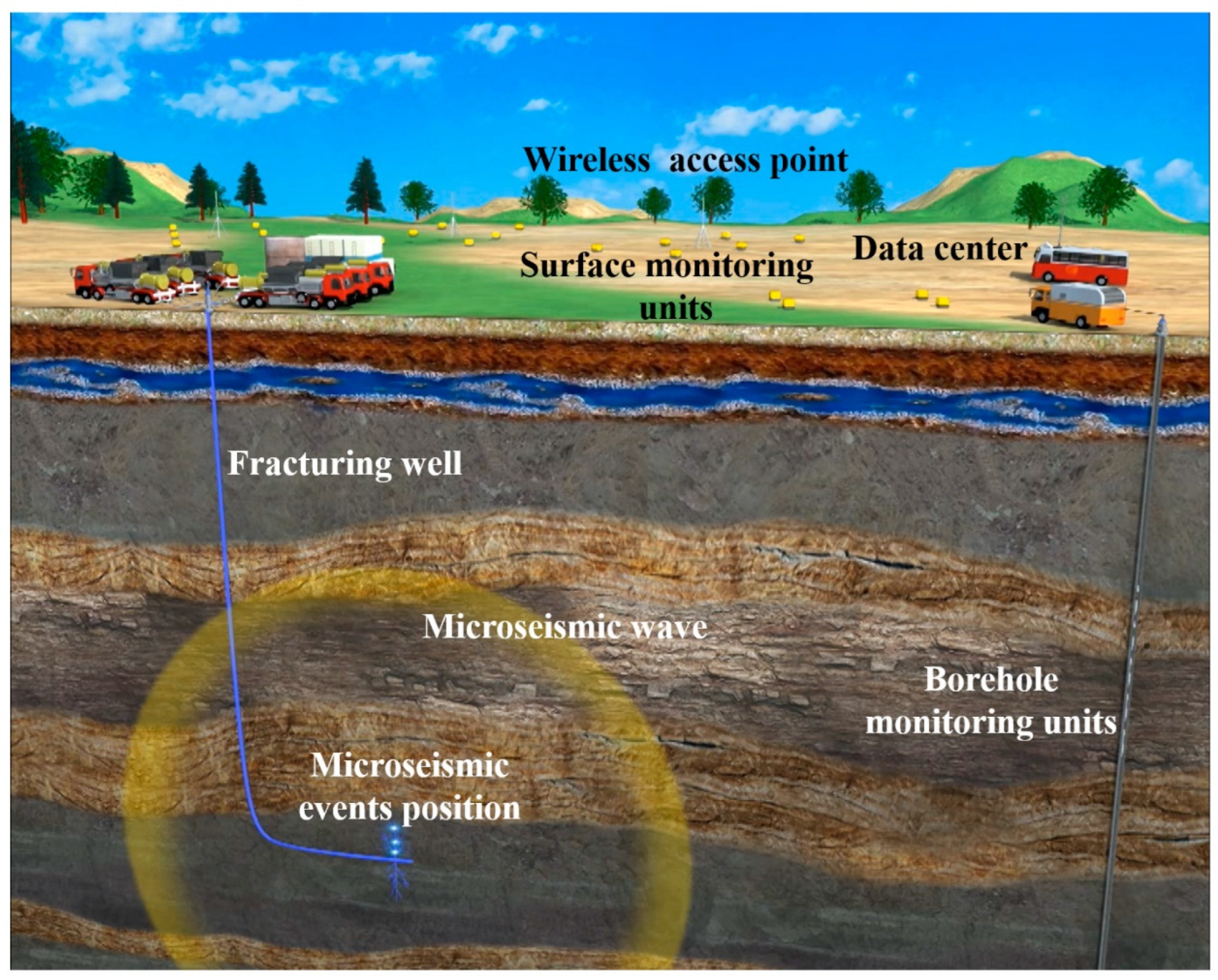
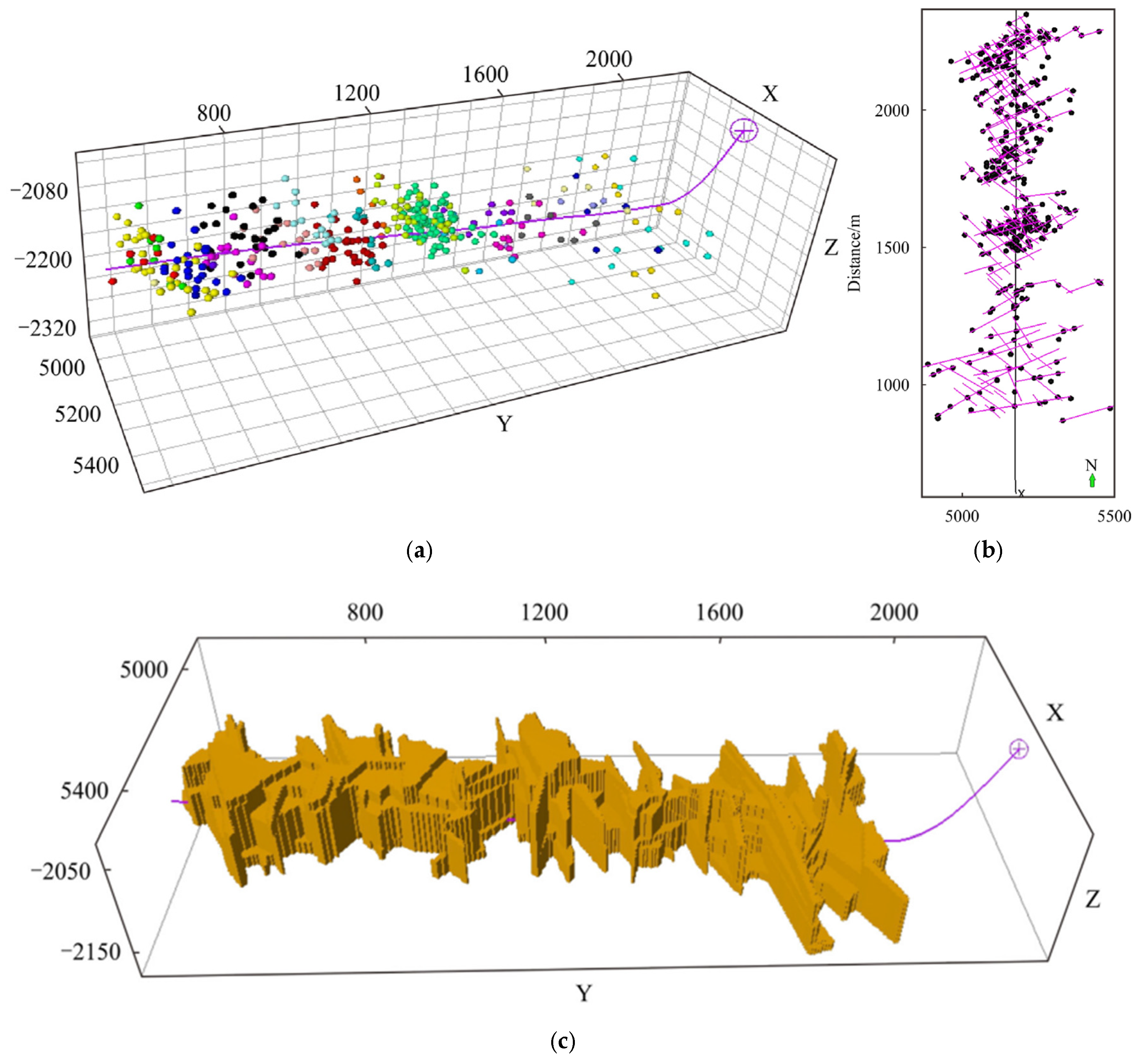
2.1.1. Microseismic Monitoring
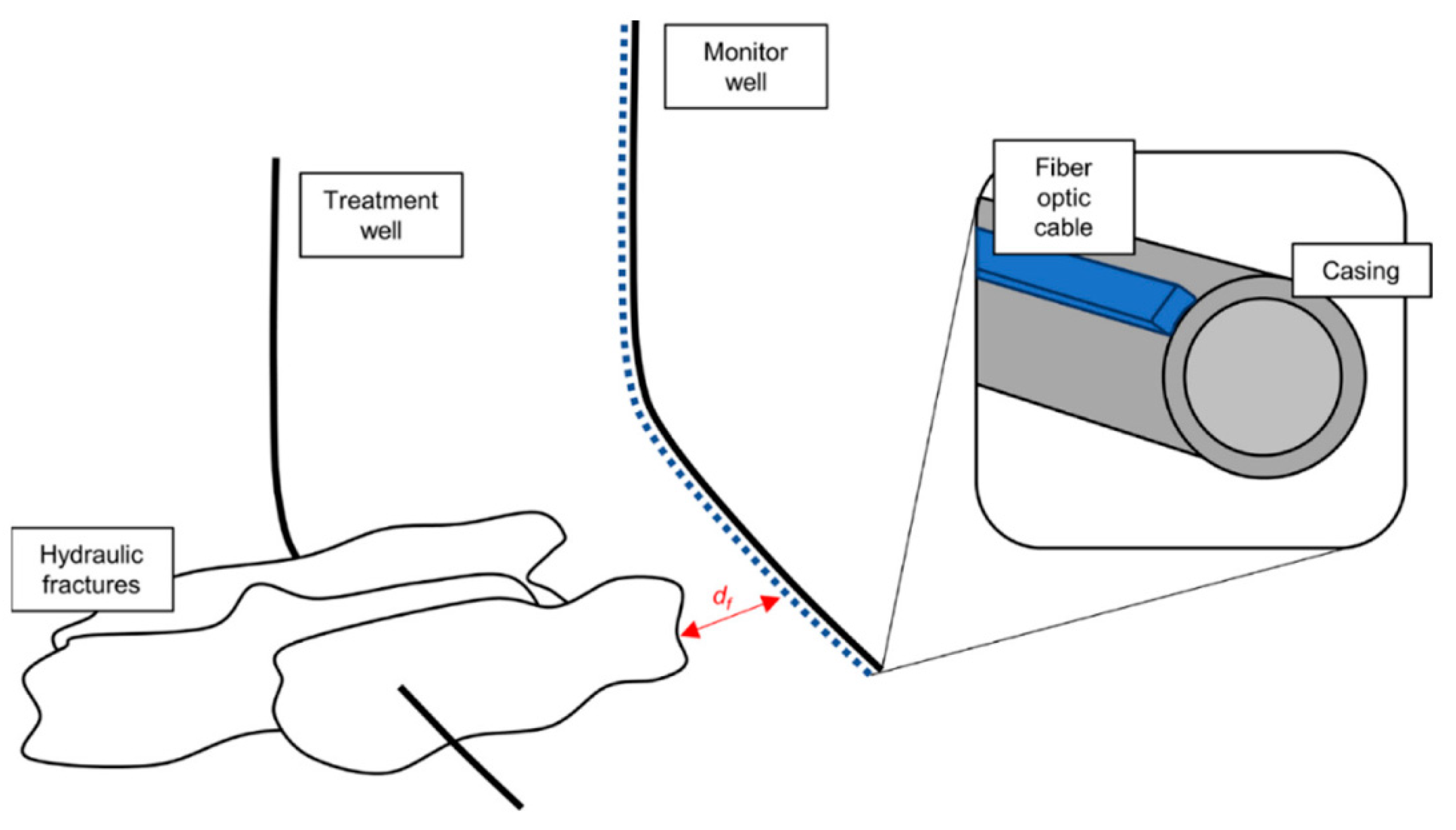
2.1.2. Downhole Fiber Optics
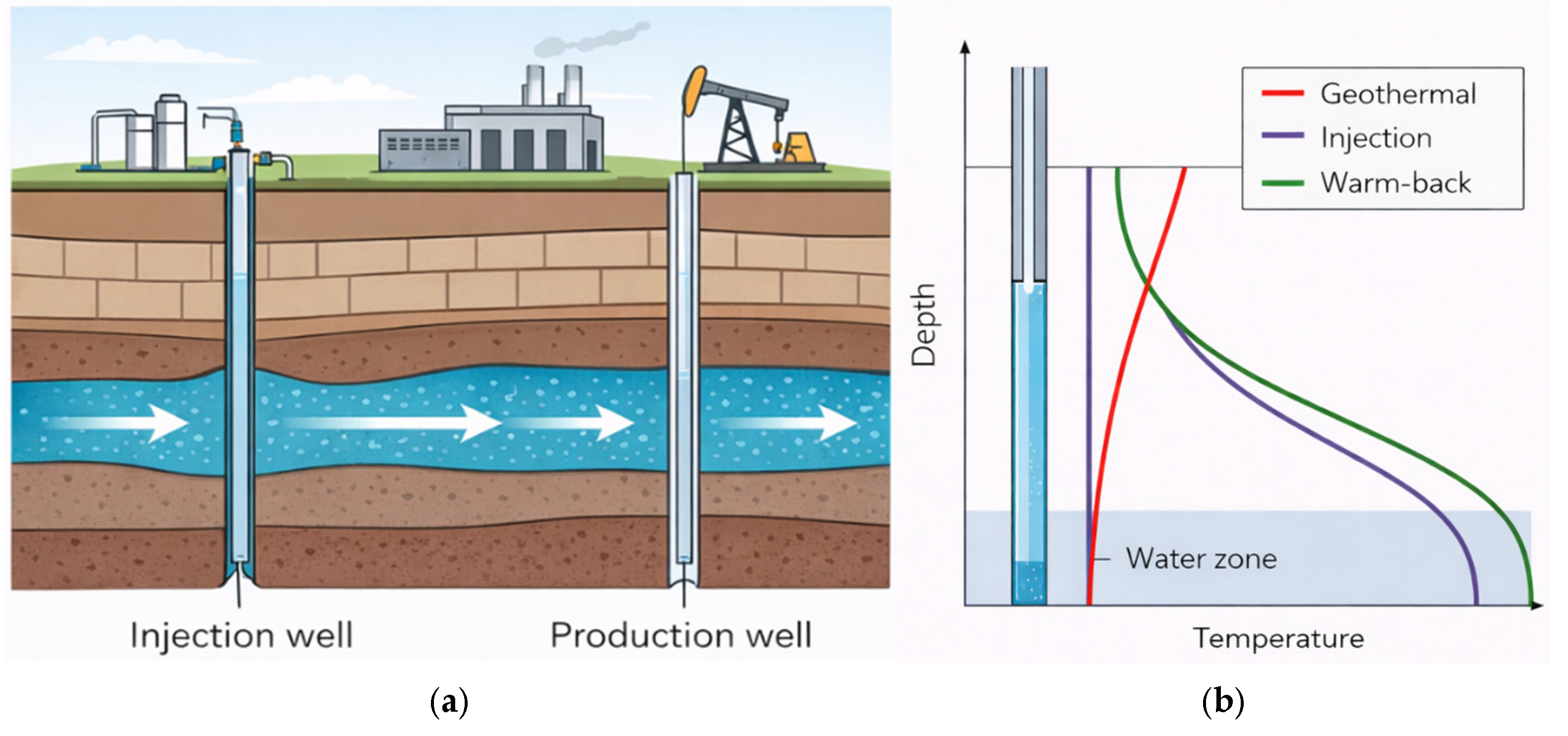
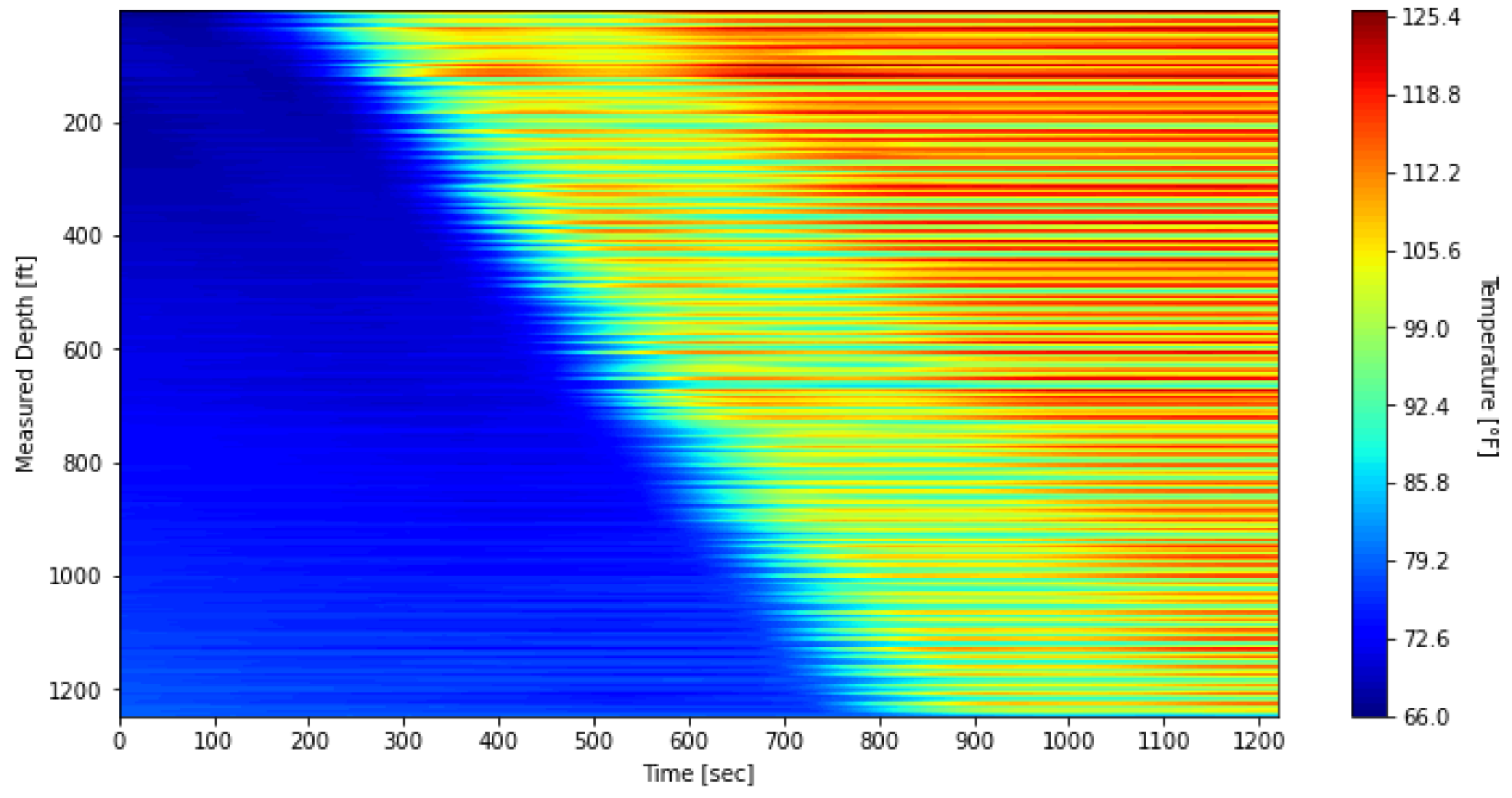
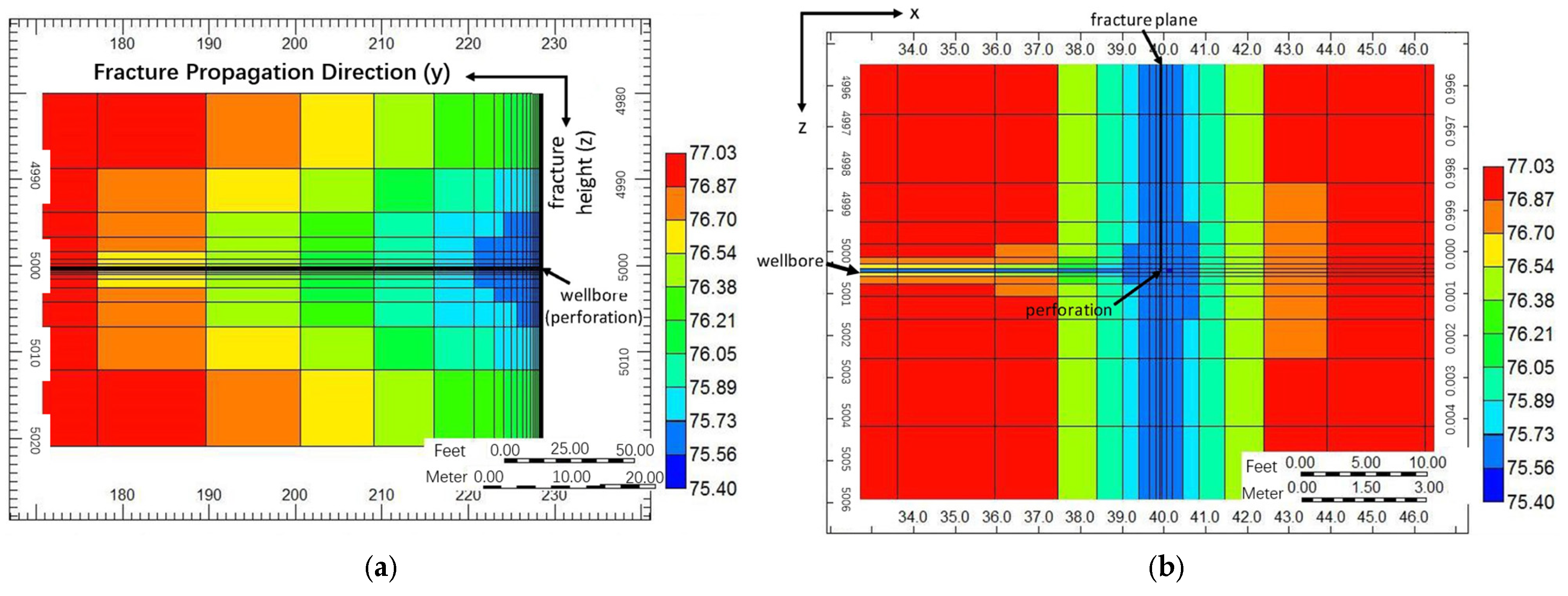
Distributed Temperature Sensing
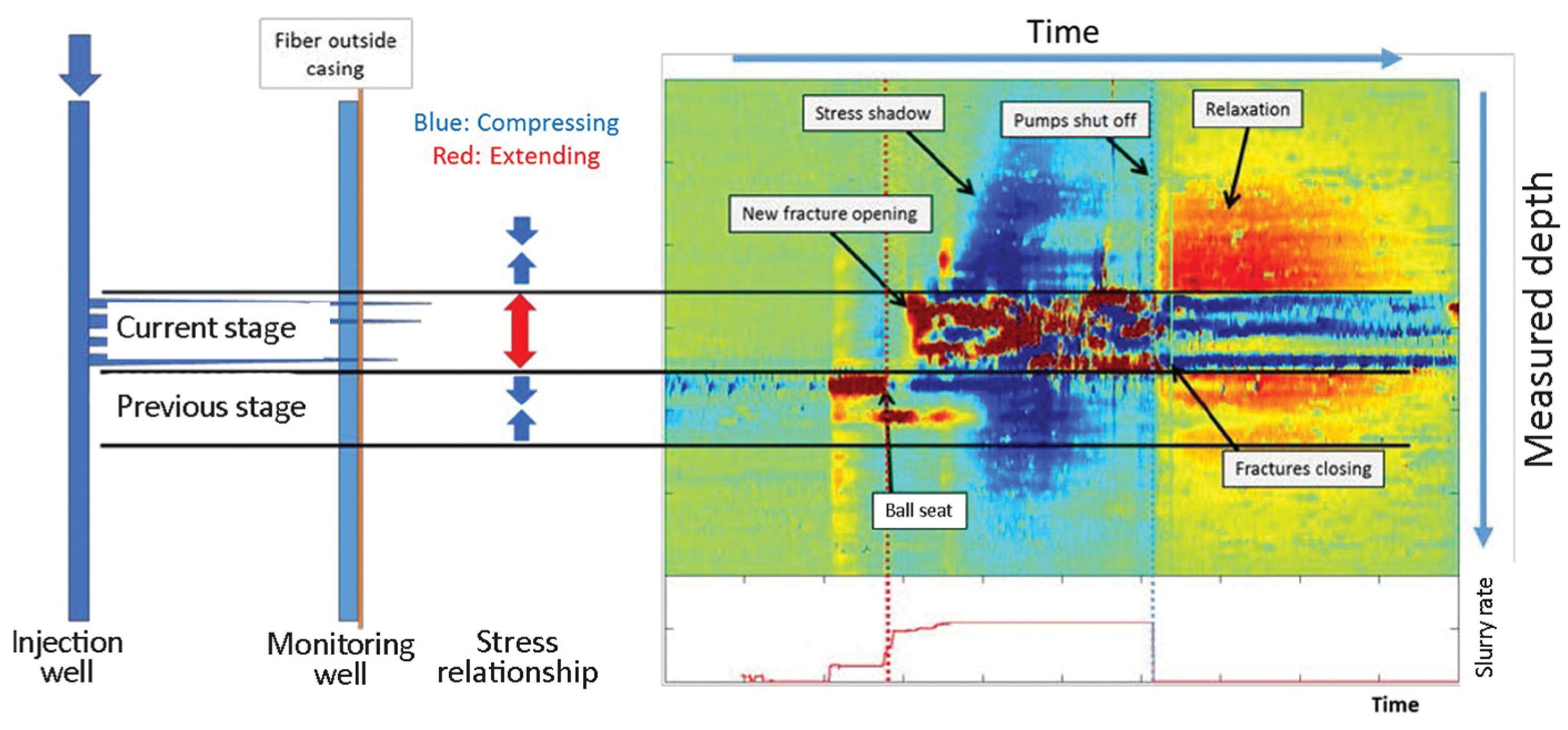
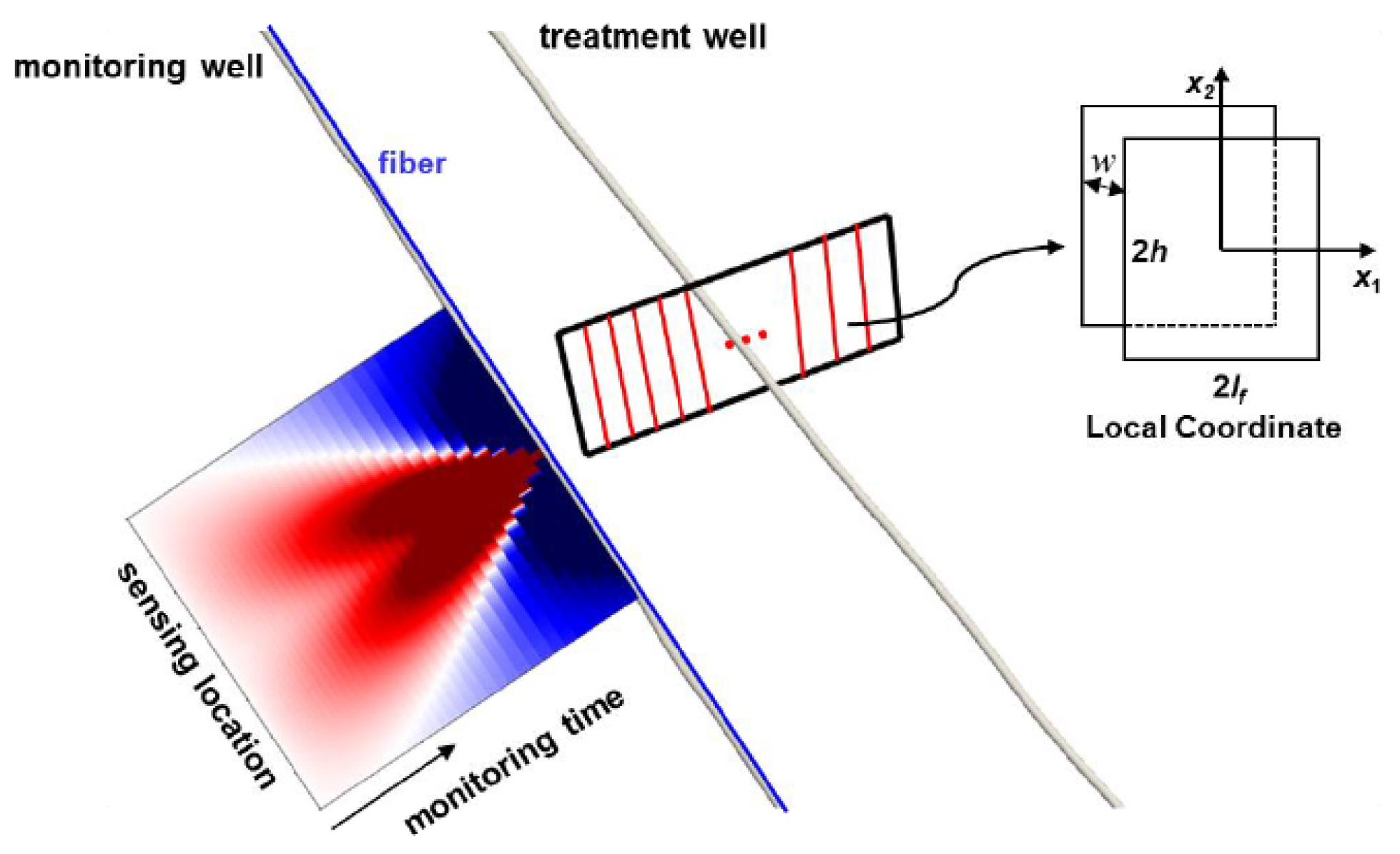
Distributed Acoustic Sensing

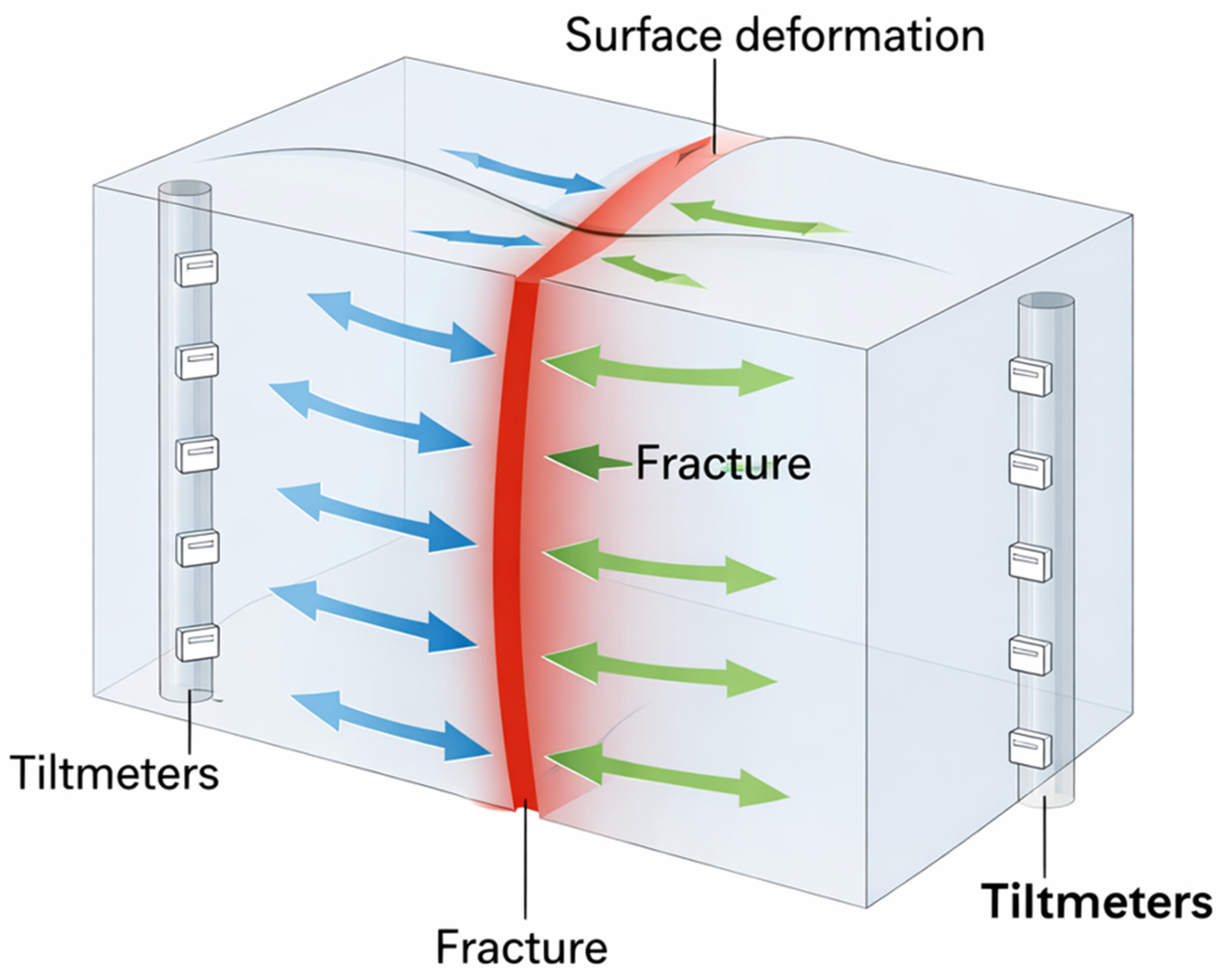
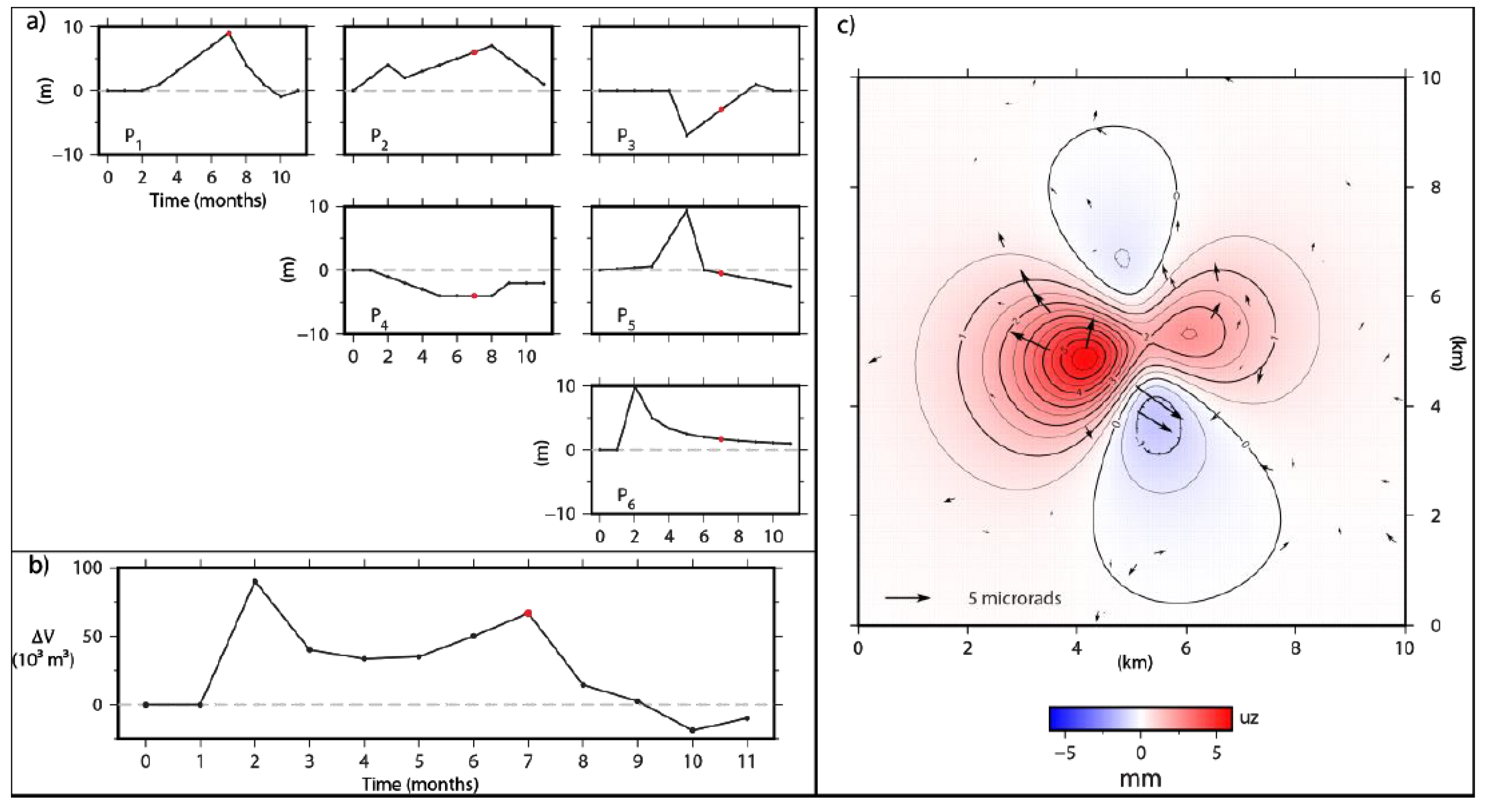
2.1.3. Tiltmeter Survey
2.2. Indirect Fracture Detection Technologies
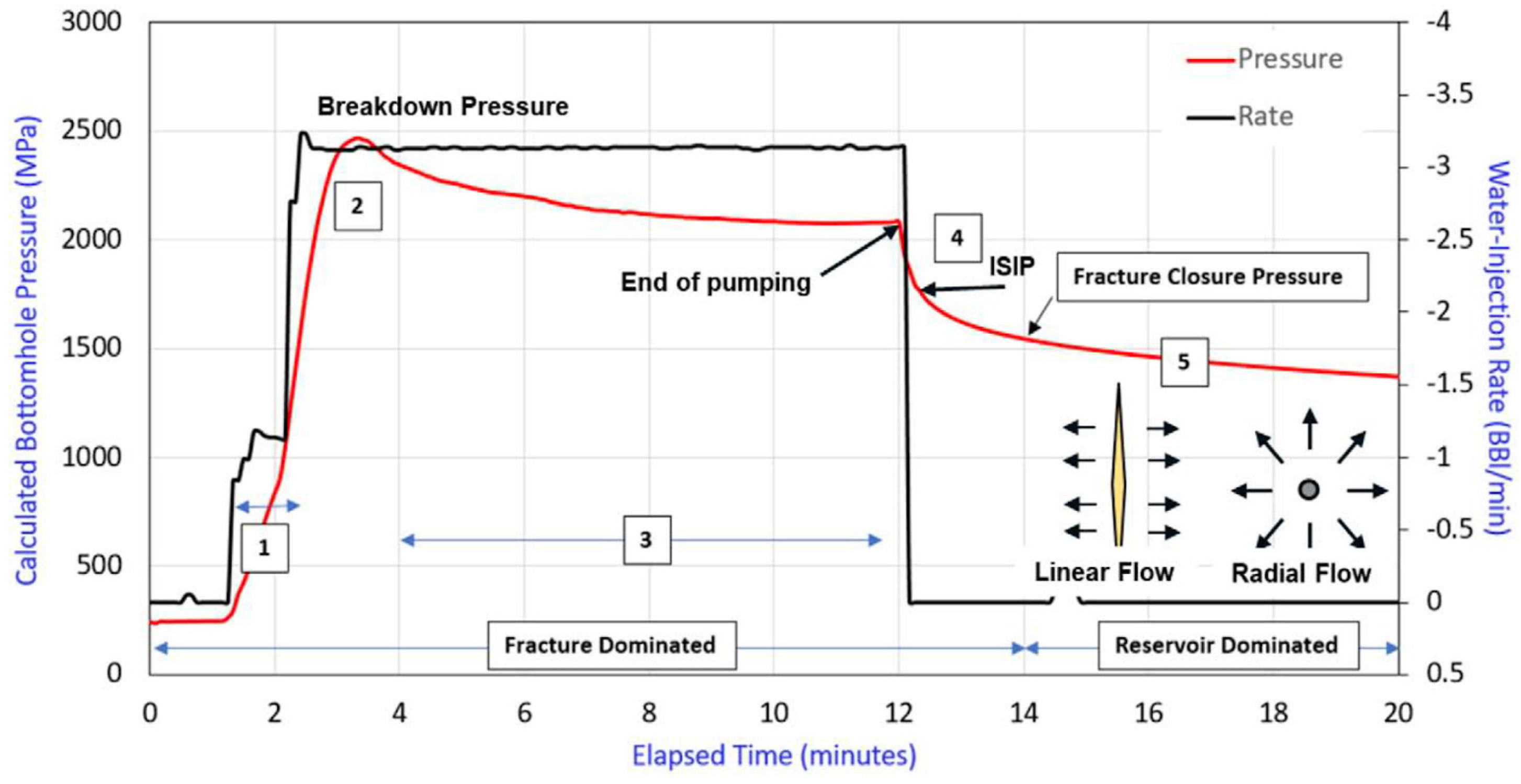
2.2.1. Diagnostic Fracture Injection Test (DFIT)
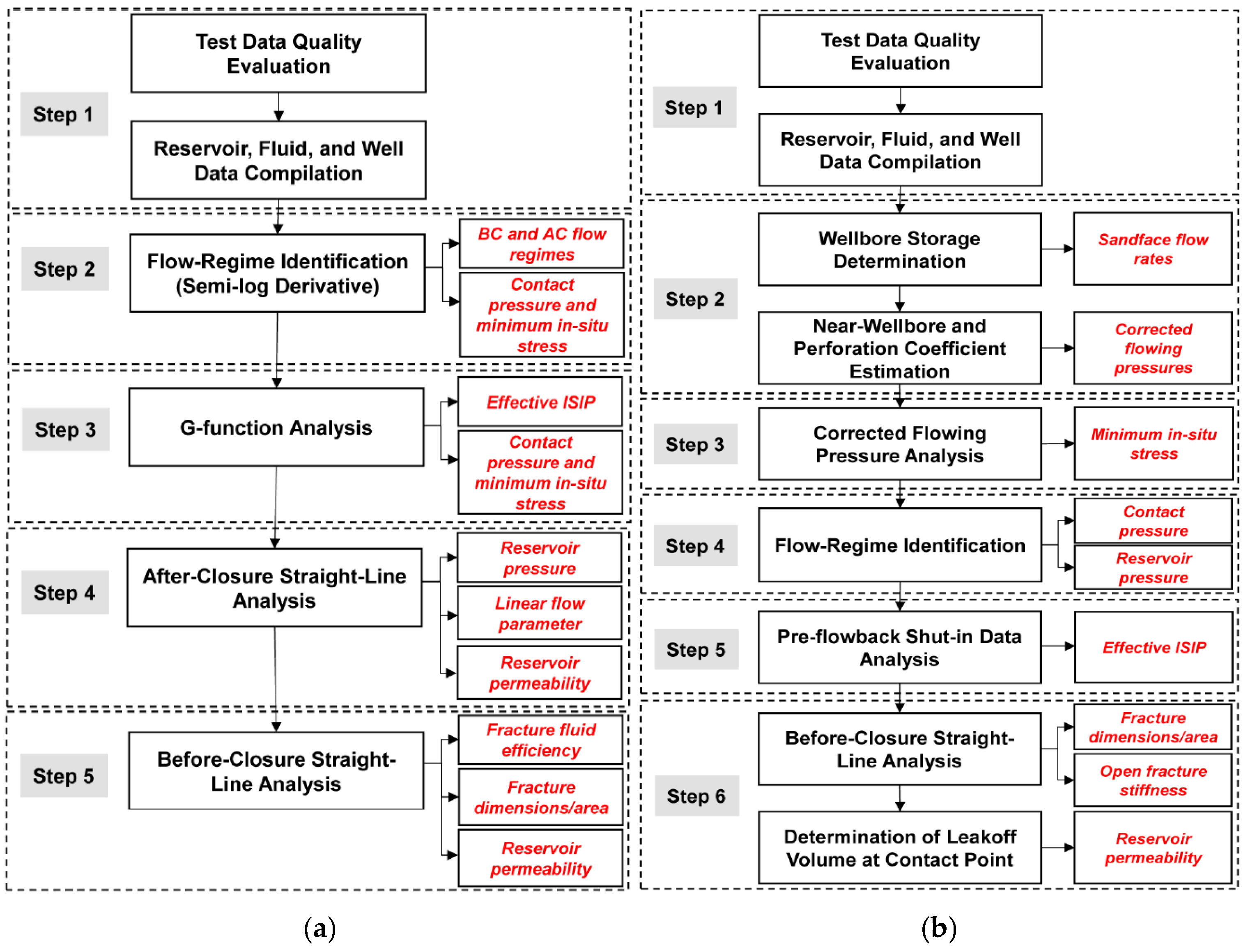
Extension of DFIT Toward Flow Back Analysis (DFIT-FBA)
Common Data Acquisition and Interpretation Issues in DFIT and Flowback Tests
2.2.2. Pressure Interference Testing
From Classical Type-Curve Matching to Pressure Interference Testing
Applications and Recent Advancement of Pressure Interference Testing


2.2.3. Tracer Analysis
Background and Practical Considerations
Interwell Tracer Testing (IWTT)
Single-Well Tracer Testing (SWTT)
2.3. AI-Driven Fracture Diagnostics: From Automated Interpretation to Predictive Intelligence

3. Conclusions
Author Contributions
Funding
Data Availability Statement
Conflicts of Interest
Abbreviations
| MSM | Microseismic Monitoring |
| SRV | Stimulated Reservoir Volume |
| ESV | Effective Stimulation Volume |
| FO | Fiber Optic |
| DTS | Distributed Temperature Sensing |
| VSP | Vertical Seismic Profiling |
| DAS | Distributed Acoustic Sensing |
| DSS | Distributed Strain Sensing |
| DFIT | Diagnostic Fracture Injection Test |
| ACA | After-Closure Analysis |
| PTA | Pressure Transient Analysis |
| FBA | Flowback Analysis |
| ISIP | Instantaneous Shut-In Pressure |
| IWTT | Interwell Tracer Testing |
| SWTT | Single-Well Tracer Testing |
| CPG | Chow Pressure Group |
| DQI | Devon Quantification of Interference |
| AI | Artificial Intelligence |
| ML | Machine Learning |
| PINN | Physics-Informed Neural Network |
| FEM | Finite Element Analysis |
| MB | Moving Boundary |
| DE | DeepONet-Embedded |
| PDEs | Partial Derivation Equations |
References
- Adekola, U.; Gimba, A.; Salihu, A.; Jakada, K.; Okafor, I.; Nzerem, P.; Chior, J.; Ogolo, O.; Ibrahim, K. A Comprehensive Review of Hydraulic Fracturing Techniques in Shale Gas Production. Nile J. Eng. Appl. Sci. 2023, 1, 216–228. [Google Scholar] [CrossRef]
- Eshkalak, M.O.; Aybar, U.; Sepehrnoori, K. An Economic Evaluation on the Re-Fracturing Treatment of the U.S. Shale Gas Resources. In Proceedings of the SPE Eastern Regional Meeting, Charleston, WV, USA, October 2014; SPE: Richardson, TX, USA, 2014. [Google Scholar] [CrossRef]
- Reynolds, D.B.; Umekwe, M.P. Shale-oil development prospects: The role of shale-gas in developing shale-oil. Energies 2019, 12, 3331. [Google Scholar] [CrossRef]
- Tao, J.; Meng, S.; Cao, G.; Gao, Y.; Liu, H. Experimental study on the impact of supercritical CO2 soak pre-treatment on re-fracturing of shale oil reservoirs. In SPE Asia Pacific Oil and Gas Conference and Exhibition; SPE: Richardson, TX, USA, November 2020; p. D023S012R001. [Google Scholar]
- Hyman, J.D.; Jiménez-Martínez, J.; Viswanathan, H.S.; Carey, J.W.; Porter, M.L.; Rougier, E.; Karra, S.; Kang, Q.; Frash, L.; Chen, L.; et al. Understanding hydraulic fracturing: A multi-scale problem. Philos. Trans. R. Soc. A Math. Phys. Eng. Sci. 2016, 374, 20150426. [Google Scholar] [CrossRef]
- Webster, P.; Cox, B.; Molenaar, M. Developments in diagnostic tools for hydraulic fracture geometry analysis. In Global Meeting Abstracts; Society of Exploration Geophysicists: Tulsa, OK, USA, 2013; pp. 218–224. [Google Scholar]
- Mahmoud, A.; Gowida, A.; Aljawad, M.S.; Al-Ramadan, M.; Ibrahim, A.F. Advancement of hydraulic fracture diagnostics in unconventional formations. Geofluids 2021, 2021, 4223858. [Google Scholar] [CrossRef]
- Inamdar, A.A.; Malpani, R.; Atwood, K.; Brook, K.; Erwemi, A.M.; Ogundare, T.M.; Purcell, D. Evaluation of stimulation techniques using microseismic mapping in the Eagle Ford Shale. In Proceedings of the SPE Unconventional Resources Conference/Gas Technology Symposium; SPE: Richardson, TX, USA, November 2010; p. SPE-136873. [Google Scholar]
- Peyret, O.; Drew, J.; Mack, M.; Brook, K.; Maxwell, S.C.; Cipolla, C.L. Subsurface To Surface Microseismic Monitoring for Hydraulic Fracturing. In Proceedings of the SPE Annual Technical Conference and Exhibition; SPE: Richardson, TX, USA, 2012. [Google Scholar] [CrossRef]
- Cipolla, C.L.; Fitzpatrick, T.; Williams, M.J.; Ganguly, U. Seismic-to-Simulation for Unconventional Reservoir Development. In Proceedings of the SPE Reservoir Characterisation and Simulation Conference and Exhibition; SPE: Richardson, TX, USA, 2011. [Google Scholar] [CrossRef]
- Zhang, X.; Lin, J.; Chen, Z.; Sun, F.; Zhu, X.; Fang, G. An efficient neural-network-based microseismic monitoring platform for hydraulic fracture on an edge computing architecture. Sensors 2018, 18, 1828. [Google Scholar] [CrossRef]
- Alexander, T.; Baihly, J.; Boyer, C.; Clark, B.; Waters, G.; Jochen, V.; Le Calvez, J.; Lewis, R.; Miller, C.K.; Thaeler, J.; et al. Shale gas revolution. Oilfield Rev. 2011, 23, 40–55. [Google Scholar]
- Yu, C.; Shapiro, S. Seismic anisotropy of shale: Inversion of microseismic data. In SEG International Exposition and Annual Meeting; SEG: Tulsa, OK, USA, 2014; p. SEG-2014. [Google Scholar]
- Leaney, W.S. Microseismic Source Inversion in Anisotropic Media. Ph.D. Thesis, University of British Columbia, Vancouver, BC, Canada, 2014. [Google Scholar]
- Williams, M.J.; Le Calvez, J.H.; Conners, S.; Xu, W. Integrated microseismic and geomechanical study in the Barnett Shale Formation. Geophysics 2016, 81, KS135–KS147. [Google Scholar] [CrossRef]
- Le Calvez, J.; Malpani, R.; Xu, J.; Stokes, J.; Williams, M. Hydraulic fracturing insights from microseismic monitoring. Oilfield Rev. 2016, 28, 16–33. [Google Scholar]
- Ou, C.; Liang, C.; Li, Z.; Luo, L.; Yang, X. 3D visualization of hydraulic fractures using micro-seismic monitoring: Methodology and application. Petroleum 2022, 8, 92–101. [Google Scholar] [CrossRef]
- Martyushev, D.A.; Yang, Y.; Kazemzadeh, Y.; Wang, D.; Li, Y. Understanding the mechanism of hydraulic fracturing in naturally fractured carbonate reservoirs: Microseismic monitoring and well testing. Arab. J. Sci. Eng. 2024, 49, 8573–8586. [Google Scholar] [CrossRef]
- Li, L.; Tan, J.; Wood, D.A.; Zhao, Z.; Becker, D.; Lyu, Q.; Shu, B.; Chen, H. A review of the current status of induced seismicity monitoring for hydraulic fracturing in unconventional tight oil and gas reservoirs. Fuel 2019, 242, 195–210. [Google Scholar] [CrossRef]
- Warpinski, N.R.; Wolhart, S. A Validation Assessment of Microseismic Monitoring. In Proceedings of the SPE Hydraulic Fracturing Technology Conference, The Woodlands, TX, USA, 9–11 February 2016; SPE: Richardson, TX, USA, 2016. [Google Scholar] [CrossRef]
- Quaglia, A.I.; Medina, A.; Obstfeld, S.; D’hers, S. Stimulated Reservoir Volume (SRV) Estimation in the Vaca Muerta Formation Using a Geomechanical Permeability Evolution Law and Microseismic Monitoring Correlation. In Proceedings of the SPE Hydraulic Fracturing Technology Conference and Exhibition; SPE: Richardson, TX, USA, 2026. [Google Scholar] [CrossRef]
- Anikiev, D.; Birnie, C.; bin Waheed, U.; Alkhalifah, T.; Gu, C.; Verschuur, D.J.; Eisner, L. Machine learning in microseismic monitoring. Earth-Sci. Rev. 2023, 239, 104371. [Google Scholar] [CrossRef]
- Molenaar, M.M.; Cox, B.E. Field cases of hydraulic fracture stimulation diagnostics using fiber optic distributed acoustic sensing (DAS) measurements and Analyses. In Proceedings of the SPE Middle East Unconventional Resources Conference and Exhibition; SPE: Richardson, TX, USA, January 2013; p. SPE-164030. [Google Scholar]
- Tiku, S.; Veneruso, A.F.; Etchells, R.K.; Pecht, M. Risk factors in oil and gas well electronics compared to other electronic industries. Oil Gas. Sci. Technol. 2005, 60, 721–730. [Google Scholar] [CrossRef]
- Lu, P.; Lalam, N.; Badar, M.; Liu, B.; Chorpening, B.T.; Buric, M.P.; Ohodnicki, P.R. Distributed optical fiber sensing: Review and perspective. Appl. Phys. Rev. 2019, 6, 041302. [Google Scholar] [CrossRef]
- Reid, T.; Li, G.; Zhu, D.; Hill, A.D. Experimental Investigation of Low-Frequency Distributed Acoustic Sensor Responses to Two Parallel Propagating Fractures. Sensors 2024, 24, 3880. [Google Scholar] [CrossRef]
- Yao, Y.; Yan, M.; Bao, Y. Measurement of cable forces for automated monitoring of engineering structures using fiber optic sensors: A review. Autom. Constr. 2021, 126, 103687. [Google Scholar] [CrossRef]
- Ugueto, G.A.; Todea, F.; Daredia, T.; Wojtaszek, M.; Huckabee, P.T.; Reynolds, A.; Laing, C.; Chavarria, J.A. Can you feel the strain? DAS strain fronts for fracture geometry in the BC Montney, Groundbirch. In Proceedings of the SPE Annual Technical Conference and Exhibition; SPE: Richardson, TX, USA, 2019; p. D021S029R005. [Google Scholar]
- Dakin, J.P.; King, A.J. Limitations of a single-optical-fibre fluorimeter system due to background fluorescence. In IEE Proceedings H (Microwaves, Optics and Antennas; IEEE: Piscataway, NJ, USA, 1984; Volume 131, pp. 273–275. [Google Scholar]
- Gardner, B.; Matousek, P.; Stone, N. Temperature Spatially Offset Raman Spectroscopy (T-SORS): Subsurface Chemically Specific Measurement of Temperature in Turbid Media Using Anti-Stokes Spatially Offset Raman Spectroscopy. Anal. Chem. 2015, 88, 832–837. [Google Scholar] [CrossRef]
- Liu, D.; Ngo, N.Q.; Tjin, S.C.; Dong, X. A dual-wavelength fiber laser sensor system for measurement of temperature and strain. IEEE Photonics Technol. Lett. 2007, 19, 1148–1150. [Google Scholar] [CrossRef]
- Schenato, L. A review of distributed fibre optic sensors for geo-hydrological applications. Appl. Sci. 2017, 7, 896. [Google Scholar] [CrossRef]
- Yoshida, N.; Hill, A.D.; Zhu, D. Comprehensive modeling of downhole temperature in a horizontal well with multiple fractures. Spe J. 2018, 23, 1580–1602. [Google Scholar] [CrossRef]
- de Waele, A.T.A.M. Basics of Joule–Thomson Liquefaction and JT Cooling. J. Low Temp. Phys. 2017, 186, 385–403. [Google Scholar] [CrossRef]
- Ashry, I.; Mao, Y.; Wang, B.; Frode Hveding Bukhamseen Ahmed, Y.; Tien Khee Ng Ooi, B.S. A Review of Distributed Fiber–Optic Sensing in the Oil and Gas Industry. J. Light. Technol. 2021, 40, 1407–1431. [Google Scholar] [CrossRef]
- Tabatabaei, M.; Zhu, D. Fracture-stimulation diagnostics in horizontal wells through use of distributed-temperature-sensing technology. SPE Prod. Oper. 2012, 27, 356–362. [Google Scholar] [CrossRef]
- Nakamoto, R.; Leggett, S. Development of a Transient Wellbore Heat Transfer Model Validated with Distributed Temperature Sensing Data. Sensors 2025, 25, 6583. [Google Scholar] [CrossRef]
- Mao, Y.; Zeidouni, M.; Godefroy, C.; Gysen, M. Fracture diagnostic using distributed temperature measurements during a pause in flow-back period. J. Pet. Sci. Eng. 2020, 185, 106632. [Google Scholar] [CrossRef]
- Tabatabaei, M.; Tan, X.; Hill, A.D.; Zhu, D. Well performance diagnosis with temperature profile measurements. In Proceedings of the SPE Annual Technical Conference and Exhibition; SPE: Richardson, TX, USA, 2011; p. SPE-147448. [Google Scholar]
- Cui, J.; Zhu, D.; Jin, M. Diagnosis of production performance after multistage fracture stimulation in horizontal wells by downhole temperature measurements. SPE Prod. Oper. 2016, 31, 280–288. [Google Scholar] [CrossRef]
- Sun, H.; Yu, W.; Sepehrnoori, K. A new comprehensive numerical model for fracture diagnosis with distributed temperature sensing DTS. In Proceedings of the SPE Annual Technical Conference and Exhibition? SPE: Richardson, TX, USA, 2017; p. D011S002R002. [Google Scholar]
- Zhao, Z.; Yang, H.; Wu, J.; Chang, C.; Sun, H.; Sepehrnoori, K.; Yu, W.; Torres, F.; Xavier, M. Fracture Diagnosis with Distributed Temperature Sensing Using Thermal Embedded Discrete Fracture Model (EDFM). In ARMA US Rock Mechanics/Geomechanics Symposium; ARMA: Houston, TX, USA, 2021; p. ARMA-2021. [Google Scholar]
- Hill, D. Distributed acoustic sensing (DAS): Theory and applications. In Frontiers in Optics; Optica Publishing Group: Washington, DC, USA, 2015; p. FTh4E-1. [Google Scholar]
- Boyd, R.W. The Nature of the Nonlinear Optical Susceptibility. In Laser Sources and Applications; CRC Press: Boca Raton, FL, USA, 2020; pp. 1–13. [Google Scholar]
- Liu, Y. Hydraulic Fracture Geometry Characterization Using Low-Frequency Distributed Acoustic Sensing Data: Forward Modeling, Inverse Modeling, and Field Applications. Ph.D. Thesis, Texas A&M University, College Station, TX, USA, 2021. [Google Scholar]
- Byerley, G.; Monk, D.; Aaron, P.; Yates, M. Time-lapse seismic monitoring of individual hydraulic frac stages using a downhole DAS array. Lead. Edge 2018, 37, 802–810. [Google Scholar] [CrossRef]
- Binder, G.; Chakraborty, D. Detecting microseismic events in downhole distributed acoustic sensing data using convolutional neural networks. In SEG Technical Program Expanded Abstracts 2019; Society of Exploration Geophysicists: Tulsa, OK, USA, 2019; pp. 4864–4868. [Google Scholar]
- Titov, A.; Binder, G.; Jin, G.; Tura, A.; Aaron, P.; Yates, M.; Gunnell, A. Analysis of scattered waves observed in inter-stage DAS VSP data from zipper-fracturing operations. In SEG Technical Program Expanded Abstracts 2020; Society of Exploration Geophysicists: Tulsa, OK, USA, 2020; pp. 3793–3797. [Google Scholar]
- Karrenbach, M.; Kahn, D.; Cole, S.; Ridge, A.; Boone, K.; Rich, J.; Silver, K.; Langton, D. Hydraulic-fracturing-induced strain and microseismic using in situ distributed fiber-optic sensing. Lead. Edge 2017, 36, 837–844. [Google Scholar] [CrossRef]
- Cole, S.; Karrenbach, M.; Kahn, D.; Rich, J.; Silver, K.; Langton, D. Source parameter estimation from DAS microseismic data. In SEG International Exposition and Annual Meeting; Society of Exploration Geophysicists: Tulsa, OK, USA, 2018; p. SEG-2018. [Google Scholar]
- Vera Rodriguez, I.; Wuestefeld, A. Strain microseismics: Radiation patterns, synthetics, and moment tensor resolvability with distributed acoustic sensing in isotropic media. Geophysics 2020, 85, KS101–KS114. [Google Scholar] [CrossRef]
- Jin, G.; Roy, B. Hydraulic-fracture geometry characterization using low-frequency DAS signal. Lead. Edge 2017, 36, 975–980. [Google Scholar] [CrossRef]
- Grechka, V. Penny-shaped fractures revisited. Stud. Geophys. Et Geod. 2005, 49, 365–381. [Google Scholar] [CrossRef]
- Peruzzo, C.; Simoni, L.; Schrefler, B.A. On stepwise advancement of fractures and pressure oscillations in saturated porous media. Eng. Fract. Mech. 2019, 215, 246–250. [Google Scholar] [CrossRef]
- Liu, Y.; Liang, L.; Zeroug, S. Enhancing Understanding of Hydraulic Fracture Tip Advancement through Inversion of Low-Frequency Distributed Acoustic Sensing Data. arXiv 2023, arXiv:2305.13138. [Google Scholar] [CrossRef]
- Srinivasan, A.; Liu, Y.; Wu, K.; Jin, G.; Moridis, G. Geomechanical modeling of fracture-induced vertical strain measured by distributed fiber-optic strain sensing. SPE Prod. Oper. 2023, 38, 537–551. [Google Scholar]
- Zhu, H.H.; Liu, W.; Wang, T.; Su, J.W.; Shi, B. Distributed acoustic sensing for monitoring linear infrastructures: Current status and trends. Sensors 2022, 22, 7550. [Google Scholar] [CrossRef] [PubMed]
- Ma, Y.; Eaton, D.; Igonin, N.; Wang, C. Machine learning-assisted processing workflow for multi-fiber DAS microseismic data. Front. Earth Sci. 2023, 11, 1096212. [Google Scholar] [CrossRef]
- Jeffrey, R.G.; Van As, A.; Zhang, X.; Bunger, A.P.; Chen, Z.R. Measurement of hydraulic fracture growth in a naturally fractured orebody for application to preconditioning. In Caving 2010: Proceedings of the Second International Symposium on Block and Sublevel Caving; Australian Centre for Geomechanics: Perth, WA, Australia, 2010; pp. 647–662. [Google Scholar]
- Shuck, L.Z. Method for Selectively Orienting Induced Fractures in Subterranean Earth Formations. U.S. Patent 4005750, 1 February 1977. [Google Scholar]
- Montgomery, C.T.; Smith, M.B. Hydraulic fracturing: History of an enduring technology. J. Pet. Technol. 2010, 62, 26–40. [Google Scholar] [CrossRef]
- Angelier, J. Determination of the mean principal directions of stresses for a given fault population. Tectonophysics 1979, 56, T17–T26. [Google Scholar] [CrossRef]
- Furst, S.; Chery, J.; Peyret, M.; Mohammadi, B. Tiltmeter data inversion to characterize a strain tensor source at depth: Application to reservoir monitoring. J. Geod. 2020, 94, 48. [Google Scholar] [CrossRef]
- Wright, C.A.; Davis, E.J.; Minner, W.A.; Ward, J.F.; Weijers, L.; Schell, E.J.; Hunter, S.P. Surface tiltmeter fracture mapping reaches new depths-10,000 feet and beyond. In Proceedings of the SPE Rocky Mountain Petroleum Technology Conference/Low-Permeability Reservoirs Symposium; SPE: Richardson, TX, USA, 1998; p. SPE-39919. [Google Scholar]
- Castillo, D.; Hunter, S.; Harben, P.; Wright, C.; Conant, R.; Davis, E. Deep hydraulic fracture imaging: Recent advances in tiltmeter technologies. Int. J. Rock. Mech. Min. Sci. 1997, 34, 47.e1–47.e9. [Google Scholar] [CrossRef]
- Lecampion, B.; Jeffrey, R.; Detournay, E. Resolving the geometry of hydraulic fractures from tilt measurements. Pure Appl. Geophys. 2005, 162, 2433–2452. [Google Scholar] [CrossRef]
- Pandurangan, V.; Chen, Z.; Jeffrey, R.G. Mapping hydraulic fractures from tiltmeter data using the ensemble Kalman filter. Int. J. Numer. Anal. Methods Geomech. 2016, 40, 546–567. [Google Scholar] [CrossRef]
- Du, J.; Brissenden, S.J.; McGillivray, P.R.; Bourne, S.; Hofstra, P.; Davis, E.J.; Roadarmel, W.H.; Wolhart, S.L.; Marsic, S.; Gusek, R.W.; et al. Mapping reservoir volume changes during cyclic steam stimulation using tiltmeter-based surface-deformation measurements. SPE Reserv. Eval. Eng. 2008, 11, 63–72. [Google Scholar] [CrossRef]
- Astakhov, D.K.; Roadarmel, W.H.; Nanayakkara, A.S. A new method of characterizing the stimulated reservoir volume using tiltmeter-based surface microdeformation measurements. In SPE Hydraulic Fracturing Technology Conference and Exhibition; SPE: Richardson, TX, USA, 2012; p. SPE-151017. [Google Scholar]
- Nolte, K.G. Determination of fracture parameters from fracturing pressure decline. In Proceedings of the SPE Annual Technical Conference and Exhibition; SPE: Richardson, TX, USA, 1979; p. SPE-8341. [Google Scholar]
- Nolte, K.G. A general analysis of fracturing pressure decline with application to three models. SPE Form. Eval. 1986, 1, 571–583. [Google Scholar] [CrossRef]
- Nolte, K.G. Principles for fracture design based on pressure analysis. SPE Prod. Eng. 1988, 3, 22–30. [Google Scholar] [CrossRef]
- Castillo, J.L. Modified fracture pressure decline analysis including pressure-dependent leakoff. In Proceedings of the SPE Rocky Mountain Petroleum Technology Conference/Low-Permeability Reservoirs Symposium; SPE: Richardson, TX, USA, 1987; p. SPE-16417. [Google Scholar]
- Gulrajani, S.N.; Nolte, K.G.; Economides, M.J. Chapter 9: Fracture evaluation using pressure diagnostics. In Reservoir Stimulation; John Wiley: Chichester, UK; New York, NY, USA, 2000. [Google Scholar]
- Mohamed, M.I.; Salah, M.; Coskuner, Y.; Ibrahim, M.; Pieprzica, C.; Ozkan, E. Investigation of non-ideal diagnostic fracture injection tests behavior in unconventional reservoirs. In Proceedings of the SPE Hydraulic Fracturing Technology Conference and Exhibition; SPE: Richardson, TX, USA, 2019; p. D021S005R006. [Google Scholar]
- Marongiu-Porcu, M.; Ehlig-Economides, C.A.; Economides, M.J. Global model for fracture falloff analysis. In Proceedings of the SPE Unconventional Resources Conference/Gas Technology Symposium; SPE: Richardson, TX, USA, 2011; p. SPE-144028. [Google Scholar]
- Soliman, M.Y.; Gamadi, T. Testing tight gas and unconventional formations and determination of closure pressure. In Proceedings of the SPE/EAGE European Unconventional Resources Conference and Exhibition; SPE: Richardson, TX, USA, 2012; p. SPE-150948. [Google Scholar]
- Cramer, D.D.; Nguyen, D.H. Diagnostic fracture injection testing tactics in unconventional reservoirs. In Proceedings of the SPE Hydraulic Fracturing Technology Conference and Exhibition; SPE: Richardson, TX, USA, 2013; p. D011S003R003. [Google Scholar]
- Wallace, J.; Kabir, C.S.; Cipolla, C.L. Multiphysics investigation of diagnostic fracture injection tests in unconventional reservoirs. In Proceedings of the SPE Hydraulic Fracturing Technology Conference, The Woodlands, TX, USA, 4–6 February 2014; p. SPE-168620. [Google Scholar]
- Clarkson, C.R.; Zeinabady, D.; Zanganeh, B.; Haqparast, S. Learnings from Over 5 Years of Design, Implementation, and Analysis of the Modified Flowback DFIT, DFIT-FBA. In Proceedings of the SPE Hydraulic Fracturing Technology Conference and Exhibition; SPE: Richardson, TX, USA, 2025; p. D021S004R002. [Google Scholar]
- Varela, R.A.; Maniere, J.L. Successful dynamic closure test using controlled flow back in the Vaca Muerta formation. In Proceedings of the SPE Argentina Exploration and Production of Unconventional Resources Symposium; SPE: Richardson, TX, USA, 2016; p. D011S003R003. [Google Scholar]
- Bai, T.; Hashemi, S.; Melkoumian, N.; Badalyan, A.; Zeinijahromi, A. Permeability Evolution of Shale during High-Ionic-Strength Water Sequential Imbibition. Energies 2024, 17, 3598. [Google Scholar] [CrossRef]
- Zanganeh, B.; Clarkson, C.R.; Hawkes, R.R.; Jones, J.R. A new DFIT procedure and analysis method: An integrated field and simulation study. J. Nat. Gas Sci. Eng. 2019, 63, 10–17. [Google Scholar] [CrossRef]
- Zanganeh, B.; Clarkson, C.R.; Cote, A.; Richards, B. Field Trials of the New DFIT-Flowback Analysis (DFIT-FBA) for Accelerated Estimates of Closure and Reservoir Pressure and Reservoir Productivity. In Proceedings of the SPE/AAPG/SEG Unconventional Resources Technology Conference; SPE: Richardson, TX, USA, 2020; p. D033S075R003. [Google Scholar]
- Liu, G.; Ehlig-Economides, C. Comprehensive Model for the DFIT-Flowback Test Pumping, Shut-in, Choked Flowback, and Rebound Behavior. In Proceedings of the 10th Unconventional Resources Technology Conference; AAPG: Tulsa, OK, USA, 2022. [Google Scholar] [CrossRef]
- Zeinabady, D.; Tabasinejad, F.; Clarkson, C.R. A stochastic method to optimize flowback DFIT (“DFIT-FBA”) test design in tight reservoirs. Gas Sci. Eng. 2023, 110, 204874. [Google Scholar] [CrossRef]
- Williams-Kovacs, J.D.; Deryushkin, D.; Hepburn, B.; Alexander, N. New Advancements in Flowback Analysis for Rapid Diagnostics and Integrated Hydraulic Fracture Optimization. In Proceedings of the SPE Hydraulic Fracturing Technology Conference and Exhibition; SPE: Richardson, TX, USA, 2024; p. D021S003R007. [Google Scholar]
- Barree, R.D.; Miskimins, J.L.; Gilbert, J.V. Diagnostic fracture injection tests: Common mistakes, misfires, and misdiagnoses. SPE Prod. Oper. 2015, 30, 84–98. [Google Scholar] [CrossRef]
- Hawkes, R.V.; Bachman, R.; Nicholson, K.; Cramer, D.D.; Chipperfield, S.T. Good Tests Cost Money, Bad Tests Cost More-A Critical Review of DFIT and Analysis Gone Wrong. In Proceedings of the SPE International Hydraulic Fracturing Technology Conference and Exhibition; SPE: Richardson, TX, USA, 2018; p. D013S004R001. [Google Scholar]
- Zeinabady, D.; Zanganeh, B.; Shahamat, S.; Clarkson, C.R. Application of DFIT-FBA Tests Performed at Multiple Points in a Horizontal Well for Advanced Treatment Stage Design and Reservoir Characterization. In Proceedings of the SPE Hydraulic Fracturing Technology Conference and Exhibition; SPE: Richardson, TX, USA, 2021; p. D021S003R003. [Google Scholar]
- Ibrahim Mohamed, M.; Ibrahim, A.F.; Ibrahim, M.; Pieprzica, C.; Ozkan, E. Determination of ISIP of Non-Ideal Behavior During Diagnostic Fracture Injection Tests. In Proceedings of the SPE Annual Technical Conference and Exhibition? SPE: Richardson, TX, USA, 2019; p. D022S088R002. [Google Scholar]
- McClure, M.W.; Jung, H.; Cramer, D.D.; Sharma, M.M. The fracture-compliance method for picking closure pressure from diagnostic fracture-injection tests. Spe J. 2016, 21, 1321–1339. [Google Scholar] [CrossRef]
- McClure, M.W.; Ratcliff, D.; Singh, A.; Ponners, C.; Fowler, G. Practical Guidelines for DFIT Interpretation Using the ‘Compliance Method’ Procedure from URTeC-2019-123; ResFrac Corporation: Austin, TX, USA, 2023. [Google Scholar]
- Theis, C.V. The relation between the lowering of the piezometric surface and the rate and duration of discharge of a well using ground-water storage. Eos Trans. Am. Geophys. Union 1935, 16, 519–524. [Google Scholar] [CrossRef]
- Jacob, C.E. Coefficients of storage and transmissibility obtained from pumping tests in the Houston district, Texas. Eos Trans. Am. Geophys. Union 1941, 22, 744–756. [Google Scholar] [CrossRef]
- Gringarten, A.C. Type-curve analysis: What it can and cannot do. J. Pet. Technol. 1987, 39, 11–13. [Google Scholar] [CrossRef]
- Abbaszadeh, M.; Asakawa, K.; Cinco-Ley, H.; Arihara, N. Interference testing in reservoirs with conductive faults or fractures. SPE Reserv. Eval. Eng. 2000, 3, 426–434. [Google Scholar] [CrossRef]
- Martinez, N.R.; Samaniego, F.V. Advances in the analysis of pressure interference tests. J. Can. Pet. Technol. 2010, 49, 65–70. [Google Scholar] [CrossRef]
- Chu, W.C.; Pandya, N.D.; Flumerfelt, R.W.; Chen, C. Rate-transient analysis based on the power-law behavior for permian wells. SPE Reserv. Eval. Eng. 2019, 22, 1360–1370. [Google Scholar] [CrossRef]
- Chu, W.C.; Scott, K.D.; Flumerfelt, R.; Chen, C.; Zuber, M.D. A new technique for quantifying pressure interference in fractured horizontal shale wells. SPE Reserv. Eval. Eng. 2020, 23, 143–157. [Google Scholar] [CrossRef]
- Almasoodi, M.; Andrews, T.; Johnston, C.; Singh, A.; McClure, M. A new method for interpreting well-to-well interference tests and quantifying the magnitude of production impact: Theory and applications in a multi-basin case study. Geomech. Geophys. Geo-Energy Geo-Resour. 2023, 9, 95. [Google Scholar] [CrossRef]
- Ponners, C.; Babazadeh, M.; Cipolla, C.; Dhuldhoya, K.; Lu, Q.; Manchanda, R.; Tamayo, D.R.; Smith, S.; Shahri, M.; McClure, M. Interference testing in shale: A generalized ‘Degree of Production Interference’(DPI) and developing new insights into the Chow Pressure Group (CPG). In Proceedings of the Unconventional Resources Technology Conference, Houston, TX, USA, 17–19 June 2024; pp. 2025–2052. [Google Scholar]
- Awada, A.; Santo, M.; Lougheed, D.; Xu, D.; Virues, C. Is that interference? A work flow for identifying and analyzing communication through hydraulic fractures in a multiwell pad. Spe J. 2016, 21, 1554–1566. [Google Scholar] [CrossRef]
- Gavrilov, A.V.; Togaev, S.E.; Limanskii, E.N.; Abidov, K.A. Well Interference Test in Naturally Fractured Gas Reservoir: Numerical Simulation and Impact on Reservoir Performance Forecasting. In Proceedings of the SPE Annual Caspian Technical Conference; SPE: Richardson, TX, USA, 2024; p. D011S003R003. [Google Scholar]
- Liu, W.C.; Qiao, C.C.; Wang, P.; Huang, W.S.; Kong, X.W.; Sun, Y.P.; Sun, H.D.; Jia, Y.P. Study of interwell interference in shale gas reservoirs by a robust production data analysis method based on deconvolution. Pet. Sci. 2024, 21, 2502–2519. [Google Scholar] [CrossRef]
- Cooke, C.E., Jr. Method of Determining Fluid Saturations in Reservoirs. 1971. Available online: https://www.osti.gov/biblio/5557028 (accessed on 30 May 2025).
- Tomich, J.F.; Dalton, R.L.; Deans, H.A.; Shallenberger, L.K. Single-Well Tracer Method To Measure Residual Oil Saturation. J. Pet. Technol. 1973, 25, 211–218. [Google Scholar] [CrossRef]
- Asakawa, K. Numerical Modeling and Simulations of Microbial Enhanced Oil Recovery and Tracer Tests. Ph.D. Thesis, The University of Texas at Austin, Austin, TX, USA, 2005. [Google Scholar]
- Jin, M.; Delshad, M.; Dwarakanath, V.; McKinney, D.C.; Pope, G.A.; Sepehrnoori, K.; Tilburg, C.E.; Jackson, R.E. Partitioning Tracer Test for Detection, Estimation, and Remediation Performance Assessment of Subsurface Non aqueous Phase Liquid. Water Resour. Res. 1995, 31, 1201–1211. [Google Scholar] [CrossRef]
- McGuire, P.L.; Chatham, J.R.; Paskvan, F.K.; Sommer, D.M.; Carini, F.H. Low salinity oil recovery: An exciting new EOR opportunity for Alaska’s North Slope. In SPE Western Regional Meeting; SPE: Richardson, TX, USA, 2005; p. SPE-93903. [Google Scholar]
- Behrens, H.; Beims, U.; Dieter, H.; Dietze, G.; Eikmann, T.; Grummt, T.; Hanisch, H.; Henseling, H.; Käß, W.; Kerndorff, H.; et al. Toxicological and ecotoxicological assessment of water tracers. Hydrogeol. J. 2001, 9, 321–325. [Google Scholar] [CrossRef]
- Becker, M.W.; Coplen, T.B. Use of deuterated water as a conservative artificial groundwater tracer. Hydrogeol. J. 2001, 9, 512–516. [Google Scholar] [CrossRef]
- Shook, G.M.; Pope, G.A.; Asakawa, K. Determining reservoir properties and flood performance from tracer test analysis. In Proceedings of the SPE Annual Technical Conference and Exhibition? SPE: Richardson, TX, USA, 2009; p. SPE-124614. [Google Scholar]
- Li, H.; Liu, Z.; Li, Y.; Luo, H.; Cui, X.; Nie, S.; Ye, K. Evaluation of the release mechanism of sustained-release tracers and its application in horizontal well inflow profile monitoring. ACS Omega 2021, 6, 19269–19280. [Google Scholar] [CrossRef] [PubMed]
- Gombert, P.; Biaudet, H.; Sèze, R.; de Pandard, P.; Carré, J. Toxicity of fluorescent tracers their degradation byproducts. Int. J. Speleol. 2017, 46, 5. [Google Scholar] [CrossRef]
- Du, Y.; Guan, L. Interwell tracer tests: Lessons learned from past field studies. In Proceedings of the SPE Asia Pacific Oil and Gas Conference and Exhibition; SPE: Richardson, TX, USA, 2005; p. SPE-93140. [Google Scholar]
- King, G.E.; Leonard, D. Utilizing fluid and proppant tracer results to analyze multi-fractured well flow back in shales: A framework for optimizing fracture design and application. In Proceedings of the SPE Hydraulic Fracturing Technology Conference and Exhibition; SPE: Richardson, TX, USA, 2011; p. SPE-140105. [Google Scholar]
- Tian, W.; Shen, T.; Liu, J.; Wu, X. Hydraulic fracture diagnosis using partitioning tracer in shale gas reservoir. In Proceedings of the SPE Asia Pacific Hydraulic Fracturing Conference; SPE: Richardson, TX, USA, 2016; p. D022S010R039. [Google Scholar]
- Liu, J.; Jiang, L.; Liu, T.; Yang, D. Field-Scale Modeling of Interwell Tracer Flow Behavior to Characterize Complex Fracture Networks Based on the Embedded Discrete Fracture Model in a Naturally Fractured Reservoir. SPE J. 2023, 28, 1062–1082. [Google Scholar] [CrossRef]
- Albrecht, M.; Borchardt, S.; Murphree, C.; McClure, M.; Rondon, J. Using quantitative tracer analysis to calibrate hydraulic fracture and reservoir simulation models: A Permian Basin case study. In Proceedings of the SPE/AAPG/SEG Unconventional Resources Technology Conference; SPE: Richardson, TX, USA, 2022; p. D021S031R003. [Google Scholar]
- Jain, L.; Cooper, J.; Singh, A. Novel tracer application and analysis methodology to quantify creation and drainage of hydraulic fracture area and growth rate. In Proceedings of the Unconventional Resources Technology Conference, Houston, TX, USA, 17–19 June 2024; pp. 959–974. [Google Scholar]
- Yang, H.; Guo, K.; Lin, L.; Zhang, S.; Wang, Y. Application of micro-substance tracer test in fractured horizontal wells. J. Pet. Explor. Prod. Technol. 2024, 14, 1235–1246. [Google Scholar] [CrossRef]
- Rose, P.E.; Jones, C.; Simmons, S.; McLennan, J.; England, K. Tracer Testing in Well 16B-32 at the Utah FORGE EGS Project. In Proceedings of the 49th Workshop on Geothermal Reservoir Engineering (Stanford Geothermal Workshop); Stanford University: Stanford, CA, USA, 2024. [Google Scholar]
- Chen, Y.C.; Jolicoeur, B.; Chueh, C.C.; Wu, K.T. Flow coupling between active and passive fluids across water–oil interfaces. Sci. Rep. 2021, 11, 13965. [Google Scholar] [CrossRef] [PubMed]
- Ding, M.; Yuan, F.; Wang, Y.; Xia, X.; Chen, W.; Liu, D. Oil recovery from a CO2 injection in heterogeneous reservoirs: The influence of permeability heterogeneity, CO2-oil miscibility and injection pattern. J. Nat. Gas Sci. Eng. 2017, 44, 140–149. [Google Scholar] [CrossRef]
- Ghergut, I.; Behrens, H.; Sauter, M. Tracer-based quantification of individual frac discharge in single-well multiple-frac backflow: Sensitivity study. Energy Procedia 2014, 59, 235–242. [Google Scholar] [CrossRef]
- Kumar, A.; Sharma, M.M. Diagnosing fracture-wellbore connectivity using chemical tracer flowback data. In Proceedings of the SPE/AAPG/SEG Unconventional Resources Technology Conference; SPE: Richardson, TX, USA, 2018; p. D013S015R007. [Google Scholar]
- Liu, J.; Jiang, L.; Liu, T.; Yang, D. Modeling tracer flowback behaviour for a multifractured horizontal well in a tight oil reservoir using the embedded discrete fracture model. J. Pet. Sci. Eng. 2022, 212, 110347. [Google Scholar] [CrossRef]
- Du, D.; Hao, F.; Li, Y.; Li, D.; Tang, Y. Study on Interpretation Method of Multistage Fracture Tracer Flowback Curve in Tight Oil Reservoirs. ACS Omega 2024, 9, 11628–11636. [Google Scholar] [CrossRef] [PubMed]
- Tian, W.; Darnley, A.; Mohle, T.; Johns, K.; Dempsey, C. Understanding frac fluid distribution of an individual frac stage from chemical tracer flowback data. In Proceedings of the SPE Hydraulic Fracturing Technology Conference and Exhibition; SPE: Richardson, TX, USA, 2019; p. D022S005R002. [Google Scholar]
- Arshad, W.; Brohi, I.; Pooniwala, S. Changing the Status Quo: First Application of Utilizing Novel Tracer Technology for Monitoring Hydraulic Fracture Stage Contribution. In Proceedings of the International Petroleum Technology Conference; IPTC: Richardson, TX, USA, 2024; p. D011S015R007. [Google Scholar]
- Asadi, M.; Blair, T.; Ryan, J. DNA Tracer Application in a Waterflood Study in Edmisson Field: A Case History. In Proceedings of the SPE Annual Technical Conference and Exhibition? SPE: Richardson, TX, USA, 2013; p. D012S002R003. [Google Scholar]
- Ren, M.; Yang, B.; Yang, D.; Liu, Y.; Zhang, H.; Zhang, M.; Zhang, Y. Optimizing the preparation of multi-colored dye-tracer proppants: A potential approach for quantitative localization and volume assessment of proppant flowback in multistage fractured horizontal wells. Geoenergy Sci. Eng. 2024, 240, 213053. [Google Scholar] [CrossRef]
- El Khouly, I.; Sabet, A.; El-Fattah, M.A.; Bulatnikov, M. Integration Between Different Hydraulic Fracturing Techniques and Machine Learning in Optimizing and Evaluating Hydraulic Fracturing Treatment. In Proceedings of the International Petroleum Technology Conference; IPTC: Richardson, TX, USA, 2024; p. D021S084R003. [Google Scholar]
- Alsiyabi, K.; Al-Aamri, M.H.; Kazemi, A.; Nejad, G. Wavelet Transform for Fracture Diagnostics in Tight Gas Sandstone. In Proceedings of the SPE EOR Conference at Oil and Gas West Asia; SPE: Richardson, TX, USA, 2025; p. D011S005R006. [Google Scholar]
- Soliman, M.Y.; Ansah, J.; Stephenson, S.; Mandal, B. Application of wavelet transform to the analysis of pressure-transient data. SPE Reserv. Eval. Eng. 2003, 6, 89–99. [Google Scholar] [CrossRef]
- Gabry, M.A.; Ramadan, A.; Soliman, M.Y. Advanced Fracture Diagnostics in Utah FORGE Enhanced Geothermal Systems (EGS): Integrating Continuous Wavelet Transform (CWT), Microseismic, and Fiber-Optic Data for Enhanced Stimulation Insights. In Proceedings of the SPE Annual Technical Conference and Exhibition; SPE: Richardson, TX, USA, 2024; p. D031S031R002. [Google Scholar]
- Liu, X.; Chen, Z.; Zhang, X.D.; Zhong, G.Y.; Li, S.M. An efficient hydraulic fracturing fracture network connectivity evaluation method based on point cloud pattern recognition. In ARMA US Rock Mechanics/Geomechanics Symposium; ARMA: Houston, TX, USA, 2024; p. D042S062R007. [Google Scholar]
- Chen, Z.; Jiang, X.; Pan, Z.; Jeffrey, R.G. Coupled inversion of pressure and tiltmeter data for mapping hydraulic fracture geometry. Acta Mech. Solida Sin. 2024, 37, 396–405. [Google Scholar] [CrossRef]
- Salimzadeh, S.; Kasperczyk, D.; Sayyafzadeh, M.; Kadeethum, T. Inferring fracture dilation and shear slip from surface deformation utilising trained surrogate models. Int. J. Rock Mech. Min. Sci. 2025, 188, 106077. [Google Scholar] [CrossRef]
- Akbari, A.; Karami, A.; Kazemzadeh, Y.; Ranjbar, A. Evaluation of hydraulic fracturing using machine learning. Sci. Rep. 2025, 15, 26926. [Google Scholar] [CrossRef]
- Ma, Y.; Ye, M. Application of machine learning in hydraulic fracturing: A review. ACS Omega 2025, 10, 10769–10785. [Google Scholar] [CrossRef]
- Khan, A.M.; Ugarte, E.; Kurniadi, S.; Al Shueili, A.; Wang, W.K. Physics-Informed Machine Learning for Hydraulic Fracturing—Part III: The Transfer Learning Validation. In Proceedings of the International Petroleum Technology Conference; IPTC: Richardson, TX, USA, 2025; p. D022S005R007. [Google Scholar]
- Pan, Z.; Zhu, L.; Xue, Y.; Xu, H. Fluid Flow in Fractured Rocks: From Multiphysics Paradigms to AI-Driven Predictive Modeling. Fluid Dyn. Mater. Process. 2026, 22, 2. [Google Scholar] [CrossRef]
- Yao, J.; Li, X.; Xiang, J. Design of a hybrid model of finite element method and machine learning to predict mode I–II crack expansions. In Proceedings of the SPIE—International Society for Optical Engineering; Yang, S.X., Karras, D.A., Eds.; SPIE: Bellingham, WA, USA, 2023. [Google Scholar]
- Zhou, X.; He, S.; Dong, L.; Atluri, S.N. Real-time prediction of probabilistic crack growth with a helicopter component digital twin. AIAA J. 2022, 60, 2555–2567. [Google Scholar] [CrossRef]
- Niu, S.; Srivastava, V. Simulation trained CNN for accurate embedded crack length, location, and orientation prediction from ultrasound measurements. Int. J. Solids Struct. 2022, 242, 111521. [Google Scholar] [CrossRef]
- Wang, Z.; Li, J.; Liu, X.; Zhang, S.; Lin, Y.; Tan, J. Diameter-adjustable mandrel for thin-wall tube bending and its domain knowledge-integrated optimization design framework. Eng. Appl. Artif. Intell. 2025, 139, 109634. [Google Scholar] [CrossRef]
- Wan, M.; Pan, Y.; Zhang, Z. A Physics-Informed Neural Network Integration Framework for Efficient Dynamic Fracture Simulation in an Explicit Algorithm. Appl. Sci. 2025, 15, 10336. [Google Scholar] [CrossRef]
- Ryu, Y.; Shah, P.; Na, J.; Kwon, J.S.I. Physics-informed neural network with moving boundary constraints for modeling hydraulic fracturing. Comput. Chem. Eng. 2025, 203, 109308. [Google Scholar] [CrossRef]
- Chen, J.; Yu, H.; Li, B.; Zhang, H.; Jin, X.; Meng, S.; Liu, H.; Wu, H. DeepONet-embedded physics-informed neural network for production prediction of multiscale shale matrix–fracture system. Phys. Fluids 2025, 37, 016608. [Google Scholar] [CrossRef]
- Abdelghany Elkotb, M.; Naveed Khan, M.; Ali, A.B.M.; Kumar, A.; Alwan, S.H.; Alrihieli, H.F. Machine learning-augmented finite element modeling for fracture mechanics: A systematic review and future research directions. SSRN Electron. J. 2025. [Google Scholar] [CrossRef]



| Direct Diagnostic Methods | Primary Output | Application Scale | Primary Limitation |
|---|---|---|---|
| Microseismic Monitoring | Fracture event locations, SRV extent, source mechanisms | Wellbore- to field-scale (deployment-dependent) | Velocity model dependency; cannot distinguish propped from unpropped fractures; susceptible to background noise |
| Distributed Temperature Sensing | Fluid distribution, fracture entry points, near-wellbore flow profile | Wellbore-scale | Thermal inversion non-uniqueness; strong model dependency; insufficient for complex fracture networks alone |
| Distributed Acoustic Sensing | Fracture-induced strain field, perforation cluster efficiency, interwell communication | Wellbore- and interwell-scale | Limited directional sensitivity; fiber-formation coupling uncertainty; large data volume requirements |
| Tiltmeter | Fracture orientation, fracture volume, dominant deformation mode | Field-scale | Fracture size estimation ill-posed in far-field deployment; requires complementary constraints for geometry reconstruction |
| Indirect Diagnostic Methods | |||
| Diagnostic Fracture Injection Test | Closure stress, reservoir pressure, near-wellbore transmissibility | Near-wellbore- to reservoir-scale | Closure identification non-unique; interpretation sensitive to fracture mechanics assumptions and non-ideal field conditions |
| Pressure Interference Testing | Interwell hydraulic connectivity, hydraulic diffusivity, fracture conductivity | Interwell-scale | High sensitivity to data noise; model non-uniqueness; scalability limited in complex multi-well configurations |
| Interwell Tracer Testing | Interwell connectivity, sweep efficiency, fracture network complexity | Interwell-scale | Semi-quantitative results; sensitive to tracer transport assumptions; requires pre-test simulation for reliable design |
| Single-well Tracer Testing | Near-wellbore fracture connectivity, stage contribution assessment | Near-wellbore-scale | Flow reversal and dispersion effects limit quantitative interpretation; unsuitable for highly heterogeneous reservoirs |
Disclaimer/Publisher’s Note: The statements, opinions and data contained in all publications are solely those of the individual author(s) and contributor(s) and not of MDPI and/or the editor(s). MDPI and/or the editor(s) disclaim responsibility for any injury to people or property resulting from any ideas, methods, instructions or products referred to in the content. |
© 2026 by the authors. Licensee MDPI, Basel, Switzerland. This article is an open access article distributed under the terms and conditions of the Creative Commons Attribution (CC BY) license.
Share and Cite
Bai, T.; Qin, G.; Soliman, M.Y. Review of Hydraulic Fracture Diagnostics: Technologies, Interpretation Challenges, and Emerging Advances. Geosciences 2026, 16, 231. https://doi.org/10.3390/geosciences16060231
Bai T, Qin G, Soliman MY. Review of Hydraulic Fracture Diagnostics: Technologies, Interpretation Challenges, and Emerging Advances. Geosciences. 2026; 16(6):231. https://doi.org/10.3390/geosciences16060231
Chicago/Turabian StyleBai, Tianhao, Guan Qin, and Mohamed Y. Soliman. 2026. "Review of Hydraulic Fracture Diagnostics: Technologies, Interpretation Challenges, and Emerging Advances" Geosciences 16, no. 6: 231. https://doi.org/10.3390/geosciences16060231
APA StyleBai, T., Qin, G., & Soliman, M. Y. (2026). Review of Hydraulic Fracture Diagnostics: Technologies, Interpretation Challenges, and Emerging Advances. Geosciences, 16(6), 231. https://doi.org/10.3390/geosciences16060231