
Optimized Arrays for 2-D Resistivity Survey Lines Using a Multi-Step Compare R Method


Abstract
1. Introduction
2. Methodology
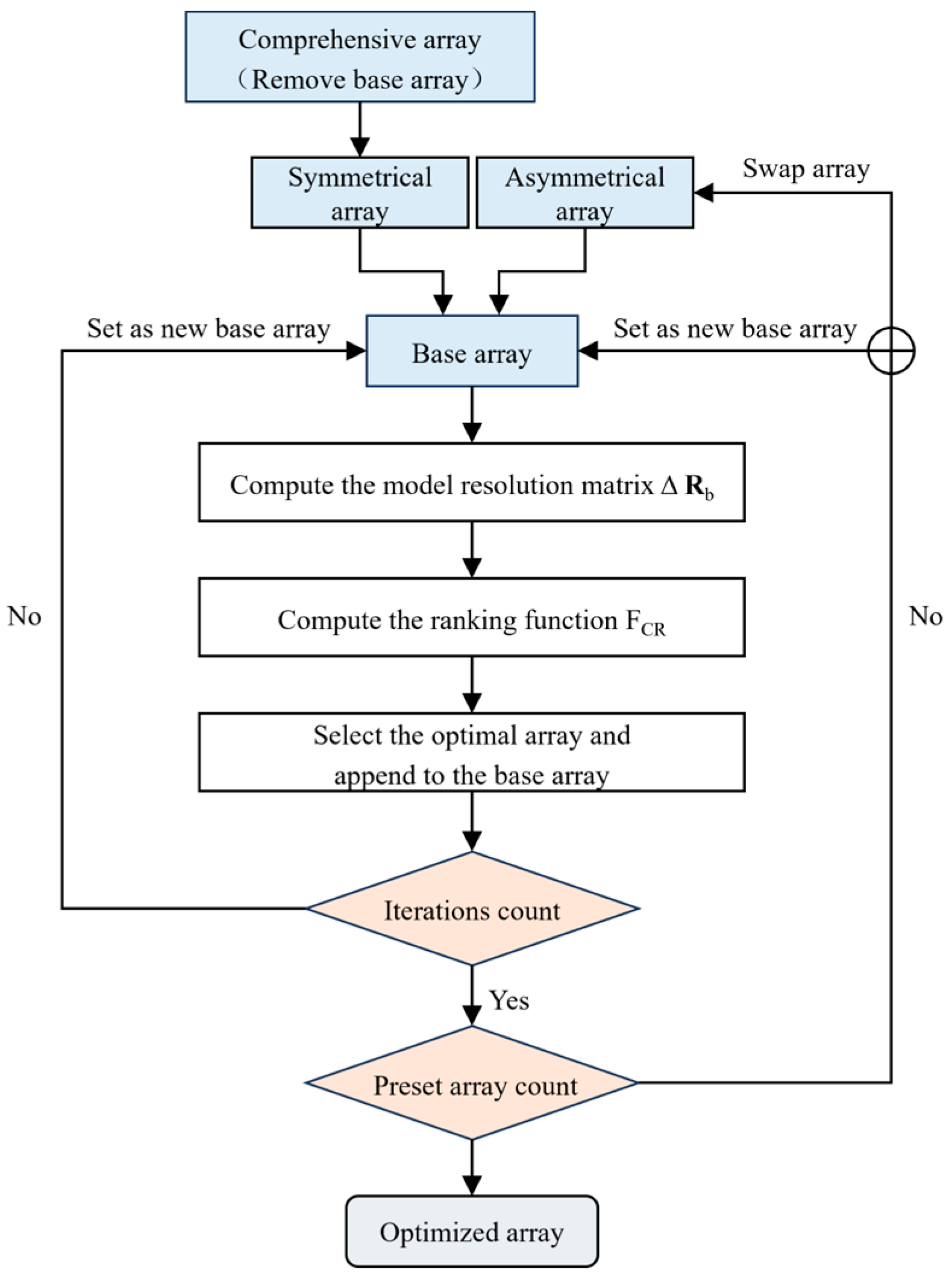
2.1. Multi-Step Optimized CR Method
2.2. Inversion Method
2.3. Evaluation Metrics
3. Comparative Study
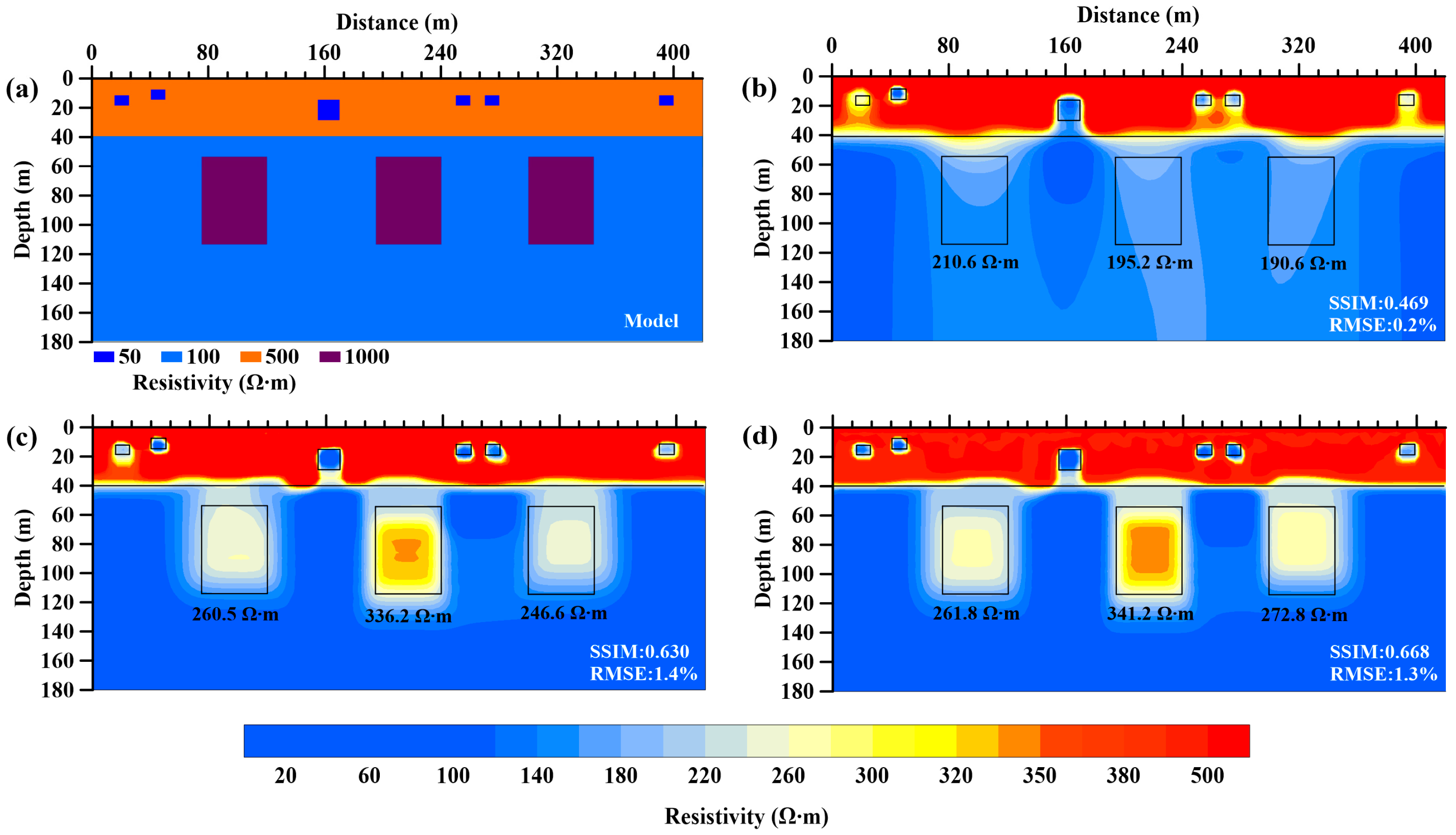
3.1. Numerical Experiment
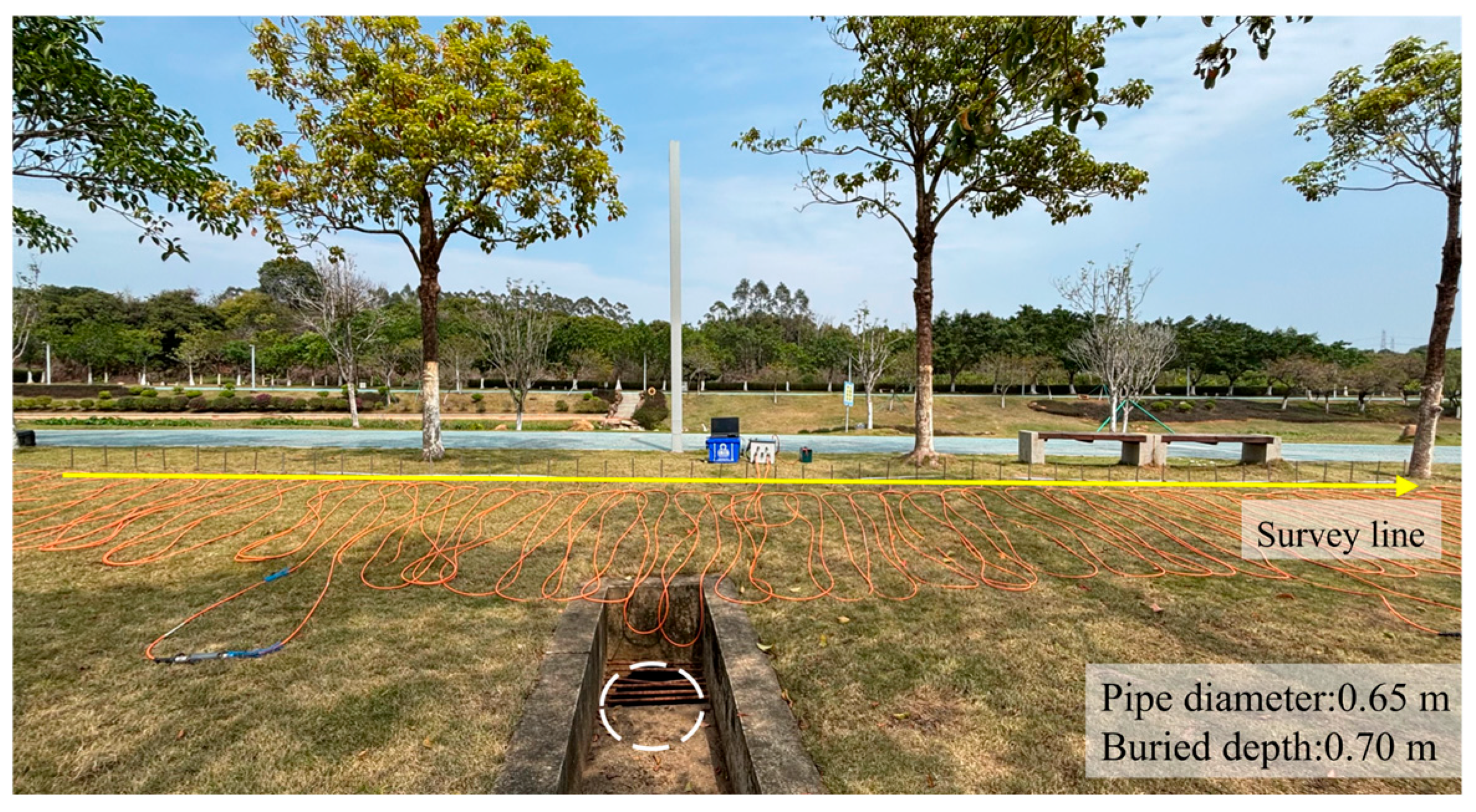
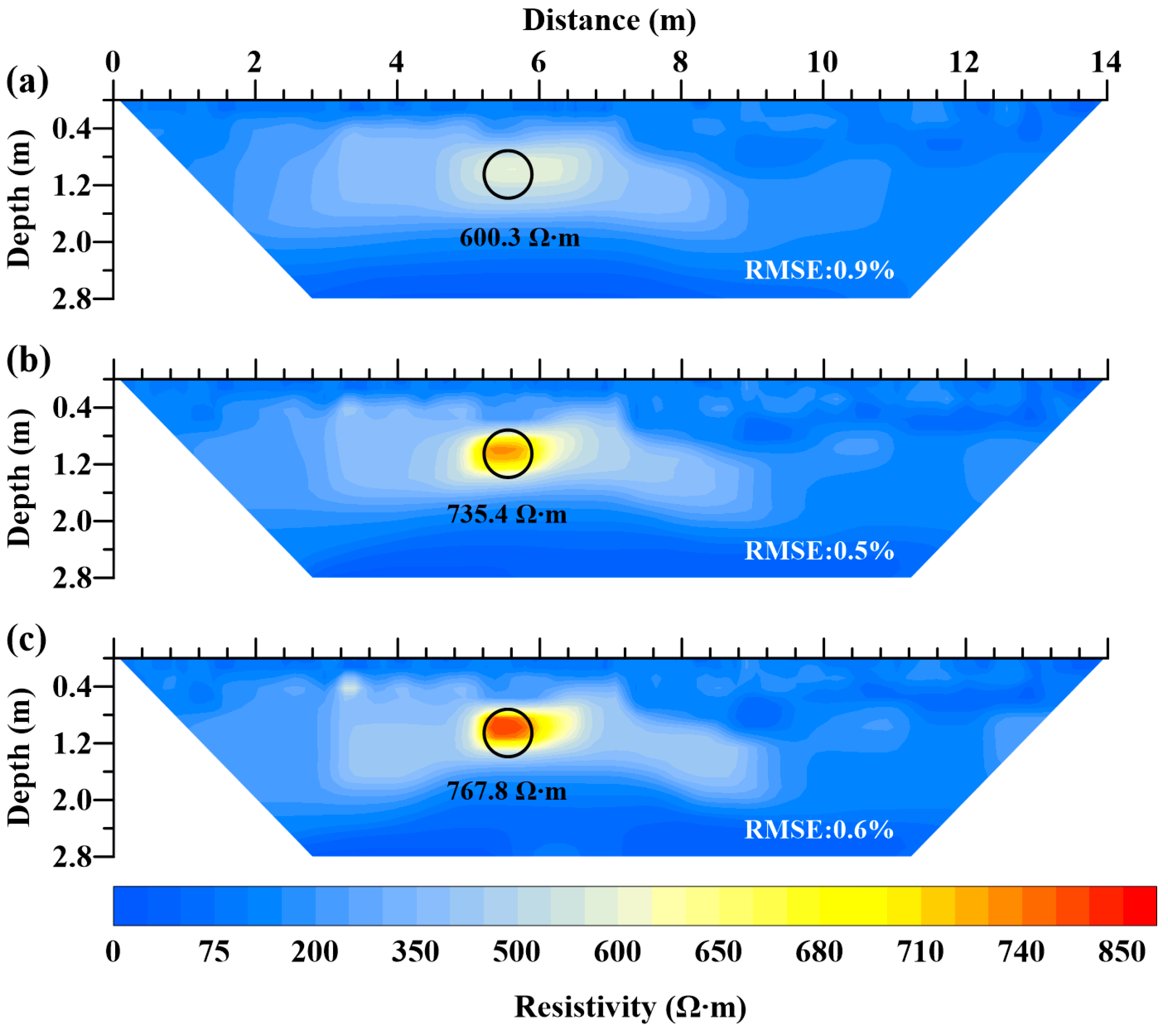
3.2. Field Experiment of Pipeline
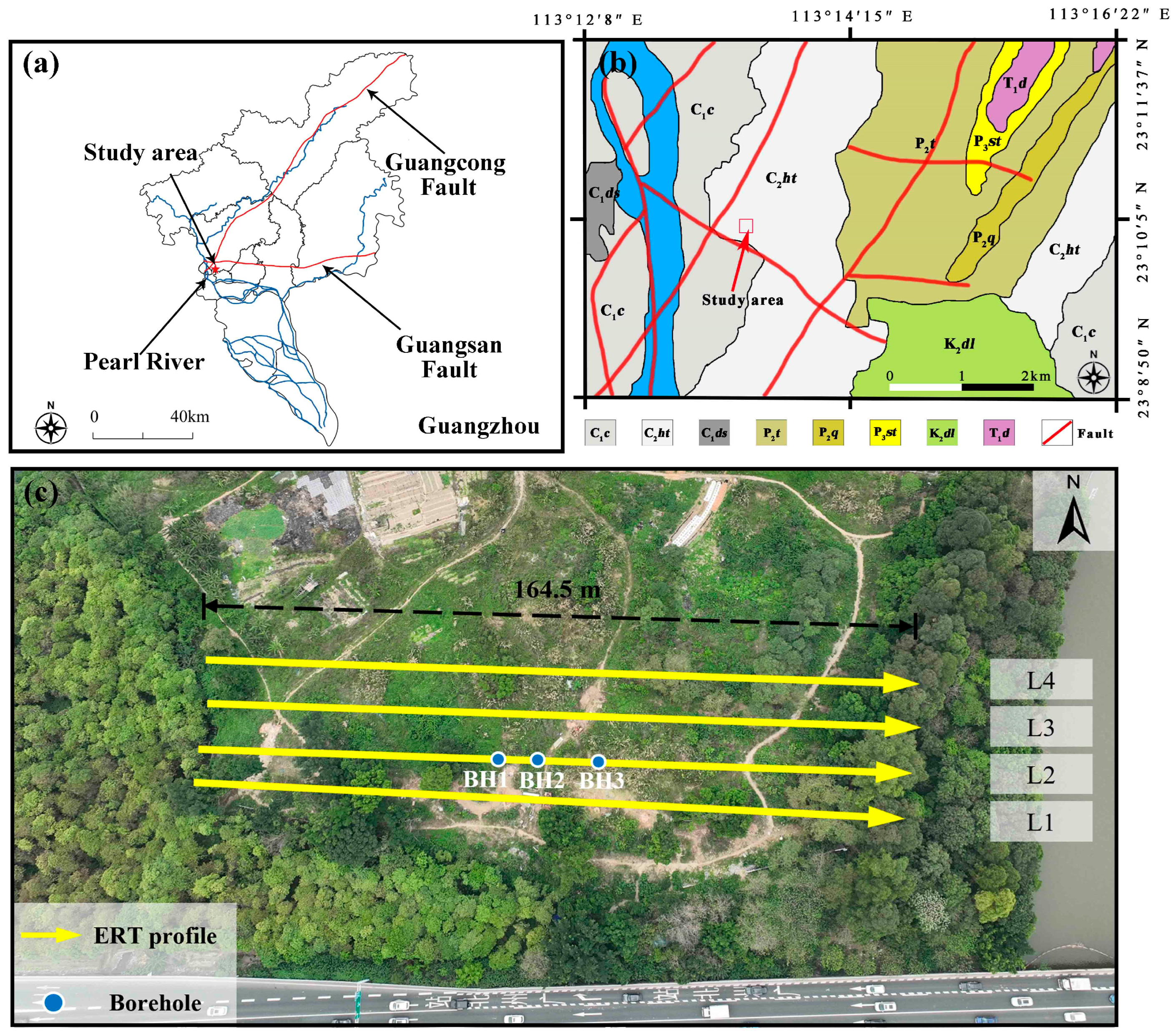
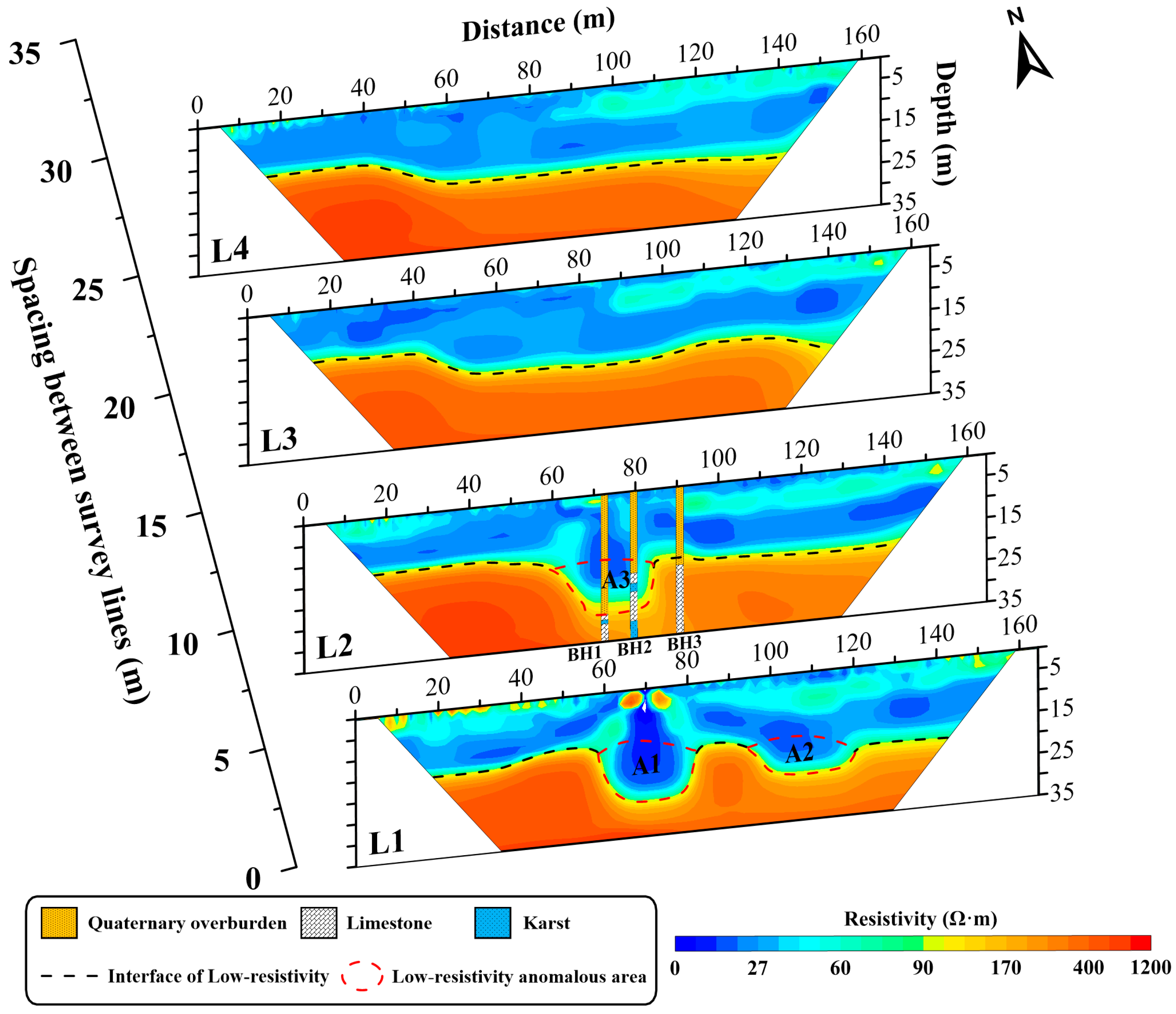
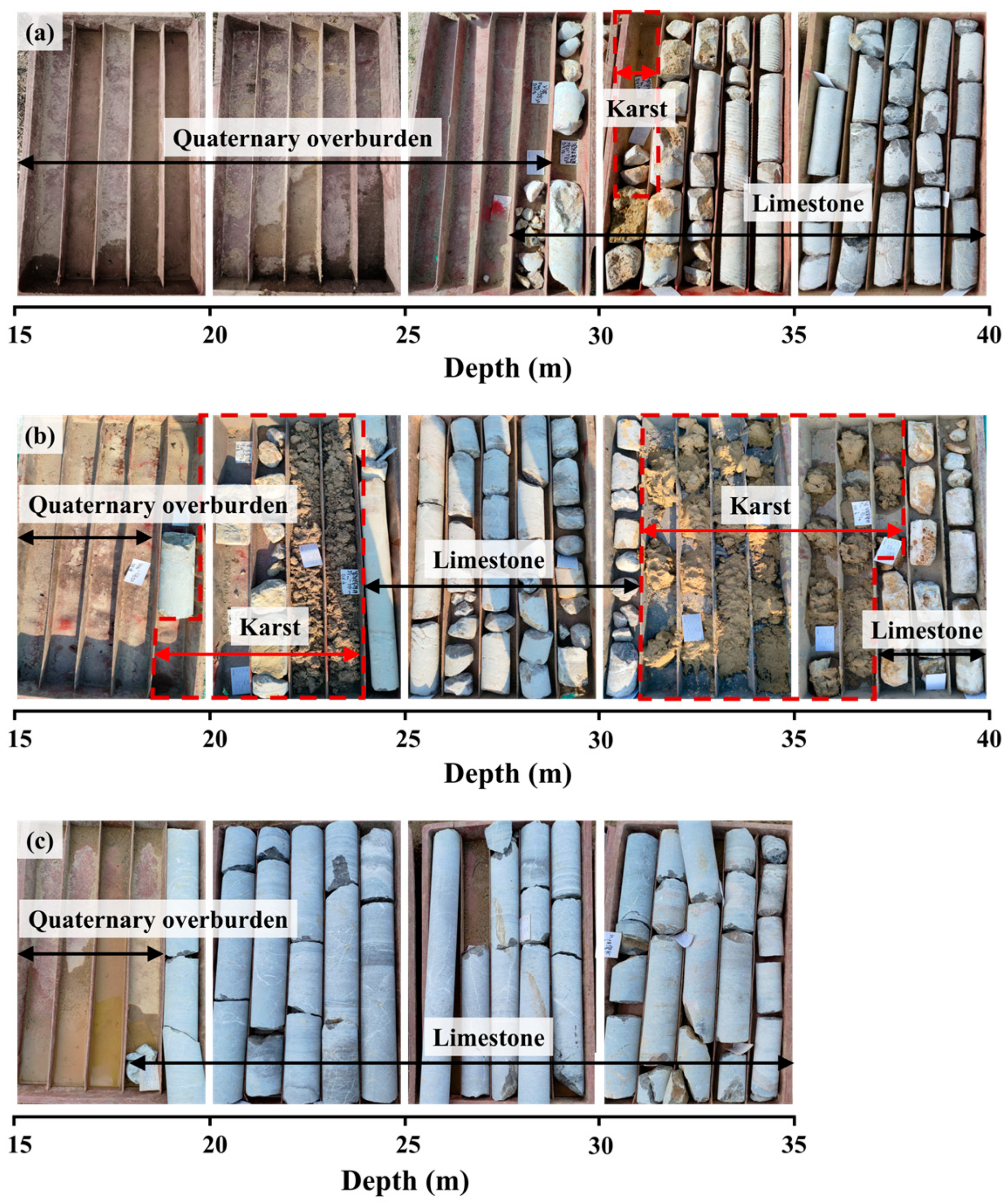
4. Application to Karst Cavity Exploration
5. Discussions
5.1. Parameter Sensitivity Analysis
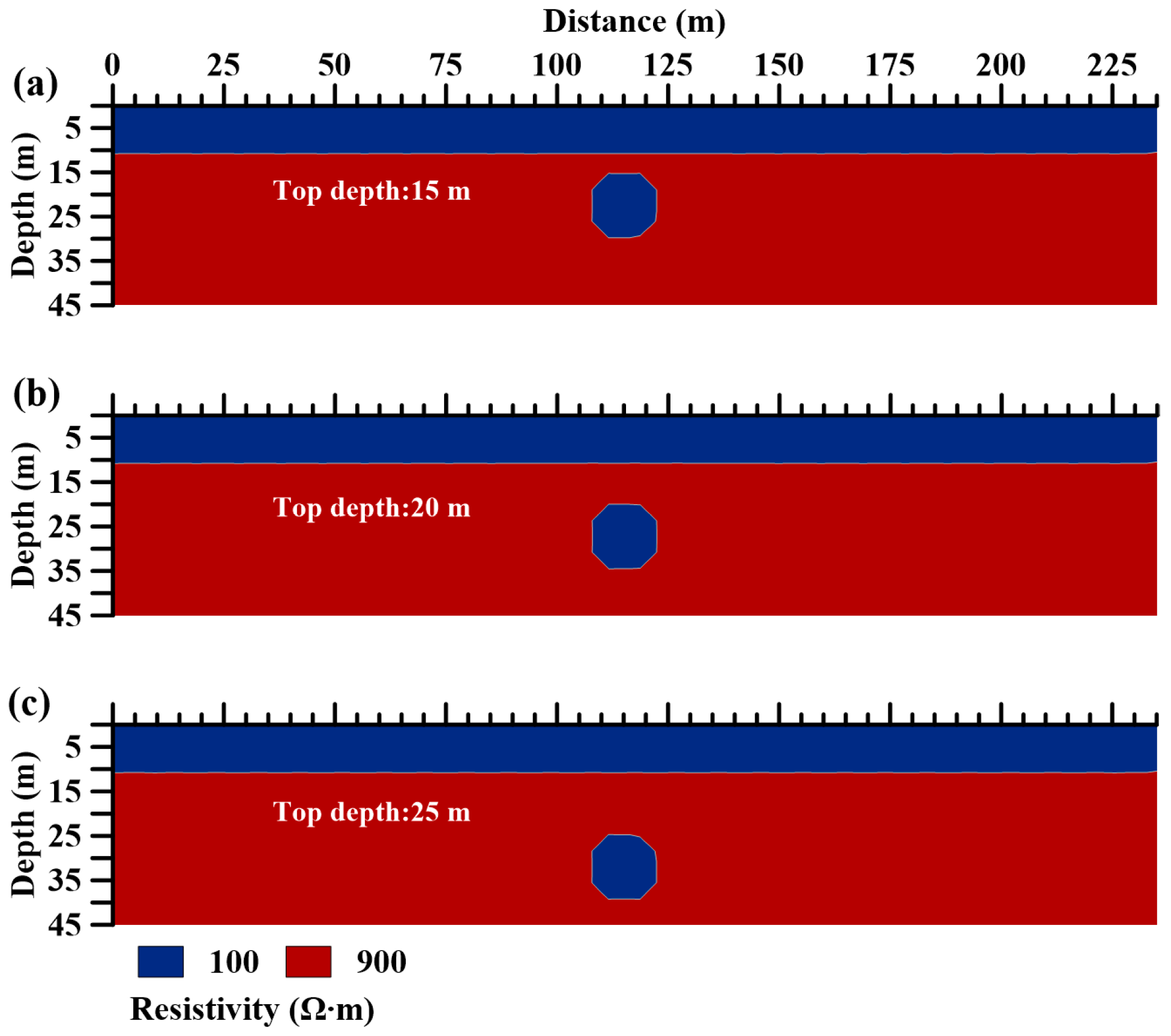
5.2. Depth Imaging Performance
6. Conclusions and Future Work
6.1. Conclusions
6.2. Future Work
Author Contributions
Funding
Data Availability Statement
Acknowledgments
Conflicts of Interest
References
- Balasco, M.; Lapenna, V.; Rizzo, E.; Telesca, L. Deep Electrical Resistivity Tomography for Geophysical Investigations: The State of the Art and Future Directions. Geosciences 2022, 12, 438. [Google Scholar] [CrossRef]
- Liu, X.T.; Liu, H.; Meng, X.; Lin, C.D.; Wang, Y.; Hu, H.S.; Du, Y.L. Exploring karst caves in an urban area using surface and borehole geophysical methods. Bull. Eng. Geol. Environ. 2025, 84, 212. [Google Scholar] [CrossRef]
- Negri, S.; Barbolla, D.F. Challenges in the Detection of Water-Filled Cavities in Karst Environments Using Electrical Resistivity Tomography. Geosciences 2025, 15, 349. [Google Scholar] [CrossRef]
- Castillo-Reyes, O.; Queralt, P.; Piñas-Varas, P.; Ledo, J.; Rojas, O. Electromagnetic Subsurface Imaging in the Presence of Metallic Structures: A Review of Numerical Strategies. Surv. Geophys. 2024, 45, 1627–1661. [Google Scholar] [CrossRef]
- Dahlin, T.; Zhou, B. A numerical comparison of 2D resistivity imaging with 10 electrode arrays. Geophys. Prospect. 2004, 52, 379–398. [Google Scholar] [CrossRef]
- Liu, H.; Liu, Z.; Morato, J.; Hu, Z.; Zhuang, L.; Kang, X.; Pang, Y. Evaluation of substrate clogging in a full-scale horizontal subsurface flow treatment wetland using electrical resistivity tomography with an optimized electrode configuration. Sci. Total Environ. 2022, 824, 153981. [Google Scholar] [CrossRef] [PubMed]
- Oyeyemi, K.D.; Aizebeokhai, A.P.; Metwaly, M.; Omobulejo, O.; Sanuade, O.A.; Okon, E.E. Assessing the suitable electrical resistivity arrays for characterization of basement aquifers using numerical modeling. Heliyon 2022, 8, e09427. [Google Scholar] [PubMed]
- Rosa, F.T.G.; Moreira, C.A.; Rosolen, V.; Casagrande, M.; Bovi, R.C.; Furlan, L.M.; dos Santos, S.F. Detection of Aquifer Recharge Zones in Isolated Wetlands: Comparative Analysis Among Electrical Resistivity Tomography Arrays. Pure Appl. Geophys. 2022, 179, 1275–1294. [Google Scholar] [CrossRef]
- Stummer, P.; Maurer, H.; Green, A.G. Experimental design: Electrical resistivity data sets that provide optimum subsurface information. Geophysics 2004, 69, 120–139. [Google Scholar] [CrossRef]
- Zhou, B.; Bouzidi, Y.; Ullah, S.; Iqbal, M. A full-range gradient survey for 2D electrical resistivity tomography. Near Surf. Geophys. 2020, 18, 609–626. [Google Scholar] [CrossRef]
- Furman, A.; Ferré, T.P.A.; Heath, G.L. Spatial focusing of electrical resistivity surveys considering geologic and hydrologic layering. Geophysics 2007, 72, F65–F73. [Google Scholar] [CrossRef]
- Louvaris, P.K.; Tsourlos, P.I.; Vargemezis, G.N.; Tsokas, G.N. Three-Dimensional Electrical Resistivity Tomography Schemes Optimized for Imaging Wall Foundations. Archaeol. Prospect. 2025, 32, 726–739. [Google Scholar] [CrossRef]
- Nenna, V.; Pidlisecky, A.; Knight, R. Informed experimental design for electrical resistivity imaging. Near Surf. Geophys. 2011, 9, 469–482. [Google Scholar] [CrossRef]
- Jiang, L.C.; Wang, B.B.; Tian, G.; He, X.X.; Zou, A.X.; Guo, X.; Chen, H.Y.; El-Raouf, A.A. Strategy for Optimization of Arbitrary Electrode Distribution for 3D Electrical Resistivity Tomography in Urban Zones. Pure Appl. Geophys. 2021, 178, 3601–3618. [Google Scholar] [CrossRef]
- Li, J.; Chao, C.; Ma, X.M.; Liu, S.L.; Rahman, K.U.; Mao, D.Q. Utilizing the electrical resistivity tomography to map contamination in a quarry. Environ. Earth Sci. 2024, 83, 435. [Google Scholar] [CrossRef]
- Loke, M.H.; Wilkinson, P.B.; Chambers, J.E. Fast computation of optimized electrode arrays for 2D resistivity surveys. Comput. Geosci. 2010, 36, 1414–1426. [Google Scholar] [CrossRef]
- Wilkinson, P.B.; Meldrum, P.I.; Chambers, J.E.; Kuras, O.; Ogilvy, R.D. Improved strategies for the automatic selection of optimized sets of electrical resistivity tomography measurement configurations. Geophys. J. Int. 2006, 167, 1119–1126. [Google Scholar] [CrossRef]
- Loke, M.H.; Wilkinson, P.B.; Chambers, J.E. Parallel computation of optimized arrays for 2-D electrical imaging surveys. Geophys. J. Int. 2010, 183, 1302–1315. [Google Scholar] [CrossRef]
- Loke, M.H.; Wilkinson, P.S.; Chambers, J.E.; Uhlemann, S.S.; Sorensen, J.P.R. Optimized arrays for 2-D resistivity survey lines with a large number of electrodes. J. Appl. Geophys. 2015, 112, 136–146. [Google Scholar] [CrossRef]
- AL-Hameedawi, M.M.; Thabit, J.M.; AL-Menshed, F.H. Lateral Near-Surface Inhomogeneity Effect on the Three-Dimensional Electrical Resistivity Tomography Data. Pure Appl. Geophys. 2025, 182, 4613–4631. [Google Scholar] [CrossRef]
- Meng, J.; Dong, Y.H.; Xia, T.; Ma, X.M.; Gao, C.L.; Mao, D.Q. Detailed LNAPL plume mapping using electrical resistivity tomography inside an industrial building. Acta Geophys. 2022, 70, 1651–1663. [Google Scholar] [CrossRef]
- Abdullah, F.M.; Loke, M.H.; Nawawi, M.; Abdullah, K.; Younis, A.; Arisona, A. Utilizing NWCR optimized arrays for 2D ERT survey to identify subsurface structures at Penang Island, Malaysia. J. Appl. Geophys. 2022, 196, 104518. [Google Scholar] [CrossRef]
- Menke, W. Geophysical Data Analysis: Discrete Inverse Theory; Academic Press: Cambridge, MA, USA, 1984. [Google Scholar]
- Press, W.H.; Teukolsky, S.A.; Vetterling, W.T.; Flannery, B.P. Numerical Recipes in C: The Art of Scientific Computing, 2nd ed.; Cambridge University Press: Cambridge, UK, 1992. [Google Scholar]
- Uhlemann, S.; Wilkinson, P.B.; Maurer, H.; Wagner, F.M.; Johnson, T.C.; Chambers, J.E. Optimized survey design for electrical resistivity tomography: Combined optimization of measurement configuration and electrode placement. Geophys. J. Int. 2018, 214, 108–121. [Google Scholar] [CrossRef]
- Wilkinson, P.B.; Loke, M.H.; Meldrum, P.I.; Chambers, J.E.; Kuras, O.; Gunn, D.A.; Ogilvy, R.D. Practical aspects of applied optimized survey design for electrical resistivity tomography. Geophys. J. Int. 2012, 189, 428–440. [Google Scholar] [CrossRef]
- Loke, M.H.; Acworth, I.; Dahlin, T. A comparison of smooth and blocky inversion methods in 2D electrical imaging surveys. Explor. Geophys. 2003, 34, 182–187. [Google Scholar] [CrossRef]
- Wang, Z.; Bovik, A.C.; Sheikh, H.R.; Simoncelli, E.P. Image quality assessment: From error visibility to structural similarity. IEEE Trans. Image Process 2004, 13, 600–612. [Google Scholar] [CrossRef]
- Liu, R.; Sun, H.F.; Qin, J.W.; Zheng, Z.Q. A multi-geophysical approach to assess potential sinkholes in an urban area. Eng. Geol. 2023, 318, 107100. [Google Scholar] [CrossRef]
- Saroli, M.; Albano, M.; Moro, M.; Falcucci, E.; Gori, S.; Galadini, F.; Petitta, M. Looking Into the Entanglement Between Karst Landforms and Fault Activity in Carbonate Ridges: The Fibreno Fault System (Central Italy). Front. Earth Sci. 2022, 10, 891319. [Google Scholar] [CrossRef]
- Zhang, T.; Zuo, S.Y.; Yu, B.; Zheng, K.X.; Chen, S.W.; Huang, L. Spatial patterns and controlling factors of the evolution process of karst depressions in Guizhou province, China. J. Geog. Sci. 2023, 33, 2052–2076. [Google Scholar] [CrossRef]
- Loke, M.H.; Kiflu, H.; Wilkinson, P.B.; Harro, D.; Kruse, S. Optimized arrays for 2D resistivity surveys with combined surface and buried arrays. Near Surf. Geophys. 2015, 13, 505–517. [Google Scholar] [CrossRef]
- Meng, F.; Wang, J.; Zhao, Y. Mapping and monitoring dense non-aqueous phase liquid source zone by fused surface and cross-borehole electrical resistivity tomography. J. Hazard. Mater. 2024, 478, 135618. [Google Scholar] [CrossRef] [PubMed]
- Edwards, L.S. A modified pseudosection for resistivity and IP. Geophysics 1977, 42, 1020–1036. [Google Scholar] [CrossRef]
- Barker, R.D. Depth of investigation of collinear symmetrical four-electrode arrays. Geophysics 1989, 54, 1031–1037. [Google Scholar] [CrossRef]



| Metric | Array Type | Step Size | ||||
|---|---|---|---|---|---|---|
| 0.02 | 0.03 | 0.05 | 0.07 | 0.09 | ||
| Iterations | Symmetrical optimized array | 121 | 81 | 49 | 36 | 28 |
| Computational time (s) | 13.40 | 9.92 | 7.18 | 6.38 | 5.81 | |
| Average relative model resolution | 0.702 | 0.702 | 0.702 | 0.702 | 0.702 | |
| Iterations | Multi-step optimized array | 121 | 81 | 49 | 36 | 28 |
| Computational time (s) | 29.00 | 21.17 | 16.54 | 14.71 | 14.71 | |
| Average relative model resolution | 0.769 | 0.768 | 0.768 | 0.765 | 0.764 | |
| Iterations | Comprehensive array | 121 | 81 | 49 | 36 | 28 |
| Computational time (s) | 76.35 | 53.60 | 33.65 | 31.73 | 22.40 | |
| Average relative model resolution | 0.785 | 0.785 | 0.785 | 0.784 | 0.784 | |
| Mesh Size | Iterations | Computational Time (s) | Average Relative Model Resolution |
|---|---|---|---|
| 1.0 electrode spacing | 49 | 16.54 | 0.768 |
| 0.5 electrode spacing | 49 | 24.33 | 0.753 |
| 0.25 electrode spacing | 49 | 46.53 | 0.735 |
Disclaimer/Publisher’s Note: The statements, opinions and data contained in all publications are solely those of the individual author(s) and contributor(s) and not of MDPI and/or the editor(s). MDPI and/or the editor(s) disclaim responsibility for any injury to people or property resulting from any ideas, methods, instructions or products referred to in the content. |
© 2026 by the authors. Licensee MDPI, Basel, Switzerland. This article is an open access article distributed under the terms and conditions of the Creative Commons Attribution (CC BY) license.
Share and Cite
Qu, Y.; Lin, C.; Liu, H.; Liu, X.; Meng, X.; Zhang, S.; Yin, Z.; Hu, H. Optimized Arrays for 2-D Resistivity Survey Lines Using a Multi-Step Compare R Method. Geosciences 2026, 16, 182. https://doi.org/10.3390/geosciences16050182
Qu Y, Lin C, Liu H, Liu X, Meng X, Zhang S, Yin Z, Hu H. Optimized Arrays for 2-D Resistivity Survey Lines Using a Multi-Step Compare R Method. Geosciences. 2026; 16(5):182. https://doi.org/10.3390/geosciences16050182
Chicago/Turabian StyleQu, Yao, Caide Lin, Hai Liu, Xiangtai Liu, Xu Meng, Shangyang Zhang, Zixin Yin, and Hesong Hu. 2026. "Optimized Arrays for 2-D Resistivity Survey Lines Using a Multi-Step Compare R Method" Geosciences 16, no. 5: 182. https://doi.org/10.3390/geosciences16050182
APA StyleQu, Y., Lin, C., Liu, H., Liu, X., Meng, X., Zhang, S., Yin, Z., & Hu, H. (2026). Optimized Arrays for 2-D Resistivity Survey Lines Using a Multi-Step Compare R Method. Geosciences, 16(5), 182. https://doi.org/10.3390/geosciences16050182