1. Introduction
Rapid global urbanization has led to increasing population concentration in cities, exacerbating challenges such as overcrowded built environments, severe traffic congestion, and growing pressure on finite urban resources. Major cities worldwide are increasingly plagued by “urban diseases”, including uncontrolled population growth, unregulated urban sprawl, deteriorating ecological conditions, and systemic traffic inefficiencies—all of which hinder sustainable urban development. To address these issues and promote intensive, sustainable urbanization, cities are expanding vertically through high-rise construction and actively exploring underground spatial solutions as a strategic complement [
1,
2,
3].
As a critical extension of urban land resources, UUS offers unique advantages such as thermal stability, safety, concealment, and spatial optimization [
4,
5]. It has become a vital component of sustainable urban development with significant untapped potential, playing a pivotal role in achieving carbon neutrality and advancing sustainable urban agendas [
6,
7]. However, as a valuable national space resource, large-scale UUS development and utilization are not only constrained by the geological environment but also inevitably induce a series of engineering geological and hydrogeological problems [
8,
9]. Additionally, UUS resources exhibit fragile sensitivity and irreversibility, making them highly vulnerable to damage during development—leading to long-term geological environmental impacts with substantial risks [
10,
11]. Therefore, conducting scientific and reasonable geological environment evaluation prior to large-scale UUS development is of paramount significance [
12].
Recent advancements in 3D geospatial technologies have propelled the evolution of urban geological environment evaluation for UUS, with modern 3D GIS approaches emerging as a foundational tool for breaking the limitations of traditional spatial dimension [
13]. State-of-the-art 3D GIS frameworks enable integrated 3D geological modeling, multi-dimensional geoscience data fusion, and dynamic spatial analysis, supporting the construction of high-precision digital geological archives and fine-grained UUS planning in complex urban settings. Cloud-based 3D GIS platforms and above-ground-underground integrated modeling systems have been successfully applied in urban geological surveys across China, demonstrating their unparalleled ability to characterize the 3D spatial distribution of geological constraints and provide decision-support for systematic UUS development [
14,
15,
16]. Meanwhile, machine learning (ML) has revolutionized 3D geological modeling by addressing longstanding challenges of sparse borehole data and high geological uncertainty in conventional methods [
17]. Advanced ML algorithms have been validated to outperform traditional interpolation and simulation techniques in predicting unsampled geological units and geotechnical parameters, with information entropy and probabilistic modeling further enabling rigorous uncertainty quantification for engineering applications. The integration of ML with 3D geological modeling has been successfully implemented in high-demand engineering sites, providing a robust framework for improving model reliability in data-scarce regions. In parallel with technological advancements, global UUS planning has shifted toward sustainable, safety-oriented, and multi-objective development frameworks, with national and international policy guidelines prioritizing vertical layered development, spatial zoning control, and geological risk prevention. These modern planning frameworks mandate the adoption of 3D geological models and quantitative UGEE systems to inform scientific UUS development, with tailored evaluation frameworks already developed for diverse urban geological contexts to address unique topographic and geological challenges. For UGEE specifically, multi-criteria decision-making methods have become a core tool for synthesizing multidimensional geological indices, with game theory-based combination weighting and improved TOPSIS models emerging as the preferred approach for reconciling subjective expert judgment and objective data characteristics, and for quantifying geological hazard risks with high robustness in field applications [
18].
Accordingly, advancements in 3D geological modeling and geographic information system (GIS) technologies have enabled the transition from traditional 2D evaluations to 3D UGEE. This approach integrates geological analysis, 3D model construction, and spatial analytics to quantify UUS development potential, providing actionable insights for vertical planning and engineering design. Grounded in 3D geoscience principles, 3D UGEE employs spatial analysis techniques to assess multidimensional data (e.g., geological, geotechnical, and remote sensing datasets), generating refined evaluation criteria that reflect the spatial distribution and morphological characteristics of geological constraints [
19,
20].
Spatial analysis methods refer to a suite of analytical techniques applied to spatial data, based on the location and geometry of geoscientific objects [
21]. Their primary objective is to extract meaningful insights from spatial data through various models and operations, generating new knowledge to support decision-making. In the context of UGEE, spatial analysis methods focus on examining the spatial distribution and morphological characteristics of relevant data (e.g., geological, remote sensing, and geotechnical test data) to quantitatively extract valuable evaluation elements—enhancing the depth and accuracy of UGEE.
Historically, spatial analysis methods for UGEE have focused on 2D, primarily utilizing planar grid or vector data structures with techniques such as overlay analysis [
22,
23], terrain analysis [
24], and interpolation analysis [
25]. In contrast, 3D approaches employ 3D raster data structures (e.g., regular hexahedral grids) [
26] to quantitatively extract evaluation information. Despite recent progress, 3D spatial analysis methods remain underdeveloped, existing studies only apply fragmented basic 3D techniques, including simple 3D distance field analyses for calculating geological body influence ranges, Boolean operations for basic spatial overlay, and single attribute interpolations for discrete geotechnical data [
27,
28]. These methods lack specialized 3D statistical analysis for quantifying stratum depth, thickness and geological complexity, effective 3D mathematical morphological analysis for filtering noise and extracting geological body morphologies, and refined 3D surface morphology analysis for characterizing the soft–hard stratum interfaces, slope and relief of geological surfaces. For instance, Hou et al. [
20] and He et al. [
29] extracted 3D constraints on UUS development via basic distance and interpolation analysis but lacked in-depth quantification of geological structures and stratigraphic interfaces; no studies have yet systematically integrated multi-type 3D spatial analysis methods to cover the full process of 3D UGEE index extraction. Enhancing 3D UGEE requires integrating advanced techniques—such as soft–hard stratum interface detection, stratum complexity assessment, and geological surface characterization—to better capture spatial–geological interdependencies and improve evaluation robustness. This research gap not only restricts the precision of 3D UGEE in extracting multi-dimensional geological evaluation indices, but also leads to the inability to fully reflect the vertical and horizontal heterogeneity of the underground geological environment, making it difficult to provide reliable technical support for practical UUS planning and engineering site selection. This research gap restricts the robustness of 3D UGEE and its ability to guide practical UUS planning.
Their core limitations form a sharp contrast with the targeted improvements of the five core methods in this study: (1) Existing 3D spatial statistical analysis only conducts basic statistical descriptions of single parameters such as stratum thickness and burial depth, without normalized quantitative indices, making it impossible to objectively characterize the complexity of geological structures in different spatial regions. In this study, we constructed the 3D relative geological complexity index Fi and optimized the statistical calculation methods for stratum depth and thickness, realizing the quantitative and comparable analysis of geological parameters. (2) Analyses of the morphological characteristics of geological bodies in existing studies are mostly qualitative descriptions. 3D mathematical morphological analysis is rarely applied in UGEE, lacking discrete noise processing and spatial filtering methods, leading to low accuracy in morphological feature extraction. In this study, we introduced 3D mathematical morphological methods such as erosion, dilation, and opening/closing operations, and constructed a 3D spatial window filtering algorithm, which effectively solves the problem of high-precision extraction of morphological features such as uplifts and depressions of geological bodies disturbed by noise. (3) Existing 3D surface morphology analysis is mostly migrated from 2D terrain analysis technologies, without optimization for the 3D curved surface characteristics of underground geological bodies (e.g., bedrock surfaces and stratum interfaces), and lacks differentiated quantitative extraction methods for soft–hard stratum interfaces. Combining the characteristics of underground geological bodies, we optimized the calculation methods of 3D slope and relief, and proposed a differential geological interface analysis technology, realizing the accurate extraction of key characteristics of soft–hard stratum interfaces. (4) Traditional 3D spatial distance field analysis adopts a global search strategy, which has high time complexity and low computational efficiency when processing large-scale 3D block models, making it impossible to quickly obtain the influence range of geological constraint factors. In this study, an improved 3D signed Euclidean distance transformation algorithm was adopted, which converts global search into layer-by-layer local scanning, resulting in improvement in computational efficiency with the error controlled, thus adapting to the big data processing requirements of UGEE. (5) Existing 3D spatial interpolation analysis mostly uses a single deterministic interpolation method such as the inverse distance weighting method, without stratigraphic constraint optimization and multi-method cross-validation, leading to large prediction errors in areas with sparse boreholes. In this study, we adopted the 3D Kriging interpolation method under stratigraphic constraints and verified the interpolation accuracy through cross-validation, effectively improving the reliability and accuracy of the spatial prediction of geological parameters. In addition, existing 3D spatial analysis methods have not yet formed a complete technical system adapted to UGEE. The independent application of various methods makes it impossible to comprehensively and systematically extract multidimensional evaluation indices, which has become a core bottleneck restricting the development of 3D UGEE from qualitative description to quantitative and refined analysis.
To address the above technical gaps, this study systematically integrates and innovatively optimizes the above five 3D spatial analysis methods, and constructs a complete 3D spatial analysis system specially designed for UGEE, realizing the comprehensive and high-precision extraction of multidimensional evaluation indices. This study fills the technical deficiencies of existing research in the quantification of geological parameters, refinement of morphological features, and high efficiency of analysis. The implementation of this study is not only a key demand to solve the current technical bottleneck of 3D UGEE, but also provides important technical support for improving the scientificity and accuracy of UUS planning and geological risk management, which is of indispensable significance for improving the 3D UGEE technical system.
The key innovations in this paper are threefold: (1) We develop a comprehensive 3D spatial analysis system encompassing five core methodologies—3D geospatial statistical analysis (for quantifying stratum depth, thickness, and geological complexity with a normalized index), 3D surface morphology analysis (for characterizing slope, relief, and soft–hard interface features), 3D mathematical morphological analysis, 3D proximity/distance analysis (optimized with an improved signed Euclidean distance transformation for efficiency), and 3D spatial interpolation analysis (validated via cross-comparison to ensure attribute prediction accuracy). (2) We have further established a comprehensive 3D UGEE workflow integrated with a refined suite of 3D spatial analysis methods, enhancing the holism and reliability of UGEE. The proposed framework comprises five sequential key steps. (3) We integrate game theory-based combination weighting and an improved TOPSIS model integrated with 3D UGEE workflow to enhance the reliability of 3D comprehensive evaluation.
In this paper, a case study in the Chinese city of Hangzhou (531.7 km2) demonstrates the practical effectiveness of the proposed framework. The results show that the integrated 3D spatial analysis methods enable efficient extraction of high-precision evaluation information, with the geological complexity index and soft–hard interface analysis significantly improving the identification of UUS development constraints. The framework not only provides intuitive, data-driven insights for vertical stratification and linear engineering site selection (e.g., Metro Line 13 extension) but also offers a replicable paradigm for sustainable UUS planning in similar urban contexts. This study advances 3D UGEE methodology by bridging the gap between basic spatial analysis and comprehensive geological evaluation, providing robust technical support for scientifically informed UUS development and risk mitigation.
3. 3D UGEE Framework Based on 3D Spatial Analysis Methodology
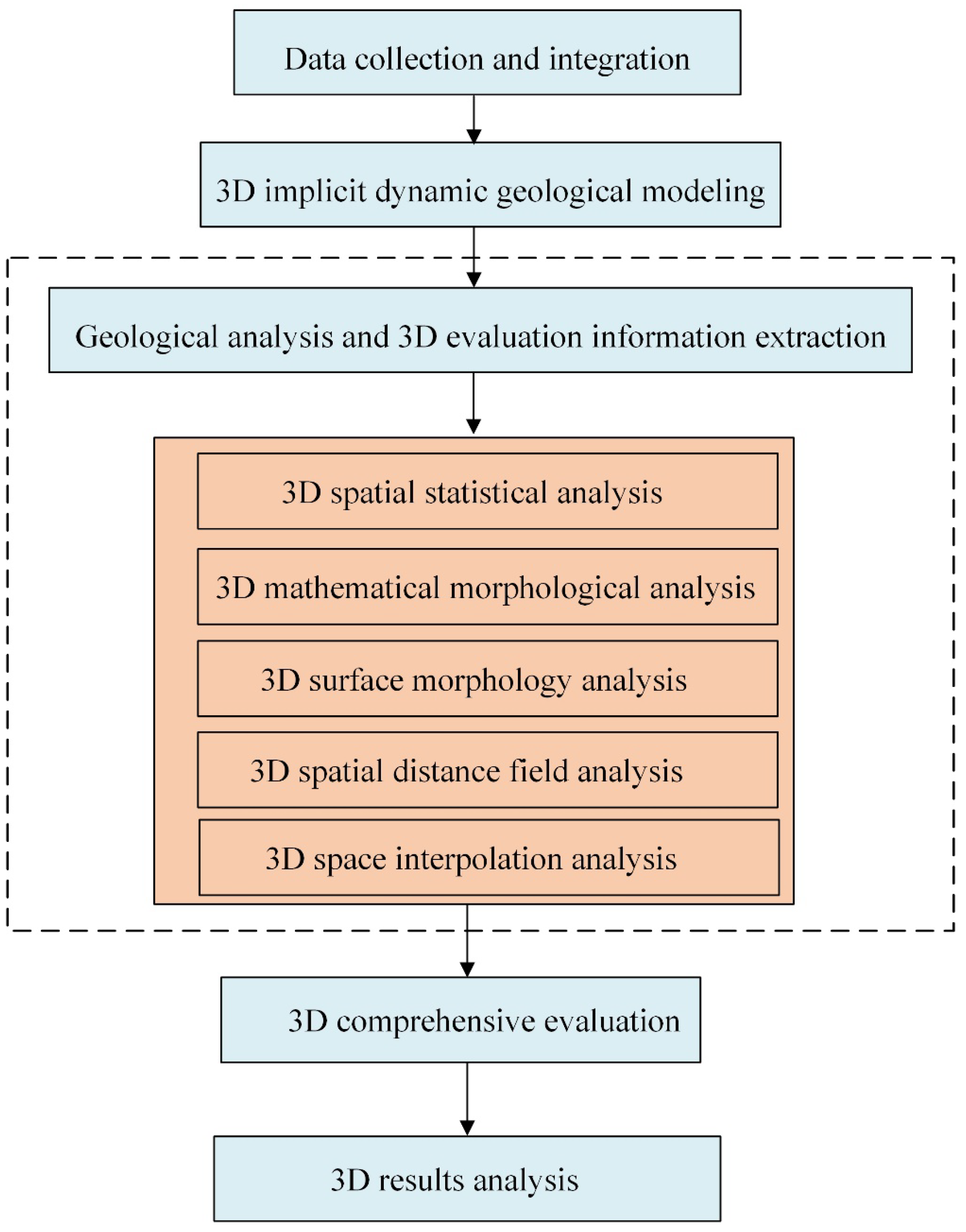
Building on previous research [
20,
28,
32], 3D UGEE is systematically divided into five key steps: data collection and integration, 3D implicit dynamic geological modeling, geological analysis and evaluation index extraction, 3D comprehensive evaluation, and 3D result analysis (
Figure 12).
- (1)
Data collection and integration.
This step involves systematic collection of underground geological environment-related data, including borehole data (e.g., borehole logs, geotechnical test results), planar and cross-sectional geological data, geophysical data (e.g., electrical, seismic data), and remote sensing data.
Collected data undergo encoding, digitization, and integration to assign 3D attribute features, followed by centralized management in a database system to ensure data consistency and accessibility.
- (2)
3D implicit dynamic geological modeling.
Using multi-source, multidimensional geoscience data, an implicit 3D geological modeling approach is employed to construct high-precision, dynamically updatable geological structure models (e.g., engineering geology, hydrogeology models). Model accuracy is rigorously validated through cross-verification with field data and expert review to ensure reliability for subsequent analysis.
- (3)
Geological analysis and 3D evaluation information extraction.
Based on the 3D geological model and analysis of underground geological environment characteristics, primary evaluation factors are identified. 3D evaluation information extraction employs the aforementioned spatial analysis methods to isolate these factors, with each factor represented as an independent layer for subsequent comprehensive evaluation.
- (4)
3D comprehensive evaluation.
This step integrates evaluation factors using appropriate methods (e.g., fuzzy comprehensive evaluation, TOPSIS method) to calculate 3D UGEE suitability. Outcomes delineate prospective development zones and predict available resources, forming the basis for decision-making.
- (5)
3D result analysis.
3D spatial analysis methods are used to verify the consistency of evaluation results with geological principles and their practical utility for guiding UUS development. A detailed geological interpretation of comprehensive evaluation results is conducted to ensure scientific validity and applicability.
In this framework, distinct spatial analysis methods are applied across different steps, with steps 3–5 heavily relying on advanced 3D spatial analysis to achieve objectives effectively. This structured approach enhances 3D UGEE precision, minimizes uncertainties, and supports sustainable, scientifically informed UUS utilization.
4. Case Study
A typical area in Hangzhou was selected to demonstrate the application of 3D spatial analysis methods in UGEE.
4.1. Study Area Background
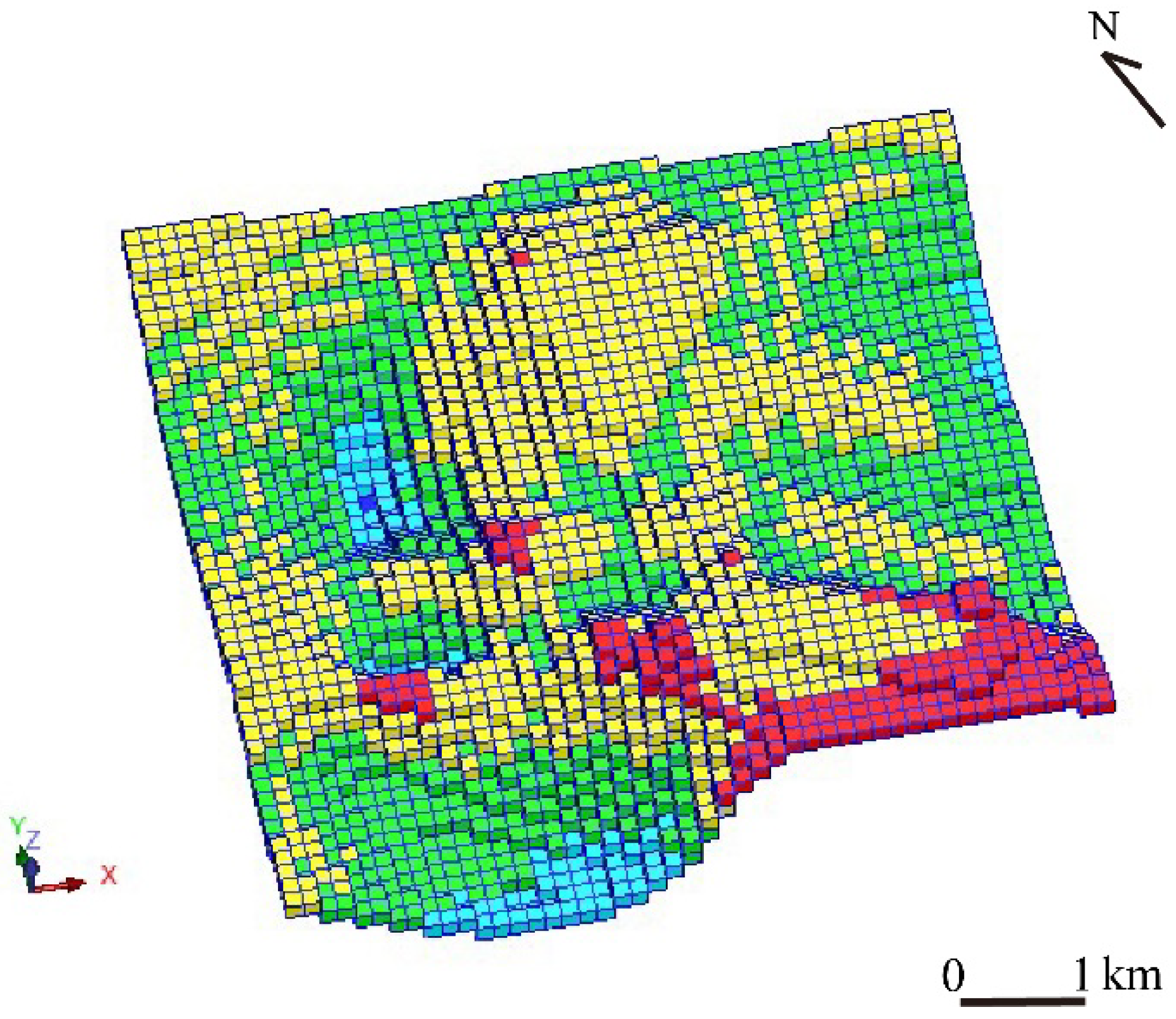
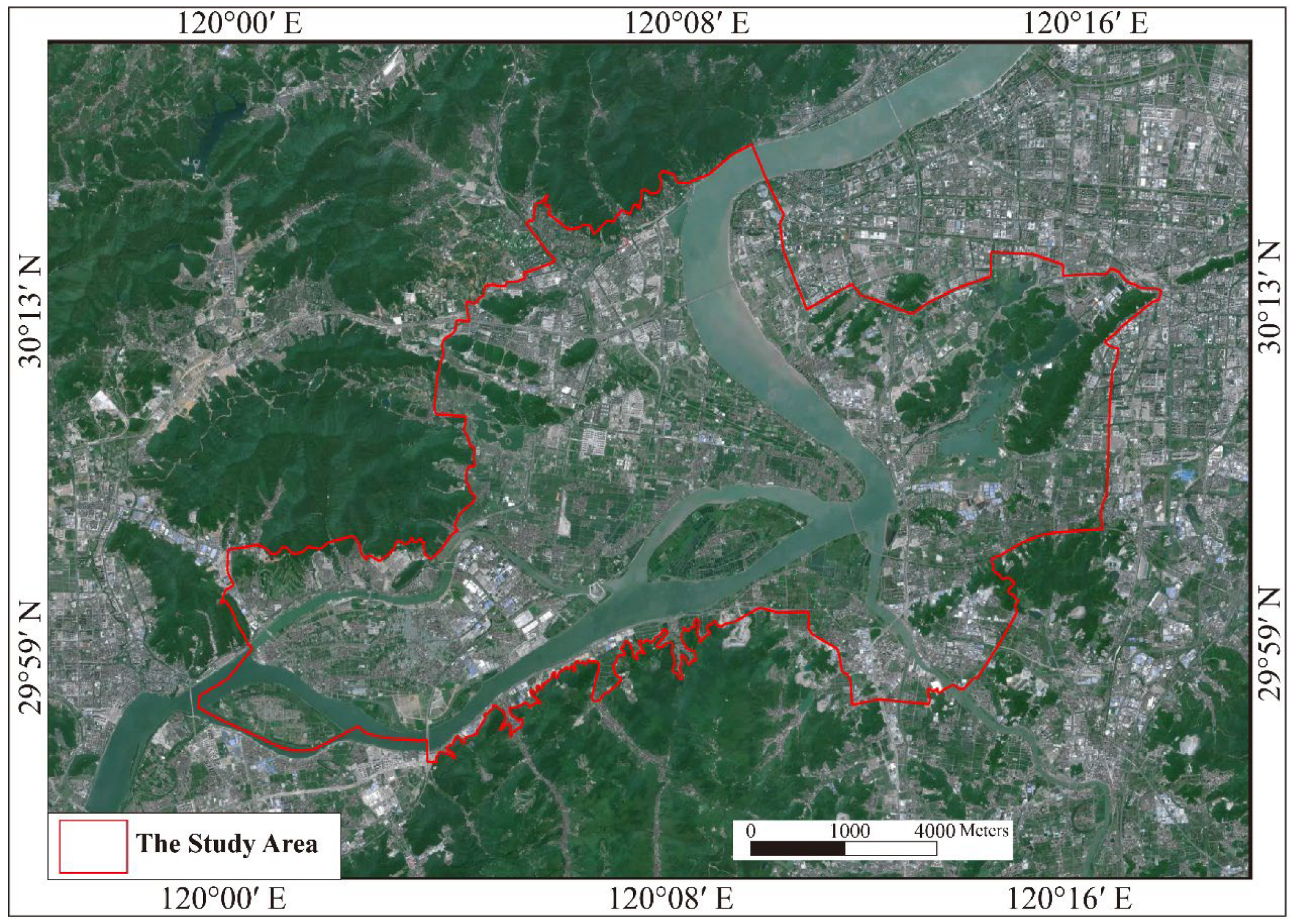
The study area is located in eastern Hangzhou, on the northern bank of the Qiantang River, covering a total area of 531.7 km
2 (
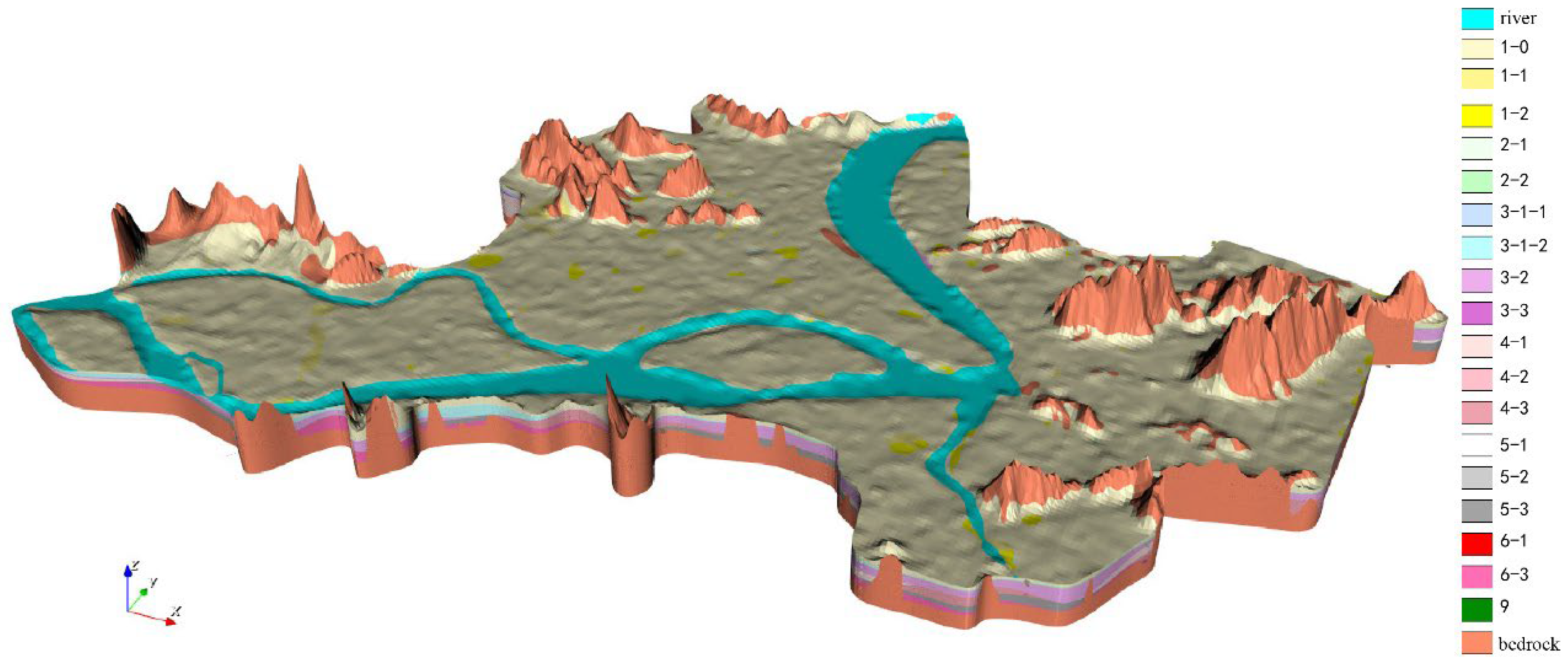
Figure 13). It is characterized by a flat marine sedimentary plain with a well-developed surface water system (six major rivers). The terrain slopes gently eastward, predominantly covered by Quaternary sediments with thicknesses ranging from 30 to 60 m. Based on deposition time, environmental conditions, and soil characteristics, local geoengineering structures are classified into 9 layers and 20 sub-layers [
33]. Key soil types include easily liquefiable sandy soil, soft soil, and water-rich sandy gravel layers.
Most silt in the area is in a fluid-plastic state, with poor engineering properties (low strength, high water content, high compressibility) and inability to withstand heavy loads. The thick, widely distributed soft soil layer, combined with loose, water-rich, liquefaction-prone sandy soil, forms an unfavorable engineering geological section. The permeable sandy soil serves as the main aquifer; excavation and drainage activities altering the groundwater flow field can trigger quicksand, piping, and ground subsidence. Additionally, the highly water-rich gravel layer (pebble size: 5–20 cm, primarily quartz) is unsuitable for shield tunneling.
As a key development zone in Hangzhou, the study area has significant UUS potential to support urban expansion. UUS development is planned in three layers: shallow (0 to −10 m): metro transit stations, line networks, parking lots, utility tunnels; medium (−10 to −30 m): supplementary infrastructure and public facilities; and deep (below −30 m): strategic reserved space for long-term development.
However, complex geological conditions (liquefiable sandy soil, soft soil, water-rich gravel layers) complicate underground engineering and increase environmental/geotechnical risk.
4.2. Data Integration and 3D Geological Modeling
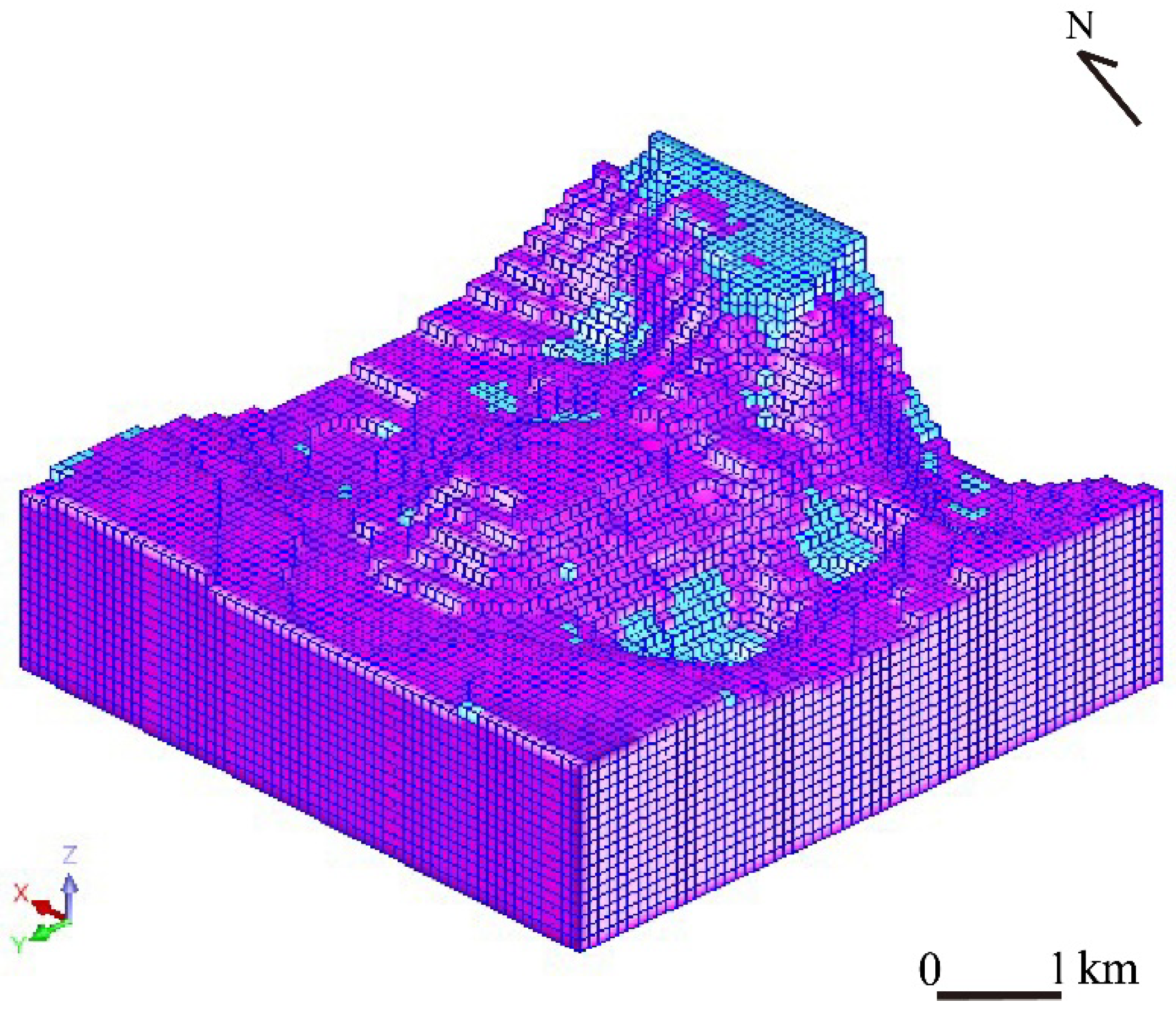
Multi-dimensional, multi-source data—including borehole data, digital elevation model (DEM), planar geological maps, and cross-sectional maps (
Table 1)—were used to construct a 3D engineering geological model with Geomodeller™ software (4.20 version). The model adopted a dual co-kriging interpolation method under stratigraphic constraints for spatial interpolation, with the spherical model selected as the variogram model, the nugget effect set to 0.05 and the range at 500 m; its grid resolution was designed as 15 × 15 × 1 m, which is consistent with the evaluation model grid. Moreover, the model was validated by a cross-validation method [
29] with borehole data at a validation ratio of 1:10, achieving a borehole matching accuracy of 98.3%. This model accurately reflects the 3D spatial distribution of strata, rock masses, and geological structures in the study area (
Figure 14).
4.3. Geological Analysis and 3D Evaluation Information Extraction
Based on 3D geological model precision requirements, integrated multi-source datasets, and 3D spatial analysis computational constraints, the evaluation model adopted a grid resolution of 15 × 15 × 1 m—ensuring systematic spatial discretization across the entire study area.
Leveraging the constructed 3D geological model (
Figure 14), 3D spatial statistical analysis methods were employed to statistically analyze parameters such as stratum lithology and volume within the development horizon of 0–10 m in the study area. The statistical results are presented in
Table 2. As indicated by the results, the stratum lithology within the range of 0–10 m is mainly composed of artificial fill, silty clay, silt, and mucky silty clay, with sand, pebble gravel, and bedrock distributed at the bottom. Among these, mucky silty clay (soft soil), silty clay (hard soil layer), and artificial fill account for the largest proportions.
Five senior engineers and geologists from the Zhejiang Geological Survey (with extensive UUS development experience in the study area) were consulted to select evaluation factors. A comprehensive 3D evaluation index system was established, encompassing four key dimensions: (1) topographic conditions, (2) geotechnical engineering properties, (3) hydrogeological conditions, and (4) unfavorable geological body conditions (
Table 3). Corresponding 3D spatial analysis methods were integrated to generate detailed 3D thematic maps, extract evaluation data, and enhance the 3D UGEE framework.
- (1)
Topographic conditions
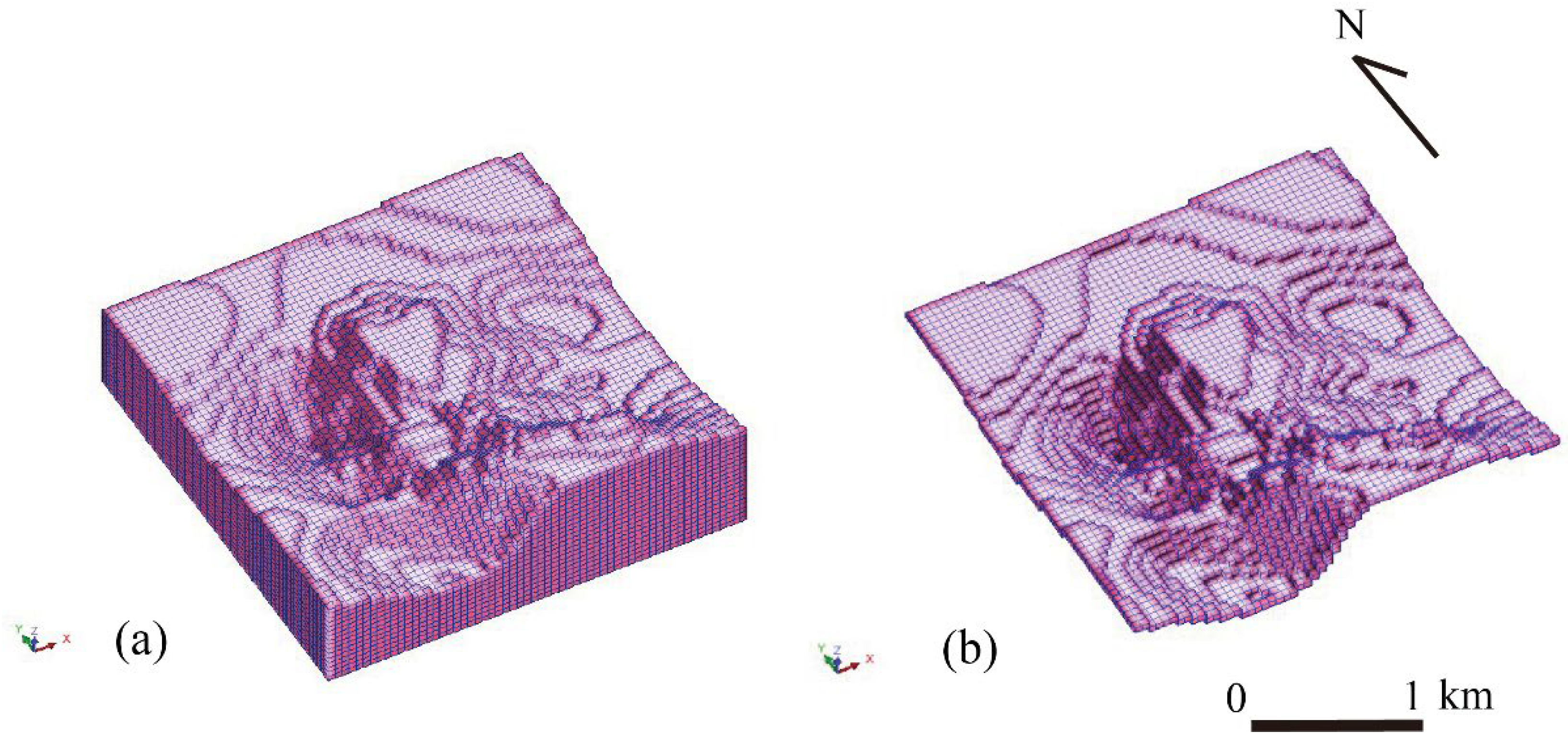
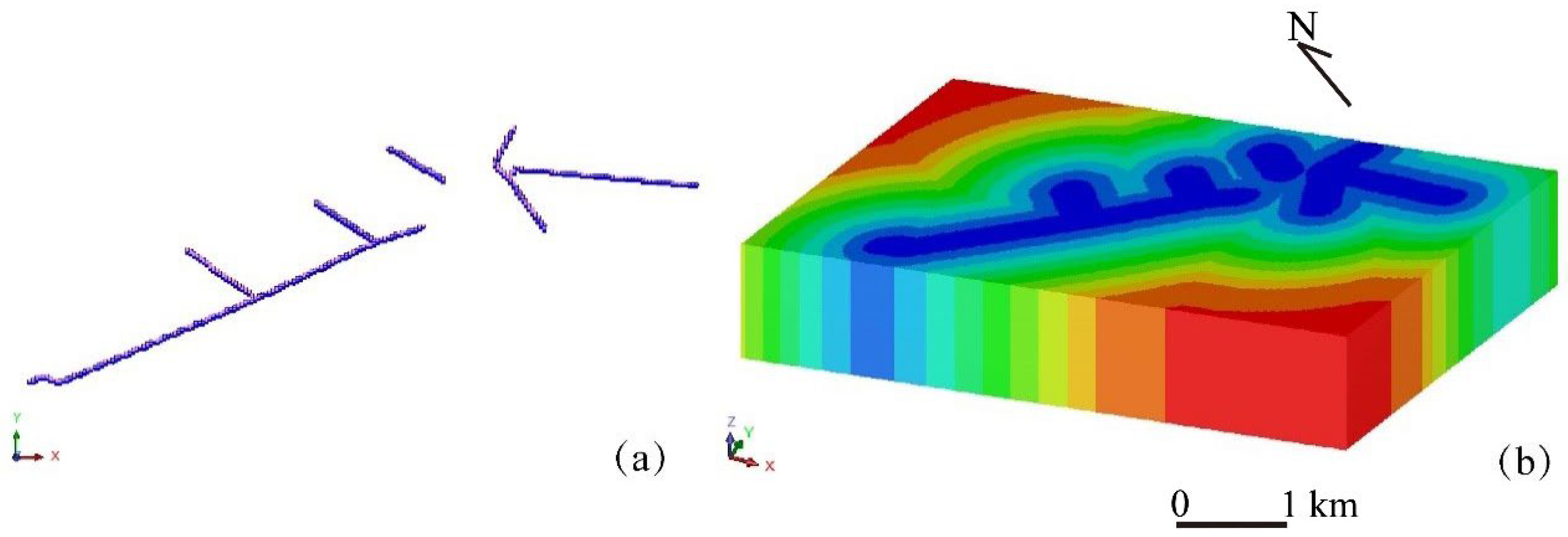
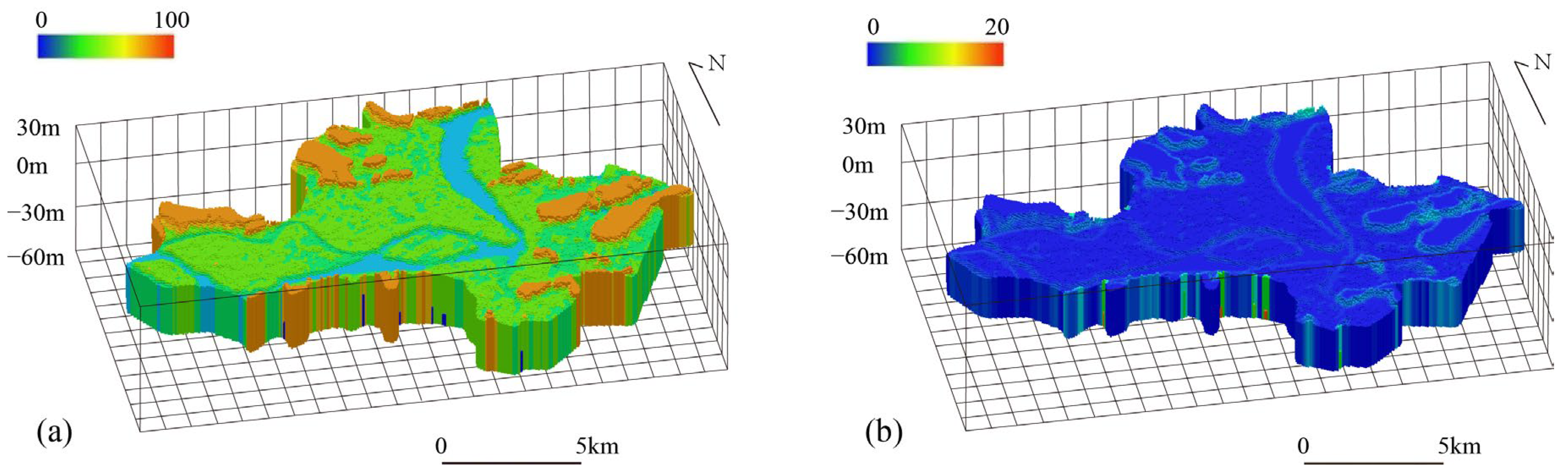
For ground elevation and terrain slope indices, 3D geological body surface analysis, 3D slope analysis, and 3D geological body depth analysis were used to quantitatively extract absolute altitude and slope values. 3D expansion analysis extended these parameters along the depth direction (10 m influence range). The results are shown in
Figure 15.
- (2)
Geotechnical engineering properties
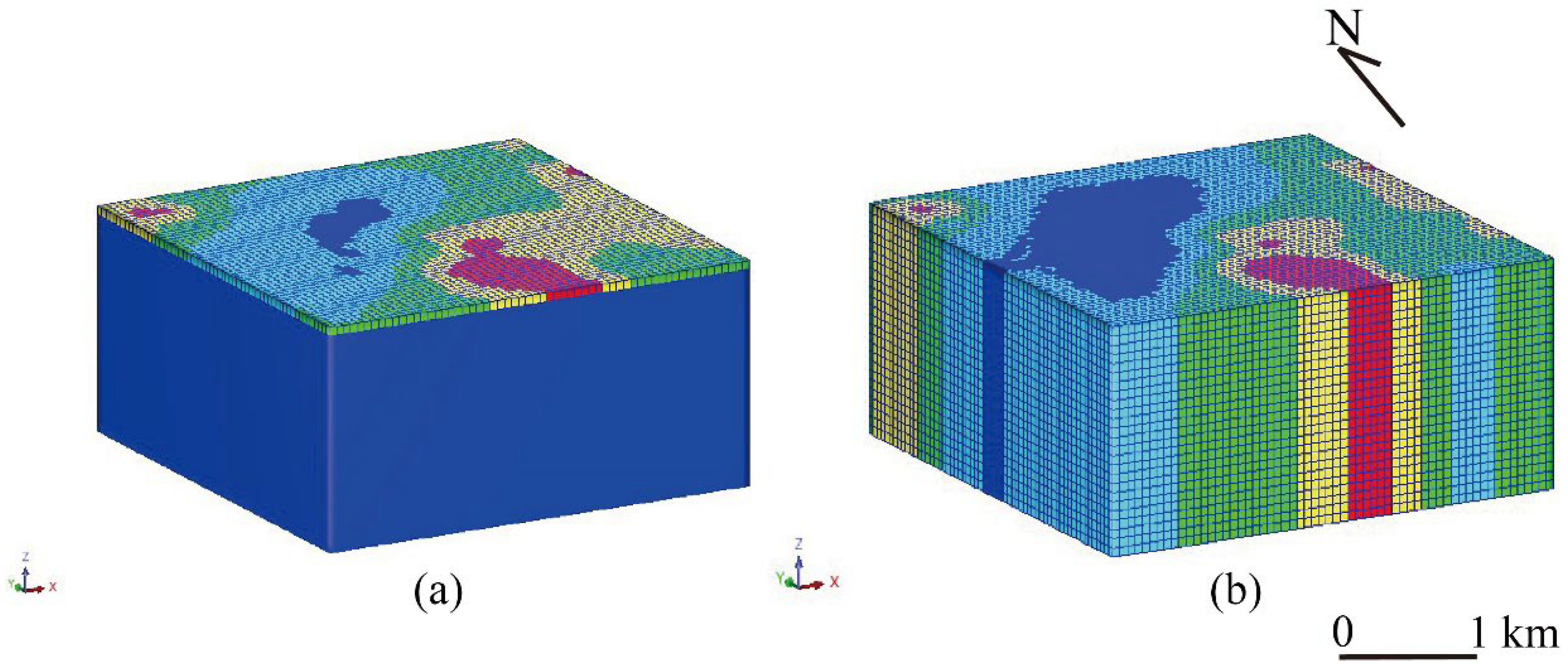
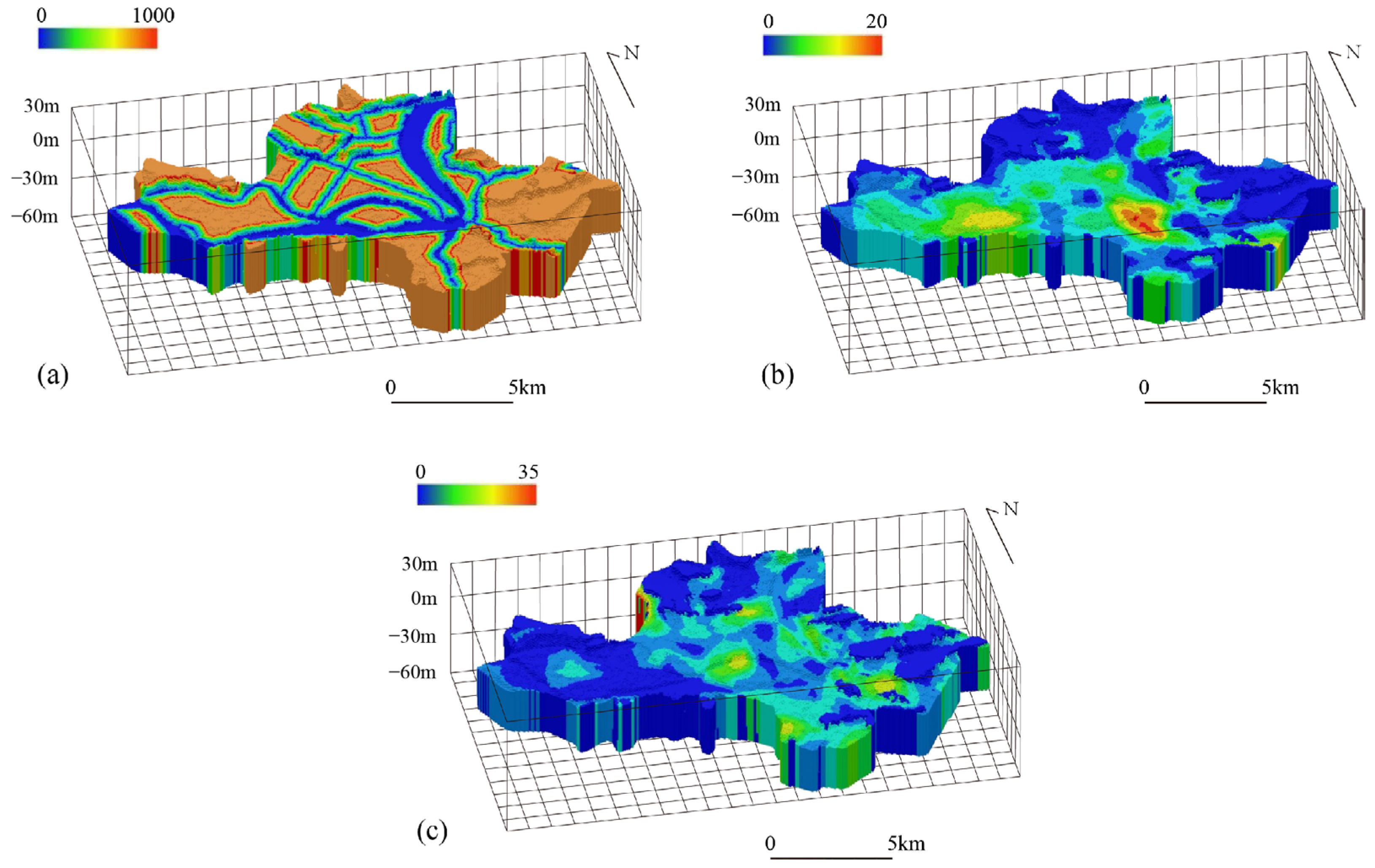
To analyze soil engineering physical and mechanical properties (compressive modulus, moisture content, shear strength), 3D spatial interpolation was used to extrapolate discrete data points across the entire spatial domain. Given limited attribute data points and continuous variation within the same stratum, 3D kriging interpolation under stratigraphic constraints [
29] was selected (
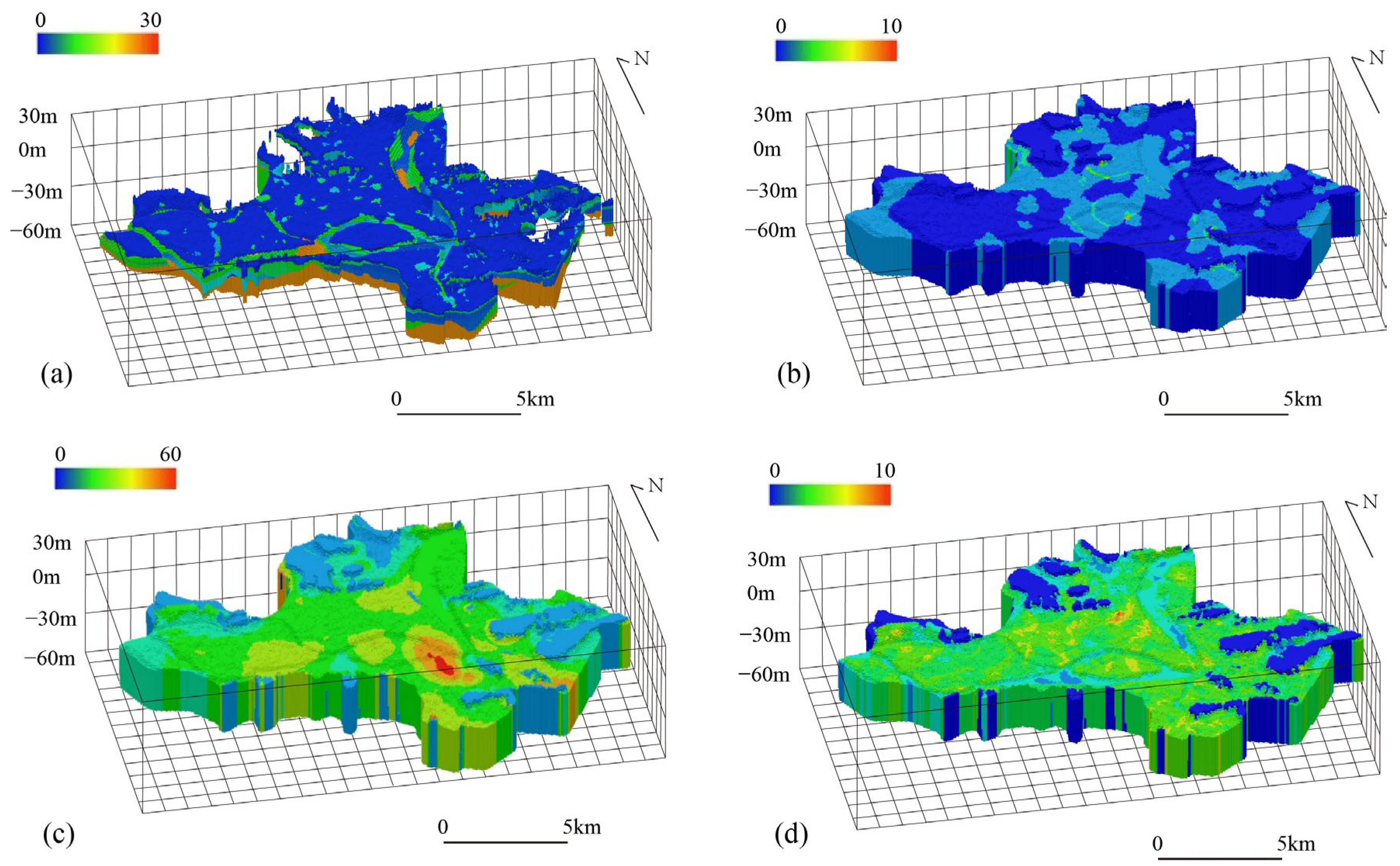
Figure 16a). Meanwhile, a cross-validation method was adopted to verify the accuracy of the 3D spatial interpolation results. The measured values and predicted interpolation values (validation ratio of 1:10) at the verification points were compared, and statistical indicator cross-validation error was calculated to quantify the interpolation deviation and stability. The calculated cross-validation error was 0.091. The results indicate that the adopted three-dimensional spatial interpolation method achieved favorable and reliable prediction accuracy in this study.
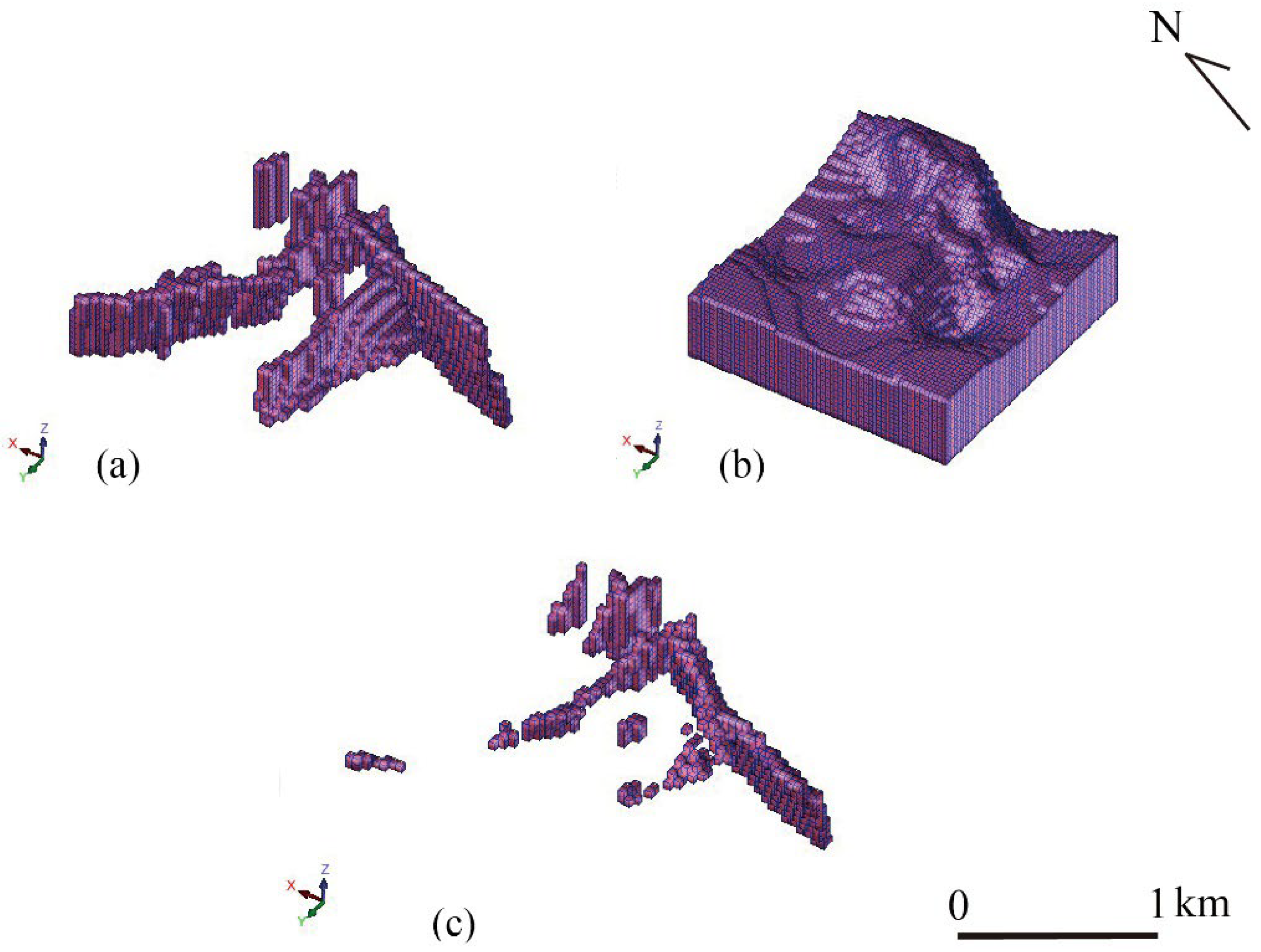
For hard soil thickness, hard soil layer elements were extracted, and global geological body thickness analysis (3D spatial statistical analysis) was applied with depth constraints to extract thickness attributes at varying development levels (
Figure 16b).
For bedrock depth, the bedrock upper surface was extracted using 3D geological body surface extraction. 3D geological body depth analysis and 3D relief analysis quantitatively derived absolute altitude and undulation parameters, which were extended along the depth direction via 3D expansion analysis (
Figure 16c).
For stratum complexity, 3D geological body complexity analysis was conducted to extract stratum count along the depth direction for different development levels (
Figure 16d).
- (3)
Hydrogeological conditions
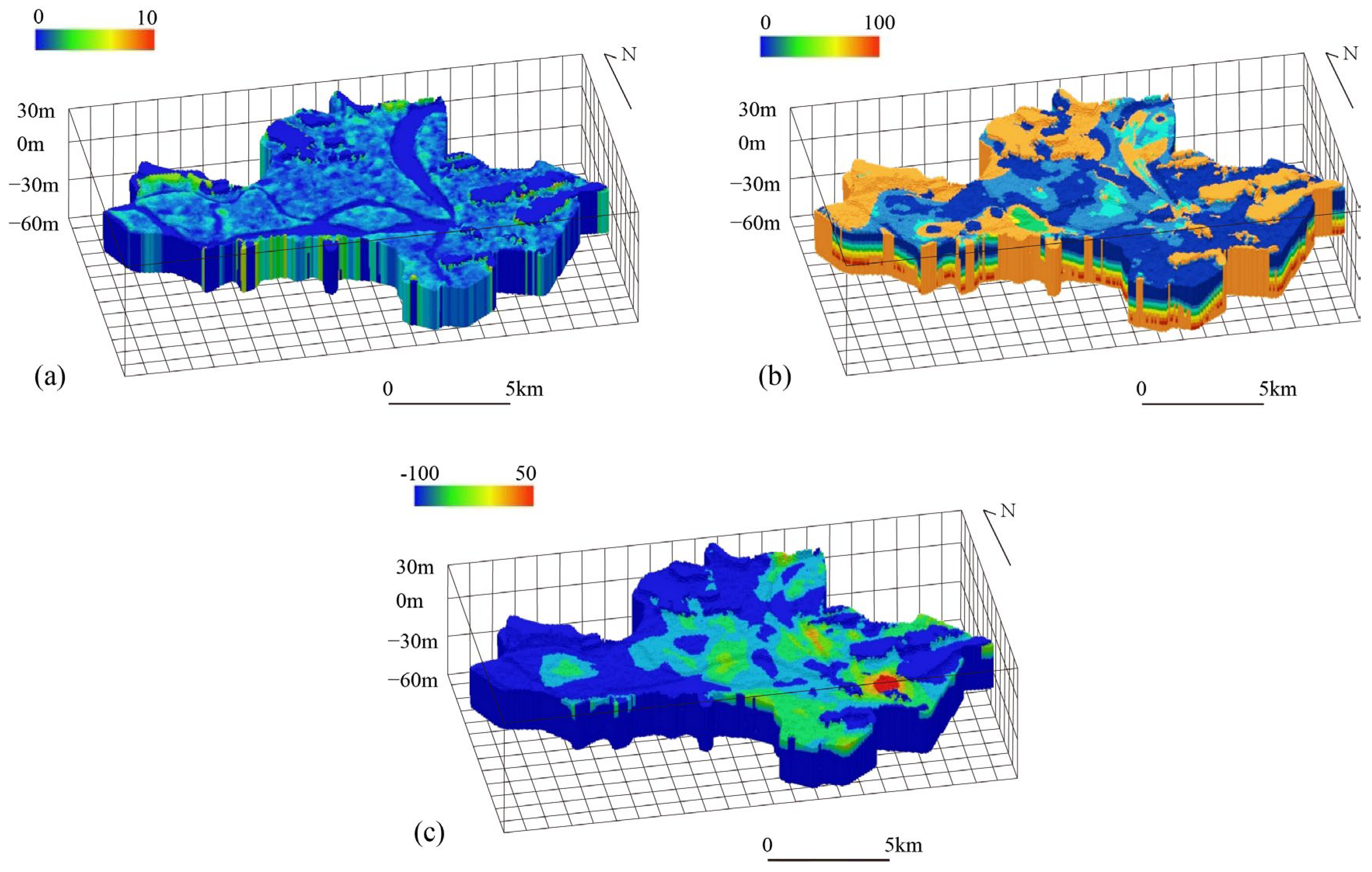
Based on the established 3D evaluation index system, the hydrogeological conditions evaluation index includes (a) the distance of the surface water, (b) the thickness of the confined aquifer, and (c) the depth of the confined aquifer. These indices can be categorized into three types based on their influence characteristics: distance range characteristics, and thickness and depth characteristics.
For the distance of surface water evaluation index, the surface aquifer was extracted from the hydrogeological 3D structural model and analyzed using the 3D distance field analysis method. The results are shown in
Figure 17a.
For the confined water thickness evaluation index, the thickness attributes of the layer were extracted from the hydrogeological 3D structural model and analyzed using the 3D thickness analysis method. The results are shown in
Figure 17b.
For the confined water depth evaluation index, the depth attributes of the layer were analyzed and extracted using the 3D depth analysis method. The results are shown in
Figure 17c.
- (4)
Unfavorable geological conditions
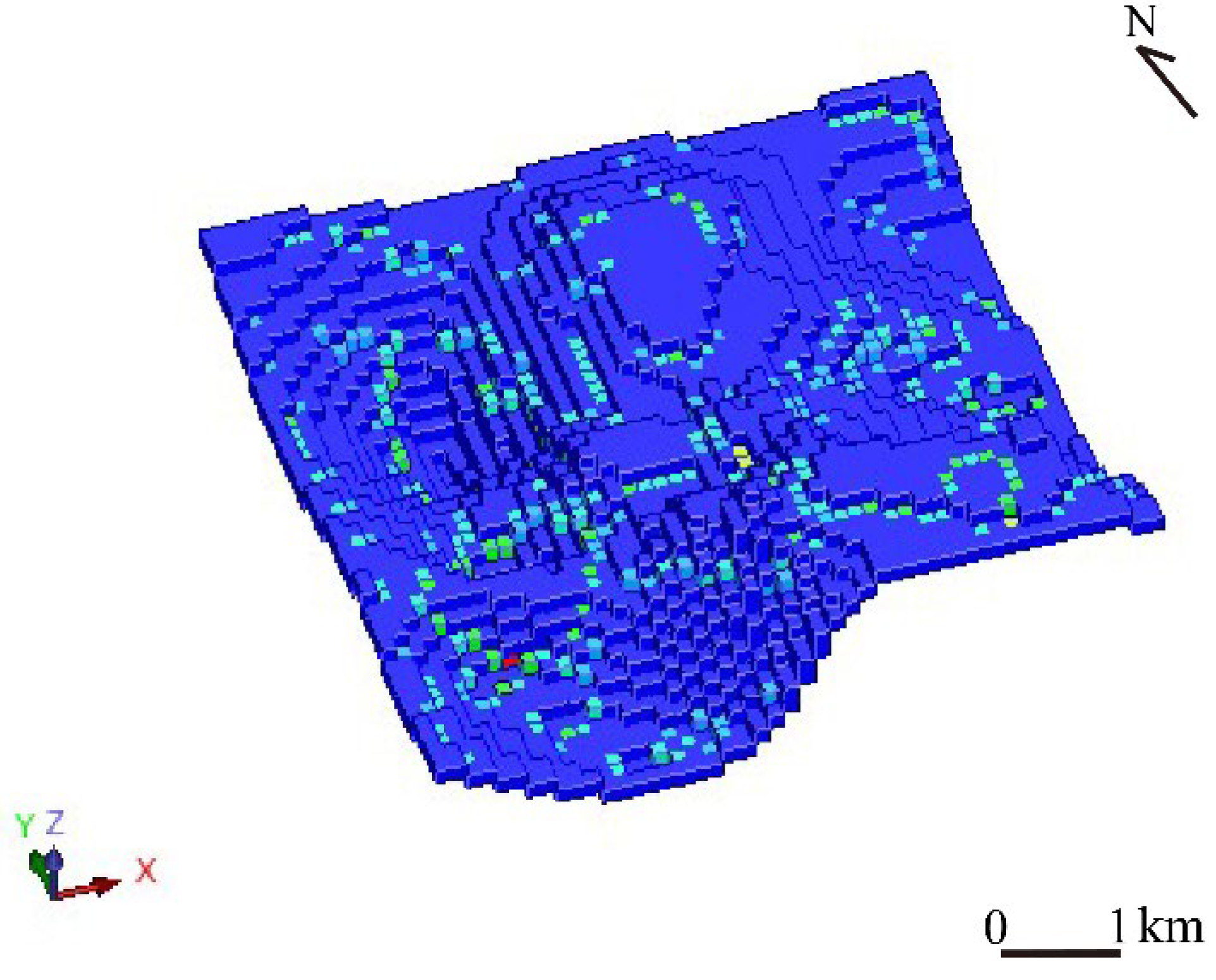
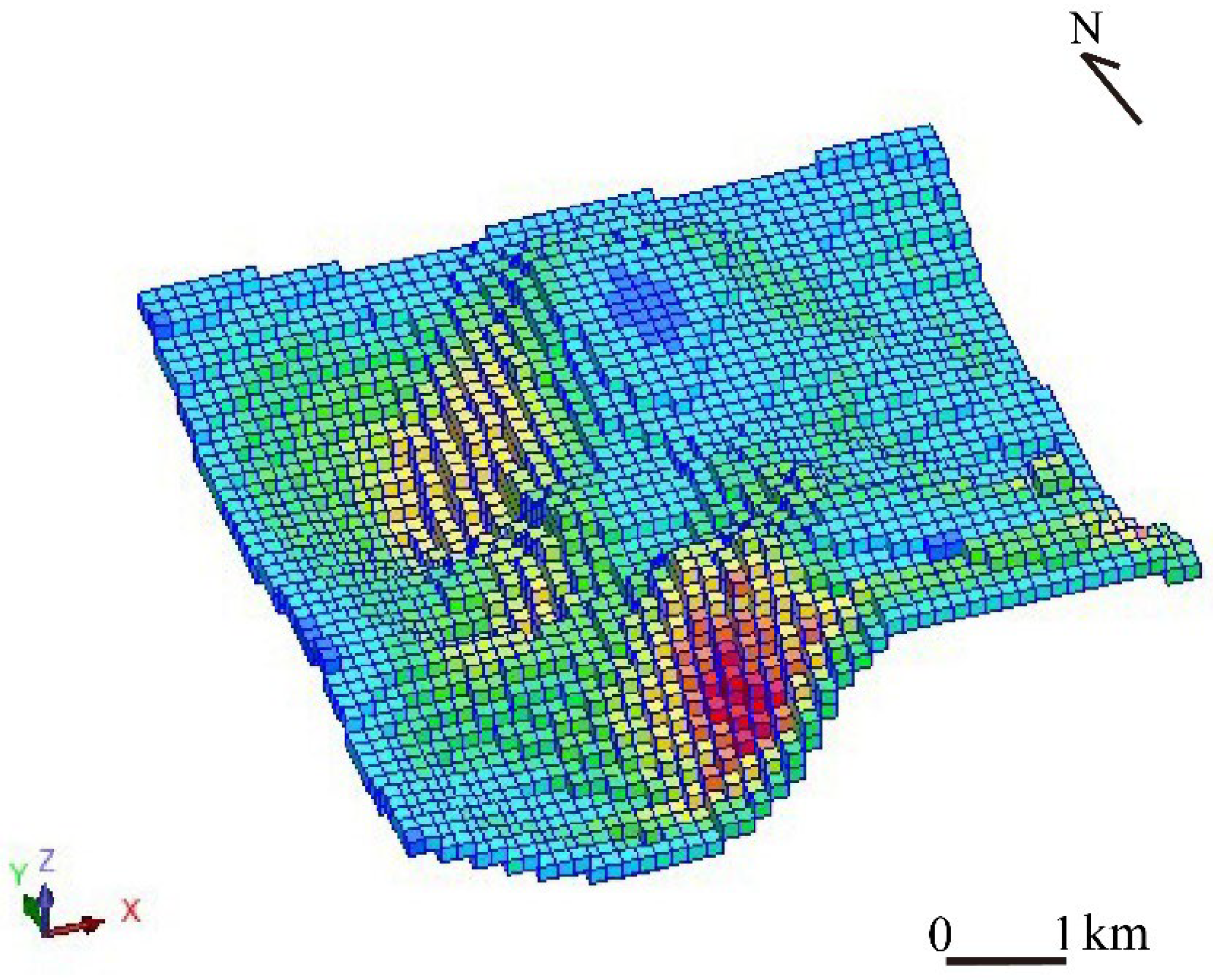
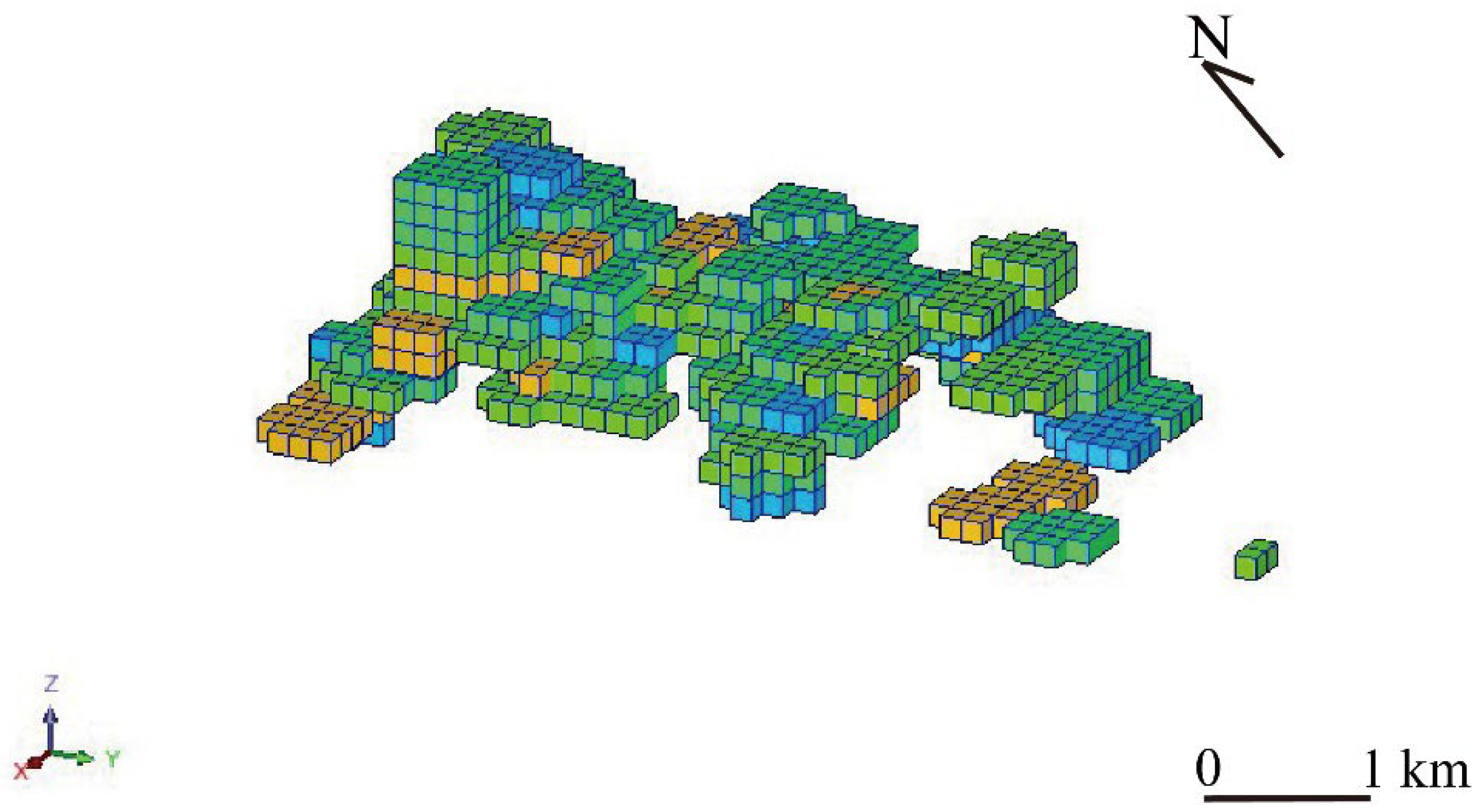
Unfavorable geological conditions included (a) the artificial fill thickness, (b) the soft soil distance, and (c) the annual land subsidence rate.
The artificial fill thickness was calculated via global geological body thickness analysis (3D spatial statistical analysis) along the depth direction, extended to shallow depths (<10 m) via expansion analysis (
Figure 18a).
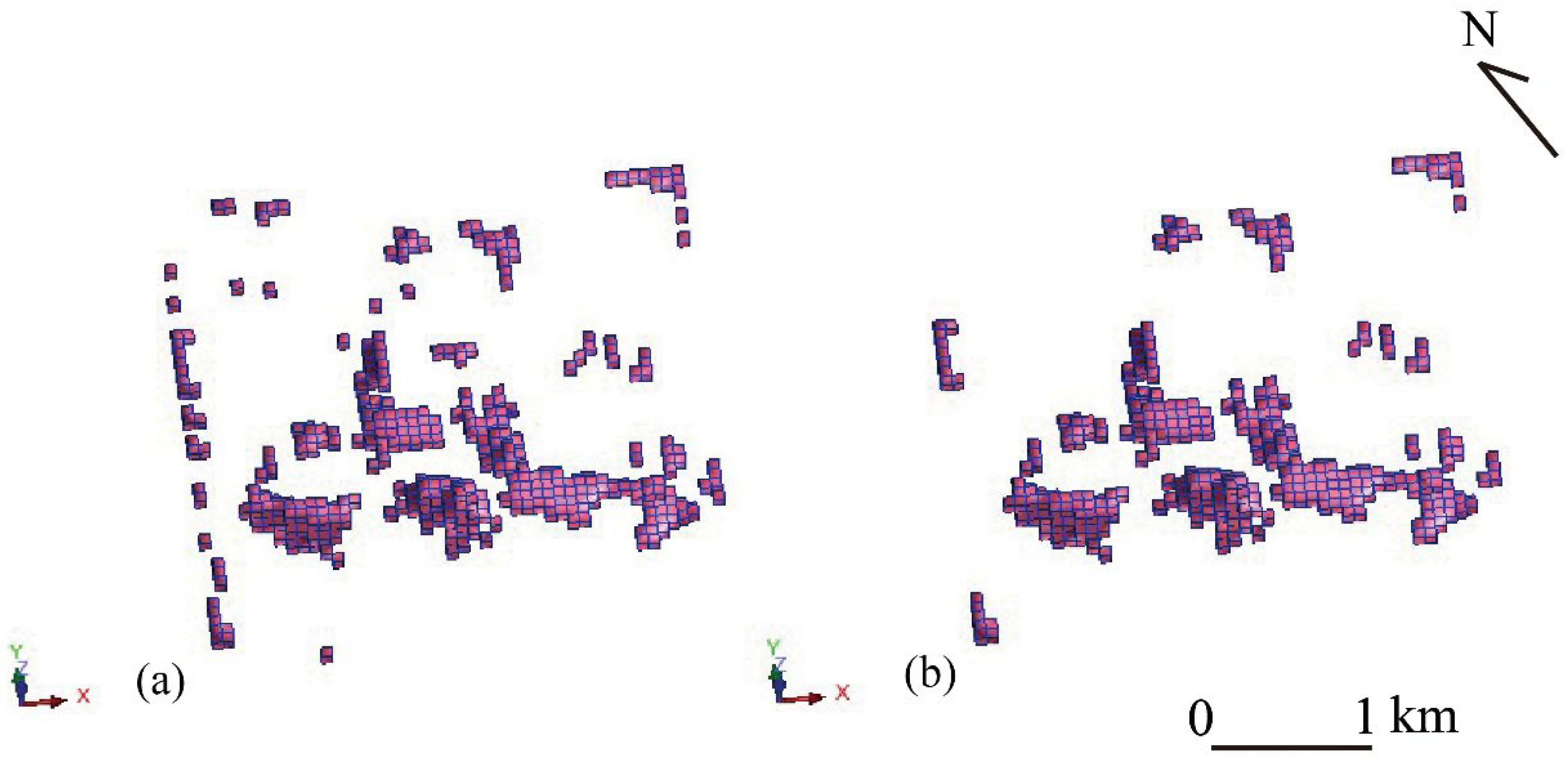
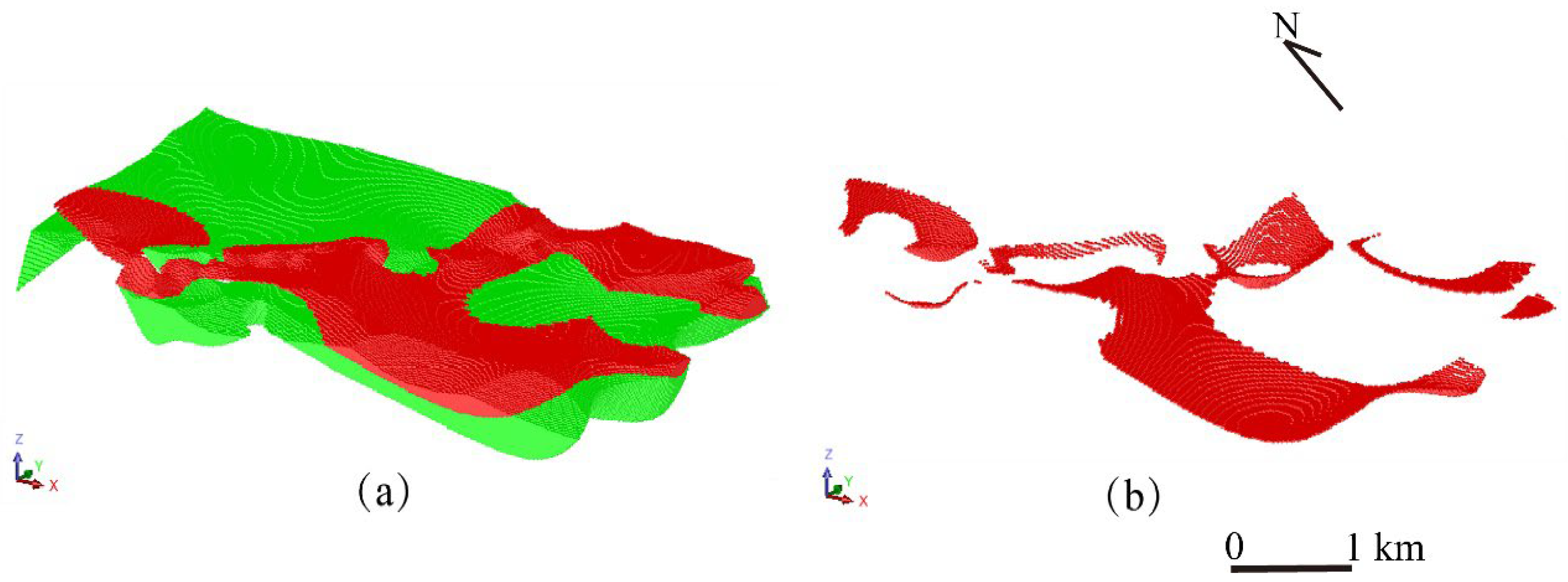
For the soft soil distance, key geological bodies were extracted for different development depths, and influence distances were calculated via 3D distance field analysis (
Figure 18b).
For the annual land subsidence rate, remote sensing-derived data were assigned to the 3D block model as spatial point data, then extended across the entire spatial domain via 3D expansion analysis (
Figure 18c).
4.4. 3D Comprehensive Evaluation
3D comprehensive evaluation primarily employs three-dimensional grid overlay analysis: the entire study area and evaluation information layers are rasterized, with each grid cell serving as the basic assessment unit. By evaluating the geological environment suitability of individual cells, a suitability grade distribution map for the entire study area is generated.
Supported by 3D thematic maps and the 3D block model, geological environment suitability values were calculated using a game theory-based combination weighting approach and an improved TOPSIS (Technique for Order of Preference by Similarity to Ideal Solution) model—generating a 3D UGEE map for the study area.
The analytic network process (ANP) was applied to calculate the subjective weights of the evaluation index. Criteria importance through intercriteria correlation (CRITIC) model improved by the coefficient of variation was applied to calculate the objective weights. The combination weights were further calculated by the game theory (Nash equilibrium model), which can coordinate the conflict and determine the consistency and compromise between subjective and objective weights. Based on the combination weights, the gray correlation analysis (GRA) model was used to refine the TOPSIS model, and combined the Euclidean distance (with the gray correlation) to construct a more reasonable closeness index. This allows the improved TOPSIS model to retain the benefit of better objectivity, while taking advantage of the gray correlation theory with little information. Relevant practical evidence supports the conclusion that the combined weighting and improved TOPSIS models can well reflect the varying 3D geological suitability and make the evaluation more robust, which facilitates better decision-making in UUS development compared with traditional methods [
18].
Subjective weights were calculated via the ANP [
34,
35], and objective weights via an improved CRITIC method [
36]. Optimal weights were determined by integrating subjective and objective weights based on game theory [
37], with combination weight coefficients of 0.471 (subjective) and 0.529 (objective) (
Table 4). Combined weights balance subjective expert judgment and objective data characteristics, enhancing evaluation reliability.
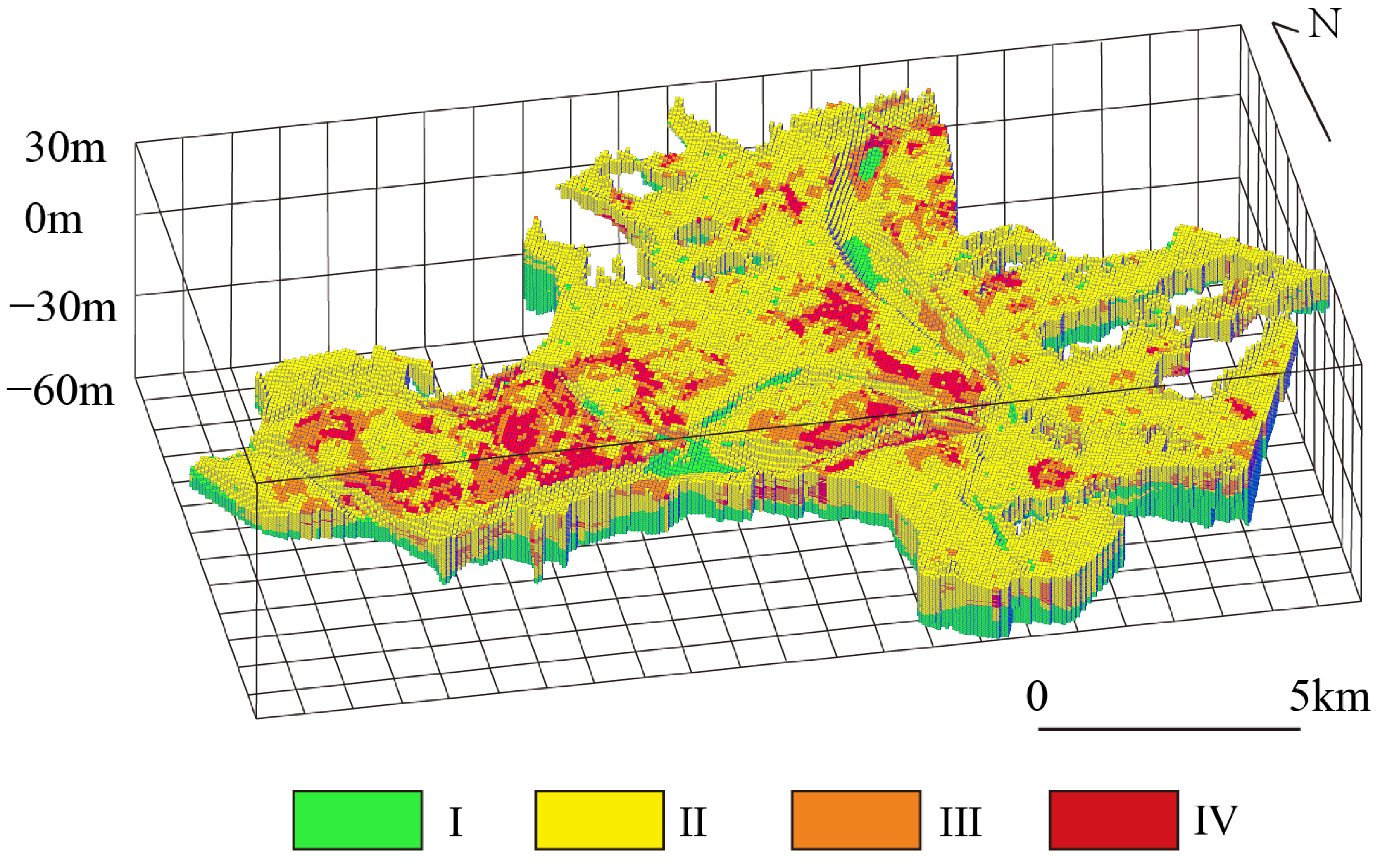
Using 3D thematic maps and combined weights, geological environment values for each cubic block were calculated via the TOPSIS model. The final 3D geological environment map of the study area is shown in
Figure 19.
4.5. 3D Result Analysis
UGEE provides a foundational basis for resource management and scientific development planning, supporting vertical stratification, spatial zoning control, and underground functional facility site selection. This study integrates geological suitability and resource potential evaluation results to explore practical applications in UUS planning and engineering construction—offering actionable insights for municipal authorities and engineering stakeholders. 3D Boolean logic analysis enables extraction of evaluation results for any depth and scenario.
- (1)
Underground space planning.
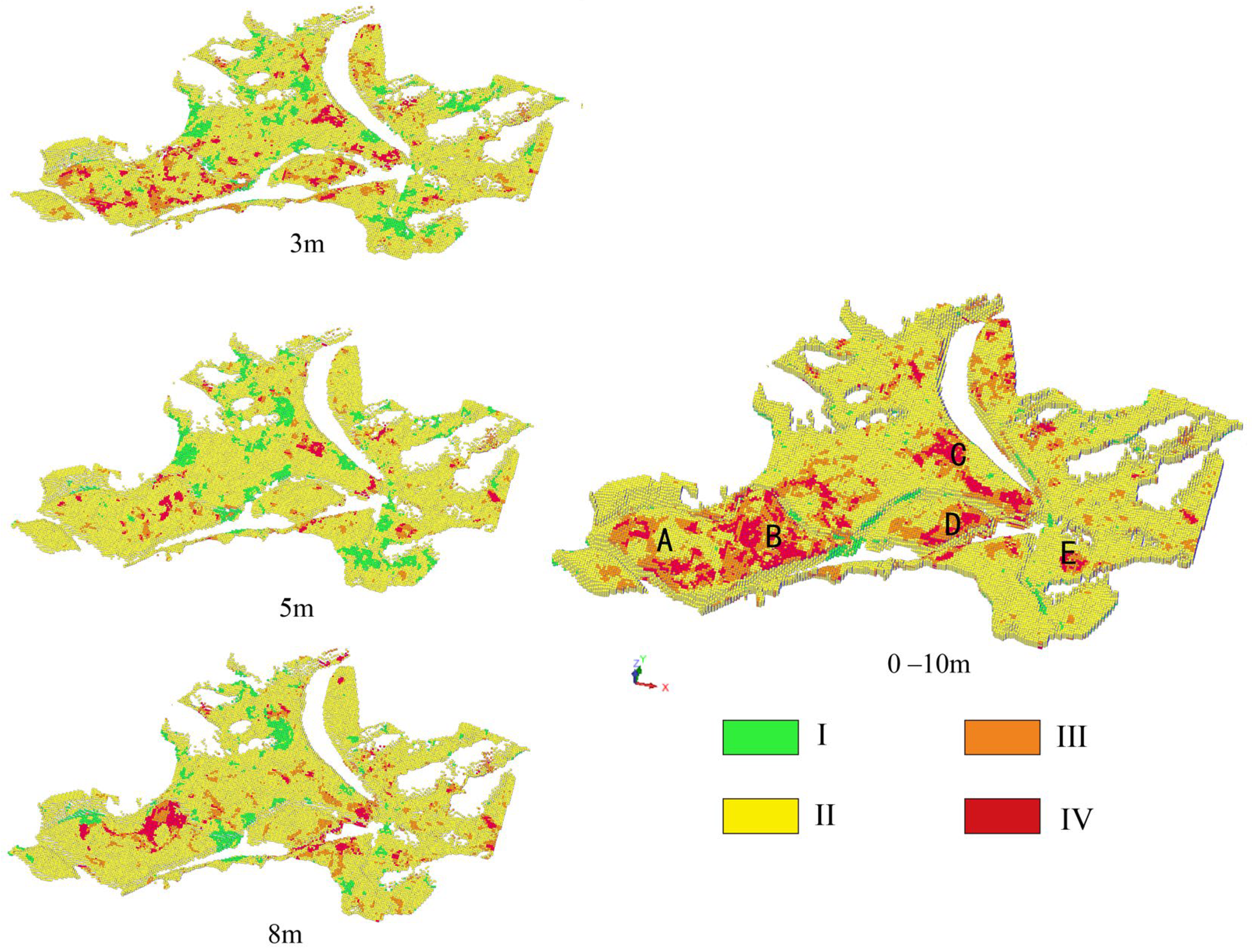
Shallow subsurface (0–10 m) analysis identified key development constraints: topographic conditions, surface water systems, phreatic layer thickness, surface fill thickness, and soft soil distribution. Geological suitability remains relatively stable within this depth range, with favorable conditions for development in most areas. Suboptimal suitability zones are concentrated near major surface water bodies (the Qiantang River and its tributaries), particularly in Areas A, B, C, D, and E (river core influence zones). These areas face constrained development potential due to compounded factors: high soft soil content, low-lying topography, and hydrogeological sensitivity. In contrast, central and eastern regions—characterized by elevated terrain, minimal soft soil impact, and distance from fluvial systems—exhibit optimal suitability for shallow UUS development and are recommended as priority areas for strategic infrastructure deployment (
Figure 20).
- (2)
Linear Engineering Site Selection Analysis.
Aligning with Sanjianghui area development needs, engineering construction recommendations for key UUS planning zones were proposed based on geological suitability assessments—providing preliminary guidance for early-stage planning (prior to detailed engineering surveys).
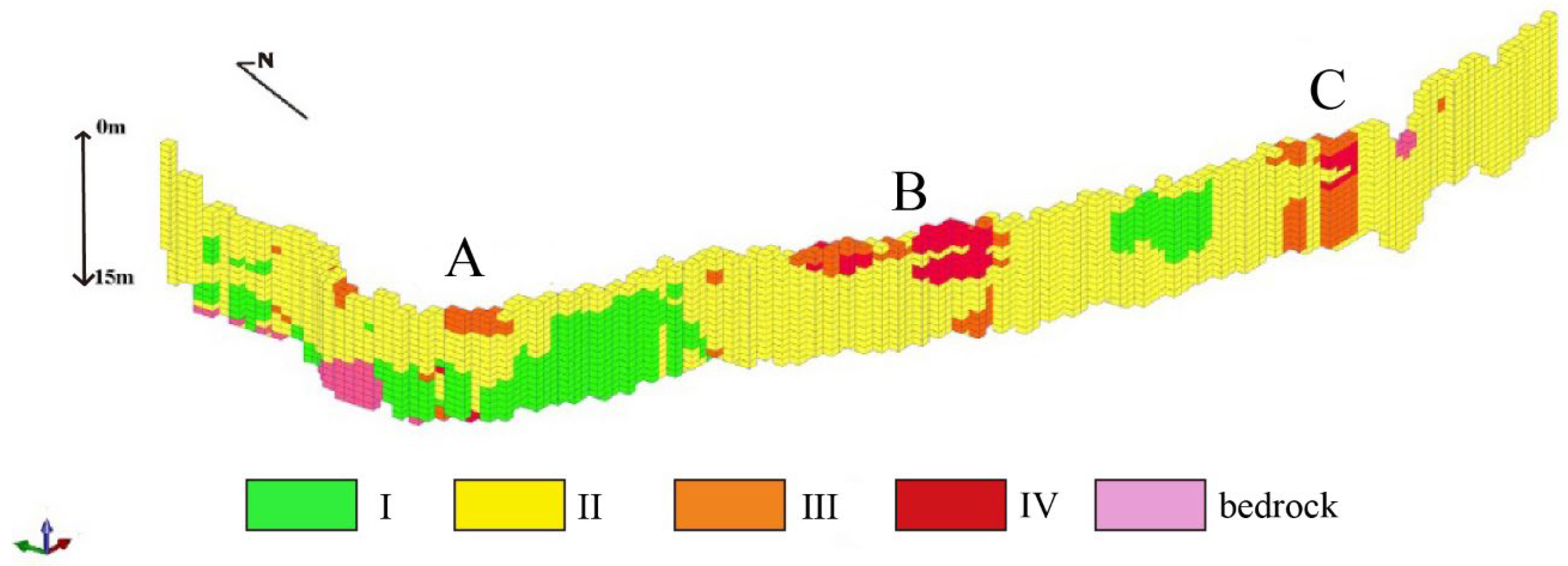
Linear underground facilities (rail transit, road tunnels, municipal utility tunnels) are primarily constructed in shallow and medium-depth spaces. The planned Metro Line 13 extension (14.5 km) was analyzed, with evaluation conducted for a construction depth of 15 m and average width of 50 m. The results indicate overall good geological suitability for the extension, with most areas classified as moderately suitable. However, localized less suitable zones exist near areas A, B, and C (
Figure 21). Based on the 3D UGEE result of the study area, we calculated the volume proportion of different risk grades in each section (
Table 5). Combined with the 3D UGEE volume proportion values and engineering geological characteristics of each risk section, we put forward quantitative and operable engineering suggestions for the design and construction of Metro Line 13 extension, including the optimization of construction methods, the control index of foundation treatment, and the design parameters of tunnel structure:
Area A: Low ground elevation and excessive surface fill thickness (0–5 m depth) constrain development. Special attention is required to prevent water ingress at entrances/exits during construction. It is recommended to adopt the open cut + sheet pile support construction method, and the depth of the artificial fill replacement is not less than the thickness of the high-risk fill layer; the anti-seepage grade of the foundation pit is designed as P10 to prevent water ingress at the entrance/exit, and the allowable settlement of the foundation is controlled within 15 mm.
Area B: A large less suitable zone (1 km horizontal extension, covering the entire shallow development space vertically). Surface layers (0–3 m) are affected by excessive fill thickness and proximity to soft soil. With increasing depth, geotechnical properties (e.g., compression modulus) deteriorate, approaching the soft soil layer—elevating construction costs. It is recommended to adopt the shield tunneling method with earth pressure balance (EPB shield), with the shield cutter head pressure set to 0.8–1.0 MPa to adapt to the soft soil layer; the pre-grouting reinforcement is carried out for the surrounding rock, the reinforcement range is 3 m outside the tunnel contour, and the uniaxial compressive strength of the reinforced soil is required to be not less than 2.0 MPa; the tunnel segment thickness is increased to 35 cm to improve structural stability.
Area C: Less suitable and moderately suitable zones extend 500 m horizontally, covering the entire metro construction layer. Surface constraints include ground elevation and fill thickness; deeper constraints include surface water systems, confined aquifer depth, and soft soil. Future development must address foundation instability, uneven settlement, and excavation water gushing. It is recommended to adopt the underground excavation method with the center diaphragm method for construction, as the advance support adopts small conduit grouting; the distance between the tunnel structure and the confined aquifer is controlled to be not less than 8 m to avoid water gushing, and the dewatering depth of the aquifer is set to 10 m below the tunnel invert during construction.
These findings highlight the need for targeted planning and mitigation measures to address geological challenges in specific zones.
Lastly, to validate the reliability of the 3D evaluation results, an engineering practical validation approach was implemented in this study. We added a zone-based practical validation by comparing the model’s 3D suitability evaluation results with the actual engineering geological conditions of typical zones in the study area (e.g., the Qiantang River nearshore zone, central plain zone) and the construction experience of existing underground projects (e.g., the Hangzhou Metro Line 13 extension). We quantified the consistency ratio between the model’s “grade III/grade IV” zoning and the actual high-risk engineering zones (96.5%), verifying that the evaluation results effectively identify geological constraints for practical UUS development.
5. Discussion
5.1. Theoretical Implications of 3D Spatial Analysis Methodology
This study enriches the theoretical system of 3D urban underground space geological environment evaluation (3D UGEE) by integrating and innovating 3D spatial analysis methods. Traditional 2D evaluation methods are constrained by planar data structures, failing to fully capture the three-dimensional interdependencies between underground geological environments and space development. In contrast, the proposed framework—encompassing 3D spatial statistical analysis, 3D mathematical morphological analysis, 3D surface morphology analysis, 3D distance field analysis, and 3D spatial interpolation—establishes a quantitative bridge between multidimensional geological data and 3D evaluation indices.
Notably, the normalized geological complexity index (Fi) addresses the longstanding challenge of quantifying stratigraphic structural complexity in 3D space. Unlike previous studies that only qualitatively describe geological complexity, this index quantifies the relative complexity of stratigraphic units by normalizing stratum counts, enabling objective comparison of geological constraints across different depth ranges and spatial regions. Additionally, the integration of mathematical morphology (e.g., erosion, dilation, opening/closing operations) for 3D uplift/depression extraction and spatial filtering provides a robust technical approach for characterizing complex geological body morphologies. This fills the gap in traditional methods that struggle to handle discrete, noise-contaminated geological data, improving the accuracy of extracting morphological features such as soft–hard stratum interfaces.
The improved 3D signed Euclidean distance transformation adopted in distance field analysis optimizes computational efficiency by converting global searches into local scans, addressing the scalability issue of conventional Euclidean distance algorithms in large-scale 3D block models. This innovation enables rapid calculation of influence ranges for key constraint factors (e.g., soft soil layers, surface water bodies), laying a foundation for efficient 3D comprehensive evaluation. Collectively, these methodological advancements promote the transition of UGEE from qualitative description to quantitative, fine-grained analysis, expanding the application boundaries of 3D geospatial technology in underground space planning.
5.2. Practical Value for UUS Development
The case study in Hangzhou demonstrates the strong practical applicability of the proposed framework, providing actionable insights for three core aspects of UUS development: vertical stratification planning, spatial zoning control, and linear engineering site selection.
In vertical stratification, the 3D evaluation results clarify the suitability differences across shallow (0–10 m), medium (−10 to −30 m), and deep (>−30 m) layers. For the shallow layer, constraints such as surface water proximity and soft soil distribution are accurately identified, guiding the prioritization of central and eastern regions for infrastructure development (e.g., metro stations, utility tunnels). This targeted planning avoids blind development in high-risk areas (e.g., river core influence zones) and optimizes the allocation of limited underground resources. For medium and deep layers, the quantification of bedrock depth, confined aquifer characteristics, and geological complexity provides a scientific basis for reserving strategic space and designing deep underground projects (e.g., energy storage facilities, large-scale parking complexes).
In linear engineering site selection—exemplified by the Metro Line 13 extension—the framework effectively pinpoints localized geological risks (e.g., excessive artificial fill thickness in Area A, soft soil layer proximity in Area B). These findings enable engineers to proactively adopt mitigation measures, such as adjusting tunnel alignment, strengthening foundation treatment, or optimizing excavation methods, thereby reducing construction costs and geological disaster risks (e.g., ground subsidence, water gushing). Compared to traditional 2D geological surveys, the 3D evaluation approach offers a more holistic understanding of subsurface conditions, supporting more informed decision-making in the early planning stages.
Furthermore, the integration of game theory-based combination weighting and the improved TOPSIS model enhances the reliability of comprehensive evaluation results. By balancing subjective expert judgment (ANP method) and objective data characteristics (improved CRITIC method), the framework avoids biases from single weighting approaches, ensuring that evaluation outcomes align with both practical engineering experience and geological data. This objectivity is critical for gaining stakeholder trust and facilitating the implementation of UUS planning schemes.
5.3. Results Comparison
We carried out a targeted comparative analysis with the findings of representative authors in the field of 3D UGEE [
20,
27,
28,
29] from three aspects: evaluation method, evaluation results, and practical application effect, and the key comparison contents are as follows:
- (1)
Evaluation method comparison: Compared with [
20] and [
29], who only used basic 3D distance field analysis and Boolean operations, the 3D spatial analysis method system constructed in this study can extract faster and richer information from the evaluation index and increased the scope of the evaluation index described.
- (2)
Evaluation results comparison: The geological complexity index (Fi) proposed in this study quantifies the 3D geological structural complexity for the first time, while the existing research [
18] only used qualitative descriptions (e.g., “high complexity”, “low complexity”). The Fi index of this study has a high correlation (R
2 = 0.87) with the engineering construction difficulty coefficient of the existing research, which verifies the rationality of the index.
- (3)
Practical application effect comparison: The practical application effect of the framework in this study (e.g., the coincidence degree of high-risk zone identification with actual engineering is 96.5%) is higher than that of the traditional 3D UGEE framework. In the linear engineering site selection, the framework of this study can reduce the early construction risk and the construction cost compared with the existing planning framework.
5.4. Future Research Directions
Despite its contributions, this study has several limitations that warrant future exploration. First, the 3D spatial analysis methods rely heavily on high-quality 3D geological models, which require extensive multi-source data (e.g., borehole logs, geophysical data). In regions with limited data availability (e.g., old urban areas with sparse borehole coverage), the accuracy of the 3D model may be compromised, affecting the reliability of the evaluation results. Future research could explore integrating machine learning techniques (e.g., deep learning-based geological interpolation) to supplement sparse data and improve model robustness in data-scarce environments.
Second, the current evaluation index system focuses on topographic, geotechnical, hydrogeological, and unfavorable geological conditions, but lacks consideration of dynamic factors such as long-term geological deformation (e.g., slow crustal movement) and human activity impacts (e.g., long-term groundwater extraction). These dynamic factors can alter the geological environment over time, reducing the temporal validity of static evaluation results. Incorporating time-series data (e.g., InSAR-derived land subsidence trends, long-term groundwater level monitoring data) into a dynamic 3D UGEE framework would enable real-time updates of evaluation results, better supporting adaptive UUS planning.
Finally, the case study is limited to a marine sedimentary plain in Hangzhou, and the applicability of the framework in other geological settings (e.g., karst regions, mountainous cities) remains untested. Karst areas, for instance, face unique challenges such as sinkholes and groundwater leakage, which require additional evaluation indices and specialized 3D spatial analysis methods. Expanding the framework to diverse geological contexts and validating its effectiveness through multi-case studies would enhance its generalizability and promote its widespread adoption.