


Abstract
Unlined pressure tunnels and shafts are widely employed in hydropower projects where the surrounding rock mass is required to sustain the internal water pressure. Their hydraulic stability is governed by complex interactions among the three-dimensional in situ stress state, discontinuity geometry, rock mass properties, and operational water pressure. Conventional deterministic design approaches address these factors implicitly and provide limited information on the likelihood of hydraulic failure mechanisms, such as hydraulic jacking, hydraulic fracturing, and shear slip of discontinuities. This paper presents a probabilistic framework for assessing the hydraulic stability of unlined pressure tunnels and shafts, in which the governing failure mechanisms are explicitly formulated as limit states and key sources of uncertainty are systematically represented. The full three-dimensional stress tensor is rotated onto potential discontinuity planes to evaluate effective normal and shear stresses, and reliability-based methods are employed to quantify probabilities of failure. The methodology is demonstrated through a representative case study of a failed unlined pressure tunnel reflecting typical geological and stress conditions encountered in hydropower projects. The results show that variability in stress orientation and discontinuity characteristics has a strong influence on hydraulic stability and that commonly used deterministic criteria may not fully capture the associated failure risk.
1. Introduction
Unlined pressure tunnels/shafts are widely applied in hydropower projects because they offer significant economic and construction advantages compared with fully lined alternatives. Their safe performance relies on the ability of the surrounding rock mass to sustain internal water pressure without the development of hydraulic instabilities such as hydraulic jacking, hydraulic fracturing, and shear-induced dilation along discontinuities [1,2,3,4]. In practice, however, the performance of unlined pressure tunnels is governed by complex interactions between the in situ stress state, rock mass properties, internal water pressure during operation, tunnel geometry, joint characteristics, and orientation of pre-existing discontinuities [5,6].
State-of-the-art design practice for unlined pressure tunnels/shafts remains largely deterministic, following principles originally established during the early phase of Norwegian hydropower development [1]. The Norwegian criteria (Figure 1) for confinement, which are famously used design criteria for unlined pressure tunnels/shafts, express stability in terms of a required minimum vertical rock cover (h) and the shortest distance to a free surface (L) [1,2,7]. These principles were later modified and further developed by several authors, including [1,8], who postulated that an unlined tunnel is safe against hydraulic jacking (opening of pre-existing discontinuities) and hydraulic fracturing (creating new fractures on intact rock) only when the minor principal stress (σ3) exceeds the static water pressure (Pw) within the tunnel.
Figure 1.
Norwegian criterion for confinement (rule of thumb) for the design of unlined pressure tunnels and shafts (modified after [2]). Confinement refers to the condition in which the in situ rock stress is sufficient to prevent hydraulic opening of discontinuities or initiation of new fractures under internal water pressure, relying entirely on the natural stress field generated by the overlying and surrounding rock mass. The gray rock mass represents competent, massive to moderately jointed crystalline rock typical of Norwegian hydropower environments.
The rule-of-thumb approach, as illustrated in Figure 1, has proven practical and often conservative for many Norwegian and international hydropower projects [1,2,7,9]. Deterministic criteria such as the Norwegian criterion for confinement provide limited insight into the probability of hydraulic instability mechanisms, including hydraulic jacking/fracturing in all cases [5]. Furthermore, several well-documented case histories of failed unlined pressure tunnels/shafts demonstrate that adverse hydraulic instability can occur even when conventional deterministic criteria, like the Norwegian confinement criterion, appear to be satisfied [2,5,10]. Figure 2 shows that the empirical confinement indicators FoS1 = h′/h and FoS2 = L′/L are not universally reliable predictors of hydraulic performance in unlined pressure tunnels. Although FoS values greater than unity are commonly assumed to ensure sufficient confinement, several projects have experienced hydraulic failure or major leakage despite satisfying one or both criteria, including Askara, Byrte, Bjerka, Bjørnstokk, Fossmark, and Holsbru.
Figure 2.
Comparison of performance of unlined pressure tunnels/shafts plotted against standard confinement factors of safety based on the Norwegian rule of thumb.
Conversely, tunnels such as Herlandfoss-C (FoS1 ≈ 0.7, FoS2 ≈ 0.65) and Svelgen-B (FoS1 ≈ 0.94, FoS2 ≈ 0.76) have operated without reported hydraulic problems despite FoS values below unity (Figure 2). The broad scatter in observed performance for similar FoS1 and FoS2 combinations indicates that geometric confinement ratios alone are insufficient to distinguish between stable and unstable cases. Documented failures of unlined pressure tunnels and shafts include excessive leakage, hydraulic jacking, and hydraulic fracturing, and in some cases surface deformation or landslides [2,3,11,12,13]. These observations highlight the limitations of purely deterministic design.
A fundamental challenge in the design of unlined pressure tunnels/shafts is the presence of unavoidable uncertainty [14,15]. As emphasized by [16,17] and later summarized by [18], uncertainty in rock engineering arises from spatial variability of rock mass, measurement errors, model uncertainty, and incomplete information and cannot be eliminated through increased investigation alone. Instead, uncertainty must be explicitly described and incorporated into analysis and decision-making [19]. Compared with the previously mentioned deterministic approach, probabilistic analysis can systematically evaluate the impact of the uncertainties of input variables [20,21]. The probabilistic approach has been successfully applied to rock slope stability [22,23] and rock mass quality evaluation [24]. It has also been applied in water leakage assessments in tunnels [15] with a major focus on estimating the volume of water loss rather than on formulating hydraulic instability mechanisms as explicit limit states and quantifying the probability that these mechanisms are activated. The challenge of managing internal fluid pressure against in situ stress and rock mass discontinuities is not unique to hydropower engineering. Similar pressure–stress interactions govern hydraulic fracturing behavior in fossil fuel reservoirs and emerging energy systems [25,26].
However, most of the existing design frameworks for unlined pressure tunnels/shafts do not explicitly link uncertainty in stress orientation, rock mass strength, and joint properties to the probability of hydraulic jacking/fracturing or shear-induced instability. This represents a gap in the state-of-the-art unlined pressure tunnel/shaft design, particularly given the potentially severe consequences of water leakage or hydraulic failure in the headrace system of hydropower schemes. This manuscript presents a probabilistic framework specifically addressing the hydraulic stability of unlined pressure tunnels/shafts, which is the risk of water loss through hydraulic jacking, hydraulic fracturing, and shear-induced slip along pre-existing discontinuities under operational water pressure. The framework is not intended to address structural self-supporting capability or rock support design, which are governed by separate mechanical criteria and are not under the scope of this study.
The approach is based on mechanical criteria for hydraulic jacking, hydraulic fracturing, and shear slip of discontinuities, in which the full stress tensors are rotated onto potential discontinuity planes to evaluate effective normal and shear stresses. Uncertainty in input parameters is represented using probabilistic distributions, and reliability-based methods are employed to estimate failure probabilities associated with different instability mechanisms. The proposed framework enables direct comparison with conventional deterministic design criteria and provides a rational basis for risk-informed design of unlined pressure tunnels, consistent with the broader evolution of uncertainty treatment in rock engineering.
2. Hydraulic Failure Mechanisms, Uncertainty, and Limit State for Unlined Pressure Tunnel/Shaft Design
Hydraulic failure in tunnels and shafts refers to rock mass instability induced by excessive water pressure, leading to the activation of pre-existing discontinuities through mechanisms such as hydraulic jacking, shear failure, or combinations thereof [27,28]. In addition, hydraulic failure may also occur through hydraulic fracturing, in which new tensile fractures are initiated. The hydraulic stability of unlined pressure tunnels and shafts is primarily governed by the interaction between internal water pressure (Pw), the in situ stress state along the tunnel and shaft alignment, and the mechanical and hydraulic characteristics of rock mass discontinuities [2,4,6,29]. Hydraulic failure of pressure tunnels and shafts can result in excessive water leakage into the surrounding rock mass, potentially causing serious damage to nearby infrastructure and necessitating costly rehabilitation measures within the affected tunnel [10,30].
2.1. Hydraulic Failure Mechanisms Associated with Unlined Pressure Tunnels/Shafts
2.1.1. Hydraulic Jacking and Hydraulic Fracturing
Hydraulic jacking is the opening of pre-existing discontinuities in the rock mass, such as joints, fractures, foliation planes, or weakness zones, when the internal water pressure (Pw) exceeds the effective normal stress (σn) acting across these planes [5,11,31]. In an unlined pressure tunnel/shaft, water pressure from static head acts directly on the discontinuities that intersect or are hydraulically connected to the tunnel boundary. When the water pressure acting on a rock fracture exceeds the normal stress across the fracture, this leads to fracture opening, causing increased hydraulic conductivity and enhanced fluid flow into the surrounding rock mass [5,6].
Figure 3 presents a detailed conceptual illustration of hydraulic jacking around an unlined pressure tunnel/shaft in a jointed rock mass. Excavation results in the formation of an excavation damaged zone (EDZ) immediately surrounding the tunnel, where rock mass properties are degraded, followed by a stress redistribution zone (SRZ) in which stresses are altered but the rock remains largely intact [32,33,34]. Beyond this SRZ region, the in situ stress field is recovered. Internal water pressure (Pw), governed by the static head H, acts radially on the tunnel boundary and is transmitted into intersecting pre-existing joints (Figure 3), which in many cases persist beyond the SRZ in the in situ zone. According to [35], the rock stress measurement in a good-quality homogeneous rock mass in Norway showed that the stresses in the in situ condition reach from the tunnel contour to within approximately one tunnel diameter. Along with that, one of the fundamental prerequisites for the safe hydraulic performance of unlined pressure tunnels is the quality of the excavation contour. Mechanized tunneling (TBM) produces smooth, near-circular profiles with a thin, well-defined EDZ, which is generally favorable for unlined applications. In contrast, Drill and blast (D&B) excavation introduces blast-induced contour damage, irregular profiles, and a larger EDZ [36].
Figure 3.
Conceptual schematic illustration of hydraulic jacking phenomena around an unlined pressure tunnel or shaft.
As represented in Figure 3, hydraulic jacking occurs only when the effective normal stress acting on a joint plane σn′ is reduced below the applied water pressure (σn′ < Pw), leading to joint opening and potential leakage. Conversely, where the effective normal stress exceeds the water pressure (σn″ > Pw), joint opening is inhibited, and jacking does not occur (Figure 3). The figure emphasizes that hydraulic jacking is primarily controlled by the interaction between water pressure, the in situ zone (beyond stress redistribution zone), and joint orientation, rather than by excavation damage alone.
In addition to opening/jacking of pre-existing discontinuities, hydraulic failure of unlined pressure tunnels also involves the initiation and propagation of new fractures within the intact rock mass, commonly referred to as hydraulic fracturing. According to [34,37,38], hydraulic fracturing occurs when the internal water pressure (Pw) exceeds the minimum principal stress (σ3) plus the tensile strength (σt) of the intact rock, inducing the initiation of new tensile fractures.
2.1.2. Shear Slip of Discontinuities
Shear-induced slip along discontinuities represents another important mechanism contributing to hydraulic instability in unlined pressure tunnels/shafts [4,39]. While hydraulic jacking directly opens joints, shear-induced slip is a more subtle but equally potent mechanism for increasing joint permeability and causing leakage. When water pressure reduces the effective normal stress on discontinuity, the available shear resistance decreases. Slip along rough or infilled joints can induce dilation [40,41], whereby the hydraulic aperture increases without tensile opening, leading to enhanced permeability [42]. In hydraulically connected joint networks, such shear-induced dilatancy can result in significant leakage even under compressive normal stress conditions. Many rock joints exhibit dilation during shear displacement, leading to an increase in joint aperture and permeability [39,43]. In the context of pressure tunnels and shafts, shear dilation is critical because it can establish or enhance hydraulic connectivity between the tunnel or shaft and the surrounding rock mass.
2.2. Uncertainties in the Design of Unlined Pressure Tunnels and Shafts
The design of unlined pressure tunnels and shafts is inherently subject to uncertainty due to incomplete geological characterization, limited in situ stress measurements, and the use of simplified mechanical models. Field observations show that hydraulic jacking and shear slip are strongly controlled by the orientation of joints relative to the in situ stress field [31,44]. These mechanisms exhibit significant natural variability and cannot be reliably represented by single deterministic parameter values. Therefore, this study explicitly incorporates these two key sources of uncertainty into the analysis.
2.2.1. Uncertainty in In Situ Stress Magnitude and Orientation
The in situ stress state is a primary controlling factor for the hydraulic stability of unlined pressure tunnels and shafts since it governs the normal stress acting on discontinuities [2,31,34,45]. In hydropower projects, in situ stresses are commonly estimated using overcoring [46] or hydraulic fracturing methods [38]. However, one or two measurements at isolated locations are often insufficient for reliable extrapolation to the wider rock mass, and, in mountainous terrain, topographic effects can further introduce significant local stress variability [47,48].
Fractured rock masses are inherently heterogeneous, and numerous studies have documented pronounced spatial variability in both stress magnitude and orientation over relatively short distances, particularly in anisotropic and metamorphic rock masses typical of hydropower environments [49,50,51,52,53]. This spatial variability is particularly critical for unlined pressure tunnels, where the minimum principal stress and its orientation directly control susceptibility to hydraulic jacking and hydraulic fracturing. Accordingly, stress-based assessments should not rely on single deterministic values, but instead explicitly account for plausible variability in the stress field.
In this study, the measured stress tensor is treated as a central estimate around which uncertainty in both magnitude and orientation is introduced through fixed probability distributions defined a priori from site measurements. Following the recommendations of [54], the principal stress magnitudes are assumed to exhibit scatter on the order of 10–20%, while stress orientations vary to ±10°. This value is also consistent with the site-specific overcoring data (reported in Section 4.2), where measured orientations of σ1 and σ2 carry uncertainties of ±7°. The adopted ±10° conservatively accounts for additional spatial variability along the tunnel alignment beyond the single measurement location. A probabilistic rather than stochastic representation is used since no spatial correlation or time dependence is assumed between realizations. This probabilistic representation allows stress variability to be consistently propagated into the evaluation of normal and shear stresses acting on discontinuities and, consequently, into the assessment of hydraulic jacking and shear-induced failure mechanisms.
2.2.2. Uncertainty in Discontinuity Geometry and Rock Mass Properties
Throughout this manuscript, the terms ‘joint’ and ‘discontinuity’ are used interchangeably to refer to pre-existing planar mechanical breaks in the rock mass, including joints, fractures, and foliation planes along which hydraulic jacking or shear-induced slip may occur. The term ‘discontinuity’ is used in its general rock mechanics sense, while ‘joint’ is used when referring specifically to mapped structural features at the Bjørnstokk site. Uncertainty in joint orientation is explicitly represented by modeling joint strike and dip as random variables. Both parameters are assumed to follow normal distributions centered on the mapped mean values, with a standard deviation of 10°, reflecting measurement scatter and natural spatial variability commonly observed in tunnel-scale joint mapping.
For joints intersecting or hydraulically connected to unlined pressure tunnels, the relevant friction angle is the residual joint friction under pressurized water and limited normal stress. The residual friction angle parameters used in this assessment are based on published literature values for granodioritic and similar crystalline rock types, as no site-specific direct-shear testing was available for this case study, which is a situation typical of small hydropower projects. Laboratory direct-shear tests on natural discontinuities in crystalline rocks reported in the literature indicate negligible cohesion and residual friction angles in the range of approximately 26–29° [55]. The residual friction angle is accordingly modeled as a truncated normal random variable with a mean value of 30°, a coefficient of variation of 20%, and bounds of 25–35°. The adopted mean is intentionally set slightly above the cited laboratory range to conservatively account for field-scale surface roughness contributions. Once the site-specific direct-shear test data become available in future investigations, these parameters can be readily updated within the proposed framework.
Shear strength is evaluated assuming a purely frictional sliding surface, with joint cohesion neglected (c = 0). This assumption is consistent with classical rock mechanics practice, recognizing that apparent cohesion in natural joints is commonly associated with asperity interlocking or weak cementation and may be significantly reduced or fully lost under elevated water pressures [55,56]. This formulation allows first-order uncertainty in joint shear resistance to be captured without introducing poorly constrained parameters.
3. Methodology
3.1. General Probabilistic Design Framework
The proposed framework explicitly addresses the hydraulic stability of unlined pressure tunnels and shafts; specifically, the risk of water loss through hydraulic jacking, hydraulic fracturing, and shear-induced slip along pre-existing discontinuities under operational water pressure. Rather than relying on single deterministic values, the methodology evaluates the likelihood of hydraulic instability by formulating relevant failure mechanisms as limit-state functions and estimating the corresponding probability of failure. The overall workflow is illustrated in Figure 4, which links hydraulic failure mechanisms with failure probability-based verification and observational design principles.
Figure 4.
Probabilistic design methodology for unlined pressure tunnels, linking hydraulic failure mechanisms to reliability-based verification and the observational method.
The framework begins with the definition of tunnel or shaft geometry and hydraulic loading conditions (static water pressures). Based on the geological and structural setting, the relevant hydro-mechanical failure mechanisms are identified, including hydraulic jacking of pre-existing discontinuities, shear-induced sliding along joints, and hydraulic fracturing of intact rock. Each mechanism is formulated as a limit-state function that separates acceptable from unacceptable hydraulic performance of the unlined pressure tunnel under the specified loading conditions.
The in situ stress state is characterized in terms of principal stress magnitudes and orientations, with uncertainty represented through fixed probability distributions defined a priori from site measurements, a probabilistic rather than stochastic representation, since no spatial correlation or time dependence is assumed between realizations. In parallel, the rock mass discontinuity system is described probabilistically through joint geometry and shear strength parameters, all treated as random variables within the analysis.
As represented in Figure 4, the Monte Carlo simulation propagates uncertainty through the hydraulic stability model by treating the following parameters as independent random variables:
- Principal stress magnitudes (σ1, σ2, σ3), represented by normal distributions with a coefficient of variation reflecting measurement scatter at the site;
- Principal stress orientations (trend and plunge of each stress axis), represented by normal distributions centered on mapped mean values, reflecting the inherent spatial variability and measurement uncertainty documented in overcoring campaigns;
- Joint strike and dip, represented by normal distributions reflecting natural spatial variability in discontinuity geometry observed during structural mapping;
- Residual joint friction angle, represented by a truncated normal distribution reflecting variability in shear strength at field scale.
Joint cohesion and water pressure are treated as deterministic fixed values. For each Monte Carlo realization, independent samples of all random variables are drawn simultaneously; the full three-dimensional stress tensor is constructed and rotated onto each joint plane; and the limit-state functions are evaluated to determine the governing failure mode.
Figure 5 illustrates the Monte-Carlo-based reliability workflow, in which random realizations of stresses and joint properties are generated, transformed onto joint planes, and evaluated against defined limit-state functions. Each realization is classified as safe or failed, and the process is repeated until sufficient samples are obtained to compute failure probabilities.
Figure 5.
Flowchart of the Monte-Carlo-based reliability analysis adopted in this study.
The computed probabilities of failure are compared with target levels (as outlined in Section 3.3) consistent with risk-informed design practice for pressure tunnels. If the target probability of failure is exceeded, the unlined design is considered unacceptable, and mitigation or redesign measures are required. The framework is intended as a probabilistic screening and decision support tool that improves upon empirical criteria and complements, rather than replaces, detailed coupled hydro-mechanical numerical analyses.
3.2. Limit-State Functions for Hydraulic Failure Mechanisms
To enable probabilistic assessment, hydraulic failure mechanisms are formulated as limit states. A limit state is defined as a condition separating acceptable and unacceptable performances of unlined pressure tunnels under certain conditions.
3.2.1. Hydraulic Jacking of Discontinuities
Hydraulic jacking is assumed to occur when the effective normal stress acting on a discontinuity plane becomes zero or tensile. The limit-state function for hydraulic jacking can be expressed as:
where σn is the normal stress acting on the discontinuity plane, obtained by rotating the full in situ stress tensor onto the discontinuity plane, and Pw is the water pressure acting along the discontinuity. Hydraulic jacking occurs when gj ≤ 0.
gj = σ′n = σn − Pw,
To evaluate the distribution of σn on arbitrarily oriented planes within a 3D in situ stress field, a rotated stress-tensor formulation is adopted. The principal stress magnitudes (σ1, σ2, σ3) and their spatial orientations, defined by trend (T) and plunge (P), are used to construct the global stress tensor. Each principal stress direction is expressed as a Cartesian unit vector using direction cosines derived from its spherical coordinates. For a given trend and plunge, the direction cosines (l, m, n) are computed according to Equations (2)–(4).
l = sin (90° − P) cos (T),
m = sin (90° − P) sin (T)
n = cos (90° − P)
These unit vectors are assembled into an orthonormal basis aligned with the principal stress directions. A rotation matrix R, formed by these basis vectors, is then used to transform the principal stress tensor σprincipal = diag (σ1, σ2, σ3) into the global coordinate system using the transformation expressed in Equation (8).
σglobal = R σprincipal RT,
Once the global stress tensor (σglobal) is established, the normal stress σn acting on any plane with a given orientation is evaluated. The orientation of the plane is defined by its pole vector n = [l, m, n]T, and the normal stress is computed using Equation (6).
σn = nT σglobal n,
This formulation yields the scalar normal stress component (σn) acting perpendicular to any plane.
3.2.2. Shear Slip of Discontinuities
The limit-state function for shear slip along a discontinuity under elevated pore pressure is defined by comparing available shear resistance with acting shear stress:
where τ is the shear stress acting on the discontinuity plane, and τr is the shear resistance evaluated using the Mohr–Coulomb criterion, expressed in terms of effective normal stress given by:
gs = τr − τ,
τr = c + (σn − Pw) tanϕ,
Here, c is cohesion and ϕ is the residual/mobilized friction angle of discontinuity. Shear-induced instability is only checked for mechanically clamped joints and occurs when gs ≤ 0.
Shear stress (τ) on an arbitrarily oriented discontinuity plane is calculated as follows:
Once the global stress tensor σglobal is established (Equation (5)), the traction vector acting on an arbitrarily oriented discontinuity plane with unit normal vector n is obtained using Cauchy’s stress principle as:
t = σglobal·n,
The traction vector is decomposed into normal and tangential components. The shear stress acting within the plane is computed as the magnitude of the tangential traction:
τ = ||t − σnn||,
3.2.3. Hydraulic Fracturing of Intact Rock
Hydraulic fracturing is assumed to be initiated in case of intact rock mass when water pressure (Pw) exceeds the minimum principal stress plus the tensile strength of the intact rock. The corresponding limit-state function is defined as:
where σ3 is the minimum principal stress, and T0 is the tensile strength of intact rock. Hydraulic fracturing occurs when gf ≤ 0. The hydraulic fracturing limit state is included in the framework to ensure completeness and general applicability, particularly for cases involving massive unfractured rock sections. However, it is not applicable to jointed-rock masses, where pre-existing discontinuities govern hydraulic behavior.
gf = σ3 + T0 − Pw,
3.3. Target Failure Probabilities for Unlined Pressure Tunnels
In the absence of explicit code requirements for unlined pressure tunnels, target failure probabilities can be guided by general principles of structural and geotechnical reliability design, as outlined in ISO 2394:2015—General principles on reliability for structures [57]. Target failure probabilities (Pf) are therefore selected in accordance with the reliability differentiation principles of ISO 2394, recognizing that different hydraulic failure mechanisms in unlined pressure tunnels are associated with different consequences and levels of controllability. Accordingly, different target failure probabilities are assigned to the considered failure mechanisms to reflect their distinct consequences and roles in the overall hydraulic stability of the system, as presented in Table 1.
Table 1.
Recommended target failure probabilities for unlined pressure tunnel and shaft.
Hydraulic jacking along non-critical joints is treated as a serviceability type limit state, since such responses are typically localized, progressive, and in many cases detectable and potentially mitigable during operation. Shear slip along joints is treated as an ultimate limit state because it is often irreversible and may create a persistent leakage pathway. System-level failure, defined here as hydraulic jacking or shear failure affecting a critical tunnel section, is also classified as an ultimate limit state because it represents a major system breakdown with potentially severe consequences and limited possibilities for intervention. Treating major structural or geotechnical failure modes as ultimate limit states is consistent with the limit state framework, the reliability differentiation concepts presented in ISO 2394, and with established practice in reliability-based design.
The target values presented in Table 1 are calibrated for the Norwegian hydropower context, where tunnels are typically constructed in competent, low-seismicity crystalline rock with well-characterized geological conditions, and where the consequence of localized hydraulic jacking is often reversible upon pressure reduction. In regions with higher seismic hazard, elevated consequence classes, or greater geological uncertainty, such as tectonically active mountain belts or tunnels beneath critical infrastructure, more stringent targets would be appropriate. Under ISO 2394, an elevated consequence class would increase the required reliability index, potentially reducing the acceptable system failure probability to below 0.1%. The framework is designed to accommodate such adjustments: the target probabilities in Table 1 are explicit, modifiable inputs rather than fixed code requirements and should be reviewed against local regulatory standards and project-specific risk tolerance in any application outside the Norwegian context.
System-level failure, defined as the occurrence of hydraulic jacking or shear failure along a critical tunnel section, is treated as an ultimate limit state due to its higher potential consequences and limited possibilities for intervention. System-level failure is evaluated only for discontinuities classified as hydraulically relevant (e.g., intersecting the tunnel and connected to potential leakage receptors) based on mapping evidence along the unlined pressure tunnel.
4. Case Study
To demonstrate the proposed probabilistic design framework and its practical implementation, a documented hydraulic failure case from the unlined pressure tunnel of the Bjørnstokk Hydropower Plant is analyzed. The case is representative of unlined pressure tunnels and shafts constructed under relatively low rock cover using conventional Norwegian rule-of-thumb-based design practice, which is widely applied in small hydropower projects.
The selected site provides a suitable basis for method demonstration because both design assumptions and post-incident observations are available, allowing transparent application and verification of the proposed methodology. The case study is therefore used to illustrate the full workflow of the probabilistic framework, from input characterization and limit state evaluation to system-level reliability assessment.
4.1. Project Overview
The Bjørnstokk hydropower plant in Tosbotn, Nordland, operates as a run-of-river scheme with 264 m gross head and 8.2 MW installed capacity. Its original waterway system consisted of a 250 m inclined unlined pressure shaft and a 600 m unlined pressure tunnel terminating at a concrete plug, followed by a 330 m penstock tunnel (Figure 6). The maximum water pressure (Pw) near the concrete plug is around 2.65 MPa. The unlined pressure tunnel is located in granodiorite rock mass. Laboratory testing of intact rock samples conducted at the rock mechanics laboratory of the Norwegian University of Science and Technology (NTNU) confirms that the granodiorite is a strong, stiff rock with a measured P-wave velocity exceeding 5000 m/s, indicative of high rock mass quality. The intact rock properties are uniaxial compressive strength (σci) = 129.30 MPa, elastic modulus (Eci) = 61.44 GPa, unit weight (γ) = 26.70 kN/m3, and Poisson’s ratio (ν) = 0.31. These properties confirm the competent nature of the host rock mass and support the assumption of a primarily stress-controlled rather than strength-controlled failure regime at the Bjørnstokk tunnel, consistent with the hydraulic jacking and shear-induced mechanisms examined in the probabilistic framework.
Figure 6.
(a) Longitudinal profile of waterway tunnel of Bjørnstokk Hydropower Plant; (b) Stereonet of major joint sets along the unlined pressure tunnel.
As reported by [58], structural mapping of the project area with strike and dip measurements of joint sets collected along the tunnel section between the portal and the revised concrete plug location confirms the presence of three principal joint sets, including two steeply inclined and one sub-horizontal set, as shown in Figure 6b. Along with that, two shear planes are found to be crossing the unlined pressure tunnel near the concrete plug area (Figure 6a). As per [58], it is interpreted that the weakness zone intersects the tunnel mainly between chainages 310 and 410, since this section of tunnel is reinforced with shotcrete.
It is observed that Joint Set 2 (J2) and Joint Set 3 (J3) strike nearly parallel to the tunnel alignment, with their dips oriented downslope in the direction of the valley slope towards SW. Joint Set J2 is sub-horizontal and also exposed at the tunnel portal area, and it crosses the shear planes (Figure 6b). In contrast, Joint Set J1 coincides with the major lineaments of the area and dips steeply to the southeast, towards the powerhouse.
Joint Set 1, comprising joints J1–J18 (18 joints), Joint Set 2, comprising joints J21–J26 (6 joints), and Joint Set 3, comprising joints J31–J35 (5 joints), are represented as individual joint poles in the stereonet (Figure 7a). The sub-horizontal planes of Joint Set 2 exposed near the tunnel portal area are presented in Figure 7b.
Figure 7.
(a) Stereographic projection of mapped joint set poles along the unlined pressure tunnel of Bjørnstokk HP; (b) sub-horizontal Joint Set 2 exposed near the tunnel portal area (modified from [58]).
During the first water filling, significant leakage was observed along the unlined pressure tunnel near the concrete plug area. Later, the whole waterway was drained and inspected. The post-incident investigation concluded that hydraulic jacking and hydraulic fracturing of the unlined pressure tunnel had occurred near the concrete plug area [30].
The observed sub-horizontal crack on the walls of unlined pressure tunnel after dewatering is shown in Figure 8. The unlined pressure shaft and tunnel of Bjørnstokk HP were initially designed using the Norwegian rule of thumb (deterministic rock cover criteria) without in situ stress measurements, a typical approach for small hydropower projects. To safely place the new concrete plug location and extend the penstock length of waterway, later the project implemented in situ stress measurement.
Figure 8.
Observed sub-horizontal openings on the wall of unlined pressure tunnel of Bjørnstokk HP.
4.2. Measured In Situ Stress State
In situ stress measurements were performed along the unlined pressure tunnel at chainage 471 using the overcoring method to support the safe placement of a new concrete plug and the secure operation of the pressurized tunnel section. According to [59], the principal stress data consist of highly variable minimum principal stress σ3 with a mean value of ≤1.7 MPa (minimum 0.2 MPa to maximum 4.3 MPa); a major principal stress σ1 = 20 ± 1.5 MPa plunging 10° toward SW (mean trend 205° ± 7°, clockwise from north); and an intermediate principal stress σ2 = 11 ± 1.3 MPa trending SE (mean trend 115° ± 7°).
The measured stress state is consistent with the geological and topographical conditions at the Bjørnstokk site. The low minimum principal stress (σ3) reflects the combined influence of two factors: (1) topographic stress relief toward the free valley slopes; and (2) localized stress perturbations associated with the geological weakness zones and shear lineaments documented near the concrete plug area (Figure 6), which are known to cause significant local reductions in σ3. These factors collectively justify both the placement of stress measurements at chainage 471 and the adoption of a probabilistic representation of the stress field, given the inherent spatial variability of σ3 along the tunnel alignment.
4.3. Check for Critical and Non-Critical Joint Orientation
Prior to probabilistic simulations, a screening procedure is applied to distinguish hydraulically critical discontinuities from non-critical joints. As outlined in Section 3.2, only joints that are potentially relevant for hydraulic instability are retained for system-level failure evaluation with target failure probability (Pf) of 0.5%. The non-critical joints are checked for hydraulic jacking and shear slip but with a target Pf of 1–2%.
In this framework, the joints are classified as critical if they satisfy both geometric and mechanical criteria. The geometric criterion requires the joints to intersect the tunnel and show likely hydraulic connection to the ground surface or to major weakness zones. The mechanical criterion requires that the computed normal stress acting on the joint plane is lower than the internal water pressure, indicating the potential for hydraulic opening under pressurized conditions. These joints represent a higher risk because their failure can trigger progressive instability, and corrective measures after failure are often difficult or not feasible.
To evaluate the distribution of normal stress (σn) on the mapped joint set planes within a 3D in situ stress field, a rotated stress-tensor formulation is adopted, as discussed in Section 3.2. The water pressure contour of Pw = 2.65 MPa is highlighted to identify joint orientations potentially susceptible to hydraulic jacking.
Three major joint sets (Joint Set 1, Joint Set 2, and Joint Set 3) are identified and plotted on the stereonet in the form of joint poles, as represented in Figure 9. The analysis of the normal stress distribution in relation to the orientation of these joint poles reveals distinct differences in their susceptibility to hydraulic jacking susceptibility. Among the three, Joint Set 2 emerges as the most critical, as its poles consistently fall within regions of comparatively low normal stress. The magnitudes of the normal stress on these joints are lower than the water pressure (Pw = 2.65 MPa) acting within the tunnel periphery, thereby creating favorable conditions for hydraulic jacking. Along with that, Joint set 2 is sub-horizontal, crossing the shear planes. Thus, they are flagged as critical joints and used in the system failure check category.
Figure 9.
Stereonet for normal stress along the unlined pressure tunnel at chainage 471 near the leakage zone of Bjørnstokk HP compared with the mapped joint set orientations.
4.4. Probabilistic Input Variables and Simulation Setup
The probabilistic input parameters adopted in the analysis are summarized in Table 2. Principal stress magnitudes are modeled with relative scatter consistent with recommended uncertainty ranges, while stress orientations and joint orientations are treated as normally distributed variables around mapped mean values. Joint shear strength is represented by a purely frictional model with zero cohesion, and the residual friction angle is defined using a truncated normal distribution to reflect conservative field scale behavior.
Table 2.
Probabilistic description of stress and joint parameters used in the hydraulic stability analysis of unlined pressure tunnel of Bjørnstokk HP.
Monte Carlo simulations are performed to propagate parameter uncertainty through the hydraulic stability model. Each simulation consisted of random sampling of stress magnitudes, stress orientations, joint orientations, and shear strength parameters, as described in Table 2. Parameter ranges and truncation limits are enforced to avoid nonphysical values. A total of 50,000 realizations are used in the main analysis. Convergence is confirmed by monitoring the estimated failure probability as a function of sample size; results are stabilized to within ±0.5% beyond approximately 20,000 realizations. To ensure full reproducibility, all simulations are performed using a fixed random-number seed of 42. The simulation implemented a physically consistent failure mechanism hierarchy:
- Hydraulic jacking criterion: Joints open when the normal stress (σn) falls below the water pressure (Pw = 2.65 MPa), representing immediate failure without shear resistance.
- Shear dilation criterion: Only joints that remain closed (σn ≥ Pw) are evaluated for shear failure, where failure occurs when shear stress (τ) exceeds the shear resistance (τr).
- System failure definition: The overall system fails if either hydraulic jacking or shear dilation occurs, with a major focus on the critical joints.
It is noted that the mechanical criterion σn < Pw, used to distinguish hydraulically jacked joints from closed joints subject to shear evaluation, is itself treated as a random variable in the analysis. For each Monte Carlo realization, the normal stress σn is computed from the perturbed stress tensor and perturbed joint orientation sampled in that specific realization. Joints are therefore re-classified in every realization rather than once using mean values, ensuring that uncertainty in both the stress field and joint geometry is fully propagated into the failure mode determination. This approach is physically consistent with the probabilistic nature of the limit-state functions and avoids the bias that would arise from fixing the joint classification based on mean parameter values.
The analysis assessed individual joints distributed across three joint sets. Results are compared against target failure probability thresholds of 2% for hydraulic jacking, 2% for shear dilation, and 0.5% for system failure.
4.5. Sensitivity Analysis Parameters
A comprehensive sensitivity analysis is conducted to systematically evaluate the influence of all six uncertainty parameters (water pressure, stress magnitude, stress orientation, cohesion, friction angle and minimum principal stress) on the overall system failure probability.
For each parameter combination, system failure probability is evaluated using 1000 Monte Carlo simulations to balance computational efficiency with result reliability. This analysis provides insights into which uncertainty sources have the most significant impact on reliability outcomes, informing data collection priorities and risk mitigation strategies.
5. Results
This section presents the outcomes of the probabilistic hydraulic stability analysis for the unlined pressure tunnel and shaft system. The results are organized to first report the estimated probabilities of failure obtained from the Monte Carlo simulations, followed by sensitivity measures and comparison with conventional deterministic criteria.
5.1. Probability of Failure Estimates
The probabilistic framework is applied to evaluate the hydraulic stability of the unlined pressure tunnel at the Bjørnstokk hydropower project. Monte Carlo simulation with 50,000 realizations was performed to estimate failure probabilities for 25 mapped joints belonging to three principal joint sets, considering two governing failure mechanisms: hydraulic jacking and shear slip.
The resulting probabilistic failure estimates for all analyzed joints under the specified stress and hydraulic conditions are summarized in Figure 10, where joints are ordered by decreasing failure probability. Figure 10a presents the probability of hydraulic jacking, defined by cases in which the effective normal stress becomes lower than the internal water pressure (Pw = 2.65 MPa). Figure 10b shows the probability of shear slip, corresponding to conditions where the mobilized shear stress exceeds the Mohr–Coulomb shear resistance of closed joints. Figure 10c illustrates the combined system failure probability, defined as the probability that at least one of the considered failure mechanisms is activated.
Figure 10.
Estimated probabilities of failure for each joint, obtained from Monte Carlo simulations, for (a) hydraulic jacking, (b) shear slip, and (c) the combined system response.
5.1.1. Hydraulic Jacking and Shear Slip Failure Probability
As shown in Figure 10a, six critical joints (J21–J26) exhibit hydraulic jacking probabilities ranging from 51% to 58%, significantly exceeding the target probability of 2.0%. This indicates that for more than half of the simulated scenarios, normal stresses acting on these joint planes fall below the water pressure threshold (σn < Pw = 2.65 MPa), leading to joint opening and potential flow paths. Notably, Joint Set 1 (J1–J18) shows near-zero hydraulic jacking probability (0.0%), demonstrating favorable stress orientations that maintain compressive confinement.
Figure 10b shows a wider distribution of shear failure probabilities, with the most critical joint (J26) reaching 89.0%. The six joints from Joint Set 2 maintain elevated shear failure probabilities (37.1–89.0%), even in cases where hydraulic jacking does not occur. This suggests that when these joints remain closed, the mobilized shear stresses frequently exceed the available frictional resistance (τ > τr), potentially triggering slip-induced dilation and creating secondary flow paths.
The physical coupling between failure mechanisms is evident: for the critical joints, hydraulic jacking acts as the primary failure mode (occurring first in ~55% of simulations), which then precludes shear resistance evaluation since separated joint surfaces cannot transmit shear forces.
5.1.2. System Failure Probability
Critical joints (J21–J26, Joint Set 2): As shown in Figure 10c, six joints from the sub-horizontal joint set exhibit catastrophic failure probabilities ranging from 98.6% to 100%, substantially exceeding the target system failure probability of 0.5%. These joints align with the sub-horizontal persistent Joint Set (J2), which strikes nearly parallel to the tunnel alignment and is exposed at the tunnel portal area.
Moderately vulnerable joints (J32–J35, Joint Set 3): Three joints show intermediate failure probabilities between 15.3% and 37.1%, representing an order of magnitude higher risk than acceptable thresholds.
Stable joints: As shown in Figure 10c, the remaining 16 joints demonstrate failure probabilities below 10%, with many approaching zero, indicating adequate hydraulic confinement under the design water pressure of 2.65 MPa.
5.1.3. Normal Stress, Shear Stress, and Shear Resistance Distribution
As shown in Figure 11a, the normal stress distribution exhibits a distinctive bimodal pattern with two prominent peaks:
Figure 11.
Probability distributions of (a) normal stress resolved on discontinuity planes, (b) corresponding shear stress and shear resistance obtained from Monte Carlo realizations for all 25 mapped joint planes at chainage 471 of the Bjørnstokk unlined pressure tunnel, under maximum static water pressure Pw = 2.65 MPa and the measured mean stress tensor.
- Lower mode (σn ≈ 2 MPa): This population represents joints with orientations nearly parallel to the minimum principal stress direction (σ3), resulting in low normal confinement. Critically, this mode centers slightly below the water pressure threshold (Pw = 2.65 MPa, shown as a red dashed line), explaining the high hydraulic jacking probabilities observed for Joint Set 2. Approximately 12% of the total distribution falls below Pw, directly contributing to the observed hydraulic failure rates.
- Upper mode (σn ≈ 11 MPa): This population corresponds to joints more favorably oriented relative to the major principal stress (σ1), experiencing significantly higher compressive stresses that ensure hydraulic confinement. Joint Sets 1 and 3 predominantly occupy this regime, accounting for their negligible failure probabilities.
As represented in Figure 11b, the overlapping distributions of mobilized shear stress (τ, red) and available shear resistance (τr, green) provide insight into the shear stability mechanism:
- Shear stress distribution: Exhibits a unimodal pattern centered at approximately 3.5 MPa with moderate dispersion (spanning 1–7 MPa), reflecting the combined effects of stress magnitude uncertainty (COV = 10%) and orientation variability (10°).
- Shear resistance distribution: Displays a similar central tendency (~6.5 MPa) but with slightly higher dispersion due to the dual uncertainty sources: (1) normal stress variability propagated from stress field uncertainties, and (2) direct friction angle variability (φ~Truncated-Normal (30°, COV = 20%, bounds = [25°, 35°]).
The substantial overlap between these distributions (approximately 35% overlap area) directly manifests as the observed shear failure probabilities. For cases where τ > τr, the exceedance magnitude determines the likelihood of dilation-induced hydraulic conductivity enhancement.
5.2. Parameter Sensitivity Analysis
Figure 12 presents a tornado plot consolidating the relative influence of all six uncertainty sources on average system failure probability in a single comparative view. Each parameter is varied independently between a physically plausible low and high bound while all others are held at their nominal values (n = 1000 Monte Carlo simulations per point, baseline = 30.8%). Parameters are ranked by swing magnitude, and Common Random Numbers (CRN) were applied to ensure observed differences reflect the parameter effects alone rather than sampling variability.
Figure 12.
Tornado plot summarizing the sensitivity of average system failure probability to six uncertainty sources.
The results reveal a clear sensitivity hierarchy. Joint orientation standard deviation produces the largest swing among geometric and strength parameters, increasing average system failure probability from 28.1% to 39.9% (12 percentage points) as the standard deviation increases from 5° to 20°, as shown in Figure 12. Minimum principal stress σ3 exhibits the widest absolute range (18.4% to 33.8%), reflecting that its adopted range of 0.5–3.5 MPa straddles the hydraulic jacking threshold, making the system highly sensitive to spatial variability in σ3 along the tunnel. Stress orientation standard deviation contributes a moderate swing (29.6% to 35.7%), while stress magnitude COV produces a smaller effect (29.1% to 33.6%). Water pressure (30.4% to 30.8%) and friction angle COV (30.6% to 30.8%) exhibit negligible swings within their respective ranges. These findings confirm that joint orientation variability and σ3 spatial variability are the primary controls on hydraulic stability and that site characterization should prioritize structural mapping and accurate in situ stress measurements. Thus, site characterization efforts should prioritize high-precision structural mapping and in situ stress orientation measurements along with magnitudes.
5.3. Hydraulic Fracturing Scenario
For the Bjørnstokk case study, the minimum principal stress σ3 = 1.7 MPa is already less than the operating water pressure Pw = 2.65 MPa, a condition that deterministically satisfies the hydraulic fracturing criterion in the jointed rock mass of the leakage area, consistent with the observation of hydraulic fracturing at isolated stretches of the tunnel wall reported in the post-incident investigation [30]. Since this outcome is physically straightforward and deterministic under the prevailing stress conditions, its inclusion in the Monte Carlo simulation would introduce redundancy without improving the predictive capability of the framework.
5.4. Geometric Control of Stress State and Failure Mode Transitions
To elucidate the fundamental relationship between joint geometry and hydraulic stability, normal and shear stresses were computed for 288 combinations of strike (0–350°) and dip (10–80°) using the mean in situ stress tensor, eliminating uncertainty to isolate geometric effects.
Normal Stress Topology: Figure 13a is a 3D surface plot that shows a distinct low-confinement zone (σn ≈ 2–4 MPa) extending across strike angles of about 70–250° at shallow dips of 10–30°. In this region, joint plane normals are closely aligned with the minimum principal stress direction, producing normal stresses near the hydraulic jacking threshold (Pw = 2.65 MPa). In contrast, higher confinement levels (σn ≈ 12–18 MPa) occur at steeper dips and strikes roughly perpendicular to this corridor, where Joint Set 1 is located.
Figure 13.
(a) Variation of computed normal stress on joint planes as a function of strike and dip. (b) Corresponding failure mode susceptibility regions with respect to the strike and dip of joints.
Failure Mode Susceptibility Regions: Figure 13b distinguishes three orientation domains: (1) a hydraulic jacking region (about 18% of the orientation space) at shallow dips where the normal stress is lower than the water pressure, (2) a shear failure region (about 35%) at moderate dips where the shear stress ratio exceeds the residual strength despite sufficient normal confinement, and (3) a stable region (about 47%) at steeper dips where both hydraulic and shear stability criteria are satisfied. This deterministic classification is consistent with the probabilistic Monte Carlo results and confirms that the coupling between joint orientation and stress state is the primary control on hydraulic stability.
5.5. Comparison with Deterministic Confinement-Based Assessment
To evaluate the added value of the probabilistic framework, results are compared against the conventional deterministic approach employed in the original design of the unlined pressure tunnel in the Bjørnstokk hydropower plant.
5.5.1. Deterministic Design Approach
The unlined pressure shaft and tunnel at the Bjørnstokk hydropower project were designed using conventional Norwegian empirical criteria for minimum rock overburden and lateral cover around unlined pressure waterways using design values of vertical cover (H) of 255 m, shortest distance to slope (L) of 138 m, unit weight of rock γr = 2.65 kN/m3, and slope angle β = 22°. A safety factor (FoS) of 1.25 was adopted, defined as the ratio between the actual vertical rock cover above the plug and the minimum cover required to ensure hydraulic confinement. However, the leakage occurred near the concrete plug area.
5.5.2. Probabilistic Framework Results and Validation
In stark contrast, the probabilistic analysis identifies:
- Six joints (J21–J26) with 100% failure probability under identical site conditions.
- System-level failure probability approaching 100% for critical orientations.
- Quantified uncertainty ranges showing that even accounting for variability, these joints consistently fail.
The probabilistic framework’s predictions align remarkably well with documented field performance.
- Predicted critical zone: Joint Set 2 (J2), sub-horizontal, persistent, striking parallel to tunnel alignment.
- Observed failure location: Near concrete plug area, associated with sub-horizontal Joint Set J2 exposed at portal.
- Predicted mechanism: Hydraulic jacking (Pf = 51–58%) coupled with potential shear dilation.
- Observed mechanism: Hydraulic jacking and hydraulic fracturing confirmed by post-incident investigation.
This concordance validates the framework’s ability to identify failure-prone structural features that deterministic methods overlook, despite indicating an apparent “factor of safety of 1.25”.
5.5.3. Root Cause of Discrepancy
The deterministic approach fails to capture critical failure mechanisms because it:
- Assumes isotropic stress conditions: The vertical overburden-based criterion neglects the actual 3D in situ stress tensor, which at Bjørnstokk includes significant horizontal stress anisotropy (σ1 ≠ σ2 ≠ σ3).
- Ignores joint orientation effects: The FoS calculation treats rock mass as a continuum, overlooking that specific joint sets (particularly sub-horizontal J2) align unfavorably with the stress field, experiencing critically low normal confinement despite adequate vertical cover.
- Provides no probability context: An FoS = 1.25 implies a “safety margin” but offers no quantification of failure likelihood when uncertainties are considered. The probabilistic analysis reveals this margin is illusory for unfavorably oriented discontinuities.
- Cannot identify critical structures: While the deterministic approach provides a single, project-wide safety factor, the probabilistic framework explicitly identifies Joint Set 2 (J21–J26) as the critical failure pathway, precisely the location where post-incident investigations confirmed hydraulic jacking occurred.
6. Discussion
6.1. The Critical Role of Joint-Stress Orientation Coupling
The results from this study present the complex interplay between geological structure, in situ stress state, and water pressure that governs the stability of unlined pressure waterways. The bimodal normal stress distribution (Figure 9) provides a mechanistic explanation for the observed failure patterns. Joints from Set 2 (J21–J26) are oriented such that their poles align closely with the minimum principal stress direction (σ3). Consequently, the normal stress acting on these planes is minimized, often falling below the water pressure threshold. This geometric configuration creates a hydraulic “weak link” in the confinement system, regardless of the magnitude of vertical overburden, a phenomenon entirely missed by traditional cover criteria that assume gravitational loading dominates.
The sensitivity analysis further confirms this mechanism: rotation of a few degrees in either joint orientation or stress field orientation can shift the normal stress across the critical Pw boundary, triggering a transition from stable (σn > Pw) to unstable (σn < Pw). This extreme sensitivity explains why small-scale geological variability or stress measurement errors can lead to dramatically different stability predictions.
6.2. Inadequacy of Empirical Cover Criteria for Jointed Rock Masses
The Bjørnstokk HP case demonstrates the fundamental limitation of empirical cover formulas derived from assumed isotropic or gravitational stress states. While these criteria may provide reasonable estimates for massive, unfractured rock or gently dipping joints, they break down catastrophically when:
- Persistent, critically oriented joint sets exist (e.g., sub-horizontal J2 at Bjørnstokk)
- Horizontal stress ratios deviate from k0 = 1 (anisotropic stress fields)
- Projects are constructed at low overburden and involve relatively high water pressures (>2.6 MPa), where margin for error diminishes.
For modern unlined pressure tunnel design, particularly in structurally complex terrains, deterministic cover criteria should be viewed as preliminary screening tools only, not as definitive safety assessments.
6.3. The Necessity of Probabilistic Analysis in Fractured Media
The probabilistic framework offers three critical advantages over deterministic approaches:
- Explicit uncertainty quantification: Rather than assuming single-valued “characteristic” parameters, the framework acknowledges that joint orientations, stress fields, and strength properties vary spatially and are imperfectly known. Monte Carlo simulation propagates these uncertainties through the mechanical model, yielding failure probabilities that reflect realistic knowledge limitations.
- Structure-specific risk identification: By evaluating each mapped joint plane individually, the framework identifies which specific discontinuities represent the highest hydraulic risk. At Bjørnstokk, this correctly identified Joint Set 2 (J21–J26) as the critical failure pathway. This information is unavailable in the empirical approach with the Norwegian rule of thumb, which assigns a single project-wide margin and cannot distinguish between uniformly marginal stability and localized critical risk.
- Rational decision-making: Expressing stability in terms of failure probability enables direct comparison against consequence-differentiated risk thresholds (Table 1), supporting three categories of engineering decision: (i) design: whether to proceed with an unlined configuration or require steel lining; (ii) monitoring: which joint sets warrant instrumentation during first filling; and (iii) investigation: whether additional stress measurements or numerical modelling are justified by residual uncertainty.
The measured minimum principal stress of just 1.7 MPa observed in the vicinity of the concrete plug is attributed to the presence of nearby geological weakness zones and shear lineaments, which are known to cause localized perturbations of the in situ stress field. Such localized reductions in σ3 cannot be identified using conventional Norwegian confinement-based design criteria, as these approaches rely solely on rock cover and implicitly assume laterally uniform stress conditions. In contrast, the probabilistic framework adopted in this study represents uncertainty in stress magnitude and orientation explicitly, allowing unfavorable lower-tail stress realizations to emerge in the analysis. As a result, the method is capable of indicating an elevated probability of hydraulic failure and providing an early warning of potentially critical confinement conditions, even in the absence of explicit modelling of geological weakness zones.
6.4. Novel Contributions
This study advances the state of the art through:
- Joint-specific failure probabilities: Rather than computing a single project-wide reliability index, the framework evaluates each discontinuity individually, enabling targeted risk management, which is critical for jointed rock masses.
- Comprehensive uncertainty propagation: Simultaneous treatment of stress magnitude, stress orientation, joint orientation, and strength parameter uncertainties through Monte Carlo simulation provides more realistic failure probability estimates.
- Validated case study: Application to a documented field failure (Bjørnstokk HP leakage incident) with successful back-prediction of the critical structural feature (Joint Set 2) strengthens confidence in the framework’s physical realism and practical utility.
The novelty here is not the Monte Carlo simulation itself, which is already well established in geotechnical reliability analysis. Rather, the novelty lies in integrating probabilistic reliability concepts with the specific hydro-mechanical mechanisms governing the hydraulic stability of unlined pressure tunnels. The framework explicitly links uncertainty in stress orientation, joint geometry, and joint strength to three governing failure mechanisms: hydraulic jacking, shear-induced dilation, and hydraulic fracturing through stress transformation onto mapped discontinuity planes. This mechanism-based probabilistic assessment provides a reliability-oriented alternative to empirical confinement criteria traditionally used for unlined pressure tunnel design.
The proposed probabilistic framework is not intended to replace detailed numerical modeling but rather to complement it. It can be particularly useful as a screening and diagnostic tool to identify hydraulically vulnerable joint sets and critical orientation corridors. These results can be used to guide and refine subsequent numerical modeling by focusing model complexity and calibration efforts on the most critical structural features.
6.5. Limitations and Model Assumptions
Several assumptions underpin the current framework, which warrant acknowledgment:
- Zero joint cohesion: Cohesion is set to zero, which is appropriate for persistent and open discontinuities. Intact rock bridges or healed joints may contribute additional shear resistance, but cohesion is brittle and degrades with displacement, so excluding it is conservative for pressure tunnel design.
- Constant hydraulic pressure: Stability is evaluated at the maximum steady operating pressure (Pw = 2.65 MPa). Short-term transients, such as surge or rapid filling, are not included and may produce higher peak loads. The probabilistic scheme can be extended to time-dependent pressure histories.
- Time-dependent degradation of the EDZ through erosion, pressure cycling fatigue, and joint infill softening is not modelled in the current framework.
- Linear Mohr–Coulomb criterion: Shear strength is modeled with a linear friction law. At low normal stresses, real joint behavior can be nonlinear and may yield lower resistance.
- Independent joint response: Joints are treated as mechanically independent, without interaction or progressive failure effects. Stress redistribution between discontinuities is therefore neglected. Coupled hydro-mechanical numerical models could capture such mechanisms at a detailed design stage.
- Residual Friction Angle: Friction angle is represented by a truncated normal distribution to avoid nonphysical samples. Actual test data may follow other distributions, which would modify the calculated failure probability.
- Geological model uncertainty: Results depend on the quality and completeness of the structural model. Missing joint sets, persistence errors, or orientation sampling bias can lead to unconservative reliability estimates.
Despite these limitations, the framework represents a substantial advancement over deterministic methods, and most assumptions can be refined as site-specific data quality improves.
7. Conclusions
This study presents a comprehensive probabilistic framework for assessing the hydraulic stability of unlined pressure tunnels and shafts, with validation through the documented failure case at the Bjørnstokk hydropower plant. The probabilistic framework applied provides several findings that question the adequacy of conventional deterministic design criteria for unlined pressure tunnels. Empirical cover-based rules; i.e., the Norwegian confinement criteria that assess hydraulic stability solely through minimum vertical rock cover (h) and shortest distance to a free slope surface (L), without accounting for the actual in situ stress tensor or joint geometry, predicted acceptable safety with a factor of safety of 1.25, yet hydraulic failure occurred during the first filling. The probabilistic analysis, in contrast, correctly identified the critical sub-horizontal joint set (J2), with predicted failure probabilities of 98.6 to 100%, consistent with field observations. This demonstrates that stress anisotropy and joint orientation must be evaluated explicitly rather than inferred from vertical cover alone.
Sensitivity analysis shows that uncertainty in joint orientation is the dominant control on hydraulic stability. Increasing the orientation standard deviation from 5° to 20° produced 28% to 40% rise in failure probability, similarly minimum principal stress showed 18% to 33% rise in failure probability. This indicates that detailed structural mapping and reliable stress orientation data are more influential than small refinements in stress magnitude estimates.
Monte Carlo simulations show a bimodal normal stress distribution, reflecting strong geometric control from joint orientation relative to the principal stresses. Low confinement corridors at shallow dips and specific strike ranges form hydraulic jacking susceptibility zones, covering about 18% of the possible orientation space. This explains why some joints remain vulnerable regardless of overall rock cover and challenges the assumption that sufficient overburden alone ensures stability. In addition, the framework produces joint-specific failure probabilities rather than a single global safety factor, which supports targeted risk mitigation. The presented results are primarily design-oriented, providing failure probability estimates at the early planning stage to support risk-informed decisions on tunnel configuration and plug placement. By identifying which specific joint sets are most critical with system failure probabilities, the framework explicitly points out where coupled hydro-mechanical numerical modelling efforts should be focused. The framework is intended to complement, not replace, detailed hydro-mechanical numerical modeling and serves as a physics-based, uncertainty-aware screening tool that improves upon empirical cover criteria and helps identify vulnerable joint sets and critical scenarios for focused numerical investigation.
Author Contributions
Conceptualization, B.C. and K.K.P.; methodology, B.C.; formal analysis, B.C.; data investigation, B.C.; resources, K.K.P.; data curation, B.C.; writing original draft preparation, B.C.; writing—review and editing, K.K.P.; visualization, B.C.; supervision, K.K.P.; project administration, K.K.P.; funding acquisition, K.K.P. All authors have read and agreed to the published version of the manuscript.
Funding
This paper is a part of the research project NoRSTRESS, funded by the Norwegian research council, in cooperation with SINTEF, NTNU, Hafslund E-CO Energi AS, Hydro Energi AS, Sira-Kvina kraftselskap DA, Skagerak Kraft AS, Statkraft AS. Open access funding provided by NTNU Norwegian University of Science and Technology (incl St. Olavs Hospital—Trondheim University Hospital).
Data Availability Statement
Data will be made available on request.
Acknowledgments
Selected data and site observations used in this manuscript originate from the thesis of Snorre Andersen Solli (Norwegian University of Science and Technology, 2018), completed under the supervision of Krishna Kanta Panthi. Panthi is a co-author of this manuscript and was directly involved in the post-failure inspection of the Bjørnstokk unlined pressure tunnel. The authors gratefully acknowledge Helgeland Kraft AS for facilitating the site visit and providing access to the tunnel during the post-failure inspection.
Conflicts of Interest
The authors declare no conflicts of interest.
Abbreviations
The following abbreviations are used in this manuscript:
| COV | Coefficient of variation |
| EDZ | Excavation damaged zone |
| FoS | Factor of Safety |
| HP | Hydropower Project |
| ISO | International Organization for Standarization |
| MPa | Mega Pascal |
| Pf | Failure Probability |
| TBM | Tunnel Boring Machine |
| SRZ | Stress redistribution zone |
References
- Broch, E. The development of unlined pressure shafts and tunnels in Norway. In Rock Mechanics: Caverns and Pressure Shafts; A.A. Balkema: Rotterdam, The Netherlands, 1982; pp. 545–554. [Google Scholar]
- Palmström, A.; Broch, E. The design of unlined hydropower tunnels and shafts: 100 years of Norwegian experience. Hydropower Dams 2017, 24, 72–79. [Google Scholar]
- Panthi, K.K.; Basnet, C.B. State-of-the-art design guidelines in the use of unlined pressure tunnels/shafts for hydropower schemes. In Proceedings of the 10th Asian Rock Mechanics Symposium (ARMS10), Singapore, 29 October–3 November 2018. [Google Scholar]
- Neupane, B.; Panthi, K.K. Evaluation on the effect of pressure transients on rock joints in unlined hydropower tunnels using numerical simulation. Rock Mech. Rock Eng. 2021, 54, 2975–2994. [Google Scholar] [CrossRef] [Scilit]
- Panthi, K.K.; Basnet, C.B. Fluid flow and leakage assessment through an unlined/shotcrete-lined pressure tunnel: A case from Nepal Himalaya. Rock Mech. Rock Eng. 2021, 54, 1687–1705. [Google Scholar] [CrossRef] [Scilit]
- Lamas, L.N.; Leitão, N.S.; Esteves, C.; Plasencia, N. First infilling of the Venda Nova II unlined high-pressure tunnel: Observed behaviour and numerical modelling. Rock Mech. Rock Eng. 2014, 47, 885–904. [Google Scholar] [CrossRef] [Scilit]
- Panthi, K.K. Norwegian design principle for high-pressure tunnels and shafts: Its applicability in the Himalaya. Hydro Nepal 2014, 14, 36–40. [Google Scholar] [CrossRef] [Scilit]
- Selmer-Olsen, R. Underground openings filled with high-pressure water or air. Bull. Int. Assoc. Eng. Geol. 1974, 9, 91–95. [Google Scholar] [CrossRef] [Scilit]
- Basnet, C.B.; Panthi, K.K. Detailed engineering geological assessment of a shotcrete-lined pressure tunnel in the Himalayan rock mass conditions: A case study from Nepal. Bull. Eng. Geol. Environ. 2020, 79, 153–184. [Google Scholar] [CrossRef] [Scilit]
- Panthi, K.K.; Basnet, C.B. Review on the major failure cases of unlined pressure shafts/tunnels of Norwegian hydropower projects. Hydro Nepal 2016, 18, 6–15. [Google Scholar] [CrossRef] [Scilit]
- Benson, R. Design of unlined and lined pressure tunnels. Tunn. Undergr. Space Technol. 1989, 4, 155–170. [Google Scholar] [CrossRef] [Scilit]
- Broch, E. Unlined high-pressure tunnels in areas of complex topography. Int. Water Power Dam Constr. 1984, 36, 21–23. [Google Scholar]
- Brekke, T.L.; Ripley, B.D. Design Guidelines for Pressure Tunnels and Shafts; Technical Report No. EPRI-AP-5273; Department of Civil Engineering, University of California at Berkeley: Berkeley, CA, USA, 1987. [Google Scholar]
- Panthi, K.K.; Nilsen, B. Uncertainty and risk assessment of leakage in water tunnels—A case from Nepal Himalaya. In Proceedings of the World Tunnel Congress 2008; Central Board of Irrigation and Power: New Delhi, India, 2008. [Google Scholar]
- Panthi, K.K.; Nilsen, B. Uncertainty analysis for assessing leakage through water tunnels: A case from Nepal Himalaya. Rock Mech. Rock Eng. 2010, 43, 629–639. [Google Scholar] [CrossRef] [Scilit]
- Einstein, H.H.; Baecher, G.B. Probabilistic and statistical methods in engineering geology, I. Problem statement and introduction to solution. In Engineering Geology and Geomechanics as Fundamentals of Rock Engineering; Müller, L., Ed.; Springer: Vienna, Austria, 1982; Volume 12, pp. 47–61. [Google Scholar] [CrossRef] [Scilit]
- Einstein, H.H.; Baecher, G.B. Probabilistic and statistical methods in engineering geology. Part I: Exploration. Rock Mech. Rock Eng. 1983, 16, 39–72. [Google Scholar] [CrossRef] [Scilit]
- Einstein, H.H. Uncertainty in rock mechanics and rock engineering—Then and now. In Proceedings of the 10th ISRM Congress, Sandton, South Africa, 8–12 September 2003. [Google Scholar]
- Bárdossy, G.; Fodor, J. Traditional and new ways to handle uncertainty in geology. Nat. Resour. Res. 2001, 10, 179–187. [Google Scholar] [CrossRef] [Scilit]
- Ji, J.; Zhang, Z.; Wu, Z.; Xia, J.; Wu, Y.; Lü, Q. An efficient probabilistic design approach for tunnel face stability by inverse reliability analysis. Geosci. Front. 2021, 12, 101210. [Google Scholar] [CrossRef] [Scilit]
- Lü, Q.; Xiao, Z.; Zheng, J.; Shang, Y. Probabilistic assessment of tunnel convergence considering spatial variability in rock mass properties using interpolated autocorrelation and response surface method. Geosci. Front. 2018, 9, 1619–1629. [Google Scholar] [CrossRef] [Scilit]
- Park, H.J. A new approach for persistence in probabilistic rock slope stability analysis. Geosci. J. 2005, 9, 287–293. [Google Scholar] [CrossRef] [Scilit]
- Johari, A.; Mehrabani Lari, A. System probabilistic model of rock slope stability considering correlated failure modes. Comput. Geotech. 2017, 81, 26–38. [Google Scholar] [CrossRef] [Scilit]
- Panthi, K.K. Analysis of Engineering Geological Uncertainties Related to Tunnelling in Himalayan Rock Mass Conditions. Ph.D. Thesis, Norwegian University of Science and Technology, Trondheim, Norway, 2006. [Google Scholar]
- Yang, Y.; Huang, F.; Kang, S. Mechanism of penetration rate improvement in hot dry rock under the coupling of impact load and confining pressure release. Reserv. Sci. 2026, 2, 52–64. [Google Scholar] [CrossRef] [Scilit]
- Tahir, M.U.; Guo, S. Preliminary investigation of fracture behavior during carbon dioxide fracturing of natural hydrogen reservoir with hard-core imperfections. Reserv. Sci. 2026, 2, 34–51. [Google Scholar] [CrossRef] [Scilit]
- Gudmundsson, A. Rock Fractures in Geological Processes; Cambridge University Press: Cambridge, UK, 2011. [Google Scholar]
- Rancourt, A.J. Guidelines for Preliminary Design of Unlined Pressure Tunnel. Ph.D. Thesis, McGill University, Montreal, QC, Canada, 2010. [Google Scholar]
- Neupane, B.; Panthi, K.K.; Vereide, K. Effect of power plant operation on pore pressure in jointed rock mass of an unlined hydropower tunnel: An experimental study. Rock Mech. Rock Eng. 2020, 53, 3073–3092. [Google Scholar] [CrossRef] [Scilit]
- Nordal, S.; Heureux, J.S.; Emdal, A.; Grøv, E. The cause of the landslides of 1st and 2nd April 2016 in Tosbotn, Norway. In Proceedings of the XVII European Conference on Soil Mechanics and Geotechnical Engineering, Reykjavik, Iceland, 1–6 September 2019; The Icelandic Geotechnical Society: Reykjavik, Iceland, 2019; pp. 1565–1572. [Google Scholar]
- Bergh-Christensen, J.; Kjolberg, R.S. Investigations for a 1000 m head unlined pressure shaft at the Nyset/Steggje project, Norway. In Proceedings of the ISRM International Symposium; ISRM: Lisbon, Portugal, 1982; pp. 537–543. [Google Scholar]
- Harrison, J.P.; Hudson, J.A.; Popescu, M.E. Engineering rock mechanics: Part 2. Illustrative worked examples. Appl. Mech. Rev. 2002, 55, B30–B31. [Google Scholar] [CrossRef] [Scilit]
- Sirén, T.; Kantia, P.; Rinne, M. Considerations and observations of stress-induced and construction-induced excavation damage zone in crystalline rock. Int. J. Rock Mech. Min. Sci. 2015, 73, 165–174. [Google Scholar] [CrossRef] [Scilit]
- Basnet, C.B.; Panthi, K.K. Evaluation on the minimum principal stress state and potential hydraulic jacking from the shotcrete-lined pressure tunnel: A case from Nepal. Rock Mech. Rock Eng. 2019, 52, 2377–2399. [Google Scholar] [CrossRef] [Scilit]
- Nilsen, B.; Thidemann, A. Rock Engineering; Norwegian Institute of Technology, Division of Hydraulic Engineering: Trondheim, Norway, 1993. [Google Scholar]
- Costamagna, E.; Oggeri, C.; Segarra, P.; Castedo, R.; Navarro, J. Assessment of contour profile quality in D&B tunnelling. Tunn. Undergr. Space Technol. 2018, 75, 67–80. [Google Scholar] [CrossRef] [Scilit]
- Hartmaier, H.H.; Doe, T.W.; Dixon, G. Evaluation of hydrojacking tests for an unlined pressure tunnel. Tunn. Undergr. Space Technol. 1998, 13, 393–401. [Google Scholar] [CrossRef] [Scilit]
- Haimson, B.C.; Cornet, F.H. ISRM suggested methods for rock stress estimation—Part 3: Hydraulic fracturing (HF) and/or hydraulic testing of pre-existing fractures (HTPF). Int. J. Rock Mech. Min. Sci. 2003, 40, 1011–1020. [Google Scholar] [CrossRef] [Scilit]
- Zangeneh, N.; Eberhardt, E.; Bustin, R.M. Investigation of the influence of natural fractures and in situ stress on hydraulic fracture propagation using a distinct-element approach. Can. Geotech. J. 2015, 52, 926–946. [Google Scholar] [CrossRef] [Scilit]
- Segall, P.; Simpson, C. Nucleation of ductile shear zones on dilatant fractures. Geology 1986, 14, 56–59. [Google Scholar] [CrossRef] [Scilit]
- Liu, J.; Qiu, X.; Yang, J.; Liang, C.; Dai, J.; Bian, Y. Failure transition of shear-to-dilation band of rock salt under triaxial stresses. J. Rock Mech. Geotech. Eng. 2024, 16, 56–64. [Google Scholar] [CrossRef] [Scilit]
- Wang, L.; Chen, W.; Sui, Q. Study of hydro-mechanical behaviours of rough rock fracture with shear dilatancy and asperities using shear-flow model. J. Rock Mech. Geotech. Eng. 2024, 16, 4004–4016. [Google Scholar] [CrossRef] [Scilit]
- Rutqvist, J.; Stephansson, O. The role of hydromechanical coupling in fractured rock engineering. Hydrogeol. J. 2003, 11, 7–40. [Google Scholar] [CrossRef] [Scilit]
- Priest, S.D. Discontinuity Analysis for Rock Engineering; Chapman & Hall: London, UK, 1993. [Google Scholar] [CrossRef] [Scilit]
- Basnet, C.B.; Panthi, K.K. Analysis of unlined pressure shafts and tunnels of selected Norwegian hydropower projects. J. Rock Mech. Geotech. Eng. 2018, 10, 486–512. [Google Scholar] [CrossRef] [Scilit]
- Sjöberg, J.; Christiansson, R.; Hudson, J.A. ISRM suggested methods for rock stress estimation—Part 2: Overcoring methods. Int. J. Rock Mech. Min. Sci. 2003, 40, 999–1010. [Google Scholar] [CrossRef] [Scilit]
- Figueiredo, B.; Cornet, F.H.; Lamas, L.; Muralha, J. Determination of the stress field in a mountainous granite rock mass. Int. J. Rock Mech. Min. Sci. 2014, 72, 37–48. [Google Scholar] [CrossRef] [Scilit]
- Fairhurst, C. Stress estimation in rock: A brief history and review. Int. J. Rock Mech. Min. Sci. 2003, 40, 957–973. [Google Scholar] [CrossRef] [Scilit]
- Enever, J.R.; Wold, M.B.; Walton, R.J. Geotechnical investigations for the assessment of the risk of water leakage from pressure tunnels. In Proceedings of the 6th Australia–New Zealand Conference on Geomechanics, Christchurch, New Zealand, 3–7 February 1992. [Google Scholar]
- Harrison, J.P.; Xiang, J.; Latham, J.P. Stress heterogeneity in a fractured rock mass modelled with the combined finite–discrete element method. In Proceedings of the 44th U.S. Rock Mechanics Symposium and 5th U.S.–Canada Rock Mechanics Symposium, Salt Lake City, UT, USA, 27–30 June 2010. [Google Scholar]
- Hudson, J.A.; Feng, X.T. Variability of in situ rock stress. In Proceedings of the ISRM International Symposium on In-Situ Rock Stress, Beijing, China, 25–27 August 2010. [Google Scholar]
- Obara, Y.; Sugawara, K. Updating the use of the CCBO cell in Japan: Overcoring case studies. Int. J. Rock Mech. Min. Sci. 2003, 40, 1189–1203. [Google Scholar] [CrossRef] [Scilit]
- Feng, Y.; Harrison, J.P.; Bozorgzadeh, N. Uncertainty in in situ stress estimations: A statistical simulation to study the effect of numbers of stress measurements. Rock Mech. Rock Eng. 2019, 52, 5071–5084. [Google Scholar] [CrossRef] [Scilit]
- Amadei, B.; Stephansson, O. Rock Stress and Its Measurement; Springer Science & Business Media: Berlin, Germany, 1997. [Google Scholar]
- Wyllie, D.C.; Mah, C. Rock Slope Engineering, 4th ed.; CRC Press: Boca Raton, FL, USA, 2004. [Google Scholar]
- Goodman, R.E. Introduction to Rock Mechanics, 2nd ed.; John Wiley & Sons Ltd.: New York, USA, 1989. [Google Scholar]
- ISO 2394:2015; General Principles on Reliability for Structures. International Organization for Standardization (ISO): Geneva, Switzerland, 2015.
- Solli, A.S. Evaluation on Hydraulic Splitting at Bjørnstok Hydropower Project. Master’s Thesis, Department of Geoscience and Petroleum, Norwegian University of Science and Technology, Trondheim, Norway, 2018. [Google Scholar]
- Nordal, S.; Grøv, E.; Emdal, A.; L’Heureux, J.-S. The Landslides in Tosbotn, Nordland, 1st and 2nd April 2016; Technical Report; NTNU: Trondheim, Norway; SINTEF: Trondheim, Norway; NGI: Oslo, Norway, 2018. (In Norwegian) [Google Scholar]
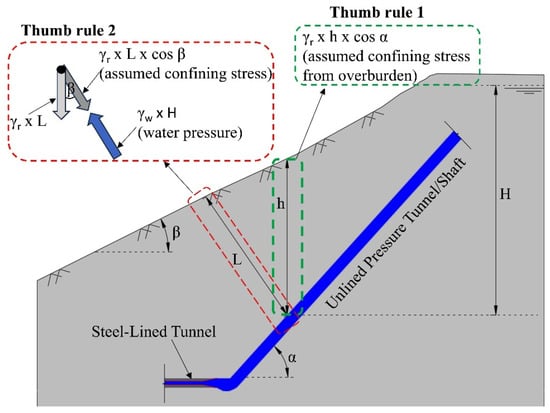
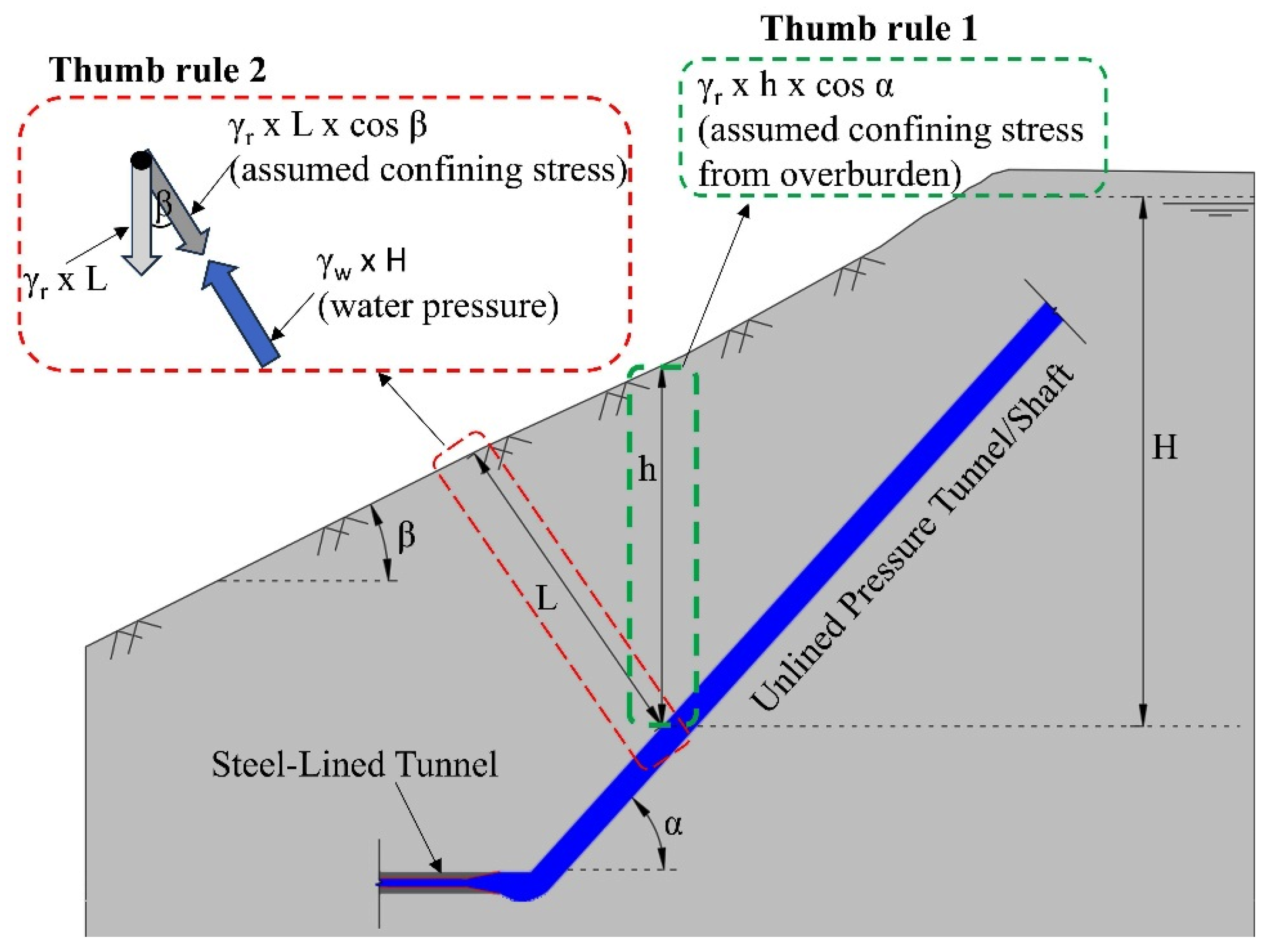
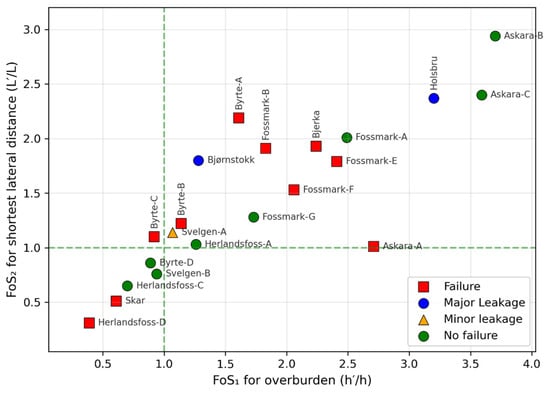
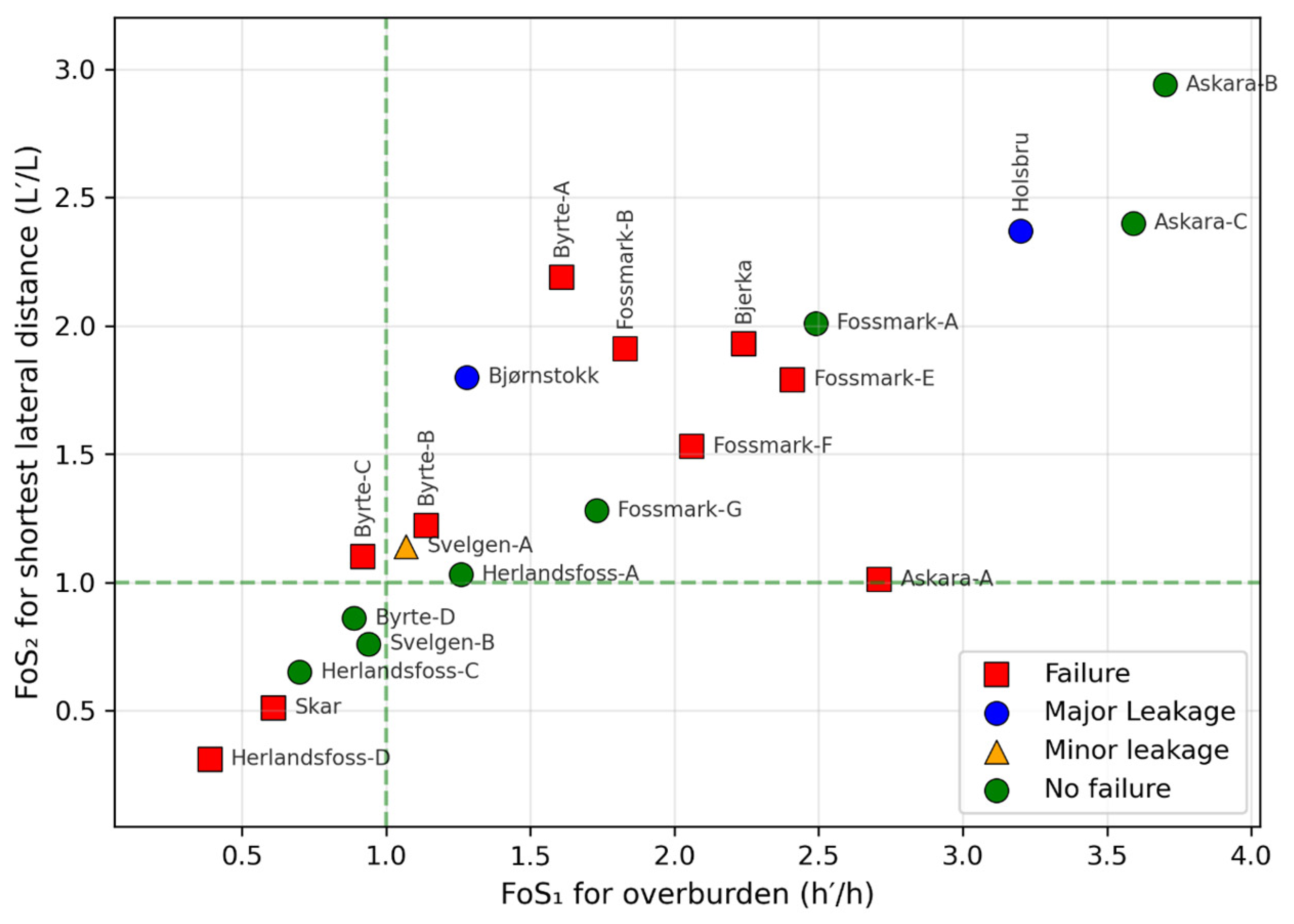
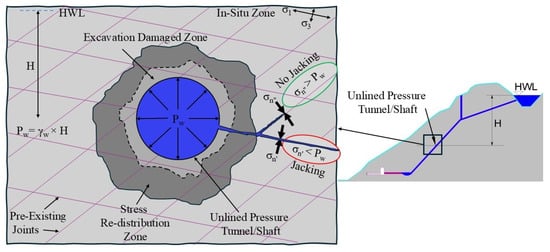
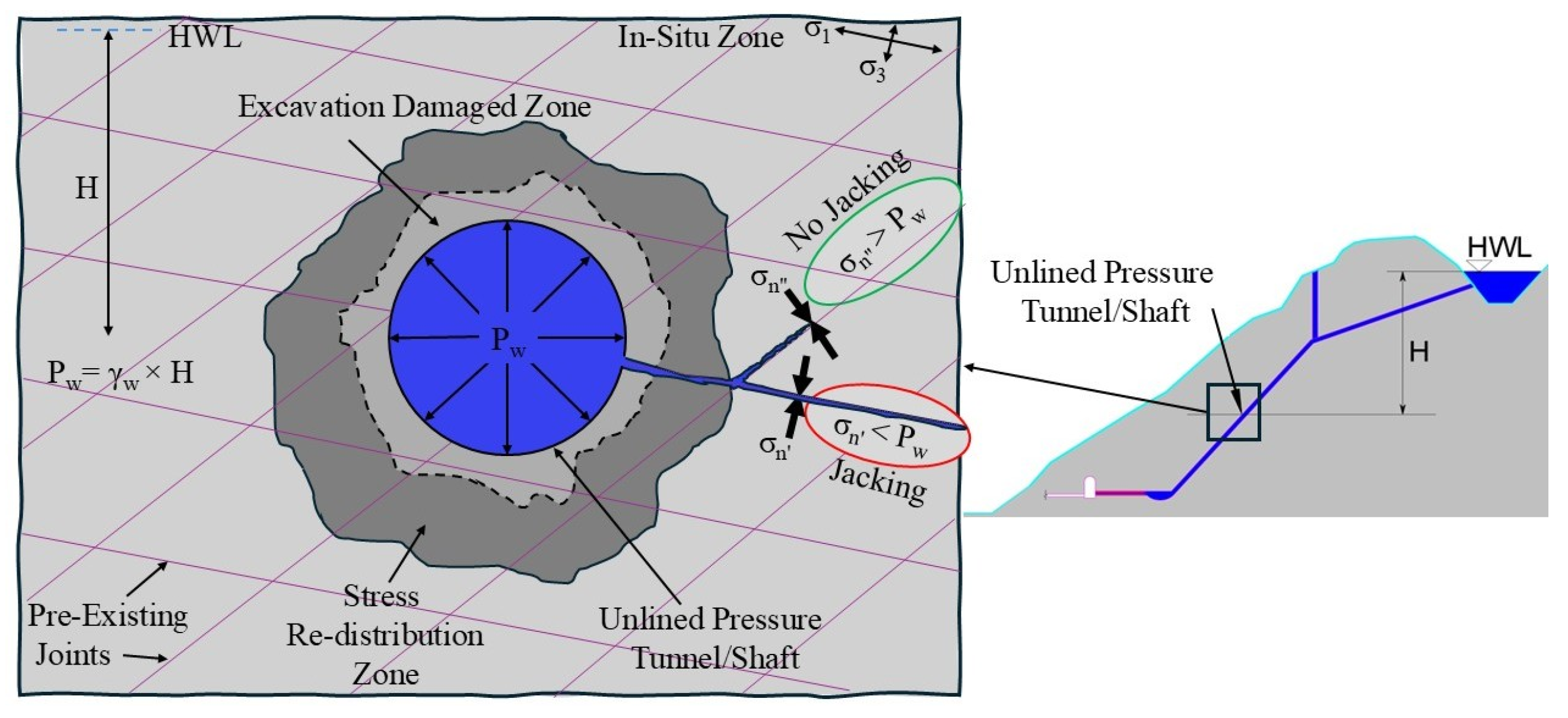
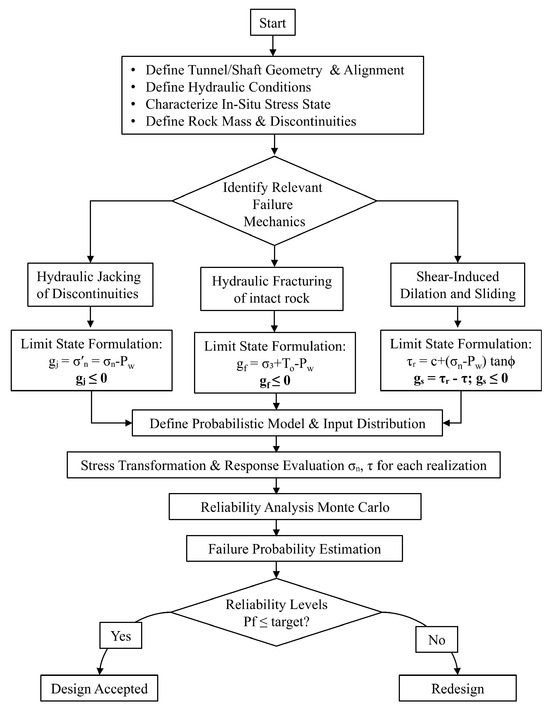
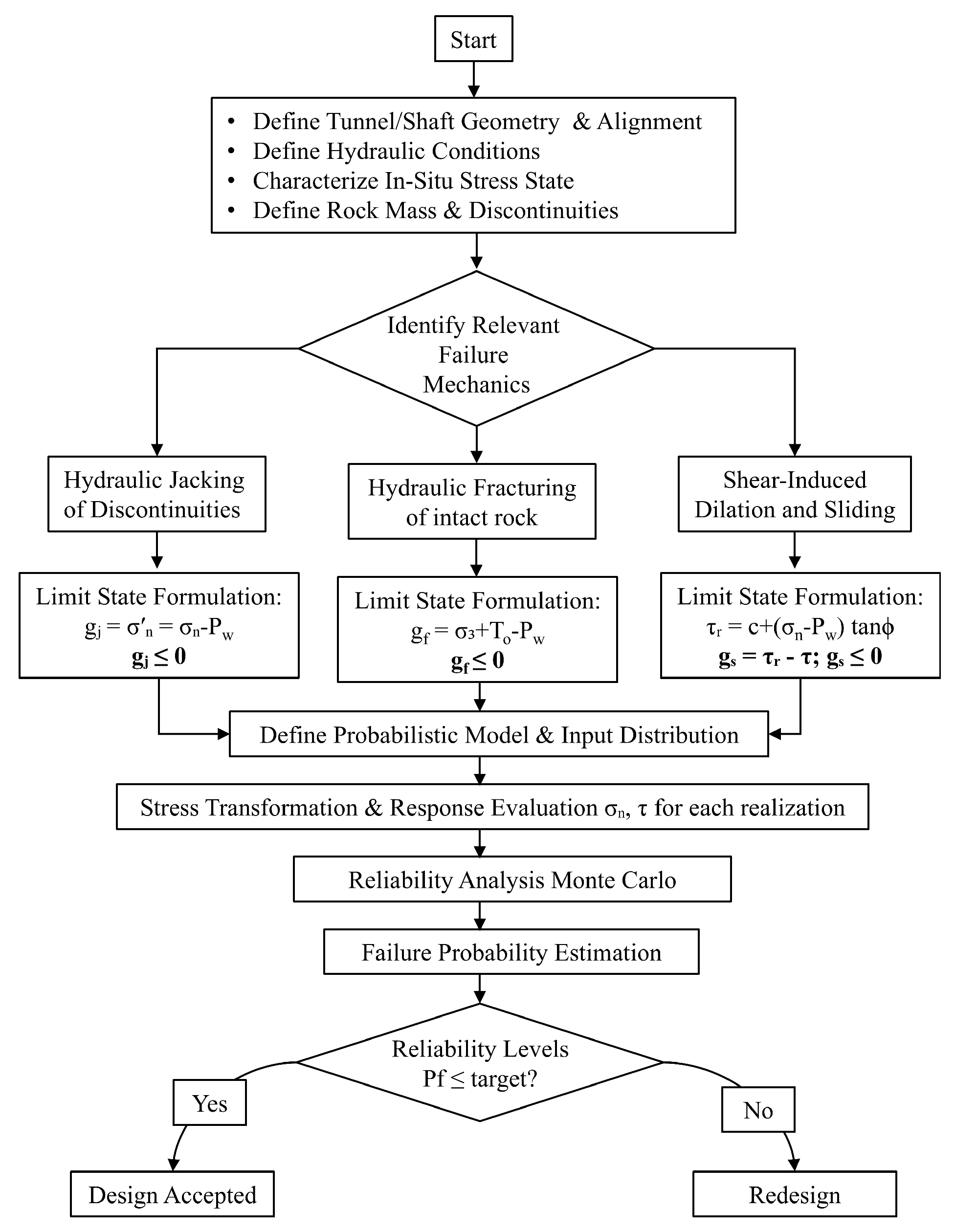
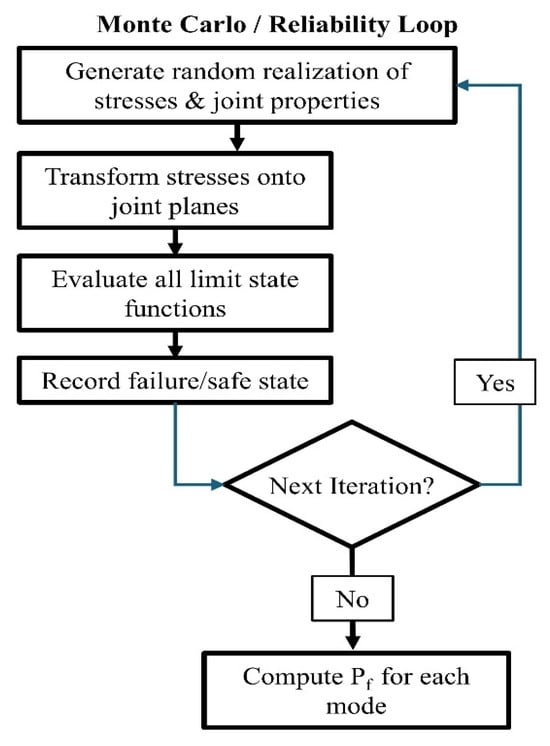
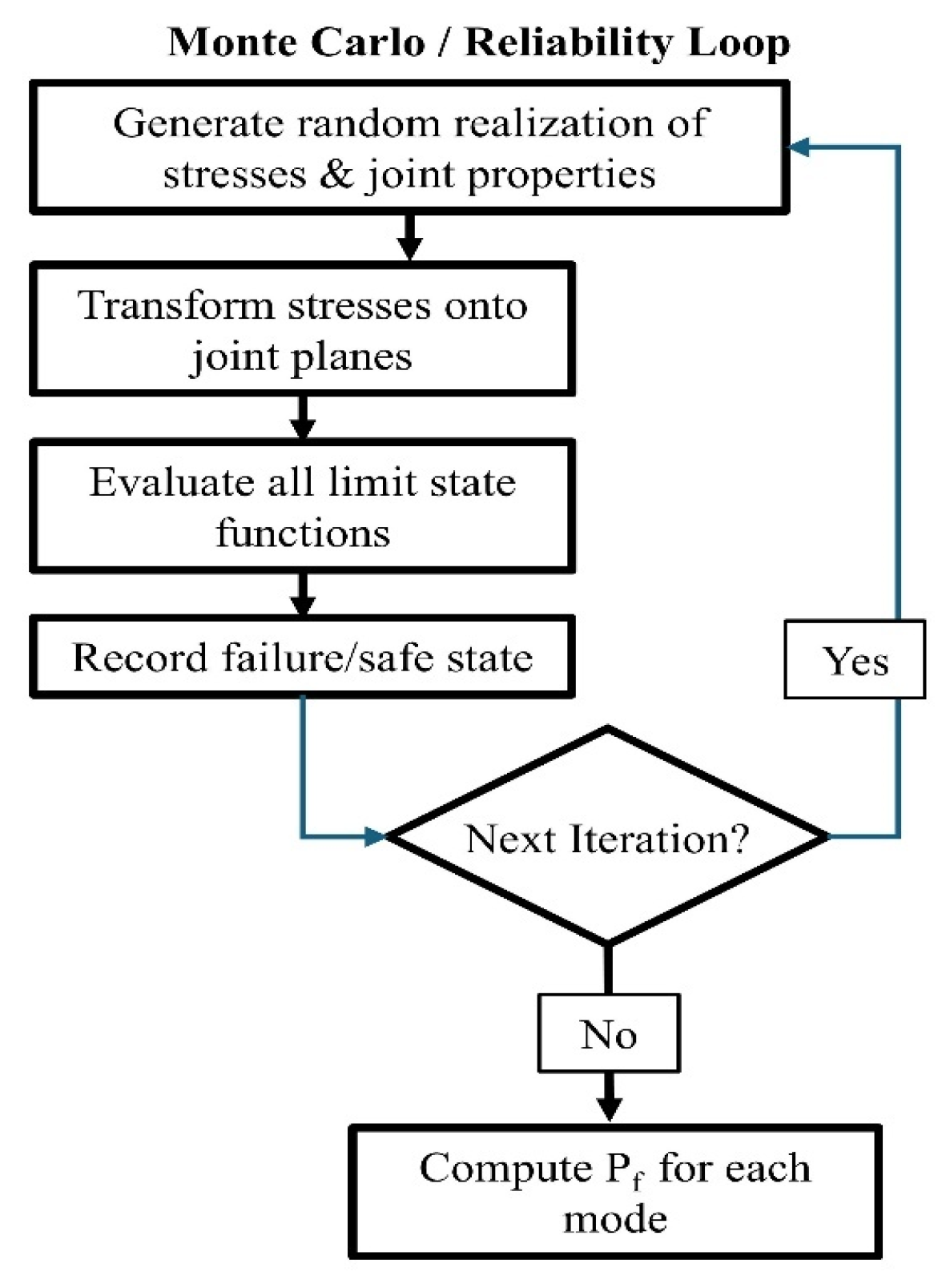
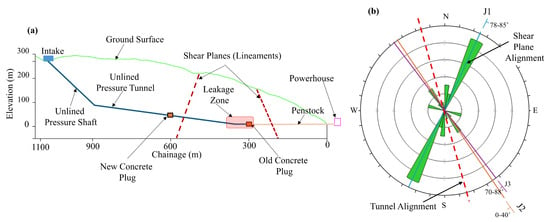
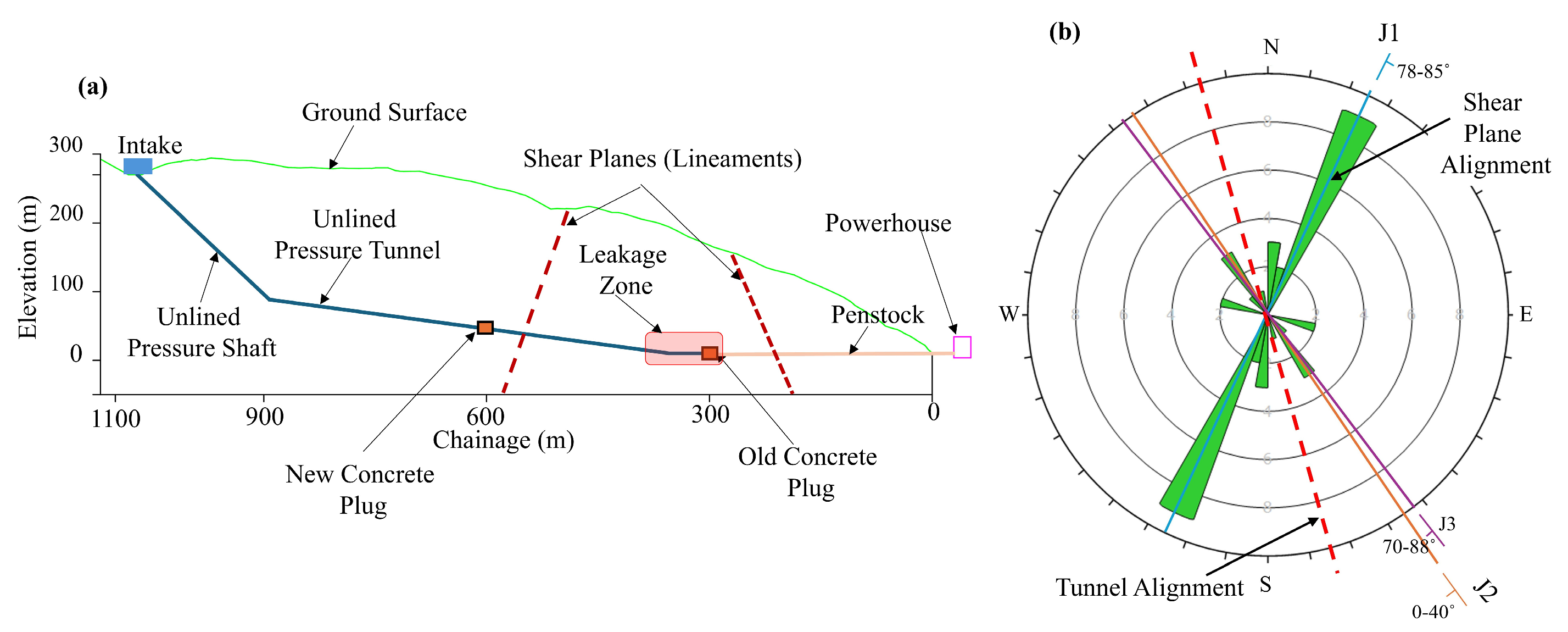
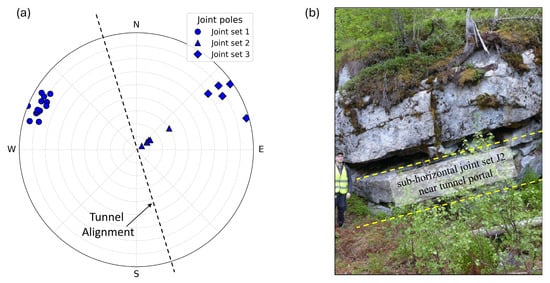
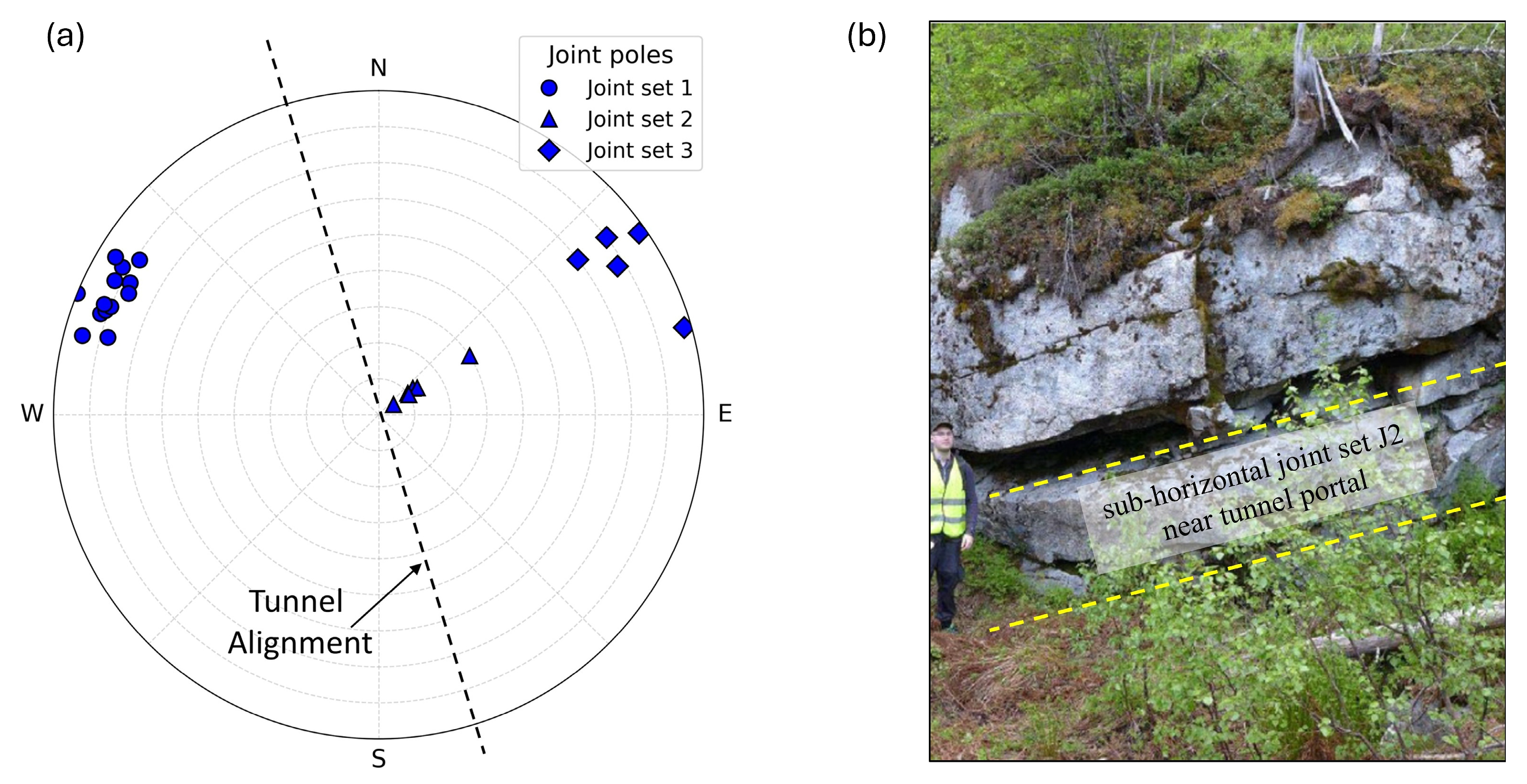
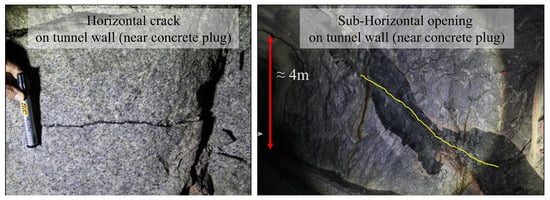
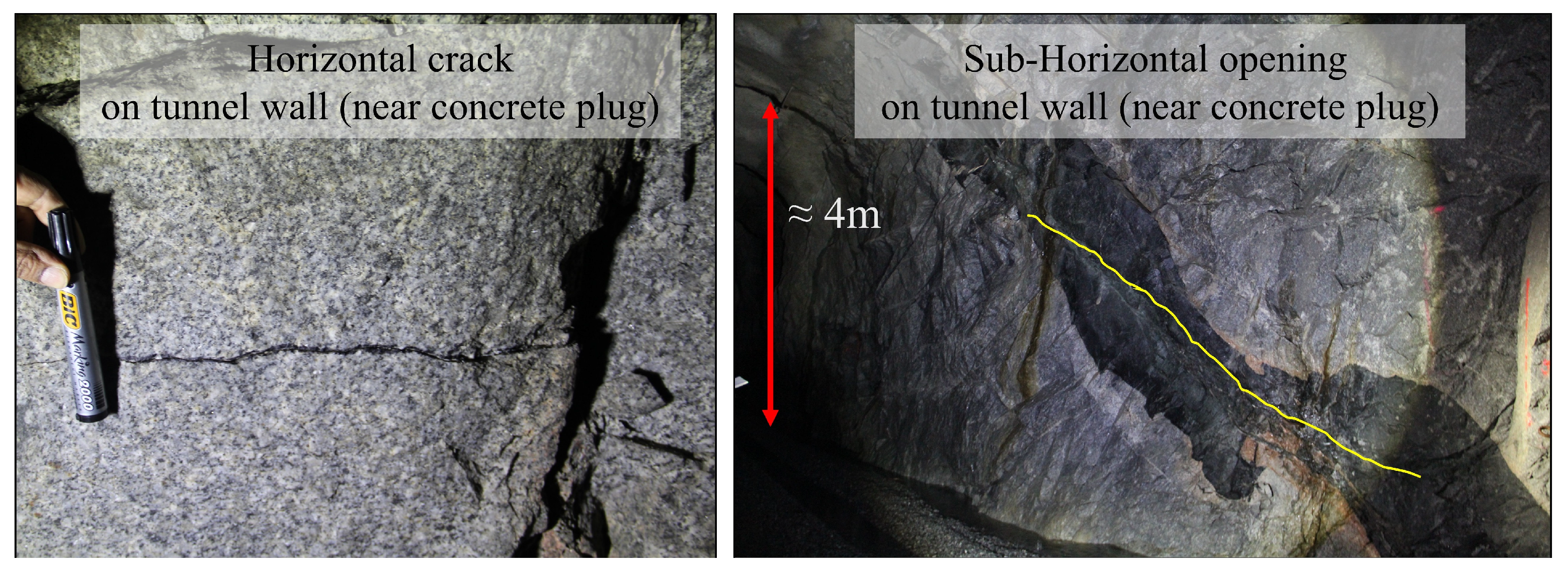
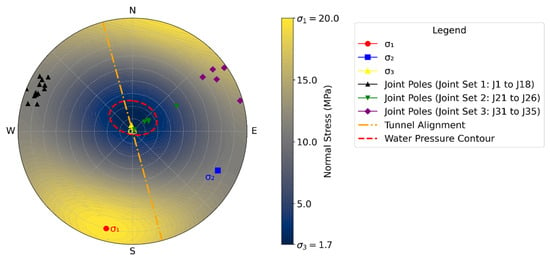
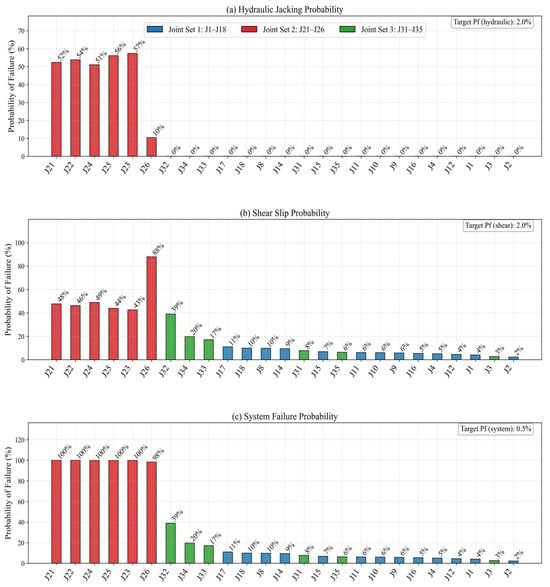
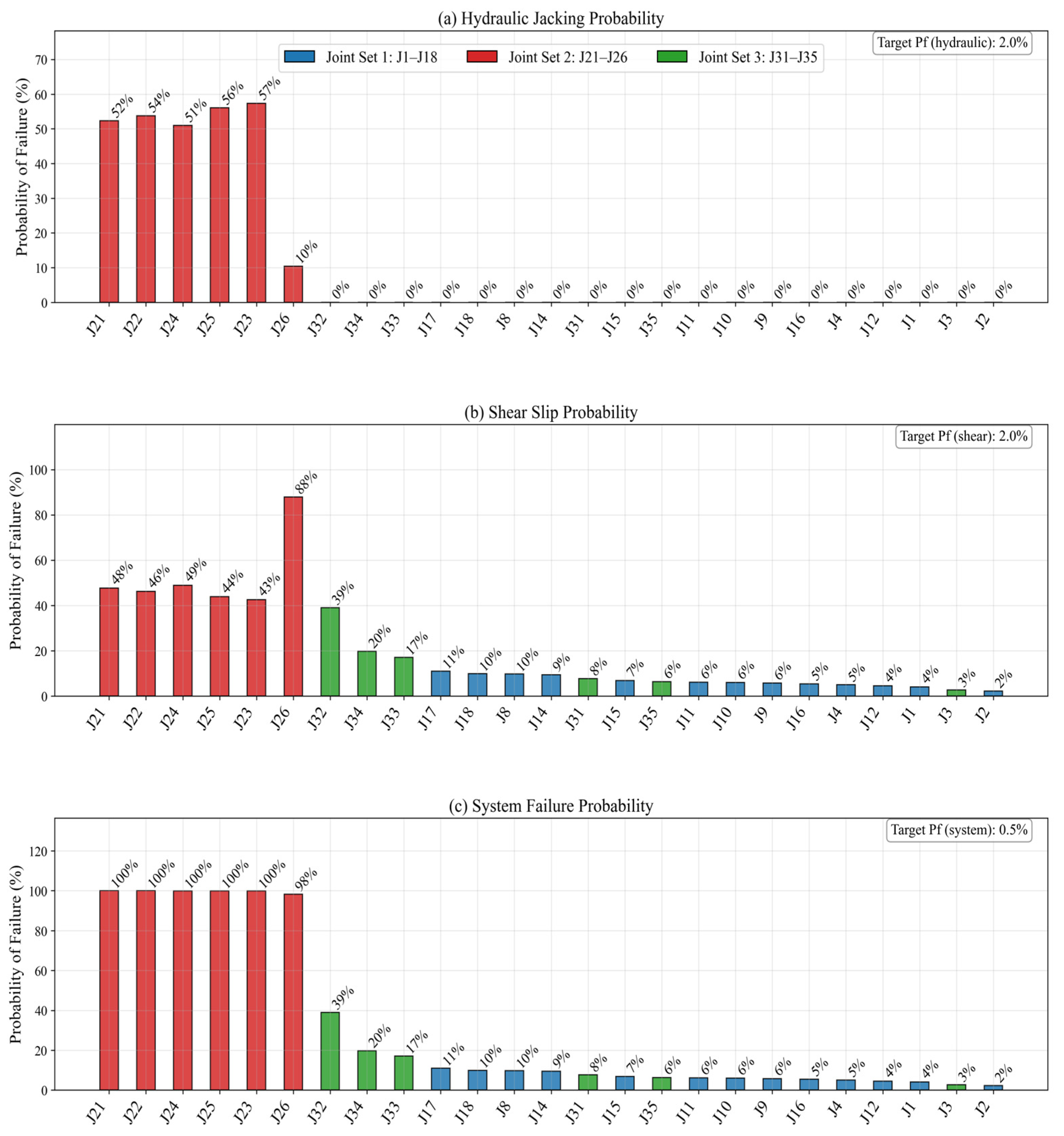
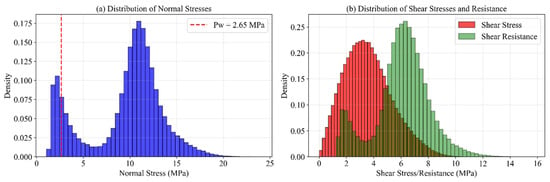
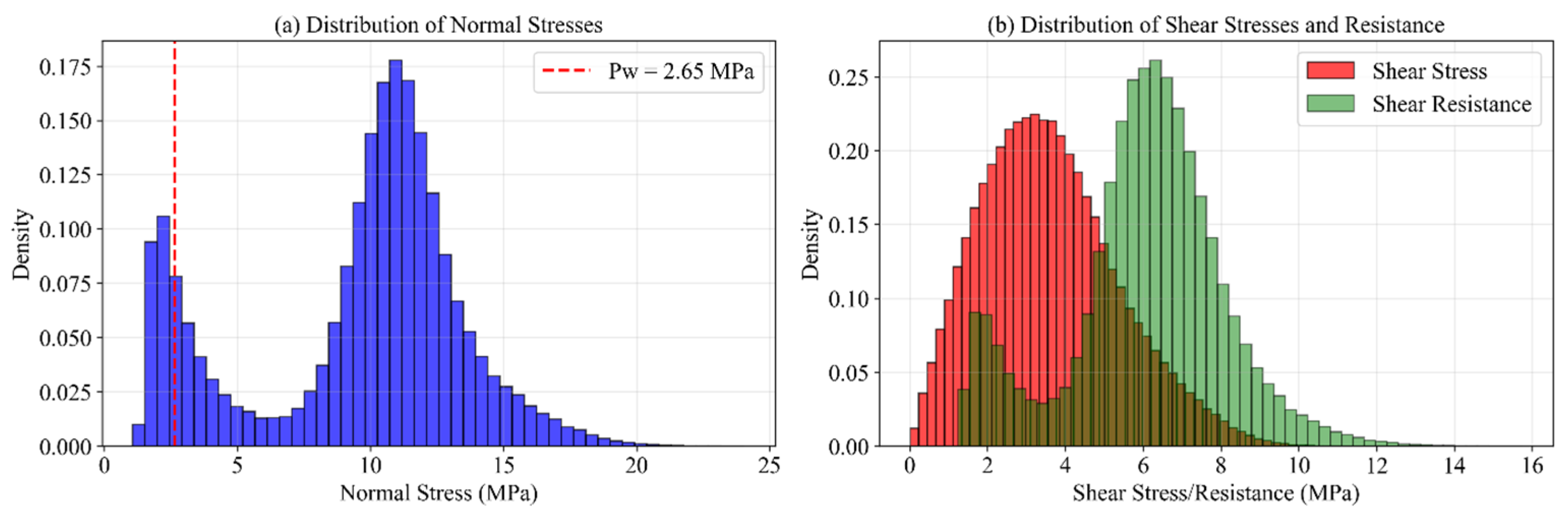
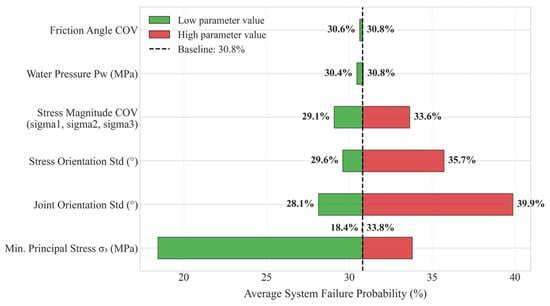
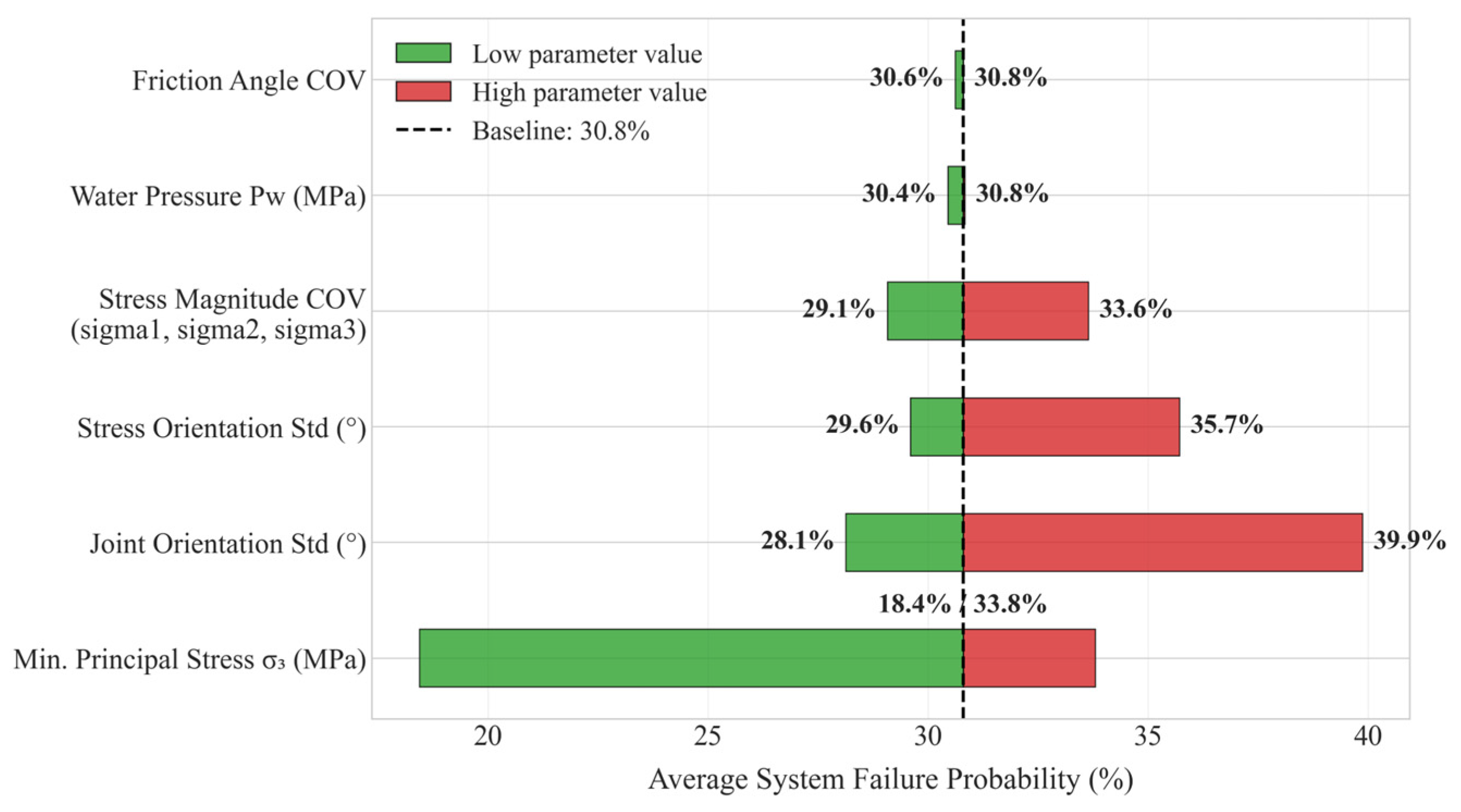
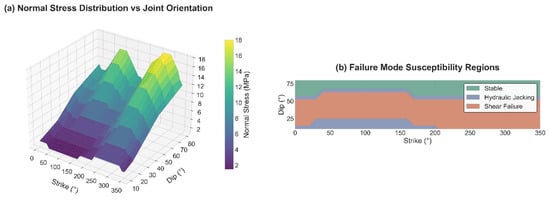
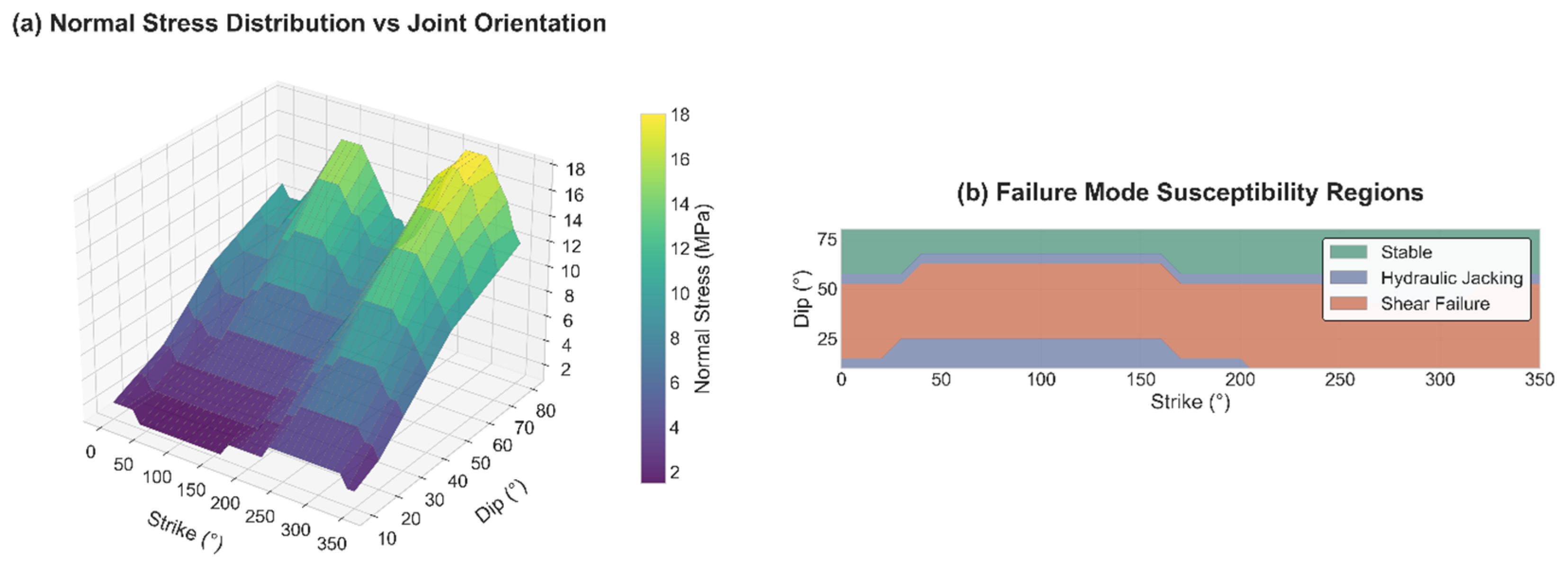

Disclaimer/Publisher’s Note: The statements, opinions and data contained in all publications are solely those of the individual author(s) and contributor(s) and not of MDPI and/or the editor(s). MDPI and/or the editor(s) disclaim responsibility for any injury to people or property resulting from any ideas, methods, instructions or products referred to in the content. |
© 2026 by the authors. Licensee MDPI, Basel, Switzerland. This article is an open access article distributed under the terms and conditions of the Creative Commons Attribution (CC BY) license.