
The Sedimentary Forward Modeling-Based Lithofacies Paleogeographic Distribution of the Ediacaran Dengying Formation, Northeastern Sichuan Basin


Abstract
1. Introduction
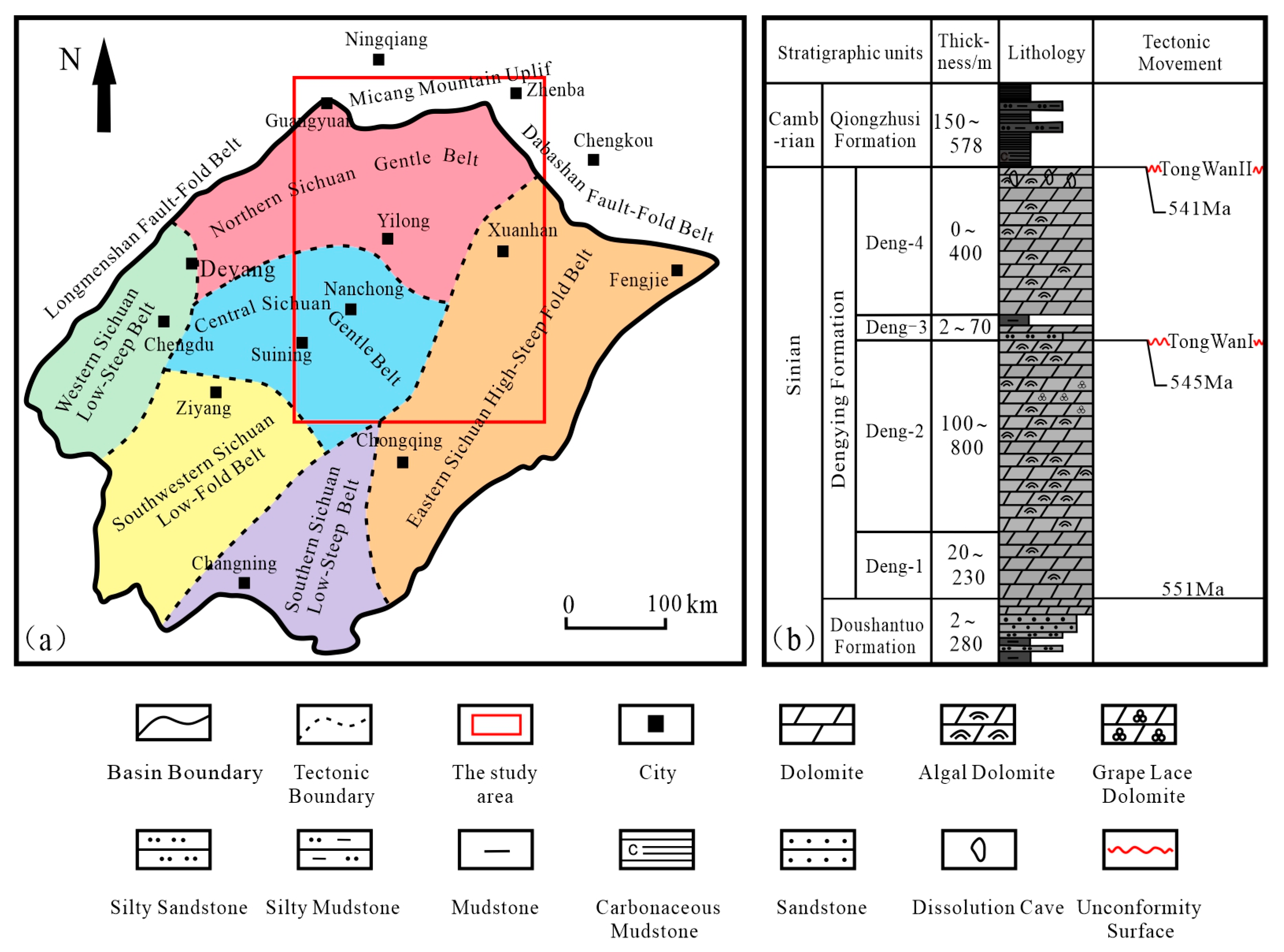
2. Geological Setting
3. Methods
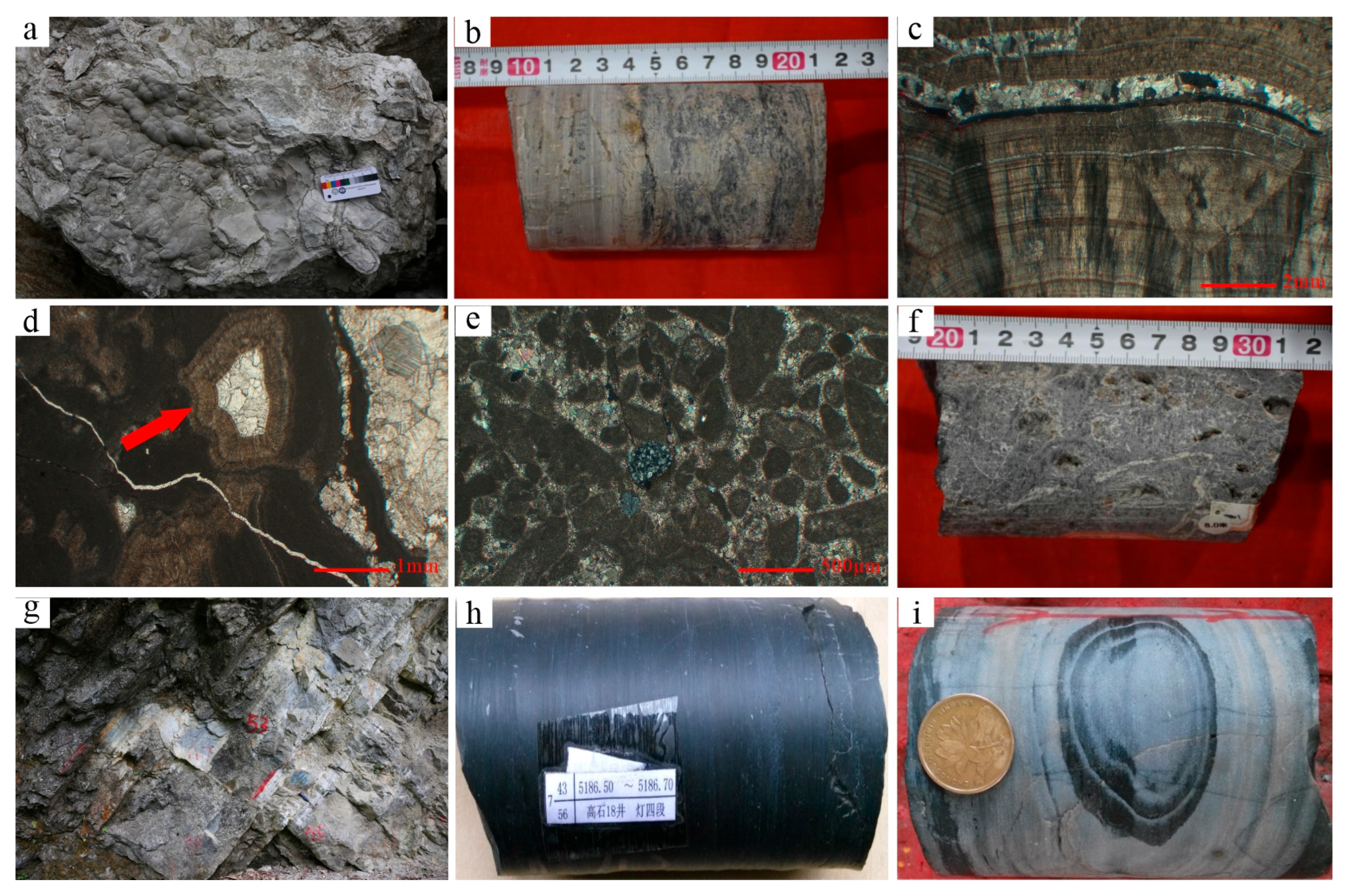
3.1. Types of Sedimentary Facies
3.1.1. Microbial (Algal) Mound
3.1.2. Grain Shoal
3.1.3. Intershoal Sea
3.1.4. Intraplatform Depression
3.2. Simulation Design and Data
3.2.1. Basic Parameters
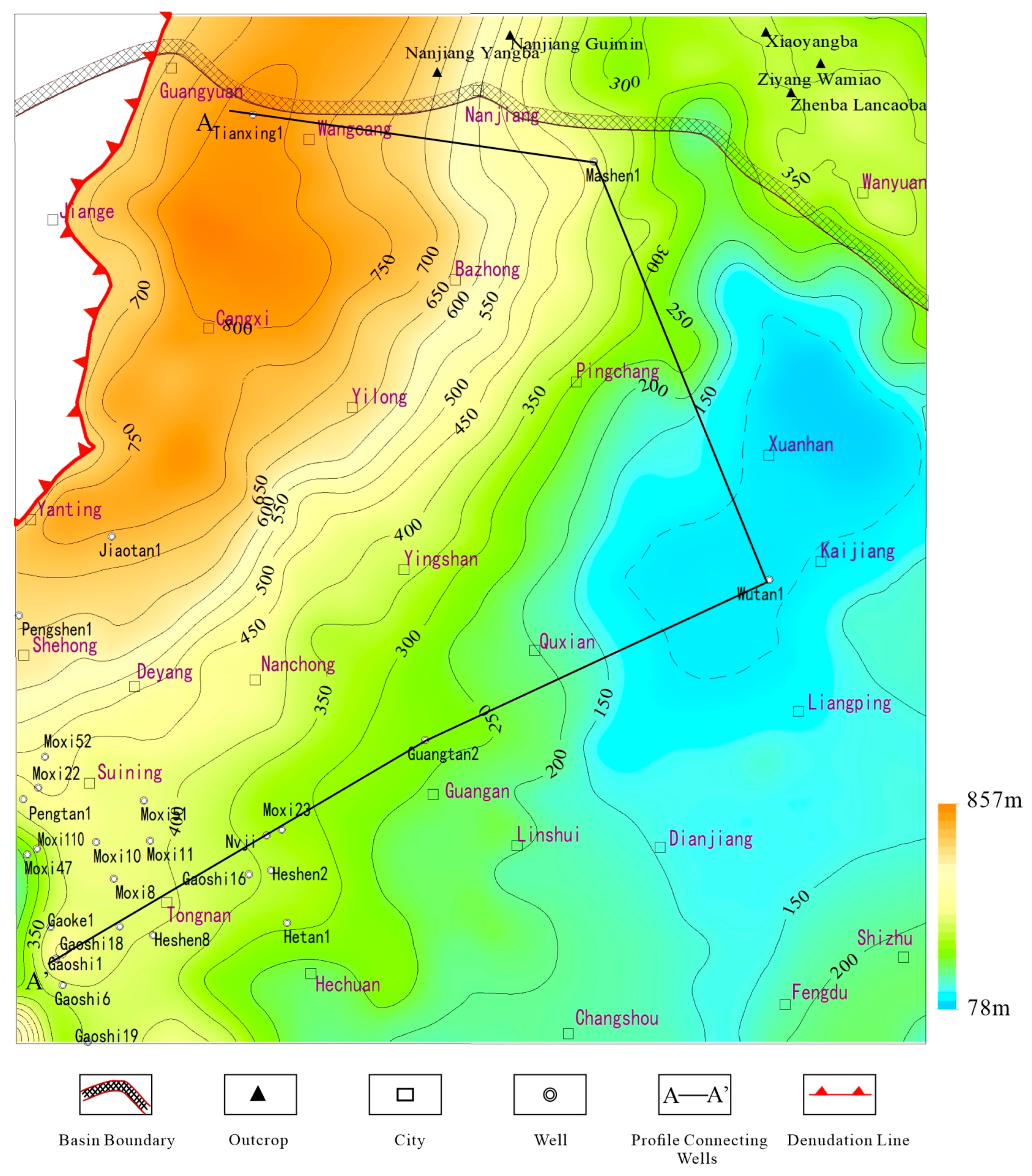
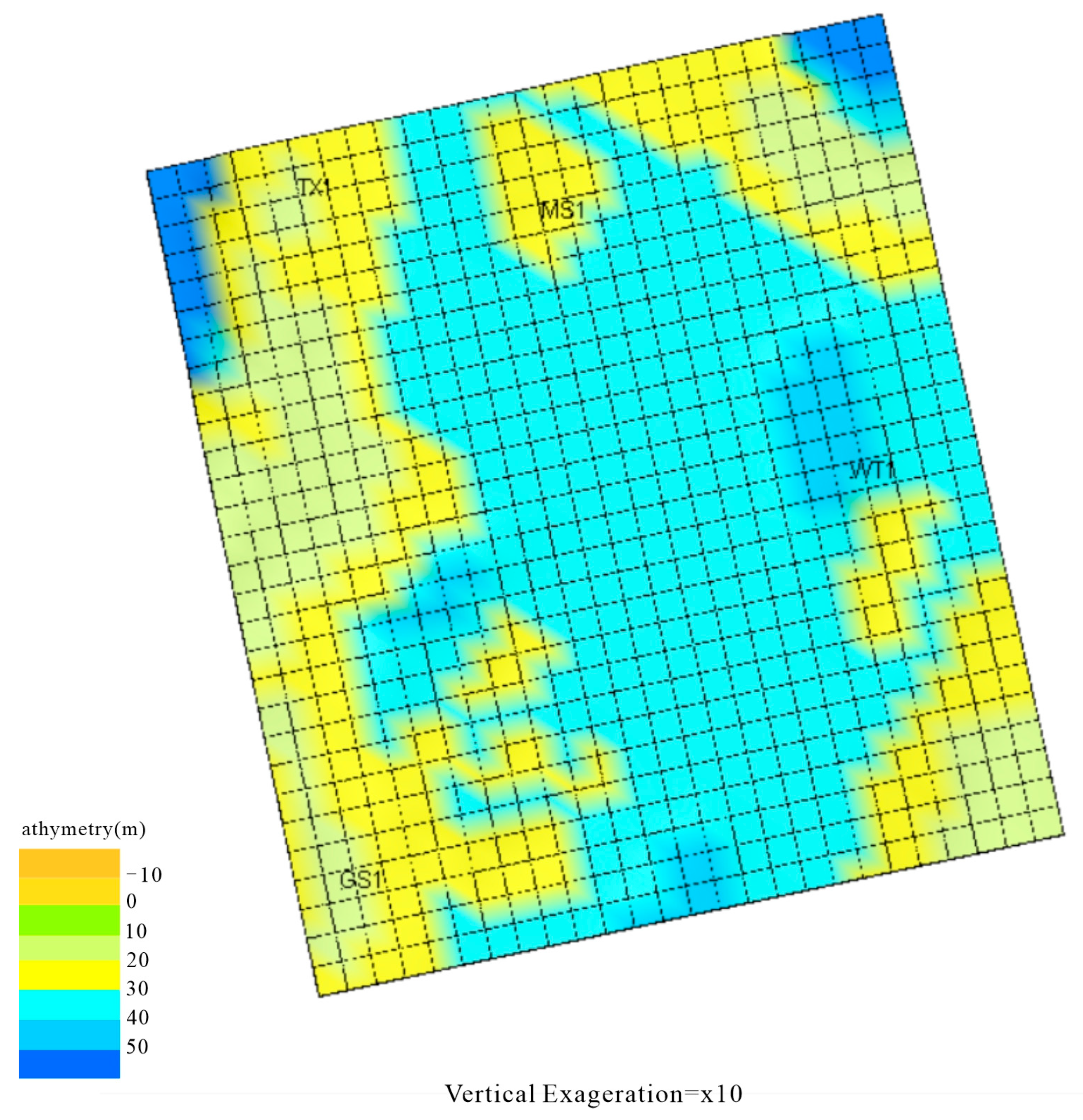
3.2.2. Initial Bathymetry Map
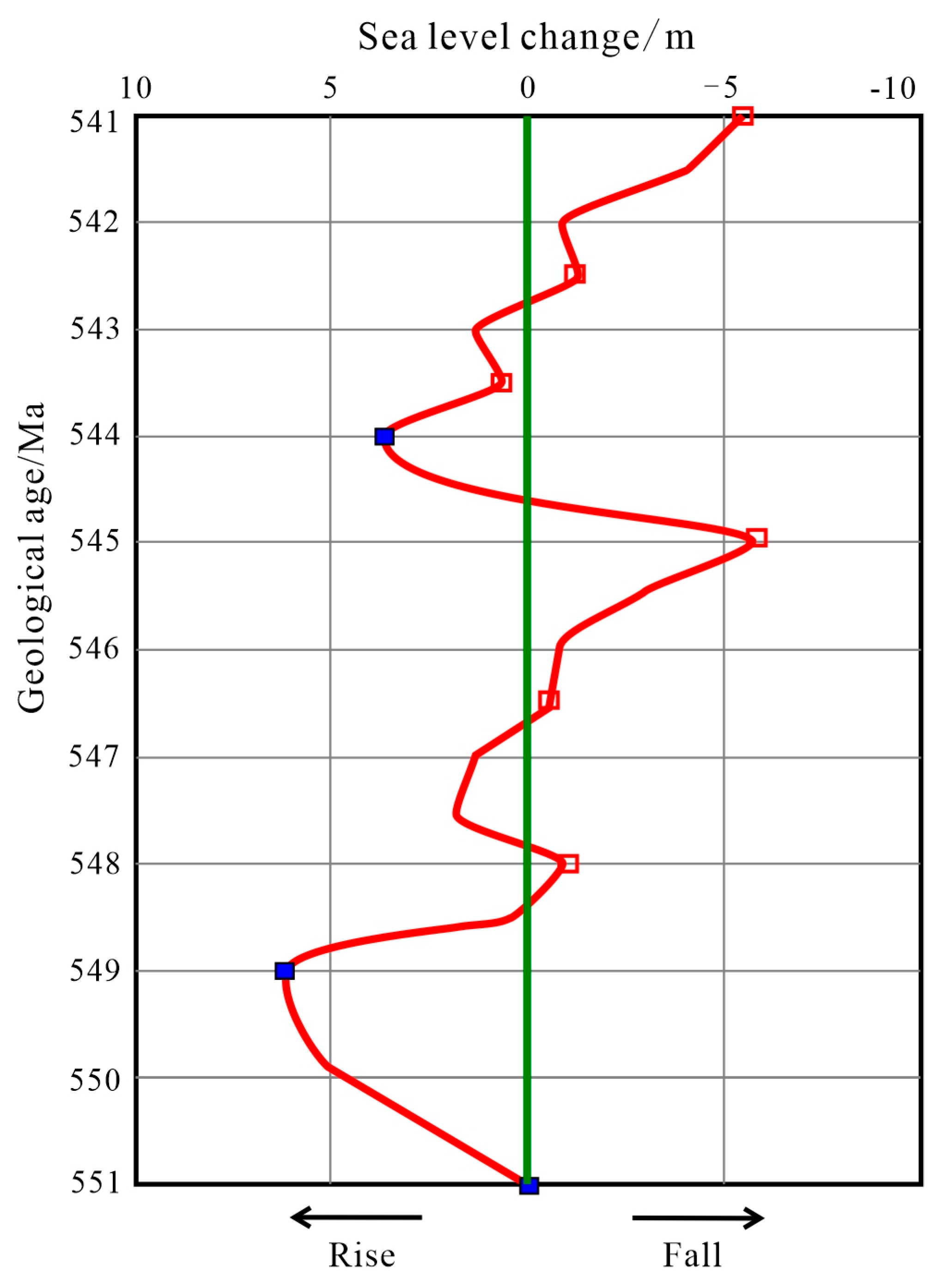
3.2.3. Eustasy
3.2.4. Subsidence
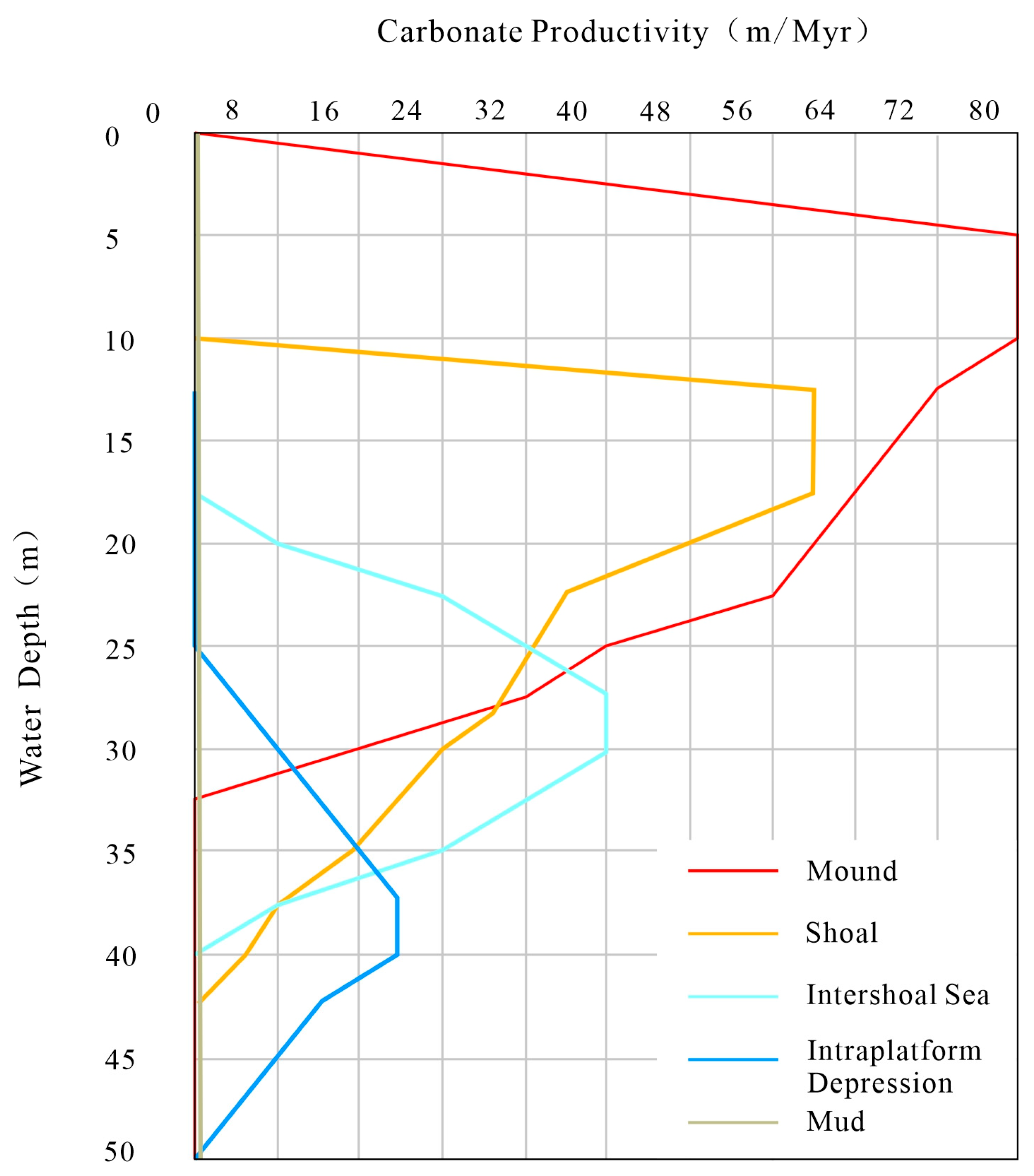
3.2.5. Carbonate Productivity
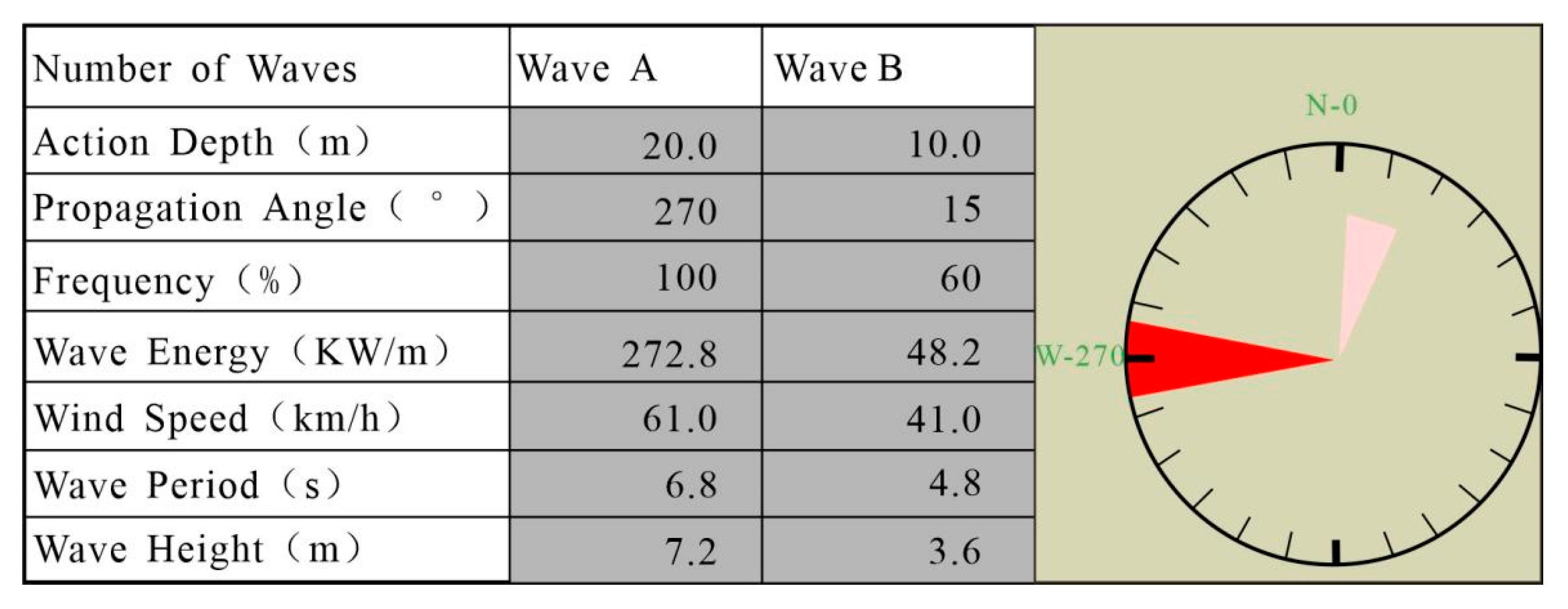
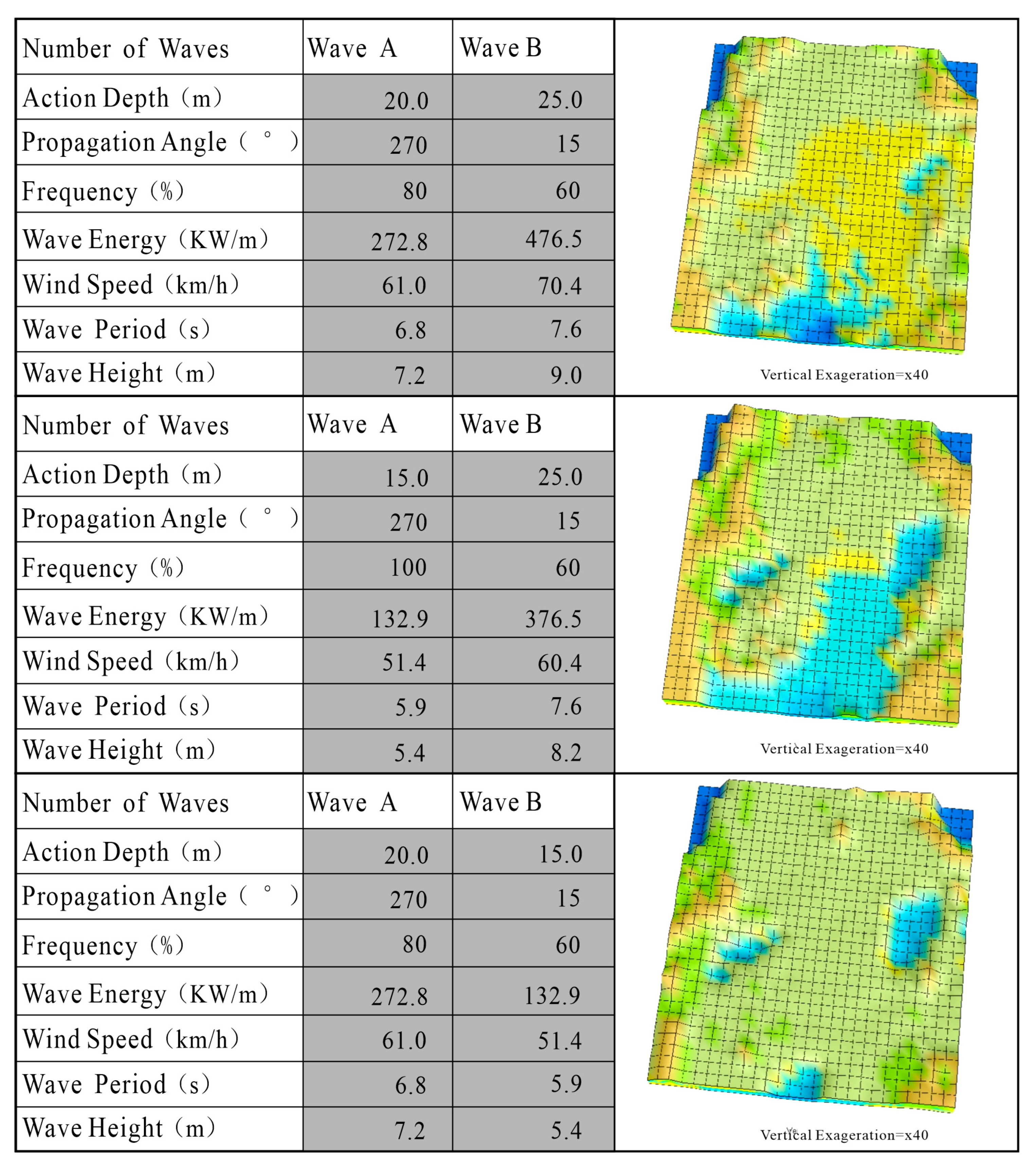
3.2.6. Wave Parameter
3.3. Sedimentary Forward Modeling Results and Analysis
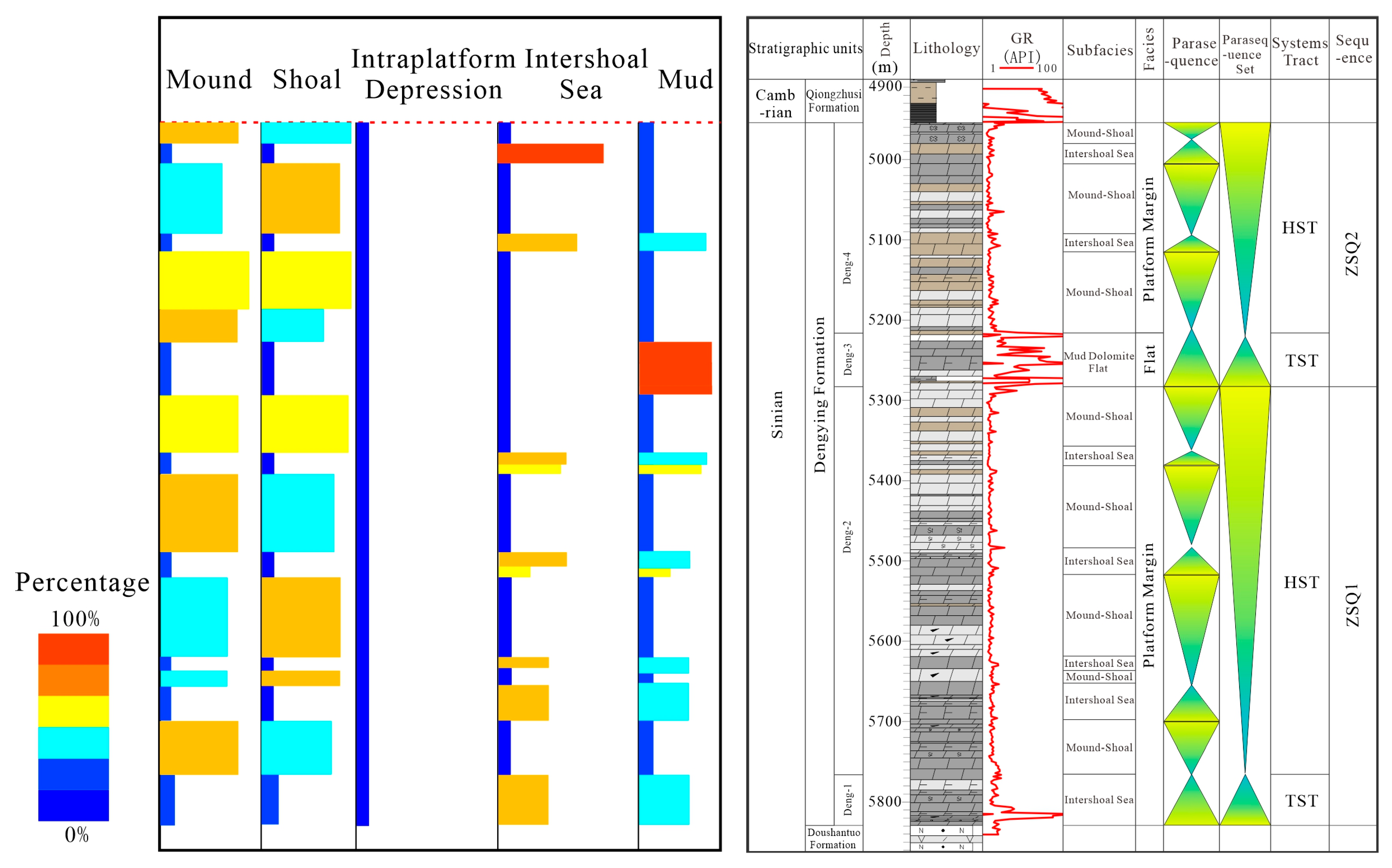
3.3.1. Verification of Single Well
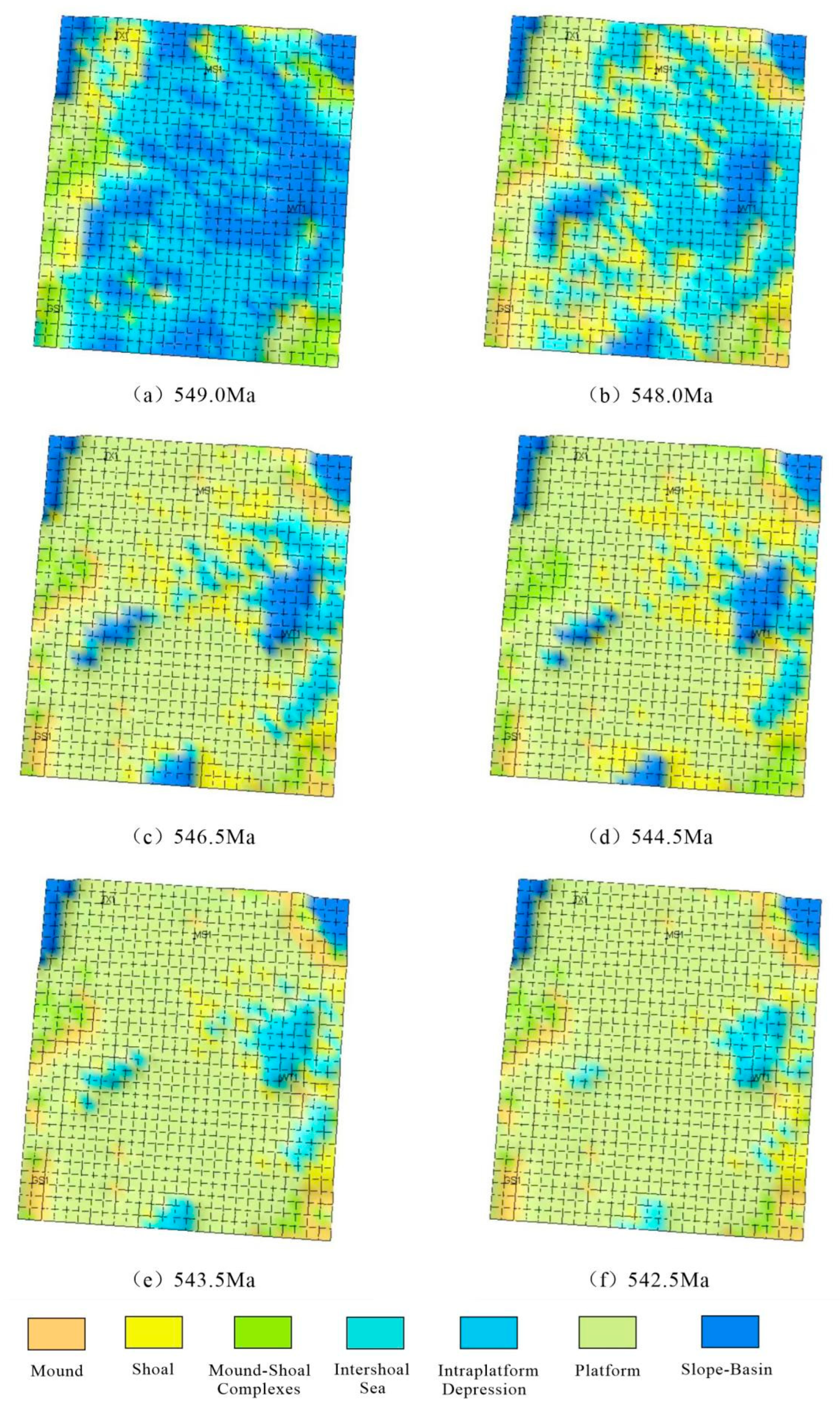
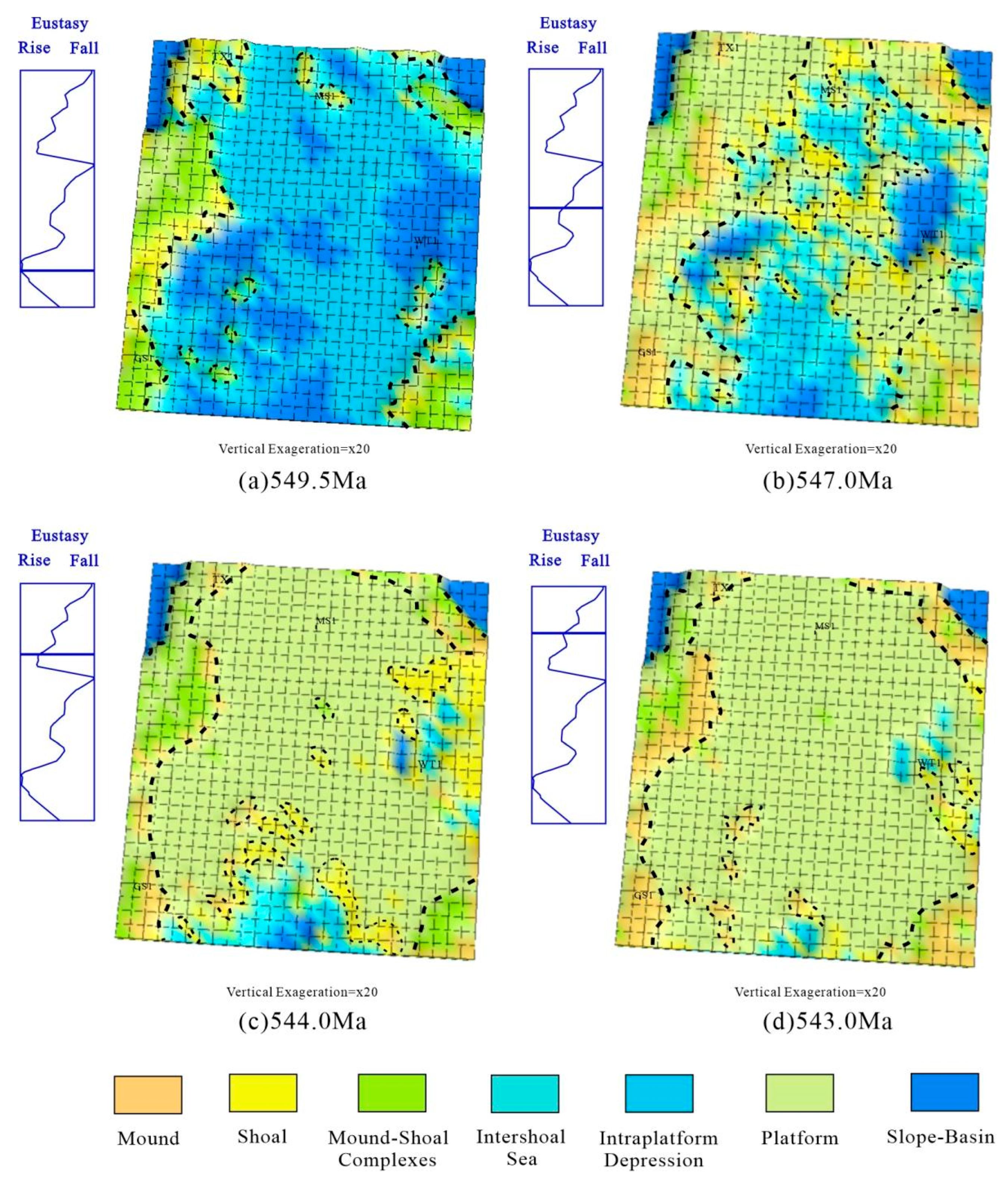
3.3.2. Plane Distribution of Sedimentary Facies
4. Results
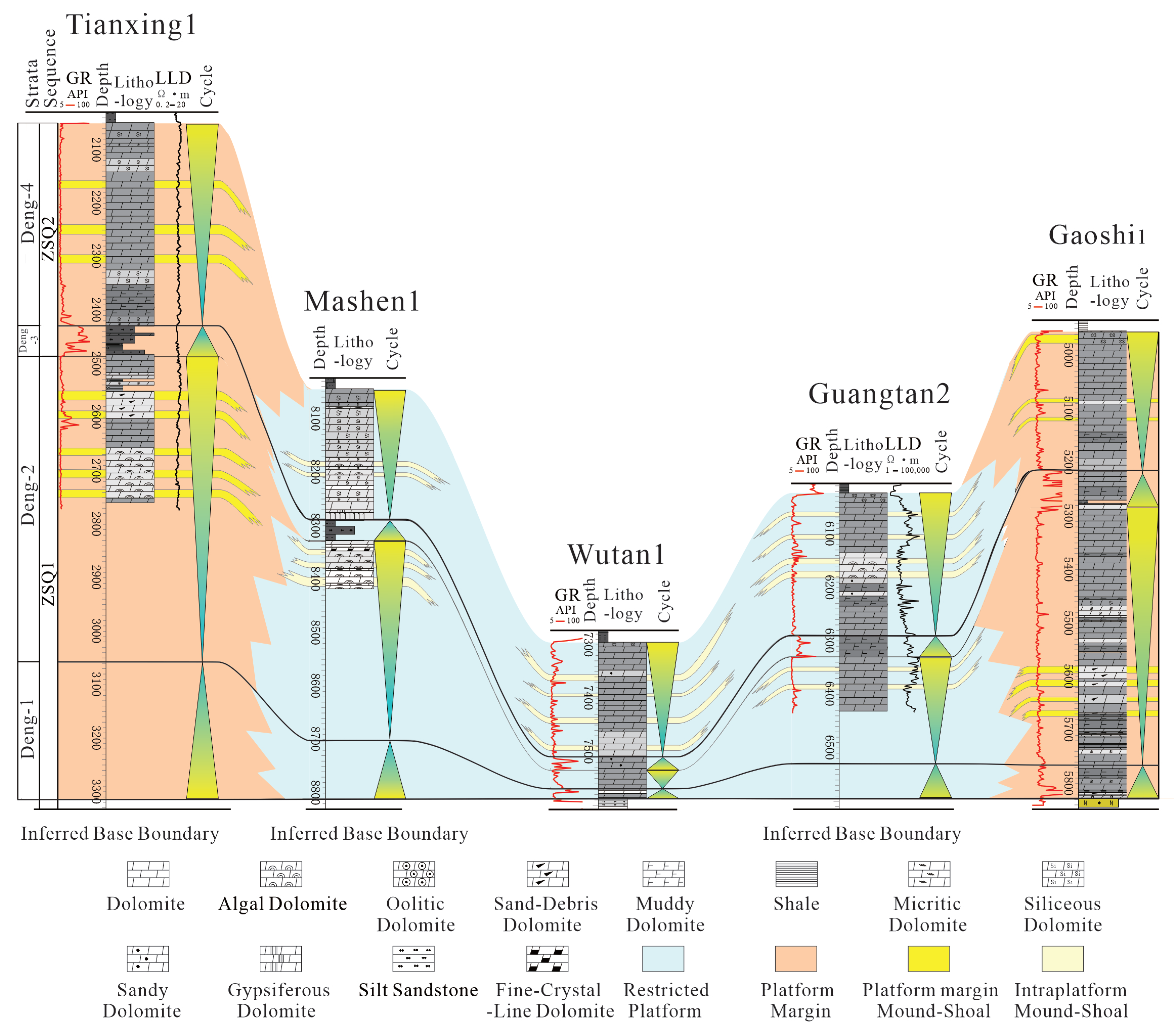
4.1. Analysis of Connected Well Sedimentary Facies
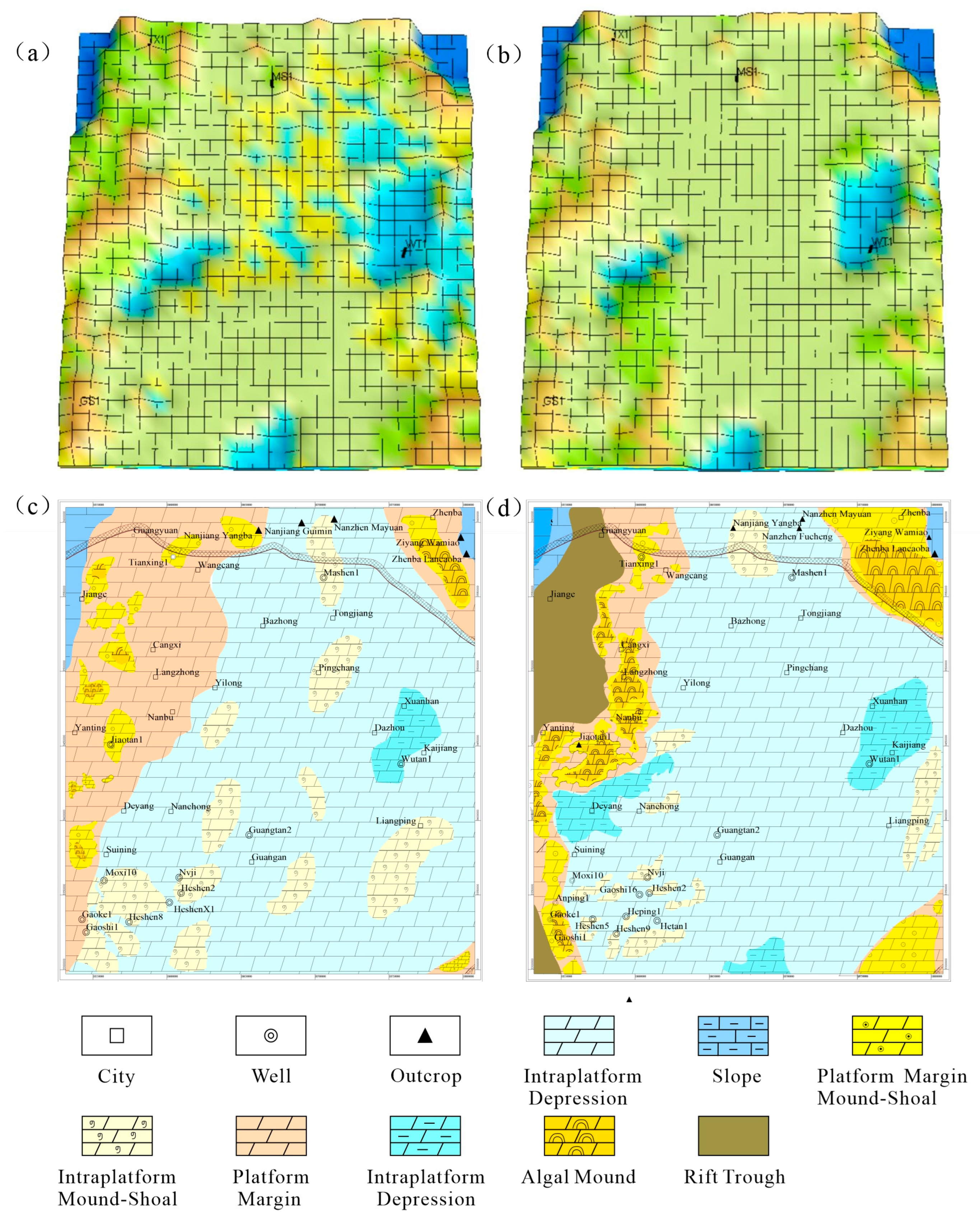
4.2. Plane Distribution of Lithofacies Paleogeography
5. Discussion
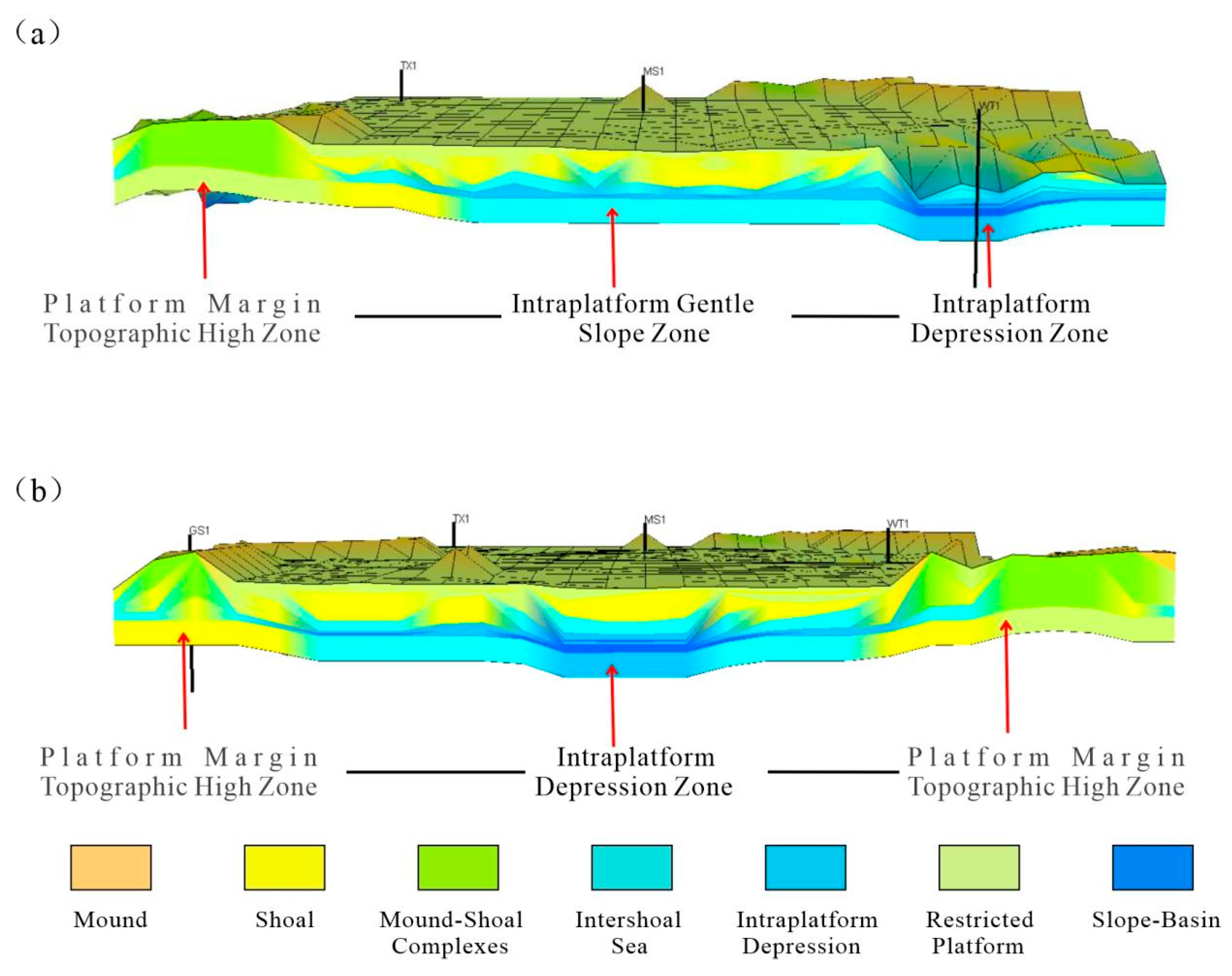
5.1. Paleogeomorphology Controls the Type of Sedimentary Facies and the Distribution of Lithofacies Paleogeography
5.2. Sea Level Change Controls the Development Scale and Lateral Migration of Mound–Shoal Complexes
5.3. The Development Position of a High-Energy Facies Belt Reformed by an Ancient Wind Field
6. Conclusions
- (1)
- The platform margin and restricted platform facies are developed in the northeastern Sichuan Basin, which can be divided into four subfacies: microbial (algal) mound, grain shoal, intershoal sea, and intraplatform depression. Microbial (algal) mound and grain shoal are often superimposed on each other in the form of mound–shoal complexes, which are widely developed at the edge of the platform and sporadically developed in the platform. The intershoal sea and intraplatform depression subfacies are developed in the intraplatform position. The lithology of the two is similar to that of micritic dolomite, but siliceous dolomite can be formed locally in the intraplatform depression and usually the lithology thickness is large.
- (2)
- In this paper, Dionisos software os used to dynamically simulate the lithofacies paleogeographic deposition process of the Ediacaran Dengying Formation in the northeastern Sichuan Basin. The key variables such as accommodation space, carbonate rock yield, and wave energy coefficient are parameterized, and the key influencing factors are identified. The three-dimensional dynamic simulation of the carbonate rock deposition process is performed, and the main controlling factors affecting the distribution of lithofacies paleogeography are discussed.
- (3)
- The distribution of lithofacies paleogeography is controlled by the following three factors: paleogeomorphology determines the type of sedimentary facies and the distribution of lithofacies paleogeography, sea level change controls the superimposed mode and development scale of mound–shoal complexes, and paleowind field affects the redistribution process of sediments. The coupling of these three types of elements jointly shapes the distribution characteristics of the sedimentary system. Among them, the paleogeomorphology provides the sedimentary basement, the lake level fluctuation controls the accommodation space, and the wind wave action transforms the sedimentary distribution and finally forms the paleogeographic pattern of the double-platform margin rimmed platform in the study area.
Author Contributions
Funding
Data Availability Statement
Conflicts of Interest
References
- Zou, C.; Du, J.; Xu, C.; Wang, Z.; Zhang, B.; Wei, G.; Wang, T.; Yao, G.; Deng, S.; Liu, J.; et al. Formation, distribution, resource potential, and discovery of Sinian–Cambrian giant gas field, Sichuan Basin, SW China. Pet. Explor. Dev. 2014, 41, 306–325. [Google Scholar] [CrossRef]
- Ma, X.; Yang, Y.; Wen, L.; Luo, B. Distribution and exploration direction of medium- and large-sized marine carbonate gas fields in Sichuan Basin, SW China. Pet. Explor. Dev. 2019, 46, 1–15. [Google Scholar] [CrossRef]
- Wei, G.; Xie, Z.; Yang, Y.; Li, J.; Yang, W.; Zhao, L.; Yang, C.; Zhang, L.; Xie, W.; Jiang, H.; et al. Formation conditions of Sinian–Cambrian large lithologic gas reservoirs in the north slope area of central Sichuan Basin, SW China. Pet. Explor. Dev. 2022, 49, 963–976. [Google Scholar] [CrossRef]
- Li, Z.Q.; Liu, J.; Li, Y.; Hang, W.; Hong, H.; Ying, D.; Chen, X.; Liu, R.; Duan, X.; Peng, J. Formation and evolution of Weiyuan-Anyue extension-erosion groove in Sinian system, Sichuan Basin. Pet. Explor. Dev. 2015, 42, 26–33. (In Chinese) [Google Scholar] [CrossRef]
- Wang, W.Z.; Wen, L.; Yao, J.; Li, K.; He, Y.; Zhou, H.; Nie, J.; Li, Y. Sequence classification and discovery of multi-stage platform margin belts of Sinian Dengying Formation, Sichuan Basin. Nat. Gas Explor. Dev. 2019, 42, 46–54. (In Chinese) [Google Scholar]
- Zhou, H.; Li, W.; Zhang, B.; Liu, J.; Deng, S.; Zhang, S.; Shan, X.; Zhang, J.; Wang, X.; Jiang, H. Formation and evolution of intraplatform basin from the late Sinian to early Cambrian in Sichuan Basin, China. Pet. Res. 2017, 2, 41–53. [Google Scholar] [CrossRef]
- Li, Y.; He, D.; Li, D.; Li, S.; Wo, Y.; Li, C.; Huang, H. Ediacaran (Sinian) palaeogeographic reconstruction of the Upper Yangtze area, China, and its tectonic implications. Int. Geol. Rev. 2020, 62, 1485–1509. [Google Scholar] [CrossRef]
- Zhou, J.; Zhang, J.; Deng, H.; Chen, Y.; Hao, Y.; Li, W.; Gu, M.; Luo, X. Lithofacies paleogeography and sedimentary model of Sinian Dengying Fm in the Sichuan Basin. Nat. Gas Ind. B 2017, 4, 217–224. [Google Scholar] [CrossRef]
- Wang, Z.; Jiang, H.; Chen, Z.; Liu, J.; Ma, K.; Li, W.; Xie, W.; Jiang, Q.; Zhai, X.; Shi, S.; et al. Tectonic paleogeography of Late Sinian and its significances for petroleum exploration in the middle-upper Yangtze region, South China. Pet. Explor. Dev. 2020, 47, 946–961. [Google Scholar] [CrossRef]
- Li, Y.; Wang, X.; Feng, M.; Zeng, D.; Xie, S.; Fan, R.; Wang, L.; Zeng, T.; Yang, X. Reservoir characteristics and genetic differences between the second and fourth members of Sinian Dengying Formation in northern Sichuan Basin and its surrounding areas. Pet. Explor. Dev. 2019, 46, 54–66. [Google Scholar] [CrossRef]
- Harbaugh, J.W. Mathematical Simulation of Marine Sedimentation with IBM 7090/7094 Computers; Stanford University: Stanford, CA, USA, 1966; pp. 1–54. [Google Scholar] [CrossRef]
- Warrlich, G.; Bosence, D.; Waltham, D.; Wood, C.; Boylan, A.; Badenas, B. 3D stratigraphic forward modelling for analysis and prediction of carbonate platform stratigraphies in exploration and production. Mar. Pet. Geol. 2008, 25, 35–58. [Google Scholar] [CrossRef]
- Berra, F.; Lanfranchi, A.; Smart, P.L.; Whitaker, F.; Ronchi, P. Forward modelling of carbonate platforms: Sedimentological and diagenetic constraints from an application to a flat-topped greenhouse platform (Triassic, Southern Alps, Italy). Mar. Pet. Geol. 2016, 78, 636–655. [Google Scholar] [CrossRef]
- Lanteaume, C.; Fournier, F.; Pellerin, M.; Borgomano, J. Testing geologic assumptions and scenarios in carbonate exploration: Insights from integrated stratigraphic, diagenetic, and seismic forward modeling. Lead. Edge 2018, 37, 672–680. [Google Scholar] [CrossRef]
- Snieder, S.; Griffiths, C.M.; Howell, J.A.; Hartley, A.J.; Owen, A. Quantifying the sensitivity of distributive fluvial systems to changes in sediment supply and lake level using stratigraphic forward modelling. Sedimentology 2023, 70, 2196–2219. [Google Scholar] [CrossRef]
- Zhang, W.; Duan, T.; Liu, Z.; Yuan, S.; Lin, Y.; Xu, H. Application of multi-point geostatistics in deep-water turbidity channel simulation: A case study of Plutonio oilfield in Angola. Pet. Explor. Dev. 2016, 43, 443–450. [Google Scholar] [CrossRef]
- Liu, L.; Li, T.; Ma, C. Research on 3D Geological Modeling Method Based on Deep Neural Networks for Drilling Data. Appl. Sci. 2024, 14, 423. [Google Scholar] [CrossRef]
- Whitaker, F.F.; Felce, G.P.; Benson, G.S.; Amour, F.; Mutti, M.; Smart, P.L. Simulating flow through forward sediment model stratigraphies: Insights into climatic control of reservoir quality in isolated carbonate platforms. Pet. Geosci. 2014, 20, 27–40. [Google Scholar] [CrossRef]
- Resor, P.G.; Flodin, E.A. Forward modeling synsedimentary deformation associated with a prograding steep-sloped carbonate margin. J. Struct. Geol. 2010, 32, 1187–1200. [Google Scholar] [CrossRef]
- De Paula Faria, D.L.; Dos Reis, A.T.; De Souza, O.G., Jr. Three-dimensional stratigraphic-sedimentological forward modeling of an Aptian carbonate reservoir deposited during the sag stage in the Santos basin, Brazil. Mar. Pet. Geol. 2017, 88, 676–695. [Google Scholar] [CrossRef]
- Liu, K.Y.; Liu, J.L. Application of basin modeling method coupling sedimentary filling evolution with petroleum system in simulating ultra-deep oil-gas accumulations: A case study of Sinian Dengying Formation in central Sichuan Basin. Acta Pet. Sin. 2023, 44, 1445–1458. (In Chinese) [Google Scholar]
- Wen, L.; Yang, Y.; You, C.; Zhang, X.; Peng, H.; Wang, W.; Luo, B.; Luo, W. Characteristics of Dengying Fm sedimentary sequence in the central–western Sichuan Basin and their controlling effect on gas accumulation. Nat. Gas Ind. B 2017, 3, 428–438. [Google Scholar] [CrossRef]
- Shang, J.; Feng, M.; Wang, X.; Xia, M.; Li, Y.; Chen, J.; Zhang, C.; Liu, X. Depositional environments of a mixed siliciclastic-carbonate system: A case study of the late Ediacaran sedimentary succession in the northern Sichuan Basin (SW China). J. Asian Earth Sci. 2026, 298, 106942. [Google Scholar] [CrossRef]
- Xie, W.R.; Jiang, H.; Ma, S.Y.; Wang, Z.; Hao, T.; Fu, X.; Su, N.; Li, W.; Wu, S.; Wang, X.; et al. Sedimentary evolution characteristics and favorable exploration directions of Deyang-Anyue Rift within the Sichuan Basin in Late Sinian-Early Cambrian. Nat. Gas Geosci. 2022, 33, 1240–1250. (In Chinese) [Google Scholar]
- Wei, G.; Yang, W.; Du, J.; Xu, C.; Zou, C.; Xie, W.; Zeng, F.; Wu, S. Geological features of Sinian-Early Cambrian intracratonic rift of the Sichuan Basin. Nat. Gas Ind. B 2015, 2, 37–48. [Google Scholar] [CrossRef]
- Ding, Y.; Li, Z.; Liu, S.; Song, J.; Zhou, X.; Sun, W.; Zhang, X.; Li, S.; Ran, B.; Peng, H.; et al. Sequence stratigraphy and tectono-depositional evolution of a late Ediacaran epeiric platform in the upper Yangtze area, South China. Precambrian Res. 2021, 354, 106077. [Google Scholar] [CrossRef]
- Tan, L.; Liu, H.; Chen, K.; Ni, H.; Zhou, G.; Zhang, X.; Yan, W.; Zhong, Y.; Lyu, W.; Tan, X.; et al. Sequence sedimentary evolution and reservoir distribution in the third and fourth members of Sinian Dengying Formation, Gaomo area, Sichuan Basin, SW China. Pet. Explor. Dev. 2022, 49, 1004–1018. [Google Scholar] [CrossRef]
- Chen, Y.; Shen, A.; Pan, L.; Zhang, J.; Wang, X. Features, origin and distribution of microbial dolomite reservoirs: A case study of 4th Member of Sinian Dengying Formation in Sichuan Basin, SW China. Pet. Explor. Dev. 2017, 44, 745–757. [Google Scholar] [CrossRef]
- Wen, H.G.; Wen, L.; Ding, Y.; Zhou, G.; Yan, W.; Ma, K.; Zhong, Y.; Wang, W.; Zhang, Y.; Wu, L.; et al. Rock types and sedimentary facies division scheme of the Sinian Dengying Formation dolomite in the Sichuan Basin and its periphery. Nat. Gas Ind. 2024, 44, 27–41. (In Chinese) [Google Scholar]
- Hoogendoorn, R.M.; Overeem, I.; Storms, J.E.A. Process-response modeling of fluvio-deltaic stratigraphy. Comput. Geosci. 2008, 34, 1394–1416. [Google Scholar] [CrossRef]
- Csato, I.; Granjeon, D.; Catuneanu, O.; Baum, G.R. A three-dimensional stratigraphic model for the Messinian crisis in the Pannonian Basin, eastern Hungary. Basin Res. 2013, 25, 121–148. [Google Scholar] [CrossRef]
- Yin, X.D.; Huang, W.; Wang, P.F.; Wang, J.; Wang, Q.; Yan, D.; Zhou, X. Sedimentary evolution of overlapped sand bodies in terrestrial faulted lacustrine basin: Insights from 3D stratigraphic forward modeling. Mar. Pet. Geol. 2017, 86, 1431–1443. [Google Scholar] [CrossRef]
- Yin, X.D.; Lu, S.F.; Wang, P.F.; Wang, Q.; Wang, W.; Yao, T. A three-dimensional high-resolution reservoir model of the Eocene Shahejie Formation in Bohai Bay Basin, integrating stratigraphic forward modeling and geostatistics. Mar. Pet. Geol. 2017, 82, 362–370. [Google Scholar] [CrossRef]
- Zhang, C.C.; Scholz, C.A.; Harris, A.D. Sedimentary fills and sensitivity analysis of deep lacustrine facies in multi-segment rift basins: Insights from 3D forward modeling. Sediment. Geol. 2020, 408, 105753. [Google Scholar] [CrossRef]
- Condon, D.; Zhu, M.; Bowring, S.; Wang, W.; Yang, A.; Jin, Y. U-Pb ages from the neoproterozoic Doushantuo Formation, China. Science 2005, 308, 95–98. [Google Scholar] [CrossRef]
- Mallarino, G.; Goldstein, R.H.; Stefano, P.D. New approach for quantifying water depth applied to the enigma of drowning of carbonate platforms. Geology 2002, 30, 783–786. [Google Scholar] [CrossRef]
- Porta, G.D.; Kenter, J.A.M.; Bahamonde, J.R. Microfacies and paleoenvironment of Donezella accumulations across an upper Carboniferous high-rising carbonate platform (Austurias, NW Spain). Facies 2002, 46, 149–168. [Google Scholar] [CrossRef]
- Lu, G.; He, D.F.; Kai, B.Z. Tectonic subsidence characteristics of Sichuan Basin and its enlightenment to basin genesis. Chin. J. Geol. 2023, 58, 86–104. (In Chinese) [Google Scholar]
- Schlager, W. Sedimentology and Sequence Stratigraphy of Reefs and Carbonate Platforms; American Association of Petroleum Geologists: Tulsa, OK, USA, 1992. [Google Scholar]
- Gagan, M.K.; Ayliffe, L.K.; Hopley, D.; Cali, J.A.; Mortimer, G.E.; Chappell, J.; McCulloch, M.T.; Head, M.J. Temperature and surface-ocean water balance of the mid-Holocene tropical western Pacific. Science 1998, 279, 1014–1018. [Google Scholar] [CrossRef]
- Sprachta, S.; Camoin, G.; Golubic, S.; Le Campion, T. Microbialites in a modern lagoonal environment: Nature and distribution, Tikehau atoll (French Polynesia). Palaeogeogr. Palaeoclimatol. Palaeoecol. 2001, 175, 103–124. [Google Scholar] [CrossRef]
- Li, Z.X.; Evans, D.A.D.; Halverson, G.P. Neoproterozoic glaciations in a revised global palaeogeography from the breakup of Rodinia to the assembly of Gondwanaland. Sediment. Geol. 2013, 294, 219–232. [Google Scholar] [CrossRef]
- Zhao, G.; Wang, Y.; Huang, B.; Dong, Y.; Li, S.; Zhang, G.; Yu, S. Geological reconstructions of the East Asian blocks: From the breakup of Rodinia to the assembly of Pangea. Earth-Sci. Rev. 2018, 186, 262–286. [Google Scholar] [CrossRef]
- Hu, Y.; He, W.X.; Guo, B.C. Combining sedimentary forward modeling with sequential Gauss simulation for fine prediction of tight sandstone reservoir. Mar. Pet. Geol. 2020, 112, 104044. [Google Scholar] [CrossRef]
- Gu, Z.; Yin, J.; Jiang, H.; Li, Q.; Zhai, X.; Huang, P.; Peng, P.; Yang, F.; Zhang, H. Discovery of Xuanhan-Kaijiang Paleouplift and its significance in the Sichuan Basin, SW China. Pet. Explor. Dev. 2016, 43, 976–987. [Google Scholar] [CrossRef]
- Nie, G.; He, D.; Zhang, Q.; Li, X.; Ji, S.; Mo, G.; Zhang, M. Differential Karst Control of Carbonate Reservoirs: A Case Study of the Fourth Member of Sinian Dengying Formation in Gaoshiti-Moxi, Sichuan Basin, SW China. Minerals 2025, 15, 1314. [Google Scholar] [CrossRef]
- Houck, K.J. Effects of sedimentation, tectonics, and glacio-eustasy on depositional sequences, Pennsylvanian Minturn Formation, north-central Colorado. AAPG Bull. 1997, 81, 1510–1533. [Google Scholar] [CrossRef]
- Narbonne, G.M.; Xiao, S.; Shields, G.A.; Gehling, J.A. The Ediacaran Period. In The Geologic Time Scale; Elsevier: Oxford, UK, 2012; Volume 1, pp. 413–435. [Google Scholar] [CrossRef]



| Subfacies Type | Lithology | Sedimentary Structure | Logging Response | Typical Well Location/Profile |
|---|---|---|---|---|
| Microbial (algal) mound | algal dolomite, stromatolite dolomite, thrombolite bonded dolomite, grape lace dolomite | algal lamina structure, grape lace structure | low natural gamma-ray values with a serrated box shape | Gaoshi 1 well, Tianxing 1 well, Nanjiang Yangba |
| Grain shoal | sand lithic dolomite, gravel lithic dolomite, oolitic dolomite, dissolved pore dolomite | bird-eye structure, vuggy structure | medium–low natural gamma-ray values, showing a serrated box or bell shape | Gaoshi 1 well, Tianxing 1 well, Nanjiang Yangba well, Mashen 1 well |
| Intershoal sea | (containing) sandy dolomite, micritic dolomite, argillaceous dolomite | horizontal bedding | medium–high natural gamma-ray values, medium–low resistivity values, with serrated logging curves | Mashen 1 well, Nanjiang Yangba |
| Intraplatform depression | mud crystal dolomite, siliceous dolomite | horizontal bedding | high natural gamma-ray values, high resistivity values, with gently serrated logging curves | Wutan 1 well |
| Sedimentary (Sub) Facies/Lithofacies | Assignment Principle |
|---|---|
| Microbial (algal) mound | Between mean low tide and mean high tide, with water depth ranging from 5 to 10 m. |
| Grain shoal | From mean low tide to near wave base, with water depth ranging from 10 to 25 m. |
| Intershoal sea | Below the microbial mounds on the inner side of the platform margin, with water depth ranging from 25 to 35 m. |
| Intraplatform depression | Located in the low-lying area between mound–shoal complexes, the water depth is slightly deeper than that of intershoal sea, with water depth ranging from 35 to 50 m. |
| Slope-Basin | Water depth greater than 50 m. |
| Time (Ma) | Average Value (m) | Maximum Value (m) | Minimum Value (m) |
|---|---|---|---|
| 541 | 42.9 | 85.6 | 13.3 |
| 542 | 38.3 | 81.5 | 8.7 |
| 543 | 37.6 | 78.5 | 8.9 |
| 544 | 36.4 | 76.9 | 7.4 |
| 545 | 41.9 | 84.7 | 12.8 |
| 546 | 37.7 | 80.5 | 8.2 |
| 547 | 36.9 | 77.2 | 7.7 |
| 548 | 38.1 | 81.3 | 8.6 |
| 549 | 32.8 | 72.6 | 5 |
| 550 | 34.4 | 74.2 | 6.7 |
| 551 | 0 | 0 | 0 |
| Lithofacies | Mound | Shoal | Intraplatform Depression | Intershoal Sea | Mud | |
|---|---|---|---|---|---|---|
| Water Depth (m) | ||||||
| 0 | 0 | 0 | 0 | 0 | 0 | |
| 5 | 1 | 0 | 0 | 0 | 0 | |
| 7.5 | 1 | 0 | 0 | 0 | 0.1 | |
| 10 | 1 | 0 | 0 | 0 | 0.14 | |
| 12.5 | 0.9 | 1 | 0 | 0 | 0.22 | |
| 15 | 0.85 | 1 | 0 | 0 | 0.3 | |
| 17.5 | 0.74 | 1 | 0 | 0 | 0.41 | |
| 20 | 0.68 | 0.8 | 0 | 0.2 | 0.5 | |
| 22.5 | 0.5 | 0.6 | 0 | 0.6 | 0.55 | |
| 25 | 0.35 | 0.55 | 0 | 0.8 | 0.7 | |
| 27.5 | 0.2 | 0.5 | 0.2 | 1 | 0.75 | |
| 30 | 0 | 0.4 | 0.4 | 1 | 0.8 | |
| 32.5 | 0 | 0.33 | 0.62 | 0.85 | 0.85 | |
| 35 | 0 | 0.25 | 0.79 | 0.57 | 0.9 | |
| 37.5 | 0 | 0.14 | 1 | 0.2 | 1 | |
| 40 | 0 | 0.08 | 1 | 0 | 1 | |
| 42.5 | 0 | 0 | 0.65 | 0 | 1 | |
| 45 | 0 | 0 | 0.4 | 0 | 1 | |
| 47.5 | 0 | 0 | 0.16 | 0 | 1 | |
| 50 | 0 | 0 | 0 | 0 | 1 | |
| Lithofacies | Mound | Shoal | Intraplatform Depression | Intershoal Sea | Mud |
|---|---|---|---|---|---|
| Wave Energy (KW/m) | 100/10,000 | 50/10,000 | 0/50 | 0/30 | 0/10 |
| Drift Energy (KW/m) | 10/1000 | 5/1000 | 0/5 | 0/3 | 0/1 |
| Tolerance (%) | 0 | 0 | 0 | 0 | 0 |
Disclaimer/Publisher’s Note: The statements, opinions and data contained in all publications are solely those of the individual author(s) and contributor(s) and not of MDPI and/or the editor(s). MDPI and/or the editor(s) disclaim responsibility for any injury to people or property resulting from any ideas, methods, instructions or products referred to in the content. |
© 2026 by the authors. Licensee MDPI, Basel, Switzerland. This article is an open access article distributed under the terms and conditions of the Creative Commons Attribution (CC BY) license.
Share and Cite
Cheng, X.; Liu, S.; Luo, J.; Zhong, Y.; Zhang, D.; Sun, S. The Sedimentary Forward Modeling-Based Lithofacies Paleogeographic Distribution of the Ediacaran Dengying Formation, Northeastern Sichuan Basin. Geosciences 2026, 16, 93. https://doi.org/10.3390/geosciences16030093
Cheng X, Liu S, Luo J, Zhong Y, Zhang D, Sun S. The Sedimentary Forward Modeling-Based Lithofacies Paleogeographic Distribution of the Ediacaran Dengying Formation, Northeastern Sichuan Basin. Geosciences. 2026; 16(3):93. https://doi.org/10.3390/geosciences16030093
Chicago/Turabian StyleCheng, Xiang, Shengqian Liu, Jinxiong Luo, Yan Zhong, Dazhi Zhang, and Shan Sun. 2026. "The Sedimentary Forward Modeling-Based Lithofacies Paleogeographic Distribution of the Ediacaran Dengying Formation, Northeastern Sichuan Basin" Geosciences 16, no. 3: 93. https://doi.org/10.3390/geosciences16030093
APA StyleCheng, X., Liu, S., Luo, J., Zhong, Y., Zhang, D., & Sun, S. (2026). The Sedimentary Forward Modeling-Based Lithofacies Paleogeographic Distribution of the Ediacaran Dengying Formation, Northeastern Sichuan Basin. Geosciences, 16(3), 93. https://doi.org/10.3390/geosciences16030093