


Effect of Wood-Based Biochar on the Engineering Properties of Medium Plasticity Clay

Abstract
1. Introduction
2. Historical Use of Biochar as a Soil Amendment
3. Materials and Methods
3.1. Test Clay
3.2. Biochar
3.3. Sample Preparation
3.4. Experimental Program
4. Results and Discussion
4.1. Index and Classification Tests
4.2. Compaction Characteristics
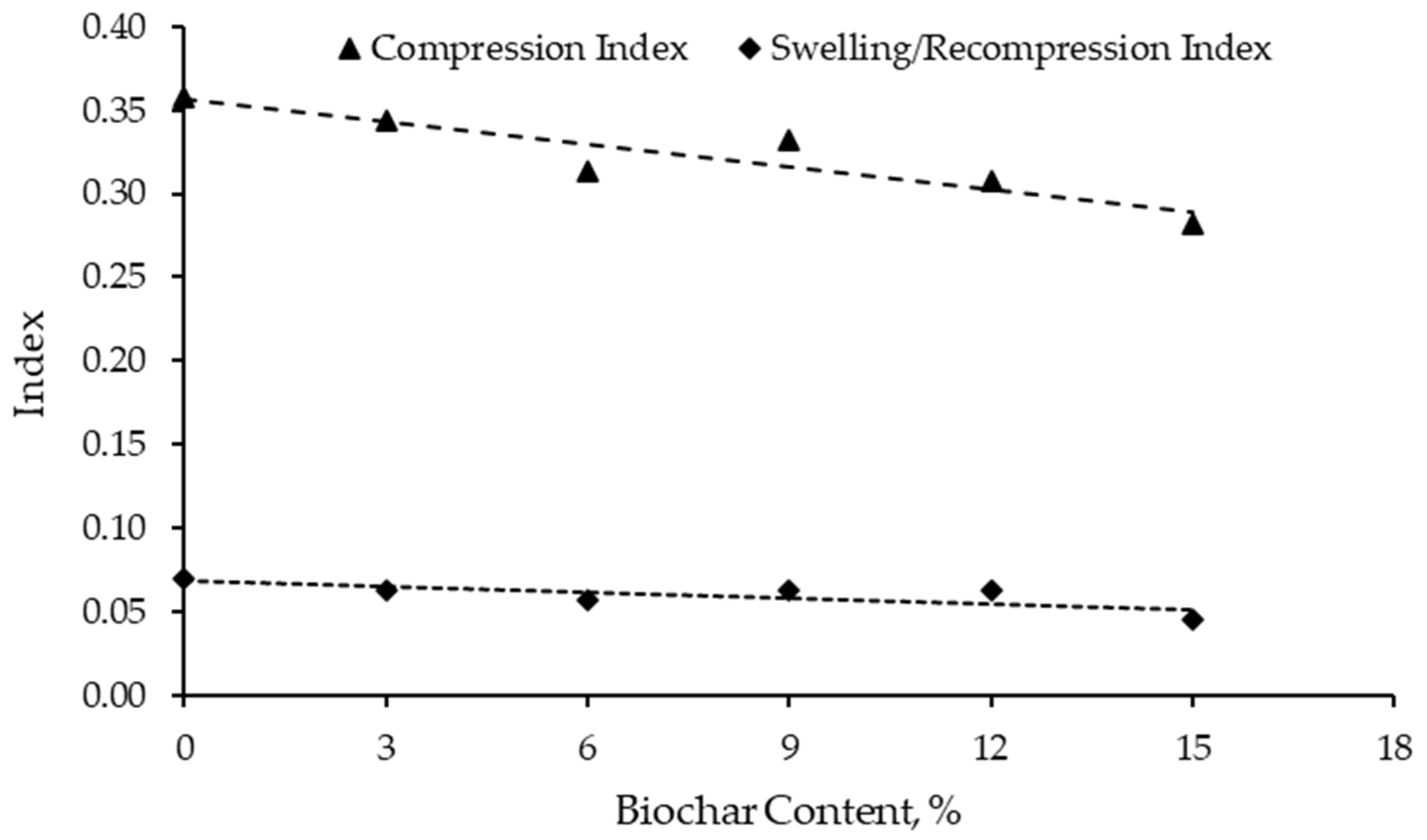
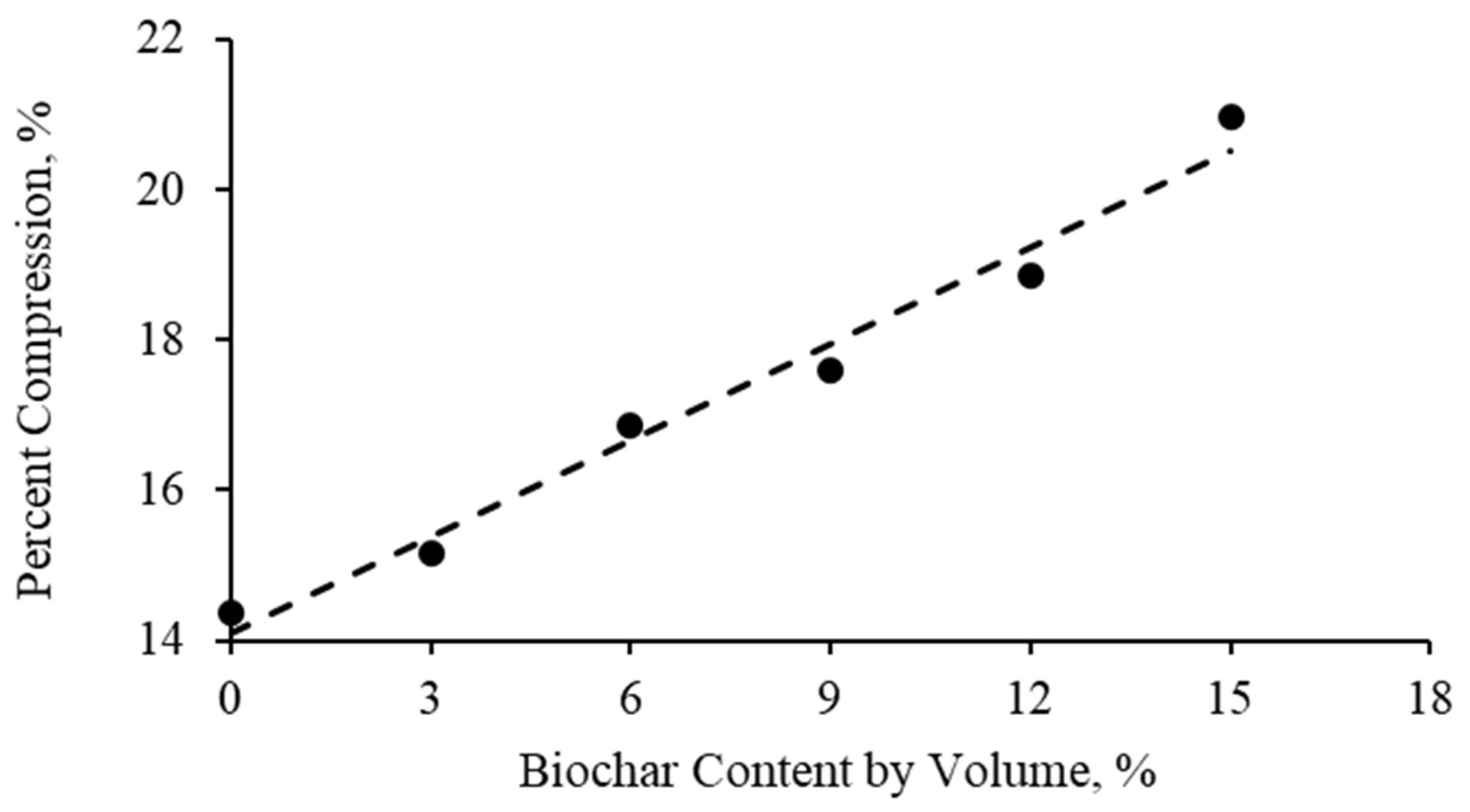
4.3. Compression Behavior
4.4. Shear Strength
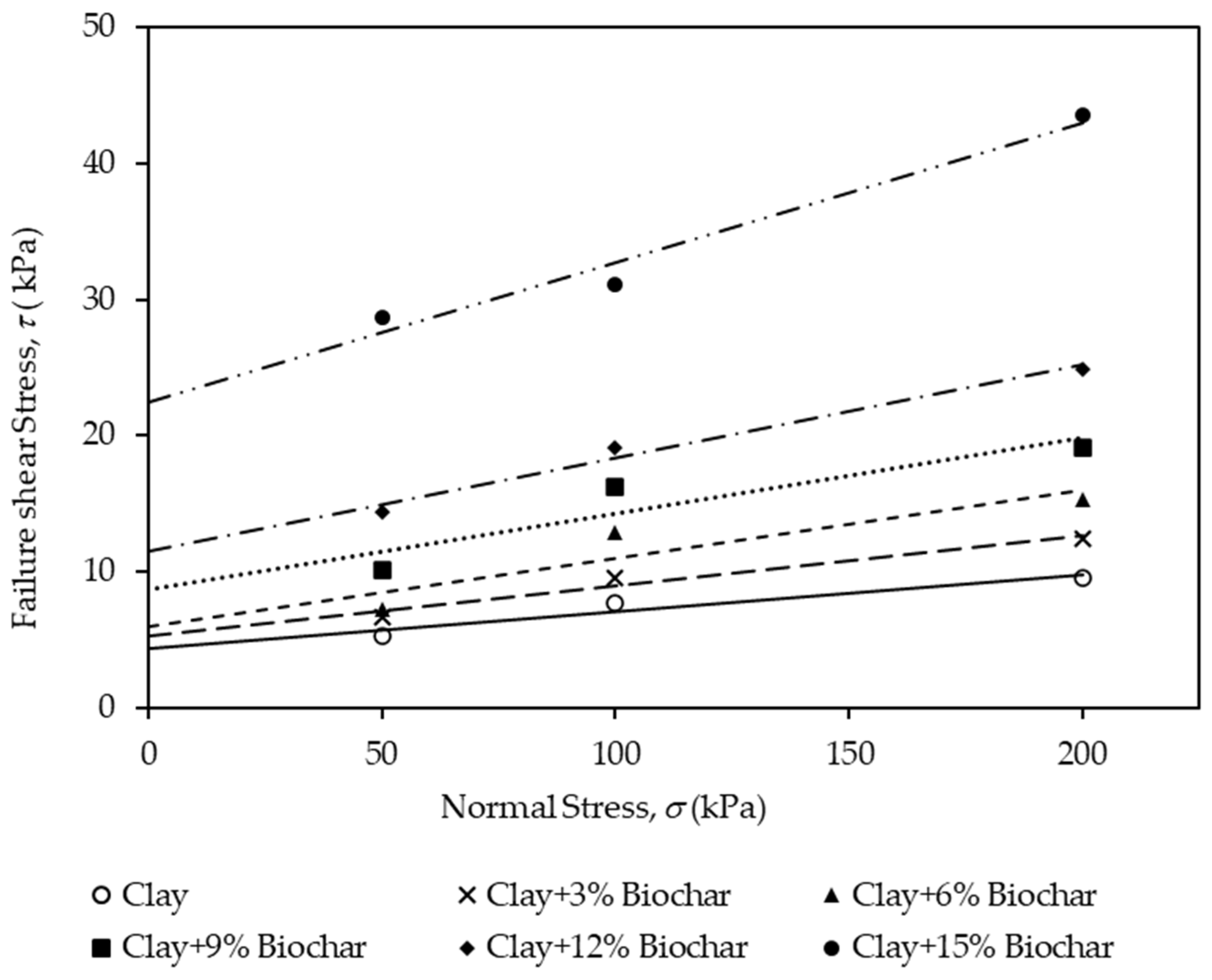
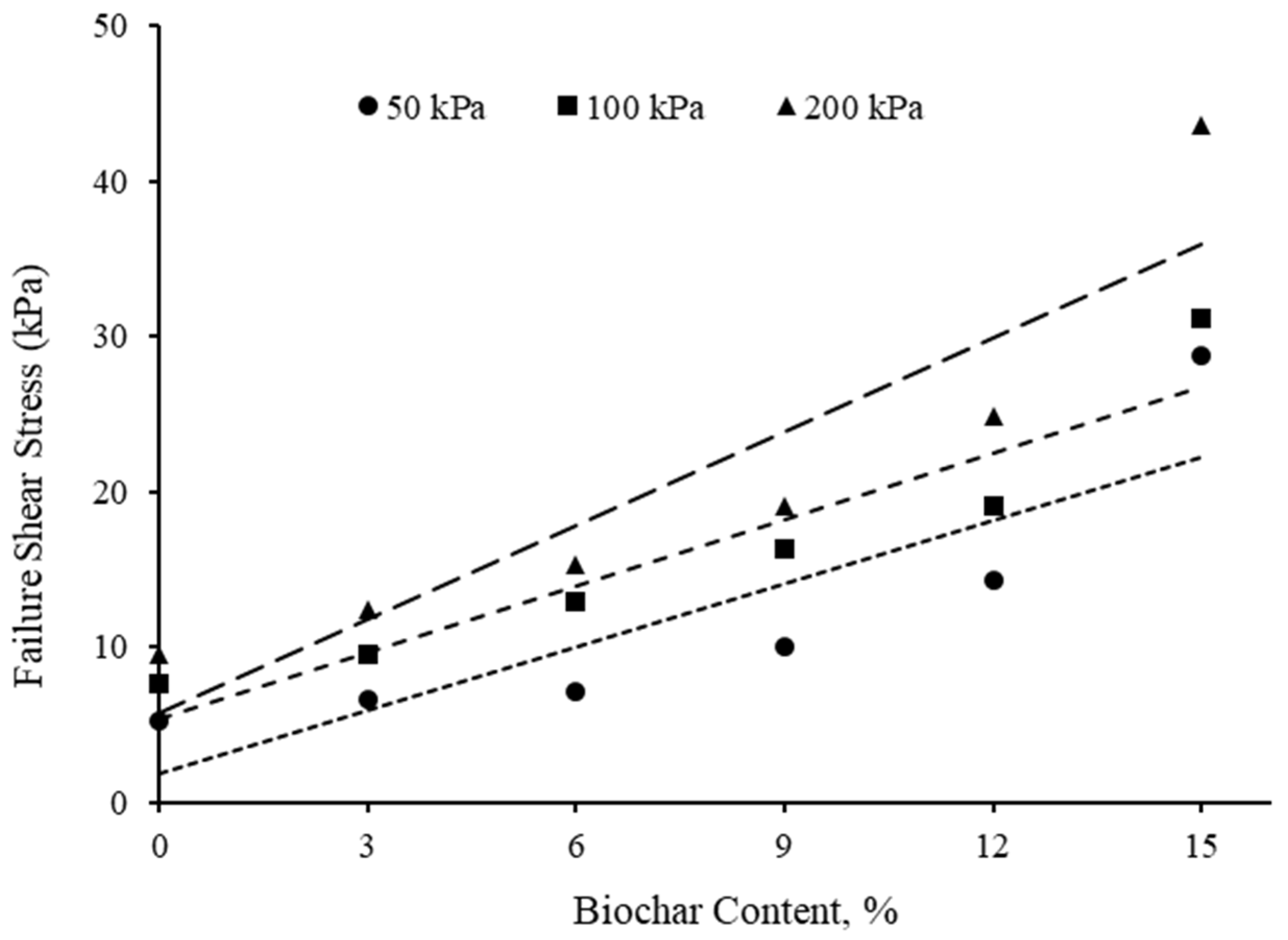
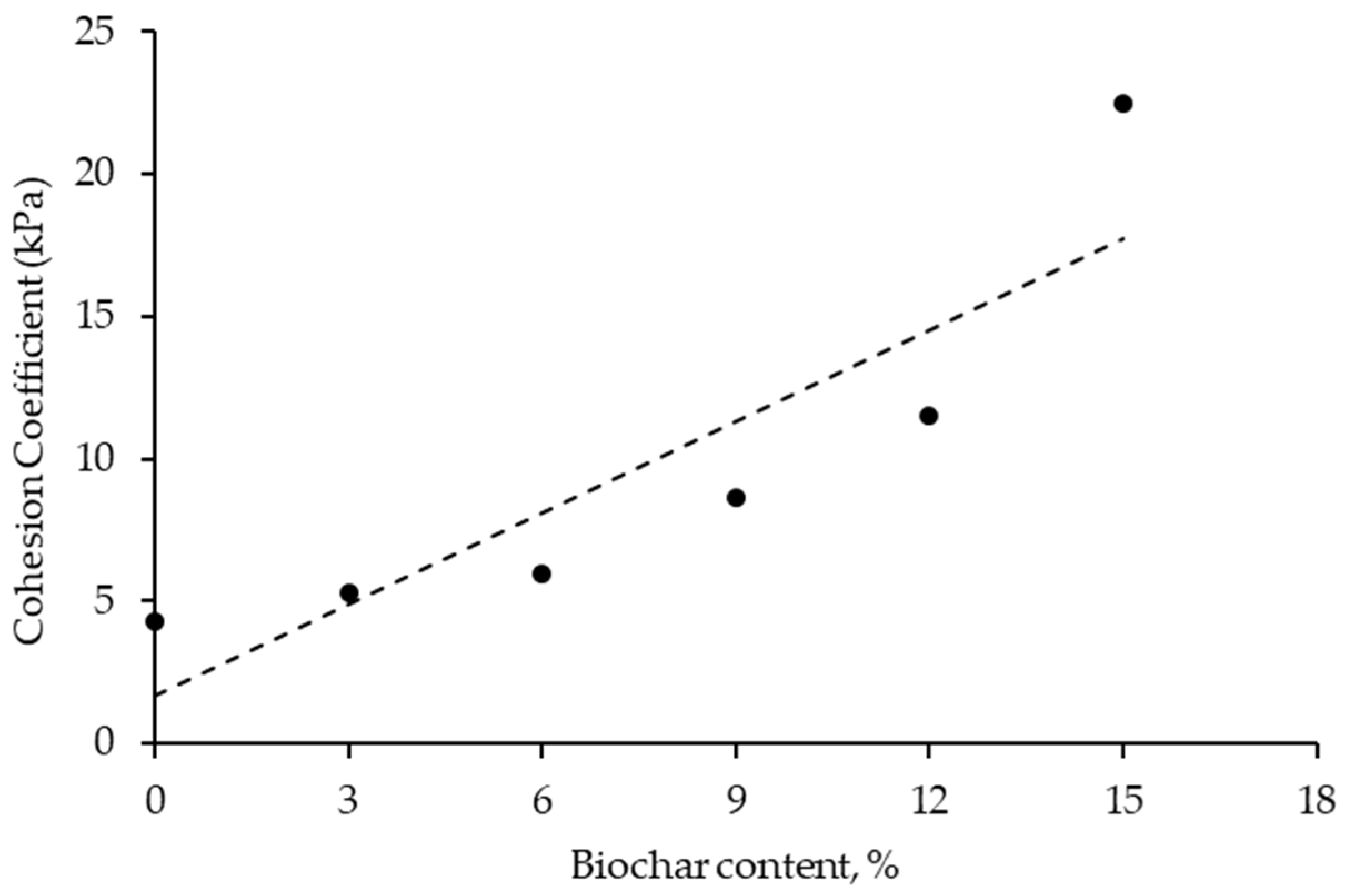
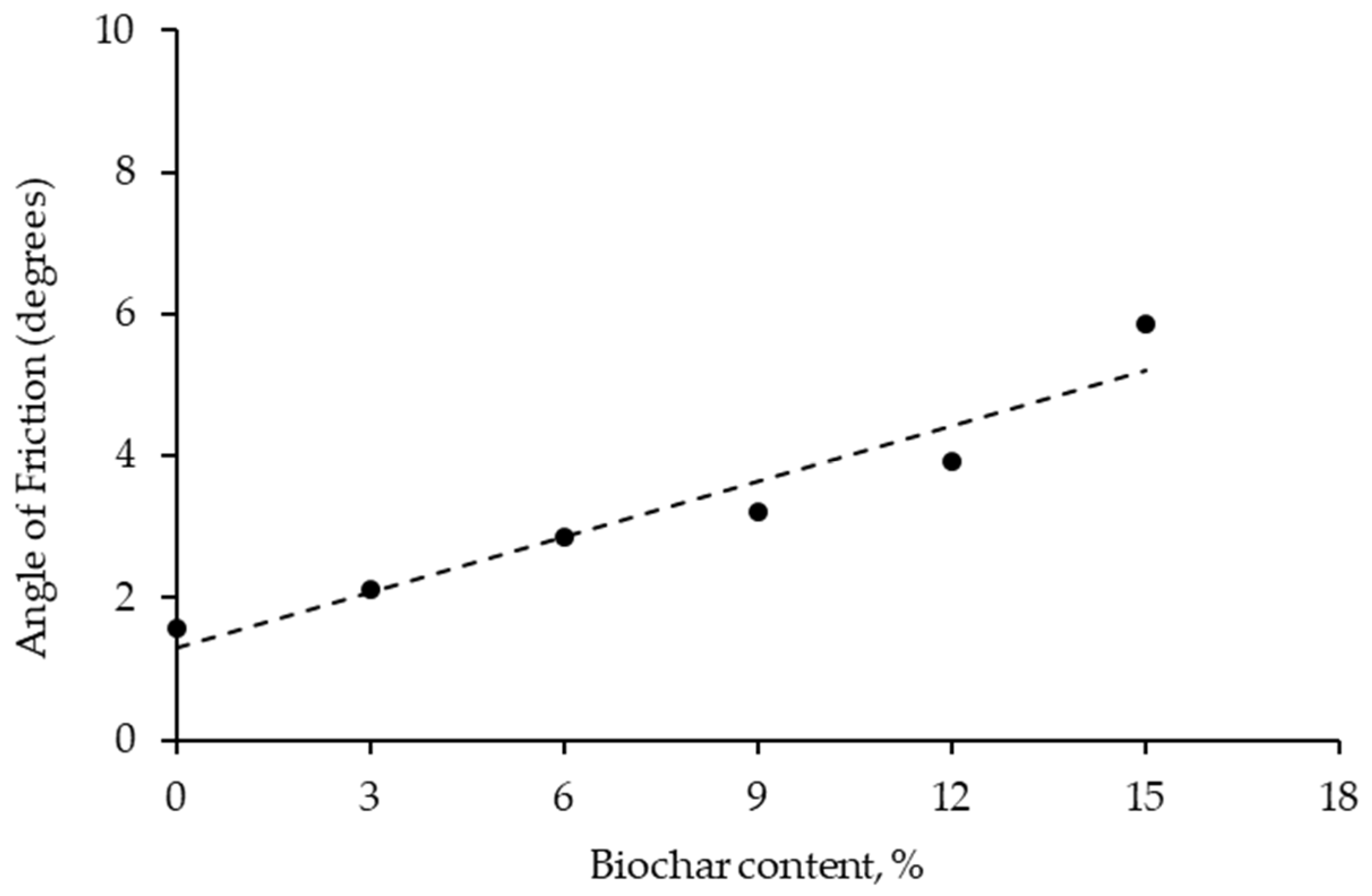
4.4.1. Direct Shear Test
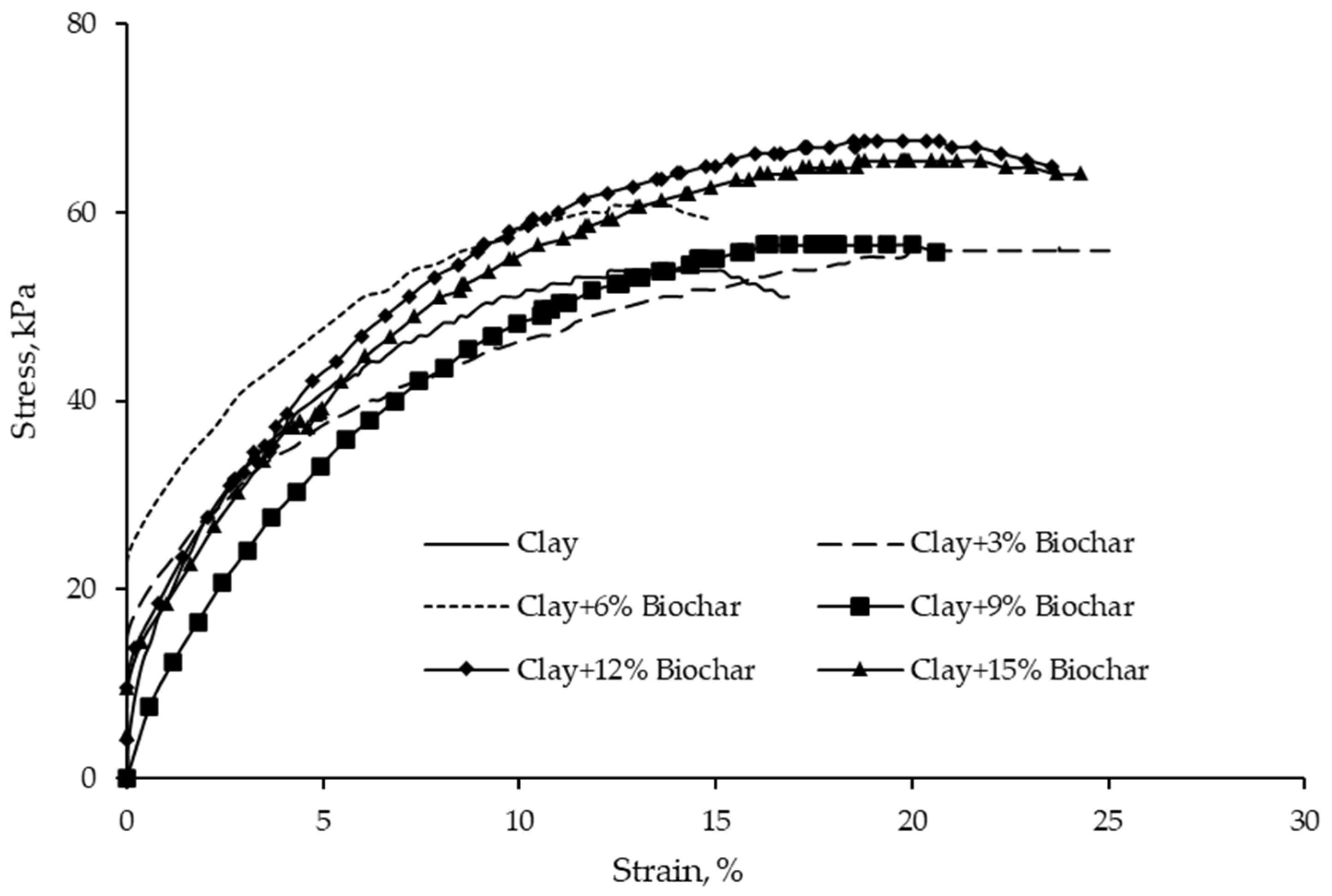
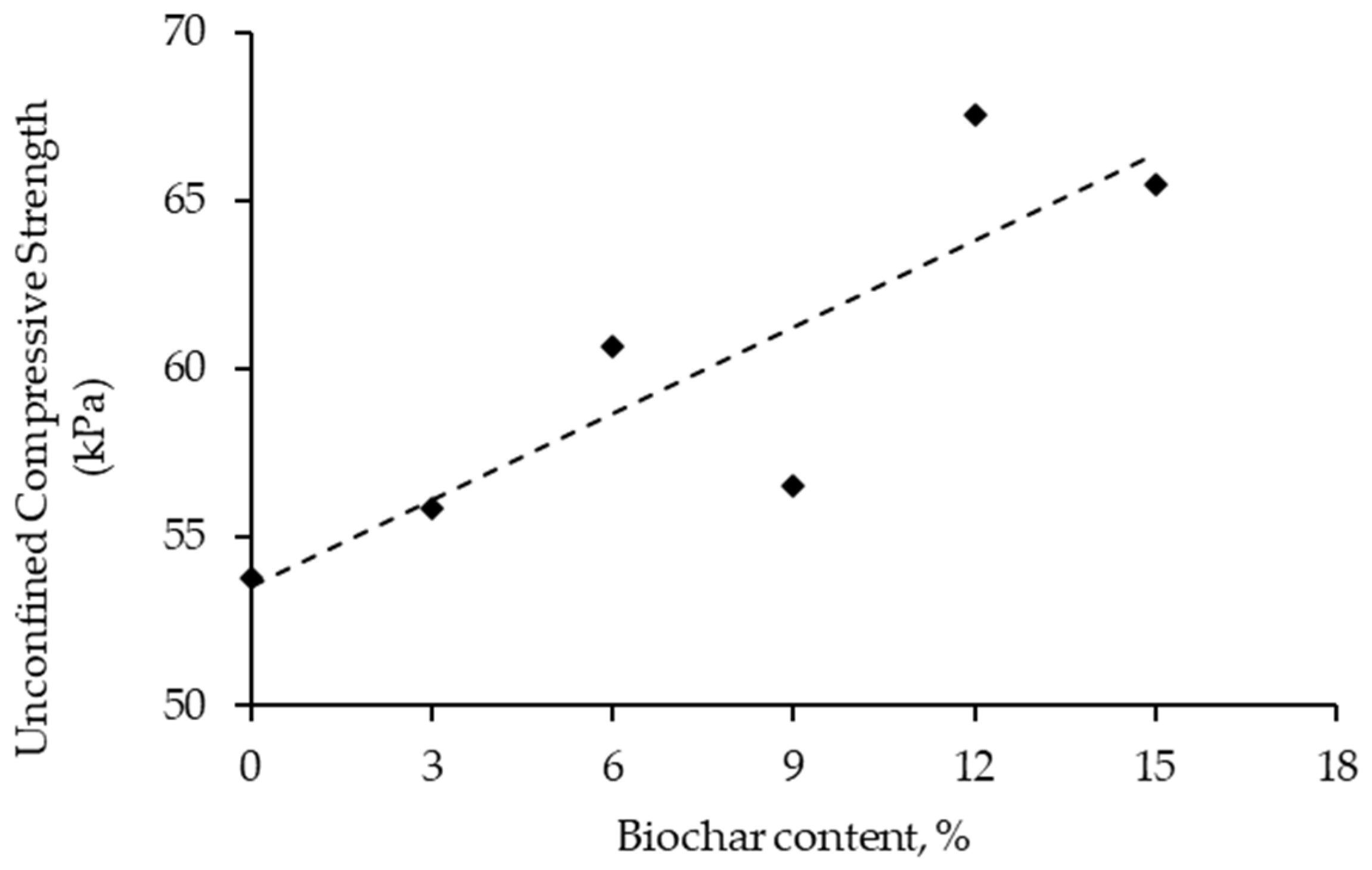
4.4.2. Unconfined Compressive Strength
5. Conclusions
- Plasticity Behavior: The addition of biochar led to a consistent increase in the liquid limit and plasticity index, indicating enhanced water retention capacity and altered clay–water interactions. These changes are attributed to the porous microstructure and high surface area of biochar.
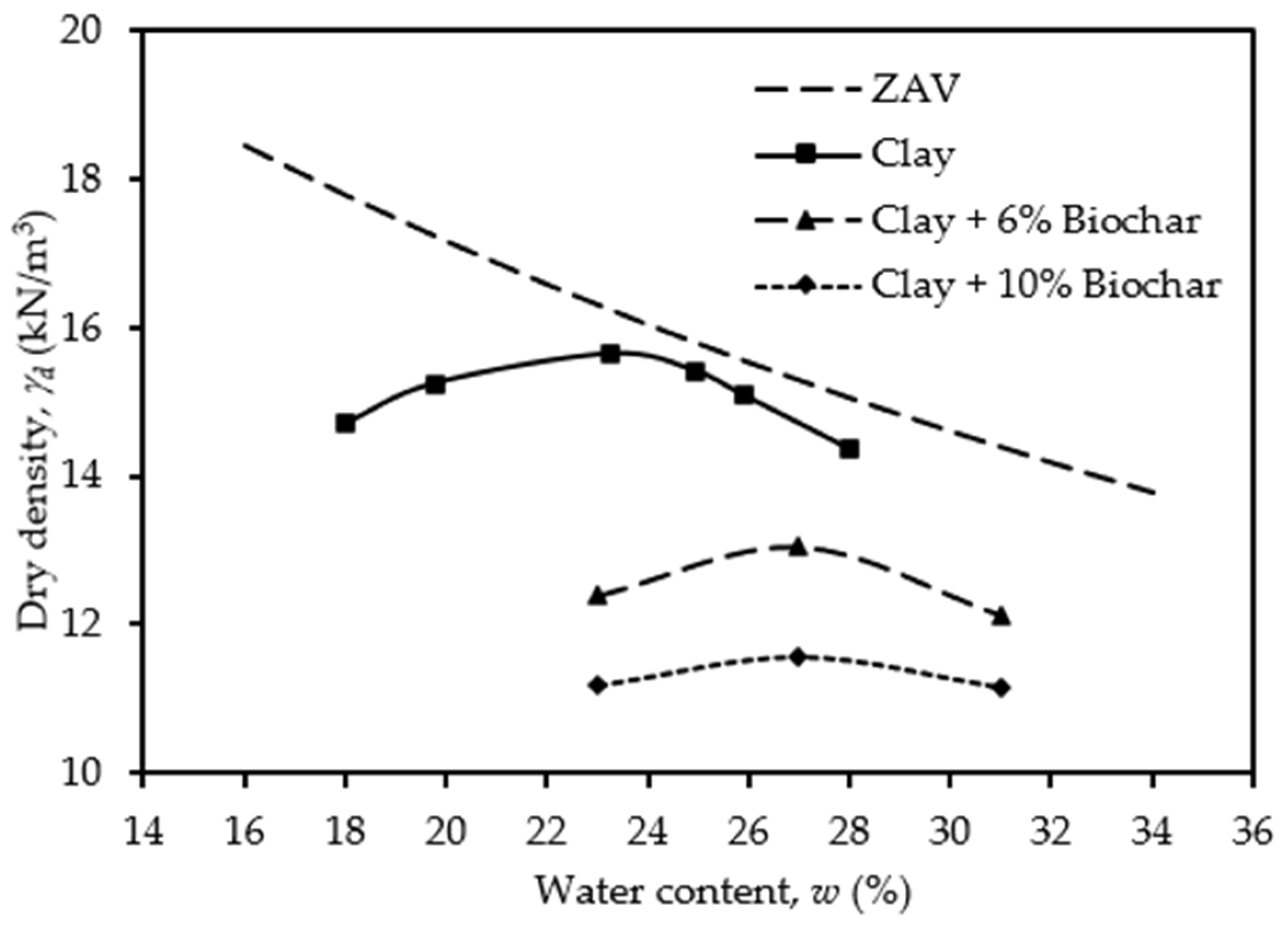
- Compaction Characteristics: Increasing biochar content resulted in a reduction in maximum dry unit weight and an increase in optimum moisture content. This trend is consistent with the low specific gravity and high-water absorption capacity of biochar, which influences the compaction response of the soil.
- Compressibility: Consolidation tests demonstrated increased compressibility with higher biochar content. This is likely due to the incorporation of porous biochar particles, which introduce additional voids and facilitate water retention within the soil matrix.
- Shear Strength Parameters: Direct shear testing revealed overall improvements in shear strength with biochar amendment. Both cohesion and internal friction angle increased with biochar content, suggesting that biochar enhances interparticle bonding and resistance to shear deformation under drained conditions.
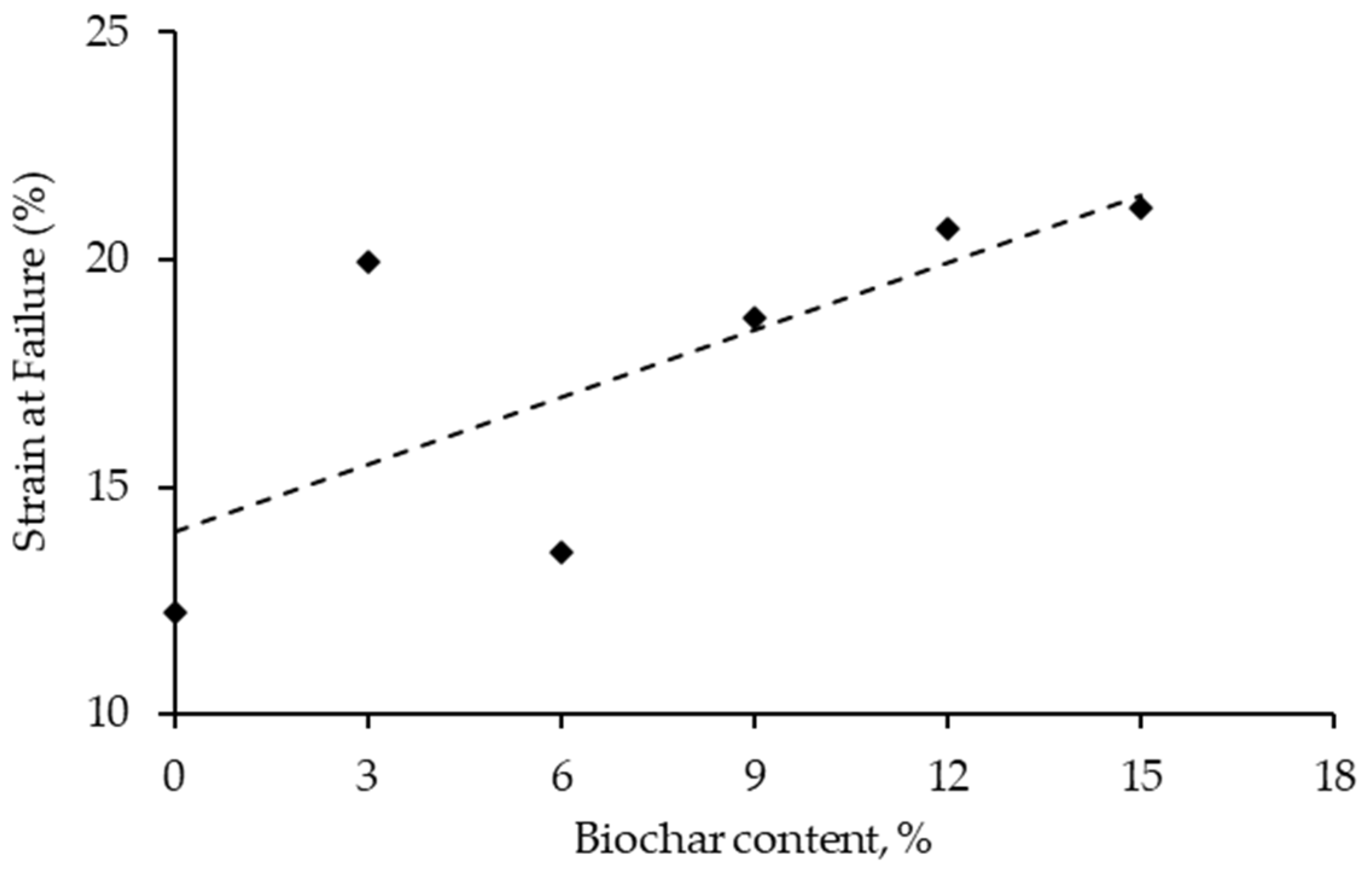
- Unconfined Compressive Strength: UC tests indicated a general increase in both peak compressive strength and strain at failure with increasing biochar content. The results suggest that biochar not only improves strength but also imparts greater ductility, allowing the clay matrix to undergo larger deformations before failure.
Author Contributions
Funding
Data Availability Statement
Conflicts of Interest
References
- Han, J. Principles and Practice of Ground Improvement; John Wiley & Sons: Hoboken, NJ, USA, 2015. [Google Scholar]
- Zamin, B.; Nasir, H.; Mehmood, K.; Iqbal, Q.; Farooq, A.; Tufail, M. An Experimental Study on the Geotechnical, Mineralogical, and Swelling Behavior of KPK Expansive Soils. Adv. Civ. Eng. 2021, 1–13. [Google Scholar] [CrossRef]
- Holtz, R.D.; Kovacs, W.D.; Sheahan, T.C. An Introduction to Geotechnical Engineering, 2nd ed.; Prentice Hall: Englewood Cliffs, NJ, USA, 2010. [Google Scholar]
- Tabarsa, A.; Latifi, N.; Meehan, C.L.; Manahiloh, K.N. Laboratory investigation and field evaluation of loess improvement using nanoclay—A sustainable material for construction. Constr. Build. Mater. 2018, 158, 454–463. [Google Scholar] [CrossRef]
- Rashid, A.S.A.; Latifi, N.; Meehan, C.L.; Manahiloh, K.N. Sustainable Improvement of Tropical Residual Soil Using an Environmentally Friendly Additive. Geotech. Geol. Eng. 2017, 35, 2613–2623. [Google Scholar] [CrossRef]
- Jing, J.; Abera, K.A.; Manahiloh, K.N.; Imhoff, P. Experimental Investigation of the Effects of Biochar on the Hydraulic Conductivity of Soils. Geotech. Front. 2017, 2017, 549–558. [Google Scholar]
- Lamprinakos, R.; Manahiloh, K.N. Evaluating the Compaction Behavior of Soils with Biochar Amendment. Geo-Congress 2019, GSP 309, 141–147. [Google Scholar]
- Manahiloh, K.N.; Imhoff, P. Properties of Biochar-Amended Highway Soils: Biochar—An Eco-friendly Geomaterial. GEOSTRATA Mag. 2018, 22, 48–55. [Google Scholar] [CrossRef]
- Yan, Y.; Akbar Nakhli, S.A.; Jin, J.; Mills, G.; Willson, C.S.; Legates, D.R.; Manahiloh, K.N.; Imhoff, P.T. Predicting the impact of biochar on the saturated hydraulic conductivity of natural and engineered media. J. Environ. Manag. 2021, 295, 113143. [Google Scholar] [CrossRef]
- Wong, J.T.F.; Chen, X.; Deng, W.; Chai, Y.; Ng, C.W.W.; Wong, M.H. Effects of biochar on bacterial communities in a newly established landfill cover topsoil. J. Environ. Manag. 2019, 236, 667–673. [Google Scholar] [CrossRef] [PubMed]
- Woolf, D. Biochar as a Soil Amendment: A Review of the Environmental Implications. 2008. Available online: https://orgprints.dk/id/eprint/13268/1/Biochar_as_a_soil_amendment_-_a_review.pdf (accessed on 15 August 2025).
- Spears, S. What is Biochar? Regen. Int. 2018. Available online: https://regenerationinternational.org/2018/05/16/what-is-biochar/ (accessed on 15 August 2025).
- Bednik, M.; Medyńska-Juraszek, A.; Ćwieląg-Piasecka, I. Effect of Six Different Feedstocks on Biochar’s Properties and Expected Stability. Agronomy 2022, 12, 1525. [Google Scholar] [CrossRef]
- Duku, M.H.; Gu, S.; Hagan, E.B. Biochar production potential in Ghana—A review. Renew. Sustain. Energy Rev. 2011, 15, 3539–3551. [Google Scholar] [CrossRef]
- Manahiloh, K.N.; Kaliakin, V.N.; Verdi, K. Evaluation of Biochar as a Soil Improvement Additive to Mid-Atlantic Expansive Clay. Geo-Congress 2024, 2024, 442–449. [Google Scholar]
- Zhang, Y.; Gu, K.; Tang, C.; Shen, Z.; Narala, G.R.; Shi, B. Effects of biochar on the compression and swelling characteristics of clayey soils. Int. J. Geosynth. Ground Eng. 2020, 6, 22. [Google Scholar] [CrossRef]
- Nakhli, S.A.A.; Goy, S.; Manahiloh, K.N.; Imhoff, P.T. Spatial heterogeneity of biochar (segregation) in biochar-amended media: An overlooked phenomenon, and its impact on saturated hydraulic conductivity. J. Environ. Manag. 2021, 279, 111588. [Google Scholar] [CrossRef]
- Wang, J.; Wang, S. Preparation, modification and environmental application of biochar: A review. J. Clean. Prod. 2019, 227, 1002–1022. [Google Scholar] [CrossRef]
- Bian, X.; Ren, Z.; Zeng, L.; Zhao, F.; Yao, Y.; Li, X. Effects of biochar on the compressibility of soil with high water content. J. Clean. Prod. 2024, 434, 140032. [Google Scholar] [CrossRef]
- Guney, Y.; Sari, D.; Cetin, M.; Tuncan, M. Impact of cyclic wetting-drying on swelling behavior of lime-stabilized soil. Build. Environ. 2007, 42, 681–688. [Google Scholar] [CrossRef]
- Lehmann, J.; Joseph, S. Biochar for environmental management: An introduction. In Biochar for Environmental Management; Routledge: Abingdon-on-Thames, UK, 2015; pp. 1–13. [Google Scholar]
- Zhang, L.; Jing, Y.; Chen, G.; Wang, X.; Zhang, R. Improvement of physical and hydraulic properties of desert soil with amendment of different biochars. J. Soils Sediments 2019, 19, 2984–2996. [Google Scholar] [CrossRef]
- Brassard, P.; Godbout, S.; Lévesque, V.; Palacios, J.H.; Raghavan, V.; Ahmed, A.; Hogue, R.; Jeanne, T.; Verma, M. 4-Biochar for soil amendment. In Char and Carbon Materials Derived from Biomass; Elsevier: Amsterdam, The Netherlands, 2019; pp. 109–146. [Google Scholar]
- Hardie, M.; Clothier, B.; Bound, S.; Oliver, G.; Close, D. Does biochar influence soil physical properties and soil water availability? Plant Soil 2014, 376, 347–361. [Google Scholar] [CrossRef]
- Reddy, K.R.; Yaghoubi, P.; Yukselen-Aksoy, Y. Effects of biochar amendment on geotechnical properties of landfill cover soil. Waste Manag. Res. 2015, 33, 524–532. [Google Scholar] [CrossRef]
- Castellini, M.; Giglio, L.; Niedda, M.; Palumbo, A.D.; Ventrella, D. Impact of biochar addition on the physical and hydraulic properties of a clay soil. Soil Tillage Res. 2015, 154, 1–13. [Google Scholar] [CrossRef]
- Manahiloh, K.N.; Natelborg, B. Laboratory Evaluation of the Geotechnical Properties of Biochar Amended Mississippi Chalk. IFCEE 2024, 2024, 346–355. [Google Scholar]
- Villarreal, J.; Wang, F. Feasibility study on biochar-treated expansive soils. Int. J. Geosynth. Ground Eng. 2021, 7, 27. [Google Scholar] [CrossRef]
- ASTM D2487-17; Standard Practice for Classification of Soils for Engineering Purposes (Unified Soil Classification System). ASTM International: West Conshohocken, PA, USA, 2025.
- D854-23; Standard Test Methods for Specific Gravity of Soil Solids by the Water Displacement Method. ASTM International: West Conshohocken, PA, USA, 2023.
- D4318-17e1; Standard Test Methods for Liquid Limit, Plastic Limit, and Plasticity Index of Soils. ASTM International: West Conshohocken, PA, USA, 2018.
- D7928-21e1; Standard Test Method for Particle-Size Distribution (Gradation) of Fine-Grained Soils Using the Sedimentation (Hydrometer) Analysis. ASTM International: West Conshohocken, PA, USA, 2021.
- ASTM International. Standard Test Methods for Laboratory Compaction Characteristics of Soil Using Standard Effort (12400 ft-lb/ft3(600k-N-m/m3)); ASTM International: West Conshohocken, PA, USA, 2021. [Google Scholar]
- D2435/D2435M-25; Standard Test Methods for One-Dimensional Consolidation Properties of Soils Using Incremental Loading. ASTM International: West Conshohocken, PA, USA, 2025.
- D3080/D3080M-23; Standard Test Method for Direct Shear Test of Soils Under Consolidated Drained Conditions. ASTM International: West Conshohocken, PA, USA, 2023.
- ASTM D2166-06; Standard Test Method for Unconfined Compressive Strength of Cohesive Soil. ASTM International: West Conshohocken, PA, USA, 2024.
- Andrade, F.A.; Al-Qureshi, H.A.; Hotza, D. Measuring the plasticity of clays: A review. Appl. Clay Sci. 2011, 51, 1–7. [Google Scholar] [CrossRef]
- Mitchell, J.K.; Soga, K. Fundamentals of Soil Behavior; John Wiley & Sons: Hoboken, NJ, USA, 2005. [Google Scholar]



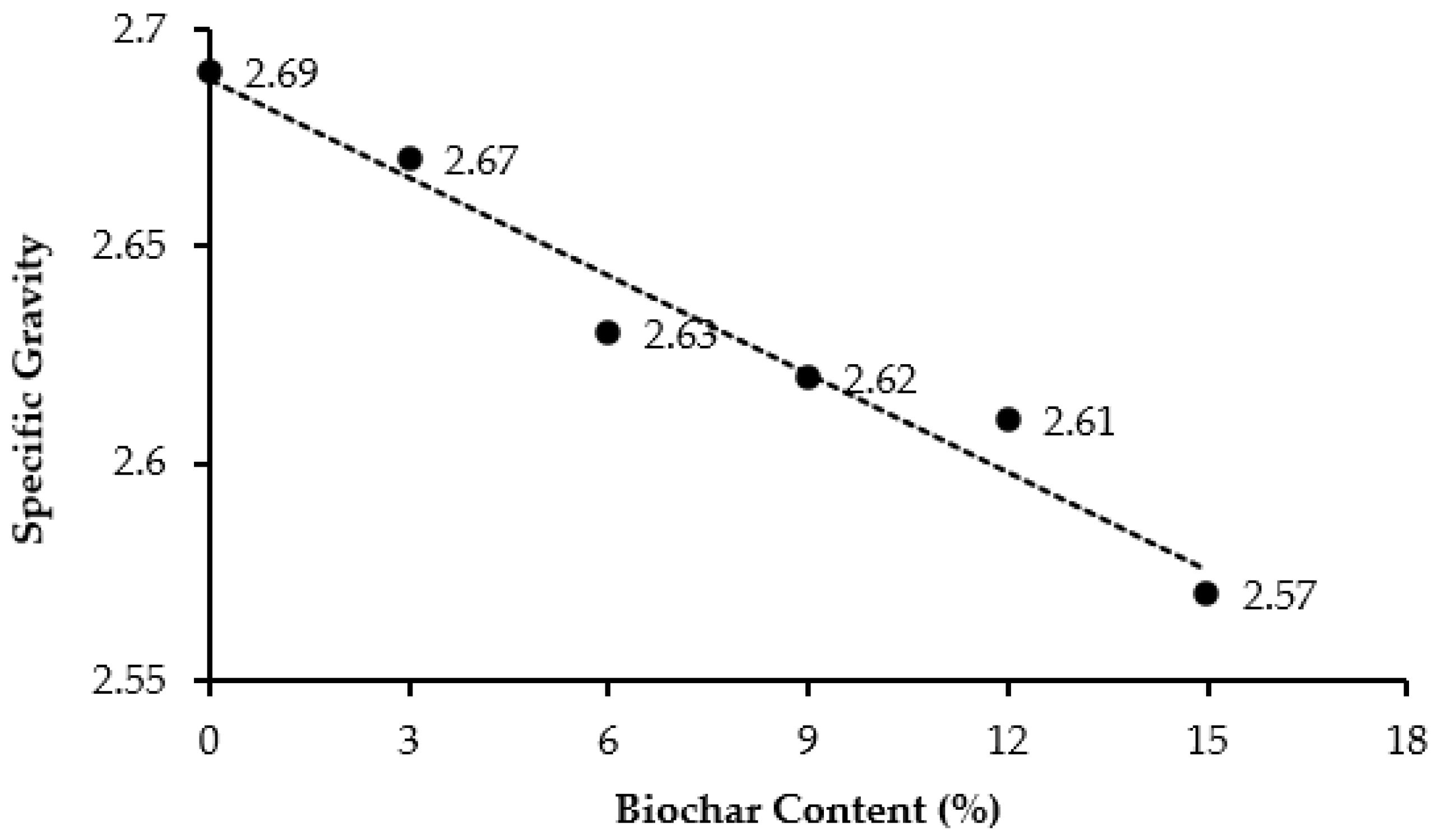
| % Biochar content (%) | 0 | 3 | 6 | 9 | 12 | 15 |
| Specific Gravity | 2.69 | 2.67 | 2.63 | 2.62 | 2.61 | 2.57 |
| Biochar content (%) | 0 | 3 | 6 | 9 | 12 | 15 |
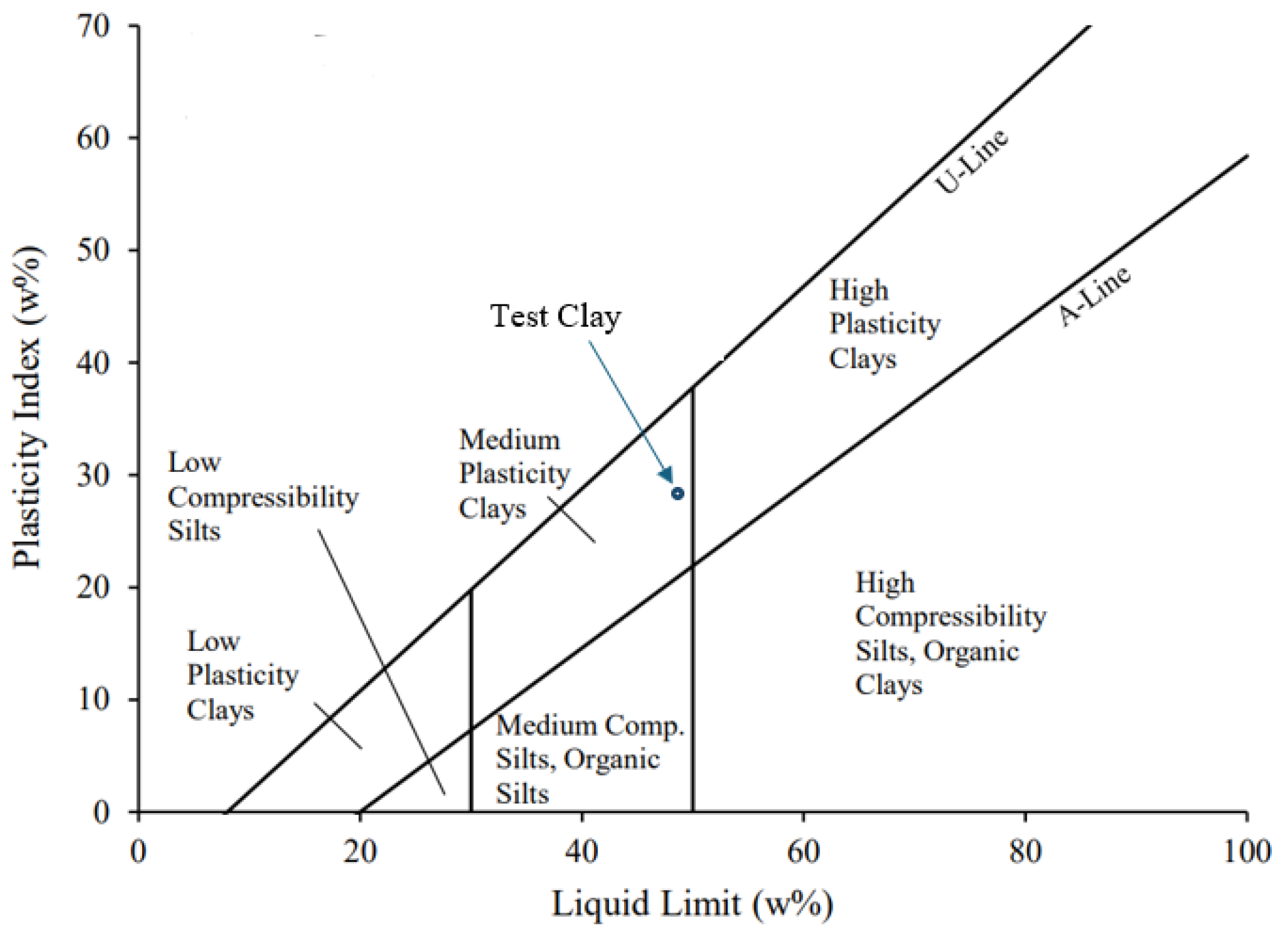
| Liquid Limit, LL (%) | 49.8 | 50.9 | 52.2 | 52.5 | 54.3 | 56.0 |
| Plastic Limit, PL (%) | 25.1 | 24.7 | 24.4 | 24.2 | 23.4 | 21.8 |
| Plasticity Index, PI (%) | 24.7 | 26.2 | 27.9 | 28.3 | 30.9 | 34.2 |
| Biochar Content, % | 3 | 6 | 9 | 12 | 15 |
| Compression Index, Cc | 0.358 | 0.344 | 0.313 | 0.308 | 0.282 |
| Swell Index, Cs | 0.070 | 0.063 | 0.057 | 0.063 | 0.045 |
| Biochar Content, % | (kPa) | ||
|---|---|---|---|
| = 50 kPa | = 100 kPa | = 200 kPa | |
| 0 | 5.27 | 7.66 | 9.58 |
| 3 | 6.70 | 9.58 | 12.45 |
| 6 | 7.18 | 12.93 | 15.32 |
| 9 | 10.05 | 16.28 | 19.15 |
| 12 | 14.36 | 19.15 | 24.90 |
| 15 | 28.73 | 31.12 | 43.57 |
| Biochar Content, % | 0 | 3 | 6 | 9 | 12 | 15 |
| (deg.) | 1.6 | 2.1 | 2.9 | 3.2 | 3.9 | 5.9 |
| Cohesion Coefficient, c′ (kPa) | 4.31 | 5.27 | 5.99 | 8.62 | 11.49 | 22.50 |
| % Biochar | Stress (kPa) | Strain % |
|---|---|---|
| 0 | 53.78 | 12.26 |
| 3 | 55.85 | 19.97 |
| 6 | 60.67 | 13.55 |
| 9 | 56.54 | 18.73 |
| 12 | 67.57 | 20.69 |
| 15 | 65.50 | 21.12 |
Disclaimer/Publisher’s Note: The statements, opinions and data contained in all publications are solely those of the individual author(s) and contributor(s) and not of MDPI and/or the editor(s). MDPI and/or the editor(s) disclaim responsibility for any injury to people or property resulting from any ideas, methods, instructions or products referred to in the content. |
© 2025 by the authors. Licensee MDPI, Basel, Switzerland. This article is an open access article distributed under the terms and conditions of the Creative Commons Attribution (CC BY) license (https://creativecommons.org/licenses/by/4.0/).
Share and Cite
Manahiloh, K.N.; Fetene, S.M.; Detwiler, E. Effect of Wood-Based Biochar on the Engineering Properties of Medium Plasticity Clay. Geosciences 2025, 15, 430. https://doi.org/10.3390/geosciences15110430
Manahiloh KN, Fetene SM, Detwiler E. Effect of Wood-Based Biochar on the Engineering Properties of Medium Plasticity Clay. Geosciences. 2025; 15(11):430. https://doi.org/10.3390/geosciences15110430
Chicago/Turabian StyleManahiloh, Kalehiwot Nega, Samuel Mesele Fetene, and Emma Detwiler. 2025. "Effect of Wood-Based Biochar on the Engineering Properties of Medium Plasticity Clay" Geosciences 15, no. 11: 430. https://doi.org/10.3390/geosciences15110430
APA StyleManahiloh, K. N., Fetene, S. M., & Detwiler, E. (2025). Effect of Wood-Based Biochar on the Engineering Properties of Medium Plasticity Clay. Geosciences, 15(11), 430. https://doi.org/10.3390/geosciences15110430