1. Introduction
Telomeres play a crucial role in cellular differentiation, ageing, and disease [
1]. The shortening of telomere length is recognized as a biomarker of ageing [
2]. Telomere elongation is primarily mediated by telomerase activity (TA), a ribonucleoprotein complex composed of telomerase reverse transcriptase (TERT) and telomerase RNA component (TERC), which plays a key role in maintaining telomere length and genomic stability [
3]. As the catalytic subunit of telomerase, TERT functions together with TERC to prevent telomere erosion, thereby averting replicative senescence and genetic instability. Furthermore, TERT exhibits additional non-telomeric activities, such as cell cycle regulation, modulation of cellular signalling and gene expression, prolongation of proliferative lifespan, and involvement in DNA damage responses [
4]. Consequently, TERT is frequently employed as a target gene in constructing ageing models. TERT is typically highly expressed in actively dividing cells but suppressed in most somatic cells. When TERT expression declines, telomerase activity is impaired, limiting telomere repair capacity and leading to progressive telomere shortening. This triggers DNA damage responses and activates cell-cycle suppression pathways, such as p53/p21 and p16INK4a, causing cells to arrest in G1 and enter a senescent state [
5]. Early seminal work by Bodnar et al. demonstrated for the first time that ectopic expression of hTERT in normal human diploid cells could extend cellular lifespan, thereby establishing a fundamental link between telomerase activity and replicative capacity [
6]. Studies have shown that restoring TERT levels in aging animal models can reinitiate telomerase expression, alleviate tissue inflammation, and reverse aging phenotypes. This indicates that the inactivation of TERT and its multi-pathway cellular protective mechanisms is a key factor driving cellular aging and subsequent organismal aging [
7]. The deletion of the TERT gene can accelerate telomere shortening and activate aging signals, enabling the stable and repeatable simulation of natural aging processes within a short timeframe. For instance, in systemic TERT knockout mice, telomeres progressively shorten from the first to the third generation, with the third generation exhibiting typical aging phenotypes accompanied by upregulation of p16INK4a and p21Cip1 [
8]. In zebrafish, knocking out TERT can reduce its lifespan from approximately 42 months to 12–18 months, accompanied by significant degenerative changes in distal organs [
9]. Studies have demonstrated that the deletion of TERT gene in mouse vascular endothelial cells can induce telomere-dependent DNA damage and cellular senescence, manifested as decreased capillary density, impaired vasodilation, mitochondrial dysfunction, and accelerated cardiovascular aging [
10]. The knock-out of TERT gene can reproduce the telomere-dependent aging characteristics in multiple species and tissues. These studies provide a biologically relevant experimental model for investigating aging mechanisms and evaluating anti-aging strategies. However, there are few studies on the function of TERT gene in large animals, and further research on aging-related mechanisms in large animals is urgently needed.
CRISPR/Cas9 technology enables targeted gene disruption at specific genomic loci and is an important tool for constructing gene-edited animal models and studying gene function [
11]. For example, Wang et al. reported the efficient generation of GHR-knockout Bama minipig fibroblast cells using CRISPR/Cas9, supporting the feasibility of CRISPR/Cas9-derived knockout models in pigs [
12]. Consequently, gene knockout has become a vital tool for constructing high-fidelity disease models and elucidating pathological mechanisms. The PiggyBac transposon system recognizes TTAA sequences as recognition sites. It has both a relatively weak positional effect and a high vector capacity, and can integrate large fragments of exogenous DNA into safe genomic loci at a high frequency. Seamless excision is facilitated by transposase [
13]. Therefore, it enables the efficient construction of gene overexpression models. Wu et al. compared the transpositional activity of four different transposons (SB11, Tol2, piggyBac, and Mos1) in four distinct mammalian cell lines and found that PiggyBac exhibited the highest transpositional activity [
14]. Huang et al. compared the genomic integration efficiency and transpositional site preference of SB, Tol2, and PiggyBac transposons in peripheral blood lymphocytes (PBL) and umbilical cord blood (UCB)-derived primary T cells. The results showed that PiggyBac achieved the highest stable gene transfer efficiency in PBL and UCB T cells, surpassing SB11 and Tol2 [
15]. Woltjen et al. utilized the PiggyBac transposon system to overexpress c-Myc, Klf4, Oct4, and Sox2, efficiently reprogramming human and mouse embryonic fibroblasts to obtain stable induced pluripotent stem cells (iPS). Subsequently, seamless excision of exogenous sequences by transposase confirmed that this method is more advantageous than traditional integrative viral methods for “clearing” reprogramming factors after functional verification [
16]. PiggyBac has advantages over other overexpression strategies in terms of integration efficiency, reversibility, and adaptability to large payloads.
Compared with rodents, large animals, especially pigs, more closely resemble humans in physiological structure, organ function, metabolic characteristics, and lifespan. Therefore, pigs are considered a valuable large-animal model for ageing research. The rapid development of the aforementioned gene-editing technologies has made precise genetic manipulation in large animals increasingly feasible. Although TERT knockout or overexpression has been investigated in several previously reported models, studies on the parallel establishment of TERT monoallelic knockout and TERT-overexpressing porcine endothelial cell lines remain limited. In the present study, we generated TERT monoallelic knockout and TERT-overexpressing porcine iliac artery endothelial cell (PIEC) lines using gene-editing technology and performed a preliminary comparative analysis of their cellular biological characteristics. The novelty of this study lies in the construction of a paired porcine cell platform for comparative evaluation of TERT loss- and gain-of-function phenotypes in the same cellular background. This study not only provides new experimental materials for investigating TERT gene function, but also lays a technical foundation for the future generation of TERT-edited pig models using somatic cell nuclear transfer (SCNT).
2. Materials and Methods
2.1. Cell Culture
Porcine iliac artery endothelial cells (PIEC) used in this study were provided as a gift by the ShanghaiTech University (Shanghai Institute Cell Bank, Serial: GNO15, Shanghai, China). Cells were cultured in Dulbecco’s Modified Eagle Medium supplemented with 10% foetal bovine serum and 1% penicillin-streptomycin, and maintained at 37 °C in a humidified incubator with 5% CO2. Cell passage was performed using 0.25% Trypsin-EDTA solution (Yuanye, Shanghai, China). Cells were passaged or used for subsequent experiments when confluence reached 80–90%. This study was reviewed and approved by the Ethics Committee of Yunnan Agricultural University (approval No. YNAU202105009; publication date: 1 July 2021).
2.2. Construction of sgRNA Expression Vectors
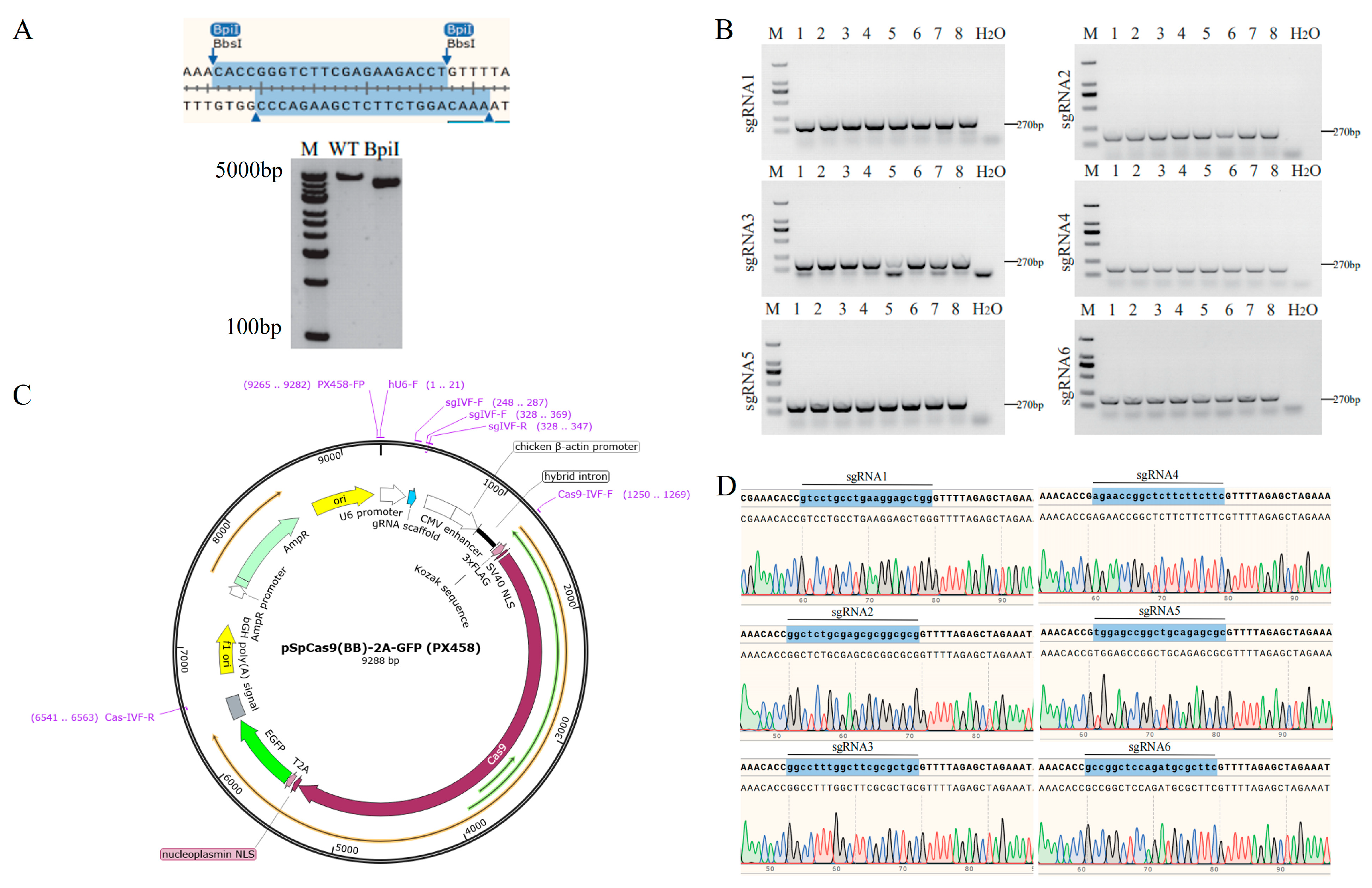
Primers were designed for SNP detection within exons 2 and 3 of the TERT gene (Gene ID: 492280), respectively: TERT-SNP-F2: CTCTGCTGCGTCTCCCAG; TERT-SNP-R2: CCCAGTCTTTCAGGCTGTCA. PCR amplification was performed using genomic DNA from porcine iliac artery endothelial cells (PIECs) as the template. The amplified products were purified by agarose gel electrophoresis and subjected to Sanger sequencing to identify SNPs within the target regions. Based on the sequencing results, sgRNAs targeting the TERT gene were designed using the CRISPOR online platform (
https://github.com/maximilianh/crisporWebsite, accessed on 12 March 2025), which was used for guide RNA design and target evaluation. The three highest-scoring sgRNAs for each exon region were selected for synthesis. The synthesized sgRNAs were diluted to 100 μmol/L and used as templates for PCR amplification. The amplified products were ligated into the pSpCas9(BB)-2A-GFP (px458) linearized plasmid, which had been digested with BsaI, and the ligation reaction was maintained at 16 °C for more than 2 h. The ligation products were then transformed into competent
E. coli cells, plated on LB agar containing ampicillin, and incubated overnight at 37 °C. On the following day, a single colony was picked, bacterial lysate was prepared, and Sanger sequencing was performed for verification. Positive clones with correct sequencing results were selected for expansion, and plasmid DNA was extracted using a medium-scale endotoxin-free plasmid extraction kit for subsequent cell transfection experiments.
2.3. Construction of a PiggyBac Expression Vector for Overexpression of the TERT Gene
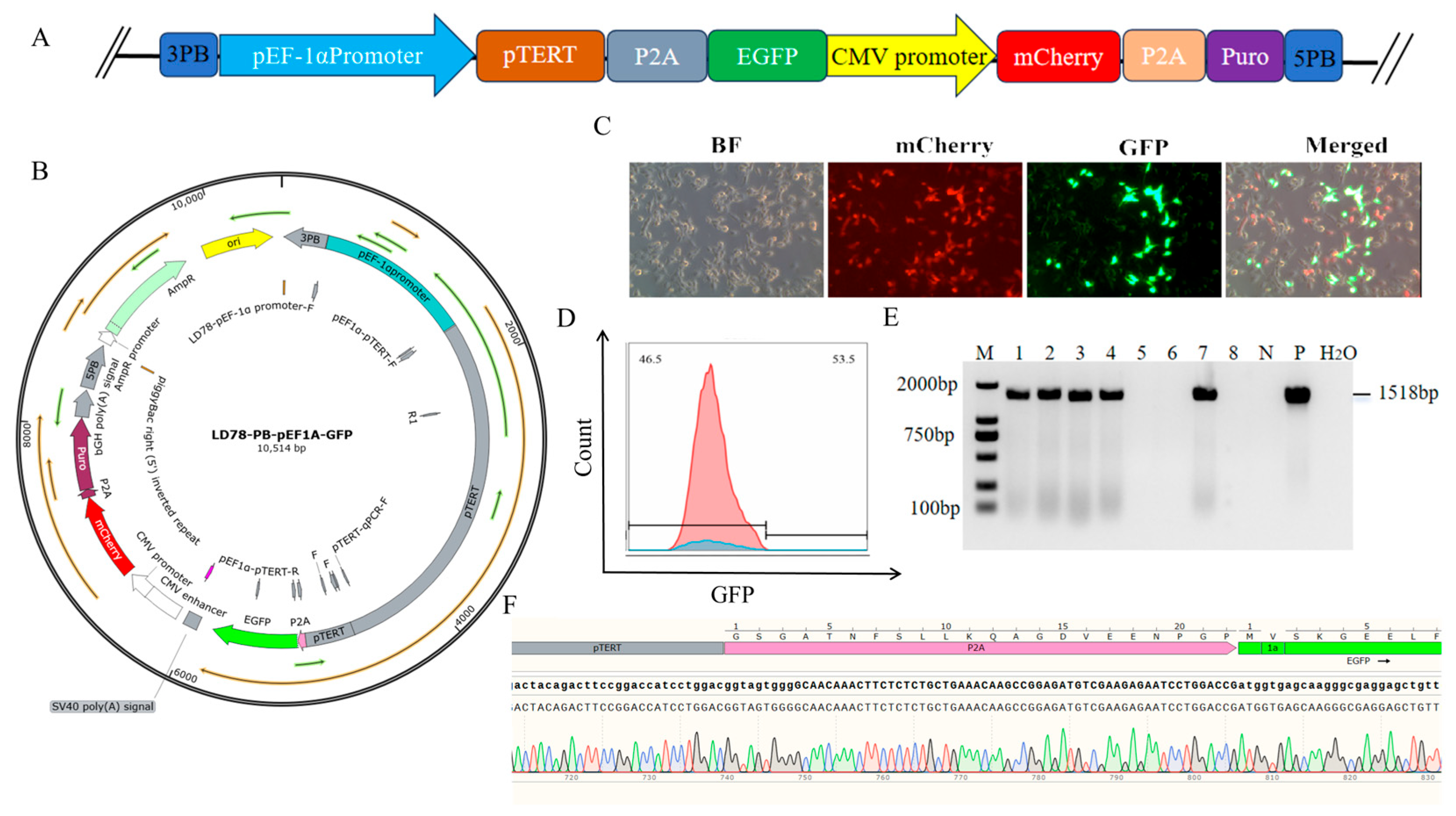
The porcine genomic sequence of the pEF-1α gene (Gene ID: FM995601) was downloaded from the NCBI database. Primers for amplification of the pEF-1α promoter were designed and synthesised (pEF-1αpromoter-F: CAAGGGCGGTGGAGAAGCCC; pEF-1αpromoter-R: TCACGACACCTAAGACGACA), and the promoter fragment was amplified by PCR using porcine genomic DNA as the template. In parallel, based on the cDNA sequence of porcine telomerase reverse transcriptase (pTERT; GenBank: NM_001244300.2), primers were designed and synthesised to amplify the pTERT coding sequence (pTERT-F: ATGCCGCGCGCGCCCCGGTG; pTERT-R: TCAGTCCAGGATGGTCCGGA). The pTERT fragment was amplified by PCR using porcine cDNA as the template. The amplified pEF-1α promoter fragment and pTERT fragment were digested with XbaI and MluI and ligated into the LD78-PB vector linearised with the same enzymes. The ligation reaction was performed at 16 °C for more than 2 h. The recombinant plasmid was then transformed into competent E. coli cells, plated on LB agar containing ampicillin, and incubated overnight at 37 °C. The following day, single colonies were screened by colony PCR and Sanger sequencing to identify positive clones with the correct insert sequence. Positive clones were expanded, and plasmid DNA was extracted using a medium-scale endotoxin-free plasmid extraction kit for subsequent cell transfection experiments.
2.4. Cell Transfection, Positive Clone Selection, and sgRNA Efficiency Assessment
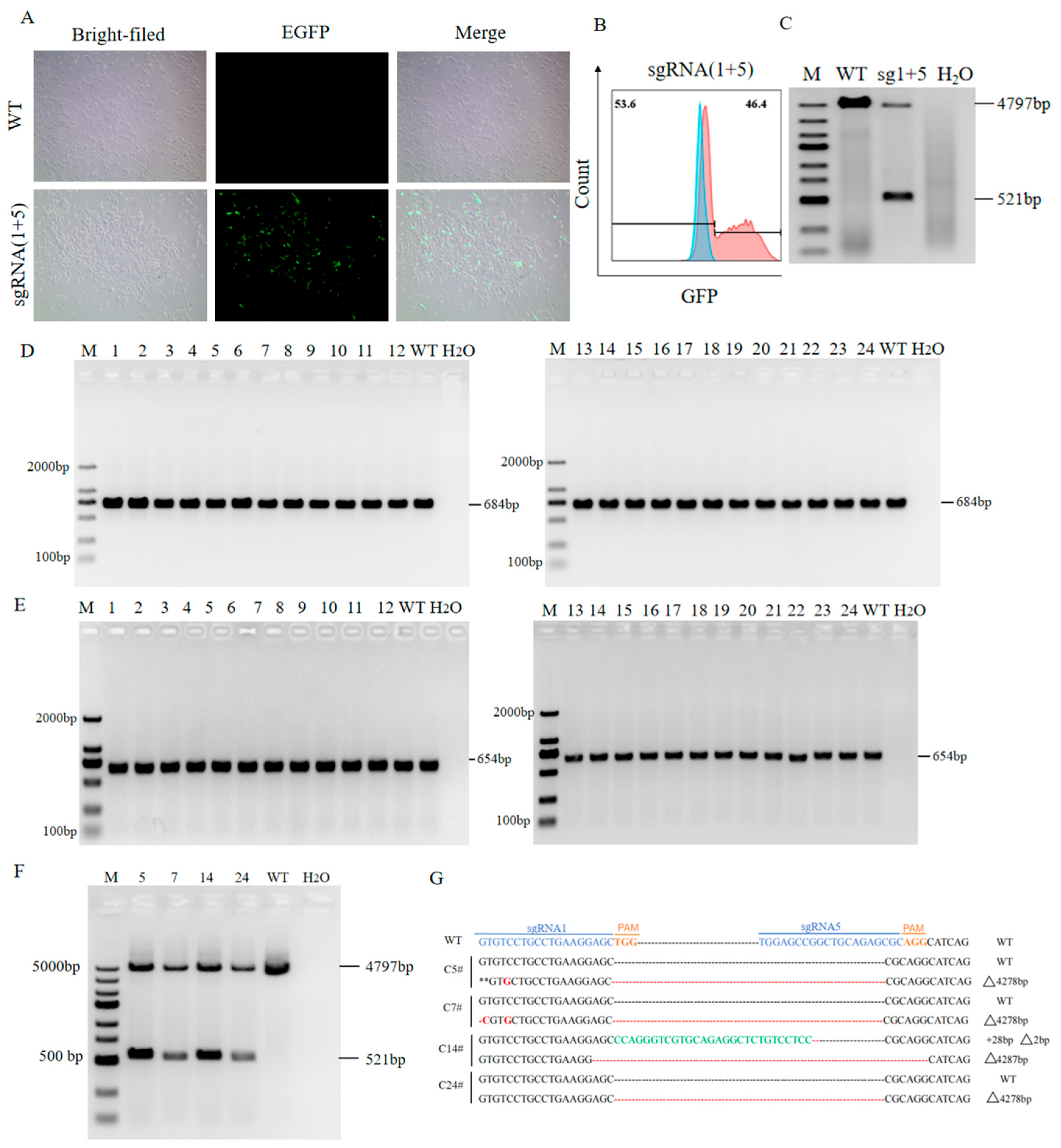
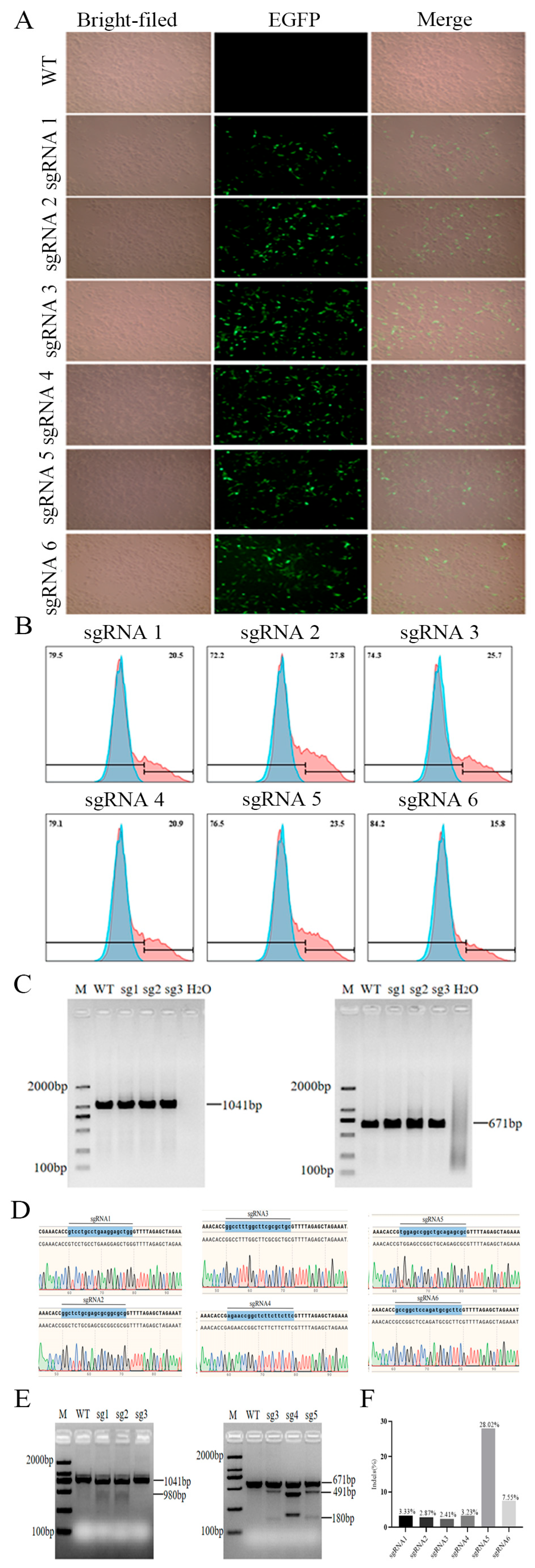
For the TERT gene knockout plasmid (PX458 vector), the constructed sgRNA expression plasmid was mixed with the transfection reagent at a 1:1 ratio (10 μg:10 μg) and incubated before addition to PIECs. Twenty-four hours post-transfection, the medium was replaced with fresh complete medium containing penicillin (100 U/mL) and streptomycin (100 μg/mL). Fluorescent microscopy was performed at 48 h, followed by flow cytometric sorting of GFP-positive cells at 72 h. Following sorting, cells were centrifuged to remove supernatant, treated with cell lysis buffer, and lysed in a PCR machine using the following programme: 68 °C for 30 min, 16 °C for 5 min, 95 °C for 4 min, then maintained at 12 °C. Lysates were used for Sanger sequencing and T7E1 restriction enzyme digestion to assess the editing efficiency of each sgRNA. Following identification of the most efficient sgRNA, a second round of transfection was performed. Seventy-two hours post-transfection, positive cells were isolated via flow cytometric single-cell sorting to establish stable knockout cell lines.
For TERT overexpression experiments, after transfer to antibiotic-free medium, the pTERT-piggyBac plasmid and piggyBac transposase plasmid were mixed at a 1:2 ratio with the transfection reagent, incubated, and added to the cells. Twenty-four hours post-transfection, the medium was replaced with complete medium containing penicillin (100 U/mL) and streptomycin (100 μg/mL). After 72 h, puromycin was added at a final concentration of 2 μg/mL for drug selection. Following continuous selection for 3 days, surviving cells were harvested and expanded. Once the cells had stabilised, GFP and mCherry double-positive cells were sorted by flow cytometry and further subjected to cloning to obtain stable TERT-overexpressing cell lines.
2.5. Identification of Positive Clones
After culturing positive clonal cells for 12–14 days, the cells were harvested and centrifuged to remove supernatant. Cell lysis buffer was added, and samples were placed in a PCR machine for lysis. The lysis programme was set as follows: 68 °C for 30 min, 16 °C for 5 min, 95 °C for 4 min, followed by holding at 12 °C. The lysed DNA served as a template for verifying the TERT gene knockout.
Genotypic identification of TERT knockout cells was performed using three primer pairs for PCR amplification of the target region. Primer TERT-sg1-F: ACTGCTCTCTGCCCTTGTCTT; TERT-sg1-R: AGAGTGTGATGGGAAGGATAG amplified the sgRNA1 target sequence. Primer TERT-sg5-F: ACTGCTCTCTGCCCTTGTCTT; TERT-sg5-R: AGAGTGTGATGGGAAGGATAG amplified the sgRNA5 target fragment. Primers TERT-sg1-F and TERT-sg5-R amplify target fragments for sgRNA1 to sgRNA5. Following preliminary PCR validation, clonal sites exhibiting two characteristic amplification bands, indicative of large fragment deletion, were selected as candidate positive clones. Subsequently, the target region was subjected to further PCR amplification using three primer pairs. Purified PCR products were divided into two fractions: one for Sanger sequencing to validate mutation types, and the other for ligation into the 19T vector followed by transformation into competent cells. Positive clones were screened via bacterial culture PCR, and 8–10 positive colonies were selected for Sanger sequencing to definitively determine the TERT genotype in cells.
Following lysis of TERT-overexpressing cells, genomic DNA was extracted. Identification primers specific for the piggyBac vector, pTERT-p2a-egfp-F (CACCTGACACGAGCCAAAG) and pTERT-p2a-egfp-R (GGCGGTCACGAACTCCA), were used to amplify the target region. The presence of a specific amplification band indicated successful integration of the pTERT-piggyBac plasmid into the host cell genome, thereby confirming the clone as a positive TERT-overexpressing cell line.
2.6. qPCR
Following the collection of positive clonal cells, total cellular RNA was extracted using the TransZol Up kit (TaKaRa, Osaka, Japan). Reverse transcription was performed according to the PrimeScript RT Reagent Kit (TaKaRa, Osaka, Japan) protocol to convert the extracted RNA into cDNA. Subsequently, real-time quantitative PCR (qPCR) was performed using the TB Green Premix Ex Taq II (Tli RNaseH Plus) (TaKaRa, Osaka, Japan) kit according to the manufacturer’s protocol to detect gene transcription levels within the cells. GAPDH was selected as the internal reference gene for normalisation analysis.
2.7. Telomere Length Measurement in Cells
Following the extraction and quantification of cellular DNA, qPCR analysis was conducted to determine the average telomere length of each cell’s DNA using the TB Green Premix Ex Taq II (Tli RNaseH Plus) kit, adhering strictly to the manufacturer’s protocol. The primer sequences used for telomere length measurement were as follows: telomere primers, F: 5′-CGGTTTGTTTGGGTTTGGGTTTGGGTTTGGGTTTGGGTT-3′ and R: 5′-GGCTTGCCTTACCCTTACCCTTACCCTTACCCTTACCCT-3′; control gene (porcine 36B4 single-copy gene) primers, F: 5′-TGAAGTGCTTGACATCACCGAGGA-3′ and R: 5′-CTGCAGACATACGCTGGCAACATT-3′. The telomere PCR reaction system comprised 12.5 μL SYBR Green Mix, 400 nmol/L forward primer, and 400 nmol/L reverse primer. The 36B4 PCR reaction system comprised 12.5 μL SYBR Green Mix, 400 nmol/L forward primer, and 640 nmol/L reverse primer. Additionally, 35 ng of DNA was added to each well, with double-distilled water added to a final volume of 25 μL. Telomere and 36B4 reactions were conducted under identical conditions. Telomere relative length was expressed as the ratio of telomere signal to single-copy gene signal (T/S value).
2.8. Western Blot
Cells were lysed using RIPA lysis buffer (BOSTER, Wuhan, China) to extract cellular proteins. Protein concentration was determined using the BCA Protein Concentration Assay Kit (Beyotime, Shanghai, China), followed by incubation in a 100 °C water bath for 6 min. Equal amounts of protein (30 μg) were separated by 10% SDS-PAGE electrophoresis and transferred to a PVDF membrane. After blocking with 5% bovine serum albumin in PBST at room temperature for 2 h, the membrane was incubated overnight at 4 °C with the primary antibodies: anti-TERT antibody (BOSTER, Wuhan, China; 1:2000) and anti-β-actin antibody (Sigma, St. Louis, MO, USA; 1:5000). The following day, the membrane was washed three times with PBST for 10 min each and then incubated at room temperature for 2 h with the corresponding HRP-labelled secondary antibodies: Goat Anti-Rabbit IgG(H + L), HRP Conjugated (EpiZyme, Shanghai, China; 1:5000) for TERT, and Goat Anti-Mouse IgG(H + L), HRP Conjugated (EpiZyme, Shanghai, China; 1:10,000) for β-actin. Following membrane washing, signals were developed using an ECL chemiluminescent reagent (EpiZyme, Shanghai, China), and band images were captured using a Bio-Rad ChemiDoc MP imaging system. The grey values of the target protein bands were analysed using ImageJ 1.54 software and normalised to β-actin as an internal control to determine the relative protein expression levels.
2.9. Cell Cycle Detection
Cell cycle analysis was performed according to the instructions of the Cell Cycle Assay Kit (Beyotime, Shanghai, China). Adherent cells were first digested with trypsin, collected in medium, and centrifuged at 1000× g for 3 min. After removal of the supernatant, the cells were resuspended in 1 mL of pre-chilled PBS and centrifuged again. The supernatant was discarded, and the tube was gently tapped to prevent cell clumping. The cells were then fixed in 1 mL of pre-chilled 70% ethanol and kept at 4 °C for 30 min. After fixation, the cells were centrifuged at 1000× g for 3 min to remove the ethanol, resuspended in 1 mL of pre-chilled PBS, and washed once more under the same conditions. For staining, 0.5 mL staining buffer, 25 μL propidium iodide (PI) stock solution (20×), and 10 μL RNase A solution (50×) were mixed to prepare 0.535 mL of PI staining solution for each sample. Then, 0.5 mL of the prepared PI staining solution was added to each sample, and the cell pellet was gently resuspended. The samples were incubated at 37 °C in the dark for 30 min. Red fluorescence signals were subsequently detected using a flow cytometer (excitation wavelength: 488 nm), and forward scatter (FSC) and side scatter (SSC) were recorded simultaneously to reflect cell size and granularity. The acquired data were analysed to determine the DNA content distribution and the proportion of cells in each cell cycle phase (G0/G1, S, and G2/M).
2.10. CCK8 for Assaying Cell Proliferation
Using the Cell Counting Kit-8 (BOSTER, Wuhan, China), 100 μL of cell suspension was seeded into a 96-well plate, with approximately 2 × 10³ cells per well. Once cells had adhered and reached appropriate density, 10 μL of CCK-8 reagent was added to each well at designated time points (0 h, 24 h, 48 h). After gentle mixing, incubation continued for 1 h at 37 °C in a 5% CO2 incubator. Following incubation, the optical density (OD450) at 450 nm was measured using a microplate reader, with a blank well containing only medium and CCK-8 reagent but no cells serving as the background control.
2.11. Cellular Senescence Assay
SA-β-gal staining (Beyotime, Shanghai, China) was performed according to the manufacturer’s protocol. Cells were seeded into 6-well plates and cultured until they reached 80–90% confluence. The culture medium was then removed, and the cells were gently washed twice with PBS. Subsequently, 1 mL of SA-β-gal fixative was added to each well, and the cells were fixed at room temperature for 15 min. After fixation, the fixative was removed and the cells were washed twice with PBS. Then, 1 mL of staining solution was added to each well to ensure complete coverage of the cells. The plates were incubated at 37 °C in the dark for 12–16 h without CO2. After staining, the staining solution was discarded, and the cells were gently washed twice with PBS. Cellular morphology and staining patterns were then observed and photographed under an inverted microscope in different fields of view.
2.12. Clonogenic Assay
Cells in the logarithmic growth phase were seeded into 6-well plates at a density of approximately 500 cells per well, with three replicate wells for each group. The cells were cultured at 37 °C in a humidified incubator with 5% CO2 for 10–14 days until visible colonies had formed, with each colony containing approximately 50 or more cells. The culture medium was then discarded, and the cells were gently washed twice with pre-chilled PBS. The colonies were fixed with 4% paraformaldehyde (Servicebio, Wuhan, China) for 15 min, washed once with PBS, and stained with 0.1% crystal violet (Beyotime, Shanghai, China) solution at room temperature for 20 min. After staining, the dye solution was removed, and the plates were gently rinsed with clean water to reduce background staining, followed by air-drying at room temperature. Once completely dry, the colonies were photographed and recorded.
2.13. H2O2 Treatment and CCK-8 Assay
WT and TERT-over PIECs were seeded into 96-well plates at a density of 2 × 10³ cells/well. After cell attachment, the cells were treated with complete DMEM containing 200 μmol/L H2O2 for 0, 3, 6, and 9 h. The H2O2-containing medium (Beyotime, Shanghai, China) was prepared by adding 2.3 μL of 3% H2O2 stock solution to 10 mL DMEM supplemented with 10% FBS, followed by gentle mixing to obtain a final concentration of 200 μmol/L. Nine replicate wells were used for each time point. After treatment, the medium was replaced, and CCK-8 reagent (BOSTER, Wuhan, China) was added to assess cell viability according to the manufacturer’s instructions.
2.14. Statistical Analysis
Flow cytometry data were processed and analyzed using FlowJo_v10.8.1 software. All data were plotted and statistically analyzed using GraphPad Prism 10.4.0 software. Data are presented as mean ± standard deviation (mean ± SD). Statistical differences between two groups were analyzed using a two-tailed Student’s t-test, whereas comparisons among more than two groups were performed using one-way ANOVA followed by Tukey’s multiple comparisons test. The sample size (n) for each group is indicated in the corresponding figure legends. All experiments with statistical analysis and error bars represent independent biological experiments. A value of p < 0.05 was considered statistically significant. p < 0.05 (*) and p < 0.01 (**) indicate significant and highly significant differences compared with WT, respectively, while p < 0.05 (#) and p < 0.01 (##) indicate significant and highly significant differences compared with TERT-over, respectively.
4. Discussion
In this study, we achieved TERT monoallelic knockout in porcine iliac endothelial cells (PIEC) using CRISPR/Cas9 technology, obtaining a cell model with telomere-dependent senescence characteristics. Simultaneously, we constructed a TERT-overexpressing PIEC line using the PiggyBac transposon system as a cell model for functional validation of the TERT gene. To our knowledge, there are currently no reports on the establishment of a senescence model in pigs using TERT monoallelic knockout strategies. This study holds significant exploratory value in the construction of large animal senescence models. Compared to commonly used experimental animals such as mice, pigs are more similar to humans in terms of organ structure, metabolic characteristics, immune system, and lifespan, and their telomere length and telomerase activity patterns are also highly similar to those of humans, thus better reflecting the physiological characteristics of telomere-related senescence processes.
The aging process is regulated by multiple organs, the immune system, and metabolic networks [
17]. Previous studies using gene-edited animal models have shown that different degrees of gene disruption can result in markedly different phenotypes. For example, ATP13A2+/− mice display milder progressive changes, whereas biallelic ATP13A2 knockout mice exhibit more severe pathological phenotypes [
18]. Likewise, TERT-deficient models have shown that partial loss of TERT function can reproduce progressive telomere-related changes without the severe defects seen in complete knockout models [
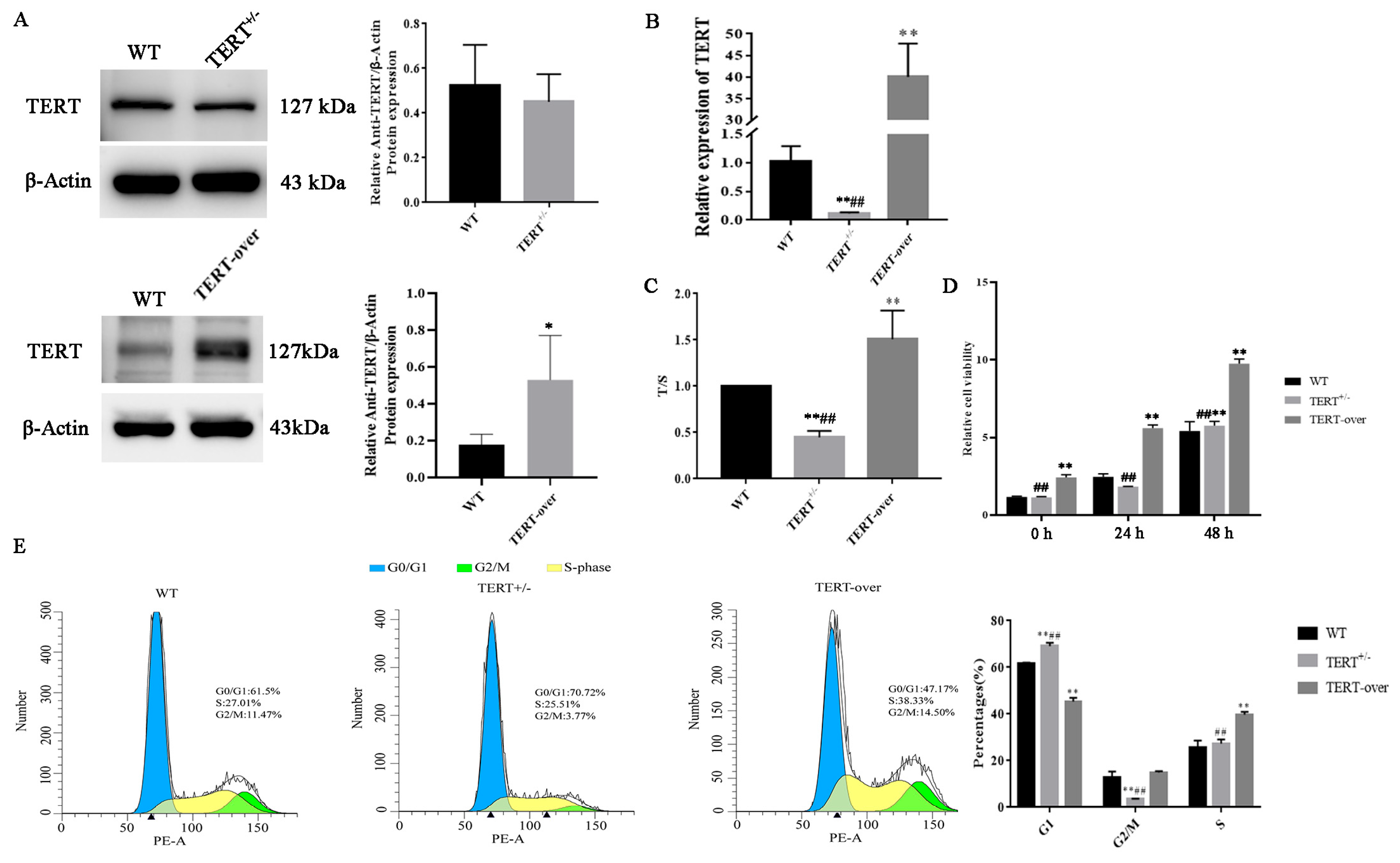
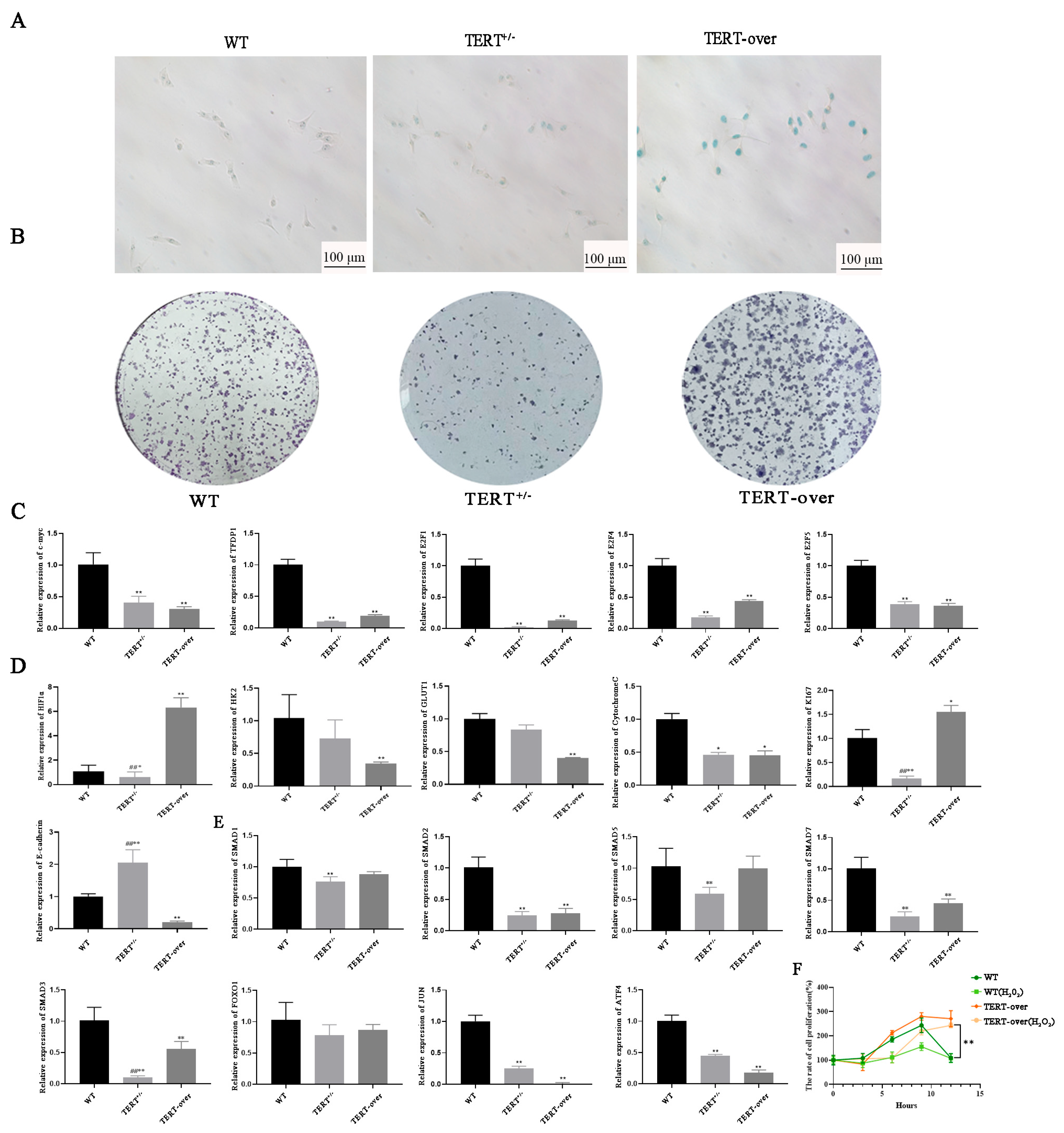
19]. Based on this rationale, we used monoallelic TERT knockout to model gradual telomere dysfunction-associated senescence. In this study, by designing targets in the exon 2 and exon 3 regions of the TERT gene, we achieved monoallelic knockout of the TERT gene, resulting in impaired telomerase activity (TA) due to partial loss of TERT function. This led to cells exhibiting significant telomere-dependent aging characteristics, such as decreased TERT protein and mRNA levels, shortened telomere length, an increased proportion of G1 phase cells, an increased SA-β-Gal-positive cell ratio, reduced colony formation, and downregulation of proliferation-related genes, including c-Myc, E2F1, E2F4, E2F5, TFDP1, and Ki-67. These findings collectively demonstrate pronounced telomere-dependent senescence characteristics.
Furthermore, when telomere dysfunction occurs, mitochondrial homeostasis and energy metabolism are also affected [
20]. In our TERT+/− cells, many of the observed phenotypes are likely secondary to reduced telomerase activity and the resulting telomere shortening, rather than representing isolated downstream effects of TERT deficiency itself. The shortened telomeres observed in these cells suggest compromised telomere capping and telomere dysfunction, which may underlie the senescence-associated phenotypes, including G1 arrest, reduced proliferation, altered metabolic status, and impaired stress-response pathways. This interpretation is in line with previous studies demonstrating that critically short or dysfunctional telomeres can drive cellular senescence and metabolic compromise. In this study, the expression of cytochrome C was downregulated in the TERT+/− cell line, accompanied by downregulation of the glycolysis-related genes HIF1α, HK2, and GLUT1. These findings suggest that monoallelic TERT knockout leads to telomere dysfunction, which may in turn contribute to mitochondrial damage and reduced metabolic activity. This is consistent with the results observed by Bao et al. [
21] in diabetic nephropathy models, where TERT downregulation leads to a decrease in mitochondrial membrane potential, impaired oxidative phosphorylation activity, and reduced ATP production. That is, TERT deficiency can cause mitochondrial dysfunction and disrupt energy metabolism homeostasis. This study also found that signaling and stress response genes, such as the SMAD family, FOXO1, and ATF4, were downregulated in the TERT+/− cell line. Previous studies have shown that TERT downregulation can affect FOXO1 transcriptional regulation and the ATF4 stress pathway [
22], and FOXO1 interacts with the telomere/telomerase system [
23]. This suggests that TERT gene functional defects may accelerate cellular aging by inhibiting anti-stress and signaling pathways such as FOXO1-ATF4.
In this study, TERT-overexpressing cells exhibited significantly elevated TERT protein and mRNA levels, extended telomeres, accelerated cell proliferation rate, decreased G1 phase proportion, increased S phase proportion, reduced SA-β-Gal-positive proportion, and enhanced colony formation. These findings indicate that upregulation of TERT expression promotes cell cycle progression and enhances telomerase activity, exerting an anti-aging effect. The construction of TERT gene-overexpressing cell lines provides a basis for verifying the function of the TERT gene. Consistent with previous reports showing that hTERT overexpression or TERT activation can promote telomere maintenance, extend cellular lifespan, and delay senescence [
7,
24], TERT overexpression in our study did not significantly reverse most of the transcriptional changes observed in TERT+/− cells in genes related to proliferation, metabolism, and signaling pathways. Specifically, among the genes examined, only HIF1α and KI67 mRNA levels were increased, whereas E-cadherin was decreased. This suggests that TERT overexpression does not primarily exert its anti-aging effect through the classical c-Myc/E2F or SMAD-FOXO pathways, but may rely on non-classical mechanisms. Previous studies have shown that TERT, besides maintaining telomere length, can also localize within mitochondria to participate in oxidative stress regulation and energy metabolism maintenance [
25]. The TERT gene can reduce ROS levels, minimize mitochondrial DNA damage, and stabilize membrane potential and metabolic activity [
26]. In this study, TERT-overexpressing cells exhibited higher survival rates and proliferative capacity under oxidative stress conditions, suggesting improved cellular resistance to oxidative stress and enhanced cytoprotective capacity under the experimental conditions used. However, we did not directly measure antioxidant capacity or ROS-scavenging activity in this study. Therefore, these findings should not be interpreted as direct evidence of an intrinsic antioxidant function of TERT. Rather, they are consistent with previously reported non-canonical roles of TERT in mitochondrial regulation and cellular responses to oxidative stress. Additionally, TERT can interact with transcription factors such as HIF1α, NF-κB, and β-catenin to regulate cell survival and stress adaptation capabilities [
27]. The upregulation of HIF1α in TERT-overexpressing cells suggests that TERT may enhance cell tolerance to oxidative and hypoxic environments, thereby activating anti-apoptotic and anti-aging responses. The increase in KI67 also indicates that TERT promotes cell proliferative potential, while the downregulation of E-cadherin suggests that TERT mediates weakened intercellular adhesion and contact inhibition, facilitating cells to enter a proliferative state.
An ideal animal model for ageing research should be capable of reproducing key features of the ageing process and exhibiting human-like metabolic and immune responses [
28]. In vitro models can reveal cellular and molecular changes under controlled conditions, but lack tissue complexity and systemic metabolic environments [
29,
30,
31]. In contrast, animal ageing models offer a more comprehensive representation of the physiological ageing process. Compared with rodents, pigs more closely resemble humans in physiological structure, metabolic characteristics, lifespan, and telomere biology [
32], making them a valuable large-animal model for ageing research and anti-ageing intervention studies. This study achieved TERT monoallelic knockout and overexpression in PIECs, establishing a technical framework for constructing porcine ageing models and validating TERT gene function in cellular systems. Future applications of this technical framework in porcine fibroblasts, combined with somatic cell nuclear transfer (SCNT), may enable the generation of TERT-edited pigs. The specific significance of our model is that it provides a porcine, telomere-dysfunction-based platform for studying senescence in a species with telomere biology more similar to that of humans, and it may be particularly useful for investigating vascular endothelial ageing and related metabolic dysfunction in a large-animal setting. A limitation of the present study is that we did not directly evaluate the effect of TERT monoallelic knockout or TERT overexpression on the replicative lifespan of PIECs by long-term serial passaging. Although our data demonstrate clear differences in telomere length, proliferation, cell-cycle progression, senescence-associated markers, and resistance to oxidative stress, these findings do not by themselves fully define replicative lifespan. Direct assessment of cumulative population doublings and long-term passage capacity will therefore be necessary in future studies to determine how TERT monoallelic knockout and overexpression affect the replicative lifespan of porcine endothelial cells.



 ,
,