

Effect of Synbiotics on Hygienic Quality of Feed and Pork



Simple Summary
Abstract
1. Introduction
2. Materials and Methods
2.1. Animal Study
2.2. Feed Additives
2.3. Microbiological Analyses
2.4. Typing of Clostridium spp. Isolates by PCR Methods
2.5. Calculations and Statistics
3. Results
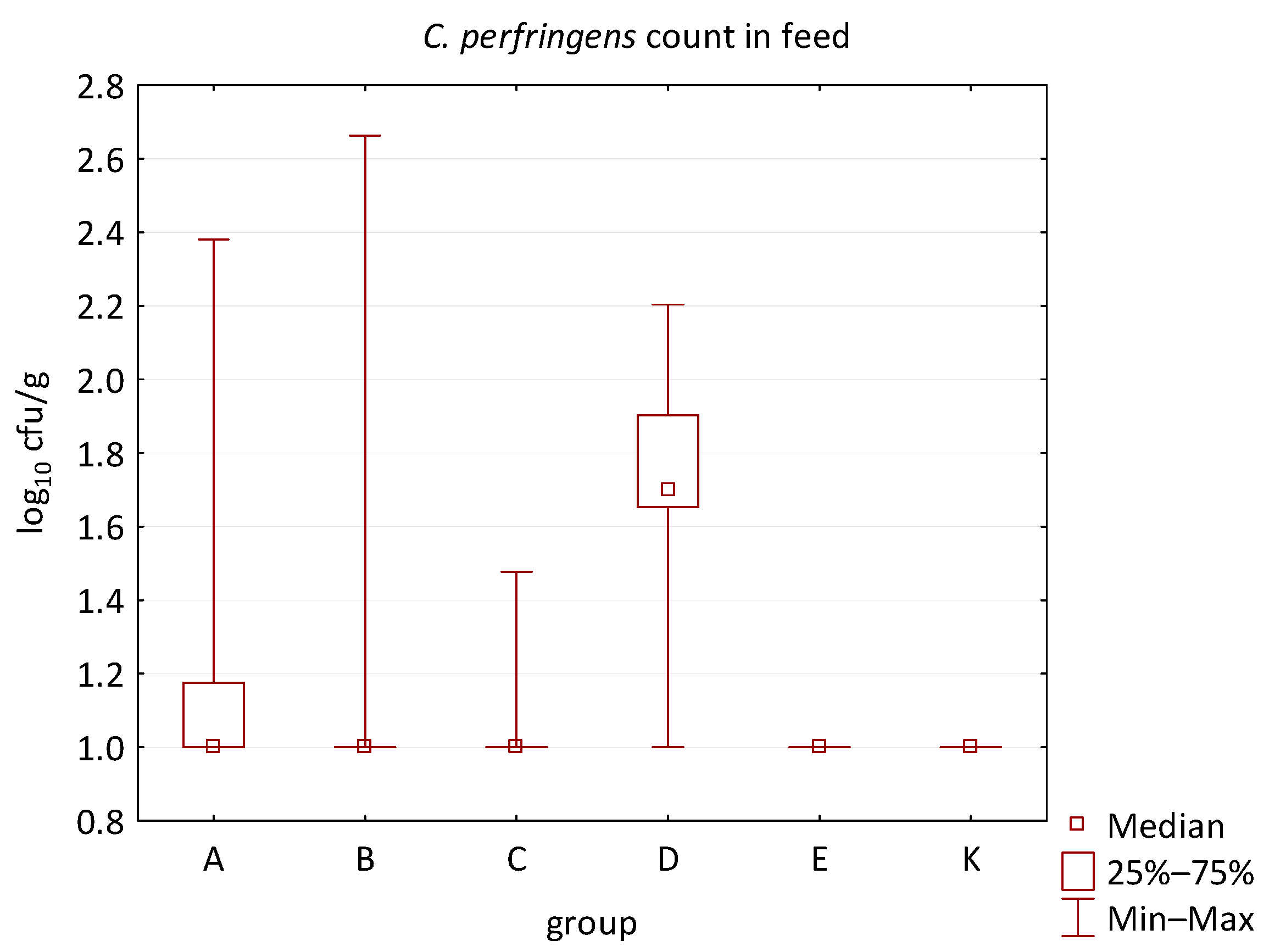
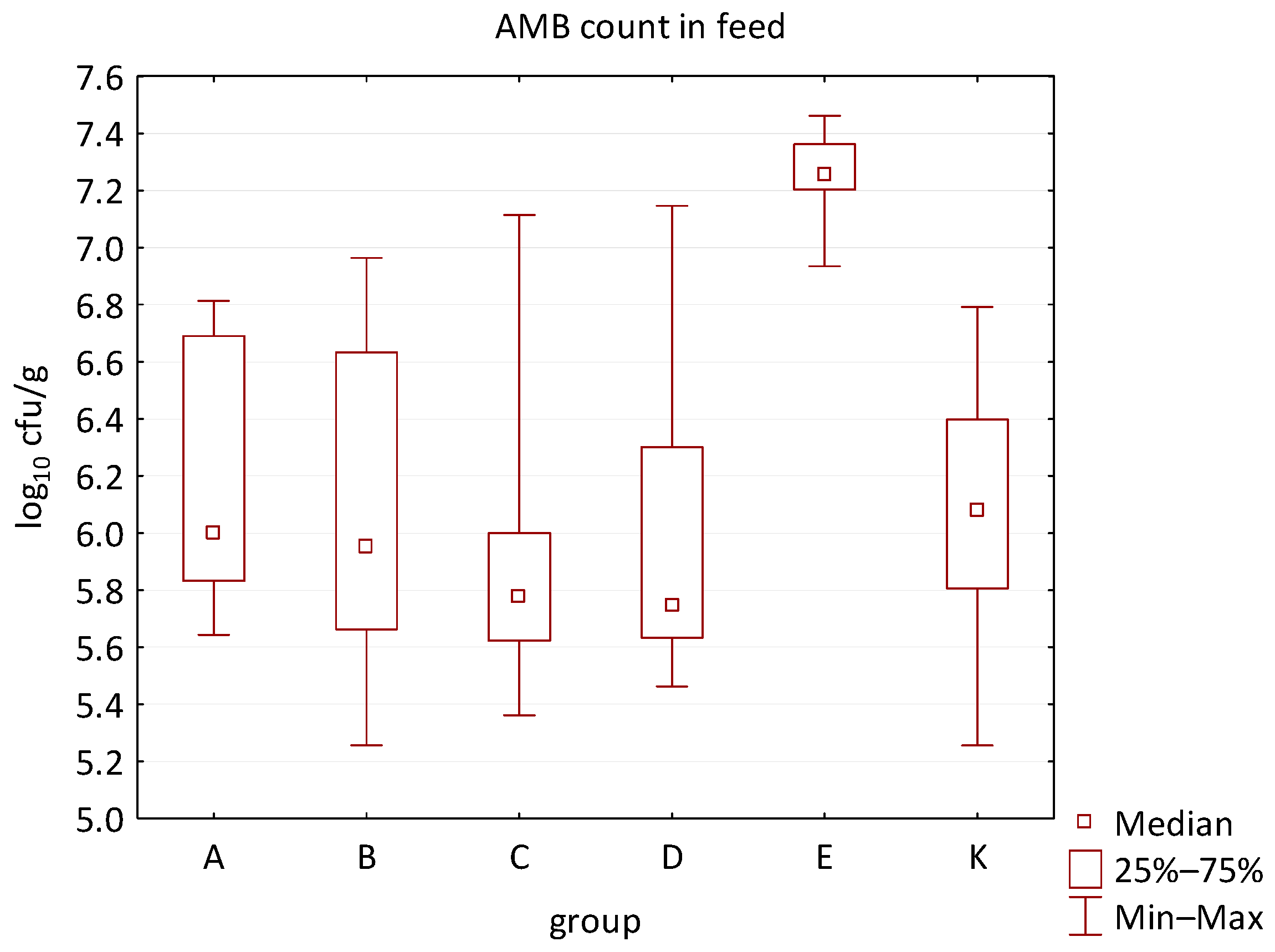
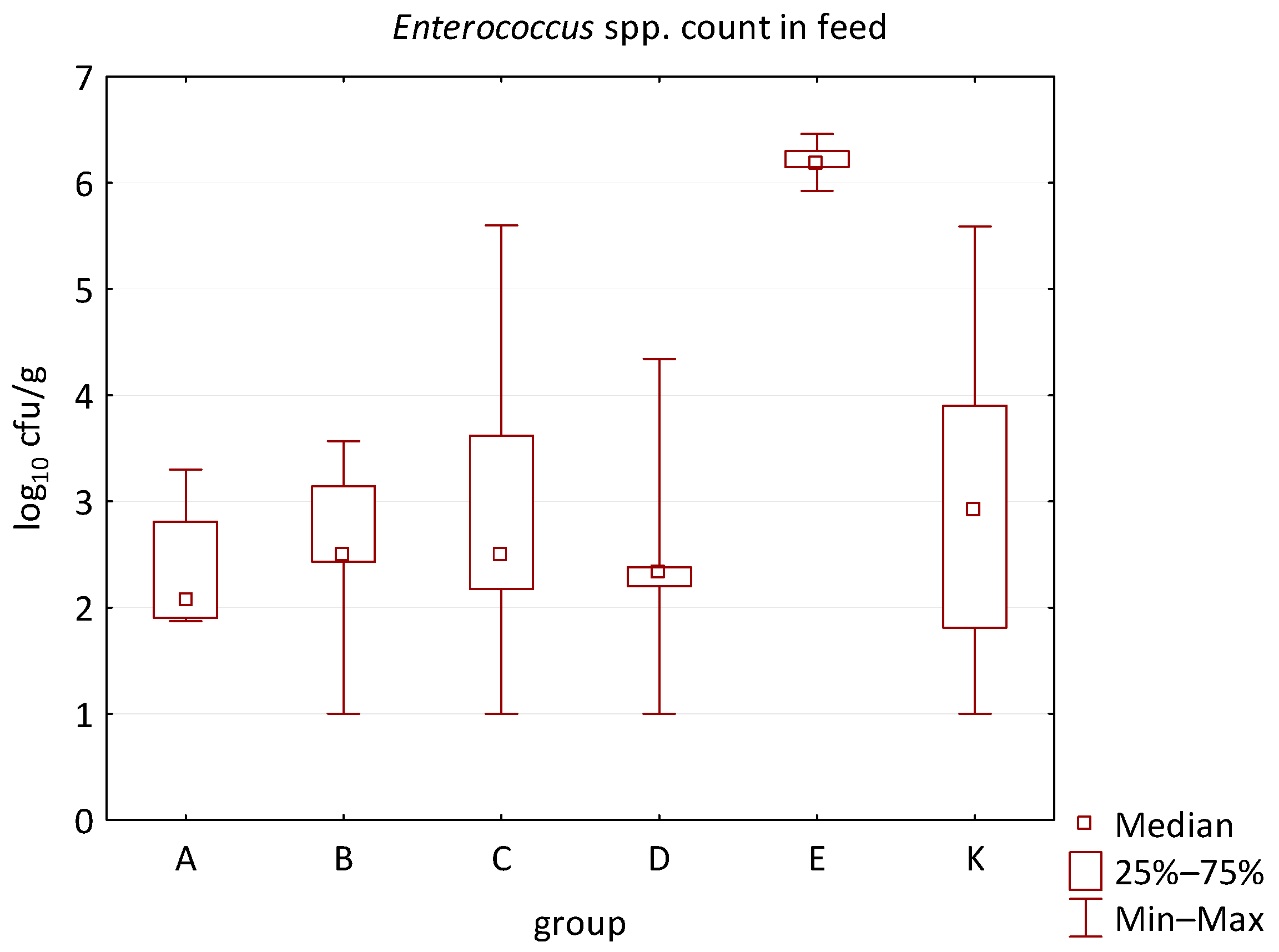
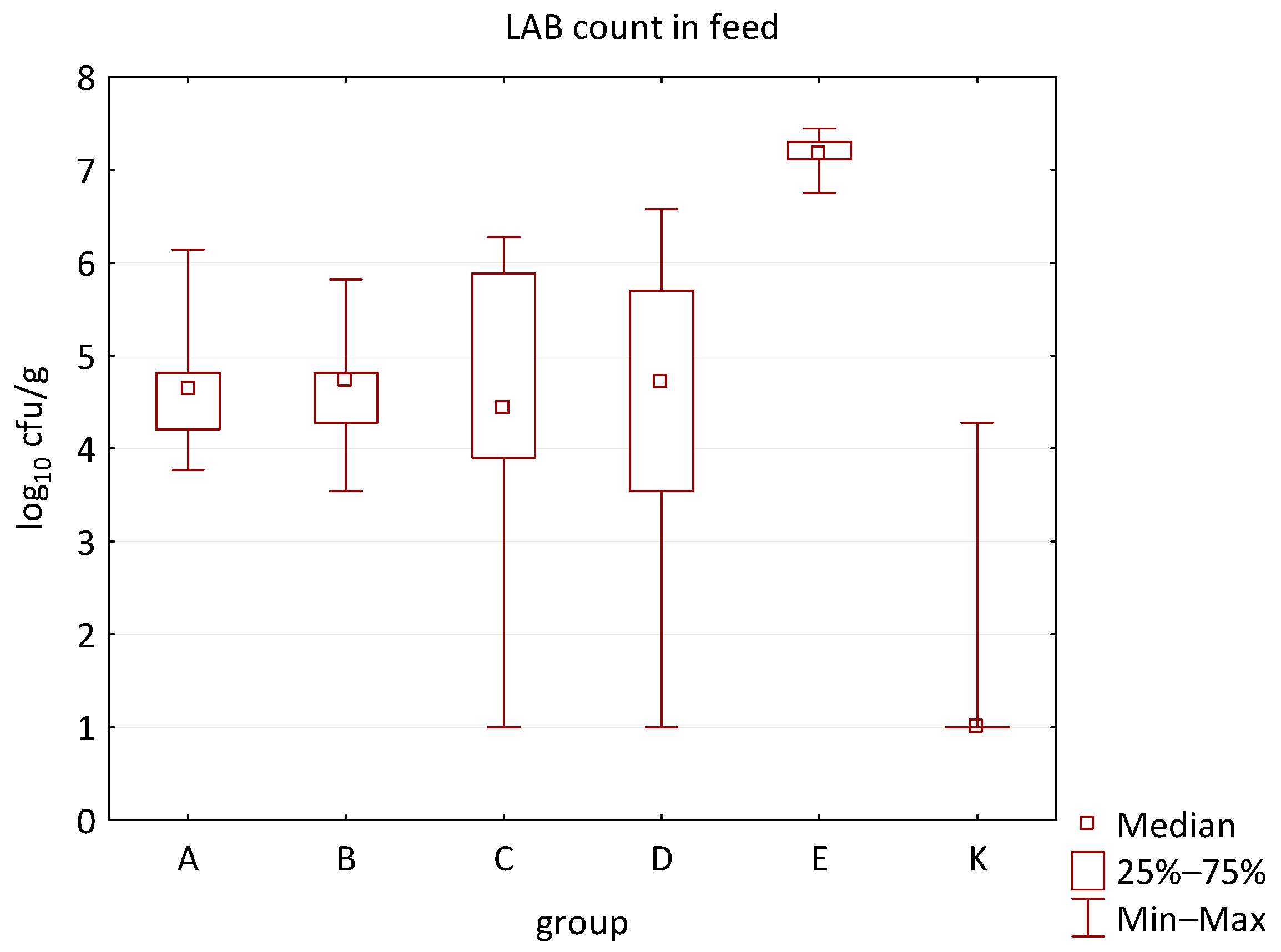
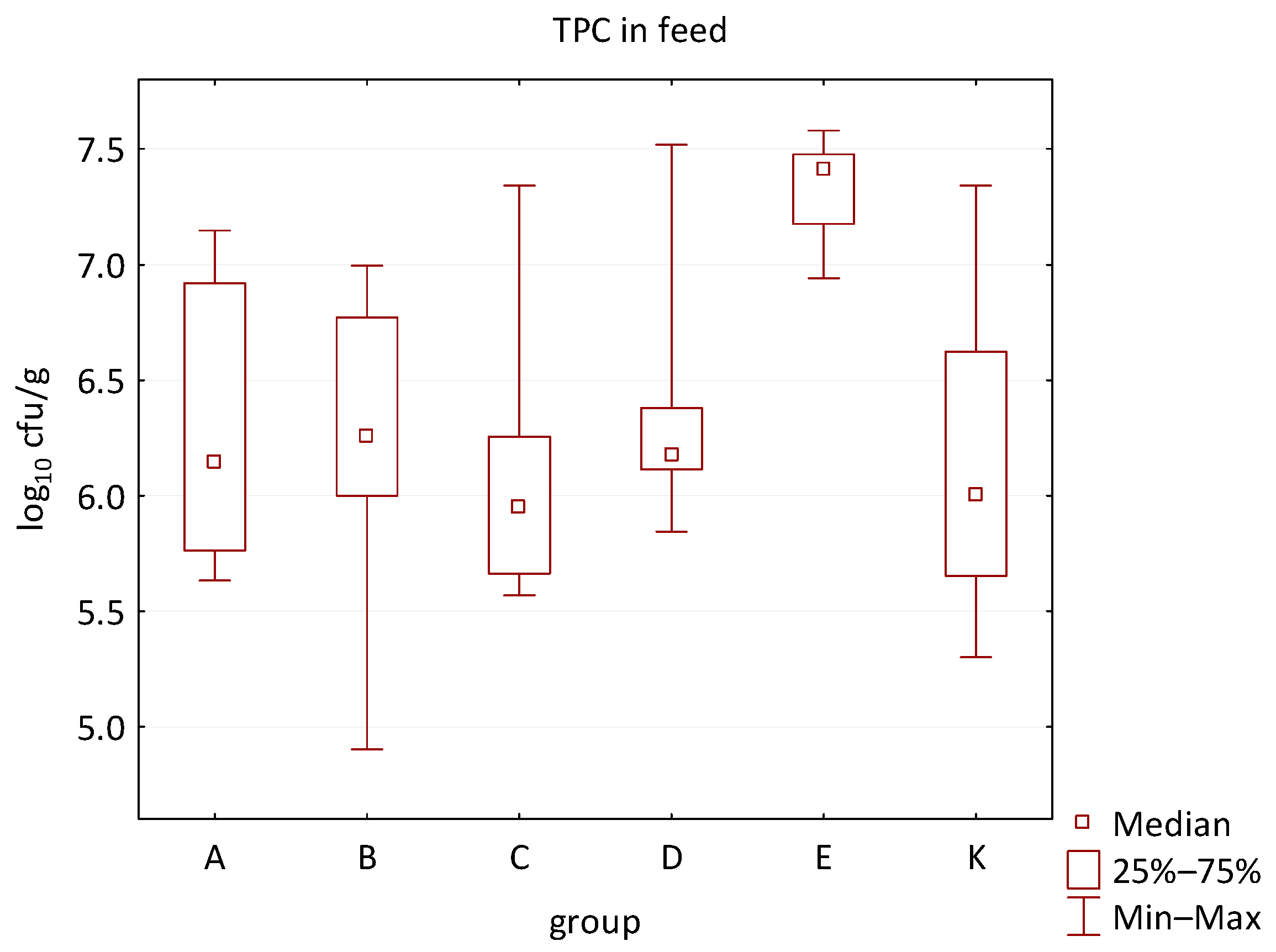
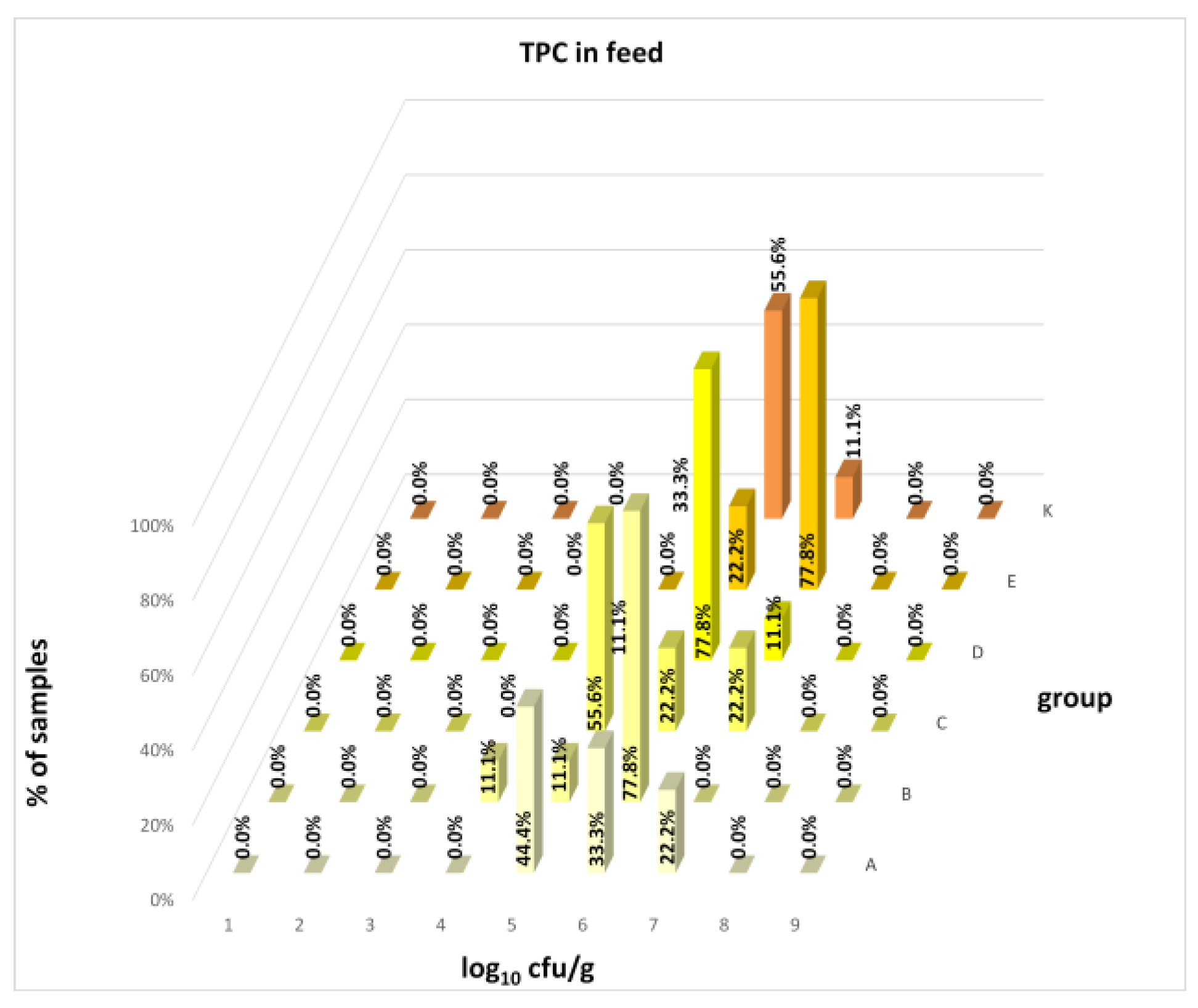
3.1. Feed
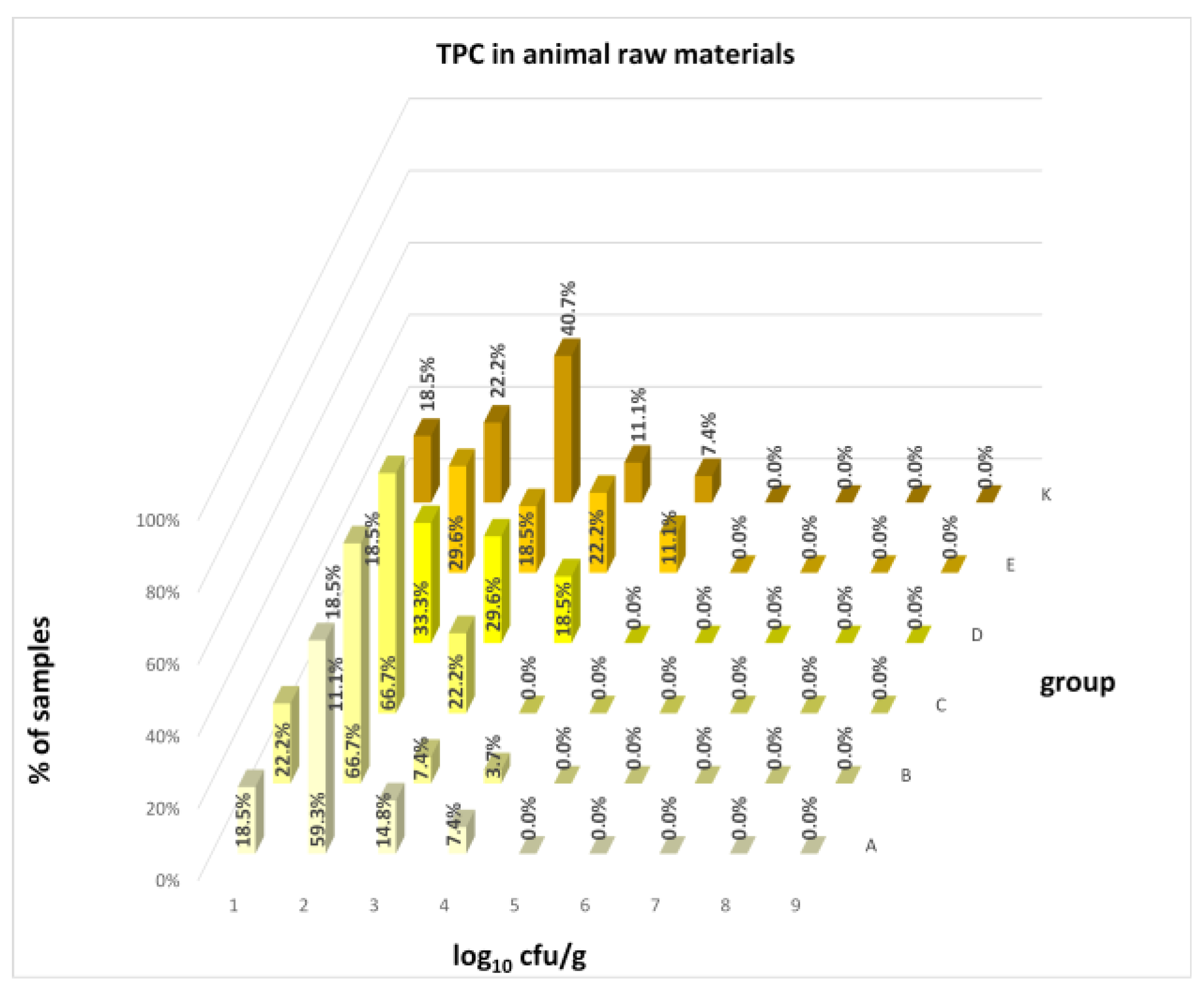
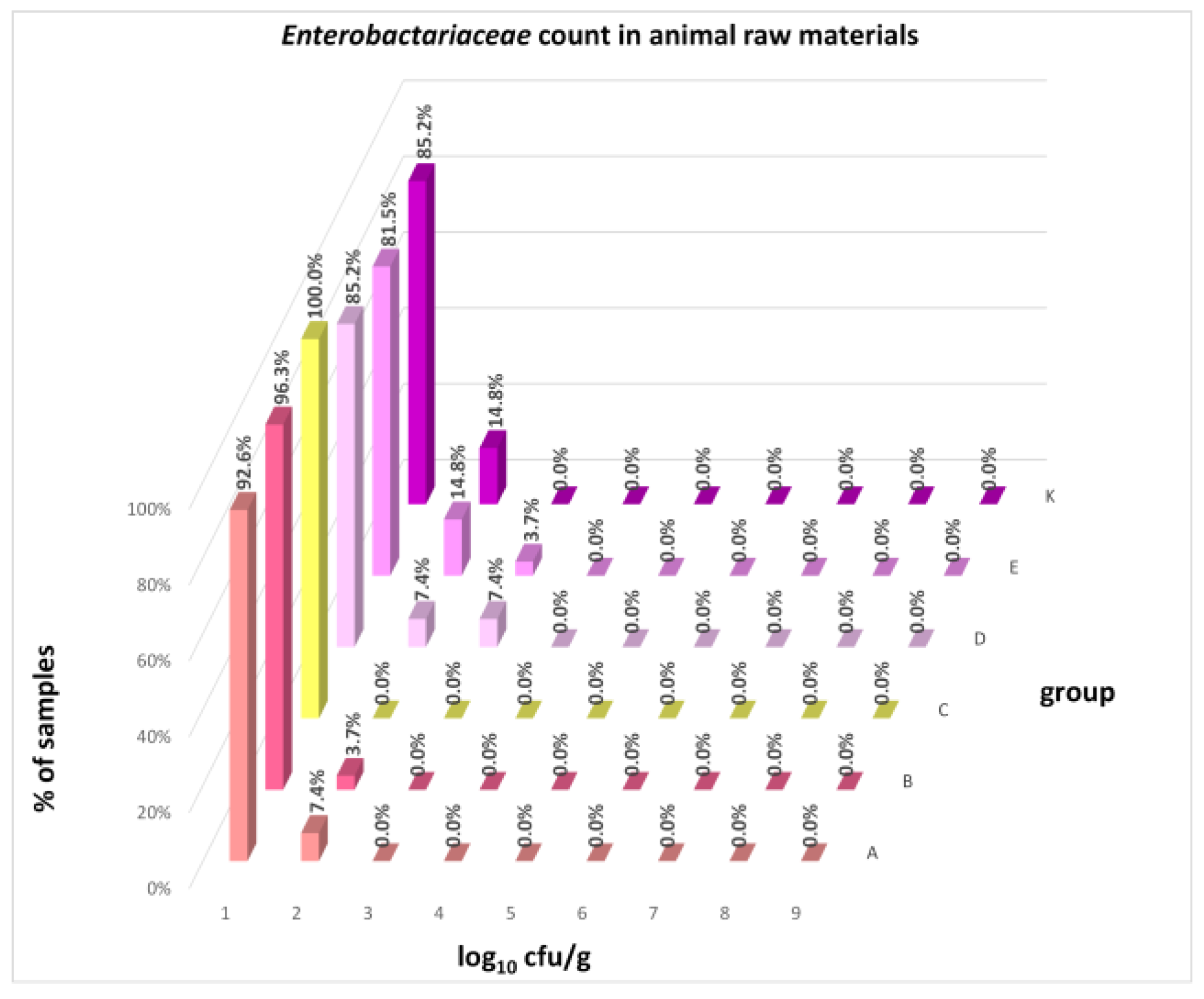
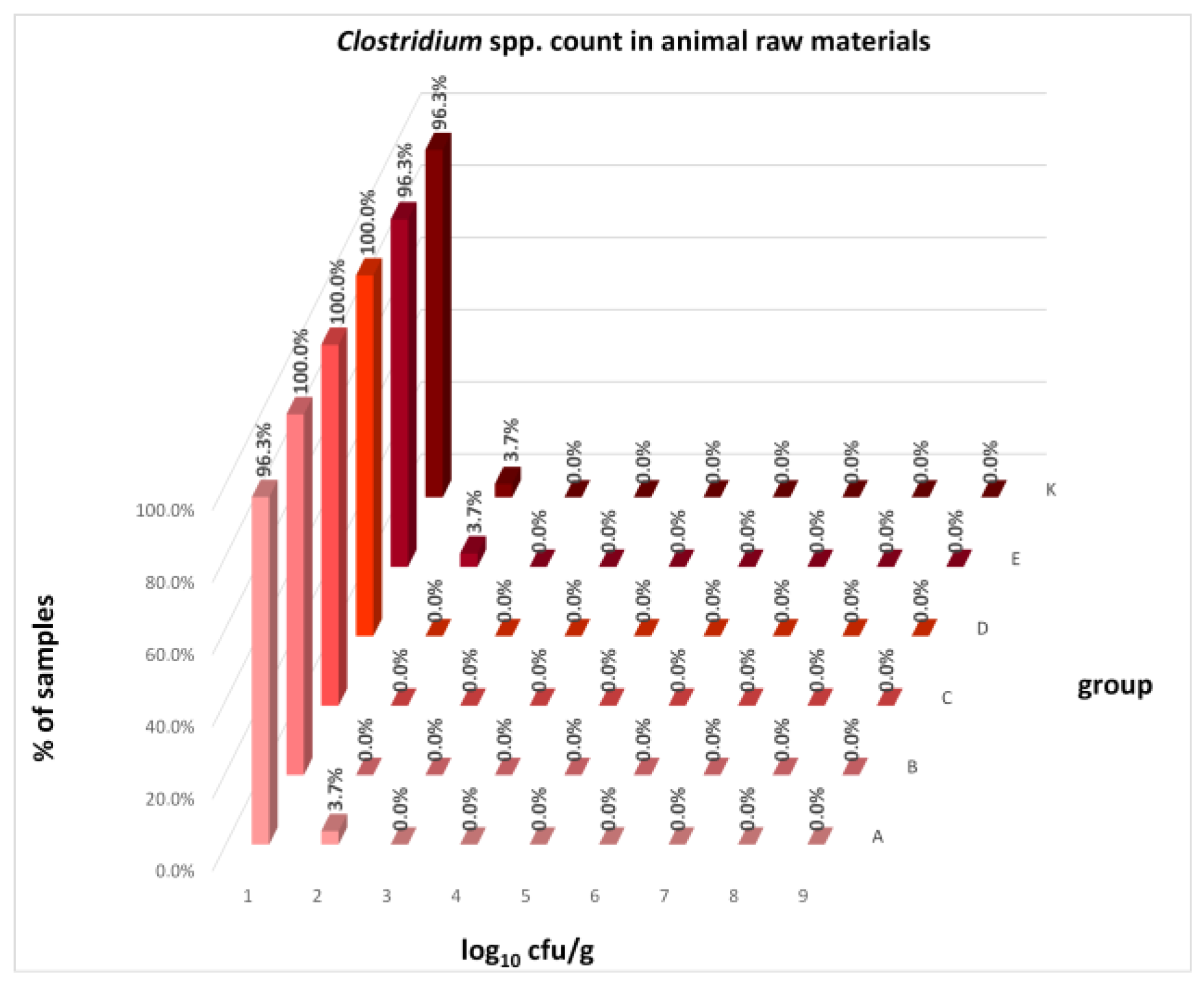
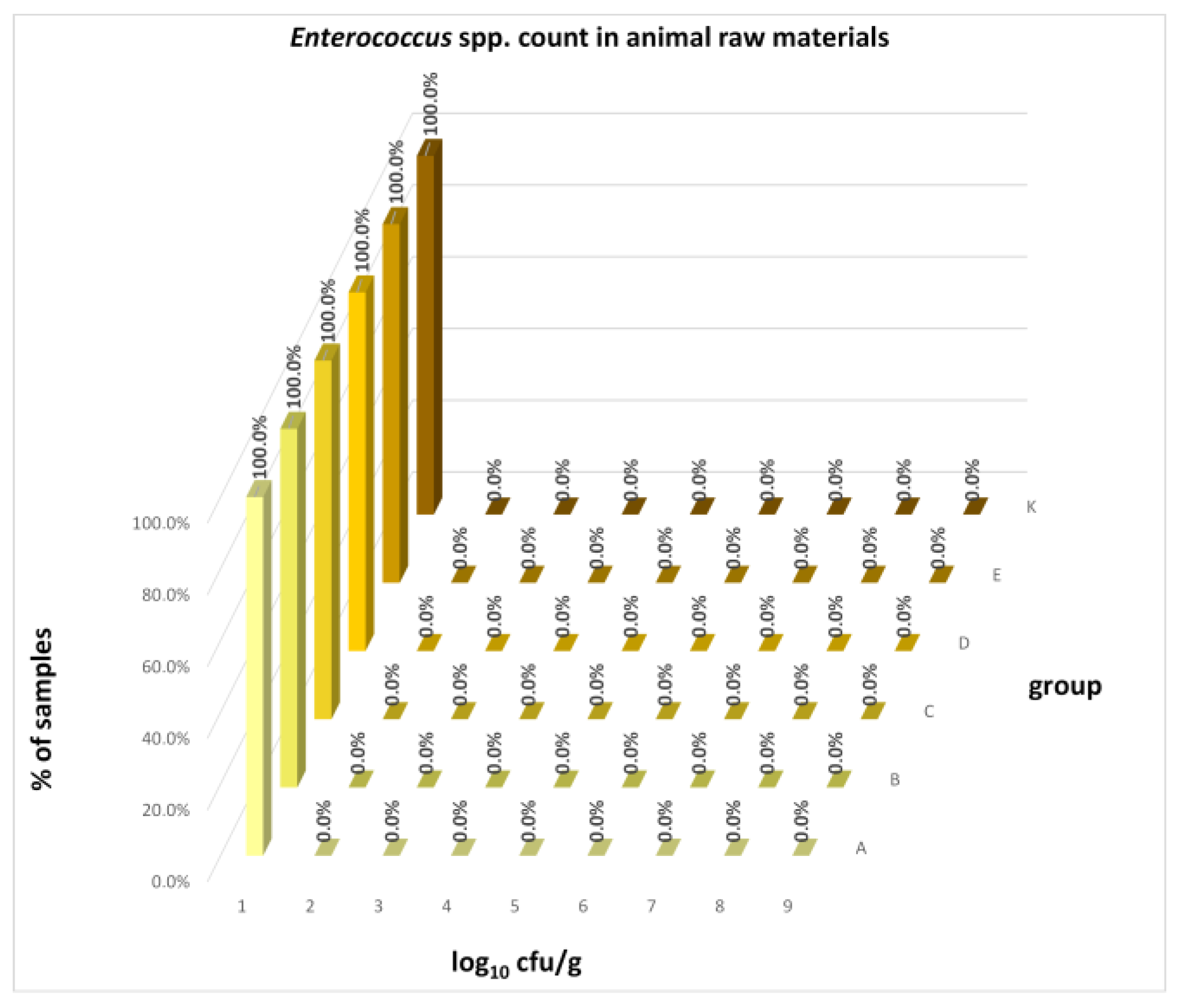
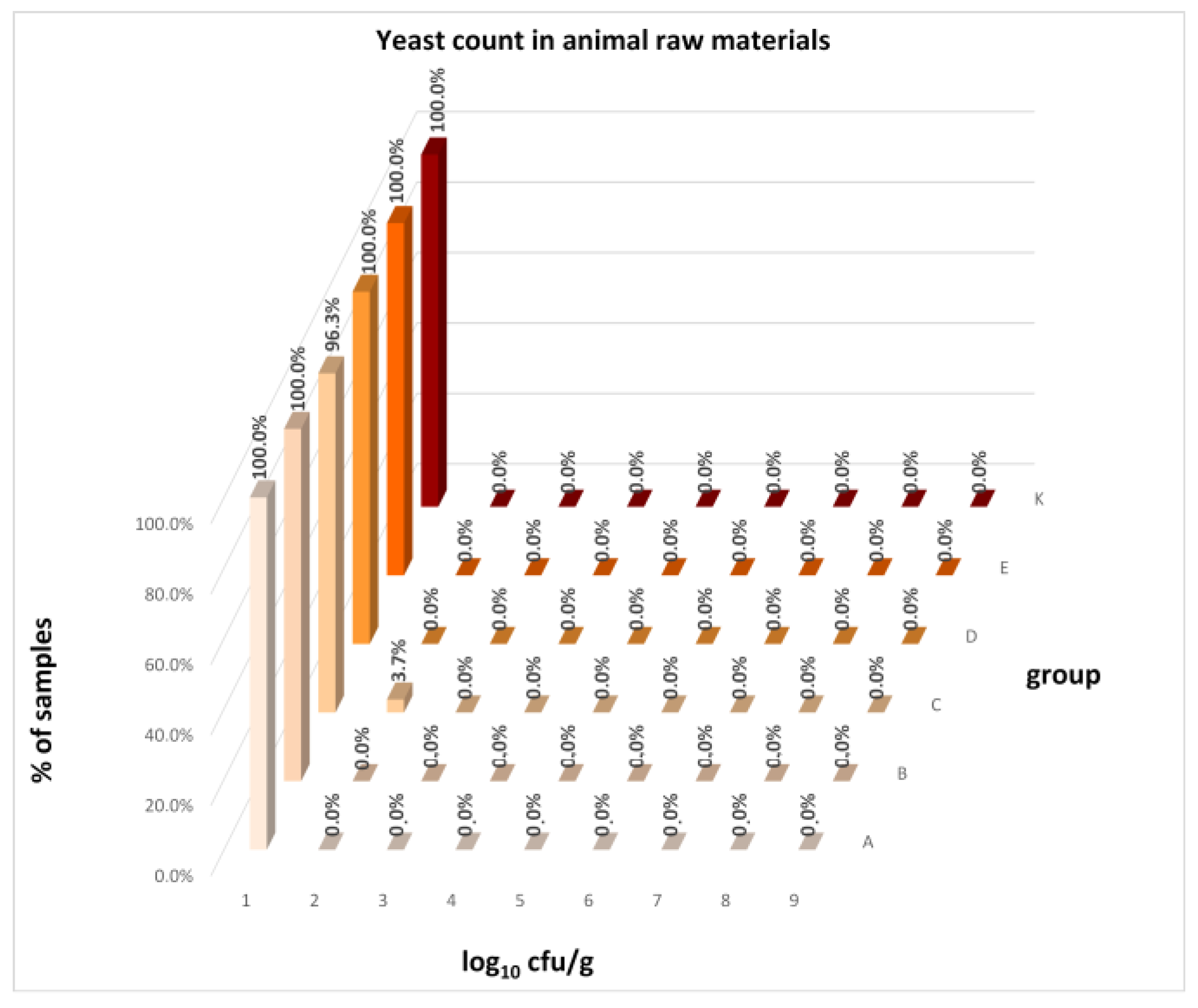
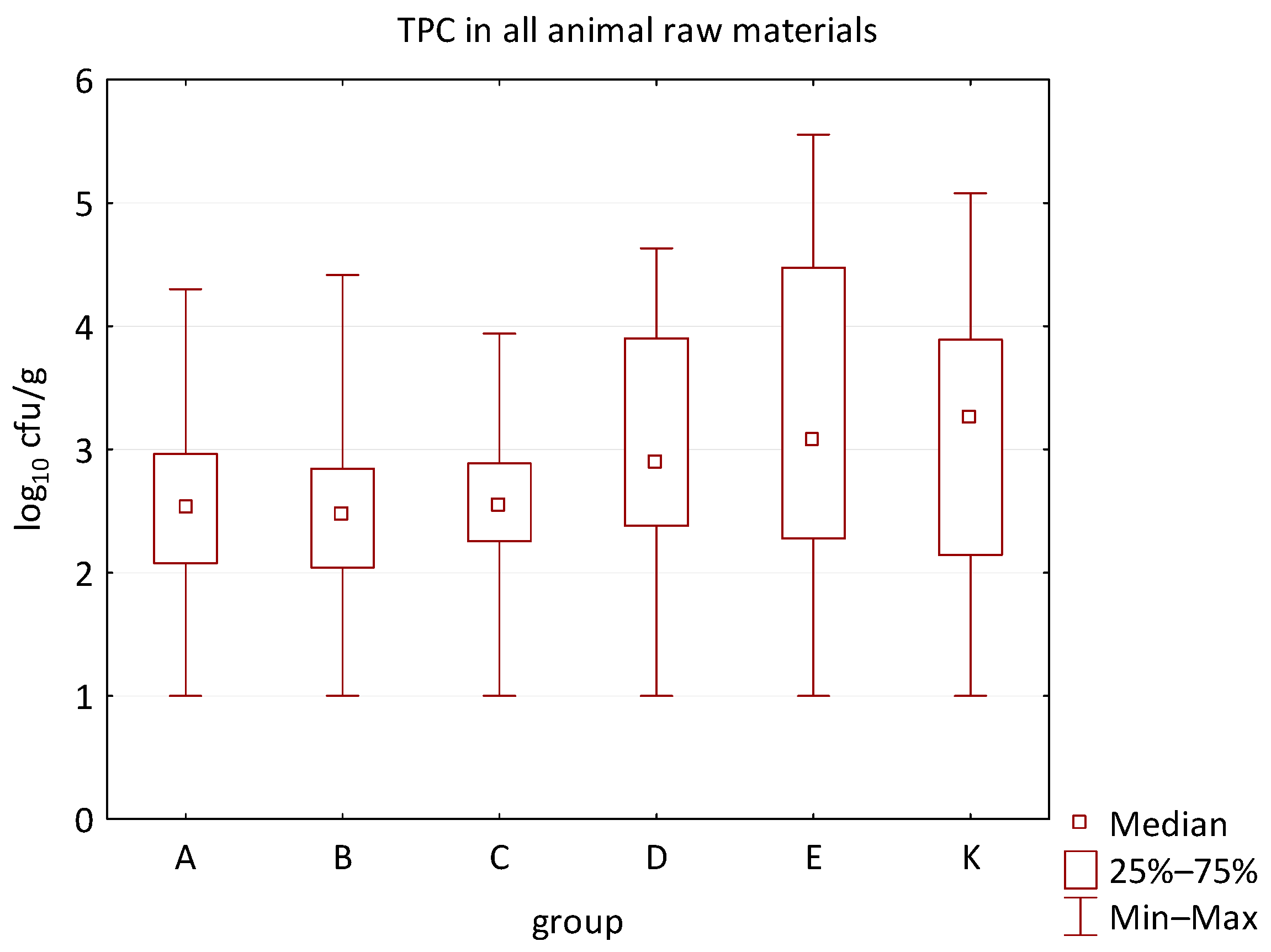
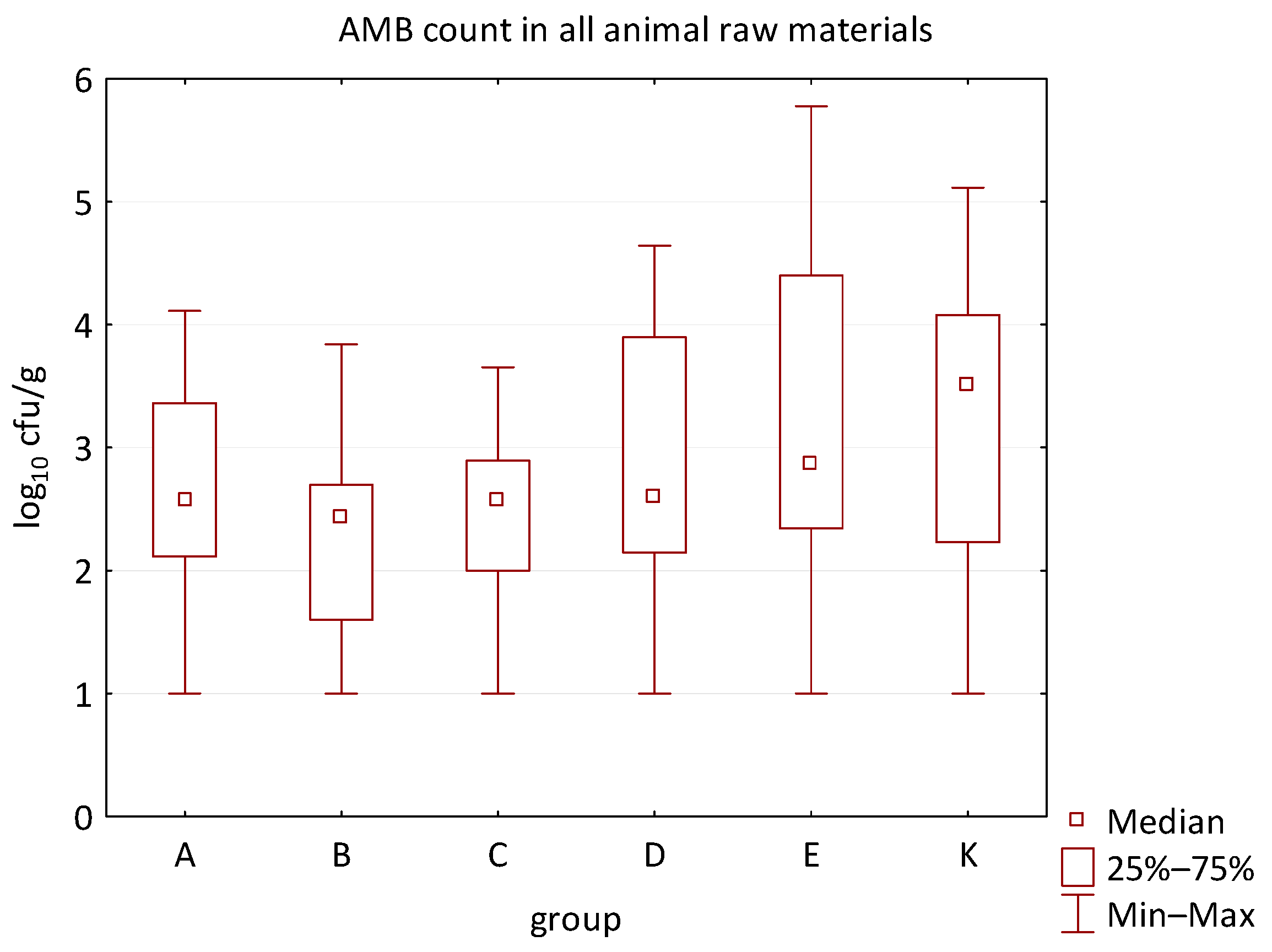
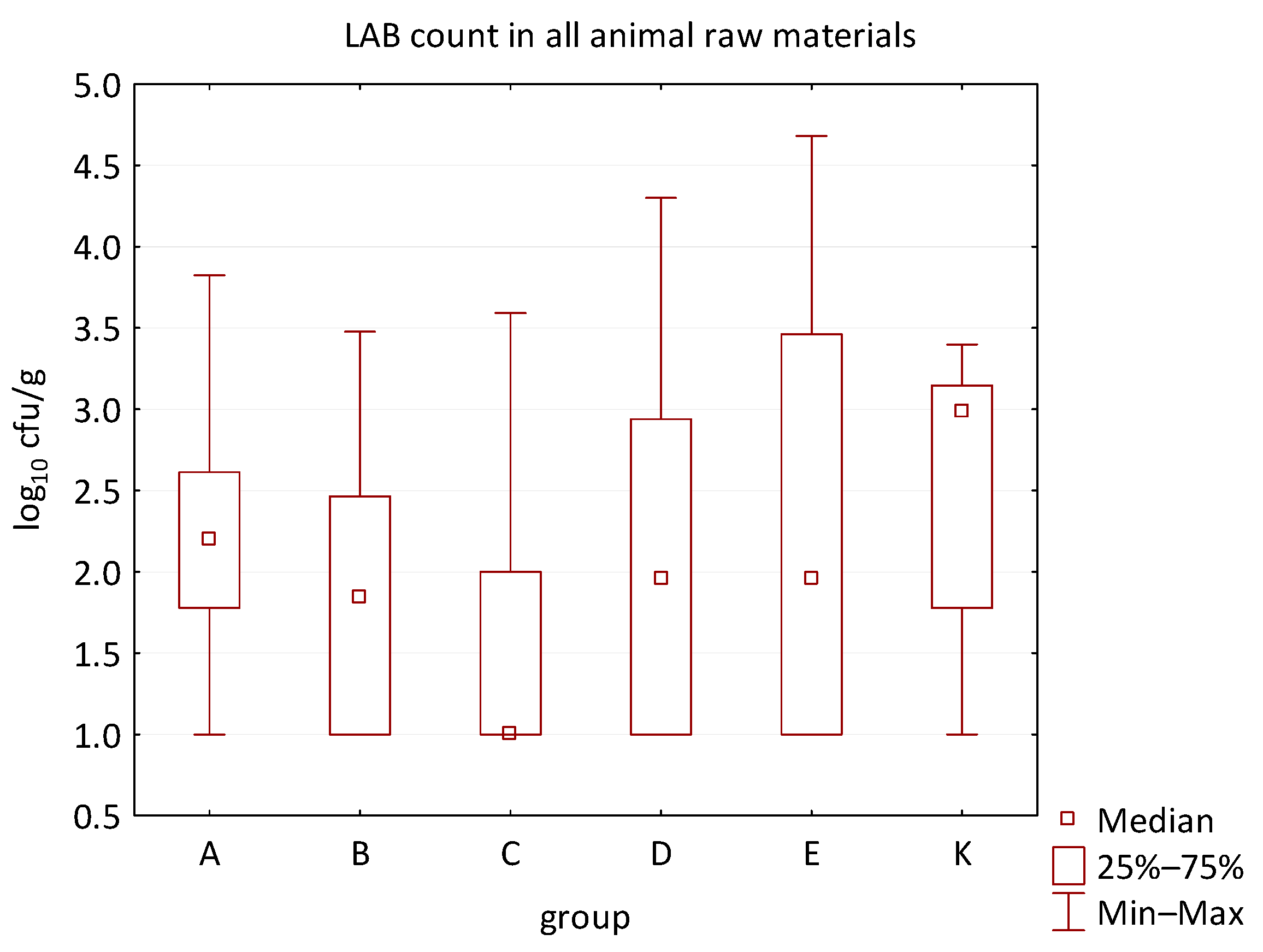
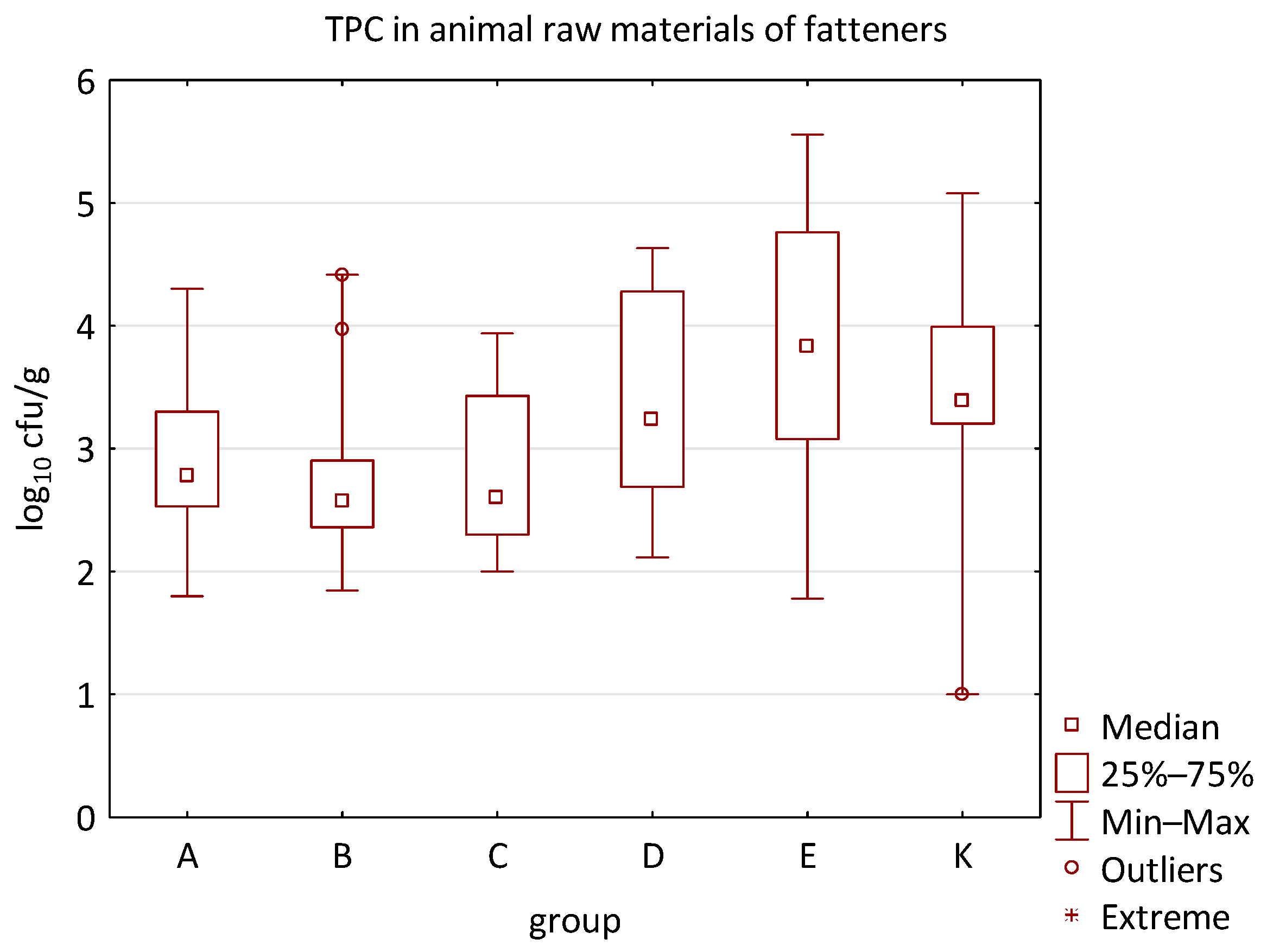
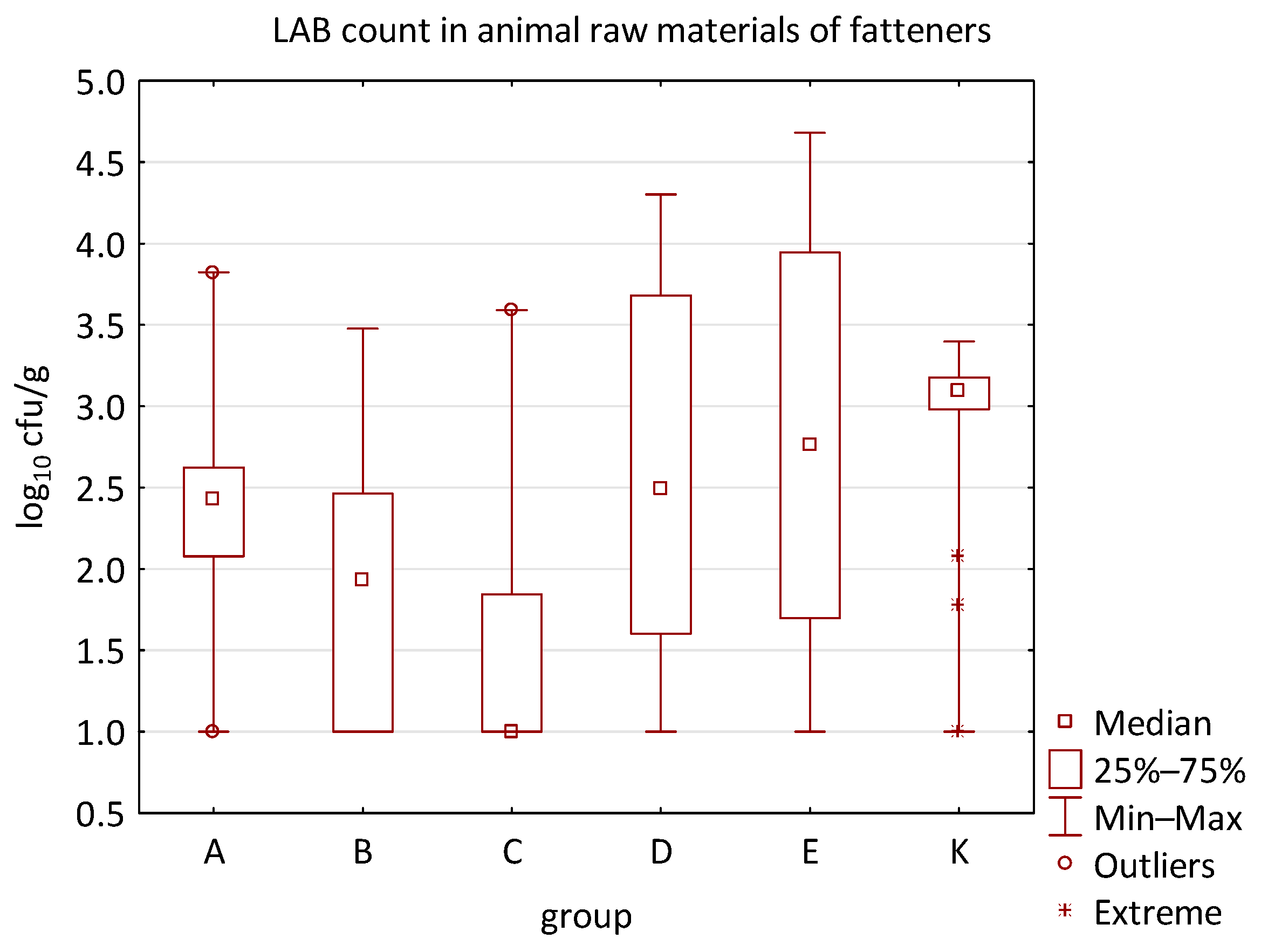
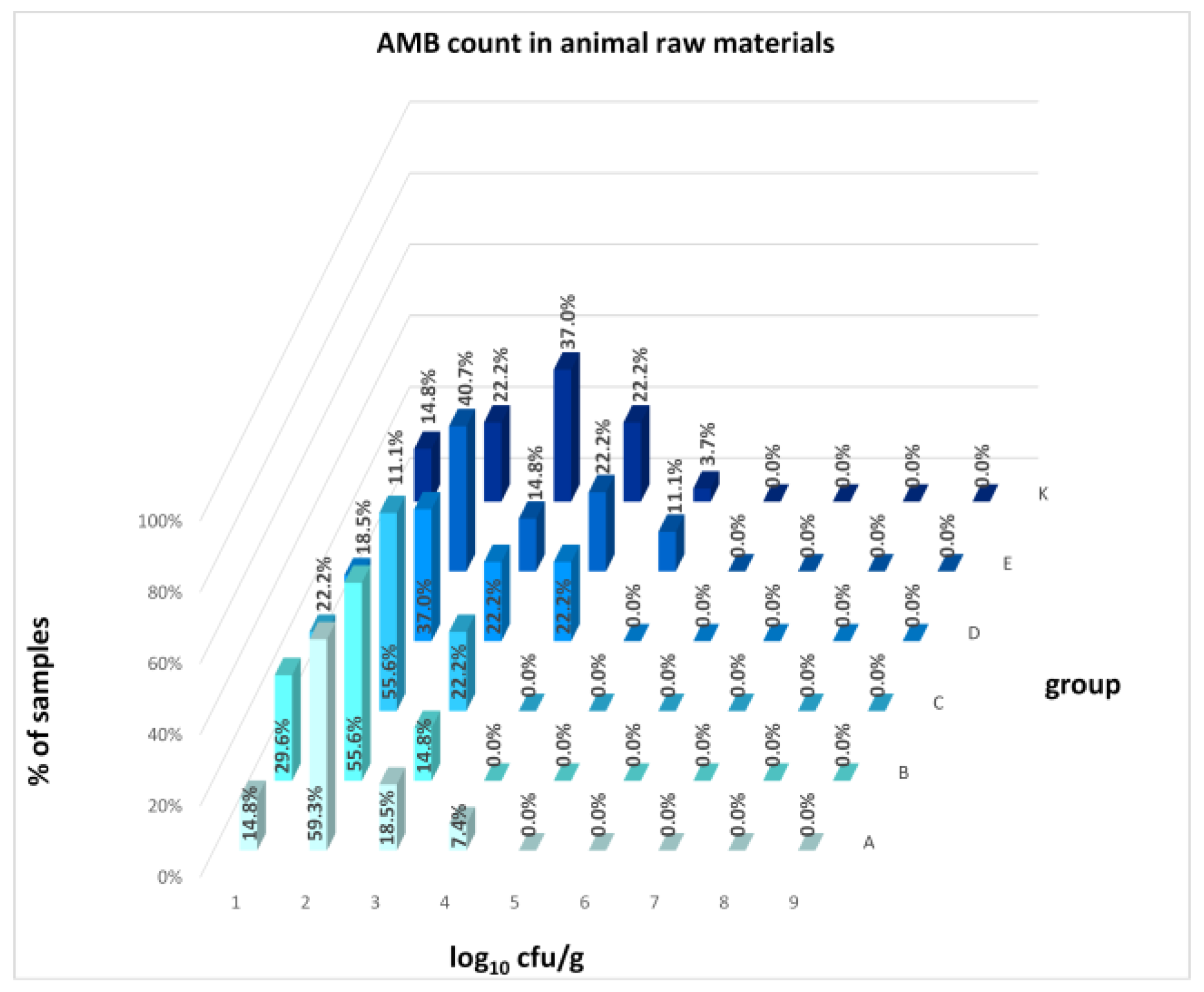
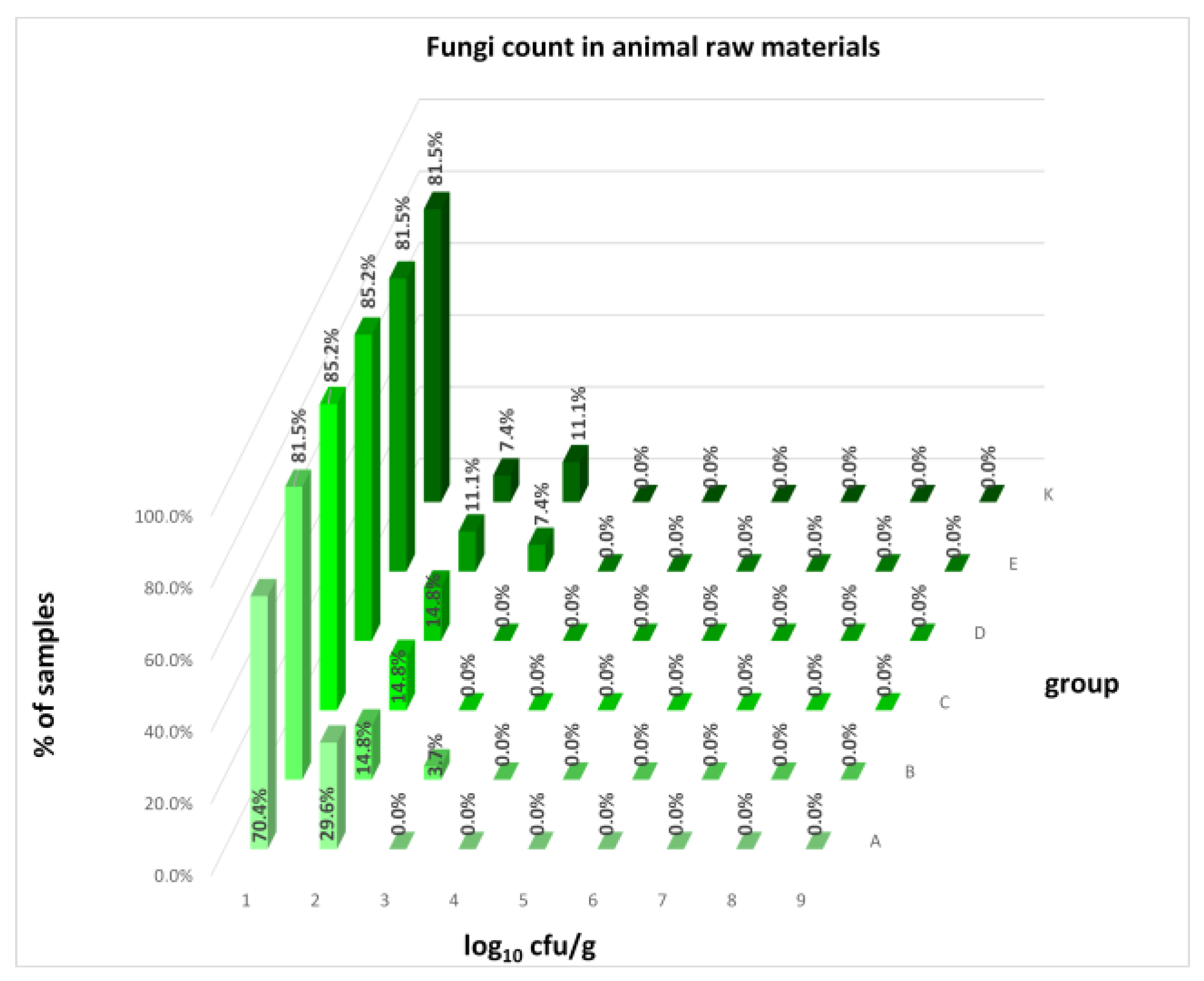
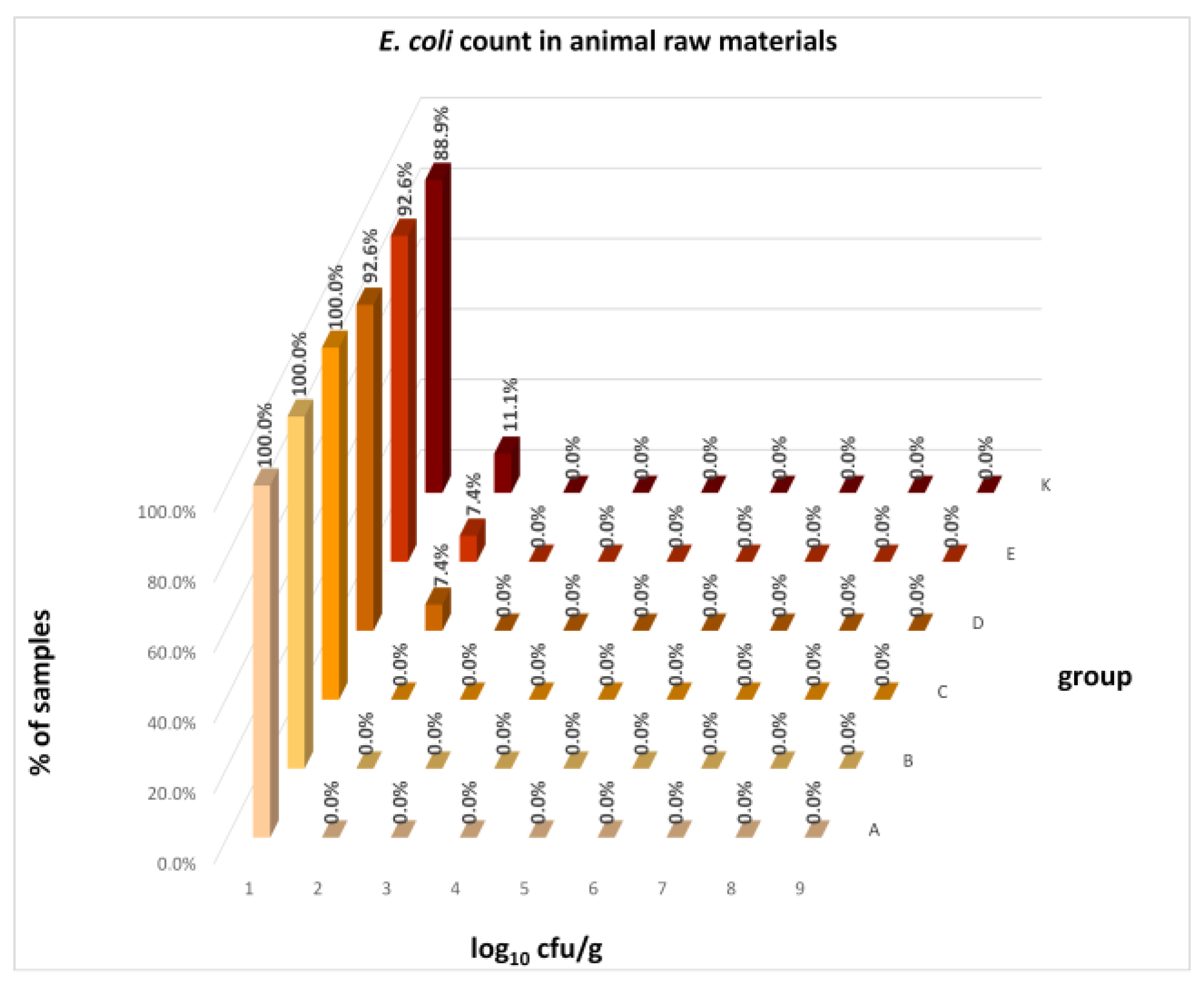
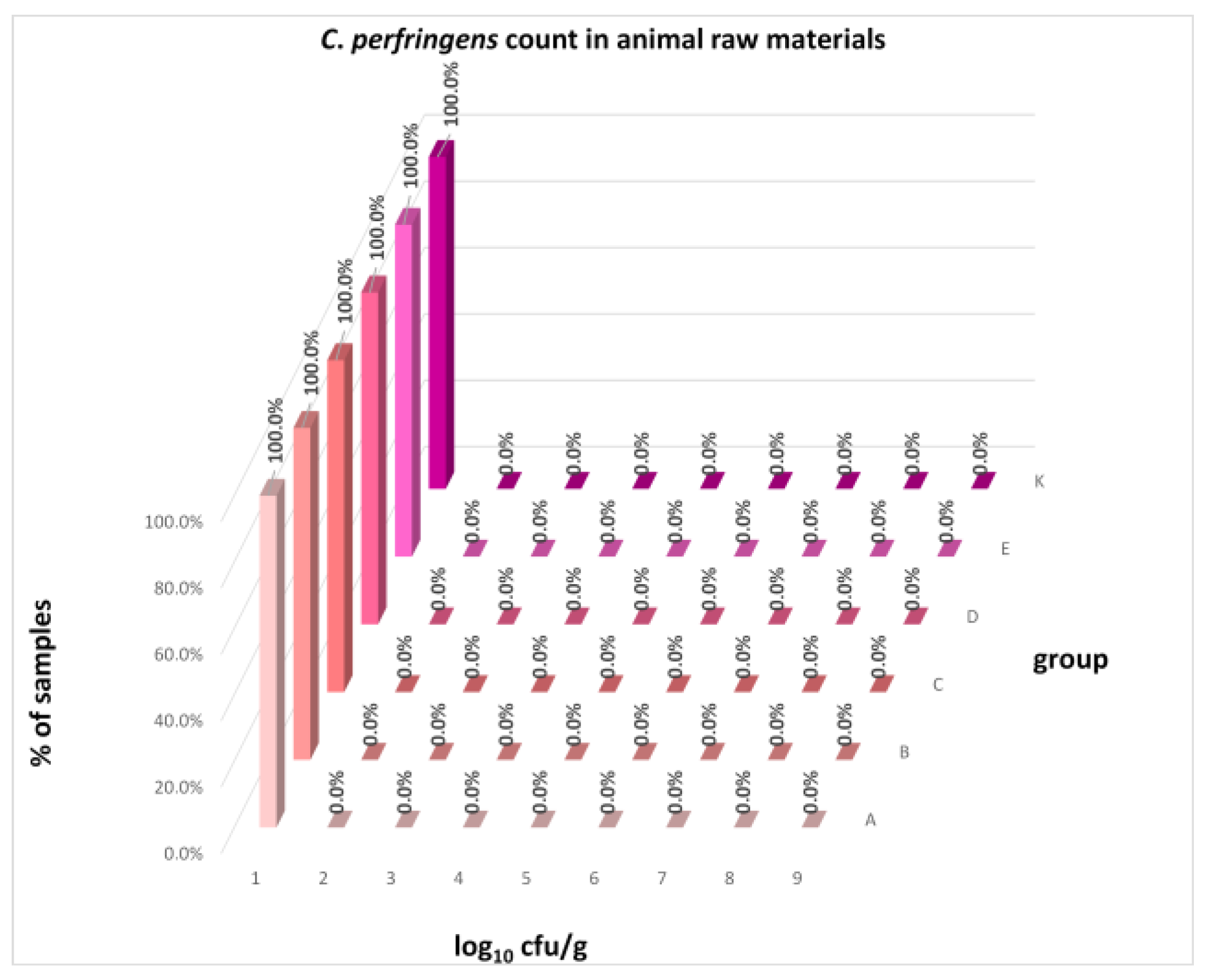
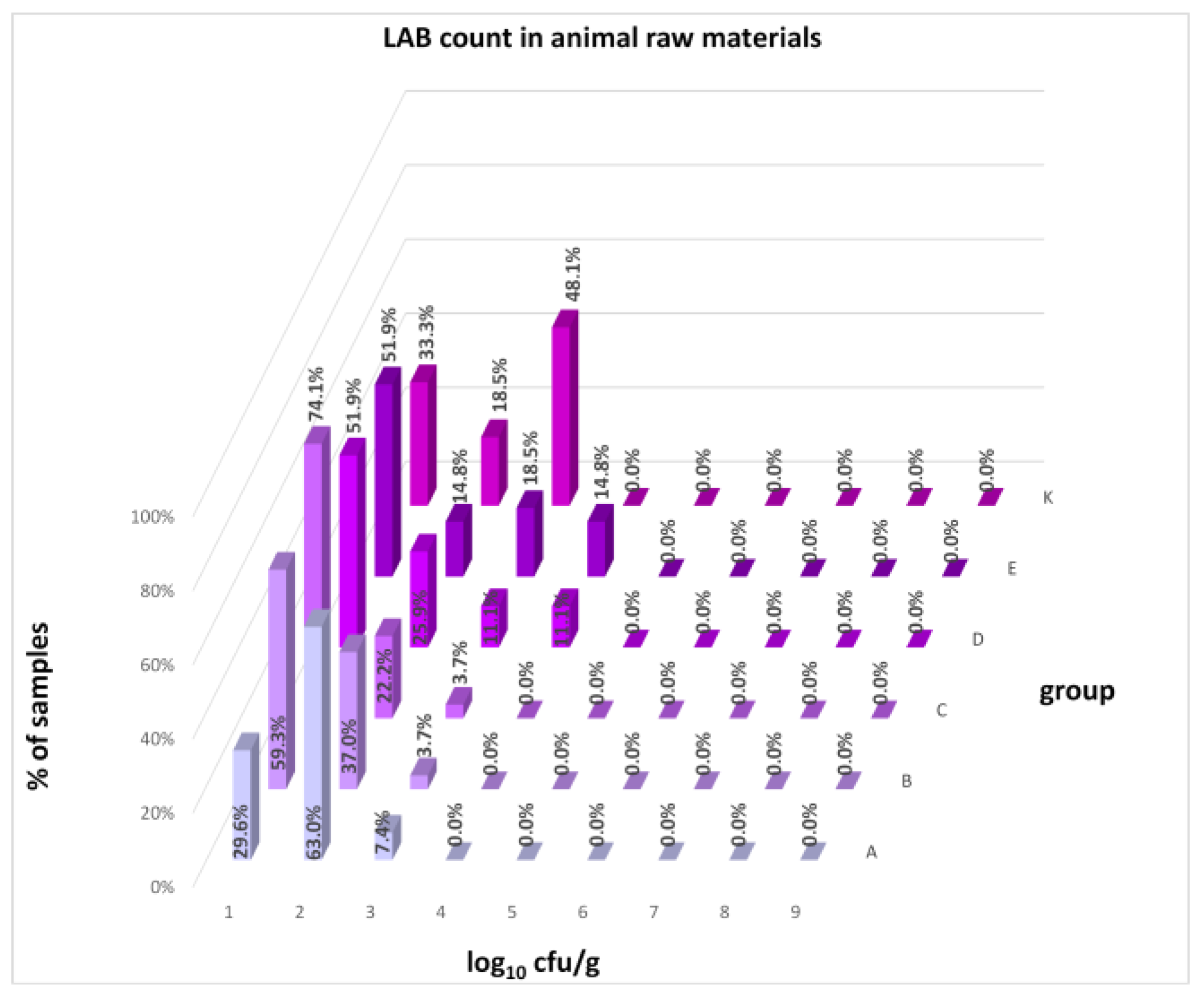
3.2. Animal Raw Materials
4. Discussion
5. Conclusions
Author Contributions
Funding
Institutional Review Board Statement
Informed Consent Statement
Data Availability Statement
Acknowledgments
Conflicts of Interest
References
- Vergin, F. Anti- und probiotica. Hipokrates 1954, 25, 116–119. [Google Scholar]
- Swanson, K.S.; Gibson, G.R.; Hutkins, R.; Reimer, R.A.; Reid, G.; Verbeke, K.; Scott, K.P.; Holscher, H.D.; Azad, M.B.; Delzenne, N.M.; et al. The International Scientific Association for Probiotics and Prebiotics (ISAPP) consensus statement on the definition and scope of synbiotics. Nat. Rev. Gastroenterol. Hepatol. 2020, 17, 687–701. [Google Scholar] [CrossRef]
- Alves-Santos, A.M.; Sugizaki, C.S.A.; Lima, G.C.; Naves, M.M.V. Prebiotic effect of dietary polyphenols: A systematic review. J. Funct. Foods 2020, 74, 104169. [Google Scholar] [CrossRef]
- Chlebicz-Wójcik, A.; Śliżewska, K. The effect of recently developed synbiotic preparations on dominant fecal microbiota and organic acids concentrations in feces of piglets from nursing to fattening. Animals 2020, 30, 1999. [Google Scholar] [CrossRef] [PubMed]
- Dev, K.; Mir, N.A.; Biswas, A.; Kannoujia, J.; Begum, J.; Kant, R.; Mandal, A. Dietary synbiotic supplementation improves the growth performance, body antioxidant pool, serum biochemistry, meat quality, and lipid oxidative stability in broiler chickens. Anim. Nutr. 2020, 6, 325–332. [Google Scholar] [CrossRef] [PubMed]
- Izza, A. Effect of Encapsulated Synbiotic as Feed Additive on Physical Quality of Broiler Meat. Undergraduate Thesis, Animal Science Faculty Brawijaya University, Malang, Indonesia, 2018. [Google Scholar]
- Krumbeck, J.A.; Walter, J.; Hutkins, R.W. Synbiotics for improved human health: Recent developments, challenges, and opportunities. Annu. Rev. Food Sci. Technol. 2018, 9, 451–479. [Google Scholar] [CrossRef]
- Rohani, M.F.; Islam, S.M.; Hossain, M.K.; Ferdous, Z.; Siddik, M.A.; Nuruzzaman, M.; Padeniya, U.; Brown, C.; Shahjahan, M. Probiotics, prebiotics and synbiotics improved the functionality of aquafeed: Upgrading growth, reproduction, immunity and disease resistance in fish. Fish Shellfish Immunol. 2022, 120, 569–589. [Google Scholar] [CrossRef]
- Saracila, M.; Untea, A.E.; Panaite, T.D. Evaluation of the effect of synbiotic in piglets’ diet on the nutritional quality of pork. Arch. Zootech. 2021, 24, 67–75. [Google Scholar] [CrossRef]
- Śliżewska, K.; Markowiak-Kopeć, P.; Sip, A.; Lipiński, K.; Mazur-Kuśnirek, M. The effect of using new synbiotics on the turkey performance, the intestinal microbiota and the fecal enzymes activity in turkeys fed ochratoxin a contaminated feed. Toxins 2020, 12, 578. [Google Scholar] [CrossRef]
- Śliżewska, K.; Markowiak-Kopeć, P.; Żbikowski, A.; Szeleszczuk, P. The effect of synbiotic preparations on the intestinal microbiota and her metabolism in broiler chickens. Sci. Rep. 2020, 10, 4281. [Google Scholar] [CrossRef]
- Zhu, Q.; Azad, M.A.K.; Dong, H.; Li, C.; Li, R.; Cheng, Y.; Liu, Y.; Yin, Y.; Kong, X. Sow-offspring diets supplemented with probiotics and synbiotics are associated with offspring’s growth performance and meat quality. Int. J. Mol. Sci. 2023, 24, 7668. [Google Scholar] [CrossRef] [PubMed]
- Gourbeyre, P.; Denery, S.; Bodinier, M. Probiotics, prebiotics, and synbiotics: Impact on the gut immune system and allergic reactions. J. Leukoc. Biol. 2011, 89, 685–695. [Google Scholar] [CrossRef] [PubMed]
- Abdel-Wareth, A.A.A.; Hammad, S.; Khalaphallah, R.; Salem, W.M.; Lohakare, J. Synbiotic as eco-friendly feed additive in diets of chickens under hot climatic conditions. Poult. Sci. 2019, 98, 4575–4583. [Google Scholar] [CrossRef]
- Czyżewska-Dors, E.; Kwit, K.; Stasiak, E.; Rachubik, J.; Śliżewska, K.; Pomorska-Mól, M. Effects of newly developed synbiotic and commercial probiotic products on the haematological indices, serum cytokines, acute phase proteins concentration, and serum immunoglobulins amount in sows and growing pigs—A pilot study. J. Vet. Res. 2018, 10, 317–328. [Google Scholar] [CrossRef] [PubMed]
- Hassanzadeh, P.; Nouri Gharajalar, S.; Mohammadzadeh, S. Antimicrobial effects of different synbiotic compounds against pathogenic bacteria isolated from beef, mutton, and chicken. Arch. Razi Inst. 2022, 77, 2105–2113. [Google Scholar] [PubMed]
- Sobotik, E.B.; Ramirez, S.; Roth, N.; Tacconi, A.; Pender, C.; Murugesan, R.; Archer, G.S. Evaluating the effects of a dietary synbiotic or synbiotic plus enhanced organic acid on broiler performance and cecal and carcass Salmonella load. Poult. Sci. 2021, 100, 101508. [Google Scholar] [CrossRef] [PubMed]
- Śliżewska, K.; Chlebicz, A. Synbiotics impact on dominant faecal microbiota and short-chain fatty acids production in sows. FEMS Microbiol. Lett. 2019, 366, fnz157. [Google Scholar] [CrossRef]
- Villagrán-de la Mora, Z.; Nuño, K.; Vázquez-Paulino, O.; Avalos, H.; Castro-Rosas, J.; Gómez-Aldapa, C.; Angulo, C.; Ascencio, F.; Villarruel-López, A. Effect of a synbiotic mix on intestinal structural changes, and Salmonella Typhimurium and Clostridium perfringens colonization in broiler chickens. Animals 2019, 9, 777. [Google Scholar] [CrossRef]
- Kogut, M.H.; Lee, A.; Santin, E. Microbiome and pathogen interaction with the immune system. Poult. Sci. 2020, 99, 1906–1913. [Google Scholar] [CrossRef] [PubMed]
- Gurbuz, Y. Heat applications in feed and food processing. Anim. Feed Sci. Technol. 2019, 7, 2. [Google Scholar]
- Paskudska, A.; Kołodziejczyk, D.; Socha, S. The use of herbs in animal nutrition. Acta Sci. Pol. Zootechnica 2018, 17, 3–14. [Google Scholar] [CrossRef]
- Van Staden, J.J.; Vander Made, H.N.; Jordaan, E. The control of bacterial contamination in carcass meal with propionic acid. Onderstepoort J. Vet. Res. 1980, 47, 77–82. [Google Scholar] [PubMed]
- EFSA and ECDC (European Food Safety Authority and European Centre for Disease Prevention and Control). The European Union One Health 2023 Zoonoses report. EFSA J. 2024, 22, e9106. [Google Scholar] [PubMed]
- OECD; Food and Agriculture Organization of the United Nations. OECD-FAO Agricultural Outlook 2021–2030; OECD Publishing: Paris, France, 2021; pp. 1–337. [Google Scholar] [CrossRef]
- Henderson, B. 15-year analysis shows pork, Salmonella significant causes of foodborne illness outbreaks in China. Food Saf. Mag. 2022, 14. Available online: https://www.food-safety.com/articles/8135-15-year-analysis-shows-pork-salmonella-significant-causes-of-foodborne-illness-outbreaks-in-china (accessed on 4 March 2026).
- Heimesaat, M.M.; Boelke, S.; Fischer, A.; Haag, L.M.; Loddenkemper, C.; Kühl, A.A.; Göbel, U.B.; Bereswill, S. Comprehensive postmortem analyses of intestinal microbiota changes and bacterial translocation in human flora associated mice. PLoS ONE 2012, 7, e40758. [Google Scholar] [CrossRef]
- Rubin, B.E.R.; Gibbons, S.M.; Kennedy, S.; Hampton-Marcell, J.; Owens, S.; Gilbert, J.A. Investigating the impact of storage conditions on microbial community composition in soil samples. PLoS ONE 2013, 8, e70460. [Google Scholar] [CrossRef]
- PN-EN ISO 13307:2013-06; Microbiology of Food and Animal Feed—Primary Production Stage—Sampling Techniques. Polish Committee for Standardization: Warsaw, Poland, 2013.
- Śliżewska, K.; Chlebicz-Wójcik, A.; Nowak, A. Probiotic properties of new lactobacillus strains intended to be used as feed additives for monogastric animals. Probiotics Antimicrob. Proteins 2021, 13, 146–162. [Google Scholar] [CrossRef]
- PN-EN ISO 6887-4:2017-05; Microbiology of the Food Chain—Preparation of Test Samples, Initial Suspension and Decimal Dilutions for Microbiological Examination—Part 4: Specific Rules for the Preparation of Miscellaneous Products. Polish Committee for Standardization: Warsaw, Poland, 2017.
- PN-EN ISO 6579:2003; Microbiology of Food and Animal Feeding Stuffs—Horizontal Method for the Detection of Salmonella spp. Polish Committee for Standardization: Warsaw, Poland, 2003.
- PN-EN ISO 4833-1:2013-12; Microbiology of the Food Chain—Horizontal Method for the Enumeration of Microorganisms. Part 1. Colony Count at 30 degrees C by the Pour Plate Technique. Polish Committee for Standardization: Warsaw, Poland, 2013.
- PN-R-64791:1994; Animal Feedingstuffs. Requirements and Microbiological Examination. Polish Committee for Standardization: Warsaw, Poland, 1994.
- PN-EN ISO 11290-1:1999/A1:2004; Microbiology of Food and Animal Feeding Stuffs—Horizontal Method for the Detection and Enumeration of Listeria monocytogenes. Part 1. Detection Method. Polish Committee for Standardization: Warsaw, Poland, 1999.
- PN-EN ISO 7937:2005; Microbiology of Food and Animal Feeding Stuffs—Horizontal Method for the Enumeration of Clostridium perfringens. Colony-Count Technique. Polish Committee for Standardization: Warsaw, Poland, 2005.
- PN-ISO 21528-2:2005; Microbiology of Food and Animal Feeding Stuffs—Horizontal Method for the Detection and Enumeration of Enterobacteriaceae. Part 2. Colony-Count Technique. Polish Committee for Standardization: Warsaw, Poland, 2005.
- PN-ISO 16649-2:2004; Microbiology of Food and Animal Feeding Stuffs—Horizontal Method for the Enumeration of Beta-Glucuronidase-Positive Escherichia coli. Part 2. Colony-Count Technique at 44 °C Using 5-bromo-4-chloro-3-indolyl beta-D-glucuronide. Polish Committee for Standardization: Warsaw, Poland, 2004.
- PN-EN ISO 6888-2:2001; Microbiology of Food and Animal Feeding Stuffs—Horizontal Method for the Enumeration of Coagulase-positive Staphylococci (Staphylococcus aureus and Other Species). Part 2: Technique Using Rabbit Plasma Fibrinogen Agar Medium. Polish Committee for Standardization: Warsaw, Poland, 2001.
- PN-A-82055-12:1997; Meat and Meat Preparations—Microbiological Tests—Detection of Anaerobic Spore-Forming Bacteria and Anaerobic Spore-Forming Sulfate(IV)-Reducing Bacteria. Polish Committee for Standardization: Warsaw, Poland, 1997.
- PN-EN ISO 10272-1:2007; Microbiology of Food and Animal Feeding Stuffs—Horizontal Method for Detection and Enumeration of Campylobacter spp. Part 1: Detection Method. Polish Committee for Standardization: Warsaw, Poland, 2007.
- PN-A-82055-7:1997; Meat and Meat Products—Microbiological Tests—Detection and Enumeration of Enterococci. Polish Committee for Standardization: Warsaw, Poland, 1997.
- PN-EN 15788:2009; Animal Feeding Stuffs—Isolation and Enumeration of Enterococcus (E. faecium) spp. Polish Committee for Standardization: Warsaw, Poland, 2009.
- PN-ISO 15214:2002; Microbiology of Food and Animal Feeding Stuffs—Horizontal Method for the Enumeration of Mesophilic Lactic Acid Bacteria. Colony-Count Technique at 30 Degrees C. Polish Committee for Standardization: Warsaw, Poland, 2002.
- PN-EN 15789:2009; Animal Feeding Stuffs. Isolation and enumeration of yeast probiotic strains. Polish Committee for Standardization: Warsaw, Poland, 2009.
- PN-EN ISO 7932:2005; Microbiology of Food and Animal Feeding Stuffs—Horizontal Method for the Enumeration of Presumptive Bacillus cereus. Colony-Count Technique at 30 Degrees C. Polish Committee for Standardization: Warsaw, Poland, 2005.
- Baums, C.G.; Schotte, U.; Amtsberg, G.; Goethe, R. Diagnostic multiplex PCR for toxin genotyping of Clostridium perfringens isolates. Vet. Microbiol. 2004, 100, 11–16. [Google Scholar] [CrossRef]
- Kukier, E.; Kwiatek, K. Occurrence of Clostridium perfringens in food chain. Bull. Vet. Inst. Pulawy 2010, 54, 571–576. [Google Scholar]
- Raphael, B.H.; Andreadis, J.D. Real-time PCR detection of the nontoxic nonhemagglutinin gene as a rapid screening method for bacterial isolates harboring the botulinum neurotoxin (A–G) gene complex. J. Microbiol. Methods 2007, 71, 343–346. [Google Scholar] [CrossRef] [PubMed]
- Mounir, M.; Ibijbijen, A.; Farih, K.; Rabetafika, H.N.; Razafindralambo, H.L. Synbiotics and their antioxidant properties, mechanisms, and benefits on human and animal health: A narrative review. Biomolecules 2022, 12, 1443. [Google Scholar] [CrossRef]
- Yadav, M.K.; Kumari, I.; Singh, B.; Sharma, K.K.; Tiwari, S.K. Probiotics, prebiotics and synbiotics: Safe options for next-generation therapeutics. Appl. Microbiol. Biotechnol. 2022, 106, 505–521. [Google Scholar] [CrossRef] [PubMed]
- Kozieł, N.; Kukier, E.; Kwiatek, K.; Goldsztejn, M. Clostridium perfringens—Epidemiological importance and diagnostics. Med. Wet. 2019, 75, 265–270. [Google Scholar] [CrossRef]
- Sankarganesh, P.; Bhunia, A.; Kumar, A.G.; Babu, A.S.; Gopukumar, S.T.; Lokesh, E. Short-chain fatty acids (SCFAs) in gut health: Implications for drug metabolism and therapeutics. Med. Microecol. 2025, 25, 100139. [Google Scholar] [CrossRef]
- Aquilina, G.; Azimonti, G.; Bampidis, V.; De Lourdes Bastos, M.; Bories, G.; Chesson, A.; Cocconcelli, P.S.; Flachowsky, G.; Gropp, J.; Kolar, B.; et al. Safety and efficacy of BioPlus_2B® (Bacillus subtilis DSM 5750 and Bacillus licheniformis DSM 5749) as a feed additive for sows, piglets, pigs for fattening, turkeys for fattening and calves. EFSA J. 2016, 14, e04558. [Google Scholar]
- Rychen, G.; Aquilina, G.; Azimonti, G.; Bampidis, V.; Bastos, M.L.; Bories, G.; Chesson, A.; Cocconcelli, P.S.; Flachowsky, G.; Gropp, J.; et al. Efficacy of Cylactin® (Enterococcus faecium NCIMB 10415) as a feed additive for pigs for fattening. EFSA J. 2018, 16, e05201. [Google Scholar] [CrossRef]
- Chlebicz-Wójcik, A.; Śliżewska, K.; Nowak, A. Probiotic properties of Saccharomyces cerevisiae ŁOCK 0119 yeast. Żywność 2019, 26, 196–209. [Google Scholar]
- Pesciaroli, M.; Cucco, L.; De Luca, S.; Massacci, F.R.; Maresca, C.; Medici, L.; Paniccià, M.; Scoccia, E.; Staffolani, M.; Pezzotti, G.; et al. Association between pigs with high caecal Salmonella loads and carcass contamination. Int. J. Food Microbiol. 2017, 242, 82–86. [Google Scholar] [CrossRef] [PubMed]
- Shanmugasundaram, R.; Mortada, M.; Cosby, D.E.; Singh, M.; Applegate, T.J.; Syed, B.; Pender, C.M.; Curry, S.; Murugesan, G.R.; Selvaraj, R.K. Synbiotic supplementation to decrease Salmonella colonization in the intestine and carcass contamination in broiler birds. PLoS ONE 2019, 14, e0223577. [Google Scholar] [CrossRef] [PubMed]
- Cason, E.E.; Al Hakeem, W.G.; Adams, D.; Shanmugasundaram, R.; Selvaraj, R. Effects of synbiotic supplementation as an antibiotic growth promoter replacement on cecal Campylobacter jejuni load in broilers challenged with C. jejuni. J. Appl. Poult. Res. 2023, 32, 100315. [Google Scholar] [CrossRef]
- Szabo, I.; Wieler, L.H.; Tedin, K.; Scharek-Tedin, L.; Taras, D.; Hensel, A.; Appel, B.; Nockler, K. Influence of a probiotic strain of Enterococcus faecium on Salmonella enterica serovar Typhimurium DT104 infection in a porcine animal infection model. Appl. Environ. Microbiol. 2009, 75, 2621–2628. [Google Scholar] [CrossRef]
- Chaiyasut, C.; Sivamaruthi, B.S.; Lailerd, N.; Sirilun, S.; Khongtan, S.; Fukngoen, P.; Peerajan, S.; Saelee, M.; Chaiyasut, K.; Kesika, P.; et al. Probiotics supplementation improves intestinal permeability, obesity index and metabolic biomarkers in elderly thai subjects: A randomized controlled trial. Foods 2022, 19, 268. [Google Scholar] [CrossRef]
- Pandey, K.R.; Naik, S.R.; Babu, V.V. Probiotics, prebiotics and synbiotics—A review. J. Food Sci. Technol. 2015, 52, 7577–7587. [Google Scholar] [CrossRef]
- Peña, A.S. Intestinal flora, probiotics, prebiotics, synbiotics and novel foods. Rev. Esp. Enferm. Dig. 2007, 99, 653. [Google Scholar]
- Van Immerseel, F.; Ducatelle, R.; De Vos, M.; Boon, N.; Van De Wiele, T.; Verbeke, K.; Flint, H.J. Butyric acid-producing anaerobic bacteria as a novel probiotic treatment approach for inflammatory bowel disease. J. Med. Microbiol. 2010, 59, 141–143. [Google Scholar] [CrossRef] [PubMed]
- Pavan, S.; Desreumaux, P.; Mercenier, A. Use of mouse models to evaluate the persistence, safety, and immune modulation capacities of lactic acid bacteria. Clin. Diagn. Lab. Immunol. 2003, 10, 696–701. [Google Scholar] [CrossRef]
- Lessard, M.M.; Dupuis, N.; Gagnon, É.; Nadeau, J.J.; Matte, J.; Goulet, J.; Fairbrother, J.M. Administration of Pediococcus acidilactici or Saccharomyces cerevisiae boulardii modulates development of porcine mucosal immunity and reduces intestinal bacterial translocation after Escherichia coli challenge. J. Anim. Sci. 2009, 87, 922–934. [Google Scholar] [CrossRef]
- Ghorbani, Z.; Shoaibinobarian, N.; Noormohammadi, M.; Taylor, K.; Kazemi, A.; Bonyad, A.; Khoshdooz, S.; Löber, U.; Forslund-Startceva, S.K. Reinforcing gut integrity: A systematic review and meta-analysis of clinical trials assessing probiotics, synbiotics, and prebiotics on intestinal permeability markers. Pharmacol. Res. 2025, 216, 107780. [Google Scholar] [CrossRef] [PubMed]
- Van Krimpen, S.J.; Jansen, F.A.C.; Ottenheim, V.L.; Belzer, C.; van der Ende, M.; van Norren, K. The effects of pro-, pre-, and synbiotics on muscle wasting, a systematic review-gut permeability as potential treatment target. Nutrients 2021, 13, 1115. [Google Scholar] [CrossRef]
- Bomba, A.; Nemcova, R.; Gancarčíková, S. Improvement of the probiotic effect of micro-organisms by their combination with maltodextrins, fructo-oligosaccharides and polyunsaturated fatty acids. Br. J. Nutr. 2002, 88, 95–99. [Google Scholar] [CrossRef] [PubMed]
- Mohammed, A.; Hu, J.; Murugesan, R.; Cheng, H.W. Effects of a synbiotic as an antibiotic alternative on behavior, production performance, cecal microbial ecology, and jejunal histomorphology of broiler chickens under heat stress. PLoS ONE 2022, 17, e0274179. [Google Scholar] [CrossRef]
- Parhi, P.; Liu, S.Q.; Choo, W.S. Synbiotics: Effects of prebiotics on the growth and viability of probiotics in food matrices. Bioact. Carbohydr. Diet. Fibre 2024, 32, 100462. [Google Scholar] [CrossRef]
- Athalye-Jape, G.; Esvaran, M.; Patole, S.; Simmer, K.; Nathan, E.; Doherty, D.; Keil, A.; Rao, S.; Chen, L.; Chandrasekaran, L.; et al. Effect of single versus multistrain probiotic in extremely preterm infants: A randomised trial. BMJ Open Gastroenterol. 2022, 9, e000811. [Google Scholar] [CrossRef] [PubMed]
- Timmerman, H.M.; Koning, C.J.; Mulder, L.; Rombouts, F.M.; Beynen, A.C. Monostrain, multistrain and multispecies probiotics. A comparison of functionality and efficacy. Int. J. Food Microbiol. 2004, 96, 219–233. [Google Scholar] [CrossRef] [PubMed]














| Ingredient (g/kg) | Lactating Sow | Prestarter (2–8 Weeks) | Starter (8–12 Weeks) | Grower (12–18 Weeks) | Finisher (12–24 Weeks) |
|---|---|---|---|---|---|
| Oats | 100 | - | - | - | 150 |
| Barley | 250 | 220 | 370 | 125 | 200 |
| Triticale | 110 | - | - | 544 | 361 |
| Wheat | 362 | 300 | 400 | 125 | 150 |
| Soybean meal | 90 | 50 | - | 100 | 110 |
| Soybean oil | 10 | 20 | 20 | 15 | 5 |
| Post-extraction soybean meal, heat-treated | 40 | 25 | 140 | - | - |
| Soybean, full-fat, heat-treated | - | 50 | - | - | - |
| Rapeseed meal | - | - | - | 60 | - |
| Whey permeate | - | 50 | - | - | - |
| Monocalcium phosphate | 2 | - | - | - | - |
| LonoFish a | - | 50 | 25 | - | - |
| Specilac b | - | 40 | - | - | - |
| Lonacid Max c | - | 5 | 4 | 1 | - |
| LonoGrain d | - | 150 | - | - | - |
| Mycofix PLUS e | - | - | 1 | - | - |
| Vitamin-mineral-amino acid premix 1 | 36 | - | - | - | - |
| Vitamin-mineral-amino acid premix 2 | - | 40 | - | - | - |
| Vitamin-mineral-amino acid premix 3 | - | - | 40 | - | - |
| Vitamin-mineral-amino acid premix 4 | - | - | - | 30 | 25 |
| Chemical composition | |||||
| Metabolizable energy (MJ/kg) | 13.1 | 13.8 | 13.8 | 13.6 | 13.5 |
| Crude protein (%) | 16.5 | 18.8 | 17.9 | 16.8 | 15.6 |
| Lysine (%) | 0.88 | 1.56 | 1.28 | 1.05 | 0.95 |
| Methionine + Cysteine (%) | 0.59 | 0.82 | 0.76 | 0.66 | 0.57 |
| Threonine (%) | 0.58 | 0.87 | 0.79 | 0.67 | 0.56 |
| Tryptophan (%) | 0.20 | 0.30 | 0.20 | 0.19 | 0.18 |
| Valine (%) | 0.76 | 0.75 | 0.79 | 0.75 | 0.71 |
| Calcium (%) | 1.03 | 0.91 | 0.86 | 0.68 | 0.67 |
| Phosphorus (%) | 0.47 | 0.61 | 0.55 | 0.47 | 0.38 |
| Vitamin A (IU/kg) | 12,500 | 14,000 | 20,500 | 12,000 | 7700 |
| Vitamin D3 (IU/kg) | 2000 | 2000 | 2000 | 2000 | 1540 |
| Vitamin E (mg/kg) | 80 | 84 | 100 | 63 | 100 |
| Group | Feed Additive | Composition | Dose | Period of Supplementation (Sows) | Period of Supplementation (Growing Pigs) |
|---|---|---|---|---|---|
| A | Synbiotic A | L. reuteri ŁOCK 1092 L. plantarum ŁOCK 0860 L. pentosus ŁOCK 1094 S. cerevisiae ŁOCK 0118 Inulin | 0.5 kg/tonne of basal diet | 10 days before farrowing until weaning | from 2 weeks of age until slaughter |
| B | Synbiotic B | L. reuteri ŁOCK 1092 L. plantarum ŁOCK 0860 L. pentosus ŁOCK 1094 S. cerevisiae ŁOCK 0118 L. rhamnosus ŁOCK 1087 Inulin | |||
| C | Synbiotic C | L. reuteri ŁOCK 1092 L. plantarum ŁOCK 0860 L. pentosus ŁOCK 1094 S. cerevisiae ŁOCK 0118 L. rhamnosus ŁOCK 1087 L. paracasei ŁOCK 1091 Inulin | |||
| D | BioPlus_2B® | B. licheniformis DSM 5749 B. subtilis DSM 5750 calcium carbonate kieselguhr as anticaking agent | |||
| E | Cylactin® LBC ME10 | E. faecium NCIMB 10415 saccharose as carrier cellulose derivative as encapsulating agent | |||
| K | NA | NA | NA | NA | NA |
| No and Title of Method | Step of Method | ||||
| Primary enrichment | Secondary enrichment | Isolation | Confirmation | ||
| liquid non-selective medium/incubation conditions | selective liquid medium/incubation conditions | selective agar medium/incubation conditions | Test | ||
| PN-EN ISO 6579:2003 Horizontal method for the detection of Salmonella spp. [32] | Buffered Peptone Water 1/37 °C/18 h | Rappaport–Vassiliadis soya peptone broth (RVS) 1/41.5 °C/24 h | Xylose lysine deoxycholate agar (XLD) 2/37 °C/24 h | biochemical identification, serological identification | |
| Muller–Kauffmann tetrathionate-novobiocin broth (MKTTn) 2/37 °C/24 h | Brilliant green agar (BGA) 2/37 °C/24 h | ||||
| PN-EN ISO 4833-1:2013-12 Horizontal method for the enumeration of microorganisms. Part 1. Colony count at 30 °C by the pour plate technique [33] | NA | NA | Plate count agar (PCA) 2/30 °C/72 h | NA | |
| PN-R-64791:1994 Animal feedingstuffs. Requirements and microbiological examination [34] | presence of anaerobic spore-forming bacteria (Clostridium) | NA | Wrzosek broth 3/37 °C/48 h/anaerobic conditions | Willis-Hobbs agar 3/37 °C/48 h/ anaerobic conditions | biochemical identification, microscopic identification (Gram staining) |
| Wilson-Blair agar 2/37 °C/48 h/ anaerobic conditions | |||||
| enumeration of fungi | NA | NA | Dichloran-rose Bengal chloramphenicol agar (DRBC) 2/25 °C/7 d | NA | |
| enumeration of aerobic mesophilic bacteria | NA | NA | Nutrient agar 2/37 °C/48 h | NA | |
| PN-EN ISO 11290-1:1999/A1:2004 Horizontal method for the detection and enumeration of Listeria monocytogenes. Part 1. Detection method [35] | half-Fraser broth 2/37 °C/24 h | Fraser broth 2/37 °C/24 h | ALOA agar 4/37 °C/24 h | biochemical identification | |
| Oxford agar 2/37 °C/24 h | |||||
| PN-EN ISO 7937:2005 Horizontal method for the enumeration of Clostridium perfringens. Colony-count technique [36] | NA | NA | Tryptose sulfite cycloserine agar (SC) 2/37 °C/20 h/a anaerobic conditions | biochemical identification | |
| PN-ISO 21528-2:2005 Horizontal method for the detection and enumeration of Enterobacteriaceae. Part 2. Colony-count technique [37] | NA | NA | Violet red bile glucose agar (VRBG) 1/37 °C/24 h | biochemical identification | |
| PN-ISO 16649-2:2004 Horizontal method for the enumeration of beta-glucuronidase-positive Escherichia coli. Part 2. Colony-count technique at 44 °C using 5-bromo-4-chloro-3-indolyl beta-D-glucuronide [38] | NA | NA | Tryptone bile x-glucuronide agar (TBX) 2/44 °C/24 h | NA | |
| PN-EN ISO 6888-2:2001 Horizontal method for the enumeration of coagulase-positive staphylococci (Staphylococcus aureus and other species). Part 2: Technique using rabbit plasma fibrinogen agar medium [39] | NA | NA | Baird-Parker RPF agar 2/37 °C/24–48 h | NA | |
| PN-A-82055-12:1997 Detection of anaerobic spore-forming bacteria and anaerobic spore-forming sulfate(IV)-reducing bacteria [40] | NA | Wrzosek broth 3/37 °C/48 h/anaerobic conditions | Willis-Hobbs agar 3/37 °C/48 h/anaerobic conditions | biochemical identification, microscopic identification (Gram staining) | |
| Wilson-Blair agar 2/37 °C/48 h/anaerobic conditions | |||||
| PN-EN ISO 10272-1:2007 Horizontal method for detection and enumeration of Campylobacter spp. Part 1: Detection method [41] | NA | Bolton selective enrichment broth 2/41.5 °C/48 h/microaerobic conditions | Modified charcoal-cefoperazone-deoxycholate agar (mCCDA) 2/41.5 °C/48 h/microaerobic conditions | biochemical identification, morphological identification | |
| PN-A-82055-7:1997 Detection and enumeration of enterococci [42] | NA | NA | Slanetz and Bartley agar 2/37 °C/24–48 h | microscopic identification, biochemical identification, morphological identification | |
| PN-EN 15788:2009 Isolation and enumeration of Enterococcus (E. faecium) spp. [43] | NA | NA | Bile esculin azide agar (BEAA) 2/37 °C/24 h | microscopic identification, morphological identification | |
| PN-ISO 15214:2002 Horizontal method for the enumeration of mesophilic lactic acid bacteria. Colony-count technique at 30 °C [44] | NA | NA | De Man, Rogosa and Sharpe agar (MRS) 2/30 °C/72 h | NA | |
| PN-EN 15789:2009 Isolation and enumeration of yeast probiotic strains [45] | NA | NA | Chloramphenicol glucose yeast extract agar (CGYE) 2 /35 °C/48 h | microscopic identification, morphological identification | |
| PN-EN ISO 7932:2005 Horizontal method for the enumeration of presumptive Bacillus cereus. Colony-count technique at 30 °C [46] | NA | NA | Mannitol yolk polymyxin agar (MYP) 2/30 °C/24 h | biochemical identification | |
| Microorganism | Feed | Animal Raw Material | |||
|---|---|---|---|---|---|
| Sow | Piglet | Fattener | Piglet | Fattener | |
| Salmonella spp. (%) | 0 | 0 | 0 | 0 | 0 |
| Campylobacter spp. (%) | 0 | 0 | 0 | 0 | 0 |
| L. monocytogenes (%) | 0 | 0 | 0 | 0 | 0 |
| Clostridium spp. (%) | 66.6 | 66.6 | 66.6 | 11.1 | 0 |
| C. perfringens (%) | 33.3 | 33.3 | 33.3 | 11.1 | 0 |
| C. botulinum (%) | 0 | 0 | 0 | 0 | 0 |
| TPC (log10 cfu/g) | 6–7.3 | 5.3–6 | 5.6–6.6 | <1–5 | <1–5 |
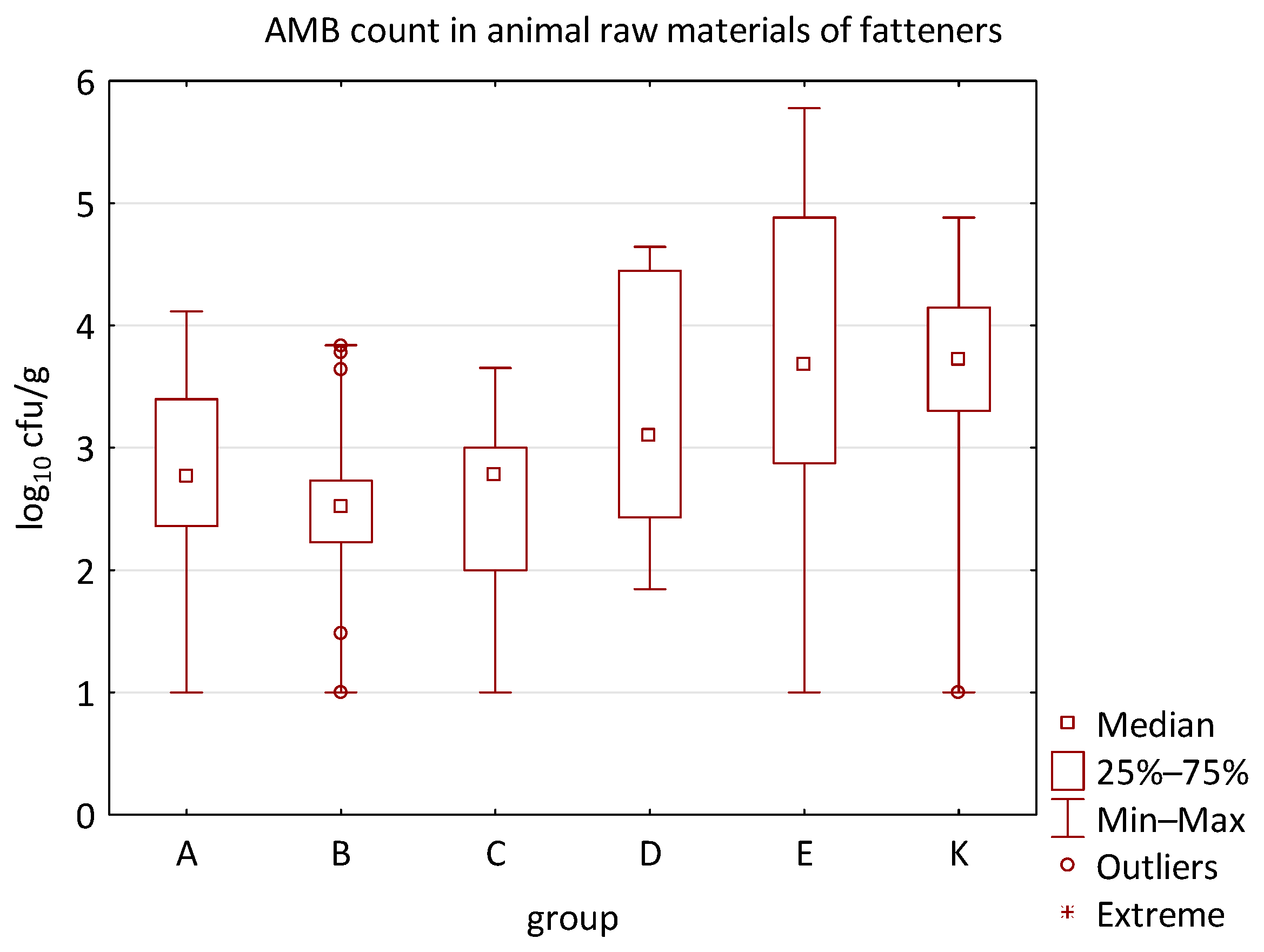
| AMB (log10 cfu/g) | 6–6.7 | 5.2–5.8 | 5.3–6.7 | <1–5.1 | <1–4.8 |
| Fungi (log10 cfu/g) | 5.5–6.1 | 5.3–5.5 | 4.3–5.5 | <1 | <1–3.5 |
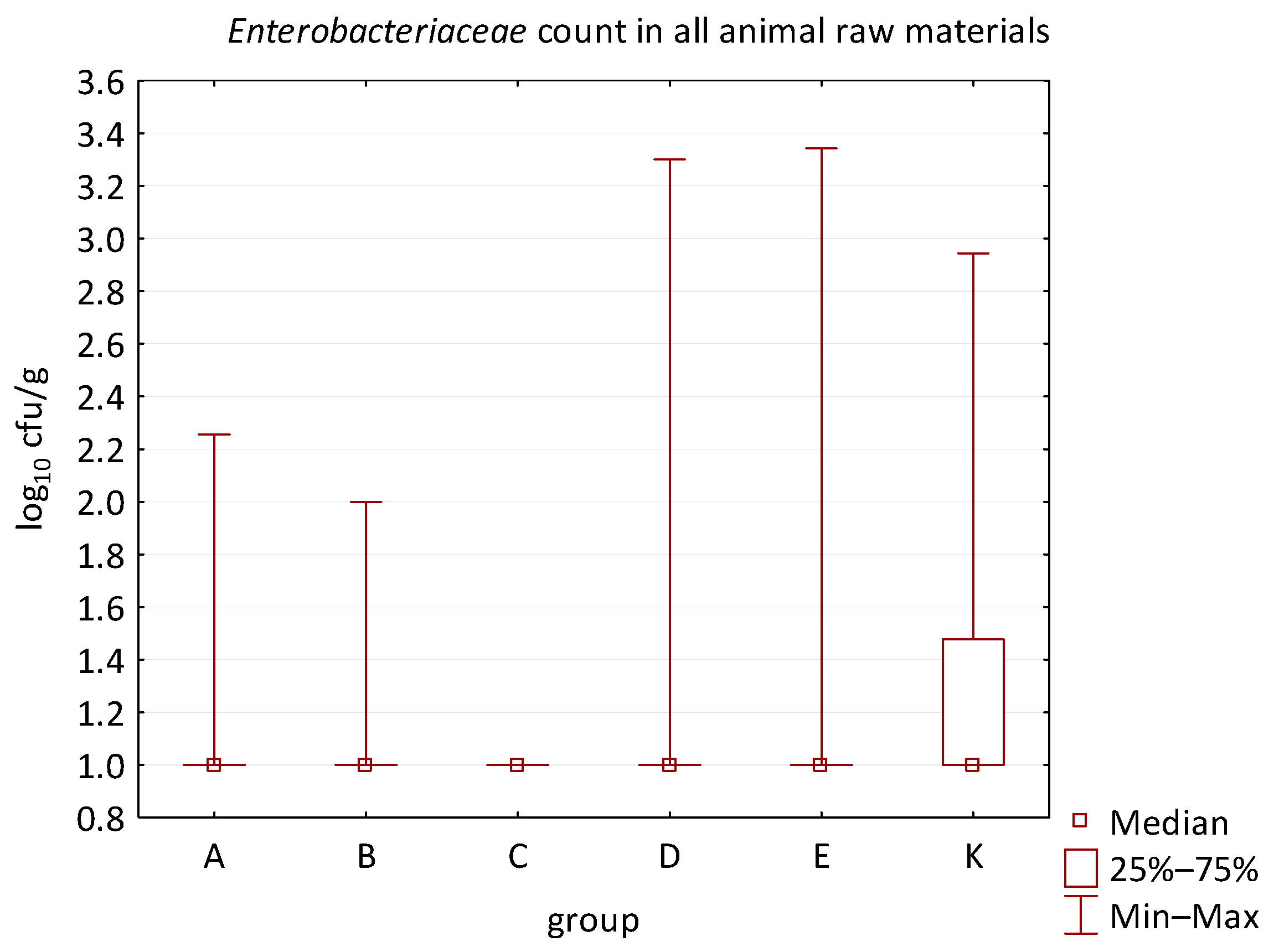
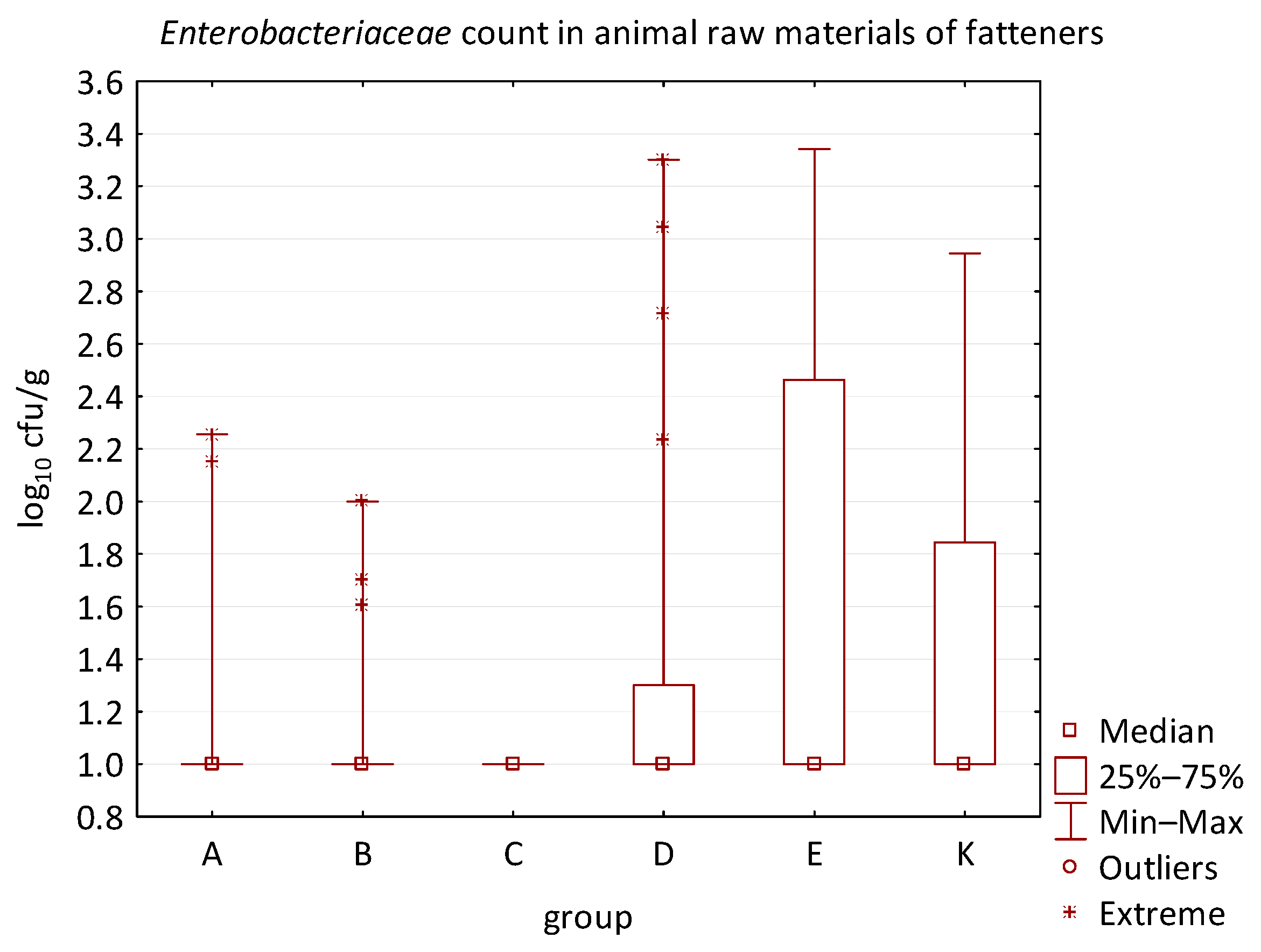
| Enterobacteriaceae (log10 cfu/g) | 5.3–6.2 | 4.1–4.6 | 4.7–5.9 | <1 | <1–2.9 |
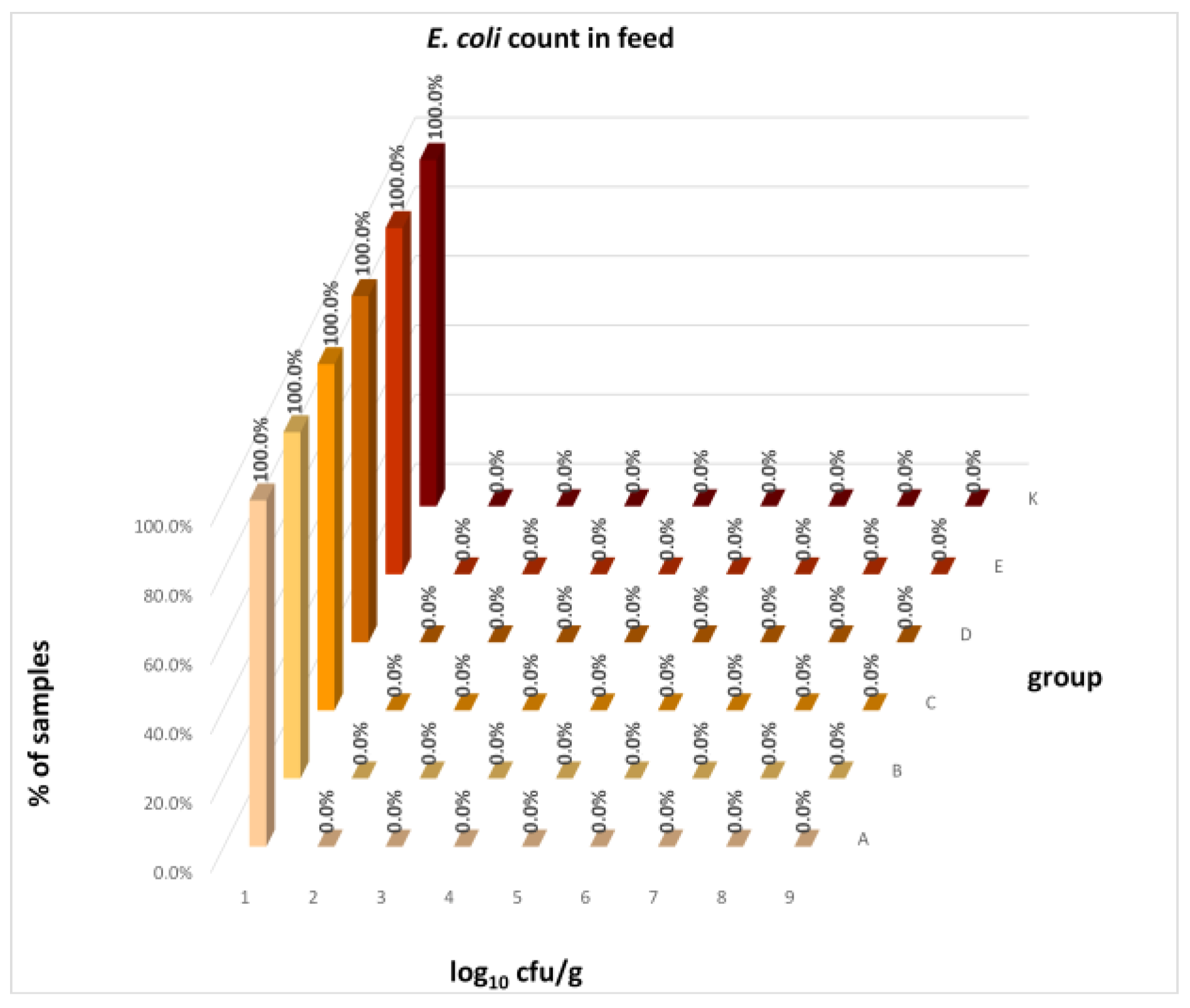
| E. coli (log10 cfu/g) | <1–1.6 | <1 | <1 | <1 | <1–2.7 |
| Clostridium spp. (log10 cfu/g) | <1–2 | <1–4 | <1–4 | <1–2 | <1 |
| C. perfringens (log10 cfu/g) | <1 | <1 | <1 | <1 | <1 |
| B. cereus (log10 cfu/g) | <1 | <1 | <1 | <1 | <1 |
| CoPS (log10 cfu/g) | <1 | <1 | <1 | <1 | <1 |
| HS (log10 cfu/g) | <1 | <1 | <1 | <1 | <1 |
| LAB (log10 cfu/g) | <1–4.2 | <1 | <1 | <1–2.8 | <1–3.3 |
| Enterococcus (log10 cfu/g) | 2.9–3.9 | <1–5.5 | <1–2.2 | <1 | <1 |
| Yeast probiotic strains (log10 cfu/g) | <1 | <1–4.1 | <1 | <1 | <1 |
| Microrganisms | Group of Animals | |||||
|---|---|---|---|---|---|---|
| A | B | C | D | E | K | |
| Feed | ||||||
| Salmonella spp. | 0.0 (0.0–33.6) | 0.0 (0.0–33.6) | 0.0 (0.0–33.6) | 0.0 (0.0–33.6) | 0.0 (0.0–33.6) | 0.0 (0.0–33.6) |
| Campylobacter spp. | 0.0 (0.0–33.6) | 0.0 (0.0–33.6) | 0.0 (0.0–33.6) | 0.0 (0.0–33.6) | 0.0 (0.0–33.6) | 0.0 (0.0–33.6) |
| Listeria spp. | 22.2 (2.8–60.0) | 11.1 (0.3–48.2) | 22.2 (2.8–60.0) | 11.1 (0.3–48.2) | 0.0 (0.0–33.6) | 0.0 (0.0–33.6) |
| L. monocytogenes | 0.0 (0.0–33.6) | 0.0 (0.0–33.6) | 0.0 (0.0–33.6) | 0.0 (0.0–33.6) | 0.0 (0.0–33.6) | 0.0 (0.0–33.6) |
| Clostridium spp. | 66.7 (29.9–92.5) | 88.9 (51.8–99.7) | 77.8 (40.0–97.2) | 88.9 (51.8–99.7) | 88.9 (51.8–99.7) | 66.7 (29.9–92.5) |
| C. perfringens | 55.6 (21.2–86.3) | 33.3 (7.5–70.1) | 88.9 (51.8–99.7) | 88.9 (51.8–99.7) | 11.1 (0.3–48.2) | 33.3 (7.5–70.1) |
| C. botulinum | 0.0 (0.0–33.6) | 0.0 (0.0–33.6) | 0.0 (0.0–33.6) | 0.0 (0.0–33.6) | 0.0 (0.0–33.6) | 0.0 (0.0–33.6) |
| Animal raw materials | ||||||
| Salmonella spp. | 0.0 (0.0–12.8) | 0.0 (0.0–12.8) | 0.0 (0.0–12.8) | 0.0 (0.0–12.8) | 0.0 (0.0–12.8) | 0.0 (0.0–12.8) |
| Campylobacter spp. | 0.0 (0.0–12.8) | 0.0 (0.0–12.8) | 0.0 (0.0–12.8) | 0.0 (0.0–12.8) | 0.0 (0.0–12.8) | 0.0 (0.0–12.8) |
| Listeria spp. | 0.0 (0.0–12.8) | 0.0 (0.0–12.8) | 3.7 (0.1–19.0) | 0.0 (0.0–12.8) | 0.0 (0.0–12.8) | 0.0 (0.0–12.8) |
| L. monocytogenes | 0.0 (0.0–12.8) | 0.0 (0.0–12.8) | 3.7 (0.1–19.0) | 0.0 (0.0–12.8) | 0.0 (0.0–12.8) | 0.0 (0.0–12.8) |
| Clostridium spp. | 7.4 (0.9–24.3) | 0.0 (0.0–12.8) | 0.0 (0.0–12.8) | 0.0 (0.0–12.8) | 3.7 (0.1–19.0) | 3.7 (0.1–19.0) |
| C. perfringens | 7.4 (0.9–24.3) | 0.0 (0.0–12.8) | 0.0 (0.0–12.8) | 0.0 (0.0–12.8) | 3.7 (0.1–19.0) | 3.7 (0.1–19.0) |
| C. botulinum | 0.0 (0.0–12.8) | 0.0 (0.0–12.8) | 0.0 (0.0–12.8) | 0.0 (0.0–12.8) | 0.0 (0.0–12.8) | 0.0 (0.0–12.8) |
Disclaimer/Publisher’s Note: The statements, opinions and data contained in all publications are solely those of the individual author(s) and contributor(s) and not of MDPI and/or the editor(s). MDPI and/or the editor(s) disclaim responsibility for any injury to people or property resulting from any ideas, methods, instructions or products referred to in the content. |
© 2026 by the authors. Licensee MDPI, Basel, Switzerland. This article is an open access article distributed under the terms and conditions of the Creative Commons Attribution (CC BY) license.
Share and Cite
Kukier, E.; Bocian, Ł.; Pytka, M.; Śliżewska, K. Effect of Synbiotics on Hygienic Quality of Feed and Pork. Animals 2026, 16, 933. https://doi.org/10.3390/ani16060933
Kukier E, Bocian Ł, Pytka M, Śliżewska K. Effect of Synbiotics on Hygienic Quality of Feed and Pork. Animals. 2026; 16(6):933. https://doi.org/10.3390/ani16060933
Chicago/Turabian StyleKukier, Elżbieta, Łukasz Bocian, Monika Pytka, and Katarzyna Śliżewska. 2026. "Effect of Synbiotics on Hygienic Quality of Feed and Pork" Animals 16, no. 6: 933. https://doi.org/10.3390/ani16060933
APA StyleKukier, E., Bocian, Ł., Pytka, M., & Śliżewska, K. (2026). Effect of Synbiotics on Hygienic Quality of Feed and Pork. Animals, 16(6), 933. https://doi.org/10.3390/ani16060933