Article

A New Species of the Genus Scincella Mittleman, 1950 (Squamata: Scincidae) from the Hengduan Mountains, Sichuan Province, Western China


1
College of Life Sciences, Shenyang Normal University, Shenyang 110034, China
2
Faculty of Agriculture, Forestry and Food Engineering, Yibin University, Yibin 644005, China
3
College of Life Sciences, Xinjiang Agricultural University, Urumqi 830052, China
*
Authors to whom correspondence should be addressed.
Zoobank: org: act:47F74AB6-35CA-4A32-841A-B823C8BABC10.
Animals 2026, 16(4), 592; https://doi.org/10.3390/ani16040592
Submission received: 23 November 2025 / Revised: 4 January 2026 / Accepted: 11 February 2026 / Published: 13 February 2026
(This article belongs to the Section Animal Genetics and Genomics)

Simple Summary

The skink genus Scincella, a member of the family Scincidae, is characterized by a wide distribution and conservative morphology. This study integrates molecular and morphological data to conduct phylogenetic analyses and comparative morphology of Scincella population in the Hengduan Mountains. Our findings include the discovery of a new species and the clarification of its phylogenetic relationships within the genus. Significant morphological differences were observed between specimens collected from Heishui County and other known Scincella species. When combined with phylogenetic analysis results, these specimens were identified as a new species, formally described as Scincella heishuiensis sp. nov. Phylogenetic reconstruction reveals that Scincella heishuiensis sp. nov. forms a sister group with S. wangyuezhaoi while exhibiting distinct morphological differentiation from all other Scincella species. This study not only enriches the diversity of the genus Scincella but also provides new insights into its phylogeny history and evolutionary patterns. The results indicate that the diversity of Scincella in the Hengduan Mountains is underestimated and requires further research and exploration.

Abstract

The genus Scincella Mittleman, 1950 of the family Scincidae currently includes 50 species. However, due to challenges in sample collection, the taxonomy and phylogeny of this genus remain poorly resolved. This study conducted a taxonomic study of the genus Scincella based on three mitochondrial gene fragments (12S, 16S, COI) combined with morphological comparisons. The results indicated the specimens collected in Heishui County, Sichuan Province, China, represented a previously undescribed species. This new taxon is formally described as Scincella heishuiensis sp. nov. Phylogenetically, the new species is most closely related to S. wangyuezhaoi, which is another species recently described in Wenchuan County, Aba Prefecture, Sichuan Province. As a new species, the uncorrected genetic distance between this new species and its closest relative within the genus, as calculated based on 16S rRNA, is 5.45%. The new species can be distinguished from other closely related species by the following morphological characters: (1) 4 dorsal scale rows between dorsolateral stripes; (2) 5–7 superciliary; (3) 28 midbody scale-rows; (4) 24–25 gulars; (5) during the breeding season, the ventral scales and preanal exhibit a reddish-brown color; and (6) a black lateral stripe extends from behind the eye to the posterior third of the tail near the cloaca. In the phylogenetic analysis, the new species and S. wangyuezhaoi form an independent lineage, distinctly separate from all other taxa included in the study. The new species has currently been recorded and discovered in Heishui County in Sichuan Province, China. This description thus increases the number of members in the genus Scincella in China to 17 species.

1. Introduction

The Hengduan Mountains (HDM), located on the eastern Qinghai–Xizang Plateau (QXP), are characterized by dramatic elevational gradients that create distinct vertical ecological zones, harboring exceptionally high biodiversity. This region has been recognized as the original and evolutionary center for several taxonomic groups [1]. Recent taxonomic investigations have revealed numerous new species in the area, including snakes [2,3,4], lizards [5,6], and frogs [7]. The increasing description of new taxa in this region indicates a significant underestimation of its biodiversity [8].
The genus Scincella Mittleman, 1950, which belongs to the family Scincidae, was originally described based on the type species S. lateralis. Wang et al. divided Chinese species into three groups based on morphological comparisons and recognized 14 species in China [8]. Che et al. moved three Scincella species inhabiting Xizang, China to Asymblepharus [9], which was established by Eremtschenko [10], and would later be treated as a subjective junior synonym of Ablepharus [11]. In recent years, several new species have been described sequentially in Western China [5,6,12]. Currently, the genus Scincella comprises 50 species and exhibits a broad distribution across East Asia, Southeast Asia, and North America [13].
In China, the HDM represents the primary distribution area for Scincella species, with 10 species recorded in this region: S. schmidti, S. liangshanensis, S. wangyuezhaoi, S. potanini, S. monticola, S. tsinlingensis, S. modesta, S. doriae, S. barbouri and S. reevesii [5]. However, recent studies have identified several potential taxonomic issues [5,6], indicating the possibility of the presence of a substantial number of cryptic species in the area.
During recent field surveys in the HDM, we collected several Scincella specimens, including a distinctive population from Heishui County, Sichuan, China. Morphological analyses revealed significant differences from congeners, which were further supported by molecular phylogenetic evidence showing substantial divergence from known species. Based on integrated morphological and molecular phylogenetic analyses, we formally describe these specimens as a new species. Subsequent phylogenetic analysis based on three mitochondrial DNA genes (COI, 12S rRNA, and 16S rRNA) confirmed that this population from Heishui County, Sichuan Province, belongs to the genus Scincella. The analysis also revealed that it forms a distinct sister lineage to S. wangyuezhaoi from Wenchuan County, Sichuan Province. Further examination of the scalation, coloration, and morphology of the Heishui population, along with comparisons to other species, demonstrated clear morphological distinctions from both its sister species and existing species within the genus Scincella. Therefore, we describe the skinks from Heishui County in the northern HDM of China as a new species of Scincella.

2. Materials and Methods

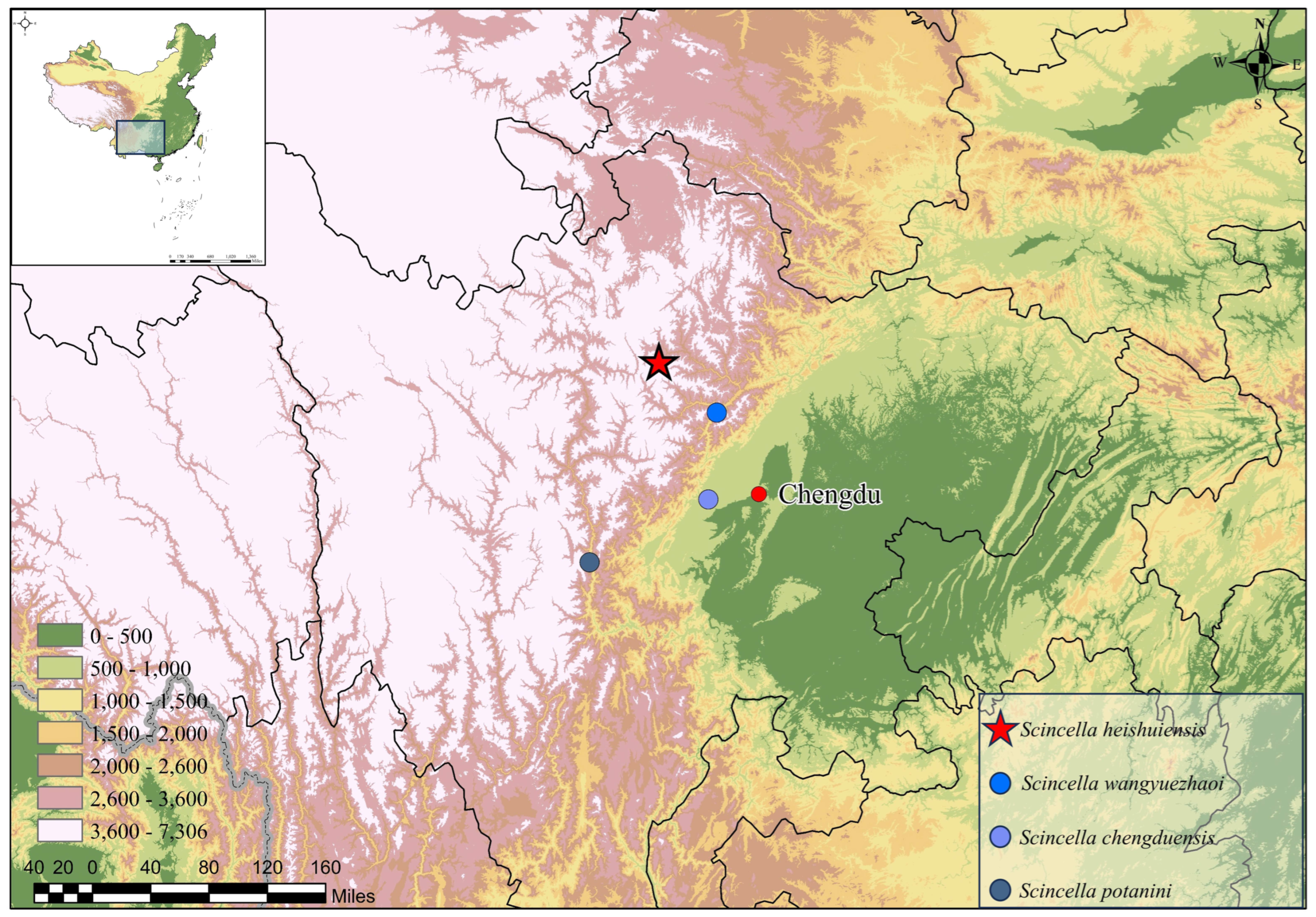
Specimen collection. The specimens of Scincella sp. were collected from Heishui County, Sichuan, China (Figure 1). After the livers were taken, the specimens were fixed in a 10% formaldehyde solution for three days and then transferred to 80% ethanol for long-term preservation. The liver samples were kept at 85% ethanol in −20°. All specimens and samples are deposited at Yibin University (YBU).

2.1. Morphology Analyses

The two unidentified specimens were morphologically examined and recorded following Zhao et al. and Nguyen et al. [14,15,16,17,18]. Body dimensions were taken with a digital caliper to the nearest 1 mm. Symmetric mensural head characters were taken on the right side of the head only, unless this was damaged, in which case they were done on the left. Meristic characters were recorded on both sides, and the average was used in the analysis. All data were collected by the senior author to avoid inter-observer bias [18,19].
The characters measured and recorded and their abbreviations are as follows: snout–vent length (SVL, distance from tip of snout to posterior edge of vent); tail length (TAL, distance from posterior margin of vent to tip of tail); axilla–groin distance (AGD, distance between posterior edge of forelimb insertion and anterior edge of hindlimb insertion); forelimb length (FLL, measured from forelimb insertion to tip of finger IV or longest digit); hind-limb length (HLL, measured from hind-limb insertion to tip of toe IV or longest digit); toe IV length (T4L, measured from the most basal part to tip of toe IV); finger IV length (F4L, measured from the most basal part to tip of finger IV); midbody scale-row count (MBSR, number of longitudinal scale rows measured around widest point of midbody); dorsal scale rows between dorsolateral stripes (DBR, number of dorsal scale rows at midbody between dark dorsolateral stripes, following Inger; enlarged, differentiated nuchal count (NU, X pairs or absence); paravertebral scale-row count (PVSR, number of scale rows counted between parietals and the just posterior margin of hindlimbs); ventral scale-row count (VSR, number of scale rows counted between gulars and precloacal); superciliary count (SC, left/right); supralabial count (SL, left/right); infralabial count (IfL, left/right); superciliary count (SC, left/right); supraocular count (SO, left/right); enlarged temporal count (TEM, left/right); number of enlarged, undivided lamellae beneath finger IV (F4S, left/right); number of enlarged, undivided lamellae beneath toe IV (T4S, left/right); frontoparietal in contact with each other (FP); prefrontal in contact with each other (PF); chin-shields: paired large scales behind mental or postmentals; gulars: many minor scales in the center of the ventral head (number of scale rows counted between the first scale behind the chin-shields and the middle of the forelimb); appearance of dorsolateral stripes (ADLS).

2.2. Molecular Analyses

Total DNA was extracted from the liver tissue of two samples using the M5 HiPer Universal DNA Mini Kit (Mei5 Biotechnology Co., Ltd., Beijing, China). Three mitochondrial DNA fragments were amplified, 12S ribosomal RNA (12S) using primers L1091-F and H1478-R (5′–3′: AAACTGGGATTAGATACCCCACTAT/GAGGGTGACGGGCGGTGTGT), 16S ribosomal RNA (16S) using primers 16SL-F and 16SL-R (5′–3′: TGTTTACCAAAAACATAGCCTTTAGC/TAGATAGAAACCGACCTGGATT), cytochrome c oxidase subunit I (COI) using primers Chmf4 and Chmr4 (5′–3′: TYTCWACWAAYCAYAAAGAYATCGG/ACYTCRGGRTGRCCRAARAATCA) [20]. PCR cycling parameters followed the original protocols from these studies. PCR products were purified using commercial kits prior to sequencing. Bidirectional sequencing was performed by Sangon Biotech (Shanghai, China). Phylogenetic analyses incorporated 21 Scincella species and one outgroup (Sphenomorphus cryptotis) [21], with sequences retrieved from GenBank (Table 1). Sequence editing was conducted in Lasergene v15.1, followed by Clustal W alignment and quality verification in MEGA v11.0 [22]. Raw nucleotide sequences were manually validated using SeqMan v.7.1.0.44 [23].
Prior to phylogenetic analyses, the optimal substitution model for each gene partition was selected using PartitionFinder 2.1.1 [24] under the Akaike Information Criterion. Phylogenetic trees were constructed using Maximum Likelihood (ML) and Bayesian Inference (BI) methods. BI analyses were conducted in MrBayes 3.2.2 [25], using three heated chains and one cold chain, with three independent runs of 10 million generations each (sampling every 2000 generations). The initial 25% of samples were discarded as burn-in, achieving a potential scale reduction factor (PSRF) < 0.005 across all runs. ML analyses were performed in IQ-TREE [26] with 1000 standard bootstrap replicates (BS). Bayesian posterior probabilities (BS) ≥ 0.95 and PP ≥ 95 are considered to indicate strong support for tree nodes [27]. Phylogenetic trees were visualized and annotated in FigTree 1.4.3 [28]. Given the difficulties in collecting samples of Scincidae species, coupled with the numerous discoveries of new species within the genus Scincella in recent years, and considering that this specimen morphologically most closely resembles the recently described S. wangyuezhaoi, this study exclusively selected species from the genus Scincella to construct the phylogenetic tree.
The uncorrected p-distance between species was calculated for 16S and COI sequences in MEGA v11.0 with 1000 bootstrap replications [22] respectively.

3. Results

3.1. Morphology Examination

The newly collected specimens exhibit morphological affinities with Scincella by sharing key scalation features, including well-developed eyelids, absence of supranasal, and one pair of preanal. Meanwhile, they can be distinguished from congeners by the following unique characters: four dorsal scale rows between dark dorsolateral stripes at midbody, specific midbody-scale-row count, presence or absence pattern of postnasal scales, and loreal scale number.

3.2. Molecular Phylogeny

The final aligned dataset consists of 1462 nucleotide positions (490 bp from 16S RNA, 353 bp from 12S RNA, 619 bp from COI). The best-fit nucleotide substitution model (GTR + I + G) was determined for the combined dataset. All novel sequences generated here have been deposited in GenBank (Table 1).
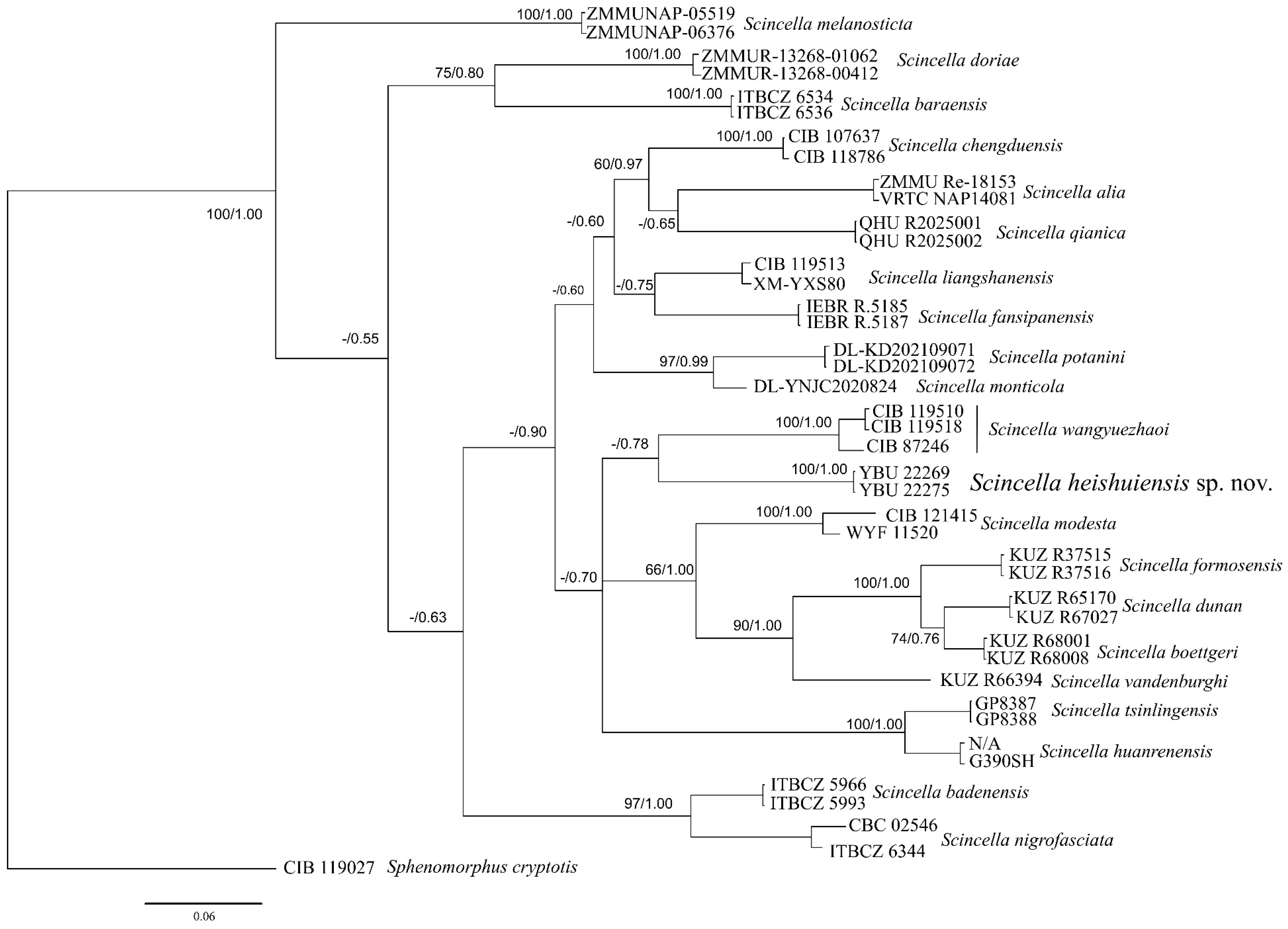
Both BI and ML analyses yielded largely consistent phylogenetic topologies, with minor discrepancies in node support values observed at certain positions (Figure 2). All recognized Scincella species, including the two newly collected specimens, formed a strongly supported monophyletic group (100 BS and 1.0 PP). The new specimens constituted a distinct clade with high support indices (BS = 100, PP = 0.99), exhibiting a sister-group relationship with the clade containing three S. wangyuezhaoi individuals.
Based on 16S rRNA sequences, interspecific genetic distances among Scincella species ranged from 2.19% (S. tsinlingensis vs. S. huanrenensis) to 10.18% (S. huanrenensis vs. S. gemmingeri). Based on COI sequences, the distances ranged from 7.6% (S. dunan vs. S. boettgeri) to 23.1% (S. melanosticta vs. S. vandenburghi). The newly proposed taxon (comprising the two novel samples) exhibited genetic distances of 5.45% (16S) and 15.2% (COI) relative to S. wangyuezhaoi (Table 2 and Table 3).
Integrating morphological comparison and molecular phylogeny, we confirm that the specimens collected from Heishui County, Sichuan Province, China, represent a distinct species. We formally describe it herein.

3.3. Taxonomic Account

Scincella heishuiensis sp. nov.
Scincella wangyuezhaoi Jia, Ren, Jiang & Li, 2023 [5].
Holotype. YBU 22269, an adult male, collected from Mt. San’ao, Heishui County, Aba Tibetan and Qiang Autonomous Prefecture, Sichuan Province, China (32.02° N, 102.92° E, 2900 m a.s.l), in June 2022.
Paratype (n = 1). YBU 22275, an adult male, the same locality and date as the holotype.
Diagnosis. Scincella heishuiensis sp. nov. exhibits the following characteristics which can distinguish from its congeners: (1) four dorsal scale rows between dorsolateral stripes; (2) 5–7 superciliary; (3) 28 midbody scale rows; (4) 24–25 gulars; (5) during the breeding season, the ventral scales and preanal exhibit a reddish-brown color; and (6) a black lateral stripe extends from behind the eye to the posterior third of the tail near the cloaca.
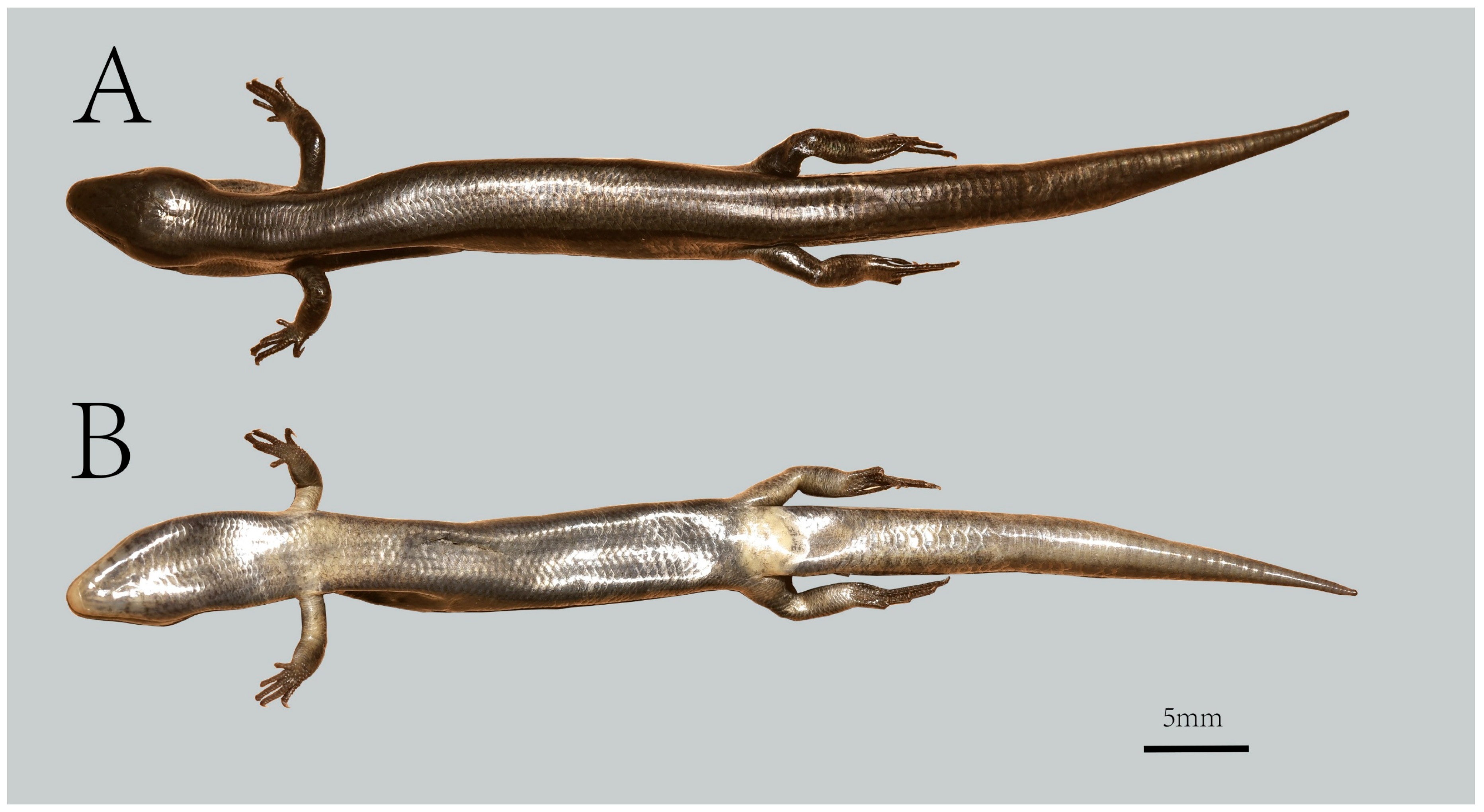
Description of the holotype. YBU 22269, an adult male. The body is slender and of medium size, with a snout–vent length (SVL) of 40.90 mm, and TAL of 39.25 mm. The neck is indistinct from the head. The axilla–groin distance (AGD) 29.65 mm, (AGD/SVL 0.72). The tail is short and thick, with a length (TAL) of 39.25 mm (TAL/SVL 0.96). The forelimb length (FLL) is 8.20 mm, and the hind limb length (HLL) is 12.87 mm. Forelimb digit lengths: IV > III > II > V > I; Hindlimb digit lengths: IV > III > II > V > I. Fingers are slender, F4L 2.58 mm, T4L 4.96 mm. Subdigital lamellae single, arranged in an overlapping series: F4S 8/8, T4S 13/13.
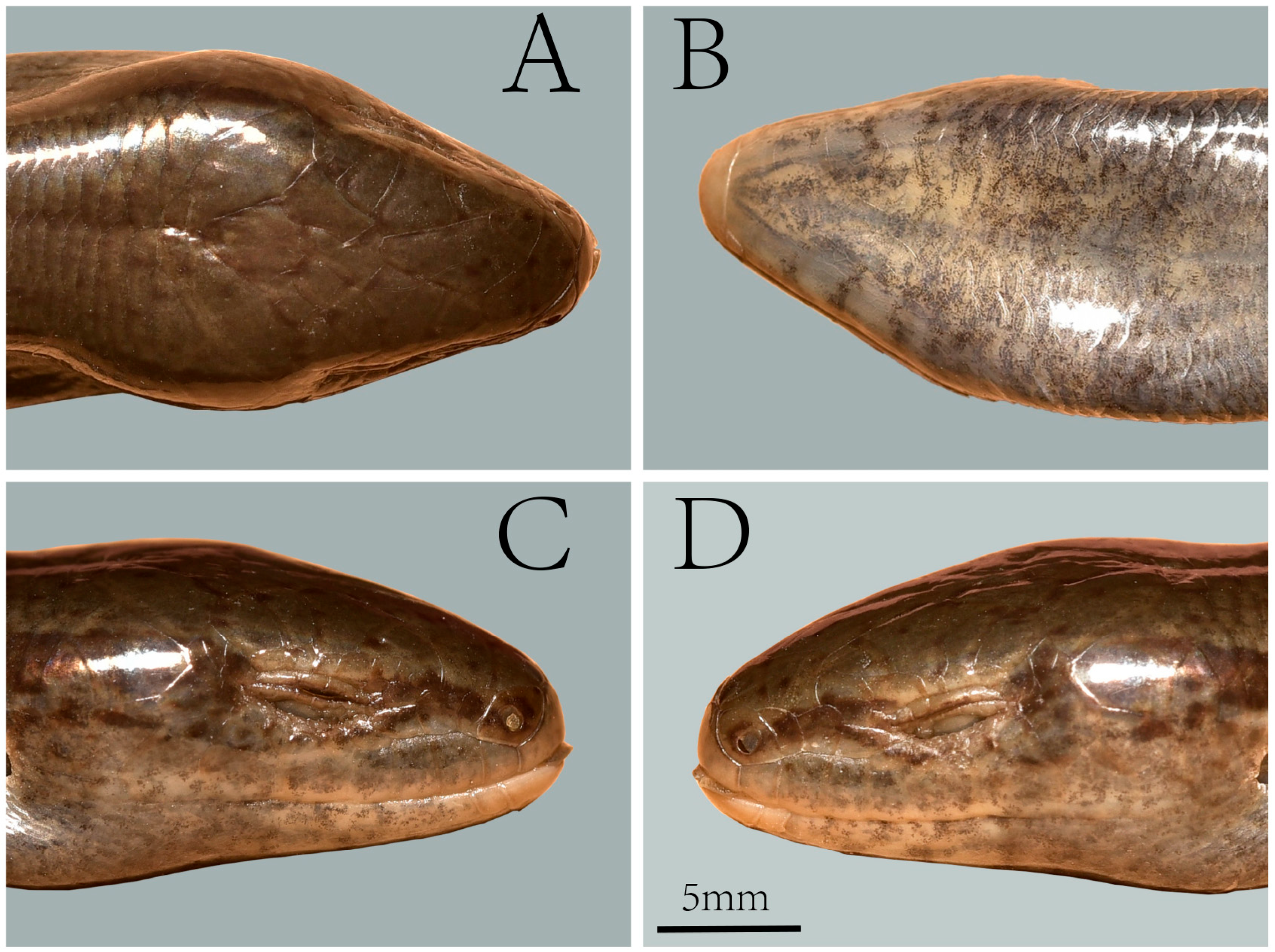
The rostral is blunt and rounded. The supranasal is absent. Two prefrontals, rhomboid-shaped, separated by the frontonasal, with the two scales contacting only at one point. Two frontoparietals, irregularly pentagonal, adjacent and in contact with each other. One parietal, the largest on the dorsal head, pentagonal in shape, with a width approximately two-thirds of its length; its lateral margins contact only two supraoculars and one prefrontal. Six supraoculars, with second being the largest and sixth the smallest. Four supraorbitals, with the second being the largest. The nasal is oval, the nostril positioned at its center. Postnasals absent. The tympanic cavity recessed, but the tympanum not exposed; scales surrounding the tympanum are slightly smaller than the ventrolateral scales. Two loreals, square-shaped, the first being the largest and contacting second and third supralabials. Supralabials 7-7; the first contacts the nasal, and the second largest. Infralabials 6-5, slender and elongated, with the first being the smallest. Four pairs of cervical scales, all elongated (approximately three times longer than wide), the first pair the largest. Temporals 4 (3 + 1), the dorsal largest and contacts the parietal. The lower eyelid has a distinct transparent disk (window), and both eyelids are accompanied by minute scales. The gular scales are relatively small and off-white in color. Three pairs of chin shields, the first pair in medial contact, the second pair separated by a small scale, and the third pair separated by a small scale. The mental scale is broad, occupying the anterior edge of the lower jaw; there is one larger postmental; the eyes are medium-sized, with a flat, circular transparent palpebral window in the center of the lower eyelid; the ear opening is oval, larger than the palpebral window but smaller than the eye diameter, and the anterior edge of the ear opening lacks flap-like protrusions; the tympanic membrane is recessed. The gulars number 25.
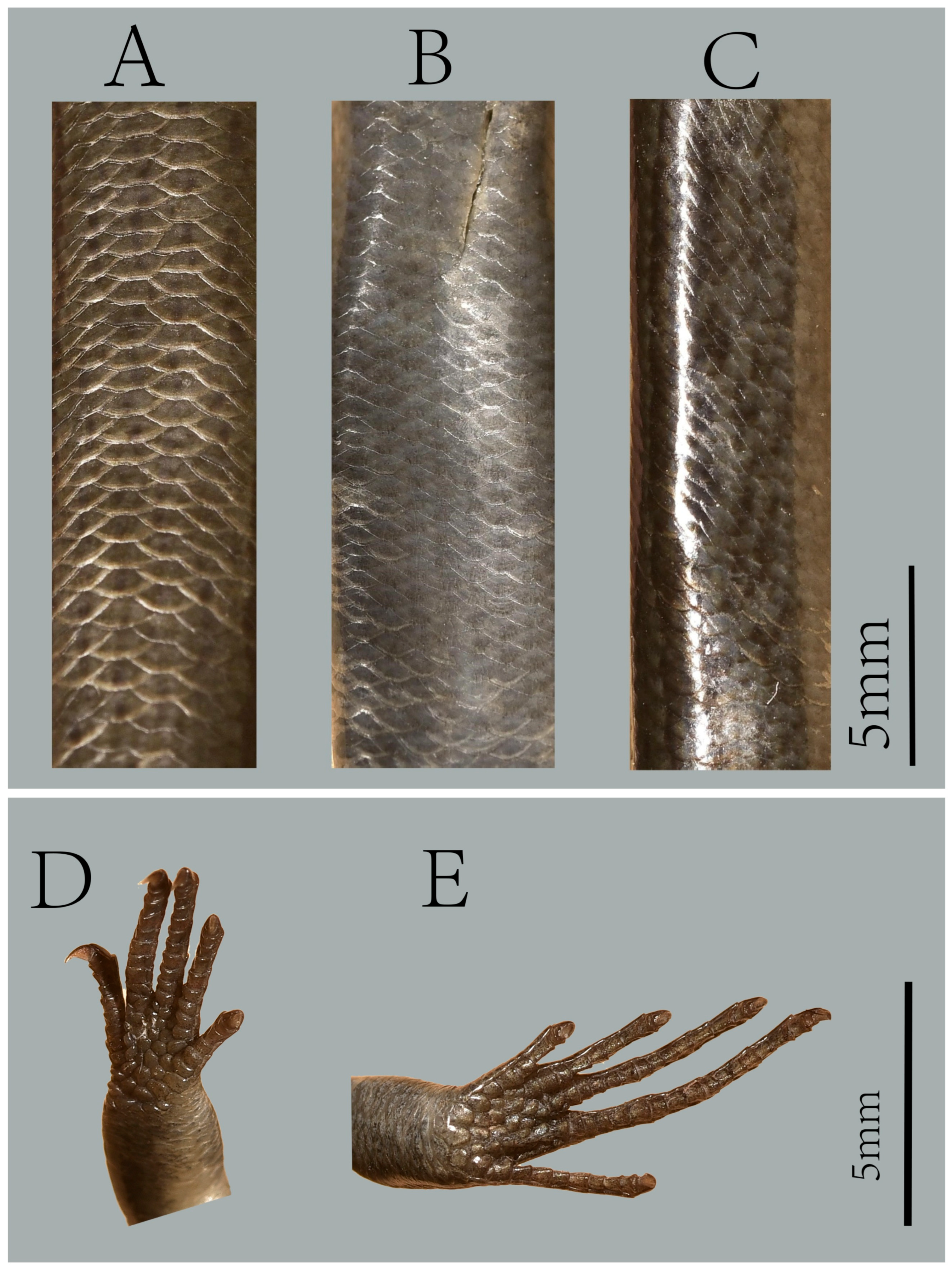
The body scales are smooth. The dorsal scales are rhomboidal, arranged in straight, imbricate rows, significantly larger than ventral and lateral scales; DBR 4 + 2 (1/2); MBSR 28. Ventral scales are diamond-shaped, arranged in straight, non-imbricate rows; PVSR 69; VSR 67. The tips of the fingers and toes (excluding claws) do not contact each other.
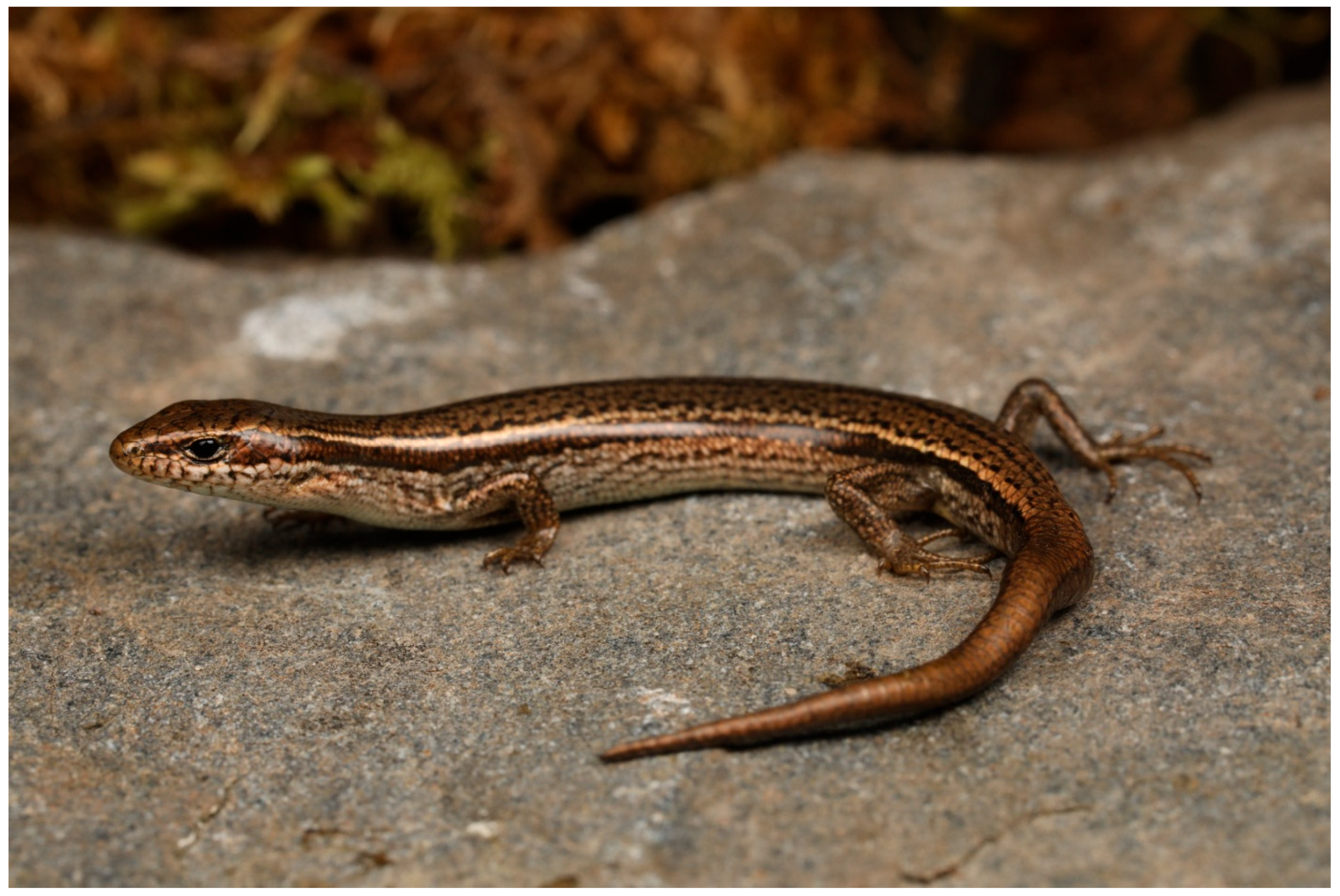
Coloration. The dorsal head and tail regions display a distinct bronze sheen, with a dark bronze patch extending between the nostrils and eyes. All dorsal head scales bear black spots. The dorsum features scattered black spots, while the regenerated tail exhibits a characteristic copper–black coloration. The anterior body and tail bear irregular dark dorsal stripes composed of melanin-rich scales, including prominent ventrolateral stripes. A continuous lateral stripe extends from the posterior orbit to the tail base. The ear opening is positioned obliquely below the eye, near the cervical junction. Ventral coloration includes a silver-gray throat and uniform reddish-brown abdomen devoid of patterning.
In preservation, the head and dorsum adopt a uniform brown hue with intensified lateral dark stripes. The dorsum and venter retain smooth integument texture, while the tail is lateral and ventral surfaces develop dark brown to black spotting. Throat and belly are bright gray, limbs are bronze, and the caudal region near the cloaca is pale gray.

3.4. Description of the Paratype and Variation

The paratype specimen YBU 22275 exhibits morphological similarity to the holotype across multiple diagnostic characters including SL, MBSR and DBR. A detailed comparison of the specimens is listed in Table 4.
Etymology. The species is named after its type locality in Heishui County, Sichuan Province, China. We suggested the common names “黑水滑蜥” in Chinese and “Heishui ground skink” in English for this species.
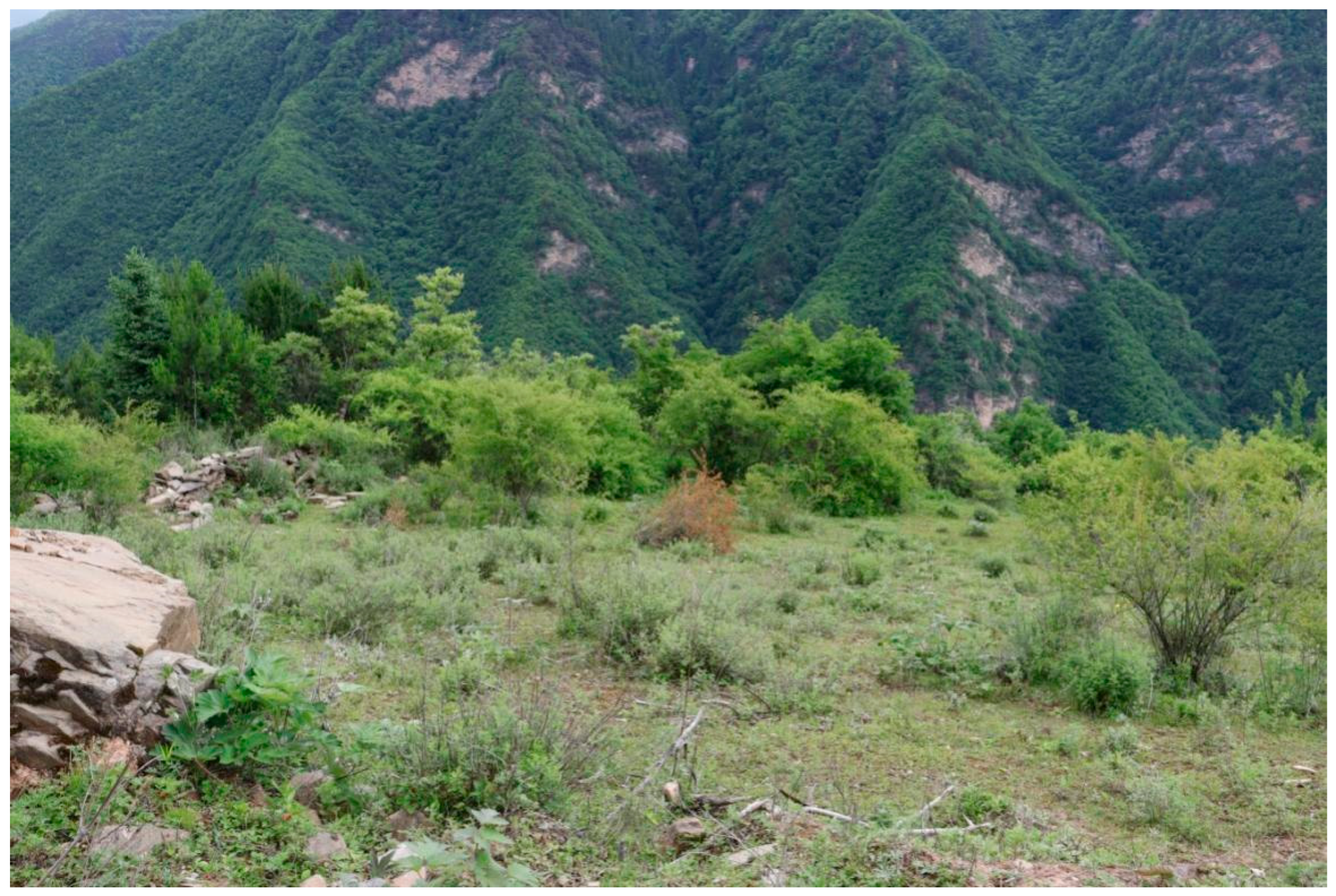
Distribution and ecology. Currently, Scincella heishuiensis sp. nov. has only been found in Heishui County, Sichuan Province, China. The type specimens were collected in mid-June 2022. The new species is active on rock piles in woodland areas with exposed rocks and scattered low shrubs. It is commonly found under rocks or moss on sunny days (Figure 7). This species is sympatric with Rhabdophis nuchalis, Protobothrops jerdonii, and Gloydius swild.

3.5. Comparisons with Congeners

Scincella heishuiensis sp. nov. can be distinguished morphologically from closely related homologous species in western Sichuan; the diagnostic characteristics are summarized in Table 4.
In phylogenetic trees, the new species is closely related to S. wangyuezhaoi, S. modesta, S. tsiningensis, and S. huanrenensis. Besides significant genetic divergence, the new species is morphologically distinguished from its congeners by a combination of following characters. Scincella heishuiensis sp. nov. can be distinguished from S. wangyuezhaoi and S. modesta by the significantly diagnostic character dorsal scale rows between dorsolateral stripes (DBR), 4 (vs. 6); and from S. tsiningensis and S. huanrenensis by fewer paravertebral scale rows (PVSR), 60–69 (vs. 70–90 in S. tsiningensis and 66–84 in S. huanrenensis). It can also be distinguished from S. huanrenensis by its ventral scale rows (VSR), 64–67 (vs. 52–60) [29,30].
The new species differs from S. doriae and S. formosensis by having fewer DBR (4 vs. 6). It is different from S. monticola, S. qianica, and S. doriae by exhibiting 28 MBSR (vs. 23–24 in S. monticola, 26 in S. qianica, 30–32 in S. doriae) [30,31,32,33,34]. The new species differs from S. doriae and S. schmidti by having enlarged undivided lamellae beneath toe IV 13–14 (vs. 11–12 in S. schmidti; 16–18 in S. doriae). The new species differs from S. barbouri in PVSR 60–69 (vs. 70–79 in S. barbouri). The new species can be further differentiated from S. alia by VSR 64–67 (vs. 44–52). Scincella heishuiensis sp. nov. can be differentiated from S. schmidti and S. potanini by fewer enlarged undivided lamellae beneath toe IV (8–10 vs. 11–12 in S. schmidti and 10–13 in S. potanini) [16,32,35,36]. The new species differs from S. barbourin in nuchals 2–3 (vs. 4–5). The new species can be distinguished from S. przewalskii by having a distinct black lateral stripe, whereas S. przewalskii has a pale green one. The new species has a dirty white belly, which distinguishes it from S. przewalskii (slate gray) and S. tsinlingensis (bluish gray). Scincella heishuiensis sp. nov. differs from S. modesta by having different anterior dorsolateral scale arrangement (straight vs. wavy in). The new species differs from S. przewalskii by having four supraoculars (vs. three) [37,38,39,40,41] (Table 4).

4. Discussion

With the description of a new cryptic species from western China, based on genetic and morphological evidence, the genus Scincella now comprises 51 recognized species, with 17 occurring in China. Molecular phylogenetic analyses revealed that the new species is sister to S. wangyuezhaoi (posterior probability [PP] = 0.78), a species recently described from Wenchuan County, Sichuan Province. The two species exhibit a genetic divergence of 5.45% (p-distance based on the 16S fragment). Geographically, their type localities are separated by only 100 km. Despite their proximity, they show significant genetic divergence and substantial morphological differentiation.
The Hengduan Mountains, one of the world’s youngest mountain systems, serve as a biodiversity hotspot, harboring more than half of China’s Scincella species, including S. schmidti, S. liangshanensis, S. wangyuezhaoi, S. potanini, S. monticola, S. tsinlingensis, S. doriae, and S. reevesii [40,41,42]. The region’s high habitat heterogeneity and riverine isolation have significantly contributed to speciation processes. As a widespread group of lizards in China, Scincella species exhibit complex systematic and evolutionary patterns. For instance, S. tsinlingensis and S. huanrenensis share a close phylogenetic relationship but occupy entirely distinct and geographically separated ranges. Similar challenges arise in other species within the genus, such as the S. potanini–S. monticola species complex. Second, there are two different reproductive models within this genus. Populations in high-altitude regions are predominantly lecithotrophic viviparity, while those in low-altitude areas are primarily oviparous [35,43]. Additionally, our research suggests the likely presence of a substantial number of cryptic species in this area [44]. Given these patterns, a key question emerges: what mechanisms drive such rich species diversity within this relatively small region? To address this, comprehensive sampling and multi-locus genetic data—particularly genomic data—are essential for unraveling the evolutionary history and speciation processes of these organisms.

5. Conclusions

We describe a new skink species, Scincella heishuiensis sp. nov., from the HDM in China, based on two specimens from San’ao Snow Mountain, Heishui County, Sichuan. The species is formally delineated using integrated morphological and genetic evidence, underscoring its distinctiveness from its congeners. This discovery not only contributes to the documented biodiversity of HDM, a globally recognized hotspot, but also suggests that the region may harbor additional cryptic diversity. The findings prompt further exploration of the drivers of Scincella diversification within this complex mountainous terrain and provide a scientific foundation for enhancing local conservation strategies.

Author Contributions

Conceptualization: F.L. and H.P.; Methodology: F.L., S.T., J.C., B.L., G.S., Y.W., B.D. and P.G.; Software: F.L., S.T., J.C. and H.P.; Validation: F.L.; Formal analysis: F.L.; Writing—original draft: F.L.; Investigation: H.P., S.T., J.C. and G.S.; Visualization: B.L., B.D. and P.G.; Resources: G.S. and Y.W.; Supervision: Y.W.; Writing—review and editing: B.D. and P.G.; Project administration: B.D. and P.G.; Funding acquisition: B.D. and P.G.; Supervision: P.G. All authors have read and agreed to the published version of the manuscript.

Funding

This work was supported by the Second Tibetan Plateau Scientific Expedition and Research (STEP) program (2019QZKK0501) and the Scientific Research Foundation of Yibin University (Grant No. 2019QD13).

Institutional Review Board Statement

All animal protocols in this study were reviewed and approved the by Yibin University Life Science Ethics Committee (permit number: YBU2025001, Approval date: 8 December 2025).

Informed Consent Statement

Not applicable.

Data Availability Statement

All data supporting the findings of this study are available within the article. Voucher specimens and their collection details (location, altitude, date, collector) are provided in Section 2. The newly generated mitochondrial DNA sequences (12S, 16S, COI) have been deposited in the GenBank database under accession numbers. Other data that support the findings of this study are available from the corresponding author upon reasonable request.

Acknowledgments

We would like to thank L. Li (YBU), Y. L. Jiang (YBU), and G. Y. Liao (YBU), for their help in laboratory work. All individuals contained in this section have consented to the confirmation.

Conflicts of Interest

The authors declare no conflicts of interest.

References

  1. Guo, P.; Zhu, F.; Liu, Q.; Wang, P.; Che, J.; Nguyen, T.Q. Out of the Hengduan Mountains: Molecular phylogeny and historical biogeography of the Asian water snake genus Trimerodytes (Squamata: Colubridae). Mol. Phylogenetics Evol. 2020, 152, 106927. [Google Scholar] [CrossRef]
  2. Liu, Q.; Zhong, G.H.; Wang, P.; Liu, Y.; Guo, P. A new species of the genus Hebius (Squamata: Colubridae) from Sichuan, China. Zootaxa 2018, 4483, 385–394. [Google Scholar] [CrossRef]
  3. Guo, P.; Liu, Q.; Zhu, F.; Liu, Q. A new member of the genus Sinonatrix (Serpentes: Colubridae) from western China. Zootaxa 2019, 4623, 535–544. [Google Scholar] [CrossRef] [PubMed]
  4. Shi, J.S.; Liu, J.C.; Giri, R.; Owens, J.B.; Santra, V.; Kuttalam, S.; Selvan, M.; Guo, K.J.; Malhotra, A. Molecular phylogenetic analysis of the genus Gloydius (Squamata, Viperidae, Crotalinae), with descriptions of two new alpine species from Qinghai-Tibet Plateau, China. ZooKeys 2021, 1061, 87–108. [Google Scholar] [CrossRef]
  5. Jia, R.W.; Gao, Z.Y.; Huang, J.J.; Ren, J.L.; Jiang, K.; Li, D.; Li, J.T. A new species of the genus Scincella Mittleman, 1950 (Squamata: Scincidae) from Sichuan Province, Southwest China, with a diagnostic key of Scincella species in China. Asian Herpetol. Res. 2023, 14, 24–40. [Google Scholar]
  6. Jia, R.W.; Gao, Z.Y.; Wu, D.H.; Ren, J.L.; Jiang, D.C.; Wu, W. A new species of the genus Scincella Mittleman, 1950 (Squamata: Scincidae) from Sichuan Province, Southwest China. Asian Herpetol. Res. 2024, 15, 115–129. [Google Scholar] [CrossRef]
  7. Ji, F.R.; Shi, S.; Ma, S.; Shen, C.; Chang, L.M.; Jiang, J.P. A New Species of the Genus Nanorana Günther, 1896 (Anura: Dicroglossidae) from Hengduan Mountains of China. Asian Herpetol. Res. 2023, 14, 300–318. [Google Scholar] [CrossRef]
  8. Wang, K.; Che, J.; Lin, S.; Deepak, V.; Aniruddha, D.R.; Jiang, K.; Jin, J.; Chen, H.; Siler, C.D. Multilocus phylogeny and revised classification for mountain dragons of the genus Japalura (Reptilia: Agamidae: Draconinae). Zool. J. Linn. Soc. 2019, 185, 246–267. [Google Scholar] [CrossRef]
  9. Che, J.; Jiang, K.; Yan, F.; Zhang, Y.P. Amphibians and Reptiles in Xizang: Diversity and Evolution; Sciences Press: Beijing, China, 2020. (In Chinese) [Google Scholar]
  10. Eremchenko, V.K.; Szczerbak, N.N. On the generic affiliation of the ablepharid lizards of the USSR fauna (Reptilia, Sauria, Scincidae). Vestn. Zool. 1980, 4, 10–15. [Google Scholar]
  11. Mirza, Z.A.; Bragin, A.M.; Bhosale, H.; Gowande, G.G.; Patel, H.; Poyarkov, N.A. A new ancient lineage of ablepharine skinks (Sauria: Scincidae) from eastern Himalayas with notes on origin and systematics of the group. PeerJ 2022, 10, e12800. [Google Scholar] [CrossRef] [PubMed]
  12. Jia, R.W.; Gao, Z.Y.; Wu, D.H.; Wang, G.Q.; Liu, G.; Liu, M.; Jiang, K.; Jiang, D.C.; Ren, J.L.; Li, J.T. Hidden Urban Biodiversity: A new Species of the Genus Scincella Mittleman, 1950 (Squamata: Scincidae) from Chengdu, Sichuan Province, Southwest China. Animals 2025, 15, 232. [Google Scholar] [CrossRef]
  13. Uetz, P.; Freed, P.; Hošek, J. (Eds.) The Reptile Database. 2025. Available online: http://www.reptile-database.org/ (accessed on 12 December 2025).
  14. Zhao, E.; Zhao, K.; Zhou, K. Fauna Sinica. Reptilia. Vol. 2. Squamata. Lacertilia; Science Press: Beijing, China, 1999; pp. 312–336. (In Chinese) [Google Scholar]
  15. Inger, R.F.; Zhao, E.; Shaffer, H.; Wu, G. Report on a collection of amphibians and reptiles from Sichuan, China. Fieldiana Zool. 1990, 58, 1–24. [Google Scholar]
  16. Koizumi, Y.; Ota, H.; Hikida, T. A new species of the genus Scincella (Squamata: Scincidae) from Yonagunijima Island, Southern Ryukyus, Japan. Zootaxa 2022, 5128, 61–83. [Google Scholar] [CrossRef]
  17. Neang, T.; Chan, S.; Poyarkov, N.A., Jr. A new species of smooth skink (Squamata: Scincidae: Scincella) from Cambodia. Zool. Res. 2018, 39, 220–240. [Google Scholar] [CrossRef]
  18. Nguyen, T.Q.; Nguyen, V.S.; Böhme, W.; Ziegler, T. A new species of Scincella (Squamata: Scincidae) from Vietnam. Folia Zool. 2010, 59, 115–121. [Google Scholar] [CrossRef]
  19. Nguyen, S.N.; Nguyen, V.D.H.; Nguyen, L.T.; Murphy, R.W. A new skink of the genus Scincella Mittleman, 1950 (Squamata: Scincidae) from Ba Den Mountain, Tay Ninh Province, southern Vietnam. Zootaxa 2019, 4648, 273–286. [Google Scholar] [CrossRef]
  20. Che, J.; Chen, H.M.; Yang, J.X.; Jin, J.; Jiang, K.; Yuan, Z.; Murphy, R.W.; Zhang, Y. Universal COI primers for DNA barcoding amphibians. Mol. Ecol. Resour. 2012, 12, 247–258. [Google Scholar] [CrossRef] [PubMed]
  21. Pyron, R.A.; Burbrink, F.T.; Wiens, J.J. A phylogeny and revised classification of Squamata, including 4161 species of lizards and snakes. BMC Evol. Biol. 2013, 13, 93. [Google Scholar] [CrossRef]
  22. Tamura, K.; Stecher, G.; Kumar, S. MEGA11: Molecular Evolutionary Genetics Analysis Version 11. Mol. Biol. Evol. 2021, 38, 3022–3027. [Google Scholar] [CrossRef] [PubMed]
  23. Skwor, T. The use of DNASTAR Lasergene Educational Software with Molecular Techniques to Support Bacterial Identification. Proc. Assoc. Biol. Lab. Educ. 2012, 33, 327–334. [Google Scholar]
  24. Lanfear, R.; Frandsen, P.B.; Wright, A.M.; Senfeld, T.; Calcott, B. PartitionFinder 2: New methods for selecting partitioned models of evolution for molecular and morphological phylogenetic analyses. Mol. Biol. Evol. 2017, 34, 772–773. [Google Scholar] [CrossRef] [PubMed]
  25. Ronquist, F.; Teslenko, M.; van Der Mark, P.; Ayres, D.L.; Darling, A.; Höhna, S.; Larget, B.; Liu, L.; Suchard, M.A.; Huelsenbeck, J.P. MrBayes 3.2: Efficient Bayesian phylogenetic inference and model choice across a large model space. Syst. Biol. 2012, 61, 539–542. [Google Scholar] [CrossRef] [PubMed]
  26. Nguyen, L.T.; Schmidt, H.A.; Von Haeseler, A.; Minh, B.Q. IQ-TREE: A fast and effective stochastic algorithm for estimating maximum-likelihood phylogenies. Mol. Biol. Evol. 2015, 32, 268–274. [Google Scholar] [CrossRef]
  27. Hillis, D.M.; Bull, J.J. An empirical test of bootstrapping as a method for assessing confidence in phylogenetic analysis. Syst. Biol. 1993, 42, 182–192. [Google Scholar] [CrossRef]
  28. Rambaut, A. FigTree, v1.4.0; A graphical viewer of phylogenetic trees; University of Edinburgh: Edinburgh, UK, 2014. [Google Scholar]
  29. Darevsky, I.S.; Orlov, N.L.; Ho, T.C. Two new Lygosomine skinks of the genus Sphenomorphus Fitzinger, 1843 (Sauria, Scincidae) from northern Vietnam. Russ. J. Herpetol. 2004, 11, 111–120. [Google Scholar]
  30. Hu, S.C.; Zhao, E.M.; Liu, C.C. A herpetological survey of the Tsinling and Ta-Pa Shan region. Acta Zool. Sin. 1966, 18, 57–89. (In Chinese) [Google Scholar]
  31. Park, J.; Koo, K.S.; Kim, I.H.; Park, D. Complete mitochondrial ge nomes of Scincella vandenburghi and S. huanrenensis (Squamata: Scincidae). Mitochondrial DNA Part B Resour. 2016, 1, 237–238. [Google Scholar] [CrossRef]
  32. Boulenger, G.A. An account of the Scincoid lizards collected from Burma for the Genoa Civic Museum by Messrs. GB Comotto and L. Fea. Ann. Mus. Civ. Stor. Nat. Genova 1887, 4, 618–624. [Google Scholar]
  33. Xu, Y.H.; Weng, S.; Poyarkov, N.A.; Zhang, T.; Li, Z.; Deng, J.; Peng, L.F. Discovery of a new skink of the genus Scincella Mittleman, 1950 (Squamata, Scincidae) from Guizhou Province, China. Zoosystem. Evol. 2025, 101, 1495–1511. [Google Scholar] [CrossRef]
  34. Schmidt, K.P. New reptiles and a new salamander from China. Amer Mus. Nat. Hist. 1925, 157, 1–5. [Google Scholar]
  35. Bragin, A.M.; Zenin, E.S.; Dang, C.H.; Dinh, T.V.A.; Nguyen, T.V.; Poyarkov, N.A. A new mountain species of the genus Scincella Mittleman, 1950 (Squamata: Scincidae) from Ha Giang Province, northern Vietnam. Zootaxa 2025, 5636, 201–236. [Google Scholar] [CrossRef] [PubMed]
  36. Nguyen, S.N.; Nguyen, L.T.; Van Le, M.; Nguyen, V.D.H.; Phan, K.D.; Vo, T.D.; Che, J. Two new skinks of the genus Scincella Mittleman, 1950 (Squamata: Scincidae) from southern Vietnam. Eur. J. Taxon. 2025, 989, 266–288. [Google Scholar] [CrossRef]
  37. Günther, A. The Reptiles of British India; Taylor and Francis: London, UK, 1864; 452p. [Google Scholar]
  38. Günther, A. Report on the collections of reptiles, batrachians and fishes made by Messrs. Potanin and Berezowski in the Chinese provinces Kansu and Szechuen. In Annales du Muséum Zoologique de l’Académie Impériale des Sciences de St. Pétersbourg; Imperial Academy of Sciences: Saint Petersburg, Russia, 1896; pp. 199–219. [Google Scholar]
  39. Günther, A. Second report on collections of Indian Reptiles obtained by the British Museum. Proc. Zool. Soc. Lond. 1875, 1875, 224–234. [Google Scholar]
  40. Zhao, E.; Huang, K. A survey of amphibians and reptiles in Liaoning Province. Acta Herpetol. Sin. 1982, 1, 11–12. [Google Scholar]
  41. Zhao, E.M. Colored Atlas of Reptiles of Sichuan; China Forestry Press: Beijing, China, 2003; pp. 83–84. (In Chinese) [Google Scholar]
  42. Zhong, J.; Guo, K.; Ma, L. First record of mitochondrial genome of Scincella reevesii (Squamata: Scincidae) and phylogenetic analysis. Mitochondrial DNA Part B Resour. 2021, 6, 564–565. [Google Scholar] [CrossRef]
  43. Gao, W.; Sun, Y.B.; Zhou, W.W.; Xiong, Z.J.; Chen, L.; Li, H.; Fu, T.T.; Xu, K.; Xu, W.; Ma, L.; et al. Genomic and transcriptomic investigations of the evolutionary transition from oviparity to viviparity. Proc. Natl. Acad. Sci. USA 2019, 116, 3646–3655. [Google Scholar] [CrossRef]
  44. Guo, P.; Wand, K.; Tan, S.W.; Wu, Y.; Che, J. A new species of Ablepharus (Sauria: Scincidae) from western Xizang, China. Asian Herpetol. Res. 2025, 16, 261–271. [Google Scholar] [CrossRef]
Figure 1. A map showing the type localities of the genus Scincella species in the Hengduan Mountains region of southwestern China. Scincella heishuiensis in Heishui County, Aba Prefecture, Sichuan Province; S. wangyuezhaoi in Wenchuan County, Aba Prefecture, Sichuan Province; S. chengduensis in Chengdu City, Sichuan Province; and S. potanini in Kangding City, Garzê Prefecture, Sichuan Province. Elevation data sourced from the Geospatial Data Cloud (2024).
Animals 16 00592 g001
Figure 2. Phylogenetic tree reconstructed based on three mitochondrial fragments, ultrafast bootstrap supports (BSs) from ML analyses and Bayesian posterior probabilities (PPs) from BI analyses were shown above branches (BS/PP). Those lower than 50 are displayed as “-”.
Animals 16 00592 g002
Figure 3. General view of the holotype of Scincella heishuiensis sp. nov. (YBU 22269) in life.
Animals 16 00592 g003
Figure 4. Dorsal (A) and ventral (B) views of the holotype of Scincella heishuiensis sp. nov. (YBU 22269) in preservative.
Animals 16 00592 g004
Figure 5. Dorsal (A), ventral (B), right lateral (C), and left lateral (D) views of the head of the holotype of Scincella heishuiensis sp. nov. (YBU 22269).
Animals 16 00592 g005
Figure 6. Holotype of Scincella heishuiensis sp. nov. (YBU 22269). Dorsal (A), ventral (B), and lateral (C) views of body; ventral views of hand (D) and foot (E).
Animals 16 00592 g006
Figure 7. Type locality habitat of Scincella heishuiensis sp. nov. in Heishui County, Sichuan Province, China.
Animals 16 00592 g007
Table 1. Detailed information for all samples used in this study.
SpeciesLocalityVoucher ID16S12SCOI
Scincella heishuiensis sp. nov.China: Sichuan, HeishuiYBU 22269PX285308PX285312PX285297
Scincella heishuiensis sp. nov.China: Sichuan, HeishuiYBU 22275PX285309PX285313PX285298
Scincella chengduensisChina: Sichuan, DayiCIB 107637PQ466921PQ466924PQ467109
Scincella chengduensisChina: Sichuan, ChongzhouCIB 118786PQ466920PQ466923PQ467108
Scincella liangshanensisChina: Sichuan, YuexiXM-YXS80PP826313PP826316PP824805
Scincella liangshanensisChina: Sichuan, MeiguCIB 119513PP826315PP826317PP824806
Scincella assataEl Salvador: Santa Ana,
Finca El Milagro
KU 289795JF498074JF497946-
Scincella badenensisVietnam: Tay Ninh, Ba Den
Mountain
ITBCZ 5966--MK990602
Scincella badenensisVietnam: Tay Ninh, Ba Den
Mountain
ITBCZ 5993--MK990603
Scincella baraensisVietnam: Binh Phuoc, Ba Ra
Mountain
ITBCZ 6534--MT742256
Scincella baraensisVietnam: Binh Phuoc, Ba Ra
Mountain
ITBCZ 6536--MT742258
Scincella boettgeriJapan: Southern-Ryukyu
Islands, Yaeyama Group
KUZ R68001--LC630768
Scincella boettgeriJapan: Southern-Ryukyu
Islands, Yaeyama Group
KUZ R68008--LC630770
Scincella cherrieiMexico: Chiapas, Montes
Azules Biosphere Reserve
RCMX235MW265932--
Scincella doriaeVietnam: Lam Dong,
Bidoup-Nui Ba N. P.
ZMMU
R-13268-01062
--MH119617
Scincella doriaeVietnam: Lam Dong,
Bidoup-Nui Ba N. P.
ZMMU
R-13268-00412
--MH119616
Scincella dunanJapan: Southern Ryukyus,
Yonagunijima Is.
KUZ R65170--LC630778
Scincella dunanJapan: Southern Ryukyus,
Yonagunijima Is.
KUZ R67027--LC630779
Scincella formosensisChina: TaiwanKUZ R37516--LC630790
Scincella formosensisChina: TaiwanKUZ R37515--LC630789
Scincella gemmingeri--AY308294
Scincella lateralis-KU 289460JF498077JF497948-
Scincella lateralisUSA: TexasDCC 2842HM852503HM852476-
Scincella melanostictaVietnam: Gia Lai, Kon Chu
Rang N.R.
ZMMU
NAP-06376
--MH119622
Scincella melanostictaVietnam: Gia Lai, Kon Chu
Rang N.R.
ZMMU
NAP-05519
--MH119621
Scincella fansipanensisVietnam: Lao Cai Province, FansipanIEBR R.5185--LC846671
Scincella fansipanensisVietnam: Lao Cai Province, FansipanIEBR R.5187--LC846672
Scincella modestaChina: Zhejiang, NingboWYF 11520 PP819197PP819215
Scincella modestaChina: Zhejiang, NingboCIB 121415PP819195PP819198PP819217
Scincella monticolaChina: Yunnan, Shangri-LaDL-YNJC2020824OP955962OP955952-
Scincella nigrofasciataVietnam: Ba Ria-Vung Tau,
Dinh Mountain
ITBCZ 6344--MK990605
Scincella nigrofasciataCambodia: Mondulkiri, Keo
Seima W.S.
CBC 02546--MH119614
Scincella potaniniChina: Sichuan, KangdingDL-KD202109071OP935937OP942203OP942210
Scincella potaniniChina: Sichuan, KangdingDL-KD202109072OP935987OP942208OP942209
Scincella vandenburghiJapan: Tsushima Is.KUZ R66394--LC507695
Scincella vandenburghiKorea: Yeongwol-gunG389SVKU646826KU646826KU646826
Scincella huanrenensisKorea: Gangwon-do, Pyeongchang-gun-NC030779NC030779NC030779
Scincella huanrenensisKorea: Gangwon-do, Pyeongchang-gun-KU507306KU507306KU507306
Scincella wangyuezhaoiChina: Sichuan, WenchuanCIB 87246OP941172OP942191OQ402205
Scincella wangyuezhaoiChina: Sichuan, LixianCIB 119518OP941173OP942193-
Scincella wangyuezhaoiChina: Sichuan, LixianCIB 119510OP941174OP942192OQ402206
Scincella qianicaBaiyun District, Guizhou, ChinaQHU R2025001PV527321PV527316PV527759
Scincella qianicaBaiyun District, Guizhou, ChinaQHU R2025002PV527322PV527317PV527760
Scincella aliaTay Con Linh Mt., Ha Giang, VietnamVRTC NAP14081--PV085567
Scincella aliaTay Con Linh Mt., Ha Giang, VietnamZMMU Re-18153PV088913PV088911PV085569
Sphenomorphus cryptotisChina: Guangxi, ShangsiCIB 119027OP942190OP942206OP942215
Table 2. Uncorrected p-distances (%) between species of Scincella based on 16S RNA sequences.
12345678910
1. Scincella heishuiensis sp. nov.
2. Scincella wangyuezhaoi5.45
3. Scincella liangshanensis6.266.46
4. Scincella chengduensis5.465.592.90
5. Scincella assata8.828.527.627.01
6. Scincella potanini8.108.226.625.468.14
7. Scincella tsinlingensis7.887.808.487.688.827.69
8. Scincella monticola6.997.775.084.797.693.287.02
9. Scincella lateralis8.299.398.837.858.268.909.078.00
10. Scincella gemmingeri8.799.608.138.137.928.819.718.798.39
11. Scincella huanrenensis8.558.418.217.258.607.492.196.819.9710.18
Table 3. Uncorrected p-distances (%) between species of Scincella based on COI sequences.
12345678910111213141516171819
1. Scincella heishuiensis sp. nov.
2. Scincella alia16.7
3. Scincella nigrofasciata18.317.6
4. Scincella chengduensis15.615.318.7
5. Scincella liangshanensis15.315.617.516.1
6. Scincella wangyuezhaoi15.218.417.818.116.4
7. Scincella potanini15.617.417.117.013.716.4
8. Scincella modesta16.018.419.218.416.317.017.3
9. Scincella tsinlingensis17.019.019.517.816.518.818.819.7
10. Scincella vandenburghi16.817.918.916.316.817.016.915.619.9
11. Scincella boettgeri19.017.919.118.316.820.415.915.818.314.1
12. Scincella dunan18.019.019.018.419.019.818.616.318.315.17.6
13. Scincella formosensis18.218.420.018.318.720.218.717.116.914.48.89.6
14. Scincella fansipanensis16.415.716.216.712.516.414.516.418.417.716.818.718.8
15. Scincella doriae17.616.117.519.617.020.216.816.920.917.018.419.119.418.3
16. Scincella melanosticta21.319.021.020.018.621.218.920.721.323.120.521.921.220.119.1
17. Scincella badenensis18.618.810.719.217.718.218.920.019.321.119.519.220.216.619.119.8
18. Scincella baraensis19.220.818.721.817.620.818.319.921.621.220.822.420.618.716.819.018.9
19. Scincella qianica17.315.919.816.314.815.717.219.218.819.919.720.319.516.819.420.517.920.1
Table 4. Diagnostic morphometric comparison between Scincella heishuiensis sp. nov. and four morphologically similar congeners from Southwest China. Character abbreviations are detailed in Section 2.
CharactersHolotypeParatype
YBU 22269YBU 22275Scincella heishuiensis sp. nov.S. wangyuezhaoiS. chengduensisS. liangshanensisS. potanini
SVL40.9057.2440.90–57.2435.0–62.128.40–43.2043.1–61.926.6–57.9
TAL39.2532.8632.86–39.2527.6–81.145.16–69.0350.5–81.0061.9–85.0
FLL8.207.497.49–8.2010.18–12.29.80–11.666.03–13.6189.6–12.0
HLL12.879.259.25–12.8714.08–16.2111.66–13.6211.38–14.5712.8–17.5
AGD29.6536.9229.65–36.9215.05–36.6823.00–23.7622.57–40.235-
NU232–32–43–33–33
SL7–77–77–77–77–77–77–8
IfL6–56–65–66–77–77–66–7
F4L2.583.412.58–3.412.24–3.772.26–2.594.74–6.361.56–3.47
T4L4.965.604.96–5.602.24–6.413.77–3.892.19–3.101.33–5.79
SC6–56–75–75–76–76–76–7
SO4–44–44–44–44–44–44–4
L2–21–11–22–22–22–22–2
PN020–20000
MBSR28282827–302323–2724–27
DBR4446444
TEM1 + 2/1 + 21 + 2/1 + 21 + 2/1 + 21 + 2/2 + 31 + 2/21 + 2/2 + 31 + 2/2 + 2
SRB222-1–21–21–2
PVSR696060–6960–7557–6069–8065–84
T4S13–1314–1313–1414–1510–1210–1510–13
F4S8–810–108–109–118–98–117–10
GL252424–2525–3021–2222–2923–25
VSR676464–6746–5942–4443–5745–64
PF2222222
FP2222222
ADLSstraightstraightstraightwavystraightstraightstraight
Disclaimer/Publisher’s Note: The statements, opinions and data contained in all publications are solely those of the individual author(s) and contributor(s) and not of MDPI and/or the editor(s). MDPI and/or the editor(s) disclaim responsibility for any injury to people or property resulting from any ideas, methods, instructions or products referred to in the content.