Low Zoonotic Pathogen Burden in Free-Roaming Cats Revealed by 18S rRNA Metabarcoding: A Baseline Study from an Insular Natura 2000 Site in Spain

 ,
,  , ,
, ,  , , and
Simple Summary
Abstract
1. Introduction
2. Materials and Methods
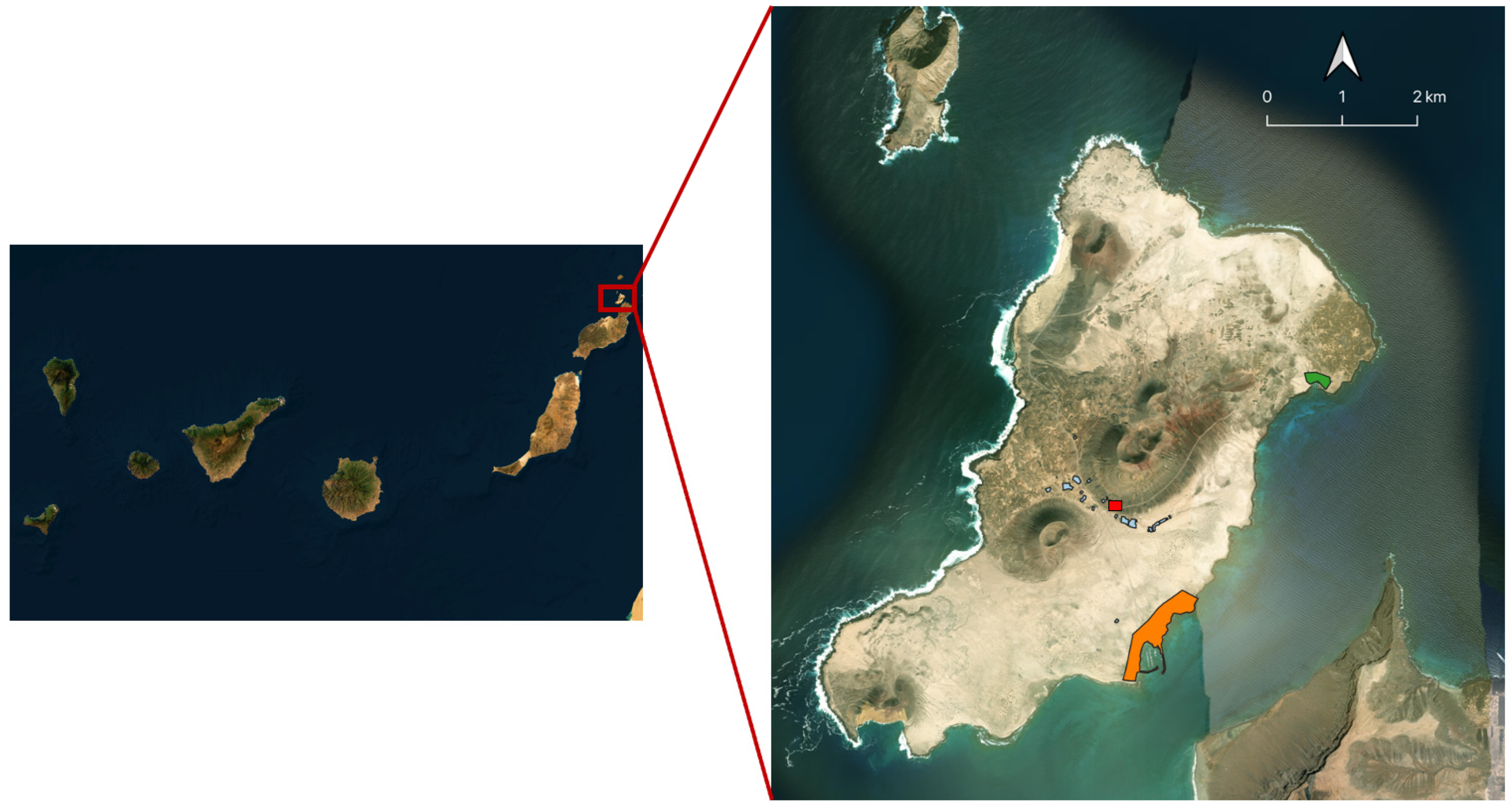
2.1. Study Area and Study Population
2.2. Study Design, Legal Permits and Ethical Approval
2.3. Faecal Sample Collection and Classification
2.4. DNA Extraction and Quality Control
2.5. 18S rRNA Metabarcoding
2.6. Library Preparation and Nanopore Sequencing
2.7. Basecalling, Demultiplexing and Quality Filtering
2.8. Metabarcoding Analysis
2.9. Definition of Potentially Pathogenic Taxa and Epidemiological Analysis
3. Results
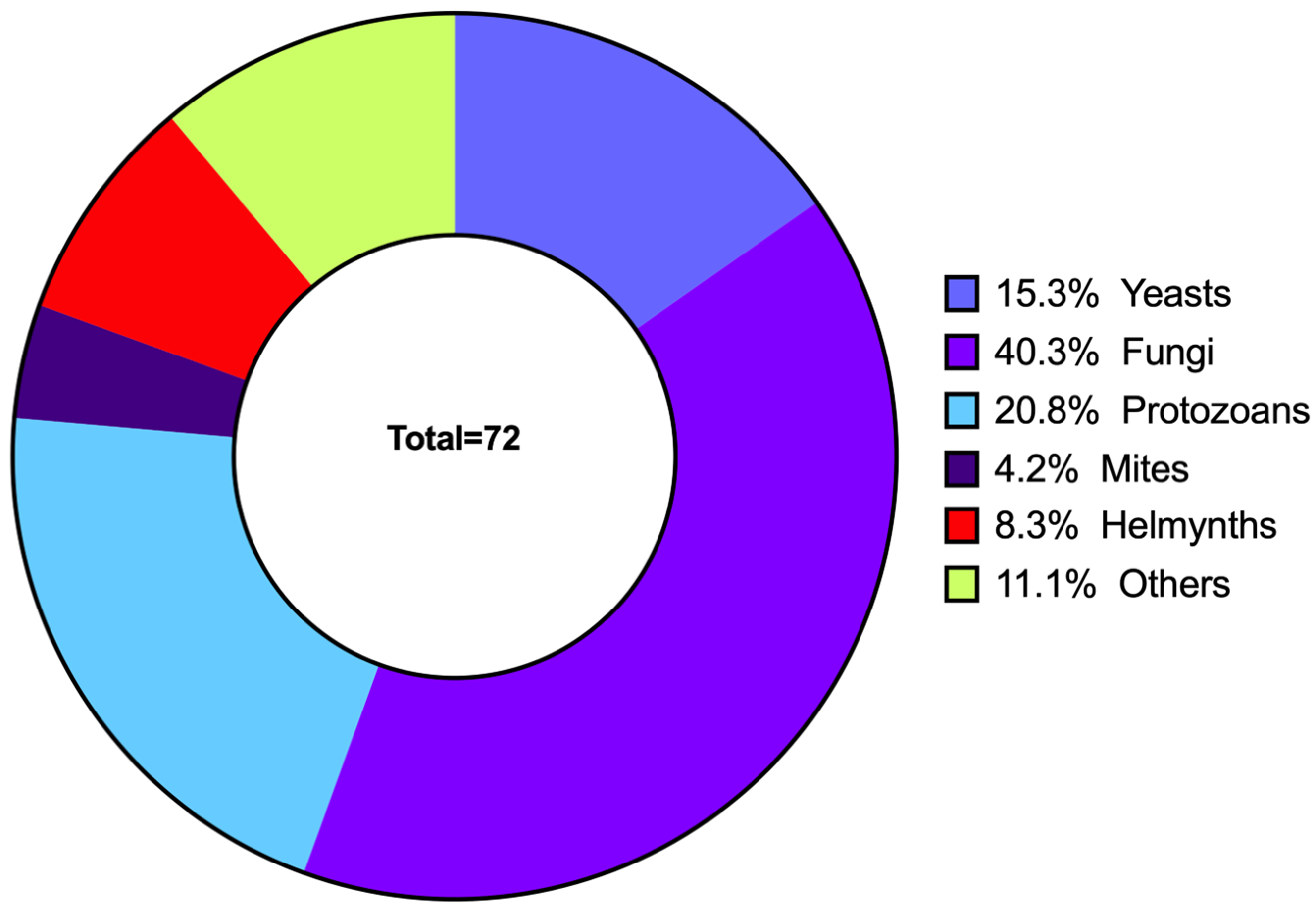
3.1. Eukaryotic Community Composition
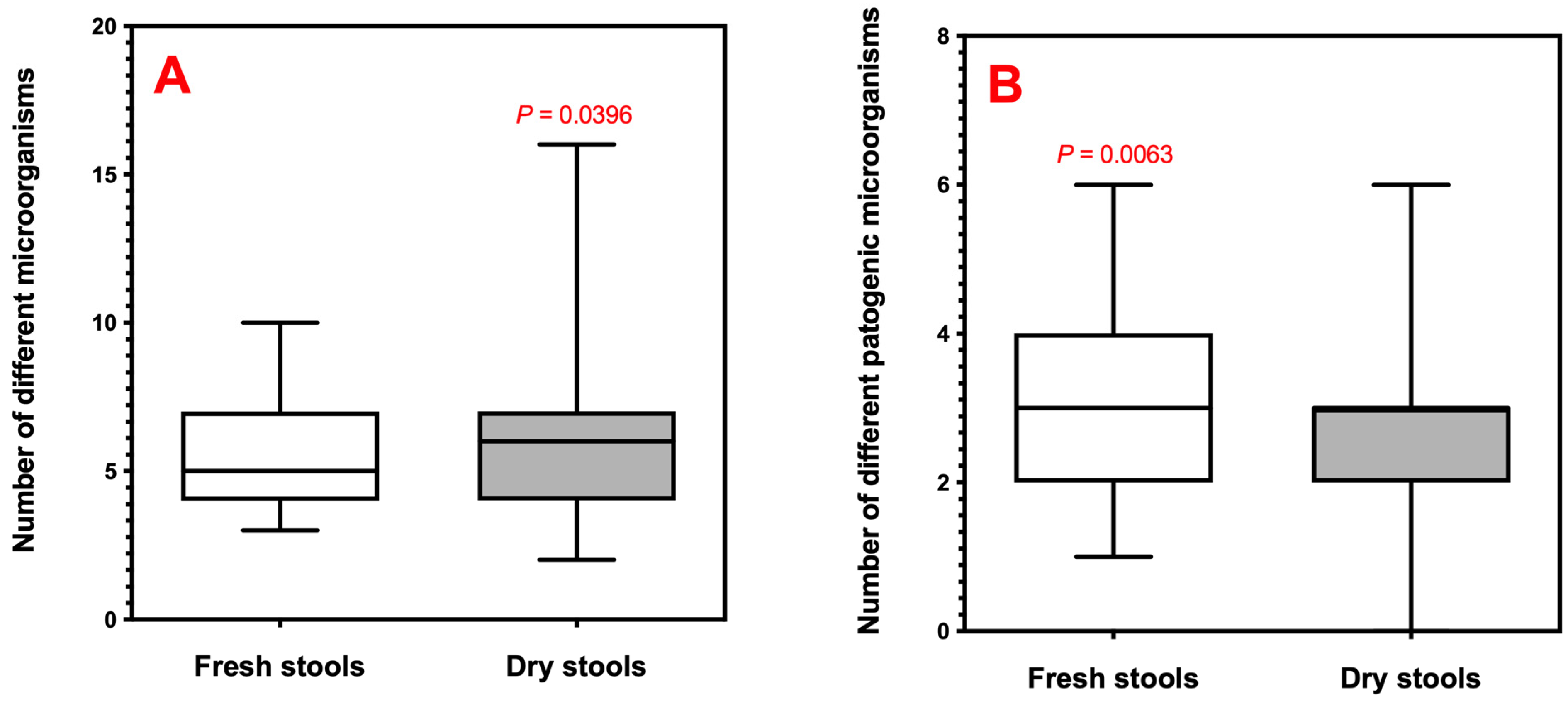
3.2. Detection of Potentially Pathogenic Taxa
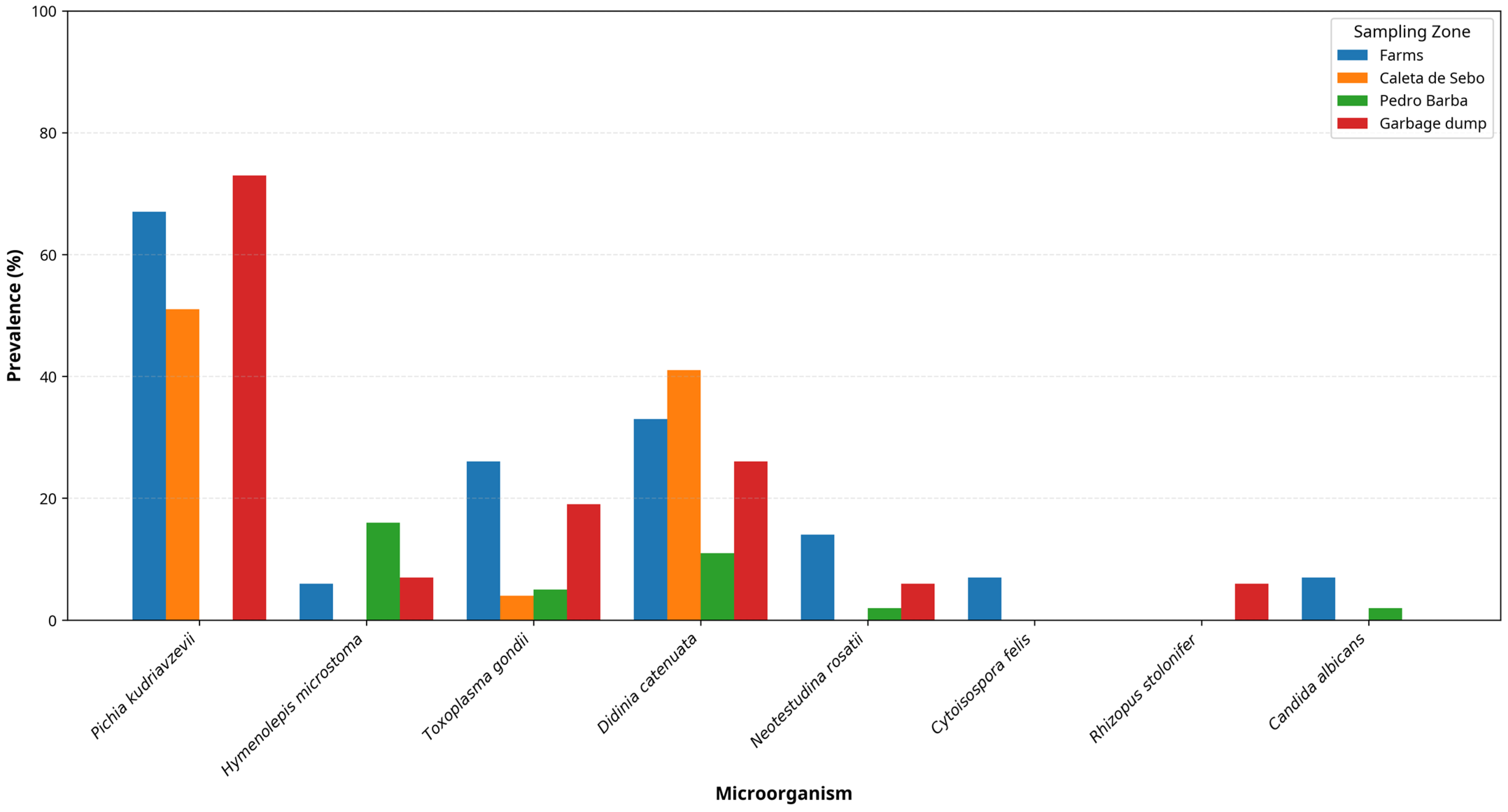
3.3. Geographic Distribution and Co-Occurrence Patterns
4. Discussion
4.1. Methodological Approach and Parasite Community Characterisation
4.2. Contextualising Zoonotic Risk: Global Epidemiology and La Graciosa Baseline
4.3. TNR as an Evidence-Based One Health Strategy
4.4. Future Research and Implications for Management
4.5. Limitations of the Study
5. Conclusions
Supplementary Materials
Author Contributions
Funding
Institutional Review Board Statement
Informed Consent Statement
Data Availability Statement
Conflicts of Interest
References
- Gerhold, R.W.; Jessup, D.A. Zoonotic Diseases Associated with Free-Roaming Cats. Zoonoses Public Health 2013, 60, 189–195. [Google Scholar] [CrossRef] [Scilit]
- Vidal, B.; Verger, L.; Nagy, G.J. Exploring the One Health–One Welfare Nexus and Zoonoses. Sci. One Health 2025, 4, 100128. [Google Scholar] [CrossRef] [Scilit]
- Diakou, A.; Di Cesare, A.; Accettura, P.M.; Barros, L.; Iorio, R.; Paoletti, B.; Frangipane di Regalbono, A.; Halos, L.; Beugnet, F.; Traversa, D. Intestinal Parasites and Vector-Borne Pathogens in Stray and Free-Roaming Cats Living in Continental and Insular Greece. PLoS Negl. Trop. Dis. 2017, 11, e0005335. [Google Scholar] [CrossRef] [Scilit]
- Khademvatan, S.; Abdizadeh, R.; Rahim, F.; Hashemitabar, M.; Ghasemi, M.; Tavalla, M.; Khademvatan, S.; Abdizadeh, R.; Rahim, F.; Hashemitabar, M.; et al. Stray Cats Gastrointestinal Parasites and Its Association with Public Health in Ahvaz City, South Western of Iran. Jundishapur J. Microbiol. 2014, 7, e56365. [Google Scholar] [CrossRef] [Scilit]
- Montoya, A.; García, M.; Gálvez, R.; Checa, R.; Marino, V.; Sarquis, J.; Barrera, J.P.; Rupérez, C.; Caballero, L.; Chicharro, C.; et al. Implications of Zoonotic and Vector-Borne Parasites to Free-Roaming Cats in Central Spain. Vet. Parasitol. 2018, 251, 125–130. [Google Scholar] [CrossRef] [Scilit]
- ESCCAP Publishes 7th Edition of Guideline 01: Worm Control in Dogs and Cats|News|ESCCAP. Available online: https://www.esccap.org/n/ESCCAP+Publishes+7th+Edition+of+Guideline+01+Worm+Control+in+Dogs+and+Cats/235/ (accessed on 14 November 2025).
- Hatam-Nahavandi, K.; Calero-Bernal, R.; Rahimi, M.T.; Pagheh, A.S.; Zarean, M.; Dezhkam, A.; Ahmadpour, E. Toxoplasma Gondii Infection in Domestic and Wild Felids as Public Health Concerns: A Systematic Review and Meta-Analysis. Sci. Rep. 2021, 11, 9509. [Google Scholar] [CrossRef] [Scilit] [PubMed]
- Zhu, S.; VanWormer, E.; Shapiro, K. More People, More Cats, More Parasites: Human Population Density and Temperature Variation Predict Prevalence of Toxoplasma Gondii Oocyst Shedding in Free-Ranging Domestic and Wild Felids. PLoS ONE 2023, 18, e0286808. [Google Scholar] [CrossRef] [Scilit] [PubMed]
- Zhu, S.; Shapiro, K.; VanWormer, E. Dynamics and Epidemiology of Toxoplasma Gondii Oocyst Shedding in Domestic and Wild Felids. Transbound. Emerg. Dis. 2022, 69, 2412–2423. [Google Scholar] [CrossRef] [Scilit]
- Stensvold, C.R. Metabarcoding in Gut Protozoology. Trends Parasitol. 2024, 40, 1173–1182. [Google Scholar] [CrossRef] [Scilit]
- Davey, M.L.; Kamenova, S.; Fossøy, F.; Solberg, E.J.; Davidson, R.; Mysterud, A.; Rolandsen, C.M. Faecal Metabarcoding Provides Improved Detection and Taxonomic Resolution for Non-Invasive Monitoring of Gastrointestinal Nematode Parasites in Wild Moose Populations. Parasit. Vectors 2023, 16, 19. [Google Scholar] [CrossRef] [Scilit] [PubMed]
- Huggins, L.G.; Atapattu, U.; Young, N.D.; Traub, R.J.; Colella, V. Development and Validation of a Long-Read Metabarcoding Platform for the Detection of Filarial Worm Pathogens of Animals and Humans. BMC Microbiol. 2024, 24, 28. [Google Scholar] [CrossRef] [Scilit]
- Stensvold, C.R.; Jirků-Pomajbíková, K.; Tams, K.W.; Jokelainen, P.; Berg, R.P.K.D.; Marving, E.; Petersen, R.F.; Andersen, L.O.; Angen, Ø.; Nielsen, H.V. Parasitic Intestinal Protists of Zoonotic Relevance Detected in Pigs by Metabarcoding and Real-Time Pcr. Microorganisms 2021, 9, 1189. [Google Scholar] [CrossRef] [Scilit]
- Miller, M.L.; Rota, C.; Welsh, A. Transforming Gastrointestinal Helminth Parasite Identification in Vertebrate Hosts with Metabarcoding: A Systematic Review. Parasit. Vectors 2024, 17, 311. [Google Scholar] [CrossRef] [Scilit]
- Kang, D.; Choi, J.H.; Kim, M.; Yun, S.; Oh, S.; Yi, M.H.; Yong, T.S.; Lee, Y.A.; Shin, M.H.; Kim, J.Y. Optimization of 18 S RRNA Metabarcoding for the Simultaneous Diagnosis of Intestinal Parasites. Sci. Rep. 2024, 14, 25049. [Google Scholar] [CrossRef] [Scilit]
- Choi, J.H.; Kim, S.L.; Yoo, D.K.; Yi, M.-h.; Oh, S.; Kim, M.; Yun, S.; Yong, T.S.; Choe, S.; Lee, J.K.; et al. Metabarcoding of Pathogenic Parasites Based on Copro-DNA Analysis of Wild Animals in South Korea. Heliyon 2024, 10, e30059. [Google Scholar] [CrossRef] [Scilit]
- Ayala, M.G.O.; Oh, S.; Choi, J.H.; Yi, M.-h.; Kim, M.; Kang, D.; Kim, S.L.; Odua, F.; Liyanagama, I.; Kim, J.Y. Metabarcoding Study of Fecal Bacterial and Eukaryotic Pathogens in Stray and Pet Cats in Seoul, South Korea, 2022. Public Health Rep. 2025, 140, 365–372. [Google Scholar] [CrossRef] [Scilit] [PubMed]
- Vestheim, H.; Jarman, S.N. Blocking Primers to Enhance PCR Amplification of Rare Sequences in Mixed Samples—A Case Study on Prey DNA in Antarctic Krill Stomachs. Front. Zool. 2008, 5, 12. [Google Scholar] [CrossRef] [Scilit] [PubMed]
- Vaulot, D.; Sim, C.W.H.; Ong, D.; Teo, B.; Biwer, C.; Jamy, M.; Lopes dos Santos, A. MetaPR2: A Database of Eukaryotic 18S RRNA Metabarcodes with an Emphasis on Protists. Mol. Ecol. Resour. 2022, 22, 3188. [Google Scholar] [CrossRef] [Scilit]
- Pinto, S.L.; Henriquez, M.C.; Cheves Hernandez, S.; Duytschaever, G.; Wit, J.; Avramenko, R.W.; Gilleard, J.S.; Orkin, J.D.; Melin, A.D. Promise and Limitations of 18S Genetic Screening of Extracted Fecal DNA from Wild Capuchins. Front. Ecol. Evol. 2023, 11, 1176681. [Google Scholar] [CrossRef] [Scilit]
- Homma, C.; Inokuchi, D.; Nakamura, Y.; Uy, W.H.; Ohnishi, K.; Yamaguchi, H.; Adachi, M. Effectiveness of Blocking Primers and a Peptide Nucleic Acid (PNA) Clamp for 18S Metabarcoding Dietary Analysis of Herbivorous Fish. PLoS ONE 2022, 17, e0266268. [Google Scholar] [CrossRef] [Scilit]
- Davey, M.L.; Utaaker, K.S.; Fossøy, F. Characterizing Parasitic Nematode Faunas in Faeces and Soil Using DNA Metabarcoding. Parasit. Vectors 2021, 14, 422. [Google Scholar] [CrossRef] [Scilit]
- Luzardo, O.P.; Hansen, A.; Martín-Cruz, B.; Macías-Montes, A.; Travieso-Aja, M.d.M. Integrating Conservation and Community Engagement in Free-Roaming Cat Management: A Case Study from a Natura 2000 Protected Area. Animals 2025, 15, 429. [Google Scholar] [CrossRef] [Scilit]
- BOE Ley 7/2023, de Protección de Los Derechos y El Bienestar de Los Animales. Boletín Oficial del Estado, de 8 de Marzo. 2023. Available online: https://www.boe.es/buscar/doc.php?id=BOE-A-2023-7936 (accessed on 31 October 2025).
- Luzardo, O.P.; Zaldívar-Laguía, J.E.; Zumbado, M.; Travieso-Aja, M.d.M. The Role of Veterinarians in Managing Community Cats: A Contextualized, Comprehensive Approach for Biodiversity, Public Health, and Animal Welfare. Animals 2023, 13, 1586. [Google Scholar] [CrossRef] [Scilit]
- Spanish Directorate of Animal Rights. Directriz Técnica de La Dirección General de Derechos de Los Animales Sobre Gestión de Poblaciones Felinas. Available online: https://www.dsca.gob.es/sites/default/files/publicaciones/directriz-tecnica-colonias-felinas.pdf (accessed on 31 October 2025).
- Bushby, P.A. High-Quality, High-Volume Spay–Neuter: Access to Care and the Challenge to Private Practitioners. J. Feline Med. Surg. 2020, 22, 208–215. [Google Scholar] [CrossRef] [Scilit]
- Gasser, R.B. Advances in Molecular Tools for Parasitic Nematodes of Animals—From Genetic Markers to Metabarcoding and Genomics. Biotechnol. Adv. 2025, 85, 108688. [Google Scholar] [CrossRef] [Scilit]
- Glenn, T.C.; Pierson, T.W.; Bayona-Vásquez, N.J.; Kieran, T.J.; Hoffberg, S.L.; Thomas, J.C.; Lefever, D.E.; Finger, J.W.; Gao, B.; Bian, X.; et al. Adapterama II: Universal Amplicon Sequencing on Illumina Platforms (TaggiMatrix). PeerJ 2019, 2019, e7786. [Google Scholar] [CrossRef] [Scilit]
- Martin, M. Cutadapt Removes Adapter Sequences from High-Throughput Sequencing Reads. EMBnet J. 2011, 17, 10–12. [Google Scholar] [CrossRef] [Scilit]
- Bolyen, E.; Rideout, J.R.; Dillon, M.R.; Bokulich, N.A.; Abnet, C.C.; Al-Ghalith, G.A.; Alexander, H.; Alm, E.J.; Arumugam, M.; Asnicar, F.; et al. Reproducible, Interactive, Scalable and Extensible Microbiome Data Science Using QIIME 2. Nat. Biotechnol. 2019, 37, 852–857. [Google Scholar] [CrossRef] [Scilit] [PubMed]
- Capitulo, G. GUÍA ESCCAP N O 6 Control de Protozoos IntestInales En Perros. 2013. Available online: https://www.esccap.org/uploads/docs/3sbvfy71_ESCCAP_Guide_6_spanish_version_def.pdf (accessed on 14 September 2025).
- Zhu, S.; Camp, L.; Patel, A.; Vanwormer, E.; Shapiro, K. High Prevalence and Diversity of Toxoplasma Gondii DNA in Feral Cat Feces from Coastal California. PLoS Negl. Trop. Dis. 2023, 17, e0011829. [Google Scholar] [CrossRef] [Scilit] [PubMed]
- The Jamovi Project Jamovi. (Version 2.5). [Computer Software]. 2024. Available online: https://www.jamovi.org (accessed on 2 October 2025).
- Plimpton, L.D.; Henger, C.S.; Munshi-South, J.; Tufts, D.; Kross, S.; Diuk-Wasser, M.; Plimpton, L.D. Use of Molecular Scatology to Assess the Diet of Feral Cats Living in Urban Colonies. J. Urban Ecol. 2021, 7, juab022. [Google Scholar] [CrossRef] [Scilit]
- Cardona, S.; Eck, A.; Cassellas, M.; Gallart, M.; Alastrue, C.; Dore, J.; Azpiroz, F.; Roca, J.; Guarner, F.; Manichanh, C. Storage Conditions of Intestinal Microbiota Matter in Metagenomic Analysis. BMC Microbiol. 2012, 12, 158. [Google Scholar] [CrossRef] [Scilit]
- Agetsuma-Yanagihara, Y.; Inoue, E.; Agetsuma, N. Effects of Time and Environmental Conditions on the Quality of DNA Extracted from Fecal Samples for Genotyping of Wild Deer in a Warm Temperate Broad-Leaved Forest. Mamm. Res. 2017, 62, 201–207. [Google Scholar] [CrossRef] [Scilit]
- Herren, C.M.; McMahon, K.D. Keystone Taxa Predict Compositional Change in Microbial Communities. Environ. Microbiol. 2018, 20, 2207–2217. [Google Scholar] [CrossRef] [Scilit]
- Ubaid, M.; Zuberi, U.F.; Ghalib, S.M.S.; Hashmi, F.; Aqeel, S. A Meta-Analysis and Survey on the Prevalence of Toxoplasma Gondii Infection in Cats (Felis Catus). J. Basic Appl. Zool. 2025, 86, 21. [Google Scholar] [CrossRef] [Scilit]
- Almería, S.; Cabezón, O.; Paniagua, J.; Cano-Terriza, D.; Jiménez-Ruiz, S.; Arenas-Montes, A.; Dubey, J.P.; García-Bocanegra, I. Toxoplasma Gondii in Sympatric Domestic and Wild Ungulates in the Mediterranean Ecosystem. Parasitol. Res. 2018, 117, 665–671. [Google Scholar] [CrossRef] [Scilit] [PubMed]
- Almería, S.; Cano-Terriza, D.; Prieto, P.; Dubey, J.P.; Jiménez-Martín, D.; Castro-Scholten, S.; Paniagua, J.; García-Bocanegra, I. Seroprevalence and Risk Factors of Toxoplasma Gondii Infection in Wild Ungulates That Cohabit in a Natural Park with Human–Animal Interaction in the Mediterranean Ecosystem. Zoonoses Public Health 2021, 68, 263–270. [Google Scholar] [CrossRef] [Scilit] [PubMed]
- Rousseau, J.; Castro, A.; Novo, T.; Maia, C. Dipylidium Caninum in the Twenty-First Century: Epidemiological Studies and Reported Cases in Companion Animals and Humans. Parasit. Vectors 2022, 15, 131. [Google Scholar] [CrossRef] [Scilit]
- Cope, J.R.; Landa, J.; Nethercut, H.; Collier, S.A.; Glaser, C.; Moser, M.; Puttagunta, R.; Yoder, J.S.; Ali, I.K.; Roy, S.L. The Epidemiology and Clinical Features of Balamuthia Mandrillaris Disease in the United States, 1974–2016. Clin. Infect. Dis. 2019, 68, 1815–1822. [Google Scholar] [CrossRef] [Scilit]
- Rodríguez-Expósito, R.L.; Carbonell, L.; Recuero-Gil, J.; Martinez, J.; Martinez-Valverde, R.; Martinez-Fernandez, C.; Ortega-Porcel, J.; Hernández, A.B.; Corpa, J.M.; Cortijo, E.M.; et al. Fatal Amoebic Meningoencephalitis Caused by Balamuthia Mandrillaris in Pongo Pygmaeus and First Case Report in Pan Troglodytes Verus. Front. Vet. Sci. 2025, 12, 1534378. [Google Scholar] [CrossRef] [Scilit]
- Becker, D.J.; Streicker, D.G.; Altizer, S. Linking Anthropogenic Resources to Wildlife-Pathogen Dynamics: A Review and Meta-Analysis. Ecol. Lett. 2015, 18, 483–495. [Google Scholar] [CrossRef] [Scilit] [PubMed]
- Becker, D.J.; Hall, R.J.; Forbes, K.M.; Plowright, R.K.; Altizer, S. Anthropogenic Resource Subsidies and Host–Parasite Dynamics in Wildlife. Philos. Trans. R. Soc. B Biol. Sci. 2018, 373, 20170086. [Google Scholar] [CrossRef] [Scilit]
- Wolf, P.J.; Schaffner, J.E. The Road to TNR: Examining Trap-Neuter-Return through the Lens of Our Evolving Ethics. Front. Vet. Sci. 2019, 5, 341. [Google Scholar] [CrossRef] [Scilit]
- Boone, J.D. Better Trap–Neuter–Return for Free-Roaming Cats: Using Models and Monitoring to Improve Population Management. J. Feline Med. Surg. 2015, 17, 800–807. [Google Scholar] [CrossRef] [Scilit] [PubMed]
- Kreisler, R.E.; Cornell, H.N.; Levy, J.K. Decrease in Population and Increase in Welfare of Community Cats in a Twenty-Three Year Trap-Neuter-Return Program in Key Largo, FL: The ORCAT Program. Front. Vet. Sci. 2019, 6, 435227. [Google Scholar] [CrossRef] [Scilit]
- Cecchetti, M.; Nelli, L. Planning and Optimizing Neutering Programs for Free-Roaming Cat Populations: An Interactive Tool for Cost-Effective Management in Closed Systems. J. Appl. Ecol. 2025, 62, 1421–1436. [Google Scholar] [CrossRef] [Scilit]
- Gunther, I.; Hawlena, H.; Azriel, L.; Gibor, D.; Berke, O.; Klement, E. Reduction of Free-Roaming Cat Population Requires High-Intensity Neutering in Spatial Contiguity to Mitigate Compensatory Effects. Proc. Natl. Acad. Sci. USA 2023, 119, e2119000119. [Google Scholar] [CrossRef] [Scilit] [PubMed]
- Luzardo, O.P.; Vara-Rascón, M.; Dufau, A.; Infante, E.; Travieso-Aja, M.d.M. Four Years of Promising Trap–Neuter–Return (TNR) in Córdoba, Spain: A Scalable Model for Urban Feline Management. Animals 2025, 15, 482. [Google Scholar] [CrossRef] [Scilit]
- Kennedy, B.P.A.; Cumming, B.; Brown, W.Y. Global Strategies for Population Management of Domestic Cats (Felis Catus): A Systematic Review to Inform Best Practice Management for Remote Indigenous Communities in Australia. Animals 2020, 10, 663. [Google Scholar] [CrossRef] [Scilit] [PubMed]
- Ramírez Riveros, D.; González-Lagos, C. Community Engagement and the Effectiveness of Free-Roaming Cat Control Techniques: A Systematic Review. Animals 2024, 14, 492. [Google Scholar] [CrossRef] [Scilit]
- Xie, S.C.; Lv, Y.H.; Wang, M.; Zheng, X.N.; Wang, J.L.; Fu, B.Q.; Zhu, X.Q. Live-Attenuated Toxoplasma Gondii PruΔpp2a-c Mutant Elicits Protective Immunity against Toxoplasmosis in Mice and Cats. Int. J. Parasitol. 2025, 104714. [Google Scholar] [CrossRef] [Scilit]
- Bass, D.; Stentiford, G.D.; Littlewood, D.T.J.; Hartikainen, H. Diverse Applications of Environmental DNA Methods in Parasitology. Trends Parasitol. 2015, 31, 499–513. [Google Scholar] [CrossRef] [Scilit] [PubMed]
- Manzanares-Fernández, R.; Martínez-Campo, J.; Travieso-Aja, M.d.M.; Luzardo, O.P. Territorial Constraints on Trap–Neuter–Return in Insular Landscapes: Demographic and Ecological Implications of a Conservation-Oriented Policy. Animals 2025, 15, 3576. [Google Scholar] [CrossRef] [Scilit] [PubMed]



| Taxon | Type of Eukaryotic Organism | Cats’ Pathogen | Human Pathogen (Zoonosis) | Detection Frequency (%) | 95% CI | Veterinary Relevance | Zoonotic Relevance a |
|---|---|---|---|---|---|---|---|
| Dipylidium caninum | Cestode | X | X | 74.3 | 66.6–81.1 | High | Low |
| Pichia kudriavzevii | Yeast | X | 42.4 | 34.2–50.4 | Low | Moderate | |
| Diutina catenulata | Fungus | X | 31.5 | 24.3–39.6 | Low | Moderate | |
| Cladosporium herbarum | Fungus | X | 26.1 | 19.5–34.1 | Low | Moderate | |
| Acanthamoeba castellanii | Protozoan | X | 13.3 | 8.2–19.6 | Low | Moderate | |
| Malassezia restricta | Fungus | X | 12.7 | 7.7–18.8 | Low | Moderate | |
| Toxoplasma gondii | Protozoan | X | X | 7.9 | 4.1–13.4 | Moderate | High |
| Candida sojiae | Yeast | X | X | 7.3 | 3.7–12.6 | Moderate | Moderate |
| Balamuthia mandrillaris | Protozoan | X | X | 4.6 | 1.9–9.3 | Moderate | High |
| Hymenolepis microstoma | Helminth | X | X | 4.8 | 1.9–9.3 | Moderate | Low |
| Blastocystis spp. | Protozoan | X | X | 3.9 | 1.5–8.4 | Moderate | Low |
| Lichtheimia ramosa | Fungus | X | X | 4.2 | 1.5–8.4 | Moderate | Low |
| Malasseziomyces spp. | Fungus | X | X | 2.6 | 0.7–6.6 | Moderate | Low |
| Rhizopus stolonifer | Fungus | X | X | 0.6 | 0.0–3.6 | Moderate | Low |
| Candida albicans | Yeast | X | X | 0.6 | 0.0–3.6 | Moderate | Low |
| Candida glabrata | Yeast | X | X | 0.6 | 0.0–3.6 | Moderate | Low |
| Rhizomucor pusillus | Fungus | X | 5.3 | 2.3–10.1 | Low | Low | |
| Debaryomyces fabryi | Yeast | X | 3.9 | 1.5–8.4 | Low | Low | |
| Demodex brevis | Mite | X | 3.3 | 1.1–7.5 | Low | Low | |
| Neotestudina rosatii | Fungus | X | 2.4 | 0.7–6.6 | Low | Low | |
| Wallemia sebi | Fungus | X | 1.3 | 0.2–4.7 | Low | Low | |
| Trichosporon coremiiforme | Fungus | X | 1.3 | 0.2–4.7 | Low | Low | |
| Stephanostomum spp. | Helminth | X | 0.6 | 0.0–3.6 | Low | Low | |
| Cystoisospora felis | Protozoan | X | 0.7 | 0.0–3.6 | Low | Low | |
| Trichosporon | Fungus | X | 0.6 | 0.0–3.6 | Low | Low |
| Eukaryotic Organism | Farms | Caleta de Sebo | Pedro Barba | Garbage Dump |
|---|---|---|---|---|
| Dipylidium caninum | 66.7 | 81.1 | 64.1 | 66.7 |
| Acanthamoeba castellanii | 0.0 | 15.8 | 15.4 | 6.7 |
| Stephanostomum cf. | 0.0 | 0.0 | 2.6 | 0.0 |
| Diutina catenulata | 33.3 | 41.1 | 10.3 | 26.7 |
| Wallemia sebi | 0.0 | 1.1 | 2.6 | 0.0 |
| Cystoisospora felis | 6.7 | 0.0 | 0.0 | 0.0 |
| Rhizomucor pusillus | 0.0 | 2.1 | 10.3 | 13.3 |
| Debaryomyces fabryi | 0.0 | 6.3 | 0.0 | 0.0 |
| Neotestudina rosatii | 13.3 | 0.0 | 2.6 | 6.7 |
| Cladosporium herbarum | 26.7 | 30.5 | 20.5 | 13.3 |
| Pichia kudriavzevii | 66.7 | 51.6 | 0.0 | 73.3 |
| Malassezia restricta | 6.7 | 11.6 | 17.9 | 13.3 |
| Demodex brevis | 0.0 | 3.2 | 5.1 | 0.0 |
| Trichosporon coremiiforme | 0.0 | 2.1 | 0.0 | 0.0 |
| Toxoplasma gondii | 26.7 | 4.2 | 5.1 | 20.0 |
| Rhizopus stolonifer | 0.0 | 0.0 | 0.0 | 6.7 |
| Balamuthia mandrillaris | 0.0 | 2.1 | 7.7 | 0.0 |
| Hymenolepis microstoma | 6.7 | 0.0 | 15.4 | 6.7 |
| uncultured fungus | 0.0 | 10.5 | 25.6 | 0.0 |
| uncultured Basidiomycota | 0.0 | 4.2 | 0.0 | 0.0 |
| Lichtheimia ramosa | 0.0 | 5.3 | 0.0 | 13.3 |
| Candida sojae | 13.3 | 10.5 | 0.0 | 0.0 |
| Candida albicans | 6.7 | 0.0 | 0.0 | 0.0 |
| Candida glabrata | 0.0 | 0.0 | 2.6 | 0.0 |
| Eukaryotic Organism | χ2 | p-Value | ε2 (Effect Size) | Sampling Site with the Highest Observed Detection Frequency a |
|---|---|---|---|---|
| Pichia kudriavzevii | 41.150 | <0.001 | 0.252 | Garbage dump (73.3%) |
| Hymenolepis microstoma | 14.269 | 0.003 | 0.088 | Pedro Barba (15.4%) |
| Toxoplasma gondii | 12.354 | 0.006 | 0.076 | Farms (26.7%) |
| Diutina catenulata | 12.238 | 0.007 | 0.075 | Caleta de Sebo (41.1%) |
| Neotestudina rosatii | 10.919 | 0.012 | 0.067 | Farms (13.3%) |
| Cystoisospora felis | 9.933 | 0.019 | 0.061 | Farms (6.7%) |
| Rhizopus stolonifer | 9.933 | 0.019 | 0.061 | Garbage dump (6.7%) |
| Candida albicans | 9.933 | 0.019 | 0.061 | Farms (6.7%) |
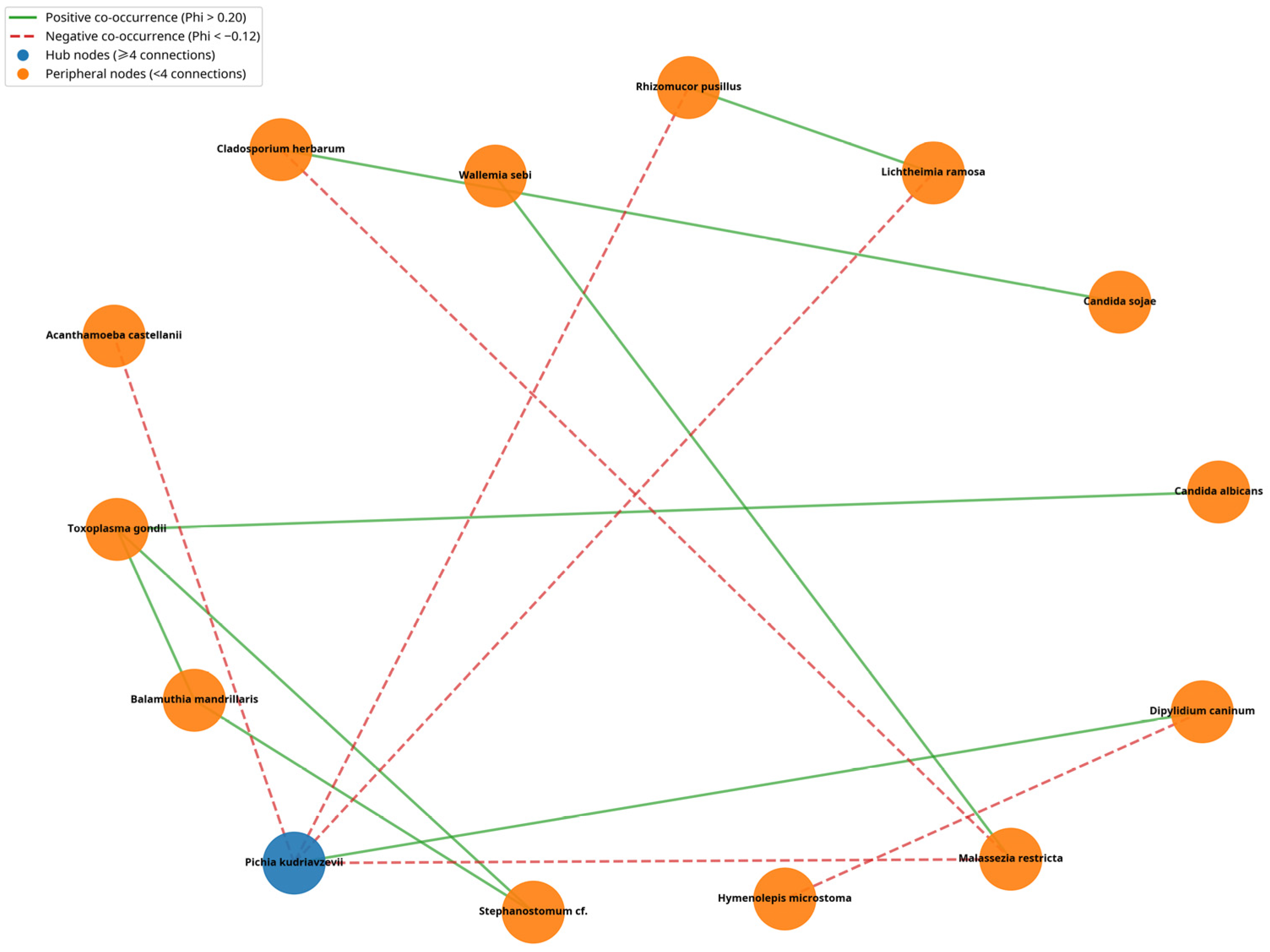
| Eukaryotic Organism A a | Eukaryotic Organism B a | Phi Coefficient |
|---|---|---|
| A. Positive Co-occurrences (Top 8) | ||
| Balamuthia mandrillaris [P] | Stephanostomum spp. [H] | 0.442 |
| Lichtheimia ramose [F] | Rhizomucor pusillus [F] | 0.347 |
| Balamuthia mandrillaris [P] | Toxoplasma gondii [P] | 0.342 |
| Malassezia restricta [Y] | Wallemia sebi [F] | 0.290 |
| Stephanostomum spp. [H] | Toxoplasma gondii [P] | 0.267 |
| Candida albicans [Y] | Toxoplasma gondii [P] | 0.267 |
| Candida sojae [Y] | Cladosporium herbarum [F] | 0.259 |
| Dipylidium caninum [H] | Pichia kudriavzevii [Y] | 0.248 |
| B. Negative Co-occurrences (Top 6) | ||
| Lichtheimia ramose [F] | Pichia kudriavzevii [Y] | −0.181 |
| Malassezia restricta [Y] | Pichia kudriavzevii [Y] | −0.181 |
| Pichia kudriavzevii [Y] | Rhizomucor pusillus [F] | −0.152 |
| Cladosporium herbarum [F] | Malassezia restricta [Y] | −0.144 |
| Dipylidium caninum [H] | Hymenolepis microstoma [H] | −0.127 |
| Acanthamoeba castellanii [P] | Pichia kudriavzevii [Y] | −0.120 |
Disclaimer/Publisher’s Note: The statements, opinions and data contained in all publications are solely those of the individual author(s) and contributor(s) and not of MDPI and/or the editor(s). MDPI and/or the editor(s) disclaim responsibility for any injury to people or property resulting from any ideas, methods, instructions or products referred to in the content. |
© 2026 by the authors. Licensee MDPI, Basel, Switzerland. This article is an open access article distributed under the terms and conditions of the Creative Commons Attribution (CC BY) license.
Share and Cite
Travieso-Aja, M.d.M.; Henríquez-Hernández, L.A.; Hernández-Álvarez, E.; Quinteiro-Vázquez, J.; González-Henríquez, N.E.; Cecchetti, M.; Luzardo, O.P. Low Zoonotic Pathogen Burden in Free-Roaming Cats Revealed by 18S rRNA Metabarcoding: A Baseline Study from an Insular Natura 2000 Site in Spain. Animals 2026, 16, 431. https://doi.org/10.3390/ani16030431
Travieso-Aja MdM, Henríquez-Hernández LA, Hernández-Álvarez E, Quinteiro-Vázquez J, González-Henríquez NE, Cecchetti M, Luzardo OP. Low Zoonotic Pathogen Burden in Free-Roaming Cats Revealed by 18S rRNA Metabarcoding: A Baseline Study from an Insular Natura 2000 Site in Spain. Animals. 2026; 16(3):431. https://doi.org/10.3390/ani16030431
Chicago/Turabian StyleTravieso-Aja, María del Mar, Luis Alberto Henríquez-Hernández, Elisa Hernández-Álvarez, Javier Quinteiro-Vázquez, Nieves E. González-Henríquez, Martina Cecchetti, and Octavio P. Luzardo. 2026. "Low Zoonotic Pathogen Burden in Free-Roaming Cats Revealed by 18S rRNA Metabarcoding: A Baseline Study from an Insular Natura 2000 Site in Spain" Animals 16, no. 3: 431. https://doi.org/10.3390/ani16030431
APA StyleTravieso-Aja, M. d. M., Henríquez-Hernández, L. A., Hernández-Álvarez, E., Quinteiro-Vázquez, J., González-Henríquez, N. E., Cecchetti, M., & Luzardo, O. P. (2026). Low Zoonotic Pathogen Burden in Free-Roaming Cats Revealed by 18S rRNA Metabarcoding: A Baseline Study from an Insular Natura 2000 Site in Spain. Animals, 16(3), 431. https://doi.org/10.3390/ani16030431