Development of Cells Repository of Betta Species: A Tool for Genetic Conservation and Biotechnological Advancement

 ,
,  , , , and
Simple Summary
Abstract
1. Introduction
2. Materials and Methods
2.1. Sources of Ornamental and Wild Bettas
2.2. Water Parameter Analysis of Habitats
2.3. Animal Husbandry and Breeding Management
2.4. Culture Medium for Fish Cell Cultivation
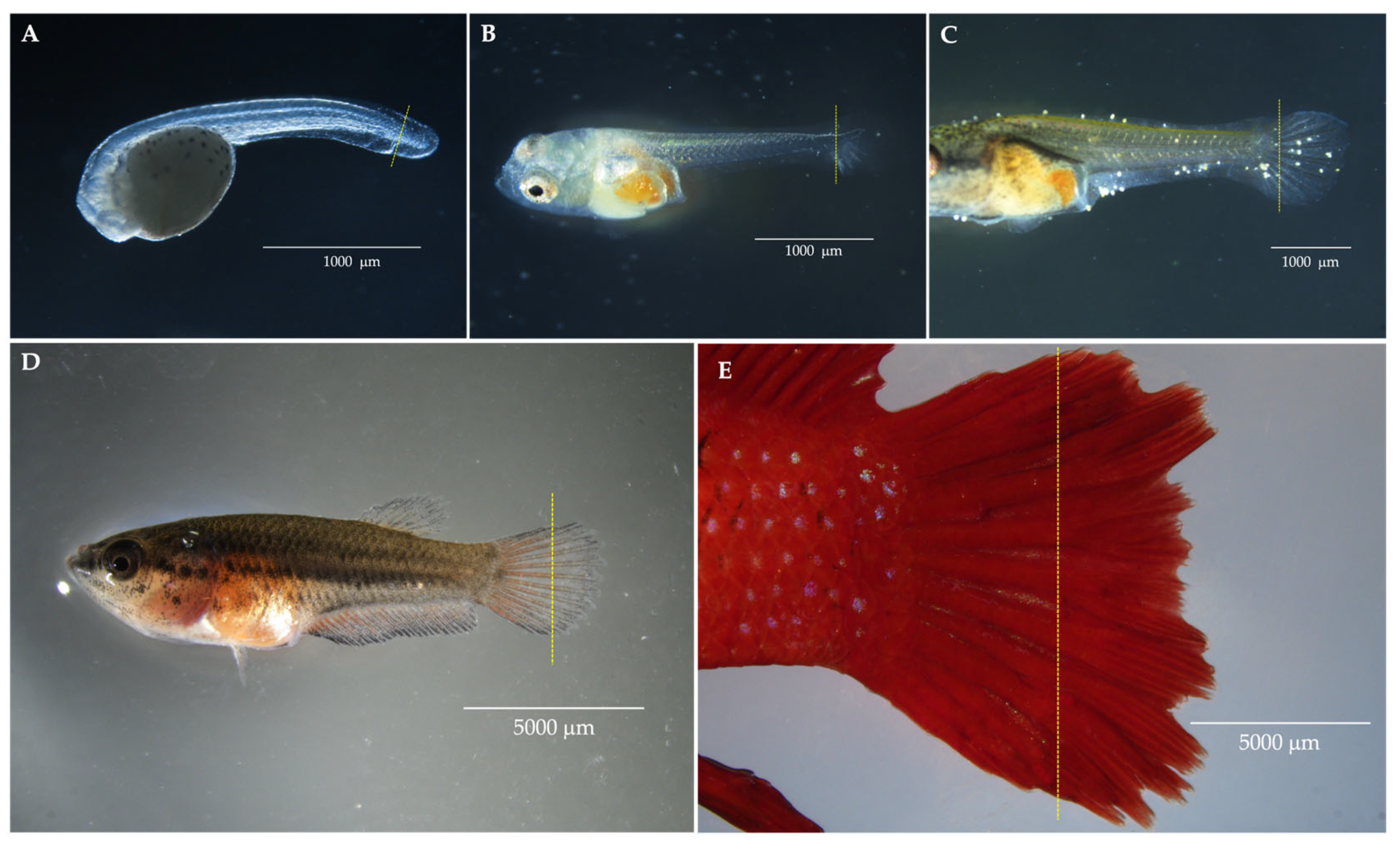
2.5. Larval Tissue Preparation and Cell Isolation
2.6. Adult Tissue Preparation and Cell Isolation
2.7. Cell Culture and Propagation
2.8. Cryopreservation and Cell Viability Assessment
2.9. Immunofluorescent Assay
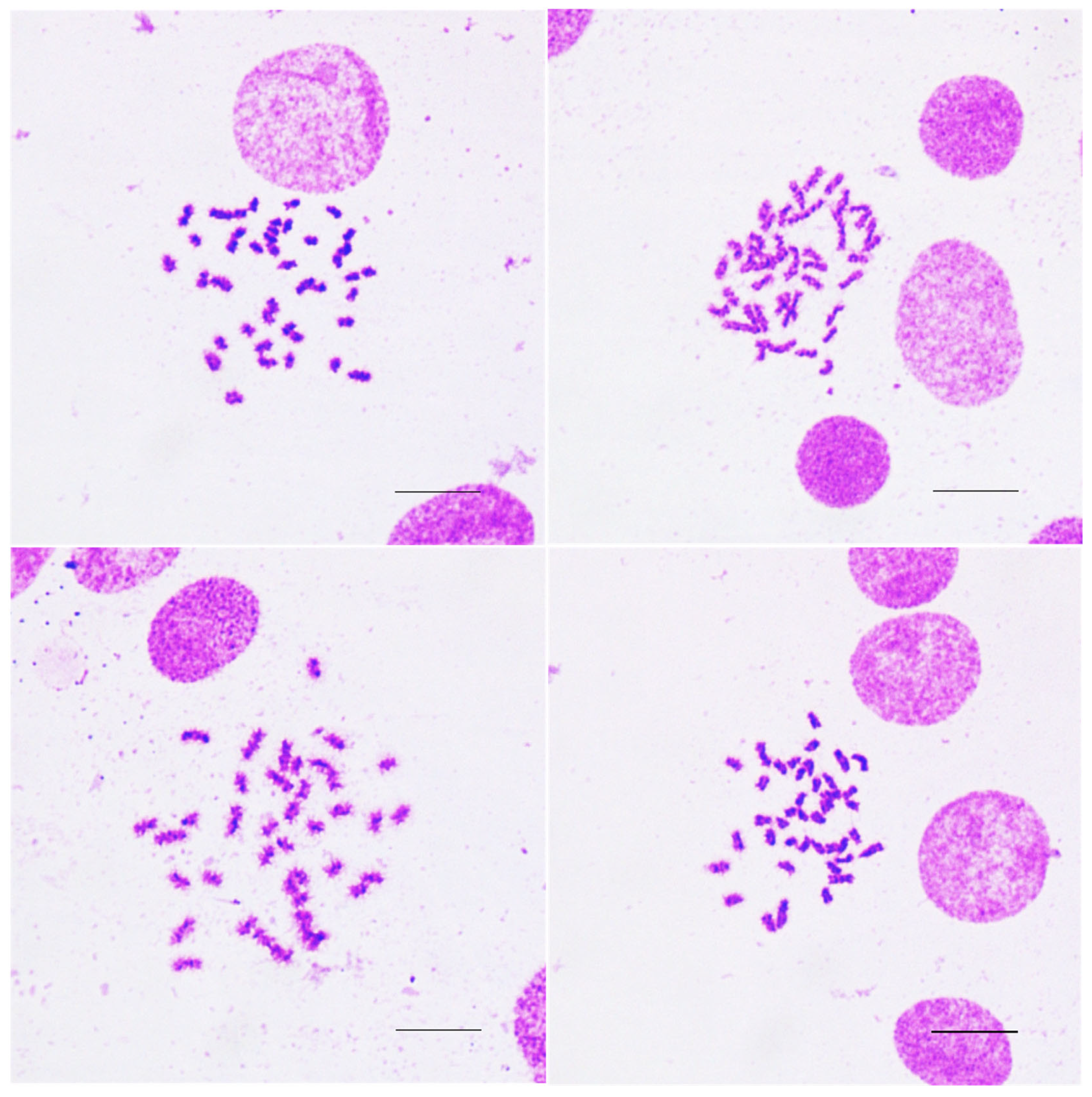
2.10. Chromosome Spread Preparation
2.11. Statistical Analysis
3. Results
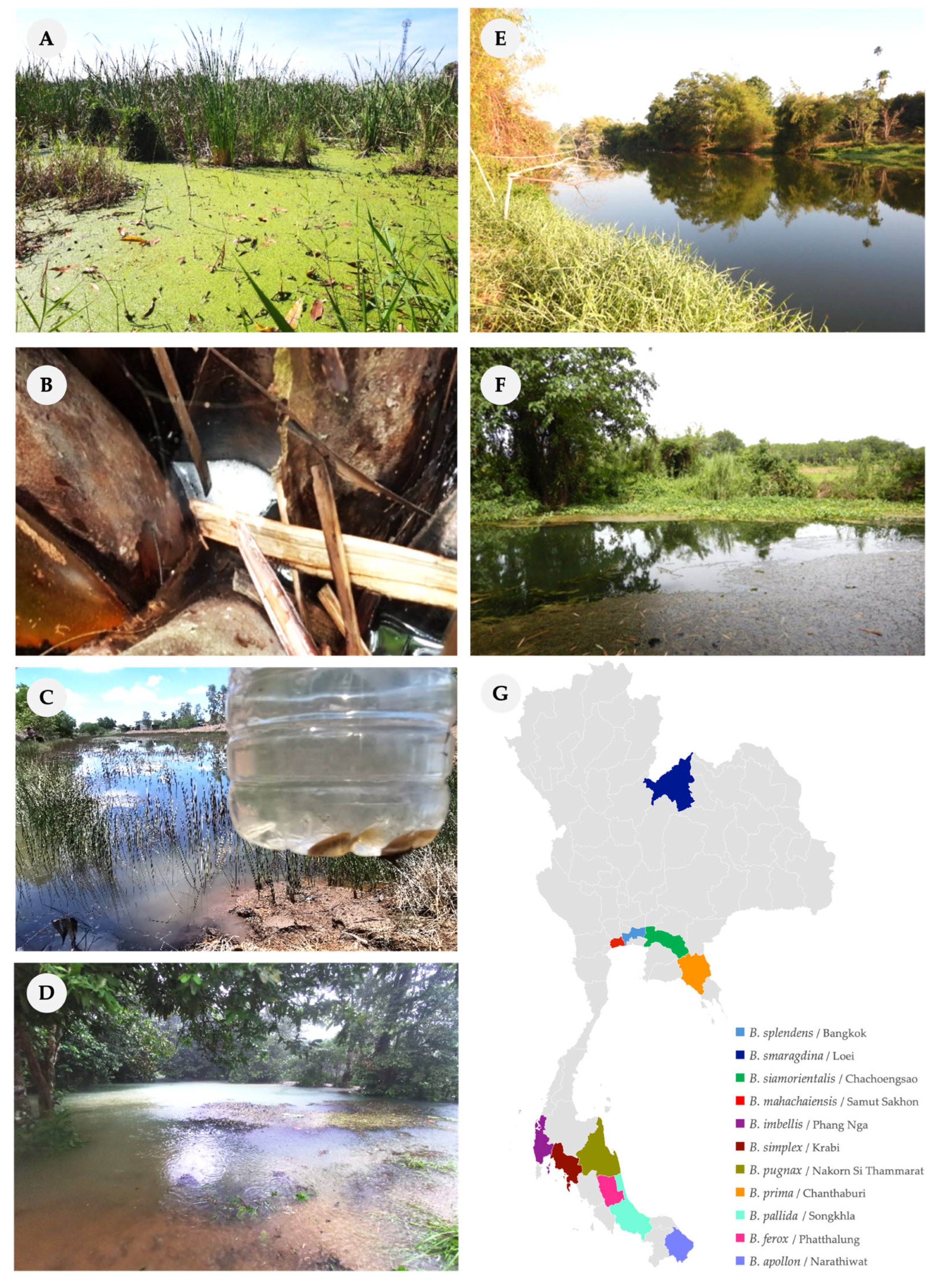
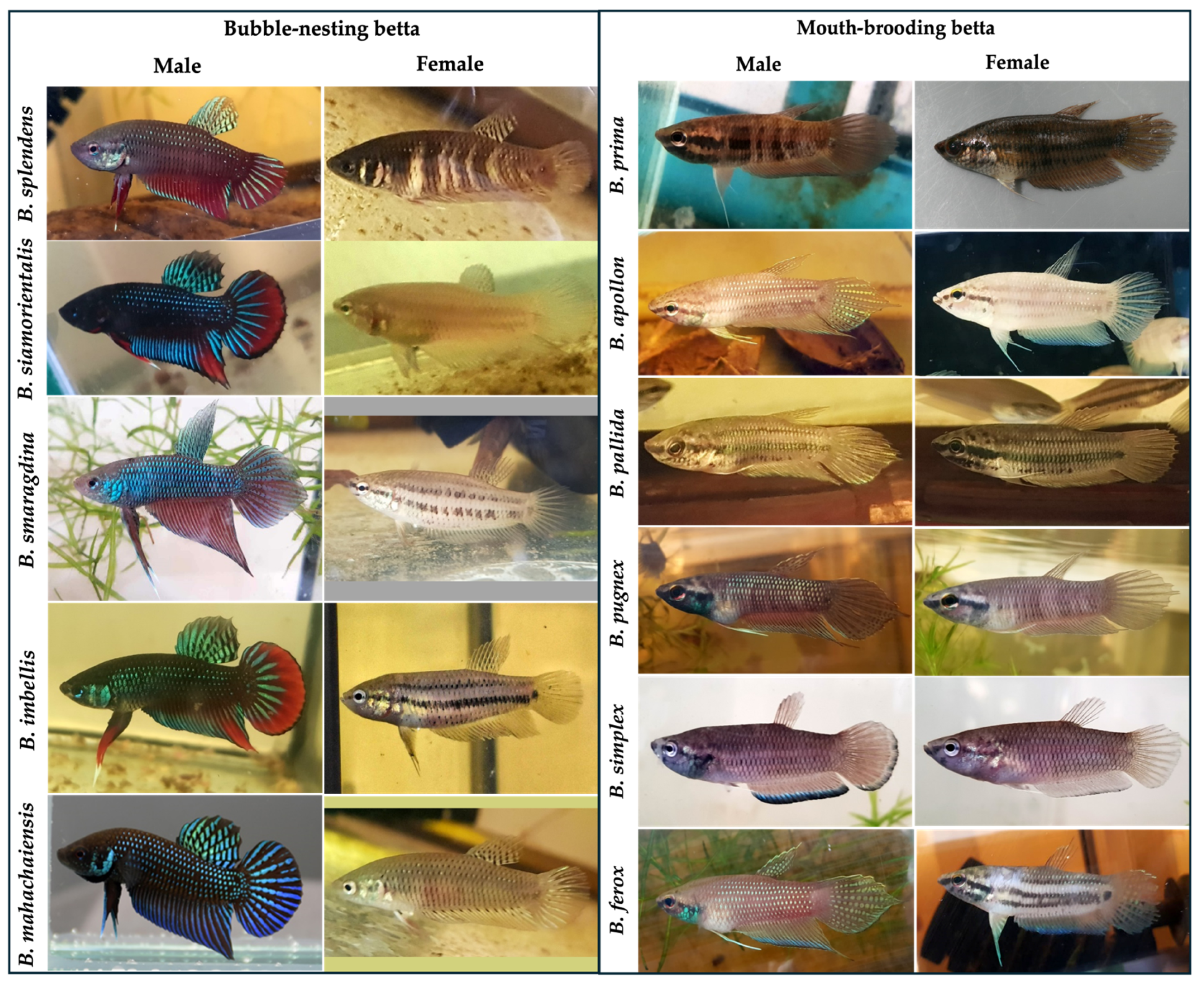
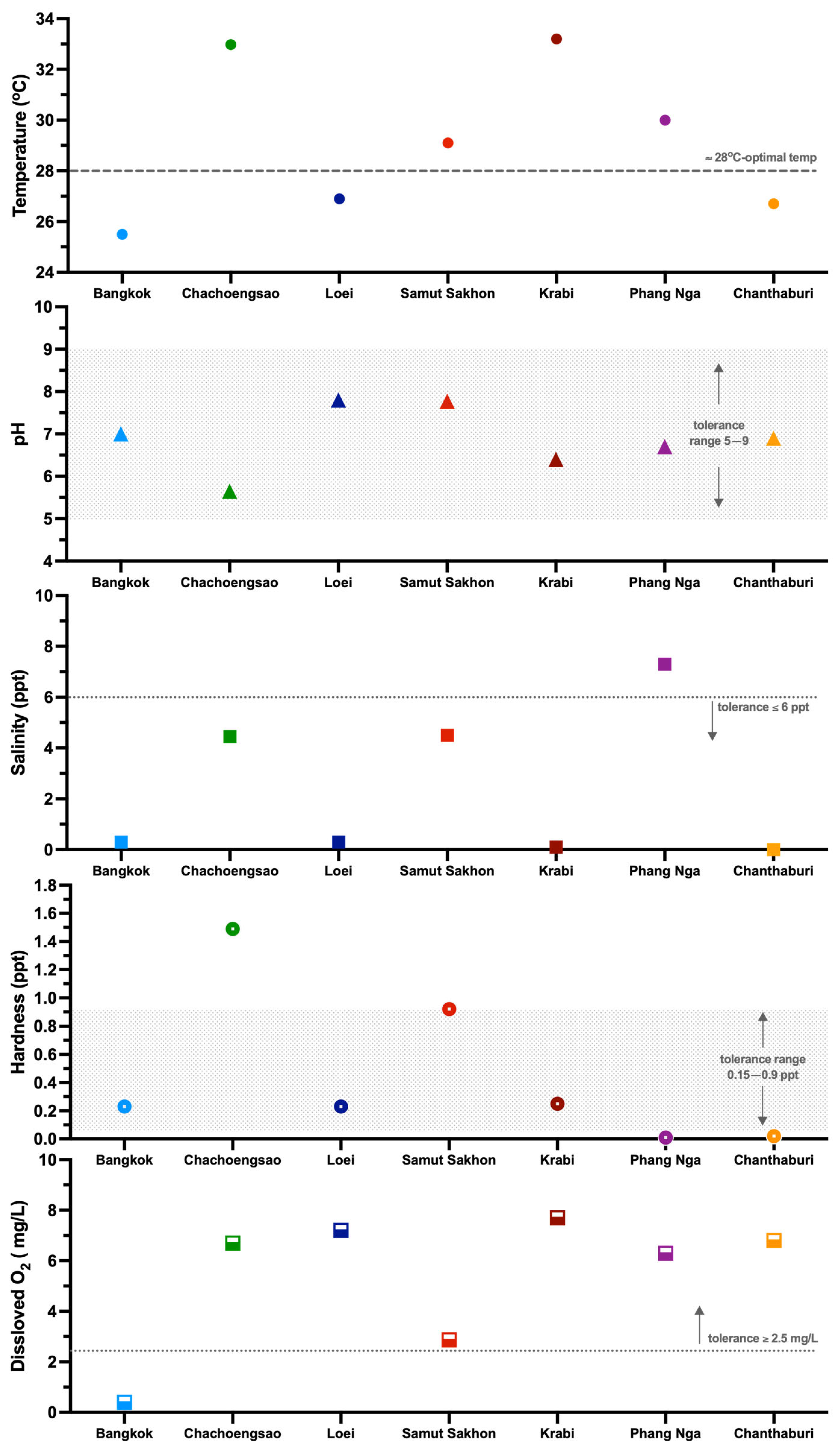
3.1. Survey and Collection of Wild Bettas from Type Localities with Concurrent Water Parameter Assessment
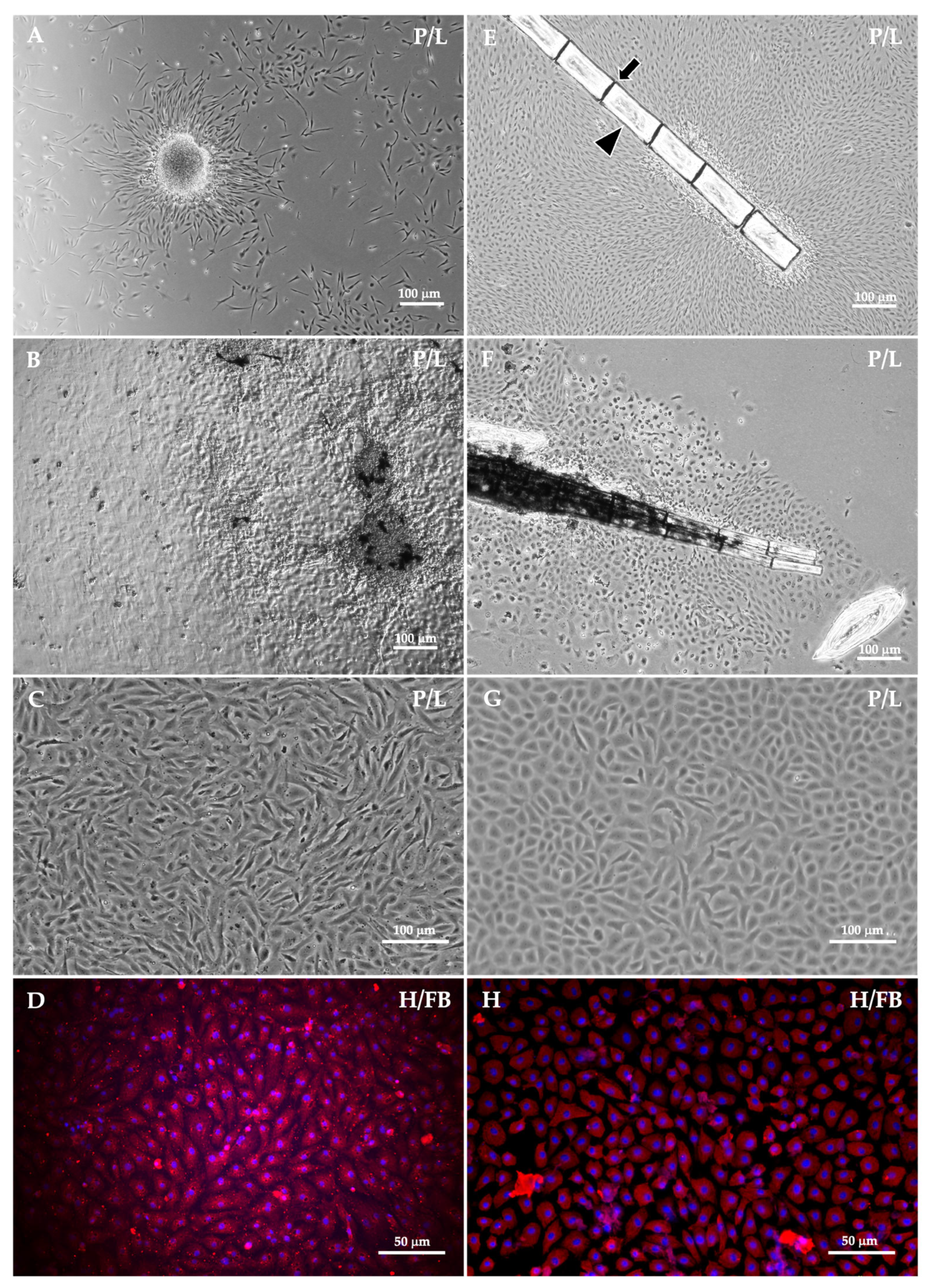
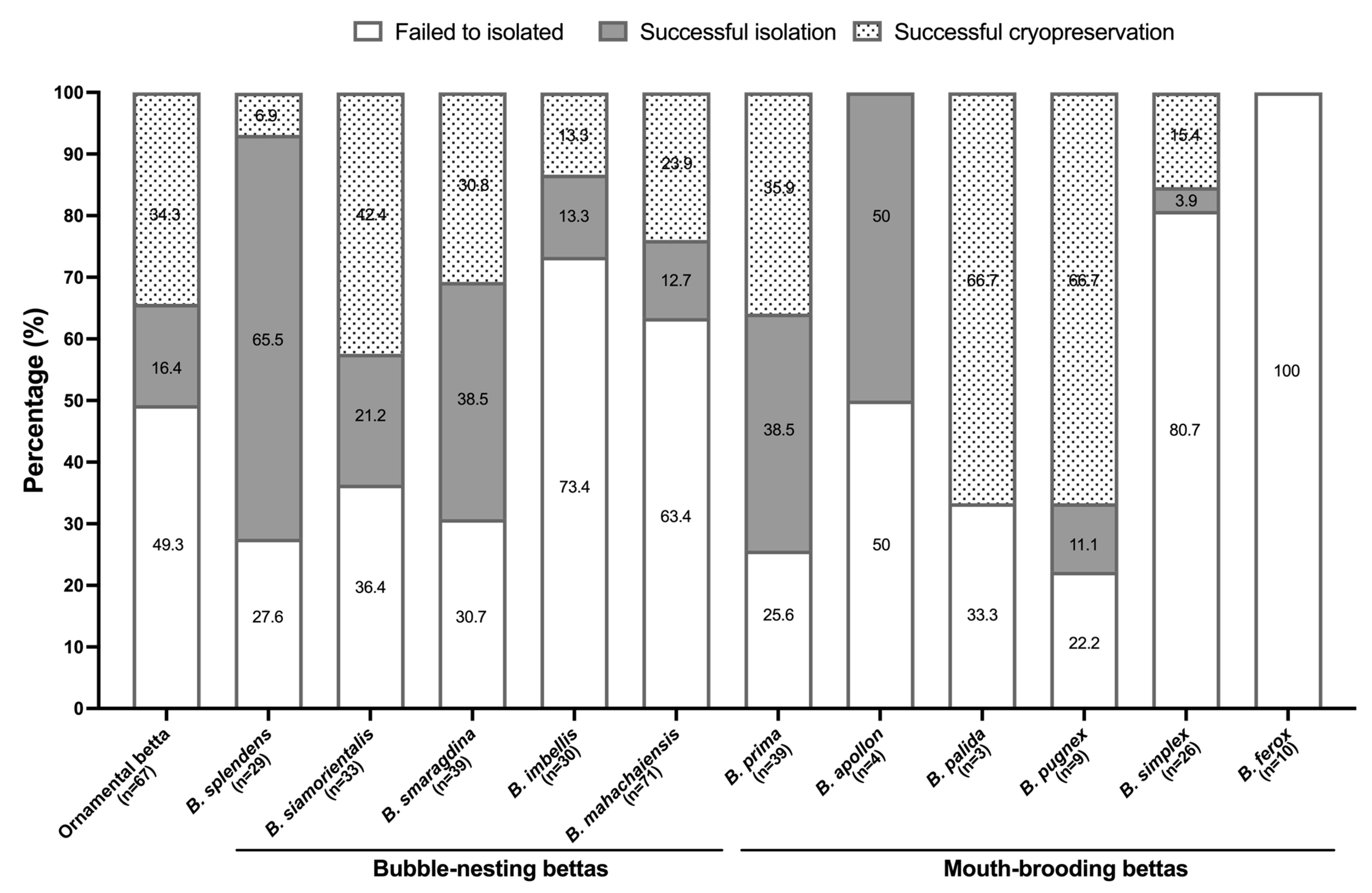
3.2. Successful Isolation of Cells from Adult and Larval Tissue of Betta Species
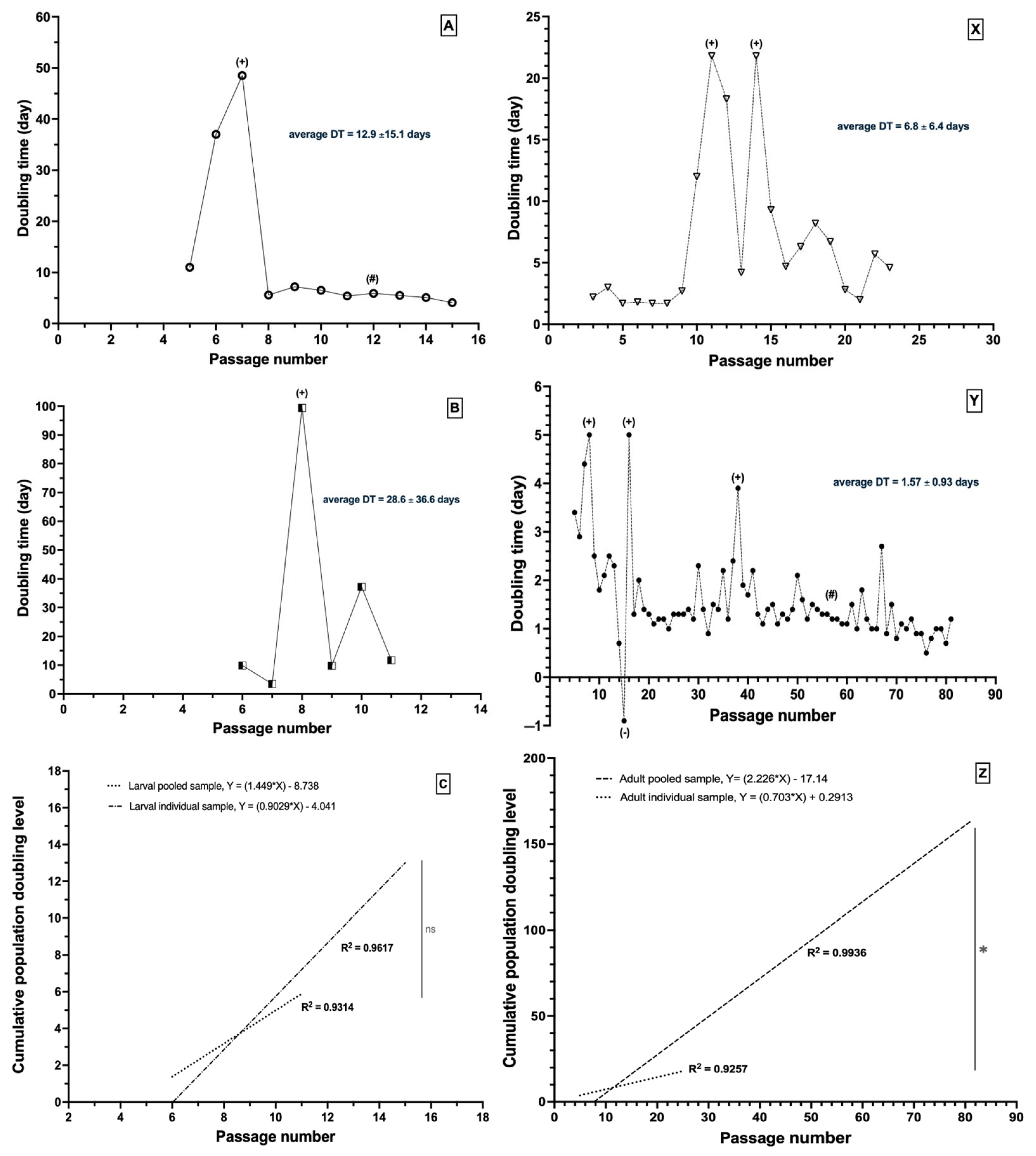
3.3. Characteristics of Cells of Betta Species During In Vitro Propagation
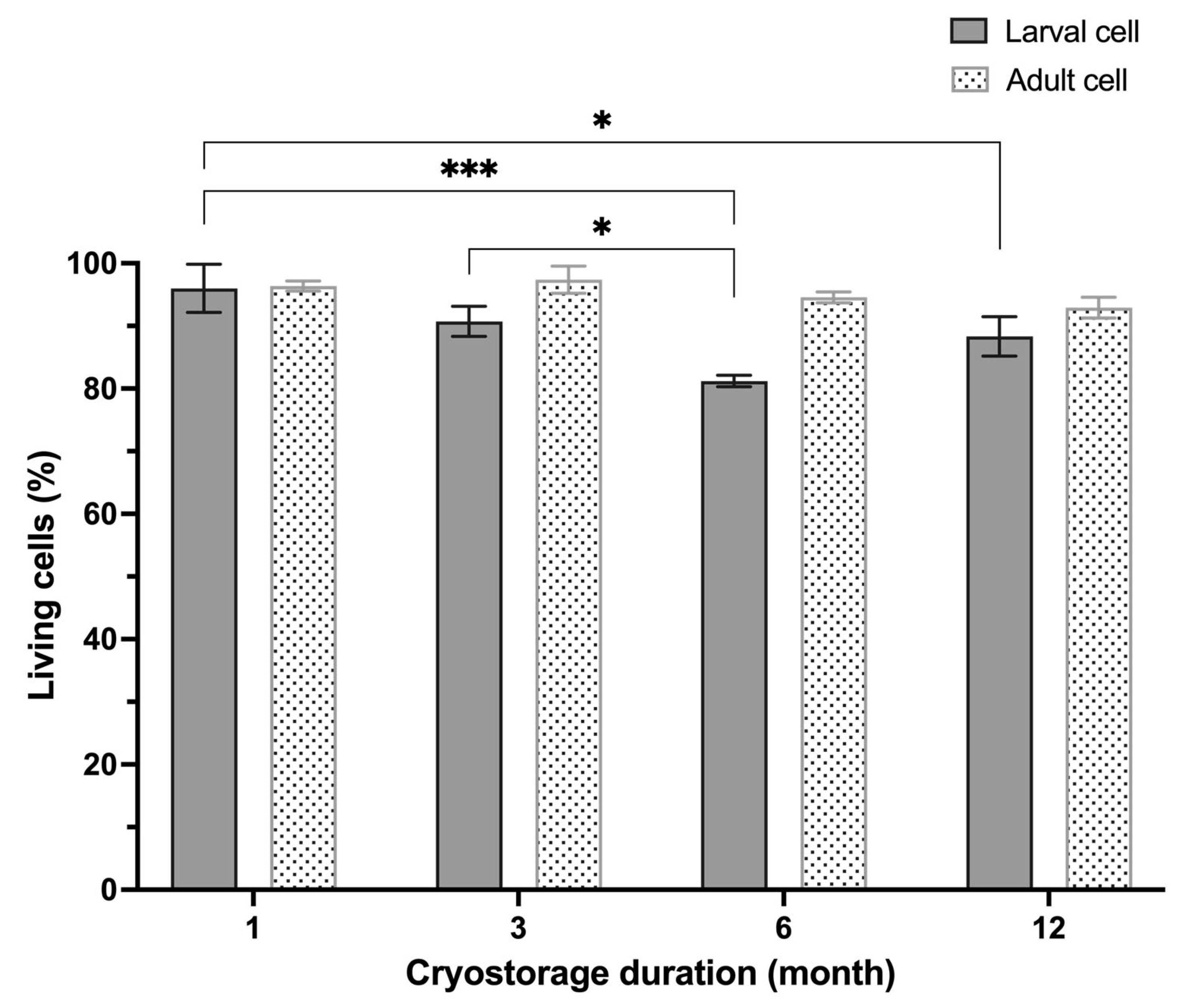
3.4. Viability of Cell of Betta Species Following Cryopreservation
3.5. Establishment of Frozen-Cell Repository of Wild Bettas in Thailand
4. Discussion
5. Conclusions
Supplementary Materials
Author Contributions
Funding
Institutional Review Board Statement
Informed Consent Statement
Data Availability Statement
Acknowledgments
Conflicts of Interest
Abbreviations
| HBSS | Hanks’ Balanced Salt Solution |
| DT | Doubling time |
| CPDL | Cumulative population doubling level |
| OECD | Organization for Economic Co-operation and Development |
| °C | Degree Celsius |
References
- Panijpan, B.; Sriwattanarothai, N.; Laosinchai, P. Wild Betta fighting fish species in Thailand and other Southeast Asian countries. ScienceAsia 2020, 46, 382–391. [Google Scholar] [CrossRef]
- Sermwatanakul, A. Capacitating the local farmers to enhance global marketing of Thailand’s national aquatic animal, the Siamese fighting fish. Fish People 2019, 17, 42–48. [Google Scholar]
- Barbarossa, V.; Bosmans, J.; Wanders, N.; King, H.; Bierkens, M.F.P.; Huijbregts, M.A.J.; Schipper, A.M. Threats of global warming to the world’s freshwater fishes. Nat. Commun. 2021, 12, 1701. [Google Scholar] [CrossRef] [PubMed]
- Ficke, A.D.; Myrick, C.A.; Hansen, L.J. Potential impacts of global climate change on freshwater fisheries. Rev. Fish. Biol. Fish. 2007, 17, 581–613. [Google Scholar] [CrossRef]
- Cantor, T. XXXVIII.—General Features of Chusan, with remarks on the Flora and Fauna of thai Island. J. Nat. Hist. 1842, 9, 361–370. [Google Scholar] [CrossRef]
- Wang, L.; Sun, F.; Wan, Z.Y.; Ye, B.; Wen, Y.; Liu, H.; Yang, Z.; Pang, H.; Meng, Z.; Fan, B.; et al. Genomic Basis of Striking Fin Shapes and Colors in the Fighting Fish. Mol. Biol. Evol. 2021, 38, 3383–3396. [Google Scholar] [CrossRef]
- Iwata, E.; Masamoto, K.; Kuga, H.; Ogino, M. Timing of isolation from an enriched environment determines the level of aggressive behavior and sexual maturity in Siamese fighting fish (Betta splendens). BMC Zool. 2021, 6, 15. [Google Scholar] [CrossRef]
- Kirankumar, S.; Pandian, T.J. Effect on growth and reproduction of hormone immersed and masculinized fighting fish Betta splendens. J. Exp. Zool. 2002, 293, 606–616. [Google Scholar] [CrossRef]
- Lakra, W.S.; Swaminathan, T.R.; Joy, K.P. Development, characterization, conservation and storage of fish cell lines: A review. Fish. Physiol. Biochem. 2011, 37, 1–20. [Google Scholar] [CrossRef]
- Zhao, Z.; Lu, Y. Establishment and characterization of two cell lines from bluefin trevally Caranx melampygus. Dis. Aquat. Org. 2006, 68, 91–100. [Google Scholar] [CrossRef]
- Hernández-Moreno, D.; Blázquez, M.; Navas, J.M.; Fernández-Cruz, M.L. Fish cell lines as screening tools to predict acute toxicity to fish of biocidal active substances and their relevant environmental metabolites. Aquat. Toxicol. 2022, 242, 106020. [Google Scholar] [CrossRef] [PubMed]
- Le, Y.; Li, Y.; Jin, Y.; Jia, P.; Jia, K.; Yi, M. Establishment and characterization of a brain cell line from sea perch, Lateolabrax japonicus. Vitr. Cell. Dev. Biol.—Anim. 2017, 53, 834–840. [Google Scholar] [CrossRef] [PubMed]
- Lai, Y.-S.; John, J.A.C.; Lin, C.-H.; Guo, I.-C.; Chen, S.-C.; Fang, K.; Lin, C.-H.; Chang, C.-Y. Establishment of cell lines from a tropical grouper, Epinephelus awoara (Temminck & Schlegel), and their susceptibility to grouper irido- and nodaviruses. J. Fish. Dis. 2003, 26, 31–42. [Google Scholar] [CrossRef] [PubMed]
- Chaplen, F.W.R.; Upson, R.H.; Mcfadden, P.N.; Kolodziej, W. Fish Chromatophores as Cytosensors in a Microscale Device: Detection of Environmental Toxins and Bacterial Pathogens. Pigment. Cell Res. 2002, 15, 19–26. [Google Scholar] [CrossRef]
- Dukovcic, S.R.; Hutchison, J.R.; Trempy, J.E. Conservation of the chromatophore pigment response. J. Appl. Toxicol. 2010, 30, 574–581. [Google Scholar] [CrossRef]
- Bols, N.C.; Kawano, A.; Lee, L.E.J. Cellular, Molecular, Genomics, and Biomedical Approaches|Culture of Fish Cell Lines. In Encyclopedia of Fish Physiology; Farrell, A.P., Ed.; Acaemic Press: San Diego, CA, USA, 2011; pp. 1965–1970. [Google Scholar] [CrossRef]
- Grasshoff, K. Methods for Seawater Analysis, 1st ed.; Verlag Chemie: Weinheim, Germany, 1976; p. 598. [Google Scholar]
- American Public Health Association (APHA); American Water Work Association (AWWA); Water Environment Federation (WEF). Standard Methods for the Examination of Water and Wastewater, 23rd ed.; American Public Health Association: Washington, DC, USA, 2017. [Google Scholar]
- Collodi, P.; Kame, Y.; Ernst, T.; Miranda, C.; Buhler, D.R.; Barnes, D.W. Culture of cells from zebrafish (Brachydanio rerio) embryo and adult tissues. Cell Biol. Toxicol. 1992, 8, 43–61. [Google Scholar] [CrossRef]
- Siripattarapravat, K.; Pinmee, B.; Venta, P.J.; Chang, C.-C.; Cibelli, J.B. Somatic cell nuclear transfer in zebrafish. Nat. Methods 2009, 6, 733–735. [Google Scholar] [CrossRef]
- Westerfield, M. The Zebrafish Book: A guide For Laboratory Use of Zebrafish (Danio rerio), 4th ed.; University of Oregon Press: Eugene, OR, USA, 2007; pp. 1.7–1.8. [Google Scholar]
- Lichak, M.R.; Barber, J.R.; Kwon, Y.M.; Francis, K.X.; Bendesky, A. Care and Use of Siamese Fighting Fish (Betta Splendens) for Research. Comp. Med. 2022, 72, 169–180. [Google Scholar] [CrossRef]
- Nur, F.M.; Batubara, A.S.; Eriani, K.; Tang, U.M.; Muhammadar, A.A.; Siti-Azizah, M.N.; Wilkes, M.; Fadli, N.; Rizal, S.; Muchlisin, Z.A. Effect of water temperature on the physiological responses in Betta rubra, Perugia 1893 (Pisces: Osphronemidae). Int. Aquat. Res. 2020, 12, 209–218. [Google Scholar] [CrossRef]
- Krishnakumar, A.; Anton, E.S.P.; Jayawardena, U.A. Water hardness influenced variations in reproductive potential of two freshwater fish species; Poecilia reticulata and Betta splendens. BMC Res. Notes 2020, 13, 542. [Google Scholar] [CrossRef]
- Sintuprom, C.; Nuchchanart, W.; Dokkaew, S.; Aranyakanont, C.; Ploypan, R.; Shinn, A.P.; Wongwaradechkul, R.; Dinh-Hung, N.; Dong, H.T.; Chatchaiphan, S. Effects of clove oil concentrations on blood chemistry and stress-related gene expression in Siamese fighting fish (Betta splendens) during transportation. Front. Vet. Sci. 2024, 11, 1392413. [Google Scholar] [CrossRef] [PubMed]
- Bodenstein, S.; Poulos, W.; Jimenez, F.; Stout, M.; Liu, Y.; Varga, Z.M.; Cibelli, J.; Tiersch, T.R. Advancing nuclear transfer cloning in zebrafish (Danio rerio) into a translational pathway using interdisciplinary tools. PLoS ONE 2024, 19, e0312672. [Google Scholar] [CrossRef] [PubMed]
- Cristofalo, V.J.; Allen, R.G.; Pignolo, R.J.; Martin, B.G.; Beck, J.C. Relationship between donor age and the replicative lifespan of human cells in culture: A reevaluation. Proc. Natl. Acad. Sci. USA 1998, 95, 10614–10619. [Google Scholar] [CrossRef] [PubMed]
- Grazyna, F.-S.; Fopp-Bayat, D.; Jankun, M.; Krejszeff, S.; Mamcarz, A. Note on the karyotype and NOR location of Siamese fighting fish Betta splendens (Perciformes, Osphronemidae). Caryologia 2008, 61, 349–353. [Google Scholar] [CrossRef]
- Martínez-Páramo, S.; Horváth, Á.; Labbé, C.; Zhang, T.; Robles, V.; Herráez, P.; Suquet, M.; Adams, S.; Viveiros, A.; Tiersch, T.R.; et al. Cryobanking of aquatic species. Aquaculture 2017, 472, 156–177. [Google Scholar] [CrossRef]
- Nash, L.N.; Antiqueira, P.A.P.; Romero, G.Q.; de Omena, P.M.; Kratina, P. Warming of aquatic ecosystems disrupts aquatic–terrestrial linkages in the tropics. J. Anim. Ecol. 2021, 90, 1623–1634. [Google Scholar] [CrossRef]
- Barnes, D.; Dowell, L.; Forest, D.; Parton, A.; Pavicevic, P.; Kazianis, S. Characterization of XM, a Novel Xiphophorus Melanoma-Derived Cell Line. Zebrafish 2006, 3, 371–381. [Google Scholar] [CrossRef]
- Leibovitz, A. The Growth and Maintenance of Tissue-Cellcultures in Free Gas Exchange with the Atmosphere. Am. J. Epidemiol. 1963, 78, 173–180. [Google Scholar] [CrossRef]
- Chen, S.-L.; Ren, G.-C.; Sha, Z.-X.; Shi, C.-Y. Establishment of a continuous embryonic cell line from Japanese flounder Paralichthys olivaceus for virus isolation. Dis. Aquat. Org. 2004, 60, 241–246. [Google Scholar] [CrossRef]
- Becerra, J.; Montes, G.S.; Bexiga, S.R.R.; Junqueira, L.C.U. Structure of the tail fin in teleosts. Cell Tissue. Res. 1983, 230, 127–137. [Google Scholar] [CrossRef]
- Becerra, J.; Junqueira, L.C.U.; Bechara, I.J.; Montes, G.S. Regeneration of Fin Rays in Teleosts: A Histochemical, Radioautographic, and Ultrastructural Study. Arch. Histol. Cytol. 1996, 59, 15–35. [Google Scholar] [CrossRef] [PubMed]
- Fryer, J.L.; Lannan, C.N. Three decades of fish cell culture: A current listing of cell lines derived from fishes. J. Tissue Cult. Methods 1994, 16, 87–94. [Google Scholar] [CrossRef]
- Géraudie, J.; Landis, W.J. The fine structure of the developing pelvic fin dermal skeleton in the trout Salmo gairdneri. Am. J. Anat. 1982, 163, 141–156. [Google Scholar] [CrossRef] [PubMed]
- König, D.; Page, L.; Chassot, B.; Jaźwińska, A. Dynamics of actinotrichia regeneration in the adult zebrafish fin. Dev. Biol. 2018, 433, 416–432. [Google Scholar] [CrossRef] [PubMed]
- Santanmaris, J.A.; Becerra, J. Tail fin regeneration in teleosts: Cell-extracellular matrix interaction in blastemal differentiation. J. Anat. 1991, 176, 9–21. [Google Scholar]
- Durán, I.; Marí-Beffa, M.; Santamaría, J.A.; Becerra, J.; Santos-Ruiz, L. Actinotrichia collagens and their role in fin formation. Dev. Biol. 2011, 354, 160–172. [Google Scholar] [CrossRef]
- Sire, J.Y.; Boulekbache, H.; Joly, C. Epidermal-dermal and fibronectin cell-interactions during fish scale regeneration: Immunofluorescence and TEM studies. Biol. Cell 1990, 68, 147–158. [Google Scholar] [CrossRef]
- Macieira-Coelho, A.; Pontén, J.; Philipson, L. The division cycle and RNA-synthesis in diploid human cells at different passage levels in vitro. Exp. Cell Res. 1966, 42, 673–684. [Google Scholar] [CrossRef]
- Fathi, E.; Charoudeh, H.N.; Sanaat, Z.; Farahzadi, R. Telomere shortening as a hallmark of stem cell senescence. Stem Cell Investig. 2019, 6, 7. [Google Scholar] [CrossRef]
- Ohtani, N.; Mann, D.J.; Hara, E. Cellular senescence: Its role in tumor suppression and aging. Cancer Sci. 2009, 100, 792–797. [Google Scholar] [CrossRef]
- Rosselló, R.A.; Chen, C.-C.; Dai, R.; Howard, J.T.; Hochgeschwender, U.; Jarvis, E.D. Mammalian genes induce partially reprogrammed pluripotent stem cells in non-mammalian vertebrate and invertebrate species. eLife 2013, 2, e00036. [Google Scholar] [CrossRef]
- Angelis, I.D.; Ricceri, L.; Vitale, A. The 3R principle: 60 years taken well. Preface. Ann. Ist. Super. Sanita 2019, 55, 398–399. [Google Scholar] [CrossRef]
- OECD. Test No. 249: Fish Cell Line Acute Toxicity—The RTgill-W1 cell line assay. OECD Guidelines for the Testing of Chemicals, Section 2. Available online: https://www.oecd.org/en/publications/test-no-249-fish-cell-line-acute-toxicity-the-rtgill-w1-cell-line-assay_c66d5190-en.html (accessed on 25 May 2025).
- Regan, C.T. The Asiatic fishes of the family Anabantidae. In Proceedings of the Zoological Society of London; London Academic Press: London, UK, 1909. [Google Scholar]
- Kowasupat, C.; Panijpan, B.; Ruenwongsa, P.; Jeenthong, T. Betta siamorientalis. A New Species of Bubble-nest Building Fighting Fish (Teleostei: Osphronemidae) from Eastern Thailand. Vertebr. Zool. 2012, 63, 387–397. [Google Scholar] [CrossRef]
- Ladiges, W. Betta smaragdina nov. spec. Die Aquar.-Und Terr.-Z. 1972, 25, 190–191. [Google Scholar]
- Ladiges, W. Betta imbellis nov. spec., der Friedliche Kampffisch. Die Aquar.-Und Terr.-Z. 1975, 28, 262–264. [Google Scholar]
- Kowasupat, C.; Panijpan, B.; Ruenwongsa, P.; Sriwattanarothai, N. Betta mahachaiensis, a New Species of Bubble-nesting Fighting Fish (Teleostei: Osphronemidae) from Samut Sakhon Province, Thailand. Zootaxa 2012, 3522, 49–60. [Google Scholar] [CrossRef]
- Kottelat, M. Diagnoses of two new species of fighting fishes from Thailand and Cambodia(Teleostei: Belontiidae). Ichthyol. Explor. Freshw. 1994, 5, 297–304. [Google Scholar]
- Schindler, I.; Schmidt, J. Review of the mouthbrooding Betta (Teleostei, Osphronemidae) from Thailand, with descriptions of two new species. Z. Für Fisch. 2006, 8, 47–69. [Google Scholar]
- Cantor, T. Catalogue of Malayan Fishes; Baptist Mission Press: Calcutta, India, 1850; Volume 12. [Google Scholar]







| Type of Specimen | Tissue Samples—Life Stage | Cell Isolation Success | Average Initiation Period (Mean ± Standard Deviation) | ||
|---|---|---|---|---|---|
| N | n(%) | ||||
| Larva | Individual caudal fin bud | - 1 dpf | 9 | 7 | 13.27 ± 3.2 a |
| - 2 dpf | 3 | 3 | |||
| - 3 dpf | 2 | 1 | |||
| Pooled caudal fin bud | - 1 dpf | 2 | 2 | 15.25 ± 3.2 ab | |
| - 2 dpf | 2 | 2 | |||
| Total | 18 | 15 (83.3) * | |||
| Adult | Individual caudal fin | 42 | 15 | 24.33 ± 7.8 b | |
| Pooled caudal fin | 7 | 4 | 16.25 ± 9.5 ab | ||
| Total | 49 | 19 (38.8) ** | |||
Disclaimer/Publisher’s Note: The statements, opinions and data contained in all publications are solely those of the individual author(s) and contributor(s) and not of MDPI and/or the editor(s). MDPI and/or the editor(s) disclaim responsibility for any injury to people or property resulting from any ideas, methods, instructions or products referred to in the content. |
© 2026 by the authors. Licensee MDPI, Basel, Switzerland. This article is an open access article distributed under the terms and conditions of the Creative Commons Attribution (CC BY) license.
Share and Cite
Prukudom, S.; Piyasanti, Y.; Poungcharean, S.; Chaipipat, S.; Sritabtim, K.; Jurutha, J.; Phan-poe, C.; Sinsiri, R.; Sirisuay, S.; Siripattarapravat, K. Development of Cells Repository of Betta Species: A Tool for Genetic Conservation and Biotechnological Advancement. Animals 2026, 16, 408. https://doi.org/10.3390/ani16030408
Prukudom S, Piyasanti Y, Poungcharean S, Chaipipat S, Sritabtim K, Jurutha J, Phan-poe C, Sinsiri R, Sirisuay S, Siripattarapravat K. Development of Cells Repository of Betta Species: A Tool for Genetic Conservation and Biotechnological Advancement. Animals. 2026; 16(3):408. https://doi.org/10.3390/ani16030408
Chicago/Turabian StylePrukudom, Sukumal, Yanika Piyasanti, Santi Poungcharean, Suparat Chaipipat, Kornkanok Sritabtim, Juthathip Jurutha, Chonphoom Phan-poe, Rungthiwa Sinsiri, Soranuth Sirisuay, and Kannika Siripattarapravat. 2026. "Development of Cells Repository of Betta Species: A Tool for Genetic Conservation and Biotechnological Advancement" Animals 16, no. 3: 408. https://doi.org/10.3390/ani16030408
APA StylePrukudom, S., Piyasanti, Y., Poungcharean, S., Chaipipat, S., Sritabtim, K., Jurutha, J., Phan-poe, C., Sinsiri, R., Sirisuay, S., & Siripattarapravat, K. (2026). Development of Cells Repository of Betta Species: A Tool for Genetic Conservation and Biotechnological Advancement. Animals, 16(3), 408. https://doi.org/10.3390/ani16030408