Multi-Omics Reveals Gut Microbiota Shifts and Hepatic Metabolic–Immune Alterations in “Short-Leg” Malformed Frog (Pelophylax nigromaculatus)

 ,
,
Simple Summary
Abstract
1. Introduction
2. Materials and Methods
2.1. Sample Collection
2.2. Histopathological Analysis
2.3. Gut Microbiota Analyses
2.4. Sampling, RNA Extraction, and Illumina Sequencing
2.5. Gene Expression Quantification and Differential Expression Analysis
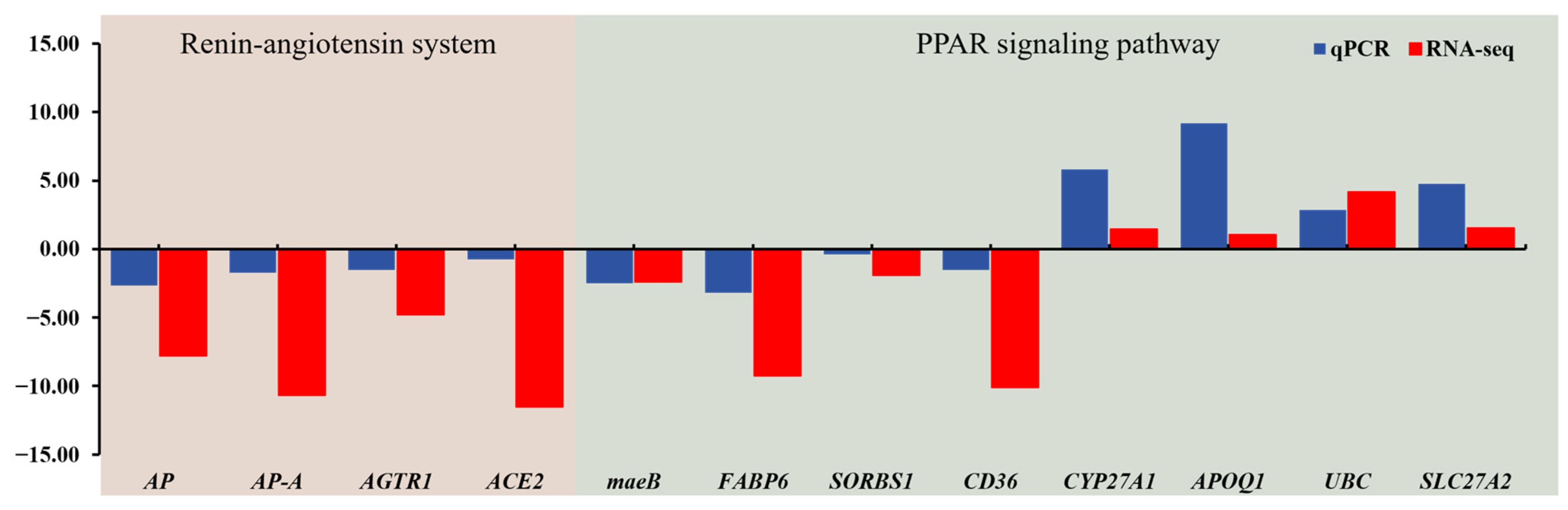
2.6. Validation of Transcriptome Data via qPCR
3. Results
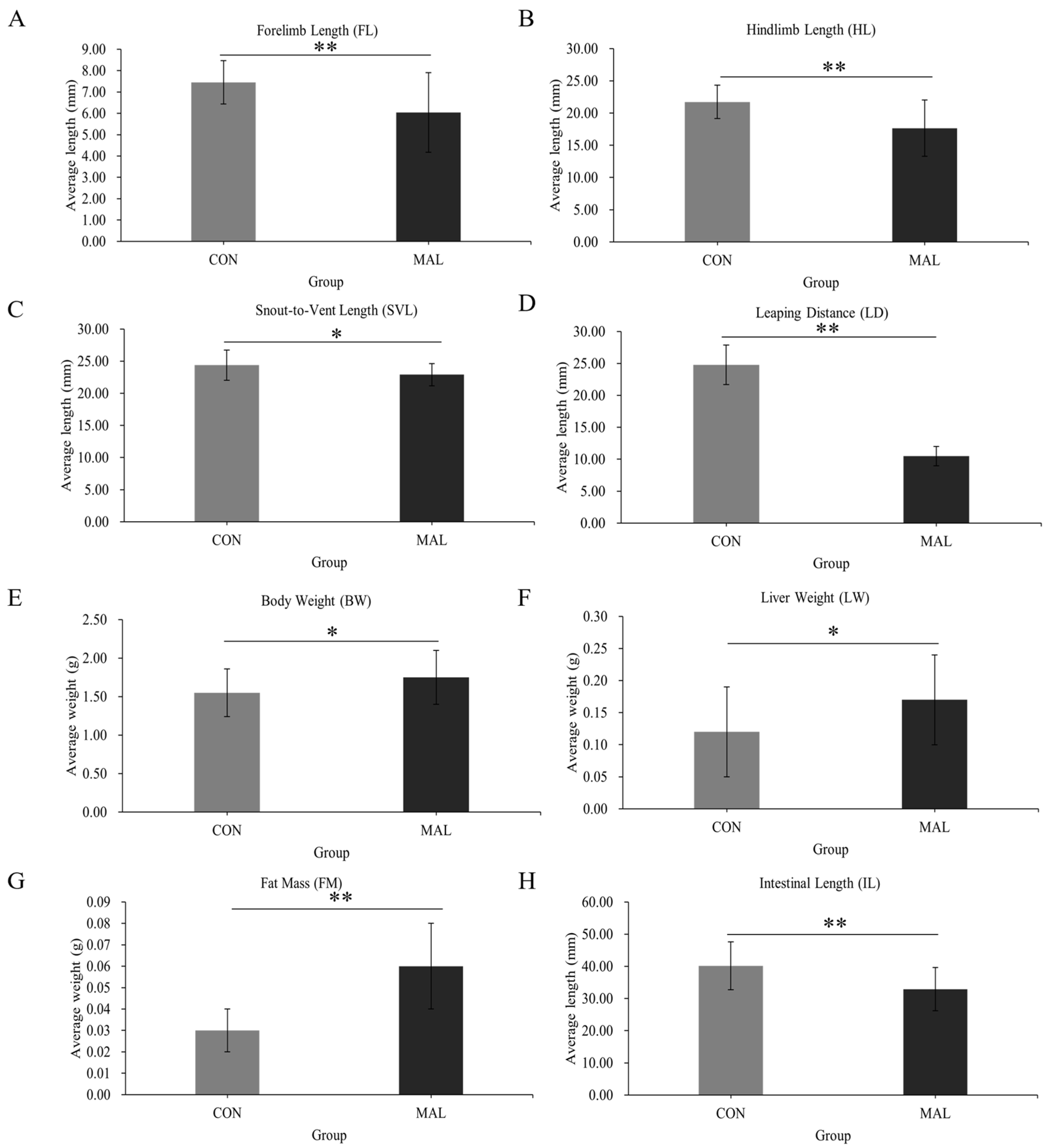
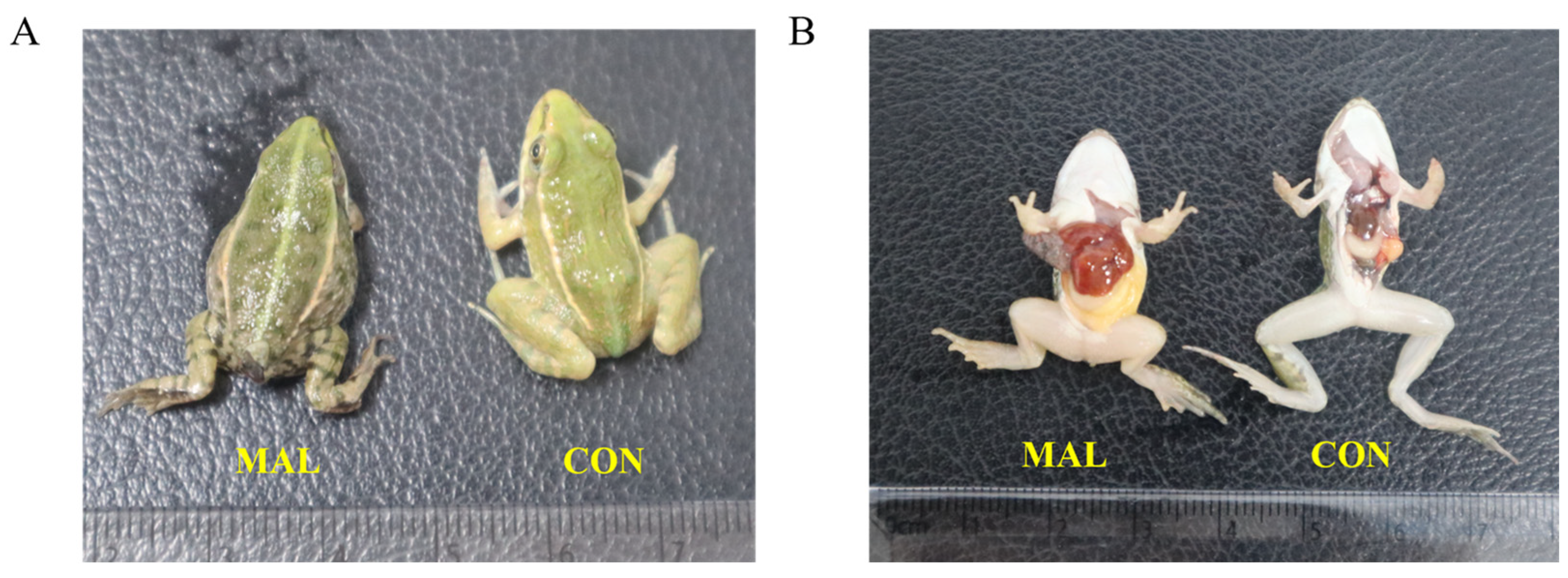
3.1. Comprehensive Morphological, Functional, and Anatomical Alterations in Malformed Frogs
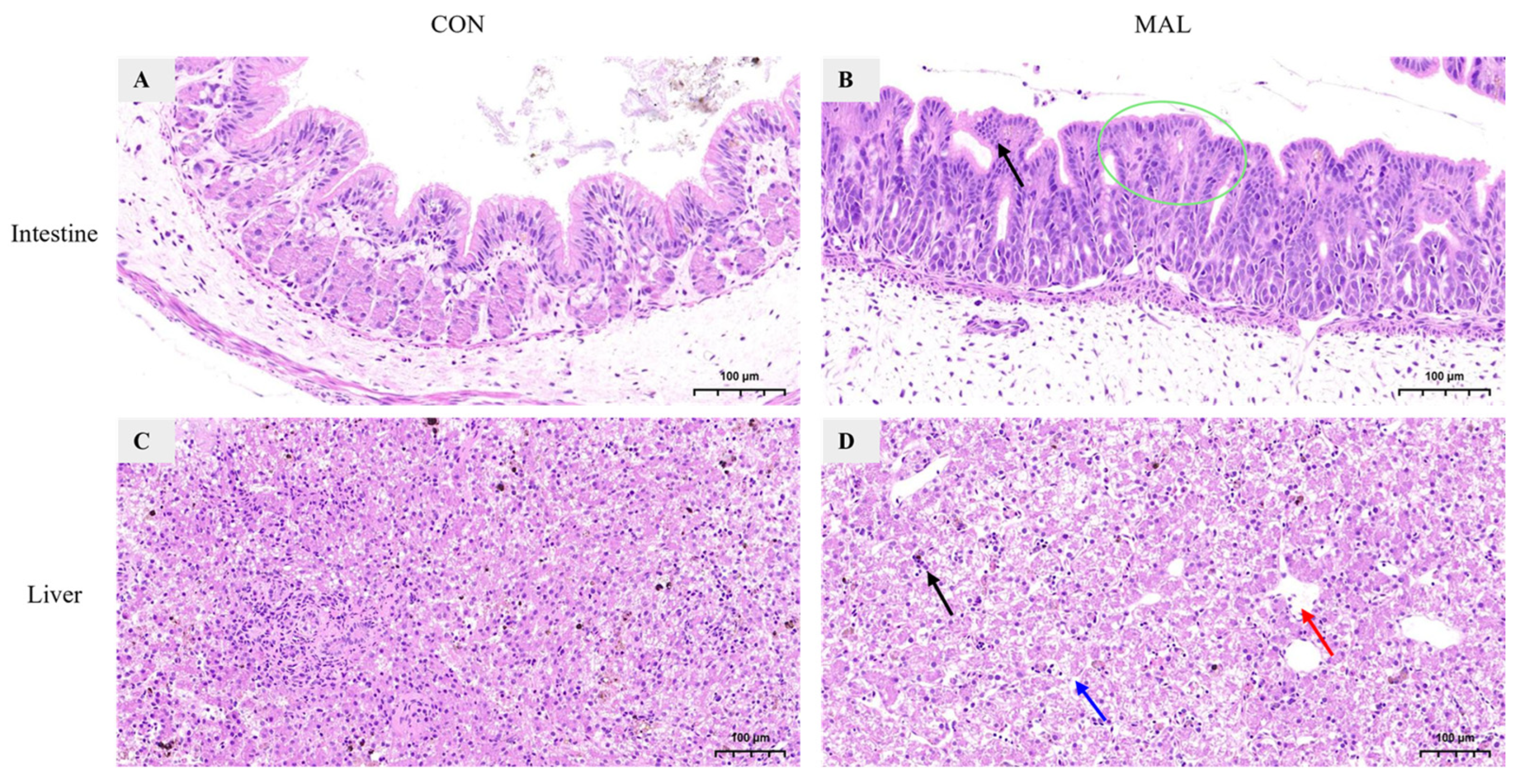
3.2. Histopathological Analysis Reveals Concurrent Intestinal and Hepatic Injuries
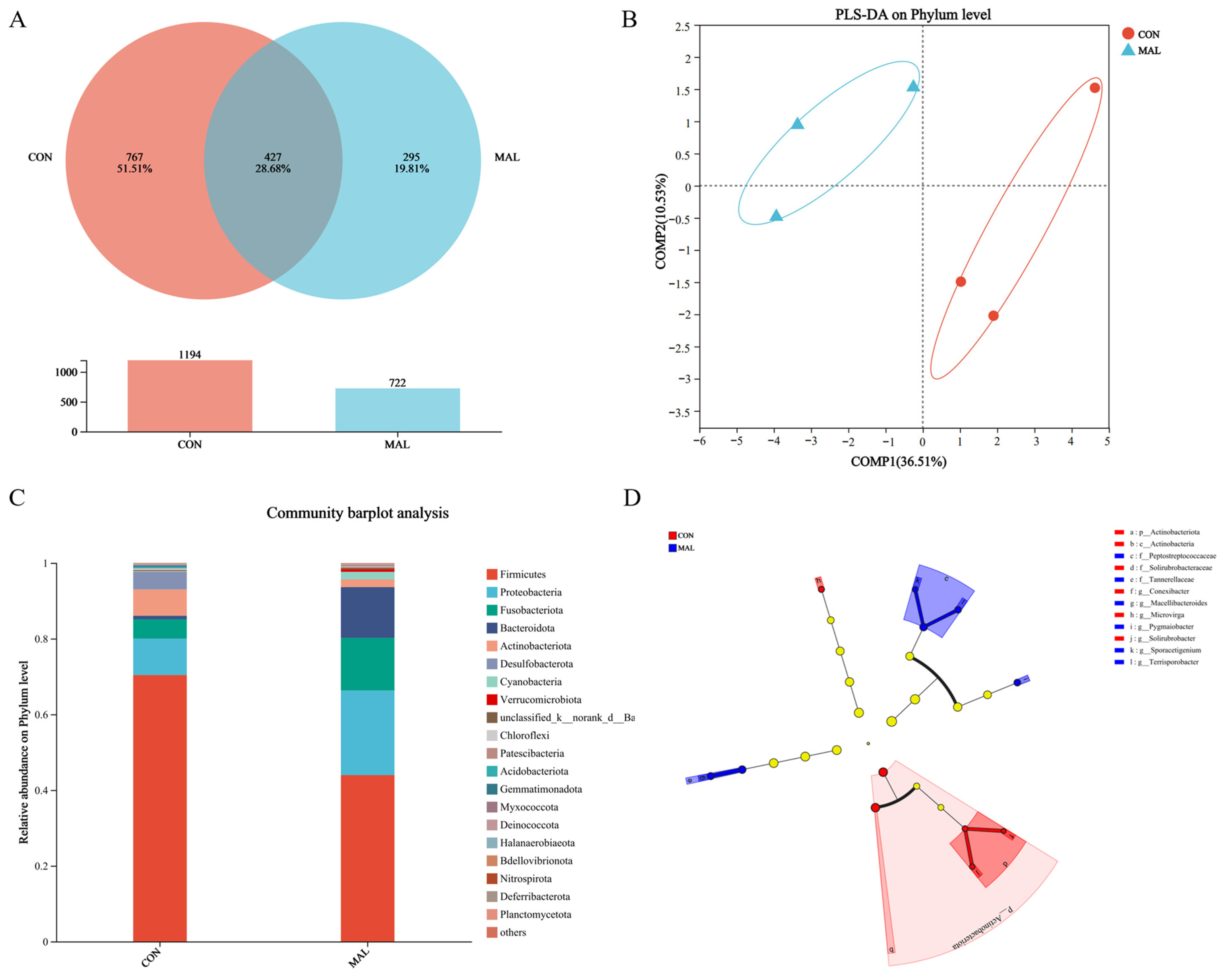
3.3. Compositional Shifts in the Gut Microbiota
3.4. RNA-Seq of Liver and Quality Assessment
3.5. De Novo Assembly and Functional Annotation of the Liver Transcriptome
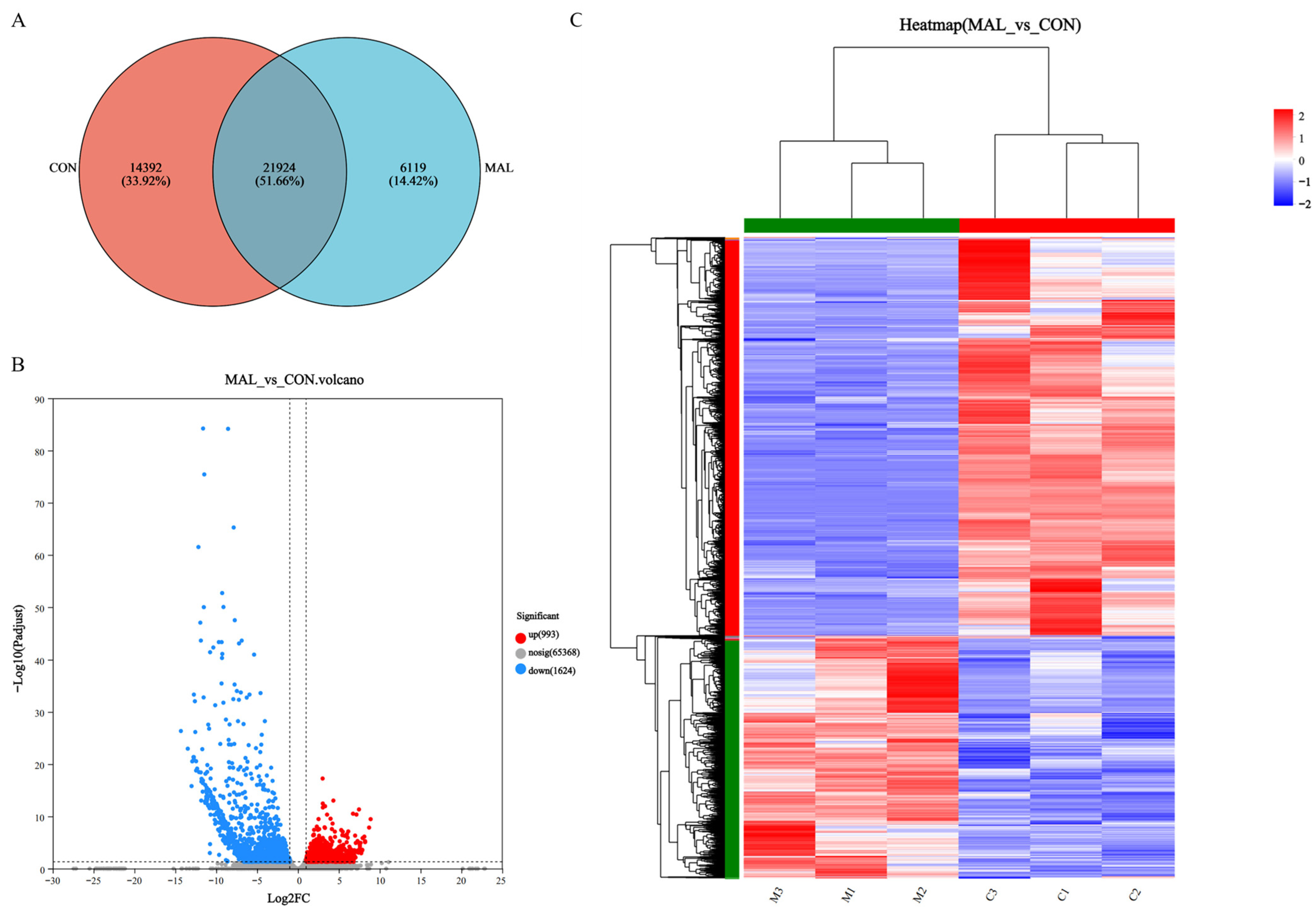
3.6. Global Hepatic Transcriptomic Alterations in Malformed Frogs
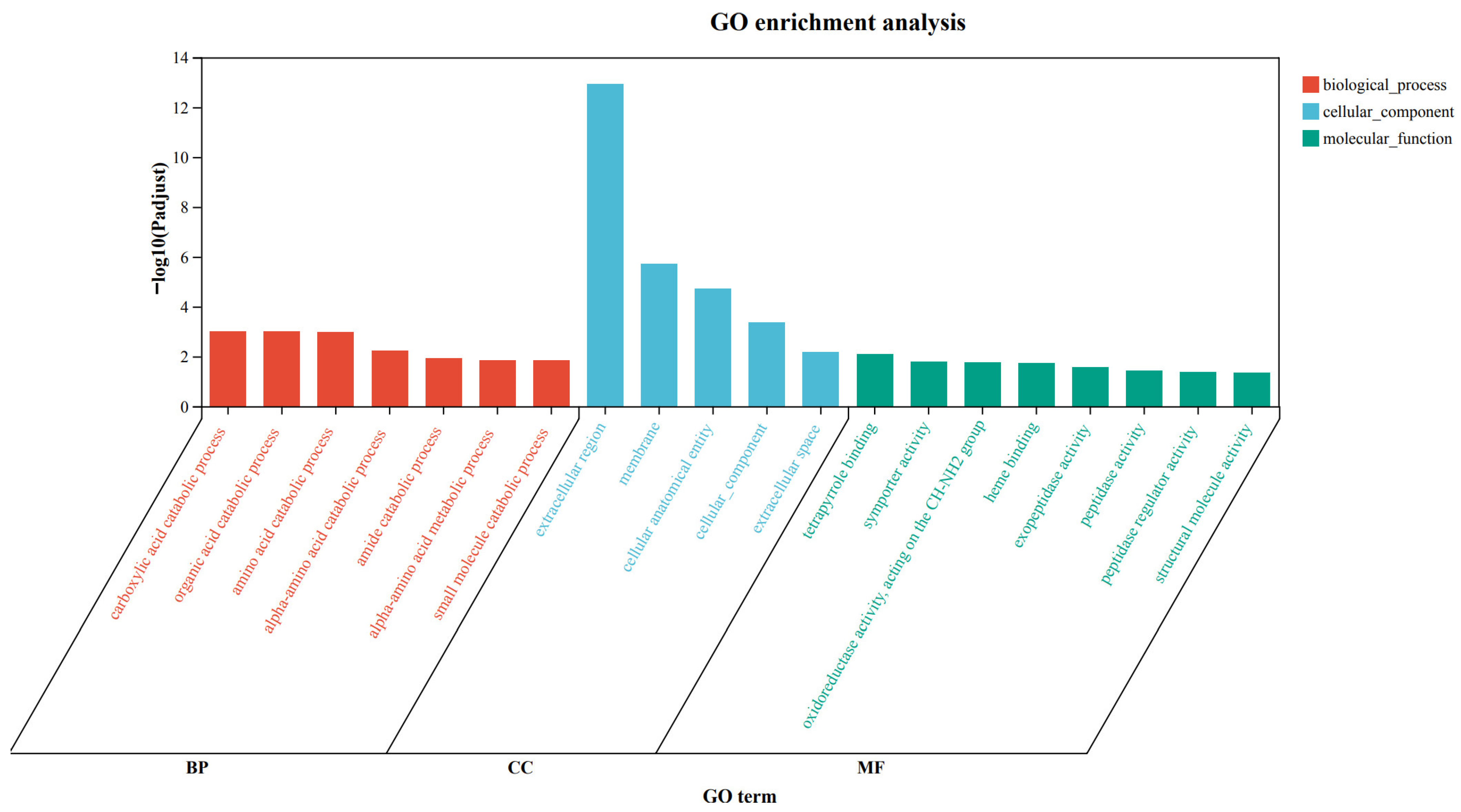
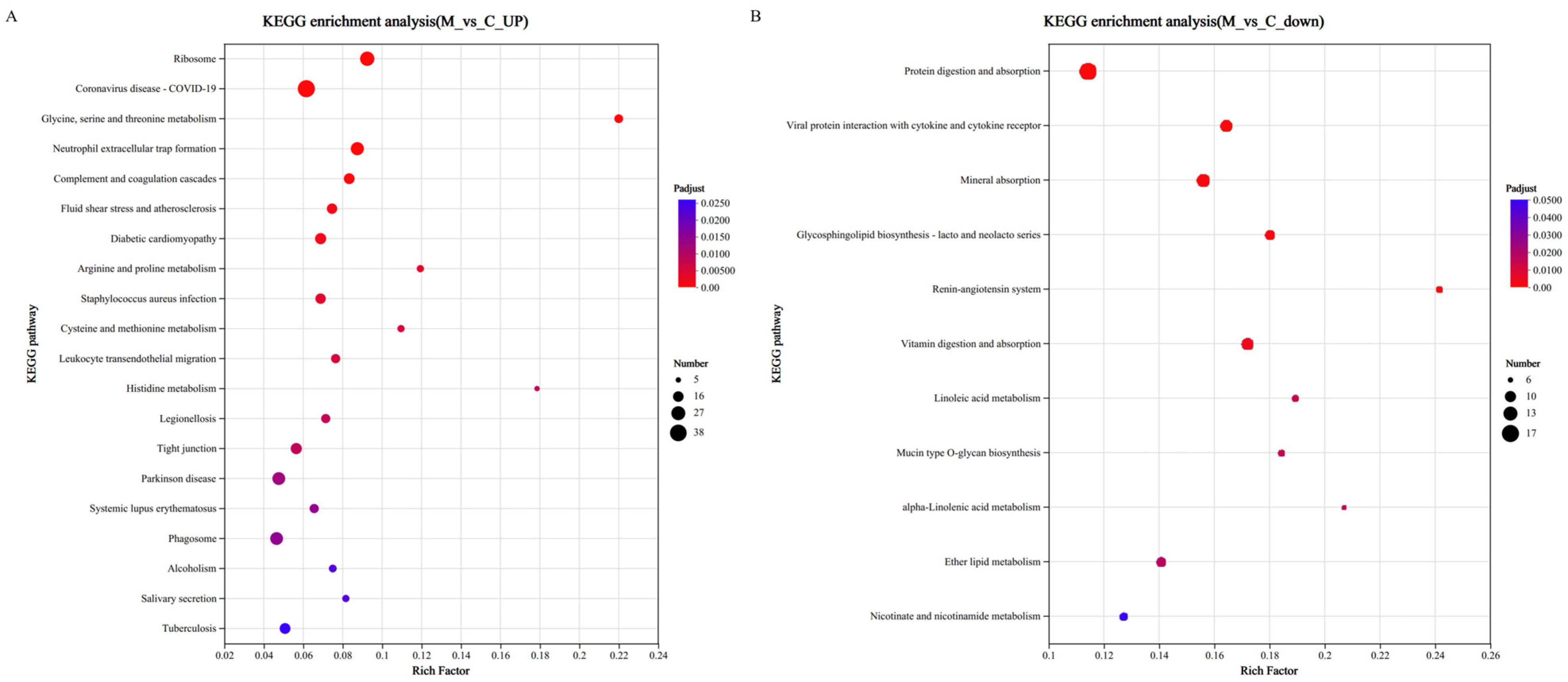
3.7. Functional and Pathway Enrichment Analyses of DEGs
4. Discussion
4.1. Malformation Syndrome Presents Comprehensive Morphological and Metabolic Abnormalities
4.2. Histopathological Evidence of Gut–Liver Axis Dysfunction
4.3. Gut Microbiota Compositional Shifts as a Critical Link Between Phenotype and Internal Mechanisms
4.4. Liver Transcriptome Analysis Reveals Core Mechanisms of Immune Activation and Metabolic Suppression
4.5. Aquaculture Implications and Future Research Directions
5. Conclusions
Supplementary Materials
Author Contributions
Funding
Institutional Review Board Statement
Informed Consent Statement
Data Availability Statement
Acknowledgments
Conflicts of Interest
References
- Ma, D.; Liu, H.; Ji, Y.; Shi, C.; Yang, Y.; Zhang, D. Black-spotted pond frog (Pelophylax nigromaculatus) on the Chinese Loess Plateau represents a cryptic species: Evidence from molecular phylogeny and ecological niche modeling. J. Syst. Evol. 2015, 53, 339–350. [Google Scholar] [CrossRef]
- Chang, L.; Zhao, T.; Zhao, C.; Zhu, W.; Xu, L.; Liu, J.; Li, C.; Xie, F.; Jiang, J.; Zhu, W. Microbiomic and transcriptomic insight into the pathogenesis of meningitis-like disease in cultured Pelophylax nigromaculatus. Aquaculture 2021, 530, 735736. [Google Scholar] [CrossRef]
- Park, J.; Do, Y. Physiological response of Pelophylax nigromaculatus adults to salinity exposure. Animals 2020, 10, 1698. [Google Scholar] [CrossRef] [PubMed]
- Huang, M.; Zhang, Y.; Xu, X.; Duan, R.; Yang, H. Chronic chlorothalonil exposure inhibits locomotion and interferes with the gut-liver axis in Pelophylax nigromaculatus tadpoles. Sci. Rep. 2025, 15, 14515–14573. [Google Scholar] [CrossRef] [PubMed]
- Huang, M.; Liu, Y.; Dong, W.; Zhao, Q.; Duan, R.; Cao, X.; Wan, Y.; Yin, J.; Yi, M. Toxicity of Pb continuous and pulse exposure on intestinal anatomy, bacterial diversity, and metabolites of Pelophylax nigromaculatus in pre-hibernation. Chemosphere 2022, 290, 133304. [Google Scholar] [CrossRef] [PubMed]
- Hu, R.; Yuan, J.; Meng, Y.; Wang, Z.; Gu, Z. Pathogenic Elizabethkingia miricola infection in cultured black-spotted frogs, China, 2016. Emerg. Infect. Dis. 2017, 23, 2055–2059. [Google Scholar] [CrossRef] [PubMed]
- Ajibola, M.E.; Omoshehin, T.O. Review of malformed frogs. Open Access J. Sci. 2024, 7, 41–50. [Google Scholar] [CrossRef]
- Vandenlangenberg, S.M.; Canfield, J.T.; Magner, J.A. A regional survey of malformed frogs in Minnesota (USA) (Minnesota malformed frogs). Environ. Monit. Assess. 2003, 82, 45–61. [Google Scholar] [CrossRef] [PubMed]
- Koleska, D.; Jablonski, D. Two cases of unclear hindlimb malformation in Bombina variegata. Ecol. Montenegrina 2016, 9, 56–58. [Google Scholar] [CrossRef]
- Shu, Y.; Jiang, H.; Gao, X.; Hong, P.; Wang, Q.; Ruan, Y.; Wu, H.; He, J. Microcystin-LR induces lipid metabolism disorder in Pelophylax nigromaculatus tadpoles via the gut-liver axis. Environ. Sci. Technol. 2025, 59, 9399–9411. [Google Scholar] [CrossRef] [PubMed]
- Yang, P.; Lin, J.; Aweya, J.J.; Zhao, Q.; Zheng, Y.; Zou, X.; Sun, Y.; Liu, Y.; Zhan, S. Integrated transcriptomics and metabolomics uncover metabolites and pathways in American bullfrog (Aquarana catesbeiana) response to Elizabethkingia miricola infection. Aquaculture 2025, 600, 742262. [Google Scholar] [CrossRef]
- Xu, J.; Wang, Z.; Gong, W.; Xie, J.; Wang, G.; Zhang, K.; Li, Z.; Tian, J.; Li, H.; Xie, W.; et al. Intestinal microbiota composition and physiological characteristics in bullfrog tadpoles with gas bubble accumulation. Aquac. Rep. 2026, 47, 103440. [Google Scholar] [CrossRef]
- Johnson, P.; Lunde, K.; Haight, R.; Bowerman, J. Ribeiroia ondatrae (Trematoda: Digenea) infection induces severe limb malformations in western toads (Bufo boreas). Can. J. Zool. 2001, 79, 370–379. [Google Scholar] [CrossRef]
- Rosen, E.D.; Spiegelman, B.M. What we talk about when we talk about fat. Cell 2014, 156, 20–44. [Google Scholar] [CrossRef] [PubMed]
- Veyrenc, S.; Regnault, C.; Sroda, S.; Raveton, M.; Reynaud, S. An amphibian high fat diet model confirms that endocrine disruptors can induce a metabolic syndrome in wild green frogs (Pelophylax spp. complex). Environ. Pollut. 2022, 311, 120009. [Google Scholar] [CrossRef] [PubMed]
- Wang, S.Z.; O’Daniel, E.L. Updates in intestinal failure management. J. Clin. Med. 2025, 14, 3031. [Google Scholar] [CrossRef] [PubMed]
- Lian, J.; He, J.; Guo, H.; Shi, A.; Li, X.; Ji, Q.; Zhang, Z.; Wang, X.; Zhou, S.; Qin, B.; et al. The unnoticed risk: Chronic nitrite exposure disturbs the intestinal barrier, new insights from juvenile starry flounder (Platichthys stellatus). Aquaculture 2025, 599, 742137. [Google Scholar] [CrossRef]
- Li, C.; Wang, W.; Wen, X.; Qi, S.; Xu, J.; Wu, D.; Tian, K.; Zhang, C.; Zhang, B.; Ma, Q. The microbiome, metabolome, and correlation analysis reveal the beneficial role of the commensal Shewanella sp. MR-7 in foodborne enteritis in turbot (Scophthalmus maximus L.). Aquaculture 2025, 603, 742387. [Google Scholar] [CrossRef]
- He, J.; Zhang, F.; Fang, M.; Zhang, Y.; Zhu, C.; Xiang, S.; Yu, D.; Wu, H.; Shu, Y. Alteration of intestinal microbiota-intestinal barrier interaction interferes with intestinal health after microcystin-LR exposure in Lithobates catesbeianus tadpoles. Aquat. Toxicol. 2025, 279, 107249. [Google Scholar] [CrossRef] [PubMed]
- Wang, Y.; Huang, Z.; Gui, Z.; Yang, B.; You, F.; Yang, G.; Zhang, X.; Chang, X.; Meng, X. Supplementation with Akkermansia muciniphila improved intestinal barrier and immunity in zebrafish (Danio rerio). Fish Shellfish Immun. 2024, 154, 109935. [Google Scholar] [CrossRef] [PubMed]
- Mang, Q.; Gao, J.; Li, Q.; Sun, Y.; Xu, G.; Xu, P. Integrative analysis of metagenome and metabolome provides new insights into intestinal health protection in Coilia nasus larvae via probiotic intervention. Comp. Biochem. Physiol. Part D Genom. Proteom. 2024, 50, 101230. [Google Scholar] [CrossRef] [PubMed]
- Xie, X.; Zhang, C.; Zulfahmi, I.; Mbokane, E.; Cao, Q. Fatty liver in fish: Metabolic drivers, molecular pathways and physiological solutions. Animals 2026, 16, 236. [Google Scholar] [CrossRef] [PubMed]
- Koenig, A.B.; Tan, A.; Abdelaal, H.; Monge, F.; Younossi, Z.M.; Goodman, Z.D. Review article: Hepatic steatosis and its associations with acute and chronic liver diseases. Aliment. Pharm. Ther. 2024, 60, 167–200. [Google Scholar] [CrossRef] [PubMed]
- Tripathi, A.; Debelius, J.; Brenner, D.A.; Karin, M.; Loomba, R.; Schnabl, B.; Knight, R. The gut-liver axis and the intersection with the microbiome. Nat. Rev. Gastroenterol. Hepatol. 2018, 15, 397–411. [Google Scholar] [CrossRef] [PubMed]
- Nicholson, J.K.; Holmes, E.; Kinross, J.; Burcelin, R.; Gibson, G.; Jia, W.; Pettersson, S. Host-gut microbiota metabolic interactions. Science 2012, 336, 1262–1267. [Google Scholar] [CrossRef] [PubMed]
- Shen, Y.; Fan, N.; Ma, S.X.; Cheng, X.; Yang, X.; Wang, G. Gut microbiota dysbiosis: Pathogenesis, diseases, prevention, and therapy. Medcomm 2025, 6, e70168. [Google Scholar] [CrossRef] [PubMed]
- Li, X.; Yan, Q.; Xie, S.; Hu, W.; Yu, Y.; Hu, Z. Gut microbiota contributes to the growth of fast-growing transgenic common carp (Cyprinus carpio L.). PLoS ONE 2013, 8, e64577. [Google Scholar] [CrossRef] [PubMed]
- Zhou, Y.; Anwar, M.N.; Guo, B.; Huang, W.; Liu, Y. Response of antibiotic resistance genes and microbial niches to dissolved oxygen in an oxygen-based membrane biofilm reactor during greywater treatment. Sci. Total Environ. 2022, 833, 155062. [Google Scholar] [CrossRef] [PubMed]
- Harikrishnan, R.; Ringø, E.; Ghosh, K.; Mukhopadhyay, A. Fungi and actinobacteria: Alternative probiotics for sustainable aquaculture. Fishes 2023, 8, 575. [Google Scholar] [CrossRef]
- Shen, X.; Guan, J.; Lu, D.; Hong, S.; Yu, L.; Chen, X. Peptostreptococcus Anaerobius enhances dextran sulfate sodium-induced colitis by promoting nf-κB-NLRP3-Dependent macrophage pyroptosis. Virulence 2024, 15, 2435391. [Google Scholar] [CrossRef] [PubMed]
- Settem, R.P.; Sharma, A.; Whiteley, M. Oral bacterium contributes to periodontal inflammation by forming advanced glycation end products. Infect. Immun. 2025, 93, e56024. [Google Scholar] [CrossRef] [PubMed]
- Bloch, S.; Zwicker, S.; Bostanci, N.; Sjöling, Å.; Boström, E.A.; Belibasakis, G.N.; Schäffer, C. Immune response profiling of primary monocytes and oral keratinocytes to different Tannerella forsythia strains and their cell surface mutants. Mol. Oral Microbiol. 2018, 33, 155–167. [Google Scholar] [CrossRef] [PubMed]
- Wang, H.; Kim, S.J.; Lei, Y.; Wang, S.; Wang, H.; Huang, H.; Zhang, H.; Tsung, A. Neutrophil extracellular traps in homeostasis and disease. Signal Transduct. Target Ther. 2024, 9, 235. [Google Scholar] [CrossRef] [PubMed]
- Das, N.; Rai, G.; Madan, T.; Kishore, U. Editorial: NETosis, complement activation and pattern recognition at the intersection of inflammatory disorders. Front. Immunol. 2025, 16, 1594478. [Google Scholar] [CrossRef] [PubMed]
- Ji, Y.; Li, T.; Qin, Y.; Xiao, S.; Lv, Y.; Dong, Y.; Cui, X.; Hu, Y. Neutrophil extracellular traps (NETs) in sterile inflammatory diseases. J. Inflamm. Res. 2025, 18, 7989–8004. [Google Scholar] [CrossRef] [PubMed]
- Ou, L.; Jiang, J.; Guo, M.; Wu, J.; Zhong, W.; He, Y. Research progress on the roles of complement in liver injury. World J. Hepatol. 2025, 17, 103839. [Google Scholar] [CrossRef] [PubMed]
- Khan, G.A.; Huwaikem, M.; Chowdhury, K.; Albugami, H.F.; Ghosh, A. The role of sterile inflammation in thrombosis: Consequences for cardiovascular disease and COVID-19. Mediat. Inflamm. 2025, 2025, 8054886. [Google Scholar] [CrossRef] [PubMed]
- Das, A.S.; Basu, A.; Mukhopadhyay, R. Ribosomal proteins: The missing piece in the inflammation puzzle? Mol. Cell. Biochem. 2025, 480, 785–797. [Google Scholar] [CrossRef] [PubMed]
- Comas, M.; Moreno-Rueda, G. Eco-immunology of amphibians. In Evolutionary Ecology of Amphibians; Taylor & Francis: Abingdon, UK, 2023; Chapter 4. [Google Scholar]
- Kandalgaonkar, M.R.; Kumar, V.; Vijay-Kumar, M. Digestive dynamics: Unveiling interplay between the gut microbiota and the liver in macronutrient metabolism and hepatic metabolic health. Physiol. Rep. 2024, 12, e16114. [Google Scholar] [CrossRef] [PubMed]
- Sengupta, S.; Peterson, T.R.; Sabatini, D.M. Regulation of the mTOR complex 1 pathway by nutrients, growth factors, and stress. Mol. Cell 2010, 40, 310–322. [Google Scholar] [CrossRef] [PubMed]
- Chandel, N.S. Lipid Metabolism. Cold Spring Harb. Perspect. Biol. 2021, 13, a040576. [Google Scholar] [CrossRef] [PubMed]
- Kersten, S. Integrated physiology and systems biology of PPARα. Mol. Metab. 2014, 3, 354–371. [Google Scholar] [CrossRef] [PubMed]
- Wang, G.; Bonkovsky, H.L.; de Lemos, A.; Burczynski, F.J. Recent insights into the biological functions of liver fatty acid binding protein 1. J. Lipid. Res. 2015, 56, 2238–2247. [Google Scholar] [CrossRef] [PubMed]
- Kim, S.M.; Lee, B.; An, H.J.; Kim, D.H.; Park, K.C.; Noh, S.G.; Chung, K.W.; Lee, E.K.; Kim, K.M.; Kim, D.H.; et al. Novel PPARα agonist MHY553 alleviates hepatic steatosis by increasing fatty acid oxidation and decreasing inflammation during aging. Oncotarget 2017, 8, 46273–46285. [Google Scholar] [CrossRef] [PubMed]
- Yao, Z.; Yuan, Z.; Li, Y.; Li, X.; Peng, C.; Jin, J.; Zhang, H.; Bai, X.; Pan, J.; Cai, D. Upregulation of ACSL1 in synovial macrophages promotes lipid peroxidation via the IκB/NF-κB pathway to accelerate osteoarthritis. J. Orthop. Transl. 2025, 55, 360–375. [Google Scholar] [CrossRef] [PubMed]
- Zhang, H.; Xiao, H.; Chen, Y.; Ao, Y.; Wang, H. Research progress in mechanisms and prevention targets of renin angiotensin system in intrauterine growth restriction. Chin. J. Pharmacol. Toxicol. 2023, 37, 207. [Google Scholar] [CrossRef]
- Balakumar, P.; Jagadeesh, G. Game-changing breakthroughs to redefine the landscape of the renin-angiotensin-aldosterone system in health and disease. Cell. Signal. 2025, 126, 111459. [Google Scholar] [CrossRef] [PubMed]



| Sample Name | Clean Reads | Q20 (%) | GC Content (%) | Total Mapped Reads | Uniquely Mapping Rate (%) |
|---|---|---|---|---|---|
| CON_1 | 20,136,479 | 95.74 | 43.70 | 16,589,529 | 82.39 |
| CON_2 | 19,912,461 | 95.87 | 43.81 | 16,765,524 | 84.20 |
| CON_3 | 20,207,686 | 95.87 | 44.11 | 16,926,904 | 83.76 |
| MAL_1 | 21,920,303 | 95.89 | 44.30 | 18,653,798 | 85.10 |
| MAL_2 | 22,056,240 | 95.78 | 44.15 | 18,633,291 | 84.48 |
| MAL_3 | 22,861,489 | 95.81 | 44.10 | 19,362,431 | 84.69 |
| KO ID | Gene Name | log2 (Fold Change) (MAL vs. CON) | Adjusted p Value |
|---|---|---|---|
| PPAR signaling pathway | |||
| K06259 | CD36 | −10.123 | 5.38 × 10⁻³² |
| K08750 | FABP1 | −5.666 | 0.049 |
| K19523 | CPT1B | −3.677 | 0.004 |
| K00029 | meaB | −2.404 | 4.32 × 10⁻¹⁰ |
| K01897 | ACSL1 | −1.832 | 0.008 |
| K06086 | SORBS1 | −1.917 | 0.01 |
| K08770 | UBC | 4.159 | 0.017 |
| K01596 | E4.1.1.32 | 1.391 | 0.002 |
| Renin-angiotensin system | |||
| K09708 | ACE2 | −11.537 | 1.76 × 10⁻³³ |
| K11141 | ENPEP | −7.798 | 3.73 × 10⁻⁷ |
| K04166 | AGTR1 | −4.777 | 0.002 |
| K11140 | ANPEP | −4.610 | 5.06 × 10⁻²³ |
| K08780 | CPA3 | −3.939 | 0.001 |
| K01283 | ACE | −3.759 | 5.61 × 10⁻¹¹ |
Disclaimer/Publisher’s Note: The statements, opinions and data contained in all publications are solely those of the individual author(s) and contributor(s) and not of MDPI and/or the editor(s). MDPI and/or the editor(s) disclaim responsibility for any injury to people or property resulting from any ideas, methods, instructions or products referred to in the content. |
© 2026 by the authors. Licensee MDPI, Basel, Switzerland. This article is an open access article distributed under the terms and conditions of the Creative Commons Attribution (CC BY) license.
Share and Cite
Zeng, D.; Qin, Q.; Yang, M.; Wang, Z.; Xiang, J.; Wang, X.; Hu, Y. Multi-Omics Reveals Gut Microbiota Shifts and Hepatic Metabolic–Immune Alterations in “Short-Leg” Malformed Frog (Pelophylax nigromaculatus). Animals 2026, 16, 2069. https://doi.org/10.3390/ani16132069
Zeng D, Qin Q, Yang M, Wang Z, Xiang J, Wang X, Hu Y. Multi-Omics Reveals Gut Microbiota Shifts and Hepatic Metabolic–Immune Alterations in “Short-Leg” Malformed Frog (Pelophylax nigromaculatus). Animals. 2026; 16(13):2069. https://doi.org/10.3390/ani16132069
Chicago/Turabian StyleZeng, Dan, Qin Qin, Ming Yang, Zi’ao Wang, Jianguo Xiang, Xiaoqing Wang, and Yazhou Hu. 2026. "Multi-Omics Reveals Gut Microbiota Shifts and Hepatic Metabolic–Immune Alterations in “Short-Leg” Malformed Frog (Pelophylax nigromaculatus)" Animals 16, no. 13: 2069. https://doi.org/10.3390/ani16132069
APA StyleZeng, D., Qin, Q., Yang, M., Wang, Z., Xiang, J., Wang, X., & Hu, Y. (2026). Multi-Omics Reveals Gut Microbiota Shifts and Hepatic Metabolic–Immune Alterations in “Short-Leg” Malformed Frog (Pelophylax nigromaculatus). Animals, 16(13), 2069. https://doi.org/10.3390/ani16132069