Mechanisms Underlying the Impact of Feed-to-Gain Ratio Differences on Nutrient Metabolism in Simmental and Simmental × Hereford Crossbred Cattle Fed a Low-Energy Diet
 , , , , and
Simple Summary
Abstract
1. Introduction
2. Materials and Methods
2.1. Animal Management and Sample Collection
2.2. Microbial Community Diversity Analysis of Rectal Contents
2.3. Plasma Metabolomic Profiling by LC–MS/MS
2.4. Determination of Blood Indices
2.5. Data Statistics and Analyses
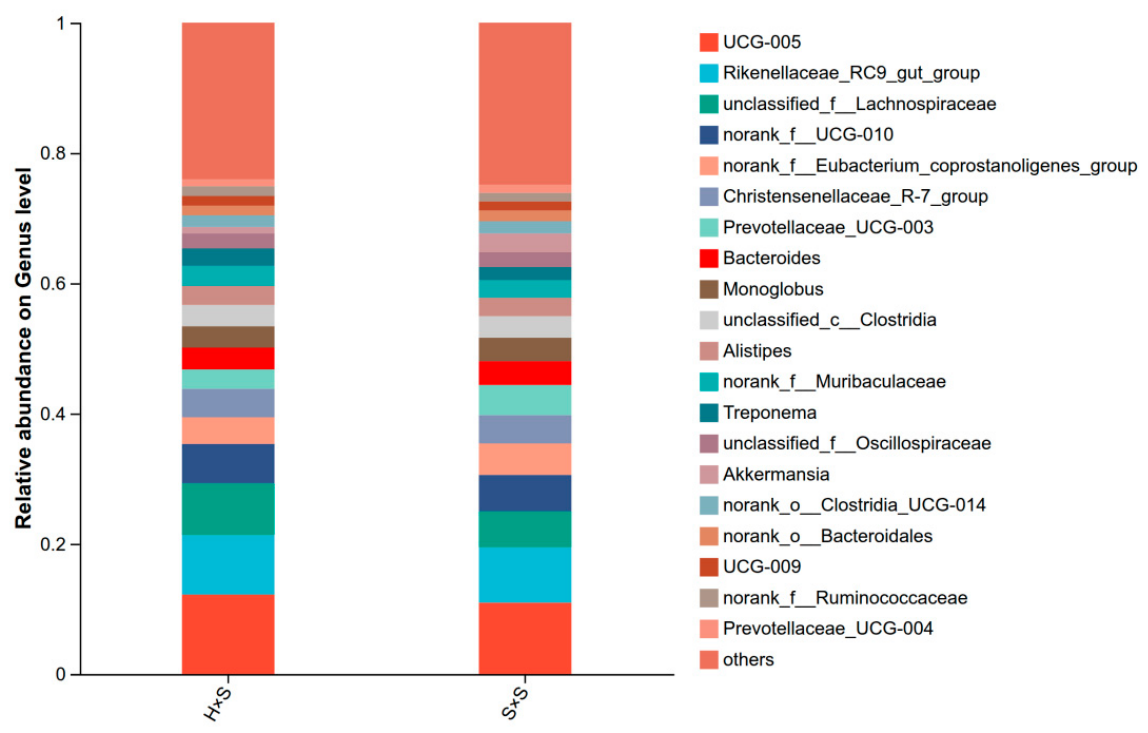
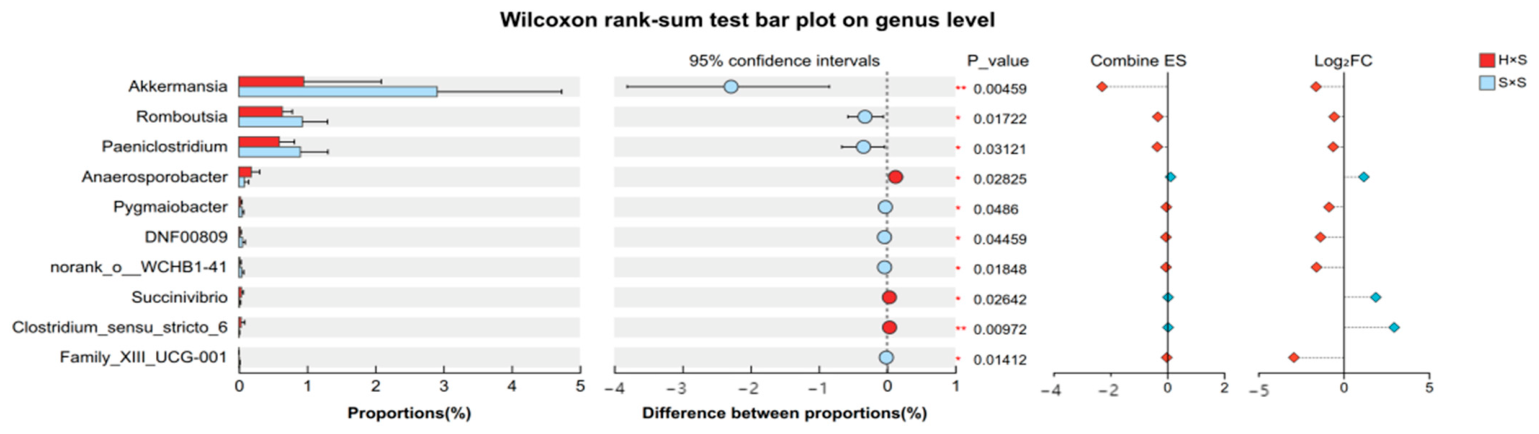
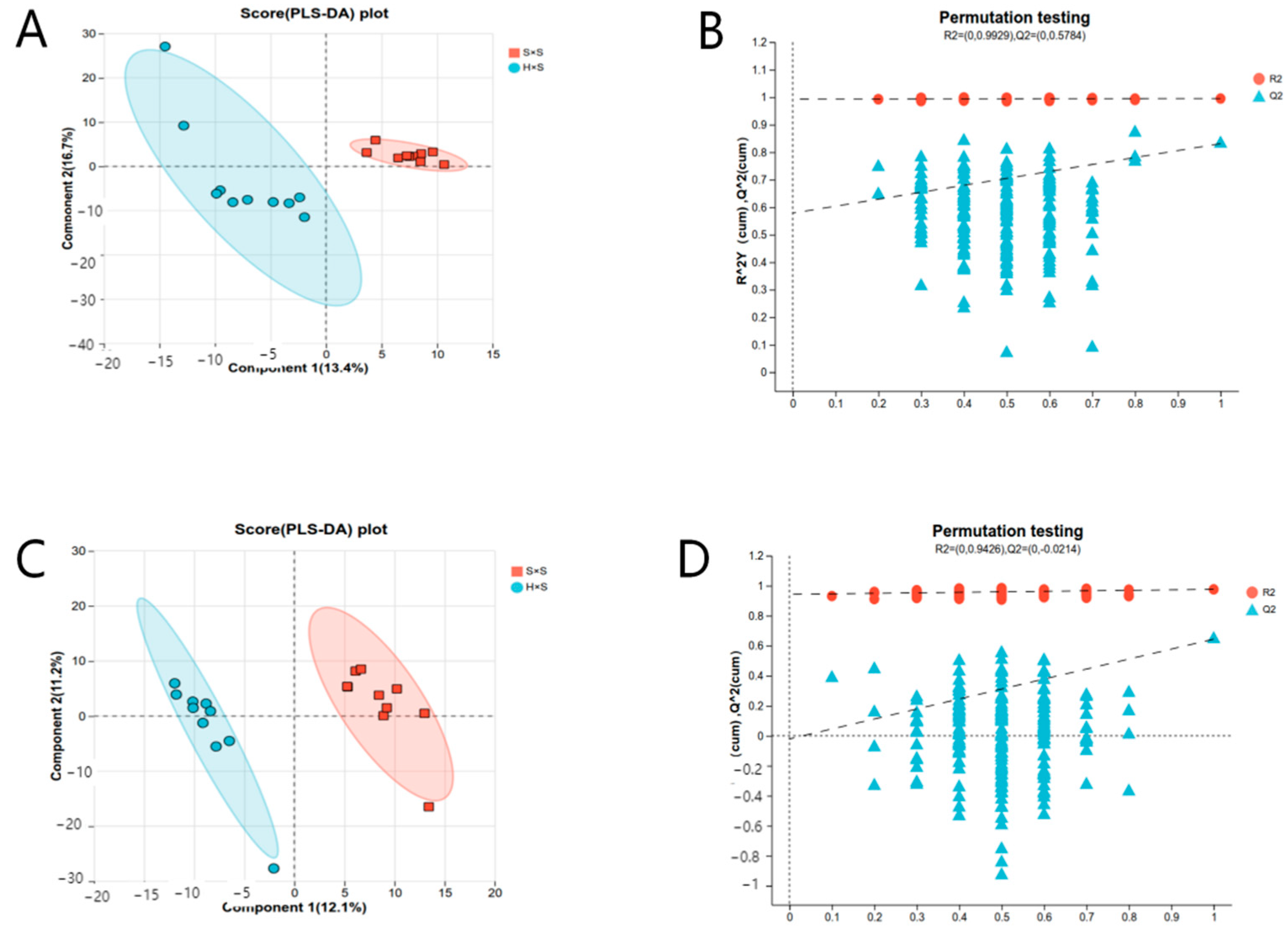
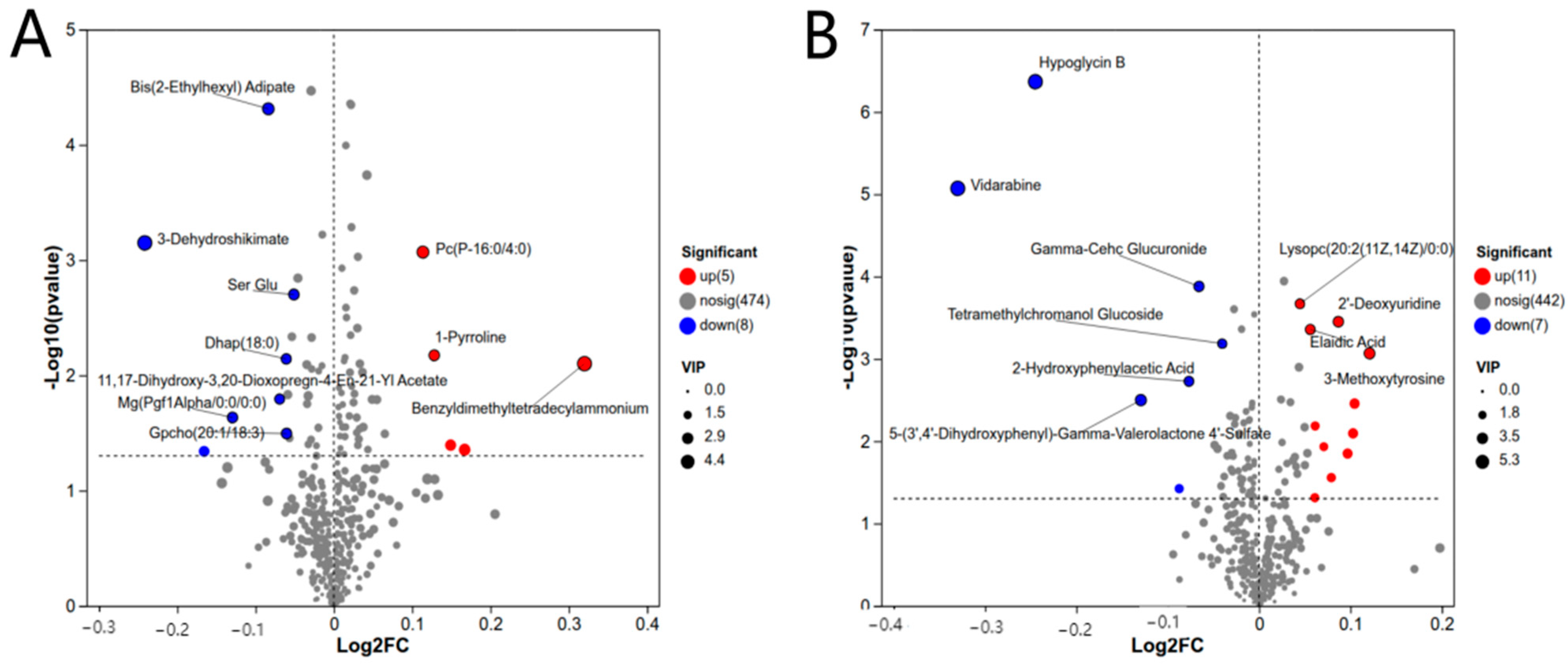
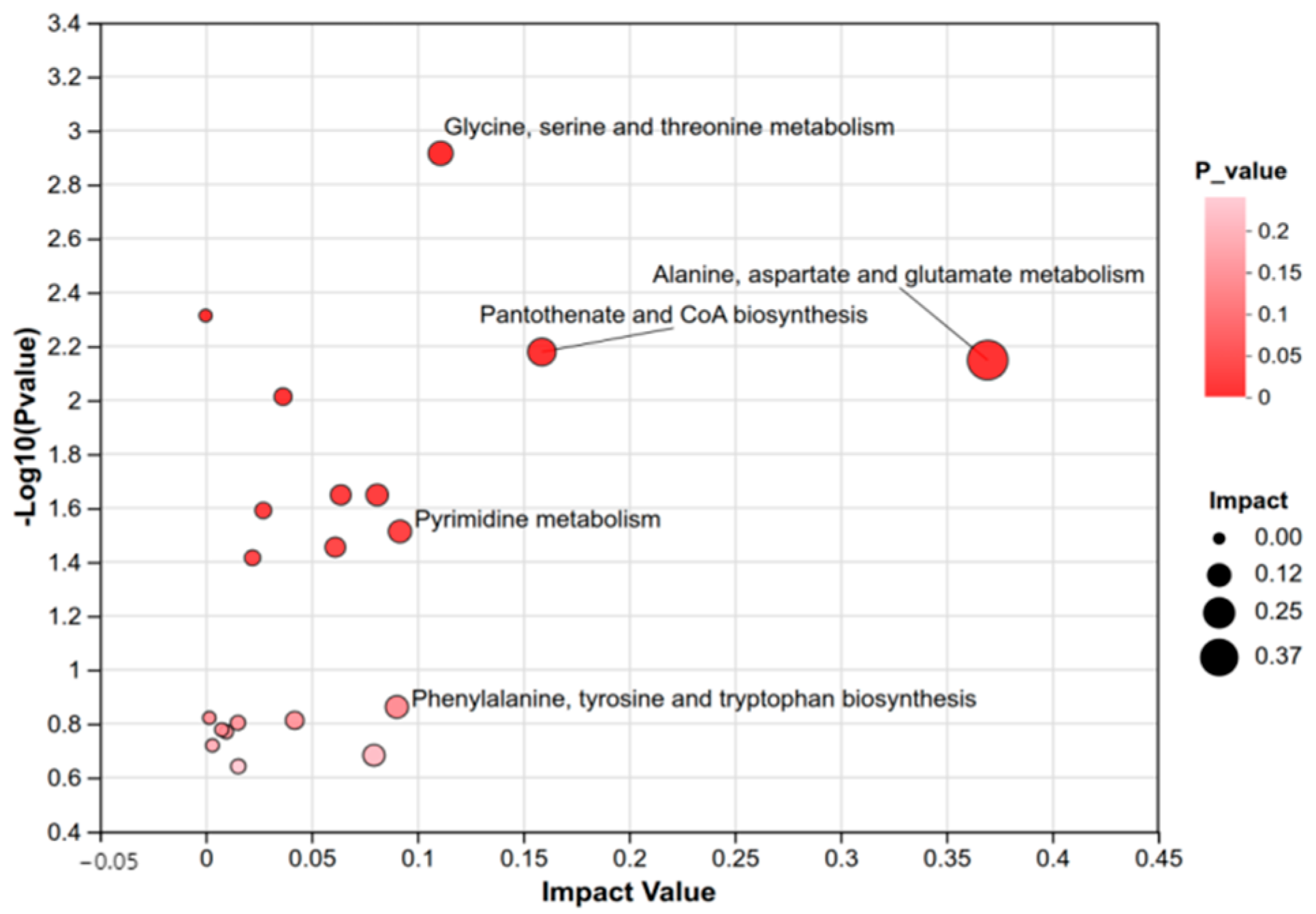
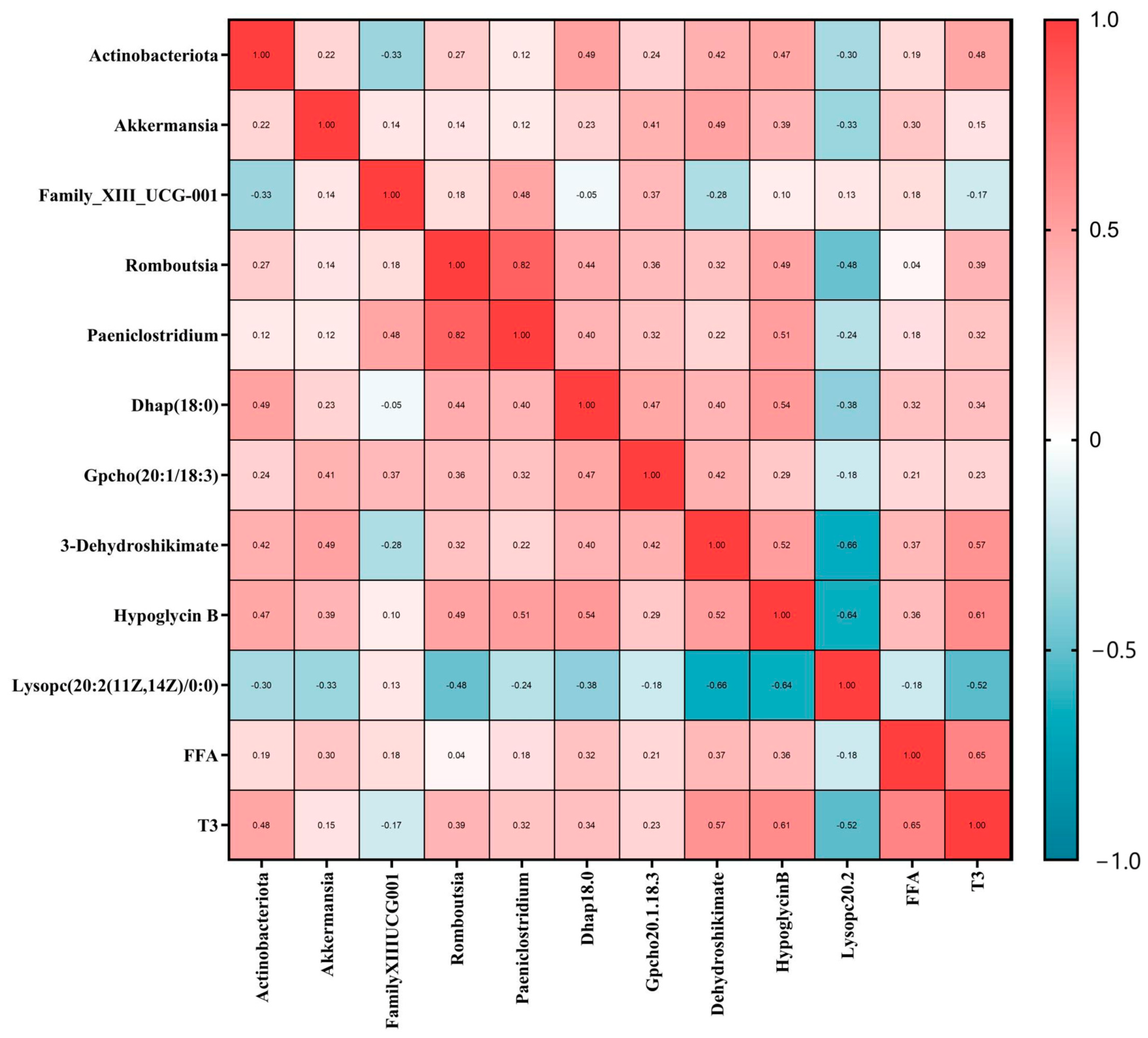
3. Results
4. Discussion
5. Conclusions
Author Contributions
Funding
Institutional Review Board Statement
Informed Consent Statement
Data Availability Statement
Conflicts of Interest
References
- Geng, C.; Zhang, M.; Yang, L.; Jin, Y. Correlations between circulating leptin concentrations and growth performance, carcass traits, and meat quality indexes in finishing Simmental × Luxi bulls fed high-concentrate diets. Anim. Sci. J. 2020, 91, e13426. [Google Scholar] [CrossRef] [PubMed]
- Randhawa, I.A.; Khatkar, M.S.; Thomson, P.C.; Raadsma, H.W. A Meta-Assembly of Selection Signatures in Cattle. PLoS ONE 2016, 11, e0153013. [Google Scholar] [CrossRef] [PubMed]
- Wang, J.; Ni, J.; Jia, X.; Sun, W.; Lai, S. Multi-Omic Analysis of the Differences in Growth and Metabolic Mechanisms Between Chinese Domestic Cattle and Simmental Crossbred Cattle. Int. J. Mol. Sci. 2025, 26, 1547. [Google Scholar] [CrossRef] [PubMed]
- Foroutan, A.; Wishart, D.S.; Fitzsimmons, C. Exploring Biological Impacts of Prenatal Nutrition and Selection for Residual Feed Intake on Beef Cattle Using Omics Technologies: A Review. Front. Genet. 2021, 12, 720268. [Google Scholar] [CrossRef] [PubMed]
- Li, F.; Guan, L.L. Metatranscriptomic Profiling Reveals Linkages between the Active Rumen Microbiome and Feed Efficiency in Beef Cattle. Appl. Environ. Microbiol. 2017, 83, e00061-17. [Google Scholar] [CrossRef] [PubMed]
- Shabat, S.K.; Sasson, G.; Doron-Faigenboim, A.; Durman, T.; Yaacoby, S.; Berg Miller, M.E.; White, B.A.; Shterzer, N.; Mizrahi, I. Specific microbiome-dependent mechanisms underlie the energy harvest efficiency of ruminants. ISME J. 2016, 10, 2958–2972. [Google Scholar] [CrossRef] [PubMed]
- Li, F.; Hitch, T.C.A.; Chen, Y.; Creevey, C.J.; Guan, L.L. Comparative metagenomic and metatranscriptomic analyses reveal the breed effect on the rumen microbiome and its associations with feed efficiency in beef cattle. Microbiome 2019, 7, 6. [Google Scholar] [CrossRef] [PubMed]
- Clemmons, B.A.; Powers, J.B.; Campagna, S.R.; Seay, T.B.; Embree, M.M.; Myer, P.R. Rumen fluid metabolomics of beef steers differing in feed efficiency. Metabolomics 2020, 16, 23. [Google Scholar] [CrossRef] [PubMed]
- Wang, Y.; Guan, L.L. Translational multi-omics microbiome research for strategies to improve cattle production and health. Emerg. Top. Life Sci. 2022, 6, 201–213. [Google Scholar] [CrossRef] [PubMed]
- Auffret, M.D.; Stewart, R.D.; Dewhurst, R.J.; Duthie, C.A.; Watson, M.; Roehe, R. Identification of Microbial Genetic Capacities and Potential Mechanisms Within the Rumen Microbiome Explaining Differences in Beef Cattle Feed Efficiency. Front. Microbiol. 2020, 11, 1229. [Google Scholar] [CrossRef] [PubMed]
- Gu, F.; Zhu, S.; Hou, J.; Tang, Y.; Liu, J.X.; Xu, Q.; Sun, H.Z. The hindgut microbiome contributes to host oxidative stress in postpartum dairy cows by affecting glutathione synthesis process. Microbiome 2023, 11, 87. [Google Scholar] [CrossRef] [PubMed]
- Durack, J.; Lynch, S.V. The gut microbiome: Relationships with disease and opportunities for therapy. J. Exp. Med. 2019, 216, 20–40. [Google Scholar] [PubMed]
- Chen, H.; Wang, C.; Huasai, S.; Chen, A. Metabolomics Reveals the Effects of High Dietary Energy Density on the Metabolism of Transition Angus Cows. Animals 2022, 12, 1147. [Google Scholar] [CrossRef] [PubMed]
- Magoč, T.; Salzberg, S.L. FLASH: Fast length adjustment of short reads to improve genome assemblies. Bioinformatics 2011, 27, 2957–2963. [Google Scholar] [CrossRef] [PubMed]
- He, L.; Wang, C.; Simujide, H.; Aricha, H.; Zhang, J.; Liu, B.; Zhang, C.; Cui, Y.; Aorigele, C. Effect of Early Pathogenic Escherichia coli Infection on the Intestinal Barrier and Immune Function in Newborn Calves. Front. Cell Infect. Microbiol. 2022, 12, 818276. [Google Scholar] [CrossRef] [PubMed]
- Yang, Y.; Dong, G.; Wang, Z.; Wang, J.; Zhang, Z.; Liu, J. Rumen and plasma metabolomics profiling by UHPLC-QTOF/MS revealed metabolic alterations associated with a high-corn diet in beef steers. PLoS ONE 2018, 13, e0208031. [Google Scholar] [CrossRef] [PubMed]
- Wu, Y.; Zhao, P.; Li, X.; Huangfu, M.; Chen, Z.; Wang, C.; Chen, H.; Chen, A. Crossbreeding Simmental with Mongolian, and Holstein cattle can improve feed efficiency and energy metabolism by upregulating COX3 and downregulating PRSS2 gene expression. Front Nutr. 2025, 12, 1524242. [Google Scholar] [CrossRef] [PubMed]
- Chen, H.; Wang, C.; Huasai, S.; Chen, A. Effects of dietary forage to concentrate ratio on nutrient digestibility, ruminal fermentation and rumen bacterial composition in Angus cows. Sci. Rep. 2021, 11, 17023. [Google Scholar] [CrossRef] [PubMed]
- Romo, G.A.; Elsasser, T.H.; Kahl, S.; Erdman, R.A.; Casper, D.P. Dietary fatty acids modulate hormone responses in lactating cows: Mechanistic role for 5′-deiodinase activity in tissue. Domest. Anim. Endocrinol. 1997, 14, 409–420. [Google Scholar] [CrossRef] [PubMed]
- Kelly, A.K.; McGee, M.; Crews, D.H., Jr.; Fahey, A.G.; Wylie, A.R.; Kenny, D.A. Effect of divergence in residual feed intake on feeding behavior, blood metabolic variables, and body composition traits in growing beef heifers. J. Anim. Sci. 2010, 88, 109–123. [Google Scholar] [CrossRef] [PubMed]
- Blum, J.W.; Kunz, P. Effects of fasting on thyroid hormone levels and kinetics of reverse triiodothyronine in cattle. Acta Endocrinol. 1981, 98, 234–239. [Google Scholar] [CrossRef]
- Halakoo, G.; Teimouri Yansari, A.; Mohajer, M.; Chashnidel, Y. Effect of different fat sources on some blood metabolites, hormones, and enzyme activities of lambs with different residual feed intake in heat-stressed condition. Iran. J. Appl. Anim. Sci. 2020, 10, 657–667. [Google Scholar]
- Taiwo, G.; Idowu, M.D.; Wilson, M.; Pech-Cervantes, A.; Estrada-Reyes, Z.M.; Ogunade, I.M. Residual feed intake in beef cattle is associated with differences in hepatic mRNA expression of fatty acid, amino acid, and mitochondrial energy metabolism genes. Front. Anim. Sci. 2022, 3, 828591. [Google Scholar] [CrossRef]
- Klein, M.S.; Buttchereit, N.; Miemczyk, S.P.; Immervoll, A.K.; Louis, C.; Wiedemann, S.; Junge, W.; Thaller, G.; Oefner, P.J.; Gronwald, W. NMR metabolomic analysis of dairy cows reveals milk glycerophosphocholine to phosphocholine ratio as prognostic biomarker for risk of ketosis. J. Proteome Res. 2012, 11, 1373–1381. [Google Scholar] [PubMed]
- Ozaki, H.; Ishii, K.; Arai, H.; Kume, N.; Kita, T. Lysophosphatidylcholine activates mitogen-activated protein kinases by a tyrosine kinase-dependent pathway in bovine aortic endothelial cells. Atherosclerosis 1999, 143, 261–266. [Google Scholar] [CrossRef] [PubMed]
- Allen, M.S. Symposium review: Integrating the control of energy intake and partitioning into ration formulation. J. Dairy Sci. 2023, 106, 2181–2190. [Google Scholar] [CrossRef] [PubMed]
- Nyamiel, A.; González-García, E.; Marcon, D.; Durand, C.; Douls, S.; Bonnafe, G.; Tesnière, A.; Hazard, D. Individual variability in metabolic and hormonal profiles for body reserve dynamics in ewes reared under indoor or outdoor farming system conditions. J. Anim. Sci. 2025, 103, skaf221. [Google Scholar] [CrossRef] [PubMed]
- Lin, W.L.; Chien, M.M.; Patchara, S.; Wang, W.; Faradina, A.; Huang, S.Y.; Tung, T.H.; Tsai, C.S.; Skalny, A.V.; Tinkov, A.A.; et al. Essential trace element and phosphatidylcholine remodeling: Implications for body composition and insulin resistance. J. Trace Elem. Med. Biol. 2024, 85, 127479. [Google Scholar] [CrossRef] [PubMed]
- Locasale, J.W. Serine, glycine and one-carbon units: Cancer metabolism in full circle. Nat. Rev. Cancer 2013, 13, 572–583. [Google Scholar] [CrossRef] [PubMed]
- Lin, Z.; Zhou, X.; Lu, T.; An, W.; Chen, S.; Li, S.; Miao, H.; Han, X. Co-cultivation of Lactobacillus acidophilus and Bacillus subtilis mediates the gut-muscle axis affecting pork quality and flavor. J. Anim. Sci. Biotechnol. 2025, 16, 93. [Google Scholar] [CrossRef] [PubMed]
- Wu, Z.Z.; Wang, C.; Zhang, G.W.; Liu, Q.; Guo, G.; Huo, W.J.; Zhang, S.L. Effects of pantothenic acid and folic acid supplementation on total tract digestibility coefficient, ruminal fermentation, microbial enzyme activity, microflora and urinary purine derivatives in dairy bulls. J. Agric. Sci. 2019, 157, 555–562. [Google Scholar] [CrossRef]
- Duan, X.; An, B.; Du, L.; Chang, T.; Liang, M.; Yang, B.G.; Xu, L.; Zhang, L.; Li, J.; E, G.; et al. Genome-wide association analysis of growth curve parameters in Chinese Simmental beef cattle. Animals 2021, 11, 192. [Google Scholar] [CrossRef] [PubMed]
- Mohajeri, M.H.; La Fata, G.; Steinert, R.E.; Weber, P. Relationship between the gut microbiome and brain function. Nutr. Rev. 2018, 76, 481–496. [Google Scholar] [CrossRef] [PubMed]
- Li, T.; Zhang, T.; Gao, H.; Liu, R.; Gu, M.; Yang, Y.; Cui, T.; Lu, Z.; Yin, C. Tempol ameliorates polycystic ovary syndrome through attenuating intestinal oxidative stress and modulating of gut microbiota composition-serum metabolites interaction. Redox Biol. 2021, 41, 101886. [Google Scholar] [CrossRef] [PubMed]
- Choi, J.Y.; Park, J.E.; Choi, S.H.; Kim, J.S.; Lee, J.S.; Lee, J.H.; Kim, H.B.; Lee, J.H.; Kim, J.K.; Kang, S.W.; et al. Succinivibrio faecicola sp. nov., isolated from cow faeces. Int. J. Syst. Evol. Microbiol. 2022, 72, 005631. [Google Scholar] [CrossRef]
- Li, W.; Ma, T.; Zhang, N.; Deng, K.; Diao, Q. Dietary fat supplement affected energy and nitrogen metabolism efficiency and shifted rumen fermentation toward glucogenic propionate production via enrichment of Succiniclasticum in male twin lambs. J. Integr. Agric. 2025, 24, 1285–1295. [Google Scholar]
- Singh, V.; Lee, G.; Son, H.; Koh, H.; Kim, E.S.; Unno, T.; Shin, J.H. Butyrate producers, “The Sentinel of Gut”: Their intestinal significance with and beyond butyrate, and prospective use as microbial therapeutics. Front. Microbiol. 2023, 13, 1103836. [Google Scholar] [CrossRef] [PubMed]
- Deng, Z.C.; Liu, M.; Cao, K.X.; Khalil, M.M.; Guan, L.L.; Sun, L.H. Gut microbiome and postbiotics: Bridging the dietary nutrition and feed efficiency in food-producing animals. Sci. China Life Sci. 2025, 68, 3575–3586. [Google Scholar] [CrossRef] [PubMed]
- Yin, H.; Huang, J.; Guo, X.; Xia, J.; Hu, M. Romboutsia lituseburensis JCM1404 supplementation ameliorated endothelial function via gut microbiota modulation and lipid metabolisms alterations in obese rats. FEMS Microbiol. Lett. 2023, 370, fnad016. [Google Scholar] [CrossRef] [PubMed]



| Components | Proportion (%) |
|---|---|
| DM | 46.9 |
| ADF | 30.3 |
| NDF | 43.8 |
| CP | 14.2 |
| Lignin | 4.9 |
| Fat | 2.4 |
| Ash | 9.6 |
| Ca | 0.77 |
| P | 0.43 |
| Mg | 0.40 |
| K | 1.42 |
| NEg, Mcal/kg | 0.75 |
| ME, Mcal/kg | 2.37 |
| Ingredients(%) | |
| Corn stover | 16.67 |
| Oat hay | 20.83 |
| Corn silage | 25.00 |
| Corn | 17.80 |
| Wheat bran | 8.40 |
| Soybean meal | 9.50 |
| CaHPO4 | 0.30 |
| NaCl | 0.50 |
| Premix 1 | 1.00 |
| Total | 100.00 |
| Item | H × S | S × S | p-Value |
|---|---|---|---|
| Body Weight at 0 d (kg, n = 10) | 271.95 ± 30.65 | 265.65 ± 32.42 | 0.661 |
| Body Weight at 90 d (kg, n = 10) | 323.95 ± 40.44 | 313.15 ± 38.23 | 0.547 |
| ADG (kg, n = 10) | 0.58 ± 0.25 | 0.53 ± 0.09 | 0.553 |
| DMI (kg/d, n = 5) | 9.02 ± 0.33 | 9.38 ± 0.17 | 0.062 |
| F/G (n = 5) | 15.77 ± 1.84 | 18.82 ± 1.42 | 0.046 |
| Item | H × S | S × S | p-Value |
|---|---|---|---|
| FFA (µmol/L) | 245.4003 ± 15.20543 | 261.2284 ± 23.00188 | 0.014 |
| GC (ng/L) | 57.7769 ± 8.99769 | 57.0716 ± 5.95371 | 0.772 |
| GH (µg/L) | 30.1999 ± 7.34183 | 31.4343 ± 6.40631 | 0.574 |
| HDL (µmol/L) | 618.3208 ± 247.35008 | 580.4158 ± 255.48313 | 0.636 |
| GnRH (ng/L) | 30.1429 ± 3.98111 | 31.5688 ± 3.56277 | 0.240 |
| INS (mIU/L) | 21.5711 ± 2.04402 | 22.128 ± 2.69509 | 0.466 |
| LDL (µmol/L) | 861.2502 ± 72.96546 | 875.9297 ± 70.97975 | 0.523 |
| LEP (ng/L) | 2590.0001 ± 225.52375 | 2588.2112 ± 216.55851 | 0.980 |
| T3 (pmol/L) | 44.6276 ± 5.12739 | 54.7997 ± 9.27522 | 0.000 |
| T4 (pmol/L) | 337.0282 ± 79.7434 | 376.1366 ± 91.72617 | 0.158 |
| TG (µmol/L) | 413.5283 ± 22.09324 | 418.3621 ± 21.00275 | 0.483 |
| TRH (pg/mL) | 39.3845 ± 8.54475 | 38.6603 ± 3.81346 | 0.731 |
| TSH (µIU/L) | 436.8627 ± 62.12588 | 413.1569 ± 32.35164 | 0.138 |
| VLDL (µg/mL) | 29.318 ± 6.38157 | 29.0771 ± 3.25196 | 0.881 |
| Metabolite | VIP | FC (H × S/S × S) | p-Value | Positive/Negative | M/Z |
|---|---|---|---|---|---|
| Vidarabine | 5.3037 | 0.7957 | <0.00001 | neg | 312.0963 |
| Hypoglycin B | 5.2204 | 0.8439 | <0.00001 | neg | 269.1153 |
| 3-Dehydroshikimate | 4.3962 | 0.8459 | 0.0007106 | pos | 204.063 |
| Benzyldimethyltetradecylammonium | 4.3042 | 1.2485 | 0.007932 | pos | 332.3313 |
| 5-(3′,4′-Dihydroxyphenyl)-Gamma-Valerolactone 4′-Sulfate | 3.1639 | 0.9143 | 0.003176 | neg | 269.0135 |
| Pi(Pgj2/20:1(11Z)) | 3.0578 | 1.1228 | 0.04422 | pos | 975.5891 |
| Pc(P-16:0/4:0) | 2.9458 | 1.0821 | 0.0008536 | pos | 572.3716 |
| 3-Methoxytyrosine | 2.9442 | 1.0874 | 0.0008606 | neg | 210.0771 |
| Bis(2-Ethylhexyl) Adipate | 2.8983 | 0.9437 | 0.0000488 | pos | 371.3155 |
| Uridine | 2.7817 | 1.0752 | 0.003498 | neg | 279.0397 |
| N-(3-Aminopropyl)-N-Methylcarbamic Acid Tert-Butyl Ester | 2.7691 | 1.109 | 0.0404 | pos | 189.1596 |
| (10E,12E,14E)-16-Hydroxy-9-oxooctadeca-10,12,14-trienoylcarnitine | 2.7052 | 1.074 | 0.008055 | neg | 450.2883 |
| 2′-Deoxyuridine | 2.7023 | 1.062 | 0.0003545 | neg | 227.0676 |
| Glycolithocholic Acid | 2.6633 | 1.0695 | 0.01417 | neg | 432.3136 |
| Gamma-Cehc Glucuronide | 2.6032 | 0.9554 | 0.0001321 | neg | 421.1524 |
| Tributyl Phosphate | 2.5351 | 0.8915 | 0.04576 | pos | 267.1719 |
| Elaidic Acid | 2.3871 | 1.0397 | 0.0004399 | neg | 327.255 |
| 2-Hydroxyphenylacetic Acid | 2.3683 | 0.9482 | 0.001878 | neg | 151.0397 |
| Ser Glu | 2.3565 | 0.9653 | 0.001994 | pos | 235.0923 |
| 1-Pyrroline | 2.3223 | 1.093 | 0.006717 | pos | 70.0655 |
| Mg(Pgf1Alpha/0:0/0:0) | 2.3059 | 0.9142 | 0.02325 | pos | 448.3266 |
| Gpcho(20:1/18:3) | 2.3017 | 0.959 | 0.03207 | pos | 832.5836 |
| Demethoxyfumitremorgin C | 2.2575 | 0.9413 | 0.03776 | neg | 370.1521 |
| Lovastatin Acid | 2.2343 | 1.0564 | 0.02775 | neg | 421.2612 |
| Lysopc(20:2(11Z,14Z)/0:0) | 2.1927 | 1.0315 | 0.0002144 | neg | 592.3648 |
| N-Palmitoyl Tyrosine | 2.1532 | 1.0433 | 0.0487 | neg | 464.3035 |
| Dhap(18:0) | 2.1274 | 0.9587 | 0.007211 | pos | 500.275 |
| 4-Ethylphenol | 2.1266 | 1.0435 | 0.006544 | neg | 121.0654 |
| Tetramethylchromanol Glucoside | 2.0642 | 0.9725 | 0.0006524 | neg | 427.1992 |
| 11,17-Dihydroxy-3,20-Dioxopregn-4-en-21-yl Acetate | 2.0293 | 0.9532 | 0.01609 | pos | 446.2541 |
| Kitaguni | 2.0259 | 1.0504 | 0.01169 | neg | 241.0446 |
Disclaimer/Publisher’s Note: The statements, opinions and data contained in all publications are solely those of the individual author(s) and contributor(s) and not of MDPI and/or the editor(s). MDPI and/or the editor(s) disclaim responsibility for any injury to people or property resulting from any ideas, methods, instructions or products referred to in the content. |
© 2026 by the authors. Licensee MDPI, Basel, Switzerland. This article is an open access article distributed under the terms and conditions of the Creative Commons Attribution (CC BY) license.
Share and Cite
Wu, Y.; Chen, H.; Zhang, D.; Wang, L.; Liu, Q.; Wang, C.; Chen, A.; Wang, H. Mechanisms Underlying the Impact of Feed-to-Gain Ratio Differences on Nutrient Metabolism in Simmental and Simmental × Hereford Crossbred Cattle Fed a Low-Energy Diet. Animals 2026, 16, 2068. https://doi.org/10.3390/ani16132068
Wu Y, Chen H, Zhang D, Wang L, Liu Q, Wang C, Chen A, Wang H. Mechanisms Underlying the Impact of Feed-to-Gain Ratio Differences on Nutrient Metabolism in Simmental and Simmental × Hereford Crossbred Cattle Fed a Low-Energy Diet. Animals. 2026; 16(13):2068. https://doi.org/10.3390/ani16132068
Chicago/Turabian StyleWu, Yi, Hao Chen, Danling Zhang, Lina Wang, Qi Liu, Chunjie Wang, Aorigele Chen, and Hairong Wang. 2026. "Mechanisms Underlying the Impact of Feed-to-Gain Ratio Differences on Nutrient Metabolism in Simmental and Simmental × Hereford Crossbred Cattle Fed a Low-Energy Diet" Animals 16, no. 13: 2068. https://doi.org/10.3390/ani16132068
APA StyleWu, Y., Chen, H., Zhang, D., Wang, L., Liu, Q., Wang, C., Chen, A., & Wang, H. (2026). Mechanisms Underlying the Impact of Feed-to-Gain Ratio Differences on Nutrient Metabolism in Simmental and Simmental × Hereford Crossbred Cattle Fed a Low-Energy Diet. Animals, 16(13), 2068. https://doi.org/10.3390/ani16132068