Dietary Yellow Bells (Tecoma stans) Flower Enhances Gut Health, Fillet Quality, Hematological Indices, and Whole-Body Composition in Nile Tilapia (Oreochromis niloticus)

1
Applied Aquatic Animal Nutrition Laboratory, Division of Health and Applied Sciences, Faculty of Science, Prince of Songkla University, Songkhla 90110, Thailand
2
Kidchakan Supamattaya Aquatic Animal Health Research Center, Aquatic Science and Innovative Management Division, Faculty of Natural Resources, Prince of Songkla University, Songkhla 90110, Thailand
*
Author to whom correspondence should be addressed.
Animals 2026, 16(11), 1702; https://doi.org/10.3390/ani16111702
Submission received: 23 April 2026
/
Revised: 15 May 2026
/
Accepted: 1 June 2026
/
Published: 2 June 2026
(This article belongs to the Section Aquatic Animals)
Simple Summary
Yellow bells is a common ornamental plant whose flowers contain natural compounds that may improve animal health. This study tested dried yellow bells flowers as a feed supplement for Nile tilapia, an important farmed fish. Young fish were fed diets containing different levels of flower powder for eight weeks. Moderate inclusion levels did not reduce survival, growth, or feed utilization, but improved digestive function and antioxidant protection in the gut. Fish given these diets also showed better flesh quality and healthier blood values, indicating improved overall condition. Higher dietary levels increased body protein and mineral content, while body fat and moisture were unchanged. Among the tested diets, the diet containing approximately 4% yellow bells flower showed the most favorable overall responses. These findings show that yellow bells flowers may be a low-cost natural feed ingredient to improve fish health and product quality while supporting more sustainable aquaculture.
Abstract
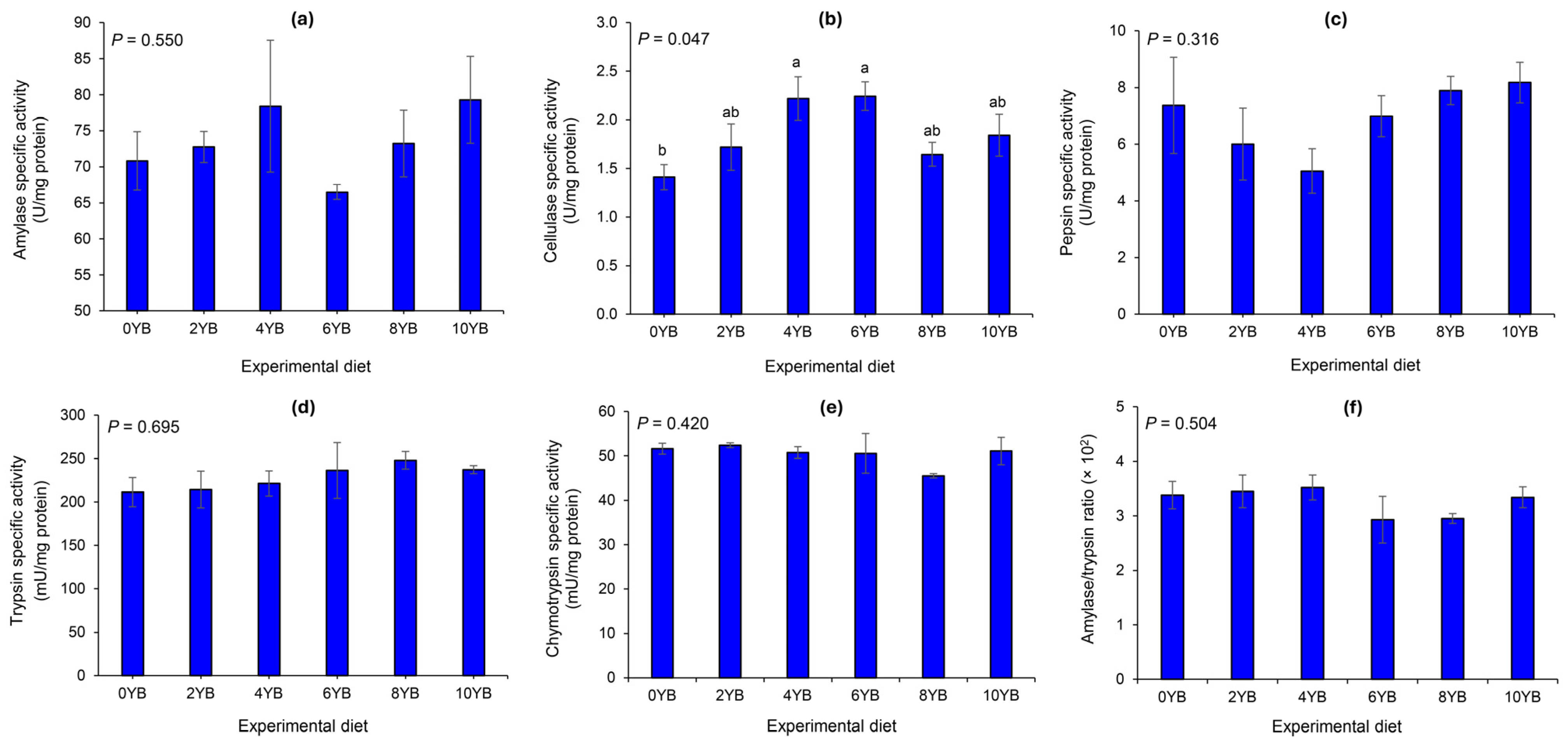
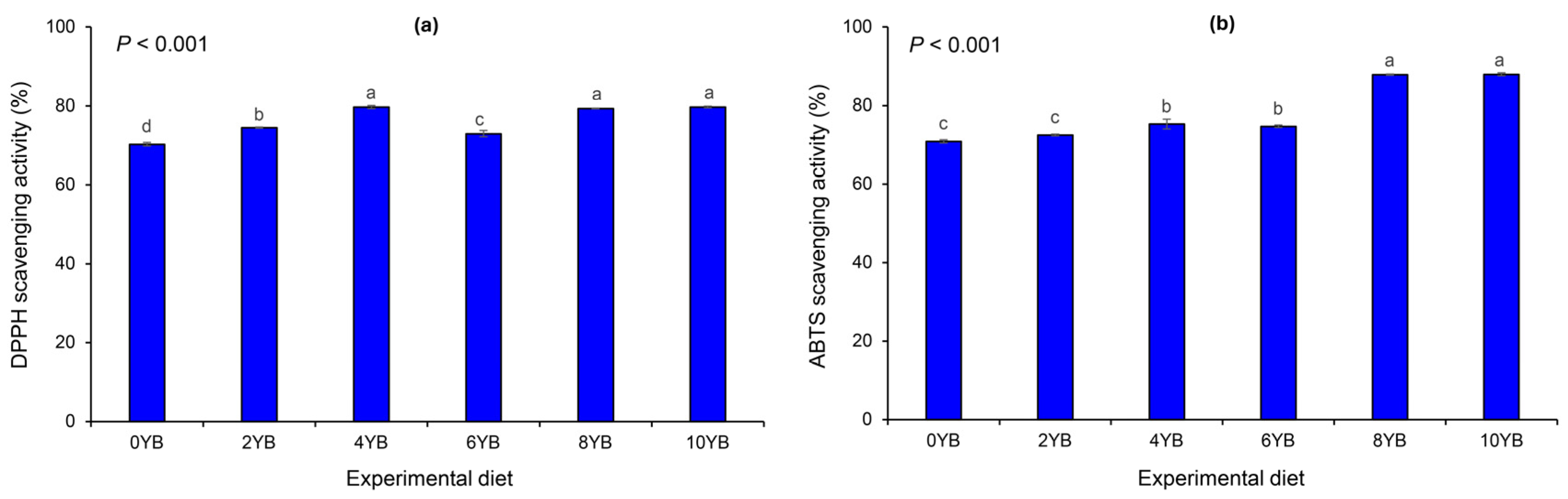
Yellow bells (Tecoma stans) is a popular ornamental flowering plant used in public spaces. Its flowers are considered a medicinal herb rich in bioactive compounds. This study aimed to investigate the effect of using dried yellow bells flower (YB) as a dietary supplement for Nile tilapia (Oreochromis niloticus). Nile tilapia (0.74 ± 0.01 g body weight) were divided into six groups for an eight-week feeding trial, during which their diets were supplemented with 5 different levels by weight of YB: 2, 4, 6, 8, and 10%. The control group received a non-supplemented diet. Parameters related to growth, feed utilization, skin and fillet coloration, gut functionality, fillet quality, blood parameters, and whole-body composition were observed. Survival, feed utilization, and skin and fillet coloration were unaffected by YB supplementation, and growth performance was generally maintained up to 8% dietary inclusion. However, at 4 to 6% YB intestinal cellulase activity and gastrointestinal radical-scavenging activities were significantly increased, while amylase and protease activities, and the amylase/trypsin ratio, were maintained. Fillet quality was improved at 4% YB, with higher myosin and total myofibrillar protein contents but without changes in RNA, total protein, or RNA/protein ratio. At moderate YB inclusion levels, white blood cell counts were lower and packed cell volume and hemoglobin levels were higher, indicating improved physiological status. Whole-body crude protein and ash were increased at higher YB levels, whereas moisture and lipid were unchanged. Overall, dietary inclusion of around 4% YB was associated with favorable improvements in gut functionality, fillet quality, blood parameters, and whole-body composition in Nile tilapia.
Keywords:
edible flower; feed supplement; herb; yellow trumpetbush; T. stans