Specific Oil Detection by Canines: Discrimination of Fresh Spill Hydrocarbons from Weathered Background Oil in Coastal Environments †



Simple Summary
Abstract
1. Introduction
2. Materials and Methods
2.1. Method: Laboratory Training
- Bin, a male German Shorthaired Pointer. Date of Birth: 24 July 2016.
- Luna, a female German Shorthaired Pointer. Date of Birth: 2 October 2018.
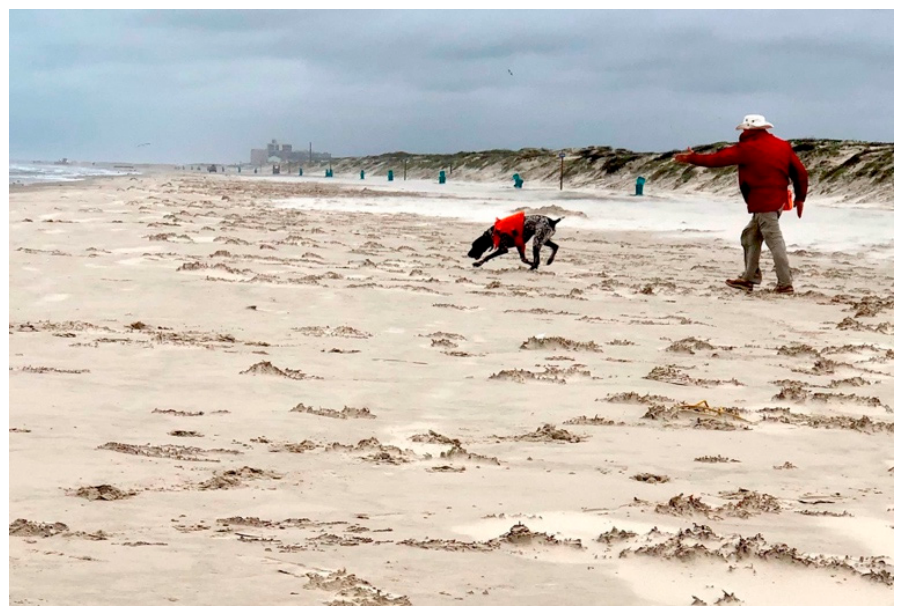
2.2. Method: Field Surveys
2.3. Field Evaluation Phase
2.4. Experimental Design and Data Recording
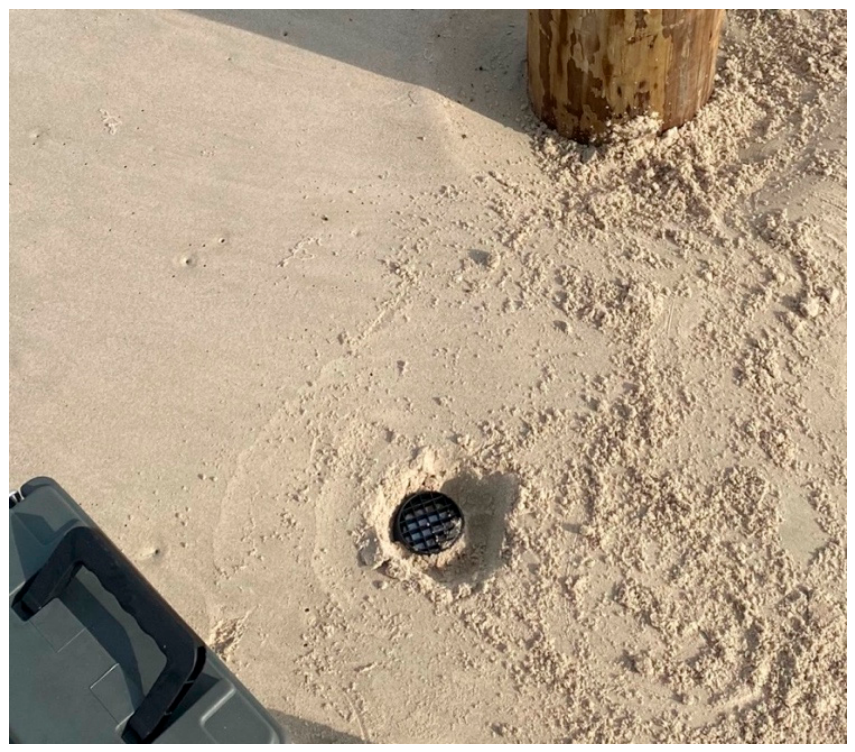
- One TADD containing unweathered WTI oil,
- One TADD containing unweathered Bunker C,
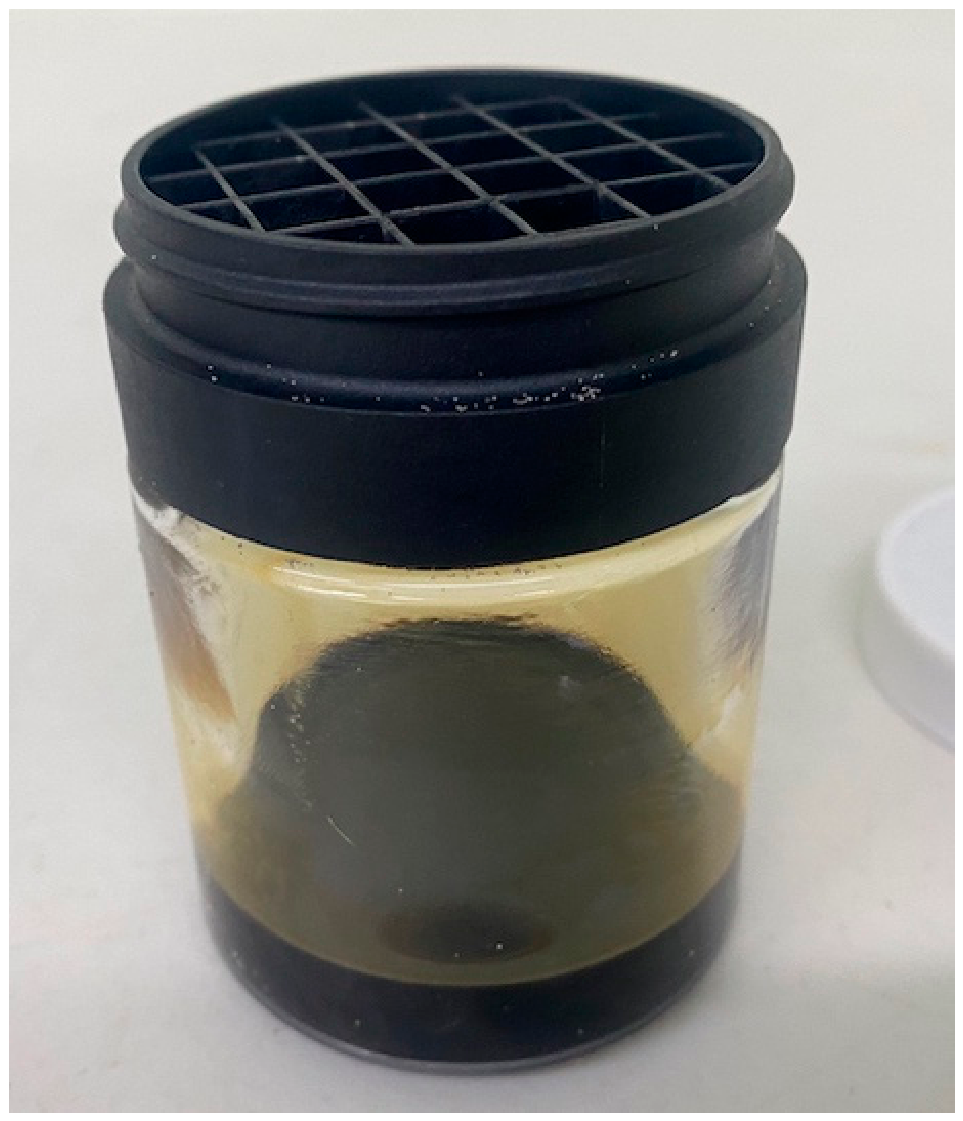
- Two TADDs containing Mustang Island tarballs,
- One empty TADD (control).
3. Results
4. Discussion
4.1. False Positives
4.2. Olfaction
5. Conclusions
Author Contributions
Funding
Institutional Review Board Statement
Informed Consent Statement
Data Availability Statement
Acknowledgments
Conflicts of Interest
Abbreviations
| BTEX | Benzene, Toluene, Ethylbenzene, and Xylene |
| IACUC | Institutional Animal Care and Use Committee |
| ODC | Oil Detection Canine |
| PAH | Polycyclic aromatic hydrocarbons |
| PTFE | Polytetrafluoroethylene |
| SCAT | Shoreline Cleanup Assessment Technique |
| SODC | Specific Oil Detection Canine |
| TADD | Training Aid Delivery Device |
| TAMUCC | Texas A&M University—Corpus Christi |
| TGLO | Texas General Land Office |
| TTU | Texas Tech University |
| VOC | Volatile Organic Compound |
| WAS | Wide Area Search |
| WTI | West Texas Intermediate |
References
- API. Canine Oil Detection: Field Trials Report; Technical Report 1149-3; American Petroleum Institute: Washington, DC, USA, 2016; 67p, Available online: http://www.oilspillprevention.org/~/media/Oil-Spill-Prevention/spillprevention/r-and-d/shoreline-protection/canine-oil-detection-field-trials-report.pdf (accessed on 1 March 2026).
- API. K9-SCAT Guidelines; Technical Report 1149-4; American Petroleum Institute: Washington, DC, USA, 2016; 94p, Available online: https://www.oilspillprevention.org/-/media/Oil-Spill-Prevention/spillprevention/r-and-d/shoreline-protection/canine-oil-detection-k9-scat-guidelines.pdf (accessed on 1 March 2026).
- API. Canine Oil Detection: Field Trials Report; Report; American Petroleum Institute: Washington, DC, USA, 2020; 38p, Available online: https://energyinfrastructure.org/-/media/Oil-Spill-Prevention/spillprevention/r-and-d/shoreline-protection/api-canine-field-trials-report-final-jul.pdf (accessed on 1 March 2026).
- Owens, E.; Bunker, P.C. Canine Detection Teams to Support Oil Spill Response Surveys. In Canines: The Original Biosensors, 1st ed.; DeGreeff, L., Schultz, C.A., Eds.; Jenny Stanford Publishing: New York, NY, USA, 2022. [Google Scholar]
- Owens, E.H.; Bunker, P.; Taylor, E. K9 SCAT Subsurface Oil Detection and Delineation Field Study on Coarse-Sediment Beaches in Prince William Sound, Alaska. In Proceedings of the 41st AMOP Technical Seminar; Environment and Climate Change Canada: Ottawa, ON, Canada, 2018. [Google Scholar]
- Warnock, A.M.; Hagen, S.C.; Passeri, D.L. Marine Tar Residues: A Review. Water Air Soil Pollut. 2015, 226, 68. [Google Scholar] [CrossRef] [PubMed]
- Bacosa, H.P.; Thyng, K.M.; Plunkett, S.; Erdner, D.L.; Liu, Z. The tarballs on Texas beaches following the 2014 Texas City “Y” spill: Modeling, chemical, and microbiological studies. Mar. Pollut. Bull. 2016, 109, 236–244. [Google Scholar] [CrossRef] [PubMed]
- DeGreeff, L.E.; Simon, A.G.; Peranich, K.; Holness, H.K.; Frank, K.; Furton, K.G. Generalization and discrimination of molecularly similar odorants in detection canines and the influence of training. Behav. Process. 2020, 177, 104148. [Google Scholar] [CrossRef] [PubMed]
- Owens, E.H.; Dubach, H.C.; Bunker, P.; MacDonald, S.; Yang, Z.; Lambert, P.; LaForest, S. Canine Oil Detection (K9-SCAT) following 2015 Releases from the T/V Arrow Wreck. Int. Oil Spill Conf. Proc. 2017, 2017, 2620–2641. [Google Scholar] [CrossRef]
- DeChant, M.T.; Bunker, P.C.; Hall, N.J. Evaluation of the capability of oil specific discrimination in oil-specific dogs. Behav. Process. 2024, 211, 105014. [Google Scholar] [CrossRef] [PubMed]
- Aviles-Rosa, E.O.; Gallegos, S.F.; Prada-Tiedemann, P.A.; Hall, N.J. An automated canine line-up for Detection Dog Research. Front. Vet. Sci. 2021, 8, 775381. [Google Scholar] [CrossRef] [PubMed]
- Fourth, H.P.; Morris, J.M.; Lay, C.R.; Lipton, J.; Mitchelmore, C.L.; Suttles, S.E. Characterization of Oil and Water Accommodated Fractions Used to Conduct Aquatic Toxicity Testing in Support of the Deepwater Horizon Natural Resource Damage Assessment; Technical Report; FWS U.S. Fish and Wildlife Service: Falls Church, VA, USA, 2015. Available online: https://www.fws.gov/doiddata/dwh-ar-documents/952/DWH-AR0155415a.pdf (accessed on 25 February 2023).
- NRC. Guide for the Care and Use of Laboratory Animals, 8th ed.; The National Academies Press: Washington, DC, USA, 2011. Available online: https://olaw.nih.gov/sites/default/files/Guide-for-the-Care-and-Use-of-Laboratory-Animals.pdf (accessed on 2 March 2023).
- NIH. The IACUC—The Institutional Animal Care and Use Committee, US Department of Health and Human Services, National Institutes of Health, Office of Laboratory Animal Welfare. 2019. Available online: https://olaw.nih.gov/resources/tutorial/iacuc.htm (accessed on 2 March 2023).
- Bunker, P. Imprint Your Detection Dog in 15 Days—A Step-by-Step Workbook; Chiron K9: San Antonio, TX, USA, 2021; Available online: https://a.co/d/6R8LLjy (accessed on 1 May 2025).
- Maughan, M.N. Methods of Using Training Aid Delivery Devices (Tadd). U.S. Patent No. 10,813,342, 27 October 2020. [Google Scholar]
- Karpinsky, M. Characterization of the Volatile Organic Compounds Associated with Environmental Contamination to Aid in Detection and Remediation. Ph.D. Dissertation, Florida International University, Miami, FL, USA, 2025. [Google Scholar]
- B&B. Determination of: Aliphatic and Total Petroleum Hydrocarbons (TPH), and Polycyclic Aromatic Hydrocarbons (PAH), and Benzene, Toluene, Ethylbenzene, and Xylene (BTEX) in Product Samples; Technical Report 20-4020, API Canine Threshold Study, Unpub. 2020 Report to Chevron Gulf of Mexico Business Unit by B&B Laboratories; B&B Laboratories: College Station, TX, USA, 2020; 79p. [Google Scholar]
- Bunker, P. Specific oil detection canines—Shoreline surveys’ latest friend. In Proceedings of the 44th AMOP Technical Seminar, Canada, June 2023; Environment and Climate Change Canada: Ottawa, ON, Canada, 2023. [Google Scholar]







| Vial Number | Content | Weight | Comments | Source |
|---|---|---|---|---|
| 1 | WTI crude | 0.5 gm | Mixed into 4.5 g of sand | Texas crude, Midland, Texas |
| 2 | Juniper | 0.5 gm | Mixed into 4.5 g of sand | Macondo * |
| 3 | CTC | 0.5 gm | Mixed into 4.5 g of sand | Macondo ** |
| 4 | Mustang Island tarball | 0.5 gm | Mixed into 4.5 g of sand | Collected by the author (PB) from the shoreline |
| 5 | Sand | 5 gm | Quikrete Company, Atlanta, GA | |
| 6 | Blank |
| 2 May 2022 | 4 May 2022 | 26 July 2022 | 30 August 2022 | 28 February 2023 | |
|---|---|---|---|---|---|
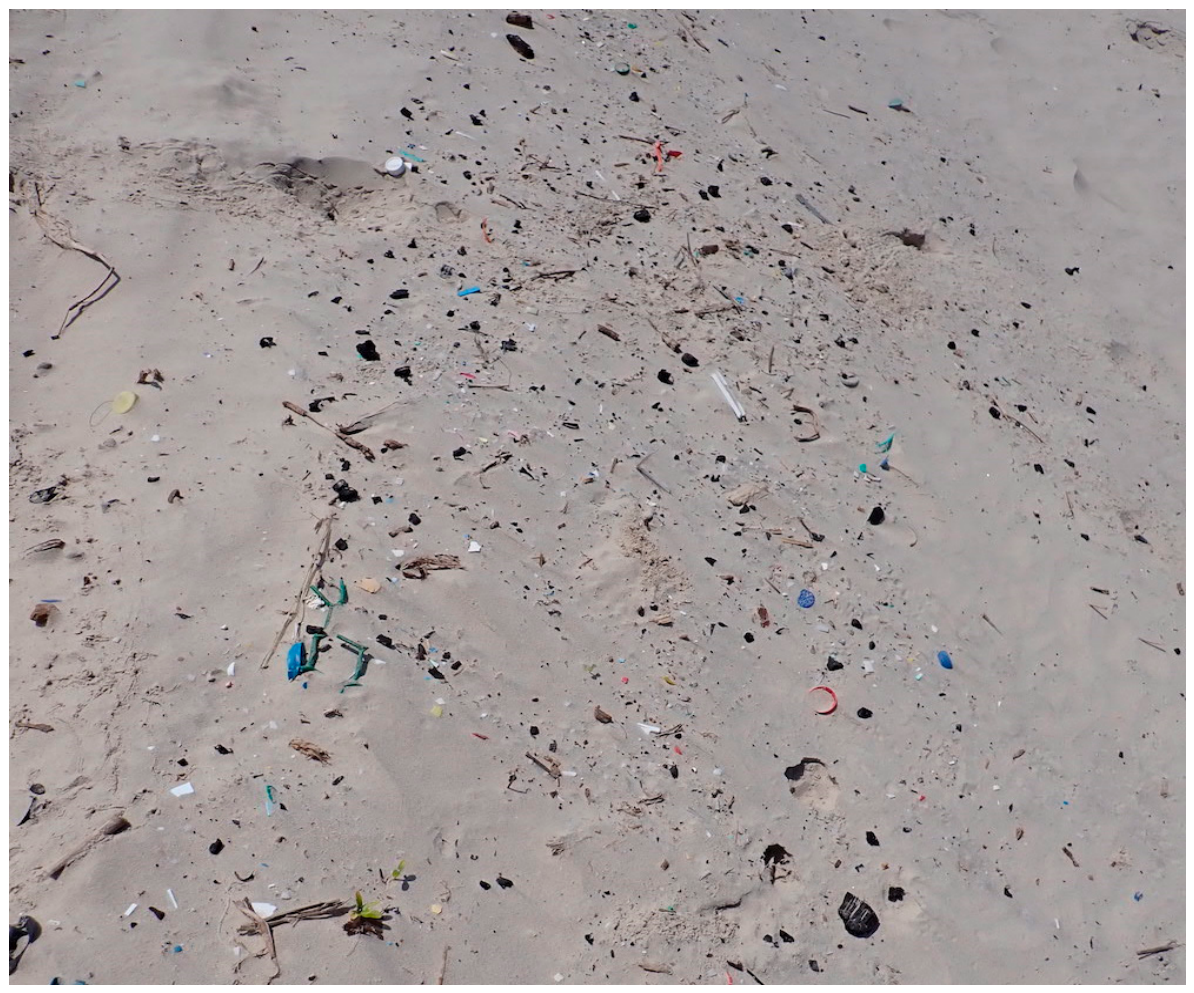
| Total Tarballs (TB: <10 cm) | 52 | 138 | 297 | Over 1000 | 8 |
| Total Tar Patties (TOP: >10 cm) | 0 | 0 | 18 | 61 | 1 |
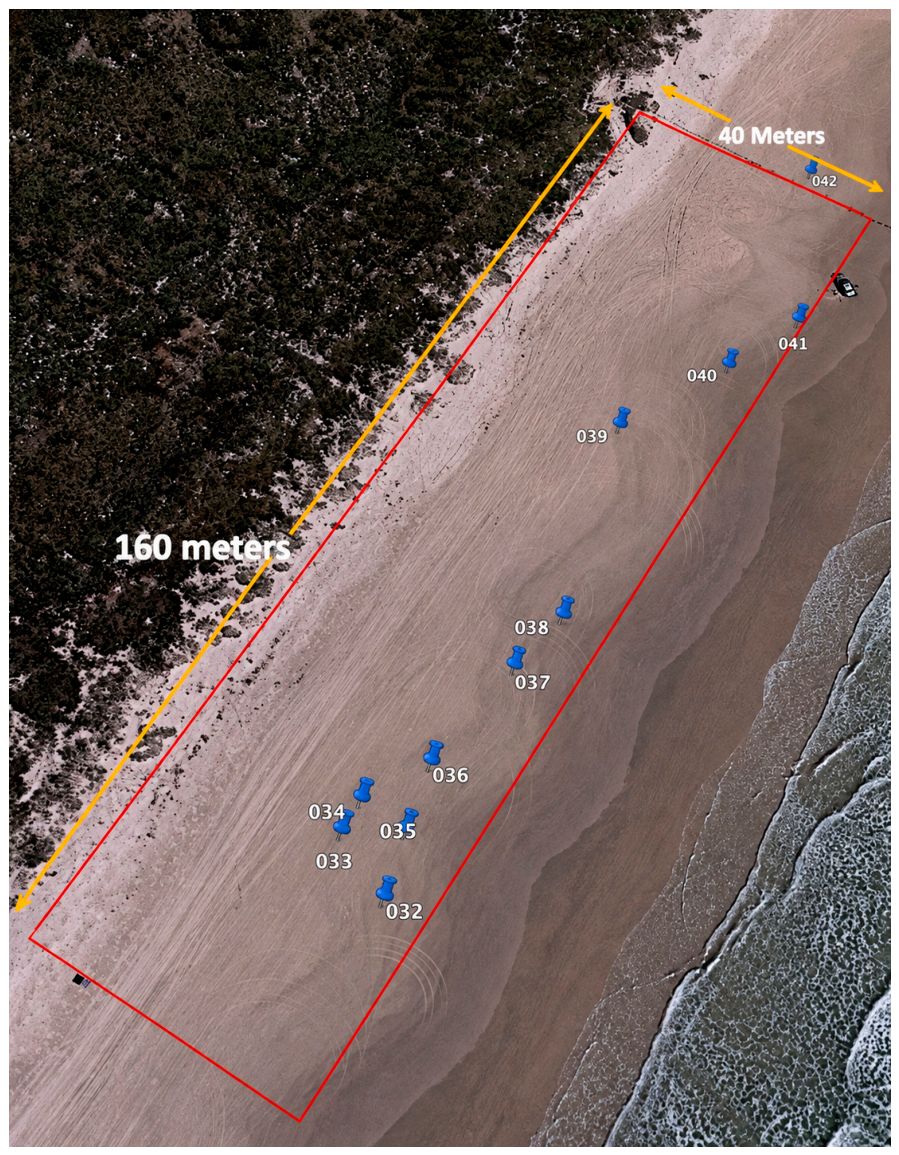
| Waypoint | Item | Size | Comments | ODC Alert | SODC Alert |
|---|---|---|---|---|---|
| 32 | Tarball | 1 cm × 1 cm | Very weathered, hard texture | X | |
| 33 | Tarball | 0.5 cm × 2 cm | Soft, thin, and pliable | X | |
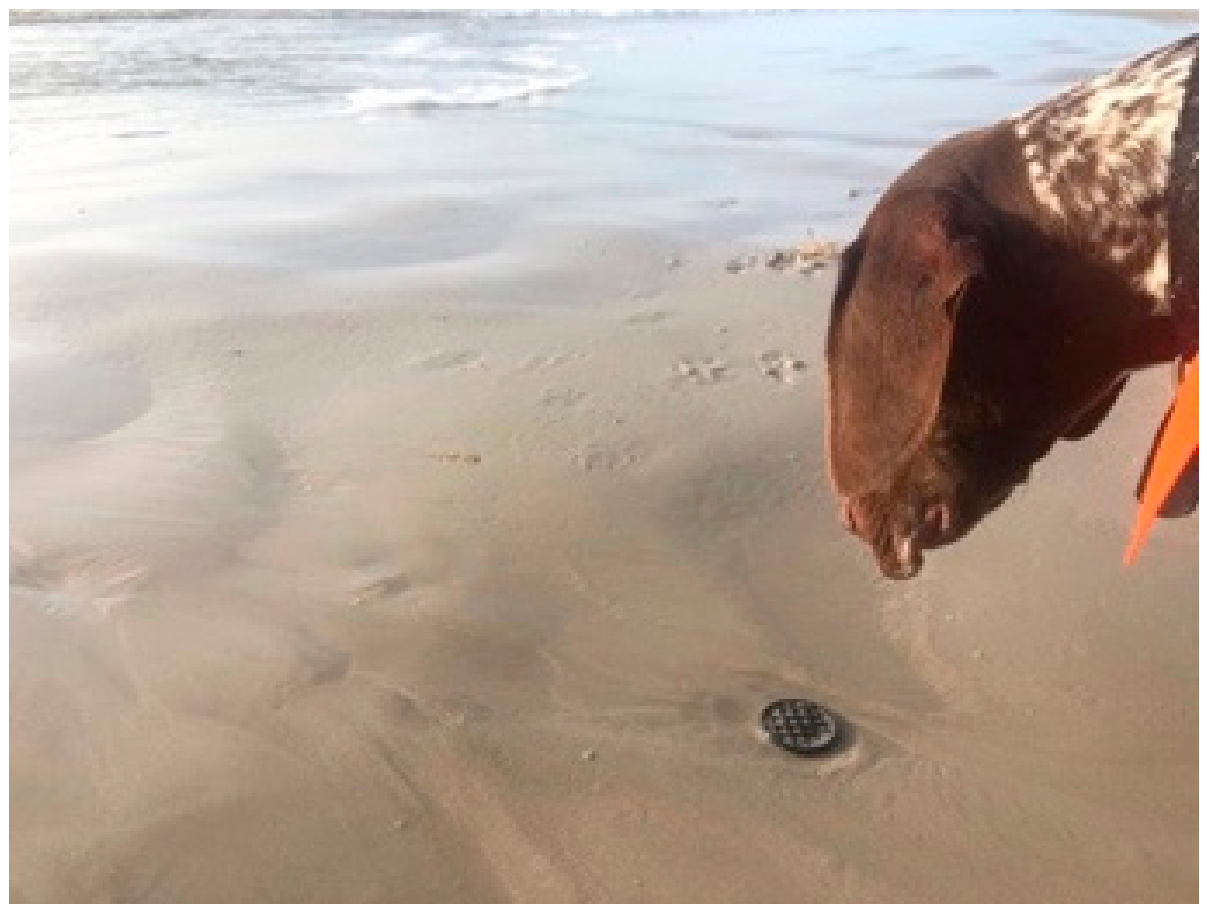
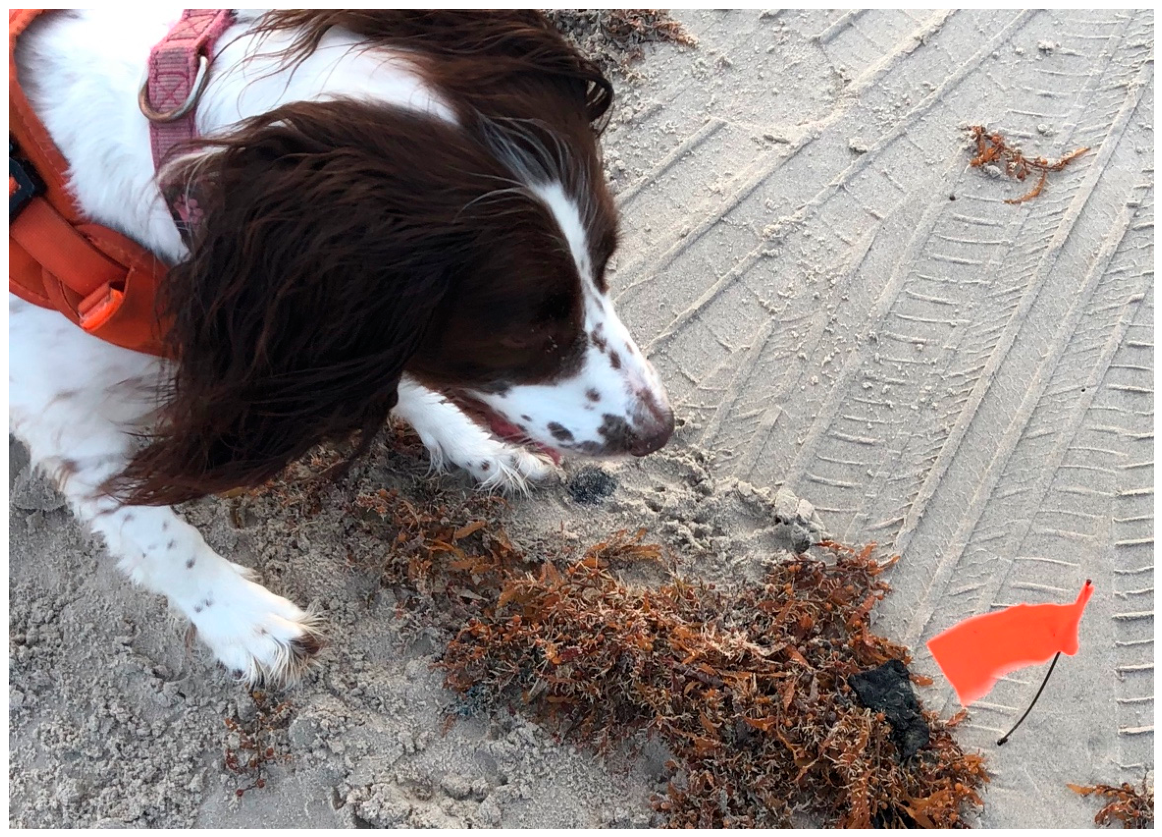
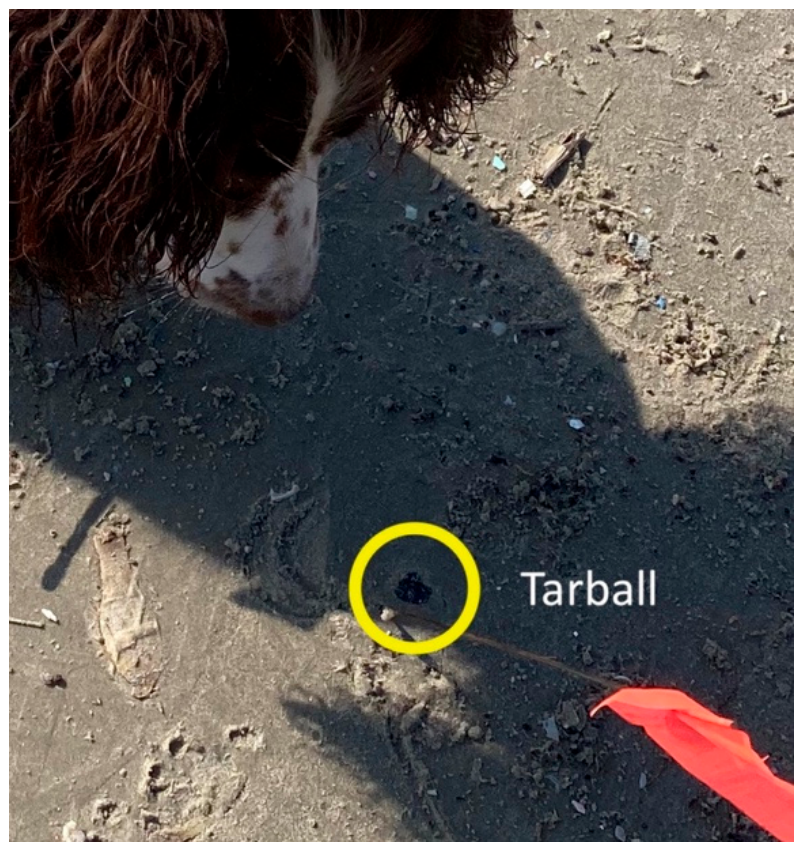
| 34 | Tarball | 2 cm × 2 cm | Soft, thin, and pliable (Figure 10) | X | |
| 35 | Tarball | 1 cm × 1 cm | Very weathered and hard texture | X | |
| 36 | Tarball | 2 cm × 2 cm | A cluster of six similar tarballs in the same location | X | |
| 37 | Tarball | 3 cm × 2 cm | Soft, thin, and pliable | X | |
| 38 | Tarball | 4 cm × 3 cm | Soft, thin, and pliable | X | |
| 39 | TADD | 10 mL | WTI Crude | X | X |
| 40 | Tarball | 2 cm × 3 cm | Soft, thin, and pliable | X | |
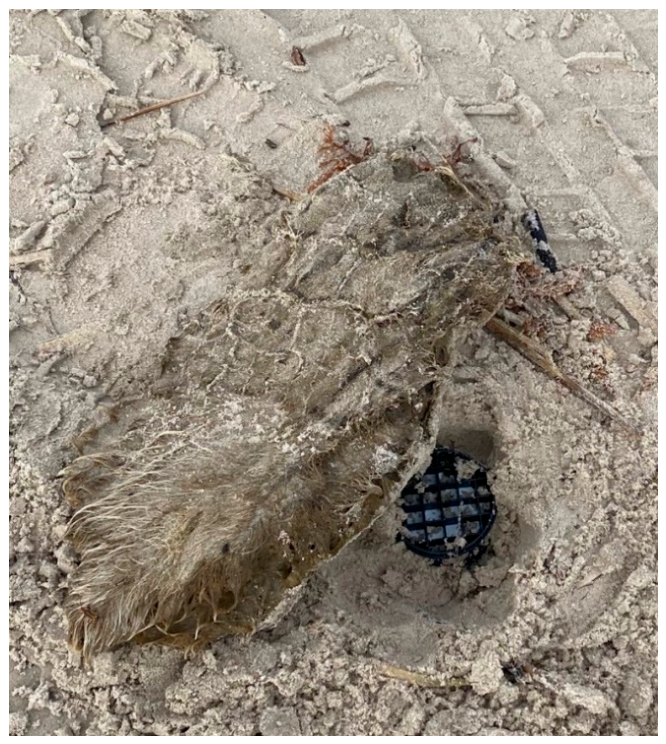
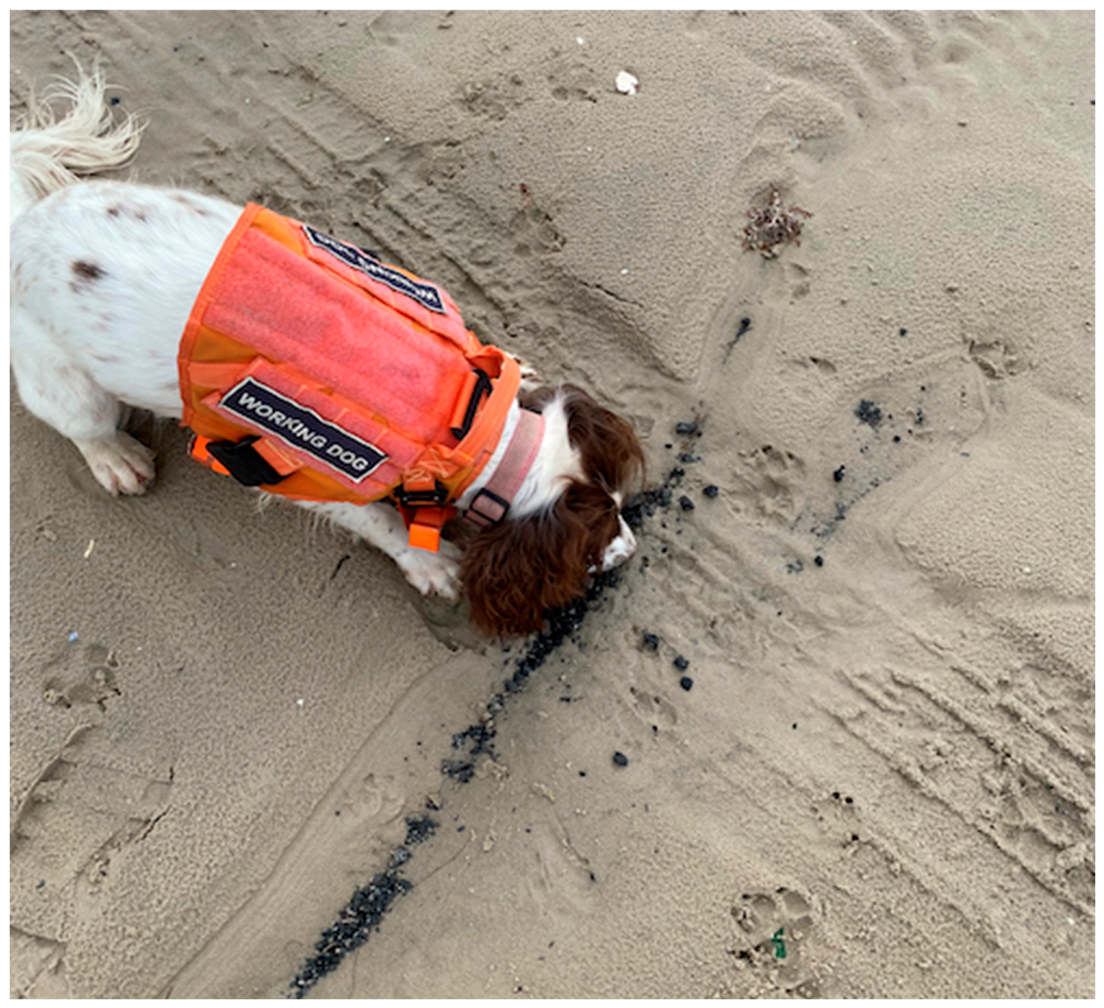
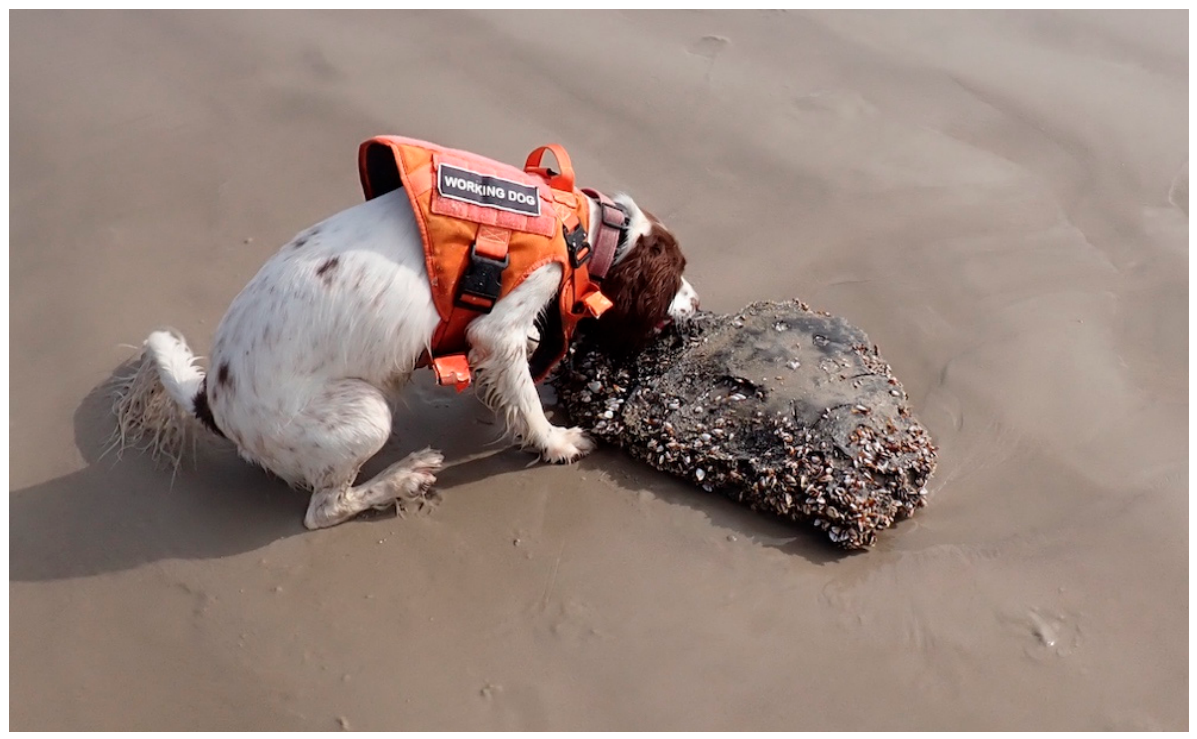
| 41 | Tar pattie | 90 cm × 60 cm | Weathered and being washed ashore during the survey. Very hard and brittle with a honeycomb appearance. (Figure 11) | X | |
| 42 | TADD | 10 mL | Bunker C | X | X |
Disclaimer/Publisher’s Note: The statements, opinions and data contained in all publications are solely those of the individual author(s) and contributor(s) and not of MDPI and/or the editor(s). MDPI and/or the editor(s) disclaim responsibility for any injury to people or property resulting from any ideas, methods, instructions or products referred to in the content. |
© 2026 by the authors. Licensee MDPI, Basel, Switzerland. This article is an open access article distributed under the terms and conditions of the Creative Commons Attribution (CC BY) license.
Share and Cite
Bunker, P.; Owens, E. Specific Oil Detection by Canines: Discrimination of Fresh Spill Hydrocarbons from Weathered Background Oil in Coastal Environments. Animals 2026, 16, 1688. https://doi.org/10.3390/ani16111688
Bunker P, Owens E. Specific Oil Detection by Canines: Discrimination of Fresh Spill Hydrocarbons from Weathered Background Oil in Coastal Environments. Animals. 2026; 16(11):1688. https://doi.org/10.3390/ani16111688
Chicago/Turabian StyleBunker, Paul, and Ed Owens. 2026. "Specific Oil Detection by Canines: Discrimination of Fresh Spill Hydrocarbons from Weathered Background Oil in Coastal Environments" Animals 16, no. 11: 1688. https://doi.org/10.3390/ani16111688
APA StyleBunker, P., & Owens, E. (2026). Specific Oil Detection by Canines: Discrimination of Fresh Spill Hydrocarbons from Weathered Background Oil in Coastal Environments. Animals, 16(11), 1688. https://doi.org/10.3390/ani16111688