Derivation of Equine Mesenchymal Stem/Stromal Cells from Induced Pluripotent Stem Cells via the Neural Crest Pathway and Characterisation by Immunophenotype and Tri-Lineage Differentiation
 , , , ,
  , , , and
Simple Summary
Abstract
1. Introduction
2. Materials and Methods
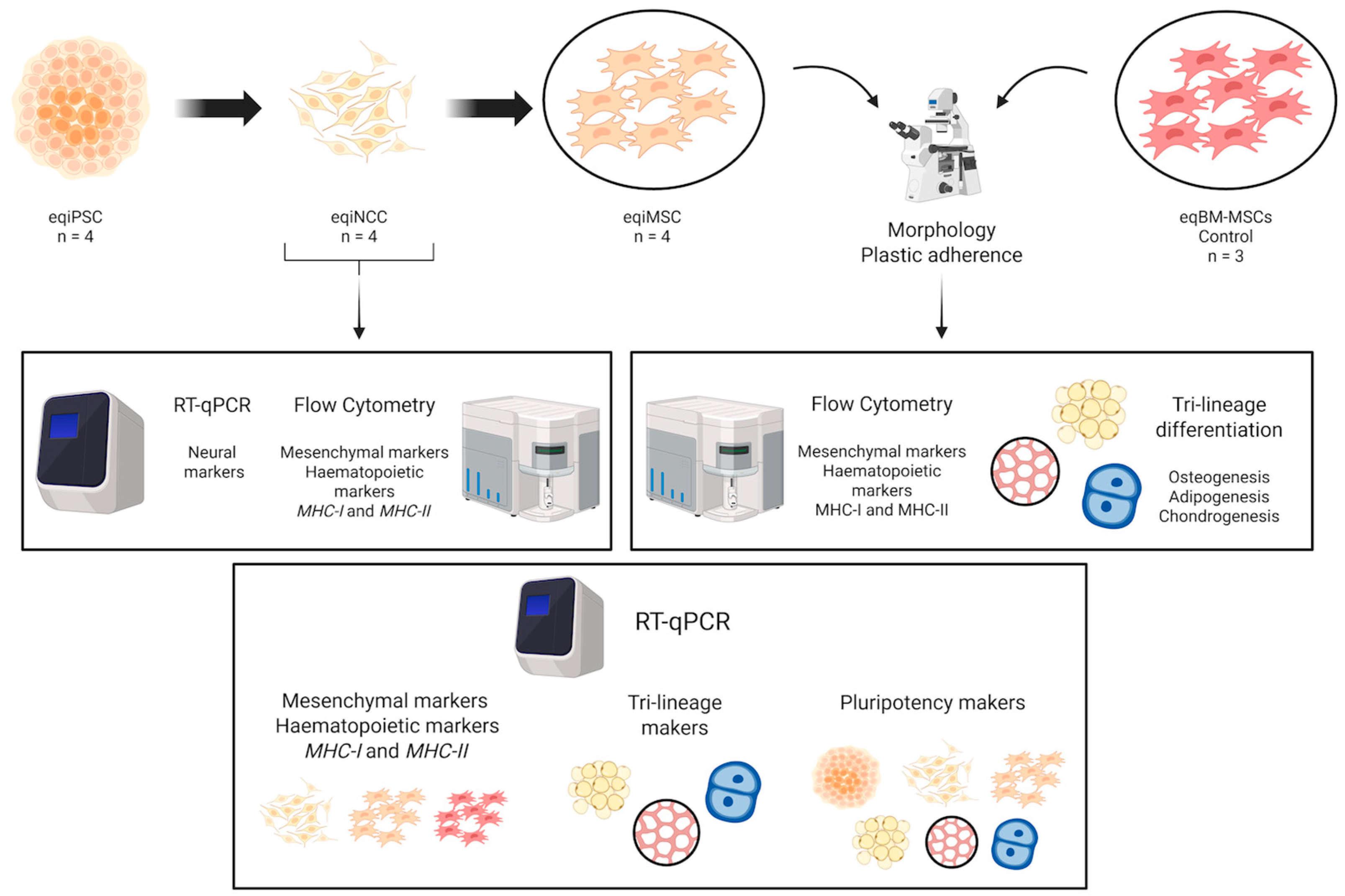
2.1. Study Design
2.2. Equine BM-MSCs Obtainment and Culture
2.3. Equine iPSC Generation and Culture
2.4. Derivation of eqiMSCs from eqiPSCs
2.5. Characterisation of the Obtained eqiMSCs
2.5.1. Immunophenotyping of eqiMSCs
2.5.2. Tri-Lineage Differentiation Assays
Osteogenic Differentiation
Adipogenic Differentiation
Chondrogenic Differentiation
2.5.3. Gene Expression Analysis
RNA Extraction and cDNA Reverse Transcription
Real-Time Quantitative PCR Analysis
2.6. Statistical Analysis
3. Results
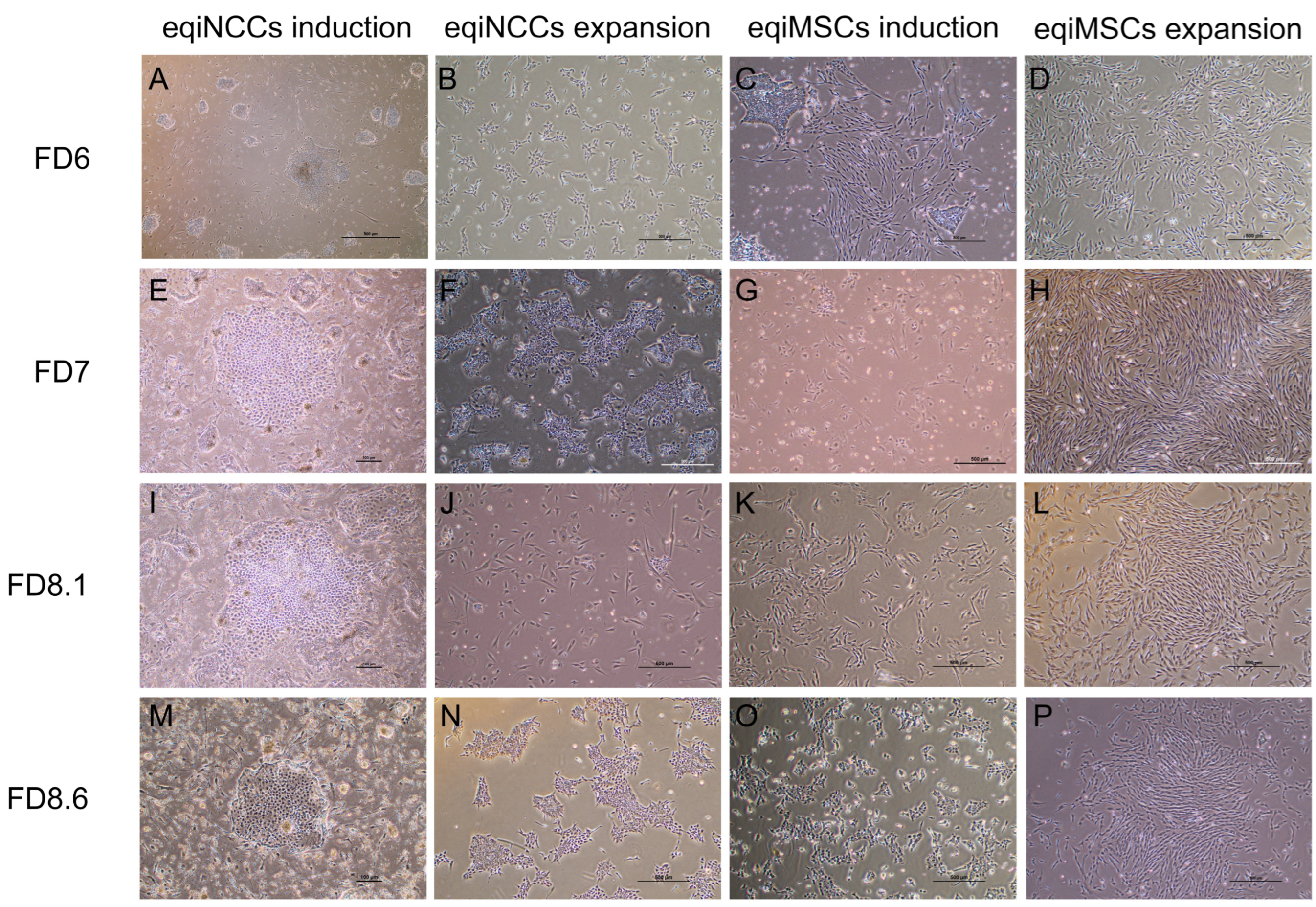
3.1. Equine MSC-like Cells Could Be Derived from eqiPSCs by Directed Differentiation via the Neural Crest Pathway
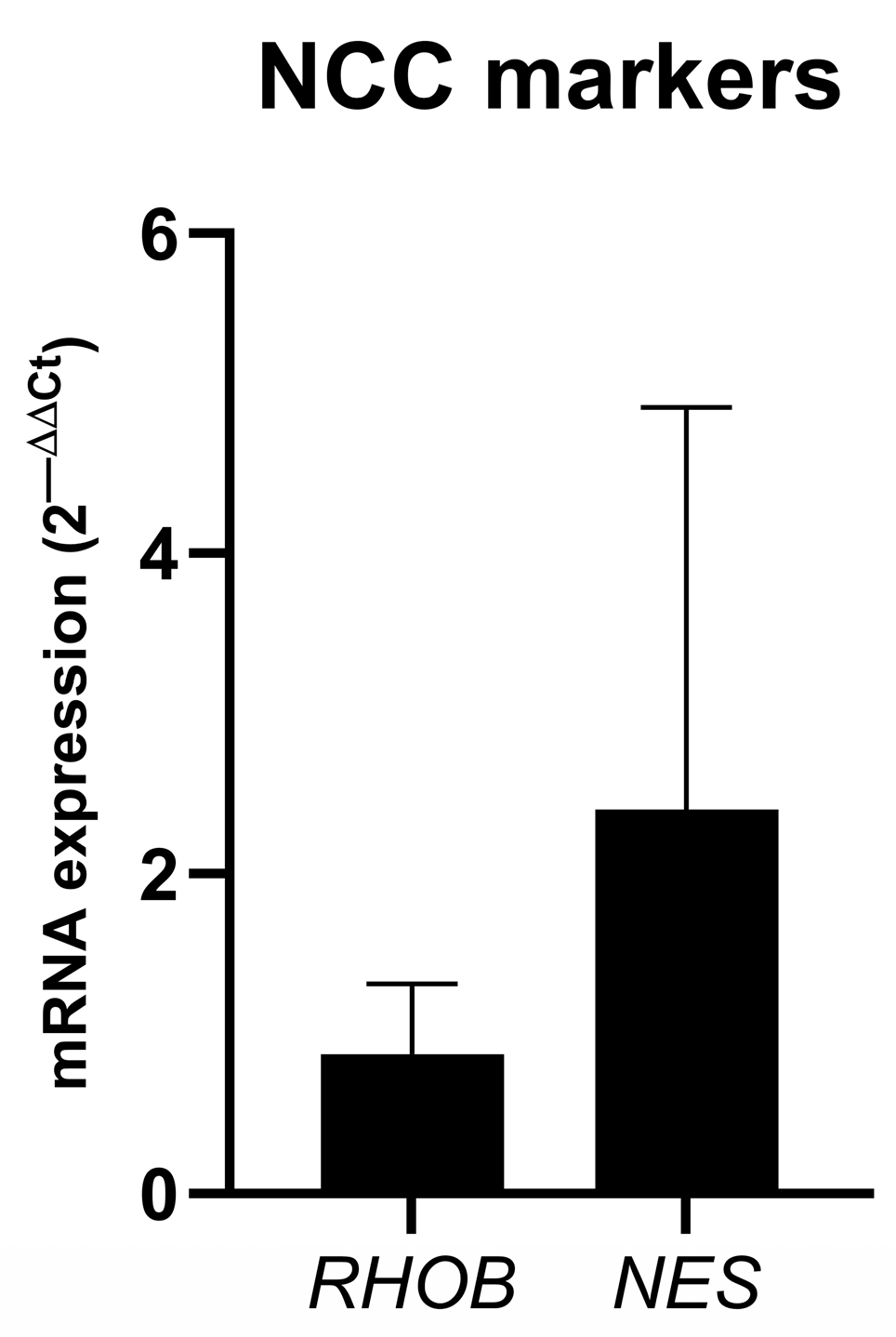
3.2. Expression of Neural Crest Markers Confirms Identity of Equine iNCCs
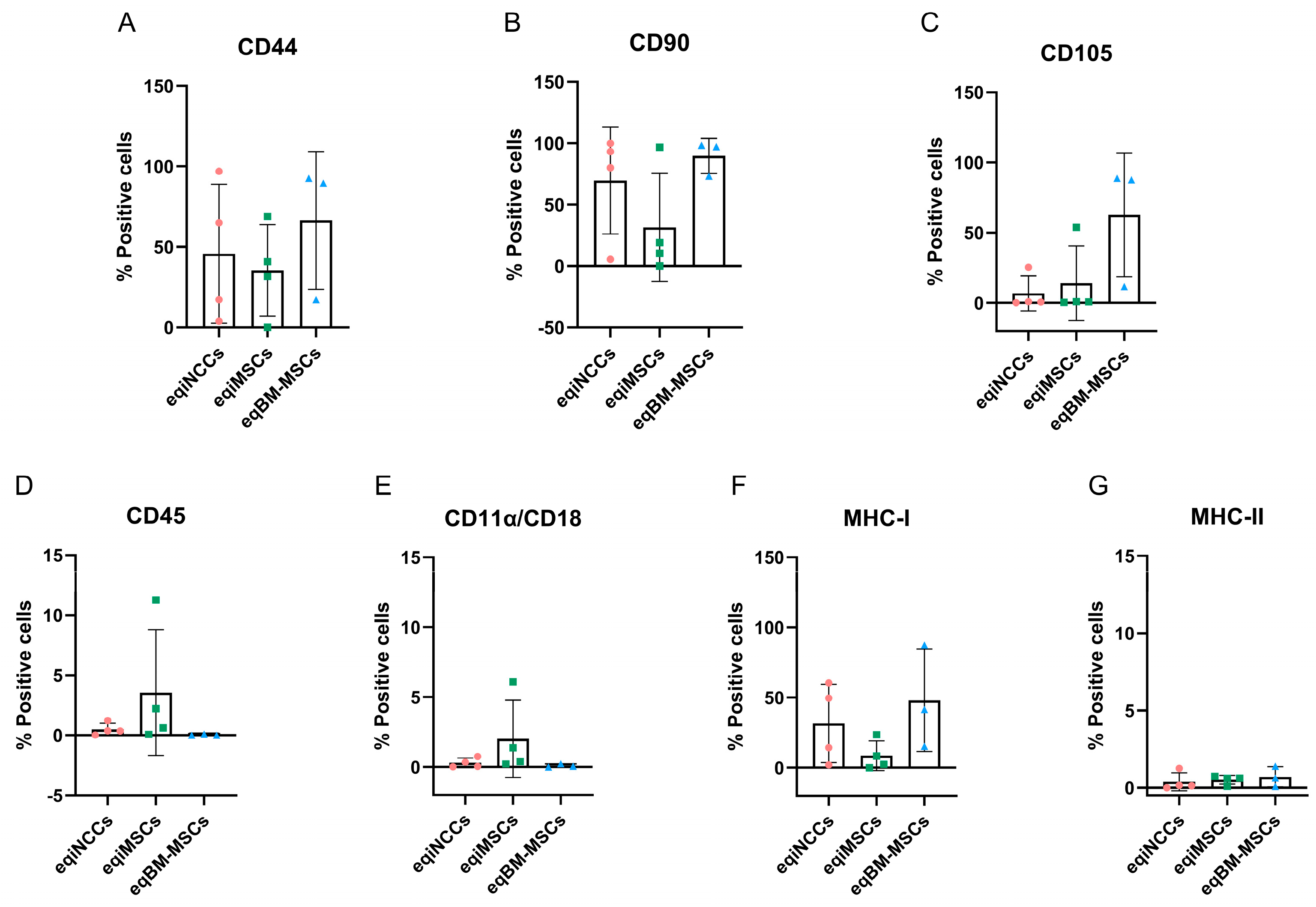
3.3. Cell Immunophenotype Along the Differentiation and Compared to eqBM-MSCs
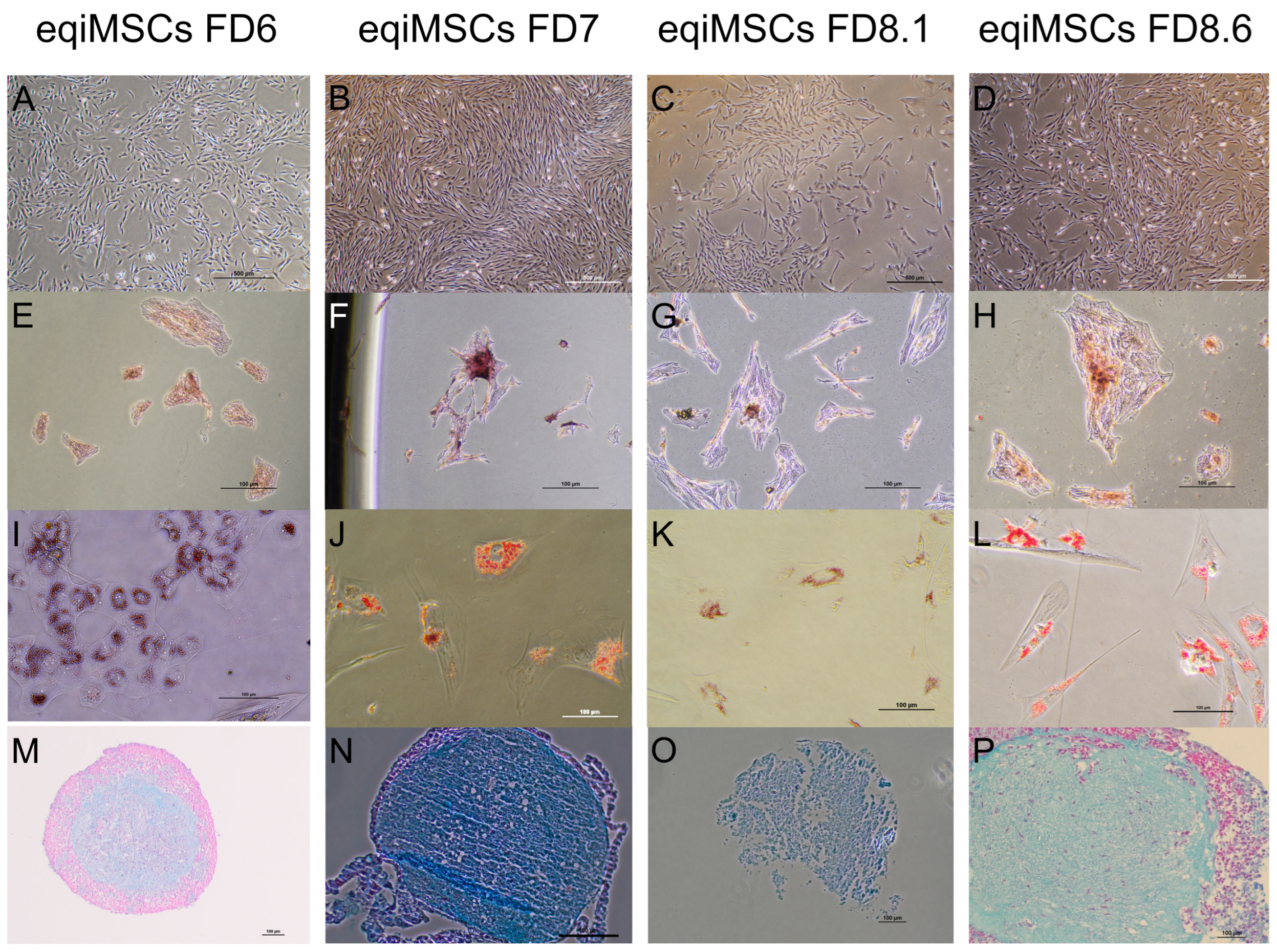
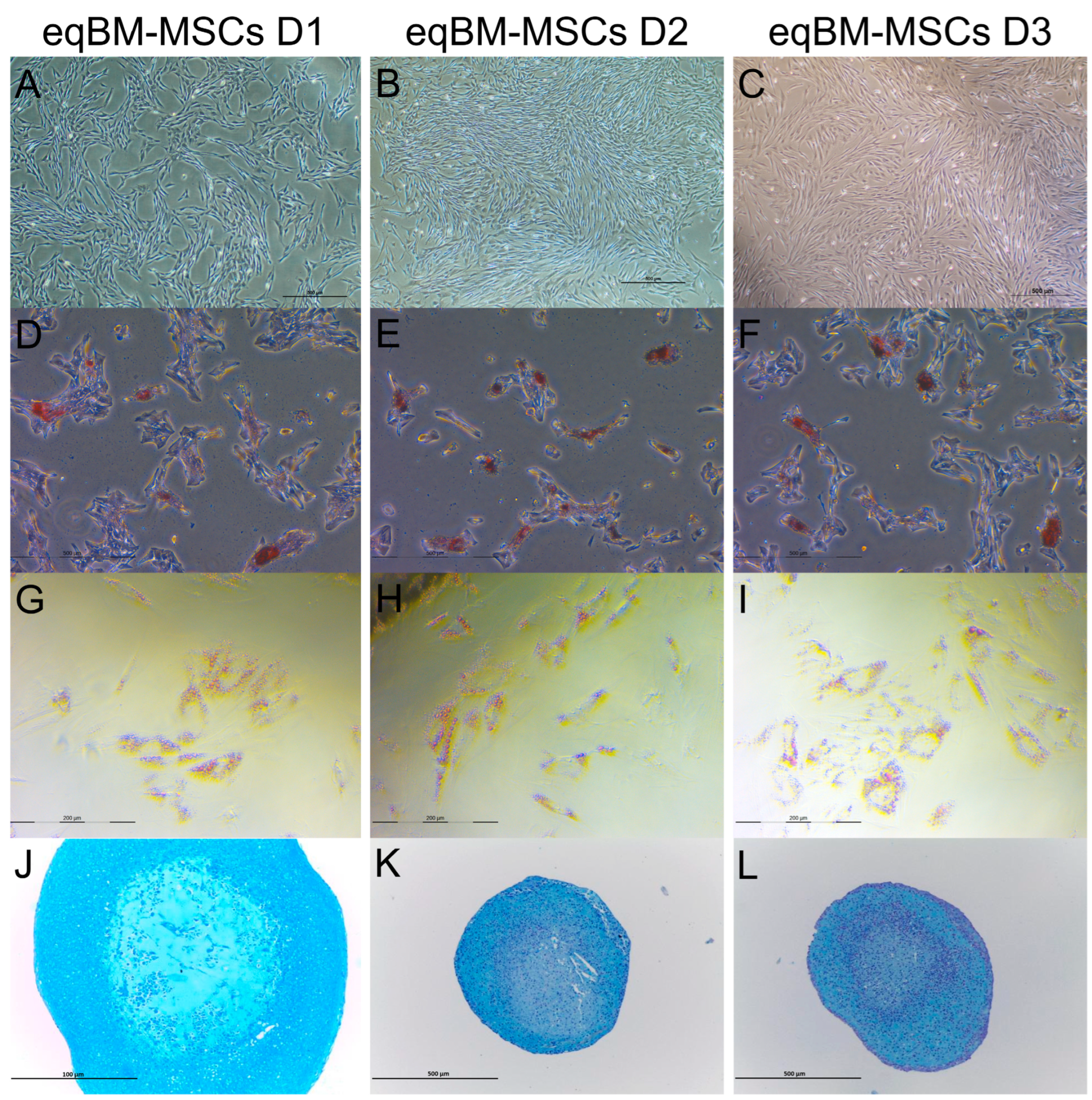
3.4. Tri-Lineage Differentiation Potential Is Generally Lower in eqiMSCs than in eqBM-MSCs
3.5. Gene Expression Complements eqiMSC Characterisation and Shows Changes Along the Differentiation Process
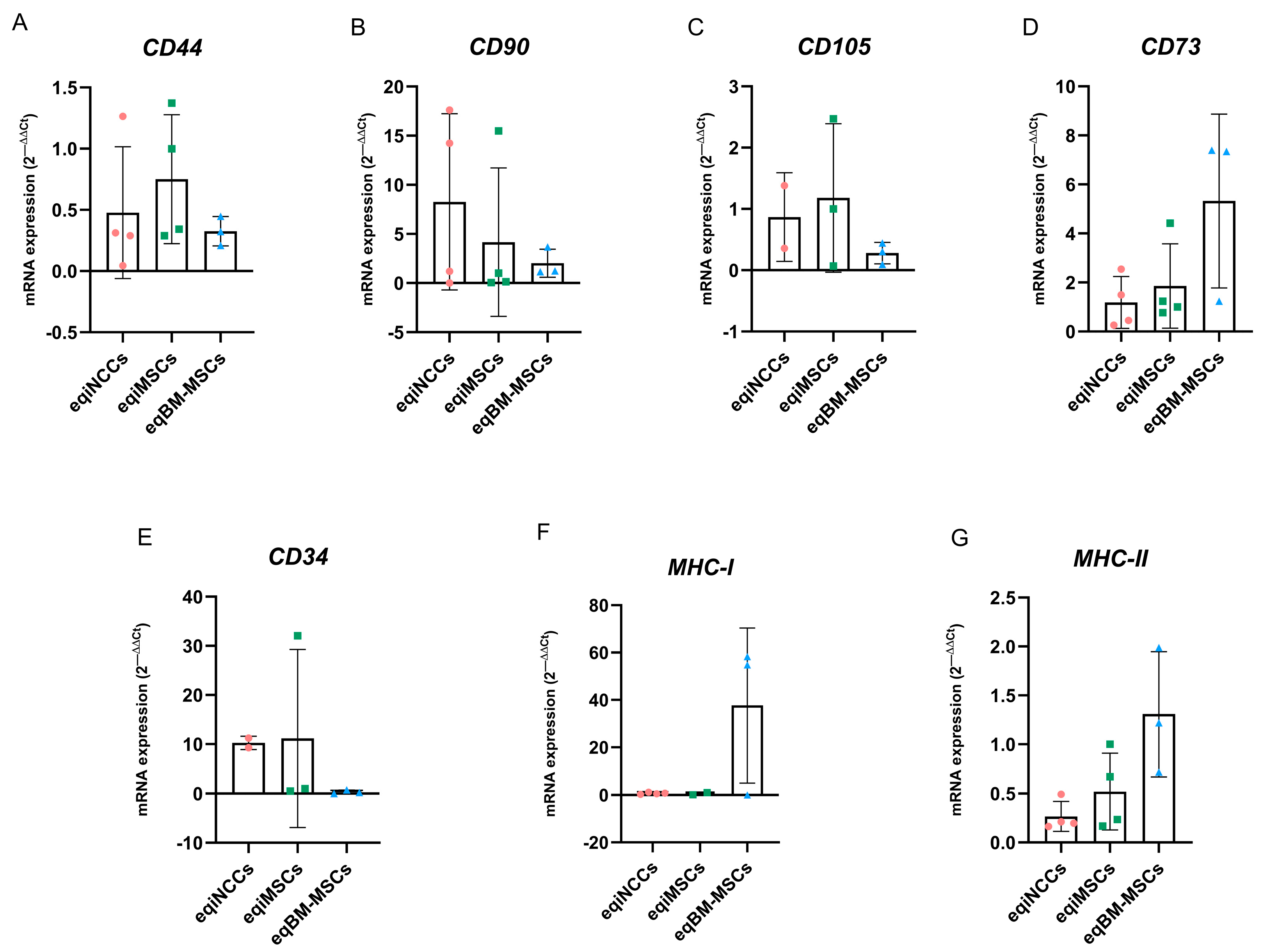
3.5.1. Gene Expression of Cell Surface Markers in eqiNCCs, eqiMSCs and eqBM-MSCs
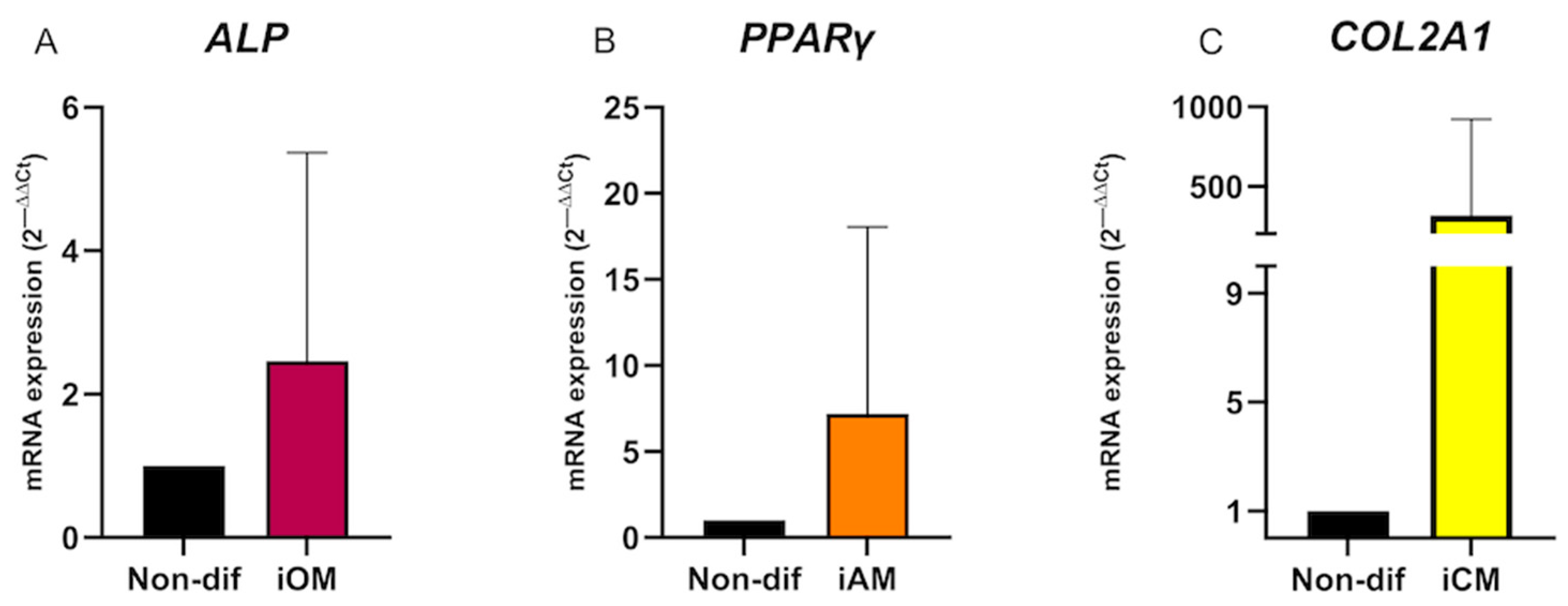
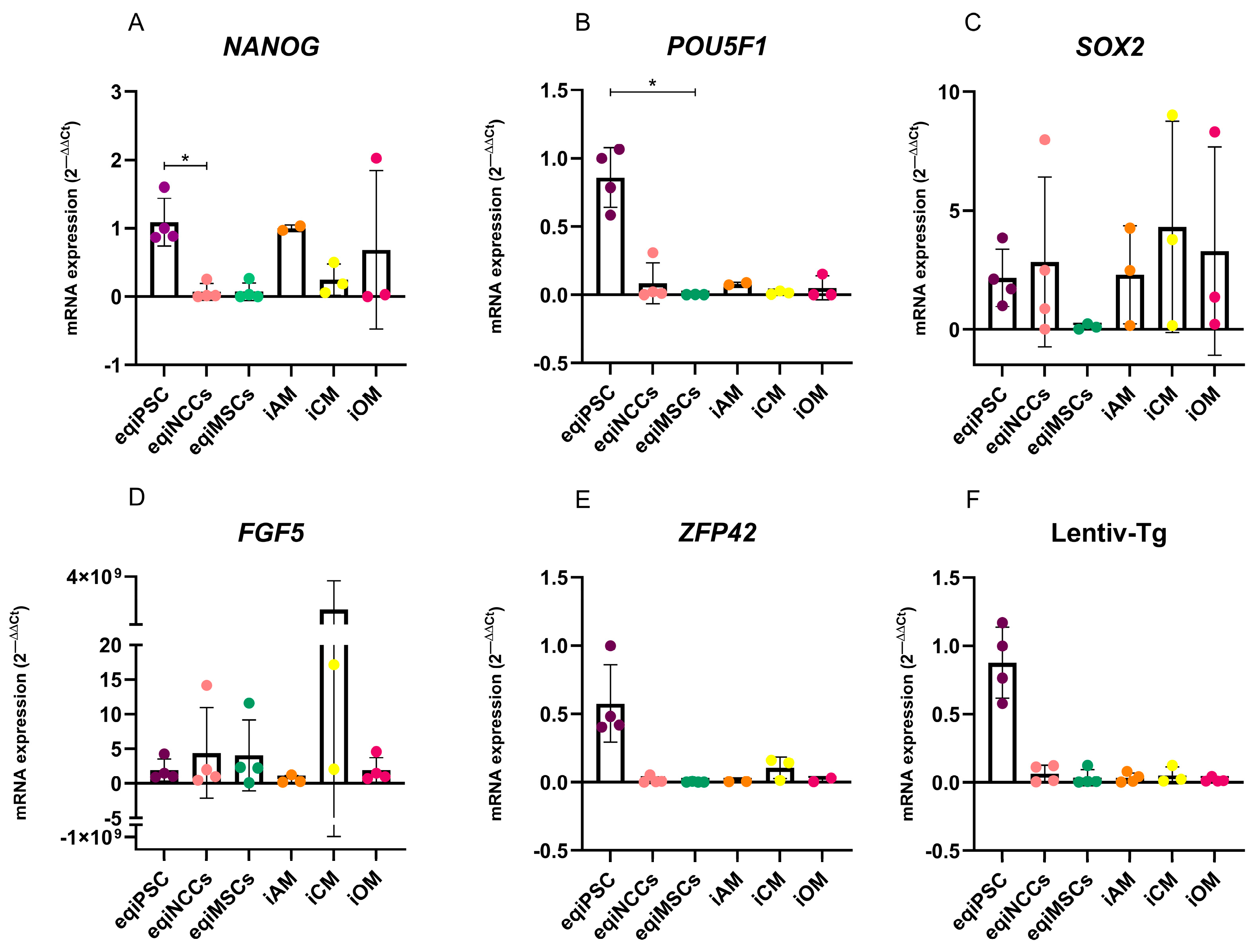
3.5.2. Gene Expression of Pluripotency Markers in eqiPSCs, eqiNCCs, eqiMSCs, iAM, iCM and iOM
4. Discussion
5. Conclusions
Supplementary Materials
Author Contributions
Funding
Institutional Review Board Statement
Informed Consent Statement
Data Availability Statement
Acknowledgments
Conflicts of Interest
Abbreviations
References
- Ribitsch, I.; Baptista, P.M.; Lange-Consiglio, A.; Melotti, L.; Patruno, M.; Jenner, F.; Schnabl-Feichter, E.; Dutton, L.C.; Connolly, D.J.; van Steenbeek, F.G.; et al. Large Animal Models in Regenerative Medicine and Tissue Engineering: To Do or Not to Do. Front. Bioeng. Biotechnol. 2020, 8, 972. [Google Scholar] [CrossRef]
- Russell, J.; Matika, O.; Russell, T.; Reardon, R.J.M. Heritability and prevalence of selected osteochondrosis lesions in yearling Thoroughbred horses. Equine Vet. J. 2017, 49, 282–287. [Google Scholar] [CrossRef] [PubMed]
- Ribitsch, I.; Oreff, G.L.; Jenner, F. Regenerative medicine for equine musculoskeletal diseases. Animals 2021, 11, 234. [Google Scholar] [CrossRef] [PubMed]
- Charitos, I.A.; Ballini, A.; Cantore, S.; Boccellino, M.; Di Domenico, M.; Borsani, E.; Nocini, R.; Di Cosola, M.; Santacroce, L.; Bottalico, L. Stem Cells: A Historical Review about Biological, Religious, and Ethical Issues. Stem Cells Int. 2021, 2021, 9978837. [Google Scholar] [CrossRef]
- Vidal, M.A.; Walker, N.J.; Napoli, E.; Borjesson, D.L. Evaluation of Senescence in Mesenchymal Stem Cells and Umbilical Cord Tissue. Stem Cells Dev. 2012, 21, 273–283. [Google Scholar] [CrossRef]
- Lombana, K.G.; Goodrich, L.R.; Phillips, J.N.; Kisiday, J.D.; Goodrich, L.R. An Investigation of Equine Mesenchymal Stem Cell Characteristics from Different Harvest Sites: More Similar Than Not. Front. Vet. Sci. 2015, 2, 67. [Google Scholar] [CrossRef]
- Turinetto, V.; Vitale, E.; Giachino, C. Senescence in human mesenchymal stem cells: Functional changes and implications in stem cell-based therapy. Int. J. Mol. Sci. 2016, 17, 1164. [Google Scholar] [CrossRef]
- Bagge, J.; Berg, L.C.; Janes, J.; Macleod, J.N. Donor age effects on in vitro chondrogenic and osteogenic differentiation performance of equine bone marrow—And adipose tissue—Derived mesenchymal stromal cells. BMC Vet. Res. 2022, 18, 388. [Google Scholar] [CrossRef] [PubMed]
- Kamiya, D.; Takenaka-Ninagawa, N.; Motoike, S.; Kajiya, M.; Akaboshi, T.; Zhao, C.; Shibata, M.; Senda, S.; Toyooka, Y.; Sakurai, H.; et al. Induction of functional xeno-free MSCs from human iPSCs via a neural crest cell lineage. npj Regen. Med. 2022, 7, 47. [Google Scholar] [CrossRef]
- Barrachina, L.; Arshaghi, T.E.; O’Brien, A.; Ivanovska, A.; Barry, F. Induced pluripotent stem cells in companion animals: How can we move the field forward? Front. Vet. Sci. 2023, 10, 1176772. [Google Scholar] [CrossRef] [PubMed]
- Colbath, A.C.; Frisbie, D.D.; Dow, S.W.; Kisiday, J.D.; McIlwraith, C.W.; Goodrich, L.R. Equine Models for the Investigation of Mesenchymal Stem Cell Therapies in Orthopaedic Disease. Oper. Tech. Sports Med. 2017, 25, 41–49. [Google Scholar] [CrossRef]
- Zomer, H.D.; Vidane, A.S.; Gonçalves, N.N.; Ambrósio, C.E. Mesenchymal and induced pluripotent stem cells: General insights and clinical perspectives. Stem Cells Cloning Adv. Appl. 2015, 8, 125–134. [Google Scholar] [CrossRef]
- Bressan, F.F.; Bassanezze, V.; Pessôa, L.V.d.F.; Sacramento, C.B.; Malta, T.M.; Kashima, S.; Neto, P.F.; Strefezzi, R.D.F.; Pieri, N.C.G.; Krieger, J.E.; et al. Generation of induced pluripotent stem cells from large domestic animals. Stem Cell Res. Ther. 2020, 11, 247. [Google Scholar] [CrossRef]
- Eto, S.; Goto, M.; Soga, M.; Kaneko, Y.; Uehara, Y.; Mizuta, H.; Era, T. Mesenchymal stem cells derived from human iPS cells via mesoderm and neuroepithelium have different features and therapeutic potentials. PLoS ONE 2018, 13, e0200790. [Google Scholar] [CrossRef]
- Lepage, S.; Nagy, K.; Sung, H.-K.; Kandel, R.A.; Nagy, A.; Koch, T.G. Generation, Characterization, and Multilineage Potency of Mesenchymal-Like Progenitors Derived from Equine Induced Pluripotent Stem Cells. Stem Cells Dev. 2016, 25, 80–89. [Google Scholar] [CrossRef] [PubMed]
- Madrid, M.; Sumen, C.; Aivio, S.; Saklayen, N. Autologous Induced Pluripotent Stem Cell–Based Cell Therapies: Promise, Progress, and Challenges. Curr. Protoc. 2021, 1, e88. [Google Scholar] [CrossRef]
- ClinicalTrials.gov. Available online: https://clinicaltrials.gov/search?intr=iMSC (accessed on 20 November 2025).
- Chung, M.-J.; Park, S.; Son, J.-Y.; Lee, J.-Y.; Yun, H.H.; Lee, E.-J.; Lee, E.M.; Cho, G.-J.; Lee, S.; Park, H.-S.; et al. Differentiation of equine induced pluripotent stem cells into mesenchymal lineage for therapeutic use. Cell Cycle 2019, 18, 2954–2971. [Google Scholar] [CrossRef]
- Dupuis, V.; Oltra, E.; Dupuis, V.; Université, S. Methods to produce induced pluripotent stem cell-derived mesenchymal stem cells: Mesenchymal stem cells from induced pluripotent stem cells. World J. Stem Cells 2021, 13, 1094–1112. [Google Scholar] [CrossRef]
- Isern, J.; García-García, A.; Martín, A.M.; Arranz, L.; Martín-Pérez, D.; Torroja, C.; Sanchez-Cabo, F.; Méndez-Ferrer, S. The neural crest is a source of mesenchymal stem cells with specialized hematopoietic stem cell niche function. Elife 2014, 3, e03696. [Google Scholar] [CrossRef]
- Olsen, B.R.; Reginato, A.M.; Wang, W. Bone Development. Cell 2000, 16, 191–220. [Google Scholar] [CrossRef] [PubMed]
- Wei, Y.; Wang, B.; Jia, L.; Huang, W.; Xiang, A.P.; Fang, C.; Liang, X.; Li, W. Lateral Mesoderm-Derived Mesenchymal Stem Cells with Robust Osteochondrogenic Potential and Hematopoiesis-Supporting Ability. Front. Mol. Biosci. 2022, 9, 767536. [Google Scholar] [CrossRef]
- He, Y.; Chen, S.; Xia, D.; Song, W. Neural crest-derived mesenchymal stem cells: Fates and perspectives. World J. Stem Cells 2025, 17, 107689. [Google Scholar] [CrossRef]
- Chijimatsu, R.; Ikeya, M.; Yasui, Y.; Ikeda, Y.; Ebina, K.; Moriguchi, Y.; Shimomura, K.; A Hart, D.; Yoshikawa, H.; Nakamura, N. Characterization of Mesenchymal Stem Cell-Like Cells Derived from Human iPSCs via Neural Crest Development and Their Application for Osteochondral Repair. Stem Cells Int. 2017, 2017, 1960965. [Google Scholar] [CrossRef]
- Fukuta, M.; Nakai, Y.; Kirino, K.; Nakagawa, M.; Sekiguchi, K.; Nagata, S.; Matsumoto, Y.; Yamamoto, T.; Umeda, K.; Heike, T.; et al. Derivation of mesenchymal stromal cells from pluripotent stem cells through a neural crest lineage using small molecule compounds with defined media. PLoS ONE 2014, 9, e112291. [Google Scholar] [CrossRef]
- Nakamura, A.; Murata, D.; Fujimoto, R.; Tamaki, S.; Nagata, S.; Ikeya, M.; Toguchida, J.; Nakayama, K. Bio-3D printing iPSC-derived human chondrocytes for articular cartilage regeneration. Biofabrication 2021, 13, 044103. [Google Scholar] [CrossRef]
- Barrachina, L.; Ivanovska, A.; Arshaghi, T.E.; O’bRien, A.; Cequier, A.; Murphy, M.; Hollinshead, F.; Rodellar, C.; Barry, F. Generation of equine induced pluripotent stem cells from cells of embryonic, perinatal and adult tissues. Stem Cell Res. Ther. 2025, 16, 547. [Google Scholar] [CrossRef] [PubMed]
- Cequier, A.; Romero, A.; Vázquez, F.J.; Vitoria, A.; Bernad, E.; Fuente, S.; Zaragoza, P.; Rodellar, C.; Barrachina, L. Equine Mesenchymal Stem Cells Influence the Proliferative Response of Lymphocytes: Effect of Inflammation, Differentiation and MHC-Compatibility. Animals 2022, 12, 984. [Google Scholar] [CrossRef] [PubMed]
- Cequier, A.; Vázquez, F.J.; Vitoria, A.; Bernad, E.; Fuente, S.; Serrano, M.B.; Zaragoza, M.P.; Romero, A.; Rodellar, C.; Barrachina, L. The systemic cellular immune response against allogeneic mesenchymal stem cells is influenced by inflammation, differentiation and MHC compatibility: In vivo study in the horse. Front. Vet. Sci. 2024, 11, 1391872. [Google Scholar] [CrossRef]
- Cequier, A.; Serrano, M.B.; Soler-Monsó, M.T.; Bernad, E.; Vázquez, F.J.; Vitoria, A.; Fuente, S.; Zaragoza, P.; Romero, A.; Rodellar, C.; et al. MHC compatibility influences the interaction between different types of equine mesenchymal stem/stromal cells and the local immune response. Res. Vet. Sci. 2025, 196, 105889. [Google Scholar] [CrossRef] [PubMed]
- Schnabel, L.V.; Fortier, L.A.; McIlwraith, C.W.; Nobert, K.M. Therapeutic use of stem cells in horses: Which type, how, and when? Vet. J. 2013, 197, 570–577. [Google Scholar] [CrossRef]
- Pezzanite, L.M.; A Fortier, L.; Antczak, D.F.; Cassano, J.M.; Brosnahan, M.M.; Miller, D.; Schnabel, L.V. Equine allogeneic bone marrow-derived mesenchymal stromal cells elicit antibody responses in vivo. Stem Cell Res. Ther. 2015, 6, 54. [Google Scholar] [CrossRef]
- Weeratunga, P.; Harman, R.M.; Jager, M.C.; Van De Walle, G.R. Footprint-free induced pluripotent stem cells can be successfully differentiated into mesenchymal stromal cells in the feline model. Stem Cell Res. Ther. 2025, 16, 195. [Google Scholar] [CrossRef] [PubMed]
- Federica Palamà, M.E.; Gorgun, C.; Rovere, M.; Shaw, G.M.; Reverberi, D.; Formica, M.; Quarto, E.; Barry, F.; Murphy, M.; Gentili, C. Batch variability and anti-inflammatory effects of iPSC-derived mesenchymal stromal cell extracellular vesicles in osteoarthritis in vitro model. Front. Bioeng. Biotechnol. 2025, 13, 1536843. [Google Scholar] [CrossRef]
- Barrachina, L.; Remacha, A.R.; Romero, A.; Vázquez, F.J.; Albareda, J.; Prades, M.; Gosálvez, J.; Roy, R.; Zaragoza, P.; Martín-Burriel, I.; et al. Priming Equine Bone Marrow-Derived Mesenchymal Stem Cells with Proinflammatory Cytokines: Implications in Immunomodulation-Immunogenicity Balance, Cell Viability, and Differentiation Potential. Stem Cells Dev. 2017, 26, 15–24. [Google Scholar] [CrossRef]
- Tasma, Z.; Hou, W.; Damani, T.; Seddon, K.; Kang, M.; Ge, Y.; Hanlon, D.; Hollinshead, F.; Hisey, C.L.; Chamley, L.W. Production of extracellular vesicles from equine embryo-derived mesenchymal stromal cells. Reproduction 2022, 164, 143–154. [Google Scholar] [CrossRef] [PubMed]
- Guest, D.J.; Dudhia, J.; Smith, R.K.W.; Roberts, S.J.; Conzemius, M.; Innes, J.F.; Fortier, L.A.; Meeson, R.L. Position Statement: Minimal Criteria for Reporting Veterinary and Animal Medicine Research for Mesenchymal Stromal/Stem Cells in Orthopedic Applications. Front. Vet. Sci. 2022, 9, 817041. [Google Scholar] [CrossRef] [PubMed]
- Cabezas, J.; Rojas, D.; Wong, Y.; Telleria, F.; Manriquez, J.; Mançanares, A.; Rodriguez-Alvarez, L.; O Castro, F. In vitro preconditioning of equine adipose mesenchymal stem cells with prostaglandin E2, substance P and their combination changes the cellular protein secretomics and improves their immunomodulatory competence without compromising stemness. Vet. Immunol. Immunopathol. 2020, 228, 110100. [Google Scholar] [CrossRef]
- Kamm, J.L.; Parlane, N.A.; Riley, C.B.; Gee, E.K.; Dittmer, K.E.; McIlwraith, C.W. Blood type and breed-associated differences in cell marker expression on equine bone marrow-derived mesenchymal stem cells including major histocompatibility complex class II antigen expression. PLoS ONE 2019, 14, e0225161. [Google Scholar] [CrossRef]
- Murata, D.; Yamasaki, A.; Matsuzaki, S.; Sunaga, T.; Fujiki, M.; Tokunaga, S.; Misumi, K. Characteristics and multipotency of equine dedifferentiated fat cells. J. Equine Sci. 2016, 27, 57–65. [Google Scholar] [CrossRef]
- Even, K.M.; Gaesser, A.M.; Ciamillo, S.A.; Linardi, R.L.; Ortved, K.F. Comparing the immunomodulatory properties of equine BM-MSCs culture expanded in autologous platelet lysate, pooled platelet lysate, equine serum and fetal bovine serum supplemented culture media. Front. Vet. Sci. 2022, 9, 958724. [Google Scholar] [CrossRef]
- Kamm, J.L.; Riley, C.B.; Parlane, N.A.; Gee, E.K.; McIlwraith, C.W. Immune response to allogeneic equine mesenchymal stromal cells. Stem Cell Res. Ther. 2021, 12, 570. [Google Scholar] [CrossRef]
- Barrachina, L.; Remacha, A.R.; Romero, A.; Zaragoza, P.; Vázquez, F.J.; Rodellar, C. Differentiation of equine bone marrow derived mesenchymal stem cells increases the expression of immunogenic genes. Vet. Immunol. Immunopathol. 2018, 200, 1–6. [Google Scholar] [CrossRef]
- Miao, C.; Qin, D.; Cao, P.; Lu, P.; Xia, Y.; Li, M.; Sun, M.; Zhang, W.; Yang, F.; Zhang, Y.; et al. BMP2/7 heterodimer enhances osteogenic differentiation of rat BMSCs via ERK signaling compared with respective homodimers. J. Cell. Biochem. 2019, 120, 8754–8763. [Google Scholar] [CrossRef]
- Elashry, M.I.; Baulig, N.; Heimann, M.; Bernhardt, C.; Wenisch, S.; Arnhold, S. Osteogenic differentiation of equine adipose tissue derived mesenchymal stem cells using CaCl2. Res. Vet. Sci. 2018, 117, 45–53. [Google Scholar] [CrossRef]
- Ranera, B.; Lyahyai, J.; Romero, A.; Vázquez, F.J.; Remacha, A.R.; Bernal, M.L.; Zaragoza, P.; Rodellar, C.; Martín-Burriel, I. Immunophenotype and gene expression profiles of cell surface markers of mesenchymal stem cells derived from equine bone marrow and adipose tissue. Vet. Immunol. Immunopathol. 2011, 144, 147–154. [Google Scholar] [CrossRef]
- Bernal, A.; Arranz, L. Nestin—Expressing progenitor cells: Function, identity and therapeutic implications. Cell. Mol. Life Sci. 2018, 75, 2177–2195. [Google Scholar] [CrossRef]
- Del Barrio, M.G.; Nieto, M.A. Relative Expression of Slug, RhoB, and HNK-1 in the Cranial Neural Crest of the Early Chicken Embryo. Dev. Dyn. Off. Publ. Am. Assoc. Anat. 2004, 229, 136–139. [Google Scholar] [CrossRef] [PubMed]
- Barrachina, L.; Remacha, A.R.; Romero, A.; Vazquez, F.; Albareda, J.; Prades, M.; Ranera, B.; Zaragoza, P.; Martín-Burriel, I.; Rodellar, C. Inflammation affects the viability and plasticity of equine mesenchymal stem cells: Possible implications in intra-articular treatments. J. Vet. Sci. 2017, 18, 39–49. [Google Scholar] [CrossRef]
- Wang, X.; Luo, H.; Ruan, H.; Wang, B.; Ling, X.; Chen, S. Derivation of genetically stable mesenchymal stem cells from feline embryonic cell aggregates. Vet. J. 2026, 315, 106546. [Google Scholar] [CrossRef] [PubMed]
- Tsukamoto, M.; Kimura, K.; Yoshida, T.; Tanaka, M.; Kuwamura, M.; Ayabe, T.; Ishihara, G.; Watanabe, K.; Okada, M.; Iijima, M.; et al. Stem Cell Reports factors. Stem Cell Rep. 2024, 19, 141–157. [Google Scholar] [CrossRef] [PubMed]
- Whitworth, D.J.; Frith, J.E.; Frith, T.J.R.; Ovchinnikov, D.A.; Cooper-White, J.J.; Wolvetang, E.J. Derivation of mesenchymal stromal cells from canine induced pluripotent stem cells by inhibition of the tgfβ/activin signaling pathway. Stem Cells Dev. 2014, 23, 3021–3033. [Google Scholar] [CrossRef]
- Weeratunga, P.; Shahsavari, A.; Fennis, E.; Wolvetang, E.J.; Ovchinnikov, D.A.; Whitworth, D.J. Induced Pluripotent Stem Cell-Derived Mesenchymal Stem Cells from the Tasmanian Devil (Sarcophilus harrisii) Express Immunomodulatory Factors and a Tropism Toward Devil Facial Tumor Cells. Stem Cells Dev. 2020, 29, 25–37. [Google Scholar] [CrossRef]
- Wu, Z.; Su, Y.; Li, J.; Liu, X.; Liu, Y.; Zhao, L.; Li, L.; Zhang, L. Induced pluripotent stem cell-derived mesenchymal stem cells: Whether they can become new stars of cell therapy. Stem Cell Res. Ther. 2024, 15, 367. [Google Scholar] [CrossRef] [PubMed]
- Xu, M.; Shaw, G.; Murphy, M.; Barry, F. Induced Pluripotent Stem Cell-Derived Mesenchymal Stromal Cells Are Functionally and Genetically Different from Bone Marrow-Derived Mesenchymal Stromal Cells. Stem Cells 2019, 37, 754–765. [Google Scholar] [CrossRef]
- Pessôa, L.V.d.F.; Pires, P.R.L.; del Collado, M.; Pieri, N.C.G.; Recchia, K.; Souza, A.F.; Perecin, F.; da Silveira, J.C.; de Andrade, A.F.C.; Ambrosio, C.E.; et al. Generation and miRNA Characterization of Equine Induced Pluripotent Stem Cells Derived from Fetal and Adult Multipotent Tissues. Stem Cells Int. 2019, 2019, 1393791. [Google Scholar] [CrossRef]
- Moiseeva, A.; Nikolenko, V.; Oganesyan, M.; Nikitina, A.; Rizaeva, N.; Zharikova, T.; Pontes-Silva, A.; Zharikov, Y. Neural crest cells: Bridging embryology and regenerative medicine. Neuroscience 2025, 579, 259–266. [Google Scholar] [CrossRef] [PubMed]
- Llames, S.; Garcı, E.; Larcher, F.; Del Río, M. Feeder Layer Cell Actions and Applications. Tissue Eng. Part B Rev. 2015, 21, 345–353. [Google Scholar] [CrossRef] [PubMed]
- Paterson, Y.Z.; Kafarnik, C.; Guest, D.J. Characterization of Companion Animal Pluripotent Stem Cells. Cytom. Part A 2018, 93, 137–148. [Google Scholar] [CrossRef]
- de Figueiredo Pessôa, L.V.; Bressan, F.F.; Freude, K.K. Induced pluripotent stem cells throughout the animal kingdom: Availability and applications. World J. Stem Cells 2019, 11, 491–506. [Google Scholar] [CrossRef]
- Zhao, Z.; Ma, Y.; Chen, Z.; Liu, Q.; Li, Q.; Kong, D. Effects of Feeder Cells on Dopaminergic Differentiation of Human Embryonic Stem Cells. Front. Cell. Neurosci. 2016, 10, 291. [Google Scholar] [CrossRef]
- Kushida, C.; Usui, T.; Tamura, N.; Kasashima, Y.; Sato, K.; Arai, K. Comparison of equine-induced pluripotent stem cell characteristics induced on different cell adhesion substrates. Vet. J. 2025, 312, 4–11. [Google Scholar] [CrossRef]
- Drukker, M.; Katz, G.; Urbach, A.; Schuldiner, M.; Markel, G.; Itskovitz-Eldor, J.; Reubinoff, B.; Mandelboim, O.; Benvenisty, N. Characterization of the expression of MHC proteins in human embryonic stem cells. Proc. Natl. Acad. Sci. USA 2002, 99, 9864–9869. [Google Scholar] [CrossRef]
- Liang, G.; Zhang, Y. Genetic and Epigenetic Variations in iPSCs: Potential Causes and Implications for Application. Stem Cell 2013, 13, 149–159. [Google Scholar] [CrossRef]
- Liu, G.; David, B.T.; Trawczynski, M.; Fessler, R.G. Advances in Pluripotent Stem Cells: History, Mechanisms, Technologies, and Applications. Stem Cell Rev. Rep. 2020, 16, 3–32. [Google Scholar] [CrossRef] [PubMed]
- Matsubara, T.; Suardita, K.; Ishii, M.; Sugiyama, M.; Igarashi, A.; Oda, R.; Nishimura, M.; Saito, M.; Nakagawa, K.; Yamanaka, K.; et al. Alveolar Bone Marrow as a Cell Source for Regenerative Medicine: Differences Between Alveolar and Iliac Bone Marrow Stromal Cells. J. Bone Miner. Res. 2005, 20, 399–409. [Google Scholar] [CrossRef] [PubMed]
- Schnabel, L.V.; Pezzanite, L.M.; Antczak, D.F.; Felippe, M.J.B.; Fortier, L.A. Equine bone marrow-derived mesenchymal stromal cells are heterogeneous in MHC class II expression and capable of inciting an immune response in vitro. Stem Cell Res. Ther. 2014, 5, 13. [Google Scholar] [CrossRef] [PubMed]
- Umrath, F.; Frick, S.L.; Wendt, V.; Naros, A.; Zimmerer, R.; Alexander, D. Inhibition of TGF-β signaling enhances osteogenic potential of iPSC-derived MSCs. Sci. Rep. 2025, 15, 7814. [Google Scholar] [CrossRef]
- Berglund, A.K.; Long, J.M.; Robertson, J.B.; Schnabel, L.V. TGF-β2 Reduces the Cell-Mediated Immunogenicity of Equine MHC-Mismatched Bone Marrow-Derived Mesenchymal Stem Cells Without Altering Immunomodulatory Properties. Front. Cell Dev. Biol. 2021, 9, 628382. [Google Scholar] [CrossRef]
- Jones, E.; Schäfer, R. Where is the common ground between bone marrow mesenchymal stem/stromal cells from different donors and species? Stem Cell Res. Ther. 2015, 6, 143. [Google Scholar] [CrossRef]
- Liu, T.M.; Martina, M.; Hutmacher, D.W.; Hui, J.H.P.; Lee, E.H.; Lim, B. Identification of Common Pathways Mediating Differentiation of Bone Marrow- and Adipose Tissue-Derived Human Mesenchymal Stem Cells into Three Mesenchymal Lineages. Stem Cells 2007, 25, 750–760. [Google Scholar] [CrossRef]
- Qian, H.; Le Blanc, K.; Sigvardsson, M. Primary mesenchymal stem and progenitor cells from bone marrow lack expression of CD44 protein. J. Biol. Chem. 2012, 287, 25795–25807. [Google Scholar] [CrossRef]
- Radcliffe, C.H.; Flaminio, M.J.B.F.; Fortier, L.A. Temporal analysis of equine bone marrow aspirate during establishment of putative mesenchymal progenitor cell populations. Stem Cells Dev. 2010, 19, 269–281. [Google Scholar] [CrossRef] [PubMed]
- Pham, L.H.; Vu, N.B.; Van Pham, P. The subpopulation of CD105 negative mesenchymal stem cells show strong immunomodulation capacity compared to CD105 positive mesenchymal stem cells. Biomed. Res. Ther. 2019, 6, 3131–3140. [Google Scholar] [CrossRef]
- Schönitzer, V.; Wirtz, R.; Ulrich, V.; Berger, T.; Karl, A.; Mutschler, W.; Schieker, M.; Böcker, W. Sox2 is a potent inhibitor of osteogenic and adipogenic differentiation in human mesenchymal stem cells. Cell. Reprogram. 2014, 16, 355–365. [Google Scholar] [CrossRef] [PubMed]






| Antibody | Manufacturer and Reference | Host and Target Species | Fluorophore | Clone and Isotype | References |
|---|---|---|---|---|---|
| CD44 | BioRad MCA1082PE (Barcelona, Spain) | Mouse anti-horse | RPE | CVS18 isotype IgG1 | [38,39,40] |
| CD90 | BD Pharmigen 555596 (Fisher Scientific, Madrid Spain) | Mouse anti-human | RPE | 5E10 isotype IgG1 | Equine cross-reactivity tested by our group |
| CD105 | BioRad MCA1557A647 | Mouse anti-human | Alexa Fluor 647 | SN6 isotype IgG1 | [40,41] |
| CD45 | BioRad MCA87A700 | Mouse anti-human | Alexa Fluor 700 | F10-89-4 isotype IgG2a | Equine cross-reactivity tested by our group |
| CD11α/CV18 | BioRad MCA1081PE | Mouse anti-horse | RPE | CVS9 isotype IgG1 | [39] |
| MHC-I | BioRad MCA1086PE | Mouse anti-horse | RPE | CVS22 isotype IgG2a | [42] |
| MHC-II | BioRad MCA1085F | Mouse anti-horse | FITC | CVS20 isotype IgG1 | [38,39] |
| Gene | Accession Number | Primer Sequence (5′–3′) | Amplicon Size (bp) |
|---|---|---|---|
| House-keeping | |||
| GAPDH | NM_001163856 | F: GGCAAGTTCCATGGCACAGT R: CACAACATATTCAGCACCAGCAT | 128 |
| B2M | NM_001082502.2 | F: TCGTCCTGCTCGGGCTACT R: ATTCTCTGCTGGGTGACGTGA | 102 |
| Neural crest cell markers | |||
| RHOB | XM_005600187.4 | F: GTAAGGACGAGTTCCCCGAG R: GGGGATGTTCTCCAGCGAAT | 212 |
| NES | XM_023640985.2 | F: CAAATCGCCCAGGTCCTG R: GCCTCTAGGAGGGTCCTGTATGT | 95 |
| Characterisation positive markers (mesenchymal markers) | |||
| CD44 | NM 001085435 | F: CCCACGGATCTGAAACAAGTG R: TTCTGGAATTTGAGGTCTCCGTAT | 95 |
| CD90 | EU881920 | F: TGCGAACTCCGCCTCTCT R: GCTTATGCCCTCGCACTTG | 93 |
| CD105 | XM_001500078 | F: GACGGAAAATGTGGTCAGTAATGA R: GCGAGAGGCTCTCCGTGTT | 100 |
| CD73 | XM 001500115 | F: GGGATTGTTGGATACACTTCAAAAG R: GCTGCAACGCAGTGATTTCA | 90 |
| Characterisation negative markers (haematopoietic markers) | |||
| CD34 | XM_001491596 | F: CACTAAACCCTCTACATCATTTTCTCCTA R: GGCAGATACCTTGAGTCAATTTCA | 150 |
| CD45 | AY_114350 | F: TGATTCCCAGAAATGACCATGTA R: ACATTTTGGGCTTGTCCTGTAAC | 100 |
| Antigen presenting-related molecules | |||
| MHC-I | AB525081 | F: CGTGAGCATCATTGTTGGC R: TCCCTCTTTTTTCACCTGAGG | 92 |
| MHC-II | NM_001142816 | F: AGCGGCGAGTTGAACCTACAGT R: CGGATCAGACCTGTGGAGATGA | 172 |
| Osteogenic marker | |||
| ALP | XM_001504312 | F: GATGGCCTGAACCTCATCGA R: AGTTCGGTCCGGTTCCAGAT | 92 |
| Adipogenic marker | |||
| PPARγ | XM_001492411 | F: TGCAAGGGTTTCTTCCGGA R: GCAAGGCATTTCTGAAACCG | 104 |
| Chondrogenic marker | |||
| COL2A1 | XM_005611082.1 | F: TTAGACGCCATGAAGGTTTTCTG R: CTCTTGCTGCTCCACCAGTTCT | 101 |
| Pluripotency markers | |||
| NANOG | XM_023643093.1 | F: CTCGATTTGGGCAGTGGCTA R: CGAGCCCTCTAGAATCCGTC | 117 |
| POU5F1 (Oct4) | XM_023624232.1 | F: AGAAGGACGTGGTACGAGTG R: GTGCCAGGGGAAAGGATACC | 138 |
| SOX2 | XM_023623361.1 | F: CCATTAACGGCACACTGCCC R: AGAATTTCTCCCCCACCTCCAG | 72 |
| FGF5 | XM_014738875.220 | F: GACCCGTTGCCACTGATAGG R: TCGTGGGAGCCATTGACTTT | 250 |
| ZFP42 (Rex1) | XM_001489519.4 | F: TGGAGGAATATCCAGCGTTGA R: GCTTTCCCACATTCTGCACATA | 213 |
| Transgene | |||
| Lentiv-Tg | Sequence from supplier | F: CCACCTCGCCTTACACATGA R: TGCTGGTTTTCCACTACCCG | 141 |
| Cell Type | Cell Line | CD44 | CD90 | CD105 | CD45 | CD11α/CD18 | MHC-I | MHC-II |
|---|---|---|---|---|---|---|---|---|
| eqiNCCs | FD6 | 64.96 | 99.87 | 0.87 | 0.35 | 0.05 | 49.66 | 0.0 |
| FD7 | 17.15 | 93.21 | 0.62 | 1.23 | 0.35 | 14.36 | 0.15 | |
| FD8.1 | 96.89 | 5.41 | 25.37 | 0.38 | 0.76 | 60.36 | 1.25 | |
| FD8.6 | 3.76 | 80.14 | 0.02 | 0.03 | 0.02 | 2.07 | 0.13 | |
| eqiMSCs | FD6 | 31.66 | 96.83 | 0.93 | 11.28 | 0.21 | 23.61 | 0.62 |
| FD7 | 40.85 | 10.35 | 0.7 | 0.07 | 0.38 | 2.49 | 0.1 | |
| FD8.1 | 68.99 | 19.11 | 53.92 | 2.23 | 1.38 | 8.45 | 0.61 | |
| FD8.6 | 0.02 | 0.01 | 0.51 | 0.63 | 6.08 | 0.0 | 0.73 | |
| eqBM-MSCs | D1 | 89.575 | 98.445 | 87.615 | 0.1 | 0.235 | 15.32 | 1.39 |
| D2 | 92.565 | 97.325 | 88.695 | 0.005 | 0.06 | 87.4 | 0.625 | |
| D3 | 17.135 | 73.32 | 11.73 | 0.005 | 0.01 | 41.515 | 0.085 |
Disclaimer/Publisher’s Note: The statements, opinions and data contained in all publications are solely those of the individual author(s) and contributor(s) and not of MDPI and/or the editor(s). MDPI and/or the editor(s) disclaim responsibility for any injury to people or property resulting from any ideas, methods, instructions or products referred to in the content. |
© 2026 by the authors. Licensee MDPI, Basel, Switzerland. This article is an open access article distributed under the terms and conditions of the Creative Commons Attribution (CC BY) license.
Share and Cite
Bernad, E.; Serrano, B.; Vitoria, A.; Fuente, S.; Romero, A.; Vázquez, F.J.; Zaragoza, P.; Rodellar, C.; Cequier, A.; Barrachina, L. Derivation of Equine Mesenchymal Stem/Stromal Cells from Induced Pluripotent Stem Cells via the Neural Crest Pathway and Characterisation by Immunophenotype and Tri-Lineage Differentiation. Animals 2026, 16, 1618. https://doi.org/10.3390/ani16111618
Bernad E, Serrano B, Vitoria A, Fuente S, Romero A, Vázquez FJ, Zaragoza P, Rodellar C, Cequier A, Barrachina L. Derivation of Equine Mesenchymal Stem/Stromal Cells from Induced Pluripotent Stem Cells via the Neural Crest Pathway and Characterisation by Immunophenotype and Tri-Lineage Differentiation. Animals. 2026; 16(11):1618. https://doi.org/10.3390/ani16111618
Chicago/Turabian StyleBernad, Elvira, Belén Serrano, Arantza Vitoria, Sara Fuente, Antonio Romero, Francisco José Vázquez, Pilar Zaragoza, Clementina Rodellar, Alina Cequier, and Laura Barrachina. 2026. "Derivation of Equine Mesenchymal Stem/Stromal Cells from Induced Pluripotent Stem Cells via the Neural Crest Pathway and Characterisation by Immunophenotype and Tri-Lineage Differentiation" Animals 16, no. 11: 1618. https://doi.org/10.3390/ani16111618
APA StyleBernad, E., Serrano, B., Vitoria, A., Fuente, S., Romero, A., Vázquez, F. J., Zaragoza, P., Rodellar, C., Cequier, A., & Barrachina, L. (2026). Derivation of Equine Mesenchymal Stem/Stromal Cells from Induced Pluripotent Stem Cells via the Neural Crest Pathway and Characterisation by Immunophenotype and Tri-Lineage Differentiation. Animals, 16(11), 1618. https://doi.org/10.3390/ani16111618