Variations in Plankton Community Structure Between Freshwater and Saline–Alkaline Waters and Their Correlation with Nutrient Composition in Macrobrachium nipponense

 ,
, 

Simple Summary
Abstract
1. Introduction
2. Materials and Methods
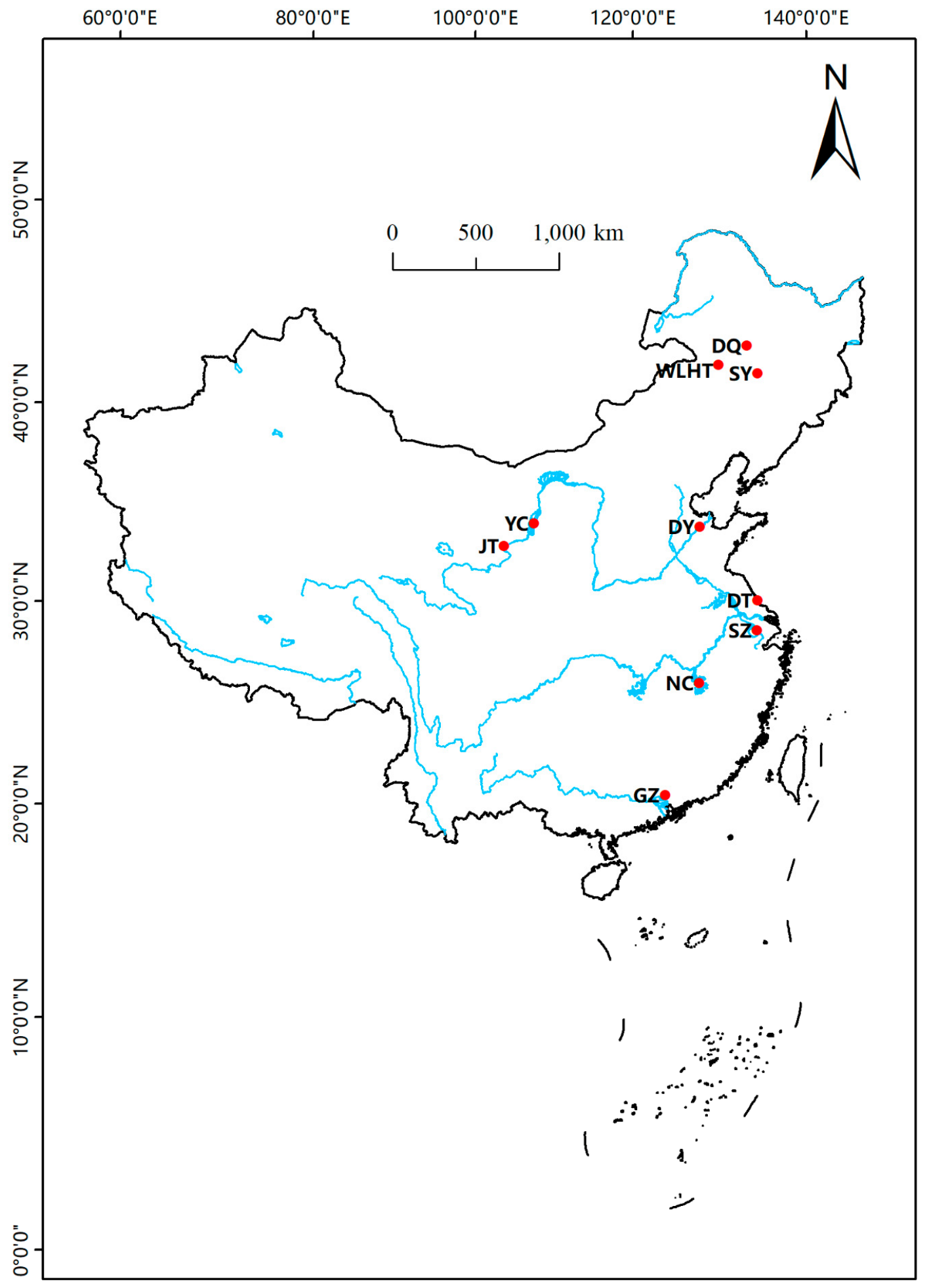
2.1. Sample Collection
2.2. Ionic Composition Analysis
2.3. Nutrient Composition Analysis
2.4. Plankton Community Analysis
2.5. Statistical Analysis
3. Results
3.1. Ionic Composition Analysis in Aquatic Environments
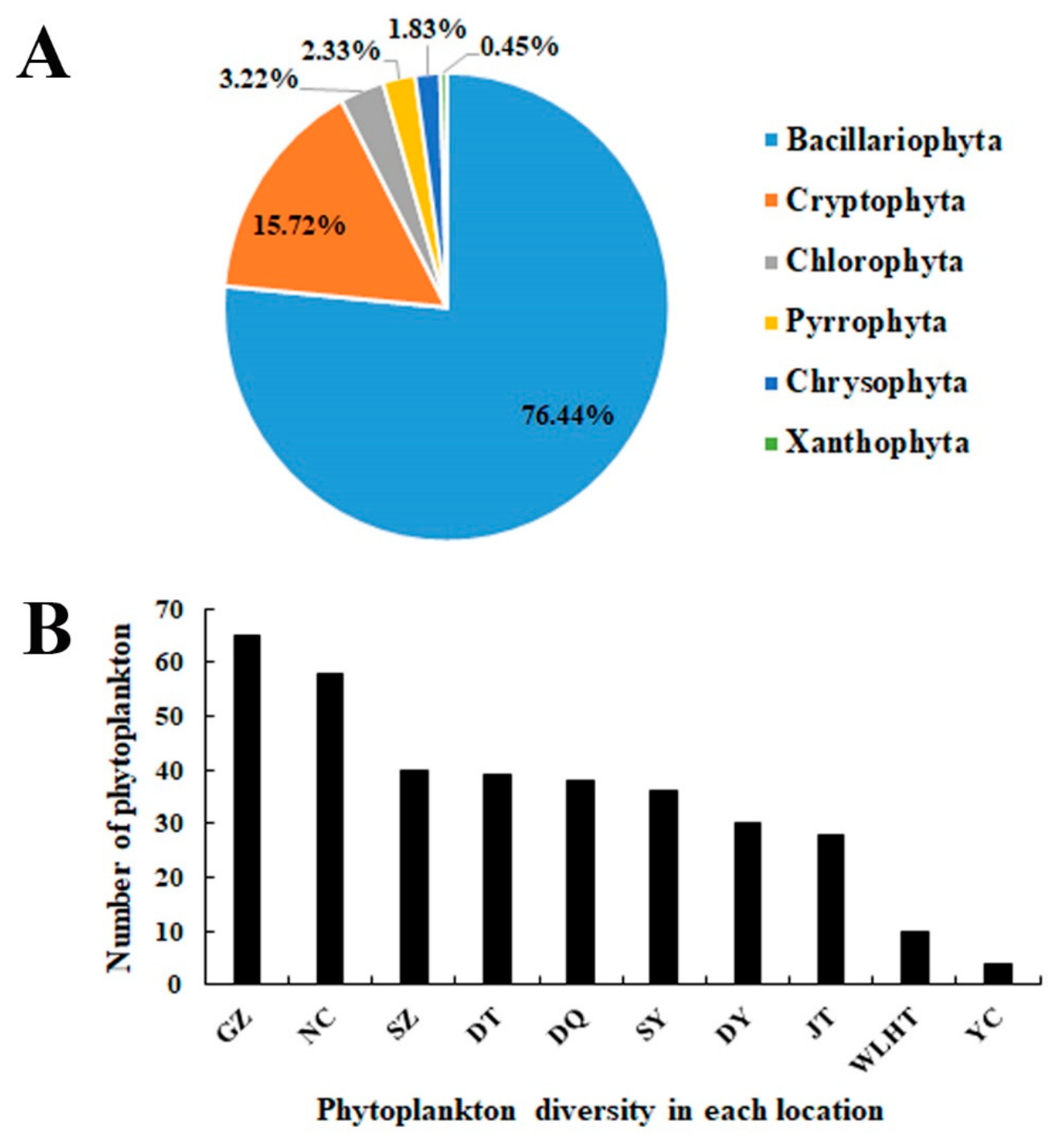
3.2. Phytoplankton Community Composition Across Sampling Locations
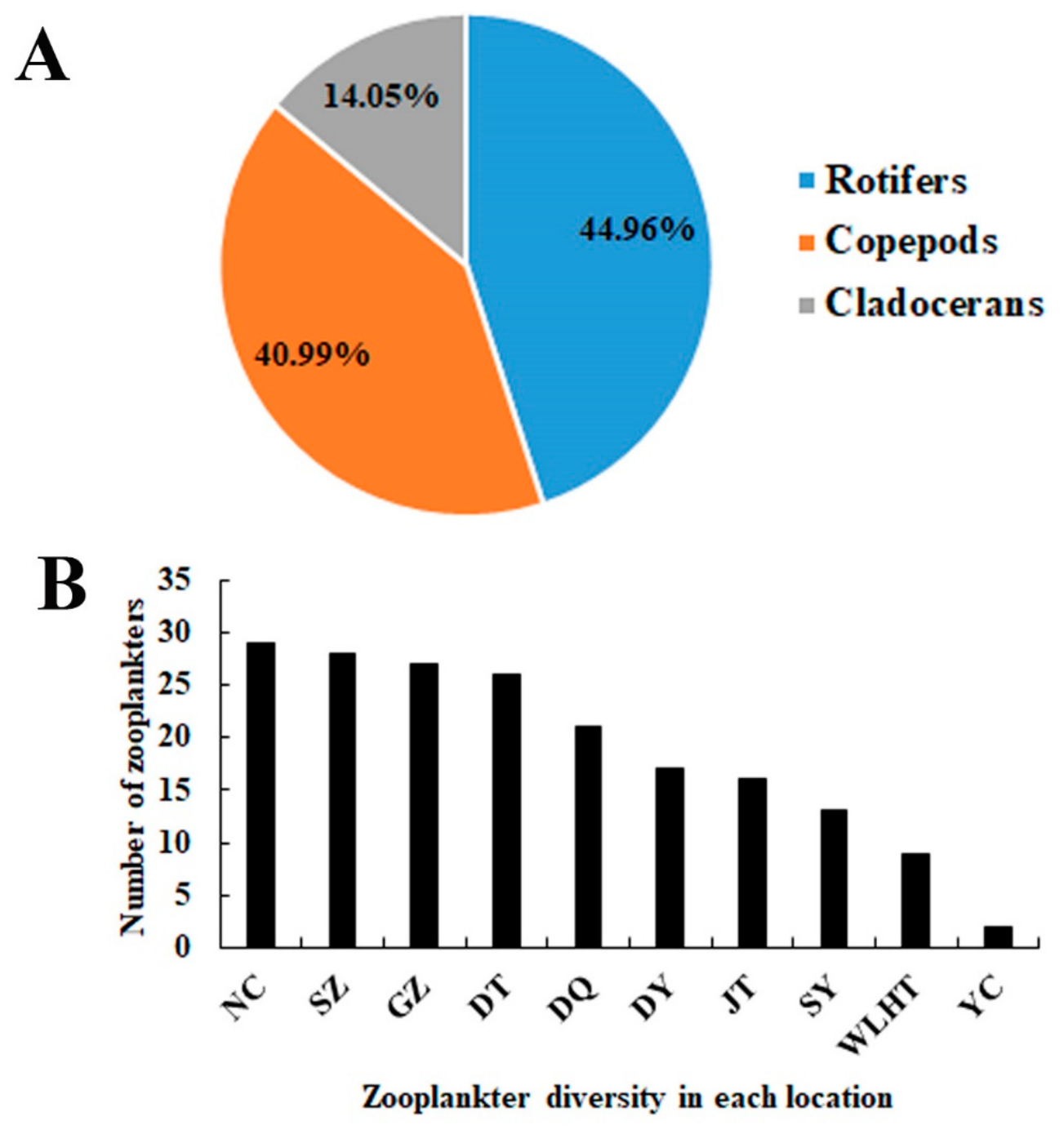
3.3. Zooplankton Community Composition Across Sampling Locations
3.4. Nutritional Composition of M. nipponense Across Sampling Locations
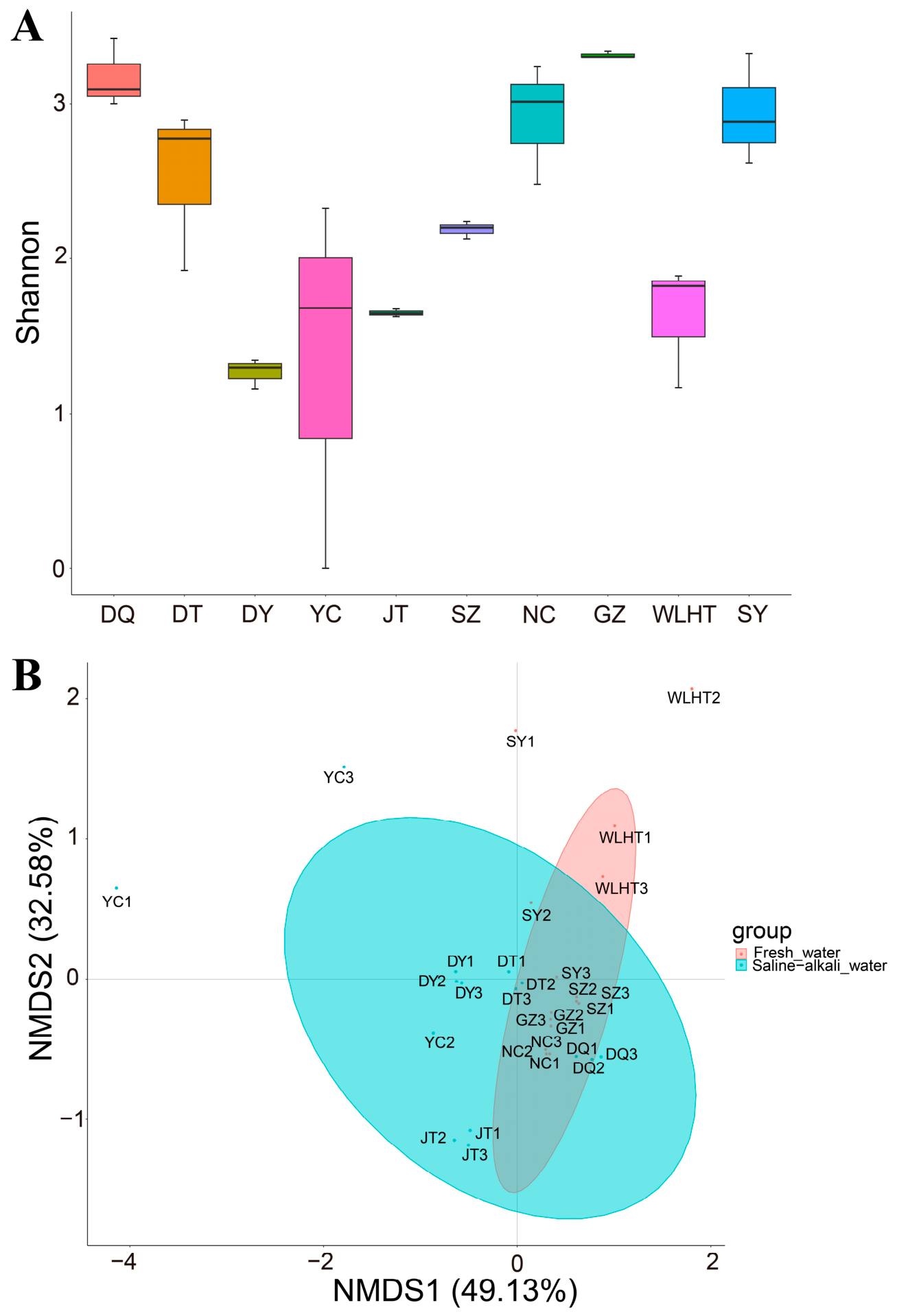
3.5. Biodiversity of Plankton Across Sampling Locations
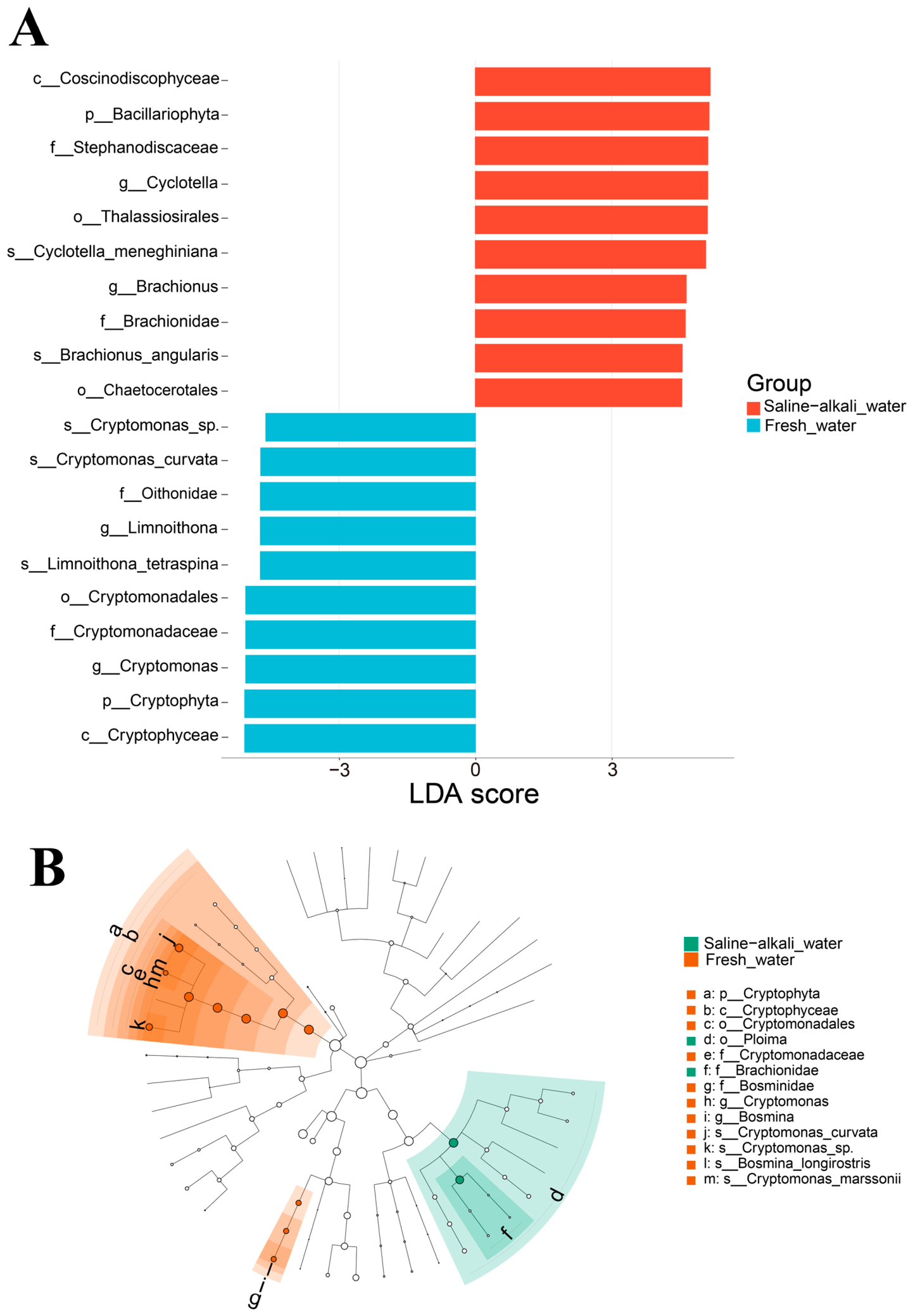
3.6. Identification of Plankton Indicator Taxa Distinguishing Freshwater and Saline–Alkaline Water Regions
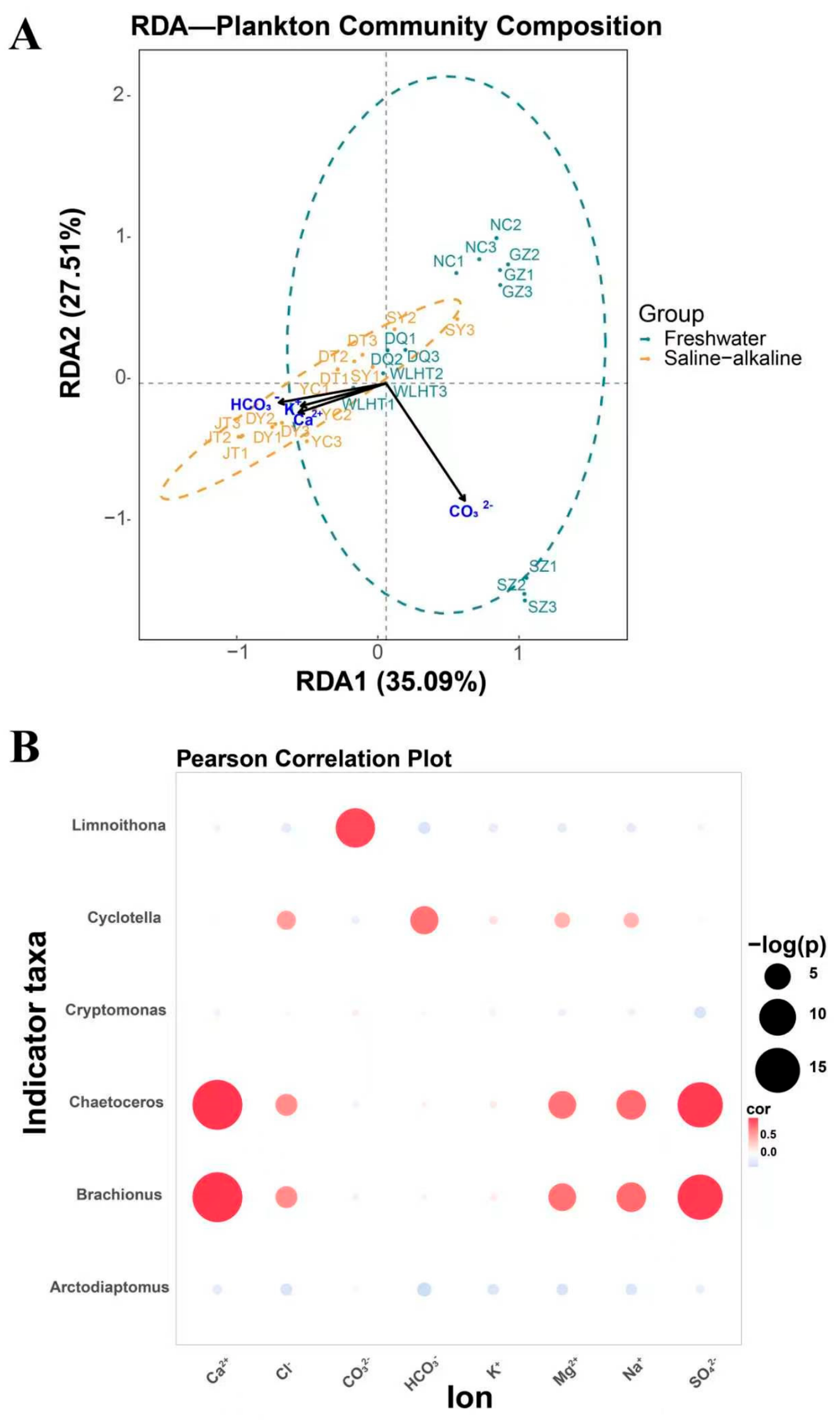
3.7. Correlation Analysis Between Ionic Composition and Plankton Indicator Taxa
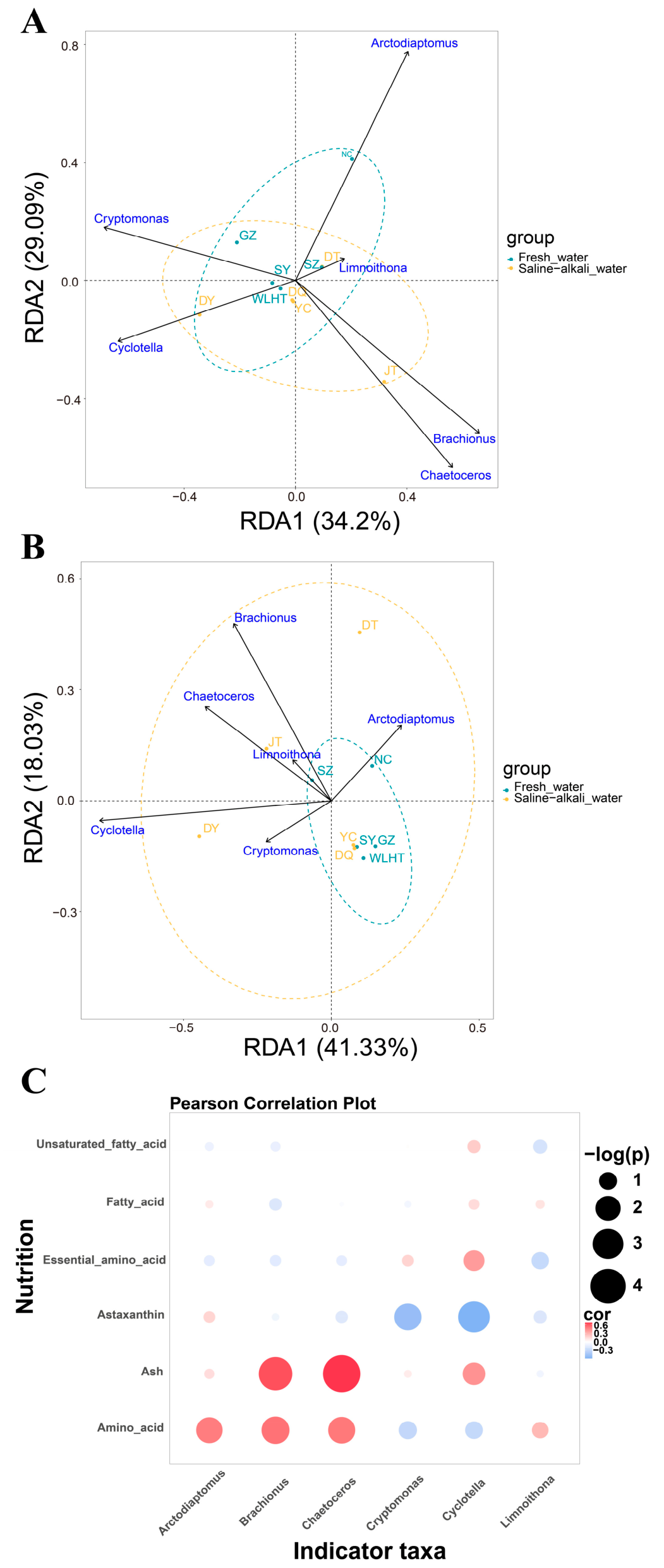
3.8. Correlation Analysis Between Plankton Indicator Taxa and Nutritional Components of M. nipponense
4. Discussion
Author Contributions
Funding
Institutional Review Board Statement
Informed Consent Statement
Data Availability Statement
Conflicts of Interest
References
- Fu, H.T.; Jiang, S.F.; Xiong, Y.W. Current status and prospects of farming the Giant River Prawn (Macrobrachium rosenbergii) and the oriental river prawn (Macrobrachium nipponense) in China. Aquac. Res. 2012, 43, 993–998. [Google Scholar] [CrossRef]
- Bureau of Fisheries, Ministry of Agriculture, China Fisheries Economic Statistics, in China Fishery Yearbook; Beijing China Agricultural: Beijing, China, 2025; p. 24.
- Padisák, J.; Borics, G.; Grigorszky, I.; Soróczki-Pintér, É. Use of phytoplankton assemblages for monitoring ecological status of lakes within the Water Framework Directive: The assemblage index. Hydrobiologia 2006, 553, 1–14. [Google Scholar] [CrossRef]
- Zheng, Z.B.; Gao, S.; Wang, G.C.; Cock, M. High salt stress in the upper part of floating mats of Ulva prolifera, a species that causes green tides, enhances non-photochemical quenching. J. Phycol. 2019, 55, 1041–1049. [Google Scholar] [CrossRef]
- Li, C.Z.; Wen, H.G.; Liu, H.M.; Xiong, W.; Guo, P.; Zhong, K.; Liang, H. Controls of water salinity on biological diversity and productivity in the Late Paleozoic alkaline lake, NW Junggar Basin, NW China. J. Asian Earth Sci. 2024, 275, 106288. [Google Scholar] [CrossRef]
- Groppelli, S.; Calvi, D.; Comazzi, F.; Alamooti, S.J.; Azzellino, A.; Barbaccia, E.; Caronni, S.; Macchi, P.; Raos, G.; Basso, D. The response of phytoplankton to pH-equilibrated ocean alkalinization: A mesocosm experiment with harbour waters. Mar. Pollut. Bull. 2026, 222, 118787. [Google Scholar] [CrossRef]
- Nocera, A.C.; Traboni, C.; Courboulès, J.; Romano, F.; Chantzaras, C.; Magiopoulos, I.; Varliero, S.; Azzellino, A.; Bazzicalupo, P.; Macchi, P.; et al. The effect of ocean alkalinity enhancement on zooplankton standing stock and community composition in the Eastern Mediterranean Sea: A mesocosm study. Mar. Environ. Res. 2025, 212, 107489. [Google Scholar] [CrossRef]
- Marcarelli, A.M.; Wurtsbaugh, W.A.; Griset, O. Salinity controls phytoplankton response to nutrient enrichment in the Great Salt Lake, Utah, USA. Can. J. Fish. Aquat. Sci. 2006, 63, 2236–2248. [Google Scholar] [CrossRef]
- Derry, A.M.; Prepas, E.E.; Herbert, P.D.N. A composition of zooplankton communities in saline lakewater with variable anion composition. Hydrobiologia 2003, 505, 199–215. [Google Scholar] [CrossRef]
- Weber-Scannell, P.K.; Duffy, L.K. Effects of total dissolved solids on aquatic organisms; a review of literature and recommendation for salmonid species. Am. J. Environ. Sci. 2007, 3, 1–6. [Google Scholar] [CrossRef]
- Taipale, S.J.; Kuoppamki, K.; Strandberg, U.; Peltomaa, E.; Vuorio, K. Lake restoration influences nutritional quality of algae and consequently Daphnia biomass. Hydrobiologia 2020, 847, 4539–4557. [Google Scholar] [CrossRef]
- Bekker, E.I.; Karabanov, D.P.; Galimov, Y.R.; Kotov, A.A. DNA barcoding reveals high cryptic diversity in the North Eurasian Moina species (Crustacea: Cladocera). PLoS ONE 2016, 11, e0161737. [Google Scholar] [CrossRef] [PubMed]
- Rasdi, N.W.; Qin, J.G. Improvement of copepod nutritional quality as live food for aquaculture: A review. Aquac. Res. 2016, 47, 1–20. [Google Scholar] [CrossRef]
- Rasdi, N.W.; Qin, J.G. Copepod supplementation as a live food improved growth and survival of Asian seabass Lates calcarifer larvae. Aquac. Res. 2018, 49, 3606–3613. [Google Scholar] [CrossRef]
- Reyes, J.; Rodríguez-Pesantes, D.; Sonnenholzner, S.; Nieto-Wigby, J. Effect of phytoplankton and zooplankton feeding on fatty acid dynamics in the early development of the mangrove red crab Ucides occidentalis. Aqua. Rep. 2025, 43, 102872. [Google Scholar] [CrossRef]
- Liu, G.X.; Xu, D.H. Effects of calanoid copepod Schmackeria poplesia as a live food on the growth, survival and fatty acid composition of larvae and juveniles of Japanese flounder, Paralichthys olivaceus. J. Ocean Univ. China 2009, 8, 359–365. [Google Scholar] [CrossRef]
- Das, S.K.; Tiwari, V.K.; Venkateshwarlu, G.; Reddy, A.K.; Parhi, J.; Sarma, P.; Chettri, J.K. Growth, survival and fatty acid composition of Macrobrachium rosenbergii (de Man, 1879) post larvae fed HUFA-enriched Moina micrura. Aquaculture 2007, 269, 464–475. [Google Scholar] [CrossRef]
- Parakrama, M.G.I.S.; Rawat, K.D.; Venkateshwarlu, G.; Reddy, A.K. Supply of Astaxanthin and its combinations through live feed (Moina micrura) enrichment affects the growth, survival and fatty acid profile of Macrobrachium resenvergii larvae. J. Nat. Aquat. Res. Res. Dev. 2012, 41, 44–58. [Google Scholar]
- Abbas, M.F.; Salman, S.D.; Al Mayahy, S.H. Diversity and seasonal changes of zooplankton communities in the Shatt Al-Arab River, Basrah, Iraq, with a special reference to Cladocera. Inter. J. Mar. Sci. 2015, 5, 1–14. [Google Scholar] [CrossRef]
- Kar, S.; Das, P.; Das, U.; Bimola, M.; Kar, D.; Aditya, G. Culture of the zooplankton as fish food: Observations on three freshwater species from Assam, India. Aqua. Aquar. Conserv. Legis. 2017, 10, 1210–1220. [Google Scholar]
- Miah, M.F.; Roy, S.; Jinnat, E.; Khan, Z.K. Assessment of Daphnia, Moina and Cylops in freshwater ecosystems and the evaluation of mixed culture in laboratory. Am. Inter. J. Res. Form. Appl. Nat. Sci. 2013, 3, 1–7. [Google Scholar]
- Wu, G. Amino acids: Metabolism, functions, and nutrition. Amino Acids 2009, 37, 1–17. [Google Scholar] [CrossRef] [PubMed]
- Hou, Y.; Wu, G. Nutritionally essential amino acids. Adv. Nutr. 2018, 9, 849–851. [Google Scholar] [CrossRef] [PubMed]
- Ferrando, A.A.; Paddon-Jones, D.; Hays, N.P.; Kortebein, P.; Ronsen, O.; Williams, R.H.; Mccomb, A.; Symons, T.B.; Wolfe, R.R.; Evans, W. EAA supplementation to increase nitrogen intake improves muscle function during bed rest in the elderly. Clin. Nutr. 2010, 29, 18–23. [Google Scholar] [CrossRef] [PubMed]
- Volpi, E.; Kobayashi, H.; Sheffield-Moore, M.; Mittendorfer, B.; Wolfe, R.R. Essential amino acids are primarily responsible for the amino acid stimulation of muscle protein anabolism in healthy elderly adults. Am. J. Clin. Nutr. 2003, 78, 250–258. [Google Scholar] [CrossRef]
- Dyall, S.C.; Balas, L.; Bazan, N.G.; Brenna, J.T.; Chiang, N.; da Costa Souza, F.; Dalli, J.; Durand, T.; Galano, J.M.; Lein, P.J.; et al. Polyunsaturated fatty acids and fatty acid-derived lipid mediators: Recent advances in the understanding of their biosynthesis, structures, and functions. Prog. Lipid Res. 2022, 86, 101165. [Google Scholar] [CrossRef]
- Shramko, V.S.; Polonskaya, Y.V.; Kashtanova, E.V.; Stakhneva, E.M.; Ragino, Y.I. The short overview on the relevance of fatty acids for human cardiovascular disorders. Biomolecules 2020, 10, 1127. [Google Scholar] [CrossRef]
- Helgadottir, H.; Thorisdottir, B.; Gunnarsdottir, I.; Halldorsson, T.I.; Palsson, G.; Thorsdottir, I. Lower intake of saturated fatty acids is associated with improved lipid profile in a 6-year-old nationally representative population. Nutrients 2022, 14, 671. [Google Scholar] [CrossRef]
- Maffeis, C.; Cendon, M.; Tomasselli, F.; Tommasi, M.; Bresadola, I.; Fornari, E.; Morandi, A.; Olivieri, F. Lipid and saturated fatty acids intake and cardiovascular risk factors of obese children and adolescents. Eur. J. Clin. Nutr. 2021, 75, 1109–1117. [Google Scholar] [CrossRef]
- Calder, P.C. Functional roles of fatty acids and their effects on human health. J. Parenter. Enter. Nutr. 2015, 39, 18S–32S. [Google Scholar] [CrossRef]
- Hebert, P.D.N.; Cywinska, A.; Ball, S.L.; de Waard, J.R. Biological identifications through DNA barcodes. Proc. Roy. Soc. B-Biol. Sci. 2003, 270, 313–321. [Google Scholar] [CrossRef]
- Lakra, W.S.; Goswami, M.; Gopalakrishnan, A. Molecular identification and phylogenetic relationships of seven Indian Sciaenids (Pisces: Perciformes, Sciaenidae) based on 16S rRNA and cytochrome c oxidase subunit I mitochondrial genes. Mol. Biol. Rep. 2009, 36, 831–839. [Google Scholar] [CrossRef]
- Feng, Y.Z.; Sun, D.; Shao, Q.W.; Fang, C.; Wang, C.S. COI metabarcoding better reveals the seasonal variations in the zooplankton community in the western Pacific Warm Pool. Ecol. Indic. 2023, 156, 111183. [Google Scholar] [CrossRef]
- Schroeder, A.; Pallavicini, A.; Edomi, P.; Pansera, M.; Camatti, E. Suitability of a dual COI marker for marine zooplankton DNA metabarcoding. Mar. Environ. Res. 2021, 170, 105444. [Google Scholar] [CrossRef]
- Hirai, J.; Yamaguchi, A.; Katakura, S. Hidden diversity of marine zooplankton under sea ice in the Okhotsk Sea: Insights from community and population analyses based on DNA metabarcoding. Mar. Environ. Res. 2026, 218, 108038. [Google Scholar] [CrossRef] [PubMed]
- Hadziavdic, K.; Lekang, K.; Lanzén, A.; Jonassen, I.; Thompson, E.M.; Troedsson, C. Characterization of the 18S rRNA gene for designing universal eukaryote specific primers. PLoS ONE 2014, 9, e87624. [Google Scholar] [CrossRef] [PubMed]
- Penna, A.; Casabianca, S.; Guerra, A.F.; Vernesi, C.; Scardi, M. Analysis of phytoplankton assemblage structure in the Mediterranean Sea based on high-throughput sequencing of partial 18S rRNA sequences. Mar. Genom. 2017, 36, 49–55. [Google Scholar] [CrossRef]
- Gao, P.B.; Yan, H.Z.; Wan, T.Q.; Yang, J.J.; Hou, D.D.; Zhang, H.J. Multidimensional comparisons of the V4 and V9 regions of the 18S rRNA gene in characterizing microeukaryotic community across complex environmental gradients of coastal waters. Mar. Pollut. Bull. 2025, 219, 118217. [Google Scholar] [CrossRef]
- Gui, J.F.; Tang, Q.S.; Li, Z.J.; Liu, J.S.; De Silva, S.S. Aquaculture in China: Success Stories and Modern Trends; John Wiley & Sons: Hoboken, NJ, USA, 2018. [Google Scholar]
- SC/T 9406-2012; Water Quality for Aquaculture in Saline-Alkali Land, Ministry of Agriculture. China Agricultural Press: Beijing, China, 2012.
- GB 5009.124-2016; National Food Safety Standard-Determination of Amino Acids in Foods. China Standards Press: Beijing, China, 2016.
- GB 5009.168-2016; National Food Safety Standard-Determination of Fatty Acid in Foods. China Standards Press: Beijing, China, 2016.
- GB 5009.4-2016; Determination of Ash in Food. China Standards Press: Beijing, China, 2016.
- Liu, Y.S.; Sun, J.Y.; Zhu, M.S.; Li, D.M.; Tang, S.K.; Zhong, L.Q.; Zhang, Z.; Wang, C.Q.; Shen, D.D. Investigation of fish diversity in Lake Taihu based on eDNA metabarcoding. Asian J. Ecotox. 2023, 18, 16–26. [Google Scholar]
- Ihaka, R.; Gentleman, R. R: A language for data analysis and graphics. J. Comput. Graph. Stat. 1996, 5, 299–314. [Google Scholar] [CrossRef]
- Liu, C.; Cui, Y.; Li, X.; Yao, M. Microeco: An R package for data mining in microbial community ecology. FEMS Microbiol. Ecol. 2021, 97, fiaa255. [Google Scholar] [CrossRef]
- Oksanen, J.; Blanchet, F.G.; Kindt, R.; Legendre, P.; Wagner, H. Package ‘vegan’. Community Ecol. 2013, 2, 1–295. [Google Scholar]
- Wilkinson, L. ggplot2: Elegant graphics for data analysis by WICKHAM, H. Biometrics 2011, 67, 678–679. [Google Scholar] [CrossRef]
- Hu, H.; Lai, Q.; Me, Z. Green Aquaculture Technology Models for Saline-Alkaline Water; Beijing China Agricultural: Beijing, China, 2021; p. 17. [Google Scholar]
- Tahoora, S.N.; Firuz, R.M.; Zaharin, A.A.; Azmin, S.W.N.; Hafizan, J.; Kazem, F. Identification of the hydrogeochemical processes in groundwater using classic integrated geochemical methods and geostatistical techniques, in Amol-Babol Plain, Iran. Sci. World J. 2014, 2014, 419058. [Google Scholar] [CrossRef]
- Zhang, B.; Song, X.; Zhang, Y.; Han, D.; Tang, C.; Yu, Y.; Ma, Y. Hydrochemical characteristics and water quality assessment of surface water and groundwater in Songnen plain, Northeast China. Water Res. 2015, 47, 1137–1148. [Google Scholar] [CrossRef] [PubMed]
- Bakhtiyar, Y.; Langer, S. Seasonal variation in the proximate body composition of Macrobrachium dayanum (Henderson, 1893) (Decapoda, Caridea) from Gho-Man-hasa stream, Jammu, North India. Acta Biol. Turc. 2016, 29, 89–98. [Google Scholar]
- Lavajoo, F.; Biuki, N.A.; Khanipour, A.; Mirzajani, A.; Akbarzadeh, A. An invasive shrimp species, Macrobrachium nipponense, in Anzali wetland demonstrated a potential source for commercial fishing. J. Aquat. Food Prod. Technol. 2018, 27, 975–985. [Google Scholar] [CrossRef]
- Ni, J.; Zhao, X.Q.; Chen, L.Q.; Ma, Q.; Gu, Z.M.; Zhou, Z.M.; Yao, M.X. A comparison of nutritional quality in muscle of Macrobrachium nipponense from four populations. J. Fish. China 2003, 10, 212–215. [Google Scholar]
- Tang, J.Y.; Ye, J.Y.; Dai, Y.X.; Jiang, A.L.; Wu, C. Comparison of muscle nutritional compositions of four wild oriental river prawn Macrobrachium nipponense populations in Jiangsu province. Acta Hydrobiol. Sin. 2021, 45, 801–808. [Google Scholar]
- Zhang, X. Preliminary Studies on Genetic Characteristics and Nutritional Quality of Wild and Cultured Populations of Macrobrachium nipponense in Jiangsu Area; Nanjing Agriculture University: Nanjing, China, 2008. [Google Scholar]
- Fan, W.J.; Su, M.; Li, X.S.; Qiao, Y.P.; Zhang, G.Y. Comparison of muscle nutritional components in wild and farmed populations of Macrobrachium nipponense from Dianshan Lake. Fish. Sci. Tech. Inf. 2019, 46, 181–186. [Google Scholar]
- Gannon, J.E.; Stemberger, R.S. Zooplankton especially crustaceans and rotifers as indicators of water quality. Trans. Am. Micro. Soc. 1978, 97, 16–35. [Google Scholar] [CrossRef]
- Ahmad, U.; Parveen, S.; Mola, H.R.; Kabir, H.A.; Ganai, A.H. Zooplankton population in relation to physicochemical parameters of Lal Diggi pond in Aligarh, India. J. Environ. Biol. 2012, 33, 1015–1019. [Google Scholar]
- Dutta, T.K.; Patra, B.C. Biodiversity and seasonal abundance of Zooplankton and its relation to physico-chemical parameters of Jamunabundh, Bishnupur, India. Int. J. Pharm. Sci. Res. 2013, 3, 1–7. [Google Scholar]
- Ballot, A.; Krienitz, L.; Kotut, K.; Wiegand, C.; Metcalf, J.S.; Codd, G.A.; Pflugmacher, S. Cyanobacteria and cyanobacterial toxins in three alkaline Rift Valley lakes of Kenya-Lakes Bogoria, Nakuru and Elmentaita. J. Plankton Res. 2004, 26, 925–935. [Google Scholar] [CrossRef]
- Vareschi, E. The ecology of Lake Nakuru (Kenya). III. Abiotic factors and primary production. Oecologia 1982, 55, 81–101. [Google Scholar] [CrossRef]
- Schagerl, M.; Oduor, S.O. Phytoplankton community relationships to environmental variables in three Kenyan Rift Valley saline-alkaline lakes. Mar. Freshw. Res. 2008, 59, 125–136. [Google Scholar] [CrossRef]
- Akindele, E.O. Relationships between the physico-chemical water parameters and zooplankton fauna of Tiga Lake, Kano, Nigeria. Bayero J. Pure Appl. Sci. 2013, 6, 95–100. [Google Scholar] [CrossRef]
- Pronob, D.; Mandal, S.C.; Bhagabati, S.K.; Akhtar, M.S.; Singh, S.K. Important live food organisms and their role in aquaculture. In Frontiers in Aquaculture; Sukham, M., Ed.; Narendra Publishing House: New Delhi, India, 2012; pp. 69–86. [Google Scholar]
- Mona, M.; Gamal, M.E.; Razek, F.A.; Eldeen, M.N. Utilization of Daphnia longispina as supplementary food for rearing Marsupenaeus japonicus post larvae. J. Mar. Biol. Assoc. 2017, 59, 74. [Google Scholar]
- Rønnestad, I.; Yúfera, M.; Ueberschär, B.; Ribeiro, L.; Saele, Ø.; Boglione, C. Feeding behaviour and digestive physiology in larval fish: Current knowledge, and gaps and bottlenecks in research. Rev. Aquacult. 2013, 5, S59–S98. [Google Scholar] [CrossRef]
- Samir, M.; Banik, S. Production and application of live food organisms for freshwater ornamental fish larviculture. Adv. Bio Res. 2015, 6, 159–167. [Google Scholar]
- Watanable, T. Importance of docosahexaenoic acid in marine larval fish. J. World Aquacult. Soc. 1993, 24, 152–161. [Google Scholar] [CrossRef]
- Kanazawa, A. Nutrition of marine fish larvae. J. Appl. Aqua. 2003, 13, 103–143. [Google Scholar] [CrossRef]
- Karlsen, Ø.; van der Meeren, T.; Rønnestad, I.; Jensen, A.M.; Galloway, T.F.; Kjørsvik, E.; Hamre, K. Copepods enhance nutritional status, growth and development in Atlantic cod (Gadus morhua L.) larvae—Can we identify the underlying factors? J. Life Environ. Sci. 2015, 3, e902. [Google Scholar]
- Shi, D.; Xu, Y.; Hopkinson, B.M.; Morel, F.M.M. Effect of ocean acidification on iron availability to marine phytoplankton. Science 2010, 327, 676–679. [Google Scholar] [CrossRef] [PubMed]



| Location | Coordinate | River | Salinity (‰) | Alkalinity (mmol) |
|---|---|---|---|---|
| DQ | 124°11′35″; 46°47′37″ | Lianhuanhu | 2 | 5.1 |
| SY | 124°29′35″; 45°8′45″ | Chaganhu | 1 | 3.3 |
| WLHT | 121°38′6″; 46°6′3″ | Chaersen Reservoir | 0 | 1.1 |
| YC | 106°24′23″; 38°25′46″ | Yellow River | 1 | 3.7 |
| JT | 104°18′8″; 37°11′12″ | Yellow River | 10 | 2.4 |
| DY | 117°58′38″; 37°23′17″ | Coastal mudflat | 3 | 6.5 |
| DT | 120°51′58″; 32°49′36″ | Coastal mudflat | 2 | 2.8 |
| SZ | 120°27′42″; 31°13′15″ | Taihu Lake | 0 | 0.8 |
| NC | 116°21′13″; 28°56′52″ | Poyang Lake | 0 | 0.8 |
| GZ | 113°33′11″; 23°17′12″ | Pearl River | 0 | 0.8 |
| Location | Cl− (mg/L) | SO42− (mg/L) | HCO3− (mg/L) | CO32− (mg/L) | K+ (mg/L) | Na+ (mg/L) | Ca2+ (mg/L) | Mg2+ (mg/L) |
|---|---|---|---|---|---|---|---|---|
| DT | 388 | 50.8 | 247 | 0 | 19.6 | 288 | 35.1 | 35.4 |
| DY | 735 | 159 | 660 | 0 | 10.2 | 710 | 36.2 | 104 |
| SY | 26.6 | 27.8 | 256 | 0 | 2.47 | 58.4 | 29.0 | 16.4 |
| DQ | 92.2 | 24.2 | 392 | 0 | 3.67 | 187 | 18.2 | 20.2 |
| JT | 814 | 1.34 × 10³ | 268 | 0 | 10.7 | 1.09 × 10³ | 148 | 149 |
| YC | 540 | 390 | 303 | 0 | 22.2 | 463 | 14.9 | 79.7 |
| NC | 4.73 | 9.74 | 39.8 | 0 | 2.41 | 4.40 | 13.5 | 2.13 |
| SZ | 44.0 | 49.7 | 52.1 | 9.77 | 3.55 | 37.4 | 21.6 | 8.78 |
| GZ | 48.8 | 31.2 | 67.9 | 0 | 5.62 | 31.5 | 31.2 | 3.95 |
| WLHT | 6.45 | 11.0 | 75.5 | 0 | 0.943 | 7.75 | 24.7 | 5.01 |
| Ash (g/100 g) | Astaxanthin (mg/kg) | Total AA (g/100 g) | Essential AA (g/100 g) | Total FA (g/100 g) | Unsaturated FA (g/100 g) | |
|---|---|---|---|---|---|---|
| DY | 1.5 ± 0 e | 0.63 ± 0.02 a | 16.77 ± 0.15 a | 5.44 ± 0.07 de | 1.1 ± 0.1 c | 0.35 ± 0.014 fg |
| SY | 1.2 ± 0 b | 2.17 ± 0.01 g | 16.5 ± 0.36 a | 5.39 ± 0.21 de | 1.07 ± 0.12 c | 0.36 ± 0.008 g |
| DQ | 1.3 ± 0 c | 1.66 ± 0.03 e | 18.43 ± 0.4 c | 5.46 ± 0.09 e | 1.1 ± 0.1 c | 0.33 ± 0.003 ef |
| JT | 1.6 ± 0 f | 1.38 ± 0.05 d | 19.57 ± 0.35 d | 5.07 ± 0.16 bc | 1.0 ± 0.1 c | 0.29 ± 0.007 d |
| YC | 1.13 ± 0.06 a | 2.59 ± 0.06 h | 16.53 ± 0.31 a | 4.77 ± 0.19 a | 0.83 ± 0.06 ab | 0.19 ± 0.007 a |
| DT | 1.3 ± 0 c | 2.09 ± 0.09 g | 17.37 ± 0.35 b | 5.16 ± 0.18 bcd | 0.8 ± 0.1 a | 0.18 ± 0.004 a |
| NC | 1.4 ± 0 d | 2.01 ± 0.04 f | 19.5 ± 0.1 d | 5.07 ± 0.07 bc | 1.03 ± 0.06 c | 0.25 ± 0.017 c |
| SZ | 1.3 ± 0 c | 1.29 ± 0.04 bc | 18.83 ± 0.21 c | 4.92 ± 0.17 ab | 1.03 ± 0.06 c | 0.23 ± 0.012 b |
| GZ | 1.3 ± 0 c | 1.22 ± 0.03 b | 17.27 ± 0.15 b | 5.24 ± 0.19 cde | 0.97 ± 0.06 bc | 0.25 ± 0.005 c |
| WLHT | 1.33 ± 0.06 c | 1.33 ± 0.05 cd | 16.37 ± 0.21 a | 5.17 ± 0.12 bcd | 1.1 ± 0.1 c | 0.32 ± 0.011 e |
Disclaimer/Publisher’s Note: The statements, opinions and data contained in all publications are solely those of the individual author(s) and contributor(s) and not of MDPI and/or the editor(s). MDPI and/or the editor(s) disclaim responsibility for any injury to people or property resulting from any ideas, methods, instructions or products referred to in the content. |
© 2026 by the authors. Licensee MDPI, Basel, Switzerland. This article is an open access article distributed under the terms and conditions of the Creative Commons Attribution (CC BY) license.
Share and Cite
Jin, S.; Ye, Z.; Fu, H.; Xiong, Y.; Qiao, H.; Zhang, W.; Jiang, S. Variations in Plankton Community Structure Between Freshwater and Saline–Alkaline Waters and Their Correlation with Nutrient Composition in Macrobrachium nipponense. Animals 2026, 16, 1591. https://doi.org/10.3390/ani16111591
Jin S, Ye Z, Fu H, Xiong Y, Qiao H, Zhang W, Jiang S. Variations in Plankton Community Structure Between Freshwater and Saline–Alkaline Waters and Their Correlation with Nutrient Composition in Macrobrachium nipponense. Animals. 2026; 16(11):1591. https://doi.org/10.3390/ani16111591
Chicago/Turabian StyleJin, Shubo, Zhenghao Ye, Hongtuo Fu, Yiwei Xiong, Hui Qiao, Wenyi Zhang, and Sufei Jiang. 2026. "Variations in Plankton Community Structure Between Freshwater and Saline–Alkaline Waters and Their Correlation with Nutrient Composition in Macrobrachium nipponense" Animals 16, no. 11: 1591. https://doi.org/10.3390/ani16111591
APA StyleJin, S., Ye, Z., Fu, H., Xiong, Y., Qiao, H., Zhang, W., & Jiang, S. (2026). Variations in Plankton Community Structure Between Freshwater and Saline–Alkaline Waters and Their Correlation with Nutrient Composition in Macrobrachium nipponense. Animals, 16(11), 1591. https://doi.org/10.3390/ani16111591