
The Conserved Roles of miR-2c in the Ecdysone Signaling Pathway by Targeting EcR/RXR and Runt for Exoskeleton Formation in the Pearl Oyster Pinctada fucata martensii

 ,
,  and
and
Simple Summary
Abstract
1. Introduction
2. Materials and Methods
2.1. Experimental Animals
2.2. In Vivo Modulation of miR-2c Expression
2.3. qRT-PCR Validation
2.4. Seashell Damage Treatment
2.5. Dual Luciferase Reporter Assay
2.6. Sequences Collection and Target Prediction
2.7. Statistical Analysis
3. Results
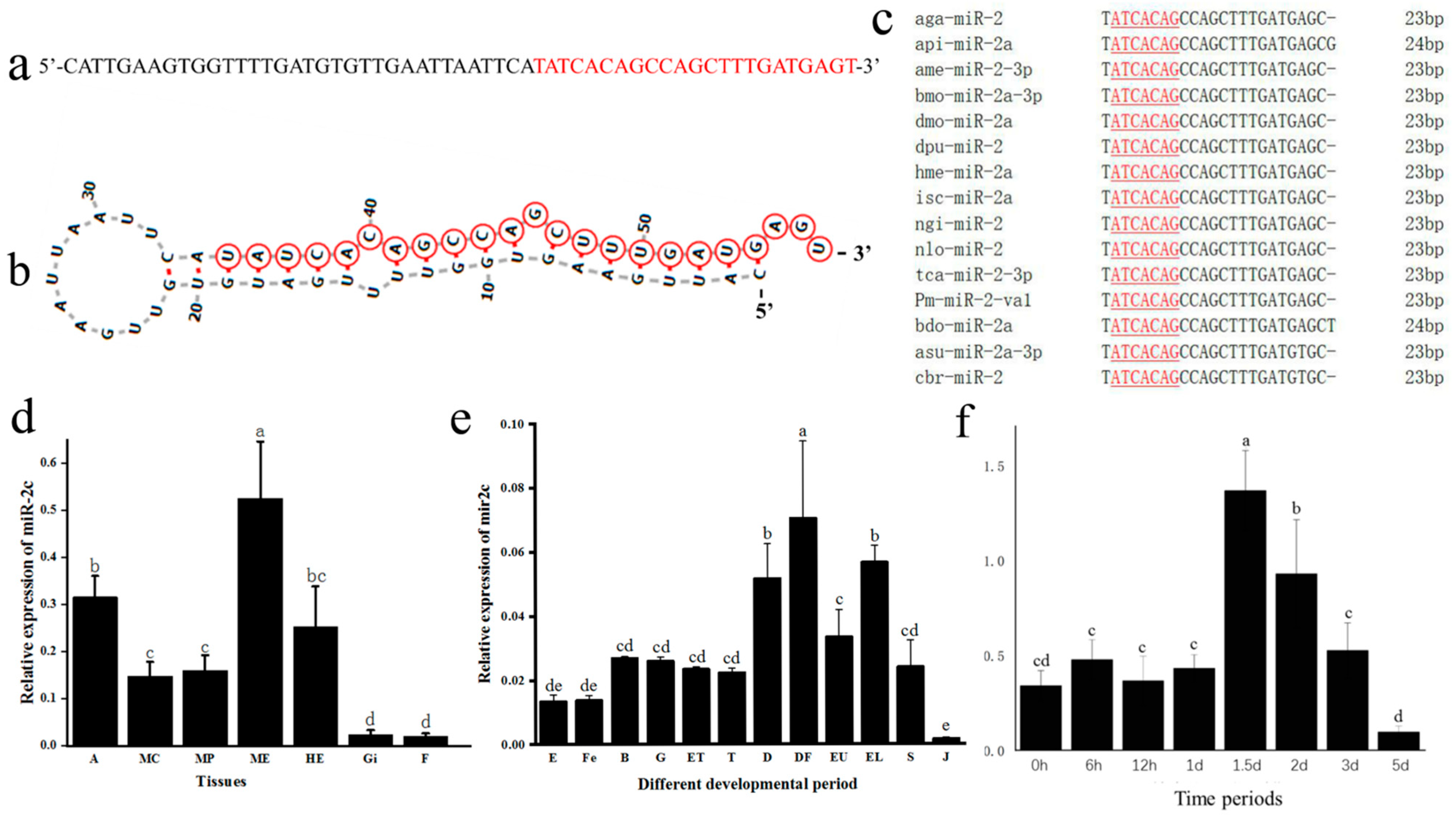
3.1. Identification of miR-2c Precursor and Mature Sequence
3.2. Differential Expression Analysis of miR-2c in Tissues and Developmental Stages of P. f. martensii
3.3. Shell Damage Experiment
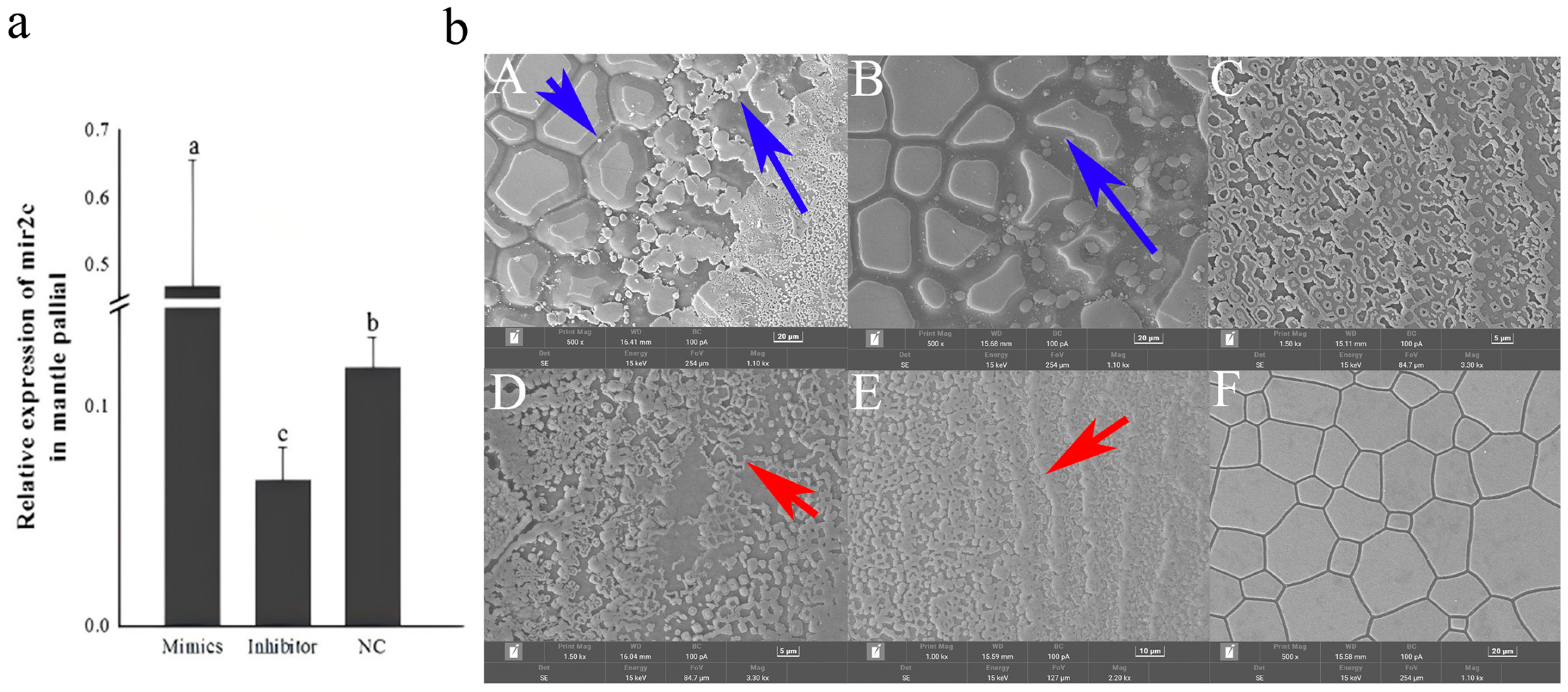
3.4. Effects of miR-2c Overexpression and Inhibition on Shell Formation In Vivo
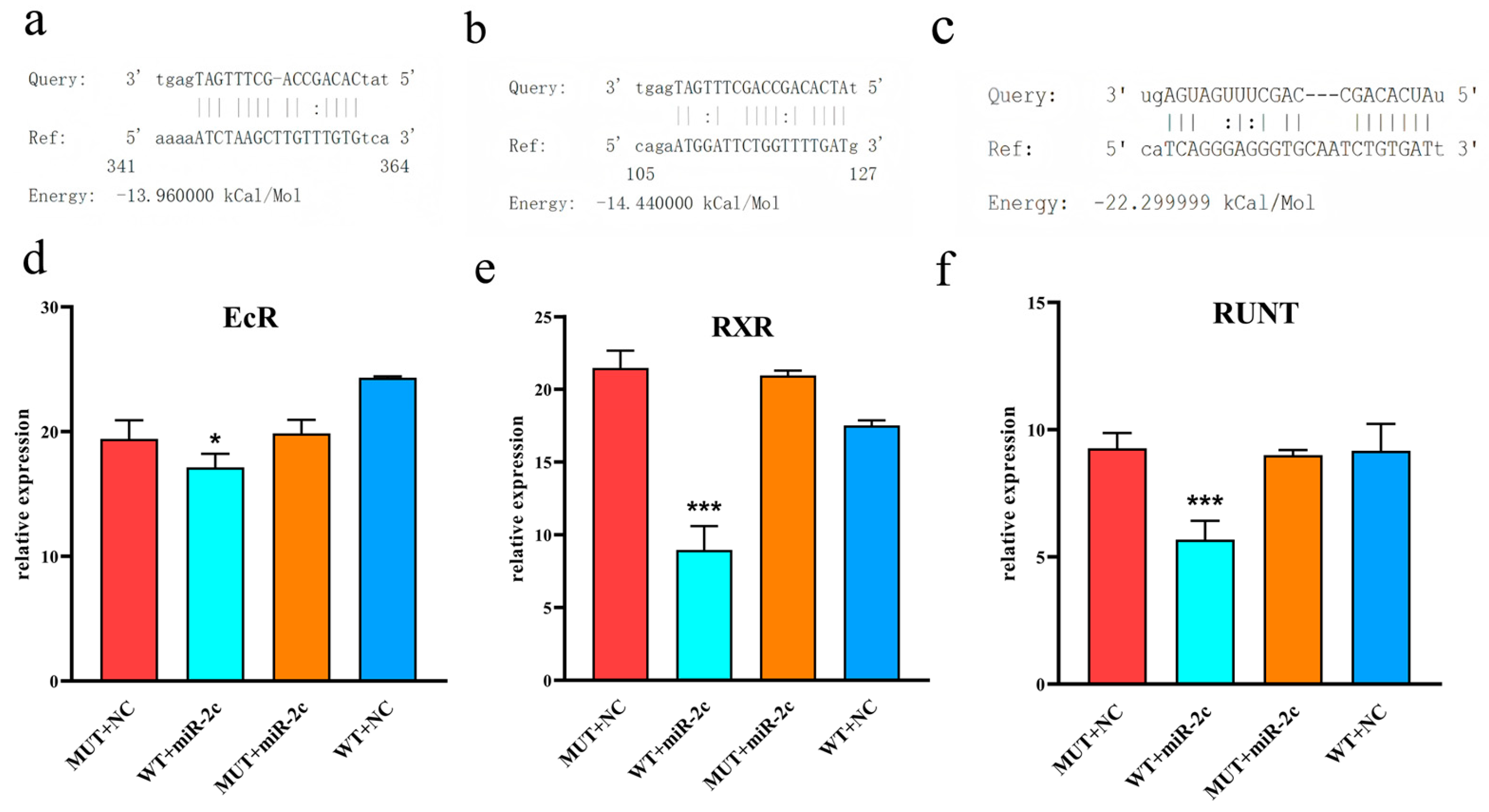
3.5. Regulatory Role of miR-2c to EcR, RXR and Runt
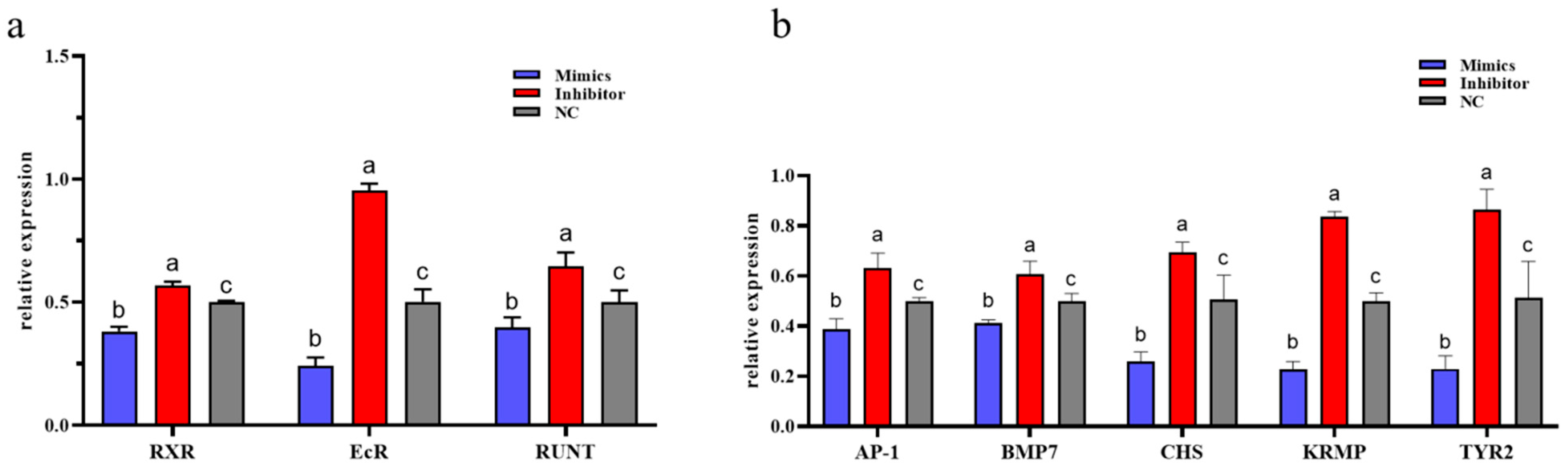
3.6. Effects of miR-2c to Downstream Genes of Ecdysone Pathway
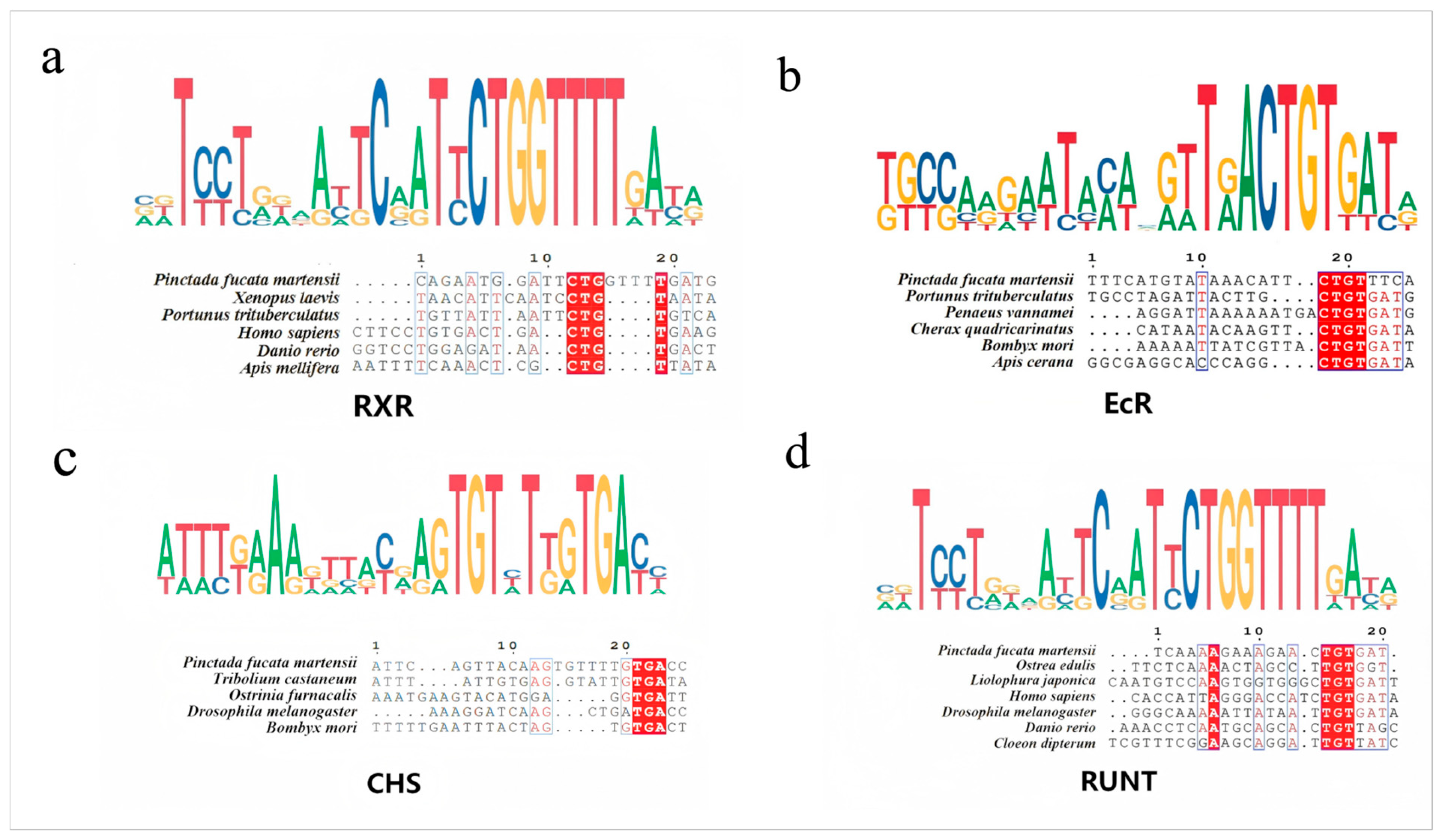
3.7. Conservation Analysis of miR-2c Target Sites in EcR, RXR, CHS and Runt
4. Discussion
4.1. miR-2c Modulates Shell Formation in Larval and Adult Stages
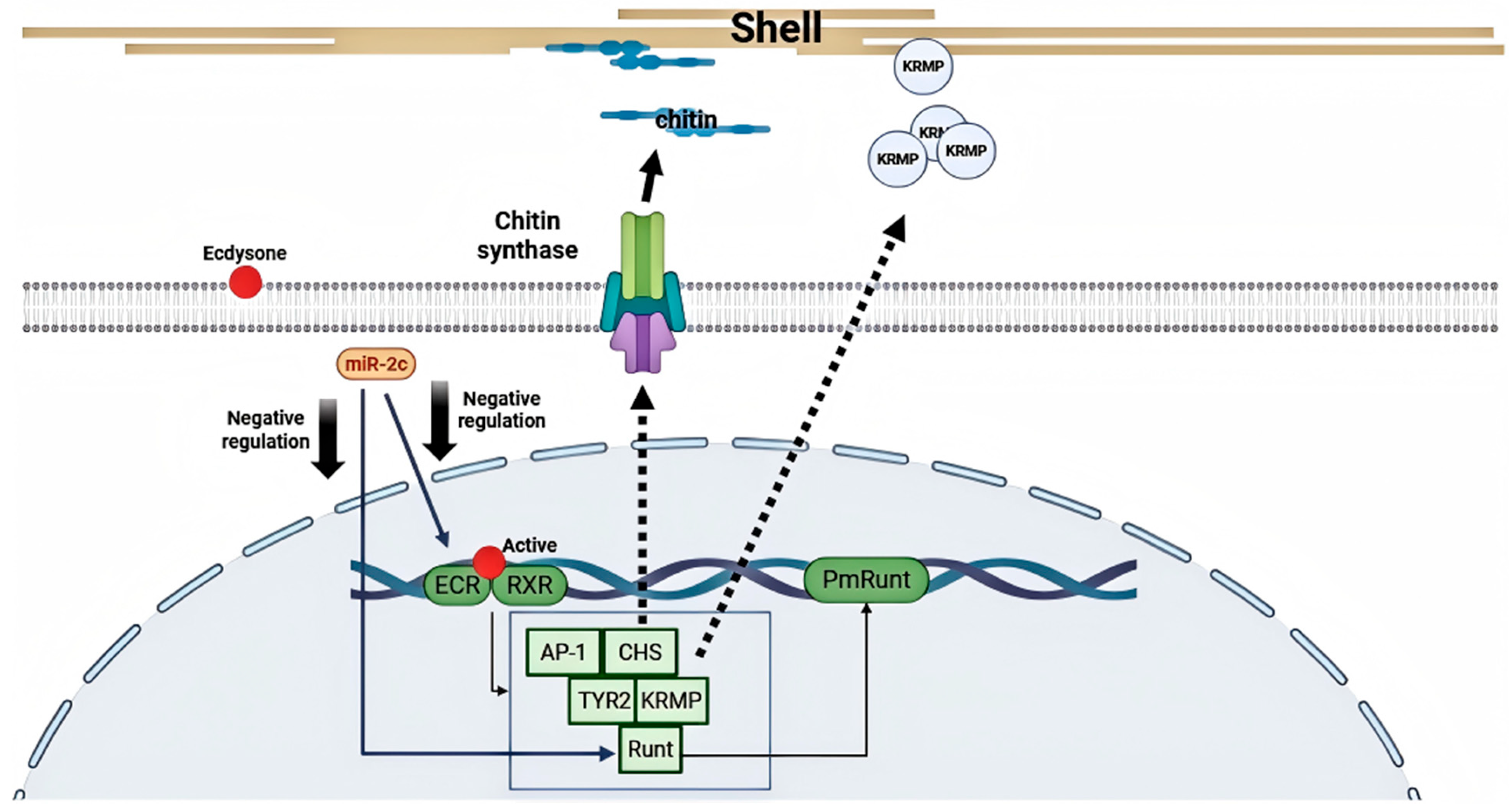
4.2. miR-2c Directly Targets Multiple Genes in the Ecdysone Signaling Pathway
4.3. Evolutionary Footprint of miRNA Regulation Evidenced by Conserved Targeting Sites of miR-2c
5. Conclusions
Supplementary Materials
Author Contributions
Funding
Institutional Review Board Statement
Informed Consent Statement
Data Availability Statement
Acknowledgments
Conflicts of Interest
References
- Knoll, A.H. Biomineralization and evolutionary history. Rev. Miner. Geochem. 2003, 54, 329–356. [Google Scholar] [CrossRef]
- Murdock, D.J. The ‘biomineralization toolkit’ and the origin of animal skeletons. Biol. Rev. 2020, 95, 1372–1392. [Google Scholar] [CrossRef]
- Vittori, M. Structural diversity of crustacean exoskeletons and its implications for biomimetics. Interface Focus. 2024, 14, 20230075. [Google Scholar] [CrossRef]
- la Rosa, B.A.J.-D.; Quintana, P.; Ardisson, P.-L.; Yáñez-Limón, J.M.; Alvarado-Gil, J.J. Effects of thermal treatments on the structure of two black coral species chitinous exoskeleton. J. Mater. Sci. 2012, 47, 990–998. [Google Scholar] [CrossRef]
- Suzuki, M.; Sakuda, S.; Nagasawa, H. Identification of chitin in the prismatic layer of the shell and a chitin synthase gene from the Japanese pearl oyster, Pinctada fucata. Biosci. Biotechnol. Biochem. 2007, 71, 1735–1744. [Google Scholar] [CrossRef]
- Miller, A. Collagen: The organic matrix of bone. Philos. Trans. R. Soc. Lond. B Biol. Sci. 1984, 304, 455–477. [Google Scholar] [CrossRef] [PubMed]
- Roselló-Díez, A.; Joyner, A.L. Regulation of long bone growth in vertebrates; it is time to catch up. Endocr. Rev. 2015, 36, 646–680. [Google Scholar] [CrossRef]
- Reaka, M.L. Patterns of molting frequencies in coral-dwelling stomatopod Crustacea. Biol. Bull. 1979, 156, 328–342. [Google Scholar] [CrossRef]
- Nijhout, H.F. Physiological control of molting in insects. Am. Zool. 1981, 21, 631–640. [Google Scholar] [CrossRef]
- Bo, M.; Bavestrello, G.; Kurek, D.; Paasch, S.; Brunner, E.; Born, R.; Galli, R.; Stelling, A.L.; Sivkov, V.N.; Petrova, O.V.; et al. Isolation and identification of chitin in the black coral Parantipathes larix (Anthozoa: Cnidaria). Int. J. Biol. Macromol. 2012, 51, 129–137. [Google Scholar] [CrossRef]
- Du, X.; Fan, G.; Jiao, Y.; Zhang, H.; Guo, X.; Huang, R.; Zheng, Z.; Bian, C.; Deng, Y.; Wang, Q.; et al. The pearl oyster Pinctada fucata martensii genome and multi-omic analyses provide insights into biomineralization. Gigascience 2017, 6, gix059. [Google Scholar] [CrossRef]
- Fan, S.; Zheng, Z.; Hao, R.; Du, X.; Jiao, Y.; Huang, R. PmCBP, a novel poly (chitin-binding domain) gene, participates in nacreous layer formation of Pinctada fucata martensii. Comp. Biochem. Physiol. B Biochem. Mol. Biol. 2020, 240, 110374. [Google Scholar] [CrossRef]
- Zhou, Y.; Yan, Y.; Yang, D.; Zheng, G.; Xie, L.; Zhang, R. Cloning, characterization, and functional analysis of chitinase-like protein 1 in the shell of Pinctada fucata. Acta Biochim. Biophys. Sin. 2020, 52, 954–966. [Google Scholar] [CrossRef]
- Abdullah-Zawawi, M.; Afiqah-Aleng, N.; Ikhwanuddin, M.; Sung, Y.Y.; Tola, S.; Fazhan, H.; Waiho, K. Recent development in ecdysone receptor of crustaceans: Current knowledge and future applications in crustacean aquaculture. Rev. Aquac. 2021, 13, 1938–1957. [Google Scholar] [CrossRef]
- Spindler, K.D.; Hönl, C.; Tremmel, C.; Braun, S.; Ruff, H.; Spindler-Barth, M. Ecdysteroid hormone action. Cell. Mol. Life Sci. 2009, 66, 3837–3850. [Google Scholar] [CrossRef]
- Xiong, X.; Cao, Y.; Li, Z.; Huang, R.; Du, X.; Zheng, Z. Ecdysone signal pathway participates in shell formation in pearl oysters Pinctada fucata martensii. J. Steroid Biochem. Mol. Biol. 2022, 217, 106045. [Google Scholar] [CrossRef] [PubMed]
- Sedanza, M.G.; Alshaweesh, J.; Gao, Y.-L.; Yoshida, A.; Kim, H.-J.; Yamaguchi, K.; Satuito, C.G. Transcriptome Dynamics of an Oyster Larval Response to a Conspecific Cue-Mediated Settlement Induction in the Pacific Oyster Crassostrea gigas. Diversity 2022, 14, 559. [Google Scholar] [CrossRef]
- Marco, A.; Hooks, K.; Griffiths-Jones, S. Evolution and function of the extended miR-2 microRNA family. RNA Biol. 2012, 9, 242–248. [Google Scholar] [CrossRef]
- Niu, D.; Li, B.; Xie, S.; Dong, Z.; Li, J. Integrated mRNA and small RNA sequencing reveals regulatory expression of larval metamorphosis of the Razor Clam. Mar. Biotechnol. 2020, 22, 696–705. [Google Scholar] [CrossRef]
- Xu, Q.; Nie, H.; Ma, Q.; Wang, J.; Huo, Z.; Yan, X. The lgi-miR-2d is potentially involved in shell melanin synthesis by targeting mitf in Manila Clam Ruditapes philippinarum. Mar. Biotechnol. 2024, 26, 432–446. [Google Scholar] [CrossRef]
- Liu, W.-G.; Luo, J.; Ren, Q.-Y.; Qu, Z.-Q.; Lin, H.-L.; Xu, X.-F.; Ni, J.; Xiao, R.-H.; Chen, R.-G.; Rashid, M.; et al. A Novel miRNA-hlo-miR-2-Serves as a Regulatory Factor That Controls Molting Events by Targeting CPR1 in Haemaphysalis longicornis Nymphs. Front. Microbiol. 2020, 11, 1098. [Google Scholar] [CrossRef] [PubMed]
- Ren, Q.-Q.; Long, G.-Y.; Yang, H.; Zhou, C.; Yang, X.-B.; Yan, Y.; Yan, X. Conserved microRNAs miR-8-3p and miR-2a-3 targeting chitin biosynthesis to regulate the molting process of Sogatella furcifera (Horváth)(Hemiptera: Delphacidae). J. Econ. Entomol. 2024, 117, 1675–1685. [Google Scholar] [CrossRef]
- Lozano, J.; Montañez, R.; Belles, X. MiR-2 family regulates insect metamorphosis by controlling the juvenile hormone signaling pathway. Proc. Natl. Acad. Sci. USA 2015, 112, 3740–3745. [Google Scholar] [CrossRef]
- Liang, M.; Cai, C.; Ren, Z.; Li, Z.; Huang, R.; Wang, Q.; Liao, Y.; Yang, C.; Zheng, Z. LncMPEG1/miR-2c regulates exoskeleton biocalcification via engrailed in bivalve. Aquacult. Rep. 2025, 40, 102616. [Google Scholar] [CrossRef]
- Deng, Y.; Fu, S.; Du, X.; Wang, Q. Realized heritability and genetic gain estimates of larval shell length in the Chinese pearl oyster Pinctada martensii at three different salinities. N. Am. J. Aquac. 2009, 71, 302–306. [Google Scholar] [CrossRef]
- Livak, K.J.; Schmittgen, T.D. Analysis of relative gene expression data using real-time quantitative PCR and the 2−ΔΔCT method. Methods 2001, 25, 402–408. [Google Scholar] [CrossRef]
- Pfaffl, M.W. A new mathematical model for relative quantification in real-time RT-PCR. Nucleic Acids Res. 2001, 29, e45. [Google Scholar] [CrossRef]
- Furuhashi, T.; Schwarzinger, C.; Miksik, I.; Smrz, M.; Beran, A. Molluscan shell evolution with review of shell calcification hypothesis. Comp. Biochem. Physiol. B Biochem. Mol. Biol. 2009, 154, 351–371. [Google Scholar] [CrossRef]
- Carini, A.; Koudelka, T.; Tholey, A.; Appel, E.; Gorb, S.N.; Melzner, F.; Ramesh, K. Proteomic investigation of the blue mussel larval shell organic matrix. J. Struct. Biol. 2019, 208, 107385. [Google Scholar] [CrossRef]
- Zheng, Z.; Hao, R.; Xiong, X.; Jiao, Y.; Deng, Y.; Du, X. Developmental characteristics of pearl oyster Pinctada fucata martensii: Insight into key molecular events related to shell formation, settlement and metamorphosis. BMC Genom. 2019, 20, 11. [Google Scholar] [CrossRef] [PubMed]
- Yao, T.-P.; Segraves, W.A.; Oro, A.E.; McKeown, M.; Evans, R.M. Drosophila ultraspiracle modulates ecdysone receptor function via heterodimer formation. Cell 1993, 75, 307–320. [Google Scholar] [CrossRef]
- Hu, S.; Wang, Y.; Zhou, Y.; Cao, J.; Zhang, H.; Zhou, J. MicroRNA-34-5p regulates the expression of ecdysteroid receptor (ECR) in the process of salivary gland degeneration of ticks. Parasit. Vectors 2025, 18, 187. [Google Scholar] [CrossRef]
- Luo, W.; Huang, L.; Qin, S.; Zhang, X.; Feng, Q.; Gu, J.; Huang, L. Multiple microRNAs control ecdysone signaling in the midgut of Spodoptera litura. Insect Sci. 2020, 27, 1208–1223. [Google Scholar] [CrossRef]
- Chen, J.; Liang, Z.; Liang, Y.; Pang, R.; Zhang, W. Conserved microRNAs miR-8-5p and miR-2a-3p modulate chitin biosynthesis in response to 20-hydroxyecdysone signaling in the brown planthopper, Nilaparvata lugens. Insect Biochem. Mol. Biol. 2013, 43, 839–848. [Google Scholar] [CrossRef]
- Yang, M.; Wang, Y.; Jiang, F.; Song, T.; Wang, H.; Liu, Q.; Zhang, J.; Zhang, J.; Kang, L. miR-71 and miR-263 jointly regulate target genes chitin synthase and chitinase to control locust molting. PLoS Genet. 2016, 12, e1006257. [Google Scholar] [CrossRef]
- Bai, S.; Kopan, R.; Zou, W.; Hilton, M.J.; Ong, C.-T.; Long, F.; Ross, F.P.; Teitelbaum, S.L. NOTCH1 regulates osteoclastogenesis directly in osteoclast precursors and indirectly via osteoblast lineage cells. J. Biol. Chem. 2008, 283, 6509–6518. [Google Scholar] [CrossRef]
- Guo, Y.; Tang, C.; Man, X.; Tang, H.; Tang, J.; Zhou, C.; Tan, S.; Wang, M.; Feng, Y.; Zhou, H. Insulin-like growth factor-1 promotes osteogenic differentiation and collagen I alpha 2 synthesis via induction of mRNA-binding protein LARP6 expression. Dev. Growth Differ. 2017, 59, 94–103. [Google Scholar] [CrossRef]
- Komori, T. Runx2, a multifunctional transcription factor in skeletal development. J. Cell Biochem. 2002, 87, 1–8. [Google Scholar] [CrossRef]
- Zheng, Z.; Hao, R.; Yang, C.; Jiao, Y.; Wang, Q.; Huang, R.; Liao, Y.; Jian, J.; Ming, Y.; Yin, L.; et al. Genome-wide association study analysis to resolve the key regulatory mechanism of biomineralization in Pinctada fucata martensii. Mol. Ecol. Resour. 2023, 23, 680–693. [Google Scholar] [CrossRef] [PubMed]
- Quach, H.; Barreiro, L.B.; Laval, G.; Zidane, N.; Patin, E.; Kidd, K.K.; Kidd, J.R.; Bouchier, C.; Veuille, M.; Antoniewski, C.; et al. Signatures of purifying and local positive selection in human miRNAs. Am. J. Hum. Genet. 2009, 84, 316–327. [Google Scholar] [CrossRef] [PubMed]
- Moss, E.G.; Tang, L. Conservation of the heterochronic regulator Lin-28, its developmental expression and microRNA complementary sites. Dev. Biol. 2003, 258, 432–442. [Google Scholar] [CrossRef] [PubMed]
- Naidoo, D.; Brennan, R.; de Lencastre, A. Conservation and Targets of MiR-71: A Systematic Review and Meta-Analysis. Non-Coding RNA 2023, 9, 41. [Google Scholar] [CrossRef]
- Chen, K.; Rajewsky, N. The evolution of gene regulation by transcription factors and microRNAs. Nat. Rev. Genet. 2007, 8, 93–103. [Google Scholar] [CrossRef] [PubMed]
- Bertrand, S.; Brunet, F.G.; Escriva, H.; Parmentier, G.; Laudet, V.; Robinson-Rechavi, M. Evolutionary genomics of nuclear receptors: From twenty-five ancestral genes to derived endocrine systems. Mol. Biol. Evol. 2004, 21, 1923–1937. [Google Scholar] [CrossRef] [PubMed]


Disclaimer/Publisher’s Note: The statements, opinions and data contained in all publications are solely those of the individual author(s) and contributor(s) and not of MDPI and/or the editor(s). MDPI and/or the editor(s) disclaim responsibility for any injury to people or property resulting from any ideas, methods, instructions or products referred to in the content. |
© 2025 by the authors. Licensee MDPI, Basel, Switzerland. This article is an open access article distributed under the terms and conditions of the Creative Commons Attribution (CC BY) license (https://creativecommons.org/licenses/by/4.0/).
Share and Cite
Zheng, Z.; Gao, W.; Xu, Y.; Yang, H.; Lu, M.; Liang, M.; Yang, C.; Zhang, J. The Conserved Roles of miR-2c in the Ecdysone Signaling Pathway by Targeting EcR/RXR and Runt for Exoskeleton Formation in the Pearl Oyster Pinctada fucata martensii. Animals 2025, 15, 3488. https://doi.org/10.3390/ani15233488
Zheng Z, Gao W, Xu Y, Yang H, Lu M, Liang M, Yang C, Zhang J. The Conserved Roles of miR-2c in the Ecdysone Signaling Pathway by Targeting EcR/RXR and Runt for Exoskeleton Formation in the Pearl Oyster Pinctada fucata martensii. Animals. 2025; 15(23):3488. https://doi.org/10.3390/ani15233488
Chicago/Turabian StyleZheng, Zhe, Weilin Gao, Yalin Xu, Hongmei Yang, Meichen Lu, Minxin Liang, Chuangye Yang, and Jiawei Zhang. 2025. "The Conserved Roles of miR-2c in the Ecdysone Signaling Pathway by Targeting EcR/RXR and Runt for Exoskeleton Formation in the Pearl Oyster Pinctada fucata martensii" Animals 15, no. 23: 3488. https://doi.org/10.3390/ani15233488
APA StyleZheng, Z., Gao, W., Xu, Y., Yang, H., Lu, M., Liang, M., Yang, C., & Zhang, J. (2025). The Conserved Roles of miR-2c in the Ecdysone Signaling Pathway by Targeting EcR/RXR and Runt for Exoskeleton Formation in the Pearl Oyster Pinctada fucata martensii. Animals, 15(23), 3488. https://doi.org/10.3390/ani15233488