Article

Grassland Saline-Alkaline Degradation-Induced Excessive Iron and Sodium Intake Potentially Increases the Transmission Risk of Fecal Pathogenic Bacteria in Cattle

Jilin Songnen Grassland Ecosystem National Observation and Research Station, Key Laboratory of Vegetation Ecology of the Ministry of Education, Institute of Grassland Science, Northeast Normal University, Changchun 130024, China
*
Author to whom correspondence should be addressed.
Animals 2025, 15(23), 3484; https://doi.org/10.3390/ani15233484
Submission received: 27 October 2025 / Revised: 20 November 2025 / Accepted: 24 November 2025 / Published: 3 December 2025
(This article belongs to the Section Cattle)

Simple Summary

The serious environmental problems caused by grassland saline-alkaline degradation have been widely recognized, yet we still lack knowledge on whether grassland saline-alkaline degradation further increases the environmental transmission risk of pathogens from grazing animals. This study examined the impact of grassland saline-alkaline degradation on the potential fecal pathogens in cattle. Our results provide new experimental evidence that grassland saline-alkaline degradation-induced excessive iron and sodium intake are mainly responsible for the elevation of potential fecal pathogenic bacteria in cattle. These findings suggest that global grassland saline-alkaline degradation potentially increases animal disease risk, thereby posing a serious threat to human health via environmental transmission.

Abstract

The environmental transmission of pathogens from domesticated ruminants presents a significant risk to the well-being of both humans and animals. However, the risk of pathogen release from grazing ruminants in natural grasslands has received comparatively little attention. The threat of pathogen release from grazing ruminants may be increasing owing to grasslands in arid and semi-arid regions experiencing prevalent saline-alkaline degradation. Therefore, further risk assessment of pathogen release driven by saline-alkaline degradation is warranted. Here, we investigated the impact of saline-alkaline degradation in grasslands on the fecal pathogenic bacteria of domestic ruminant cattle by comparing cattle subjected to long-term grazing on undegraded (UG) and severe saline-alkaline degraded (SG) grasslands. Our results showed that the relative abundance of potential pathogenic bacteria including Streptococcus, Mogibacterium, and Alistipes in the SG cattle group was higher than that of the UG group. Notably, the results for correlation analyses showed that the Paludibacter had a positive effect on these three potential pathogenic bacteria. Moreover, we found that excessive intake of sodium and iron is associated with these microbes that have potential pathogenic risks. Our results indicate that the continued global saline-alkaline degradation of grasslands will significantly elevate the risk of animal diseases, and may also pose a serious threat to human health through environmentally mediated transmission.

1. Introduction

Approximately 2.7 million people are estimated to die globally each year from zoonoses, which are caused by the environmental transmission (water, air, soil, etc.) of pathogens mainly found in the excreta of domesticated animals [1]. Notably, ruminants are the primary producer of zoonotic strains such as Escherichia coli (E. coli), Salmonella, Campylobacter jejuni, and Listeria monocytogenes among all types of domesticated animals, and thus pose a significant threat to human health [1,2]. In recent decades, extensive research has been conducted to assess pathogen risk in stall-fed ruminants, with particular attention to the effects of dietary changes [3,4,5], temperature fluctuations [6,7], ambient humidity [6,8], and air quality [7,9,10]. Conversely, research on pathogen risk assessment in grazing systems remains limited, with scattered studies focusing on the effects of seasonal variations [11] and animal behavior [12] on animal pathogens. Actually, the most critical issue facing the current grazing system is that global grasslands are experiencing degradation. Indeed, approximately half of the global grasslands have experienced degradation to some extent owing to climate change and anthropogenic activities in the past few decades [13]. In particular, grassland saline-alkaline degradation is widespread among various types of grassland degradation in arid and semi-arid regions globally [14]. This phenomenon is primarily driven by human-induced overgrazing, which increases soil porosity and enhances capillary action, thereby facilitating the upward movement of saline groundwater, and ultimately leading to the accumulation of salts in the soil surface through evapotranspiration [15,16]. This saline-alkaline degradation is characterized primarily by the decline of perennial plant species such as Leymus chinensis and the proliferation of annual species like Suaeda glauca [17]. At present, extensive studies have demonstrated that grassland saline-alkaline degradation poses significant environmental threats. For instance, the saline-alkaline degradation of grassland has significantly reduced plant coverage, thereby impairing the vegetation’s ability to stabilize soil and mitigate wind erosion [17,18]. Previous studies also further found that grassland saline-alkaline degradation reduced the carbon sequestration capacity of both plants and soils, thereby resulting in increased carbon loss and decreased ecosystem stability [16,19,20]. In addition, the degree of water resource pollution has also been increased in the grassland saline-alkali degradation area [21]. Obviously, current research on environmental threats related to grassland salinization and degradation primarily focuses on vegetation dynamics and soil physicochemical property alterations, but generally overlooks grazing animals as key vectors for pathogen transmission [15,22]. The current lack of understanding regarding how grassland saline-alkaline degradation influences the transmission risk of pathogens in grazing livestock represents a critical knowledge gap, particularly given its potential dual threat to both animal and human health.
Despite the lack of the above understanding, previous studies on relevant topics have still provided us with important inspiration. Previously published literature has demonstrated that a change in food resources is a key factor influencing the release of animal pathogens [23,24]. Grassland saline-alkaline degradation undoubtedly represents a significant alteration in food resources for grazing animals. Indeed, previous studies have demonstrated that the fiber content of grassland plant resources declines linearly with increasing grassland degradation, attributable to a reduction in perennial species and a corresponding increase in annual species [25,26]. A reduction in fiber intake may increase the relative abundance of fecal pathogenic bacteria in grazing ruminants by inhibiting the production of short-chain fatty acids [27]. Moreover, research has also demonstrated that grassland saline-alkaline degradation can increase the fat content of plant resources [28]. Consequently, the concentration of long-chain fatty acids in plants from saline-alkaline degraded grasslands may be elevated, potentially contributing to a reduction in the relative abundance of fecal pathogenic bacteria in grazing animals by inhibiting key transcriptional activators of these pathogens [29]. Moreover, the most significant indicator of grassland saline-alkaline degradation is increased ion content in both soils and plants [30,31], which may result in the excessive ion intake of grazing ruminants. However, it still remains unknown whether alterations in ion intake would further cause changes in fecal pathogens in ruminants. In addition, the potential changes in soil and plant pathogenic bacteria induced by grassland degradation may increase the risk of ingestion of pathogenic bacteria by livestock, but it may be difficult for these pathogenic microbes to colonize the animal gut due to their weaker competitiveness relative to the native microbes [32]. Based on the above, we hypothesized that grassland saline-alkaline degradation may further increase the number of pathogenic bacteria in the excrement of grazing ruminants, thereby threatening the environment and human health.
Accordingly, this study was conducted to assess the impact of grassland saline-alkaline degradation on fecal pathogenic bacteria in grazing ruminant cattle. In addition, this study also conducted a preliminary investigation into the underlying mechanisms by analyzing changes in nutrient intake associated with saline-alkaline grassland degradation. The important significance of our research is that it integrates the environmental impacts of grazing livestock into grassland ecosystem assessment systems, thereby providing new insights into the ecological consequences of grassland saline-alkaline degradation. On the other hand, our work not only fills a critical knowledge gap in the “plant-animal” continuum of saline-alkaline degraded grasslands but also establishes a scientific foundation for developing sustainable grazing management strategies. These strategies can mitigate environmental risks while contributing to public health security.

2. Materials and Methods

The study sites are located in the Songnen grasslands in western Jilin Province, northeast China (44°45′ N, 123°45′ E), where most of the grasslands have undergone severe saline-alkaline degradation owing to overgrazing, mostly for cattle and sheep. The dominant steppe species in the Songnen grasslands is the perennial Leymus chinensis, and other common species are Phragmites australis, Kalimeris indica, Calamagrostis epigejos, Artemisia mongolica, etc. After saline-alkaline degradation, the dominant steppe species is replaced by Chloris virgata, and other common species are replaced by Artemisia anethifolia, Kochia sieversian, Suaeda glauca, etc. In this area, we selected two representative grassland types (approximately 600 hectares per grassland and 10 km apart) for grazing experiments, one of which was undegraded and the other of which was severely saline-alkaline degraded. The classification of grassland saline-alkaline degradation levels is determined according to ECe (Electrical Conductivity of the Soil’s Saturated Extract), pH and FVC (Fractional Vegetation Coverage). Specifically, when the soil ECe > 16 dS m−1, a pH value above 7 and grassland FVC of less than 40% is regarded as a saline-alkaline degraded grassland [17,33,34]. In this study, the saline-alkaline degradation of grassland areas primarily manifested as increased levels of sodium and iron ions in soil. All experimental procedures involving animals were carried out according to the principles and responsibilities outlined in the Northeast Normal University’s (Changchun, China) guidelines for animal research (Approval Number: 10200-2023-03).

2.1. Design of Experiment 1

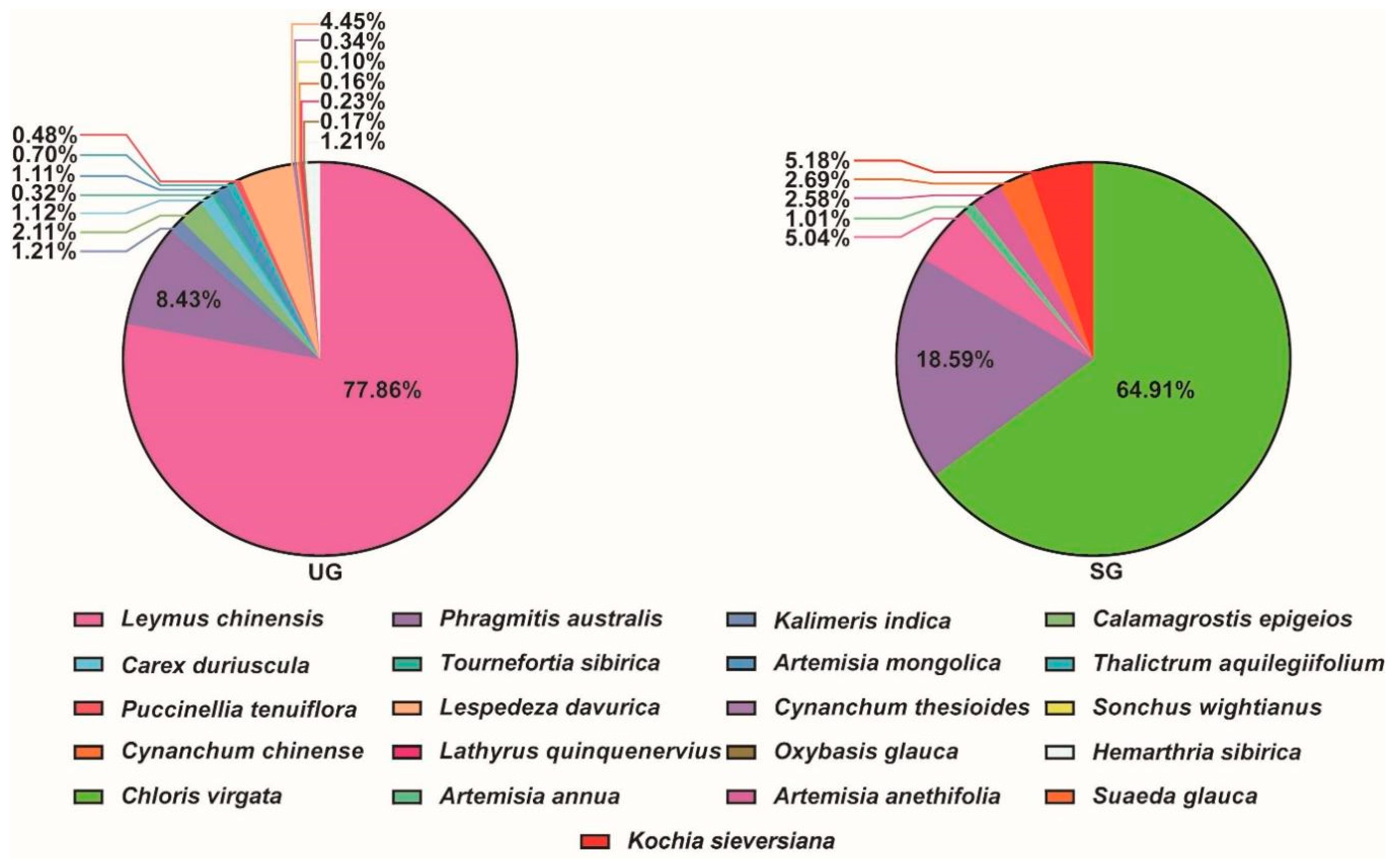
We selected two grassland areas (approximately 600 hectares per area) from the Changling County Xingmu Farming Co-operative Society (44°28′ N, 123°47′ E) for grazing experiments, one of which was undegraded and the other of which had already experienced severely saline-alkaline degradation. Approximately 400 Simmental bulls were grazed in each area from 1 June to 30 September 2023. We selected twenty bulls with similar body weight (408.05 ± 9.35 kg) and age (360.35 ± 10.47 d), which were divided into two treatment groups based on their grazing areas: (1) grazing on undegraded grassland (UG), and (2) grazing on severely saline-alkaline degraded grassland (SG), with 10 cattle in each group. Fences and shade sheds were installed in each area to ensure adequate resting areas and access to water for the cattle. The stocking rate in this experiment was maintained at approximately 0.23 cattle units per hectare to support sustainable grazing practices. The plant composition of saline-alkaline degraded grassland and undegraded grassland is presented in Figure 1. Throughout the grazing feeding period, all the cattle had free access to fresh water but without concentrate supplementation.

2.2. Design of Experiment 2

Given the significant variation in plant composition across different sites within the grazing land, such spatial heterogeneity may introduce considerable variability in the foraging behavior of grazing animals, thereby potentially compromising the reliability of Experiment 1’s results. To validate the reliability of the results from Experiment 1, a foraging behavioral experiment from our team was embedded within the current study. A two-factor design (grassland type: undegraded grassland vs. severely saline-alkaline degraded grassland) with three independent replicates per treatment was used in this experiment. Three representative 100 m × 100 m plots were selected for each grassland type, with spatial separation maintained between plots (spacing > 1 km) to ensure independence. Each plot was enclosed by fencing to prevent the animals’ movement between plots. Eighteen male Simmental bulls with similar weight (405.10 ± 1.33 kg) and age (359.67 ± 2.43) used in this experiment were selected from the same Co-operative Society as in Experiment 1. Three cattle were randomly selected and grazed freely within each plot for 7 consecutive days at the end of June, July, August, and September 2024. The stocking rate in this experiment was similar to that of Experiment 1, which was maintained at approximately 0.23 cattle units per hectare. In addition, cattle had free access to fresh water but without concentrate supplementation throughout the grazing period.

2.3. Monitoring of Plants Consumed by Cattle

Four Simmental cattle were randomly selected from each group in Experiment 1 for foraging monitoring. Moreover, all the Simmental cattle from Experiment 2 were used for foraging monitoring during the last three days of each month. As described by previous research, the action camera (GoPro Hero4; Resolution: 1920 × 1080; Ruhong Co., Ltd., Shenzhen, China) was hung from the lower part of the cattle’s neck using a strap to provide a field of view aimed downwards towards the vegetation being consumed, thereby clearly videoing the bulls foraging during the daily grazing period. We accurately recorded the plant species foraged and their corresponding numbers of bites because of the high video resolution, which could be viewed at slower speeds or replayed. Throughout each experimental period, we recorded the grazing behavior of cattle for 60 min each day because a 60 min duration was sufficient to obtain the foraging behavior of grazing animals [35,36]. We determined the plants and quantities consumed by grazing cattle based on the average of the observations made by three observers [35,37,38]. If the recording errors of the three observers were within 5%, we considered the recording results reliable; otherwise, we would replace the observers and re-record. Then, the weight of one bite of each plant foraged by the cattle was obtained via calculating the average of the total weight of 100 bites of each plant, which was simulated to be harvested artificially. Artificial harvesting simulations were conducted in accordance with the video imagery and the plants were weighed using a weighing scale. Thereafter, the total amount of each plant consumed by the cattle daily was calculated for further determination of daily dry matter intake (DMI). In addition, the diversities (simpson index; shannon index; peilou’s evenness) of plants foraged by cattle were calculated according the number of species and the abundance of plants; the functional indices (functional evenness, FEve; functional dispersion index, FDis; functional divergence index, Fdiv; Rao’s quadratic entropy index, RaoQ) of plants foraged by cattle were calculated according to the ether-extract (EE), crude protein (CP), neutral detergent fiber (NDF), acid detergent fiber (ADF) and mineral element content in this study. Functional indices were calculated using R Statistical Software (v4.1.2; R Core Team 2021). The module [39] is presented in the Supplementary Materials. The calculation formula for plant diversity was as follows: (1) Simpson index: D = 1 − ∑(Ni/N)2, where Ni represents the number of individuals of the i-th species, and N is the total number of individuals; (2) Shannon index: H = −∑(Pi)(lnPi), where Pi represents the proportion of individuals of this species to the total number of individuals; (3) Peilou’s evenness: J = −∑(Pi ln Pi)/ln S, where Pi represents the proportion of the total number of individuals of the i-th species to the total number of individuals; S represents the total number of species.

2.4. Sample Collection

In Experiment 1 and Experiment 2, the collection of plants was based on the foraging behavior of grazing cattle. The plants from Experiment 1 were collected weekly, and the plants from Experiment 2 were collected during the final week of each month throughout the experimental period. Eventually, we collected 12 types of plants (Leymus chinensis, Phragmites australis, Kalimeris indica, Calamagrostis epigeios, Carex duriuscula, Tournefortia sibirica, Lespedeza davurica, Artemisia mongolica, Thalictrum aquilegiifolium, Chloris virgata, Artemisia annua, and Suaeda glauca) in Experiment 1, and 14 types of plants (Chloris virgata, Kochia scoparia, Leymus chinensis, Phragmites australis, Kalimeris indica, Calamagrostis epigeios, Carex duriuscula, Tournefortia sibirica, Chloris virgata, Artemisia scoparia, Artemisia mongolica, Knorringia sibirica, Lespedeza davurica, and Lespedeza chinensis) in Experiment 2. Then, the plant samples collected weekly from Experiment 1 and Experiment 2 were thoroughly mixed according to the cattle’s foraging behavior to obtain the daily ration for each cattle. For each of the plants, 1.2 to 1.5 kg were collected. Subsequently, the plant samples were dried at 65 °C for 72 h, milled to pass through a 1 mm mesh screen, and then stored in sealed bags (150 mm × 220 mm) at 4 °C until their chemical composition was analyzed. In addition, approximately 10 g spot fecal samples of each bull from Experiment 1 were collected via the rectal extraction method on the final day of the experiment at 0600 and 1800 h. The samples collected from each cattle were composited and immediately stored in liquid nitrogen until analysis of the fecal bacterial community was conducted. The fecal samples collected at 0600 and 1800 were mixed in equal proportions before conducting the measurement.

2.5. Analysis of the Nutritional Composition of Plants

Samples of each plant were sent to the Animal Nutrition Laboratory of Northeast Agricultural University (Harbin, China) for nutrient analysis using wet chemistry methods. The contents of the dry matter (DM, method 934.01), ash (method 942.05), EE (method 920.39), and CP (method 988.05) in the plants were assayed in accordance with the procedures of AOAC International (2002) [40]. The NDF and ADF contents were measured based on the method described by a previous study [41], in which the heat-stable α-amylase was used to treat the plants. The mineral element concentrations were measured using an inductively coupled plasma-optical emission spectrometer (ICP-6800S, Meixi Instrument Co., Ltd., Shanghai, China). For detailed methodological procedures, please refer to the study conducted by Staniek and Wójciak (2018) [42].

2.6. Analysis of the Bacterial Community Composition in Feces

Total DNA in the feces was extracted using a DNA extraction kit (Shengye Biotech Co., Ltd., Shanghai, China), following the manufacturer’s instructions, and was used as the template for 16S rDNA sequencing analysis. To ensure the integrity and suitability of the extracted DNA, both concentration and purity were evaluated using a Thermo NanoDrop One spectrophotometer (Shengye Biotech Co., Ltd., Shanghai, China). The V3–V4 hypervariable regions of the bacterial 16S rDNA gene were amplified via PCR using the specific primer pair 338F (5′-ACTCCTACGGGAGGCAGCA-3′) and 806R (5′-GGACTACHVGGGTWTCTAAT-3′). For accurate sample discrimination, each primer pair was tagged with a unique eight-base pair barcode sequence. The PCR reaction mixture consisted of 1 μL of forward primer, 1 μL of reverse primer, 25 μL of 2× Premix Taq (Shengye Biotech Co., Ltd., Shanghai, China), 50 ng of genomic DNA, and nuclease-free water to a final volume of 50 μL. Amplification was performed under the following thermal cycling conditions: initial denaturation at 94 °C for 5 min, followed by 30 cycles of 94 °C for 30 s, 52 °C for 30 s, and 72 °C for 30 s, with a final extension at 72 °C for 10 min. The resulting PCR amplicons were resolved by electrophoresis on a 1% (w/v) agarose gel [43]. The PCR products were purified using an OMEGA DNA purification column (Shengye Biotech Co., Ltd., Shanghai, China). The purified products were quantified using a Quant-iT PicoGreen dsDNA Assay Kit (Gene Company Limited) in accordance with the kit’s instructions. The DNA extraction and PCR process for all samples were repeated three times to ensure the reliability of the results. The number of gene reads for each sample is approximately 40,000. The DNA fragments were paired-end sequenced by an Illumina miseq/novaseq. UCHIME (v 4.2) [44] was used for de novo chimera checking, and USEARCH (v 5.2.32) [45] was used for operational taxonomic unit (OTU) identification in order to identify similar sequences that had >97% similarity. All samples were standardized using the DESeq2 method [46]. In fact, ASV-based methods (such as DADA2) offer advantages in resolution and reproducibility. The major reason for adopting the OTU method based on 97% similarity in this study was to maintain direct comparability with the extensive historical research data available within this field. To address these issues as thoroughly as possible, we implemented rigorous quality control and chimera removal procedures. We are confident that the core differences observed at the genus and family levels within the community are reliable, which is the primary focus of this study. However, future work employing ASV methods for strain-level analysis may prove more meaningful. Given that the Greengenes 16S rRNA gene database is now relatively outdated and reliance on a single database may compromise taxonomic accuracy, representative sequences for bacterial OTUs were assigned to both the Greengenes 16S rRNA gene database (version gg_13_8) [47] and the Silva database [48]. We used the Greengenes database and the Silva database to better screen out potential pathogenic microorganisms. Raw reads of the 16S rDNA gene sequencing of feces microbiota are available at NCBI (PRJNA1331944).

2.7. Statistical Analysis

Firstly, all data used in this study met the assumptions of normality and homogeneity of variance, as confirmed by the Shapiro–Wilk test and Levene’s test, respectively, and the data that passed the tests were subsequently analyzed. R Statistical Software (v4.1.2; R Core Team 2021) was used to analyze all of the experiment’s data. No missing or outlier data were observed in this study. In the event of such occurrences, these values would be excluded by default according to our predefined data handling protocol. ANOVA was used to analyze the effects of grassland saline-alkaline degradation on the nutrient intake (data from Experiment 1 and Experiment 2) and fecal bacterial communities (n = 10/group) of cattle. In addition, the ANOVA was also used to examine differences in nutrient intake among cattle (n = 3/plot) at three plots within a grassland type (undegraded grassland or severely saline-alkaline degraded grassland). To analyze the effects of nutrient intake on fecal bacterial relative abundance, we used linear mixed effects model [49]. Further, we also determined the relative importance of various mineral elements and foraging plant species diversity for fecal potential pathogenic bacteria using linear mixed effects models. In these models, nutrient intakes and foraging plant species diversity were taken as fixed factors and grassland types (undegraded grassland and severely saline-alkaline degraded grassland) were taken as random factors. Detailed information about the model can be found in the Supplementary Materials. After testing, the model conforms to independence and homoscedasticity and the residuals in the model also conform to normality (Shapiro–Wilk test). Significant differences were declared at p ≤ 0.05, and marginally significant differences were defined at 0.05 < p ≤ 0.10.

3. Results

3.1. Variation in Fecal Bacterial Community

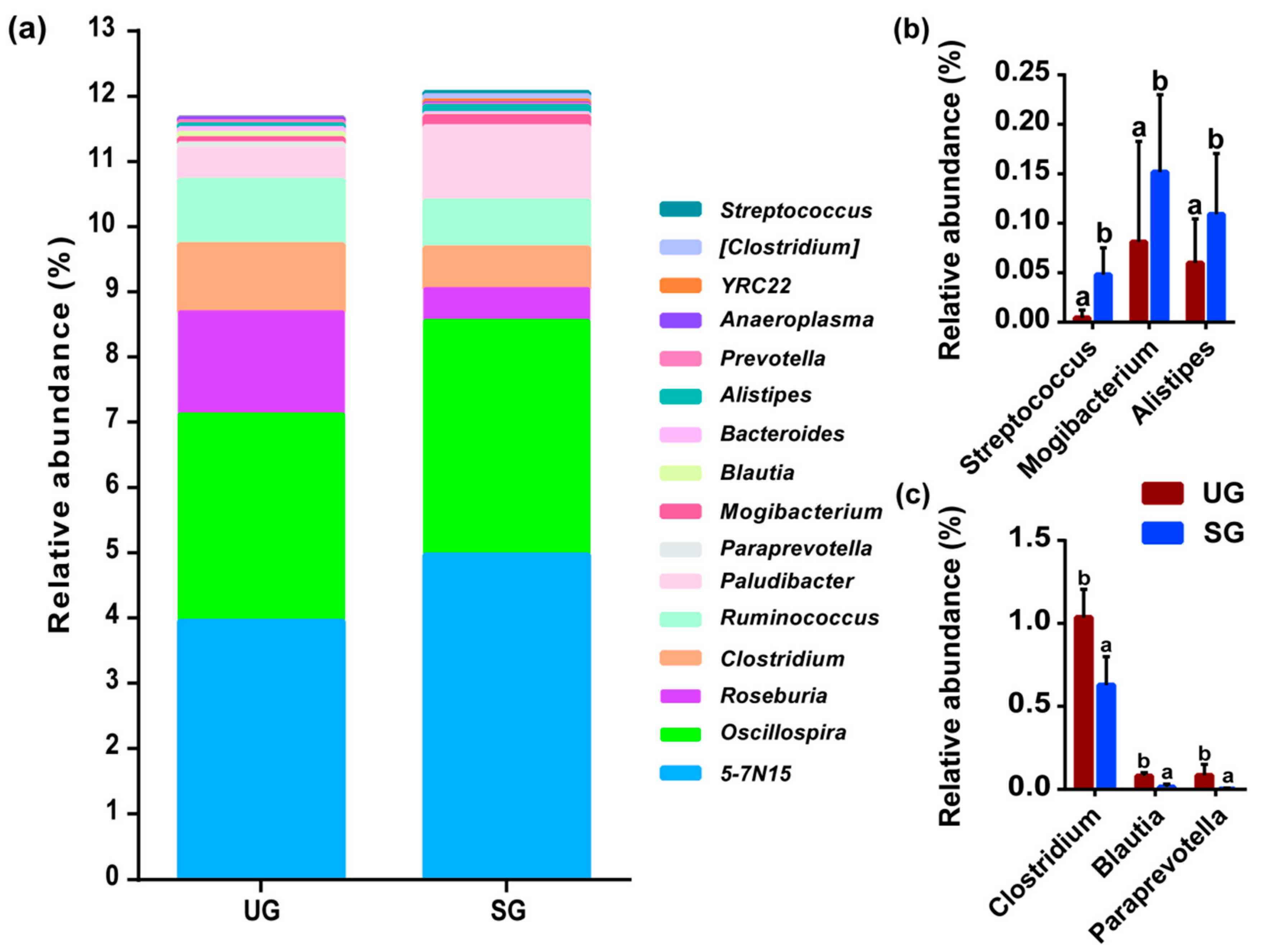
The relative abundances of the 16 most abundant bacteria genera are given in Figure 2a. The most abundant bacteria genus was 5-7N15, followed by Oscillospira and Roseburia, etc. Among these genera, the relative abundances of potential pathogenic bacteria including Streptococcus, Mogibacterium, and Alistipes in the SG group were higher than those of the UG group (Figure 2b; p < 0.05). Conversely, cattle grazing on severe saline-alkaline degraded grassland significantly decreased the relative abundance of fecal bacteria associated with immune modulation that include Clostridiu, Blautia, and Paraprevotella compared with the cattle grazing on undegraded grassland (Figure 2c; p < 0.05).

3.2. Correlation Among Various Bacteria

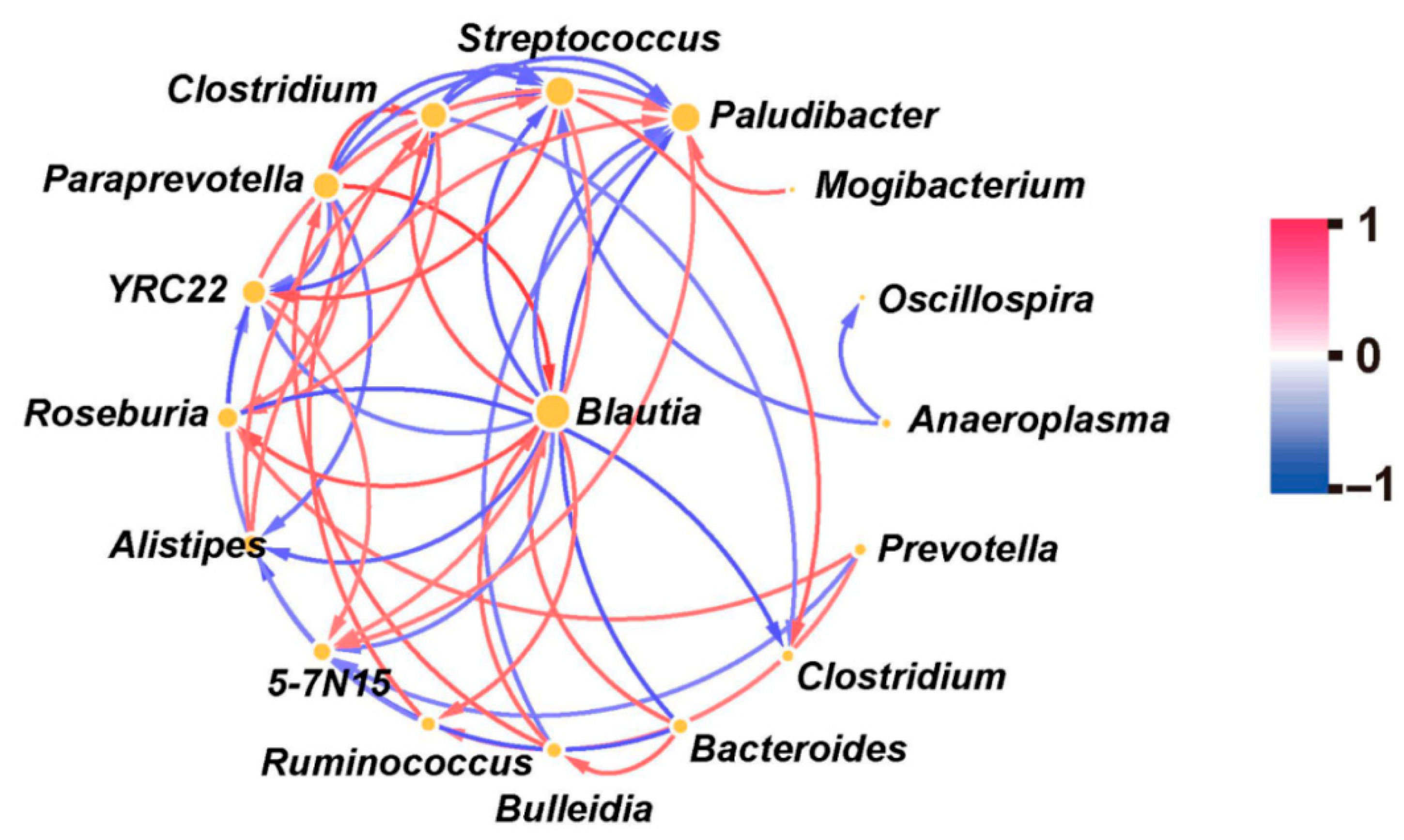
Figure 3 showed that the Paludibacter plays the most important role among these bacteria, as it not only had a positive effect on the potential pathogenic bacteria Streptococcus, Mogibacterium, and Alistipes, but also had a negative effect on Clostridium, Blautia, and Paraprevotella (p < 0.05). In addition, Streptococcus had a negative effect on Clostridium, Blautia, and Paraprevotella (p < 0.05); Alistipes also had a negative effect on Blautia and Paraprevotella (p < 0.05). However, Mogibacterium had no significant effect on the other bacteria (p > 0.10).

3.3. Foraging Diversity

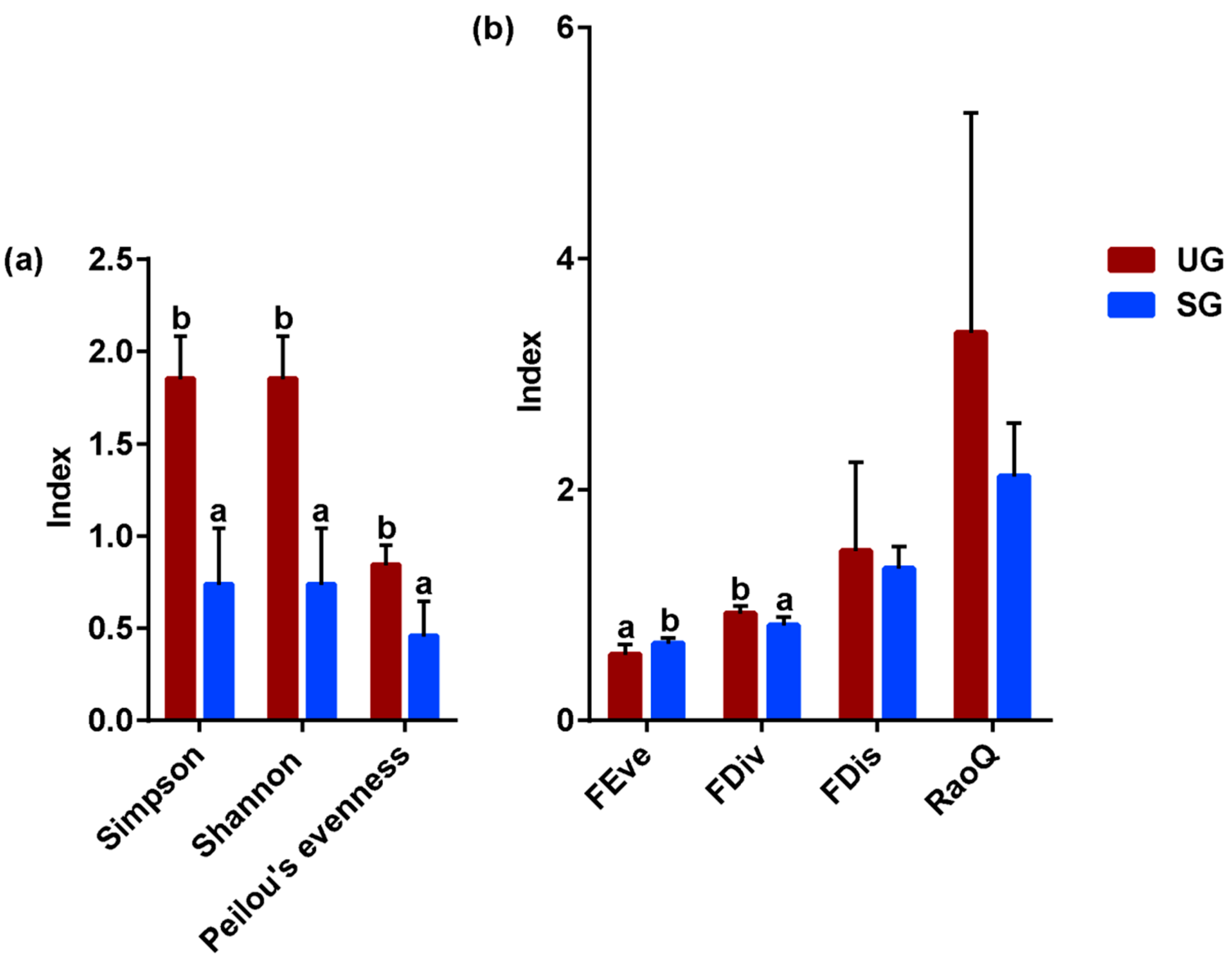
We observed that the plant species diversity (Simpson index, the Shannon index, and Peilou’s evenness) foraged by cattle grazing on undegraded grassland was significantly higher than that foraged by cattle grazing on severely saline-alkaline degraded grassland (Figure 4a; p < 0.05). Regarding the plants’ functional diversity, we found that the FEve index in the SG group was higher (which means a more balanced intake of nutrients) than that of the UG group, whereas the FDiv index was lower (which means a lower nutritional function) (Figure 4b; p < 0.05). Moreover, no difference for RaoQ and FDis was observed between the two groups (p > 0.10).

3.4. Proximate Nutrient Intake

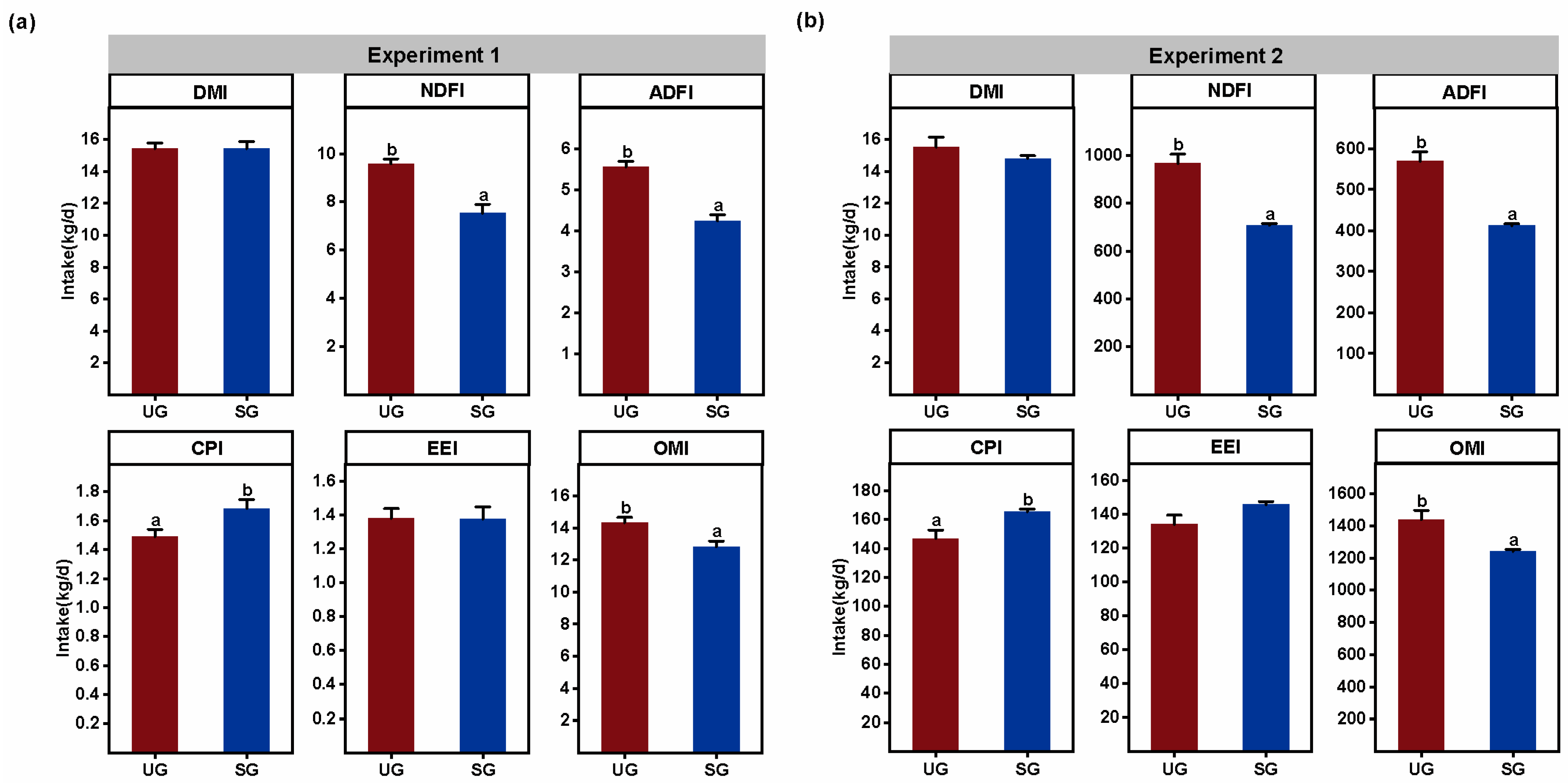
In both Experiment 1 and Experiment 2, cattle grazing on severely saline-alkaline degraded grassland showed not only an increase in CPI, but also a decrease in NDFI, ADFI and OMI compared with the cattle grazing on undegraded grassland (Figure 5; p < 0.05). In addition, the DMI and EEI were not altered between the two treatment groups (p > 0.10). Further, we also observed from the results of Experiment 2 that the cattle showed no difference in foraging plant composition and proximate nutrient intake among three plots within the same grassland type (Table 1; p > 0.10), which indicated that different spatial areas within the same grassland type do not alter the foraging plant composition and proximate nutrient intake of cattle.

3.5. Mineral Element Intake

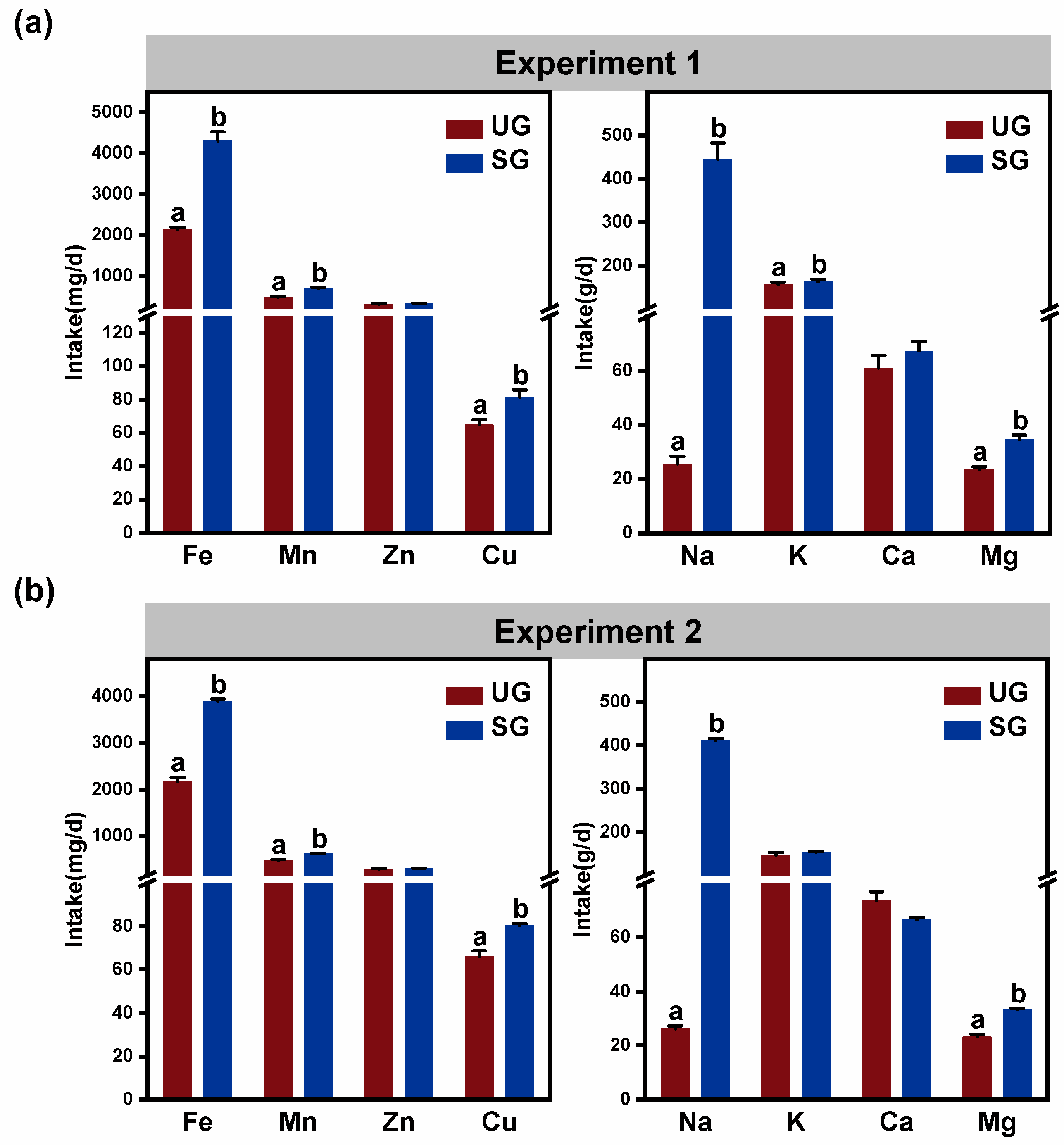
In both Experiment 1 and Experiment 2, the results for mineral element intake showed that cattle in the SG group had higher Iron (Fe), Manganese (Mn), Copper (Cu), Sodium (Na), Potassium (K) and Magnesium (Mg) intake than that of the UG group (Figure 6; p < 0.05). However, there was no significant difference for Zinc (Zn) and Calcium (Ca) intake between the two groups (Figure 6; p > 0.10). Additionally, we also observed from the results of Experiment 2 that cattle showed no difference in foraging plant composition and mineral element intake among three plots within the same grassland type (Tables S1 and S2; p > 0.10), which indicated that different spatial areas within the same grassland type do not alter the foraging plant composition and mineral element intake of cattle.

3.6. The Relative Importance of Various Factors for the Key Fecal Bacteria

We first analyzed the effects of various factors on key fecal bacteria, and found that the intake of Fe, Na, Cu, Zn, Mn, and Mg and the Simpson index of foraging plants might be associated with key fecal bacteria (p < 0.05; Table S3). Further, we also analyzed the relative importance of various mineral elements and foraging plant species diversity for the key fecal bacteria (Table 1). We observed that the intake of Fe relative to other factors was more strongly associated with the improvement in the relative abundance of fecal Streptococcus and Paludibacter, while the intake of Na relative to other factors was more closely linked to the increase in the relative abundance of fecal Alistipes.

4. Discussion

Our results from Experiment 1 found that grassland saline-alkaline degradation increased the relative abundance of fecal potential pathogenic bacteria in cattle by altering their nutrient intake. However, the design of Experiment 1 suffered from insufficient true replication, with each grassland type represented by only a single plot, which may compromise the reliability of the study’s conclusions. To address this limitation, the supplemental Experiment 2 was embedded within the present study. We found that cattle showed no difference in foraging plant composition and nutrient intake among three plots within the same grassland type (Tables S1 and S2). Moreover, the results regarding the differences in nutrient intake of cattle between the two grassland types were similar in Experiment 1 and Experiment 2. Therefore, to address the limited reproducibility in Experiment 1, we conducted Experiment 2 as a supplementary validation to indirectly strengthen the credibility of the findings from Experiment 1 concerning the impact of grassland saline-alkaline degradation on cattle fecal potential pathogen abundance. Nevertheless, Experiment 2 currently lacks replication across time and space, which should be addressed in future studies to further confirm the robustness of these results. Collectively, our research provides the first empirical data that grassland saline-alkaline degradation might increase the relative abundance of fecal potential pathogenic bacteria in cattle. Such a result indicates that cattle grazing on severely saline-alkaline degraded grassland might potentially contribute to an increase in the transmission risk of pathogenic bacteria, thereby threatening the health of animals and even humans.
Specifically, our results showed that cattle grazing on severely saline-alkaline degraded grassland might significantly increase the relative abundance of fecal Streptococcus, Mogibacterium, and Alistipes (Figure 2b). Previous studies have demonstrated that these three bacterial genera belonging to potential pathogenic bacteria had the potential to increase disease-associated dysbiosis [50,51,52]. More importantly, fecal Streptococcus is suggested as an opportunistic pathogen and also a suitable indicator of the survival rates of pathogens due to their enhanced survival duration and increased resistance to thermal stress [2,53]. Previous studies have indicated that Streptococcus is transmitted through direct contact with respiratory secretions or indirect contact with contaminated surfaces, indicating that the interindividual transmission of this bacterium occurs readily under conducive conditions [54,55]. On the other hand, Alistipes exhibits broad transmission potential, with frequent interindividual spread, and can even be transmitted between mothers and infants [56,57,58]. Thus, the increase in fecal potential pathogenic bacteria abundance would potentially increase the risk of animal as well as human diseases through environmentally mediated transmission. In addition, we found that cattle grazing on severely saline-alkaline degraded grassland might significantly reduce the relative abundance of fecal bacteria associated with immune modulation, including Clostridium, Blautia, and Paraprevotella (Figure 2c) [59,60,61], indicating that an increase in potential fecal pathogenic bacteria may affect animal health by decreasing the abundance of bacteria associated with immune modulation. Indeed, further correlation analyses among various bacteria genera showed that these potential pathogenic bacteria had a negative effect on Clostridiu, Blautia, and Paraprevotella (Figure 3). More notably, the results of the correlation analysis indicated that the relative abundance of Paludibacter in the feces of cattle was positively correlated with the relative abundance of potential pathogenic bacteria. However, the underlying mechanism of the association between Paludibacter and potential pathogenic bacteria remains unclear and warrants further investigation. Therefore, our results suggested that grazing cattle consuming plants from severely saline-alkaline degraded grasslands may lead to an increased abundance of potential pathogenic bacteria in their feces, while decreasing the abundance of certain beneficial bacteria.
Experimental evidence has shown that fecal bacterial composition is primarily influenced by dietary nutrient characteristics [62,63,64]. Thus, the changes in plant resources resulting from grassland saline-alkaline degradation in this study may serve as a critical driver behind the observed shifts in fecal bacterial communities in cattle. Indeed, a previous study has demonstrated that sheep grazing on saline-alkaline degraded grassland improved their EE intake [65], which has the ability to reduce the relative abundance of fecal pathogenic bacteria of animals [66]. However, our results found that the EE intake did not differ between the two groups (Figure 5), which may be attributed to cattle having lower foraging selectivity [35], resulting in similar dietary fat content when grazing on both saline-alkaline degraded and undegraded grasslands. In addition, we found that cattle grazing on severely saline-alkaline degraded grasslands exhibited reduced intake of NDF and ADF (Figure 5). Although reductions in NDF and ADF intake are often associated with increased relative abundance of fecal pathogenic bacteria in ruminants [27], the results of the linear mixed effects modeling analysis in this study revealed no significant association between fiber intake and fecal potential pathogen abundance. This phenomenon might be attributed to the relatively smaller variation in fiber intake between groups compared to that observed in previous studies [67,68]. Therefore, we highlighted that changes in proximate nutrient intake have no obvious correlation with the increased abundance of fecal potential pathogenic bacteria.
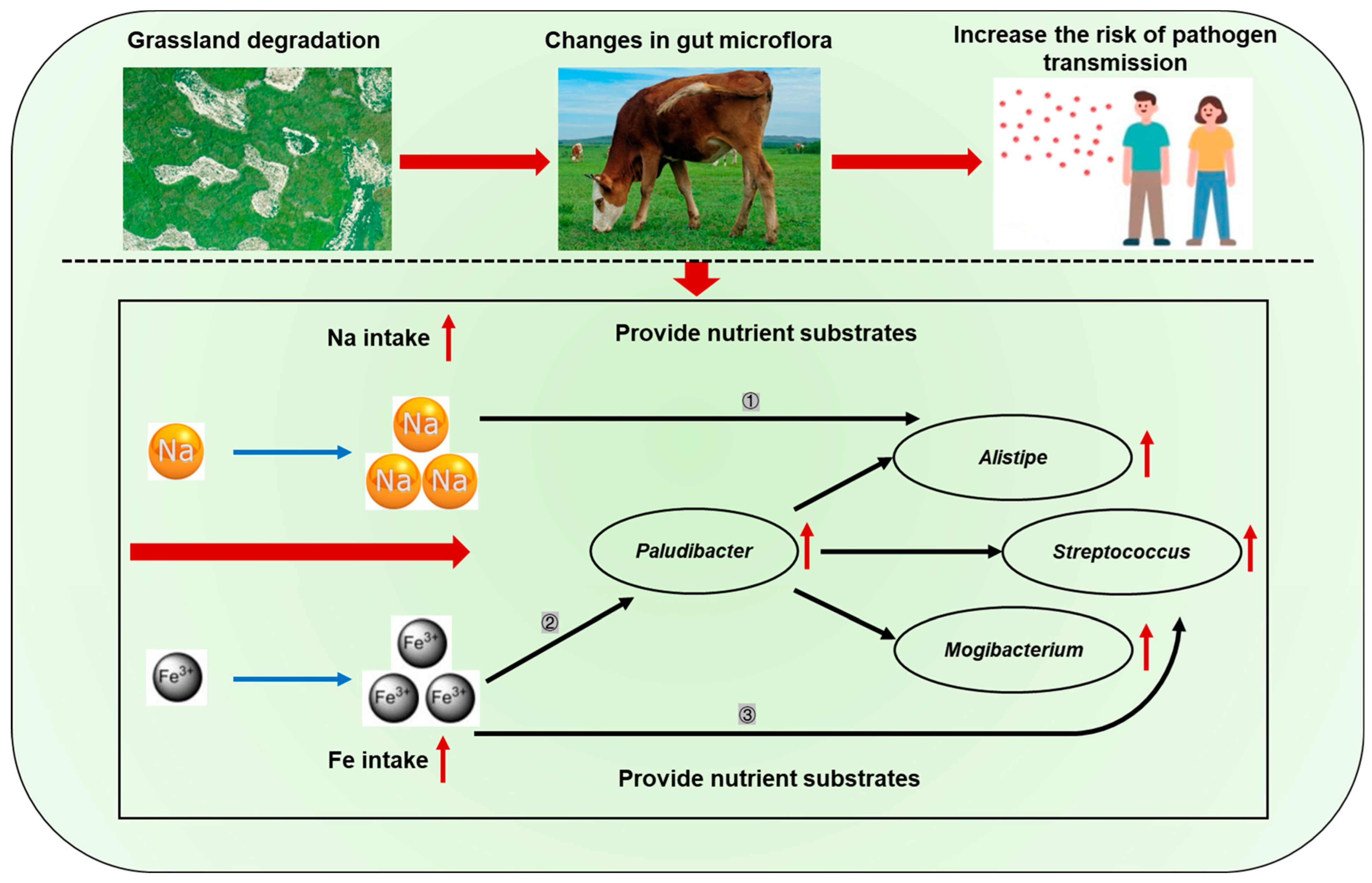
Apart from proximate nutrient intake, our results also showed that plant species diversity foraged by cattle grazing on undegraded grassland was significantly higher than that foraged by cattle grazing on severely saline-alkaline degraded grassland (Figure 4a). High foraging diversity typically indicates that livestock have access to a broader range of nutrients, which may promote intestinal health and consequently reduce the abundance of fecal pathogenic bacteria. This conjecture was proven by the results of the linear mixed effects modeling analysis in this study, which found that there is a significant negative correlation between plant species diversity foraged by cattle and the relative abundance of Streptococcus, Paludibacter, and Alistipes (Table S3). In addition, we also found that cattle grazing on severely saline-alkaline degraded grasslands showed an increase in Fe, Mn, Cu, Na, K, and Mg intake compared with the cattle grazing on undegraded grassland (Figure 6). Particularly for Fe and Na intake, the cattle grazing on severely saline-alkaline degraded pastures exhibited Fe intake levels significantly exceeding their daily dietary requirements when compared to the nutritional requirements proposed by the National Research Council (NRC 2001). Thus, the excessive intake of Fe and Na ions may be associated with the relative abundance of potential pathogenic bacteria in cattle feces. Further, we determined the relative importance of various mineral elements and foraging plant species diversity for fecal potential pathogenic bacteria using linear mixed effects models. We observed a strong correlation between iron intake and the increase in the relative abundance of fecal Streptococcus (Table 1). Similarly, previous studies have demonstrated that excessive Fe intake results in unabsorbed Fe passing into the colon, where it can be utilized by potentially pathogenic bacteria to support their growth [69,70,71,72]. Further study has also demonstrated that sheep consuming excessive amounts of Fe showed a linear increase in the relative abundance of Proteobacteria [73], which consisted mainly of pathogenic bacterial members (Shin et al., 2015; Petri et al., 2013) [23,74]. In addition, research demonstrates that iron is an essential nutrient required for the growth and proliferation of Streptococcus, which can exploit iron derived from hemoglobin to enhance its ability to colonize host tissues and grow on host proteins [75,76,77]. This capacity for Fe utilization is closely linked to the pathogen’s survival, environmental adaptation, and virulence. Meanwhile, the Fe intake is also strongly associated with the increase in the relative abundance of fecal Paludibacter (Table 1). Hence, the increased Fe intake may contribute to the enhancement of fecal potential pathogenic bacteria abundance by providing a favorable ecological niche and through indirect modulation of fecal Paludibacter abundance. Moreover, we also observed from the results of the linear mixed effects models that Na intake has the strongest correlation with the increase in the relative abundance of fecal Alistipes (Table 1). This observation is in line with the study from Hamad et al. (2022) [78], in which high dietary Na intake has been shown to improve the relative abundance of gut Alistipes in mice because of an underrepresentation of lactic-acid-producing bacteria. Our results suggest that changes in Fe and Na intake induced by grassland saline-alkaline degradation were two main factors influencing the relative abundance of fecal potential pathogenic bacteria in cattle (Figure 7), but the impact mechanisms still need to be further explored.

5. Conclusions

Cattle grazing on severely saline-alkaline degraded grasslands showed an increase in Fe and Na intake. The increased Fe intake relative to other factors might contribute most to the enhancement of the relative abundance of fecal Streptococcus belonging to potential pathogenic bacteria by providing an advantageous niche for them as well as indirect regulation of the abundance of Paludibacter, which had a positive effect on the potential pathogenic bacteria. In addition, the increased Na intake relative to other factors might also contribute most to the enhancement of the relative abundance of fecal Alistipes. In general, our study provides experimental evidence that excessive Fe and Na ions in the plants of saline-alkaline grasslands may potentially represent one of the contributing risk factors associated with elevated pathogen emissions in livestock feces, thereby further exacerbating the adverse environmental effects of grassland degradation. However, although the findings from Experiments 1 and 2 suggest that the conclusions of this study are reasonably reliable, more large-scale animal studies under more rigorous experimental designs are still required in the future. Furthermore, given that the current study is limited to cattle, it would be valuable to examine whether other grazing species exhibit distinct responses to such alterations of fecal potential pathogens. Overall, our study offers a novel perspective on the assessment of environmental risks associated with grassland degradation and provides a robust theoretical foundation for sustainable grazing management practices. In future grazing management practices, we recommend that livestock in this region be routinely vaccinated against potential pathogens. Concurrently, manure deposited on the grassland should be systematically treated through methods such as composting and the application of lime or aqueous ammonia to reduce pathogen load and mitigate environmental risks. In addition, we also recommend revisiting and extending this research at critical time intervals corresponding to the mid-21st century (2051–2075) and late 21st century (2076–2100) based on climate prediction models constructed by previous researchers, particularly in relation to projected changes in extreme rainfall events.

Supplementary Materials

The following supporting information can be downloaded at: https://www.mdpi.com/article/10.3390/ani15233484/s1, Table S1: Analysis of differences in cattle foraging plant composition and nutrient intake across various plots in undegraded Grassland; Table S2: Analysis of differences in cattle foraging plant composition and nutrient intake across various plots in severe saline-alkaline degraded grassland; Table S3: Summary of linear mixed effects models analyzing the effects of nutrient intake and foraging plant species diversity to the relative abundance of the key bacteria in feces. Mineral element intake and simpson index were taken as fixed factors; grassland types (undegraded grassland and severe saline-alkaline degraded grassland) were taken as random factors. Factors that only have significant effect on key bacteria are presented in the table; Table S4: Summary of linear mixed models analyzing the relative importance of various mineral elements and foraging plant species diversity for key fecal bacteria. Mineral element intake and foraging plant simpson index were taken as fixed factors; grassland types (undegraded grassland and severe saline-alkaline degraded grassland) were taken as random factors; Text S1: The calculation module of functional indices.

Author Contributions

Conceptualization, Y.W.; Methodology, B.G. and M.X.; Investigation, Y.W. and G.M.; Data curation, Y.Z.; Writing—review & editing, Y.W. and X.J. All authors have read and agreed to the published version of the manuscript.

Funding

This work was supported by the National Natural Science Foundation of China (No. 32301497), the National Key Research and Development Program of China (2023YFD1301700, 2022YFF1300604), the Program for Introducing Talents to Universities (B16011), and the Ministry of Education Innovation Team Development Plan, Grant/Award Number: 2013-373, the Fundamental Research Funds for the Central Universities (2412022QD025).

Institutional Review Board Statement

All experimental procedures involving animals were carried out according to the principles and responsibilities outlined in the Northeast Normal University’s (Changchun, China) guidelines for animal research (Approval Number: 10200-2023-03).

Informed Consent Statement

Informed consent was obtained from the ranch owner for the use of the ranch facilities and cattle herd in this study.

Data Availability Statement

Raw reads of the 16S rDNA gene sequencing of feces microbiota are available at NCBI (PRJNA1331944). Other data are available from the corresponding author upon reasonable request.

Conflicts of Interest

The authors declare no conflicts of interest.

References

  1. Desvars-Larrive, A.; Vogl, A.E.; Puspitarani, G.A.; Yang, L.; Joachim, A.; Käsbohrer, A. A One Health framework for exploring zoonotic interactions demonstrated through a case study. Nat. Commun. 2024, 15, 5650. [Google Scholar] [CrossRef]
  2. Manyi-Loh, C.E.; Mamphweli, S.N.; Meyer, E.L.; Makaka, G.; Simon, M.; Okoh, A.I. An overview of the control of bacterial pathogens in cattle manure. Int. J. Environ. Res. Public Health 2016, 13, 843. [Google Scholar] [CrossRef]
  3. Wells, J.E.; Kim, M.; Bono, J.L.; Kuehn, L.A.; Benson, A.K. Meat science and muscle biology symposium: Escherichia coli O157: H7, diet, and fecal microbiome in beef cattle. J. Anim. Sci. 2014, 92, 1345–1355. [Google Scholar] [CrossRef]
  4. McKenzie, V.J.; Song, S.J.; Delsuc, F.; Prest, T.L.; Oliverio, A.M.; Korpita, T.M.; Alexiev, A.; Amato, K.R.; Metcalf, J.L.; Kowalewski, M.; et al. The effects of captivity on the mammalian gut microbiome. Integr. Comp. Biol. 2017, 57, 690–704. [Google Scholar] [CrossRef]
  5. Gasparini, M.; Brambilla, G.; Menotta, S.; Albrici, G.; Avezzù, V.; Vitali, R.; Cavallini, D. Sustainable dairy farming and fipronil risk in circular feeds: Insights from an Italian case study. Food Addit. Contam. A 2024, 41, 1582–1593. [Google Scholar] [CrossRef] [PubMed]
  6. Popescu, S.B.C.; Diugan, E.A. Microbiological air quality in tie-stall dairy barns and some factors thatinfluence it. Afr. J. Agric. Res. 2011, 6, 6726–6734. [Google Scholar]
  7. Sanz, S.O.C.; Martínez-Olarte, R.; Navajas-Benito, E.V.; Alonso, C.A.; Hidalgo-Sanz, S.; Somalo, S.; Torres, C. Airborne dissemination of Escherichia coli in a dairy cattle farm and its environment. Int. J. Food Microbiol. 2015, 197, 40–44. [Google Scholar] [CrossRef] [PubMed]
  8. Bureau, B.T.P.L. Technique de Promotion Laitière; Le Logement du Tropeau Laitière; Editions France Agricole: Paris, France, 2001; p. 189. [Google Scholar]
  9. Brandl, H.F.-F.C.; Ziegler, D.; Mandal, J.; Stephan, R.; Lehner, A. Distribution and identificationof culturable airborne microorganisms in a Swiss milk processing facility. J. Dairy Sci. 2014, 97, 240–246. [Google Scholar] [CrossRef]
  10. Curiel, G.J.; Van Eijk, H.M.J.; Lelieveld, H.L.M. Risk and control of airborne contamination. In Encyclopediaof Food Microbiology; Academic Press: London, UK, 2000; pp. 1816–1822. [Google Scholar]
  11. VanderWaal, K.; Gilbertson, M.; Okanga, S.; Allan, B.F.; Craft, M.E. Seasonality and pathogen transmission in pastoral cattle contact networks. R. Soc. Open. Sci. 2017, 4, 170808. [Google Scholar] [CrossRef]
  12. Smith, L.A.; Fox, N.J.; Marion, G.; Booth, N.J.; Morris, A.M.; Athanasiadou, S.; Hutchings, M.R. Animal behaviour packs a punch: From parasitism to production, pollution and prevention in grazing livestock. Animals 2024, 14, 1876. [Google Scholar] [CrossRef]
  13. Bardgett, R.D.; Bullock, J.M.; Lavorel, S.; Manning, P.; Schaffner, U.; Ostle, N.; Chomel, M.; Durigan, G.; LFry, E.; Johnson, D.; et al. Combatting global grassland deg-radation. Nat. Rev. Earth Environ. 2021, 2, 720–735. [Google Scholar] [CrossRef]
  14. Dierickx, W.R. The salinity and alkalinity status of arid and semi-arid lands. Encycl. Land Use Land Cover. Soil Sci. 2009, 5, 163–189. [Google Scholar]
  15. Zhang, X.; Liu, X.; Xie, K.; Pan, Y.; Liu, F.; Hou, F. Effects of different fiber levels of energy feeds on rumen fermentation and the microbial community structure of grazing sheep. BMC Microbiol. 2025, 25, 180. [Google Scholar] [CrossRef]
  16. Wang, J.; Ding, J.; Wang, Y.; Ge, X.; Lizaga, I.; Chen, X. Soil salinization in drylands: Measure, monitor, and manage. Ecol. Indic. 2025, 175, 113608. [Google Scholar] [CrossRef]
  17. Xu, T.; Zhang, M.; Ding, S.; Liu, B.; Chang, Q.; Zhao, X.; Wang, L. Grassland degradation with saline-alkaline reduces more soil inorganic carbon than soil organic carbon storage. Ecol Indic. 2021, 131, 108194. [Google Scholar] [CrossRef]
  18. Liu, K.; Li, T.; Duan, X.; Zhang, S.; Chen, M.; Hou, H. The degradation of subalpine meadows significantly changed the soil microbiome. Agr. Ecosyst. Environ. 2023, 349, 108470. [Google Scholar] [CrossRef]
  19. Setia, R.; Gottschalk, P.; Smith, P.; Marschner, P.; Baldock, J.; Setia, D.; Smith, J. Soil salinity decreases global soil organic carbon stocks. Sci. Total Environ. 2013, 465, 267–272. [Google Scholar] [CrossRef]
  20. Rath, K.M.; Rousk, J. Salt effects on the soil microbial decomposer community and their role in organic carbon cycling: A review. Soil Biol. Biochem. 2015, 81, 108–123. [Google Scholar] [CrossRef]
  21. Okur, B.; Örçen, N. Soil salinization and climate change. In Climate Change and Soil Interactions; Elsevier: Amsterdam, The Netherlands, 2020; pp. 331–350. [Google Scholar]
  22. Basnet, A.; Kilonzo-Nthenge, A. Antibiogram profiles of pathogenic and commensal bacteria in goat and sheep feces on smallholder farm. Front. Antibiot. 2024, 3, 1351725. [Google Scholar] [CrossRef]
  23. Shin, N.R.; Whon, T.W.; Bae, J.W. Proteobacteria: Microbial signature of dysbiosis in gut microbiota. Trends Biotechnol. 2015, 33, 496–503. [Google Scholar] [CrossRef]
  24. Bäumler, A.J.S.V. Interactions between the microbiota and pathogenic bacteria in the gut. Nature 2016, 535, 85–93. [Google Scholar] [CrossRef]
  25. Folks, D.J.; Gann, K.; Fulbright, T.E.; Hewitt, D.G.; DeYoung, C.A.; Wester, D.B.; Echols, K.N.; Draeger, D.A. Drought but not population density influences dietary niche breadth in white-tailed deer in a semiarid environment. Ecosphere 2014, 5, art162. [Google Scholar] [CrossRef]
  26. Chang, J.; Peng, S.; Ciais, P.; Saunois, M.; Dangal, S.R.S.; Herrero, M.; Havlík, P.; Tian, H.; Bousquet, P. Revisiting enteric methane emissions from domestic ruminants and their δ13cCH4 source signature. Nat. Commun. 2019, 10, 3420. [Google Scholar] [CrossRef]
  27. Kumar, J.; Rani, K.; Datt, C. Molecular link between dietary fibre, gut microbiota and health. Mol. Biol. Rep. 2020, 47, 6229–6237. [Google Scholar] [CrossRef] [PubMed]
  28. Sun, H.X.; Liu, C.L.; Ch, S.L. Distribution of crude fat for a halophyte (Suaeda glauca) growing in the Songnen grassland. In Proceedings of the World Grassland and Grassland Conference 2008, Hohhot, China, 29 June–5 July 2008. [Google Scholar]
  29. Mitchell, M.K.; Ellermann, M. Long chain fatty acids and virulence repression in intestinal bacterial pathogens. Front. Cell Infect. Microbiol. 2022, 12, 928503. [Google Scholar] [CrossRef]
  30. Cao, C.T.S.; Cui, Z.; Zhang, Y. Response of soil properties and microbial communities to increasing salinization in the meadow grassland of northeast China. Microb. Ecol. 2021, 82, 722–735. [Google Scholar] [CrossRef]
  31. Sun, H.X.; Zhou, D.W.; Zhao, C.S.; Wang, M.L.; Zhong, R.Z.; Liu, H.W. Evaluation of yield and chemical composition of a halophyte (Suaeda glauca) and its feeding value for lambs. Grass Forage Sci. 2012, 67, 153–161. [Google Scholar] [CrossRef]
  32. Balique, F.; Lecoq, H.; Raoult, D.; Colson, P. Can plant viruses cross the kingdom border and be pathogenic to humans? Viruses 2015, 7, 2074–2098. [Google Scholar] [CrossRef] [PubMed]
  33. Xu, X.; Liu, L.; Han, P.; Gong, X.; Zhang, Q. Accuracy of vegetation indices in assessing different grades of grassland desertification from UAV. Int. J. Environ. Res. Public Health 2022, 19, 16793. [Google Scholar] [CrossRef]
  34. Shokri, N.; Hassani, A.; Sahimi, M. Multi-scale soil salinization dynamics from global to pore scale: A review. Rev. Geophys. 2024, 62, e2023RG000804. [Google Scholar] [CrossRef]
  35. Xu, M.; Song, Y.; Zhou, Y.; Wang, Y.; Xu, T.; Zhao, X.; Li, Z.; Wang, L. Grassland degradation induces high dietary niche overlap between two common livestock: Cattle and sheep. J. Sustain. Agric. Environ. 2023, 2, 373–381. [Google Scholar] [CrossRef]
  36. Xu, M.; Song, Y.; Wang, Y.; Yue, Y.; Yu, H.; Meng, H.; Wang, L. Plant diversity expands dietary niche breadth but facilitates dietary niche partitioning of co-occurring cattle and sheep. Agr. Ecosyst. Environ. 2025, 385, 109566. [Google Scholar] [CrossRef]
  37. Odadi, W.O.; Kimuyu, D.M.; Sensenig, R.L.; Veblen, K.E.; Riginos, C.; Young, T.P. Fire-induced negative nutritional outcomes for cattle when sharing habitat with native ungulates in an African savanna. J. Appl. Ecol. 2017, 54, 935–944. [Google Scholar] [CrossRef]
  38. Huang, Y.; Wang, L.; Wang, D.L.; Zeng, D.H.; Li, Y.X.; Liu, J.; Wang, Y. Foraging responses of sheep to plant spatial micro-patterns can cause diverse associational effects of focal plant at individual and population levels. J. Anim. Ecol. 2018, 87, 863–873. [Google Scholar] [CrossRef]
  39. Li, L.; Wen, Z.; Wei, S.; Lian, J.; Ye, W. Functional diversity and its influencing factors in a subtropical forest community in China. Forests 2022, 13, 966. [Google Scholar] [CrossRef]
  40. Feldsine, P.; Abeyta, C.; Andrews, W.H. AOAC International methods committee guidelines for validation of qualitative and quantitative food microbiological official methods of analysis. J. AOAC Int. 2002, 85, 1187–1200. [Google Scholar] [CrossRef]
  41. Van Soest, P.V.; Robertson, J.B.; Lewis, B.A. Methods for dietary fiber, neutral detergent fiber, and nonstarch polysac-charides in relation to animal nutrition. J. Dairy Sci. 1991, 74, 3583–3597. [Google Scholar] [CrossRef]
  42. Staniek, H.; Wójciak, R.W. The combined effects of iron excess in the diet and chromium (III) supplementation on the iron and chromium status in female rats. Biol. Trace Elem. Res. 2018, 184, 398–408. [Google Scholar] [CrossRef]
  43. Zhang, X.Y.; Liu, X.L.; Chang, S.H.; Zhang, C.; Du, W.C.; Hou, F.J. Efects of Cistanche deserticola addition in the diet on ruminal microbiome and fermentation parameters of grazing sheep. Front. Microbiol. 2022, 13, 840725. [Google Scholar]
  44. Edgar, R.C.; Haas, B.J.; Clemente, J.C.; Quince, C.; Knight, R. UCHIME improves sensitivity and speed of chimera detection. Bioinformatics 2011, 27, 2194–2200. [Google Scholar] [CrossRef]
  45. Edgar, R.C. Search and clustering orders of magnitude faster than BLAST. Bioinformatics 2010, 26, 2460–2461. [Google Scholar] [CrossRef]
  46. Love, M.I.; Huber, W.; Anders, S. Moderated estimation of fold change and dispersion for RNA-seq data with DESeq2. Genome Biol. 2014, 15, 550. [Google Scholar] [CrossRef]
  47. McDonald, D.; Price, M.N.; Goodrich, J.; Nawrocki, E.P.; DeSantis, T.Z.; Probst, A.; Andersen, G.L.; Knight, R.; Hugenholtz, P. An improved Greengenes taxonomy with explicit ranks for ecological and evolutionary analyses of bacteria and archaea. ISME J. 2012, 6, 610–618. [Google Scholar] [CrossRef]
  48. Altschul, S.F.; Gish, W.; Miller, W.; Myers, E.; Lipman, D. Basic local alignment search tool. J. Mol. Biol. 1990, 215, 403–410. [Google Scholar] [CrossRef] [PubMed]
  49. Dini, F.M.; Jacinto, J.G.; Cavallini, D.; Beltrame, A.; Del Re, F.S.; Abram, L.; Galuppi, R. Observational longitudinal study on Toxoplasma gondii infection in fattening beef cattle: Serology and associated haematological findings. Parasitol. Res. 2024, 123, 169. [Google Scholar] [CrossRef]
  50. Khalil, A.; Batool, A.; Arif, S. Healthy cattle microbiome and dysbiosis in diseased phenotypes. Ruminants 2022, 2, 134–156. [Google Scholar] [CrossRef]
  51. Parker, B.J.; Wearsch, P.A.; Veloo, A.C.; Rodriguez-Palacios, A. The genus Alistipes: Gut bacteria with emerging implications to inflammation, cancer, and mental health. Front. Immunol. 2020, 11, 906. [Google Scholar] [CrossRef]
  52. Chen, W.; Liu, F.; Ling, Z.; Tong, X.; Xiang, C. Human intestinal lumen and mucosa-associated microbiota in patients with colorectal cancer. PLoS ONE 2012, 7, e39743. [Google Scholar] [CrossRef]
  53. Kim, H.; Cho, J.H.; Song, M.; Cho, J.H.; Kim, S.; Kim, E.S.; Keum, G.B.; Kim, H.B.; Lee, J.H. Evaluating the prevalence of foodborne pathogens in livestock using metagenomics approach. J. Microbiol. Biotechnol. 2021, 31, 1701. [Google Scholar] [CrossRef] [PubMed]
  54. Reis, J.N.; Palma, T.; Ribeiro, G.S.; Pinheiro, R.M.; Ribeiro, C.T.; Cordeiro, S.M.; Filho, H.d.S.; Moschioni, M.; Thompson, T.A.; Spratt, B.; et al. Transmission of Streptococcus pneumoniae in an urban slum community. J. Infect. 2008, 57, 204–213. [Google Scholar] [CrossRef] [PubMed]
  55. Avire, N.J.; Whiley, H.; Ross, K. A review of Streptococcus pyogenes: Public health risk factors, prevention and control. Pathogens 2021, 10, 248. [Google Scholar] [CrossRef]
  56. Mishra, A.K.; Gimenez, G.; Lagier, J.C.; Robert, C.; Raoult, D.; Fournier, P.E. Genome sequence and description of Alistipes senegalensis sp. nov. Stand. Genomic. Sci. 2012, 6, 304–314. [Google Scholar] [CrossRef]
  57. Asnicar, F.; Manara, S.; Zolfo, M.; Truong, D.T.; Scholz, M.; Armanini, F.; Ferretti, P.; Gorfer, V.; Pedrotti, A.; Tett, A.; et al. Studying vertical microbiome transmission from mothers to infants by strain-level metagenomic profiling. MSystems 2017, 2, e00164-16. [Google Scholar] [CrossRef]
  58. Lagier, J.C.; Armougom, F.; Mishra, A.K.; Nguyen, T.T.; Raoult, D.; Fournier, P.E. Non-contiguous finished genome sequence and description of Alistipes timonensis sp. nov. Stand. Genomic Sci. 2012, 6, 315–324. [Google Scholar] [CrossRef] [PubMed]
  59. Guo, P.; Zhang, K.; Ma, X.; He, P. Clostridium species as probiotics: Potentials and challenges. J. Anim. Sci. Biotechno. 2020, 11, 1–10. [Google Scholar] [CrossRef]
  60. Liu, X.; Mao, B.; Gu, J.; Wu, J.; Cui, S.; Wang, G. Blautia—A new functional genus with potential probiotic properties? Gut Microbes 2021, 13, 1875796. [Google Scholar] [CrossRef] [PubMed]
  61. Li, Y.; Watanabe, E.; Kawashima, Y.; Plichta, D.R.; Wang, Z.; Ujike, M.; Honda, K. Identification of trypsin-degrading commensals in the large intestine. Nature 2022, 609, 582–589. [Google Scholar] [CrossRef]
  62. Bolnick, D.I.; Snowberg, L.K.; Hirsch, P.E.; Lauber, C.L.; Knight, R.; Caporaso, J.G.; Svanbäck, R. Individuals’ diet diversity influences gut microbial diversity in two freshwater fish (Threespine stickleback and Eurasian perch). Ecol. Lett. 2014, 17, 979–987. [Google Scholar] [CrossRef]
  63. Li, H.; Li, T.; Beasley, D.E.; Heděnec, P.; Xiao, Z.; Zhang, S.; Li, X. Diet diversity is associated with beta but not alpha diversity of Pika gut microbiota. Front. Microbiol. 2016, 7, 1169. [Google Scholar] [CrossRef] [PubMed]
  64. Li, H.; Qu, J.; Li, T.; Wirth, S.; Zhang, Y.; Zhao, X.; Li, X. Diet simplification selects for high gut microbial diversity and strong fermenting ability in high-altitude Pikas. Appl. Microbiol. Biot. 2018, 102, 6739–6751. [Google Scholar] [CrossRef]
  65. Liu, H.W.; Xiong, B.H.; Li, K.; Zhou, D.W.; Lv, M.B.; Zhao, J.S. Effects of Suaeda glauca crushed seed on rumen microbial populations, ruminal fermentation, methane emission, and growth performance in Ujumqin lambs. Anim. Feed. Sci. Technol. 2015, 210, 104–113. [Google Scholar] [CrossRef]
  66. Peng, M.; Biswas, D. Short chain and polyunsaturated fatty acids in host gut health and foodborne bacterial pathogen inhibition. Crit. Rev. Food Sci. 2017, 57, 3987–4002. [Google Scholar] [CrossRef]
  67. Leedle, J.A.; Greening, R.C. Postprandial changes in methanogenic and acidogenic bacteria in the rumens of steers fed high-or low-forage diets once daily. Appl. Environ. Microbiol. 1988, 54, 502–506. [Google Scholar] [CrossRef]
  68. Saro, C.; Ranilla, M.J.; Tejido, M.L.; Carro, M.D. Influence of forage type in the diet of sheep on rumen microbiota and fermentation characteristics. Livest. Sci. 2014, 160, 52–59. [Google Scholar] [CrossRef]
  69. Parmanand, B.A.; Kellingray, L.; Le Gall, G.; Basit, A.W.; Fairweather-Tait, S.; Narbad, A. A decrease in iron availability to human gut microbiome reduces the growth of potentially pathogenic gut bacteria; an in vitro colonic fermentation study. J. Nutr. Biochem. 2019, 67, 20–27. [Google Scholar] [CrossRef] [PubMed]
  70. Yilmaz, B.; Li, H. Gut microbiota and iron: The crucial actors in health and disease. Pharmaceuticals 2018, 11, 98. [Google Scholar] [CrossRef]
  71. Sheldon, J.R.; Laakso, H.A.; Heinrichs, D.E. Iron acquisition strategies of bacterial pathogens. In Virulence Mechanisms of Bacterial Pathogens; John Wiley & Sons: Hoboken, NJ, USA, 2016; pp. 43–85. [Google Scholar]
  72. Zughaier, S.M.; Cornelis, P. Role of Iron in bacterial pathogenesis. Front. Cell. Infect. Microbiol. 2018, 8, 344. [Google Scholar] [CrossRef]
  73. Wang, Y.; Jiang, M.; Zhang, Z.; Sun, H. Effects of over-load iron on nutrient digestibility, haemato-biochemistry, rumen fermentation and bacterial communities in sheep. J. Anim. Physiol. Anim. Nutr. 2020, 104, 32–43. [Google Scholar] [CrossRef]
  74. Petri, R.M.; Schwaiger, T.; Penner, G.B.; Beauchemin, K.A.; Forster, R.J.; McKinnon, J.J.; McAllister, T.A. Characterization of the core rumen microbiome in cattle during transition from forage to concentrate as well as during and after an acidotic challenge. PLoS ONE 2013, 8, e83424. [Google Scholar] [CrossRef]
  75. Cassat, J.E.; Skaar, E.P. Iron in infection and immunity. Cell Host Microbe 2013, 13, 509–519. [Google Scholar] [CrossRef]
  76. Akhter, F.; Womack, E.; Vidal, J.E.; Le Breton, Y.; McIver, K.S.; Pawar, S.; Eichenbaum, Z. Hemoglobin stimulates vigorous growth of Streptococcus pneumoniae and shapes the pathogen’s global transcriptome. Sci. Rep. 2020, 10, 15202. [Google Scholar] [CrossRef] [PubMed]
  77. Cirigliano, E.; Saint, A.; Pei, L.X.; Wong, C.W.; Wang, S.; Fischer, J.A.; Kroeun, H.; Karakochuk, C.D. Iron supplementation with ferrous sulfate or ferrous bisglycinate for 12 weeks does not influence Group B Streptococcus colonization in Cambodian women: A secondary analysis of a randomized controlled trial. J. Nutr. 2025, in press. [CrossRef] [PubMed]
  78. Hamad, I.; Cardilli, A.; Côrte-Real, B.F.; Dyczko, A.; Vangronsveld, J.; Kleinewietfeld, M. High-salt diet induces depletion of lactic acid-producing bacteria in murine gut. Nutrients 2022, 14, 1171. [Google Scholar] [CrossRef] [PubMed]
Figure 1. The plant composition and proportion of undegraded (UG) and severe saline-alkaline degraded grasslands (SG).
Animals 15 03484 g001
Figure 2. Grassland saline-alkaline degradation increased the abundance of potential pathogenic bacteria but reduced the beneficial bacteria abundance in the feces of grazing cattle. (a) The 16 most abundant bacterial genera in feces. (b) Genera containing pathogenic bacteria. (c) Genera containing bacteria associated with immune modulation; bars represent standard deviation; values with different letters indicate significant differences (p < 0.05). UG—undegraded grassland, SG—severe saline-alkaline degraded grassland.
Animals 15 03484 g002
Figure 3. Analysis of the correlation among various fecal bacteria genera.
Animals 15 03484 g003
Figure 4. Grassland saline-alkaline degradation reduced diversities of plant species (a) and functions (b) foraged by cattle. FEve—functional evenness, FDiv—functional divergence index, FDis—functional dispersion, RaoQ—Rao’s quadratic entropy index; bars represent standard deviation; values with different letters indicate significant differences (p < 0.05). UG—undegraded grassland, SG—severe saline-alkaline-degraded grassland.
Animals 15 03484 g004
Figure 5. Grassland saline-alkaline degradation altered the nutrient intake of grazing cattle in Experiment 1 (a) and Experiment 2 (b). DMI—dry matter intake, NDFI—neutral detergent fiber intake, ADFI—acid detergent fiber intake, CPI—crude protein intake, EEI—ethyl ether extract intake, OMI—organic matter intake; bars represent standard deviation; values with different letters indicate significant differences (p < 0.05). UG—Undegraded grassland, SG—severe saline-alkaline-degraded grassland.
Animals 15 03484 g005
Figure 6. Grassland saline-alkaline degradation increased mineral elements intake of grazing cattle in Experiment 1 (a) and Experiment 2 (b). Bars represent standard deviation; values with different letters indicate significant differences (p < 0.05). UG—undegraded grassland, SG—severe saline-alkaline degraded grassland.
Animals 15 03484 g006
Figure 7. The underlying mechanisms of grassland saline-alkaline degradation affecting the abundance of fecal potential pathogenic bacteria in cattle. ① ② ③ represent the three pathways of influence of grassland saline-alkaline degradation on fecal potential pathogenic bacteria; black arrows represent positive regulatory effects; red arrows represent that the related parameters of cattle grazing on saline-alkaline degraded grassland were higher (p < 0.05) than those of cattle grazing on healthy grassland.
Animals 15 03484 g007
Table 1. Summary of linear mixed models analyzing the relative importance of various mineral elements and foraging plant species diversity for key fecal bacteria. Mineral element intake and foraging plant Simpson index were taken as fixed factors; grassland types (undegraded grassland and severe saline-alkaline degraded grassland) were taken as random factors.
Key BacteriaVariableDFF-Valuep-Value
PaludibacterFe4196.67<0.01
Cu40.500.52
Fe4249.540.05
Mg41.970.23
Fe4260.34<0.01
Simpson index42.280.21
StreptococcusFe451.08<0.01
Cu41.040.37
Fe454.1<0.01
Mg41.530.28
Fe438.12<0.01
Simpson index40.040.84
AlistipesNa4177.87<0.01
Cu49.190.11
Na4115.61<0.01
Mg44.510.10
Na461.850.02
Simpson index40.490.52
Disclaimer/Publisher’s Note: The statements, opinions and data contained in all publications are solely those of the individual author(s) and contributor(s) and not of MDPI and/or the editor(s). MDPI and/or the editor(s) disclaim responsibility for any injury to people or property resulting from any ideas, methods, instructions or products referred to in the content.