Wildlife–Vehicle Collisions and Mitigation: Current Status and Factor Analysis in South Korea


Department of Biology Education, Daegu University, Gyeongsan 38453, Republic of Korea
*
Author to whom correspondence should be addressed.
Animals 2024, 14(20), 3012; https://doi.org/10.3390/ani14203012
Submission received: 20 September 2024
/
Revised: 10 October 2024
/
Accepted: 16 October 2024
/
Published: 18 October 2024
(This article belongs to the Section Wildlife)
Simple Summary
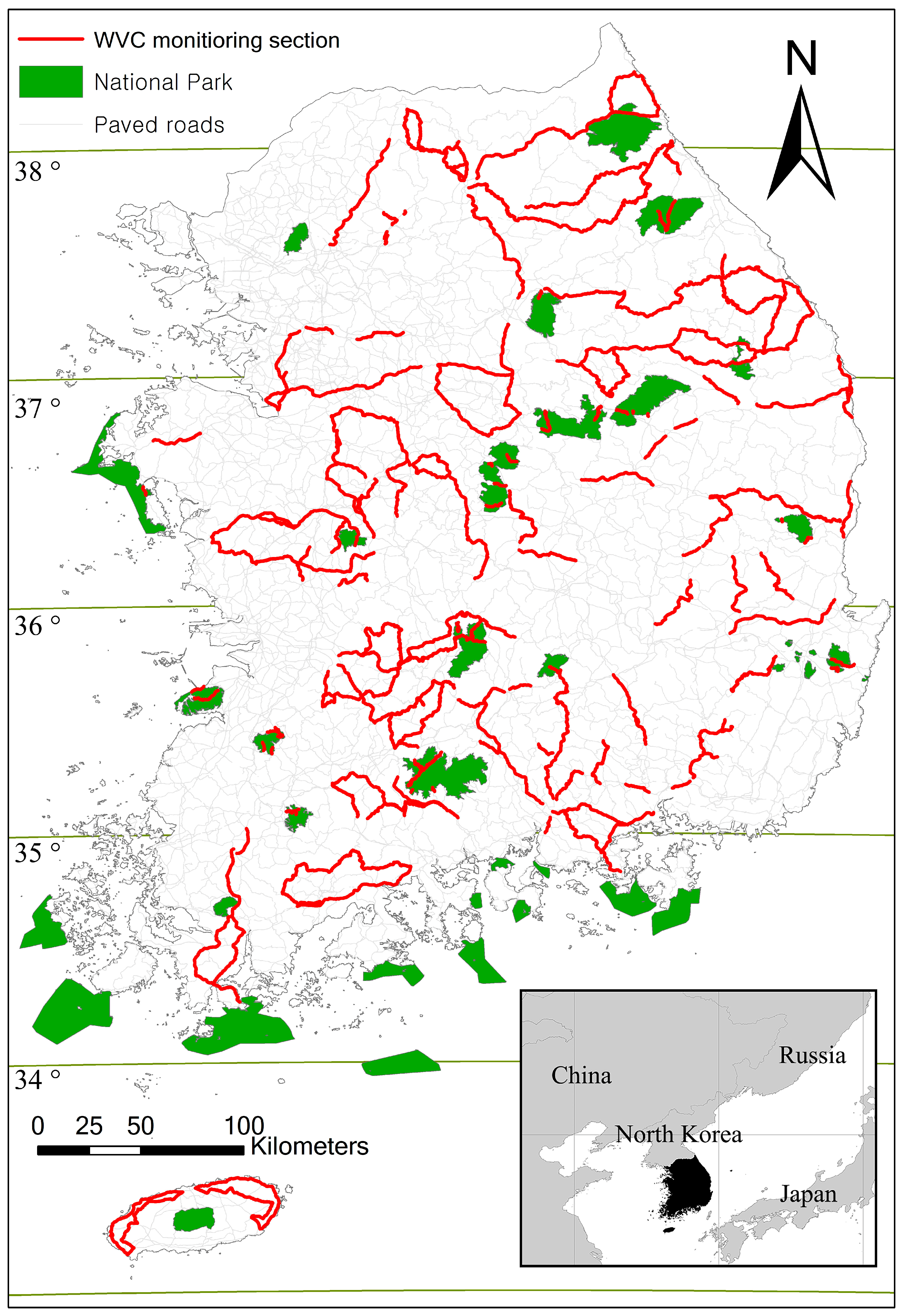
Habitat loss and fragmentation from extensive road development have escalated wildlife–vehicle collisions (WVCs) as a major cause of wildlife mortality. This study covers 9 years of WVC data across South Korea, examining species involved, seasonal and regional variations, and road factors affecting WVCs, to analyze impacts and propose mitigation strategies. Over 4561 km of roads were monitored, yielding insights into the connection between WVCs, road characteristics, and species-specific patterns. The study identified 13,606 WVCs involving 143 terrestrial vertebrate species, with detailed patterns and models for the top seven mammal species. Spatial differences in WVCs appeared more related to wildlife habitats, but some road features correlated variably with WVC frequency, highlighting complex prevention challenges. Effective mitigation requires comprehensive strategies tailored to species traits, seasonality, and road types.
Abstract
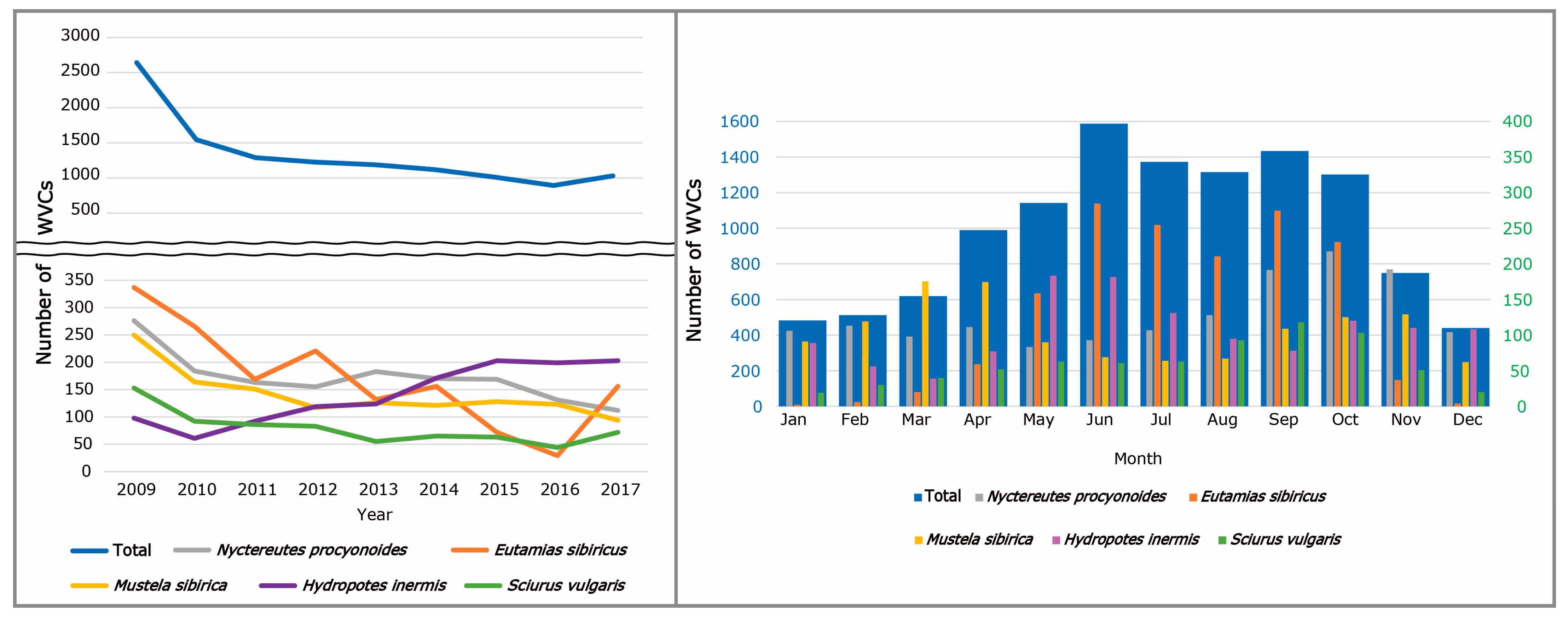
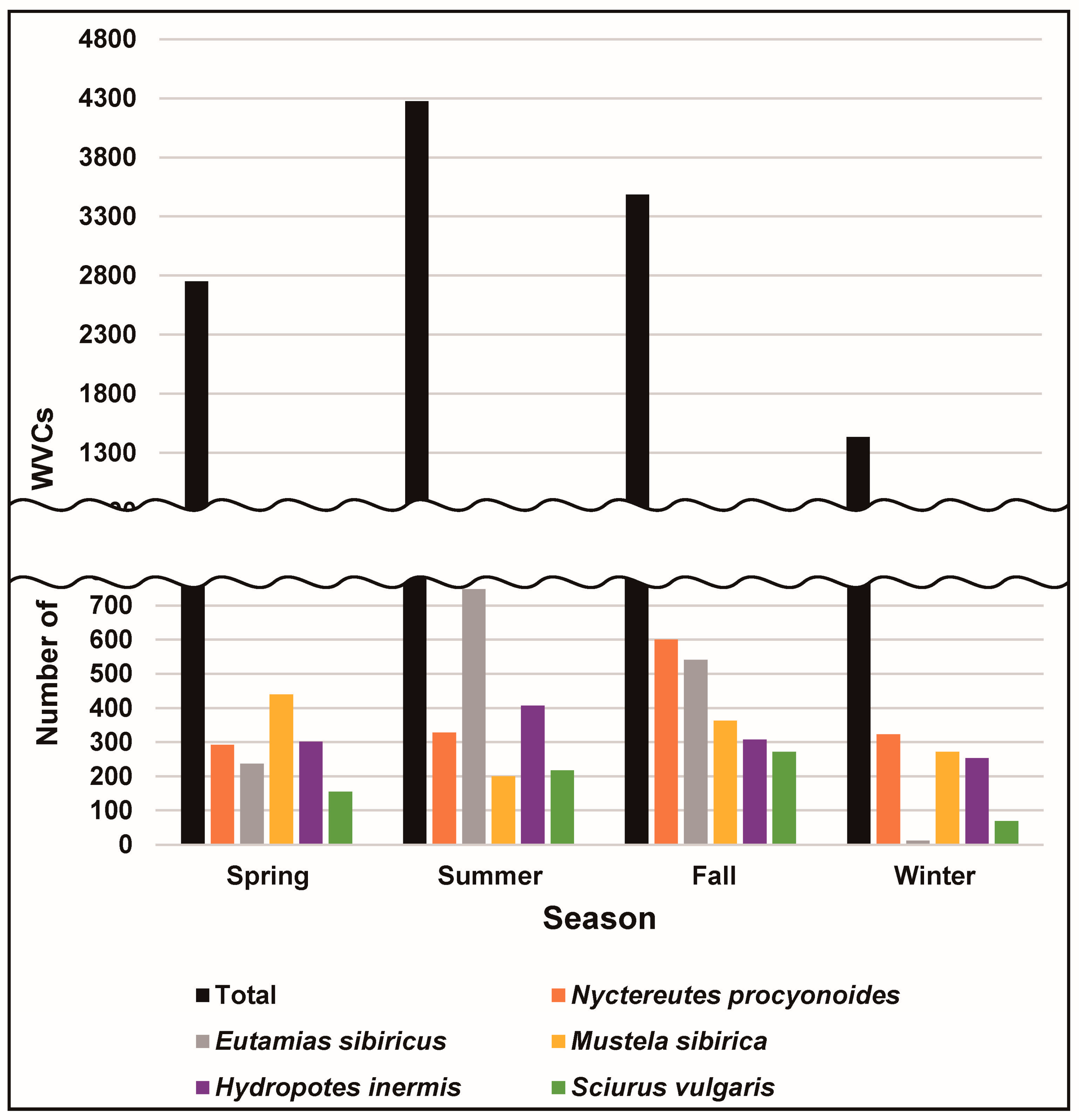
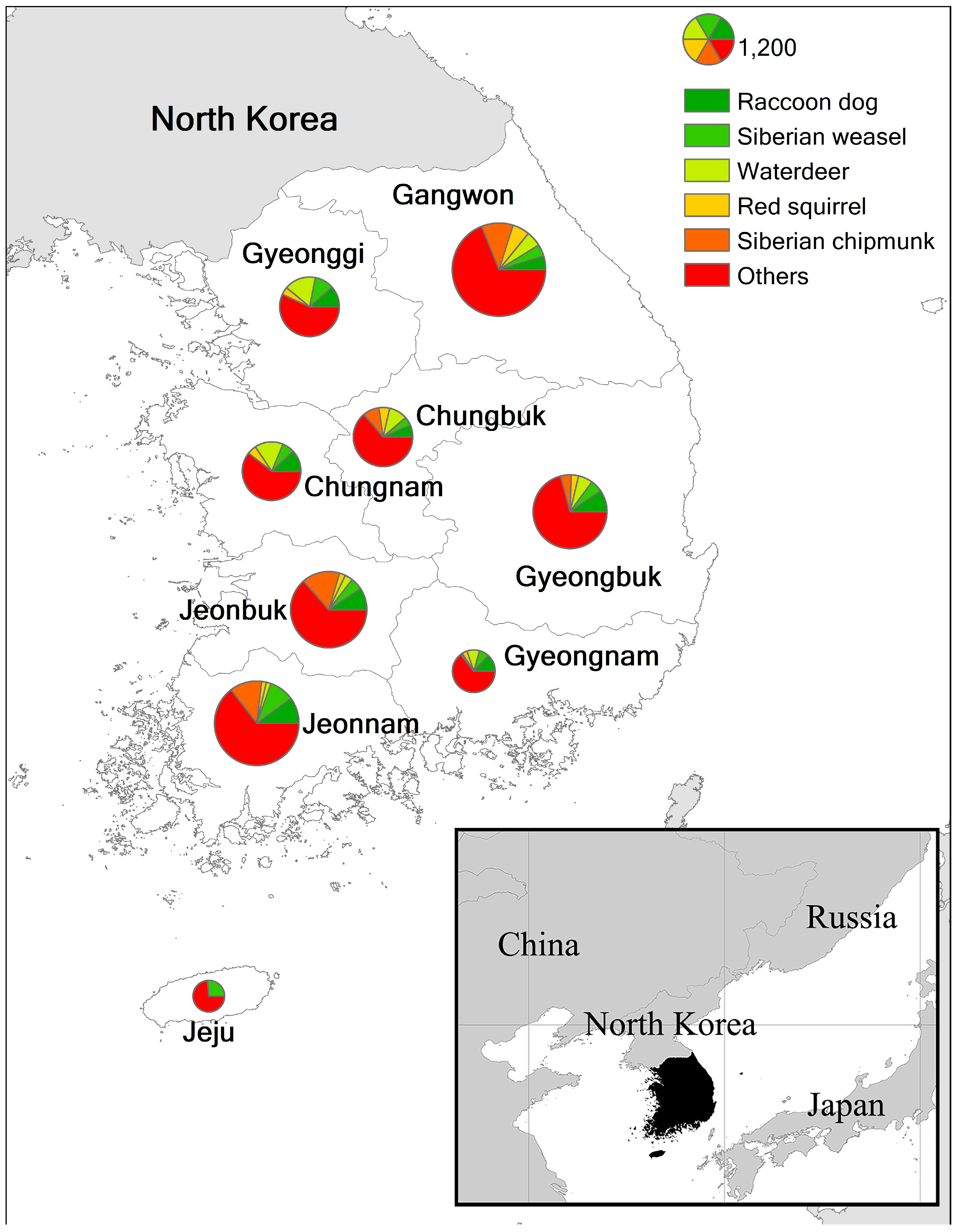
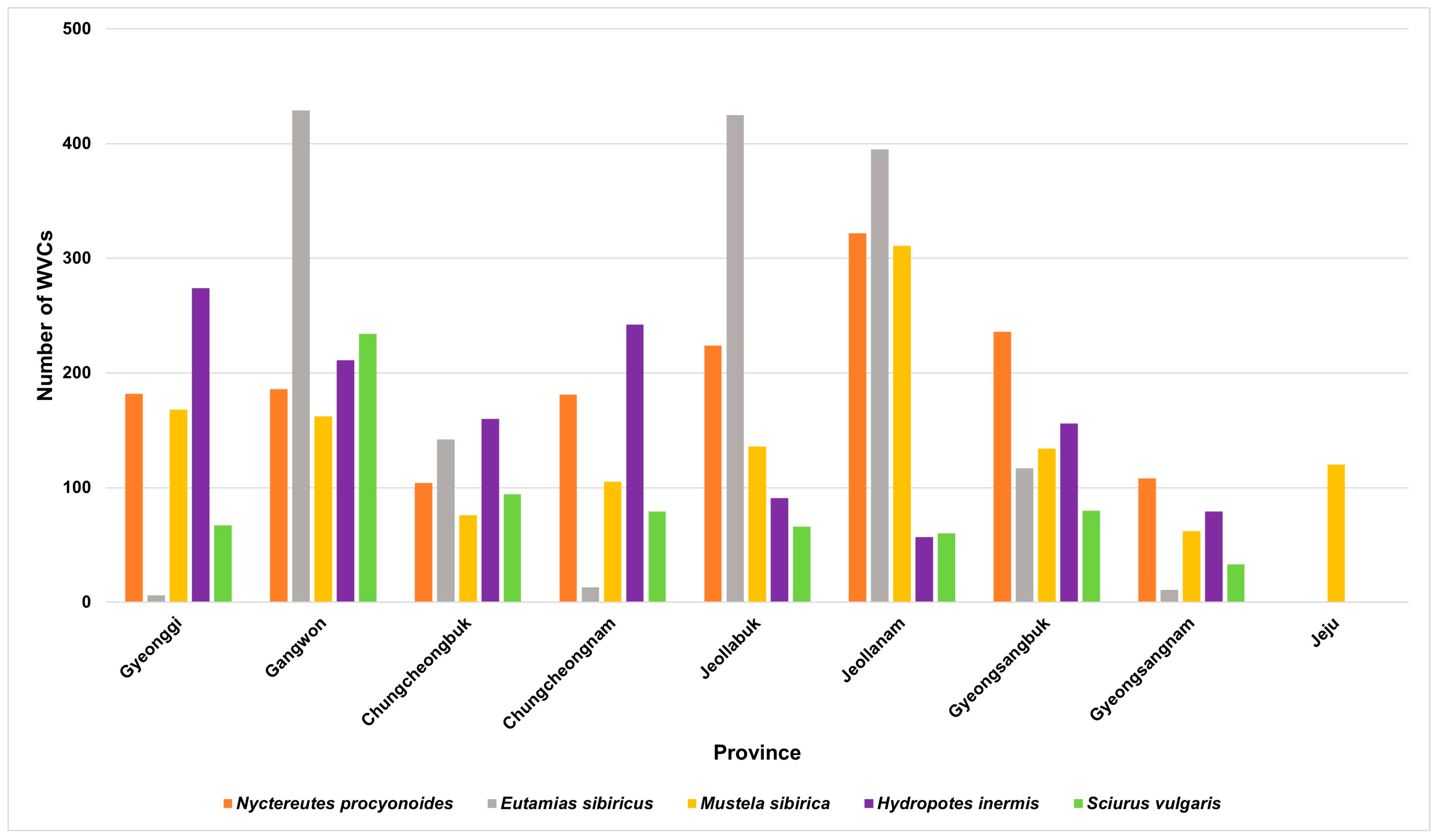
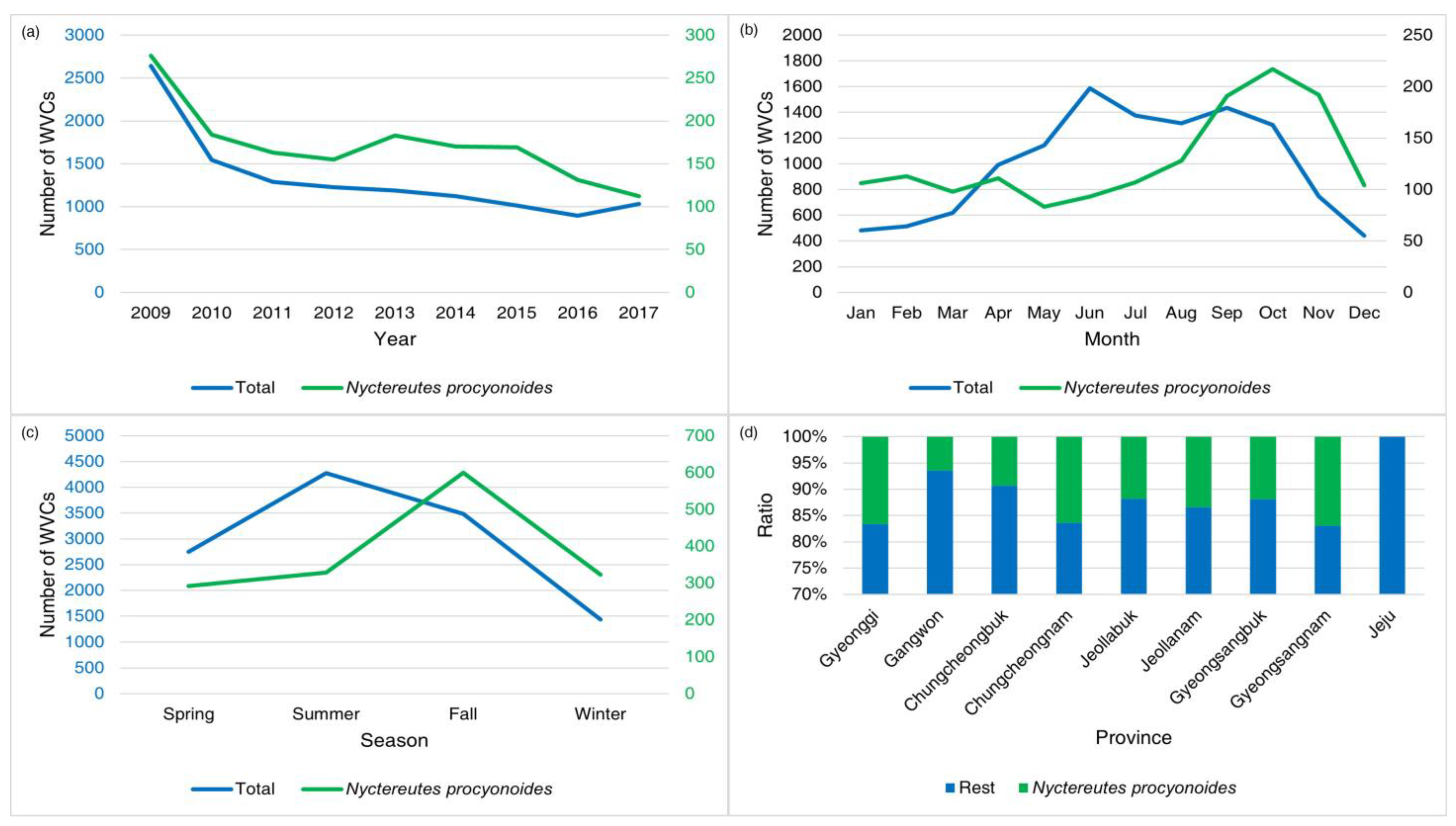
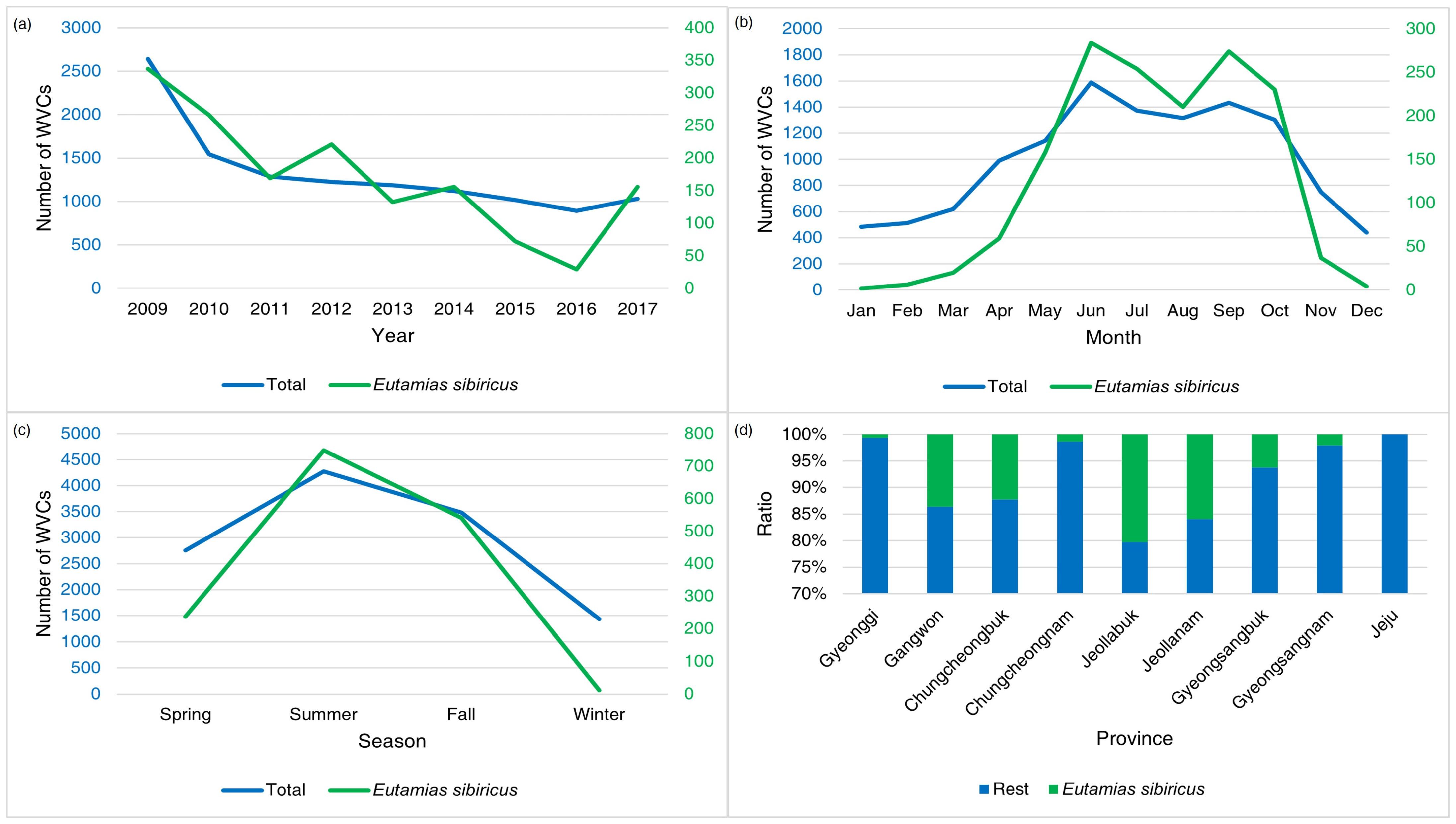
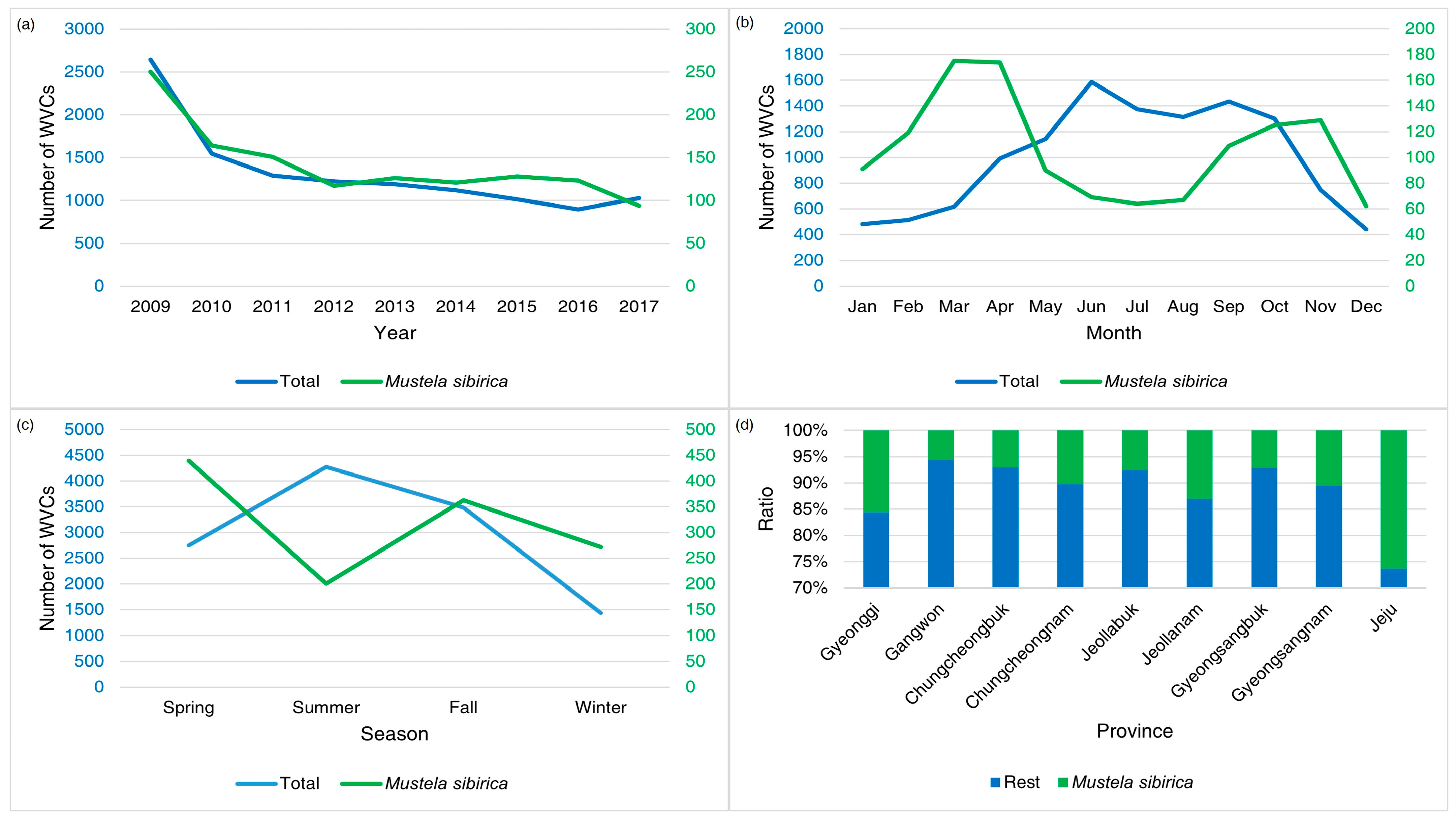
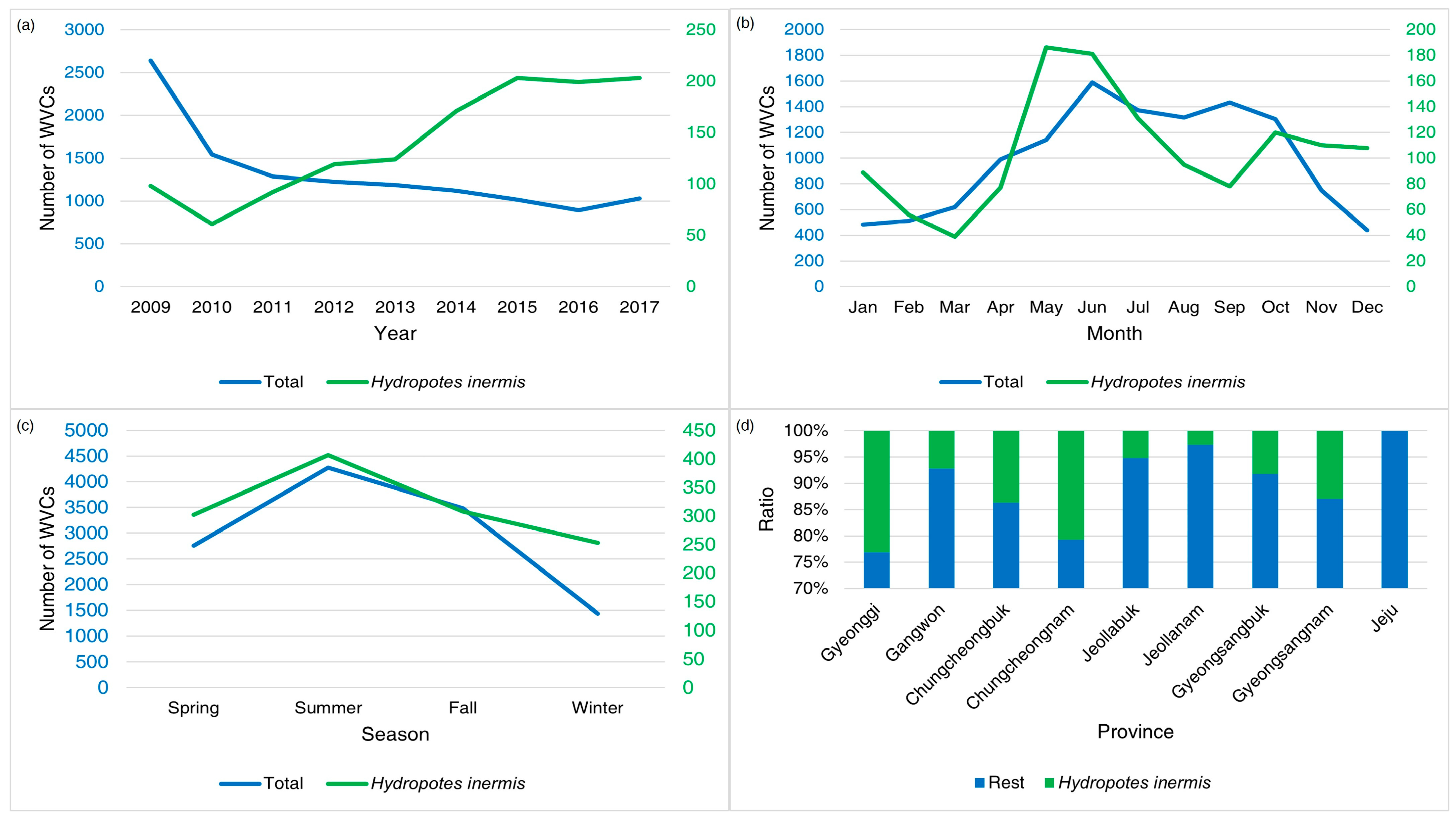
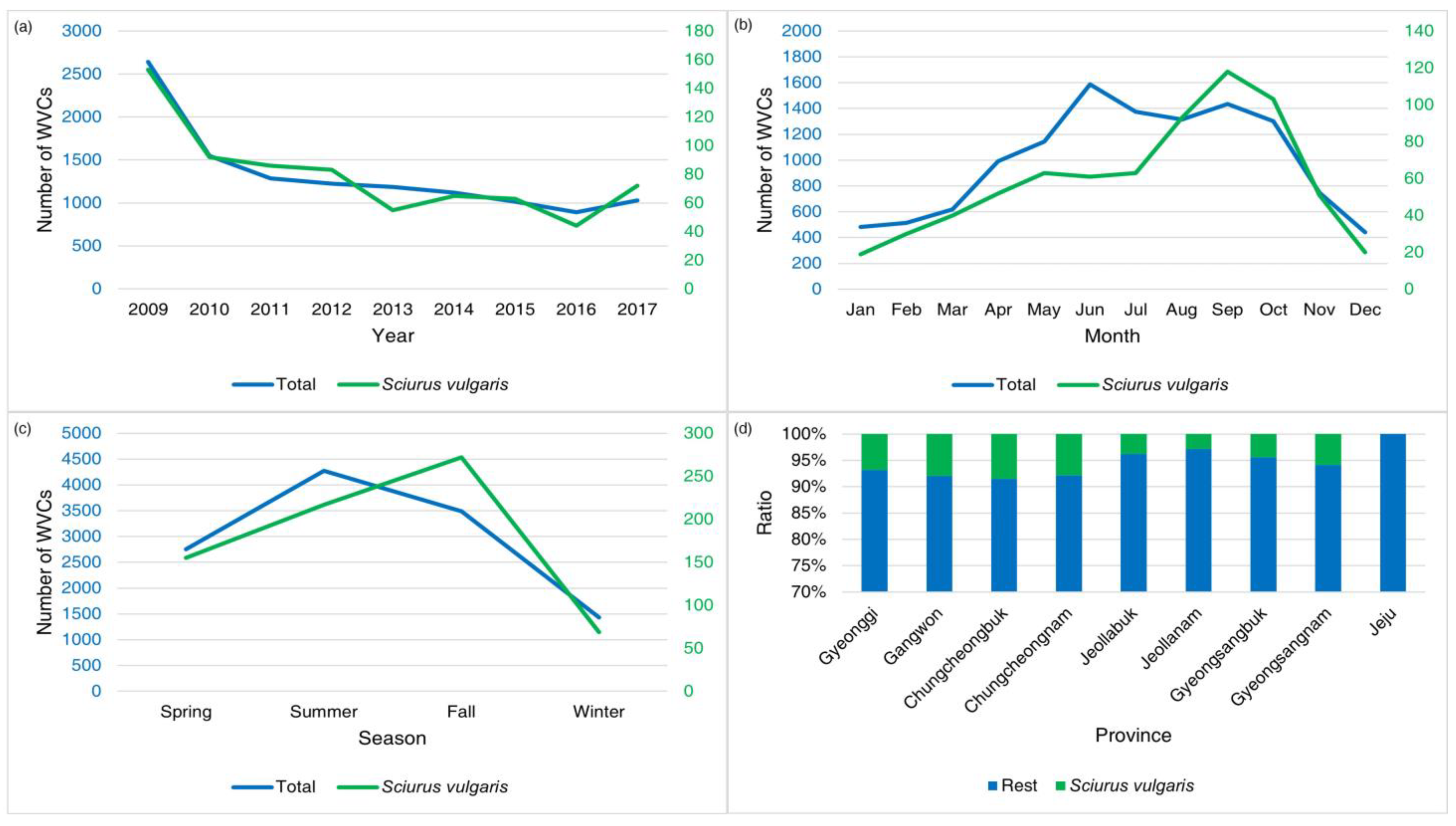
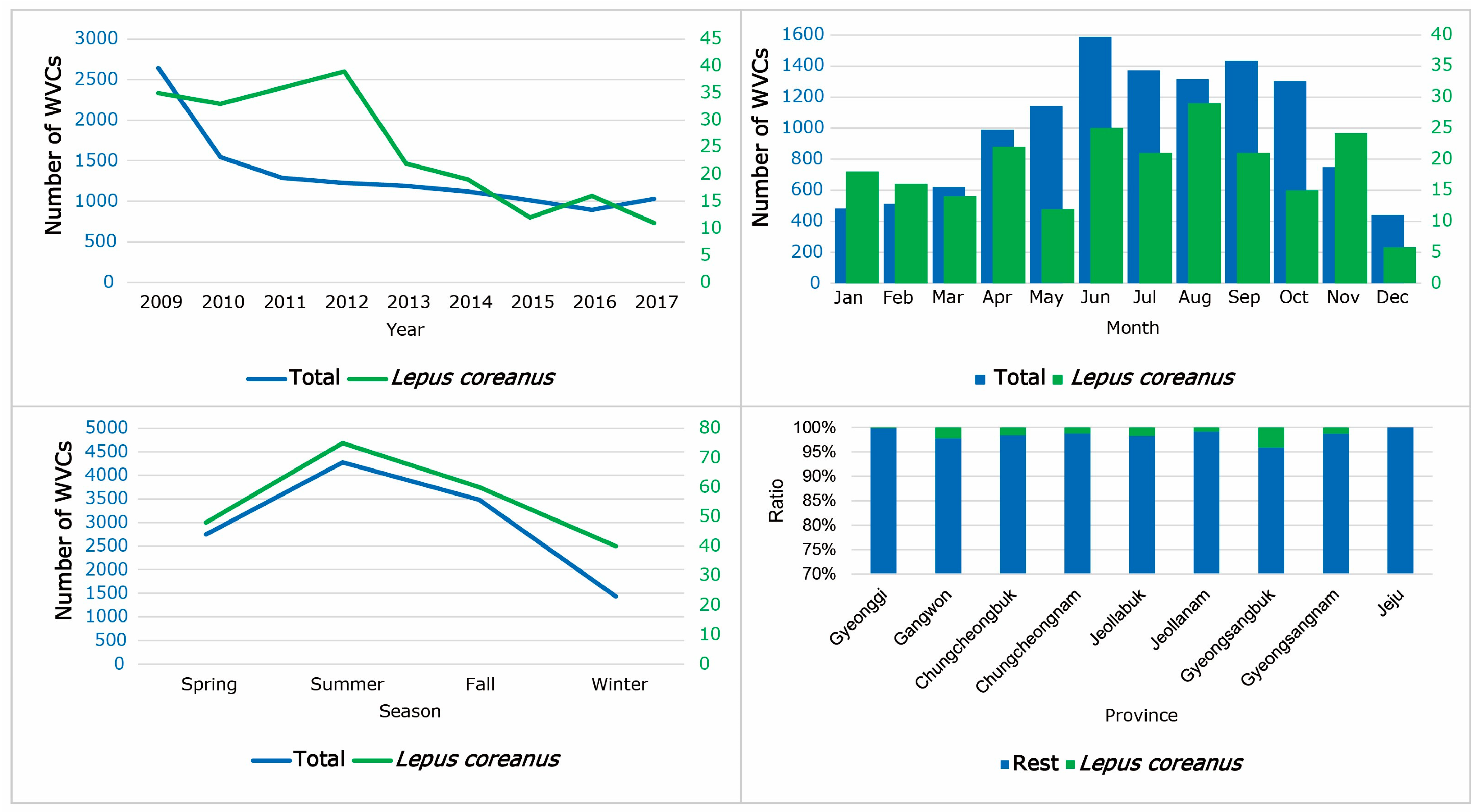
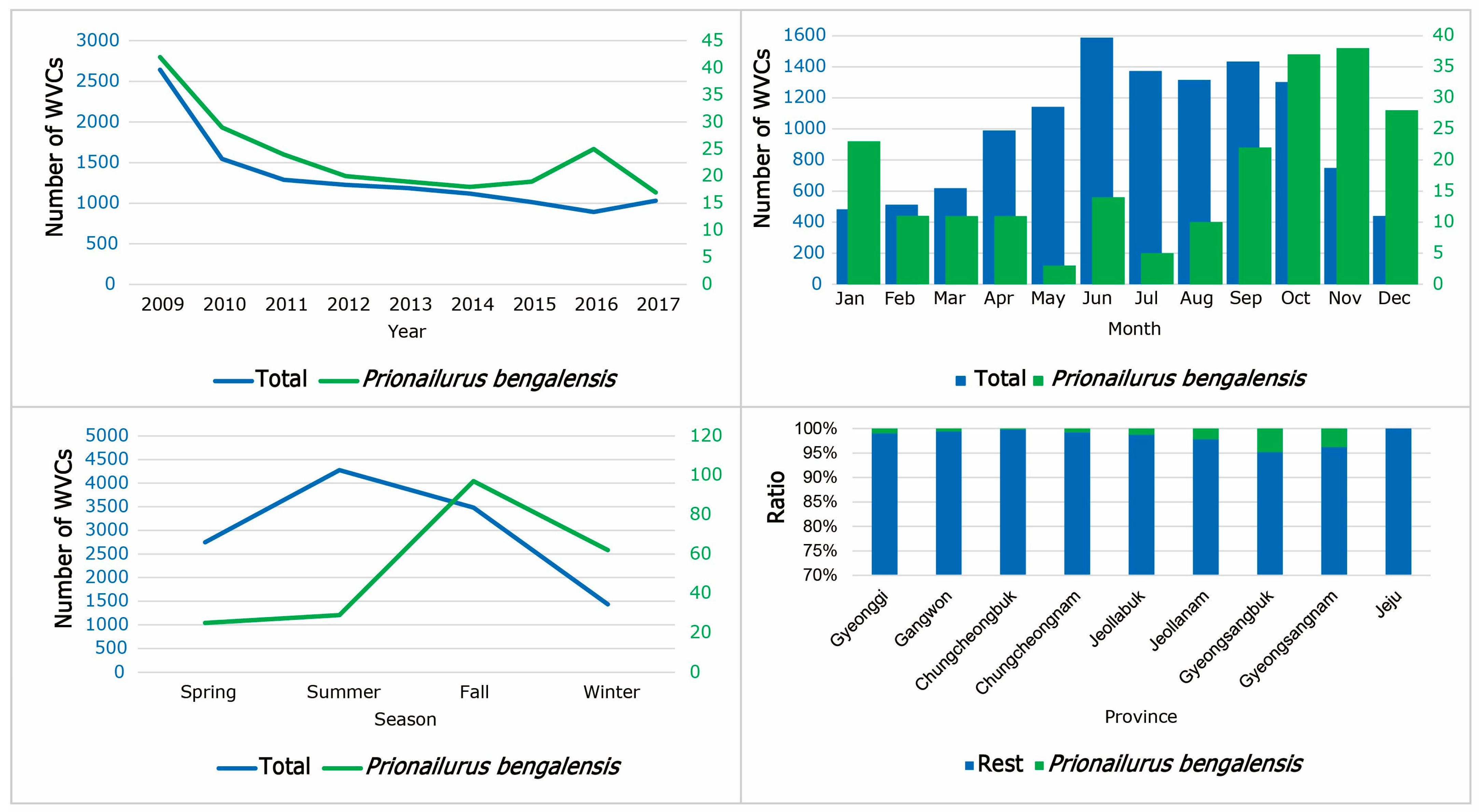
Severe habitat loss and fragmentation due to extensive road development have escalated wildlife–vehicle collisions (WVCs) as one of the major causes of wildlife mortality. This study, spanning 9 years from 2009 to 2017, presents comprehensive WVC data in South Korea, including species composition, seasonal and regional patterns, and road factors influencing WVCs, aiming to analyze their impact and propose effective mitigation strategies. We collected WVC data with road variables for 9 years from 4561 km of nationwide monitoring road sections and analyzed the data to understand the relationship between WVCs and road characteristics, as well as species-specific patterns. A nationwide survey identified 13,606 WVCs involving 143 terrestrial vertebrate species, and patterns and models of the top seven mammal species (raccoon dog (Nyctereutes procyonoides), Siberian chipmunk (Eutamias sibiricus), Siberian weasel (Mustela sibirica), water deer (Hydropotes inermis), red squirrel (Sciurus vulgaris), Korean hare (Lepus coreanus), and leopard cat (Prionailurus bengalensis)) were presented. Patterns revealed declines in WVCs overall, except for water deer. Although spatial differences in WVCs seemed linked more to wildlife habitats, certain road features correlated both positively or negatively with WVC frequency, highlighting complexities in the effectiveness of preventative measures. For effective mitigation and prevention of WVCs, comprehensive strategies considering species traits, seasonality, and road types should be implemented
Keywords:
mitigation strategies; road-kill; road features; species composition