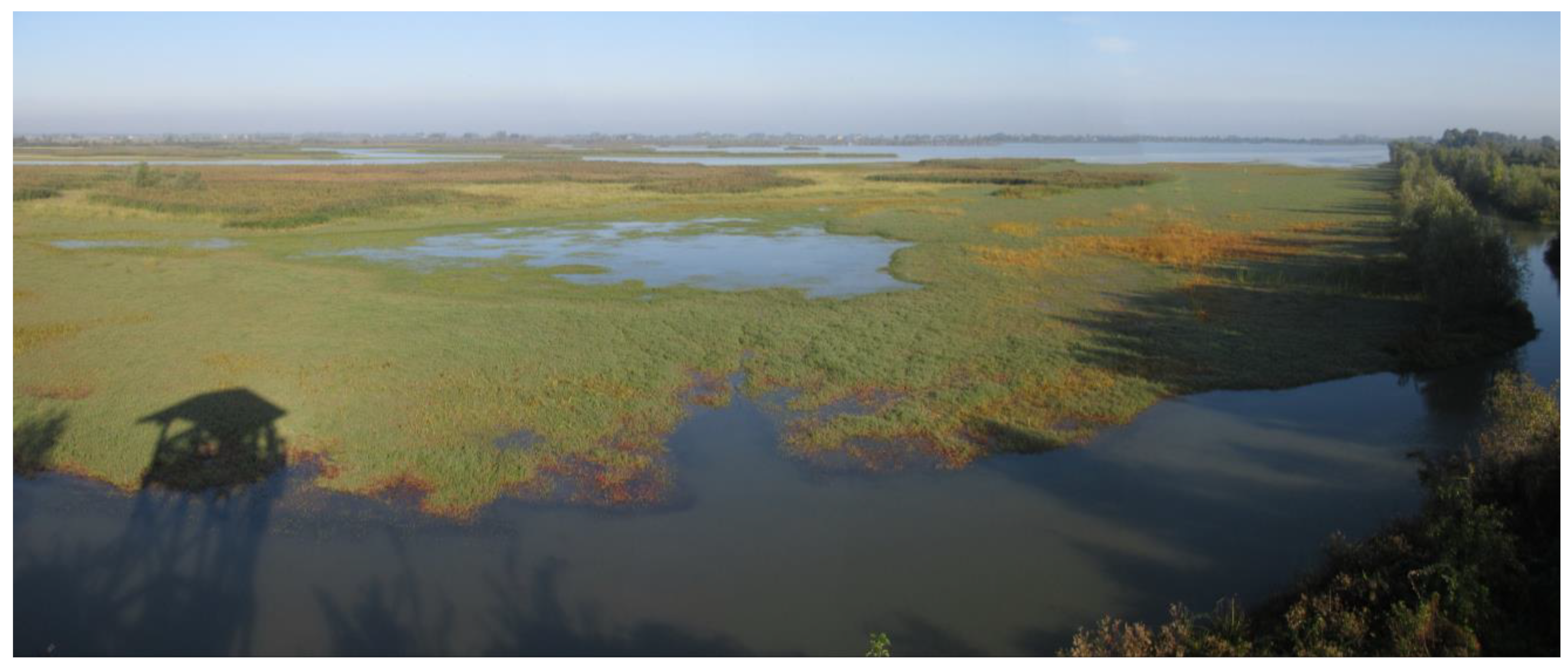
Ecology and Management of a Large Outbreak of Avian Botulism in Wild Waterbirds in Northeastern Italy (2019–2022)
by
 , , ,
, , ,
Stefano Volponi
1,†,
Maria Alessandra De Marco
1,*,†,
Roberta Benigno
2,
Enea Savorelli
3,
Matteo Frasnelli
4,
Laura Fiorentini
4,
Giovanni Tosi
4,
Lia Bardasi
4,
Elena Toschi
4,
Roberta Taddei
4,‡ and
Roberto Cocchi
1,‡ 1
Wildlife Service, Institute for Environmental Protection and Research (ISPRA), 40064 Ozzano dell’Emilia, BO, Italy
2
Office of Sustainability Education and Animal Welfare, Environmental and Land Protection Service, Comune di Ravenna, 48124 Ravenna, Italy
3
Animal Health–Ravenna, Department of Public Health, Azienda Unità Sanitaria Locale della Romagna, 48124 Ravenna, Italy
4
Istituto Zooprofilattico Sperimentale della Lombardia e dell’Emilia Romagna “B. Ubertini” (IZSLER), 25124 Brescia, Italy
*
Author to whom correspondence should be addressed.
†
These authors contributed equally to this work.
‡
These authors share senior authorship.
Animals 2024, 14(16), 2291; https://doi.org/10.3390/ani14162291
Submission received: 22 June 2024
/
Revised: 22 July 2024
/
Accepted: 30 July 2024
/
Published: 6 August 2024
(This article belongs to the Special Issue Wild Animals’ Infectious Disease: The Wild–Domestic-Human Interface - 2nd Edition)
Simple Summary
In all continents, except in Antarctica, avian botulism outbreaks occur in wild waterbirds with different recurrences and a high severity. This feared disease is due to the ingestion of botulinum neurotoxins (BoNT) mainly produced by Clostridium botulinum, also able to produce persistent spores representing an efficient form of environmental resistance while waiting for suitable conditions enabling bacterial vegetative growth. In addition, concomitant ecological and environmental changes (e.g., the presence of decaying organic material of plant and animal origins) represent a suitable substrate for the replication of Clostridium spp. strains producing BoNT in conditions of high temperatures and the absence of oxygen. This study describes the occurrence, evolution, and management of a severe outbreak of botulism that occurred in a protected wetland area of northeastern Italy, where over 2000 waterbirds (mostly carcasses, and only to a lesser extent sick birds) were recovered in 2019. We also describe the activities underlying the avian botulism monitoring and management performed in this area in 2020, 2021, and 2022. According to an ecological approach, anthropogenic changes that may trigger the occurrence of avian botulism in wetland habitats should be carefully assessed, and habitat management actions should be adaptively planned to protect the biodiversity of these vulnerable ecosystems, which are increasingly affected by ongoing global change.
Abstract
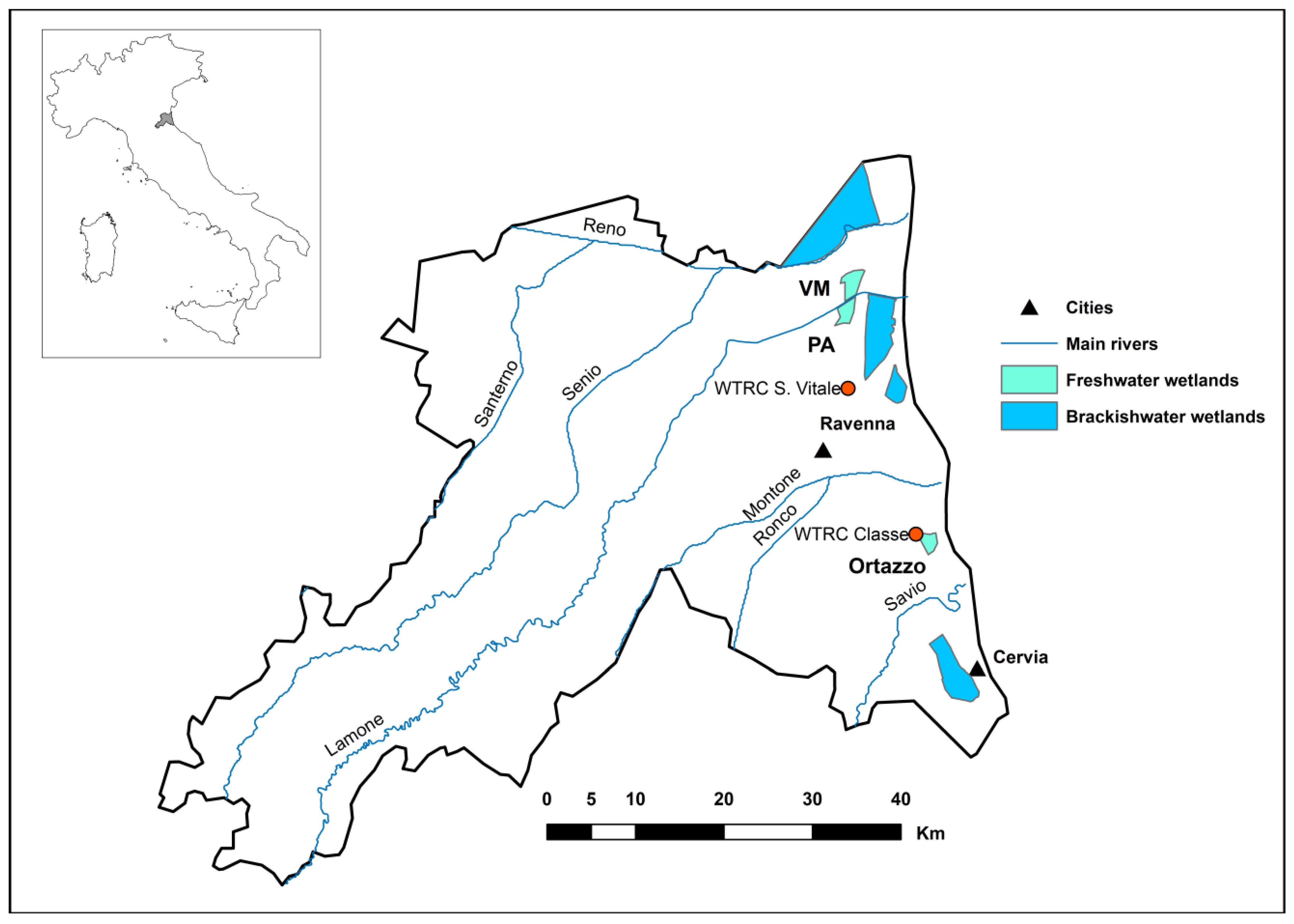
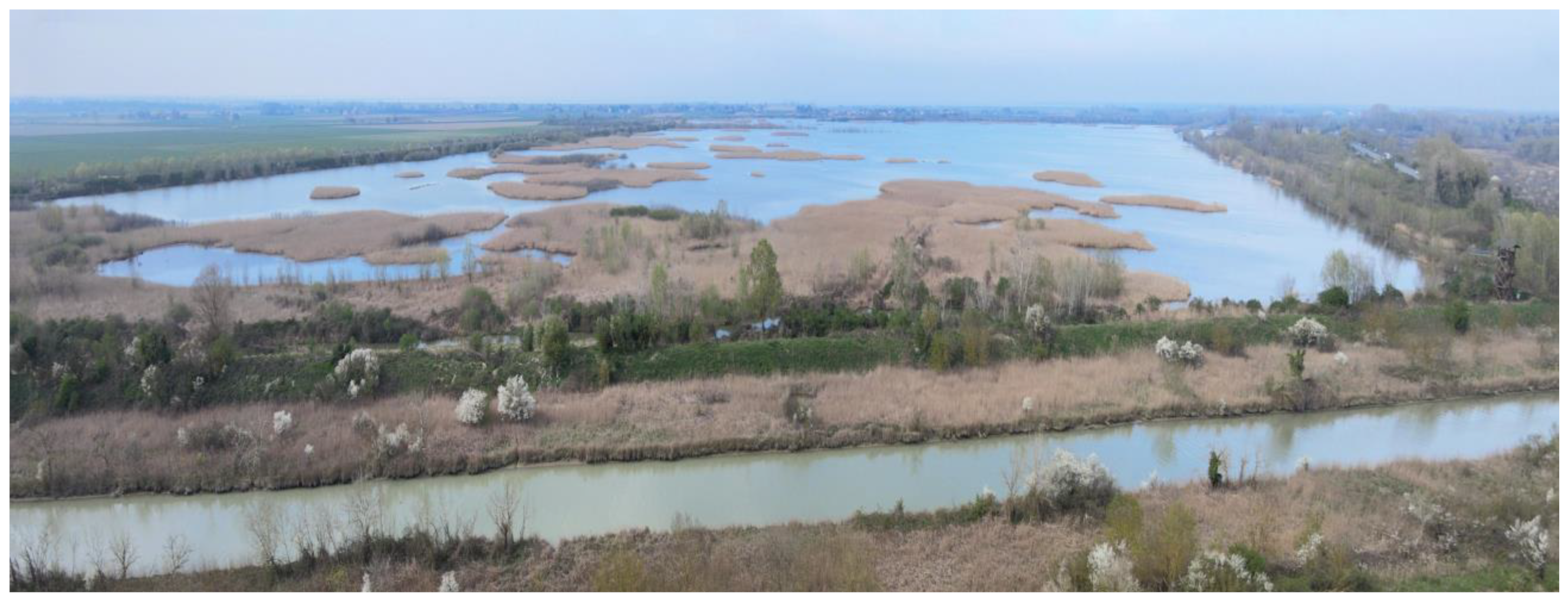
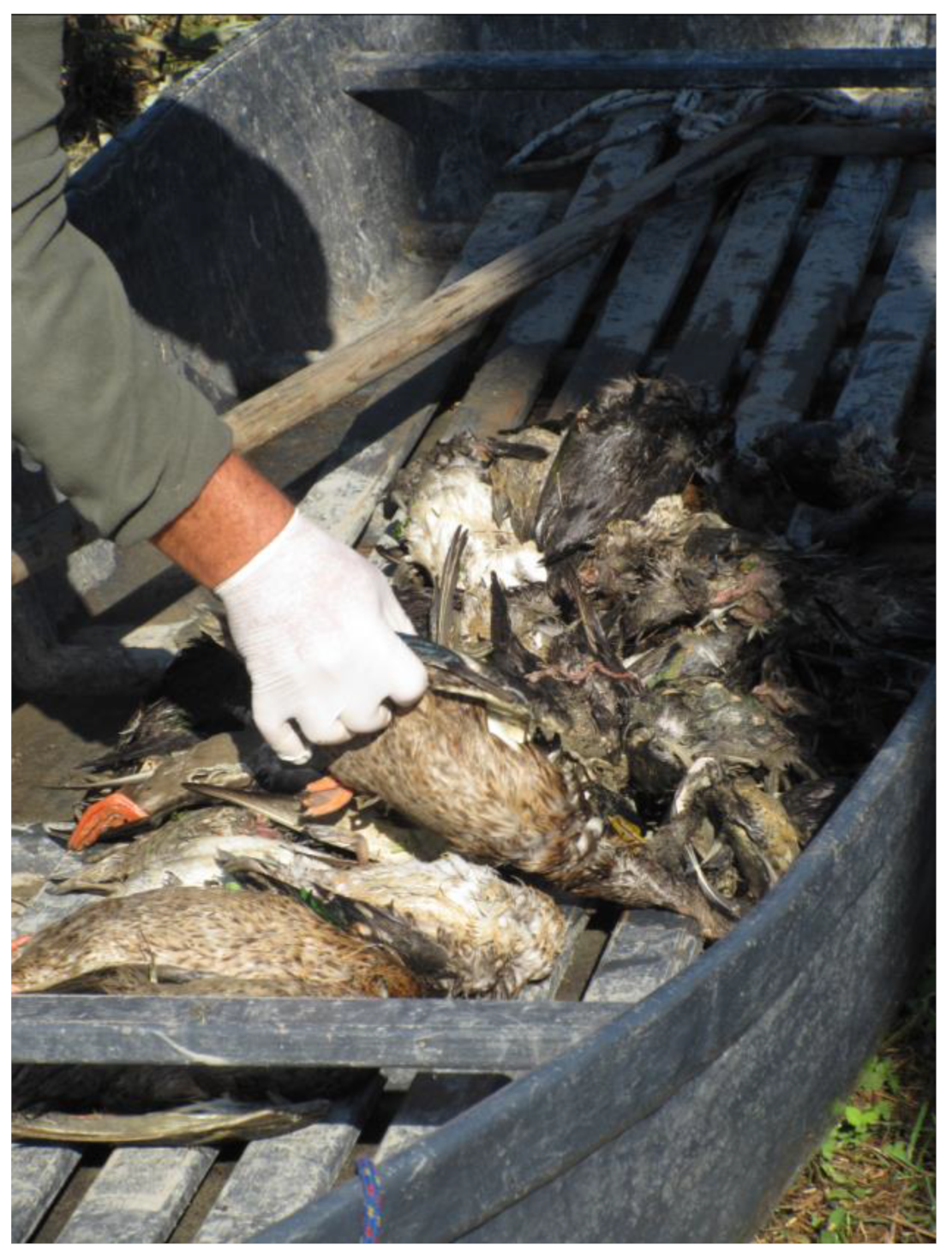
Avian botulism is a paralytic disease due to the ingestion of botulinum neurotoxins (BoNT) produced by anaerobic, sporigenic bacteria (notably, Clostridium botulinum). Wild waterbirds worldwide are affected with variable recurrence and severity, and organic material decaying in wetland habitats may constitute a suitable substrate for the replication of clostridia strains producing BoNT in conditions of high temperatures and the absence of oxygen. Here, we describe a large outbreak of avian botulism that occurred in the Valle Mandriole protected area of northeastern Italy (VM). After the recovery in late summer of a few duck carcasses that molecularly tested positive for BoNT-producing clostridia, in October 2019, the avian botulism escalation led to a total of 2367 birds being recovered (2158 carcasses and 209 sick birds). Among these, 2365/2367 were waterbirds, with ducks accounting for 91.8% of the total (2173/2367) and green-winged teals representing 93.5% of the ducks. After the quick collection of dead and sick birds (from 4 to 11 October 2019) and the flooding of the VM wetland (from 5 to 12 October 2019), the 2019 botulism emergency apparently ended. Following two water inputs in May and July 2020, only one pooled sample obtained from 16 bird carcasses found that year in VM tested positive for clostridia type C by real-time PCR, whereas, after to the implementation of measures deterring the bird’s presence, new avian botulism cases—due to clostridia type C and C/D, according to molecular and animal-model tests of confirmation—led to the collection of 176 waterbirds (82 carcasses and 94 sick ducks) and 16 waterbirds (9 carcasses and 7 sick ducks) in the summers 2021 and 2022, respectively. In conclusion, the prevention, management, and control of the disease rely on habitat management, the quick and careful collection/removal of animal carcasses, and the regular monitoring and surveillance of live and dead birds.
Keywords:
avian botulism; outbreak; ecology; management; Southern Europe; Italy; ecosystem change