Winter Epibiotic Community of the Red King Crab Paralithodes camtschaticus in Sayda Bay (Barents Sea)



Murmansk Marine Biological Institute of the Russian Academy of Sciences (MMBI RAS), 183010 Murmansk, Russia
*
Authors to whom correspondence should be addressed.
Animals 2024, 14(1), 100; https://doi.org/10.3390/ani14010100
Submission received: 1 December 2023
/
Revised: 19 December 2023
/
Accepted: 25 December 2023
/
Published: 27 December 2023
(This article belongs to the Special Issue Crustaceans Biology, Physiology, Reproduction and Development)
Simple Summary
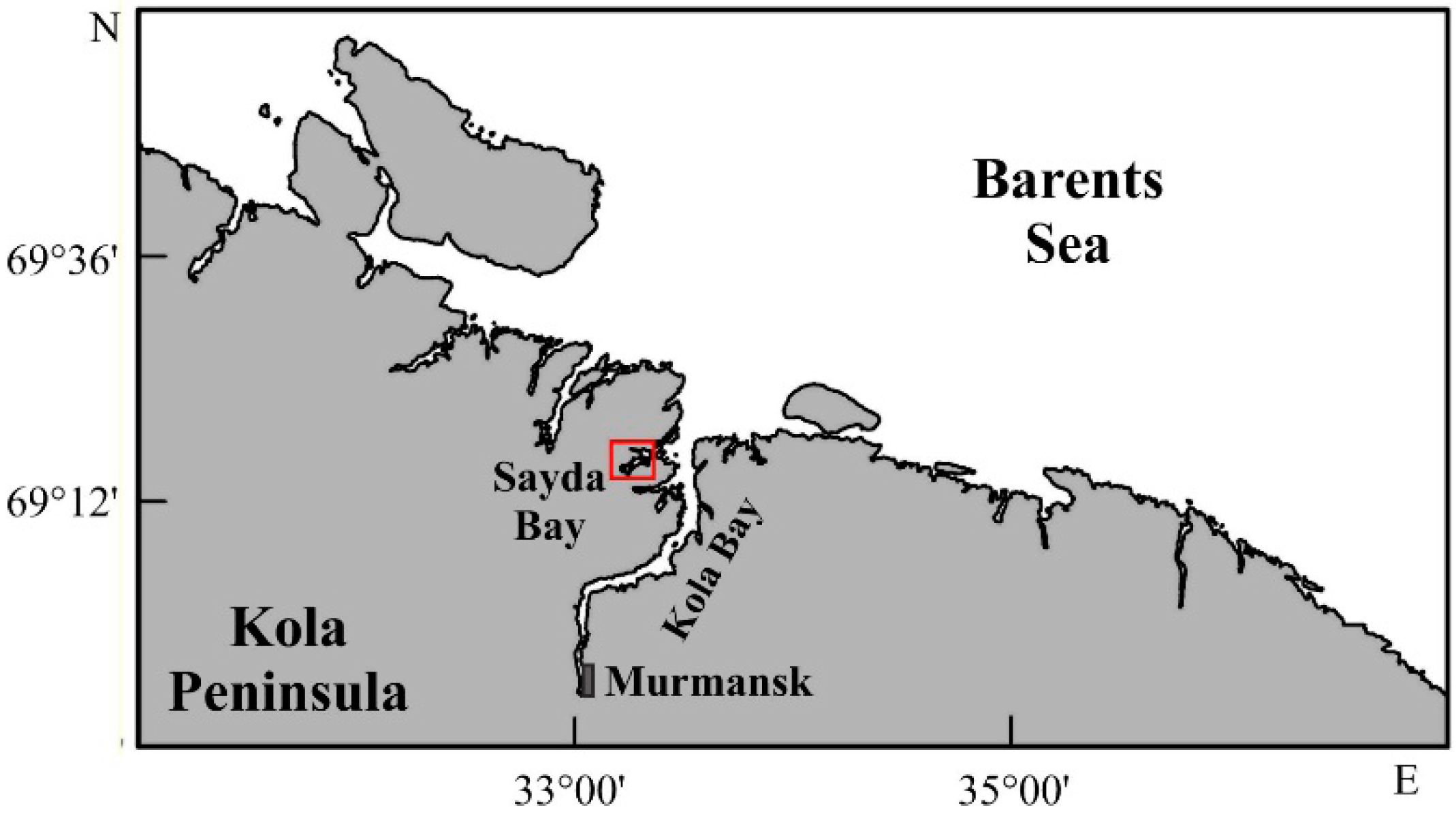
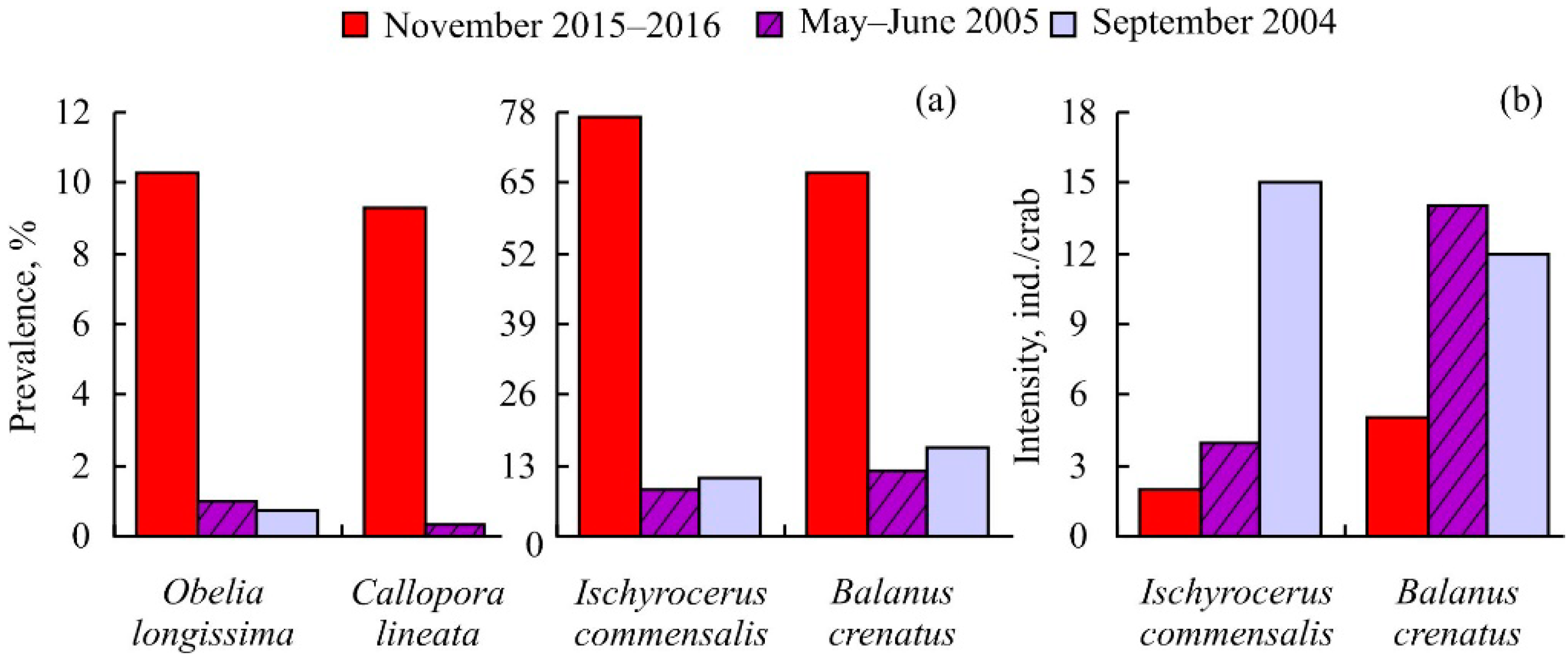
Information on epibionts and symbionts of the introduced Barents Sea red king crab during the winter period is currently lacking. To address this gap, we examined the species composition and infestation indices of epibionts on this host in the northern part of Kola Bay in November. Our findings indicate a higher infestation rate of barnacles and amphipods during the winter season compared to the summer. In contrast, infestation rates of other species remained low during winter, reflecting seasonal fluctuations in both the size distribution of red king crabs and prevailing temperature conditions. Our research provides novel data on the growth patterns of commonly associated organisms, which could prove invaluable in determining the age of red king crabs in the Barents Sea.
Abstract
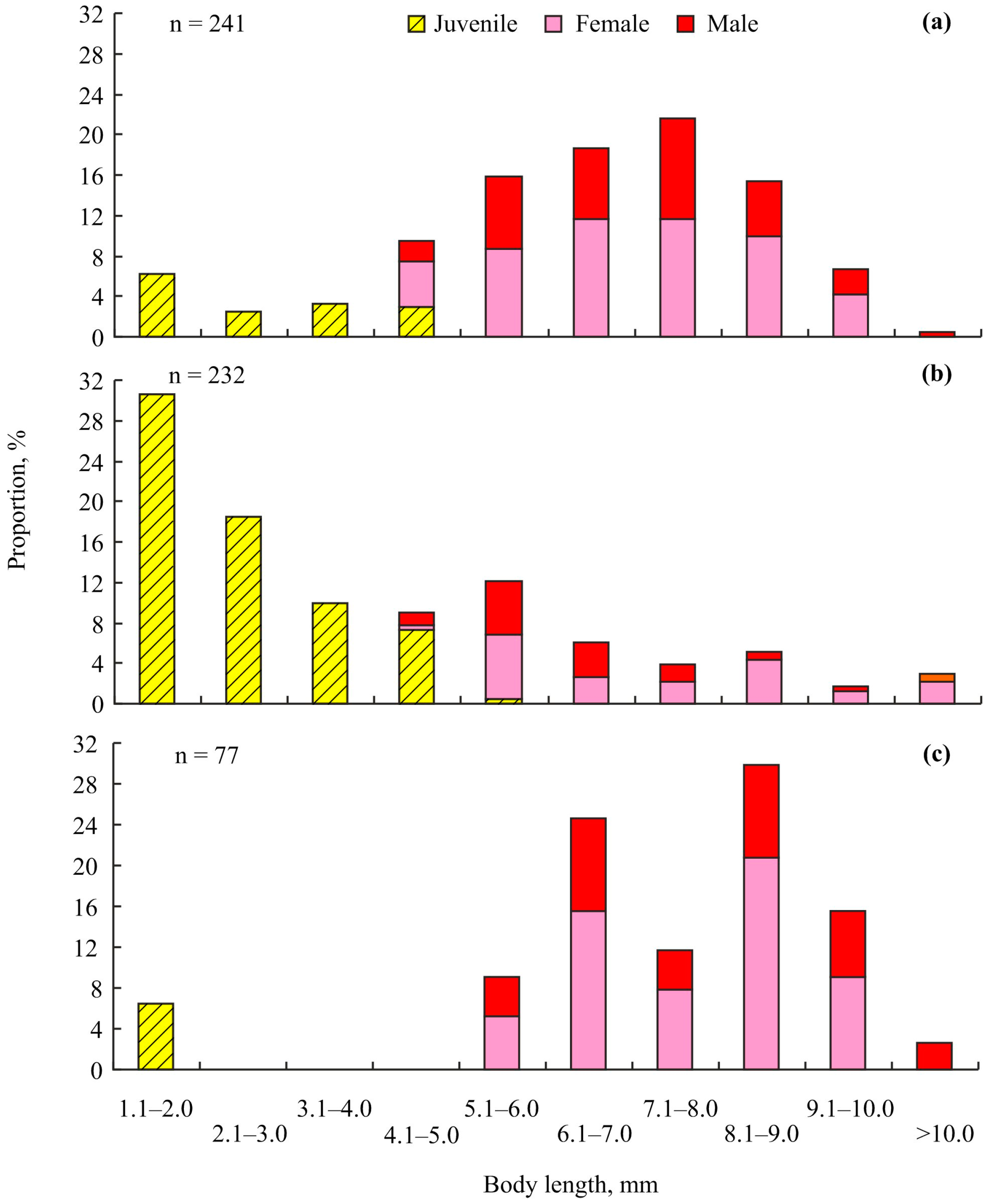
The species composition of epibiotic communities on red king crab was investigated in Sayda Bay, Russia, during November of 2015 and 2016. The community consisted of 12 species in total. Among epibionts, the barnacle Balanus crenatus was most prevalent (67.0%), while the amphipod Ischyrocerus commensalis was the most frequent symbiont (77.3%). Infestation levels in May–June 2005 and September 2004 were higher, as a larger proportion of small crabs without fouling species were present during those seasons. The lower infestation intensities recorded for other common associated organisms during winter can be attributed to their increased mortality due to unfavorable temperature conditions. The localization of epibionts and symbionts were related to larval settlement patterns of attached species and feeding behavior of mobile species. Monthly growth increments for I. commensalis and B. crenatus were estimated at 2 mm in body length and 1.35 mm in basal diameter, respectively. Size-at-age data for epibionts can aid in the age determination of large male crabs that may skip an annual molt.