Hematology, Biochemistry, and Protein Electrophoresis Reference Intervals of Western European Hedgehog (Erinaceus europaeus) from a Rehabilitation Center in Northern Portugal
by
 , , ,
, , ,
Sofia Rosa
1,
Ana C. Silvestre-Ferreira
2,3,4,5,
Roberto Sargo
2,3,4,5,
Filipe Silva
2,3,4,5 and 
Felisbina Luísa Queiroga
2,3,4,5,* 1
School of Life and Environmental Sciences (ECVA), University of Trás-os-Montes and Alto Douro (UTAD), Quinta dos Prados, 5001-801 Vila Real, Portugal
2
Department of Veterinary Science, School of Agrarian and Veterinary Sciences (ECAV), University of Trás-os-Montes and Alto Douro (UTAD), Quinta dos Prados, 5001-801 Vila Real, Portugal
3
Animal and Veterinary Research Centre (CECAV), University of Trás-os-Montes and Alto Douro (UTAD), Quinta dos Prados, 5001-801 Vila Real, Portugal
4
Associated Laboratory for Animal and Veterinary Science (AL4AnimalS), University of Trás-os-Montes and Alto Douro (UTAD), Quinta dos Prados, 5001-801 Vila Real, Portugal
5
Veterinary Teaching Hospital, University of Trás-os-Montes and Alto Douro (HVUTAD), Quinta dos Prados, 5001-801 Vila Real, Portugal
*
Author to whom correspondence should be addressed.
Animals 2023, 13(6), 1009; https://doi.org/10.3390/ani13061009
Submission received: 1 February 2023
/
Revised: 6 March 2023
/
Accepted: 7 March 2023
/
Published: 10 March 2023
(This article belongs to the Special Issue Applied Hedgehog Conservation Research)
Simple Summary
The Western European hedgehog (Erinaceus europaeus) is an insectivorous mammal with a wide geographic distribution. Owing mostly to climate changes and anthropogenic pressures, a considerable number of hedgehogs now live in urban areas close to humans, where they are exposed to contaminants and biological agents that may result in disease with the correspondent hematological and biochemical alterations. Hedgehogs can work as bioindicators to environmental pollution and host multiple zoonotic agents, making them relevant for One Health studies. Thus, it is essential to deepen the knowledge on this species and calculate reference intervals for the usual hematological and biochemical parameters. This would make it possible to recognize the “normal” and identify the “disease”. In this study, some significant differences were evident, especially when comparing age groups (juveniles versus adults), showing the relevance of further investigations in this species.
Abstract
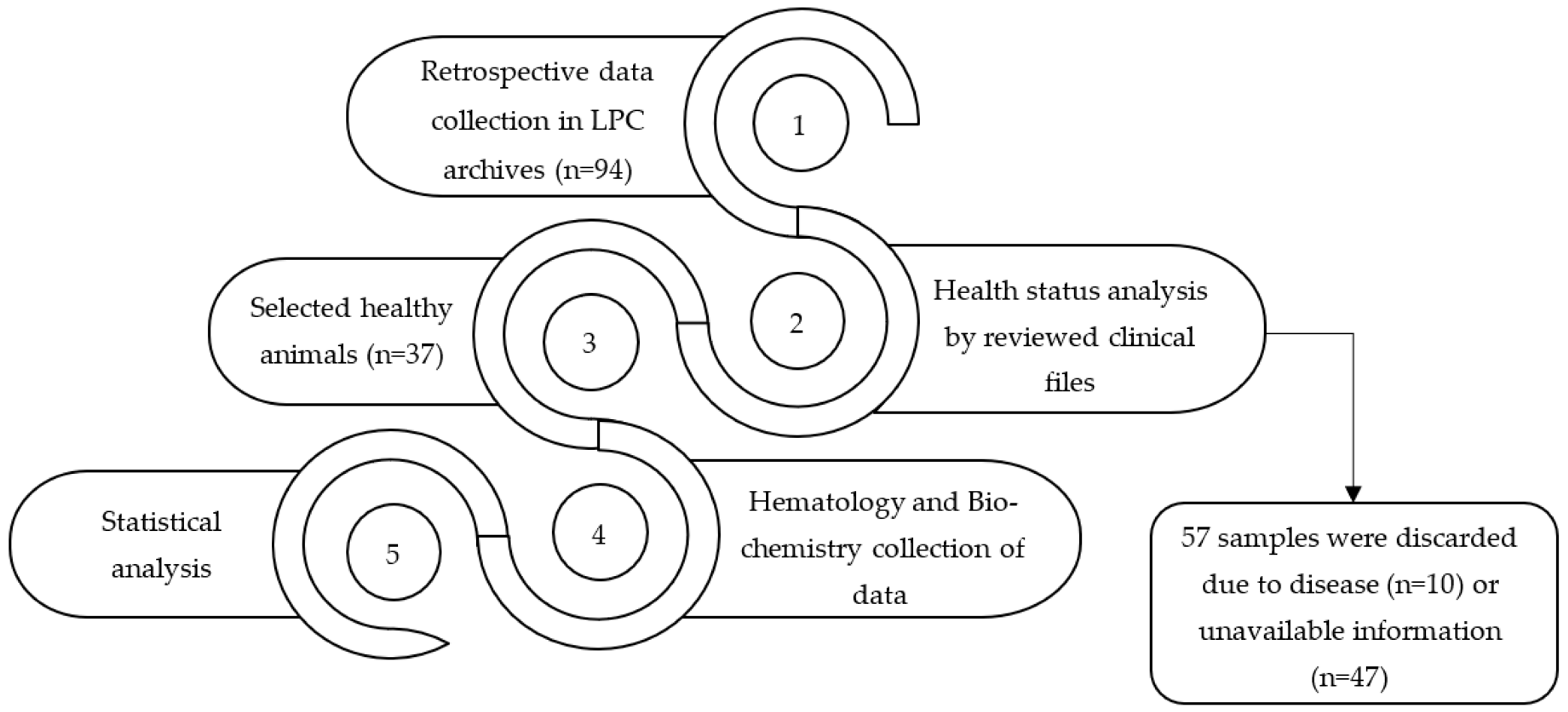
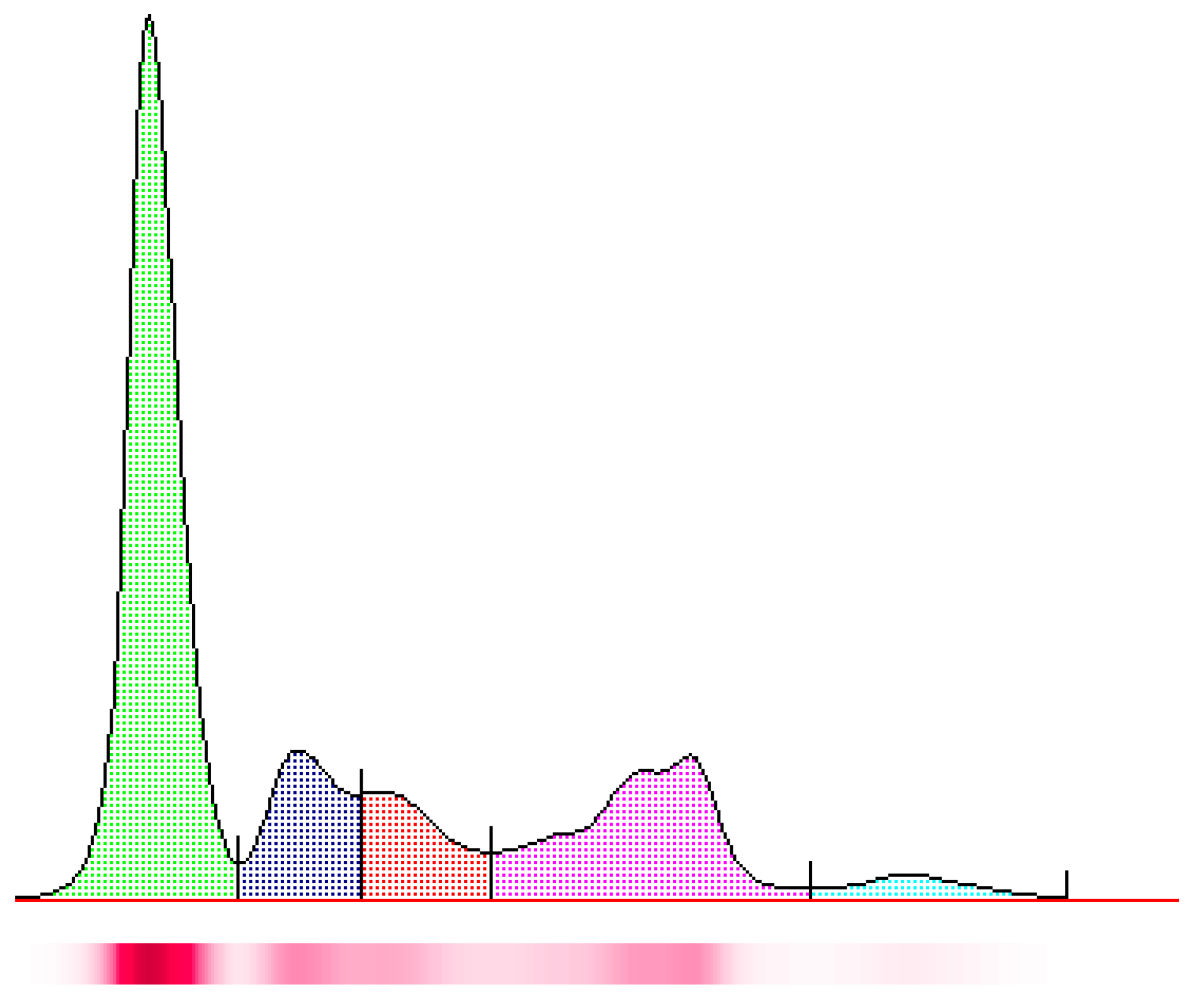
The Western European hedgehog (Erinaceus europaeus) can work as a bioindicator of environmental pollution and be a host for multiple zoonotic agents, making it relevant in terms of One Health studies. It is essential to deepen the knowledge on this species and calculate reference intervals (RIs) for the usual hematological and biochemical parameters. For this retrospective study (2017–2022), the archives of the Clinical Pathology Laboratory (LPC) of University of Trás-os-Montes and Alto Douro (UTAD) Veterinary Teaching Hospital were analyzed. Data of hematology, clinical biochemistry, and protein electrophoresis from 37 healthy hedgehogs of the Wild Animal Rehabilitation Center at UTAD, Northern Portugal, were included. It was possible to calculate RIs for almost all of the variables in the study, using Reference Value Advisor V2.1. Moreover, sex and age effects were investigated: alkaline phosphatase (p = 0.012, higher in males); total proteins (p = 0.034, higher in adults); mean cell volume (p = 0.007) and mean corpuscular hemoglobin (p = 0.010) (both higher in juveniles); and red blood cell distribution width (p = 0.021, higher in adults). Our study allowed for the first time to define RIs for a population of hedgehogs in Portugal, having a potentially relevant impact on species conservation and in the human–animal health interface.
Keywords:
Western European hedgehog; Erinaceus europaeus; hematology; biochemistry; protein electrophoresis; reference intervals