Tissue Distributions and Toxic Effects of Hexavalent Chromium in Laboratory-Exposed Periwinkle (Littorina littorea Linnaeus)
by
 , and
, and
Olufemi S. Salami
1 ,
,
Joseph A. Adeyemi
1,2,*,
Toluwase S. Olawuyi
3,
Fernando Barbosa, Jr.
2 and
Chris O. Adedire
1 1
Department of Biology, School of Life Sciences, Federal University of Technology, Akure P.O. Box 704, Nigeria
2
Department of Clinical Analyses, Toxicology and Food Sciences, School of Pharmaceutical Sciences of Ribeirão Preto, University of São Paulo, Avenida do Café s/no, Ribeirão Preto 14040-903, Brazil
3
Department of Human Anatomy, School of Basic Medical Sciences, Federal University of Technology, Akure P.O. Box 704, Nigeria
*
Author to whom correspondence should be addressed.
Animals 2023, 13(21), 3412; https://doi.org/10.3390/ani13213412
Submission received: 20 September 2023
/
Revised: 31 October 2023
/
Accepted: 1 November 2023
/
Published: 3 November 2023
(This article belongs to the Special Issue Pharmacokinetics and Pharmacodynamics in Aquatic Animals)
Simple Summary
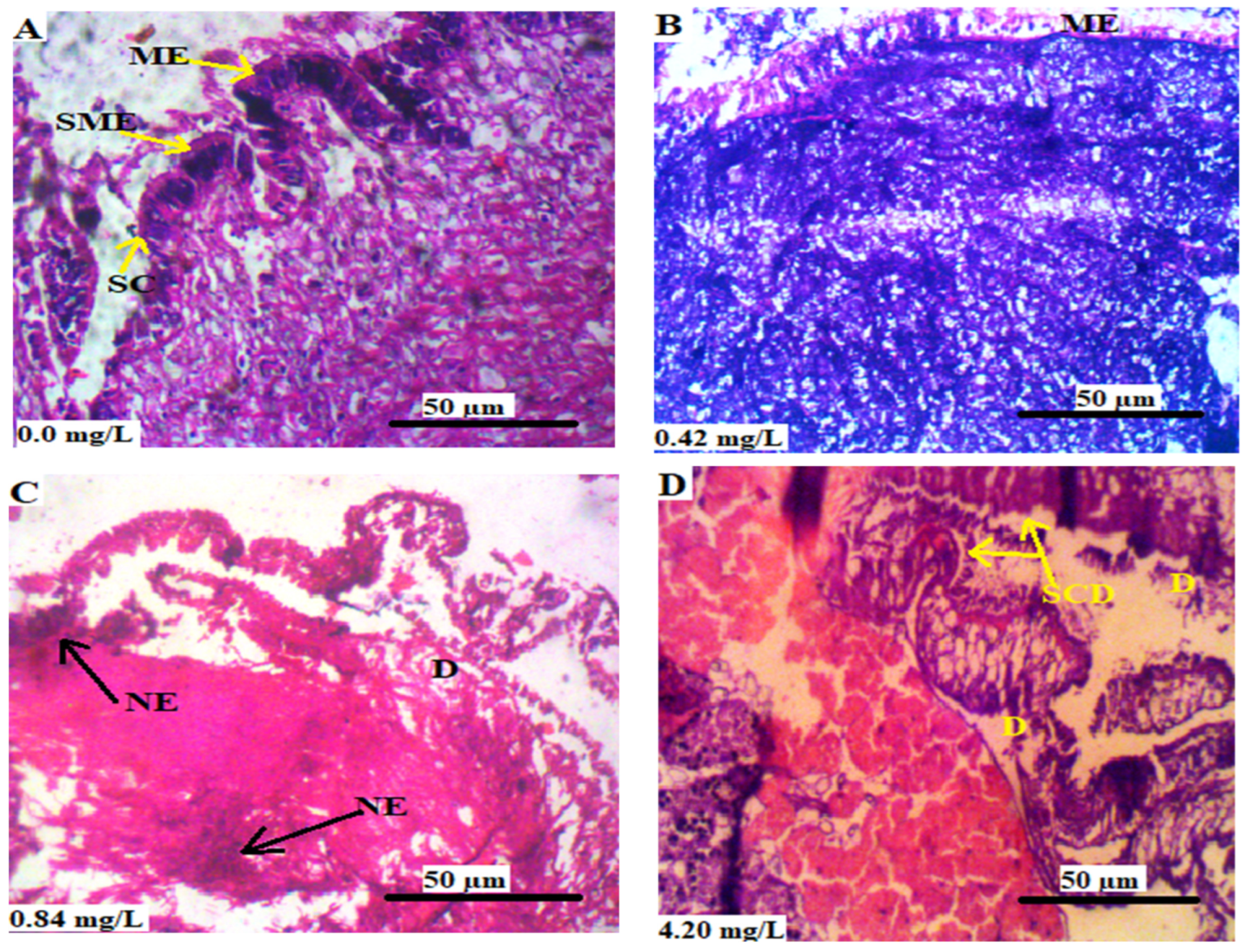
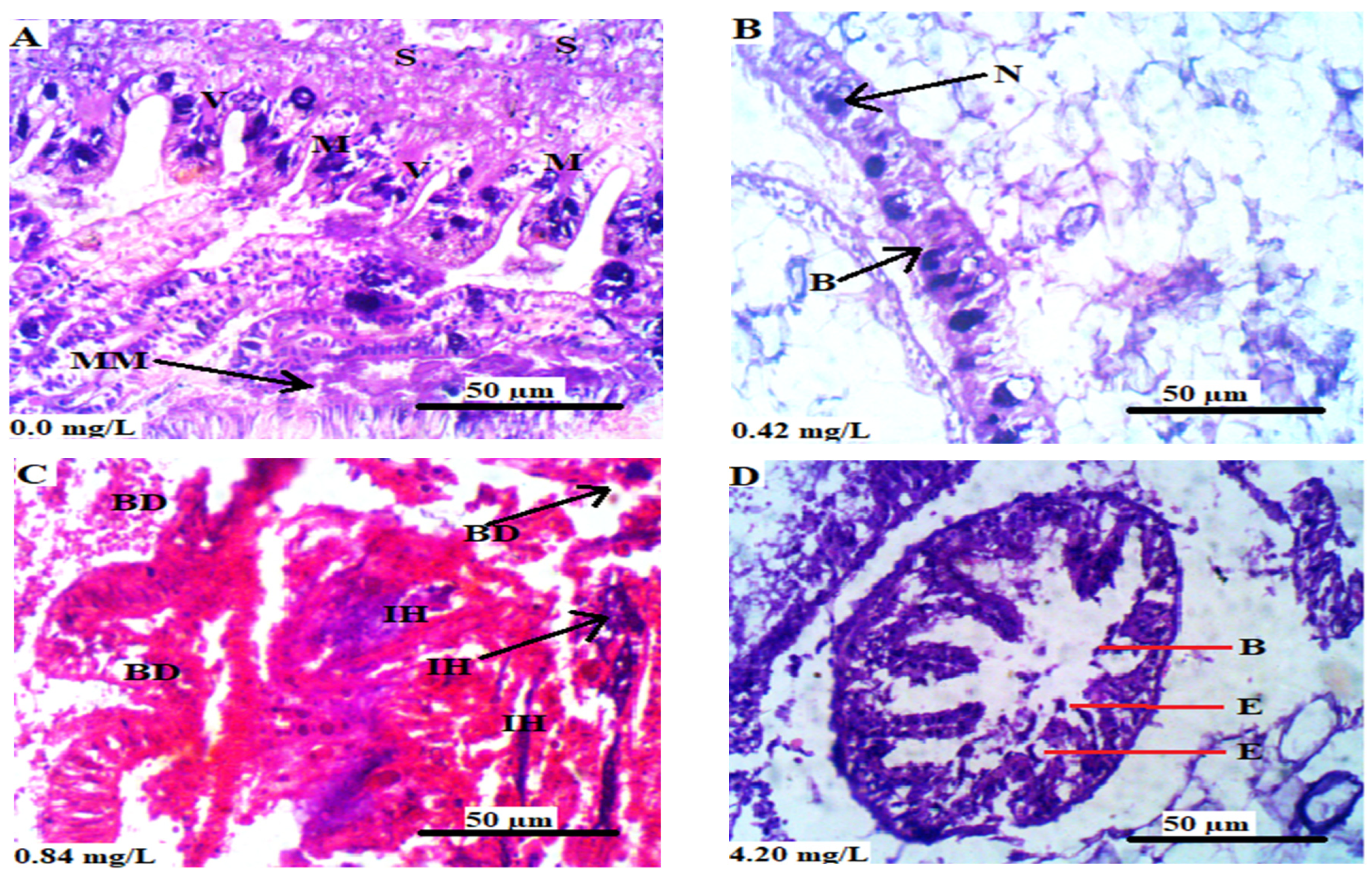
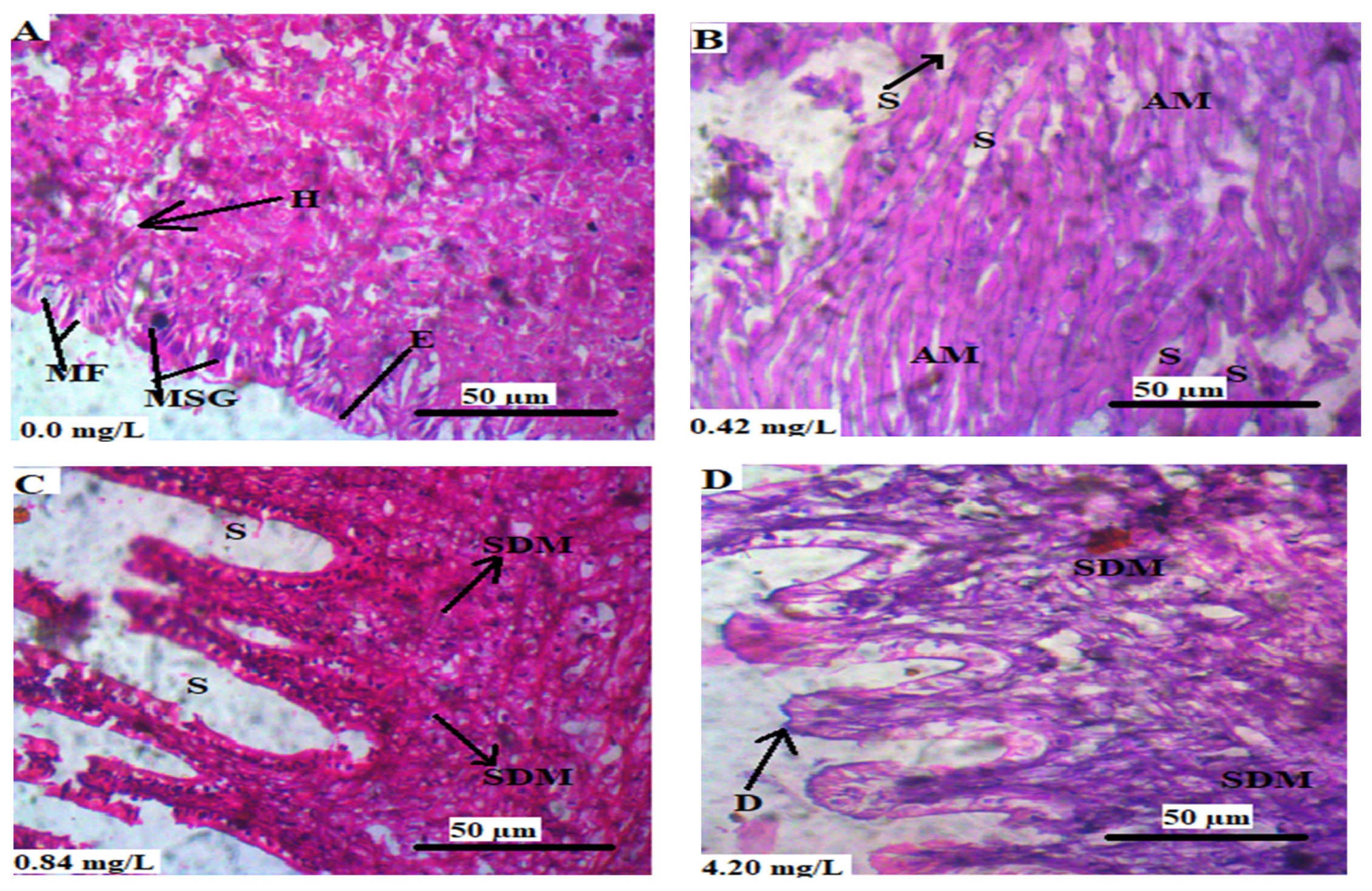
The increased application of chromium compounds in several fields has resulted in elevated levels of toxic hexavalent chromium (Cr6+) in the aquatic environment, thus creating the potential for bioaccumulation of Cr6+ in the tissues as well as eliciting various toxic effects in organisms. The present study investigated the effects of Cr6+ exposure on the tissue distribution, proximate composition, and histopathology of an aquatic mollusk, periwinkle (Littorina littorea). The animals were exposed to sublethal concentrations of Cr6+ (0.42, 0.84, and 4.2 mg/L) for 30 days. Exposure to Cr6+ resulted in changes in the proximate composition and histological architecture of L. littorea. There was a low potential for bioaccumulation of Cr6+ in the tissue of L. littorea. Thus, its consumption did not pose any serious health risks to humans.
Abstract
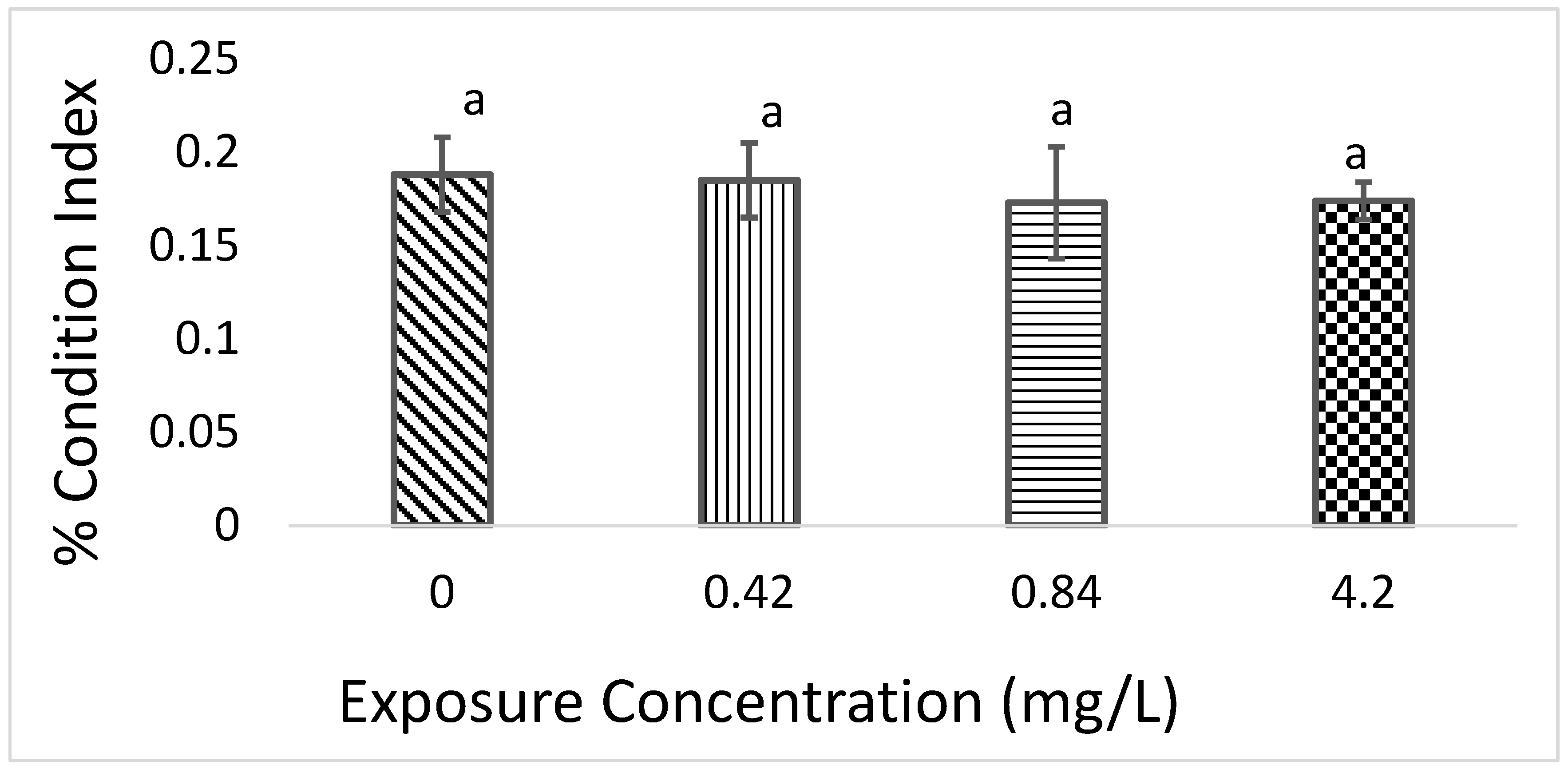
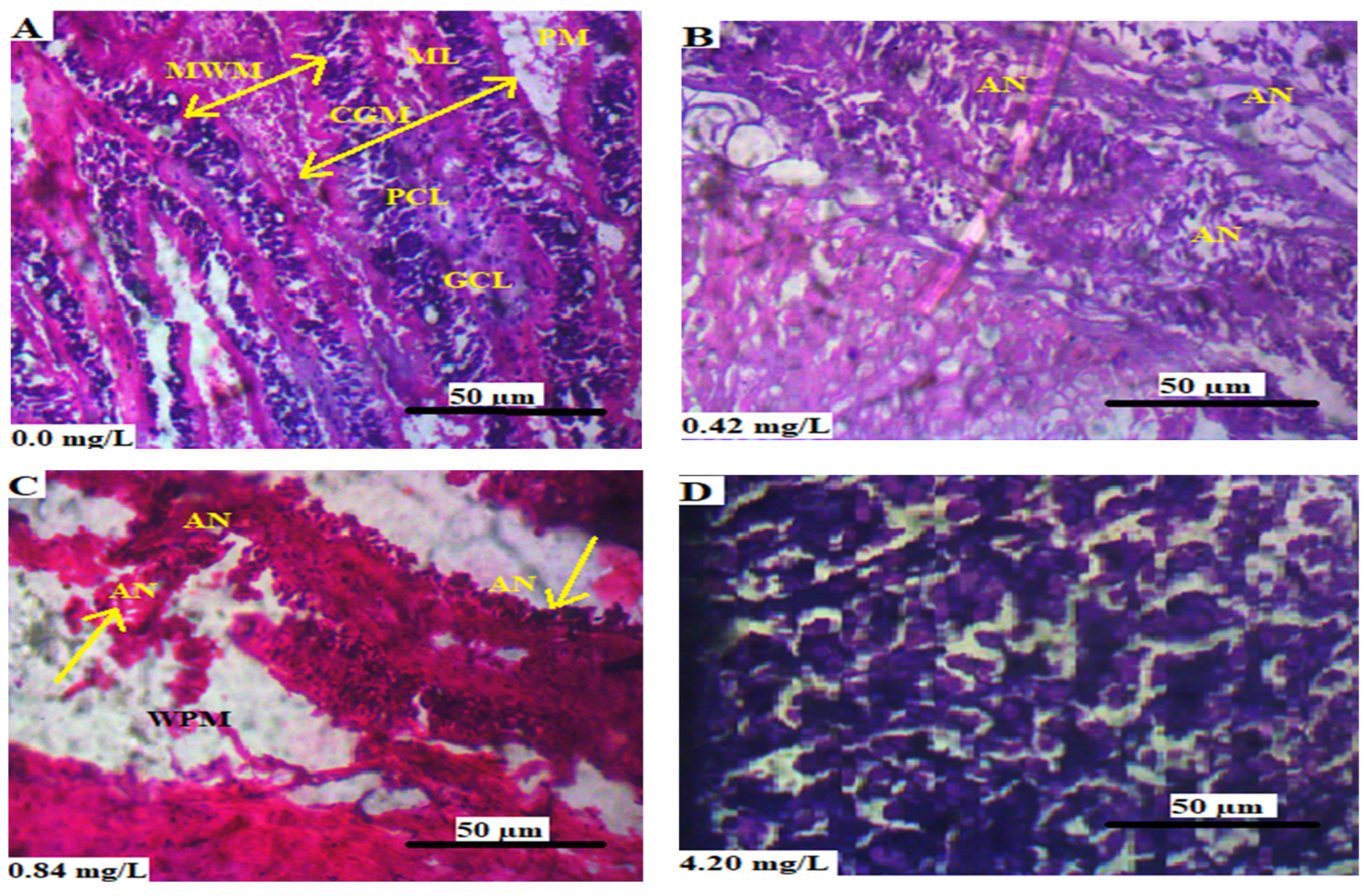
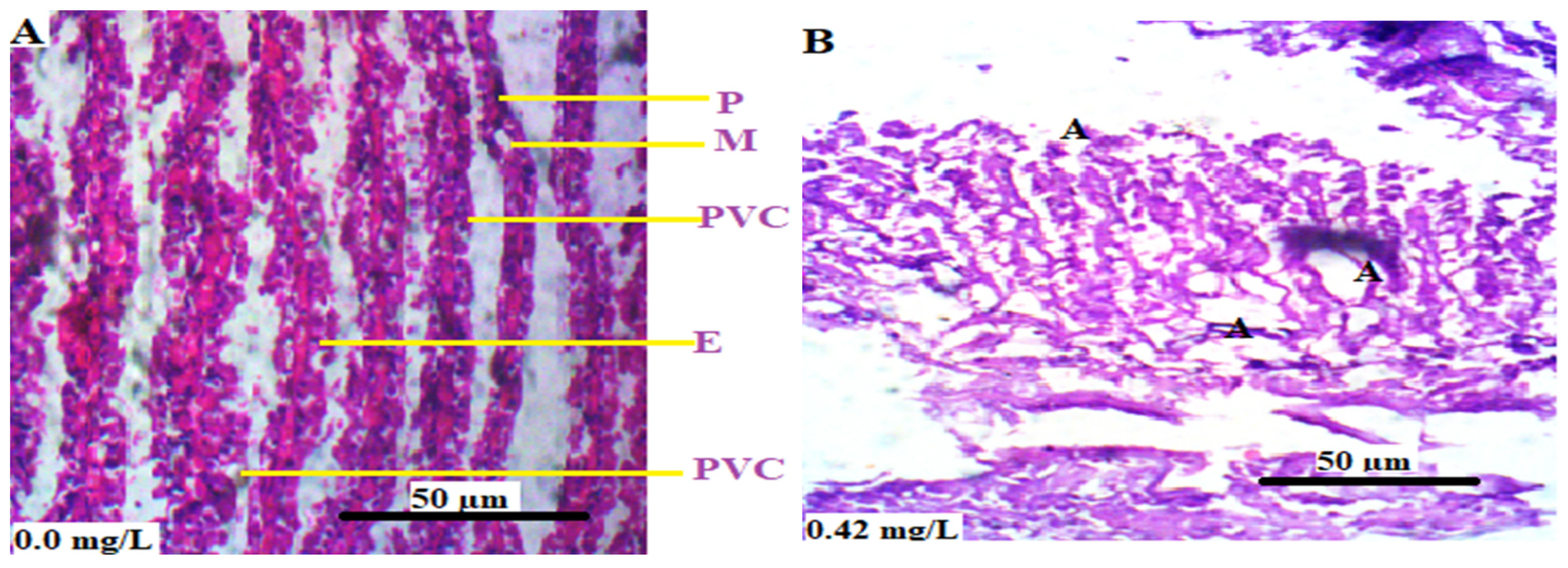
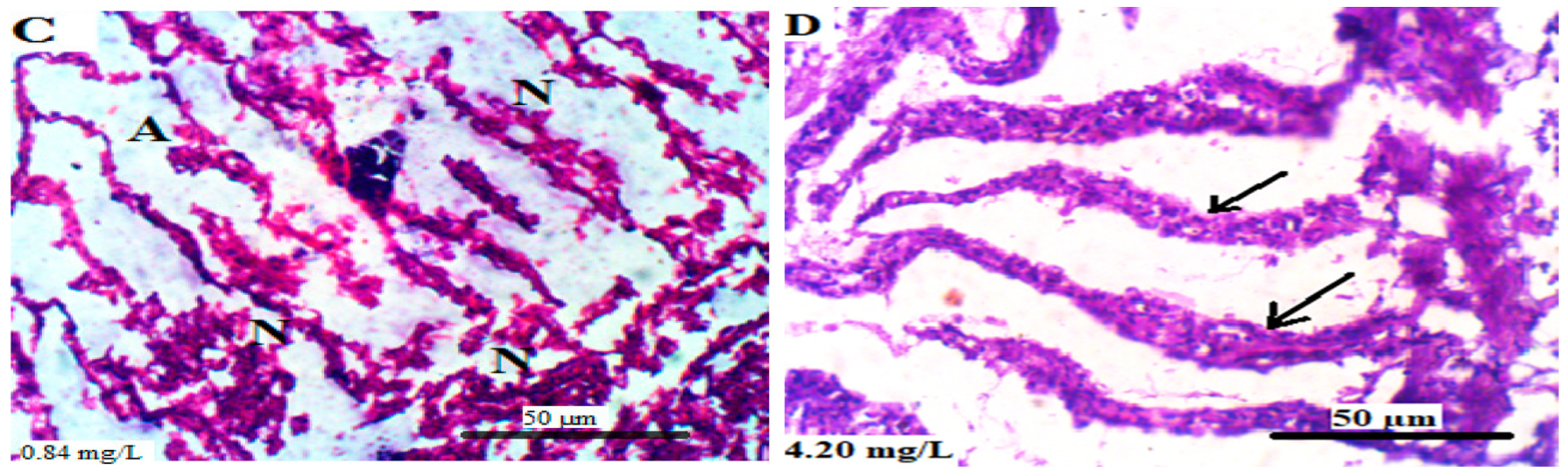
The increased use of hexavalent chromium (Cr6+) in various industrial applications has contributed to its elevated levels in the environment, especially the aquatic environment. Thus, there is the potential for accumulation of Cr6+ in the tissues of aquatic organisms and consequent toxic effects. The toxic effects of Cr6+ in aquatic organisms have been widely reported; however, little is known about the patterns of tissue accumulation of Cr6+ and its toxicity in aquatic mollusks. Thus, the present study investigated the effects of Cr6+ exposure on the tissue distribution, proximate composition, and histopathology of an aquatic mollusk, periwinkle (Littorina littorea). The animals were exposed to sublethal concentrations of Cr6+ (0.42, 0.84, and 4.2 mg/L) for 30 days, after which the condition index, tissue accumulation, proximate composition, and histopathological effects were determined. The control animals were maintained in a medium that did not contain Cr6+ (0 mg/L). The condition index did not differ significantly among the groups. The levels of Cr6+ in the tissues differed significantly among the different tissue types while there was no significant effect of the exposure concentration, except in the foot tissue. The proximate parameters (protein, carbohydrates, lipid, crude fiber, and moisture contents) differed significantly among the groups. The protein contents of the exposed animals were significantly lower than those of the control animals and the histological architecture of the major organs was altered in the chromium-exposed animals. The findings from this study indicate a low potential of L. littorea to bioaccumulate Cr6+ in its tissues at the low exposure concentrations tested in this study; as such, its consumption may not pose any serious health risks to humans. However, changes in the proximate composition and histological architecture of the exposed L. littorea show that Cr6+ is potentially toxic to periwinkles.