Optimizing Feeding Strategies for Growing Rabbits: Impact of Timing and Amount on Health and Circadian Rhythms
by
 and
and
Jie Huang
1,†, 
Qiangjun Wang
1,†,
Kehao Zhang
1,
Shuai He
1,
Zhongying Liu
1,
Mingyong Li
2,
Man Liu
2,
Yao Guo
1,* and
Zhonghong Wu
1,* 1
State Key Laboratory of Animal Nutrition, College of Animal Science and Technology, China Agricultural University, Beijing 100193, China
2
National Rabbit Industry Technology System Qingdao Comprehensive Experimental Station, Qingdao 266431, China
*
Authors to whom correspondence should be addressed.
†
These authors contributed equally to this work.
Animals 2023, 13(17), 2742; https://doi.org/10.3390/ani13172742
Submission received: 20 July 2023
/
Revised: 14 August 2023
/
Accepted: 24 August 2023
/
Published: 28 August 2023
(This article belongs to the Section Animal System and Management)
Simple Summary
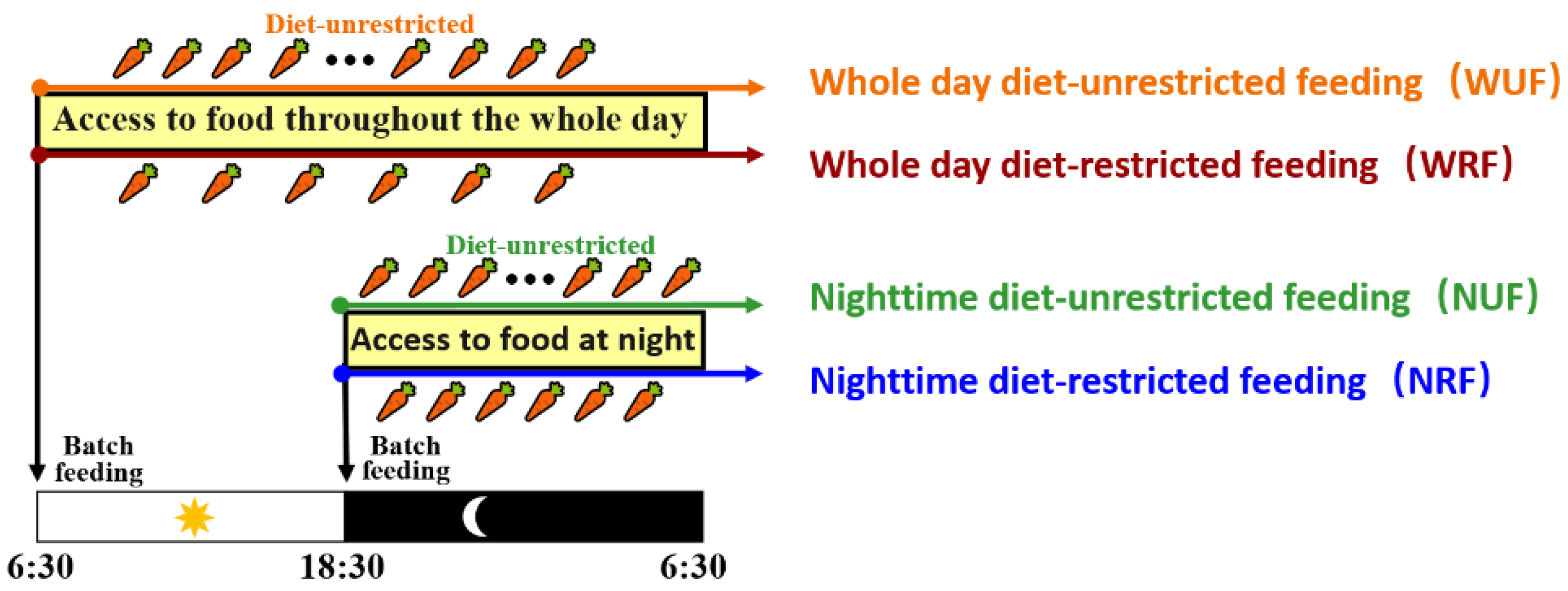
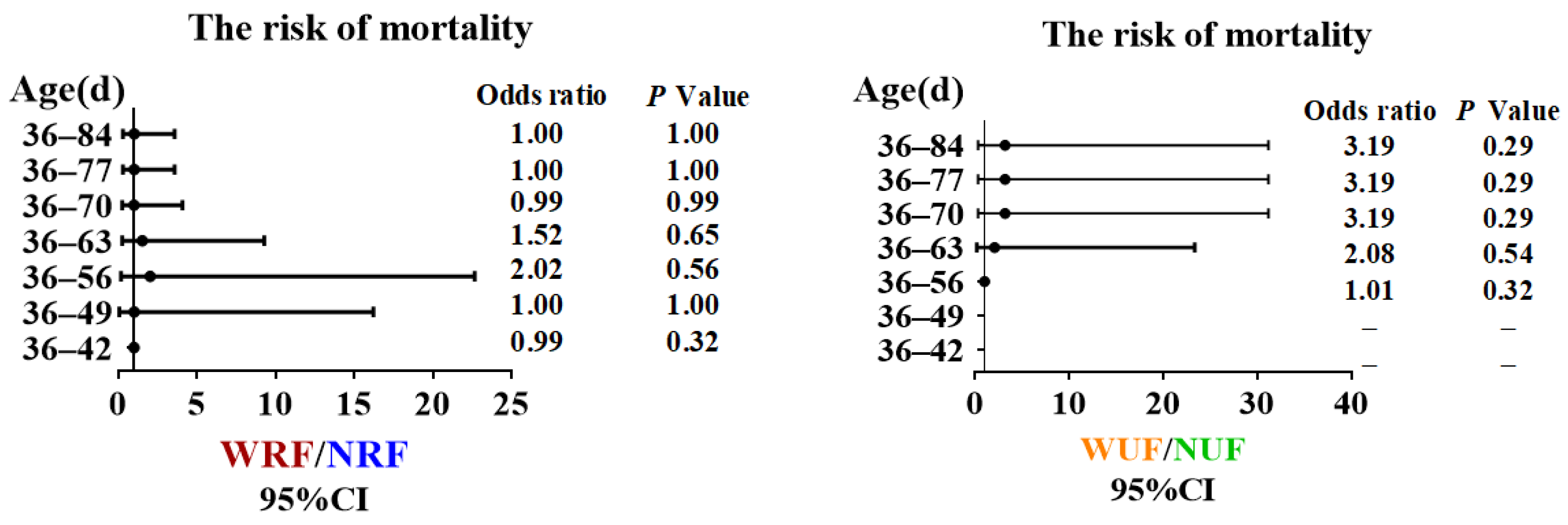
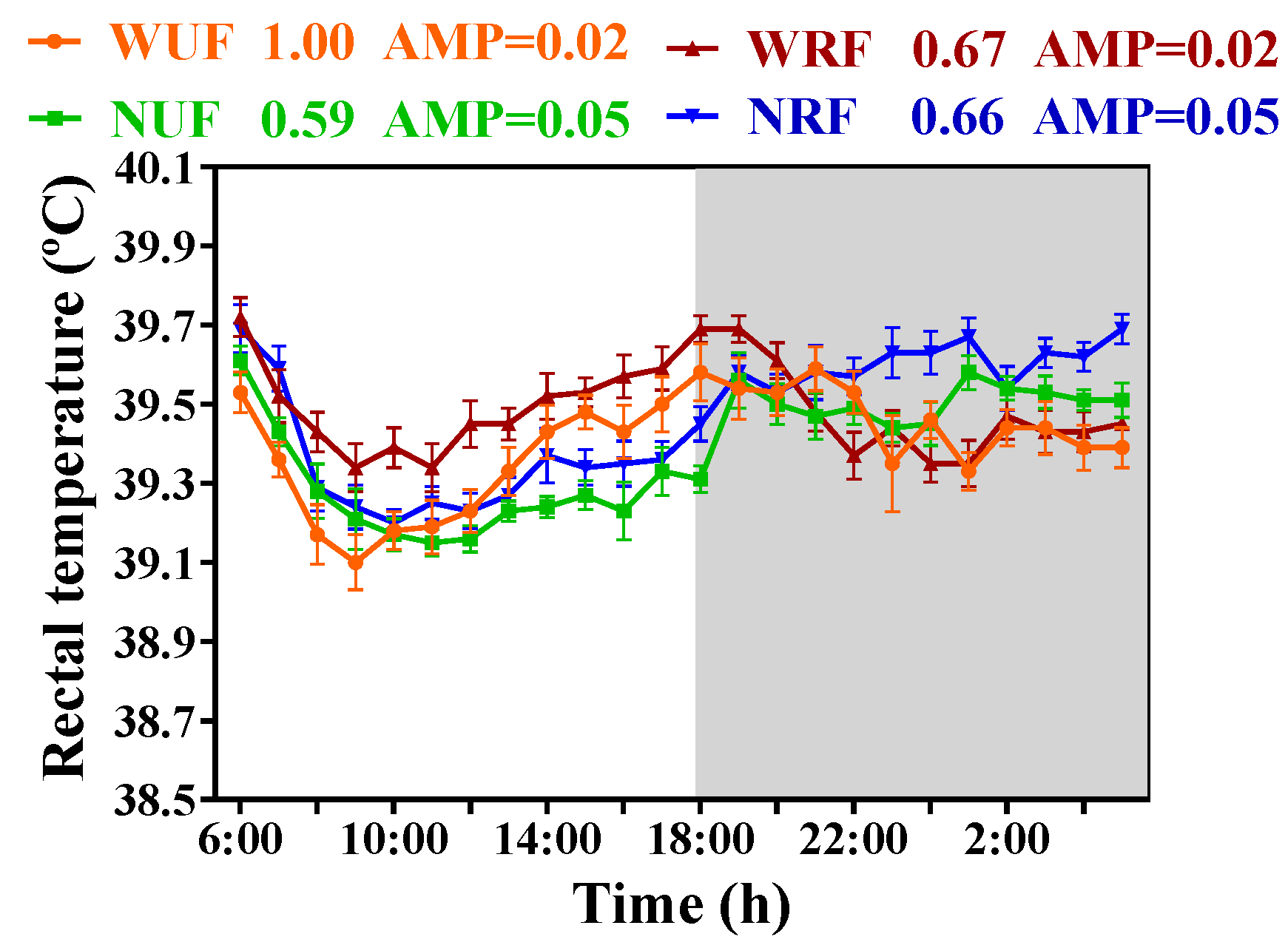
Mammals have circadian rhythms that regulate their behavior and physiology. Improper feeding can disrupt these rhythms and harm animal health. This study looked at the effects of feeding time and amount on growing rabbits in northern China during spring. Four groups of rabbits were given different feeding regimens, and the results showed that nighttime diet-unrestricted feeding had the best outcomes. This regimen improved the rabbits’ growth, circadian rhythm, and body temperature while reducing the risk of diarrhea and death. The group that had whole day diet-restricted feeding had higher daytime body temperatures but no significant difference in feed conversion rate. The study aimed to explore the impact of feeding timing (whole day vs. nighttime) and feeding amount (unrestricted vs. restricted) on the growth, behavior, circadian rhythm, and overall well-being of growing rabbits in northern China during spring. It is essential to consider feeding methods when raising animals to maintain their health and well-being.
Abstract
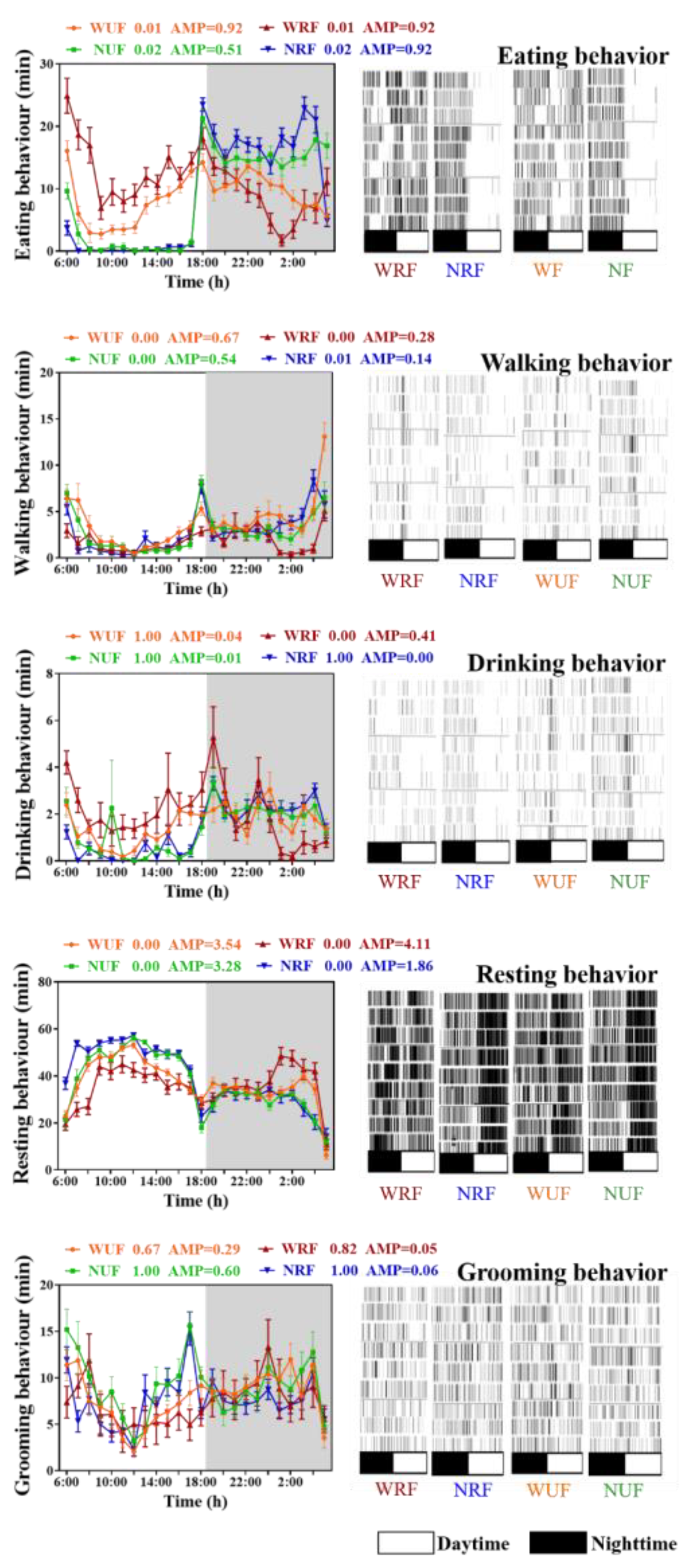
Mammals exhibit circadian rhythms in their behavior and physiological activities to adapt to the diurnal changes of the environment. Improper feeding methods can disrupt the natural habits of animals and harm animal health. This study investigated the effects of feeding amount and feeding time on growing rabbits in northern China during spring. A total of 432 healthy 35-day-old weaned rabbits with similar body weight were randomly assigned to four groups: whole day diet-unrestricted feeding (WUF), whole day diet-restricted feeding (WRF), nighttime diet-unrestricted feeding (NUF), and nighttime diet-restricted feeding (NRF). The results showed that nighttime diet-unrestricted feeding improved performance, circadian rhythm of behavior, and body temperature, while reducing the risk of diarrhea and death. WRF group increased daytime body temperature but had no significant difference in feed conversion rate. The study suggests that nighttime diet-unrestricted feeding in spring can improve the growth and welfare of rabbits in northern China. Our study underscores the pivotal role of feeding timing in enhancing animal health. Future investigations should delve into the underlying mechanisms and expand the application of this strategy across seasons and regions to improve rabbit husbandry practices.