Knee Joint Osteoarthritis in Overweight Cats: The Clinical and Radiographic Findings

1
Department of Small Animal Diseases and Clinic, Institute of Veterinary Medicine, Warsaw University of Life Sciences (WULS-SGGW), 02-787 Warsaw, Poland
2
Department of Morphological Sciences, Institute of Veterinary Medicine, Warsaw University of Life Sciences (WULS-SGGW), 02-787 Warsaw, Poland
3
OchWET Veterinary Clinic, 02-119 Warszawa, Poland
4
Department of Large Animal Diseases and Clinic, Institute of Veterinary Medicine, Warsaw University of Life Sciences (WULS-SGGW), 02-787 Warsaw, Poland
*
Authors to whom correspondence should be addressed.
Animals 2023, 13(15), 2427; https://doi.org/10.3390/ani13152427
Submission received: 29 June 2023
/
Revised: 21 July 2023
/
Accepted: 25 July 2023
/
Published: 27 July 2023
(This article belongs to the Special Issue Small Animal Orthopedic Surgery, Physical Therapy and Rehabilitation)
Simple Summary
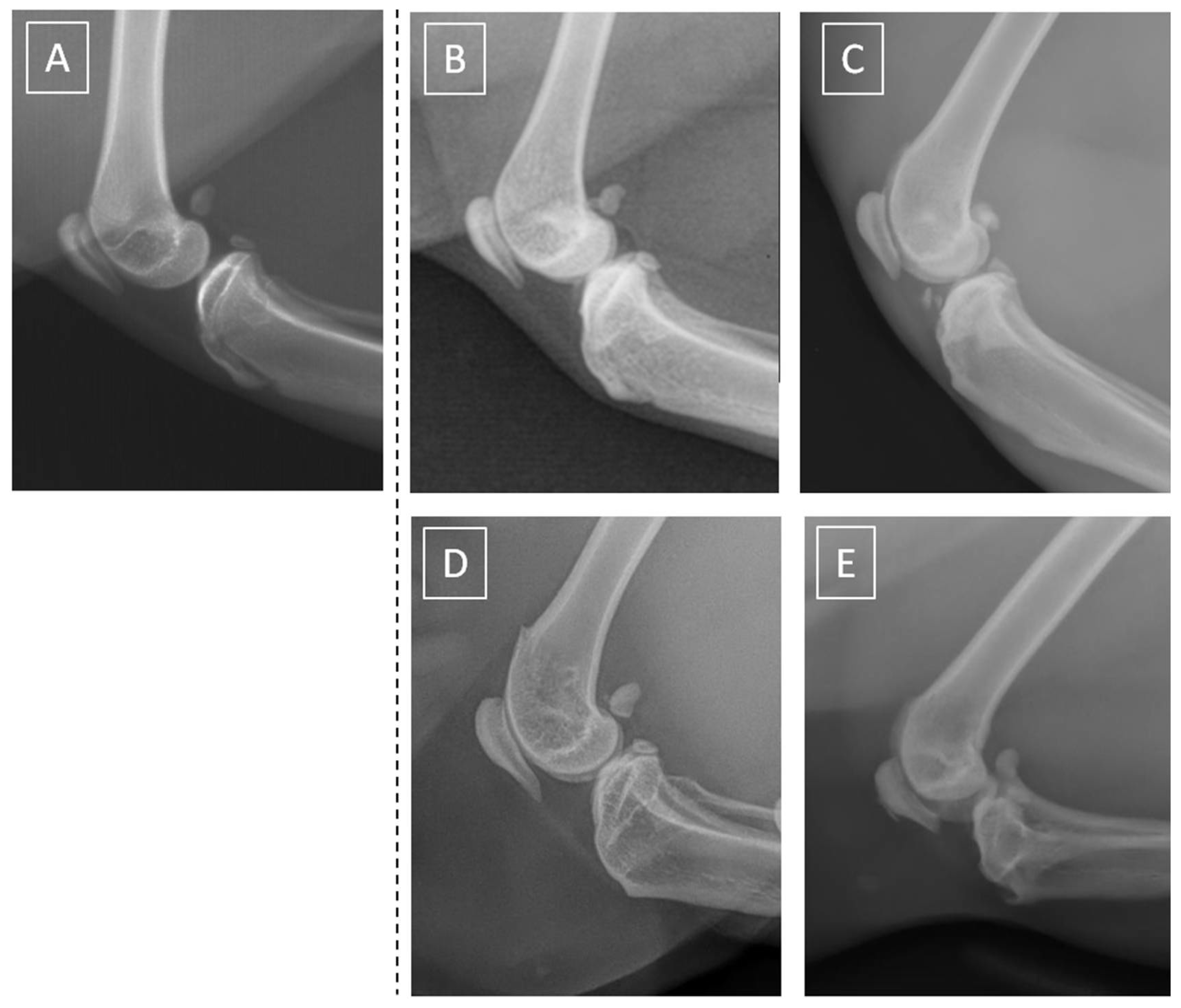
Osteoarthritis (OA) is a common condition among cats. It is characterized by progressive degenerative joint disease. OA results from repair and degeneration of articular cartilage, in association with alterations in subchondral bone metabolism, osteophytosis, and synovial inflammation. In cats, OA is often secondary to an underlying cause, such as trauma. Cats with knee joint OA can show typical symptoms including a general reduction in activity, reluctance to jump, deterioration in appearance, and even aggression. Subtle symptoms that owners can observe are reluctance to move and apathy. Cats with knee problems may not show the typical clinical symptoms of lameness. After excluding other causes of disturbing symptoms, further diagnostic imaging is advised to visualize typical radiographic signs of OA. Thus, visualization of osteophytes, enthesophytes, effusion, soft tissue swelling, subchondral sclerosis, and intra-articular mineralization can be used to score the severity of OA. This study aimed to investigate the occurrence of clinical symptoms and radiological signs of knee joint OA in cats and to assess their prevalence concerning cats’ body condition scores. Radiographic imaging of the knee joints of 64 cats was performed, and considered signs were compared between underweight, normal-weight, and overweight groups. Severe feline knee joint OA appears with similar frequency in underweight, normal-weight, and overweight cats. Therefore, regardless of the cat’s body weight, when the owner reports any unusual behavior of the cat, the veterinarian should take a detailed history driven to identify non-specific clinical symptoms of OA.
Abstract
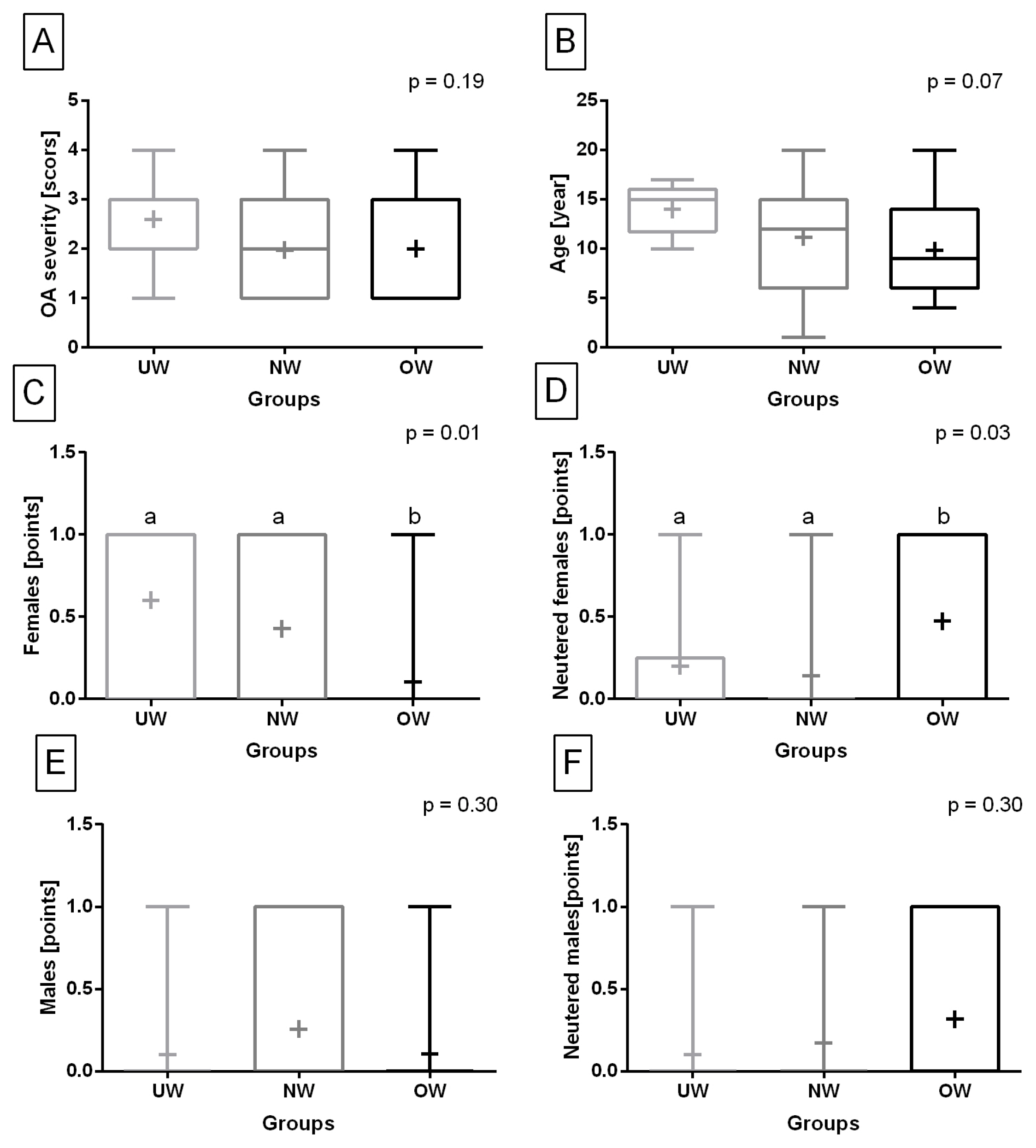
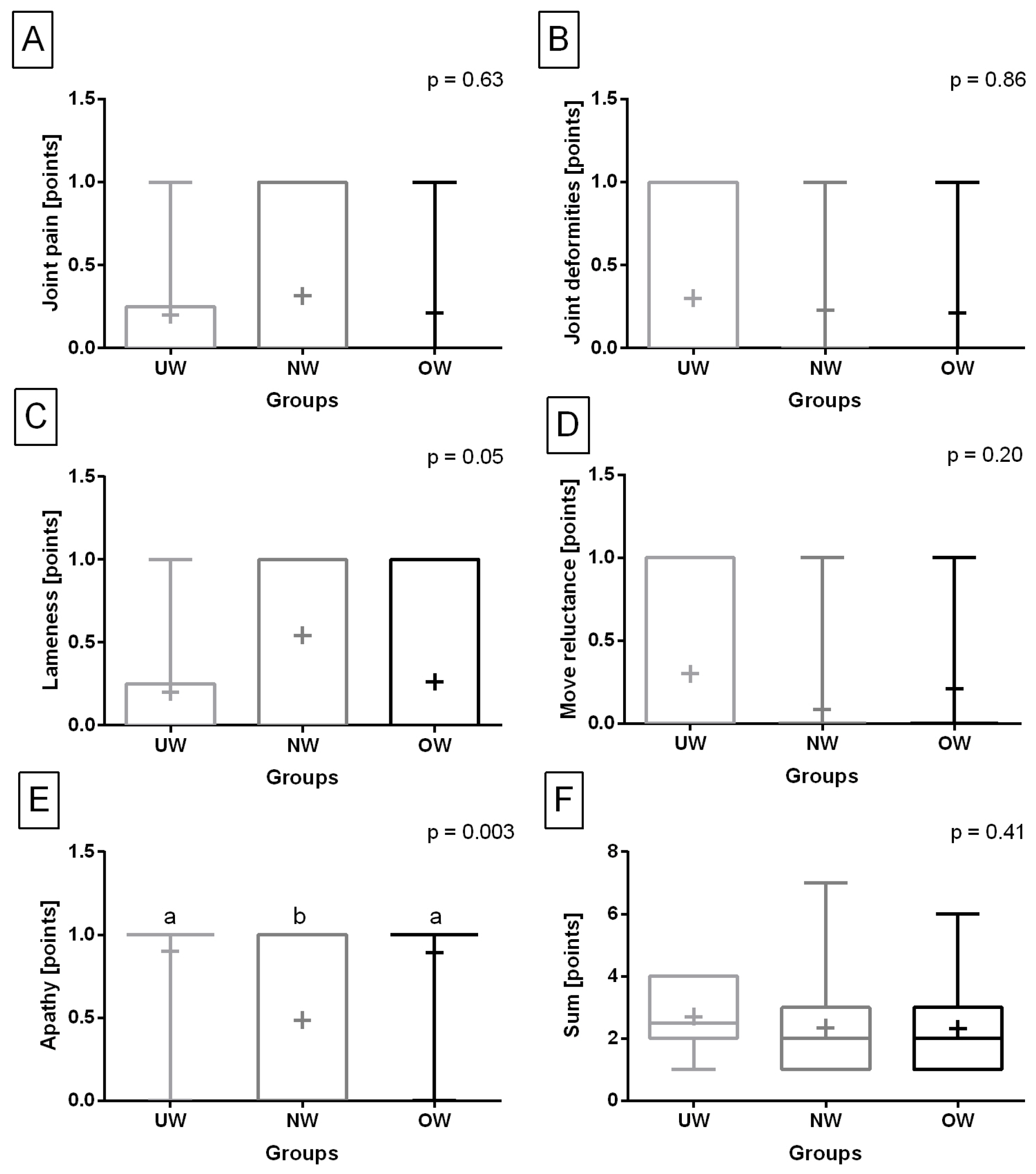
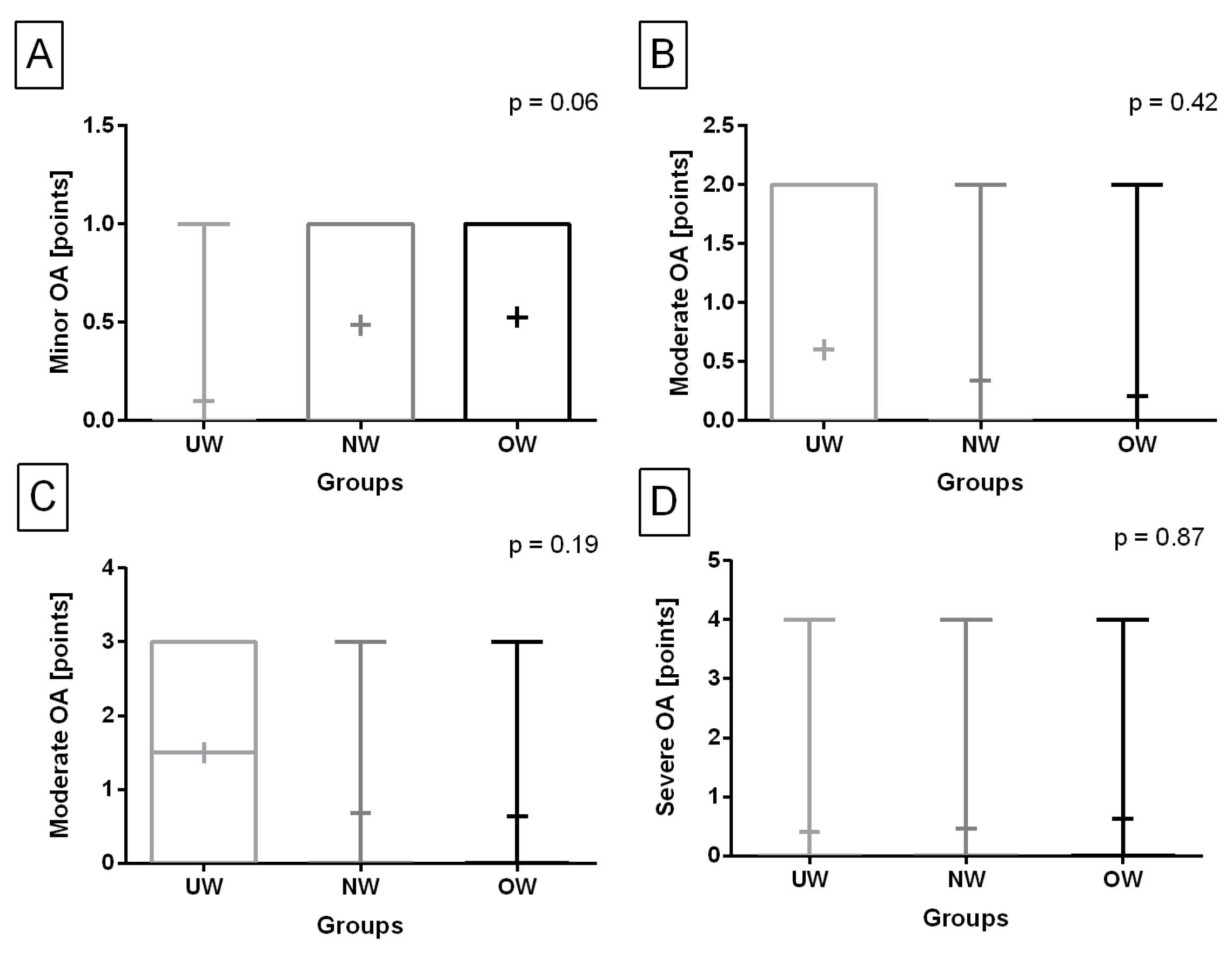
Despite a high prevalence of osteoarthritis (OA) reported in the domesticated cat population, studies on feline knee joint OA are scarcer. Knee joint OA is a painful, age-related, chronic degenerative joint disease that significantly affects cats’ activity and quality of life. In dogs and humans, one may consider overweight as a risk factor for the development and progression of knee joint OA; therefore, this study aims to assess the severity of knee joint OA in the body-weight-related groups of cats concerning clinical symptoms and radiographic signs. The study was conducted on sixty-four (n = 64) cats with confirmed OA. The demographic data on sex, neutering, age, and breed were collected. Then, the body condition score (BCS) was assessed, and each cat was allocated to the underweight, normal-weight, or overweight group. Within clinical symptoms, joint pain, joint swelling, joint deformities, lameness, reluctance to move, and apathy were graded. Based on the radiographic signs, minor OA, mild OA, moderate OA, and severe OA were scored. Prevalence and co-occurrence of the studied variables were then assessed. Joint pain was elicited in 20–31% of the OA-affected joints, joint deformities in 21–30%, and lameness in 20–54%, with no differences between weight-related groups. Severe OA was detected in 10–16% of the OA-affected joints, with no differences between weight-related groups. Severe OA in feline knee joints appears with similar frequency in overweight, underweight, and normal-weight cats. However, the general prevalence of clinical symptoms and radiographic signs is different in overweight cats.
Keywords:
BCS; radiographic signs; severity; radiographs; feline