Effect of Two Soybean Varieties Treated with Different Heat Intensities on Ileal and Caecal Microbiota in Broiler Chickens
by
 , , and
Florian Hemetsberger
1,2 ,
,
Benjamin Zwirzitz
1,
Nadia Yacoubi
3 ,
,
Wolfgang Kneifel
1,
Karl Schedle
2 and
Konrad J. Domig
1,* 1
Department of Food Science and Technology, Institute of Food Science, University of Natural Resources and Life Sciences Vienna, Muthgasse 18, 1190 Vienna, Austria
2
Department of Agrobiotechnology, Institute of Animal Nutrition, Livestock Products and Nutrition Physiology, University of Natural Resources and Life Sciences Vienna, Muthgasse 11, 1190 Vienna, Austria
3
Evonik Operations GmbH, 45128 Essen, Germany
*
Author to whom correspondence should be addressed.
Animals 2022, 12(9), 1109; https://doi.org/10.3390/ani12091109
Submission received: 11 March 2022
/
Revised: 21 April 2022
/
Accepted: 22 April 2022
/
Published: 26 April 2022
(This article belongs to the Special Issue The Relationship between Dietary Factors and Bacterial, Parasitic, or Fungal Challenges in Modern Poultry Production)
Simple Summary
Soybeans are an essential part of today’s poultry nutrition diets because of their high protein content and quality. To ensure optimum digestibility in monogastric animals, soybeans need to be thermally processed. As required heat intensities depend on individual soybean properties, the emergence of highly heterogenic soybean batches is a challenge for adequate processing conditions. Molecular changes occurring during heat treatment can alter the microbial communities colonizing the animals’ guts. Gut microbiota is of great importance for both its host animal’s performance and health. To investigate the effect of heat treatment and soybean variety on the chickens’ microbiota, two soybean varieties were selected, treated at two different heat intensities and subjected to a feeding trial. DNA was then extracted and sequenced to identify different bacterial populations in the digesta of certain gut sections. Results showed that both the soybean variety and the applied heat treatment affected the abundance of certain bacterial species in the gut of chickens, but no effect on the taxonomy level of family or genus appeared. This underlines the sensitivity and reactivity of the highly complex microbial community to apparently small dietary differences.
Abstract
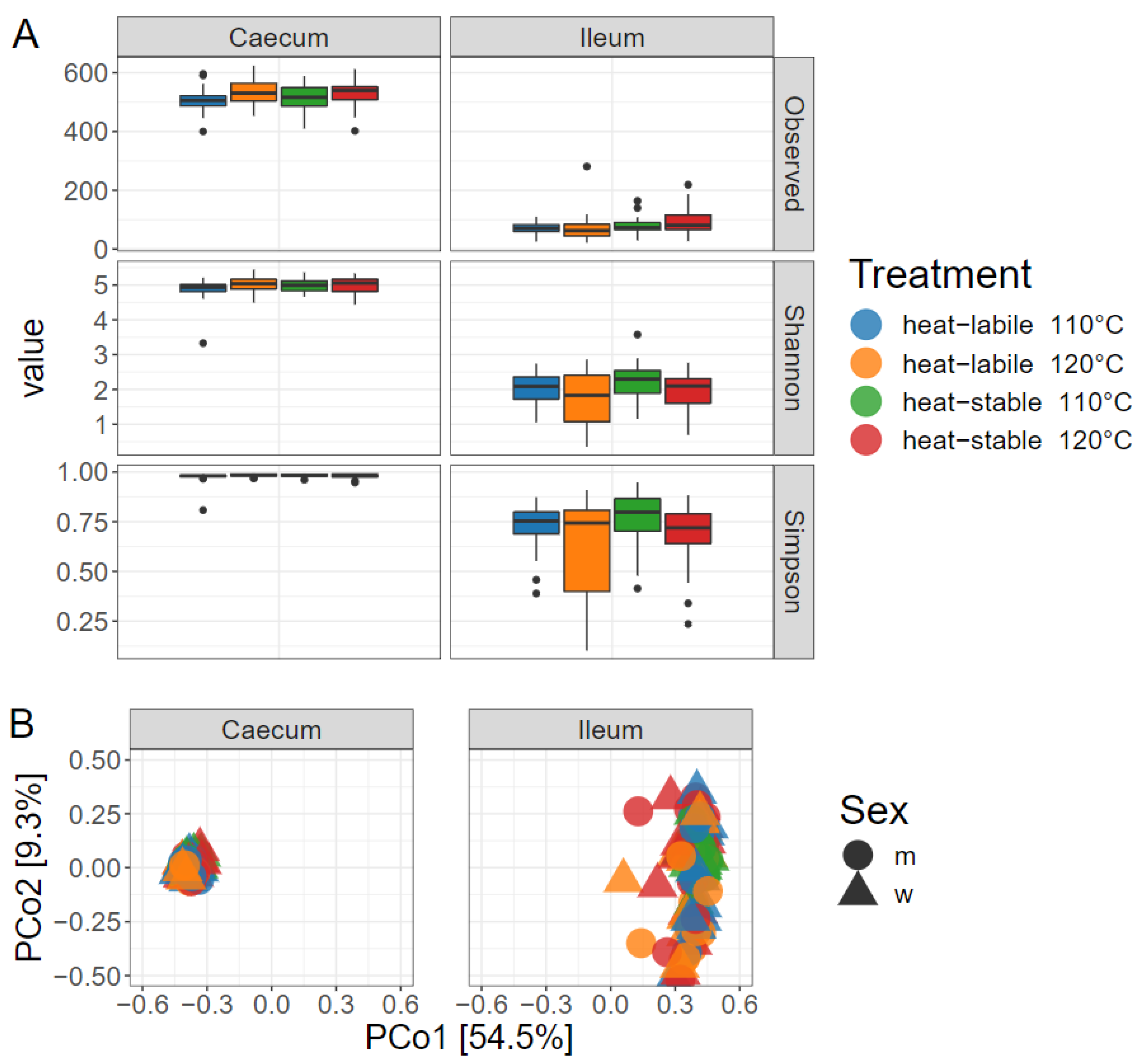
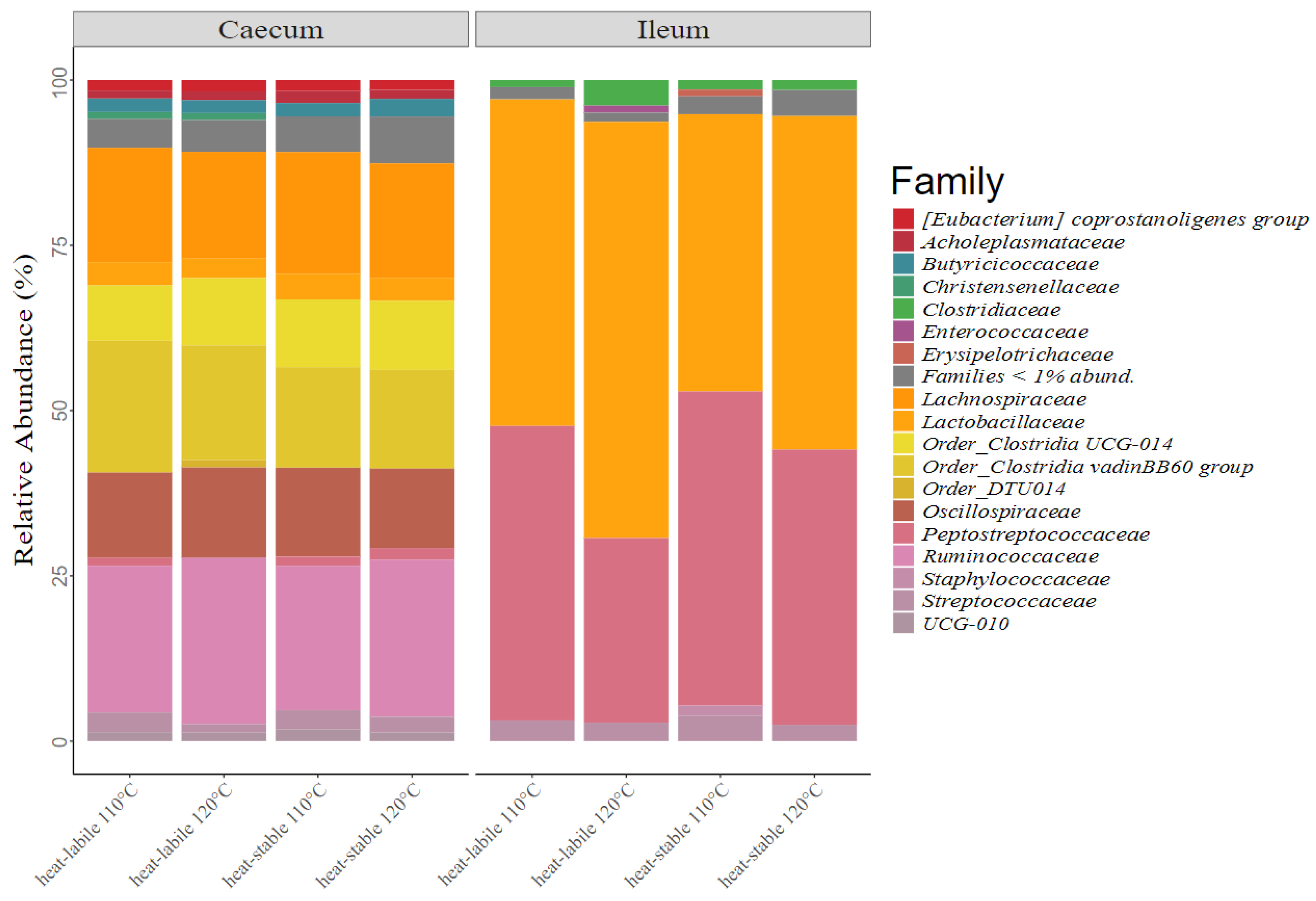
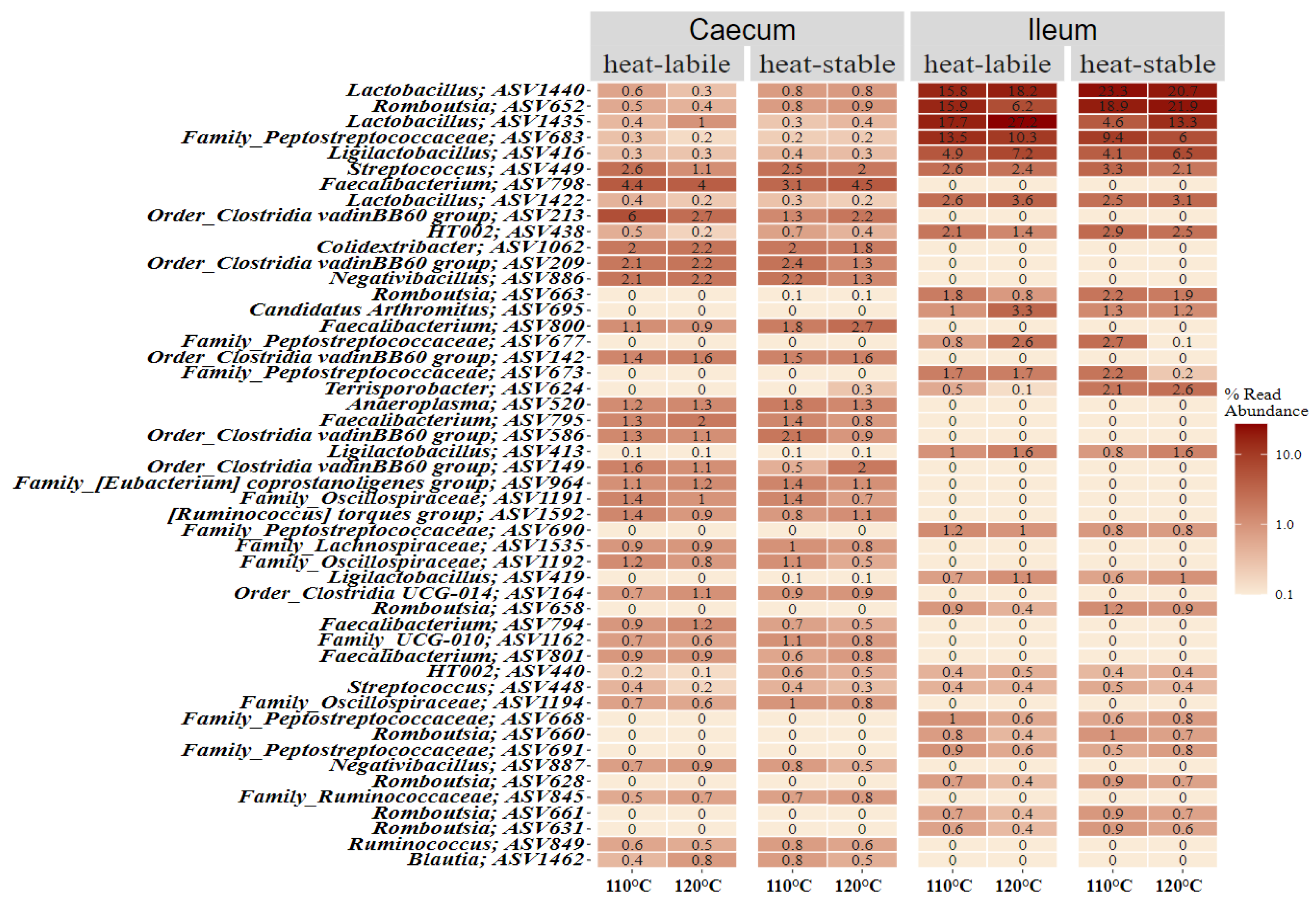
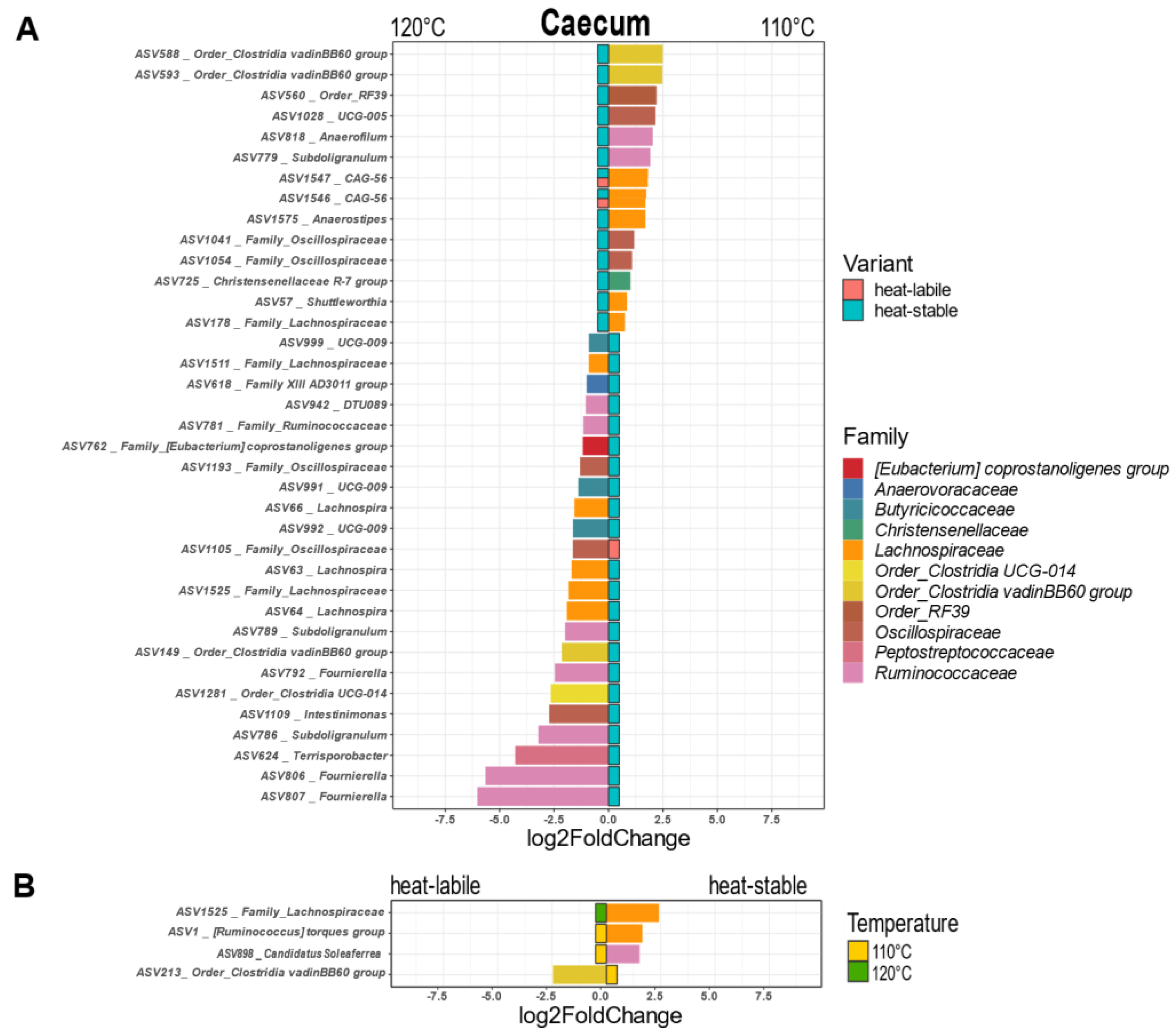
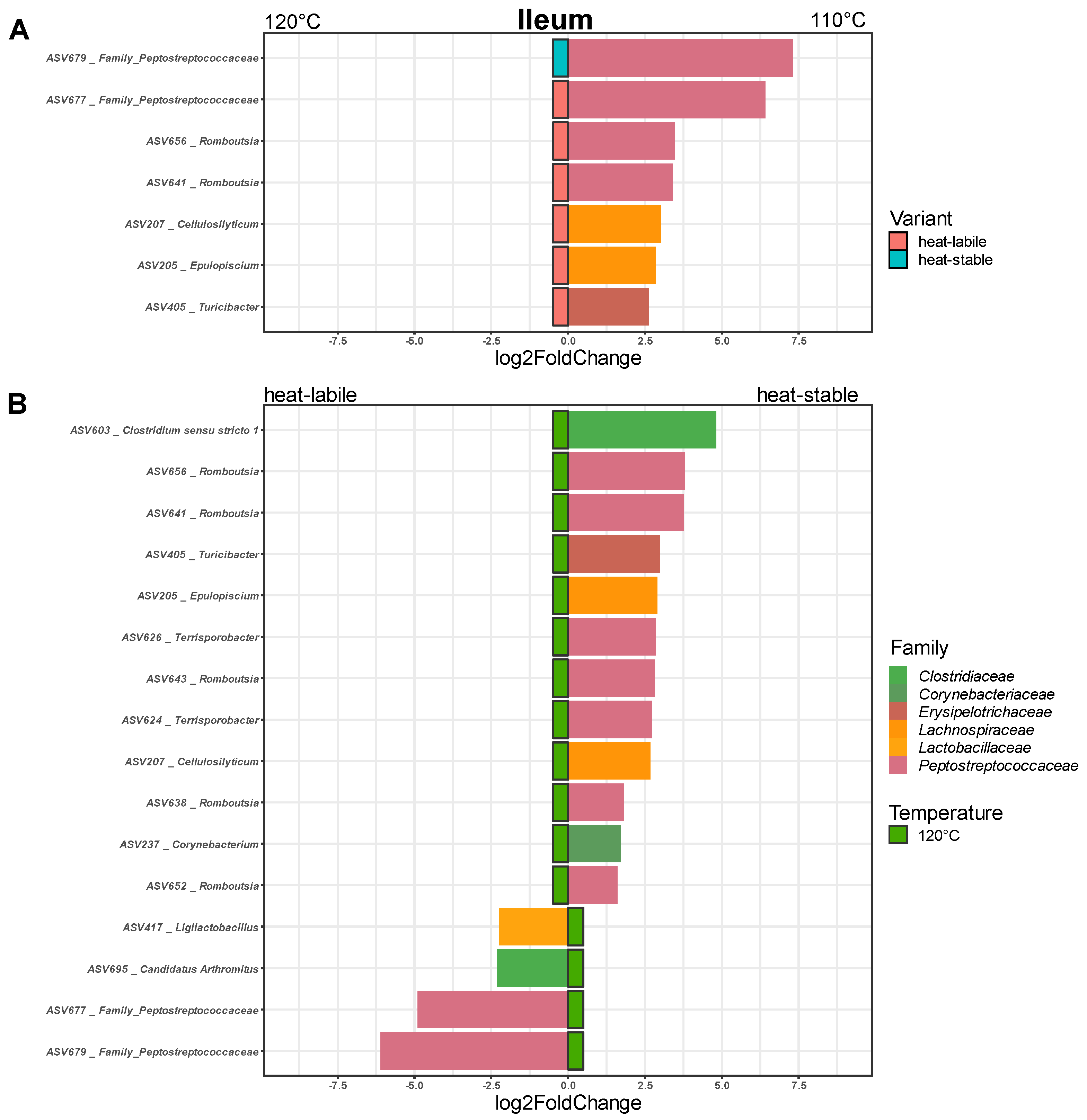
Soybean products are of high importance for the protein supply of poultry. Heat treatment of soybeans is essential to ensure optimal digestibility because of intrinsic antinutritive factors typical for this feed category. However, excessive treatment promotes the Maillard reaction and reduces protein digestibility. Furthermore, Europe’s efforts are to decrease dependence on imports of soybean products and enlarge local production. This process will include an increase in the variability of soybean batches, posing great challenges to adequate processing conditions. Intrinsic soybean properties plus heat treatment intensity might be able to modulate the gut microbiota, which is of crucial importance for an animal’s health and performance. To assess the influence of heat treatment and soybean variety on gut microbiota, 2 soybean cakes from 2 varieties were processed at 110 °C or 120 °C and subsequently fed to 336 one-day-old broiler chickens. After 36 days, the animals were slaughtered, and the digesta of the ileum and caecum was collected. Next, 16S rRNA amplicon sequencing of the extracted DNA revealed a high discrepancy between gut sections, but there were no differences between male and female birds. Significant differences attributed to the different soybean varieties and heat intensity were detected for certain bacterial taxa. However, no effect on specific families or genera appeared. In conclusion, the results indicated the potential of processing conditions and soybean variety as microbiota-modulating factors.
Keywords:
soybean variety; heat treatment; broiler; microbiota; ileum; caecum; 16S rRNA amplicon sequencing