Embryo, Relocation and Secondary Nests of the Invasive Species Vespa velutina in Galicia (NW Spain)




Department of Vegetal Biology and Soil Sciences, University of Vigo, 32004 Ourense, Spain
*
Authors to whom correspondence should be addressed.
Animals 2022, 12(20), 2781; https://doi.org/10.3390/ani12202781
Submission received: 16 September 2022
/
Revised: 7 October 2022
/
Accepted: 13 October 2022
/
Published: 15 October 2022
(This article belongs to the Special Issue The Invasive Species Vespa velutina: A Current Challenge in European Ecosystems)
Simple Summary
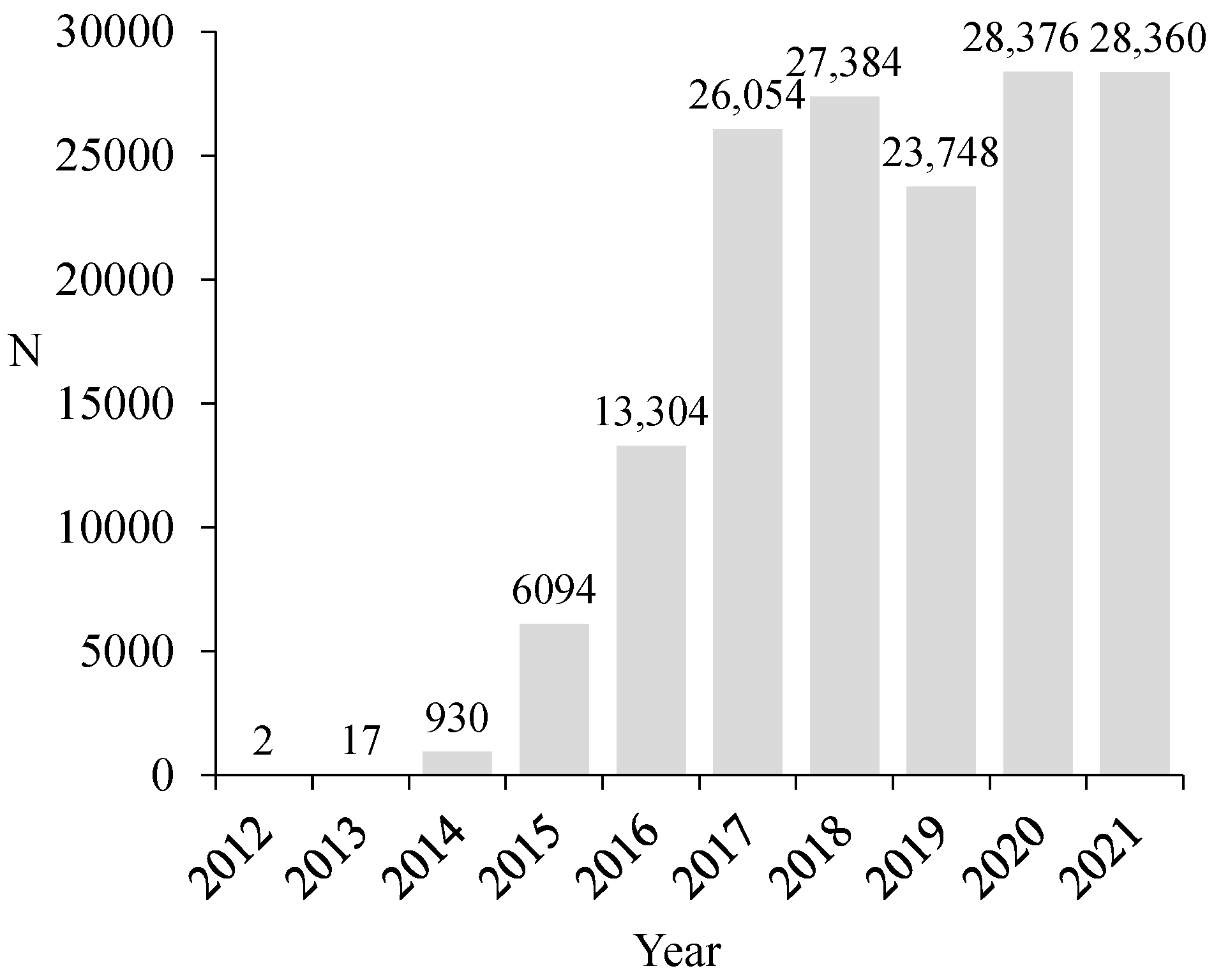
Vespa velutina nigrithorax is an invasive species established in the European Union since 2004. Galicia (NW Spain) is one of the areas strongly affected by the invasion, with around 28,000 nests identified per year. In the area, when the weather conditions are suitable, the queen starts the life cycle by building the embryo nest and laying the firsts eggs. This first stage of the colony is composed of the queen, a few small workers and sometimes males, living in a fragile nest usually situated in a protected place. After this, the nest continues to develop to a larger size, which leaves the nest more exposed in places such as tree canopy. The period of decline begins in autumn with the appearance of breeding individuals (males and gynes) and ends with the fecundation of new queens that will form the future colony in the next cycle. The high reproduction rate of this species has led to the successful expansion of this species into many regions, such as Galicia. Vespa velutina is established in Galicia since 2012, causing significant losses in agriculture, beekeeping and being a risk for human health.
Abstract
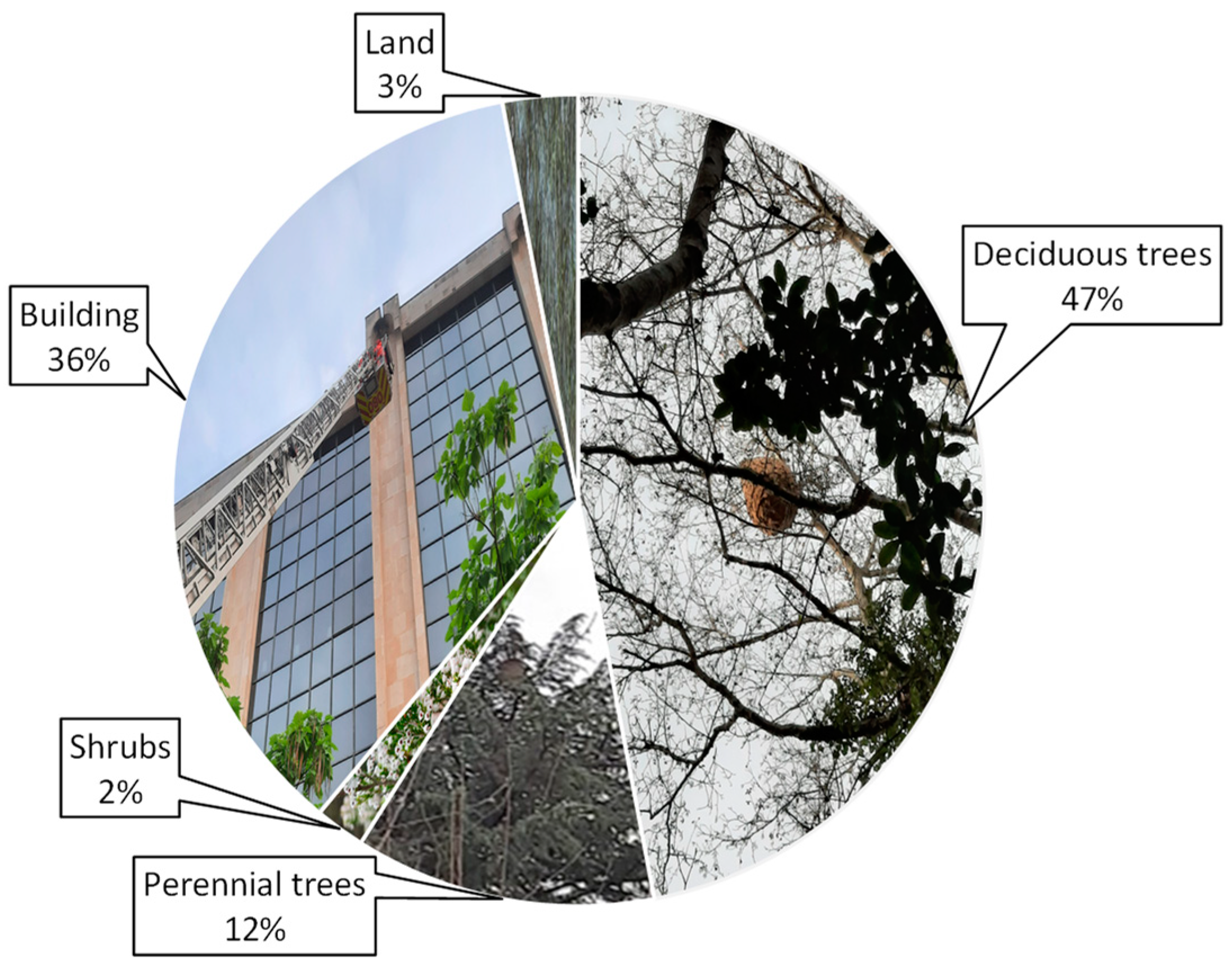
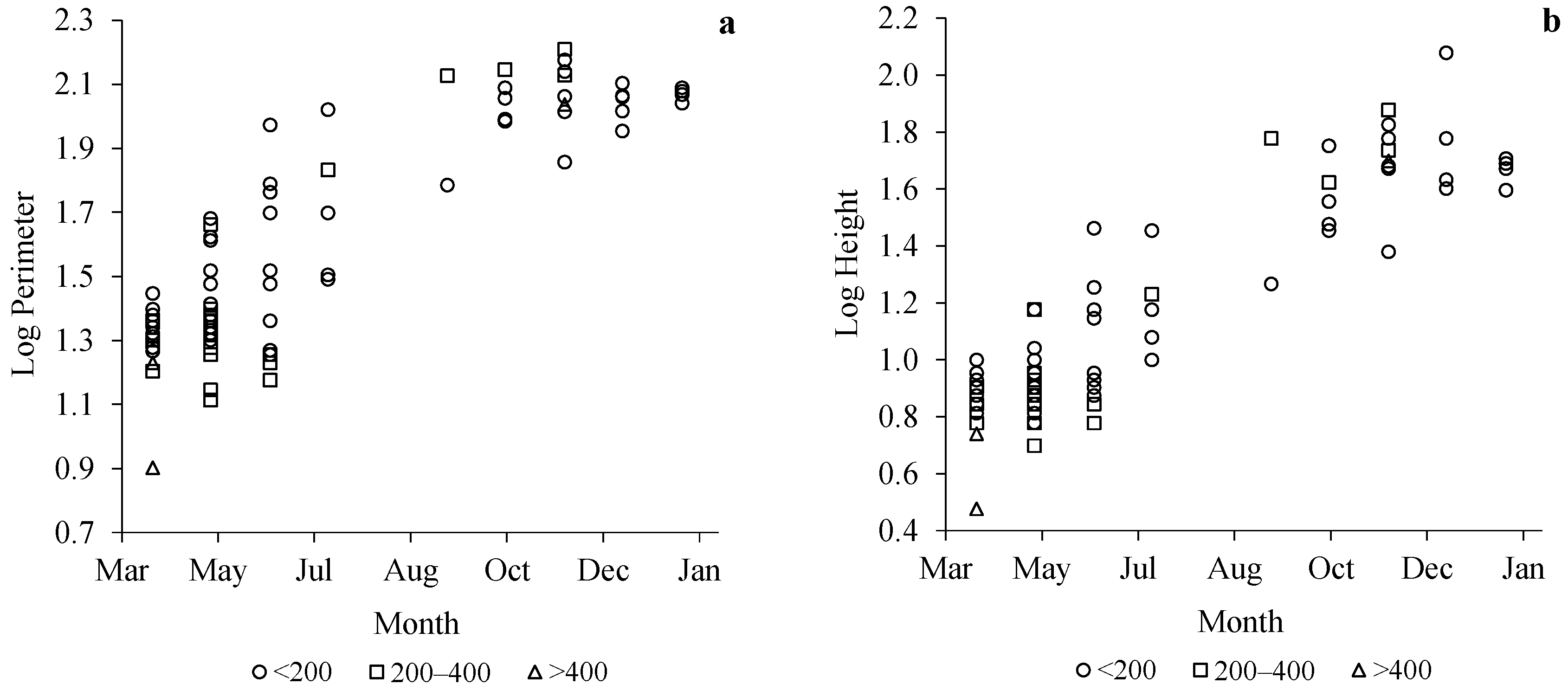
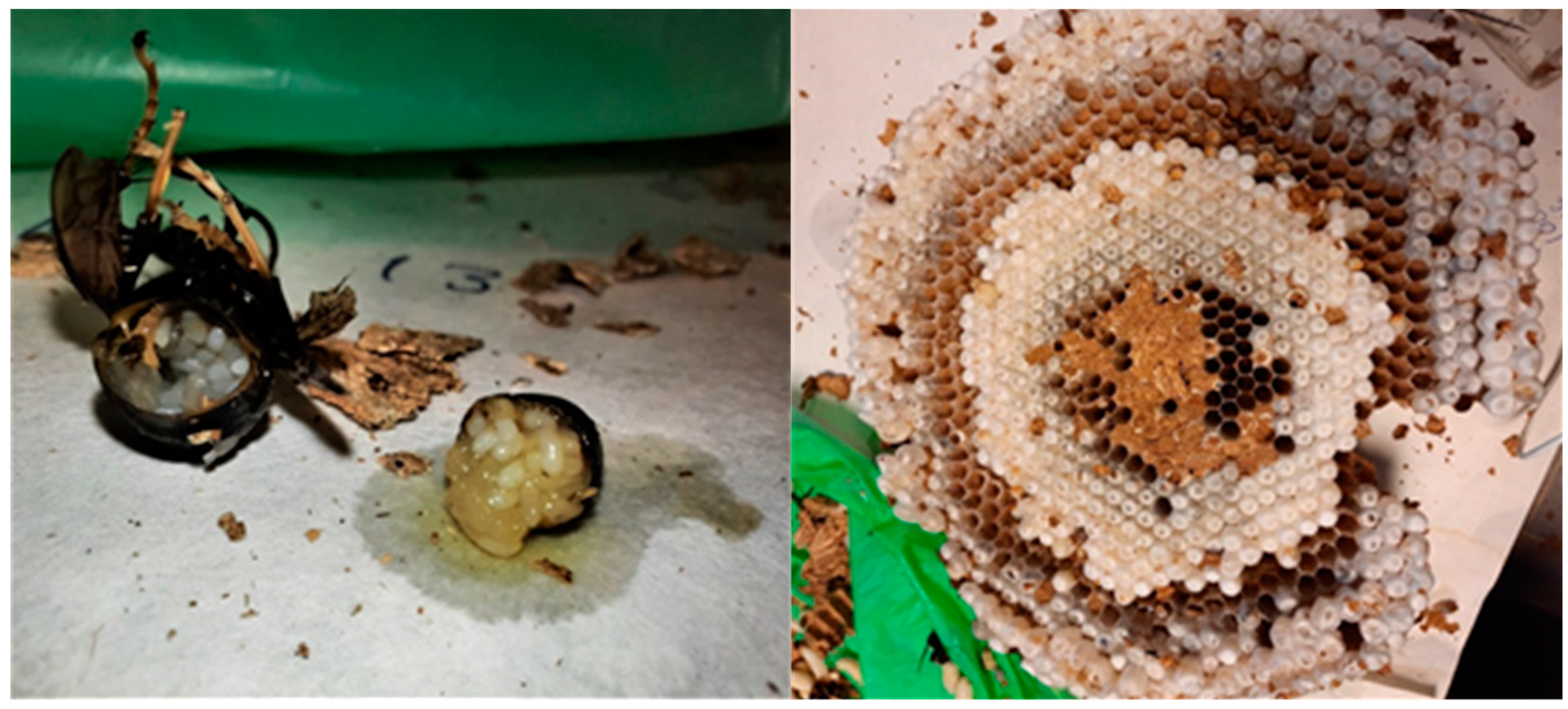
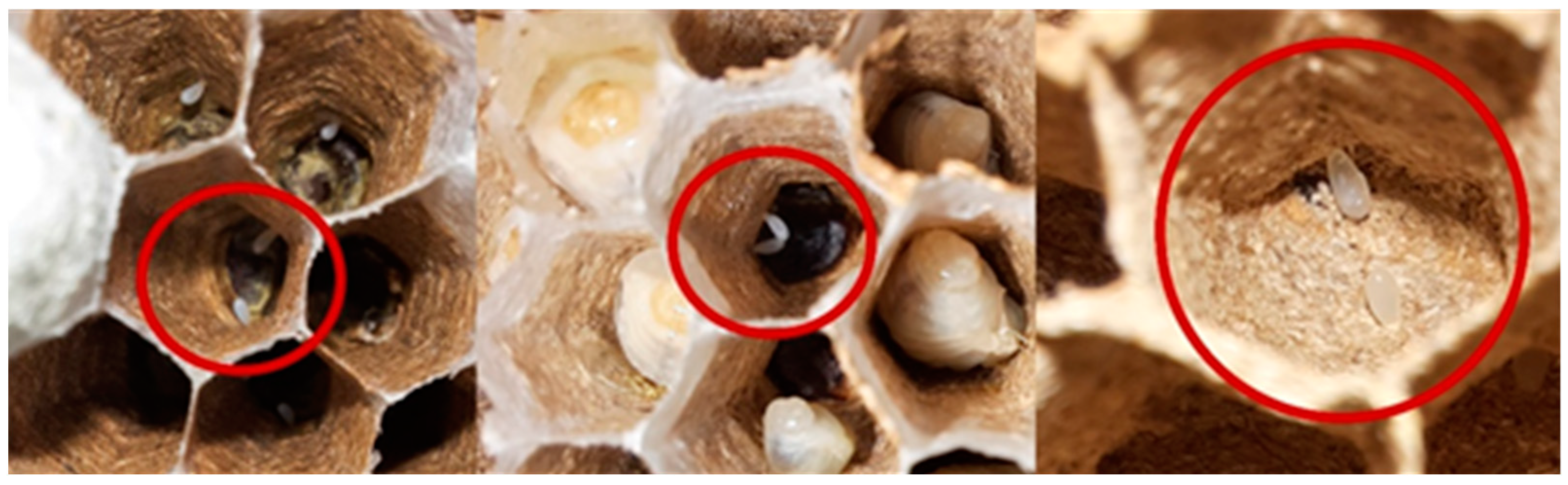
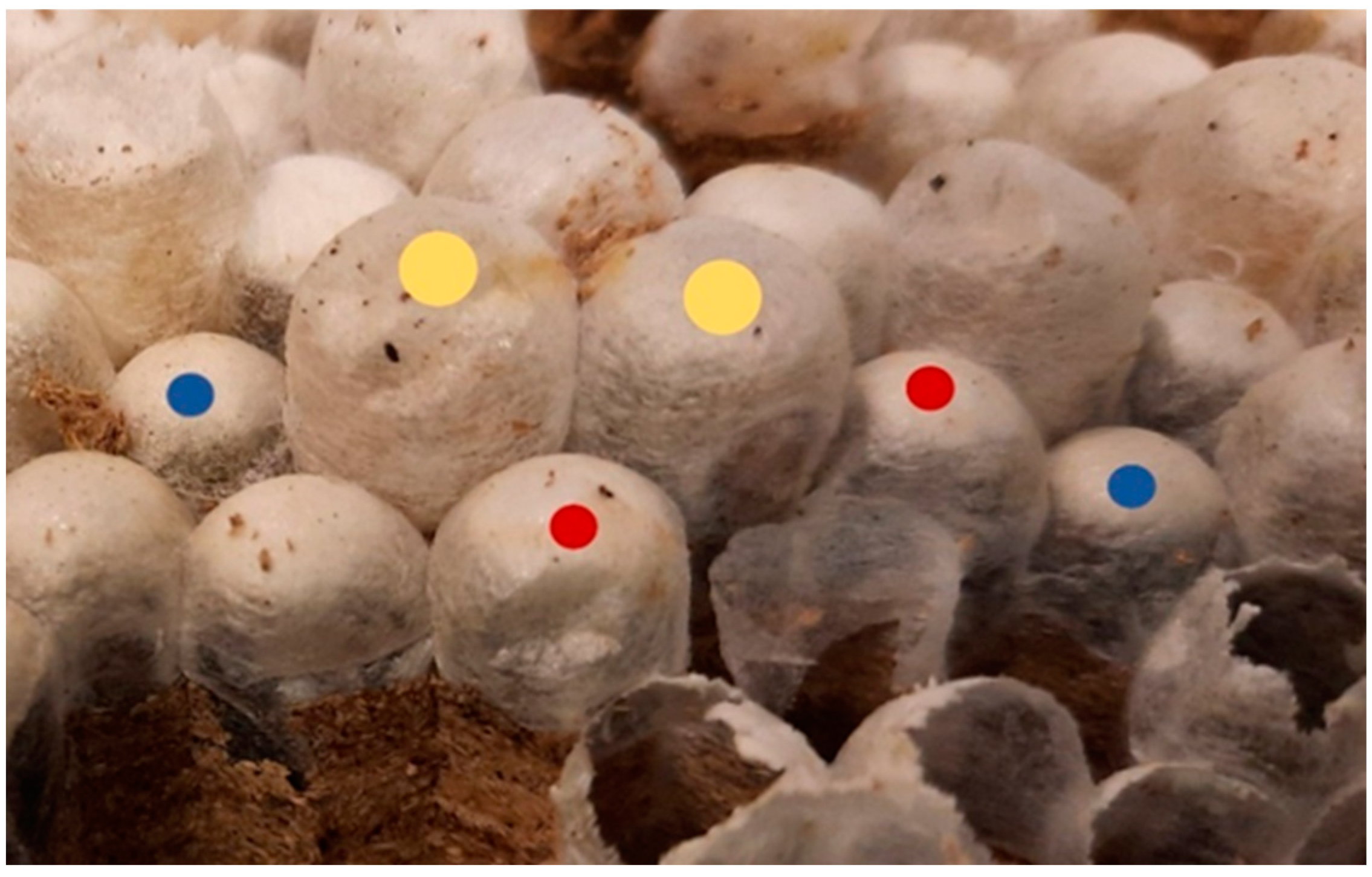
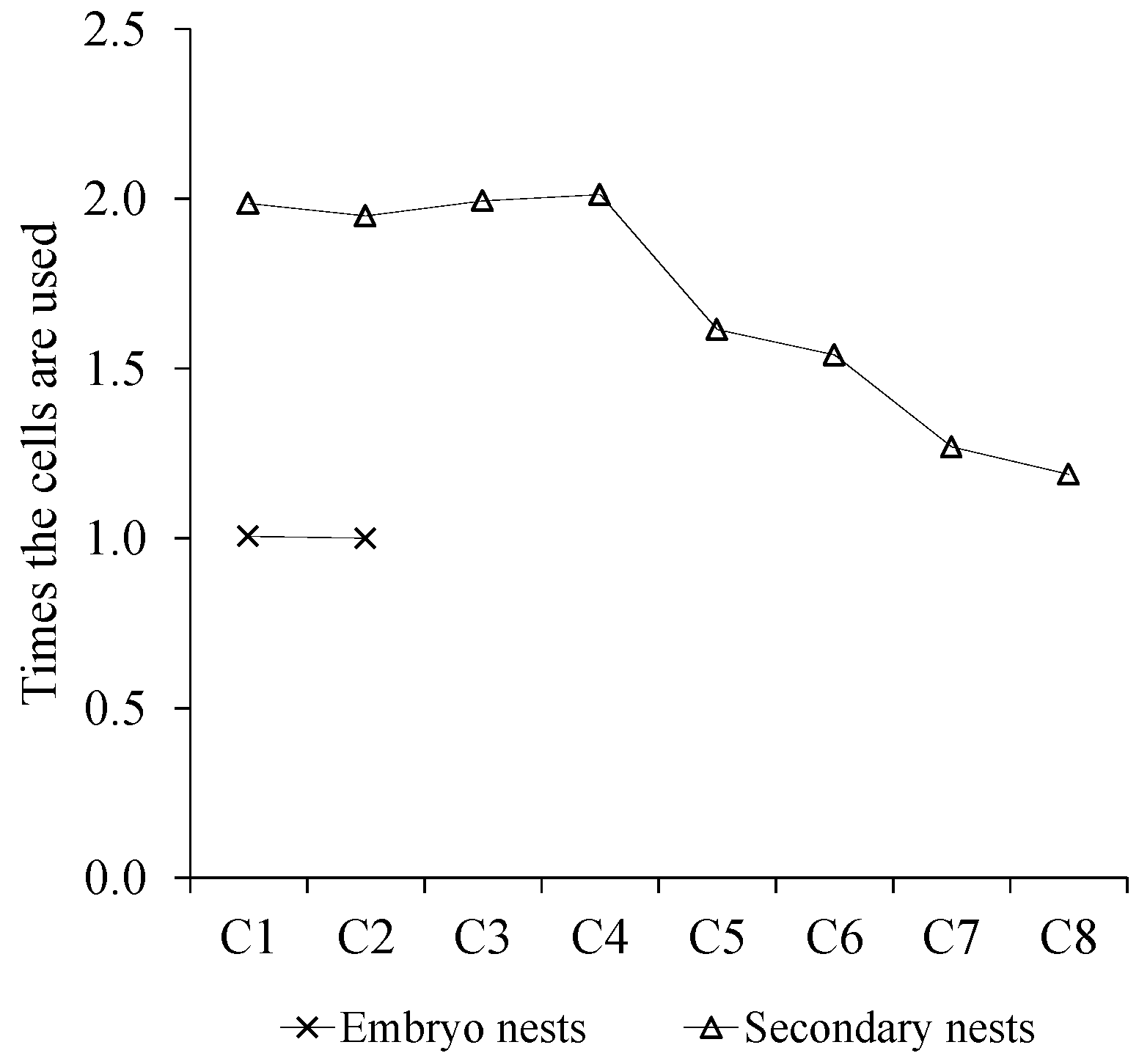
Invasive species become established in non-native areas due to their intrinsic characteristics and the ability to adapt to new environments. This work describes the characteristics of the nesting behavior of the invasive yellow-legged hornet (Vespa velutina nigrithorax) in Galicia (Northwest Spain). The first nest was detected in the area in 2012 and after that, the distribution pattern shows a species-invasion curve with slow progress at first but followed by rapid expansion. The nesting places for this hornet differ between the kinds of nests, while embryo nests are mainly found in buildings in spring, secondary nests are observed in vegetation in summer, autumn, and winter. The annual life cycle starts when the queen builds the embryo nests and starts to lay eggs. This leads to the emergence of the first workers, usually small in size, and sometimes a few males. After this stage, large nests called secondary nests are normally observed in most exposed sites. Relocation nests can also be observed; these are nests in the first stage of development presenting adults insects but without brood or meconium. The period of decline is characterized by the emergence of new queens and males, that are distinguishable even in the pupal stage, the appearance of two eggs per cell, and an irregular brood pattern.
Keywords:
Vespa velutina; early males; nest size; nesting behavior; Galicia