Gene Expression Profile in Peripheral Blood Nuclear Cells of Small Ruminant Lentivirus-Seropositive and Seronegative Dairy Goats in Their First Lactation
by
 , , ,
, , ,
Joanna Pławińska-Czarnak
1,* ,
,
Alicja Majewska
2,
Joanna Zarzyńska
1,
Janusz Bogdan
1,
Jarosław Kaba
3,
Krzysztof Anusz
1 and
Emilia Bagnicka
4 1
Department of Food Hygiene and Public Health Protection, Institute of Veterinary Medicine, Warsaw University of Life Sciences, Nowoursynowska 159, 02-776 Warsaw, Poland
2
Department of Physiology Sciences, Institute of Veterinary Medicine, Warsaw University of Life Sciences, Nowoursynowska 159, 02-776 Warsaw, Poland
3
Division of Epidemiology and Veterinary Management, Institute of Veterinary Medicine, Warsaw University of Life Sciences, Nowoursynowska 159c, 02-776 Warsaw, Poland
4
Institute of Genetics and Animal Biotechnology, Polish Academy of Sciences, Postepu 36A, Jastrzebiec, 05-552 Magdalenka, Poland
*
Author to whom correspondence should be addressed.
Animals 2021, 11(4), 940; https://doi.org/10.3390/ani11040940
Submission received: 26 February 2021
/
Revised: 22 March 2021
/
Accepted: 22 March 2021
/
Published: 26 March 2021
(This article belongs to the Special Issue Genetics, Genomics, Transcriptomics, Proteomics, Health and Product Quality of Small Ruminants)
Simple Summary
Caprine arthritis encephalitis, caused by small ruminant lentivirus (SRLV), is a disease that develops with various signs in adult goats, e.g., arthritis, mastitis, and progressive weight loss, while in goat kids, the disease presents with only neuropathy and extremely rarely. The disease results in reduced milk production and economic losses in herds of goats. Previously described changes in single gene expression do not fully explain all the processes occurring in the infected goats. Therefore, the present study describes the first use of a transcriptomic array designed specifically for goats in Poland. Its aim was to investigate the gene expression profiles of peripheral blood nuclear cells from SRLV-seropositive and SRLV-seronegative goats using a custom-made Capra hircus gene expression array. Just four genes out of ~50,000 were found to have differential expression; moreover, changes in their expression suggest an active inflammatory mechanism in SRLV-seropositive goats at the early stage of SRLV infection.
Abstract
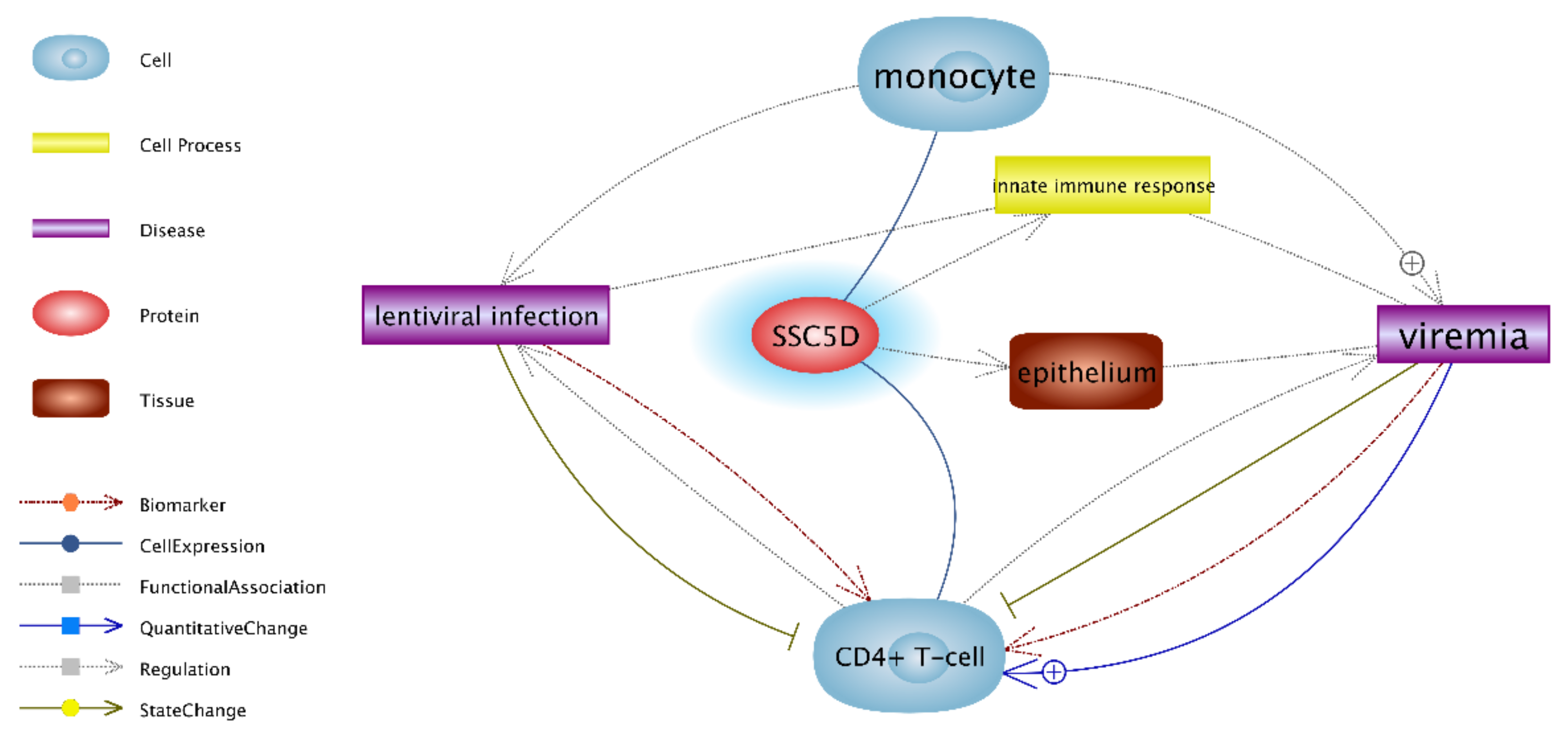
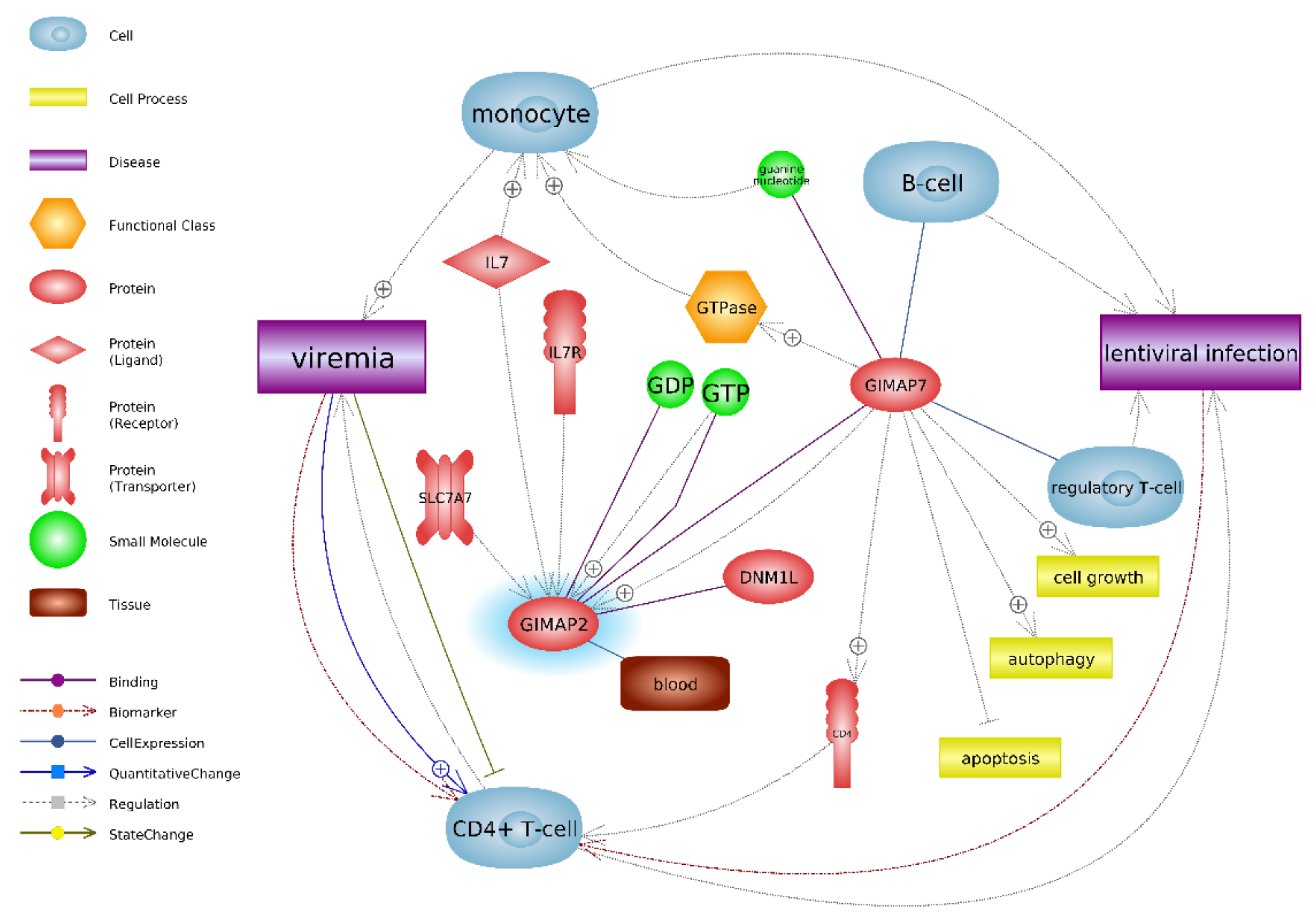
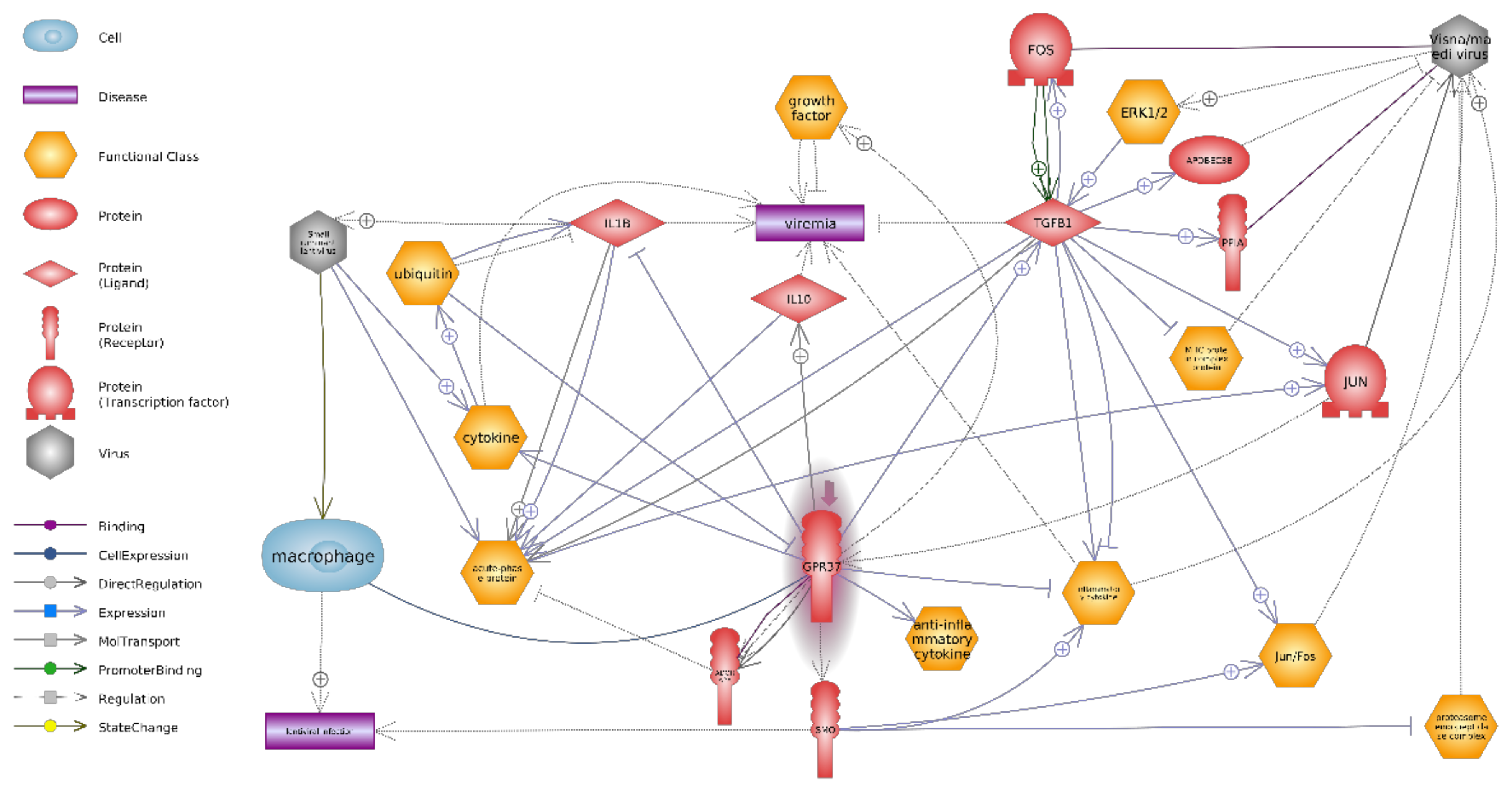
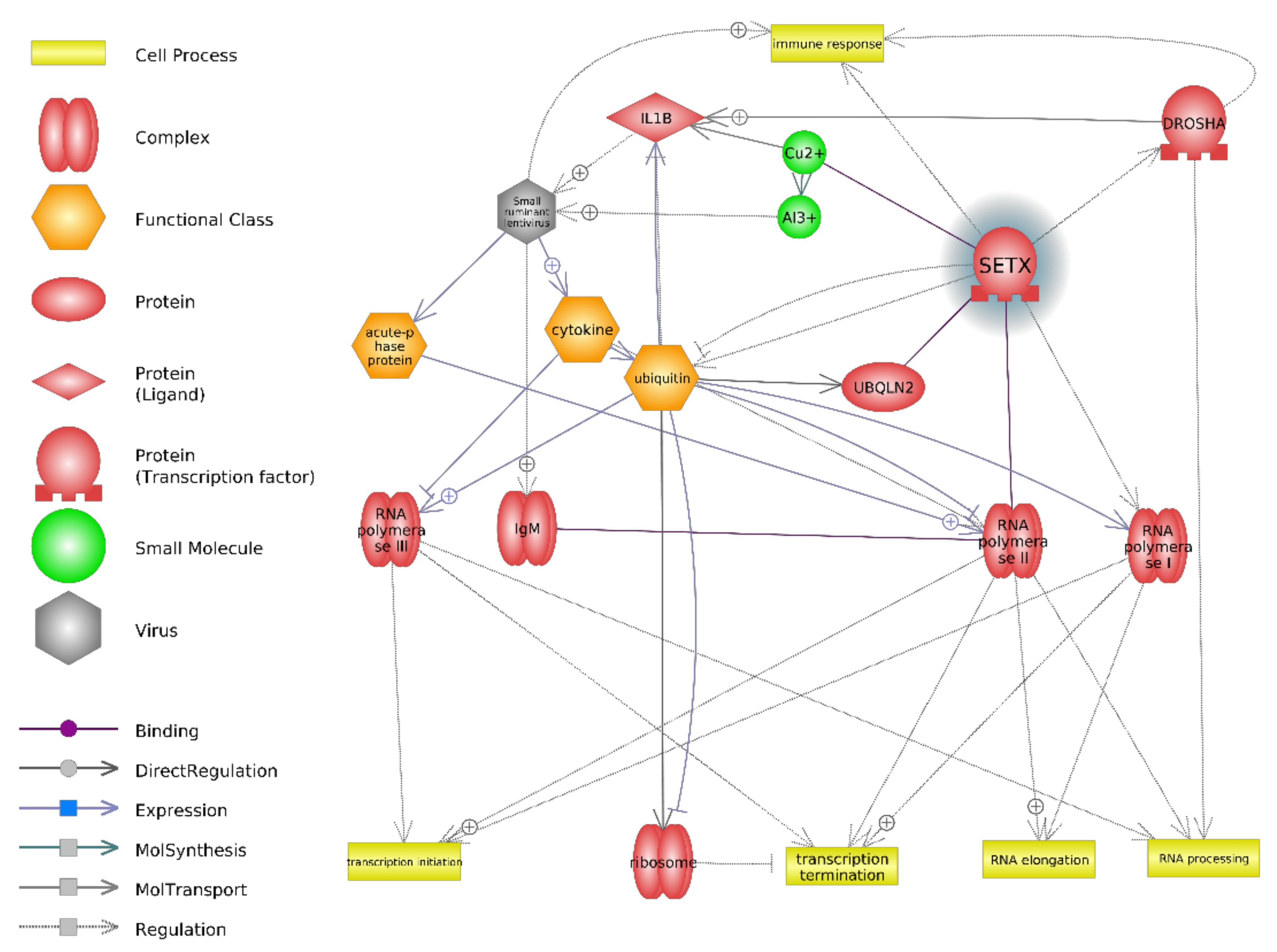
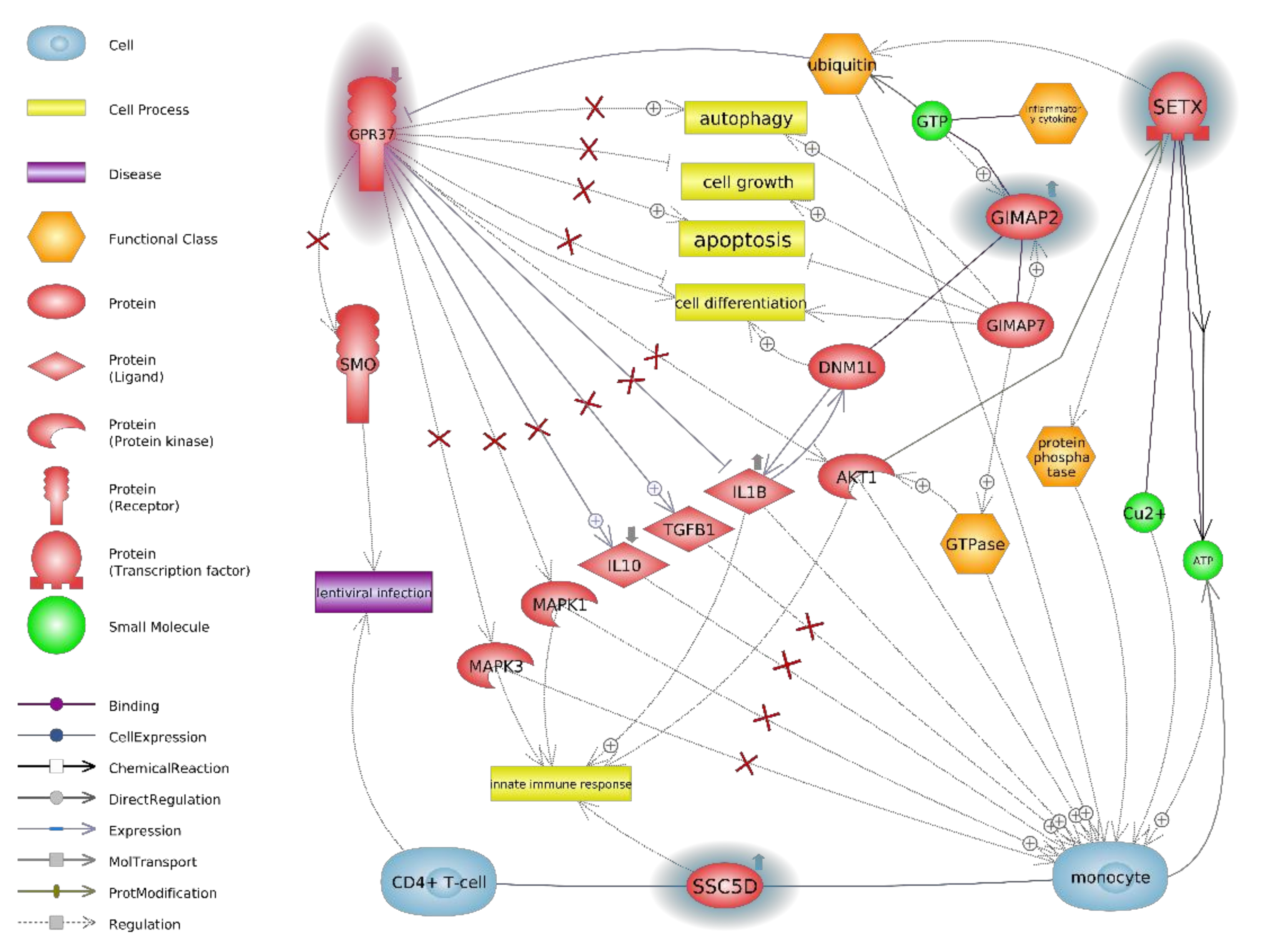
The immune response to a viral antigen causes inflammatory cell infiltration to the tissue, which creates a suitable environment for the replication of the virus in macrophages, and the recruitment of more monocytes to the site of infection, or latently infected monocytes. The aim of the study was to analyze the transcriptomic profile of peripheral blood nuclear cells isolated from SRLV-seropositive and SRLV-negative goats at the peak of their first lactation. SRLV-seropositive goats were probably infected via colostrum. Custom transcriptomic microarrays for goats were designed and developed, namely the Capra hircus gene expression array, which features ~50,000 unique transcripts per microarray. Only four genes were differentially expressed, with up-regulated expression of the GIMAP2, SSC5D and SETX genes, and down-regulated expression of the GPR37 gene in SRLV-seropositive vs. SRLV-seronegative goats. However, in an RT-qPCR analysis, the result for the SETX gene was not confirmed. The differences in the expressions of the studied genes indicate an active inflammatory process in the SRLV-seropositive goats at the early stage of infection.
Keywords:
goat; peripheral blood nuclear cells; small ruminant lentivirus; microarray; gene expression; GPR37; GIMAP2; SSC5D; SETX