Worldwide Prevalence of Small Ruminant Lentiviruses in Sheep: A Systematic Review and Meta-Analysis
by
 , , , , , and
Ricardo de Miguel
1,†, 
Marta Arrieta
1,†,
Ana Rodríguez-Largo
1,
Irache Echeverría
2,
Raúl Resendiz
1,
Estela Pérez
1 ,
,
Héctor Ruiz
1,
Marta Pérez
3,4,
Damián de Andrés
2,
Ramsés Reina
2,
Ignacio de Blas
1,4 and
Lluís Luján
1,4,* 1
Department of Animal Pathology, University of Zaragoza, 50013 Zaragoza, Spain
2
Institute of Agrobiotechnology, CSIC-Government of Navarra, 31192 Mutilva, Spain
3
Department of Anatomy, Embriology and Genetics, University of Zaragoza, 50013 Zaragoza, Spain
4
Instituto Universitario de Investigación Mixto Agroalimentario de Aragón, University of Zaragoza, 50013 Zaragoza, Spain
*
Author to whom correspondence should be addressed.
†
Both authors contributed equally.
Animals 2021, 11(3), 784; https://doi.org/10.3390/ani11030784
Submission received: 17 February 2021
/
Revised: 4 March 2021
/
Accepted: 8 March 2021
/
Published: 11 March 2021
(This article belongs to the Special Issue Wasting Diseases Affecting Sheep)
Simple Summary
Maedi-visna is a progressive wasting disease of sheep that leads to decreased animal condition and production. It is caused by Small Ruminant Lentiviruses (SRLV), single-stranded RNA viruses with high mutational potential. There is neither treatment nor vaccine against SRLV and proper diagnosis is the key element for efficient control measures against positive animals. This systematic review and meta-analysis summarizes the individual and flock prevalence of SRLV throughout the world and describes the diagnostic tests employed over the last four decades. Our results indicate that Europe is the continent with the most information on the prevalence of the infection as well as with the highest SRLV prevalence at the individual level. Flock prevalence depends directly on the individual prevalence. SRLV diagnostic methods in sheep have substantially changed during the last decades, but serologic methods have always been the most frequently used techniques for prevalence studies. A combination of at least two diagnostic tests is fully encouraged for future prevalence studies and health programs. ELISA and PCR show synergic effects in SRLV diagnosis.
Abstract
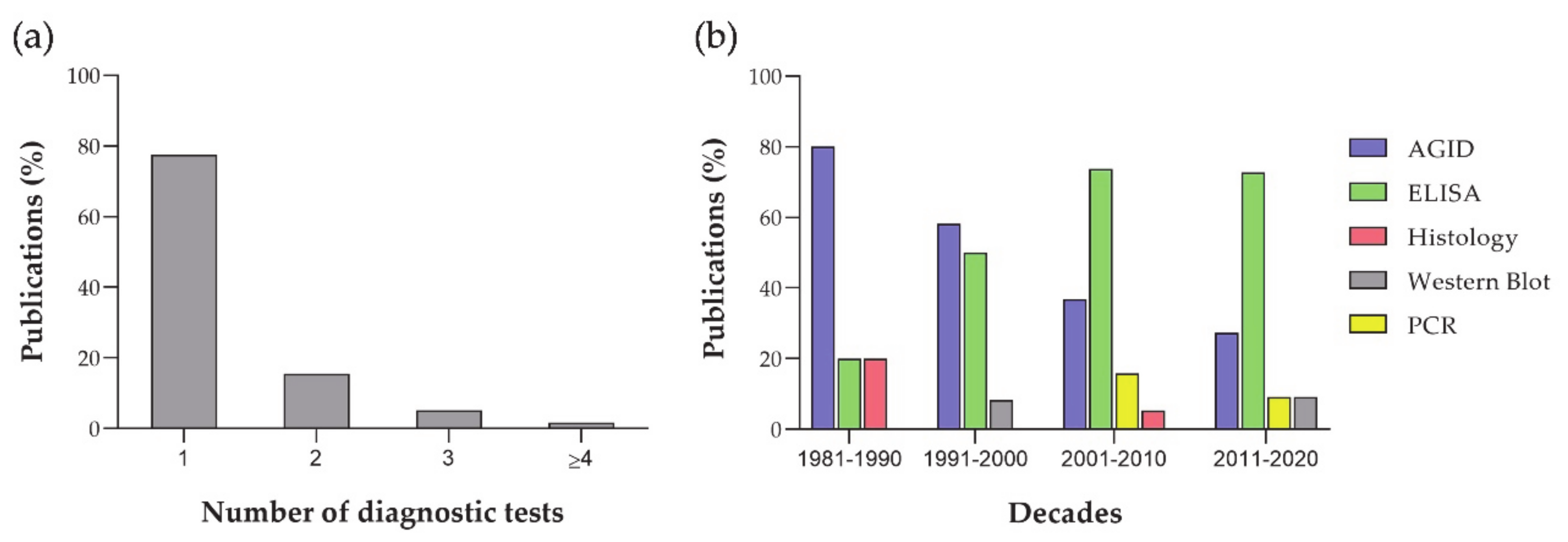
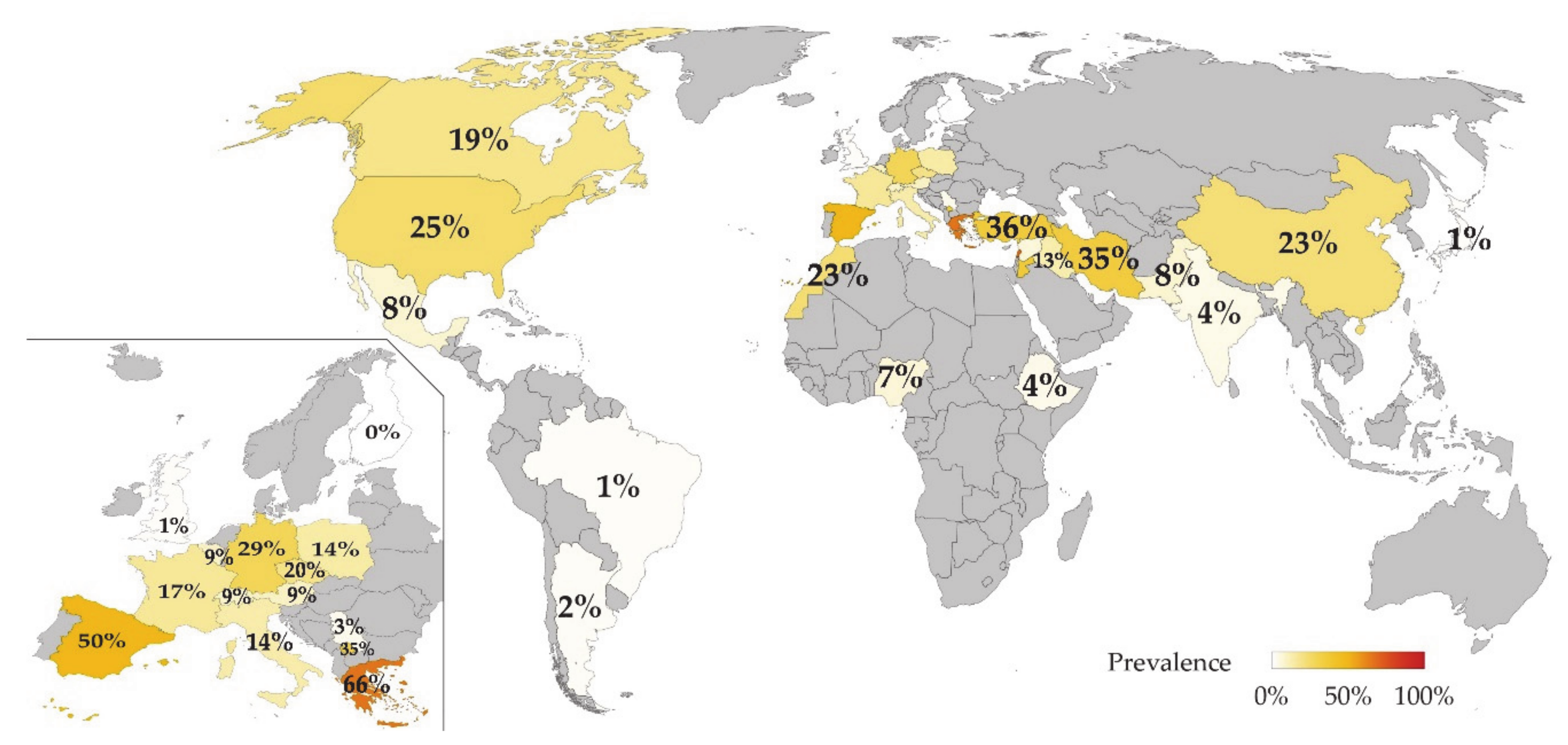
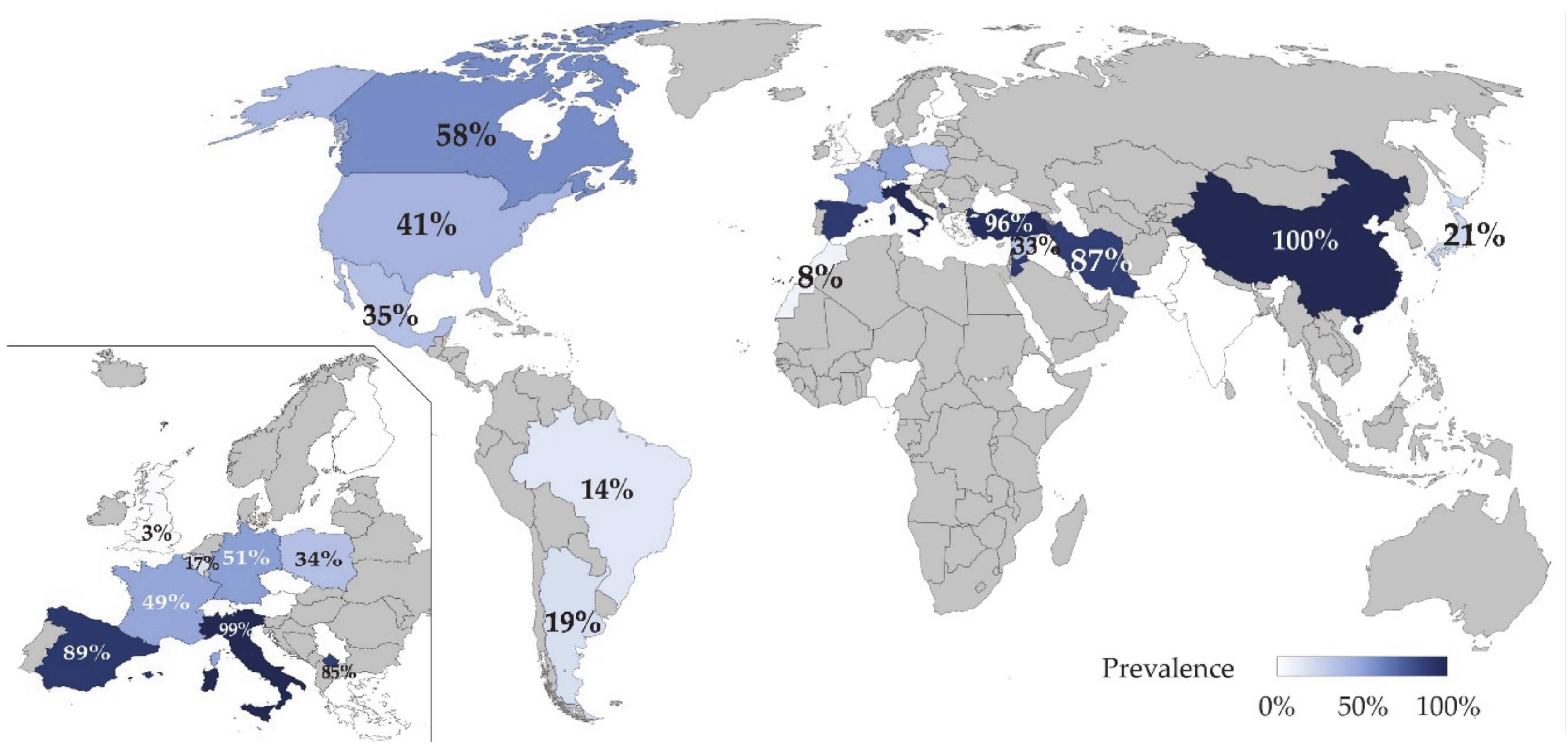
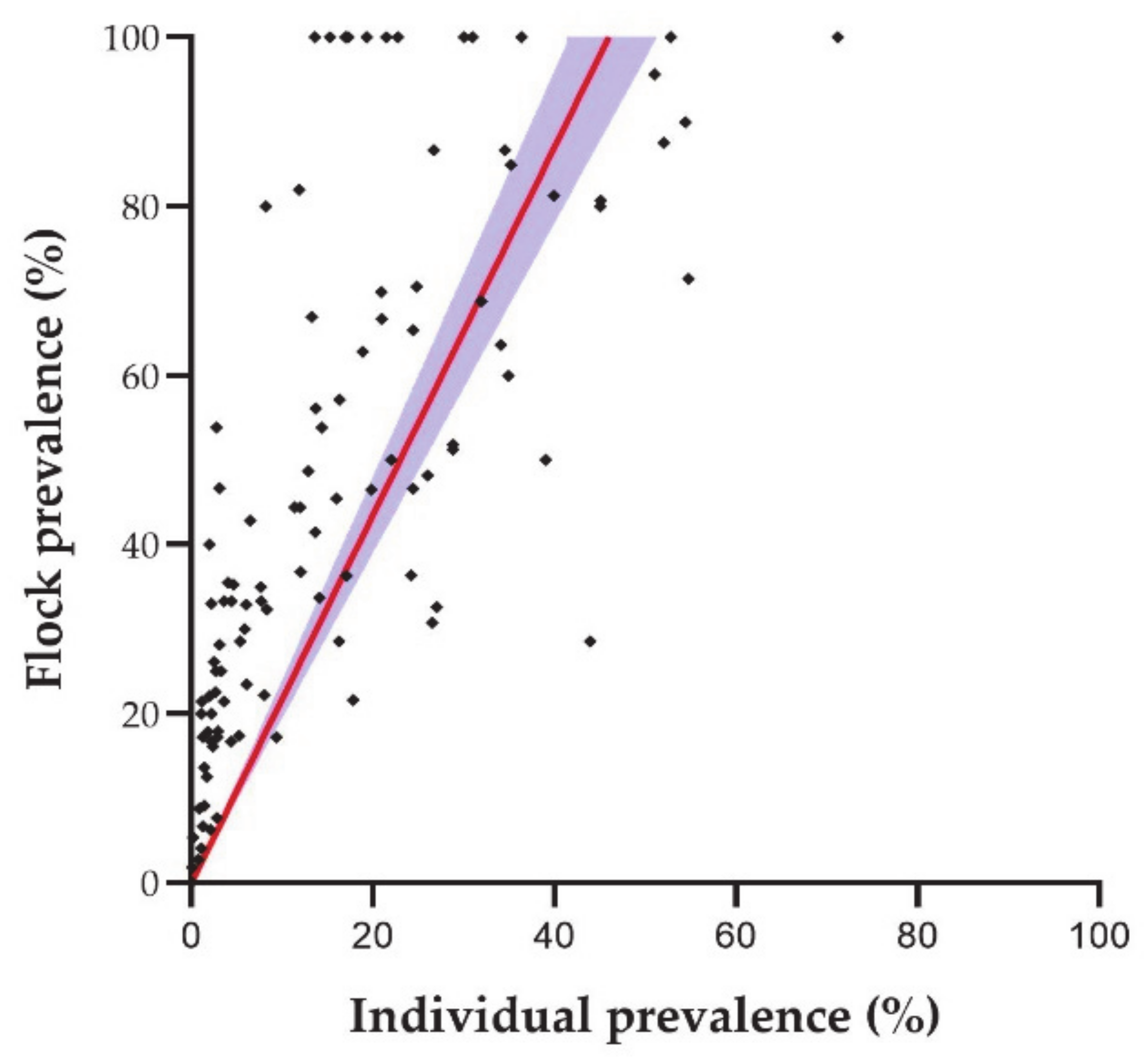
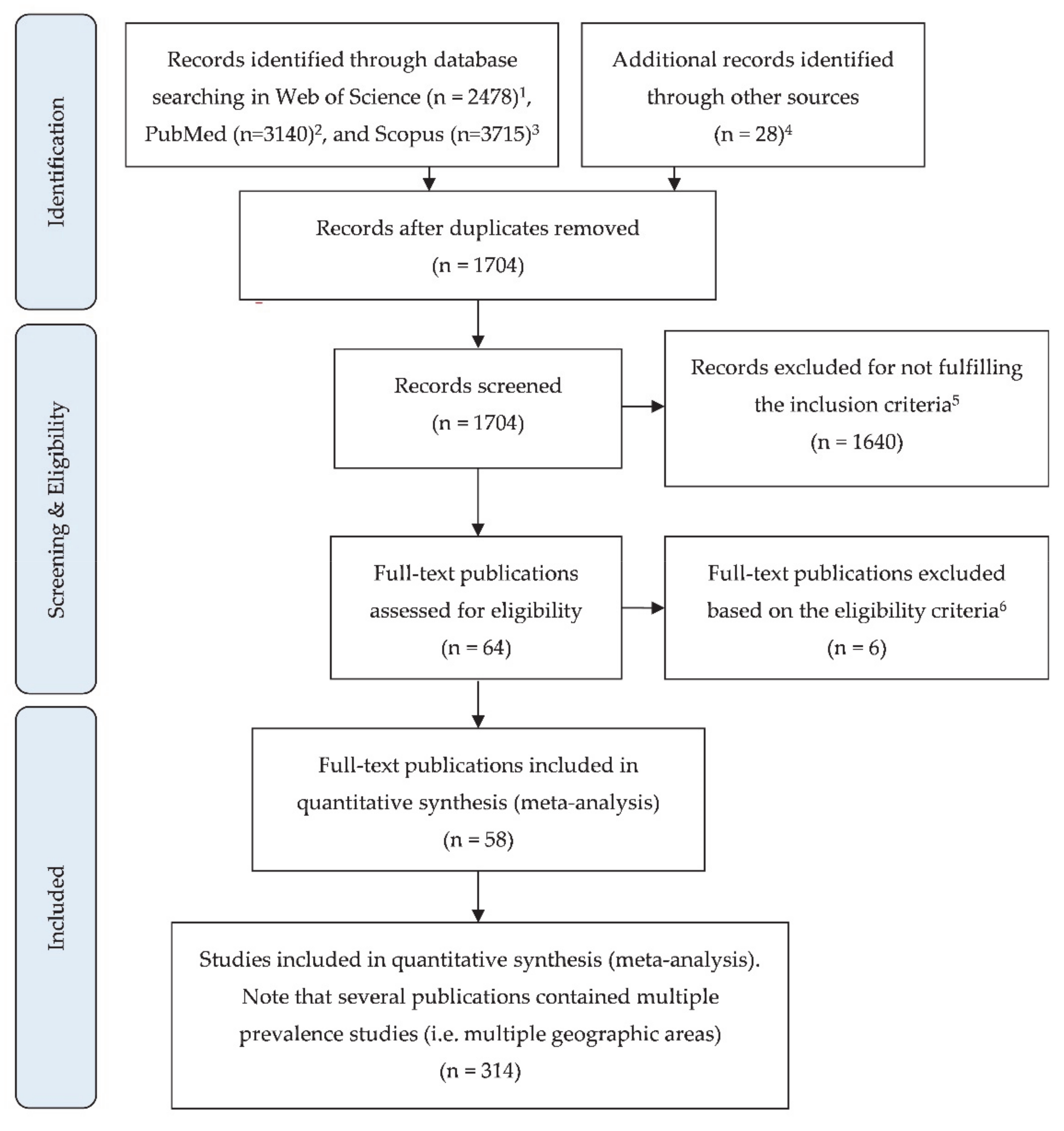
Small Ruminant Lentiviruses (SRLV) are highly prevalent retroviruses with significant genetic diversity and antigenic heterogeneity that cause a progressive wasting disease of sheep called Maedi-visna. This work provides a systematic review and meta-analysis of the last 40 years (1981–2020) of scientific publications on SRLV individual and flock prevalence. Fifty-eight publications and 314 studies were included. Most articles used a single diagnostic test to estimate prevalence (77.6%), whereas articles using three or more tests were scarce (6.9%). Serological tests are more frequently used than direct methods and ELISA has progressively replaced AGID over the last decades. SRLV infection in sheep is widespread across the world, with Europe showing the highest individual prevalence (40.9%) and being the geographical area in which most studies have been performed. Africa, Asia, and North America show values between 16.7% to 21.8% at the individual level. South and Central America show the lowest individual SRLV prevalence (1.7%). There was a strong positive correlation between individual and flock prevalence (ρ = 0.728; p ≤ 0.001). Despite the global importance of small ruminants, the coverage of knowledge on SRLV prevalence is patchy and inconsistent. There is a lack of a gold standard method and a defined sampling strategy among countries and continents.