A Methodology to Quantify Resilience in Growing Pigs
by
 , , , , and
Houda Laghouaouta
1 ,
,
Ramona N. Pena
1,
Roger Ros-Freixedes
1,
Josep Reixach
2,
Marta Díaz
2,
Joan Estany
1,
Ramon Armengol
1,
Anna Bassols
3 and
and
Lorenzo Fraile
1,*
1
Agrotecnio-CERCA Center, Department of Animal Science, University of Lleida, 25198 Lleida, Spain
2
Selección Batallé SA, 17421 Riudarenes, Spain
3
Departament de Bioquímica, Universitat Autónoma de Barcelona, 08193 Barcelona, Spain
*
Author to whom correspondence should be addressed.
Animals 2021, 11(10), 2970; https://doi.org/10.3390/ani11102970
Submission received: 6 September 2021
/
Revised: 12 October 2021
/
Accepted: 13 October 2021
/
Published: 15 October 2021
(This article belongs to the Section Pigs)
Simple Summary
The concept of resilience can be defined as the ability of animals to maintain their productivity despite the stressors that might occur during the rearing period. Despite the growing interest in the genetic determinism of resilience and its possible inclusion in selection objectives, there is no straightforward method to measure this trait. Several quantifying methods estimate resilience based on productivity such as body weight or milk production, or non-productivity related traits such as immunity or stress responses. The objective of this study was to elaborate novel resilience indicators in growing pigs based on both productivity (body weight) and non-productivity (acute-phase proteins) related traits. We propose the deviation from the expected growth curve and the increment of the acute-phase protein haptoglobin, after applying a common vaccine, as resilience indicators in growing pigs under standard rearing conditions. We showed that the suggested resilience indicators are under a genetic control, show a substantial variability in the population, and may be improved through selection.
Abstract
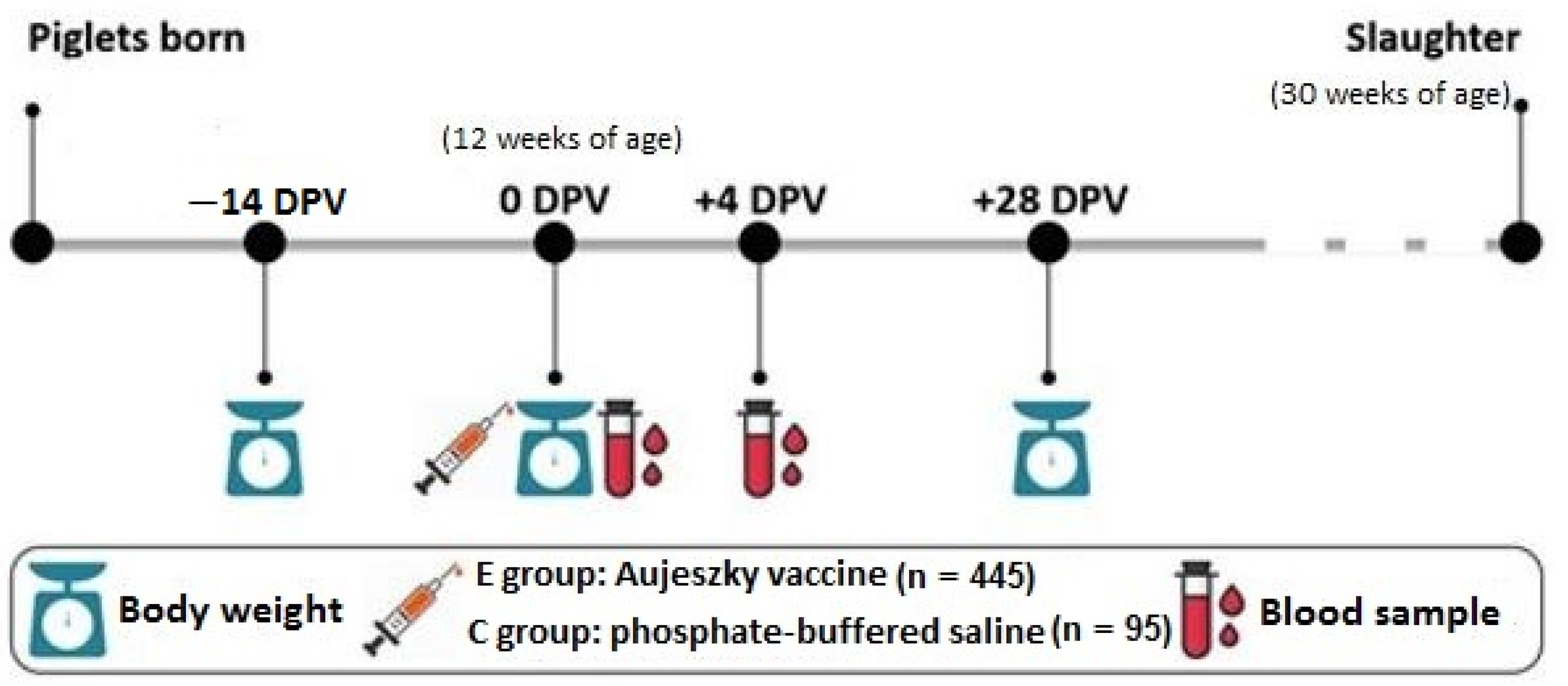
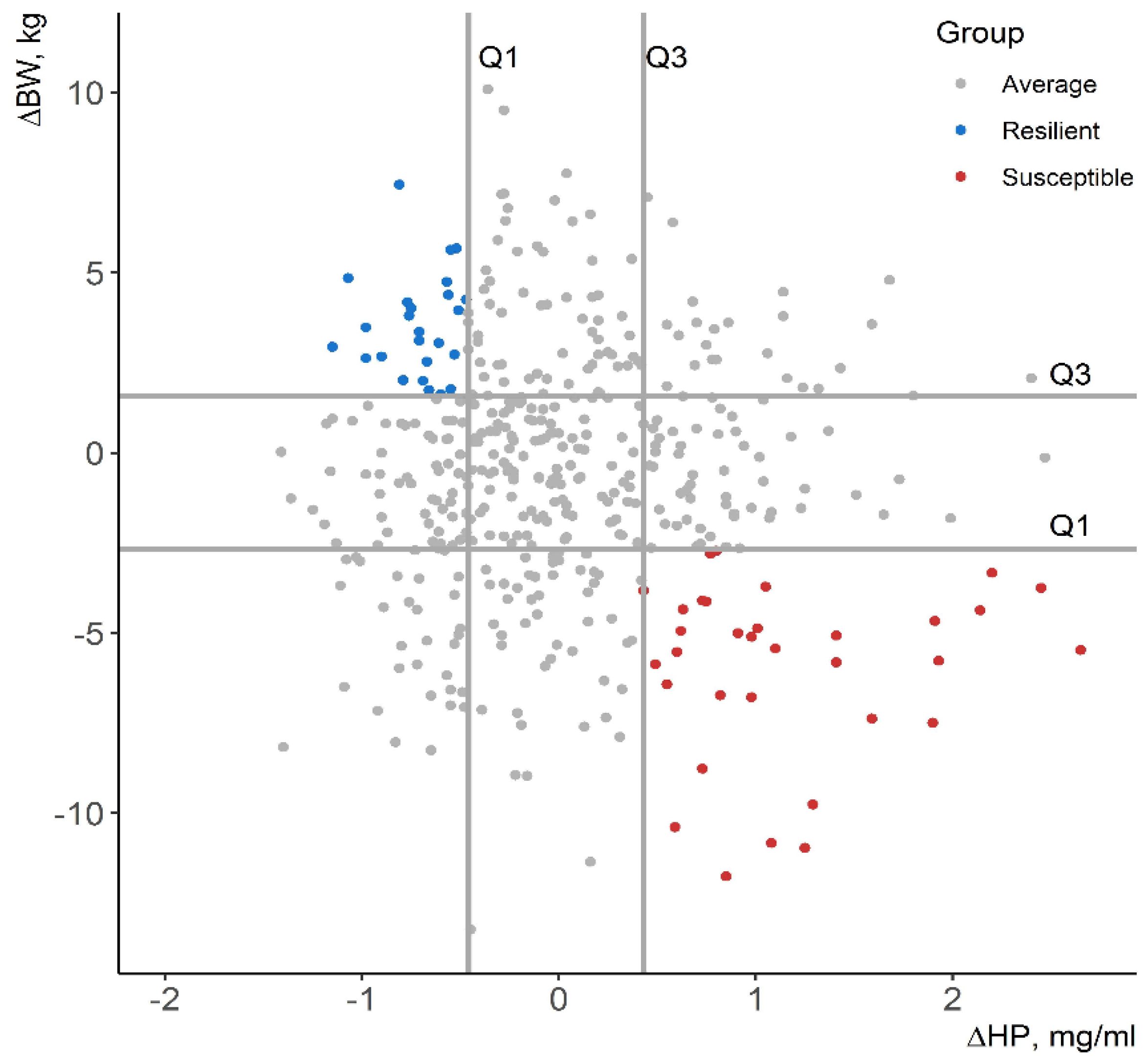
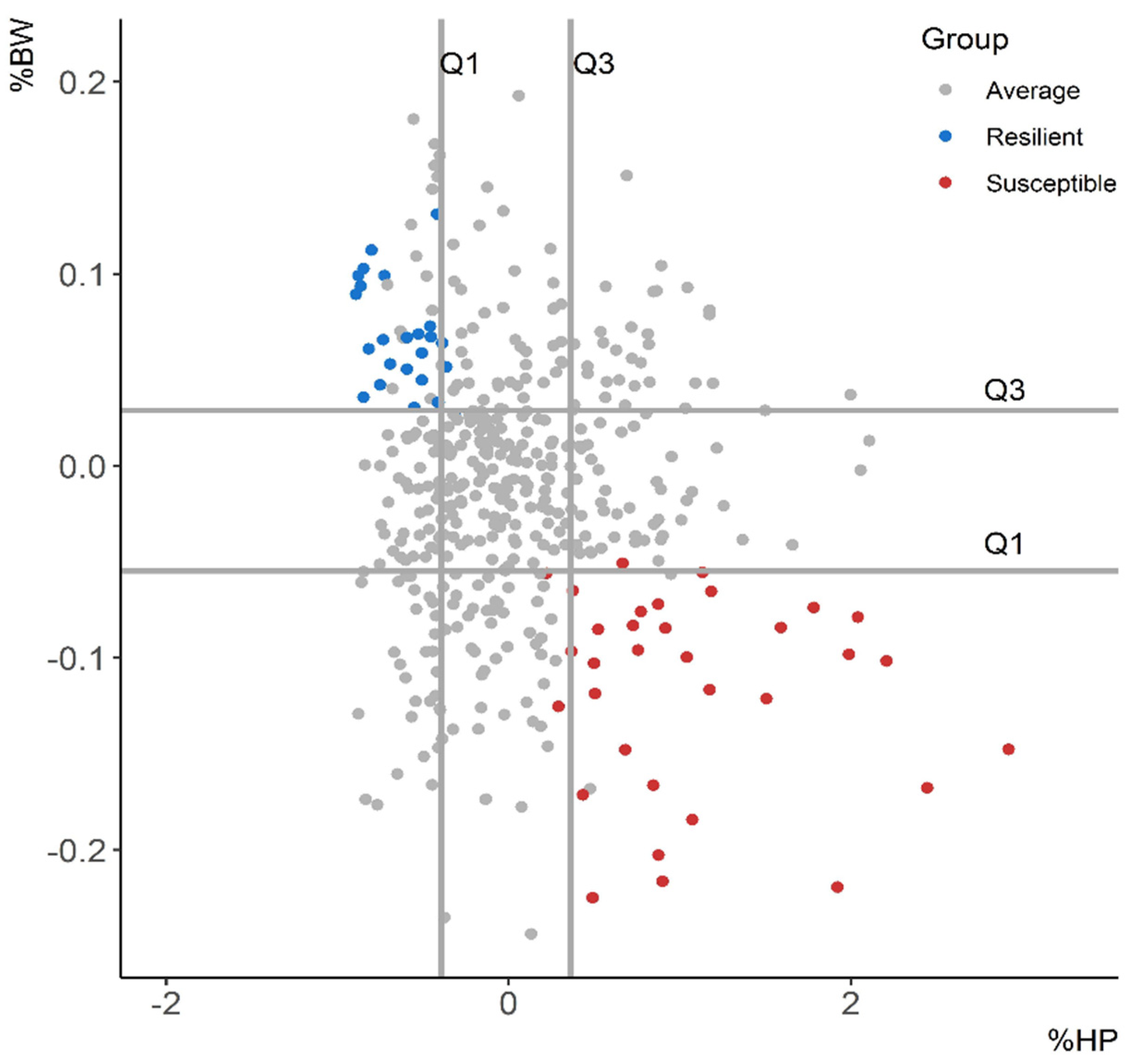
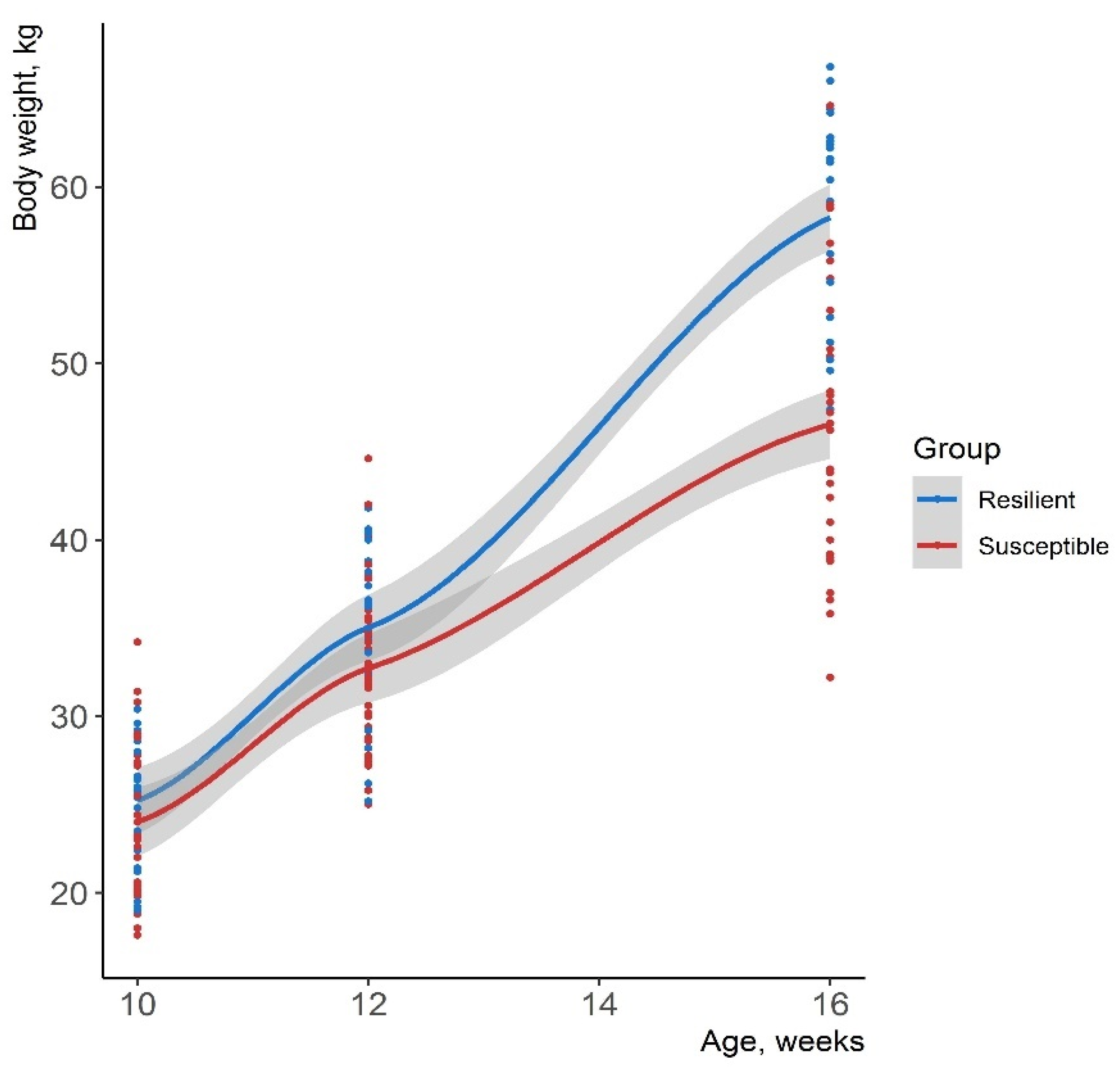
There is a growing concern about the genetic determinism of resilience and its possible implementation in breeding programs. The objective of our study was to elaborate novel resilience indicators in growing pigs based on the deviation from the expected growth curve and the increment of the acute-phase protein haptoglobin (HP) after applying a common vaccine. A total of 445 pigs were vaccinated with an attenuated Aujeszky vaccine at 12 weeks of age. Deviation from the expected body weight (ΔBW) given the growth curve of unvaccinated pigs at 28 days post-vaccination (DPV) and the increment of HP at 4 DPV (ΔHP) were suggested as resilience indicators. Challenged pigs that maintained their productivity and had a minor activation of HP were deemed resilient, whereas pigs that had low ∆BW values and a high activation of HP were deemed susceptible. Pigs were also classified based on ∆BW and ∆HP relative to the expected BW at 28 DPV and to the basal level of HP, respectively. The concordance was high between both methods, indicating that ΔBW and ΔHP are not sensitive to the animal’s expected BW nor the basal level of HP. The heritability estimates were moderate for ∆BW (0.33) and low-to-moderate for ∆HP (0.16). Our study suggests ΔBW and ΔHP as novel resilience indicators in pigs. The suggested indicators capture different aspects of resilience, are easy to measure, and are genetically controlled. Thus, they may be improved through selective breeding. Further analyses are needed to validate our findings.
Keywords:
body weight; haptoglobin; pigs; resilience indicators; vaccine challenge