The Effect of Staphylococcus spp., Streptococcus spp. and Enterobacteriaceae on the Development of Whey Protein Levels and Oxidative Stress Markers in Cows with Diagnosed Mastitis
by
 , , , ,
Kamila Puppel
 ,
,
Aleksandra Kalińska
,
Magdalena Kot
,
Jan Slósarz
,
Małgorzata Kunowska-Slósarz
,
Grzegorz Grodkowski
,
Beata Kuczyńska
, 
Paweł Solarczyk
 ,
,
Tomasz Przysucha
and
Marcin Gołębiewski
* Institute of Animal Science, Warsaw University of Life Sciences, 02-786 Warsaw, Poland
*
Author to whom correspondence should be addressed.
Animals 2020, 10(9), 1591; https://doi.org/10.3390/ani10091591
Submission received: 30 July 2020
/
Revised: 28 August 2020
/
Accepted: 2 September 2020
/
Published: 7 September 2020
(This article belongs to the Collection Cattle Diseases)
Simple Summary
Mastitis is one of the most common diseases of high-yielding dairy cows, and over 90% of cases are caused by Streptococcus spp., Enterobacteriaceae, or Staphylococcus spp. Whey proteins are very important in relation to cows’ bacteriostatic and bactericidal properties. It is therefore important to determine the relationship between the content of individual proteins and the bacterial strain. This study aimed to determine the influence of Staphylococcus spp., Streptococcus spp., and Enterobacteriaceae on the level of bioactive whey proteins and oxidative stress markers. From the herd, 60 multiparous cows with diagnosed mastitis were selected. Samples were taken for analyses from each cow individually from each quarter and pooled, which gave 60 samples. This study has shown that the levels of whey proteins and oxidative stress markers changed depending on the bacterial strain inducing inflammation, and selected whey proteins can be a marker for the diagnosis of individual mastitis-inducing strains.
Abstract
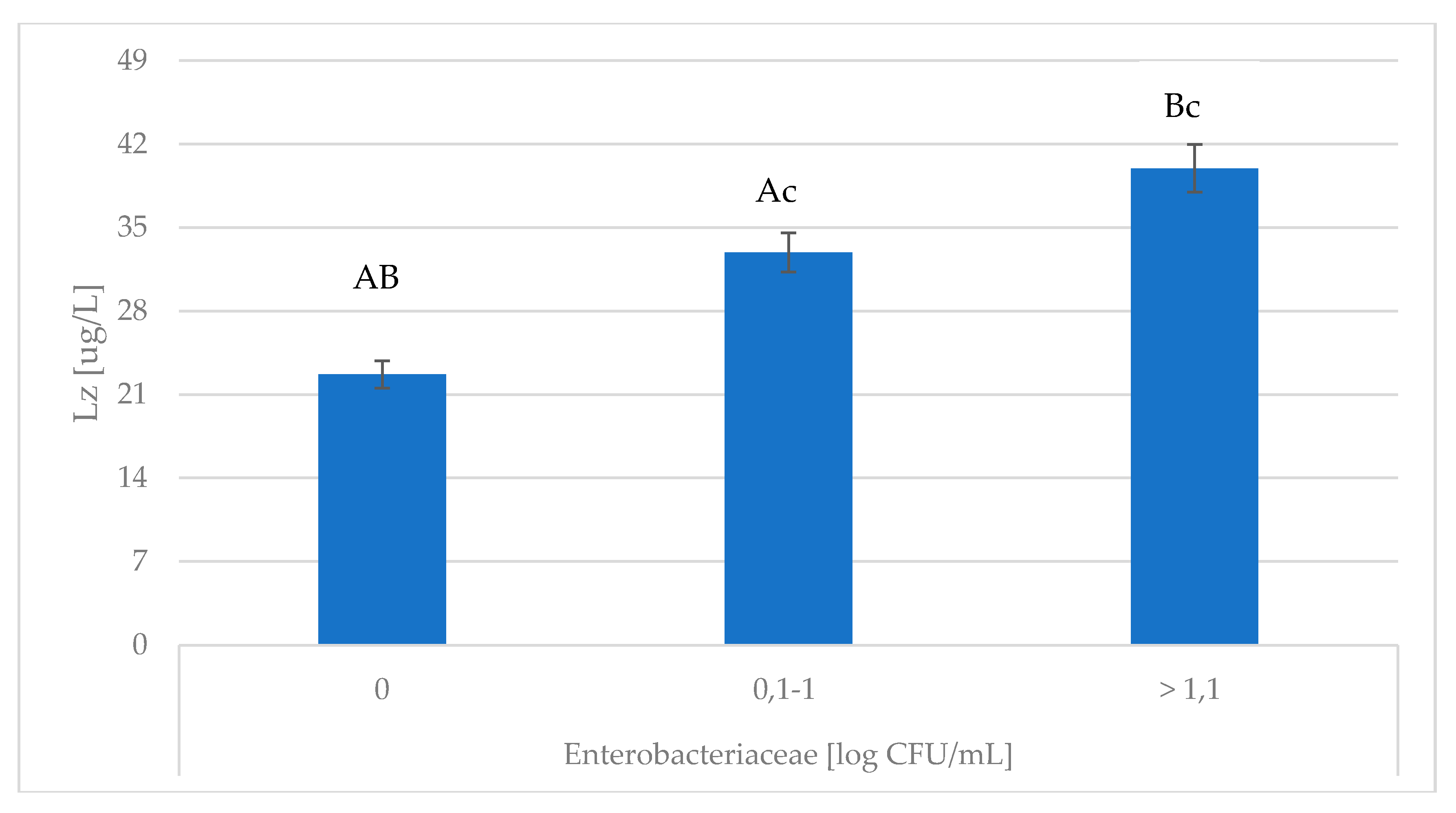
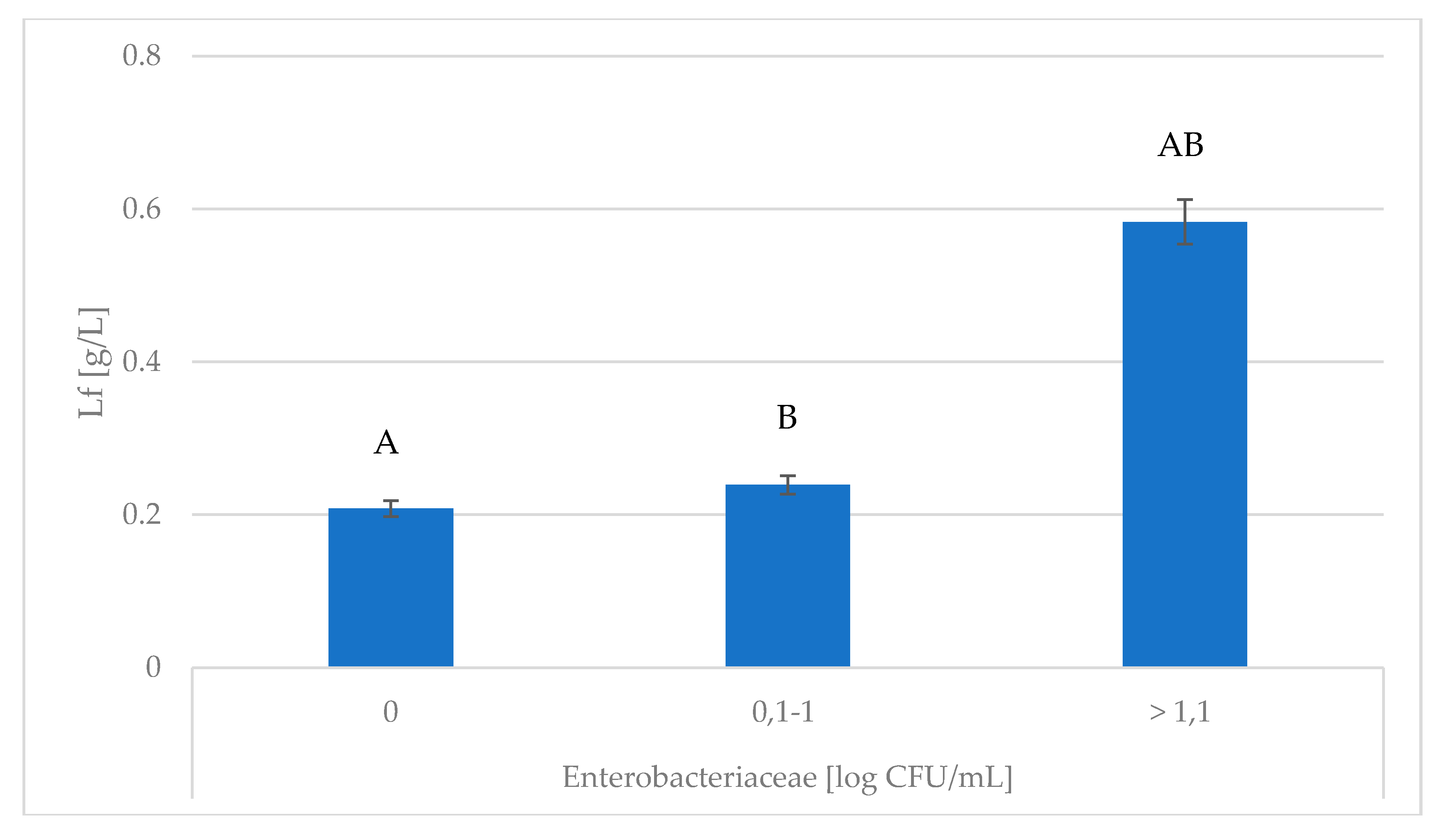
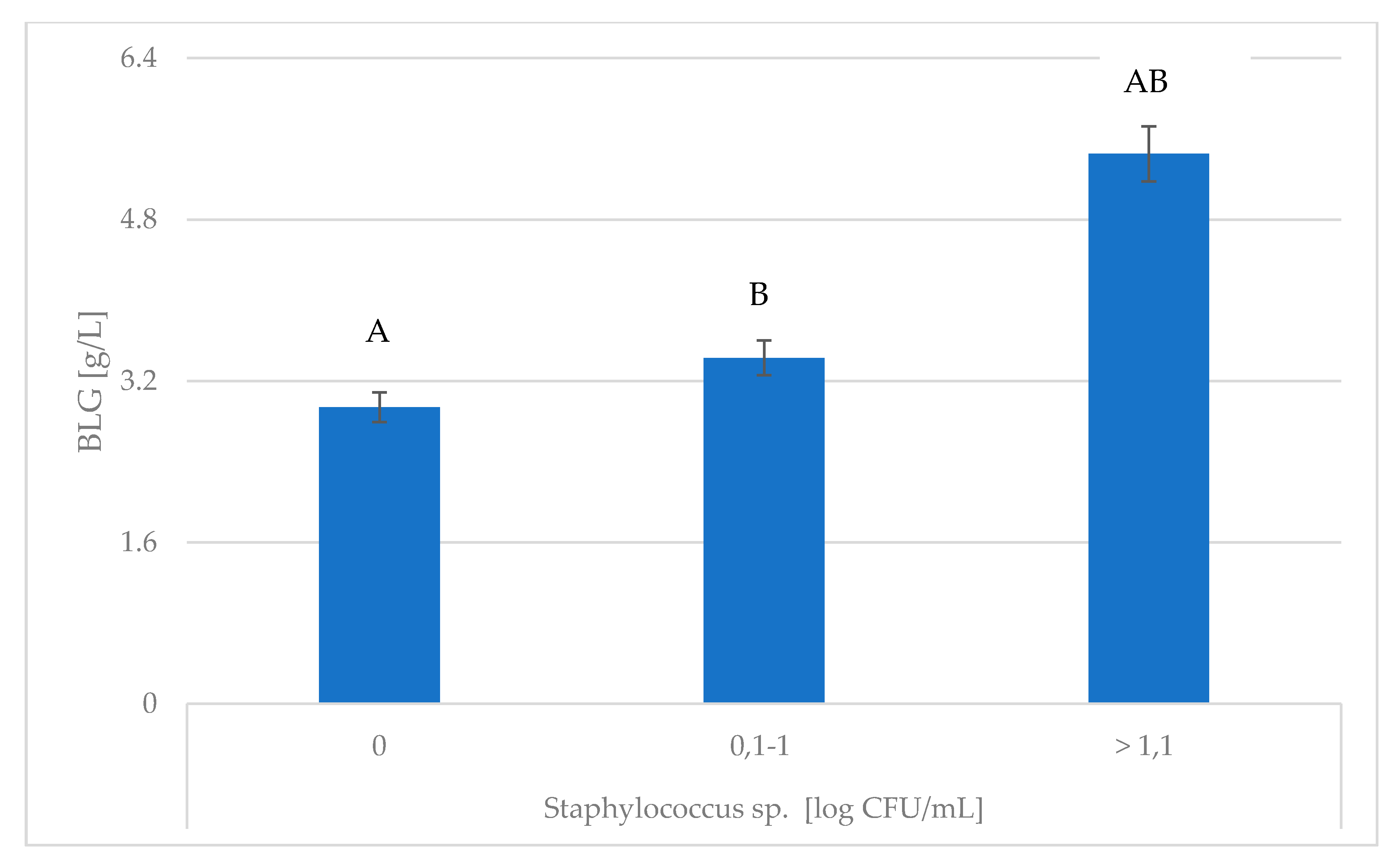
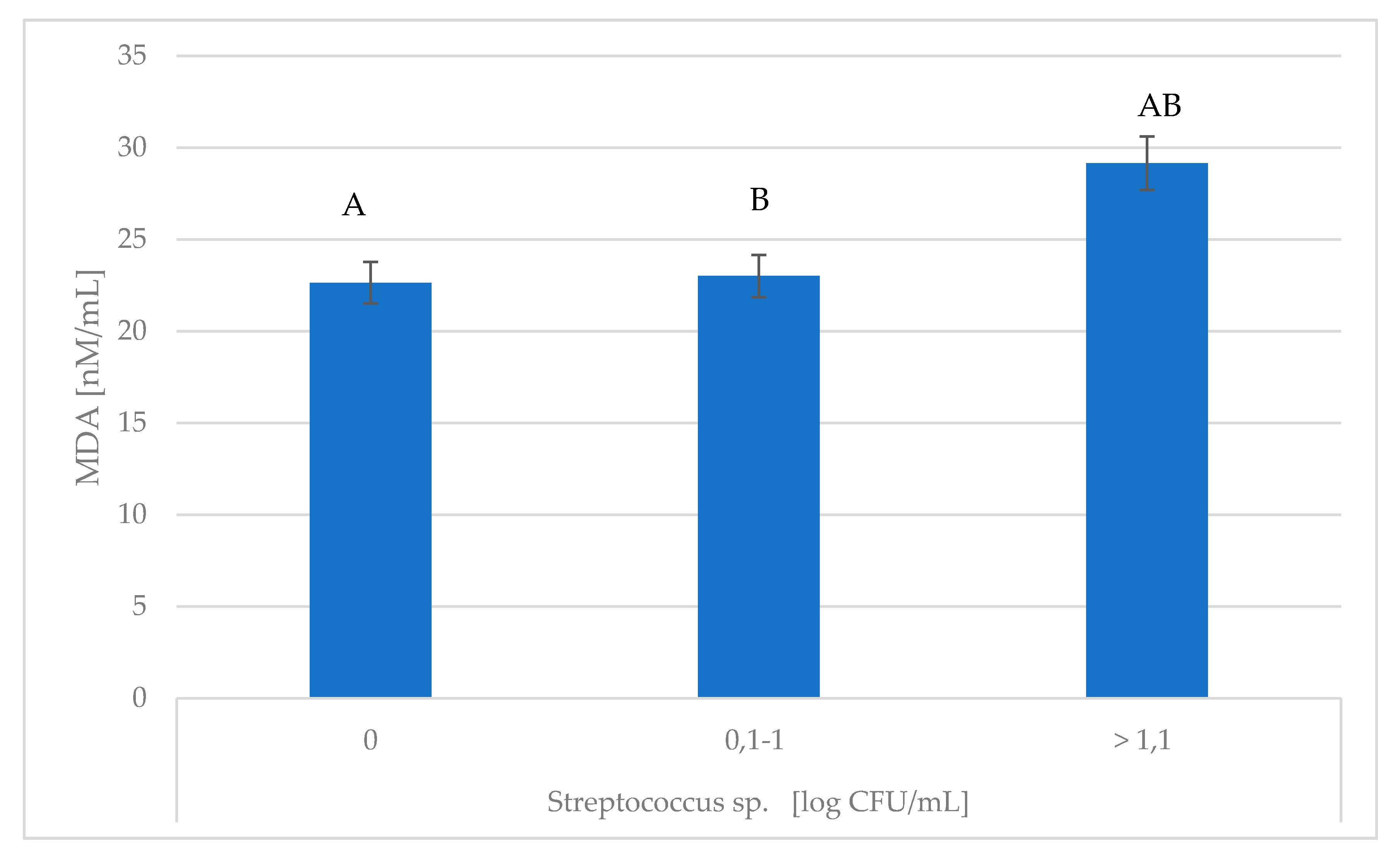
Mastitis is one of the most common diseases of high-yielding dairy cows, and over 90% of cases are caused by Streptococcus spp., Enterobacteriaceae, or Staphylococcus spp. Certain groups of proteins are very significant in terms of the cow’s antioxidant, bacteriostatic, and germicidal properties: lysozyme (Lz), lactoferrin (Lf), and β-lactoglobulin (BLG). This study aimed to determine the influence of Staphylococcus spp., Streptococcus spp., and Enterobacteriaceae on the secretion of bioactive whey proteins and oxidative stress markers. From the herd, 60 multiparous cows with diagnosed mastitis were selected. Samples were taken individually from each quarter and pooled, which gave 60 samples. Enterobacteriaceae did not affect the BLG synthesis, whereas lysozyme and lactoferrin responded to a high concentration of these bacterial strains. In the case of Staphylococcus spp. infection, the BLG level increased. These strains did not affect the levels of di-malonic aldehyde (MDA), lactoferrin, and lysozyme. In contrast, they were significantly influenced by Streptococcus spp. In summary, the levels of whey proteins and oxidative stress markers changed depending on the bacterial strain inducing inflammation. Lysozyme and lactoferrin may be markers of udder inflammation caused by Enterobacteriaceae and Streptococcus spp., whereas β-lactoglobulin may prove useful in diagnosing Staphylococcus spp. induced mastitis.
Keywords:
milk; cows; Staphylococcus spp.; Streptococcus spp.; Enterobacteriaceae; whey protein