Biomonitoring of Heavy Metal Pollution Using Acanthocephalans Parasite in Ecosystem: An Updated Overview
by
 , , , , ,
El-Sayed E. Mehana
1 ,
,
Asmaa F. Khafaga
1,* ,
,
Samar S. Elblehi
1,
Mohamed E. Abd El-Hack
2 ,
,
Mohammed A.E. Naiel
3,* ,
,
May Bin-Jumah
4,
Sarah I. Othman
4 and
Ahmed A. Allam
5 1
Department of Pathology, Faculty of Veterinary Medicine, Alexandria University, Edfina 22758, Egypt
2
Poultry Department, Faculty of Agriculture and Zagazig University, Zagazig 44511, Egypt
3
Department of Animal Production, Faculty of Agriculture, Zagazig University, Zagazig 44511, Egypt
4
Department of Biology, College of Science, Princess Nourah bint Abdulrahman University, Riyadh 11474, Saudi Arabia
5
Department of Zoology, Faculty of Science, Beni-suef University, Beni-suef 65211, Egypt
*
Authors to whom correspondence should be addressed.
Animals 2020, 10(5), 811; https://doi.org/10.3390/ani10050811
Submission received: 7 March 2020
/
Revised: 4 April 2020
/
Accepted: 6 April 2020
/
Published: 7 May 2020
(This article belongs to the Section Aquatic Animals)
Simple Summary
The environment receives different sources of pollutants, resulting from human industrial pollution as well as activities. This review updates and focuses the light on the relation between the toxicity of heavy metals resulting from bioaccumulation in fish and the parasite bioindication role and its infestation.
Abstract
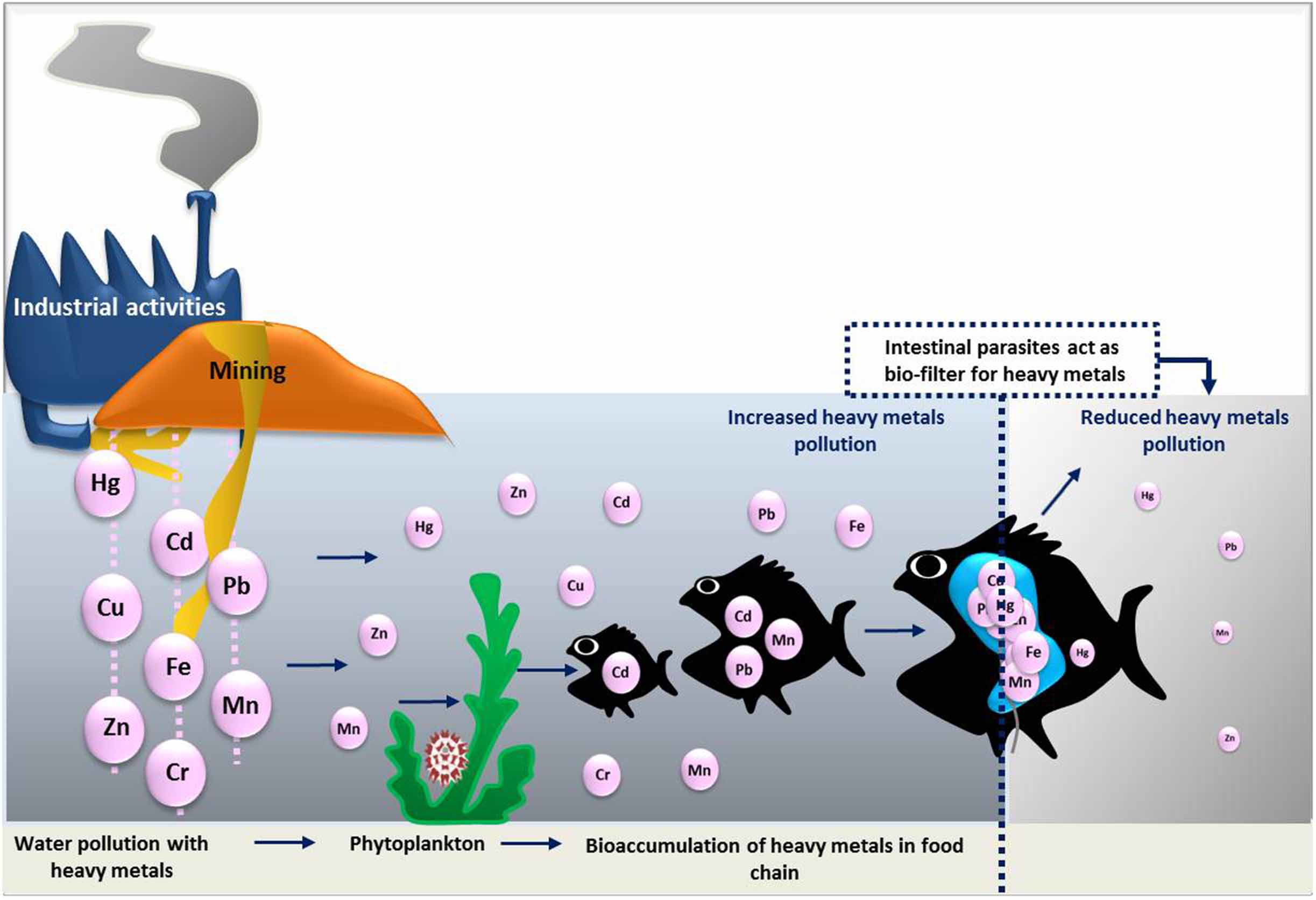
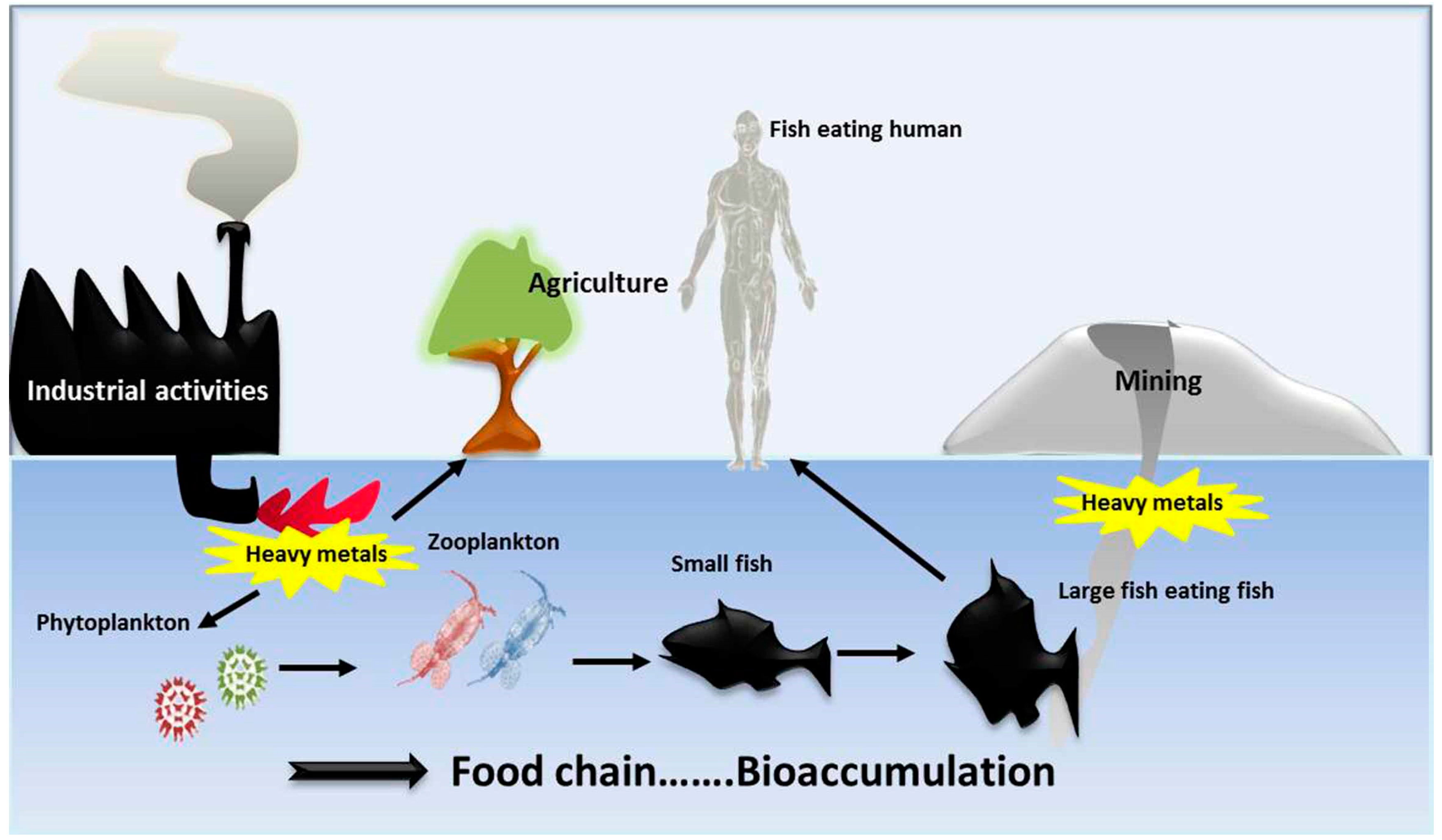
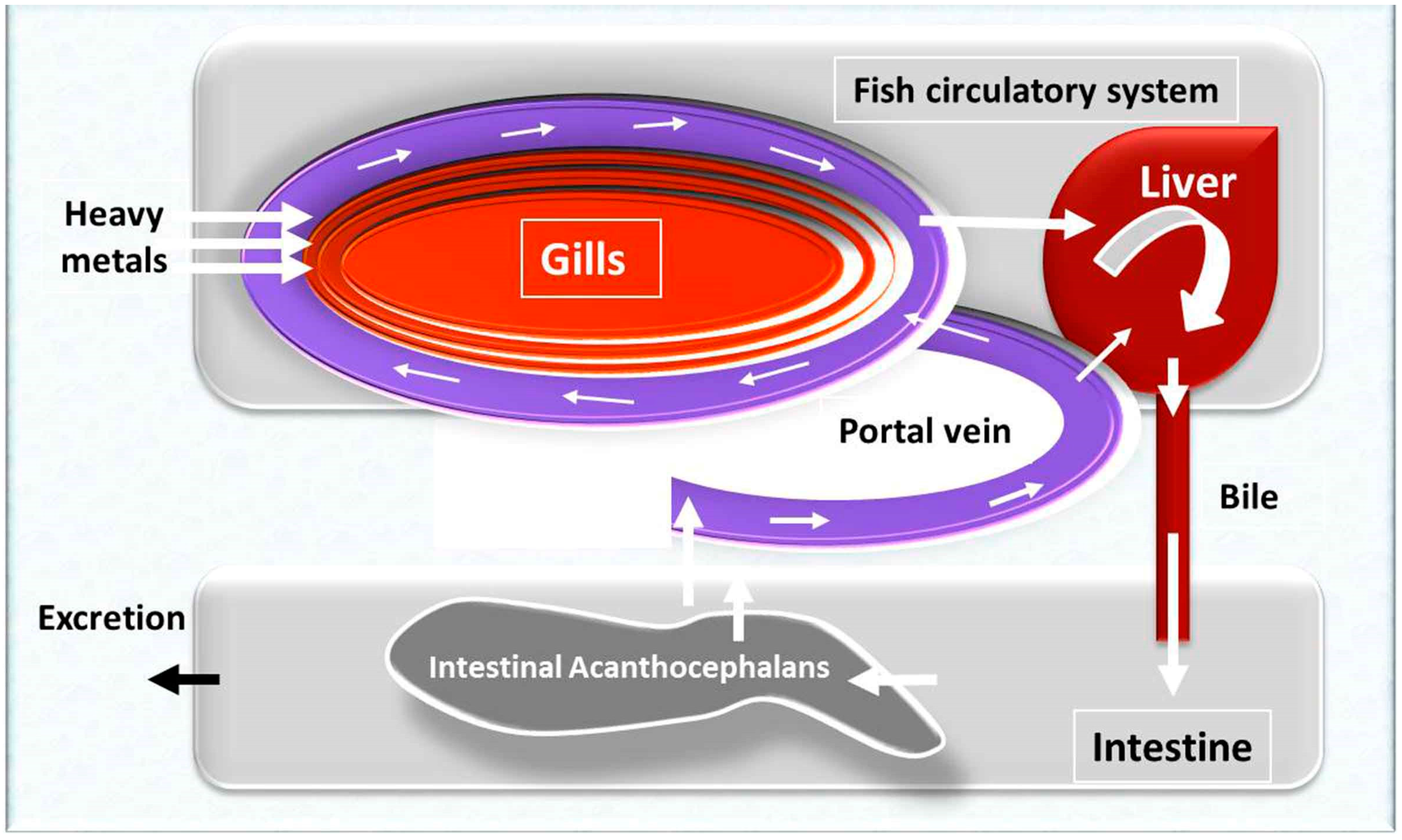
As a result of the global industrial revolution, contamination of the ecosystem by heavy metals has given rise to one of the most important ecological and organismic problems, particularly human, early developmental stages of fish and animal life. The bioaccumulation of heavy metals in fish tissues can be influenced by several factors, including metal concentration, exposure time, method of metal ingestion and environmental conditions, such as water temperature. Upon recognizing the danger of contamination from heavy metals and the effects on the ecosystem that support life on earth, new ways of monitoring and controlling this pollution, besides the practical ones, had to be found. Diverse living organisms, such as insects, fish, planktons, livestock and bacteria can be used as bioindicators for monitoring the health of the natural ecosystem of the environment. Parasites have attracted intense interest from parasitic ecologists, because of the variety of different ways in which they respond to human activity contamination as prospective indices of environmental quality. Previous studies showed that fish intestinal helminths might consider potential bioindicators for heavy metal contamination in aquatic creatures. In particular, cestodes and acanthocephalans have an increased capacity to accumulate heavy metals, where, for example, metal concentrations in acanthocephalans were several thousand times higher than in host tissues. On the other hand, parasitic infestation in fish could induce significant damage to the physiologic and biochemical processes inside the fish body. It may encourage serious impairment to the physiologic and general health status of fish. Thus, this review aimed to highlight the role of heavy metal accumulation, fish histopathological signs and parasitic infestation in monitoring the ecosystem pollutions and their relationship with each other.
Keywords:
heavy metals; fish; parasite; bioaccumulation