Seroprevalence of Leptospira in Racehorses and Broodmares in New Zealand
by
 , , ,
, , ,
Charlotte F. Bolwell
1,* ,
,
Chris W. Rogers
1,2,
Jackie Benschop
1,
Julie M. Collins-Emerson
1,
Brooke Adams
1,
Katherine R. Scarfe
3 and
Erica K. Gee
1 1
School of Veterinary Science, Massey University, Palmerston North 4442, New Zealand
2
School of Agriculture and Environment, Massey University, Palmerston North 4442, New Zealand
3
IDEXX Laboratories (NZ) ULC, School of Veterinary Science Complex, Massey University, Palmerston North 4442, New Zealand
*
Author to whom correspondence should be addressed.
Animals 2020, 10(11), 1952; https://doi.org/10.3390/ani10111952
Submission received: 4 September 2020
/
Revised: 9 October 2020
/
Accepted: 20 October 2020
/
Published: 23 October 2020
(This article belongs to the Section Equids)
Simple Summary
Leptospirosis is a zoonotic disease, caused by bacteria (Leptospira), that is frequently reported to occur in horses worldwide. Leptospirosis has been associated with abortions in mares, can cause a painful eye condition, and it poses a zoonotic risk to equine workers and veterinarians. Epidemiological data on the occurrence of leptospirosis or the frequency of exposure to the bacteria in horses in New Zealand are lacking. A survey was conducted to determine the seroprevalence of Leptospira in Thoroughbred racing and breeding horses in New Zealand. Horse owners were surveyed, and a blood sample was taken from the horses enrolled in the study to determine the frequency of five different types of Leptospira found to cause leptospirosis in humans and livestock in New Zealand. The results showed that a quarter of the horses sampled had previously been exposed to Leptospira. Several management factors, such as grazing horses alternately with cattle or sheep, increasing horse age, and breeding horses, were linked to exposure to Leptospira in this group of horses. Given the level of exposure found, horses may play a role in the epidemiology of leptospirosis in New Zealand.
Abstract
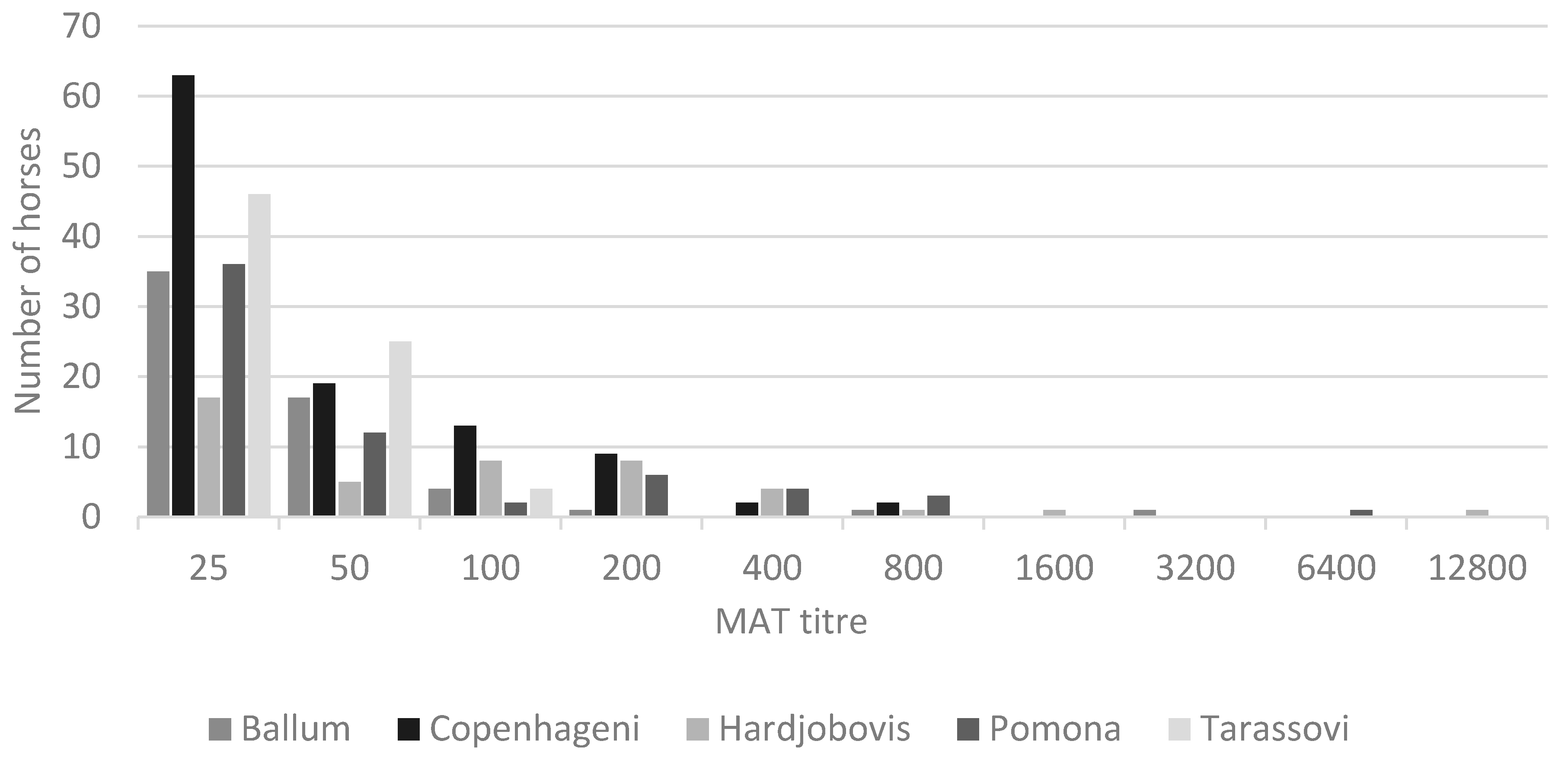
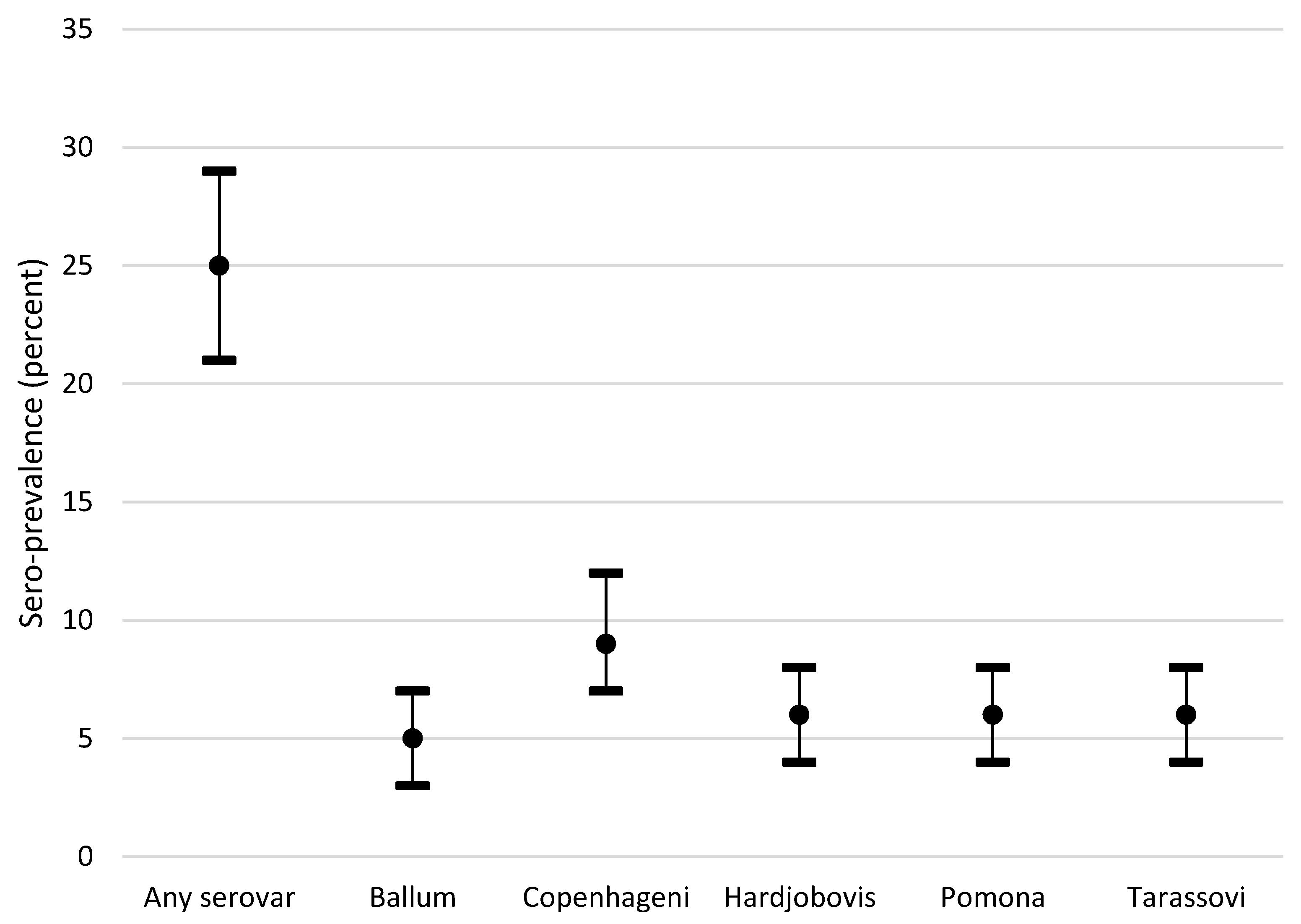
A cross-sectional survey was conducted to determine the seroprevalence of Leptospira in a cohort of horses and to evaluate potential risk factors for Leptospira seropositivity in horses in New Zealand. The convenience sample included 499 Thoroughbred racing and breeding horses from 25 commercial properties in North Island, New Zealand. A questionnaire was used to collect demographic data on horses and property-level information on grazing and management practices, pest (rodent) management, access to natural waterways, other livestock on the property, and possible contact with wildlife. The microscopic agglutination test was used to test sera for serovars Ballum, Copenhageni, Hardjo (bovis), Pomona, and Tarassovi. Logistic regression was used to investigate the risk factors for Leptospira seropositivity to at least one serovar and for each serovar individually. A total of 124 (25%, 95% confidence interval (CI) 21–29%) horses had positive titres to any one of the five serovars. The seroprevalence of Ballum, Copenhageni, Hardjo (bovis), Pomona, and Tarassovi was 5% (95% CI 3–7%), 9% (95% CI 7–12%), 6% (95% CI 4–8%), 6% (95% CI 4–8%), and 6% (95% CI 4–8%), respectively. Broodmares, compared to racehorses and alternately grazing horses with sheep, increased the odds of exposure to any one serovar, whilst grazing the same time as sheep and alternately grazing horses with cattle increased the odds of exposure to Ballum and Hardjo (bovis), respectively. Historical exposure to Leptospira in racing and breeding horses was identified, and risk factors were consistent with pasture-based exposure.
Keywords:
horse; leptospirosis; risk factors; epidemiology