Article

Biogeographic Role of the Kuroshio Current Intrusion in the Microzooplankton Community in the Boundary Zone of the Northern South China Sea

1
Key Laboratory of the Ministry of Education for Coastal and Wetland Ecosystem, College of the Environment and Ecology, Xiamen University, Xiamen 361102, China
2
Fujian Province Key Laboratory for Coastal Ecology and Environmental Studies, College of the Environment and Ecology, Xiamen University, Xiamen 361102, China
*
Author to whom correspondence should be addressed.
These authors contributed equally.
Microorganisms 2021, 9(5), 1104; https://doi.org/10.3390/microorganisms9051104

Submission received: 4 April 2021 / Revised: 14 May 2021 / Accepted: 17 May 2021 / Published: 20 May 2021
(This article belongs to the Special Issue Microbial Communities in Marine Environments)

Abstract

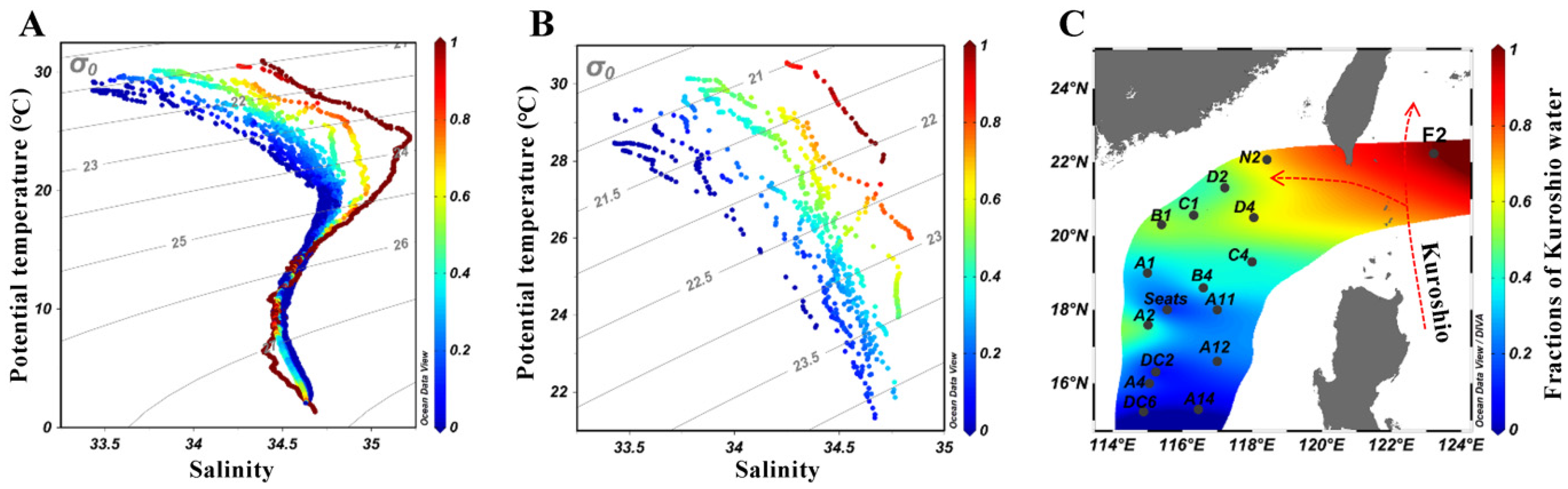
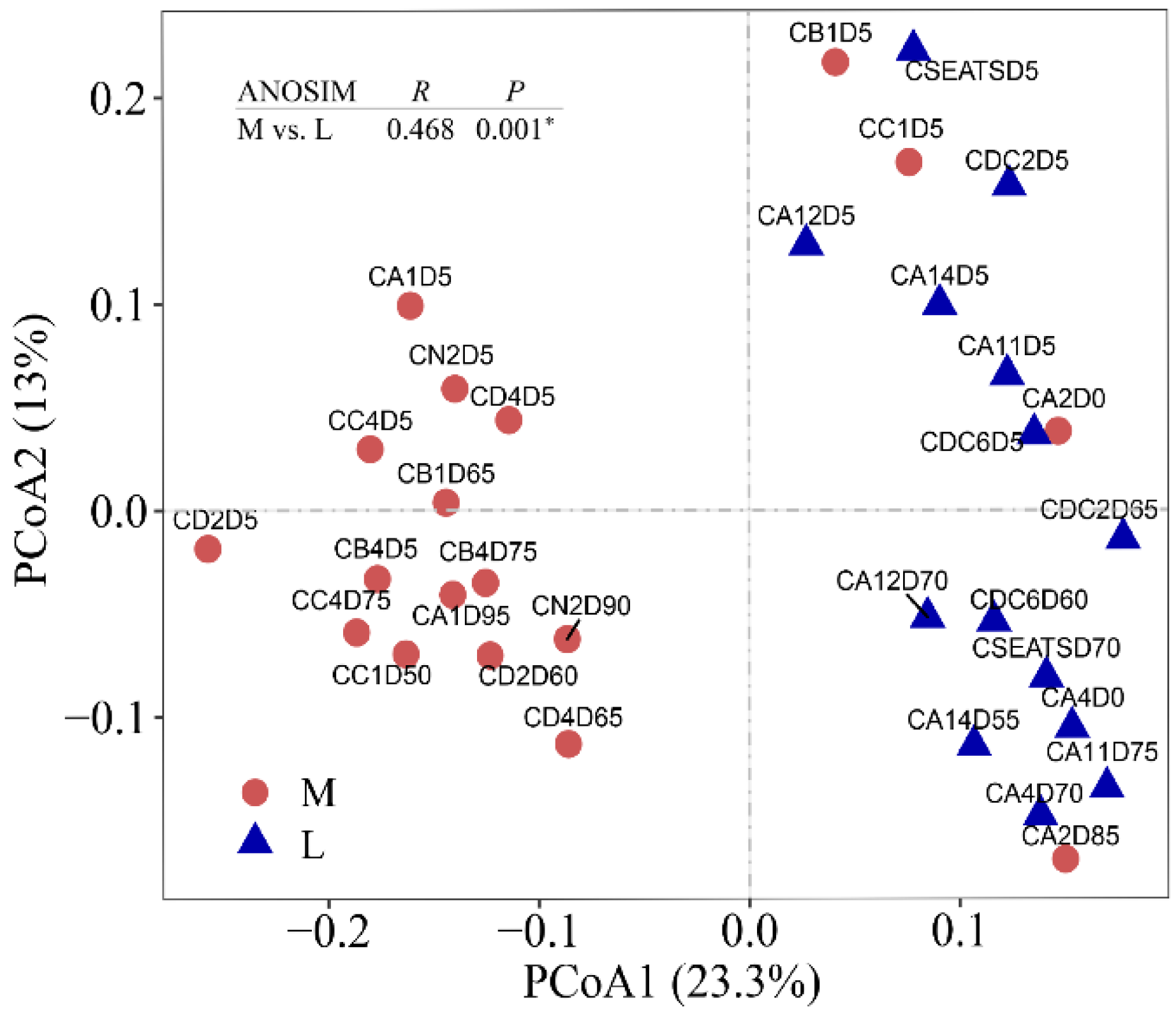
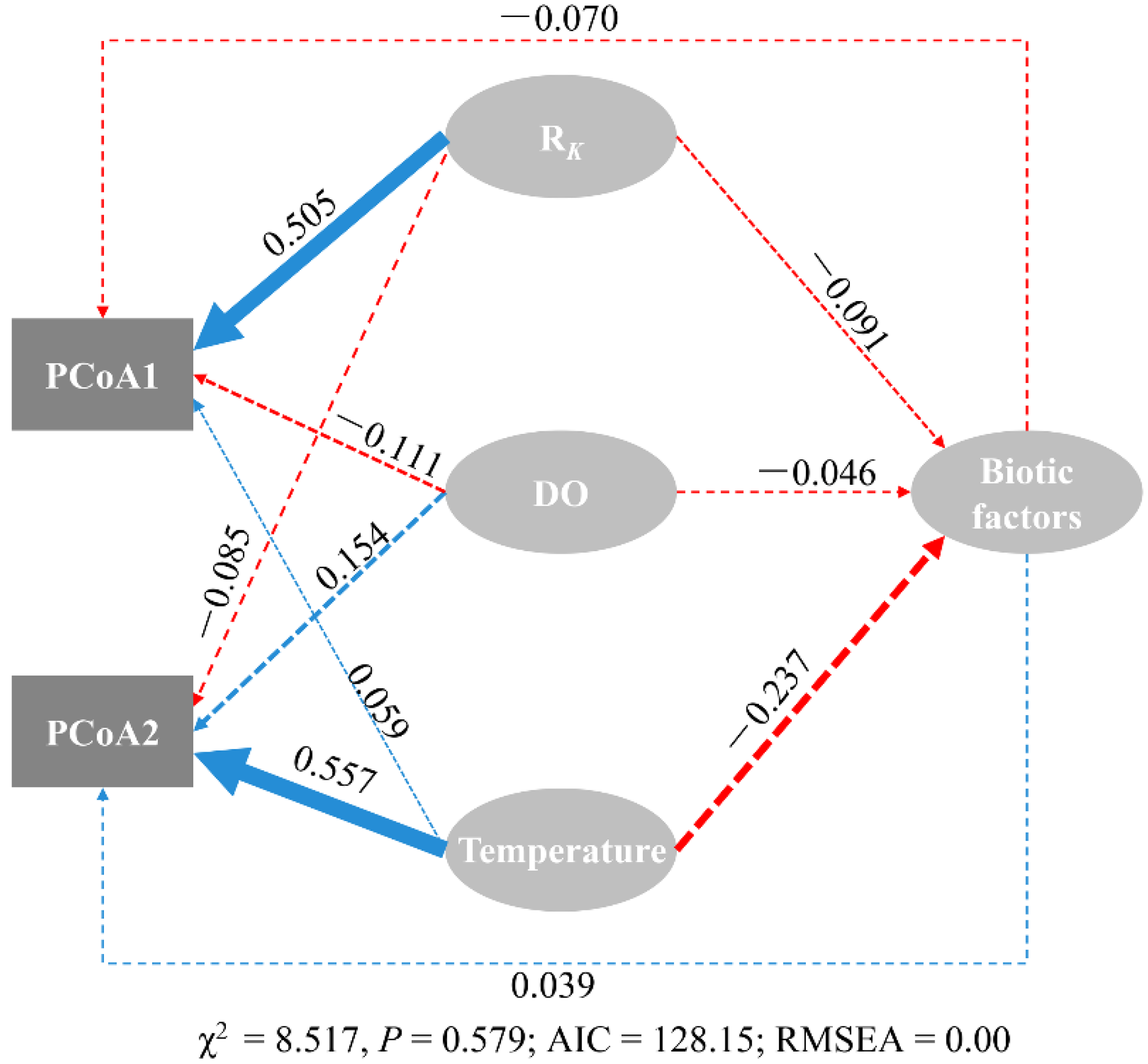
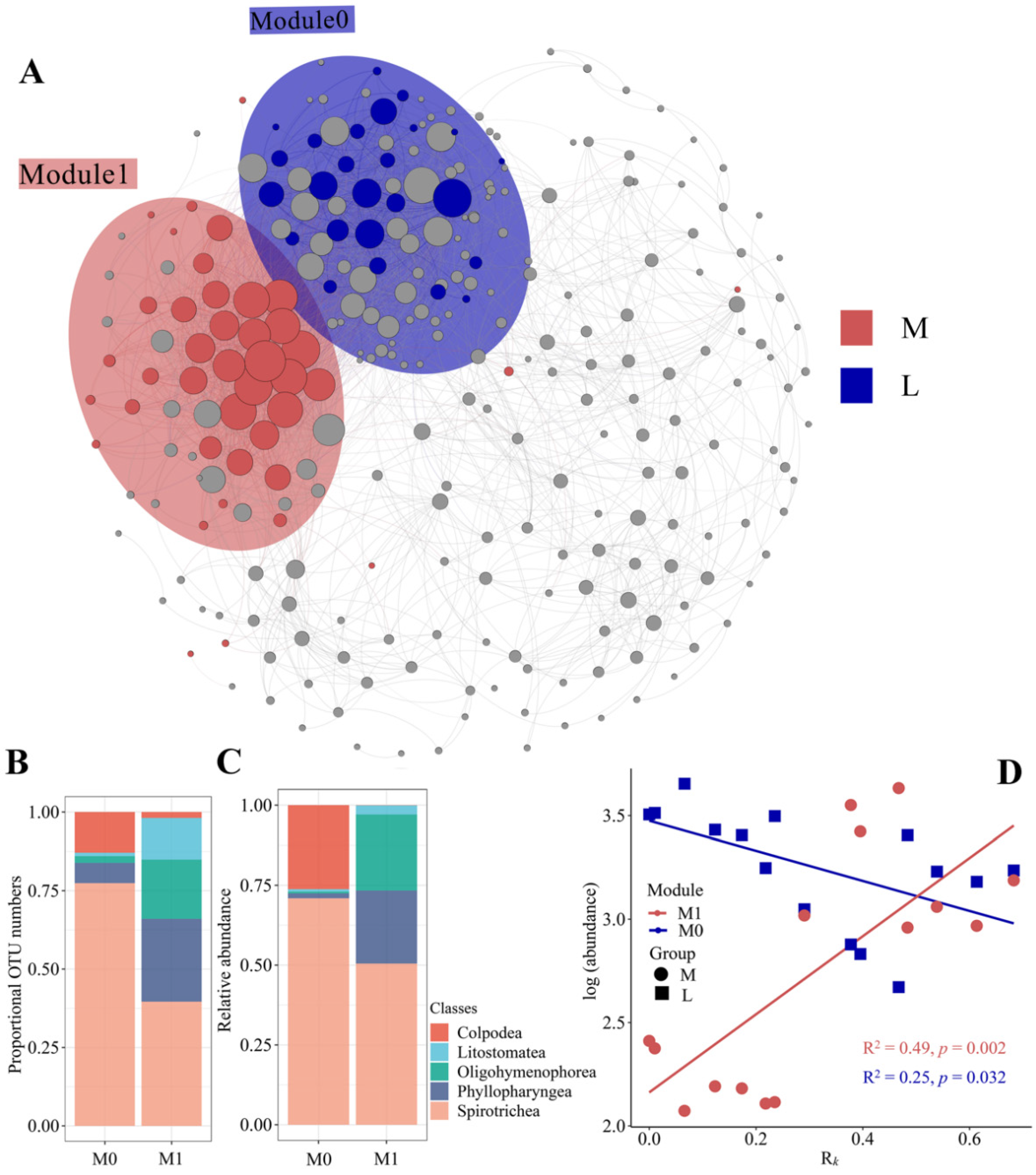
Kuroshio Current intrusion (KCI) has significant impacts on the oceanographic conditions and ecological processes of the Pacific-Asian marginal seas. Little is known to which extent and how, specifically, the microzooplankton community can be influenced through the intrusion. Here, we focused on ciliates that often dominated the microzooplankton community and investigated their communities using high-throughput sequencing of 18S rRNA gene transcripts in the northern South China Sea (NSCS), where the Kuroshio Current (KC) intrudes frequently. We first applied an isopycnal mixing model to assess the fractional contribution of the KC to the NSCS. The ciliate community presented a provincial distribution pattern corresponding to more and less Kuroshio-influenced stations. Structural equation modeling revealed a significant impact of the KCI on the community, while environmental variables had a marginal impact. KCI-sensitive OTUs were taxonomically diverse but mainly belonged to classes Spirotrichea and Phyllopharyngea, suggesting the existence of core ciliates responding to the KCI. KCI-sensitive OTUs were grouped into two network modules that showed contrasting abundance behavior with the KC fraction gradient, reflecting differential niches (i.e., winner and loser) in the ciliate community during the Kuroshio intrusion scenarios. Our study showed that the Kuroshio intrusion, rather than environmental control, was particularly detrimental to the oligotrophic microzooplankton community.
Keywords: ciliate; protist; oligotrophic ocean; Kuroshio Current intrusion; South China Sea ciliate; protist; oligotrophic ocean; Kuroshio Current intrusion; South China Sea