Functional and Pharmacological Analyses of the Role of Penicillium digitatum Proteases on Virulence




Abstract
1. Introduction
2. Materials and Methods
2.1. Fungal Strains and Growth Conditions
2.2. Generation and Verification of P. digitatum prtT Mutants
2.3. Characterization of the ΔprtT Knockout Mutants
2.4. Chemicals
2.5. Orange Fruit Infection Assays
2.6. Gene Expression Analysis
3. Results
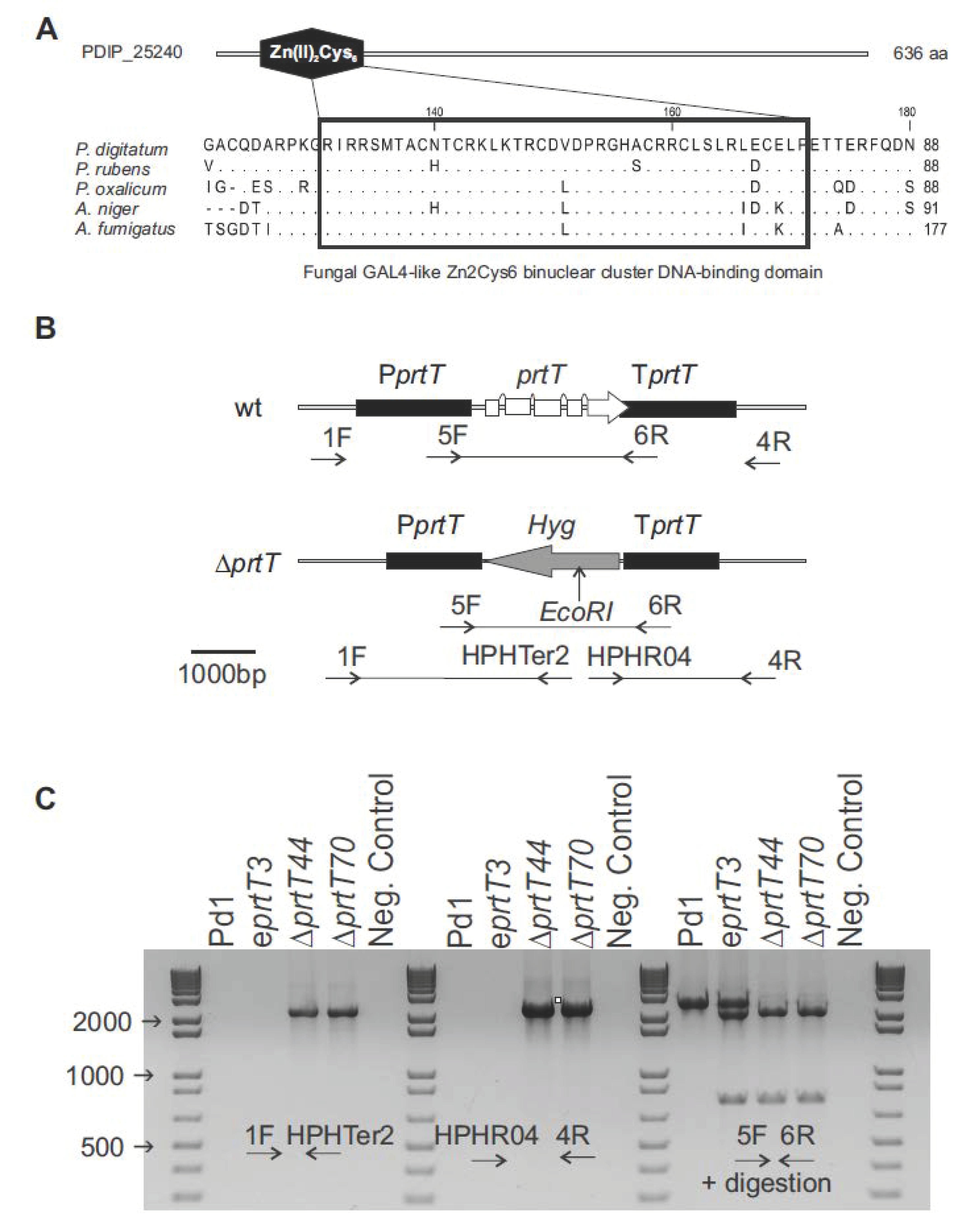
3.1. Identification of a prtT Ortholog in P. digitatum and Construction of Knockout Mutants
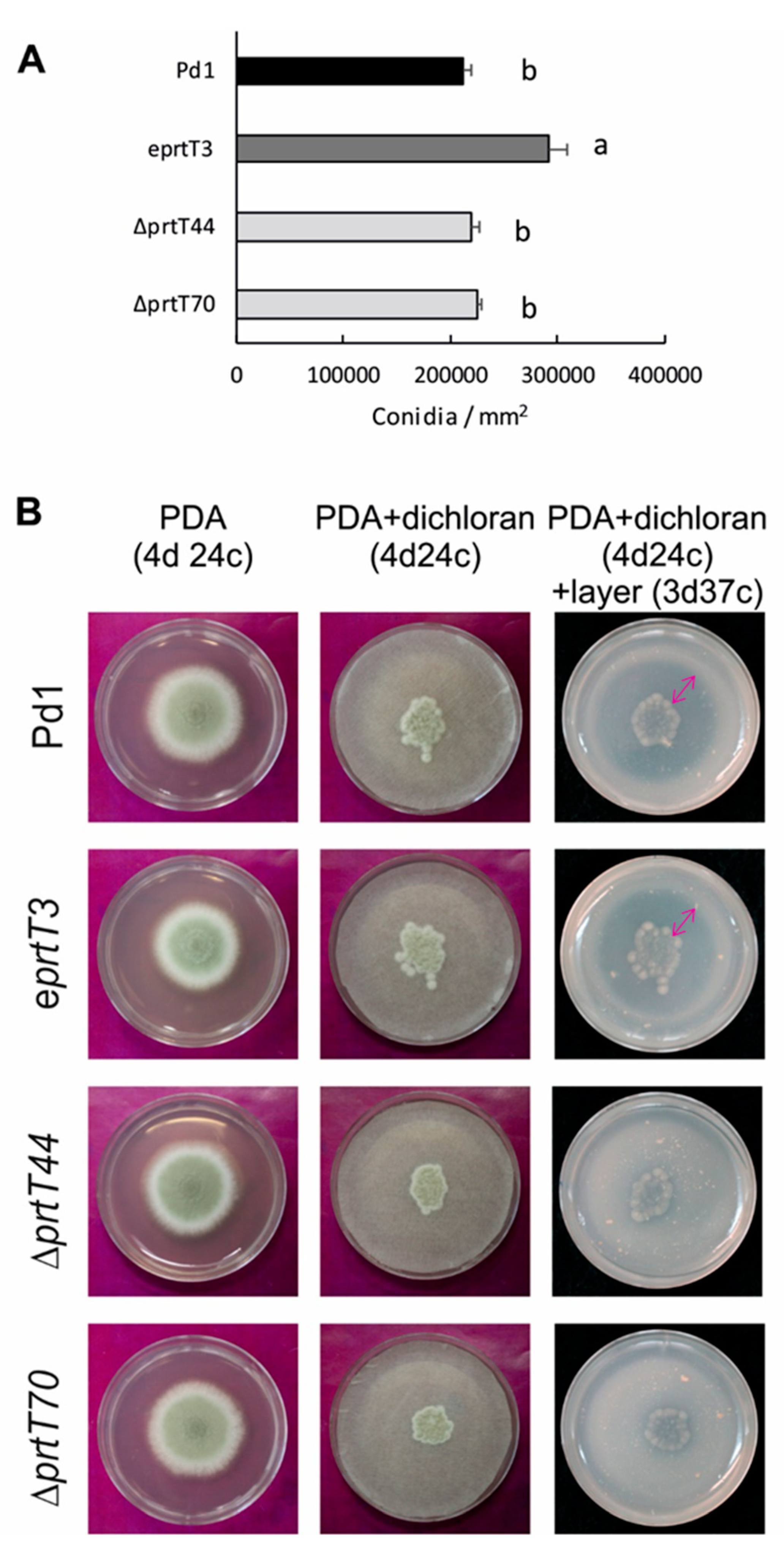
3.2. Characterization of P. digitatum ΔprtT Knockout Mutants
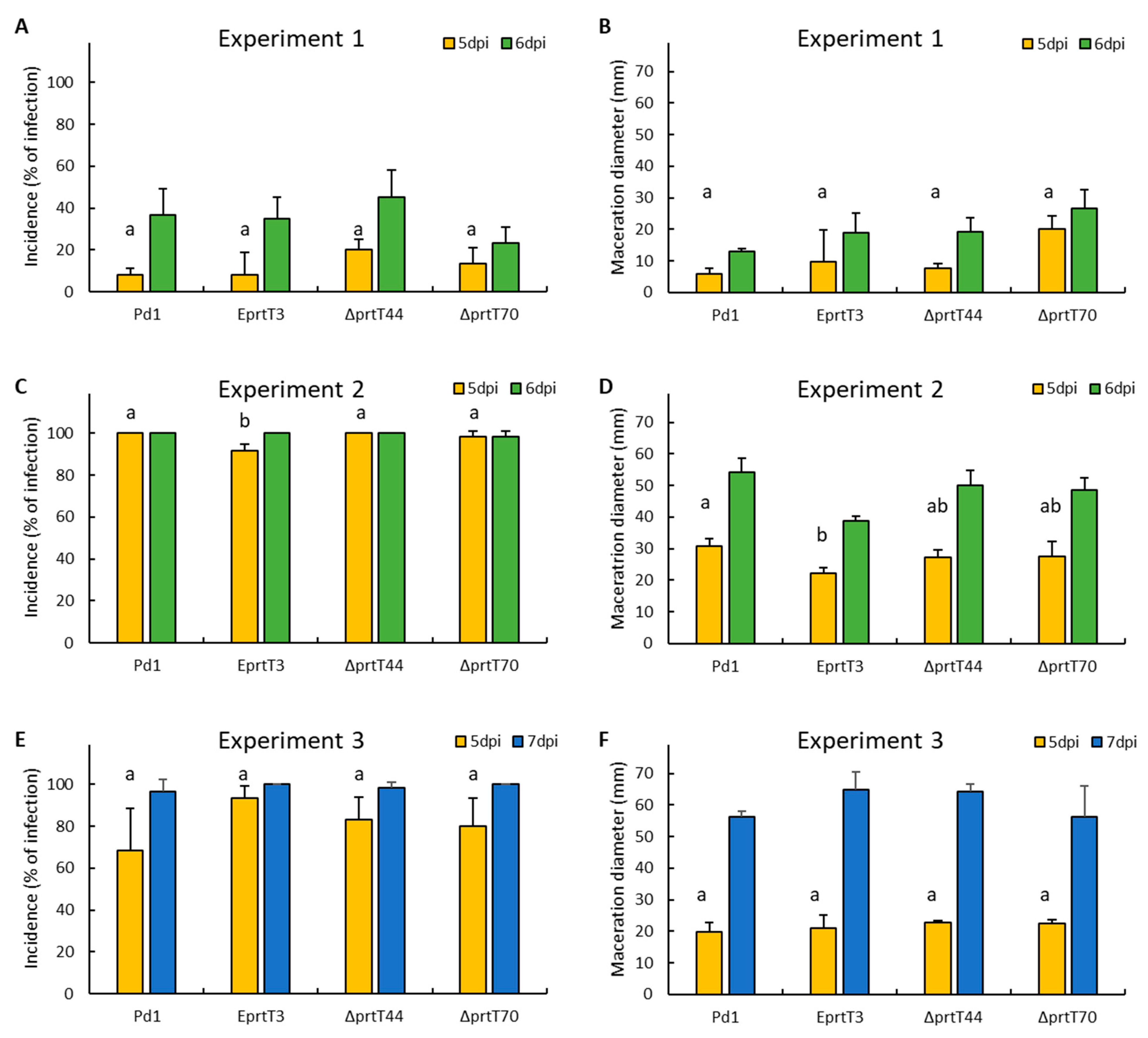
3.3. The P. digitatum ΔprtT Mutants Are Not Altered in Virulence
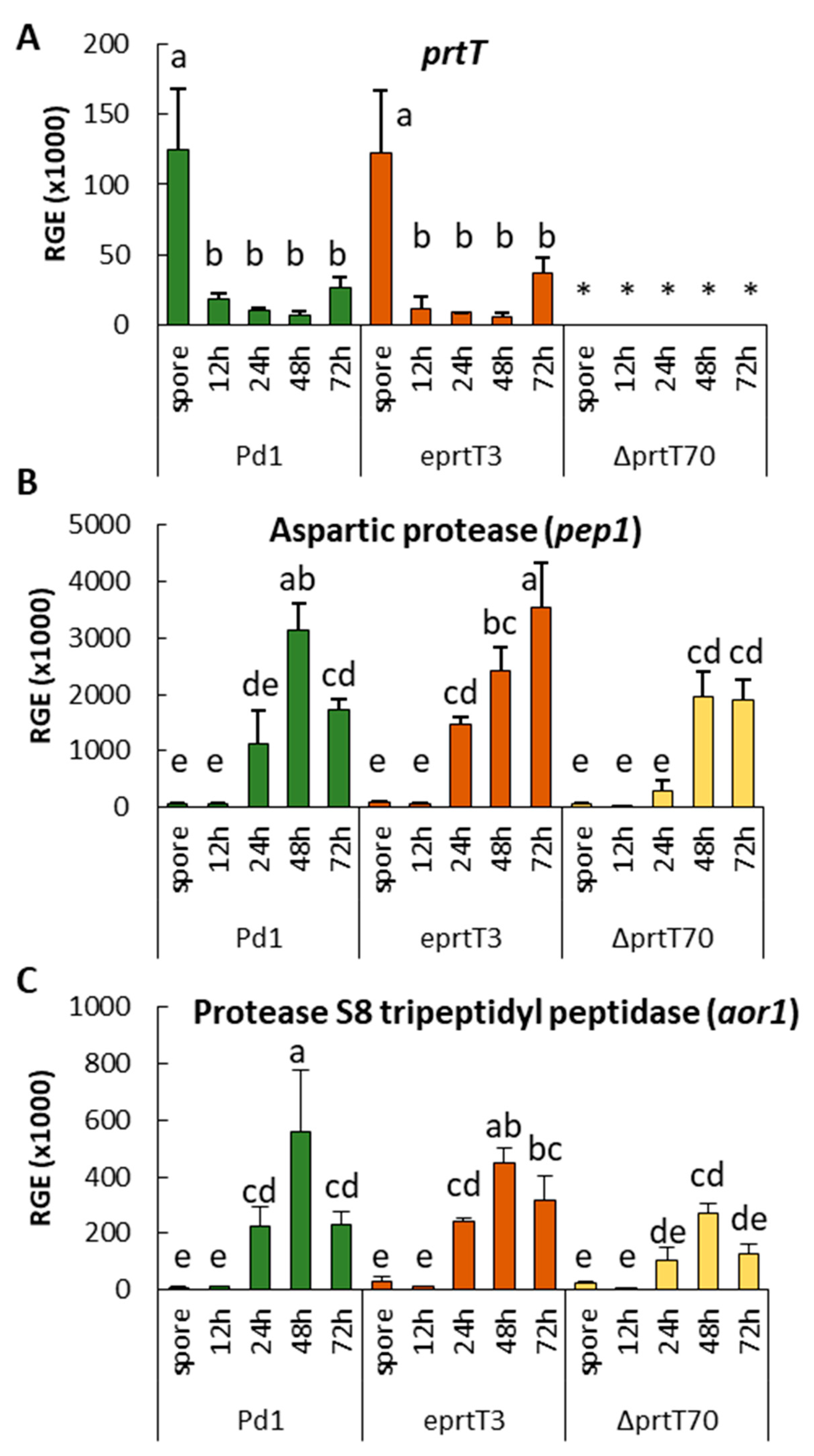
3.4. PrtT Has Only a Minor Effect on the Expression of the Two Major Proteases during Infection
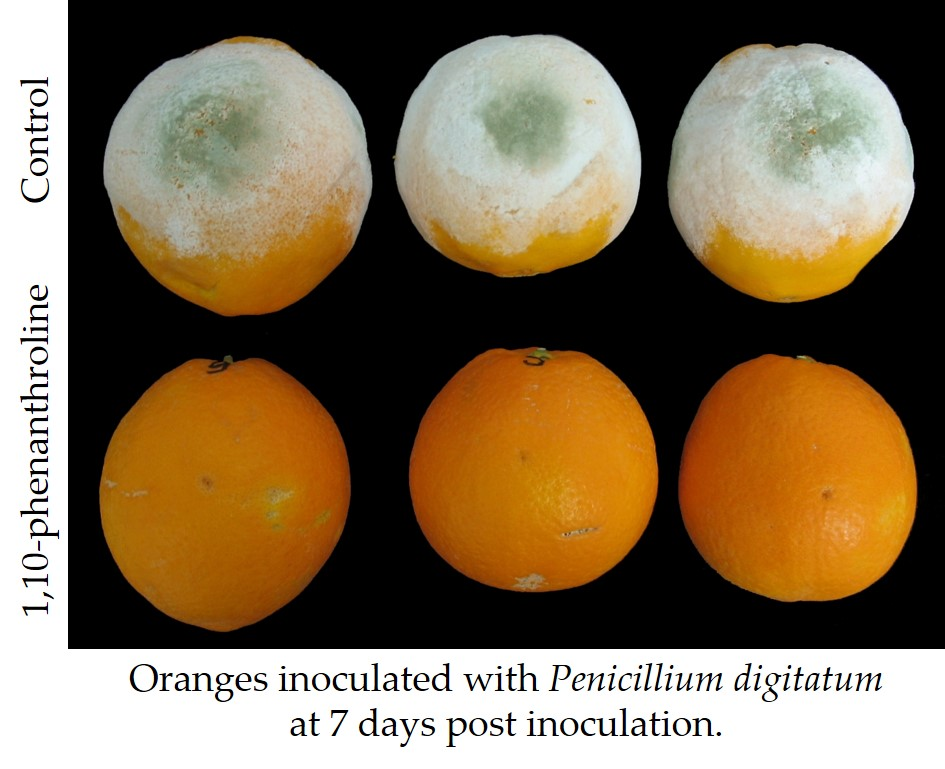
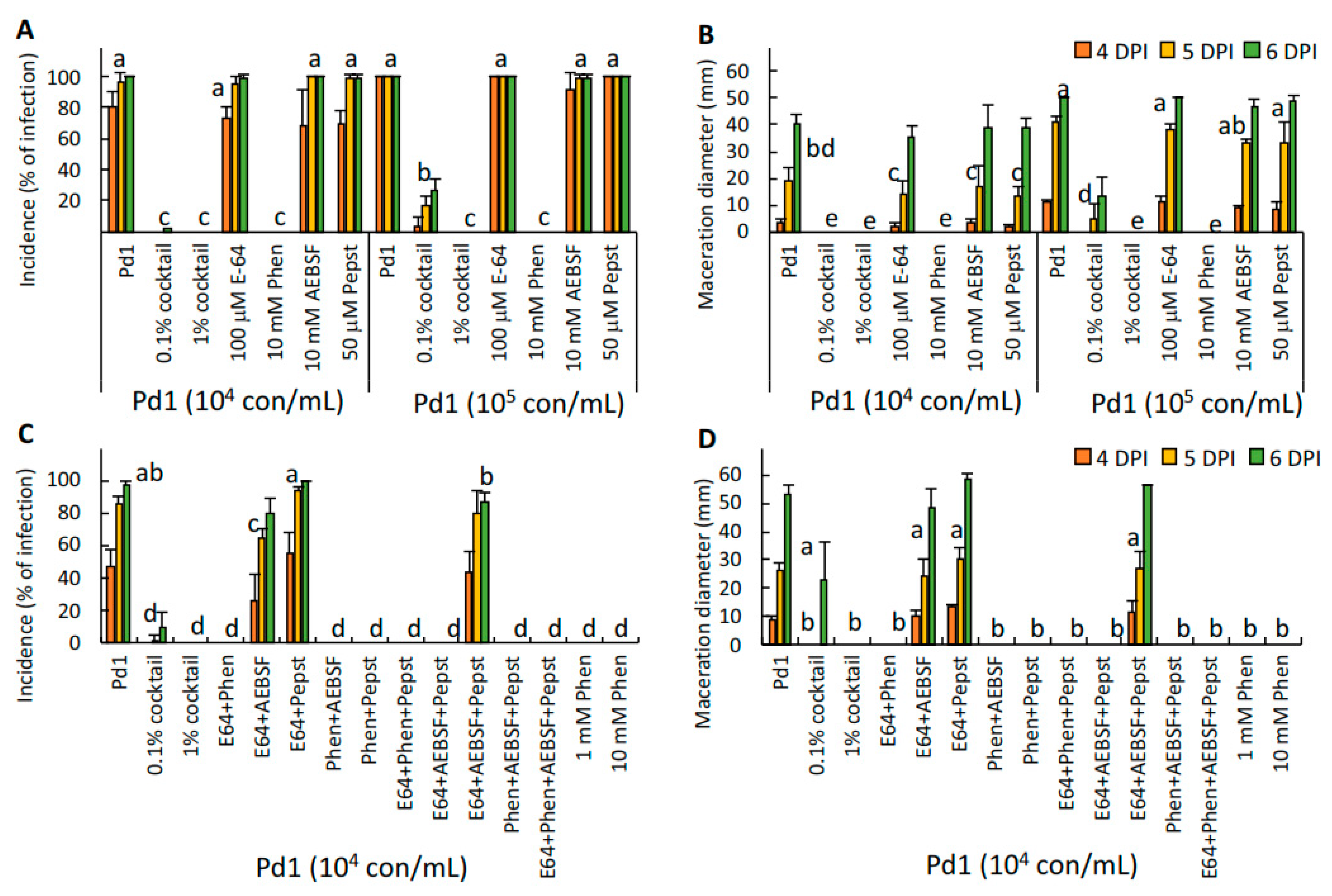
3.5. Application of Protease Inhibitors Reduced the Virulence of P. digitatum in Citrus Fruit
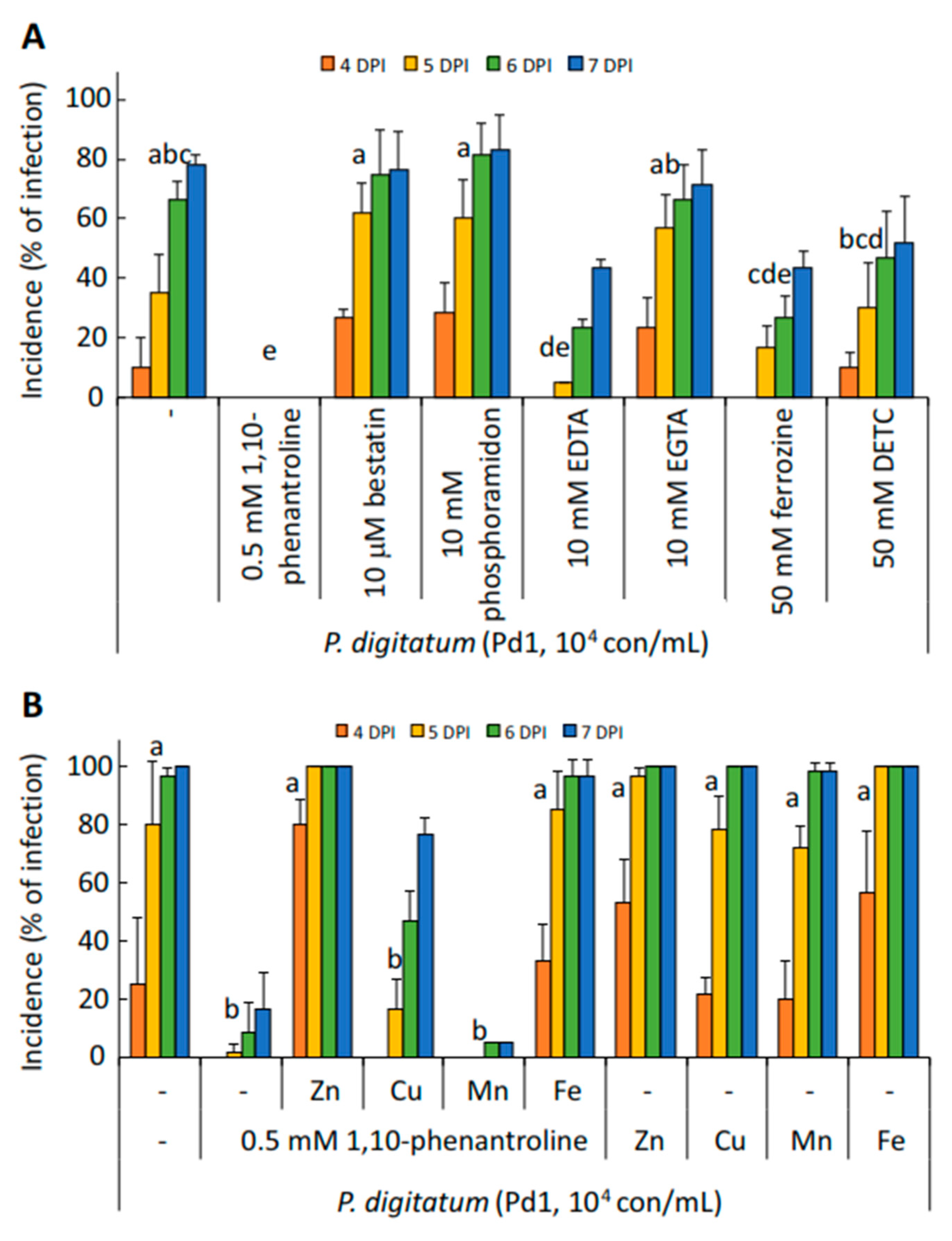
3.6. Application of Metalloproteinase Inhibitors and Chelators
4. Discussion
5. Conclusions
Author Contributions
Funding
Acknowledgments
Conflicts of Interest
References
- Souza, P.M.d.; Bittencourt, M.l.d.A.; Caprara, C.C.; Freitas, M.d.; Almeida, R.P.C.d.; Silveira, D.; Fonseca, Y.M.; Ferreira Filho, E.X.; Pessoa Junior, A.; Magalhães, P.O. A biotechnology perspective of fungal proteases. Braz. J. Microbiol. 2015, 46, 337–346. [Google Scholar] [CrossRef] [Scilit] [PubMed]
- Braaksma, M.; Smilde, A.K.; van der Werf, M.J.; Punt, P.J. The effect of environmental conditions on extracellular protease activity in controlled fermentations of Aspergillus niger. Microbiology 2009, 155, 3430–3439. [Google Scholar] [CrossRef] [Scilit] [PubMed]
- Rao, M.B.; Tanksale, A.M.; Ghatge, M.S.; Deshpande, V.V. Molecular and biotechnological aspects of microbial proteases. Microbiol. Mol. Biol. Rev. 1998, 62, 597–635. [Google Scholar] [PubMed]
- Engel, L.S.; Hill, J.M.; Caballero, A.R.; Green, L.C.; O’Callaghan, R.J. Protease IV, a unique extracellular protease and virulence factor from Pseudomonas aeruginosa. J. Biol. Chem. 1998, 273, 16792–16797. [Google Scholar] [CrossRef] [Scilit] [PubMed]
- Gropp, K.; Schild, L.; Schindler, S.; Hube, B.; Zipfel, P.F.; Skerka, C. The yeast Candida albicans evades human complement attack by secretion of aspartic proteases. Mol. Immunol. 2009, 47, 465–475. [Google Scholar] [CrossRef] [Scilit] [PubMed]
- Figaj, D.; Ambroziak, P.; Przepiora, T.; Skorko-Glonek, J. The role of proteases in the virulence of plant pathogenic bacteria. Int. J. Mol. Sci. 2019, 20, 672. [Google Scholar] [CrossRef] [Scilit] [PubMed]
- Jashni, M.K.; Mehrabi, R.; Collemare, J.; Mesarich, C.H.; De Wit, P.J. The battle in the apoplast: Further insights into the roles of proteases and their inhibitors in plant–pathogen interactions. Front. Plant Sci. 2015, 6, 584. [Google Scholar] [CrossRef] [Scilit]
- Billon-Grand, G.; Poussereau, N.; Fevre, M. The extracellular proteases secreted in vitro and in planta by the phytopathogenic fungus Sclerotinia sclerotiorum. J. Phytopathol. 2002, 150, 507–511. [Google Scholar] [CrossRef] [Scilit]
- Redman, R.S.; Rodriguez, R.J. Characterization and isolation of an extracellular serine protease from the tomato pathogen Colletotrichum coccodes, and it’s role in pathogenicity. Mycol. Res. 2002, 106, 1427–1434. [Google Scholar] [CrossRef] [Scilit]
- Jashni, M.K.; Dols, I.H.M.; Iida, Y.; Boeren, S.; Beenen, H.G.; Mehrabi, R.; Collemare, J.; de Wit, P.J.G.M. Synergistic action of a metalloprotease and a serine protease from Fusarium oxysporum f. sp. lycopersici cleaves chitin-binding tomato chitinases, reduces their antifungal activity, and enhances fungal virulence. Mol. Plant-Microbe Interact. 2015, 28, 996–1008. [Google Scholar]
- Sanz-Martín, J.M.; Pacheco-Arjona, J.R.; Bello-Rico, V.; Vargas, W.A.; Monod, M.; Díaz-Mínguez, J.M.; Thon, M.R.; Sukno, S.A. A highly conserved metalloprotease effector enhances virulence in the maize anthracnose fungus Colletotrichum graminicola. Mol. Plant Pathol. 2016, 17, 1048–1062. [Google Scholar] [CrossRef] [Scilit] [PubMed]
- ten Have, A.; Espino, J.J.; Dekkers, E.; Van Sluyter, S.C.; Brito, N.; Kay, J.; González, C.; van Kan, J.A. The Botrytis cinerea aspartic proteinase family. Fungal Genet. Biol. 2010, 47, 53–65. [Google Scholar] [CrossRef] [Scilit] [PubMed]
- Punt, P.J.; Schuren, F.H.J.; Lehmbeck, J.; Christensen, T.; Hjort, C.; van den Hondel, C.A.M.J.J. Characterization of the Aspergillus niger prtT, a unique regulator of extracellular protease encoding genes. Fungal Genet. Biol. 2008, 45, 1591–1599. [Google Scholar] [CrossRef] [Scilit] [PubMed]
- Bergmann, A.; Hartmann, T.; Cairns, T.; Bignell, E.M.; Krappmann, S. A regulator of Aspergillus fumigatus extracellular proteolytic activity is dispensable for virulence. Infect. Immun. 2009, 77, 4041–4050. [Google Scholar] [CrossRef] [Scilit] [PubMed]
- Hagag, S.; Kubitschek-Barreira, P.; Neves, G.W.P.; Amar, D.; Nierman, W.; Shalit, I.; Shamir, R.; Lopes-Bezerra, L.; Osherov, N. Transcriptional and proteomic analysis of the Aspergillus fumigatus ΔprtT protease-deficient mutant. PLoS One 2012, 7, e33604. [Google Scholar] [CrossRef] [Scilit] [PubMed]
- Sharon, H.; Hagag, S.; Osherov, N. Transcription factor PrtT controls expression of multiple secreted proteases in the human pathogenic mold Aspergillus fumigatus. Infect. Immun. 2009, 77, 4051–4060. [Google Scholar] [CrossRef] [Scilit] [PubMed]
- Chen, L.; Zou, G.; Zhang, L.; de Vries, R.P.; Yan, X.; Zhang, J.; Liu, R.; Wang, C.; Qu, Y.; Zhou, Z. The distinctive regulatory roles of PrtT in the cell metabolism of Penicillium oxalicum. Fungal Genet. Biol. 2014, 63, 42–54. [Google Scholar] [CrossRef] [Scilit]
- Marcet-Houben, M.; Ballester, A.-R.; De la Fuente, B.; Harries, E.; Marcos, J.F.; González-Candelas, L.; Gabaldón, T. Genome sequence of the necrotrophic fungus Penicillium digitatum, the main postharvest pathogen of citrus. BMC Genomics 2012, 13, 646. [Google Scholar] [CrossRef] [Scilit]
- Li, B.; Zong, Y.; Du, Z.; Chen, Y.; Zhang, Z.; Qin, G.; Zhao, W.; Tian, S. Genomic characterization reveals insights into patulin biosynthesis and pathogenicity in Penicillium species. Mol. Plant-Microbe Interact. 2015, 28, 635–647. [Google Scholar] [CrossRef] [Scilit]
- Rawlings, N.D.; Barrett, A.J.; Thomas, P.D.; Huang, X.; Bateman, A.; Finn, R.D. The MEROPS database of proteolytic enzymes, their substrates and inhibitors in 2017 and a comparison with peptidases in the PANTHER database. Nucleic Acids Res. 2018, 46, D624–D632. [Google Scholar] [CrossRef] [Scilit]
- López-Pérez, M.; Ballester, A.-R.; González-Candelas, L. Identification and functional analysis of Penicillium digitatum genes putatively involved in virulence towards citrus fruit. Mol. Plant Pathol. 2015, 16, 262–275. [Google Scholar] [CrossRef] [Scilit] [PubMed]
- Frandsen, R.J.; Andersson, J.A.; Kristensen, M.B.; Giese, H. Efficient four fragment cloning for the construction of vectors for targeted gene replacement in filamentous fungi. BMC Mol. Biol. 2008, 9, 70. [Google Scholar] [CrossRef] [Scilit] [PubMed]
- Crespo-Sempere, A.; Selma-Lázaro, C.; Martínez-Culebras, P.; González-Candelas, L. Characterization and disruption of the cipC gene in the ochratoxigenic fungus Aspergillus carbonarius. Food Res. Int. 2013, 54, 697–705. [Google Scholar] [CrossRef] [Scilit]
- Solomon, P.S.; Ipcho, S.V.S.; Hane, J.K.; Tan, K.-C.; Oliver, R.P. A quantitative PCR approach to determine gene copy number. Fungal Genet. Rep. 2008, 55, 5–8. [Google Scholar] [CrossRef] [Scilit]
- Ruijter, J.M.; Ramakers, C.; Hoogaars, W.M.H.; Karlen, Y.; Bakker, O.; van den Hoff, M.J.B.; Moorman, A.F.M. Amplification efficiency: Linking baseline and bias in the analysis of quantitative PCR data. Nucleic Acids Res. 2009, 37, e45. [Google Scholar] [CrossRef] [Scilit] [PubMed]
- Pfaffl, M.W. A new mathematical model for relative quantification in real-time RT–PCR. Nucleic Acids Res. 2001, 29, e45. [Google Scholar] [CrossRef] [Scilit] [PubMed]
- Ward, M. Chymosin production in Aspergillus. In Molecular Industrial Mycology: Systems and Applications in Filamentous Fungi; Leong, Ed.; Taylor & Francis Group: Abingdon, UK, 1991; pp. 83–105. [Google Scholar]
- Ballester, A.R.; Lafuente, M.T.; González-Candelas, L. Spatial study of antioxidant enzymes, peroxidase and phenylalanine ammonia-lyase in the citrus fruit-Penicillium digitatum interaction. Postharvest Biol. Technol. 2006, 39, 115–124. [Google Scholar] [CrossRef] [Scilit]
- Bustin, S.A.; Benes, V.; Garson, J.A.; Hellemans, J.; Huggett, J.; Kubista, M.; Mueller, R.; Nolan, T.; Pfaffl, M.W.; Shipley, G.L.; et al. The MIQE guidelines: Minimum information for publication of quantitative real-time PCR experiments. Clin. Chem. 2009, 55, 611–622. [Google Scholar] [CrossRef] [Scilit]
- Untergasser, A.; Nijveen, H.; Rao, X.; Bisseling, T.; Geurts, R.; Leunissen, J.A. Primer3Plus, an enhanced web interface to Primer3. Nucleic Acids Res. 2007, 35, W71–W74. [Google Scholar] [CrossRef] [Scilit]
- Shemesh, E.; Hanf, B.; Hagag, S.; Attias, S.; Shadkchan, Y.; Fichtman, B.; Harel, A.; Krüger, T.; Brakhage, A.A.; Kniemeyer, O.; et al. Phenotypic and proteomic analysis of the Aspergillus fumigatus ΔprtT, ΔxprG and ΔxprG/ΔprtT protease-deficient mutants. Front. Microbiol. 2017, 8, 2490. [Google Scholar] [CrossRef] [Scilit]
- van Loon, L.C.; Rep, M.; Pieterse, C.M.J. Significance of inducible defense-related proteins in infected plants. Annu. Rev. Phytopathol. 2006, 44, 135–162. [Google Scholar] [CrossRef] [Scilit] [PubMed]
- Lorito, M.; Broadway, R.; Hayes, C.; Woo, S.; Noviello, C.; Williams, D.; Harman, G. Proteinase inhibitors from plants as a novel class of fungicides. Mol. Plant-Microbe Interact. 1994, 7, 525–527. [Google Scholar] [CrossRef] [Scilit]
- Joshi, B.N.; Sainani, M.N.; Bastawade, K.B.; Gupta, V.S.; Ranjekar, P.K. Cysteine protease inhibitor from pearl millet: A new class of antifungal protein. Biochem. Biophys. Res. Commun. 1998, 246, 382–387. [Google Scholar] [CrossRef] [Scilit] [PubMed]
- Kim, J.-Y.; Park, S.-C.; Hwang, I.; Cheong, H.; Nah, J.-W.; Hahm, K.-S.; Park, Y. Protease inhibitors from plants with antimicrobial activity. Int. J. Mol. Sci. 2009, 10, 2860–2872. [Google Scholar] [CrossRef] [Scilit] [PubMed]
- Martinez, M.; Abraham, Z.; Gambardella, M.; Echaide, M.; Carbonero, P.; Diaz, I. The strawberry gene Cyf1 encodes a phytocystatin with antifungal properties. J. Exp. Bot. 2005, 56, 1821–1829. [Google Scholar] [CrossRef] [Scilit]
- Pernas, M.; López-Solanilla, E.; Sánchez-Monge, R.; Salcedo, G.; Rodríguez-Palenzuela, P. Antifungal activity of a plant cystatin. Mol. Plant-Microbe Interact. 1999, 12, 624–627. [Google Scholar] [CrossRef] [Scilit]
- Raman, N.; Mahalakshmi, R.; Mitu, L. Bio-sensitive activities of coordination compounds containing 1, 10-phenanthroline as co-ligand: Synthesis, structural elucidation and DNA binding properties of metal (II) complexes. Spectrochim. Acta A Mol. Biomol. Spectrosc. 2014, 131, 355–364. [Google Scholar] [CrossRef] [Scilit]
- Viganor, L.; Howe, O.; McCarron, P.; McCann, M.; Devereux, M. The antibacterial activity of metal complexes containing 1, 10-phenanthroline: Potential as alternative therapeutics in the era of antibiotic resistance. Curr. Top. Med. Chem. 2017, 17, 1280–1302. [Google Scholar] [CrossRef] [Scilit]
- Hood, M.I.; Skaar, E.P. Nutritional immunity: Transition metals at the pathogen–host interface. Nat. Rev. Microbiol. 2012, 10, 525. [Google Scholar] [CrossRef] [Scilit]
- Malavia, D.; Crawford, A.; Wilson, D. Chapter Three—Nutritional Immunity and Fungal Pathogenesis: The Struggle for Micronutrients at the Host–Pathogen Interface. In Adv. Microb. Physiol.; Robert, K.P., Ed.; Academic Press: Cambridge, MA, USA, 2017; Volume 70, pp. 85–103. [Google Scholar]
- Potrykus, J.; Ballou, E.R.; Childers, D.S.; Brown, A.J.P. Conflicting Interests in the Pathogen–Host Tug of War: Fungal Micronutrient Scavenging Versus Mammalian Nutritional Immunity. PLoS Pathog. 2014, 10, e1003910. [Google Scholar] [CrossRef] [Scilit]
- Spadaro, D.; Droby, S. Development of biocontrol products for postharvest diseases of fruit: The importance of elucidating the mechanisms of action of yeast antagonists. Trends Food Sci. Technol. 2016, 47, 39–49. [Google Scholar] [CrossRef] [Scilit]
- Albelda-Berenguer, M.; Monachon, M.; Joseph, E. Siderophores: From natural roles to potential applications. In Adv. Appl. Microbiol.; Gadd, G.M., Sariaslani, S., Eds.; Academic Press: Cambridge, MA, USA, 2019; Volume 106, pp. 193–225. [Google Scholar]
- Barad, S.; Horowitz, S.B.; Moskovitch, O.; Lichter, A.; Sherman, A.; Prusky, D. A Penicillium expansum glucose oxidase–encoding gene, GOX2, is essential for gluconic acid production and acidification during colonization of deciduous fruit. Mol. Plant-Microbe Interact. 2012, 25, 779–788. [Google Scholar] [CrossRef] [Scilit] [PubMed]
- Quilis, J.; Meynard, D.; Vila, L.; Avilés, F.X.; Guiderdoni, E.; San Segundo, B. A potato carboxypeptidase inhibitor gene provides pathogen resistance in transgenic rice. Plant Biotechnol. J. 2007, 5, 537–553. [Google Scholar] [CrossRef] [Scilit] [PubMed]

| Primer Name | Sequence (5’→3’) |
|---|---|
| Knockout mutant construction | |
| O1 | GGTCTTAAUTCAACTTGCGTGCTATGATTGAAGGCCT |
| O2 | GGCATTAAUTGAGCGAGGACTTTTAGCCAATTGCGA |
| A3 | GGACTTAAUTAATTGTCTCGAGCAGATGATGCCTGGG |
| A4 | GGGTTTAAUGGTACACTCAGACAGCCGTGGAAGCAAA |
| Knockout mutant analysis | |
| RF1 | AAATTTTGTGCTCACCGCCTGGAC |
| RF2 | TCTCCTTGCATGCACCATTCCTTG |
| RF5 | GTTTGCAGGGCCATAGAC |
| RF6 | ACGCCAGGGTTTTCCCAGTC |
| HPHPRO4 | GCACCAAGCAGCAGATGATA |
| 1F | TATGAGGGGTTGTGGCTTTC |
| HPHTER2 | GCTCCGTAACACCCAATAC |
| 4R | CAAACTCGCAAGAGCCCTAC |
| 5F | TTTGAATCGTGCCACTCACC |
| 6R | ATCGGCATAGCTCCACCAGT |
| Determination of T-DNA copy number | |
| 7F | GCGTTGCATGATTGGTGATG |
| 8R | AGCACAACACAACACCCAAG |
| PdACTFor2 | TGTCACCAACTGGGACGATA |
| PdACTRev2 | GAGCTTCGGTCAAGAGGATG |
| Gene expression analysis | |
| prtT-F | GATCGTCGCAGAAATCCAAC |
| prtT-R | TTCCAGCGTTCCAGATCTTC |
| pep1-F | TGGCTATGTCTTCCCTTGCT |
| pep1-R | TGACGGAAGCGTAGTTGATG |
| aor1-F | CTCTGGGCAGCCATTGTATT |
| aor1-R | TGGTGACTCAAGTGCTCCAT |
| Strain | Genotype | Cq prtT | Cq Actin | ΔCq Target | ΔCq Actin | Copy Number |
|---|---|---|---|---|---|---|
| Pd1 | wild type | 23.9 ± 0.0 | 22.1 ± 0.1 | 0.0 | 0.0 | – |
| eprtT3 | ectopic | 23.6 ± 0.0 | 24.9 ± 0.2 | 0.3 | −2.8 | 6.7 |
| ΔprtT44 | knockout | 23.8 ± 0.1 | 22.2 ± 0.1 | 0.1 | −0.1 | 1.1 |
| ΔprtT70 | knockout | 24.5 ± 0.1 | 22.7 ± 0.2 | −0.6 | 0.0 | 0.7 |
© 2019 by the authors. Licensee MDPI, Basel, Switzerland. This article is an open access article distributed under the terms and conditions of the Creative Commons Attribution (CC BY) license (http://creativecommons.org/licenses/by/4.0/).
Share and Cite
Ballester, A.-R.; López-Pérez, M.; de la Fuente, B.; González-Candelas, L. Functional and Pharmacological Analyses of the Role of Penicillium digitatum Proteases on Virulence. Microorganisms 2019, 7, 198. https://doi.org/10.3390/microorganisms7070198
Ballester A-R, López-Pérez M, de la Fuente B, González-Candelas L. Functional and Pharmacological Analyses of the Role of Penicillium digitatum Proteases on Virulence. Microorganisms. 2019; 7(7):198. https://doi.org/10.3390/microorganisms7070198
Chicago/Turabian StyleBallester, Ana-Rosa, Mario López-Pérez, Beatriz de la Fuente, and Luis González-Candelas. 2019. "Functional and Pharmacological Analyses of the Role of Penicillium digitatum Proteases on Virulence" Microorganisms 7, no. 7: 198. https://doi.org/10.3390/microorganisms7070198
APA StyleBallester, A.-R., López-Pérez, M., de la Fuente, B., & González-Candelas, L. (2019). Functional and Pharmacological Analyses of the Role of Penicillium digitatum Proteases on Virulence. Microorganisms, 7(7), 198. https://doi.org/10.3390/microorganisms7070198