Article

Expression Analysis of Selected miRNAs in COVID-19 Patients


by
Gökçe Kader Arslan
1,* and
Mehmet Özdemir
2
1
Medical Microbiology Department, Patnos State Hospital, 04500 Ağrı, Türkiye
2
Division of Medical Virology, Medical Microbiology Department, Faculty of Medicine, Necmettin Erbakan University, 42080 Konya, Türkiye
*
Author to whom correspondence should be addressed.
Microorganisms 2026, 14(9), 2064; https://doi.org/10.3390/microorganisms14092064

Submission received: 22 August 2026 / Revised: 14 September 2026 / Accepted: 14 September 2026 / Published: 16 September 2026
(This article belongs to the Section Virology)

Abstract

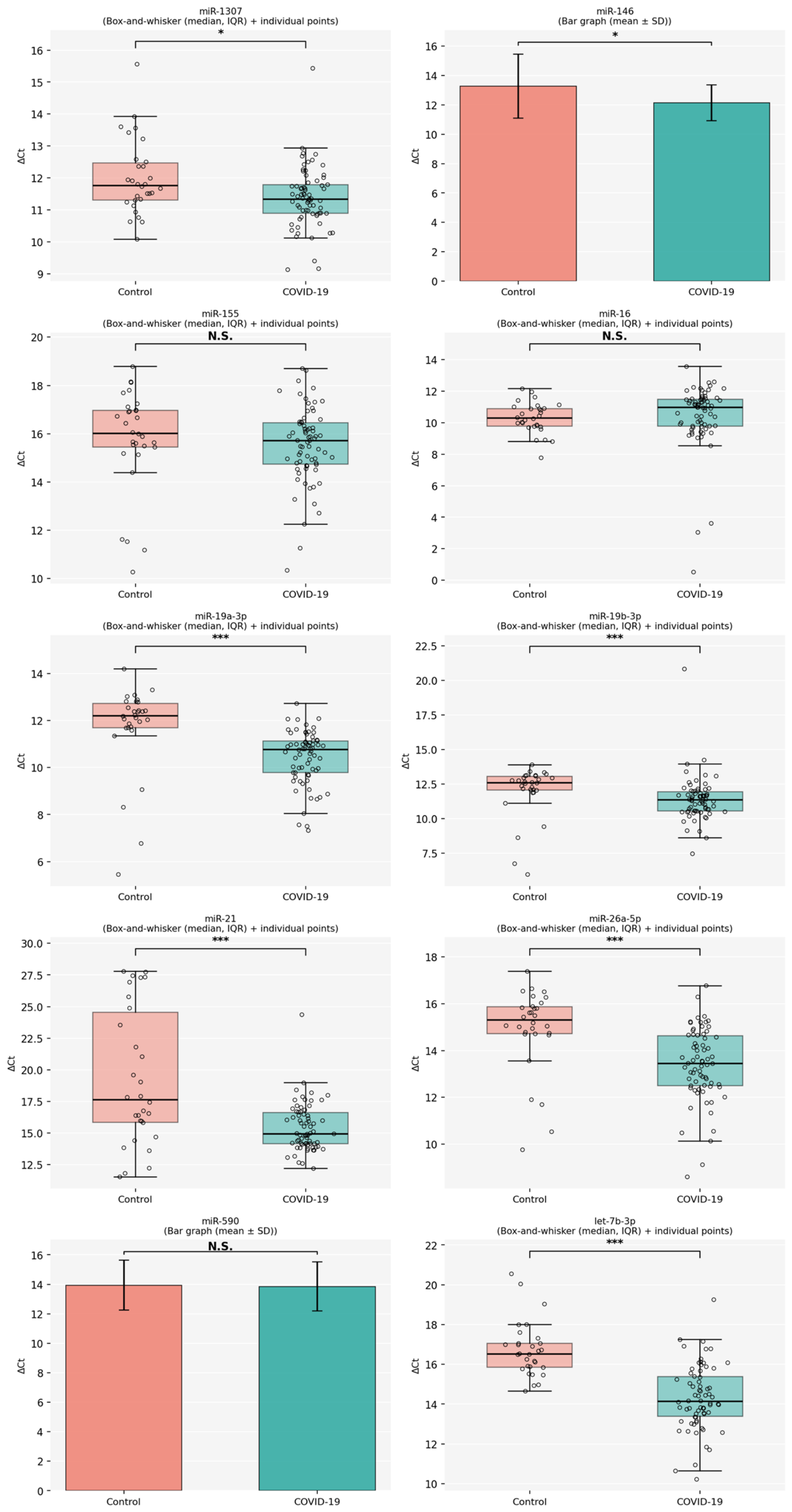
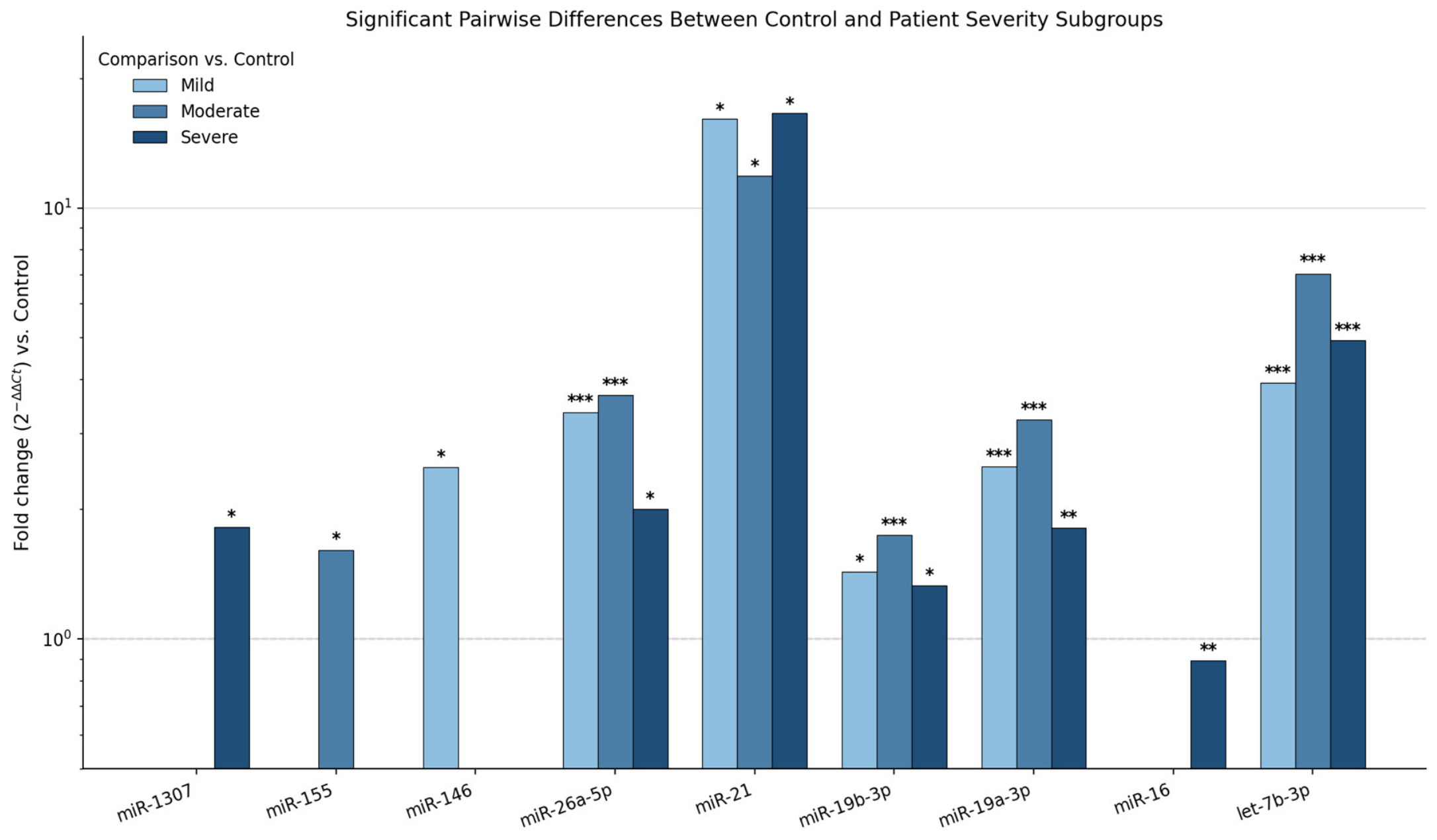
Modulations in microRNA (miRNA) expression can contribute to disease pathogenesis and biological processes by regulating target proteins. We aimed to compare serum miRNA levels (miR-19a-3p, miR-19b-3p, miR-21, miR-26a-5p, miR-146a, let-7b-3p, miR-155, miR-16, miR-590, miR-1307-3p) between COVID-19 patients and healthy controls to investigate their clinical significance and contribution to disease pathogenesis. Blood samples were obtained from 70 patients diagnosed with COVID-19 and from 30 healthy individuals as a control group for comparison. The patients were stratified into three categories based on disease severity: mild, moderate, and severe. miRNA expression levels were quantified via real-time PCR, with relative quantification performed using the Livak ΔΔCT method by calculating the 2(−ΔΔCT) fold change values. In patients with COVID-19, the expression levels of miR-1307-3p, miR-146, miR-26a-5p, miR-21, miR-19b-3p, and let-7b-3p demonstrated statistically significant differences (p < 0.05). A non-significant downward trend of miR-16 was observed, with miRNA expression profiles exhibiting variability across the different patient groups. Considering host–virus interactions, we posit that miRNAs hold significant potential both as novel therapeutic targets and as pivotal regulators in deciphering the intricate pathogenesis of COVID-19. Comprehensive elucidation of disease pathogenesis requires the synergistic integration of in vivo and in vitro experimental approaches in conjunction with rigorous clinical investigations.
Keywords: COVID-19; miR-1307-3p; miR-26a-5p; miR-21; let-7b-3p COVID-19; miR-1307-3p; miR-26a-5p; miR-21; let-7b-3p