


Isolation of Marine-Derived Microorganisms for PET Biodegradation
 , , and
Abstract
1. Introduction
2. Materials and Methods
2.1. Materials and Medium
2.2. Isolation and Identification of Candidate PET-Degrading Marine Strains Using PET Powder as Major Carbon Source
2.3. Screening and Evaluation of PET-Degrading Strains Using PET Films
2.3.1. SEM Analysis
2.3.2. FTIR Analysis
2.3.3. XRD Analysis
2.4. Genome Analysis
3. Results and Discussion
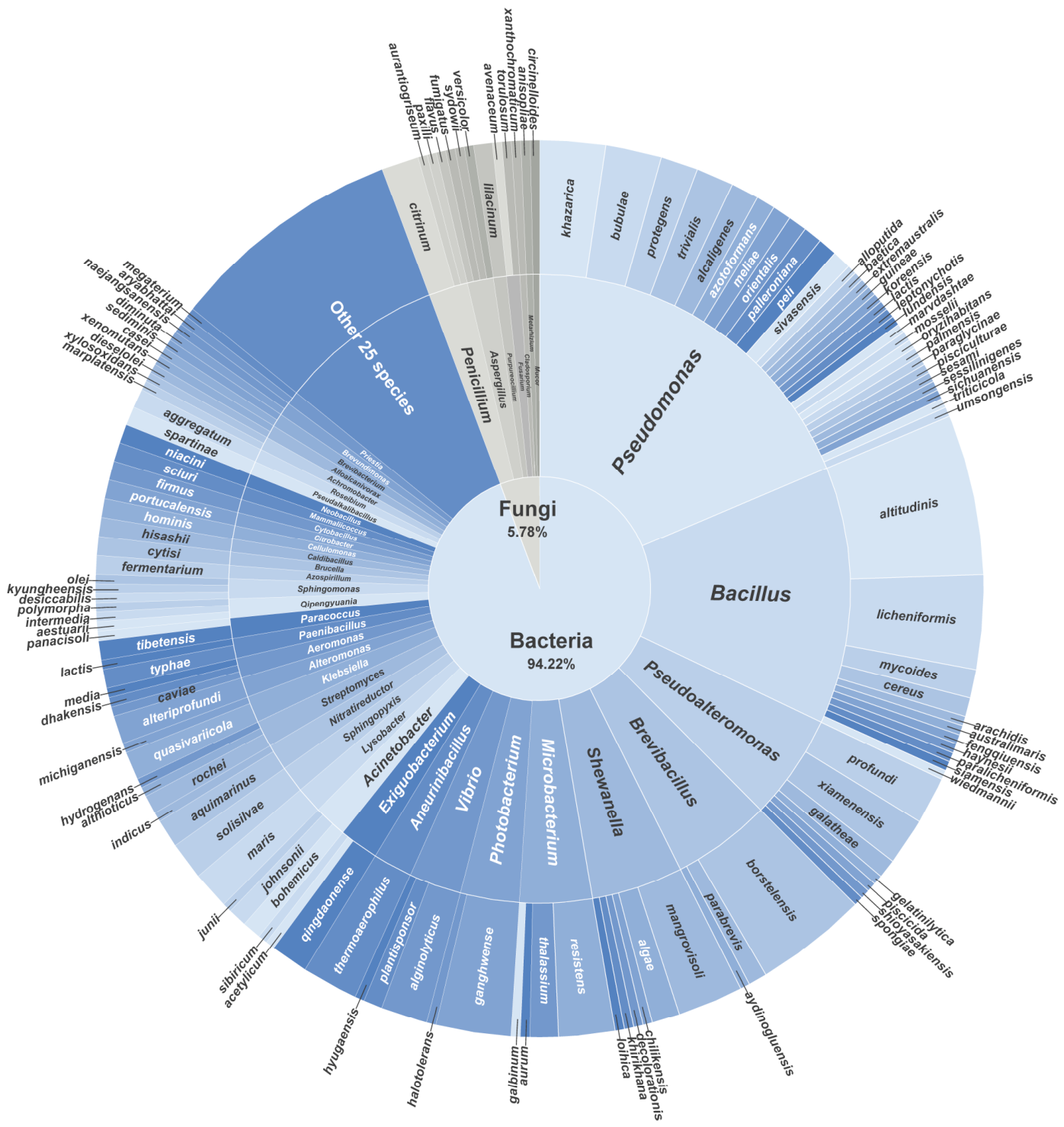
3.1. Isolation of Candidate PET-Degrading Strains Using PET Powder as Major Carbon Source
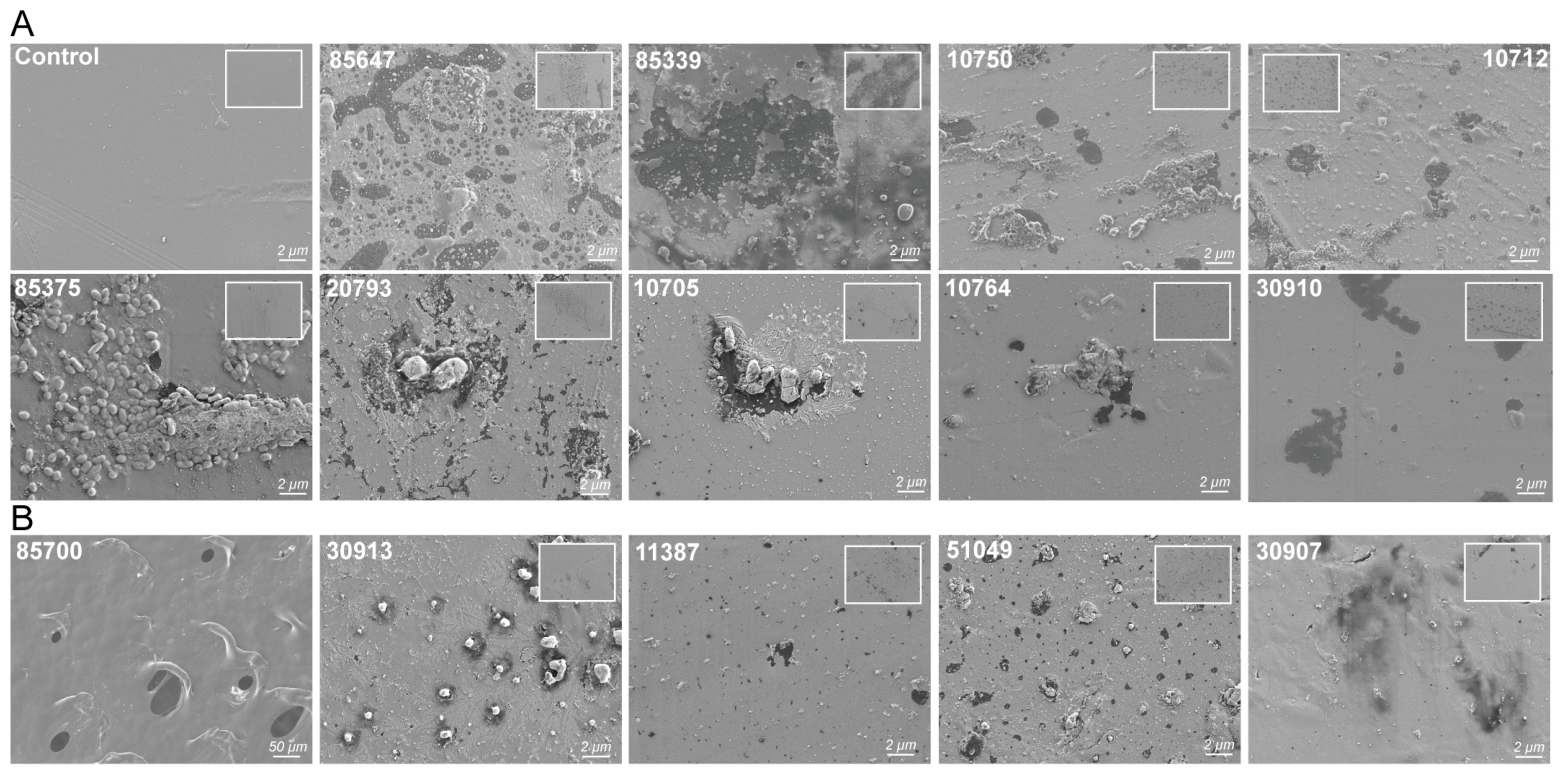
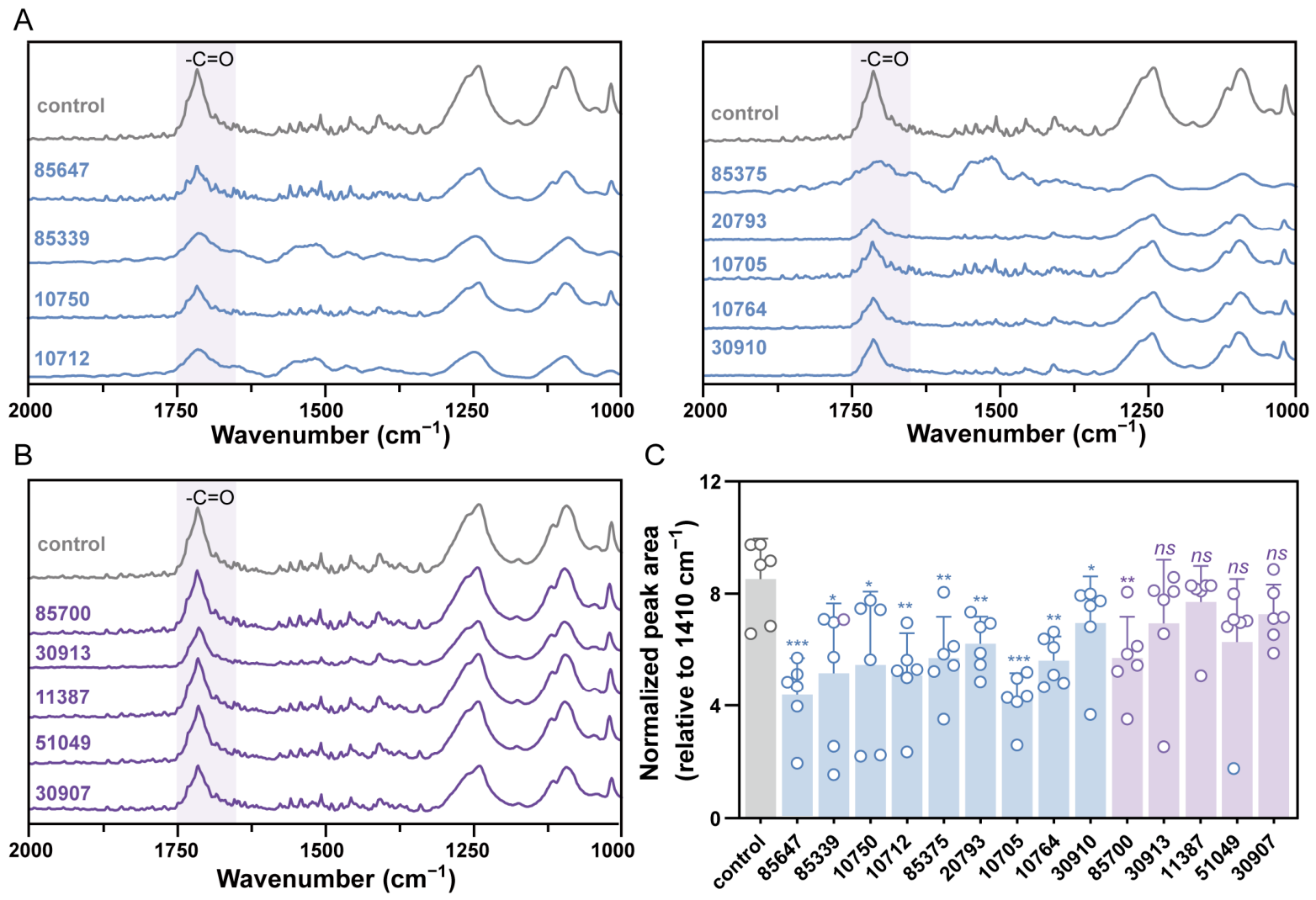
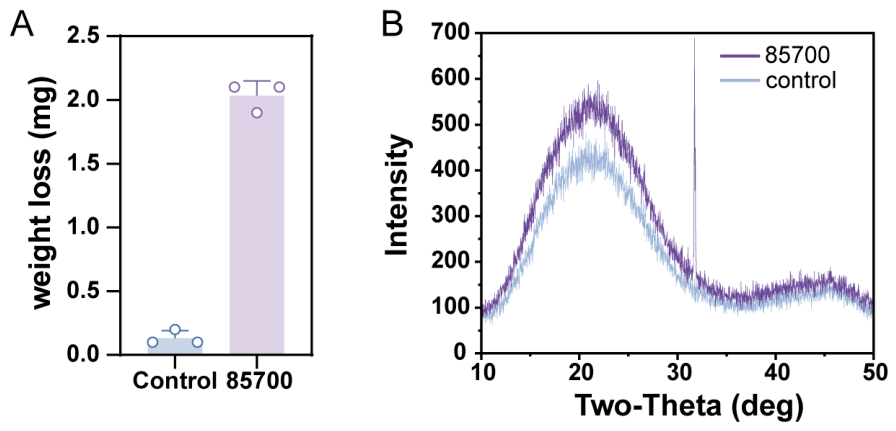
3.2. Evaluation of PET Film Degradation Performance of Candidate PET-Degrading Strains
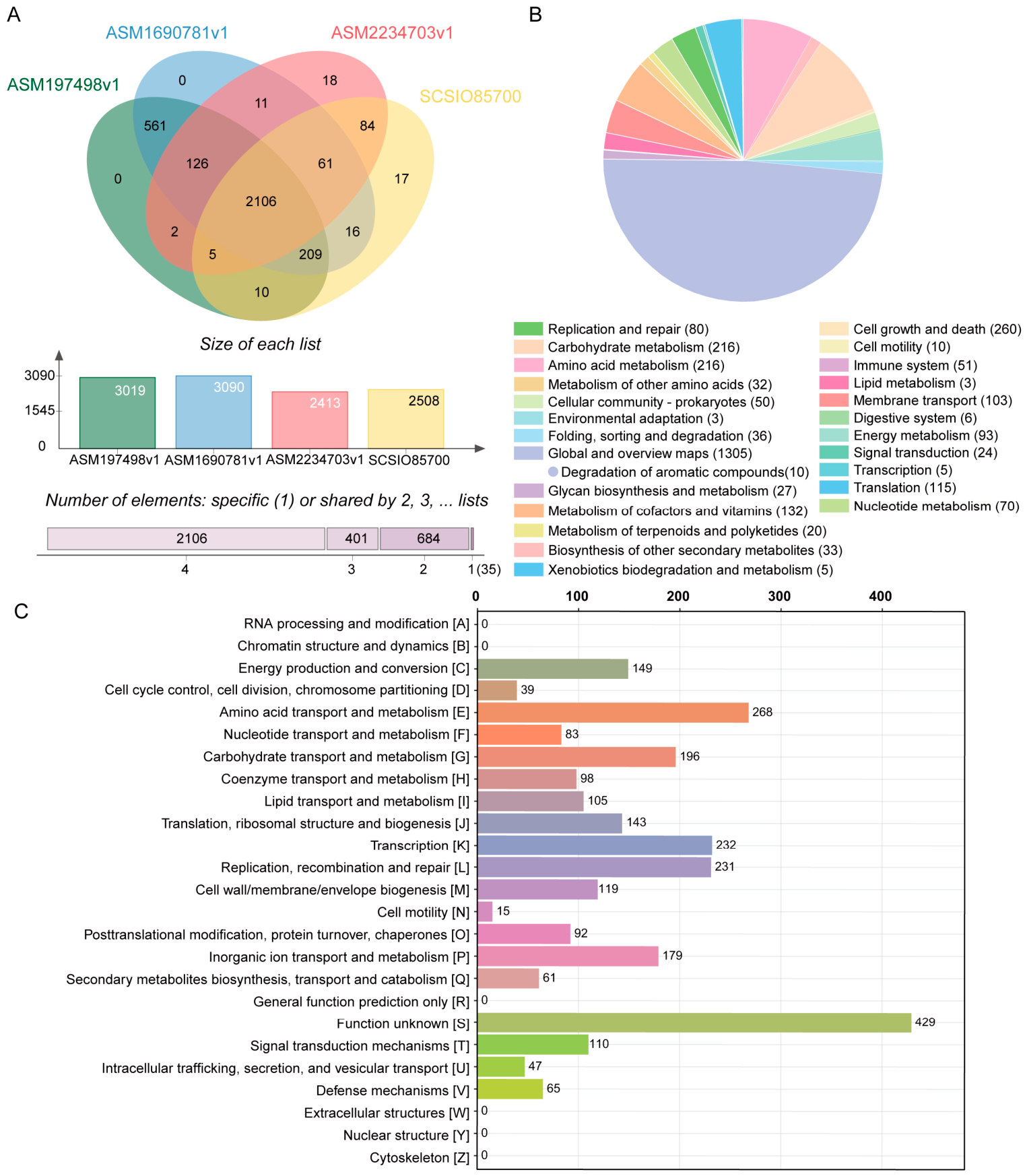
3.3. Genome Analysis of Strain SCSIO 85700
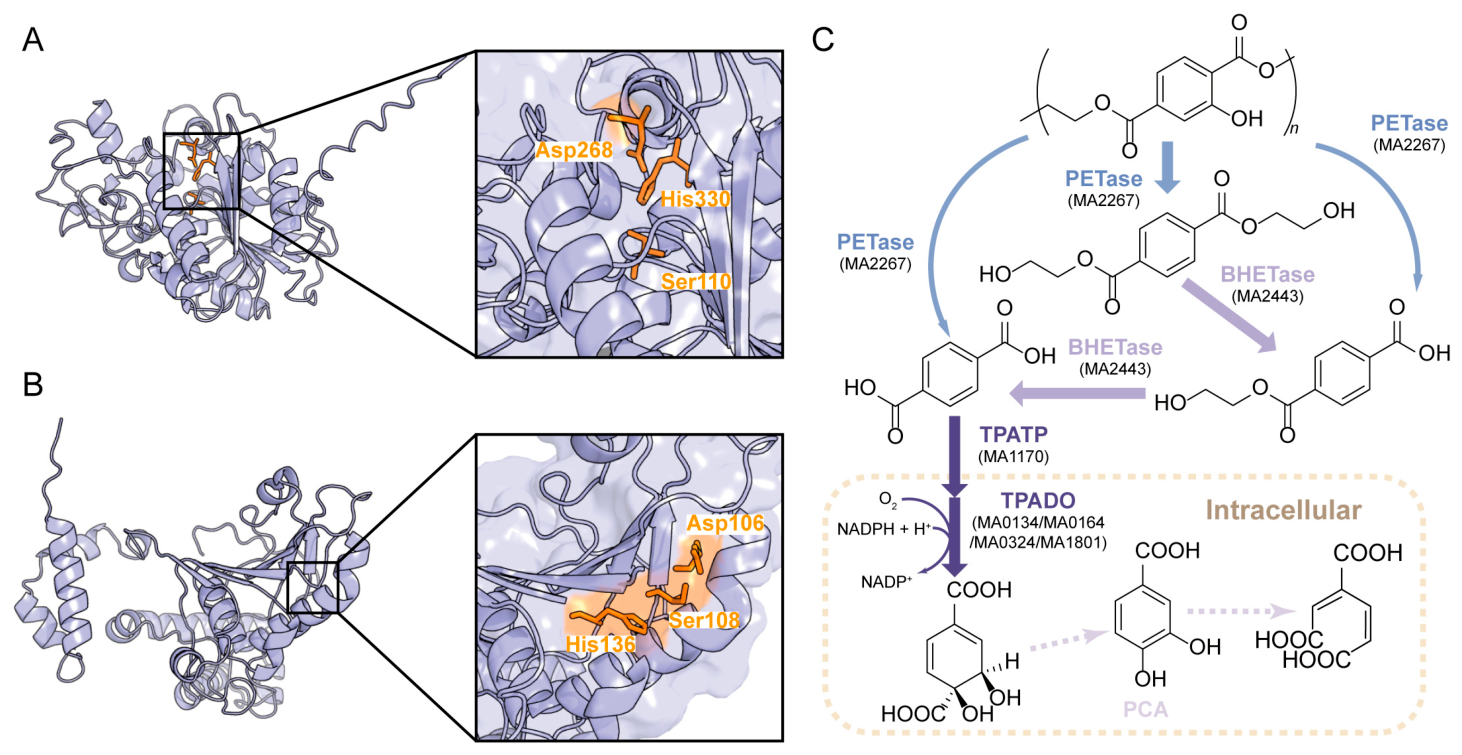
3.4. Identification of Candidate PET-Degrading Enzymes and a Predicted PET Degradation Pathway in Strain SCSIO 85700
4. Conclusions
Supplementary Materials
Author Contributions
Funding
Institutional Review Board Statement
Informed Consent Statement
Data Availability Statement
Acknowledgments
Conflicts of Interest
Abbreviations
| PET | Polyethylene Terephthalate |
| TPA | Terephthalic Acid |
| EG | Ethylene Glycol |
| MHET | Mono(2-Hydroxyethyl) Terephthalate |
| LCC | Leaf-branch Compost Cutinase |
| MSM | Minimal Salt Medium |
| PDB | Potato Dextrose Broth |
| PDA | Potato Dextrose Agar |
| CTAB | Cetyltrimethylammonium Bromide |
| LB | Luria–Bertani |
| SEM | Scanning Electron Microscopy |
| FTIR | Fourier-Transform Infrared |
| ATR | Attenuated Total Reflectance |
| XRD | X-ray Diffraction |
| PU | Polyurethane |
| EPNP | Endurance of Prolonged Nutrient Prevention |
| BHETase | Bis(2-Hydroxyethyl) Terephthalate Hydrolase |
| BHET | Bis(2-Hydroxyethyl) Terephthalate |
| TPATP | TPA Transporter |
| TPADO | TPA Dioxygenase |
| PCA | Protocatechuic Acid |
References
- Geyer, R.; Jambeck, J.R.; Law, K.L. Production, use, and fate of all plastics ever made. Sci. Adv. 2017, 3, e1700782. [Google Scholar] [CrossRef] [Scilit] [PubMed]
- Cui, R.; Kwak, J.I.; An, Y.-J. Multigenerational effects of microplastic fragments derived from polyethylene terephthalate bottles on duckweed Lemna minor: Size-dependent effects of microplastics on photosynthesis. Sci. Total Environ. 2023, 872, 162159. [Google Scholar] [CrossRef] [Scilit] [PubMed]
- Qiu, J.; Chen, Y.; Zhang, L.; Wu, J.; Zeng, X.; Shi, X.; Liu, L.; Chen, J. A comprehensive review on enzymatic biodegradation of polyethylene terephthalate. Environ. Res. 2024, 240, 117427. [Google Scholar] [CrossRef] [Scilit] [PubMed]
- Awaja, F.; Pavel, D. Recycling of PET. Eur. Polym. J. 2005, 41, 1453–1477. [Google Scholar] [CrossRef] [Scilit]
- Law, K.L.; Narayan, R. Reducing environmental plastic pollution by designing polymer materials for managed end-of-life. Nat. Rev. Mater. 2022, 7, 104–116. [Google Scholar] [CrossRef] [Scilit]
- Jambeck, J.R.; Geyer, R.; Wilcox, C.; Siegler, T.R.; Perryman, M.; Andrady, A.; Narayan, R.; Law, K.L. Plastic waste inputs from land into the ocean. Science 2015, 347, 768–771. [Google Scholar] [CrossRef] [Scilit] [PubMed]
- Thompson, R.C.; Courtene-Jones, W.; Boucher, J.; Pahl, S.; Raubenheimer, K.; Koelmans, A.A. Twenty years of microplastic pollution research—What have we learned? Science 2024, 386, 395. [Google Scholar] [CrossRef] [Scilit] [PubMed]
- Taylor, M.L.; Gwinnett, C.; Robinson, L.F.; Woodall, L.C. Plastic microfibre ingestion by deep-sea organisms. Sci. Rep. 2016, 6, 33997. [Google Scholar] [CrossRef] [Scilit] [PubMed]
- Kushwaha, A.; Goswami, L.; Singhvi, M.; Kim, B.S. Biodegradation of poly(ethylene terephthalate): Mechanistic insights, advances, and future innovative strategies. Chem. Eng. J. 2023, 457, 141230. [Google Scholar] [CrossRef] [Scilit]
- Yoshida, S.; Hiraga, K.; Takehana, T.; Taniguchi, I.; Yamaji, H.; Maeda, Y.; Toyohara, K.; Miyamoto, K.; Kimura, Y.; Oda, K. A bacterium that degrades and assimilates poly(ethylene terephthalate). Science 2016, 351, 1196–1199. [Google Scholar] [CrossRef] [Scilit] [PubMed]
- Sulaiman, S.; Yamato, S.; Kanaya, E.; Kim, J.-J.; Koga, Y.; Takano, K.; Kanaya, S. Isolation of a novel cutinase homolog with polyethylene terephthalate-degrading activity from leaf-branch compost by using a metagenomic approach. Appl. Environ. Microbiol. 2012, 78, 1556–1562. [Google Scholar] [CrossRef] [Scilit] [PubMed]
- Deng, B.; Yue, Y.; Yang, J.; Yang, M.; Xing, Q.; Peng, H.; Wang, F.; Li, M.; Ma, L.; Zhai, C. Improving the activity and thermostability of PETase from Ideonella sakaiensis through modulating its post-translational glycan modification. Commun. Biol. 2023, 6, 39. [Google Scholar] [CrossRef] [Scilit] [PubMed]
- Tournier, V.; Topham, C.M.; Gilles, A.; David, B.; Folgoas, C.; Moya-Leclair, E.; Kamionka, E.; Desrousseaux, M.-L.; Texier, H.; Gavalda, S.; et al. An engineered PET depolymerase to break down and recycle plastic bottles. Nature 2020, 580, 216–219. [Google Scholar] [CrossRef] [Scilit] [PubMed]
- United Nations Environment Programme. From Pollution to Solution: A Global Assessment of Marine Litter and Plastic Pollution. Available online: https://www.unep.org/resources/pollution-solution-global-assessment-marine-litter-and-plastic-pollution (accessed on 15 July 2026).
- Andrades, R.; Martins, A.S.; Fardim, L.M.; Ferreira, J.S.; Santos, R.G. Origin of marine debris is related to disposable packs of ultra-processed food. Mar. Pollut. Bull. 2016, 109, 192–195. [Google Scholar] [CrossRef] [Scilit] [PubMed]
- Oberbeckmann, S.; Labrenz, M. Marine microbial assemblages on microplastics: Diversity, adaptation, and role in degradation. Annu. Rev. Mar. Sci. 2020, 12, 209–232. [Google Scholar] [CrossRef] [Scilit] [PubMed]
- Dang, H.Y.; Lovell, C.R. Microbial surface colonization and biofilm development in marine environments. Microbiol. Mol. Biol. Rev. 2016, 80, 91–138. [Google Scholar] [CrossRef] [Scilit] [PubMed]
- Zeng, Q.; Shi, Z.; Deng, S.; Wu, T.; Wu, L.; Guo, Q.; Yin, J.; Fan, T.; Tian, X.; Li, Q. Biodegradation of polyurethane by marine-derived Cladosporium oxysporum SCSIO 81042 under seawater conditions and its enhancement by chitosan nanoparticles as adjuvant. Environ. Res. 2026, 296, 123981. [Google Scholar] [CrossRef] [Scilit] [PubMed]
- Sun, C.; Wang, Y.; Wu, M.; Dong, J.; Wang, Y.; Sun, F.; Zhang, Y. Seasonal Variation of Water Quality and Phytoplankton Response Patterns in Daya Bay, China. Int. J. Environ. Res. Public Health 2011, 8, 2951–2966. [Google Scholar] [CrossRef] [Scilit] [PubMed]
- Walsh, P.S.; Metzger, D.A.; Higuchi, R. Chelex 100 as a medium for simple extraction of DNA for PCR-based typing from forensic material. BioTechniques 1991, 10, 506–513. [Google Scholar] [PubMed]
- Doyle, J.J.; Doyle, J.L. A rapid total DNA preparation procedure for fresh plant tissue. Focus 1990, 12, 13–15. [Google Scholar]
- Weisburg, W.G.; Barns, S.M.; Pelletier, D.A.; Lane, D.J. 16S ribosomal DNA amplification for phylogenetic study. J. Bacteriol. 1991, 173, 697–703. [Google Scholar] [CrossRef] [Scilit] [PubMed]
- Gardes, M.; Bruns, T.D. ITS primers with enhanced specificity for basidiomycetes-application to the identification of mycorrhizae and rusts. Mol. Ecol. 1993, 2, 113–118. [Google Scholar] [CrossRef] [Scilit] [PubMed]
- White, T.J.; Bruns, T.; Lee, S.; Taylor, J. Amplification and Direct Sequencing of Fungal Ribosomal RNA Genes for Phylogenetics. In PCR Protocols: A Guide to Methods and Applications; Innis, M.A., Gelfand, D.H., Sninsky, J.J., White, T.J., Eds.; Academic Press: San Diego, CA, USA, 1990; pp. 315–322. [Google Scholar]
- Altschul, S.F.; Gish, W.; Miller, W.; Myers, E.W.; Lipman, D.J. Basic local alignment search tool. J. Mol. Biol. 1990, 215, 403–410. [Google Scholar] [CrossRef] [PubMed]
- Wick, R.R.; Judd, L.M.; Gorrie, C.L.; Holt, K.E. Unicycler: Resolving bacterial genome assemblies from short and long sequencing reads. PLoS Comput. Biol. 2017, 13, e1005595. [Google Scholar] [CrossRef] [Scilit] [PubMed]
- Bolger, A.M.; Lohse, M.; Usadel, B. Trimmomatic: A flexible trimmer for Illumina sequence data. Bioinformatics 2014, 30, 2114–2120. [Google Scholar] [CrossRef] [Scilit] [PubMed]
- Lukashin, A.V.; Borodovsky, M. GeneMark.hmm: New solutions for gene finding. Nucleic Acids Res. 1998, 26, 1107–1115. [Google Scholar] [CrossRef] [Scilit] [PubMed]
- Chan, P.; Lin, B.; Mak, A.; Lowe, T. tRNAscan-SE 2.0: Improved detection and functional classification of transfer RNA genes. Nucleic Acids Res. 2021, 49, 9077–9096. [Google Scholar] [CrossRef] [Scilit] [PubMed]
- Lagesen, K.; Hallin, P.; Rødland, E.A.; Stærfeldt, H.-H.; Rognes, T.; Ussery, D.W. RNAmmer: Consistent and rapid annotation of ribosomal RNA genes. Nucleic Acids Res. 2007, 35, 3100–3108. [Google Scholar] [CrossRef] [Scilit] [PubMed]
- Benavides Fernández, C.D.; Guzmán Castillo, M.P.; Quijano Pérez, S.A.; Carvajal Rodríguez, L.V. Microbial degradation of polyethylene terephthalate: A systematic review. SN Appl. Sci. 2022, 4, 263. [Google Scholar] [CrossRef] [Scilit]
- Hernández-Nava, A.M.; Cuahquentzi-Sánchez, M.; Santacruz-Juárez, E.; Sánchez, C. Degradation of polyethylene terephthalate by microorganisms and their enzymes: A review of experimental and in silico research. World J. Microbiol. Biotechnol. 2025, 41, 485. [Google Scholar] [CrossRef] [Scilit] [PubMed]
- Hazan, R.; Schoemann, M.; Klutstein, M. Endurance of extremely prolonged nutrient prevention across kingdoms of life. iScience 2021, 24, 102745. [Google Scholar] [CrossRef] [Scilit] [PubMed]
- Gray, D.A.; Dugar, G.; Gamba, P.; Strahl, H.; Jonker, M.J.; Hamoen, L.W. Extreme slow growth as alternative strategy to survive deep starvation in bacteria. Nat. Commun. 2019, 10, 890. [Google Scholar] [CrossRef] [Scilit] [PubMed]
- Yoshida, S.; Hiraga, K.; Taniguchi, I.; Oda, K. Ideonella sakaiensis, PETase, and MHETase: From Identification of Microbial PET Degradation to Enzyme Characterization. In Methods in Enzymology; Weber, G., Bornscheuer, U.T., Eds.; Elsevier: Cambridge, MA, USA, 2021; Volume 648, pp. 187–205. [Google Scholar]
- Guo, W.; Duan, J.; Shi, Z.; Yu, X.; Shao, Z. Biodegradation of PET by the membrane-anchored PET esterase from the marine bacterium Rhodococcus pyridinivorans P23. Commun. Biol. 2023, 6, 1090. [Google Scholar] [CrossRef] [Scilit] [PubMed]
- Rostampour, S.; Cook, R.; Jhang, S.S.; Li, Y.; Fan, C.; Sung, L.-P. Changes in the chemical composition of polyethylene terephthalate under UV radiation in various environmental conditions. Polymers 2024, 16, 2249. [Google Scholar] [CrossRef] [Scilit] [PubMed]
- Thomsen, T.B.; Almdal, K.; Meyer, A.S. Significance of poly(ethylene terephthalate) (PET) substrate crystallinity on enzymatic degradation. New Biotechnol. 2023, 78, 162–172. [Google Scholar] [CrossRef] [Scilit] [PubMed]
- Gong, J.; Kong, T.; Li, Y.; Li, Q.; Li, Z.; Zhang, J. Biodegradation of microplastic derived from poly(ethylene terephthalate) with bacterial whole-cell biocatalysts. Polymers 2018, 10, 1326. [Google Scholar] [CrossRef] [Scilit] [PubMed]
- Wilkes, R.A.; Zhou, N.; Carroll, A.L.; Aryal, O.; Teitel, K.P.; Wilson, R.S.; Zhang, L.; Kapoor, A.; Castaneda, E.; Guss, A.M.; et al. Mechanisms of Polyethylene Terephthalate Pellet Fragmentation into Nanoplastics and Assimilable Carbons by Wastewater Comamonas. Environ. Sci. Technol. 2024, 58, 19338–19352. [Google Scholar] [CrossRef] [Scilit] [PubMed]
- Yokota, A.; Takeuchi, M.; Weiss, N. Proposal of two new species in the genus Microbacterium: Microbacterium dextranolyticum sp. nov. and Microbacterium aurum sp. nov. Int. J. Syst. Bacteriol. 1993, 43, 549–554. [Google Scholar] [CrossRef] [Scilit]
- Shah, A.A.; Hasan, F.; Hameed, A.; Ahmed, S. Biological degradation of plastics: A comprehensive review. Biotechnol. Adv. 2008, 26, 246–265. [Google Scholar] [CrossRef] [Scilit] [PubMed]
- Gao, R.; Pan, H.; Kai, L.; Han, K.; Lian, J. Microbial degradation and valorization of poly(ethylene terephthalate) (PET) monomers. World J. Microbiol. Biotechnol. 2022, 38, 89. [Google Scholar] [CrossRef] [Scilit] [PubMed]
- Wood, J.M. Bacterial responses to osmotic challenges. J. Gen. Physiol. 2015, 145, 381–388. [Google Scholar] [CrossRef] [Scilit] [PubMed]
- Young, J.; Holland, I.B. ABC transporters: Bacterial exporters—Revisited five years on. Biochim. Biophys. Acta 1999, 1461, 177–200. [Google Scholar] [CrossRef] [Scilit] [PubMed]
- Palmer, T.; Berks, B.C. The twin-arginine translocation (Tat) protein export pathway. Nat. Rev. Microbiol. 2012, 10, 483–496. [Google Scholar] [CrossRef] [Scilit] [PubMed]
- Tsirigotaki, A.; De Geyter, J.; Šoštarić, N.; Economou, A.; Karamanou, S. Protein export through the bacterial Sec pathway. Nat. Rev. Microbiol. 2017, 15, 21–36. [Google Scholar] [CrossRef] [Scilit] [PubMed]
- Ezraty, B.; Gennaris, A.; Barras, F.; Collet, J.-F. Oxidative stress, protein damage and repair in bacteria. Nat. Rev. Microbiol. 2017, 15, 385–396. [Google Scholar] [CrossRef] [Scilit] [PubMed]
- Liu, W.; Li, C.; Li, B.; Zhu, L.; Ming, D.; Jiang, L. Structure-guided discovery and rational design of a new poly(ethylene terephthalate) hydrolase from AlphaFold protein structure database. J. Hazard. Mater. 2024, 480, 136389. [Google Scholar] [CrossRef] [Scilit] [PubMed]
- Li, A.; Sheng, Y.; Cui, H.; Wang, M.; Wu, L.; Song, Y.; Yang, R.; Li, X.; Huang, H. Discovery and mechanism-guided engineering of BHET hydrolases for improved PET recycling and upcycling. Nat. Commun. 2023, 14, 4161. [Google Scholar] [CrossRef] [Scilit] [PubMed]
- Austin, H.P.; Allen, M.D.; Donohoe, B.S.; Rorrer, N.A.; Kearns, F.L.; Silveira, R.L.; Pollard, B.C.; Dominick, G.; Duman, R.; El Omari, K.; et al. Characterization and engineering of a plastic-degrading aromatic polyesterase. Proc. Natl. Acad. Sci. USA 2018, 115, E4350–E4357. [Google Scholar] [CrossRef] [Scilit] [PubMed]
- Joo, S.; Cho, I.J.; Seo, H.; Son, H.F.; Sagong, H.-Y.; Shin, T.J.; Choi, S.Y.; Lee, S.Y.; Kim, K.-J. Structural insight into molecular mechanism of poly(ethylene terephthalate) degradation. Nat. Commun. 2018, 9, 382. [Google Scholar] [CrossRef] [Scilit] [PubMed]
Disclaimer/Publisher’s Note: The statements, opinions and data contained in all publications are solely those of the individual author(s) and contributor(s) and not of MDPI and/or the editor(s). MDPI and/or the editor(s) disclaim responsibility for any injury to people or property resulting from any ideas, methods, instructions or products referred to in the content. |
© 2026 by the authors. Licensee MDPI, Basel, Switzerland. This article is an open access article distributed under the terms and conditions of the Creative Commons Attribution (CC BY) license.
Share and Cite
Deng, S.; Guo, Q.; An, Y.; Liu, Y.; Yin, J.; Shi, S.; Wu, T.; Gu, C.; Tian, X.; Li, Q. Isolation of Marine-Derived Microorganisms for PET Biodegradation. Microorganisms 2026, 14, 1804. https://doi.org/10.3390/microorganisms14081804
Deng S, Guo Q, An Y, Liu Y, Yin J, Shi S, Wu T, Gu C, Tian X, Li Q. Isolation of Marine-Derived Microorganisms for PET Biodegradation. Microorganisms. 2026; 14(8):1804. https://doi.org/10.3390/microorganisms14081804
Chicago/Turabian StyleDeng, Shijing, Qiaoqiao Guo, Yunhe An, Yuqing Liu, Jianping Yin, Songbiao Shi, Tingbiao Wu, Chenlu Gu, Xinpeng Tian, and Qinglian Li. 2026. "Isolation of Marine-Derived Microorganisms for PET Biodegradation" Microorganisms 14, no. 8: 1804. https://doi.org/10.3390/microorganisms14081804
APA StyleDeng, S., Guo, Q., An, Y., Liu, Y., Yin, J., Shi, S., Wu, T., Gu, C., Tian, X., & Li, Q. (2026). Isolation of Marine-Derived Microorganisms for PET Biodegradation. Microorganisms, 14(8), 1804. https://doi.org/10.3390/microorganisms14081804

